1
Chapter 10. Safety Guidelines
Safety Information
Exposure to Radio Frequency Signal
Your wireless handheld portable telephone is a low power radio
transmitter and receiver. When it is ON, it receives and also sends
out radio frequency (RF) signals.
European and international agencies have set standards and
recommendations for the protection of public exposure to RF
electromagnetic energy.
International Commission on Non-Ionizing Radiation Protection
(ICNIRP) 1996
Verband Deutscher Elektrotechnik (VDE) DIN-0848
Directives of the European Community, Directorate General V in
Matters of Radio Frequency Electromagnetic Energy
National Radiological Protection Board of the United Kingdom,
GS 11, 1988
American National Standards Institute (ANSI) IEEE C95.1-1992
National Council on Radiation Protection and Measurements
(NCRP), Report 86
Department of Health and Welfare Canada, Safety Code 6
Those standards were based on comprehensive and periodic
evaluations of the relevant scientific literature. Over 120 scientists,
engineers, and physicians from universities, government health
agencies, and industry reviewed the available body of research to
develop the ANSI Standard (C95.1).
The design of your phone complies with these standards when used
normally. Use only the supplied or an approved replacement
antenna. Unauthorized antennas, modifications, or attachments
could damage the phone and may violate FCC regulations.
Efficient Phone Operation
Normal Position
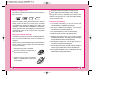
Hold the phone as you would any other telephone with the antenna
pointed up and over your shoulder.
Tips on Efficient Operation:
For your phone to operate most efficiently;
75