1
Rotolight Stealth RL48/RL48-A User Guide
About Colour temperature and ‘White Balance’
Colour temperature is a standard method of describing colours for use in a range of
situations and with different equipment. Colour temperatures are normally expressed
in units called ‘degrees’ Kelvin (K). This scale is used to describe a visible light colour ,
and was based on heating a black object up until it glowed at a precise colour, hence
‘degrees’ Kelvin.
Modern digital photographic and video cameras can adjust the ‘white balance’ of their
image capture system mimicking the way that the Human eye perceives colour. This
process allows the camera to accurately capture the colours as the eye sees them.
DSLR cameras tend to optimise the ‘white balance’ frame by frame, but that would be
very bad in video or film as the colours would change throughout a scene, this is why
matching the colour temperature of a camera lighting system is important for Video or
Film work.
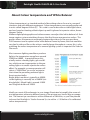
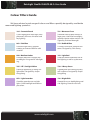
Most common lighting conditions produce
light in the temperature range from around
2,000K to 8,000K . In practical terms this
usually means selecting lights, gels and filters which are most appropriate to the prevailing light or to create a particular colour
effect. For example, a camera operator will
select a “3200K filter” to use for an interior
shot when the prevailing ambient light is
from tungsten bulbs.
Bright direct sunshine is typically at 6900K,
studio lighting is normally set to 5600K (studio daylight), Mixed Light is around 4100K
and Tungsten bulbs are 3200K.
The Kelvin Scale of colour temperature
Ideally you want all the elements in your image illuminated at roughly the same colour temperature, otherwise different parts of the picture may have a blue or orange
tint. The human eye can detect a colour difference of 50 Kelvin, so you’ll be pleased
to know that Rotolight is ‘Studio Accurate’ (i.e. to within +/- 50 kelvin of its calibrated
colour temperatures).
www.rotolight.com
17