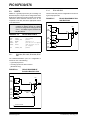
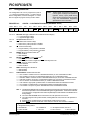
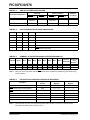
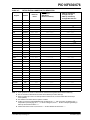
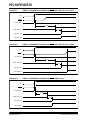
1
PIC16F630/676 Data Sheet 14-Pin, Flash-Based 8-Bit CMOS Microcontrollers 2010 Microchip Technology Inc. DS40039F Note the following details of the code protection feature on Microchip devices: • Microchip products meet the specification contained in their particular Microchip Data Sheet. • Microchip believes that its family of products is one of the most secure families of its kind on the market today, when used in the intended manner and under normal conditions. • There are dishonest and possibly illegal methods used to breach the code protection feature. All of these methods, to our knowledge, require using the Microchip products in a manner outside the operating specifications contained in Microchip’s Data Sheets. Most likely, the person doing so is engaged in theft of intellectual property. • Microchip is willing to work with the customer who is concerned about the integrity of their code. • Neither Microchip nor any other semiconductor manufacturer can guarantee the security of their code. Code protection does not mean that we are guaranteeing the product as “unbreakable.” Code protection is constantly evolving. We at Microchip are committed to continuously improving the code protection features of our products. Attempts to break Microchip’s code protection feature may be a violation of the Digital Millennium Copyright Act. If such acts allow unauthorized access to your software or other copyrighted work, you may have a right to sue for relief under that Act. Information contained in this publication regarding device applications and the like is provided only for your convenience and may be superseded by updates. It is your responsibility to ensure that your application meets with your specifications. MICROCHIP MAKES NO REPRESENTATIONS OR WARRANTIES OF ANY KIND WHETHER EXPRESS OR IMPLIED, WRITTEN OR ORAL, STATUTORY OR OTHERWISE, RELATED TO THE INFORMATION, INCLUDING BUT NOT LIMITED TO ITS CONDITION, QUALITY, PERFORMANCE, MERCHANTABILITY OR FITNESS FOR PURPOSE. Microchip disclaims all liability arising from this information and its use. Use of Microchip devices in life support and/or safety applications is entirely at the buyer’s risk, and the buyer agrees to defend, indemnify and hold harmless Microchip from any and all damages, claims, suits, or expenses resulting from such use. No licenses are conveyed, implicitly or otherwise, under any Microchip intellectual property rights. Trademarks The Microchip name and logo, the Microchip logo, dsPIC, KEELOQ, KEELOQ logo, MPLAB, PIC, PICmicro, PICSTART, PIC32 logo, rfPIC and UNI/O are registered trademarks of Microchip Technology Incorporated in the U.S.A. and other countries. FilterLab, Hampshire, HI-TECH C, Linear Active Thermistor, MXDEV, MXLAB, SEEVAL and The Embedded Control Solutions Company are registered trademarks of Microchip Technology Incorporated in the U.S.A. Analog-for-the-Digital Age, Application Maestro, CodeGuard, dsPICDEM, dsPICDEM.net, dsPICworks, dsSPEAK, ECAN, ECONOMONITOR, FanSense, HI-TIDE, In-Circuit Serial Programming, ICSP, Mindi, MiWi, MPASM, MPLAB Certified logo, MPLIB, MPLINK, mTouch, Octopus, Omniscient Code Generation, PICC, PICC-18, PICDEM, PICDEM.net, PICkit, PICtail, REAL ICE, rfLAB, Select Mode, Total Endurance, TSHARC, UniWinDriver, WiperLock and ZENA are trademarks of Microchip Technology Incorporated in the U.S.A. and other countries. SQTP is a service mark of Microchip Technology Incorporated in the U.S.A. All other trademarks mentioned herein are property of their respective companies. © 2010, Microchip Technology Incorporated, Printed in the U.S.A., All Rights Reserved. Printed on recycled paper. ISBN: 978-1-60932-173-4 Microchip received ISO/TS-16949:2002 certification for its worldwide headquarters, design and wafer fabrication facilities in Chandler and Tempe, Arizona; Gresham, Oregon and design centers in California and India. The Company’s quality system processes and procedures are for its PIC® MCUs and dsPIC® DSCs, KEELOQ® code hopping devices, Serial EEPROMs, microperipherals, nonvolatile memory and analog products. In addition, Microchip’s quality system for the design and manufacture of development systems is ISO 9001:2000 certified. DS40039F-page 2 2010 Microchip Technology Inc. PIC16F630/676 14-Pin, Flash-Based 8-Bit CMOS Microcontroller High-Performance RISC CPU: Low-Power Features: • Only 35 Instructions to Learn - All single-cycle instructions except branches • Operating Speed: - DC – 20 MHz oscillator/clock input - DC – 200 ns instruction cycle • Interrupt Capability • 8-level Deep Hardware Stack • Direct, Indirect, and Relative Addressing modes • Standby Current: - 1 nA @ 2.0V, typical • Operating Current: - 8.5 A @ 32 kHz, 2.0V, typical - 100 A @ 1 MHz, 2.0V, typical • Watchdog Timer Current - 300 nA @ 2.0V, typical • Timer1 Oscillator Current: - 4 A @ 32 kHz, 2.0V, typical Special Microcontroller Features: Peripheral Features: • Internal and External Oscillator Options - Precision Internal 4 MHz oscillator factory calibrated to ±1% - External Oscillator support for crystals and resonators - 5 s wake-up from Sleep, 3.0V, typical • Power-Saving Sleep mode • Wide Operating Voltage Range – 2.0V to 5.5V • Industrial and Extended Temperature Range • Low-Power Power-on Reset (POR) • Power-up Timer (PWRT) and Oscillator Start-up Timer (OST) • Brown-out Detect (BOD) • Watchdog Timer (WDT) with Independent Oscillator for Reliable Operation • Multiplexed MCLR/Input-pin • Interrupt-on-Pin Change • Individual Programmable Weak Pull-ups • Programmable Code Protection • High Endurance Flash/EEPROM Cell - 100,000 write Flash endurance - 1,000,000 write EEPROM endurance - Flash/data EEPROM retention: > 40 years Device Program Memory • 12 I/O Pins with Individual Direction Control • High Current Sink/Source for Direct LED Drive • Analog Comparator module with: - One analog comparator - Programmable on-chip comparator voltage reference (CVREF) module - Programmable input multiplexing from device inputs - Comparator output is externally accessible • Analog-to-Digital Converter module (PIC16F676): - 10-bit resolution - Programmable 8-channel input - Voltage reference input • Timer0: 8-bit Timer/Counter with 8-bit Programmable Prescaler • Enhanced Timer1: - 16-bit timer/counter with prescaler - External Gate Input mode - Option to use OSC1 and OSC2 in LP mode as Timer1 oscillator, if INTOSC mode selected • In-Circuit Serial ProgrammingTM (ICSPTM) via two pins Data Memory I/O 10-bit A/D (ch) Comparators Timers 8/16-bit 128 12 – 1 1/1 128 12 8 1 1/1 Flash (words) SRAM (bytes) EEPROM (bytes) PIC16F630 1024 64 PIC16F676 1024 64 2010 Microchip Technology Inc. DS40039F-page 3 PIC16F630/676 Pin Diagrams VDD RA5/T1CKI/OSC1/CLKIN RA4/T1G/OSC2/AN3/CLKOUT RA3/MCLR/VPP RC5 RC4 RC3/AN7 DS40039F-page 4 1 2 3 4 5 6 7 1 2 3 4 5 6 7 PIC16F676 VDD RA5/T1CKI/OSC1/CLKIN RA4/T1G/OSC2/CLKOUT RA3/MCLR/VPP RC5 RC4 RC3 PIC16F630 14-pin PDIP, SOIC, TSSOP 14 13 12 11 10 9 8 14 13 12 11 10 9 8 VSS RA0/CIN+/ICSPDAT RA1/CIN-/ICSPCLK RA2/COUT/T0CKI/INT RC0 RC1 RC2 VSS RA0/AN0/CIN+/ICSPDAT RA1/AN1/CIN-/VREF/ICSPCLK RA2/AN2/COUT/T0CKI/INT RC0/AN4 RC1/AN5 RC2/AN6 2010 Microchip Technology Inc. PIC16F630/676 Table of Contents 1.0 Device Overview ......................................................................................................................................................................... 7 2.0 Memory Organization .................................................................................................................................................................. 9 3.0 Ports A and C ............................................................................................................................................................................ 21 4.0 Timer0 Module .......................................................................................................................................................................... 31 5.0 Timer1 Module with Gate Control ............................................................................................................................................. 34 6.0 Comparator Module .................................................................................................................................................................. 39 7.0 Analog-to-Digital Converter (A/D) Module (PIC16F676 only) ................................................................................................... 45 8.0 Data EEPROM Memory............................................................................................................................................................ 51 9.0 Special Features of the CPU .................................................................................................................................................... 55 10.0 Instruction Set Summary ........................................................................................................................................................... 73 11.0 Development Support ............................................................................................................................................................... 81 12.0 Electrical Specifications ............................................................................................................................................................ 85 13.0 DC and AC Characteristics Graphs and Tables ..................................................................................................................... 107 14.0 Packaging Information ............................................................................................................................................................ 117 Appendix A: Data Sheet Revision History ......................................................................................................................................... 123 Appendix B: Device Differences ....................................................................................................................................................... 123 Appendix C: Device Migrations ......................................................................................................................................................... 124 Appendix D: Migrating from other PIC® Devices .............................................................................................................................. 124 Index ................................................................................................................................................................................................. 125 On-Line Support ................................................................................................................................................................................ 129 Systems Information and Upgrade Hot Line ..................................................................................................................................... 129 Reader Response ............................................................................................................................................................................. 130 Product Identification System ........................................................................................................................................................... 131 TO OUR VALUED CUSTOMERS It is our intention to provide our valued customers with the best documentation possible to ensure successful use of your Microchip products. To this end, we will continue to improve our publications to better suit your needs. Our publications will be refined and enhanced as new volumes and updates are introduced. If you have any questions or comments regarding this publication, please contact the Marketing Communications Department via E-mail at [email protected] or fax the Reader Response Form in the back of this data sheet to (480) 792-4150. We welcome your feedback. Most Current Data Sheet To obtain the most up-to-date version of this data sheet, please register at our Worldwide Web site at: http://www.microchip.com You can determine the version of a data sheet by examining its literature number found on the bottom outside corner of any page. The last character of the literature number is the version number, (e.g., DS30000A is version A of document DS30000). Errata An errata sheet, describing minor operational differences from the data sheet and recommended workarounds, may exist for current devices. As device/documentation issues become known to us, we will publish an errata sheet. The errata will specify the revision of silicon and revision of document to which it applies. To determine if an errata sheet exists for a particular device, please check with one of the following: • Microchip’s Worldwide Web site; http://www.microchip.com • Your local Microchip sales office (see last page) When contacting a sales office, please specify which device, revision of silicon and data sheet (include literature number) you are using. Customer Notification System Register on our web site at www.microchip.com to receive the most current information on all of our products. 2010 Microchip Technology Inc. DS40039F-page 5 PIC16F630/676 NOTES: DS40039F-page 6 2010 Microchip Technology Inc. PIC16F630/676 1.0 DEVICE OVERVIEW Sheet and is highly recommended reading for a better understanding of the device architecture and operation of the peripheral modules. This document contains device specific information for the PIC16F630/676. Additional information may be found in the PIC® Mid-Range Reference Manual (DS33023), which may be obtained from your local Microchip Sales Representative or downloaded from the Microchip web site. The Reference Manual should be considered a complementary document to this Data FIGURE 1-1: The PIC16F630 and PIC16F676 devices are covered by this Data Sheet. They are identical, except the PIC16F676 has a 10-bit A/D converter. They come in 14-pin PDIP, SOIC and TSSOP packages. Figure 1-1 shows a block diagram of the PIC16F630/676 devices. Table 1-1 shows the pinout description. PIC16F630/676 BLOCK DIAGRAM INT Configuration 13 Flash 8 Data Bus Program Counter PORTA RA0 RA1 1K x 14 Program Memory Program Bus RA2 RAM 64 bytes 8-Level Stack (13-bit) 14 RA3 RA4 File Registers RAM Addr RA5 9 Addr MUX Instruction Reg 7 Direct Addr 8 Indirect Addr FSR Reg STATUS Reg 8 PORTC RC0 RC1 RC2 RC3 RC4 RC5 3 Power-up Timer Instruction Decode and Control OSC1/CLKIN Oscillator Start-up Timer Power-on Reset Timing Generation ALU 8 Watchdog Timer Brown-out Detect OSC2/CLKOUT MUX W Reg Internal Oscillator T1G MCLR VDD VSS T1CKI Timer0 Timer1 T0CKI Analog to Digital Converter (PIC16F676 only) Analog Comparator and reference EEDATA 8 128 bytes DATA EEPROM EEADDR CIN- CIN+ COUT VREF AN0 AN1 AN2 AN3 AN4 AN5 AN6 AN7 2010 Microchip Technology Inc. DS40039F-page 7 PIC16F630/676 TABLE 1-1: PIC16F630/676 PINOUT DESCRIPTION Name RA0/AN0/CIN+/ICSPDAT RA1/AN1/CIN-/VREF/ ICSPCLK RA2/AN2/COUT/T0CKI/INT RA3/MCLR/VPP RA4/T1G/AN3/OSC2/ CLKOUT RA5/T1CKI/OSC1/CLKIN RC0/AN4 RC1/AN5 RC2/AN6 RC3/AN7 RC4 RC5 VSS VDD Legend: Function Input Type Output Type RA0 TTL CMOS AN0 CIN+ ICSPDAT RA1 AN AN TTL TTL — CMOS CMOS AN1 CINVREF ICSPCLK RA2 AN AN AN ST ST — — — — CMOS AN2 COUT T0CKI INT RA3 MCLR VPP RA4 AN — ST ST TTL ST HV TTL — CMOS — — — — — CMOS T1G AN3 OSC2 CLKOUT ST AN3 — — — — XTAL CMOS RA5 TTL CMOS T1CKI ST OSC1 XTAL CLKIN ST RC0 TTL AN4 AN4 RC1 TTL AN5 AN5 RC2 TTL AN6 AN6 RC3 TTL AN7 AN7 RC4 TTL RC5 TTL VSS Power VDD Power Shade = PIC16F676 only TTL = TTL input buffer ST = Schmitt Trigger input buffer DS40039F-page 8 — — — CMOS — CMOS — CMOS — CMOS — CMOS CMOS — — Description Bidirectional I/O w/ programmable pull-up and interrupt-on-change. A/D Channel 0 input. Comparator input. Serial Programming Data I/O. Bidirectional I/O w/ programmable pull-up and interrupt-on-change. A/D Channel 1 input. Comparator input. External Voltage reference. Serial Programming Clock. Bidirectional I/O w/ programmable pull-up and interrupt-on-change. A/D Channel 2 input. Comparator output. Timer0 clock input. External Interrupt. Input port with interrupt-on-change. Master Clear. Programming voltage. Bidirectional I/O w/ programmable pull-up and interrupt-on-change. Timer1 gate. A/D Channel 3 input. Crystal/Resonator. FOSC/4 output. Bidirectional I/O w/ programmable pull-up and interrupt-on-change. Timer1 clock. Crystal/Resonator. External clock input/RC oscillator connection. Bidirectional I/O. A/D Channel 4 input. Bidirectional I/O. A/D Channel 5 input. Bidirectional I/O. A/D Channel 6 input. Bidirectional I/O. A/D Channel 7 input. Bidirectional I/O. Bidirectional I/O. Ground reference. Positive supply. 2010 Microchip Technology Inc. PIC16F630/676 2.0 MEMORY ORGANIZATION 2.2 2.1 Program Memory Organization The data memory (see Figure 2-2) is partitioned into two banks, which contain the General Purpose Registers and the Special Function Registers. The Special Function Registers are located in the first 32 locations of each bank. Register locations 20h-5Fh are General Purpose Registers, implemented as static RAM and are mapped across both banks. All other RAM is unimplemented and returns ‘0’ when read. RP0 (STATUS<5>) is the bank select bit. The PIC16F630/676 devices have a 13-bit program counter capable of addressing an 8K x 14 program memory space. Only the first 1K x 14 (0000h-03FFh) for the PIC16F630/676 devices is physically implemented. Accessing a location above these boundaries will cause a wrap around within the first 1K x 14 space. The Reset vector is at 0000h and the interrupt vector is at 0004h (see Figure 2-1). FIGURE 2-1: PROGRAM MEMORY MAP AND STACK FOR THE PIC16F630/676 PC<12:0> CALL, RETURN RETFIE, RETLW • RP0 = 0 Bank 0 is selected • RP0 = 1 Bank 1 is selected Note: 2.2.1 13 Data Memory Organization The IRP and RP1 bits STATUS<7:6> are reserved and should always be maintained as ‘0’s. GENERAL PURPOSE REGISTER FILE The register file is organized as 64 x 8 in the PIC16F630/676 devices. Each register is accessed, either directly or indirectly, through the File Select Register FSR (see Section 2.4 “Indirect Addressing, INDF and FSR Registers”). Stack Level 1 Stack Level 2 Stack Level 8 Reset Vector 000h Interrupt Vector 0004 0005 On-chip Program Memory 03FFh 0400h 1FFFh 2010 Microchip Technology Inc. DS40039F-page 9 PIC16F630/676 2.2.2 SPECIAL FUNCTION REGISTERS The Special Function Registers are registers used by the CPU and peripheral functions for controlling the desired operation of the device (see Table 2-1). These registers are static RAM. The special registers can be classified into two sets: core and peripheral. The Special Function Registers associated with the “core” are described in this section. Those related to the operation of the peripheral features are described in the section of that peripheral feature. FIGURE 2-2: DATA MEMORY MAP OF THE PIC16F630/676 File Address Indirect addr.(1) TMR0 PCL STATUS FSR PORTA PORTC PCLATH INTCON PIR1 TMR1L TMR1H T1CON CMCON ADRESH(2) ADCON0(2) 00h 01h 02h 03h 04h 05h 06h 07h 08h 09h 0Ah 0Bh 0Ch 0Dh 0Eh 0Fh 10h 11h 12h 13h 14h 15h 16h 17h 18h 19h 1Ah 1Bh 1Ch 1Dh 1Eh 1Fh 20h General Purpose Registers File Address Indirect addr.(1) OPTION_REG PCL STATUS FSR TRISA TRISC PCLATH INTCON PIE1 PCON OSCCAL ANSEL(2) WPUA IOCA VRCON EEDAT EEADR EECON1 EECON2(1) ADRESL(2) ADCON1(2) 80h 81h 82h 83h 84h 85h 86h 87h 88h 89h 8Ah 8Bh 8Ch 8Dh 8Eh 8Fh 90h 91h 92h 93h 94h 95h 96h 97h 98h 99h 9Ah 9Bh 9Ch 9Dh 9Eh 9Fh A0h accesses 20h-5Fh 64 Bytes 5Fh 60h DFh E0h 7Fh Bank 0 FFh Bank 1 Unimplemented data memory locations, read as ‘0’. 1: Not a physical register. 2: PIC16F676 only. DS40039F-page 10 2010 Microchip Technology Inc. PIC16F630/676 TABLE 2-1: Addr Name PIC16F630/676 SPECIAL REGISTERS SUMMARY BANK 0 Bit 7 Bit 6 Bit 5 Bit 4 Bit 3 Bit 2 Bit 1 Bit 0 Value on POR, BOD Page Bank 0 00h INDF Addressing this location uses contents of FSR to address data memory (not a physical register) xxxx xxxx 20,63 01h TMR0 Timer0 Module’s Register xxxx xxxx 31 02h PCL Program Counter’s (PC) Least Significant Byte 0000 0000 19 03h STATUS 0001 1xxx 13 04h FSR xxxx xxxx 20 05h PORTA --xx xxxx 21 06h — 07h IRP(2) RP1(2) RP0 TO PD Z DC C Indirect data memory Address Pointer PORTC — — I/O Control Registers Unimplemented — — I/O Control Registers — — --xx xxxx 28 — 08h — Unimplemented — 09h — Unimplemented — — ---0 0000 19 0Ah PCLATH 0Bh INTCON 0Ch PIR1 — — — Write buffer for upper 5 bits of program counter GIE PEIE T0IE INTE RAIE T0IF INTF RAIF 0000 0000 15 EEIF ADIF — — CMIF — — TMR1IF 00-- 0--0 17 0Dh — Unimplemented 0Eh TMR1L Holding register for the Least Significant Byte of the 16-bit TMR1 0Fh TMR1H Holding register for the Most Significant Byte of the 16-bit TMR1 10h T1CON 11h — 12h — 13h — — xxxx xxxx 34 xxxx xxxx 34 -000 0000 36 Unimplemented — — Unimplemented — — — Unimplemented — — 14h — Unimplemented — — 15h — Unimplemented — — 16h — Unimplemented — — 17h — Unimplemented — — 18h — Unimplemented — — -0-0 0000 39 19h CMCON — — T1GE COUT T1CKPS1 — T1CKPS0 CINV T1OSCEN CIS T1SYNC TMR1CS CM2 CM1 TMR1ON CM0 1Ah — Unimplemented — — 1Bh — Unimplemented — — 1Ch — Unimplemented — — 1Dh — Unimplemented — — 1Eh ADRESH(3) xxxx xxxx 46 1Fh ADCON0(3) 00-0 0000 47,63 Legend: Note 1: 2: 3: Most Significant 8 bits of the left shifted A/D result or 2 bits of right shifted result ADFM VCFG — CHS2 CHS1 CHS0 GO/DONE ADON – = Unimplemented locations read as ‘0’, u = unchanged, x = unknown, q = value depends on condition shaded = unimplemented Other (non Power-up) Resets include MCLR Reset, Brown-out Detect and Watchdog Timer Reset during normal operation. IRP and RP1 bits are reserved, always maintain these bits clear. PIC16F676 only. 2010 Microchip Technology Inc. DS40039F-page 11 PIC16F630/676 TABLE 2-2: Addr PIC16F630/676 SPECIAL FUNCTION REGISTERS SUMMARY BANK 1 Name Bit 7 Bit 6 Bit 5 Bit 4 Bit 3 Bit 2 Bit 1 Bit 0 Value on POR, BOD Page Bank 1 80h INDF 81h OPTION_REG 82h PCL 83h STATUS 84h FSR 85h TRISA 86h 87h Addressing this location uses contents of FSR to address data memory (not a physical register) RAPU INTEDG T0CS T0SE PSA PS2 PS1 PS0 PD Z DC C Program Counter’s (PC) Least Significant Byte IRP(2) RP1(2) RP0 TO Indirect data memory Address Pointer — TRISC — — TRISA5 TRISA4 TRISA3 TRISA2 TRISA1 TRISA0 Unimplemented — — TRISC5 TRISC4 TRISC3 TRISC2 TRISC1 TRISC0 xxxx xxxx 20,63 1111 1111 14,32 0000 0000 19 0001 1xxx 13 xxxx xxxx 20 --11 1111 21 — — --11 1111 — — 88h — Unimplemented — 89h — Unimplemented — — 8Ah PCLATH ---0 0000 19 — — — Write buffer for upper 5 bits of program counter 8Bh INTCON GIE PEIE T0IE INTE RAIE T0IF INTF RAIF 0000 0000 15 8Ch PIE1 EEIE ADIE — — CMIE — — TMR1IE 00-- 0--0 16 8Dh 8Eh — PCON — — 18 8Fh Unimplemented — — — — — — POR BOD ---- --qq CAL5 CAL4 CAL3 CAL2 CAL1 CAL0 — — 1000 00-- 18 ANS5 ANS4 ANS3 ANS2 ANS1 ANS0 1111 1111 — 48 — — — — — — 90h OSCCAL 91h ANSEL(3) — 92h — ANS7 ANS6 Unimplemented 93h 94h — — Unimplemented Unimplemented 95h WPUA — — WPUA5 WPUA4 — WPUA2 WPUA1 WPUA0 --11 -111 22 96h IOCA — — IOCA5 IOCA4 IOCA3 IOCA2 IOCA1 IOCA0 --00 0000 23 — — — — 0-0- 0000 0000 0000 44 51 0000 0000 ---- x000 51 52 97h 98h — — 99h VRCON 9Ah EEDAT 9Bh EEADR 9Ch EECON1 9Dh 9Eh EECON2 ADRESL(3) Unimplemented Unimplemented VREN — EEPROM data register — — VRR EEPROM address register — — — VR3 VR2 VR1 VR0 — WRERR WREN WR RD EEPROM control register 2 (not a physical register) ---- ---- 51 Least Significant 2 bits of the left shifted result or 8 bits of the right shifted result xxxx xxxx 46 — ADCS2 ADCS1 ADCS0 — — — — -000 ---47,63 9Fh ADCON1(3) Legend: – = Unimplemented locations read as ‘0’, u = unchanged, x = unknown, q = value depends on condition, shaded = unimplemented Note 1: Other (non Power-up) Resets include MCLR Reset, Brown-out Detect and Watchdog Timer Reset during normal operation. 2: IRP and RP1 bits are reserved, always maintain these bits clear. 3: PIC16F676 only. DS40039F-page 12 2010 Microchip Technology Inc. PIC16F630/676 2.2.2.1 STATUS Register The STATUS register, shown in Register 2-1, contains: • the arithmetic status of the ALU • the Reset status • the bank select bits for data memory (SRAM) It is recommended, therefore, that only BCF, BSF, SWAPF and MOVWF instructions are used to alter the STATUS register, because these instructions do not affect any Status bits. For other instructions not affecting any Status bits, see Section 10.0 “Instruction Set Summary”. Note 1: Bits IRP and RP1 (STATUS<7:6>) are not used by the PIC16F630/676 and should be maintained as clear. Use of these bits is not recommended, since this may affect upward compatibility with future products. The STATUS register can be the destination for any instruction, like any other register. If the STATUS register is the destination for an instruction that affects the Z, DC or C bits, then the write to these three bits is disabled. These bits are set or cleared according to the device logic. Furthermore, the TO and PD bits are not writable. Therefore, the result of an instruction with the STATUS register as destination may be different than intended. 2: The C and DC bits operate as a Borrow and Digit Borrow out bit, respectively, in subtraction. See the SUBLW and SUBWF instructions for examples. For example, CLRF STATUS will clear the upper three bits and set the Z bit. This leaves the STATUS register as 000u u1uu (where u = unchanged). REGISTER 2-1: STATUS — STATUS REGISTER (ADDRESS: 03h OR 83h) Reserved Reserved IRP RP1 R/W-0 R-1 R-1 R/W-x R/W-x R/W-x RP0 TO PD Z DC C bit 7 bit 0 bit 7 IRP: This bit is reserved and should be maintained as ‘0’ bit 6 RP1: This bit is reserved and should be maintained as ‘0’ bit 5 RP0: Register Bank Select bit (used for direct addressing) 1 = Bank 1 (80h-FFh) 0 = Bank 0 (00h-7Fh) bit 4 TO: Time-out bit 1 = After power-up, CLRWDT instruction, or SLEEP instruction 0 = A WDT time-out occurred bit 3 PD: Power-Down bit 1 = After power-up or by the CLRWDT instruction 0 = By execution of the SLEEP instruction bit 2 Z: Zero bit 1 = The result of an arithmetic or logic operation is zero 0 = The result of an arithmetic or logic operation is not zero bit 1 DC: Digit carry/borrow bit (ADDWF, ADDLW,SUBLW,SUBWF instructions) For borrow, the polarity is reversed. 1 = A carry-out from the 4th low order bit of the result occurred 0 = No carry-out from the 4th low order bit of the result bit 0 C: Carry/borrow bit (ADDWF, ADDLW, SUBLW, SUBWF instructions) 1 = A carry-out from the Most Significant bit of the result occurred 0 = No carry-out from the Most Significant bit of the result occurred Note: For borrow the polarity is reversed. A subtraction is executed by adding the two’s complement of the second operand. For rotate (RRF, RLF) instructions, this bit is loaded with either the high or low order bit of the source register. Legend: R = Readable bit W = Writable bit U = Unimplemented bit, read as ‘0’ - n = Value at POR ‘1’ = Bit is set ‘0’ = Bit is cleared 2010 Microchip Technology Inc. x = Bit is unknown DS40039F-page 13 PIC16F630/676 2.2.2.2 OPTION Register Note: The OPTION register is a readable and writable register, which contains various control bits to configure: • • • • TMR0/WDT prescaler External RA2/INT interrupt TMR0 Weak pull-ups on PORTA REGISTER 2-2: To achieve a 1:1 prescaler assignment for TMR0, assign the prescaler to the WDT by setting PSA bit to ‘1’ (OPTION<3>). See Section 4.4 “Prescaler”. OPTION_REG — OPTION REGISTER (ADDRESS: 81h) R/W-1 R/W-1 R/W-1 R/W-1 R/W-1 R/W-1 R/W-1 R/W-1 RAPU INTEDG T0CS T0SE PSA PS2 PS1 PS0 bit 7 bit 0 bit 7 RAPU: PORTA Pull-up Enable bit 1 = PORTA pull-ups are disabled 0 = PORTA pull-ups are enabled by individual PORT latch values bit 6 INTEDG: Interrupt Edge Select bit 1 = Interrupt on rising edge of RA2/INT pin 0 = Interrupt on falling edge of RA2/INT pin bit 5 T0CS: TMR0 Clock Source Select bit 1 = Transition on RA2/T0CKI pin 0 = Internal instruction cycle clock (CLKOUT) bit 4 T0SE: TMR0 Source Edge Select bit 1 = Increment on high-to-low transition on RA2/T0CKI pin 0 = Increment on low-to-high transition on RA2/T0CKI pin bit 3 PSA: Prescaler Assignment bit 1 = Prescaler is assigned to the WDT 0 = Prescaler is assigned to the Timer0 module bit 2-0 PS2:PS0: Prescaler Rate Select bits Bit Value 000 001 010 011 100 101 110 111 TMR0 Rate WDT Rate 1:2 1:4 1:8 1 : 16 1 : 32 1 : 64 1 : 128 1 : 256 1:1 1:2 1:4 1:8 1 : 16 1 : 32 1 : 64 1 : 128 Legend: DS40039F-page 14 R = Readable bit W = Writable bit U = Unimplemented bit, read as ‘0’ - n = Value at POR ‘1’ = Bit is set ‘0’ = Bit is cleared x = Bit is unknown 2010 Microchip Technology Inc. PIC16F630/676 2.2.2.3 INTCON Register Note: The INTCON register is a readable and writable register, which contains the various enable and flag bits for TMR0 register overflow, PORTA change and external RA2/INT pin interrupts. REGISTER 2-3: Interrupt flag bits are set when an interrupt condition occurs, regardless of the state of its corresponding enable bit or the global enable bit, GIE (INTCON<7>). User software should ensure the appropriate interrupt flag bits are clear prior to enabling an interrupt. INTCON — INTERRUPT CONTROL REGISTER (ADDRESS: 0Bh OR 8Bh) R/W-0 R/W-0 R/W-0 R/W-0 R/W-0 R/W-0 R/W-0 R/W-0 GIE PEIE T0IE INTE RAIE T0IF INTF RAIF bit 7 bit 0 bit 7 GIE: Global Interrupt Enable bit 1 = Enables all unmasked interrupts 0 = Disables all interrupts bit 6 PEIE: Peripheral Interrupt Enable bit 1 = Enables all unmasked peripheral interrupts 0 = Disables all peripheral interrupts bit 5 T0IE: TMR0 Overflow Interrupt Enable bit 1 = Enables the TMR0 interrupt 0 = Disables the TMR0 interrupt bit 4 INTE: RA2/INT External Interrupt Enable bit 1 = Enables the RA2/INT external interrupt 0 = Disables the RA2/INT external interrupt bit 3 RAIE: Port Change Interrupt Enable bit(1) 1 = Enables the PORTA change interrupt 0 = Disables the PORTA change interrupt bit 2 T0IF: TMR0 Overflow Interrupt Flag bit(2) 1 = TMR0 register has overflowed (must be cleared in software) 0 = TMR0 register did not overflow bit 1 INTF: RA2/INT External Interrupt Flag bit 1 = The RA2/INT external interrupt occurred (must be cleared in software) 0 = The RA2/INT external interrupt did not occur bit 0 RAIF: Port Change Interrupt Flag bit 1 = When at least one of the PORTA <5:0> pins changed state (must be cleared in software) 0 = None of the PORTA <5:0> pins have changed state Note 1: IOCA register must also be enabled. 2: T0IF bit is set when Timer0 rolls over. Timer0 is unchanged on Reset and should be initialized before clearing T0IF bit. Legend: R = Readable bit W = Writable bit U = Unimplemented bit, read as ‘0’ - n = Value at POR ‘1’ = Bit is set ‘0’ = Bit is cleared 2010 Microchip Technology Inc. x = Bit is unknown DS40039F-page 15 PIC16F630/676 2.2.2.4 PIE1 Register The PIE1 register contains the interrupt enable bits, as shown in Register 2-4. REGISTER 2-4: Note: Bit PEIE (INTCON<6>) must be set to enable any peripheral interrupt. PIE1 — PERIPHERAL INTERRUPT ENABLE REGISTER 1 (ADDRESS: 8Ch) R/W-0 R/W-0 U-0 U-0 R/W-0 U-0 U-0 R/W-0 EEIE ADIE — — CMIE — — TMR1IE bit 7 bit 0 bit 7 EEIE: EE Write Complete Interrupt Enable bit 1 = Enables the EE write complete interrupt 0 = Disables the EE write complete interrupt bit 6 ADIE: A/D Converter Interrupt Enable bit (PIC16F676 only) 1 = Enables the A/D converter interrupt 0 = Disables the A/D converter interrupt bit 5-4 Unimplemented: Read as ‘0’ bit 3 CMIE: Comparator Interrupt Enable bit 1 = Enables the comparator interrupt 0 = Disables the comparator interrupt bit 2-1 Unimplemented: Read as ‘0’ bit 0 TMR1IE: TMR1 Overflow Interrupt Enable bit 1 = Enables the TMR1 overflow interrupt 0 = Disables the TMR1 overflow interrupt Legend: DS40039F-page 16 R = Readable bit W = Writable bit U = Unimplemented bit, read as ‘0’ - n = Value at POR ‘1’ = Bit is set ‘0’ = Bit is cleared x = Bit is unknown 2010 Microchip Technology Inc. PIC16F630/676 2.2.2.5 PIR1 Register The PIR1 register contains the interrupt flag bits, as shown in Register 2-5. REGISTER 2-5: Note: Interrupt flag bits are set when an interrupt condition occurs, regardless of the state of its corresponding enable bit or the global enable bit, GIE (INTCON<7>). User software should ensure the appropriate interrupt flag bits are clear prior to enabling an interrupt. PIR1 — PERIPHERAL INTERRUPT REGISTER 1 (ADDRESS: 0Ch) R/W-0 R/W-0 U-0 U-0 R/W-0 U-0 U-0 R/W-0 EEIF ADIF — — CMIF — — TMR1IF bit 7 bit 0 bit 7 EEIF: EEPROM Write Operation Interrupt Flag bit 1 = The write operation completed (must be cleared in software) 0 = The write operation has not completed or has not been started bit 6 ADIF: A/D Converter Interrupt Flag bit (PIC16F676 only) 1 = The A/D conversion is complete (must be cleared in software) 0 = The A/D conversion is not complete bit 5-4 Unimplemented: Read as ‘0’ bit 3 CMIF: Comparator Interrupt Flag bit 1 = Comparator input has changed (must be cleared in software) 0 = Comparator input has not changed bit 2-1 Unimplemented: Read as ‘0’ bit 0 TMR1IF: TMR1 Overflow Interrupt Flag bit 1 = TMR1 register overflowed (must be cleared in software) 0 = TMR1 register did not overflow Legend: R = Readable bit W = Writable bit U = Unimplemented bit, read as ‘0’ - n = Value at POR ‘1’ = Bit is set ‘0’ = Bit is cleared 2010 Microchip Technology Inc. x = Bit is unknown DS40039F-page 17 PIC16F630/676 2.2.2.6 PCON Register The Power Control (PCON) register contains flag bits to differentiate between a: • • • • Power-on Reset (POR) Brown-out Detect (BOD) Watchdog Timer Reset (WDT) External MCLR Reset The PCON Register bits are shown in Register 2-6. REGISTER 2-6: PCON — POWER CONTROL REGISTER (ADDRESS: 8Eh) U-0 U-0 U-0 U-0 U-0 U-0 R/W-0 R/W-x — — — — — — POR BOD bit 7 bit 0 bit 7-2 Unimplemented: Read as ‘0’ bit 1 POR: Power-on Reset Status bit 1 = No Power-on Reset occurred 0 = A Power-on Reset occurred (must be set in software after a Power-on Reset occurs) bit 0 BOD: Brown-out Detect Status bit 1 = No Brown-out Detect occurred 0 = A Brown-out Detect occurred (must be set in software after a Brown-out Detect occurs) Legend: 2.2.2.7 R = Readable bit W = Writable bit U = Unimplemented bit, read as ‘0’ - n = Value at POR ‘1’ = Bit is set ‘0’ = Bit is cleared x = Bit is unknown OSCCAL Register The Oscillator Calibration register (OSCCAL) is used to calibrate the internal 4 MHz oscillator. It contains 6 bits to adjust the frequency up or down to achieve 4 MHz. The OSCCAL register bits are shown in Register 2-7. REGISTER 2-7: OSCCAL — INTERNAL OSCILLATOR CALIBRATION REGISTER (ADDRESS: 90h) R/W-1 R/W-0 R/W-0 R/W-0 R/W-0 R/W-0 U-0 U-0 CAL5 CAL4 CAL3 CAL2 CAL1 CAL0 — — bit 7 bit 0 bit 7-2 CAL5:CAL0: 6-bit Signed Oscillator Calibration bits 111111 = Maximum frequency 100000 = Center frequency 000000 = Minimum frequency bit 1-0 Unimplemented: Read as ‘0’ Legend: DS40039F-page 18 R = Readable bit W = Writable bit U = Unimplemented bit, read as ‘0’ - n = Value at POR ‘1’ = Bit is set ‘0’ = Bit is cleared x = Bit is unknown 2010 Microchip Technology Inc. PIC16F630/676 2.3 PCL and PCLATH 2.3.2 The program counter (PC) is 13-bits wide. The low byte comes from the PCL register, which is a readable and writable register. The high byte (PC<12:8>) is not directly readable or writable and comes from PCLATH. On any Reset, the PC is cleared. Figure 2-3 shows the two situations for the loading of the PC. The upper example in Figure 2-3 shows how the PC is loaded on a write to PCL (PCLATH<4:0> PCH). The lower example in Figure 2-3 shows how the PC is loaded during a CALL or GOTO instruction (PCLATH<4:3> PCH). FIGURE 2-3: LOADING OF PC IN DIFFERENT SITUATIONS PCH PCL 12 8 7 0 PC 8 PCLATH<4:0> 5 Instruction with PCL as Destination ALU Result PCLATH PCH 12 11 10 STACK The PIC16F630/676 family has an 8-level x 13-bit wide hardware stack (see Figure 2-1). The stack space is not part of either program or data space and the Stack Pointer is not readable or writable. The PC is PUSHed onto the stack when a CALL instruction is executed or an interrupt causes a branch. The stack is POPed in the event of a RETURN, RETLW or a RETFIE instruction execution. PCLATH is not affected by a PUSH or POP operation. The stack operates as a circular buffer. This means that after the stack has been PUSHed eight times, the ninth push overwrites the value that was stored from the first push. The tenth push overwrites the second push (and so on). Note 1: There are no Status bits to indicate Stack Overflow or Stack Underflow conditions. 2: There are no instructions/mnemonics called PUSH or POP. These are actions that occur from the execution of the CALL, RETURN, RETLW and RETFIE instructions or the vectoring to an interrupt address. PCL 8 0 7 PC GOTO, CALL 2 PCLATH<4:3> 11 Opcode <10:0> PCLATH 2.3.1 COMPUTED GOTO A computed GOTO is accomplished by adding an offset to the program counter (ADDWF PCL). When performing a table read using a computed GOTO method, care should be exercised if the table location crosses a PCL memory boundary (each 256-byte block). Refer to the Application Note “Implementing a Table Read" (AN556). 2010 Microchip Technology Inc. DS40039F-page 19 PIC16F630/676 2.4 Indirect Addressing, INDF and FSR Registers A simple program to clear RAM location 20h-2Fh using indirect addressing is shown in Example 2-1. The INDF register is not a physical register. Addressing the INDF register will cause indirect addressing. EXAMPLE 2-1: Indirect addressing is possible by using the INDF register. Any instruction using the INDF register actually accesses data pointed to by the File Select Register (FSR). Reading INDF itself indirectly will produce 00h. Writing to the INDF register indirectly results in a no operation (although Status bits may be affected). An effective 9-bit address is obtained by concatenating the 8-bit FSR register and the IRP bit (STATUS<7>), as shown in Figure 2-4. FIGURE 2-4: MOVLW MOVWF CLRF INCF BTFSS GOTO NEXT 0x20 FSR INDF FSR FSR,4 NEXT CONTINUE ;initialize pointer ;to RAM ;clear INDF register ;inc pointer ;all done? ;no clear next ;yes continue DIRECT/INDIRECT ADDRESSING PIC16F630/676 Direct Addressing RP1(1) RP0 INDIRECT ADDRESSING 6 From Opcode Indirect Addressing IRP(1) 0 7 Bank Select Bank Select Location Select 00 01 10 FSR Register 0 Location Select 11 00h 180h Data Memory Not Used 7Fh 1FFh Bank 0 Bank 1 Bank 2 Bank 3 For memory map detail see Figure 2-2. Note 1: The RP1 and IRP bits are reserved; always maintain these bits clear. DS40039F-page 20 2010 Microchip Technology Inc. PIC16F630/676 3.0 PORTS A AND C There are as many as twelve general purpose I/O pins available. Depending on which peripherals are enabled, some or all of the pins may not be available as general purpose I/O. In general, when a peripheral is enabled, the associated pin may not be used as a general purpose I/O pin. Note: 3.1 Additional information on I/O ports may be found in the PIC® Mid-Range Reference Manual, (DS33023) PORTA and the TRISA Registers PORTA is an 6-bit wide, bidirectional port. The corresponding data direction register is TRISA. Setting a TRISA bit (= 1) will make the corresponding PORTA pin an input (i.e., put the corresponding output driver in a High-Impedance mode). Clearing a TRISA bit (= 0) will make the corresponding PORTA pin an output (i.e., put the contents of the output latch on the selected pin). The exception is RA3, which is input only and its TRIS bit will always read as ‘1’. Example 3-1 shows how to initialize PORTA. Reading the PORTA register reads the status of the pins, whereas writing to it will write to the PORT latch. All write operations are read-modify-write operations. Therefore, a write to a port implies that the port pins are read, this value is modified and then written to the PORT data latch. RA3 reads ‘0’ when MCLREN = 1. The TRISA register controls the direction of the PORTA pins, even when they are being used as analog inputs. The user must ensure the bits in the TRISA REGISTER 3-1: register are maintained set when using them as analog inputs. I/O pins configured as analog input always read ‘0’. Note: The ANSEL (91h) and CMCON (19h) registers must be initialized to configure an analog channel as a digital input. Pins configured as analog inputs will read ‘0’. The ANSEL register is defined for the PIC16F676. EXAMPLE 3-1: BCF CLRF MOVLW MOVWF BSF CLRF MOVLW MOVWF STATUS,RP0 PORTA 05h CMCON STATUS,RP0 ANSEL 0Ch TRISA BCF STATUS,RP0 3.2 INITIALIZING PORTA ;Bank 0 ;Init PORTA ;Set RA<2:0> to ;digital I/O ;Bank 1 ;digital I/O ;Set RA<3:2> as inputs ;and set RA<5:4,1:0> ;as outputs ;Bank 0 Additional Pin Functions Every PORTA pin on the PIC16F630/676 has an interrupt-on-change option and every PORTA pin, except RA3, has a weak pull-up option. The next two sections describe these functions. 3.2.1 WEAK PULL-UP Each of the PORTA pins, except RA3, has an individually configurable weak internal pull-up. Control bits WPUAx enable or disable each pull-up. Refer to Register 3-3. Each weak pull-up is automatically turned off when the port pin is configured as an output. The pull-ups are disabled on a Power-on Reset by the RAPU bit (OPTION<7>). PORTA — PORTA REGISTER (ADDRESS: 05h) U-0 U-0 R/W-x R/W-x R/W-x R/W-x R/W-x R/W-x — — RA5 RA4 RA3 RA2 RA1 RA0 bit 7 bit 0 bit 7-6: Unimplemented: Read as ‘0’ bit 5-0: PORTA<5:0>: PORTA I/O pin bits 1 = Port pin is >VIH 0 = Port pin is <VIL Legend: R = Readable bit W = Writable bit U = Unimplemented bit, read as ‘0’ - n = Value at POR ‘1’ = Bit is set ‘0’ = Bit is cleared 2010 Microchip Technology Inc. x = Bit is unknown DS40039F-page 21 PIC16F630/676 REGISTER 3-2: TRISA — PORTA TRI-STATE REGISTER (ADDRESS: 85h) U-0 — U-0 R/W-x R/W-x R-1 R/W-x R/W-x R/W-x — TRISA5 TRISA4 TRISA3 TRISA2 TRISA1 TRISA0 bit 7 bit 0 bit 7-6: Unimplemented: Read as ‘0’ bit 5-0: TRISA<5:0>: PORTA Tri-State Control bits 1 = PORTA pin configured as an input (tri-stated) 0 = PORTA pin configured as an output Note: TRISA<3> always reads 1. Legend: REGISTER 3-3: R = Readable bit W = Writable bit U = Unimplemented bit, read as ‘0’ - n = Value at POR ‘1’ = Bit is set ‘0’ = Bit is cleared x = Bit is unknown WPUA — WEAK PULL-UP REGISTER (ADDRESS: 95h) U-0 U-0 R/W-1 R/W-1 U-0 R/W-1 R/W-1 R/W-1 — — WPUA5 WPUA4 — WPUA2 WPUA1 WPUA0 bit 7 bit 0 bit 7-6 Unimplemented: Read as ‘0’ bit 5-4 WPUA<5:4>: Weak Pull-up Register bits 1 = Pull-up enabled 0 = Pull-up disabled bit 3 Unimplemented: Read as ‘0’ bit 2-0 WPUA<2:0>: Weak Pull-up Register bits 1 = Pull-up enabled 0 = Pull-up disabled Note 1: Global RAPU must be enabled for individual pull-ups to be enabled. 2: The weak pull-up device is automatically disabled if the pin is in Output mode (TRISA = 0). Legend: 3.2.2 R = Readable bit W = Writable bit U = Unimplemented bit, read as ‘0’ - n = Value at POR ‘1’ = Bit is set ‘0’ = Bit is cleared INTERRUPT-ON-CHANGE Each of the PORTA pins is individually configurable as an interrupt-on-change pin. Control bits IOCAx enable or disable the interrupt function for each pin. Refer to Register 3-4. The interrupt-on-change is disabled on a Power-on Reset. For enabled interrupt-on-change pins, the values are compared with the old value latched on the last read of PORTA. The ‘mismatch’ outputs of the last read are OR’d together to set, the PORTA Change Interrupt flag bit (RAIF) in the INTCON register. DS40039F-page 22 x = Bit is unknown This interrupt can wake the device from Sleep. The user, in the Interrupt Service Routine, can clear the interrupt in the following manner: a) b) Any read or write of PORTA. This will end the mismatch condition. Clear the flag bit RAIF. A mismatch condition will continue to set flag bit RAIF. Reading PORTA will end the mismatch condition and allow flag bit RAIF to be cleared. Note: If a change on the I/O pin should occur when the read operation is being executed (start of the Q2 cycle), then the RAIF interrupt flag may not get set. 2010 Microchip Technology Inc. PIC16F630/676 REGISTER 3-4: IOCA — INTERRUPT-ON-CHANGE PORTA REGISTER (ADDRESS: 96h) U-0 U-0 R/W-0 R/W-0 R/W-0 R/W-0 R/W-0 R/W-0 — — IOCA5 IOCA4 IOCA3 IOCA2 IOCA1 IOCA0 bit 7 bit 0 bit 7-6 Unimplemented: Read as ‘0’ bit 5-0 IOCA<5:0>: Interrupt-on-Change PORTA Control bits 1 = Interrupt-on-change enabled 0 = Interrupt-on-change disabled Note: Global Interrupt Enable (GIE) must be enabled for individual interrupts to be recognized. Legend: R = Readable bit W = Writable bit U = Unimplemented bit, read as ‘0’ - n = Value at POR ‘1’ = Bit is set ‘0’ = Bit is cleared 2010 Microchip Technology Inc. x = Bit is unknown DS40039F-page 23 PIC16F630/676 3.2.3 PIN DESCRIPTIONS AND DIAGRAMS Each PORTA pin is multiplexed with other functions. The pins and their combined functions are briefly described here. For specific information about individual functions such as the comparator or the A/D, refer to the appropriate section in this Data Sheet. 3.2.3.1 RA0/AN0/CIN+ FIGURE 3-1: Data Bus WR WPUA 3.2.3.2 • • • • as a general purpose I/O an analog input for the A/D (PIC16F676 only) an analog input to the comparator a voltage reference input for the A/D (PIC16F676 only) VDD Q Weak RAPU D WR PORTA CK VDD Q Q I/O pin RA1/AN1/CIN-/VREF Figure 3-1 shows the diagram for this pin. The RA1 pin is configurable to function as one of the following: CK Q Analog Input Mode RD WPUA Figure 3-1 shows the diagram for this pin. The RA0 pin is configurable to function as one of the following: • a general purpose I/O • an analog input for the A/D (PIC16F676 only) • an analog input to the comparator D BLOCK DIAGRAM OF RA0 AND RA1 PINS D WR TRISA CK Q Q VSS Analog Input Mode RD TRISA RD PORTA D WR IOCA CK Q Q Q D EN RD IOCA Q D EN Interrupt-on-Change RD PORTA To Comparator To A/D Converter DS40039F-page 24 2010 Microchip Technology Inc. PIC16F630/676 3.2.3.3 3.2.3.4 RA2/AN2/T0CKI/INT/COUT RA3/MCLR/VPP Figure 3-2 shows the diagram for this pin. The RA2 pin is configurable to function as one of the following: Figure 3-3 shows the diagram for this pin. The RA3 pin is configurable to function as one of the following: • • • • • • a general purpose input • as Master Clear Reset a general purpose I/O an analog input for the A/D (PIC16F676 only) a digital output from the comparator the clock input for TMR0 an external edge triggered interrupt FIGURE 3-3: BLOCK DIAGRAM OF RA3 Data Bus FIGURE 3-2: Data Bus WR WPUA D CK Q RD TRISA Analog Input Mode VDD Q D WR PORTA WR IOCA Analog Input Mode COUT Enable CK Q Q COUT WR TRISA CK CK VSS Q Q Q D EN RD IOCA VDD Interrupt-on-Change 1 0 D MCLRE D RAPU RD WPUA I/O pin VSS RD PORTA Weak MCLRE Reset BLOCK DIAGRAM OF RA2 I/O pin Q D EN RD PORTA Q Q VSS Analog Input Mode RD TRISA RD PORTA D WR IOCA CK Q Q Q D EN RD IOCA Q D EN Interrupt-on-Change RD PORTA To TMR0 To INT To A/D Converter 2010 Microchip Technology Inc. DS40039F-page 25 PIC16F630/676 3.2.3.5 3.2.3.6 RA4/AN3/T1G/OSC2/CLKOUT RA5/T1CKI/OSC1/CLKIN Figure 3-4 shows the diagram for this pin. The RA4 pin is configurable to function as one of the following: Figure 3-5 shows the diagram for this pin. The RA5 pin is configurable to function as one of the following: • • • • • • • • • a general purpose I/O an analog input for the A/D (PIC16F676 only) a TMR1 gate input a crystal/resonator connection a clock output FIGURE 3-4: WR WPUA D CK FIGURE 3-5: CLK(1) Modes Q Q WR WPUA Weak WR PORTA CK CK WR PORTA VSS INTOSC/ RC/EC(2) CK WR TRISA CK Q Q VSS INTOSC Mode (1) D WR IOCA Q Q D RD PORTA RD PORTA WR IOCA Q RD TRISA Analog Input Mode D CK CK Q Q Q Q Interrupt-on-Change D EN Q D RD IOCA EN RD IOCA VDD Q I/O pin I/O pin CLKOUT Enable RD TRISA RAPU D 1 0 Q Weak Q OSC2 VDD Q Q VDD Oscillator Circuit CLKOUT Enable D WR TRISA Q CK TMR1LPEN(1) Q Oscillator Circuit CLKOUT Enable FOSC/4 D RD WPUA RAPU OSC1 INTOSC Mode Data Bus VDD RD WPUA D BLOCK DIAGRAM OF RA5 BLOCK DIAGRAM OF RA4 Analog Input Mode Data Bus a general purpose I/O a TMR1 clock input a crystal/resonator connection a clock input D Q D EN Interrupt-on-Change EN RD PORTA RD PORTA To TMR1 or CLKGEN To TMR1 T1G To A/D Converter Note 1: CLK modes are XT, HS, LP, LPTMR1 and CLKOUT Enable. 2: With CLKOUT option. DS40039F-page 26 Note 1: Timer1 LP Oscillator enabled. 2: When using Timer1 with LP oscillator, the Schmitt Trigger is by-passed. 2010 Microchip Technology Inc. PIC16F630/676 TABLE 3-1: Address SUMMARY OF REGISTERS ASSOCIATED WITH PORTA Name Bit 7 Bit 6 Bit 5 Bit 4 Bit 3 Bit 2 Bit 1 Bit 0 Value on POR, BOD Value on all other Resets 05h PORTA — — RA5 RA4 RA3 RA2 RA1 RA0 --xx xxxx --uu uuuu 0Bh/8Bh INTCON GIE PEIE T0IE INTE RAIE T0IF INTF RAIF 0000 0000 0000 000u 19h CMCON 81h OPTION_REG 85h TRISA 91h ANSEL(1) 95h 96h — COUT — CINV CIS CM2 CM1 CM0 -0-0 0000 -0-0 0000 RAPU INTEDG T0CS T0SE PSA PS2 PS1 PS0 1111 1111 1111 1111 — — TRISA5 TRISA4 TRISA3 TRISA2 TRISA1 TRISA0 --11 1111 --11 1111 ANS7 ANS6 ANS5 ANS4 ANS3 ANS2 ANS1 ANS0 1111 1111 1111 1111 WPUA — — WPUA5 WPUA4 — WPUA2 WPUA1 WPUA0 --11 -111 --11 -111 IOCA — — IOCA5 IOCA4 IOCA3 IOCA2 IOCA1 IOCA0 --00 0000 --00 0000 Note 1: PIC16F676 only. Legend: x = unknown, u = unchanged, - = unimplemented locations read as ‘0’. Shaded cells are not used by PORTA. 2010 Microchip Technology Inc. DS40039F-page 27 PIC16F630/676 3.3 PORTC 3.3.2 PORTC is a general purpose I/O port consisting of 6 bidirectional pins. The pins can be configured for either digital I/O or analog input to A/D converter. For specific information about individual functions such as the comparator or the A/D, refer to the appropriate section in this Data Sheet. Note: The ANSEL register (91h) must be clear to configure an analog channel as a digital input. Pins configured as analog inputs will read ‘0’. The ANSEL register is defined for the PIC16F676. EXAMPLE 3-2: BCF CLRF BSF CLRF MOVLW MOVWF STATUS,RP0 PORTC STATUS,RP0 ANSEL 0Ch TRISC BCF STATUS,RP0 3.3.1 RC4 AND RC5 The RC4 and RC5 pins are configurable to function as a general purpose I/Os. FIGURE 3-7: BLOCK DIAGRAM OF RC4 AND RC5 PINS Data bus D WR PORTC CK Q VDD Q I/O Pin INITIALIZING PORTC D ;Bank 0 ;Init PORTC ;Bank 1 ;digital I/O ;Set RC<3:2> as inputs ;and set RC<5:4,1:0> ;as outputs ;Bank 0 WR TRISC CK Q Q VSS RD TRISC RD PORTC RC0/AN4, RC1/AN5, RC2/AN6, RC3/ AN7 The RC0/RC1/RC2/RC3 pins are configurable to function as one of the following: • a general purpose I/O • an analog input for the A/D Converter (PIC16F676 only) FIGURE 3-6: BLOCK DIAGRAM OF RC0/RC1/RC2/RC3 PINs Data bus D WR PORTC CK VDD Q Q I/O Pin D WR TRISC CK Q Q VSS Analog Input Mode RD TRISC RD PORTC To A/D Converter DS40039F-page 28 2010 Microchip Technology Inc. PIC16F630/676 REGISTER 3-5: PORTC — PORTC REGISTER (ADDRESS: 07h) U-0 — U-0 R/W-x R/W-x R/W-x R/W-x R/W-x R/W-x — RC5 RC4 RC3 RC2 RC1 RC0 bit 7 bit 0 bit 7-6: Unimplemented: Read as ‘0’ bit 5-0: PORTC<5:0>: General Purpose I/O pin bits 1 = Port pin is >VIH 0 = Port pin is <VIL Legend: REGISTER 3-6: R = Readable bit W = Writable bit U = Unimplemented bit, read as ‘0’ - n = Value at POR ‘1’ = Bit is set ‘0’ = Bit is cleared x = Bit is unknown TRISC — PORTC TRI-STATE REGISTER (ADDRESS: 87h) U-0 U-0 R/W-1 R/W-1 R/W-1 R/W-1 R/W-1 R/W-1 — — TRISC5 TRISC4 TRISC3 TRISC2 TRISC1 TRISC0 bit 7 bit 0 bit 7-6: Unimplemented: Read as ‘0’ bit 5-0: TRISC<5:0>: PORTC Tri-State Control bits 1 = PORTC pin configured as an input (tri-stated) 0 = PORTC pin configured as an output Legend: TABLE 3-2: Address R = Readable bit W = Writable bit U = Unimplemented bit, read as ‘0’ - n = Value at POR ‘1’ = Bit is set ‘0’ = Bit is cleared x = Bit is unknown SUMMARY OF REGISTERS ASSOCIATED WITH PORTC Name Bit 7 Bit 6 Bit 5 Bit 4 Bit 3 Bit 2 Bit 1 Bit 0 Value on POR, BOD Value on all other Resets 07h PORTC — — RC5 RC4 RC3 RC2 RC1 RC0 --xx xxxx --uu uuuu 87h TRISC — — TRISC5 TRISC4 TRISC3 TRISC2 TRISC1 TRISC0 --11 1111 --11 1111 91h ANSEL(1) ANS7 ANS6 ANS5 ANS4 ANS3 ANS2 ANS1 ANS0 1111 1111 1111 1111 Note 1: PIC16F676 only. Legend: x = unknown, u = unchanged, - = unimplemented locations read as ‘0’. Shaded cells are not used by PORTC. 2010 Microchip Technology Inc. DS40039F-page 29 PIC16F630/676 NOTES: DS40039F-page 30 2010 Microchip Technology Inc. PIC16F630/676 4.0 TIMER0 MODULE Counter mode is selected by setting the T0CS bit (OPTION_REG<5>). In this mode, the Timer0 module will increment either on every rising or falling edge of pin RA2/T0CKI. The incrementing edge is determined by the source edge (T0SE) control bit (OPTION_REG<4>). Clearing the T0SE bit selects the rising edge. The Timer0 module timer/counter has the following features: • • • • • • 8-bit timer/counter Readable and writable 8-bit software programmable prescaler Internal or external clock select Interrupt on overflow from FFh to 00h Edge select for external clock Note: Figure 4-1 is a block diagram of the Timer0 module and the prescaler shared with the WDT. Note: 4.1 4.2 Additional information on the Timer0 module is available in the PIC® Mid-Range Reference Manual, (DS33023). Timer0 Interrupt A Timer0 interrupt is generated when the TMR0 register timer/counter overflows from FFh to 00h. This overflow sets the T0IF bit. The interrupt can be masked by clearing the T0IE bit (INTCON<5>). The T0IF bit (INTCON<2>) must be cleared in software by the Timer0 module Interrupt Service Routine before reenabling this interrupt. The Timer0 interrupt cannot wake the processor from Sleep since the timer is shutoff during Sleep. Timer0 Operation Timer mode is selected by clearing the T0CS bit (OPTION_REG<5>). In Timer mode, the Timer0 module will increment every instruction cycle (without prescaler). If TMR0 is written, the increment is inhibited for the following two instruction cycles. The user can work around this by writing an adjusted value to the TMR0 register. FIGURE 4-1: Counter mode has specific external clock requirements. Additional information on these requirements is available in the PIC® Mid-Range Reference Manual, (DS33023). BLOCK DIAGRAM OF THE TIMER0/WDT PRESCALER CLKOUT (= FOSC/4) Data Bus 0 8 1 1 T0CKI pin T0SE T0CS TMR0 0 0 8-bit Prescaler Set Flag bit T0IF on Overflow PSA 1 PSA SYNC 2 Cycles 8 PS0 - PS2 Watchdog Timer WDTE 1 WDT Time-out 0 PSA Note 1: T0SE, T0CS, PSA, PS0-PS2 are bits in the OPTION register. 2010 Microchip Technology Inc. DS40039F-page 31 PIC16F630/676 4.3 Using Timer0 with an External Clock a small RC delay of 20 ns) and low for at least 2TOSC (and a small RC delay of 20 ns). Refer to the electrical specification of the desired device. When no prescaler is used, the external clock input is the same as the prescaler output. The synchronization of T0CKI, with the internal phase clocks, is accomplished by sampling the prescaler output on the Q2 and Q4 cycles of the internal phase clocks. Therefore, it is necessary for T0CKI to be high for at least 2TOSC (and REGISTER 4-1: Note: The ANSEL (91h) and CMCON (19h) registers must be initialized to configure an analog channel as a digital input. Pins configured as analog inputs will read ‘0’. The ANSEL register is defined for the PIC16F676. OPTION_REG — OPTION REGISTER (ADDRESS: 81h) R/W-1 R/W-1 R/W-1 R/W-1 R/W-1 R/W-1 R/W-1 R/W-1 RAPU INTEDG T0CS T0SE PSA PS2 PS1 PS0 bit 7 bit 0 bit 7 RAPU: PORTA Pull-up Enable bit 1 = PORTA pull-ups are disabled 0 = PORTA pull-ups are enabled by individual PORT latch values bit 6 INTEDG: Interrupt Edge Select bit 1 = Interrupt on rising edge of RA2/INT pin 0 = Interrupt on falling edge of RA2/INT pin bit 5 T0CS: TMR0 Clock Source Select bit 1 = Transition on RA2/T0CKI pin 0 = Internal instruction cycle clock (CLKOUT) bit 4 T0SE: TMR0 Source Edge Select bit 1 = Increment on high-to-low transition on RA2/T0CKI pin 0 = Increment on low-to-high transition on RA2/T0CKI pin bit 3 PSA: Prescaler Assignment bit 1 = Prescaler is assigned to the WDT 0 = Prescaler is assigned to the Timer0 module bit 2-0 PS2:PS0: Prescaler Rate Select bits Bit Value 000 001 010 011 100 101 110 111 TMR0 Rate WDT Rate 1:2 1:4 1:8 1 : 16 1 : 32 1 : 64 1 : 128 1 : 256 1:1 1:2 1:4 1:8 1 : 16 1 : 32 1 : 64 1 : 128 Legend: DS40039F-page 32 R = Readable bit W = Writable bit U = Unimplemented bit, read as ‘0’ - n = Value at POR ‘1’ = Bit is set ‘0’ = Bit is cleared x = Bit is unknown 2010 Microchip Technology Inc. PIC16F630/676 4.4 Prescaler EXAMPLE 4-1: An 8-bit counter is available as a prescaler for the Timer0 module, or as a postscaler for the Watchdog Timer. For simplicity, this counter will be referred to as “prescaler” throughout this Data Sheet. The prescaler assignment is controlled in software by the control bit PSA (OPTION_REG<3>). Clearing the PSA bit will assign the prescaler to Timer0. Prescale values are selectable via the PS2:PS0 bits (OPTION_REG<2:0>). BCF STATUS,RP0 CLRWDT CLRF TMR0 BSF SWITCHING PRESCALER ASSIGNMENT The prescaler assignment is fully under software control (i.e., it can be changed “on the fly” during program execution). To avoid an unintended device Reset, the following instruction sequence (Example 41) must be executed when changing the prescaler assignment from Timer0 to WDT. To change prescaler from the WDT to the TMR0 module, use the sequence shown in Example 4-2. This precaution must be taken even if the WDT is disabled. EXAMPLE 4-2: Address CHANGING PRESCALER (WDTTIMER0) CLRWDT ;Clear WDT and ; postscaler ;Bank 1 BSF STATUS,RP0 MOVLW b’xxxx0xxx’ ;Select TMR0, ; prescale, and ; clock source OPTION_REG ; STATUS,RP0 ;Bank 0 MOVWF BCF TABLE 4-1: STATUS,RP0 ;Bank 0 ;Clear WDT ;Clear TMR0 and ; prescaler ;Bank 1 MOVLW b’00101111’ ;Required if desired MOVWF OPTION_REG ; PS2:PS0 is CLRWDT ; 000 or 001 ; MOVLW b’00101xxx’ ;Set postscaler to MOVWF OPTION_REG ; desired WDT rate BCF STATUS,RP0 ;Bank 0 The prescaler is not readable or writable. When assigned to the Timer0 module, all instructions writing to the TMR0 register (e.g., CLRF 1, MOVWF 1, BSF 1, x....etc.) will clear the prescaler. When assigned to WDT, a CLRWDT instruction will clear the prescaler along with the Watchdog Timer. 4.4.1 CHANGING PRESCALER (TIMER0WDT) REGISTERS ASSOCIATED WITH TIMER0 Name Bit 7 Bit 6 Bit 5 Bit 4 Bit 3 Bit 2 Bit 1 Bit 0 Value on POR, BOD 01h TMR0 0Bh/8Bh INTCON Timer0 Module Register 81h OPTION_REG 85h TRISA Legend: – = Unimplemented locations, read as ‘0’, u = unchanged, x = unknown. Shaded cells are not used by the Timer0 module. Value on all other Resets xxxx xxxx uuuu uuuu GIE PEIE T0IE INTE RAIE T0IF INTF RAIF 0000 0000 0000 000u RAPU INTEDG T0CS T0SE PSA PS2 PS1 PS0 1111 1111 1111 1111 — — 2010 Microchip Technology Inc. TRISA5 TRISA4 TRISA3 TRISA2 TRISA1 TRISA0 --11 1111 --11 1111 DS40039F-page 33 PIC16F630/676 5.0 TIMER1 MODULE WITH GATE CONTROL The Timer1 Control register (T1CON), shown in Register 5-1, is used to enable/disable Timer1 and select the various features of the Timer1 module. The PIC16F630/676 devices have a 16-bit timer. Figure 5-1 shows the basic block diagram of the Timer1 module. Timer1 has the following features: • • • • • • • • Note: Additional information on timer modules is available in the PIC® Mid-Range Reference Manual, (DS33023). 16-bit timer/counter (TMR1H:TMR1L) Readable and writable Internal or external clock selection Synchronous or asynchronous operation Interrupt on overflow from FFFFh to 0000h Wake-up upon overflow (Asynchronous mode) Optional external enable input (T1G) Optional LP oscillator FIGURE 5-1: TIMER1 BLOCK DIAGRAM TMR1ON TMR1GE T1G TMR1ON TMR1GE Set Flag bit TMR1IF on Overflow TMR1 TMR1H Synchronized Clock Input 0 TMR1L 1 LP Oscillator T1SYNC OSC1 OSC2 INTOSC w/o CLKOUT T1OSCEN 1 FOSC/4 Internal Clock Prescaler 1, 2, 4, 8 0 2 T1CKPS<1:0> Synchronize Detect Sleep Input TMR1CS LP DS40039F-page 34 2010 Microchip Technology Inc. PIC16F630/676 5.1 Timer1 Modes of Operation Timer1 can operate in one of three modes: • 16-bit timer with prescaler • 16-bit synchronous counter • 16-bit asynchronous counter In Timer mode, Timer1 is incremented on every instruction cycle. In Counter mode, Timer1 is incremented on the rising edge of the external clock input T1CKI. In addition, the Counter mode clock can be synchronized to the microcontroller system clock or run asynchronously. In counter and timer modules, the counter/timer clock can be gated by the T1G input. If an external clock oscillator is needed (and the microcontroller is using the INTOSC w/o CLKOUT), Timer1 can use the LP oscillator as a clock source. Note: In Counter mode, a falling edge must be registered by the counter prior to the first incrementing rising edge. FIGURE 5-2: 5.2 Timer1 Interrupt The Timer1 register pair (TMR1H:TMR1L) increments to FFFFh and rolls over to 0000h. When Timer1 rolls over, the Timer1 interrupt flag bit (PIR1<0>) is set. To enable the interrupt on rollover, you must set these bits: • Timer1 interrupt Enable bit (PIE1<0>) • PEIE bit (INTCON<6>) • GIE bit (INTCON<7>). The interrupt is cleared by clearing the TMR1IF in the Interrupt Service Routine. Note: 5.3 The TMR1H:TTMR1L register pair and the TMR1IF bit should be cleared before enabling interrupts. Timer1 Prescaler Timer1 has four prescaler options allowing 1, 2, 4, or 8 divisions of the clock input. The T1CKPS bits (T1CON<5:4>) control the prescale counter. The prescale counter is not directly readable or writable; however, the prescaler counter is cleared upon a write to TMR1H or TMR1L. TIMER1 INCREMENTING EDGE T1CKI = 1 when TMR1 Enabled T1CKI = 0 when TMR1 Enabled Note 1: Arrows indicate counter increments. 2: In Counter mode, a falling edge must be registered by the counter prior to the first incrementing rising edge of the clock. 2010 Microchip Technology Inc. DS40039F-page 35 PIC16F630/676 REGISTER 5-1: T1CON — TIMER1 CONTROL REGISTER (ADDRESS: 10h) U-0 — R/W-0 R/W-0 R/W-0 R/W-0 TMR1GE T1CKPS1 T1CKPS0 T1OSCEN R/W-0 R/W-0 R/W-0 T1SYNC TMR1CS TMR1ON bit 7 bit 0 bit 7 Unimplemented: Read as ‘0’ bit 6 TMR1GE: Timer1 Gate Enable bit If TMR1ON = 0: This bit is ignored If TMR1ON = 1: 1 = Timer1 is on if T1G pin is low 0 = Timer1 is on bit 5-4 T1CKPS1:T1CKPS0: Timer1 Input Clock Prescale Select bits 11 = 1:8 Prescale Value 10 = 1:4 Prescale Value 01 = 1:2 Prescale Value 00 = 1:1 Prescale Value bit 3 T1OSCEN: LP Oscillator Enable Control bit If INTOSC without CLKOUT oscillator is active: 1 = LP oscillator is enabled for Timer1 clock 0 = LP oscillator is off Else: This bit is ignored bit 2 T1SYNC: Timer1 External Clock Input Synchronization Control bit TMR1CS = 1: 1 = Do not synchronize external clock input 0 = Synchronize external clock input TMR1CS = 0: This bit is ignored. Timer1 uses the internal clock. bit 1 TMR1CS: Timer1 Clock Source Select bit 1 = External clock from T1OSO/T1CKI pin (on the rising edge) 0 = Internal clock (FOSC/4) bit 0 TMR1ON: Timer1 On bit 1 = Enables Timer1 0 = Stops Timer1 Legend: DS40039F-page 36 R = Readable bit W = Writable bit U = Unimplemented bit, read as ‘0’ - n = Value at POR ‘1’ = Bit is set ‘0’ = Bit is cleared x = Bit is unknown 2010 Microchip Technology Inc. PIC16F630/676 5.4 Timer1 Operation in Asynchronous Counter Mode 5.5 If control bit T1SYNC (T1CON<2>) is set, the external clock input is not synchronized. The timer continues to increment asynchronous to the internal phase clocks. The timer will continue to run during Sleep and can generate an interrupt on overflow, which will wake-up the processor. However, special precautions in software are needed to read/write the timer (Section 5.4.1). Note: 5.4.1 The ANSEL (91h) and CMCON (19h) registers must be initialized to configure an analog channel as a digital input. Pins configured as analog inputs will read ‘0’. The ANSEL register is defined for the PIC16F676. The Timer1 oscillator is shared with the system LP oscillator. Thus, Timer1 can use this mode only when the system clock is derived from the internal oscillator. As with the system LP oscillator, the user must provide a software time delay to ensure proper oscillator start-up. TRISA5 and TRISA4 bits are set when the Timer1 oscillator is enabled. RA5 and RA4 read as ‘0’ and TRISA5 and TRISA4 bits read as ‘1’. Note: Reading TMR1H or TMR1L, while the timer is running from an external asynchronous clock, will ensure a valid read (taken care of in hardware). However, the user should keep in mind that reading the 16-bit timer in two 8-bit values itself, poses certain problems, since the timer may overflow between the reads. For writes, it is recommended that the user simply stop the timer and write the desired values. A write contention may occur by writing to the timer registers, while the register is incrementing. This may produce an unpredictable value in the timer register. Reading the 16-bit value requires some care. Examples 12-2 and 12-3 in the PIC® Mid-Range MCU Family Reference Manual (DS33023) show how to read and write Timer1 when it is running in Asynchronous mode. Address A crystal oscillator circuit is built-in between pins OSC1 (input) and OSC2 (amplifier output). It is enabled by setting control bit T1OSCEN (T1CON<3>). The oscillator is a low power oscillator rated up to 32 kHz. It will continue to run during Sleep. It is primarily intended for a 32 kHz crystal. Table 9-2 shows the capacitor selection for the Timer1 oscillator. READING AND WRITING TIMER1 IN ASYNCHRONOUS COUNTER MODE TABLE 5-1: Name Timer1 Oscillator 5.6 The oscillator requires a start-up and stabilization time before use. Thus, T1OSCEN should be set and a suitable delay observed prior to enabling Timer1. Timer1 Operation During Sleep Timer1 can only operate during Sleep when setup in Asynchronous Counter mode. In this mode, an external crystal or clock source can be used to increment the counter. To setup the timer to wake the device: • Timer1 must be on (T1CON<0>) • TMR1IE bit (PIE1<0>) must be set • PEIE bit (INTCON<6>) must be set The device will wake-up on an overflow. If the GIE bit (INTCON<7>) is set, the device will wake-up and jump to the Interrupt Service Routine on an overflow. REGISTERS ASSOCIATED WITH TIMER1 AS A TIMER/COUNTER Bit 7 Bit 6 Bit 5 Bit 4 Bit 3 Bit 2 Bit 1 Value on all other Resets Bit 0 Value on POR, BOD RAIF 0000 0000 0000 000u 0Bh/8Bh INTCON GIE PEIE T0IE INTE RAIE T0IF INTF 0Ch PIR1 EEIF ADIF — — CMIF — — 0Eh TMR1L Holding Register for the Least Significant Byte of the 16-bit TMR1 Register xxxx xxxx uuuu uuuu 0Fh TMR1H Holding Register for the Most Significant Byte of the 16-bit TMR1 Register xxxx xxxx uuuu uuuu 10h T1CON 8Ch PIE1 — EEIE TMR1IF 00-- 0--0 00-- 0--0 TMR1GE T1CKPS1 T1CKPS0 T1OSCEN T1SYNC TMR1CS TMR1ON -000 0000 -uuu uuuu ADIE — — CMIE — — TMR1IE 00-- 0--0 00-- 0--0 Legend: x = unknown, u = unchanged, - = unimplemented, read as ‘0’. Shaded cells are not used by the Timer1 module. 2010 Microchip Technology Inc. DS40039F-page 37 PIC16F630/676 NOTES: DS40039F-page 38 2010 Microchip Technology Inc. PIC16F630/676 6.0 COMPARATOR MODULE Voltage Reference that can also be applied to an input of the comparator. In addition, RA2 can be configured as the comparator output. The Comparator Control Register (CMCON), shown in Register 6-1, contains the bits to control the comparator. The PIC16F630/676 devices have one analog comparator. The inputs to the comparator are multiplexed with the RA0 and RA1 pins. There is an on-chip Comparator REGISTER 6-1: CMCON — COMPARATOR CONTROL REGISTER (ADDRESS: 19h) U-0 R-0 U-0 R/W-0 R/W-0 R/W-0 R/W-0 R/W-0 — COUT — CINV CIS CM2 CM1 CM0 bit 7 bit 0 bit 7 Unimplemented: Read as ‘0’ bit 6 COUT: Comparator Output bit When CINV = 0: 1 = VIN+ > VIN0 = VIN+ < VINWhen CINV = 1: 1 = VIN+ < VIN0 = VIN+ > VIN- bit 5 Unimplemented: Read as ‘0’ bit 4 CINV: Comparator Output Inversion bit 1 = Output inverted 0 = Output not inverted bit 3 CIS: Comparator Input Switch bit When CM2:CM0 = 110 or 101: 1 = VIN- connects to CIN+ 0 = VIN- connects to CIN- bit 2-0 CM2:CM0: Comparator Mode bits Figure 6-2 shows the Comparator modes and CM2:CM0 bit settings Legend: R = Readable bit W = Writable bit U = Unimplemented bit, read as ‘0’ - n = Value at POR ‘1’ = Bit is set ‘0’ = Bit is cleared 2010 Microchip Technology Inc. x = Bit is unknown DS40039F-page 39 PIC16F630/676 6.1 Comparator Operation A single comparator is shown in Figure 6-1, along with the relationship between the analog input levels and the digital output. When the analog input at VIN+ is less than the analog input VIN-, the output of the comparator is a digital low level. When the analog input at VIN+ is greater than the analog input VIN-, the output of the comparator is a digital high level. The shaded areas of the output of the comparator in Figure 6-1 represent the uncertainty due to input offsets and response time. Note: To use CIN+ and CIN- pins as analog inputs, the appropriate bits must be programmed in the CMCON (19h) register. The polarity of the comparator output can be inverted by setting the CINV bit (CMCON<4>). Clearing CINV results in a non-inverted output. A complete table showing the output state versus input conditions and the polarity bit is shown in Table 6-1. TABLE 6-1: OUTPUT STATE VS. INPUT CONDITIONS Input Conditions CINV COUT VIN- > VIN+ 0 0 VIN- < VIN+ 0 1 VIN- > VIN+ 1 1 VIN- < VIN+ 1 0 FIGURE 6-1: SINGLE COMPARATOR VIN+ + VIN- – Output VINVIN+ Output Note: DS40039F-page 40 CINV bit (CMCON<4>) is clear. 2010 Microchip Technology Inc. PIC16F630/676 6.2 Comparator Configuration There are eight modes of operation for the comparator. The CMCON register, shown in Register 6-1, is used to select the mode. Figure 6-2 shows the eight possible modes. The TRISA register controls the data direction of the comparator pins for each mode. If the Comparator mode is changed, the comparator output FIGURE 6-2: level may not be valid for a specified period of time. Refer to the specifications in Section 12.0 “Electrical Specifications”. Note: Comparator interrupts should be disabled during a Comparator mode change. Otherwise, a false interrupt may occur. COMPARATOR I/O OPERATING MODES Comparator Reset (POR Default Value – low power) Comparator Off (Lowest power) CM2:CM0 = 000 CM2:CM0 = 111 RA1/CIN- A RA0/CIN+ A RA2/COUT D Off (Read as ‘0’) RA1/CIN- D RA0/CIN+ D RA2/COUT D Off (Read as ‘0’) Comparator without Output Comparator w/o Output and with Internal Reference CM2:CM0 = 010 CM2:CM0 = 100 RA1/CIN- A RA0/CIN+ A RA2/COUT D COUT RA1/CIN- A RA0/CIN+ D RA2/COUT D COUT From CVREF Module Comparator with Output and Internal Reference Multiplexed Input with Internal Reference and Output CM2:CM0 = 011 CM2:CM0 = 101 RA1/CIN- A RA0/CIN+ D RA2/COUT D COUT From CVREF Module RA1/CIN- A RA0/CIN+ A RA2/COUT D CIS = 0 CIS = 1 COUT From CVREF Module Comparator with Output Multiplexed Input with Internal Reference CM2:CM0 = 001 CM2:CM0 = 110 RA1/CIN- A RA0/CIN+ A RA2/COUT D COUT RA1/CIN- A RA0/CIN+ A RA2/COUT D CIS = 0 CIS = 1 COUT From CVREF Module A = Analog Input, ports always reads ‘0’ D = Digital Input CIS = Comparator Input Switch (CMCON<3>) 2010 Microchip Technology Inc. DS40039F-page 41 PIC16F630/676 6.3 Analog Input Connection Considerations range by more than 0.6V in either direction, one of the diodes is forward biased and a latch-up may occur. A maximum source impedance of 10 k is recommended for the analog sources. Any external component connected to an analog input pin, such as a capacitor or a Zener diode, should have very little leakage current. A simplified circuit for an analog input is shown in Figure 6-3. Since the analog pins are connected to a digital output, they have reverse biased diodes to VDD and VSS. The analog input, therefore, must be between VSS and VDD. If the input voltage deviates from this FIGURE 6-3: ANALOG INPUT MODE VDD VT = 0.6V Rs < 10K AIN CPIN 5 pF VA VT = 0.6V RIC Leakage ±500 nA Vss Legend: 6.4 CPIN VT ILEAKAGE RIC RS VA = Input Capacitance = Threshold Voltage = Leakage Current at the pin due to Various Junctions = Interconnect Resistance = Source Impedance = Analog Voltage Comparator Output The TRISA<2> bit functions as an output enable/ disable for the RA2 pin while the comparator is in an Output mode. The comparator output, COUT, is read through the CMCON register. This bit is read-only. The comparator output may also be directly output to the RA2 pin in three of the eight possible modes, as shown in Figure 6-2. When in one of these modes, the output on RA2 is asynchronous to the internal clock. Figure 6-4 shows the comparator output block diagram. Note 1: When reading the PORTA register, all pins configured as analog inputs will read as a ‘0’. Pins configured as digital inputs will convert an analog input according to the TTL input specification. 2: Analog levels on any pin that is defined as a digital input, may cause the input buffer to consume more current than is specified. FIGURE 6-4: MODIFIED COMPARATOR OUTPUT BLOCK DIAGRAM RA0/CIN+ RA1/CIN- To RA2/T0CKI pin To Data Bus Q RD CMCON Set CMIF bit CVREF D EN Q CINV CM2:CM0 D RD CMCON EN Reset DS40039F-page 42 2010 Microchip Technology Inc. PIC16F630/676 6.5 Comparator Reference The following equations determine the output voltages: The comparator module also allows the selection of an internally generated voltage reference for one of the comparator inputs. The internal reference signal is used for four of the eight Comparator modes. The VRCON register, Register 6-2, controls the voltage reference module shown in Figure 6-5. 6.5.1 CONFIGURING THE VOLTAGE REFERENCE The voltage reference can output 32 distinct voltage levels, 16 in a high range and 16 in a low range. FIGURE 6-5: VRR = 1 (low range): CVREF = (VR3:VR0 / 24) x VDD VRR = 0 (high range): CVREF = (VDD / 4) + (VR3:VR0 x VDD / 32) 6.5.2 VOLTAGE REFERENCE ACCURACY/ERROR The full range of VSS to VDD cannot be realized due to the construction of the module. The transistors on the top and bottom of the resistor ladder network (Figure 6-5) keep CVREF from approaching VSS or VDD. The Voltage Reference is VDD derived and therefore, the CVREF output changes with fluctuations in VDD. The tested absolute accuracy of the Comparator Voltage Reference can be found in Section 12.0 “Electrical Specifications”. COMPARATOR VOLTAGE REFERENCE BLOCK DIAGRAM 16 Stages 8R R R R R VDD 8R VRR 16-1 Analog MUX VREN CVREF to Comparator Input VR3:VR0 6.6 Comparator Response Time Response time is the minimum time, after selecting a new reference voltage or input source, before the comparator output is ensured to have a valid level. If the internal reference is changed, the maximum delay of the internal voltage reference must be considered when using the comparator outputs. Otherwise, the maximum delay of the comparators should be used (Table 12-7). 6.7 Operation During Sleep Both the comparator and voltage reference, if enabled before entering Sleep mode, remain active during Sleep. This results in higher Sleep currents than shown in the power-down specifications. The additional current consumed by the comparator and the voltage reference is shown separately in the specifications. To minimize power consumption while in Sleep mode, turn off the comparator, CM2:CM0 = 111, and voltage reference, VRCON<7> = 0. 2010 Microchip Technology Inc. While the comparator is enabled during Sleep, an interrupt will wake-up the device. If the device wakes up from Sleep, the contents of the CMCON and VRCON registers are not affected. 6.8 Effects of a Reset A device Reset forces the CMCON and VRCON registers to their Reset states. This forces the comparator module to be in the Comparator Reset mode, CM2:CM0 = 000 and the voltage reference to its off state. Thus, all potential inputs are analog inputs with the comparator and voltage reference disabled to consume the smallest current possible. DS40039F-page 43 PIC16F630/676 REGISTER 6-2: VRCON — VOLTAGE REFERENCE CONTROL REGISTER (ADDRESS: 99h) R/W-0 U-0 R/W-0 R/W-0 R/W-0 R/W-0 R/W-0 R/W-0 VREN — VRR — VR3 VR2 VR1 VR0 bit 7 bit 0 bit 7 VREN: CVREF Enable bit 1 = CVREF circuit powered on 0 = CVREF circuit powered down, no IDD drain bit 6 Unimplemented: Read as ‘0’ bit 5 VRR: CVREF Range Selection bit 1 = Low range 0 = High range bit 4 Unimplemented: Read as ‘0’ bit 3-0 VR3:VR0: CVREF value selection bits 0 VR [3:0] 15 When VRR = 1: CVREF = (VR3:VR0 / 24) * VDD When VRR = 0: CVREF = VDD/4 + (VR3:VR0 / 32) * VDD Legend: 6.9 R = Readable bit W = Writable bit U = Unimplemented bit, read as ‘0’ - n = Value at POR ‘1’ = Bit is set ‘0’ = Bit is cleared Comparator Interrupts The user, in the Interrupt Service Routine, can clear the interrupt in the following manner: The comparator interrupt flag is set whenever there is a change in the output value of the comparator. Software will need to maintain information about the status of the output bits, as read from CMCON<6>, to determine the actual change that has occurred. The CMIF bit, PIR1<3>, is the comparator interrupt flag. This bit must be reset in software by clearing it to ‘0’. Since it is also possible to write a ‘1’ to this register, a simulated interrupt may be initiated. a) b) Any read or write of CMCON. This will end the mismatch condition. Clear flag bit CMIF. A mismatch condition will continue to set flag bit CMIF. Reading CMCON will end the mismatch condition and allow flag bit CMIF to be cleared. Note: The CMIE bit (PIE1<3>) and the PEIE bit (INTCON<6>) must be set to enable the interrupt. In addition, the GIE bit must also be set. If any of these bits are cleared, the interrupt is not enabled, though the CMIF bit will still be set if an interrupt condition occurs. TABLE 6-2: Address x = Bit is unknown If a change in the CMCON register (COUT) should occur when a read operation is being executed (start of the Q2 cycle), then the CMIF (PIR1<3>) interrupt flag may not get set. REGISTERS ASSOCIATED WITH COMPARATOR MODULE Name Bit 7 Bit 6 Bit 5 Bit 4 Bit 3 Bit 2 Bit 1 Value on all other Resets Bit 0 Value on POR, BOD RAIF 0000 0000 0000 000u 0Bh/8Bh INTCON GIE PEIE T0IE INTE RAIE T0IF INTF 0Ch PIR1 EEIF ADIF — — CMIF — — 19h CMCON — COUT — CINV CIS CM2 CM1 8Ch PIE1 EEIE ADIE — — CMIE — — 85h TRISA — — TRISA5 TRISA4 TRISA3 TRISA2 TRISA1 TRISA0 --11 1111 --11 1111 99h VRCON VREN — VRR — VR3 VR2 VR1 VR0 0-0- 0000 0-0- 0000 Legend: TMR1IF 00-- 0--0 00-- 0--0 CM0 -0-0 0000 -0-0 0000 TMR1IE 00-- 0--0 00-- 0--0 x = unknown, u = unchanged, – = unimplemented, read as ‘0’. Shaded cells are not used by the comparator module. DS40039F-page 44 2010 Microchip Technology Inc. PIC16F630/676 7.0 ANALOG-TO-DIGITAL CONVERTER (A/D) MODULE (PIC16F676 ONLY) circuit. The output of the sample and hold is connected to the input of the converter. The converter generates a binary result via successive approximation and stores the result in a 10-bit register. The voltage reference used in the conversion is software selectable to either VDD or a voltage applied by the VREF pin. Figure 7-1 shows the block diagram of the A/D on the PIC16F676. The Analog-to-Digital Converter (ADC) allows conversion of an analog input signal to a 10-bit binary representation of that signal. The PIC16F676 has eight analog inputs, multiplexed into one sample and hold FIGURE 7-1: A/D BLOCK DIAGRAM VDD VCFG = 0 VREF VCFG = 1 RA0/AN0 RA1/AN1/VREF ADC RA2/AN2 10 GO/DONE RA4/AN3 RC0/AN4 ADFM RC1/AN5 10 ADON RC2/AN6 RC3/AN7 VSS ADRESH ADRESL CHS2:CHS0 7.1 A/D Configuration and Operation There are three registers available to control the functionality of the A/D module: 1. 2. 3. ADCON0 (Register 7-1) ADCON1 (Register 7-2) ANSEL (Register 7-3) 7.1.1 ANALOG PORT PINS The ANS7:ANS0 bits (ANSEL<7:0>) and the TRISA bits control the operation of the A/D port pins. Set the corresponding TRISA bits to set the pin output driver to its high-impedance state. Likewise, set the corresponding ANS bit to disable the digital input buffer. Note: 7.1.2 Analog voltages on any pin that is defined as a digital input may cause the input buffer to conduct excess current. CHANNEL SELECTION There are eight analog channels on the PIC16F676, AN0 through AN7. The CHS2:CHS0 bits (ADCON0<4:2>) control which channel is connected to the sample and hold circuit. 2010 Microchip Technology Inc. 7.1.3 VOLTAGE REFERENCE There are two options for the voltage reference to the A/D converter: either VDD is used, or an analog voltage applied to VREF is used. The VCFG bit (ADCON0<6>) controls the voltage reference selection. If VCFG is set, then the voltage on the VREF pin is the reference; otherwise, VDD is the reference. 7.1.4 CONVERSION CLOCK The A/D conversion cycle requires 11 TAD. The source of the conversion clock is software selectable via the ADCS bits (ADCON1<6:4>). There are seven possible clock options: • • • • • • • FOSC/2 FOSC/4 FOSC/8 FOSC/16 FOSC/32 FOSC/64 FRC (dedicated internal oscillator) For correct conversion, the A/D conversion clock (1/TAD) must be selected to ensure a minimum TAD of 1.6 s. Table 7-1 shows a few TAD calculations for selected frequencies. DS40039F-page 45 PIC16F630/676 TABLE 7-1: TAD vs. DEVICE OPERATING FREQUENCIES A/D Clock Source (TAD) Device Frequency Operation ADCS2:ADCS0 20 MHz 5 MHz 4 MHz 1.25 MHz 2 TOSC 000 100 ns(2) 400 ns(2) 500 ns(2) 1.6 s 4 TOSC 100 200 ns(2) 800 ns(2) 1.0 s(2) 3.2 s 001 400 ns(2) 1.6 s 2.0 s 6.4 s 8 TOSC (2) 16 TOSC 101 800 ns 3.2 s 4.0 s 12.8 s(3) (3) 32 TOSC 010 1.6 s 6.4 s 8.0 s 25.6 s(3) (3) (3) 64 TOSC 110 3.2 s 12.8 s 16.0 s 51.2 s(3) A/D RC x11 2 - 6 s(1,4) 2 - 6 s(1,4) 2 - 6 s(1,4) 2 - 6 s(1,4) Legend: Shaded cells are outside of recommended range. Note 1: The A/D RC source has a typical TAD time of 4 s for VDD > 3.0V. 2: These values violate the minimum required TAD time. 3: For faster conversion times, the selection of another clock source is recommended. 4: When the device frequency is greater than 1 MHz, the A/D RC clock source is only recommended if the conversion will be performed during Sleep. 7.1.5 STARTING A CONVERSION previous conversion. After an aborted conversion, a 2 TAD delay is required before another acquisition can be initiated. Following the delay, an input acquisition is automatically started on the selected channel. The A/D conversion is initiated by setting the GO/DONE bit (ADCON0<1>). When the conversion is complete, the A/D module: Note: • Clears the GO/DONE bit • Sets the ADIF flag (PIR1<6>) • Generates an interrupt (if enabled) 7.1.6 If the conversion must be aborted, the GO/DONE bit can be cleared in software. The ADRESH:ADRESL registers will not be updated with the partially complete A/D conversion sample. Instead, the ADRESH:ADRESL registers will retain the value of the FIGURE 7-2: The GO/DONE bit should not be set in the same instruction that turns on the A/D. CONVERSION OUTPUT The A/D conversion can be supplied in two formats: left or right shifted. The ADFM bit (ADCON0<7>) controls the output format. Figure 7-2 shows the output formats. 10-BIT A/D RESULT FORMAT ADRESH (ADFM = 0) ADRESL MSB LSB bit 7 bit 0 bit 7 10-bit A/D Result Unimplemented: Read as ‘0’ MSB (ADFM = 1) bit 7 Unimplemented: Read as ‘0’ DS40039F-page 46 bit 0 LSB bit 0 bit 7 bit 0 10-bit A/D Result 2010 Microchip Technology Inc. PIC16F630/676 REGISTER 7-1: ADCON0 — A/D CONTROL REGISTER (ADDRESS: 1Fh) R/W-0 ADFM R/W-0 U-0 R/W-0 R/W-0 R/W-0 R/W-0 R/W-0 VCFG — CHS2 CHS1 CHS0 GO/DONE ADON bit 7 bit 0 bit 7 ADFM: A/D Result Formed Select bit 1 = Right justified 0 = Left justified bit 6 VCFG: Voltage Reference bit 1 = VREF pin 0 = VDD bit 5 Unimplemented: Read as zero bit 4-2 CHS2:CHS0: Analog Channel Select bits 000 = Channel 00 (AN0) 001 = Channel 01 (AN1) 010 = Channel 02 (AN2) 011 = Channel 03 (AN3) 100 = Channel 04 (AN4) 101 = Channel 05 (AN5) 110 = Channel 06 (AN6) 111 = Channel 07 (AN7) bit 1 GO/DONE: A/D Conversion Status bit 1 = A/D conversion cycle in progress. Setting this bit starts an A/D conversion cycle. This bit is automatically cleared by hardware when the A/D conversion has completed. 0 = A/D conversion completed/not in progress bit 0 ADON: A/D Conversion Status bit 1 = A/D converter module is operating 0 = A/D converter is shut-off and consumes no operating current Legend: REGISTER 7-2: R = Readable bit W = Writable bit U = Unimplemented bit, read as ‘0’ - n = Value at POR ‘1’ = Bit is set ‘0’ = Bit is cleared x = Bit is unknown ADCON1 — A/D CONTROL REGISTER 1 (ADRESS: 9Fh) U-0 R/W-0 R/W-0 R/W-0 U-0 U-0 U-0 U-0 — ADCS2 ADCS1 ADCS0 — — — — bit 7 bit 0 bit 7: Unimplemented: Read as ‘0’ bit 6-4: ADCS<2:0>: A/D Conversion Clock Select bits 000 = FOSC/2 001 = FOSC/8 010 = FOSC/32 x11 = FRC (clock derived from a dedicated internal oscillator = 500 kHz max) 100 = FOSC/4 101 = FOSC/16 110 = FOSC/64 bit 3-0: Unimplemented: Read as ‘0’ Legend: R = Readable bit W = Writable bit U = Unimplemented bit, read as ‘0’ - n = Value at POR ‘1’ = Bit is set ‘0’ = Bit is cleared 2010 Microchip Technology Inc. x = Bit is unknown DS40039F-page 47 PIC16F630/676 REGISTER 7-3: ANSEL — ANALOG SELECT REGISTER (ADRESS: 91h) (PIC16F676 ONLY) R/W-1 R/W-1 R/W-1 R/W-1 R/W-1 R/W-1 R/W-1 R/W-1 ANS7 ANS6 ANS5 ANS4 ANS3 ANS2 ANS1 ANS0 bit 7 bit 7-0: bit 0 ANS<7:0>: Analog Select between analog or digital function on pins AN<7:0>, respectively. 1 = Analog input. Pin is assigned as analog input.(1) 0 = Digital I/O. Pin is assigned to port or special function. Note 1: Setting a pin to an analog input automatically disables the digital input circuitry, weak pull-ups, and interrupt-on-change if available. The corresponding TRIS bit must be set to Input mode in order to allow external control of the voltage on the pin. Legend: DS40039F-page 48 R = Readable bit W = Writable bit U = Unimplemented bit, read as ‘0’ - n = Value at POR ‘1’ = Bit is set ‘0’ = Bit is cleared x = Bit is unknown 2010 Microchip Technology Inc. PIC16F630/676 7.2 A/D Acquisition Requirements For the A/D converter to meet its specified accuracy, the charge holding capacitor (CHOLD) must be allowed to fully charge to the input channel voltage level. The analog input model is shown in Figure 7-3. The source impedance (RS) and the internal sampling switch (RSS) impedance directly affect the time required to charge the capacitor CHOLD. The sampling switch (RSS) impedance varies over the device voltage (VDD), see Figure 7-3. The maximum recommended impedance for analog sources is 10 k. As the impedance EQUATION 7-1: TACQ TC TACQ is decreased, the acquisition time may be decreased. After the analog input channel is selected (changed), this acquisition must be done before the conversion can be started. To calculate the minimum acquisition time, Equation 7-1 may be used. This equation assumes that 1/2 LSb error is used (1024 steps for the A/D). The 1/2 LSb error is the maximum error allowed for the A/D to meet its specified resolution. To calculate the minimum acquisition time, TACQ, see the PIC® Mid-Range Reference Manual (DS33023). ACQUISITION TIME = Amplifier Settling Time + Hold Capacitor Charging Time + Temperature Coefficient = = = = = = = TAMP + TC + TCOFF 2s + TC + [(Temperature -25°C)(0.05s/°C)] CHOLD (RIC + RSS + RS) In(1/2047) - 120pF (1k + 7k + 10k) In(0.0004885) 16.47s 2s + 16.47s + [(50°C -25C)(0.05s/C) 19.72s Note 1: The reference voltage (VREF) has no effect on the equation, since it cancels itself out. 2: The charge holding capacitor (CHOLD) is not discharged after each conversion. 3: The maximum recommended impedance for analog sources is 10 k. This is required to meet the pin leakage specification. FIGURE 7-3: ANALOG INPUT MODEL VDD RS ANx VA CPIN 5 pF VT = 0.6V VT = 0.6V Sampling Switch RIC 1K SS RSS CHOLD = DAC capacitance = 120 pF I LEAKAGE ± 500 nA VSS Legend: CPIN = input capacitance VT = threshold voltage I LEAKAGE = leakage current at the pin due to various junctions RIC = interconnect resistance SS = sampling switch CHOLD = sample/hold capacitance (from DAC) 2010 Microchip Technology Inc. 6V 5V VDD 4V 3V 2V 5 6 7 8 9 10 11 Sampling Switch (k) DS40039F-page 49 PIC16F630/676 7.3 A/D Operation During Sleep The A/D converter module can operate during Sleep. This requires the A/D clock source to be set to the internal oscillator. When the RC clock source is selected, the A/D waits one instruction before starting the conversion. This allows the SLEEP instruction to be executed, thus eliminating much of the switching noise from the conversion. When the conversion is complete, the GO/DONE bit is cleared, and the result is loaded into the ADRESH:ADRESL registers. If the A/D interrupt is enabled, the device awakens from Sleep. If the A/D interrupt is not enabled, the A/D module is turned off, although the ADON bit remains set. TABLE 7-2: Address PORTA 07h PORTC 7.4 Effects of Reset A device Reset forces all registers to their Reset state. Thus, the A/D module is turned off and any pending conversion is aborted. The ADRESH:ADRESL registers are unchanged. SUMMARY OF A/D REGISTERS Name 05h When the A/D clock source is something other than RC, a SLEEP instruction causes the present conversion to be aborted, and the A/D module is turned off. The ADON bit remains set. Bit 5 Bit 4 Bit 3 Bit 2 Bit 1 Bit 0 — — PORTA5 PORTA4 PORTA3 PORTA2 PORTA1 PORTA0 --xx xxxx --uu uuuu PORTC5 PORTC4 PORTC3 PORTC2 PORTC1 PORTC0 --xx xxxx --uu uuuu — — GIE PEIE T0IE INTE RAIE T0IF INTF 0Ch PIR1 EEIF ADIF — — CMIF — — 1Eh ADRESH Most Significant 8 bits of the Left Shifted A/D result or 2 bits of the Right Shifted Result 1Fh ADCON0 TRISA Value on all other Resets Bit 6 0Bh, 8Bh INTCON 85h Value on POR, BOD Bit 7 ADFM VCFG — CHS2 CHS1 CHS0 GO — — TRISA5 TRISA4 TRISA3 TRISA2 TRISA1 RAIF 0000 0000 0000 000u TMR1IF 00-- 0--0 00-- 0--0 ADON xxxx xxxx uuuu uuuu 00-0 0000 00-0 0000 TRISA0 --11 1111 --11 1111 87h TRISC — — TRISC5 TRISC4 TRISC3 TRISC2 TRISC1 TRISC0 --11 1111 --11 1111 8Ch PIE1 EEIE ADIE — — CMIE — — TMR1IE 00-- 0--0 00-- 0--0 91h ANSEL ANS7 ANS6 ANS5 ANS4 ANS3 ANS2 ANS1 9Eh ADRESL Least Significant 2 bits of the Left Shifted A/D Result or 8 bits of the Right Shifted Result 9Fh ADCON1 — ADCS2 ADCS1 ADCS0 — — — ANS0 — 1111 1111 1111 1111 xxxx xxxx uuuu uuuu -000 ---- -000 ---- Legend: x = unknown, u = unchanged, - = unimplemented read as ‘0’. Shaded cells are not used for A/D converter module. DS40039F-page 50 2010 Microchip Technology Inc. PIC16F630/676 8.0 DATA EEPROM MEMORY The EEPROM data memory is readable and writable during normal operation (full VDD range). This memory is not directly mapped in the register file space. Instead, it is indirectly addressed through the Special Function Registers. There are four SFRs used to read and write this memory: The EEPROM data memory allows byte read and write. A byte write automatically erases the location and writes the new data (erase before write). The EEPROM data memory is rated for high erase/write cycles. The write time is controlled by an on-chip timer. The write time will vary with voltage and temperature as well as from chip to chip. Please refer to AC Specifications for exact limits. • • • • EECON1 EECON2 (not a physically implemented register) EEDATA EEADR When the data memory is code-protected, the CPU may continue to read and write the data EEPROM memory. The device programmer can no longer access this memory. EEDATA holds the 8-bit data for read/write, and EEADR holds the address of the EEPROM location being accessed. PIC16F630/676 devices have 128 bytes of data EEPROM with an address range from 0h to 7Fh. Additional information on the data EEPROM is available in the PIC® Mid-Range Reference Manual, (DS33023). REGISTER 8-1: EEDAT — EEPROM DATA REGISTER (ADDRESS: 9Ah) R/W-0 R/W-0 R/W-0 R/W-0 R/W-0 EEDAT7 EEDAT6 EEDAT5 EEDAT4 EEDAT3 R/W-0 R/W-0 EEDAT2 EEDAT1 R/W-0 EEDAT0 bit 7 bit 7-0 bit 0 EEDATn: Byte value to write to or read from data EEPROM Legend: REGISTER 8-2: R = Readable bit W = Writable bit U = Unimplemented bit, read as ‘0’ - n = Value at POR ’1’ = Bit is set ’0’ = Bit is cleared x = Bit is unknown EEADR — EEPROM ADDRESS REGISTER (ADDRESS: 9Bh) U-0 R/W-0 R/W-0 R/W-0 R/W-0 R/W-0 R/W-0 R/W-0 — EADR6 EADR5 EADR4 EADR3 EADR2 EADR1 EADR0 bit 7 bit 0 bit 7 Unimplemented: Should be set to ‘0’ bit 6-0 EEADR: Specifies one of 128 locations for EEPROM Read/Write Operation Legend: R = Readable bit W = Writable bit U = Unimplemented bit, read as ‘0’ - n = Value at POR ’1’ = Bit is set ’0’ = Bit is cleared 2010 Microchip Technology Inc. x = Bit is unknown DS40039F-page 51 PIC16F630/676 8.1 EEADR The EEADR register can address up to a maximum of 128 bytes of data EEPROM. Only seven of the eight bits in the register (EEADR<6:0>) are required. The MSb (bit 7) is ignored. The upper bit should always be ‘0’ to remain upward compatible with devices that have more data EEPROM memory. 8.2 EECON1 AND EECON2 REGISTERS of the read or write operation. The inability to clear the WR bit in software prevents the accidental, premature termination of a write operation. The WREN bit, when set, will allow a write operation. On power-up, the WREN bit is clear. The WRERR bit is set when a write operation is interrupted by a MCLR Reset, or a WDT Time-out Reset during normal operation. In these situations, following Reset, the user can check the WRERR bit, clear it, and rewrite the location. The data and address will be cleared, therefore, the EEDATA and EEADR registers will need to be re-initialized. EECON1 is the control register with four low order bits physically implemented. The upper four bits are nonimplemented and read as ‘0’s. The Interrupt flag bit EEIF in the PIR1 register is set when the write is complete. This bit must be cleared in software. Control bits RD and WR initiate read and write, respectively. These bits cannot be cleared, only set, in software. They are cleared in hardware at completion EECON2 is not a physical register. Reading EECON2 will read all ‘0’s. The EECON2 register is used exclusively in the data EEPROM write sequence. REGISTER 8-3: EECON1 — EEPROM CONTROL REGISTER (ADDRESS: 9Ch) U-0 U-0 U-0 U-0 R/W-x R/W-0 R/S-0 R/S-0 — — — — WRERR WREN WR RD bit 7 bit 0 bit 7-4 Unimplemented: Read as ‘0’ bit 3 WRERR: EEPROM Error Flag bit 1 = A write operation is prematurely terminated (any MCLR Reset, any WDT Reset during normal operation or BOD detect) 0 = The write operation completed bit 2 WREN: EEPROM Write Enable bit 1 = Allows write cycles 0 = Inhibits write to the data EEPROM bit 1 WR: Write Control bit 1 = Initiates a write cycle (The bit is cleared by hardware once write is complete. The WR bit can only be set, not cleared, in software.) 0 = Write cycle to the data EEPROM is complete bit 0 RD: Read Control bit 1 = Initiates an EEPROM read (Read takes one cycle. RD is cleared in hardware. The RD bit can only be set, not cleared, in software.) 0 = Does not initiate an EEPROM read Legend: S = Bit can only be set DS40039F-page 52 R = Readable bit W = Writable bit U = Unimplemented bit, read as ‘0’ - n = Value at POR ’1’ = Bit is set ’0’ = Bit is cleared x = Bit is unknown 2010 Microchip Technology Inc. PIC16F630/676 8.3 READING THE EEPROM DATA MEMORY To read a data memory location, the user must write the address to the EEADR register and then set control bit RD (EECON1<0>), as shown in Example 8-1. The data is available in the very next cycle in the EEDATA register. Therefore, it can be read in the next instruction. EEDATA holds this value until another read, or until it is written to by the user (during a write operation). EXAMPLE 8-1: BSF MOVLW MOVWF BSF MOVF 8.4 DATA EEPROM READ STATUS,RP0 CONFIG_ADDR EEADR EECON1,RD EEDATA,W ;Bank 1 ; ;Address to read ;EE Read ;Move data to W After a write sequence has been initiated, clearing the WREN bit will not affect this write cycle. The WR bit will be inhibited from being set unless the WREN bit is set. At the completion of the write cycle, the WR bit is cleared in hardware and the EE Write Complete Interrupt Flag bit (EEIF) is set. The user can either enable this interrupt or poll this bit. The EEIF bit (PIR<7>) register must be cleared by software. 8.5 Depending on the application, good programming practice may dictate that the value written to the data EEPROM should be verified (see Example 8-3) to the desired value to be written. EXAMPLE 8-3: WRITING TO THE EEPROM DATA MEMORY To write an EEPROM data location, the user must first write the address to the EEADR register and the data to the EEDATA register. Then the user must follow a specific sequence to initiate the write for each byte, as shown in Example 8-2. Required Sequence EXAMPLE 8-2: BSF BSF BCF MOVLW MOVWF MOVLW MOVWF BSF BSF DATA EEPROM WRITE STATUS,RP0 EECON1,WREN INTCON,GIE 55h EECON2 AAh EECON2 EECON1,WR INTCON,GIE ;Bank 1 ;Enable write ;Disable INTs ;Unlock write ; ; ; ;Start the write ;Enable INTS The write will not initiate if the above sequence is not exactly followed (write 55h to EECON2, write AAh to EECON2, then set WR bit) for each byte. We strongly recommend that interrupts be disabled during this code segment. A cycle count is executed during the required sequence. Any number that is not equal to the required cycles to execute the required sequence will prevent the data from being written into the EEPROM. Additionally, the WREN bit in EECON1 must be set to enable write. This mechanism prevents accidental writes to data EEPROM due to errant (unexpected) code execution (i.e., lost programs). The user should keep the WREN bit clear at all times, except when updating EEPROM. The WREN bit is not cleared by hardware. 2010 Microchip Technology Inc. WRITE VERIFY WRITE VERIFY BCF : BSF MOVF STATUS,RP0 BSF EECON1,RD STATUS,RP0 EEDATA,W XORWF EEDATA,W BTFSS STATUS,Z GOTO WRITE_ERR : 8.5.1 ;Bank 0 ;Any code ;Bank 1 READ ;EEDATA not changed ;from previous write ;YES, Read the ;value written ;Is data the same ;No, handle error ;Yes, continue USING THE DATA EEPROM The data EEPROM is a high-endurance, byte addressable array that has been optimized for the storage of frequently changing information (e.g., program variables or other data that are updated often). Frequently changing values will typically be updated more often than specifications D120 or D120A. If this is not the case, an array refresh must be performed. For this reason, variables that change infrequently (such as constants, IDs, calibration, etc.) should be stored in Flash program memory. 8.6 PROTECTION AGAINST SPURIOUS WRITE There are conditions when the user may not want to write to the data EEPROM memory. To protect against spurious EEPROM writes, various mechanisms have been built in. On power-up, WREN is cleared. Also, the Power-up Timer (72 ms duration) prevents EEPROM write. The write initiate sequence and the WREN bit together help prevent an accidental write during: • brown-out • power glitch • software malfunction DS40039F-page 53 PIC16F630/676 8.7 DATA EEPROM OPERATION DURING CODE-PROTECT Data memory can be code-protected by programming the CPD bit to ‘0’. When the data memory is code-protected, the CPU is able to read and write data to the data EEPROM. It is recommended to code-protect the program memory when code protecting data memory. This prevents anyone from programming zeroes over the existing code (which will execute as NOPs) to reach an added routine, programmed in unused program memory, which outputs the contents of data memory. Programming unused locations to ‘0’ will also help prevent data memory code protection from becoming breached. TABLE 8-1: Address 0Ch REGISTERS/BITS ASSOCIATED WITH DATA EEPROM Name PIR1 Bit 7 Bit 6 Bit 5 Bit 4 Bit 3 Bit 2 Bit 1 EEIF ADIF — — CMIF — — 9Ah EEDATA 9Bh EEADR — 9Ch EECON1 — 9Dh EECON2(1) EEPROM Control Register 2 Bit 0 0000 0000 0000 0000 EEPROM Address Register — Value on all other Resets TMR1IF 00-- 0--0 00-- 0--0 EEPROM Data Register — Value on POR, BOD — -000 0000 -000 0000 WRERR WREN WR RD ---- x000 ---- q000 ---- ---- ---- ---- Legend: x = unknown, u = unchanged, – = unimplemented read as ‘0’, q = value depends upon condition. Shaded cells are not used by the data EEPROM module. Note 1: EECON2 is not a physical register. DS40039F-page 54 2010 Microchip Technology Inc. PIC16F630/676 9.0 SPECIAL FEATURES OF THE CPU Certain special circuits that deal with the needs of real time applications are what sets a microcontroller apart from other processors. The PIC16F630/676 family has a host of such features intended to: • maximize system reliability • minimize cost through elimination of external components • provide power-saving operating modes and offer code protection These features are: • Oscillator selection • Reset - Power-on Reset (POR) - Power-up Timer (PWRT) - Oscillator Start-up Timer (OST) - Brown-out Detect (BOD) • Interrupts • Watchdog Timer (WDT) • Sleep • Code protection • ID Locations • In-Circuit Serial Programming™ 2010 Microchip Technology Inc. The PIC16F630/676 has a Watchdog Timer that is controlled by Configuration bits. It runs off its own RC oscillator for added reliability. There are two timers that offer necessary delays on power-up. One is the Oscillator Start-up Timer (OST), intended to keep the chip in Reset until the crystal oscillator is stable. The other is the Power-up Timer (PWRT), which provides a fixed delay of 72 ms (nominal) on power-up only, designed to keep the part in Reset while the power supply stabilizes. There is also circuitry to reset the device if a brown-out occurs, which can provide at least a 72 ms Reset. With these three functions on-chip, most applications need no external Reset circuitry. The Sleep mode is designed to offer a very low current Power-down mode. The user can wake-up from Sleep through: • External Reset • Watchdog Timer wake-up • An interrupt Several oscillator options are also made available to allow the part to fit the application. The INTOSC option saves system cost while the LP crystal option saves power. A set of Configuration bits are used to select various options (see Register 9-1). DS40039F-page 55 PIC16F630/676 9.1 Configuration Bits Note: The Configuration bits can be programmed (read as ‘0’), or left unprogrammed (read as ‘1’) to select various device configurations, as shown in Register 9-1. These bits are mapped in program memory location 2007h. REGISTER 9-1: R/P-1 R/P-1 BG1 bit 13 bit 13-12 bit 11-9 bit 8 bit 7 bit 6 bit 5 bit 4 bit 3 bit 2-0 CONFIG — CONFIGURATION WORD (ADDRESS: 2007h) U-0 U-0 U-0 R/P-1 R/P-1 — — — CPD CP BG0 Address 2007h is beyond the user program memory space. It belongs to the special configuration memory space (2000h-3FFFh), which can be accessed only during programming. See PIC16F630/676 Programming Specification for more information. R/P-1 R/P-1 R/P-1 R/P-1 R/P-1 R/P-1 R/P-1 BODEN MCLRE PWRTE WDTE F0SC2 F0SC1 F0SC0 bit 0 BG1:BG0: Bandgap Calibration bits for BOD and POR voltage(1) 00 = Lowest bandgap voltage 11 = Highest bandgap voltage Unimplemented: Read as ‘0’ CPD: Data Code Protection bit(2) 1 = Data memory code protection is disabled 0 = Data memory code protection is enabled CP: Code Protection bit(3) 1 = Program Memory code protection is disabled 0 = Program Memory code protection is enabled BODEN: Brown-out Detect Enable bit(4) 1 = BOD enabled 0 = BOD disabled MCLRE: RA3/MCLR pin function select bit(5) 1 = RA3/MCLR pin function is MCLR 0 = RA3/MCLR pin function is digital I/O, MCLR internally tied to VDD PWRTE: Power-up Timer Enable bit 1 = PWRT disabled 0 = PWRT enabled WDTE: Watchdog Timer Enable bit 1 = WDT enabled 0 = WDT disabled FOSC2:FOSC0: Oscillator Selection bits 111 = RC oscillator: CLKOUT function on RA4/OSC2/CLKOUT pin, RC on RA5/OSC1/CLKIN 110 = RC oscillator: I/O function on RA4/OSC2/CLKOUT pin, RC on RA5/OSC1/CLKIN 101 = INTOSC oscillator: CLKOUT function on RA4/OSC2/CLKOUT pin, I/O function on RA5/OSC1/CLKIN 100 = INTOSC oscillator: I/O function on RA4/OSC2/CLKOUT pin, I/O function on RA5/OSC1/CLKIN 011 = EC: I/O function on RA4/OSC2/CLKOUT pin, CLKIN on RA5/OSC1/CLKIN 010 = HS oscillator: High speed crystal/resonator on RA4/OSC2/CLKOUT and RA5/OSC1/CLKIN 001 = XT oscillator: Crystal/resonator on RA4/OSC2/CLKOUT and RA5/OSC1/CLKIN 000 = LP oscillator: Low power crystal on RA4/OSC2/CLKOUT and RA5/OSC1/CLKIN Note 1: The Bandgap Calibration bits are factory programmed and must be read and saved prior to erasing the device as specified in the PIC16F630/676 Programming Specification. These bits are reflected in an export of the Configuration Word. Microchip Development Tools maintain all calibration bits to factory settings. 2: The entire data EEPROM will be erased when the code protection is turned off. 3: The entire program memory will be erased, including OSCCAL value, when the code protection is turned off. 4: Enabling Brown-out Detect does not automatically enable Power-up Timer. 5: When MCLR is asserted in INTOSC or RC mode, the internal clock oscillator is disabled. Legend: P = Programmed using ICSP™ R = Readable bit W = Writable bit U = Unimplemented bit, read as ‘0’ -n = Value at POR 1 = bit is set 0 = bit is cleared x = bit is unknown DS40039F-page 56 2010 Microchip Technology Inc. PIC16F630/676 9.2 Oscillator Configurations 9.2.1 LP Low-Power Crystal XT Crystal/Resonator HS High Speed Crystal/Resonator RC External Resistor/Capacitor (2 modes) INTOSC Internal Oscillator (2 modes) EC External Clock In Note: Additional information on oscillator configurations is available in the PIC® Mid-Range Reference Manual, (DS33023). 9.2.2 CRYSTAL OSCILLATOR / CERAMIC RESONATORS In XT, LP or HS modes a crystal or ceramic resonator is connected to the OSC1 and OSC2 pins to establish oscillation (see Figure 9-1). The PIC16F630/676 oscillator design requires the use of a parallel cut crystal. Use of a series cut crystal may yield a frequency outside of the crystal manufacturers specifications. When in XT, LP or HS modes, the device can have an external clock source to drive the OSC1 pin (see Figure 9-2). FIGURE 9-1: CRYSTAL OPERATION (OR CERAMIC RESONATOR) (HS, XT OR LP OSC CONFIGURATION) RF(3) PIC16F630/676 1: 2: 3: Note 1: Functions as RA4 in EC Osc mode. TABLE 9-1: CAPACITOR SELECTION FOR CERAMIC RESONATORS Ranges Characterized: Mode Freq OSC1(C1) OSC2(C2) XT 455 kHz 2.0 MHz 4.0 MHz 68-100 pF 15-68 pF 15-68 pF 68-100 pF 15-68 pF 15-68 pF HS 8.0 MHz 16.0 MHz 10-68 pF 10-22 pF 10-68 pF 10-22 pF Note 1: Higher capacitance increases the stability of the oscillator but also increases the start-up time. These values are for design guidance only. Since each resonator has its own characteristics, the user should consult the resonator manufacturer for appropriate values of external components. TABLE 9-2: CAPACITOR SELECTION FOR CRYSTAL OSCILLATOR OSC1(C1) OSC2(C2) LP 32 kHz 68-100 pF 68-100 pF Sleep XT 100 kHz 2 MHz 4 MHz 68-150 pF 15-30 pF 15-30 pF 150-200 pF 15-30 pF 15-30 pF PIC16F630/676 HS 8 MHz 10 MHz 20 MHz 15-30 pF 15-30 pF 15-30 pF 15-30 pF 15-30 pF 15-30 pF RS(2) See Table 9-1 and Table 9-2 for recommended values of C1 and C2. A series resistor may be required for AT strip cut crystals. RF varies with the Oscillator mode selected (Approx. value = 10 M 2010 Microchip Technology Inc. OSC2(1) Open OSC2 C2(1) OSC1 Freq To Internal Logic XTAL Clock from External System Mode OSC1 C1(1) Note EXTERNAL CLOCK INPUT OPERATION (HS, XT, EC, OR LP OSC CONFIGURATION) OSCILLATOR TYPES The PIC16F630/676 can be operated in eight different Oscillator Option modes. The user can program three Configuration bits (FOSC2 through FOSC0) to select one of these eight modes: • • • • • • FIGURE 9-2: Note 1: Higher capacitance increases the stability of the oscillator but also increases the start-up time. These values are for design guidance only. Rs may be required in HS mode as well as XT mode to avoid overdriving crystals with low drive level specification. Since each crystal has its own characteristics, the user should consult the crystal manufacturer for appropriate values of external components. DS40039F-page 57 PIC16F630/676 9.2.3 EXTERNAL CLOCK IN 9.2.5 For applications where a clock is already available elsewhere, users may directly drive the PIC16F630/ 676 provided that this external clock source meets the AC/DC timing requirements listed in Section 12.0 “Electrical Specifications”. Figure 9-2 shows how an external clock circuit should be configured. 9.2.4 RC OSCILLATOR For applications where precise timing is not a requirement, the RC oscillator option is available. The operation and functionality of the RC oscillator is dependent upon a number of variables. The RC oscillator frequency is a function of: • Supply voltage • Resistor (REXT) and capacitor (CEXT) values • Operating temperature The oscillator frequency will vary from unit to unit due to normal process parameter variation. The difference in lead frame capacitance between package types will also affect the oscillation frequency, especially for low CEXT values. The user also needs to account for the tolerance of the external R and C components. Figure 9-3 shows how the R/C combination is connected. Two options are available for this Oscillator mode which allow RA4 to be used as a general purpose I/O or to output FOSC/4. FIGURE 9-3: RC OSCILLATOR MODE VDD REXT PIC16F630/676 RA5/OSC1/ CLKIN CEXT VSS FOSC/4 RA4/OSC2/CLKOUT DS40039F-page 58 Internal Clock INTERNAL 4 MHZ OSCILLATOR When calibrated, the internal oscillator provides a fixed 4 MHz (nominal) system clock. See Electrical Specifications, Section 12.0 “Electrical Specifications”, for information on variation over voltage and temperature. Two options are available for this Oscillator mode which allow RA4 to be used as a general purpose I/O or to output FOSC/4. 9.2.5.1 Calibrating the Internal Oscillator A calibration instruction is programmed into the last location of program memory. This instruction is a RETLW XX, where the literal is the calibration value. The literal is placed in the OSCCAL register to set the calibration of the internal oscillator. Example 9-1 demonstrates how to calibrate the internal oscillator. For best operation, decouple (with capacitance) VDD and VSS as close to the device as possible. Note: Erasing the device will also erase the preprogrammed internal calibration value for the internal oscillator. The calibration value must be saved prior to erasing part as specified in the PIC16F630/676 Programming specification. Microchip Development Tools maintain all calibration bits to factory settings. EXAMPLE 9-1: BSF CALL MOVWF BCF 9.2.6 CALIBRATING THE INTERNAL OSCILLATOR STATUS, RP0 3FFh OSCCAL STATUS, RP0 ;Bank 1 ;Get the cal value ;Calibrate ;Bank 0 CLKOUT The PIC16F630/676 devices can be configured to provide a clock out signal in the INTOSC and RC Oscillator modes. When configured, the oscillator frequency divided by four (FOSC/4) is output on the RA4/OSC2/CLKOUT pin. FOSC/4 can be used for test purposes or to synchronize other logic. 2010 Microchip Technology Inc. PIC16F630/676 9.3 Reset The PIC16F630/676 differentiates between various kinds of Reset: a) b) c) d) e) f) Power-on Reset (POR) WDT Reset during normal operation WDT Reset during Sleep MCLR Reset during normal operation MCLR Reset during Sleep Brown-out Detect (BOD) A simplified block diagram of the On-Chip Reset Circuit is shown in Figure 9-4. Some registers are not affected in any Reset condition; their status is unknown on POR and unchanged in any other Reset. Most other registers are reset to a “Reset state” on: • • • • • They are not affected by a WDT wake-up, since this is viewed as the resumption of normal operation. TO and PD bits are set or cleared differently in different Reset situations as indicated in Table 9-4. These bits are used in software to determine the nature of the Reset. See Table 9-7 for a full description of Reset states of all registers. The MCLR Reset path has a noise filter to detect and ignore small pulses. See Table 12-4 in Electrical Specifications Section for pulse-width specification. Power-on Reset MCLR Reset WDT Reset WDT Reset during Sleep Brown-out Detect (BOD) FIGURE 9-4: SIMPLIFIED BLOCK DIAGRAM OF ON-CHIP RESET CIRCUIT External Reset MCLR/ VPP pin WDT WDT Module SLEEP Time-out Reset VDD Rise Detect Power-on Reset VDD Brown-out Reset BODEN S Q R Q OST/PWRT OST Chip_Reset 10-bit Ripple Counter OSC1/ CLKIN pin On-chip(1) RC OSC PWRT 10-bit Ripple Counter Enable PWRT See Table 9-3 for time-out situations. Enable OST Note 1: This is a separate oscillator from the INTOSC/EC oscillator. 2010 Microchip Technology Inc. DS40039F-page 59 PIC16F630/676 9.3.1 MCLR PIC16F630/676 devices have a noise filter in the MCLR Reset path. The filter will detect and ignore small pulses. It should be noted that a WDT Reset does not drive MCLR pin low. The behavior of the ESD protection on the MCLR pin has been altered from previous devices of this family. Voltages applied to the pin that exceed its specification can result in both MCLR Resets and excessive current beyond the device specification during the ESD event. For this reason, Microchip recommends that the MCLR pin no longer be tied directly to VDD. The use of an RC network, as shown in Figure 9-5, is suggested. An internal MCLR option is enabled by setting the MCLRE bit in the Configuration Word. When enabled, MCLR is internally tied to VDD. No internal pull-up option is available for the MCLR pin. FIGURE 9-5: RECOMMENDED MCLR CIRCUIT VDD PIC16F630/676 R1 1 kor greater MCLR C1 0.1 f (optional, not critical) 9.3.2 For additional information, refer to Application Note AN607 “Power-up Trouble Shooting.” 9.3.3 POWER-UP TIMER (PWRT) The Power-up Timer provides a fixed 72 ms (nominal) time-out on power-up only, from POR or Brown-out Detect. The Power-up Timer operates on an internal RC oscillator. The chip is kept in Reset as long as PWRT is active. The PWRT delay allows the VDD to rise to an acceptable level. A Configuration bit, PWRTE can disable (if set) or enable (if cleared or programmed) the Power-up Timer. The Power-up Timer should always be enabled when Brown-out Detect is enabled. The Power-up Time delay will vary from chip to chip and due to: • VDD variation • Temperature variation • Process variation. See DC parameters for details (Section 12.0 “Electrical Specifications”). 9.3.4 OSCILLATOR START-UP TIMER (OST) The Oscillator Start-up Timer (OST) provides a 1024 oscillator cycle (from OSC1 input) delay after the PWRT delay is over. This ensures that the crystal oscillator or resonator has started and stabilized. The OST time-out is invoked only for XT, LP and HS modes and only on Power-on Reset or wake-up from Sleep. POWER-ON RESET (POR) The on-chip POR circuit holds the chip in Reset until VDD has reached a high enough level for proper operation. To take advantage of the POR, simply tie the MCLR pin through a resistor to VDD. This will eliminate external RC components usually needed to create Power-on Reset. A maximum rise time for VDD is required. See Section 12.0 “Electrical Specifications” for details. If the BOD is enabled, the maximum rise time specification does not apply. The BOD circuitry will keep the device in Reset until VDD reaches VBOD (see Section 9.3.5 “Brown-out Detect (BOD)”). Note: The POR circuit does not produce an internal Reset when VDD declines. When the device starts normal operation (exits the Reset condition), device operating parameters (i.e., voltage, frequency, temperature, etc.) must be met to ensure operation. If these conditions are not met, the device must be held in Reset until the operating conditions are met. DS40039F-page 60 2010 Microchip Technology Inc. PIC16F630/676 9.3.5 BROWN-OUT DETECT (BOD) On any Reset (Power-on, Brown-out Detect, Watchdog, etc.), the chip will remain in Reset until VDD rises above BVDD (see Figure 9-6). The Power-up Timer will now be invoked, if enabled, and will keep the chip in Reset an additional 72 ms. The PIC16F630/676 members have on-chip Brown-out Detect circuitry. A Configuration bit, BODEN, can disable (if clear/programmed) or enable (if set) the Brown-out Detect circuitry. If VDD falls below VBOD for greater than parameter (TBOD) in Table 12-4 (see Section 12.0 “Electrical Specifications”), the Brown-out situation will reset the device. This will occur regardless of VDD slew-rate. A Reset is not guaranteed to occur if VDD falls below VBOD for less than parameter (TBOD). FIGURE 9-6: Note: A Brown-out Detect does not enable the Power-up Timer if the PWRTE bit in the Configuration Word is set. If VDD drops below BVDD while the Power-up Timer is running, the chip will go back into a Brown-out Detect and the Power-up Timer will be re-initialized. Once VDD rises above BVDD, the Power-up Timer will execute a 72 ms Reset. BROWN-OUT SITUATIONS VDD Internal Reset VBOD 72 ms(1) VDD Internal Reset VBOD <72 ms 72 ms(1) VDD Internal Reset VBOD 72 ms(1) Note 1: 72 ms delay only if PWRTE bit is programmed to ‘0’. 9.3.6 TIME-OUT SEQUENCE On power-up, the time-out sequence is as follows: first, PWRT time-out is invoked after POR has expired. Then, OST is activated. The total time-out will vary based on oscillator configuration and PWRTE bit status. For example, in EC mode with PWRTE bit erased (PWRT disabled), there will be no time-out at all. Figure 9-7, Figure 9-8 and Figure 9-9 depict timeout sequences. Since the time-outs occur from the POR pulse, if MCLR is kept low long enough, the time-outs will expire. Then bringing MCLR high will begin execution immediately (see Figure 9-8). This is useful for testing purposes or to synchronize more than one PIC16F630/676 device operating in parallel. Table 9-6 shows the Reset conditions for some special registers, while Table 9-7 shows the Reset conditions for all the registers. 2010 Microchip Technology Inc. 9.3.7 POWER CONTROL (PCON) STATUS REGISTER The power CONTROL/STATUS (address 8Eh) has two bits. register, PCON Bit 0 is BOD (Brown-out). BOD is unknown on Poweron Reset. It must then be set by the user and checked on subsequent Resets to see if BOD = 0, indicating that a brown-out has occurred. The BOD Status bit is a “don’t care” and is not necessarily predictable if the brown-out circuit is disabled (by setting BODEN bit = 0 in the Configuration Word). Bit 1 is POR (Power-on Reset). It is a ‘0’ on Power-on Reset and unaffected otherwise. The user must write a ‘1’ to this bit following a Power-on Reset. On a subsequent Reset, if POR is ‘0’, it will indicate that a Power-on Reset must have occurred (i.e., VDD may have gone too low). DS40039F-page 61 PIC16F630/676 TABLE 9-3: TIME-OUT IN VARIOUS SITUATIONS Power-up Oscillator Configuration Brown-out Detect Wake-up from Sleep PWRTE = 0 PWRTE = 1 PWRTE = 0 PWRTE = 1 XT, HS, LP TPWRT + 1024•TOSC 1024•TOSC TPWRT + 1024•TOSC 1024•TOSC 1024•TOSC RC, EC, INTOSC TPWRT — TPWRT — — TABLE 9-4: STATUS/PCON BITS AND THEIR SIGNIFICANCE POR BOD TO PD 0 u 1 1 Power-on Reset 1 0 1 1 Brown-out Detect u u 0 u WDT Reset u u 0 0 WDT Wake-up u u u u MCLR Reset during normal operation u u 1 0 MCLR Reset during Sleep Legend: u = unchanged, x = unknown TABLE 9-5: Address SUMMARY OF REGISTERS ASSOCIATED WITH BROWN-OUT Value on POR, BOD Value on all other Resets(1) Name Bit 7 Bit 6 Bit 5 Bit 4 Bit 3 Bit 2 Bit 1 Bit 0 03h STATUS IRP RP1 RPO TO PD Z DC C 0001 1xxx 000q quuu 8Eh PCON — — — — — — POR BOD ---- --0x ---- --uq Legend: u = unchanged, x = unknown, - = unimplemented bit, reads as ‘0’, q = value depends on condition. Note 1: Other (non Power-up) Resets include MCLR Reset, Brown-out Detect and Watchdog Timer Reset during normal operation. TABLE 9-6: INITIALIZATION CONDITION FOR SPECIAL REGISTERS Program Counter STATUS Register PCON Register Power-on Reset 000h 0001 1xxx ---- --0x MCLR Reset during normal operation 000h 000u uuuu ---- --uu MCLR Reset during Sleep 000h 0001 0uuu ---- --uu WDT Reset 000h 0000 uuuu ---- --uu PC + 1 uuu0 0uuu ---- --uu 000h 0001 1uuu ---- --10 uuu1 0uuu ---- --uu Condition WDT Wake-up Brown-out Detect Interrupt Wake-up from Sleep PC + 1 (1) Legend: u = unchanged, x = unknown, - = unimplemented bit, reads as ‘0’. Note 1: When the wake-up is due to an interrupt and global enable bit GIE is set, the PC is loaded with the interrupt vector (0004h) after execution of PC + 1. DS40039F-page 62 2010 Microchip Technology Inc. PIC16F630/676 TABLE 9-7: INITIALIZATION CONDITION FOR REGISTERS • MCLR Reset • WDT Reset • Brown-out Detect(1) • Wake-up from Sleep through interrupt • Wake-up from Sleep through WDT time-out Address Power-on Reset — xxxx xxxx uuuu uuuu uuuu uuuu INDF 00h/80h — — — TMR0 01h xxxx xxxx uuuu uuuu uuuu uuuu 02h/82h 0000 0000 0000 0000 Register W PCL PC + 1(3) (4) uuuq quuu(4) STATUS 03h/83h 0001 1xxx 000q quuu FSR 04h/84h xxxx xxxx uuuu uuuu uuuu uuuu 05h --xx xxxx --uu uuuu --uu uuuu PORTC 07h --xx xxxx --uu uuuu --uu uuuu PCLATH 0Ah/8Ah ---0 0000 ---0 0000 ---u uuuu INTCON 0Bh/8Bh 0000 0000 0000 000u uuuu uuqq(2) PIR1 0Ch 00-- 0--0 00-- 0--0 qq-- q--q(2,5) T1CON 10h -000 0000 -uuu uuuu -uuu uuuu CMCON 19h -0-0 0000 -0-0 0000 -u-u uuuu ADRESH 1Eh xxxx xxxx uuuu uuuu uuuu uuuu ADCON0 1Fh 00-0 0000 00-0 0000 uu-u uuuu OPTION_REG 81h 1111 1111 1111 1111 uuuu uuuu TRISA 85h --11 1111 --11 1111 --uu uuuu TRISC 87h --11 1111 --11 1111 --uu uuuu PIE1 8Ch 00-- 0--0 00-- 0--0 PORTA uu-- u--u (1,6) PCON 8Eh ---- --0x ---- --uu OSCCAL 90h 1000 00-- 1000 00-- uuuu uu-- ANSEL 91h 1111 1111 1111 1111 uuuu uuuu WPUA 95h --11 -111 --11 -111 uuuu uuuu IOCA 96h --00 0000 --00 0000 --uu uuuu VRCON 99h 0-0- 0000 0-0- 0000 u-u- uuuu EEDATA 9Ah 0000 0000 0000 0000 uuuu uuuu EEADR 9Bh -000 0000 -000 0000 -uuu uuuu EECON1 9Ch ---- x000 ---- q000 ---- uuuu EECON2 9Dh ---- ---- ---- ---- ---- ---- ADRESL 9Eh xxxx xxxx uuuu uuuu uuuu uuuu ADCON1 9Fh -000 ---- -000 ---- -uuu ---- ---- --uu Legend: u = unchanged, x = unknown, - = unimplemented bit, reads as ‘0’, q = value depends on condition. Note 1: If VDD goes too low, Power-on Reset will be activated and registers will be affected differently. 2: One or more bits in INTCON and/or PIR1 will be affected (to cause wake-up). 3: When the wake-up is due to an interrupt and the GIE bit is set, the PC is loaded with the interrupt vector (0004h). 4: See Table 9-6 for Reset value for specific condition. 5: If wake-up was due to data EEPROM write completing, bit 7 = 1; A/D conversion completing, bit 6 = 1; Comparator input changing, bit 3 = 1; or Timer1 rolling over, bit 0 = 1. All other interrupts generating a wake-up will cause these bits to = u. 6: If Reset was due to brown-out, then bit 0 = 0. All other Resets will cause bit 0 = u. 2010 Microchip Technology Inc. DS40039F-page 63 PIC16F630/676 FIGURE 9-7: TIME-OUT SEQUENCE ON POWER-UP (MCLR NOT TIED TO VDD): CASE 1 VDD MCLR Internal POR TPWRT PWRT Time-out TOST OST Time-out Internal Reset FIGURE 9-8: TIME-OUT SEQUENCE ON POWER-UP (MCLR NOT TIED TO VDD): CASE 2 VDD MCLR Internal POR TPWRT PWRT Time-out TOST OST Time-out Internal Reset FIGURE 9-9: TIME-OUT SEQUENCE ON POWER-UP (MCLR TIED TO VDD) VDD MCLR Internal POR TPWRT PWRT Time-out TOST OST Time-out Internal Reset DS40039F-page 64 2010 Microchip Technology Inc. PIC16F630/676 9.4 Interrupts The PIC16F630/676 has 7 sources of interrupt: • • • • • • • External Interrupt RA2/INT TMR0 Overflow Interrupt PORTA Change Interrupts Comparator Interrupt A/D Interrupt (PIC16F676 only) TMR1 Overflow Interrupt EEPROM Data Write Interrupt The Interrupt Control register (INTCON) and Peripheral Interrupt register (PIR) record individual interrupt requests in flag bits. The INTCON register also has individual and Global Interrupt Enable bits. determined by polling the interrupt flag bits. The interrupt flag bit(s) must be cleared in software before re-enabling interrupts to avoid multiple interrupt requests. Note 1: Individual interrupt flag bits are set, regardless of the status of their corresponding mask bit or the GIE bit. 2: When an instruction that clears the GIE bit is executed, any interrupts that were pending for execution in the next cycle are ignored. The interrupts which were ignored are still pending to be serviced when the GIE bit is set again. A Global Interrupt Enable bit, GIE (INTCON<7>) enables (if set) all unmasked interrupts, or disables (if cleared) all interrupts. Individual interrupts can be disabled through their corresponding enable bits in INTCON register and PIE register. GIE is cleared on Reset. The return from interrupt instruction, RETFIE, exits interrupt routine, as well as sets the GIE bit, which reenables unmasked interrupts. The following interrupt flags are contained in the INTCON register: • INT pin interrupt • PORTA change interrupt • TMR0 overflow interrupt The peripheral interrupt flags are contained in the special register PIR1. The corresponding interrupt enable bit is contained in Special Register PIE1. The following interrupt flags are contained in the PIR register: • • • • EEPROM data write interrupt A/D interrupt Comparator interrupt Timer1 overflow interrupt When an interrupt is serviced: • The GIE is cleared to disable any further interrupt • The return address is pushed onto the stack • The PC is loaded with 0004h Once in the Interrupt Service Routine, the source(s) of the interrupt can be determined by polling the interrupt flag bits. The interrupt flag bit(s) must be cleared in software before re-enabling interrupts to avoid RA2/INT recursive interrupts. For external interrupt events, such as the INT pin, or PORTA change interrupt, the interrupt latency will be three or four instruction cycles. The exact latency depends upon when the interrupt event occurs (see Figure 9-11). The latency is the same for one or twocycle instructions. Once in the Interrupt Service Routine, the source(s) of the interrupt can be 2010 Microchip Technology Inc. DS40039F-page 65 PIC16F630/676 FIGURE 9-10: INTERRUPT LOGIC IOCA-RA0 IOCA0 IOCA-RA1 IOCA1 IOCA-RA2 IOCA2 IOCA-RA3 IOCA3 IOCA-RA4 IOCA4 IOCA-RA5 IOCA5 T0IF T0IE INTF INTE RAIF RAIE TMR1IF TMR1IE CMIF CMIE ADIF ADIE Wake-up (If in Sleep mode) Interrupt to CPU PEIE (1) GIE EEIF EEIE Note 1: PIC16F676 only. DS40039F-page 66 2010 Microchip Technology Inc. PIC16F630/676 9.4.1 RA2/INT INTERRUPT 9.4.3 External interrupt on RA2/INT pin is edge-triggered; either rising if INTEDG bit (OPTION<6>) is set, or falling, if INTEDG bit is clear. When a valid edge appears on the RA2/INT pin, the INTF bit (INTCON<1>) is set. This interrupt can be disabled by clearing the INTE control bit (INTCON<4>). The INTF bit must be cleared in software in the Interrupt Service Routine before re-enabling this interrupt. The RA2/INT interrupt can wake-up the processor from Sleep if the INTE bit was set prior to going into Sleep. The status of the GIE bit decides whether or not the processor branches to the interrupt vector following wake-up. See Section 9.7 “Power-Down Mode (Sleep)” for details on Sleep and Figure 9-13 for timing of wake-up from Sleep through RA2/INT interrupt. Note: 9.4.2 PORTA INTERRUPT An input change on PORTA change sets the RAIF (INTCON<0>) bit. The interrupt can be enabled/ disabled by setting/clearing the RAIE (INTCON<3>) bit. Plus individual pins can be configured through the IOCA register. Note: If a change on the I/O pin should occur when the read operation is being executed (start of the Q2 cycle), then the RAIF interrupt flag may not get set. 9.4.4 COMPARATOR INTERRUPT See Section 6.9 “Comparator description of comparator interrupt. 9.4.5 Interrupts” for A/D CONVERTER INTERRUPT After a conversion is complete, the ADIF flag (PIR<6>) is set. The interrupt can be enabled/disabled by setting or clearing ADIE (PIE<6>). The ANSEL (91h) and CMCON (19h) registers must be initialized to configure an analog channel as a digital input. Pins configured as analog inputs will read ‘0’. The ANSEL register is defined for the PIC16F676. See Section 7.0 “Analog-to-Digital Converter (A/D) Module (PIC16F676 only)” for operation of the A/D converter interrupt. TMR0 INTERRUPT An overflow (FFh 00h) in the TMR0 register will set the T0IF (INTCON<2>) bit. The interrupt can be enabled/disabled by setting/clearing T0IE (INTCON<5>) bit. For operation of the Timer0 module, see Section 4.0 “Timer0 Module”. FIGURE 9-11: INT PIN INTERRUPT TIMING Q1 Q2 Q3 Q4 Q1 Q2 Q3 Q4 Q1 Q2 Q3 Q4 Q1 Q2 Q3 Q4 Q1 Q2 Q3 Q4 OSC1 CLKOUT 3 4 INT pin 1 1 INTF Flag (INTCON<1>) Interrupt Latency 2 5 GIE bit (INTCON<7>) INSTRUCTION FLOW PC PC Instruction Fetched Inst (PC) Instruction Executed Inst (PC - 1) PC + 1 Inst (PC + 1) Inst (PC) PC + 1 — Dummy Cycle 0004h 0005h Inst (0004h) Inst (0005h) Dummy Cycle Inst (0004h) Note 1: INTF flag is sampled here (every Q1). 2: Asynchronous interrupt latency = 3-4 TCY. Synchronous latency = 3 TCY, where TCY = instruction cycle time. Latency is the same whether Inst (PC) is a single cycle or a 2-cycle instruction. 3: CLKOUT is available only in RC Oscillator mode. 4: For minimum width of INT pulse, refer to AC specs. 5: INTF is enabled to be set any time during the Q4-Q1 cycles. 2010 Microchip Technology Inc. DS40039F-page 67 PIC16F630/676 TABLE 9-8: Address SUMMARY OF INTERRUPT REGISTERS Name Bit 7 Bit 6 Bit 5 Bit 4 Bit 3 Bit 2 Bit 1 Value on all other Resets Bit 0 Value on POR, BOD RAIF 0000 0000 0000 000u 0Bh, 8Bh INTCON GIE PEIE T0IE INTE RAIE T0IF INTF 0Ch PIR1 EEIF ADIF — — CMIF — — TMR1IF 00-- 0--0 00-- 0--0 8Ch PIE1 EEIE ADIE — — CMIE — — TMR1IE 00-- 0--0 00-- 0--0 Legend: x = unknown, u = unchanged, - = unimplemented read as ‘0’, q = value depends upon condition. Shaded cells are not used by the Interrupt module. 9.5 Context Saving During Interrupts During an interrupt, only the return PC value is saved on the stack. Typically, users may wish to save key registers during an interrupt (e.g., W register and STATUS register). This must be implemented in software. Example 9-2 stores and restores the STATUS and W registers. The user register, W_TEMP, must be defined in both banks and must be defined at the same offset from the bank base address (i.e., W_TEMP is defined at 0x20 in Bank 0 and it must also be defined at 0xA0 in Bank 1). The user register, STATUS_TEMP, must be defined in Bank 0. The Example 9-2: • • • • • Stores the W register Stores the STATUS register in Bank 0 Executes the ISR code Restores the Status (and bank select bit register) Restores the W register EXAMPLE 9-2: MOVWF W_TEMP SWAPF BCF STATUS,W STATUS,RP0 SAVING THE STATUS AND W REGISTERS IN RAM ;copy W to temp register, could be in either bank ;swap status to be saved into W ;change to bank 0 regardless of current bank ;save status to bank 0 register MOVWF STATUS_TEMP : :(ISR) : SWAPF STATUS_TEMP,W;swap STATUS_TEMP register into W, sets bank to original state MOVWF STATUS ;move W into STATUS register SWAPF W_TEMP,F ;swap W_TEMP SWAPF W_TEMP,W ;swap W_TEMP into W 9.6 Watchdog Timer (WDT) The Watchdog Timer is a free running, on-chip RC oscillator, which requires no external components. This RC oscillator is separate from the external RC oscillator of the CLKIN pin. That means that the WDT will run, even if the clock on the OSC1 and OSC2 pins of the device has been stopped (for example, by execution of a SLEEP instruction). During normal operation, a WDT time-out generates a device Reset. If the device is in Sleep mode, a WDT time-out causes the device to wake-up and continue with normal operation. The WDT can be permanently disabled by programming the Configuration bit WDTE as clear (Section 9.1 “Configuration Bits”). 9.6.1 WDT PERIOD The WDT has a nominal time-out period of 18 ms, (with no prescaler). The time-out periods vary with temperature, VDD and process variations from part to part (see DC specs). If longer time-out periods are desired, a prescaler with a division ratio of up to 1:128 can be assigned to the WDT under software control by writing to the OPTION register. Thus, time-out periods up to 2.3 seconds can be realized. The CLRWDT and SLEEP instructions clear the WDT and the prescaler, if assigned to the WDT, and prevent it from timing out and generating a device Reset. The TO bit in the STATUS register will be cleared upon a Watchdog Timer time-out. 9.6.2 WDT PROGRAMMING CONSIDERATIONS It should also be taken in account that under worstcase conditions (i.e., VDD = Min., Temperature = Max., Max. WDT prescaler) it may take several seconds before a WDT time-out occurs. DS40039F-page 68 2010 Microchip Technology Inc. PIC16F630/676 FIGURE 9-12: WATCHDOG TIMER BLOCK DIAGRAM CLKOUT (= FOSC/4) Data Bus 0 8 1 SYNC 2 Cycles 1 T0CKI pin T0CS T0SE TMR0 0 0 8-bit Prescaler Set Flag bit T0IF on Overflow PSA 1 8 PSA 1 PS0 - PS2 WDT Time-out Watchdog Timer 0 PSA WDTE Note 1: T0SE, T0CS, PSA, PS0-PS2 are bits in the OPTION register. TABLE 9-9: Address SUMMARY OF WATCHDOG TIMER REGISTERS Name Bit 7 Bit 6 81h OPTION_REG RAPU INTEDG 2007h Config. bits CP Value on all other Resets Bit 5 Bit 4 Bit 3 Bit 2 Bit 1 Bit 0 Value on POR, BOD T0CS T0SE PSA PS2 PS1 PS0 1111 1111 1111 1111 F0SC2 F0SC1 F0SC0 uuuu uuuu uuuu uuuu BODEN MCLRE PWRTE WDTE Legend: u = Unchanged, shaded cells are not used by the Watchdog Timer. 2010 Microchip Technology Inc. DS40039F-page 69 PIC16F630/676 9.7 Power-Down Mode (Sleep) The Power-down mode is entered by executing a SLEEP instruction. If the Watchdog Timer is enabled: • • • • • WDT will be cleared but keeps running PD bit in the STATUS register is cleared TO bit is set Oscillator driver is turned off I/O ports maintain the status they had before SLEEP was executed (driving high, low, or high-impedance). For lowest current consumption in this mode, all I/O pins should be either at VDD, or VSS, with no external circuitry drawing current from the I/O pin and the comparators and CVREF should be disabled. I/O pins that are high-impedance inputs should be pulled high or low externally to avoid switching currents caused by floating inputs. The T0CKI input should also be at VDD or VSS for lowest current consumption. The contribution from on-chip pull-ups on PORTA should be considered. The first event will cause a device Reset. The two latter events are considered a continuation of program execution. The TO and PD bits in the STATUS register can be used to determine the cause of device Reset. The PD bit, which is set on power-up, is cleared when Sleep is invoked. TO bit is cleared if WDT Wake-up occurred. When the SLEEP instruction is being executed, the next instruction (PC + 1) is pre-fetched. For the device to wake-up through an interrupt event, the corresponding interrupt enable bit must be set (enabled). Wake-up is regardless of the state of the GIE bit. If the GIE bit is clear (disabled), the device continues execution at the instruction after the SLEEP instruction. If the GIE bit is set (enabled), the device executes the instruction after the SLEEP instruction, then branches to the interrupt address (0004h). In cases where the execution of the instruction following SLEEP is not desirable, the user should have an NOP after the SLEEP instruction. Note: The MCLR pin must be at a logic high level (VIHMC). Note: It should be noted that a Reset generated by a WDT time-out does not drive MCLR pin low. 9.7.1 If the global interrupts are disabled (GIE is cleared), but any interrupt source has both its interrupt enable bit and the corresponding interrupt flag bits set, the device will immediately wake-up from Sleep. The SLEEP instruction is completely executed. The WDT is cleared when the device wakes up from Sleep, regardless of the source of wake-up. WAKE-UP FROM SLEEP The device can wake-up from Sleep through one of the following events: 1. 2. 3. External Reset input on MCLR pin Watchdog Timer Wake-up (if WDT was enabled) Interrupt from RA2/INT pin, PORTA change, or a peripheral interrupt. FIGURE 9-13: WAKE-UP FROM SLEEP THROUGH INTERRUPT Q1 Q2 Q3 Q4 Q1 Q2 Q3 Q4 Q1 Q1 Q2 Q3 Q4 Q1 Q2 Q3 Q4 Q1 Q2 Q3 Q4 Q1 Q2 Q3 Q4 OSC1 TOST(2) CLKOUT(4) INT pin INTF flag (INTCON<1>) Interrupt Latency (Note 3) GIE bit (INTCON<7>) Processor in Sleep INSTRUCTION FLOW PC PC Instruction Fetched Instruction Executed Note 1: 2: 3: 4: Inst(PC) = Sleep Inst(PC - 1) PC+1 PC+2 PC+2 Inst(PC + 1) Inst(PC + 2) Sleep Inst(PC + 1) PC + 2 Dummy cycle 0004h 0005h Inst(0004h) Inst(0005h) Dummy cycle Inst(0004h) XT, HS or LP Oscillator mode assumed. TOST = 1024TOSC (drawing not to scale). Approximately 1 s delay for RC Oscillator mode. See Section 12 for wake-up from Sleep delay in INTOSC mode. GIE = 1 assumed. In this case after wake-up, the processor jumps to the interrupt routine. If GIE = 0, execution will continue in-line. CLKOUT is not available in XT, HS, LP or EC Osc modes, but shown here for timing reference. DS40039F-page 70 2010 Microchip Technology Inc. PIC16F630/676 9.8 Code Protection FIGURE 9-14: TYPICAL IN-CIRCUIT SERIAL PROGRAMMING CONNECTION If the code protection bit(s) have not been programmed, the on-chip program memory can be read out for verification purposes. Note: 9.9 The entire data EEPROM and Flash program memory will be erased when the code protection is turned off. The INTOSC calibration data is also erased. See PIC16F630/676 Programming Specification for more information. • power • ground • programming voltage This allows customers to manufacture boards with unprogrammed devices and then program the microcontroller just before shipping the product. This also allows the most recent firmware or a custom firmware to be programmed. The device is placed into a Program/Verify mode by holding the RA0 and RA1 pins low, while raising the MCLR (VPP) pin from VIL to VIHH (see Programming Specification). RA0 becomes the programming data and RA1 becomes the programming clock. Both RA0 and RA1 are Schmitt Trigger inputs in this mode. After Reset, to place the device into Programming/Verify mode, the program counter (PC) is at location 00h. A 6-bit command is then supplied to the device. Depending on the command, 14 bits of program data are then supplied to or from the device, depending on whether the command was a load or a read. For complete details of serial programming, please refer to the PIC16F630/676 Programming Specification. A typical In-Circuit Serial Programming connection is shown in Figure 9-14. 2010 Microchip Technology Inc. PIC16F630/676 +5V VDD 0V VSS RA3/MCLR/VPP CLK RA1 Data I/O RA0 VDD To Normal Connections In-Circuit Serial Programming The PIC16F630/676 microcontrollers can be serially programmed while in the end application circuit. This is simply done with two lines for clock and data, and three other lines for: To Normal Connections VPP ID Locations Four memory locations (2000h-2003h) are designated as ID locations where the user can store checksum or other code identification numbers. These locations are not accessible during normal execution but are readable and writable during Program/Verify. Only the Least Significant 7 bits of the ID locations are used. 9.10 External Connector Signals 9.11 In-Circuit Debugger Since in-circuit debugging requires the loss of clock, data and MCLR pins, MPLAB® ICD 2 development with an 14-pin device is not practical. A special 20-pin PIC16F676-ICD device is used with MPLAB ICD 2 to provide separate clock, data and MCLR pins and frees all normally available pins to the user. This special ICD device is mounted on the top of the header and its signals are routed to the MPLAB ICD 2 connector. On the bottom of the header is an 14-pin socket that plugs into the user’s target via the 14-pin stand-off connector. When the ICD pin on the PIC16F676-ICD device is held low, the In-Circuit Debugger functionality is enabled. This function allows simple debugging functions when used with MPLAB ICD 2. When the microcontroller has this feature enabled, some of the resources are not available for general use. Table 9-10 shows which features are consumed by the background debugger: TABLE 9-10: DEBUGGER RESOURCES I/O pins ICDCLK, ICDDATA Stack 1 level Program Memory Address 0h must be NOP 300h-3FEh For more information, see 14-Pin MPLAB ICD 2 Header Information Sheet (DS51292) available on Microchip’s web site (www.microchip.com). DS40039F-page 71 PIC16F630/676 NOTES: DS40039F-page 72 2010 Microchip Technology Inc. PIC16F630/676 10.0 INSTRUCTION SET SUMMARY The PIC16F630/676 instruction set is highly orthogonal and is comprised of three basic categories: • Byte-oriented operations • Bit-oriented operations For example, a CLRF PORTA instruction will read PORTA, clear all the data bits, then write the result back to PORTA. This example would have the unintended result of clearing the condition that set the RAIF flag. TABLE 10-1: • Literal and control operations Each PIC16 instruction is a 14-bit word divided into an opcode, which specifies the instruction type, and one or more operands, which further specify the operation of the instruction. The formats for each of the categories is presented in Figure 10-1, while the various opcode fields are summarized in Table 10-1. OPCODE FIELD DESCRIPTIONS Field Description f Register file address (0x00 to 0x7F) W Working register (accumulator) b Bit address within an 8-bit file register k Literal field, constant data or label Table 10-2 lists the instructions recognized by the MPASMTM assembler. A complete description of each instruction is also available in the PIC® Mid-Range Reference Manual (DS33023). x Don’t care location (= 0 or 1). The assembler will generate code with x = 0. It is the recommended form of use for compatibility with all Microchip software tools. For byte-oriented instructions, ‘f’ represents a file register designator and ‘d’ represents a destination designator. The file register designator specifies which file register is to be used by the instruction. d Destination select; d = 0: store result in W, d = 1: store result in file register f. Default is d = 1. PC Program Counter The destination designator specifies where the result of the operation is to be placed. If ‘d’ is zero, the result is placed in the W register. If ‘d’ is one, the result is placed in the file register specified in the instruction. TO Time-out bit PD Power-down bit For bit-oriented instructions, ‘b’ represents a bit field designator, which selects the bit affected by the operation, while ‘f’ represents the address of the file in which the bit is located. For literal and control operations, ‘k’ represents an 8-bit or 11-bit constant, or literal value One instruction cycle consists of four oscillator periods; for an oscillator frequency of 4 MHz, this gives a normal instruction execution time of 1 s. All instructions are executed within a single instruction cycle, unless a conditional test is true, or the program counter is changed as a result of an instruction. When this occurs, the execution takes two instruction cycles, with the second cycle executed as a NOP. Note: To maintain upward compatibility with future products, do not use the OPTION and TRIS instructions. All instruction examples use the format ‘0xhh’ to represent a hexadecimal number, where ‘h’ signifies a hexadecimal digit. 10.1 READ-MODIFY-WRITE OPERATIONS Any instruction that specifies a file register as part of the instruction performs a Read-Modify-Write (R-M-W) operation. The register is read, the data is modified, and the result is stored according to either the instruction, or the destination designator ‘d’. A read operation is performed on a register even if the instruction writes to that register. 2010 Microchip Technology Inc. FIGURE 10-1: GENERAL FORMAT FOR INSTRUCTIONS Byte-oriented file register operations 13 8 7 6 OPCODE d f (FILE #) 0 d = 0 for destination W d = 1 for destination f f = 7-bit file register address Bit-oriented file register operations 13 10 9 7 6 OPCODE b (BIT #) f (FILE #) 0 b = 3-bit bit address f = 7-bit file register address Literal and control operations General 13 8 7 OPCODE 0 k (literal) k = 8-bit immediate value CALL and GOTO instructions only 13 11 OPCODE 10 0 k (literal) k = 11-bit immediate value DS40039F-page 73 PIC16F630/676 TABLE 10-2: PIC16F630/676 INSTRUCTION SET Mnemonic, Operands Description Cycles 14-Bit Opcode MSb LSb Status Affected Notes BYTE-ORIENTED FILE REGISTER OPERATIONS ADDWF ANDWF CLRF CLRW COMF DECF DECFSZ INCF INCFSZ IORWF MOVF MOVWF NOP RLF RRF SUBWF SWAPF XORWF f, d f, d f f, d f, d f, d f, d f, d f, d f, d f f, d f, d f, d f, d f, d Add W and f AND W with f Clear f Clear W Complement f Decrement f Decrement f, Skip if 0 Increment f Increment f, Skip if 0 Inclusive OR W with f Move f Move W to f No Operation Rotate Left f through Carry Rotate Right f through Carry Subtract W from f Swap nibbles in f Exclusive OR W with f 1 1 1 1 1 1 1(2) 1 1(2) 1 1 1 1 1 1 1 1 1 00 00 00 00 00 00 00 00 00 00 00 00 00 00 00 00 00 00 dfff dfff lfff 0xxx dfff dfff dfff dfff dfff dfff dfff lfff 0xx0 dfff dfff dfff dfff dfff ffff ffff ffff xxxx ffff ffff ffff ffff ffff ffff ffff ffff 0000 ffff ffff ffff ffff ffff 00bb 01bb 10bb 11bb bfff bfff bfff bfff ffff ffff ffff ffff 111x 1001 0kkk 0000 1kkk 1000 00xx 0000 01xx 0000 0000 110x 1010 kkkk kkkk kkkk 0110 kkkk kkkk kkkk 0000 kkkk 0000 0110 kkkk kkkk kkkk kkkk kkkk 0100 kkkk kkkk kkkk 1001 kkkk 1000 0011 kkkk kkkk 0111 0101 0001 0001 1001 0011 1011 1010 1111 0100 1000 0000 0000 1101 1100 0010 1110 0110 C,DC,Z Z Z Z Z Z Z Z Z C C C,DC,Z Z 1,2 1,2 2 1,2 1,2 1,2,3 1,2 1,2,3 1,2 1,2 1,2 1,2 1,2 1,2 1,2 BIT-ORIENTED FILE REGISTER OPERATIONS BCF BSF BTFSC BTFSS f, b f, b f, b f, b Bit Clear f Bit Set f Bit Test f, Skip if Clear Bit Test f, Skip if Set 1 1 1 (2) 1 (2) 01 01 01 01 1,2 1,2 3 3 LITERAL AND CONTROL OPERATIONS ADDLW ANDLW CALL CLRWDT GOTO IORLW MOVLW RETFIE RETLW RETURN SLEEP SUBLW XORLW k k k k k k k k k Add literal and W AND literal with W Call subroutine Clear Watchdog Timer Go to address Inclusive OR literal with W Move literal to W Return from interrupt Return with literal in W Return from Subroutine Go into Standby mode Subtract W from literal Exclusive OR literal with W 1 1 2 1 2 1 1 2 2 2 1 1 1 11 11 10 00 10 11 11 00 11 00 00 11 11 C,DC,Z Z TO,PD Z TO,PD C,DC,Z Z Note 1: When an I/O register is modified as a function of itself (e.g., MOVF PORTA, 1), the value used will be that value present on the pins themselves. For example, if the data latch is ‘1’ for a pin configured as input and is driven low by an external device, the data will be written back with a ‘0’. 2: If this instruction is executed on the TMR0 register (and, where applicable, d = 1), the prescaler will be cleared if assigned to the Timer0 module. 3: If Program Counter (PC) is modified, or a conditional test is true, the instruction requires two cycles. The second cycle is executed as a NOP. Note: Additional information on the mid-range instruction set is available in the PIC® Mid-Range MCU Family Reference Manual (DS33023). DS40039F-page 74 2010 Microchip Technology Inc. PIC16F630/676 10.2 Instruction Descriptions ADDLW Add Literal and W BCF Bit Clear f Syntax: [label] ADDLW Syntax: [label] BCF Operands: 0 k 255 Operands: Operation: (W) + k (W) 0 f 127 0b7 Status Affected: C, DC, Z Operation: 0 (f<b>) Description: The contents of the W register are added to the eight-bit literal ‘k’ and the result is placed in the W register. Status Affected: None Description: Bit ‘b’ in register ‘f’ is cleared. ADDWF Add W and f BSF Bit Set f Syntax: [label] ADDWF Syntax: [label] BSF Operands: 0 f 127 d Operands: 0 f 127 0b7 Operation: (W) + (f) (destination) Operation: 1 (f<b>) Status Affected: C, DC, Z Status Affected: None Description: Add the contents of the W register with register ‘f’. If ‘d’ is 0, the result is stored in the W register. If ‘d’ is 1, the result is stored back in register ‘f’. Description: Bit ‘b’ in register ‘f’ is set. ANDLW AND Literal with W BTFSS Bit Test f, Skip if Set Syntax: [label] ANDLW Syntax: [label] BTFSS f,b Operands: 0 k 255 Operands: Operation: (W) .AND. (k) (W) 0 f 127 0b<7 Status Affected: Z Operation: skip if (f<b>) = 1 Description: The contents of W register are AND’ed with the eight-bit literal ‘k’. The result is placed in the W register. Status Affected: None Description: If bit ‘b’ in register ‘f’ is ‘0’, the next instruction is executed. If bit ‘b’ is ‘1’, then the next instruction is discarded and a NOP is executed instead, making this a 2-cycle instruction. ANDWF AND W with f BTFSC Bit Test, Skip if Clear Syntax: [label] ANDWF Syntax: [label] BTFSC f,b Operands: 0 f 127 d Operands: 0 f 127 0b7 Operation: (W) .AND. (f) (destination) Operation: skip if (f<b>) = 0 Status Affected: Z Status Affected: None Description: AND the W register with register ‘f’. If ‘d’ is 0, the result is stored in the W register. If ‘d’ is 1, the result is stored back in register ‘f’. Description: If bit ‘b’ in register ‘f’ is ‘1’, the next instruction is executed. If bit ‘b’, in register ‘f’, is ‘0’, the next instruction is discarded, and a NOP is executed instead, making this a 2-cycle instruction. 2010 Microchip Technology Inc. k f,d k f,d f,b f,b DS40039F-page 75 PIC16F630/676 CALL Call Subroutine CLRWDT Clear Watchdog Timer Syntax: [ label ] CALL k Syntax: [ label ] CLRWDT Operands: 0 k 2047 Operands: None Operation: (PC)+ 1 TOS, k PC<10:0>, (PCLATH<4:3>) PC<12:11> Operation: Status Affected: None 00h WDT 0 WDT prescaler, 1 TO 1 PD Description: Call Subroutine. First, return address (PC + 1) is pushed onto the stack. The eleven-bit immediate address is loaded into PC bits <10:0>. The upper bits of the PC are loaded from PCLATH. CALL is a two-cycle instruction. Status Affected: TO, PD Description: CLRWDT instruction resets the Watchdog Timer. It also resets the prescaler of the WDT. Status bits TO and PD are set. Clear f COMF Complement f CLRF Syntax: [label] CLRF Syntax: [ label ] COMF Operands: 0 f 127 Operands: Operation: 00h (f) 1Z 0 f 127 d [0,1] Operation: (f) (destination) Status Affected: Z Status Affected: Z Description: The contents of register ‘f’ are cleared and the Z bit is set. Description: The contents of register ‘f’ are complemented. If ‘d’ is 0, the result is stored in W. If ‘d’ is 1, the result is stored back in register ‘f’. CLRW Clear W DECF Decrement f Syntax: [ label ] CLRW Syntax: [label] DECF f,d Operands: None Operands: Operation: 00h (W) 1Z 0 f 127 d [0,1] Operation: (f) - 1 (destination) Status Affected: Z Status Affected: Z Description: W register is cleared. Zero bit (Z) is set. Description: Decrement register ‘f’. If ‘d’ is 0, the result is stored in the W register. If ‘d’ is 1, the result is stored back in register ‘f’. DS40039F-page 76 f f,d 2010 Microchip Technology Inc. PIC16F630/676 DECFSZ Decrement f, Skip if 0 INCFSZ Increment f, Skip if 0 Syntax: [ label ] DECFSZ f,d Syntax: [ label ] Operands: 0 f 127 d [0,1] Operands: 0 f 127 d [0,1] Operation: (f) - 1 (destination); skip if result = 0 Operation: (f) + 1 (destination), skip if result = 0 Status Affected: None Status Affected: None Description: The contents of register ‘f’ are decremented. If ‘d’ is 0, the result is placed in the W register. If ‘d’ is 1, the result is placed back in register ‘f’. If the result is 1, the next instruction is executed. If the result is 0, then a NOP is executed instead, making it a 2-cycle instruction. Description: The contents of register ‘f’ are incremented. If ‘d’ is 0, the result is placed in the W register. If ‘d’ is 1, the result is placed back in register ‘f’. If the result is 1, the next instruction is executed. If the result is 0, a NOP is executed instead, making it a 2-cycle instruction. GOTO Unconditional Branch IORLW Inclusive OR Literal with W Syntax: [ label ] Syntax: [ label ] Operands: 0 k 2047 Operands: 0 k 255 Operation: k PC<10:0> PCLATH<4:3> PC<12:11> Operation: (W) .OR. k (W) Status Affected: Z Status Affected: None Description: Description: GOTO is an unconditional branch. The eleven-bit immediate value is loaded into PC bits <10:0>. The upper bits of PC are loaded from PCLATH<4:3>. GOTO is a twocycle instruction. The contents of the W register are OR’ed with the eight-bit literal ‘k’. The result is placed in the W register. INCF Increment f IORWF Inclusive OR W with f Syntax: [ label ] Syntax: [ label ] Operands: 0 f 127 d [0,1] Operands: 0 f 127 d [0,1] Operation: (f) + 1 (destination) Operation: (W) .OR. (f) (destination) Status Affected: Z Status Affected: Z Description: The contents of register ‘f’ are incremented. If ‘d’ is 0, the result is placed in the W register. If ‘d’ is 1, the result is placed back in register ‘f’. Description: Inclusive OR the W register with register ‘f’. If ‘d’ is 0, the result is placed in the W register. If ‘d’ is 1, the result is placed back in register ‘f’. GOTO k INCF f,d 2010 Microchip Technology Inc. INCFSZ f,d IORLW k IORWF f,d DS40039F-page 77 PIC16F630/676 MOVF Move f Syntax: [ label ] Operands: 0 f 127 d [0,1] Operation: (f) (destination) Status Affected: Z Description: The contents of register f are moved to a destination dependant upon the status of d. If d = 0, destination is W register. If d = 1, the destination is file register f itself. d = 1 is useful to test a file register, since status flag Z is affected. MOVLW MOVF f,d NOP No Operation Syntax: [ label ] Operands: None NOP Operation: No operation Status Affected: None Description: No operation. Move Literal to W RETFIE Return from Interrupt Syntax: [ label ] Syntax: [ label ] Operands: 0 k 255 Operands: None Operation: k (W) Operation: TOS PC, 1 GIE MOVLW k RETFIE Status Affected: None Description: The eight-bit literal ‘k’ is loaded into W register. The don’t cares will assemble as 0’s. Status Affected: None MOVWF Move W to f RETLW Return with Literal in W Syntax: [ label ] Syntax: [ label ] Operands: 0 f 127 Operands: 0 k 255 Operation: (W) (f) Operation: Status Affected: None k (W); TOS PC Description: Move data from W register to register ‘f’. Status Affected: None Description: The W register is loaded with the eight-bit literal ‘k’. The program counter is loaded from the top of the stack (the return address). This is a two-cycle instruction. DS40039F-page 78 MOVWF f RETLW k 2010 Microchip Technology Inc. PIC16F630/676 RLF Rotate Left f through Carry SLEEP Syntax: [ label ] RLF Syntax: [ label ] SLEEP Operands: 0 f 127 d [0,1] Operands: None Operation: Operation: See description below Status Affected: C Description: The contents of register ‘f’ are rotated one bit to the left through the Carry Flag. If ‘d’ is 0, the result is placed in the W register. If ‘d’ is 1, the result is stored back in register ‘f’. 00h WDT, 0 WDT prescaler, 1 TO, 0 PD C f,d Status Affected: TO, PD Description: The power-down Status bit, PD is cleared. Time-out Status bit, TO is set. Watchdog Timer and its prescaler are cleared. The processor is put into Sleep mode with the oscillator stopped. Register f RETURN Return from Subroutine SUBLW Subtract W from Literal Syntax: [ label ] Syntax: [ label ] SUBLW k Operands: None Operands: 0 k 255 Operation: TOS PC Operation: k - (W) W) Status Affected: None Status Affected: C, DC, Z Description: Return from subroutine. The stack is POPed and the top of the stack (TOS) is loaded into the program counter. This is a two-cycle instruction. Description: The W register is subtracted (2’s complement method) from the eight-bit literal ‘k’. The result is placed in the W register. RRF Rotate Right f through Carry SUBWF Subtract W from f Syntax: [ label ] Syntax: [ label ] SUBWF f,d Operands: 0 f 127 d [0,1] Operands: 0 f 127 d [0,1] Operation: See description below Operation: (f) - (W) destination) Status Affected: C The contents of register ‘f’ are rotated one bit to the right through the Carry Flag. If ‘d’ is 0, the result is placed in the W register. If ‘d’ is 1, the result is placed back in register ‘f’. Status Affected: C, DC, Z Description: Description: Subtract (2’s complement method) W register from register ‘f’. If ‘d’ is 0, the result is stored in the W register. If ‘d’ is 1, the result is stored back in register ‘f’. RETURN RRF f,d C 2010 Microchip Technology Inc. Register f DS40039F-page 79 PIC16F630/676 SWAPF Swap Nibbles in f XORWF Exclusive OR W with f Syntax: [ label ] SWAPF f,d Syntax: [label] Operands: 0 f 127 d [0,1] Operands: 0 f 127 d [0,1] Operation: (f<3:0>) (destination<7:4>), (f<7:4>) (destination<3:0>) Operation: (W) .XOR. (f) destination) Status Affected: Z Status Affected: None Description: Description: The upper and lower nibbles of register ‘f’ are exchanged. If ‘d’ is 0, the result is placed in the W register. If ‘d’ is 1, the result is placed in register ‘f’. Exclusive OR the contents of the W register with register ‘f’. If ‘d’ is 0, the result is stored in the W register. If ‘d’ is 1, the result is stored back in register ‘f’. XORLW Exclusive OR Literal with W Syntax: [label] f,d XORLW k Operands: 0 k 255 Operation: (W) .XOR. k W) Status Affected: Z Description: The contents of the W register are XOR’ed with the eight-bit literal ‘k’. The result is placed in the W register. DS40039F-page 80 XORWF 2010 Microchip Technology Inc. PIC16F630/676 11.0 DEVELOPMENT SUPPORT The PIC® microcontrollers and dsPIC® digital signal controllers are supported with a full range of software and hardware development tools: • Integrated Development Environment - MPLAB® IDE Software • Compilers/Assemblers/Linkers - MPLAB C Compiler for Various Device Families - HI-TECH C for Various Device Families - MPASMTM Assembler - MPLINKTM Object Linker/ MPLIBTM Object Librarian - MPLAB Assembler/Linker/Librarian for Various Device Families • Simulators - MPLAB SIM Software Simulator • Emulators - MPLAB REAL ICE™ In-Circuit Emulator • In-Circuit Debuggers - MPLAB ICD 3 - PICkit™ 3 Debug Express • Device Programmers - PICkit™ 2 Programmer - MPLAB PM3 Device Programmer • Low-Cost Demonstration/Development Boards, Evaluation Kits, and Starter Kits 11.1 MPLAB Integrated Development Environment Software The MPLAB IDE software brings an ease of software development previously unseen in the 8/16/32-bit microcontroller market. The MPLAB IDE is a Windows® operating system-based application that contains: • A single graphical interface to all debugging tools - Simulator - Programmer (sold separately) - In-Circuit Emulator (sold separately) - In-Circuit Debugger (sold separately) • A full-featured editor with color-coded context • A multiple project manager • Customizable data windows with direct edit of contents • High-level source code debugging • Mouse over variable inspection • Drag and drop variables from source to watch windows • Extensive on-line help • Integration of select third party tools, such as IAR C Compilers The MPLAB IDE allows you to: • Edit your source files (either C or assembly) • One-touch compile or assemble, and download to emulator and simulator tools (automatically updates all project information) • Debug using: - Source files (C or assembly) - Mixed C and assembly - Machine code MPLAB IDE supports multiple debugging tools in a single development paradigm, from the cost-effective simulators, through low-cost in-circuit debuggers, to full-featured emulators. This eliminates the learning curve when upgrading to tools with increased flexibility and power. 2010 Microchip Technology Inc. DS40039F-page 81 PIC16F630/676 11.2 MPLAB C Compilers for Various Device Families The MPLAB C Compiler code development systems are complete ANSI C compilers for Microchip’s PIC18, PIC24 and PIC32 families of microcontrollers and the dsPIC30 and dsPIC33 families of digital signal controllers. These compilers provide powerful integration capabilities, superior code optimization and ease of use. For easy source level debugging, the compilers provide symbol information that is optimized to the MPLAB IDE debugger. 11.3 HI-TECH C for Various Device Families The HI-TECH C Compiler code development systems are complete ANSI C compilers for Microchip’s PIC family of microcontrollers and the dsPIC family of digital signal controllers. These compilers provide powerful integration capabilities, omniscient code generation and ease of use. For easy source level debugging, the compilers provide symbol information that is optimized to the MPLAB IDE debugger. The compilers include a macro assembler, linker, preprocessor, and one-step driver, and can run on multiple platforms. 11.4 MPASM Assembler The MPASM Assembler is a full-featured, universal macro assembler for PIC10/12/16/18 MCUs. The MPASM Assembler generates relocatable object files for the MPLINK Object Linker, Intel® standard HEX files, MAP files to detail memory usage and symbol reference, absolute LST files that contain source lines and generated machine code and COFF files for debugging. The MPASM Assembler features include: 11.5 MPLINK Object Linker/ MPLIB Object Librarian The MPLINK Object Linker combines relocatable objects created by the MPASM Assembler and the MPLAB C18 C Compiler. It can link relocatable objects from precompiled libraries, using directives from a linker script. The MPLIB Object Librarian manages the creation and modification of library files of precompiled code. When a routine from a library is called from a source file, only the modules that contain that routine will be linked in with the application. This allows large libraries to be used efficiently in many different applications. The object linker/library features include: • Efficient linking of single libraries instead of many smaller files • Enhanced code maintainability by grouping related modules together • Flexible creation of libraries with easy module listing, replacement, deletion and extraction 11.6 MPLAB Assembler, Linker and Librarian for Various Device Families MPLAB Assembler produces relocatable machine code from symbolic assembly language for PIC24, PIC32 and dsPIC devices. MPLAB C Compiler uses the assembler to produce its object file. The assembler generates relocatable object files that can then be archived or linked with other relocatable object files and archives to create an executable file. Notable features of the assembler include: • • • • • • Support for the entire device instruction set Support for fixed-point and floating-point data Command line interface Rich directive set Flexible macro language MPLAB IDE compatibility • Integration into MPLAB IDE projects • User-defined macros to streamline assembly code • Conditional assembly for multi-purpose source files • Directives that allow complete control over the assembly process DS40039F-page 82 2010 Microchip Technology Inc. PIC16F630/676 11.7 MPLAB SIM Software Simulator The MPLAB SIM Software Simulator allows code development in a PC-hosted environment by simulating the PIC MCUs and dsPIC® DSCs on an instruction level. On any given instruction, the data areas can be examined or modified and stimuli can be applied from a comprehensive stimulus controller. Registers can be logged to files for further run-time analysis. The trace buffer and logic analyzer display extend the power of the simulator to record and track program execution, actions on I/O, most peripherals and internal registers. The MPLAB SIM Software Simulator fully supports symbolic debugging using the MPLAB C Compilers, and the MPASM and MPLAB Assemblers. The software simulator offers the flexibility to develop and debug code outside of the hardware laboratory environment, making it an excellent, economical software development tool. 11.8 MPLAB REAL ICE In-Circuit Emulator System MPLAB REAL ICE In-Circuit Emulator System is Microchip’s next generation high-speed emulator for Microchip Flash DSC and MCU devices. It debugs and programs PIC® Flash MCUs and dsPIC® Flash DSCs with the easy-to-use, powerful graphical user interface of the MPLAB Integrated Development Environment (IDE), included with each kit. The emulator is connected to the design engineer’s PC using a high-speed USB 2.0 interface and is connected to the target with either a connector compatible with incircuit debugger systems (RJ11) or with the new highspeed, noise tolerant, Low-Voltage Differential Signal (LVDS) interconnection (CAT5). The emulator is field upgradable through future firmware downloads in MPLAB IDE. In upcoming releases of MPLAB IDE, new devices will be supported, and new features will be added. MPLAB REAL ICE offers significant advantages over competitive emulators including low-cost, full-speed emulation, run-time variable watches, trace analysis, complex breakpoints, a ruggedized probe interface and long (up to three meters) interconnection cables. 2010 Microchip Technology Inc. 11.9 MPLAB ICD 3 In-Circuit Debugger System MPLAB ICD 3 In-Circuit Debugger System is Microchip’s most cost effective high-speed hardware debugger/programmer for Microchip Flash Digital Signal Controller (DSC) and microcontroller (MCU) devices. It debugs and programs PIC® Flash microcontrollers and dsPIC® DSCs with the powerful, yet easyto-use graphical user interface of MPLAB Integrated Development Environment (IDE). The MPLAB ICD 3 In-Circuit Debugger probe is connected to the design engineer’s PC using a high-speed USB 2.0 interface and is connected to the target with a connector compatible with the MPLAB ICD 2 or MPLAB REAL ICE systems (RJ-11). MPLAB ICD 3 supports all MPLAB ICD 2 headers. 11.10 PICkit 3 In-Circuit Debugger/ Programmer and PICkit 3 Debug Express The MPLAB PICkit 3 allows debugging and programming of PIC® and dsPIC® Flash microcontrollers at a most affordable price point using the powerful graphical user interface of the MPLAB Integrated Development Environment (IDE). The MPLAB PICkit 3 is connected to the design engineer’s PC using a full speed USB interface and can be connected to the target via an Microchip debug (RJ-11) connector (compatible with MPLAB ICD 3 and MPLAB REAL ICE). The connector uses two device I/O pins and the reset line to implement in-circuit debugging and In-Circuit Serial Programming™. The PICkit 3 Debug Express include the PICkit 3, demo board and microcontroller, hookup cables and CDROM with user’s guide, lessons, tutorial, compiler and MPLAB IDE software. DS40039F-page 83 PIC16F630/676 11.11 PICkit 2 Development Programmer/Debugger and PICkit 2 Debug Express 11.13 Demonstration/Development Boards, Evaluation Kits, and Starter Kits The PICkit™ 2 Development Programmer/Debugger is a low-cost development tool with an easy to use interface for programming and debugging Microchip’s Flash families of microcontrollers. The full featured Windows® programming interface supports baseline (PIC10F, PIC12F5xx, PIC16F5xx), midrange (PIC12F6xx, PIC16F), PIC18F, PIC24, dsPIC30, dsPIC33, and PIC32 families of 8-bit, 16-bit, and 32-bit microcontrollers, and many Microchip Serial EEPROM products. With Microchip’s powerful MPLAB Integrated Development Environment (IDE) the PICkit™ 2 enables in-circuit debugging on most PIC® microcontrollers. In-Circuit-Debugging runs, halts and single steps the program while the PIC microcontroller is embedded in the application. When halted at a breakpoint, the file registers can be examined and modified. A wide variety of demonstration, development and evaluation boards for various PIC MCUs and dsPIC DSCs allows quick application development on fully functional systems. Most boards include prototyping areas for adding custom circuitry and provide application firmware and source code for examination and modification. The PICkit 2 Debug Express include the PICkit 2, demo board and microcontroller, hookup cables and CDROM with user’s guide, lessons, tutorial, compiler and MPLAB IDE software. 11.12 MPLAB PM3 Device Programmer The MPLAB PM3 Device Programmer is a universal, CE compliant device programmer with programmable voltage verification at VDDMIN and VDDMAX for maximum reliability. It features a large LCD display (128 x 64) for menus and error messages and a modular, detachable socket assembly to support various package types. The ICSP™ cable assembly is included as a standard item. In Stand-Alone mode, the MPLAB PM3 Device Programmer can read, verify and program PIC devices without a PC connection. It can also set code protection in this mode. The MPLAB PM3 connects to the host PC via an RS-232 or USB cable. The MPLAB PM3 has high-speed communications and optimized algorithms for quick programming of large memory devices and incorporates an MMC card for file storage and data applications. DS40039F-page 84 The boards support a variety of features, including LEDs, temperature sensors, switches, speakers, RS-232 interfaces, LCD displays, potentiometers and additional EEPROM memory. The demonstration and development boards can be used in teaching environments, for prototyping custom circuits and for learning about various microcontroller applications. In addition to the PICDEM™ and dsPICDEM™ demonstration/development board series of circuits, Microchip has a line of evaluation kits and demonstration software for analog filter design, KEELOQ® security ICs, CAN, IrDA®, PowerSmart battery management, SEEVAL® evaluation system, Sigma-Delta ADC, flow rate sensing, plus many more. Also available are starter kits that contain everything needed to experience the specified device. This usually includes a single application and debug capability, all on one board. Check the Microchip web page (www.microchip.com) for the complete list of demonstration, development and evaluation kits. 2010 Microchip Technology Inc. PIC16F630/676 12.0 ELECTRICAL SPECIFICATIONS Absolute Maximum Ratings† Ambient temperature under bias........................................................................................................... -40 to +125°C Storage temperature ........................................................................................................................ -65°C to +150°C Voltage on VDD with respect to VSS ..................................................................................................... -0.3 to +6.5V Voltage on MCLR with respect to Vss ..................................................................................................-0.3 to +13.5V Voltage on all other pins with respect to VSS ........................................................................... -0.3V to (VDD + 0.3V) Total power dissipation(1) ............................................................................................................................... 800 mW Maximum current out of VSS pin ..................................................................................................................... 300 mA Maximum current into VDD pin ........................................................................................................................ 250 mA Input clamp current, IIK (VI < 0 or VI > VDD)20 mA Output clamp current, IOK (Vo < 0 or Vo >VDD)20 mA Maximum output current sunk by any I/O pin.................................................................................................... 25 mA Maximum output current sourced by any I/O pin .............................................................................................. 25 mA Maximum current sunk by PORTA and PORTC (combined) .......................................................................... 200 mA Maximum current sourced PORTA and PORTC (combined) .......................................................................... 200 mA Note 1: Power dissipation is calculated as follows: PDIS = VDD x {IDD - IOH} + {(VDD-VOH) x IOH} + (VOl x IOL). † NOTICE: Stresses above those listed under ‘Absolute Maximum Ratings’ may cause permanent damage to the device. This is a stress rating only and functional operation of the device at those or any other conditions above those indicated in the operation listings of this specification is not implied. Exposure to maximum rating conditions for extended periods may affect device reliability. Note: Voltage spikes below VSS at the MCLR pin, inducing currents greater than 80 mA, may cause latch-up. Thus, a series resistor of 50-100 should be used when applying a “low” level to the MCLR pin, rather than pulling this pin directly to VSS. 2010 Microchip Technology Inc. DS40039F-page 85 PIC16F630/676 FIGURE 12-1: PIC16F630/676 WITH A/D DISABLED VOLTAGE-FREQUENCY GRAPH, -40°C TA +125°C 5.5 5.0 4.5 VDD (Volts) 4.0 3.5 3.0 2.5 2.0 0 4 8 10 12 16 20 Frequency (MHz) Note 1: The shaded region indicates the permissible combinations of voltage and frequency. FIGURE 12-2: PIC16F676 WITH A/D ENABLED VOLTAGE-FREQUENCY GRAPH, -40°C TA +125°C 5.5 5.0 4.5 VDD (Volts) 4.0 3.5 3.0 2.5 2.0 0 4 8 10 12 16 20 Frequency (MHz) Note 1: The shaded region indicates the permissible combinations of voltage and frequency. DS40039F-page 86 2010 Microchip Technology Inc. PIC16F630/676 FIGURE 12-3: PIC16F676 WITH A/D ENABLED VOLTAGE-FREQUENCY GRAPH, 0°C TA +125°C 5.5 5.0 4.5 VDD (Volts) 4.0 3.5 3.0 2.5 2.2 2.0 0 4 8 10 12 16 20 Frequency (MHz) Note 1: The shaded region indicates the permissible combinations of voltage and frequency. 2010 Microchip Technology Inc. DS40039F-page 87 PIC16F630/676 12.1 DC Characteristics: PIC16F630/676-I (Industrial), PIC16F630/676-E (Extended) DC CHARACTERISTICS Param No. Sym VDD Characteristic Standard Operating Conditions (unless otherwise stated) Operating temperature -40°C TA +85°C for industrial -40°C TA +125°C for extended Min Typ† Max Units Supply Voltage D001 D001A D001B D001C D001D Conditions FOSC < = 4 MHz: PIC16F630/676 with A/D off PIC16F676 with A/D on, 0°C to +125°C PIC16F676 with A/D on, -40°C to +125°C 4 MHZ < FOSC < = 10 MHz 2.0 2.2 2.5 3.0 4.5 — — — — — 5.5 5.5 5.5 5.5 5.5 V V V V V 1.5* — — V Device in Sleep mode V See section on Power-on Reset for details D002 VDR RAM Data Retention Voltage(1) D003 VPOR VDD Start Voltage to ensure internal Power-on Reset signal — VSS — D004 SVDD VDD Rise Rate to ensure internal Power-on Reset signal 0.05* — — D005 VBOD — 2.1 — V/ms See section on Power-on Reset for details V * These parameters are characterized but not tested. † Data in “Typ” column is at 5.0V, 25°C unless otherwise stated. These parameters are for design guidance only and are not tested. Note 1: This is the limit to which VDD can be lowered in Sleep mode without losing RAM data. DS40039F-page 88 2010 Microchip Technology Inc. PIC16F630/676 12.2 DC Characteristics: PIC16F630/676-I (Industrial) Standard Operating Conditions (unless otherwise stated) Operating temperature -40C TA +85C for industrial Param No. D010 Conditions Device Characteristics Min Typ† Max Units Supply Current (IDD) — 9 16 A 2.0 — 18 28 A 3.0 D011 D012 D013 D014 D015 D016 D017 Note VDD — 35 54 A 5.0 — 110 150 A 2.0 — 190 280 A 3.0 — 330 450 A 5.0 — 220 280 A 2.0 — 370 650 A 3.0 — 0.6 1.4 mA 5.0 — 70 110 A 2.0 — 140 250 A 3.0 — 260 390 A 5.0 — 180 250 A 2.0 — 320 470 A 3.0 — 580 850 A 5.0 — 340 450 A 2.0 — 500 780 A 3.0 — 0.8 1.1 mA 5.0 — 180 250 A 2.0 — 320 450 A 3.0 — 580 800 A 5.0 — 2.1 2.95 mA 4.5 — 2.4 3.0 mA 5.0 FOSC = 32 kHz LP Oscillator Mode FOSC = 1 MHz XT Oscillator Mode FOSC = 4 MHz XT Oscillator Mode FOSC = 1 MHz EC Oscillator Mode FOSC = 4 MHz EC Oscillator Mode FOSC = 4 MHz INTOSC Mode FOSC = 4 MHz EXTRC Mode FOSC = 20 MHz HS Oscillator Mode † Data in “Typ” column is at 5.0V, 25C unless otherwise stated. These parameters are for design guidance only and are not tested. Note 1: The test conditions for all IDD measurements in Active Operation mode are: OSC1 = external square wave, from rail-to-rail; all I/O pins tri-stated, pulled to VDD; MCLR = VDD; WDT disabled. 2: The supply current is mainly a function of the operating voltage and frequency. Other factors such as I/O pin loading and switching rate, oscillator type, internal code execution pattern, and temperature also have an impact on the current consumption. 2010 Microchip Technology Inc. DS40039F-page 89 PIC16F630/676 12.3 DC Characteristics: PIC16F630/676-I (Industrial) Standard Operating Conditions (unless otherwise stated) Operating temperature -40C TA +85C for industrial Param No. D020 Conditions Device Characteristics Min Typ† Max Units Power-down Base Current (IPD) — 0.99 700 nA 2.0 — 1.2 770 nA 3.0 D021 D022 D023 D024 D025 D026 Note VDD — 2.9 995 nA 5.0 — 0.3 1.5 A 2.0 — 1.8 3.5 A 3.0 — 8.4 17 A 5.0 — 58 70 A 3.0 — 109 130 A 5.0 — 3.3 6.5 A 2.0 — 6.1 8.5 A 3.0 — 11.5 16 A 5.0 — 58 70 A 2.0 — 85 100 A 3.0 — 138 160 A 5.0 — 4.0 6.5 A 2.0 — 4.6 7.0 A 3.0 — 6.0 10.5 A 5.0 — 1.2 755 nA 3.0 — 0.0022 1.0 A 5.0 WDT, BOD, Comparators, VREF, and T1OSC disabled WDT Current(1) BOD Current(1) Comparator Current(1) CVREF Current(1) T1 OSC Current(1) A/D Current(1) † Data in “Typ” column is at 5.0V, 25C unless otherwise stated. These parameters are for design guidance only and are not tested. Note 1: The peripheral current is the sum of the base IDD or IPD and the additional current consumed when this peripheral is enabled. The peripheral current can be determined by subtracting the base IDD or IPD current from this limit. Max values should be used when calculating total current consumption. 2: The power-down current in Sleep mode does not depend on the oscillator type. Power-down current is measured with the part in Sleep mode, with all I/O pins in high-impedance state and tied to VDD. DS40039F-page 90 2010 Microchip Technology Inc. PIC16F630/676 12.4 DC Characteristics: PIC16F630/676-E (Extended) Standard Operating Conditions (unless otherwise stated) Operating temperature -40C TA +125C for extended Conditions Param No. Device Characteristics Min Typ† Max Units D010E Supply Current (IDD) — 9 16 A 2.0 — 18 28 A 3.0 D011E D012E D013E D014E D015E D016E D017E Note VDD — 35 54 A 5.0 — 110 150 A 2.0 — 190 280 A 3.0 — 330 450 A 5.0 — 220 280 A 2.0 — 370 650 A 3.0 — 0.6 1.4 mA 5.0 — 70 110 A 2.0 — 140 250 A 3.0 — 260 390 A 5.0 — 180 250 A 2.0 — 320 470 A 3.0 — 580 850 A 5.0 — 340 450 A 2.0 — 500 780 A 3.0 — 0.8 1.1 mA 5.0 — 180 250 A 2.0 — 320 450 A 3.0 — 580 800 A 5.0 — 2.1 2.95 mA 4.5 — 2.4 3.0 mA 5.0 FOSC = 32 kHz LP Oscillator Mode FOSC = 1 MHz XT Oscillator Mode FOSC = 4 MHz XT Oscillator Mode FOSC = 1 MHz EC Oscillator Mode FOSC = 4 MHz EC Oscillator Mode FOSC = 4 MHz INTOSC Mode FOSC = 4 MHz EXTRC Mode FOSC = 20 MHz HS Oscillator Mode † Data in “Typ” column is at 5.0V, 25C unless otherwise stated. These parameters are for design guidance only and are not tested. Note 1: The test conditions for all IDD measurements in Active Operation mode are: OSC1 = external square wave, from rail-to-rail; all I/O pins tri-stated, pulled to VDD; MCLR = VDD; WDT disabled. 2: The supply current is mainly a function of the operating voltage and frequency. Other factors such as I/O pin loading and switching rate, oscillator type, internal code execution pattern, and temperature also have an impact on the current consumption. 2010 Microchip Technology Inc. DS40039F-page 91 PIC16F630/676 12.5 DC Characteristics: PIC16F630/676-E (Extended) Standard Operating Conditions (unless otherwise stated) Operating temperature -40C TA +125C for extended Param No. D020E Conditions Device Characteristics Min Typ† Max Units Power-down Base Current (IPD) — 0.00099 3.5 A 2.0 — 0.0012 4.0 A 3.0 D021E D022E D023E D024E D025E D026E Note VDD — 0.0029 8.0 A 5.0 — 0.3 6.0 A 2.0 — 1.8 9.0 A 3.0 — 8.4 20 A 5.0 — 58 70 A 3.0 — 109 130 A 5.0 — 3.3 10 A 2.0 — 6.1 13 A 3.0 — 11.5 24 A 5.0 — 58 70 A 2.0 — 85 100 A 3.0 — 138 165 A 5.0 — 4.0 10 A 2.0 — 4.6 12 A 3.0 — 6.0 20 A 5.0 — 0.0012 6.0 A 3.0 — 0.0022 8.5 A 5.0 WDT, BOD, Comparators, VREF, and T1OSC disabled WDT Current(1) BOD Current(1) Comparator Current(1) CVREF Current(1) T1 OSC Current(1) A/D Current(1) † Data in “Typ” column is at 5.0V, 25C unless otherwise stated. These parameters are for design guidance only and are not tested. Note 1: The peripheral current is the sum of the base IDD or IPD and the additional current consumed when this peripheral is enabled. The peripheral current can be determined by subtracting the base IDD or IPD current from this limit. Max values should be used when calculating total current consumption. 2: The power-down current in Sleep mode does not depend on the oscillator type. Power-down current is measured with the part in Sleep mode, with all I/O pins in high-impedance state and tied to VDD. DS40039F-page 92 2010 Microchip Technology Inc. PIC16F630/676 12.6 DC Characteristics: PIC16F630/676-I (Industrial), PIC16F630/676-E (Extended) DC CHARACTERISTICS Param Sym No. VIL D030 D030A D031 D032 D033 D033A VIH D040 D040A D041 D042 D043 D043A D043B D070 IPUR D060 IIL D060A D060B D061 D063 Characteristic Input Low Voltage I/O ports with TTL buffer with Schmitt Trigger buffer MCLR, OSC1 (RC mode) OSC1 (XT and LP modes) OSC1 (HS mode) Input High Voltage I/O ports with TTL buffer VOL D090 D092 VOH Min Typ† Max Units VSS VSS VSS VSS VSS VSS — 0.8 0.15 VDD 0.2 VDD 0.2 VDD 0.3 0.3 VDD V V V V V V 4.5V VDD 5.5V Otherwise Entire range V V 4.5V VDD 5.5V otherwise entire range 250 VDD VDD VDD VDD VDD VDD VDD 400* V V V V A Input Leakage Current(3) I/O ports — 01 1 A — — 01 01 01 01 1 1 5 5 A A A A Output Low Voltage I/O ports OSC2/CLKOUT (RC mode) — — — — 0.6 0.6 V V IOL = 8.5 mA, VDD = 4.5V (Ind.) IOL = 1.6 mA, VDD = 4.5V (Ind.) IOL = 1.2 mA, VDD = 4.5V (Ext.) Output High Voltage I/O ports OSC2/CLKOUT (RC mode) VDD - 0.7 VDD - 0.7 — — — — V V IOH = -3.0 mA, VDD = 4.5V (Ind.) IOH = -1.3 mA, VDD = 4.5V (Ind.) IOH = -1.0 mA, VDD = 4.5V (Ext.) — — — — — Conditions (Note 1) (Note 1) — 2.0 (0.25 VDD+0.8) with Schmitt Trigger buffer 0.8 VDD MCLR 0.8 VDD OSC1 (XT and LP modes) 1.6 OSC1 (HS mode) 0.7 VDD OSC1 (RC mode) 0.9 VDD PORTA Weak Pull-up 50* Current Analog inputs VREF MCLR(2) OSC1 D080 D083 Standard Operating Conditions (unless otherwise stated) Operating temperature -40°C TA +85°C for industrial -40°C TA +125°C for extended — — — — — — — — — (Note 1) (Note 1) VDD = 5.0V, VPIN = VSS VSS VPIN VDD, Pin at high-impedance VSS VPIN VDD VSS VPIN VDD VSS VPIN VDD VSS VPIN VDD, XT, HS and LP osc configuration * These parameters are characterized but not tested. † Data in “Typ” column is at 5.0V, 25C unless otherwise stated. These parameters are for design guidance only and are not tested. Note 1: In RC oscillator configuration, the OSC1/CLKIN pin is a Schmitt Trigger input. It is not recommended to use an external clock in RC mode. 2: The leakage current on the MCLR pin is strongly dependent on the applied voltage level. The specified levels represent normal operating conditions. Higher leakage current may be measured at different input voltages. 3: Negative current is defined as current sourced by the pin. 2010 Microchip Technology Inc. DS40039F-page 93 PIC16F630/676 12.7 DC Characteristics: PIC16F630/676-I (Industrial), PIC16F630/676-E (Extended) (Cont.) Standard Operating Conditions (unless otherwise stated) Operating temperature -40°C TA +85°C for industrial -40°C TA +125°C for extended DC CHARACTERISTICS Param No. Sym Characteristic Capacitive Loading Specs on Output Pins OSC2 pin D100 COSC2 D101 CIO D120 D120A D121 ED ED VDRW D122 D123 TDEW Erase/Write cycle time TRETD Characteristic Retention D124 TREF D130 D130A D131 EP ED VPR D132 D133 D134 VPEW VDD for Erase/Write TPEW Erase/Write cycle time TRETD Characteristic Retention All I/O pins Data EEPROM Memory Byte Endurance Byte Endurance VDD for Read/Write Number of Total Erase/Write Cycles before Refresh(1) Program Flash Memory Cell Endurance Cell Endurance VDD for Read Min Typ† Max Units Conditions — — 15* pF In XT, HS and LP modes when external clock is used to drive OSC1 — — 50* pF 100K 10K VMIN 1M 100K — — — 5.5 — 40 5 — 6 — 1M 10M — 10K 1K VMIN 100K 10K — — — 5.5 4.5 — 40 — 2 — 5.5 2.5 — E/W -40C TA +85°C E/W +85°C TA +125°C V Using EECON to read/write VMIN = Minimum operating voltage ms Year Provided no other specifications are violated E/W -40C TA +85°C E/W -40C TA +85°C E/W +85°C TA +125°C V VMIN = Minimum operating voltage V ms Year Provided no other specifications are violated * These parameters are characterized but not tested. † Data in ‘Typ’ column is at 5.0V, 25C unless otherwise stated. These parameters are for design guidance only and are not tested. Note 1: See Section 8.5.1 for additional information. DS40039F-page 94 2010 Microchip Technology Inc. PIC16F630/676 12.8 TIMING PARAMETER SYMBOLOGY The timing parameter symbols have been created with one of the following formats: 1. TppS2ppS 2. TppS T F Frequency Lowercase letters (pp) and their meanings: pp cc CCP1 ck CLKOUT cs CS di SDI do SDO dt Data in io I/O port mc MCLR Uppercase letters and their meanings: S F Fall H High I Invalid (High-impedance) L Low FIGURE 12-4: T Time osc rd rw sc ss t0 t1 wr OSC1 RD RD or WR SCK SS T0CKI T1CKI WR P R V Z Period Rise Valid High-impedance LOAD CONDITIONS Load Condition 1 Load Condition 2 VDD/2 RL CL Pin Legend: RL = 464 CL = 50 pF 15 pF 2010 Microchip Technology Inc. VSS CL Pin VSS for all pins for OSC2 output DS40039F-page 95 PIC16F630/676 12.9 AC CHARACTERISTICS: PIC16F630/676 (INDUSTRIAL, EXTENDED) FIGURE 12-5: EXTERNAL CLOCK TIMING Q4 Q1 Q2 Q3 Q4 Q1 OSC1 1 3 4 3 4 2 CLKOUT TABLE 12-1: Param No. Sym FOSC EXTERNAL CLOCK TIMING REQUIREMENTS Characteristic Min Typ† Max Units External CLKIN Frequency(1) DC DC DC DC 5 — DC 0.1 1 — — — — — 4 — — — 37 4 20 20 37 — 4 4 20 kHz MHz MHz MHz kHz MHz MHz MHz MHz LP Osc mode XT mode HS mode EC mode LP Osc mode INTOSC mode RC Osc mode XT Osc mode HS Osc mode 27 50 50 250 27 — 250 250 50 — — — — 200 — — 10,000 1,000 s ns ns ns s ns ns ns ns LP Osc mode HS Osc mode EC Osc mode XT Osc mode LP Osc mode INTOSC mode RC Osc mode XT Osc mode HS Osc mode Oscillator Frequency(1) 1 TOSC External CLKIN Period(1) Oscillator Period(1) 2 TCY 250 — — — Conditions Instruction Cycle Time(1) External CLKIN (OSC1) High External CLKIN Low 200 TCY DC ns TCY = 4/FOSC 3 TosL, 2* — — s LP oscillator, TOSC L/H duty cycle TosH 20* — — ns HS oscillator, TOSC L/H duty cycle 100 * — — ns XT oscillator, TOSC L/H duty cycle 4 TosR, External CLKIN Rise — — 50* ns LP oscillator TosF External CLKIN Fall — — 25* ns XT oscillator — — 15* ns HS oscillator * These parameters are characterized but not tested. † Data in “Typ” column is at 5V, 25°C unless otherwise stated. These parameters are for design guidance only and are not tested. Note 1: Instruction cycle period (TCY) equals four times the input oscillator time-base period. All specified values are based on characterization data for that particular oscillator type under standard operating conditions with the device executing code. Exceeding these specified limits may result in an unstable oscillator operation and/or higher than expected current consumption. All devices are tested to operate at “min” values with an external clock applied to OSC1 pin. When an external clock input is used, the “max” cycle time limit is “DC” (no clock) for all devices. DS40039F-page 96 2010 Microchip Technology Inc. PIC16F630/676 TABLE 12-2: Param No. F10 F14 Sym PRECISION INTERNAL OSCILLATOR PARAMETERS Characteristic FOSC Internal Calibrated INTOSC Frequency Freq Min Tolerance Typ† Max Units MHz VDD = 3.5V, 25C MHz 2.5V VDD 5.5V 0C TA +85C MHz 2.0V VDD 5.5V -40C TA +85C (IND) -40C TA +125C (EXT) s VDD = 2.0V, -40C to +85C s VDD = 3.0V, -40C to +85C s VDD = 5.0V, -40C to +85C 1 2 3.96 3.92 4.00 4.00 4.04 4.08 5 3.80 4.00 4.20 — — — — Sleep start-up time* — — * These parameters are characterized but not tested. † Data in “Typ” column is at 5.0V, 25C unless otherwise only and are not tested. TIOSC Oscillator Wake-up from ST 2010 Microchip Technology Inc. 6 4 3 8 6 5 Conditions stated. These parameters are for design guidance DS40039F-page 97 PIC16F630/676 FIGURE 12-6: CLKOUT AND I/O TIMING Q1 Q4 Q2 Q3 OSC1 11 10 22 23 CLKOUT 13 19 14 12 18 16 I/O pin (Input) 15 17 I/O pin (Output) New Value Old Value 20, 21 TABLE 12-3: Param No. CLKOUT AND I/O TIMING REQUIREMENTS Sym Characteristic Min Typ† Max Units Conditions 10 TosH2ckL OSC1 to CLOUT — 75 200 ns (Note 1) 11 TosH2ckH OSC1 to CLOUT — 75 200 ns (Note 1) 12 TckR CLKOUT rise time — 35 100 ns (Note 1) 13 TckF CLKOUT fall time — 35 100 ns (Note 1) 14 TckL2ioV CLKOUT to Port out valid 15 TioV2ckH Port in valid before CLKOUT — — 20 ns (Note 1) TOSC + 200 ns — — ns (Note 1) 16 TckH2ioI Port in hold after CLKOUT 0 — — ns (Note 1) 17 TosH2ioV OSC1 (Q1 cycle) to Port out valid — 50 150 * ns 18 TosH2ioI OSC1 (Q2 cycle) to Port input invalid (I/O in hold time) 19 — — 300 ns 100 — — ns TioV2osH Port input valid to OSC1 (I/O in setup time) 0 — — ns 20 TioR Port output rise time — 10 40 ns 21 TioF Port output fall time — 10 40 ns 22 Tinp INT pin high or low time 25 — — ns PORTA change INT high or low time TCY — — ns 23 Trbp * These parameters are characterized but not tested. † Data in “Typ” column is at 5.0V, 25C unless otherwise stated. Note 1: Measurements are taken in RC mode where CLKOUT output is 4xTOSC. DS40039F-page 98 2010 Microchip Technology Inc. PIC16F630/676 FIGURE 12-7: RESET, WATCHDOG TIMER, OSCILLATOR START-UP TIMER AND POWER-UP TIMER TIMING VDD MCLR 30 Internal POR 33 PWRT Time-out 32 OSC Time-out Internal Reset Watchdog Timer Reset 34 31 34 I/O Pins FIGURE 12-8: BROWN-OUT DETECT TIMING AND CHARACTERISTICS VDD BVDD (Device not in Brown-out Detect) (Device in Brown-out Detect) 35 Reset (due to BOD) 72 ms time-out(1) Note 1: 72 ms delay only if PWRTE bit in Configuration Word is programmed to ‘0’. 2010 Microchip Technology Inc. DS40039F-page 99 PIC16F630/676 TABLE 12-4: Param No. RESET, WATCHDOG TIMER, OSCILLATOR START-UP TIMER, POWER-UP TIMER, AND BROWN-OUT DETECT REQUIREMENTS Sym Characteristic Min Typ† Max Units Conditions 30 TMCL MCLR Pulse Width (low) 2 11 — 18 — 24 s ms VDD = 5V, -40°C to +85°C Extended temperature 31 TWDT Watchdog Timer Time-out Period (No Prescaler) 10 10 17 17 25 30 ms ms VDD = 5V, -40°C to +85°C Extended temperature 32 TOST Oscillation Start-up Timer Period — 1024TOSC — — TOSC = OSC1 period 33* TPWRT Power-up Timer Period 28* TBD 72 TBD 132* TBD ms ms VDD = 5V, -40°C to +85°C Extended Temperature 34 TIOZ I/O High-impedance from MCLR Low or Watchdog Timer Reset — — 2.0 s BVDD Brown-out Detect Voltage 2.025 — 2.175 V Brown-out Hysteresis TBD — — — Brown-out Detect Pulse Width 100* — — s 35 TBOD VDD BVDD (D005) * These parameters are characterized but not tested. † Data in “Typ” column is at 5V, 25°C unless otherwise stated. These parameters are for design guidance only and are not tested. DS40039F-page 100 2010 Microchip Technology Inc. PIC16F630/676 FIGURE 12-9: TIMER0 AND TIMER1 EXTERNAL CLOCK TIMINGS T0CKI 40 41 42 T1CKI 45 46 48 47 TMR0 or TMR1 TABLE 12-5: Param No. 40* TIMER0 AND TIMER1 EXTERNAL CLOCK REQUIREMENTS Sym Tt0H Characteristic T0CKI High Pulse Width Min No Prescaler With Prescaler 41* Tt0L T0CKI Low Pulse Width No Prescaler With Prescaler 42* Tt0P T0CKI Period 45* Tt1H T1CKI High Time Synchronous, No Prescaler Synchronous, with Prescaler Asynchronous 46* Tt1L T1CKI Low Time Synchronous, No Prescaler Synchronous, with Prescaler Asynchronous 47* Tt1P T1CKI Input Period Synchronous Asynchronous Ft1 48 Timer1 oscillator input frequency range (oscillator enabled by setting bit T1OSCEN) TCKEZtmr1 Delay from external clock edge to timer increment * † Typ† Max Units 0.5 TCY + 20 — — ns 10 — — ns 0.5 TCY + 20 — — ns 10 — — ns Greater of: 20 or TCY + 40 N — — ns 0.5 TCY + 20 — — ns 15 — — ns 30 — — ns 0.5 TCY + 20 — — ns 15 — — ns 30 — — ns Greater of: 30 or TCY + 40 N — — ns 60 — — ns DC — 200* kHz 2 TOSC* — 7 TOSC* — Conditions N = prescale value (2, 4, ..., 256) N = prescale value (1, 2, 4, 8) These parameters are characterized but not tested. Data in “Typ” column is at 5V, 25°C unless otherwise stated. These parameters are for design guidance only and are not tested. 2010 Microchip Technology Inc. DS40039F-page 101 PIC16F630/676 TABLE 12-6: COMPARATOR SPECIFICATIONS Comparator Specifications Sym Characteristics Standard Operating Conditions -40°C to +125°C (unless otherwise stated) Min Typ Max Units VOS Input Offset Voltage — 5.0 10 mV VCM Input Common Mode Voltage 0 — VDD - 1.5 V CMRR Common Mode Rejection Ratio +55* — — db — 150 400* ns — — 10* s Response Time TRT (1) TMC2COV Comparator Mode Change to Output Valid Comments * These parameters are characterized but not tested. Note 1: Response time measured with one comparator input at (VDD - 1.5)/2 while the other input transitions from VSS to VDD - 1.5V. TABLE 12-7: COMPARATOR VOLTAGE REFERENCE SPECIFICATIONS Voltage Reference Specifications Sym Characteristics Standard Operating Conditions -40°C to +125°C (unless otherwise stated) Min Typ Max Units Comments Resolution — — VDD/24* VDD/32 — — LSb LSb Low Range (VRR = 1) High Range (VRR = 0) Absolute Accuracy — — — — 1/2* 1/2* LSb LSb Low Range (VRR = 1) High Range (VRR = 0) Unit Resistor Value (R) — 2k* — Settling Time(1) — — 10* s * These parameters are characterized but not tested. Note 1: Settling time measured while VRR = 1 and VR<3:0> transitions from 0000 to 1111. DS40039F-page 102 2010 Microchip Technology Inc. PIC16F630/676 TABLE 12-8: Param No. Sym PIC16F676 A/D CONVERTER CHARACTERISTICS: Characteristic Min Typ† Max Units Conditions A01 NR Resolution — — 10 bits A02 EABS Total Absolute Error* — — 1 LSb VREF = 5.0V bit A03 EIL Integral Error — — 1 LSb VREF = 5.0V A04 EDL Differential Error — — 1 LSb No missing codes to 10 bits VREF = 5.0V A05 EFS Full Scale Range 2.2* — 5.5* A06 EOFF Offset Error — — 1 LSb VREF = 5.0V A07 EGN Gain Error — — 1 LSb VREF = 5.0V A10 — Monotonicity — guaranteed(3) — — A20 A20A VREF Reference Voltage 2.0 2.5 — — VDD + 0.3 V A21 VREF Reference V High (VDD or VREF) VSS — VDD V A25 VAIN Analog Input Voltage VSS — VREF V A30 ZAIN Recommended Impedance of Analog Voltage Source — — 10 k A50 IREF VREF Input Current(2) 10 — 1000 A — — 10 A V VSS VAIN VREF+ Absolute minimum to ensure 10-bit accuracy During VAIN acquisition. Based on differential of VHOLD to VAIN. During A/D conversion cycle. * These parameters are characterized but not tested. † Data in “Typ” column is at 5.0V, 25C unless otherwise stated. These parameters are for design guidance only and are not tested. Note 1: When A/D is off, it will not consume any current other than leakage current. The power-down current spec includes any such leakage from the A/D module. 2: VREF current is from External VREF or VDD pin, whichever is selected as reference input. 3: The A/D conversion result never decreases with an increase in the input voltage and has no missing codes. 2010 Microchip Technology Inc. DS40039F-page 103 PIC16F630/676 FIGURE 12-10: PIC16F676 A/D CONVERSION TIMING (NORMAL MODE) BSF ADCON0, GO 134 1 TCY (TOSC/2)(1) 131 Q4 130 A/D CLK 9 A/D DATA 8 7 3 6 2 1 0 NEW_DATA OLD_DATA ADRES 1 TCY ADIF GO DONE SAMPLING STOPPED 132 SAMPLE Note 1: If the A/D clock source is selected as RC, a time of TCY is added before the A/D clock starts. This allows the SLEEP instruction to be executed. TABLE 12-9: Param No. PIC16F676 A/D CONVERSION REQUIREMENTS Sym Characteristic 130 TAD A/D Clock Period 130 TAD A/D Internal RC Oscillator Period 131 TCNV Conversion Time (not including Acquisition Time)(1) 132 TACQ Acquisition Time 134 TGO Q4 to A/D Clock Start Min Typ† Max Units Conditions 1.6 — — s TOSC based, VREF 3.0V 3.0* — — s TOSC based, VREF full range 3.0* 6.0 9.0* s ADCS<1:0> = 11 (RC mode) At VDD = 2.5V 2.0* 4.0 6.0* s At VDD = 5.0V — 11 — TAD Set GO bit to new data in A/D result register (Note 2) 11.5 — s 5* — — s The minimum time is the amplifier settling time. This may be used if the “new” input voltage has not changed by more than 1 LSb (i.e., 4.1 mV @ 4.096V) from the last sampled voltage (as stored on CHOLD). — TOSC/2 — — If the A/D clock source is selected as RC, a time of TCY is added before the A/D clock starts. This allows the SLEEP instruction to be executed. * These parameters are characterized but not tested. † Data in “Typ” column is at 5.0V, 25C unless otherwise stated. These parameters are for design guidance only and are not tested. Note 1: ADRES register may be read on the following TCY cycle. 2: See Table 7-1 for minimum conditions. DS40039F-page 104 2010 Microchip Technology Inc. PIC16F630/676 FIGURE 12-11: PIC16F676 A/D CONVERSION TIMING (SLEEP MODE) BSF ADCON0, GO 134 (TOSC/2 + TCY)(1) 1 TCY 131 Q4 130 A/D CLK 9 A/D DATA 8 7 3 6 2 1 NEW_DATA OLD_DATA ADRES 0 ADIF 1 TCY GO DONE SAMPLE SAMPLING STOPPED 132 Note 1: If the A/D clock source is selected as RC, a time of TCY is added before the A/D clock starts. This allows the SLEEP instruction to be executed. TABLE 12-10: PIC16F676 A/D CONVERSION REQUIREMENTS (SLEEP MODE) Param No. Sym Characteristic Min Typ† Max Units 1.6 — — s 3.0* — — s VREF full range s ADCS<1:0> = 11 (RC mode) At VDD = 2.5V At VDD = 5.0V 130 TAD A/D Clock Period 130 TAD A/D Internal RC Oscillator Period 131 TCNV Conversion Time (not including Acquisition Time)(1) 132 TACQ Acquisition Time 134 TGO * † Q4 to A/D Clock Start Conditions VREF 3.0V 3.0* 6.0 9.0* 2.0* 4.0 6.0* s — 11 — TAD (Note 2) 11.5 — s 5* — — s The minimum time is the amplifier settling time. This may be used if the “new” input voltage has not changed by more than 1 LSb (i.e., 4.1 mV @ 4.096V) from the last sampled voltage (as stored on CHOLD). — TOSC/2 + TCY — — If the A/D clock source is selected as RC, a time of TCY is added before the A/D clock starts. This allows the SLEEP instruction to be executed. These parameters are characterized but not tested. Data in “Typ” column is at 5.0V, 25C unless otherwise stated. These parameters are for design guidance only and are not tested. Note 1: ADRES register may be read on the following TCY cycle. 2: See Table 7-1 for minimum conditions. 2010 Microchip Technology Inc. DS40039F-page 105 PIC16F630/676 NOTES: DS40039F-page 106 2010 Microchip Technology Inc. PIC16F630/676 13.0 DC AND AC CHARACTERISTICS GRAPHS AND TABLES The graphs and tables provided in this section are for design guidance and are not tested. In some graphs or tables, the data presented are outside specified operating range (i.e., outside specified VDD range). This is for information only and devices are ensured to operate properly only within the specified range. The data presented in this section is a statistical summary of data collected on units from different lots over a period of time and matrix samples. “Typical” represents the mean of the distribution at 25°C. “Max” or “min” represents (mean + 3) or (mean - 3) respectively, where is standard deviation, over the whole temperature range. FIGURE 13-1: TYPICAL IPD vs. VDD OVER TEMP (-40°C TO +25°C) Typical Baseline IPD 6.0E-09 5.0E-09 IPD (A) 4.0E-09 -40 3.0E-09 0 25 2.0E-09 1.0E-09 0.0E+00 2 2.5 3 3.5 4 4.5 5 5.5 VDD (V) FIGURE 13-2: TYPICAL IPD vs. VDD OVER TEMP (+85°C) Typical Baseline IPD 3.5E-07 3.0E-07 IPD (A) 2.5E-07 2.0E-07 85 1.5E-07 1.0E-07 5.0E-08 0.0E+00 2.0 2.5 3.0 3.5 4.0 4.5 5.0 5.5 VDD (V) 2010 Microchip Technology Inc. DS40039F-page 107 PIC16F630/676 FIGURE 13-3: TYPICAL IPD vs. VDD OVER TEMP (+125°C) Typical Baseline IPD 4.0E-06 3.5E-06 IPD (A) 3.0E-06 2.5E-06 125 2.0E-06 1.5E-06 1.0E-06 5.0E-07 0.0E+00 2.0 2.5 3.0 3.5 4.0 4.5 5.0 5.5 VDD (V) FIGURE 13-4: MAXIMUM IPD vs. VDD OVER TEMP (-40°C TO +25°C) Maximum Baseline IPD 1.0E-07 9.0E-08 IPD (A) 8.0E-08 7.0E-08 6.0E-08 -40 5.0E-08 0 4.0E-08 25 3.0E-08 2.0E-08 1.0E-08 0.0E+00 2 2.5 3 3.5 4 4.5 5 5.5 VDD (V) DS40039F-page 108 2010 Microchip Technology Inc. PIC16F630/676 FIGURE 13-5: MAXIMUM IPD vs. VDD OVER TEMP (+85°C) Maximum Baseline IPD 9.0E-07 8.0E-07 IPD (A) 7.0E-07 6.0E-07 5.0E-07 4.0E-07 85 3.0E-07 2.0E-07 1.0E-07 0.0E+00 2.0 2.5 3.0 3.5 4.0 4.5 5.0 5.5 VDD (V) FIGURE 13-6: MAXIMUM IPD vs. VDD OVER TEMP (+125°C) Maximum Baseline IPD 9.0E-06 8.0E-06 IPD (A) 7.0E-06 6.0E-06 5.0E-06 125 4.0E-06 3.0E-06 2.0E-06 1.0E-06 0.0E+00 2.0 2.5 3.0 3.5 4.0 4.5 5.0 5.5 VDD (V) 2010 Microchip Technology Inc. DS40039F-page 109 PIC16F630/676 FIGURE 13-7: TYPICAL IPD WITH BOD ENABLED vs. VDD OVER TEMP (-40°C TO +125°C) Typical BOD IPD 130 120 IPD (uA) 110 -40 100 0 90 25 80 85 125 70 60 50 3 3.5 4 4.5 5 5.5 VDD (V) FIGURE 13-8: TYPICAL IPD WITH CMP ENABLED vs. VDD OVER TEMP (-40°C TO +125°C) Typical Comparator IPD 1.8E-05 1.6E-05 1.4E-05 -40 IPD (A) 1.2E-05 0 1.0E-05 25 8.0E-06 85 6.0E-06 125 4.0E-06 2.0E-06 0.0E+00 2.0 2.5 3.0 3.5 4.0 4.5 5.0 5.5 VDD (V) DS40039F-page 110 2010 Microchip Technology Inc. PIC16F630/676 FIGURE 13-9: TYPICAL IPD WITH A/D ENABLED vs. VDD OVER TEMP (-40°C TO +25°C) IPD (A) Typical A/D IPD 5.0E-09 4.5E-09 4.0E-09 3.5E-09 3.0E-09 2.5E-09 2.0E-09 1.5E-09 1.0E-09 5.0E-10 0.0E+00 -40 0 25 2 2.5 3 3.5 4 4.5 5 5.5 VDD (V) FIGURE 13-10: TYPICAL IPD WITH A/D ENABLED vs. VDD OVER TEMP (+85°C) Typical A/D IPD 3.5E-07 3.0E-07 IPD (A) 2.5E-07 2.0E-07 85 1.5E-07 1.0E-07 5.0E-08 0.0E+00 2 2.5 3 3.5 4 4.5 5 5.5 VDD (V) 2010 Microchip Technology Inc. DS40039F-page 111 PIC16F630/676 FIGURE 13-11: TYPICAL IPD WITH A/D ENABLED vs. VDD OVER TEMP (+125°C) Typical A/D IPD 3.5E-06 IPD (A) 3.0E-06 2.5E-06 2.0E-06 125 1.5E-06 1.0E-06 5.0E-07 0.0E+00 2 2.5 3 3.5 4 4.5 5 5.5 VDD (V) FIGURE 13-12: TYPICAL IPD WITH T1 OSC ENABLED vs. VDD OVER TEMP (-40°C TO +125°C), 32 KHZ, C1 AND C2=50 pF) Typical T1 IPD 1.20E-05 1.00E-05 -40 IPD (A) 8.00E-06 0 25 6.00E-06 85 4.00E-06 125 2.00E-06 0.00E+00 2.0 2.5 3.0 3.5 4.0 4.5 5.0 5.5 VDD (V) DS40039F-page 112 2010 Microchip Technology Inc. PIC16F630/676 FIGURE 13-13: TYPICAL IPD WITH CVREF ENABLED vs. VDD OVER TEMP (-40°C TO +125°C) Typical CVREF IPD 160 IPD (uA) 140 -40 120 0 25 100 85 80 125 60 40 2 2.5 3 3.5 4 4.5 5 5.5 VDD (V) FIGURE 13-14: TYPICAL IPD WITH WDT ENABLED vs. VDD OVER TEMP (-40°C TO +125°C) Typical WDT IPD 16 IPD (uA) 14 12 -40 10 0 8 25 6 85 4 125 2 0 2 2.5 3 3.5 4 4.5 5 5.5 V DD (V) 2010 Microchip Technology Inc. DS40039F-page 113 PIC16F630/676 FIGURE 13-15: MAXIMUM AND MINIMUMINTOSC FREQ vs. TEMPERATURE WITH 0.1F AND 0.01F DECOUPLING (VDD = 3.5V) Internal Oscillator Frequency vs Temperature 4.20E+06 Frequency (Hz) 4.15E+06 4.10E+06 4.05E+06 -3sigma 4.00E+06 average 3.95E+06 +3sigma 3.90E+06 3.85E+06 3.80E+06 -40°C 0°C 25°C 85°C 125°C Temperature (°C) FIGURE 13-16: MAXIMUM AND MINIMUMINTOSC FREQ vs. VDD WITH 0.1F AND 0.01F DECOUPLING (+25°C) Internal Oscillator Frequency vs VDD Frequency (Hz) 4.20E+06 4.15E+06 4.10E+06 4.05E+06 4.00E+06 -3sigma 3.95E+06 3.90E+06 +3sigma average 3.85E+06 3.80E+06 2.0V 2.5V 3.0V 3.5V 4.0V 4.5V 5.0V 5.5V VDD (V) DS40039F-page 114 2010 Microchip Technology Inc. PIC16F630/676 TYPICAL WDT PERIOD vs. VDD (-40C TO +125C) FIGURE 13-17: WDT Time-out 50 Time (mS) 45 40 35 -40 30 25 0 20 15 10 5 85 25 125 0 2 2.5 3 3.5 4 4.5 5 5.5 V DD (V) 2010 Microchip Technology Inc. DS40039F-page 115 PIC16F630/676 NOTES: DS40039F-page 116 2010 Microchip Technology Inc. PIC16F630/676 14.0 PACKAGING INFORMATION 14.1 Package Marking Information 14-Lead PDIP (Skinny DIP) XXXXXXXXXXXXXX XXXXXXXXXXXXXX YYWWNNN 14-Lead SOIC XXXXXXXX 1015/017 16F630-E e3 1015/017 Example 16F630 e3 1015 YYWW NNN 017 Legend: XX...X Y YY WW NNN e3 * Note: 16F630-I e3 Example XXXXXXXXXXX XXXXXXXXXXX YYWWNNN 14-Lead TSSOP Example Customer-specific information Year code (last digit of calendar year) Year code (last 2 digits of calendar year) Week code (week of January 1 is week ‘01’) Alphanumeric traceability code Pb-free JEDEC designator for Matte Tin (Sn) This package is Pb-free. The Pb-free JEDEC designator ( e3 ) can be found on the outer packaging for this package. In the event the full Microchip part number cannot be marked on one line, it will be carried over to the next line, thus limiting the number of available characters for customer-specific information. 2010 Microchip Technology Inc. DS40039F-page 117 PIC16F630/676 14.2 Package Details The following sections give the technical details of the packages. /HDG3ODVWLF'XDO,Q/LQH3±PLO%RG\>3',3@ 1RWH )RUWKHPRVWFXUUHQWSDFNDJHGUDZLQJVSOHDVHVHHWKH0LFURFKLS3DFNDJLQJ6SHFLILFDWLRQORFDWHGDW KWWSZZZPLFURFKLSFRPSDFNDJLQJ N NOTE 1 E1 1 3 2 D E A2 A L A1 c b1 b e eB 8QLWV 'LPHQVLRQ/LPLWV 1XPEHURI3LQV ,1&+(6 0,1 1 120 0$; 3LWFK H 7RSWR6HDWLQJ3ODQH $ ± ± 0ROGHG3DFNDJH7KLFNQHVV $ %DVHWR6HDWLQJ3ODQH $ ± ± 6KRXOGHUWR6KRXOGHU:LGWK ( 0ROGHG3DFNDJH:LGWK ( 2YHUDOO/HQJWK ' 7LSWR6HDWLQJ3ODQH / /HDG7KLFNQHVV F E E H% ± ± 8SSHU/HDG:LGWK /RZHU/HDG:LGWK 2YHUDOO5RZ6SDFLQJ %6& 1RWHV 3LQYLVXDOLQGH[IHDWXUHPD\YDU\EXWPXVWEHORFDWHGZLWKWKHKDWFKHGDUHD 6LJQLILFDQW&KDUDFWHULVWLF 'LPHQVLRQV'DQG(GRQRWLQFOXGHPROGIODVKRUSURWUXVLRQV0ROGIODVKRUSURWUXVLRQVVKDOOQRWH[FHHGSHUVLGH 'LPHQVLRQLQJDQGWROHUDQFLQJSHU$60(<0 %6&%DVLF'LPHQVLRQ7KHRUHWLFDOO\H[DFWYDOXHVKRZQZLWKRXWWROHUDQFHV 0LFURFKLS 7HFKQRORJ\ 'UDZLQJ &% DS40039F-page 118 2010 Microchip Technology Inc. PIC16F630/676 /HDG3ODVWLF6PDOO2XWOLQH6/±1DUURZPP%RG\>62,&@ 1RWH )RUWKHPRVWFXUUHQWSDFNDJHGUDZLQJVSOHDVHVHHWKH0LFURFKLS3DFNDJLQJ6SHFLILFDWLRQORFDWHGDW KWWSZZZPLFURFKLSFRPSDFNDJLQJ D N E E1 NOTE 1 1 2 3 e h b α h A A2 c φ L A1 β L1 8QLWV 'LPHQVLRQ/LPLWV 1XPEHURI3LQV 0,//,0(7(56 0,1 1 120 0$; 3LWFK H 2YHUDOO+HLJKW $ ± %6& ± 0ROGHG3DFNDJH7KLFNQHVV $ ± ± 6WDQGRII $ ± 2YHUDOO:LGWK ( 0ROGHG3DFNDJH:LGWK ( %6& 2YHUDOO/HQJWK ' %6& %6& &KDPIHURSWLRQDO K ± )RRW/HQJWK / ± )RRWSULQW / 5() )RRW$QJOH ± /HDG7KLFNQHVV F ± /HDG:LGWK E ± 0ROG'UDIW$QJOH7RS ± 0ROG'UDIW$QJOH%RWWRP ± 1RWHV 3LQYLVXDOLQGH[IHDWXUHPD\YDU\EXWPXVWEHORFDWHGZLWKLQWKHKDWFKHGDUHD 6LJQLILFDQW&KDUDFWHULVWLF 'LPHQVLRQV'DQG(GRQRWLQFOXGHPROGIODVKRUSURWUXVLRQV0ROGIODVKRUSURWUXVLRQVVKDOOQRWH[FHHGPPSHUVLGH 'LPHQVLRQLQJDQGWROHUDQFLQJSHU$60(<0 %6& %DVLF'LPHQVLRQ7KHRUHWLFDOO\H[DFWYDOXHVKRZQZLWKRXWWROHUDQFHV 5() 5HIHUHQFH'LPHQVLRQXVXDOO\ZLWKRXWWROHUDQFHIRULQIRUPDWLRQSXUSRVHVRQO\ 0LFURFKLS 7HFKQRORJ\ 'UDZLQJ &% 2010 Microchip Technology Inc. DS40039F-page 119 PIC16F630/676 1RWH )RUWKHPRVWFXUUHQWSDFNDJHGUDZLQJVSOHDVHVHHWKH0LFURFKLS3DFNDJLQJ6SHFLILFDWLRQORFDWHGDW KWWSZZZPLFURFKLSFRPSDFNDJLQJ DS40039F-page 120 2010 Microchip Technology Inc. PIC16F630/676 /HDG3ODVWLF7KLQ6KULQN6PDOO2XWOLQH67±PP%RG\>76623@ 1RWH )RUWKHPRVWFXUUHQWSDFNDJHGUDZLQJVSOHDVHVHHWKH0LFURFKLS3DFNDJLQJ6SHFLILFDWLRQORFDWHGDW KWWSZZZPLFURFKLSFRPSDFNDJLQJ D N E E1 NOTE 1 1 2 e b c φ A2 A A1 8QLWV 'LPHQVLRQ/LPLWV 1XPEHURI3LQV L L1 0,//,0(7(56 0,1 1 120 0$; 3LWFK H 2YHUDOO+HLJKW $ ± %6& ± 0ROGHG3DFNDJH7KLFNQHVV $ 6WDQGRII $ ± 2YHUDOO:LGWK ( 0ROGHG3DFNDJH:LGWK ( %6& 0ROGHG3DFNDJH/HQJWK ' )RRW/HQJWK / )RRWSULQW / 5() )RRW$QJOH ± /HDG7KLFNQHVV F ± /HDG:LGWK E ± 1RWHV 3LQYLVXDOLQGH[IHDWXUHPD\YDU\EXWPXVWEHORFDWHGZLWKLQWKHKDWFKHGDUHD 'LPHQVLRQV'DQG(GRQRWLQFOXGHPROGIODVKRUSURWUXVLRQV0ROGIODVKRUSURWUXVLRQVVKDOOQRWH[FHHGPPSHUVLGH 'LPHQVLRQLQJDQGWROHUDQFLQJSHU$60(<0 %6& %DVLF'LPHQVLRQ7KHRUHWLFDOO\H[DFWYDOXHVKRZQZLWKRXWWROHUDQFHV 5() 5HIHUHQFH'LPHQVLRQXVXDOO\ZLWKRXWWROHUDQFHIRULQIRUPDWLRQSXUSRVHVRQO\ 0LFURFKLS 7HFKQRORJ\ 'UDZLQJ &% 2010 Microchip Technology Inc. DS40039F-page 121 PIC16F630/676 Note: For the most current package drawings, please see the Microchip Packaging Specification located at http://www.microchip.com/packaging DS40039F-page 122 2010 Microchip Technology Inc. PIC16F630/676 APPENDIX A: DATA SHEET REVISION HISTORY Revision A APPENDIX B: DEVICE DIFFERENCES The differences between the PIC16F630/676 devices listed in this data sheet are shown in Table B-1. This is a new data sheet. Revision B Added characterization graphs. Updated specifications. TABLE B-1: DEVICE DIFFERENCES Feature PIC16F630 PIC16F676 A/D No Yes Added notes to indicate Microchip programmers maintain all calibration bits to factory settings and the PIC16F676 ANSEL register must be initialized to configure pins as digital I/O. Revision C Revision D Updated Package Drawings; Replaced PICmicro with PIC. Revision E (03/2007) Replaced Package Drawings (Rev. AM); Replaced Development Support Section. Revision F (05/2010) Replaced Package Drawings (Rev. BD); Replaced Development Support Section. 2010 Microchip Technology Inc. DS40039F-page 123 PIC16F630/676 APPENDIX C: DEVICE MIGRATIONS This section is intended to describe the functional and electrical specification differences when migrating between functionally similar devices (such as from a PIC16C74A to a PIC16C74B). Not Applicable APPENDIX D: This discusses some of the issues in migrating from other PIC devices to the PIC16F6XX family of devices. D.1 PIC12C67X to PIC12F6XX TABLE 1: FEATURE COMPARISON Feature PIC12C67X PIC16F6XX Max Operating Speed 10 MHz 20 MHz Max Program Memory 2048 bytes 1024 bytes A/D Resolution 8-bit 10-bit Data EEPROM 16 bytes 64 bytes Oscillator Modes 5 8 Brown-out Detect N Y Internal Pull-ups RA0/1/3 RA0/1/2/4/5 Interrupt-on-change RA0/1/3 RA0/1/2/3/4/5 Comparator N Y Note: DS40039F-page 124 MIGRATING FROM OTHER PIC® DEVICES This device has been designed to perform to the parameters of its data sheet. It has been tested to an electrical specification designed to determine its conformance with these parameters. Due to process differences in the manufacture of this device, this device may have different performance characteristics than its earlier version. These differences may cause this device to perform differently in your application than the earlier version of this device. 2010 Microchip Technology Inc. PIC16F630/676 INDEX A A/D ...................................................................................... 45 Acquisition Requirements ........................................... 49 Block Diagram............................................................. 45 Calculating Acquisition Time....................................... 49 Configuration and Operation....................................... 45 Effects of a Reset........................................................ 50 Internal Sampling Switch (Rss) Impedance ................ 49 Operation During Sleep .............................................. 50 PIC16F675 Converter Characteristics ...................... 103 Source Impedance...................................................... 49 Summary of Registers ................................................ 50 Absolute Maximum Ratings ................................................ 85 AC Characteristics Industrial and Extended .............................................. 96 Analog Input Connection Considerations............................ 42 Analog-to-Digital Converter. See A/D Assembler MPASM Assembler..................................................... 82 B Block Diagram TMR0/WDT Prescaler................................................. 31 Block Diagrams Analog Input Mode...................................................... 42 Analog Input Model ..................................................... 49 Comparator Output ..................................................... 42 Comparator Voltage Reference .................................. 43 On-Chip Reset Circuit ................................................. 59 RA0 and RA1 Pins ...................................................... 24 RA2 ............................................................................. 25 RA3 ............................................................................. 25 RA4 ............................................................................. 26 RA5 ............................................................................. 26 RC Oscillator Mode..................................................... 58 RC0/RC1/RC2/RC3 Pins ............................................ 28 RC4 AND RC5 Pins .................................................... 28 Timer1......................................................................... 34 Watchdog Timer.......................................................... 69 Brown-out Associated Registers .................................................. 62 Brown-out Detect (BOD) ..................................................... 61 Brown-out Detect Timing and Characteristics..................... 99 C C Compilers MPLAB C18 ................................................................ 82 Calibrated Internal RC Frequencies.................................... 97 CLKOUT ............................................................................. 58 Code Examples Changing Prescaler .................................................... 33 Data EEPROM Read .................................................. 53 Data EEPROM Write .................................................. 53 Initializing PORTA....................................................... 21 Initializing PORTC....................................................... 28 Saving STATUS and W Registers in RAM ................. 68 Write Verify ................................................................. 53 Code Protection .................................................................. 71 Comparator ......................................................................... 39 Associated Registers .................................................. 44 Configuration............................................................... 41 Effects of a Reset........................................................ 43 I/O Operating Modes................................................... 41 Interrupts..................................................................... 44 Operation .................................................................... 40 Operation During Sleep .............................................. 43 2010 Microchip Technology Inc. Output......................................................................... 42 Reference ................................................................... 43 Response Time .......................................................... 43 Comparator Specifications................................................ 102 Comparator Voltage Reference Specifications................. 102 Configuration Bits ............................................................... 56 Configuring the Voltage Reference..................................... 43 Crystal Operation................................................................ 57 Customer Change Notification Service............................. 129 Customer Notification Service .......................................... 129 Customer Support............................................................. 129 D Data EEPROM Memory Associated Registers/Bits........................................... 54 Code Protection.......................................................... 54 EEADR Register......................................................... 51 EECON1 Register ...................................................... 51 EECON2 Register ...................................................... 51 EEDATA Register....................................................... 51 Data Memory Organization................................................... 9 DC Characteristics Extended and Industrial.............................................. 93 Industrial ..................................................................... 88 Debugger ............................................................................ 71 Development Support ......................................................... 81 Device Differences............................................................ 123 Device Migrations ............................................................. 124 Device Overview................................................................... 7 E EEPROM Data Memory Reading ...................................................................... 53 Spurious Write ............................................................ 53 Write Verify ................................................................. 53 Writing ........................................................................ 53 Electrical Specifications ...................................................... 85 Errata .................................................................................... 5 F Firmware Instructions ......................................................... 73 G General Purpose Register File ............................................. 9 I ID Locations........................................................................ 71 In-Circuit Serial Programming............................................. 71 Indirect Addressing, INDF and FSR Registers ................... 20 Instruction Format............................................................... 73 Instruction Set..................................................................... 73 ADDLW....................................................................... 75 ADDWF ...................................................................... 75 ANDLW....................................................................... 75 ANDWF ...................................................................... 75 BCF ............................................................................ 75 BSF............................................................................. 75 BTFSC........................................................................ 75 BTFSS ........................................................................ 75 CALL........................................................................... 76 CLRF .......................................................................... 76 CLRW ......................................................................... 76 CLRWDT .................................................................... 76 COMF ......................................................................... 76 DECF.......................................................................... 76 DECFSZ ..................................................................... 77 GOTO ......................................................................... 77 INCF ........................................................................... 77 INCFSZ....................................................................... 77 DS40039F-page 125 PIC16F630/676 IORLW ........................................................................ 77 IORWF ........................................................................ 77 MOVF.......................................................................... 78 MOVLW ...................................................................... 78 MOVWF ...................................................................... 78 NOP ............................................................................ 78 RETFIE ....................................................................... 78 RETLW ....................................................................... 78 RETURN ..................................................................... 79 RLF ............................................................................. 79 RRF............................................................................. 79 SLEEP ........................................................................ 79 SUBLW ....................................................................... 79 SUBWF ....................................................................... 79 SWAPF ....................................................................... 80 XORLW ....................................................................... 80 XORWF....................................................................... 80 Summary Table........................................................... 74 Internal 4 MHz Oscillator..................................................... 58 Internal Sampling Switch (Rss) Impedance ........................ 49 Internet Address................................................................ 129 Interrupts ............................................................................. 65 A/D Converter ............................................................. 67 Comparator ................................................................. 67 Context Saving............................................................ 68 PORTA........................................................................ 67 RA2/INT ...................................................................... 67 Summary of Registers ................................................ 68 TMR0 .......................................................................... 67 M MCLR .................................................................................. 60 Memory Organization Data EEPROM Memory.............................................. 51 Microchip Internet Web Site .............................................. 129 Migrating from other PICmicro Devices ............................ 124 MPLAB ASM30 Assembler, Linker, Librarian ..................... 82 MPLAB Integrated Development Environment Software .... 81 MPLAB PM3 Device Programmer....................................... 84 MPLAB REAL ICE In-Circuit Emulator System................... 83 MPLINK Object Linker/MPLIB Object Librarian .................. 82 O OPCODE Field Descriptions ............................................... 73 Oscillator Configurations ..................................................... 57 Oscillator Start-up Timer (OST) .......................................... 60 P Packaging ......................................................................... 117 Details ....................................................................... 118 Marking ..................................................................... 117 PCL and PCLATH ............................................................... 19 Computed GOTO ........................................................ 19 Stack ........................................................................... 19 Pinout Descriptions PIC16F630 .................................................................... 8 PIC16F676 .................................................................... 8 PORTA Additional Pin Functions ............................................. 21 Interrupt-on-Change............................................ 22 Weak Pull-up....................................................... 21 Associated Registers .................................................. 27 Pin Descriptions and Diagrams................................... 24 PORTA and TRISIO Registers............................................ 21 PORTC................................................................................ 28 Associated Registers .................................................. 29 Power Control/Status Register (PCON) .............................. 61 Power-Down Mode (SLEEP)............................................... 70 DS40039F-page 126 Power-on Reset (POR)....................................................... 60 Power-up Timer (PWRT) .................................................... 60 Prescaler............................................................................. 33 Switching Prescaler Assignment ................................ 33 Program Memory Organization............................................. 9 Programming, Device Instructions...................................... 73 R RC Oscillator....................................................................... 58 Reader Response............................................................. 130 READ-MODIFY-WRITE OPERATIONS ............................. 73 Registers ADCON0 (A/D Control)............................................... 47 ADCON1..................................................................... 47 CMCON (Comparator Control) ................................... 39 CONFIG (Configuration Word) ................................... 56 EEADR (EEPROM Address) ...................................... 51 EECON1 (EEPROM Control) ..................................... 52 EEDAT (EEPROM Data) ............................................ 51 INTCON (Interrupt Control)......................................... 15 IOCA (Interrupt-on-Change PORTA).......................... 23 Maps PIC16F630 ......................................................... 10 PIC16F676 ......................................................... 10 OPTION_REG (Option) ........................................ 14, 32 OSCCAL (Oscillator Calibration) ................................ 18 PCON (Power Control) ............................................... 18 PIE1 (Peripheral Interrupt Enable 1)........................... 16 PIR1 (Peripheral Interrupt 1)....................................... 17 PORTC ....................................................................... 29 STATUS ..................................................................... 13 T1CON (Timer1 Control) ............................................ 36 TRISC......................................................................... 29 VRCON (Voltage Reference Control) ......................... 44 WPUA (Weak Pull-up PORTA)................................... 22 RESET................................................................................ 59 Revision History................................................................ 123 S Software Simulator (MPLAB SIM) ...................................... 83 Special Features of the CPU .............................................. 55 Special Function Registers ................................................. 10 T Time-out Sequence ............................................................ 61 Timer0................................................................................. 31 Associated Registers .................................................. 33 External Clock............................................................. 32 Interrupt ...................................................................... 31 Operation .................................................................... 31 T0CKI ......................................................................... 32 Timer1 Associated Registers .................................................. 37 Asynchronous Counter Mode ..................................... 37 Reading and Writing ........................................... 37 Interrupt ...................................................................... 35 Modes of Operations .................................................. 35 Operation During SLEEP............................................ 37 Oscillator..................................................................... 37 Prescaler .................................................................... 35 Timer1 Module with Gate Control ....................................... 34 Timing Diagrams CLKOUT and I/O ........................................................ 98 External Clock............................................................. 96 INT Pin Interrupt ......................................................... 67 PIC16F675 A/D Conversion (Normal Mode) ............ 104 PIC16F675 A/D Conversion Timing (Sleep Mode) ... 105 2010 Microchip Technology Inc. PIC16F630/676 RESET, Watchdog Timer, Oscillator Start-up Timer and Power-up Timer .......................................................... 99 Time-out Sequence on Power-up (MCLR not Tied to VDD)/ Case 1 ................................................................ 64 Case 2 ................................................................ 64 Time-out Sequence on Power-up (MCLR Tied to VDD) ........................................................................ 64 Timer0 and Timer1 External Clock ........................... 101 Timer1 Incrementing Edge.......................................... 35 Timing Parameter Symbology............................................. 95 TRISIO Registers................................................................ 21 V Voltage Reference Accuracy/Error ..................................... 43 W Watchdog Timer Summary of Registers ................................................ 69 Watchdog Timer (WDT) ...................................................... 68 WWW Address.................................................................. 129 WWW, On-Line Support ....................................................... 5 2010 Microchip Technology Inc. DS40039F-page 127 PIC16F630/676 NOTES: DS40039F-page 128 2010 Microchip Technology Inc. PIC16F630/676 THE MICROCHIP WEB SITE CUSTOMER SUPPORT Microchip provides online support via our WWW site at www.microchip.com. This web site is used as a means to make files and information easily available to customers. Accessible by using your favorite Internet browser, the web site contains the following information: Users of Microchip products can receive assistance through several channels: • Product Support – Data sheets and errata, application notes and sample programs, design resources, user’s guides and hardware support documents, latest software releases and archived software • General Technical Support – Frequently Asked Questions (FAQ), technical support requests, online discussion groups, Microchip consultant program member listing • Business of Microchip – Product selector and ordering guides, latest Microchip press releases, listing of seminars and events, listings of Microchip sales offices, distributors and factory representatives • • • • • Distributor or Representative Local Sales Office Field Application Engineer (FAE) Technical Support Development Systems Information Line Customers should contact their distributor, representative or field application engineer (FAE) for support. Local sales offices are also available to help customers. A listing of sales offices and locations is included in the back of this document. Technical support is available through the web site at: http://support.microchip.com CUSTOMER CHANGE NOTIFICATION SERVICE Microchip’s customer notification service helps keep customers current on Microchip products. Subscribers will receive e-mail notification whenever there are changes, updates, revisions or errata related to a specified product family or development tool of interest. To register, access the Microchip web site at www.microchip.com, click on Customer Change Notification and follow the registration instructions. 2010 Microchip Technology Inc. DS40039F-page 129 PIC16F630/676 READER RESPONSE It is our intention to provide you with the best documentation possible to ensure successful use of your Microchip product. If you wish to provide your comments on organization, clarity, subject matter, and ways in which our documentation can better serve you, please FAX your comments to the Technical Publications Manager at (480) 792-4150. Please list the following information, and use this outline to provide us with your comments about this document. To: Technical Publications Manager RE: Reader Response Total Pages Sent ________ From: Name Company Address City / State / ZIP / Country Telephone: (_______) _________ - _________ FAX: (______) _________ - _________ Application (optional): Would you like a reply? Device: PIC16F630/676 Y N Literature Number: DS40039F Questions: 1. What are the best features of this document? 2. How does this document meet your hardware and software development needs? 3. Do you find the organization of this document easy to follow? If not, why? 4. What additions to the document do you think would enhance the structure and subject? 5. What deletions from the document could be made without affecting the overall usefulness? 6. Is there any incorrect or misleading information (what and where)? 7. How would you improve this document? DS40039F-page 130 2010 Microchip Technology Inc. PIC16F630/676 PRODUCT IDENTIFICATION SYSTEM To order or obtain information, e.g., on pricing or delivery, refer to the factory or the listed sales office. PART NO. Device X Temperature Range /XX XXX Package Pattern Examples: a) b) Device: : Standard VDD range T: (Tape and Reel) Temperature Range: I E Package: P SL ST Pattern: 3-Digit Pattern Code for QTP (blank otherwise) = = PIC16F630 – E/P 301 = Extended Temp., PDIP package, 20 MHz, QTP pattern #301 PIC16F676 – I/SL = Industrial Temp., SOIC package, 20 MHz -40°C to +85°C -40°C to +125°C = = = PDIP SOIC (Gull wing, 3.90 mm body) TSSOP(4.4 mm) * JW Devices are UV erasable and can be programmed to any device configuration. JW Devices meet the electrical requirement of each oscillator type. 2010 Microchip Technology Inc. DS40039F-page 131 WORLDWIDE SALES AND SERVICE AMERICAS ASIA/PACIFIC ASIA/PACIFIC EUROPE Corporate Office 2355 West Chandler Blvd. Chandler, AZ 85224-6199 Tel: 480-792-7200 Fax: 480-792-7277 Technical Support: http://support.microchip.com Web Address: www.microchip.com Asia Pacific Office Suites 3707-14, 37th Floor Tower 6, The Gateway Harbour City, Kowloon Hong Kong Tel: 852-2401-1200 Fax: 852-2401-3431 Australia - Sydney Tel: 61-2-9868-6733 Fax: 61-2-9868-6755 India - Bangalore Tel: 91-80-3090-4444 Fax: 91-80-3090-4123 India - New Delhi Tel: 91-11-4160-8631 Fax: 91-11-4160-8632 Austria - Wels Tel: 43-7242-2244-39 Fax: 43-7242-2244-393 Denmark - Copenhagen Tel: 45-4450-2828 Fax: 45-4485-2829 India - Pune Tel: 91-20-2566-1512 Fax: 91-20-2566-1513 France - Paris Tel: 33-1-69-53-63-20 Fax: 33-1-69-30-90-79 Japan - Yokohama Tel: 81-45-471- 6166 Fax: 81-45-471-6122 Germany - Munich Tel: 49-89-627-144-0 Fax: 49-89-627-144-44 Korea - Daegu Tel: 82-53-744-4301 Fax: 82-53-744-4302 Italy - Milan Tel: 39-0331-742611 Fax: 39-0331-466781 Atlanta Duluth, GA Tel: 678-957-9614 Fax: 678-957-1455 Boston Westborough, MA Tel: 774-760-0087 Fax: 774-760-0088 Chicago Itasca, IL Tel: 630-285-0071 Fax: 630-285-0075 Cleveland Independence, OH Tel: 216-447-0464 Fax: 216-447-0643 Dallas Addison, TX Tel: 972-818-7423 Fax: 972-818-2924 Detroit Farmington Hills, MI Tel: 248-538-2250 Fax: 248-538-2260 Kokomo Kokomo, IN Tel: 765-864-8360 Fax: 765-864-8387 Los Angeles Mission Viejo, CA Tel: 949-462-9523 Fax: 949-462-9608 Santa Clara Santa Clara, CA Tel: 408-961-6444 Fax: 408-961-6445 Toronto Mississauga, Ontario, Canada Tel: 905-673-0699 Fax: 905-673-6509 China - Beijing Tel: 86-10-8528-2100 Fax: 86-10-8528-2104 China - Chengdu Tel: 86-28-8665-5511 Fax: 86-28-8665-7889 China - Chongqing Tel: 86-23-8980-9588 Fax: 86-23-8980-9500 Korea - Seoul Tel: 82-2-554-7200 Fax: 82-2-558-5932 or 82-2-558-5934 China - Hong Kong SAR Tel: 852-2401-1200 Fax: 852-2401-3431 Malaysia - Kuala Lumpur Tel: 60-3-6201-9857 Fax: 60-3-6201-9859 China - Nanjing Tel: 86-25-8473-2460 Fax: 86-25-8473-2470 Malaysia - Penang Tel: 60-4-227-8870 Fax: 60-4-227-4068 China - Qingdao Tel: 86-532-8502-7355 Fax: 86-532-8502-7205 Philippines - Manila Tel: 63-2-634-9065 Fax: 63-2-634-9069 China - Shanghai Tel: 86-21-5407-5533 Fax: 86-21-5407-5066 Singapore Tel: 65-6334-8870 Fax: 65-6334-8850 China - Shenyang Tel: 86-24-2334-2829 Fax: 86-24-2334-2393 Taiwan - Hsin Chu Tel: 886-3-6578-300 Fax: 886-3-6578-370 China - Shenzhen Tel: 86-755-8203-2660 Fax: 86-755-8203-1760 Taiwan - Kaohsiung Tel: 886-7-536-4818 Fax: 886-7-536-4803 China - Wuhan Tel: 86-27-5980-5300 Fax: 86-27-5980-5118 Taiwan - Taipei Tel: 886-2-2500-6610 Fax: 886-2-2508-0102 China - Xian Tel: 86-29-8833-7252 Fax: 86-29-8833-7256 Thailand - Bangkok Tel: 66-2-694-1351 Fax: 66-2-694-1350 Netherlands - Drunen Tel: 31-416-690399 Fax: 31-416-690340 Spain - Madrid Tel: 34-91-708-08-90 Fax: 34-91-708-08-91 UK - Wokingham Tel: 44-118-921-5869 Fax: 44-118-921-5820 China - Xiamen Tel: 86-592-2388138 Fax: 86-592-2388130 China - Zhuhai Tel: 86-756-3210040 Fax: 86-756-3210049 01/05/10 DS40039F-page 132 2010 Microchip Technology Inc.