1
6.1 Layer 4-7 Switching
Most networks employ multiple servers without server load balancing. Each server usually
specializes in providing one or two unique services. However, a server that provides
applications or data in high demand can become overutilized. If this happens, it can strain
network resources since when the server starts rejecting user requests, the users resubmit
the requests for data.This often happens on networks where several other servers are sitting
idle with resources available to service users.
Layer 4-7 Switching can harness these available idle servers without additional special
equipment such as dedicated load-balancing servers. The term L4-7 is used because these
switches are Layer 4 (TCP) aware. These switches use headers and data found at the OSI
Layer 7 to deliver many of their key features. Layer 2 and Layer 3 switches operate on and
are aware of Layers 2-3 only.
Layer 4-7 Switching can be used to improve the reliability, scalability, and performance of a
wide variety of applications and services. Layer 4-7 isolates the delivery of a service, from a
user’s point of view, from the physical reality of how that service is delivered. A Layer 4-7
switch is aware of the services provided by each server. Based on several load-balancing
algorithms, a switch can direct user session traffic to an appropriate server. This means that
in addition to using the available resources on otherwise idle servers, resources can be
provisioned “on the fly”. This lets network administrators add or subtract to the service
delivery capability to react to server failures, meet demands during peak periods and scale
back resources once demand is over. All of this happens with no knowledge or participation
from the users of that service.
To take advantage of L4-7 Switching, services or applications advertise themselves using
normal hostnames such as www.ibm.com® to the outside world. However, DNS resolution
will resolve that hostname back to a Virtual IP Address(V_IP) assigned to an L4-7 switch. A
service advertised by a V_IP is a Virtual Service. When application requests are sent from
users to a V_IP, the L4-7 switch forwards the request to one or more real servers with real IP
addresses.
The collection of real servers to which a request for a particular Virtual Service can be sent is
called the Virtual Service Pool. By adding real servers to a Virtual Service Pool, the total
application delivery throughput can be increased and application delivery times reduced. By
moving real servers between Virtual Service Pools, shifting loads and demands between
services can be met without having to provision enough servers for each application to meet
the peak demands (which would result in several unused servers in off-peak times).
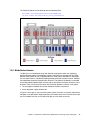
Figure 6-1 on page 97 shows how the Layer 2-7 GbE Switch Module installed in BladeCenter
could be used to redeploy blades to service a few different applications according to demand.
96
Deploying Samba on IBM Eserver BladeCenter