1
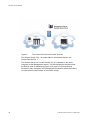
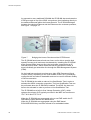
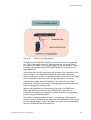
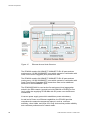
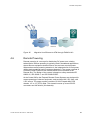
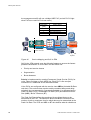
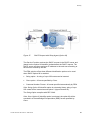
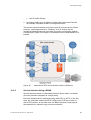
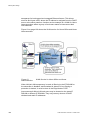
EDA System Services
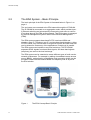
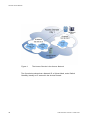
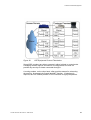
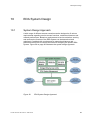
Ethernet
Access Domain
IAD
IP
DSLAM
Interacting
Delay
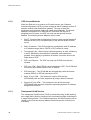
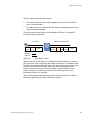
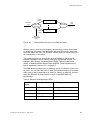
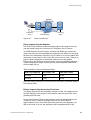
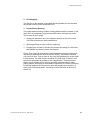
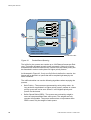
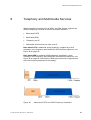
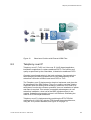
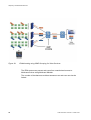
Figure 40
Ethernet
Switch
Network Delay
Voice
Gateway
Interacting
Delay
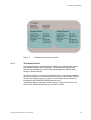
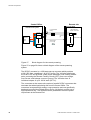
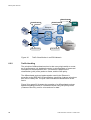
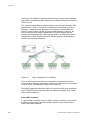
Delay Contributors
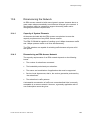
Delay Imposed by the Network
Due to the QoS measures implemented throughout the network the total
one-way delay is kept on a minimum for Telephony over IP frames.
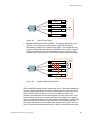
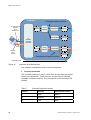
The EDA Ethernet Access Domain, including the ADSL line, introduces
delays that vary with the bandwidth provisioned for the ADSL line and with
the amount of competing Telephony over IP traffic to or from the same IAD,
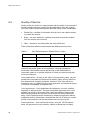
(when two or more lines on the same IAD are involved in calls). Table 4 on
page 55 shows examples of theoretical maximum one-way delays
introduced by the Ethernet Access Domain (up to 8 aggregating switches).
These examples are based on strict priority scheduling and ATM based
QoS (multiple PVCs).
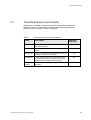
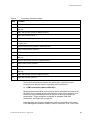
Table 4 Maximum Imposed Network Delay
ADSL Line Capacity
One Active Call
Two Active Calls
640 kbps
8 ms
10 ms
384 kbps
10 ms
13 ms
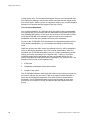
Note that setting interleave to more than zero will add a substantial delay to
the network delay.
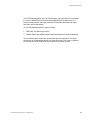
Delays Imposed by Interacting Functions
The delays imposed by the interacting functions of the voice gateway and
the IAD depend on the length of voice packets, and the type of the voice
gateway and IAD used.
As can be seen from Table 4, the maximum one-way delays imposed on
Telephony over IP traffic at 384 kbps and one call, by the EDA is
approximately 10 ms. Even with extra delay from the voice gateway and
IAD in the order of 30 ms, the total delay will be approximately 40 ms.
1/1551-HSC 901 35/3 Uen C 2005-12-02
55