1
A/C System Components
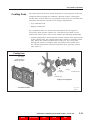
Evaporator
The action between the expansion valve and the evaporator is the key to
heat transfer in the system. The evaporator is the heat exchanger for the
low-pressure side of the system. It is the key heat exchanger in the A/C
system. All incoming or recirculated air passes through the evaporator. In
doing so, the evaporator absorbs heat from the cabin air (car interior) or
incoming fresh air so this heat can be carried to the condenser.
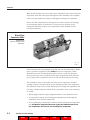
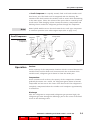
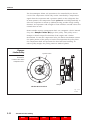
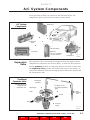
Evaporator
• Removes heat from
interior as refrigerant is
released into the core.
• Dehumidifies air by condensing moisture on the
fins.
Fig. 3-4
752f304
Evaporators are typically multiple-flow designs and made from aluminum.
Since the surface fins or plates of the evaporator are usually colder than
the air flowing past them, any moisture (water vapor) in the air tends to
condense and form liquid droplets on the fins. The moisture eventually
drains from the evaporator case through a drain hose to the ground. This
process is called dehumidification.
This process of dehumidifying is not only important to passenger
comfort, but can also be used in cold or humid climates to reduce
windshield fogging. However, a large amount of heat must be removed
from water vapor in order to condense it, so extreme humidity reduces the
ability of the evaporator to lower the temperature of the incoming air.
TOYOTA Air Conditioning and Climate Control – Course 752
Home
Bookmarks
Next
Print
Exit
3-3