1
Section 3
Expansion
Valve/
Evaporator
Interaction
Since the evaporator surface temperature can be close to 32° F (0° C),
there could be a problem in high humidity conditions when moisture
vapor condenses on the evaporator and freezes. This frozen water forms
an insulating layer that prevents air from reaching the evaporator to
exchange heat.
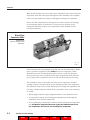
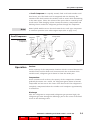
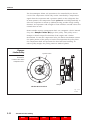
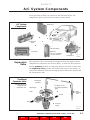
In order to prevent icing, the expansion valve can change the size of
the spray orifice (opening). The size of the orifice is controlled by a
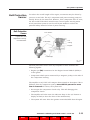
spring-loaded diaphragm that moves according to a heat-sensing tube
(bulb). This bulb, called the capillary tube is located at the outlet of the
evaporator. A thin, hollow tube connects the sensing tube to the
diaphragm chamber. The sensing tube contains refrigerant and senses the
evaporator temperature which changes the pressure inside the tube. The
capillary tube transfers this pressure to the diaphragm to push against
the spring and open the expansion valve to control refrigerant flow to the
evaporator. Less flow = less heat transfer; more flow = more heat transfer.
For example, if there is a high heat load in the vehicle, the evaporator
temperature will be relatively high (more heat transfer). The refrigerant
in the sensing tube will therefore expand and the increased pressure will
tend to open the expansion valve more. This increases refrigerant flow
and heat transfer in the evaporator. When the system stabilizes, the
evaporator surface temperature should remain constant at about
32° F (0° C) in order to provide the greatest heat-removing capacity.
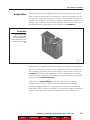
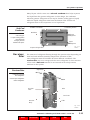
The traditional expansion valve has external equalization. The block-type
expansion valve is internally vented. This helps prevent flooding the
evaporator during operation with a high heat load.
Compressor
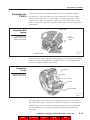
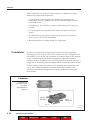
The compressor is driven by a drive belt and is a type of pump which
moves a compressible gas, as opposed to a pump that moves a liquid
(e.g. water pump). The air compressor in your repair shop and the intake
and compression strokes in a 4-stroke cycle engine are two other examples
of compressors.
In order for the refrigerant to exchange heat at the condenser, it must be
hotter than the air outside the vehicle. The compressor accomplishes this
by raising the pressure, and therefore, the temperature of the refrigerant.
3-4
TOYOTA Technical Training
Home
Bookmarks
Next
Print
Exit