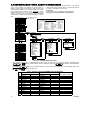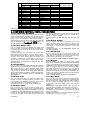
1
PowerMaxComplete Installer Guide Fully Supervised Wireless Alarm Control System TABLE OF CONTENTS 1. INTRODUCTION ....................................................... 3 2. SPECIFICATIONS..................................................... 3 2.1 General Data....................................................... 3 2.2 RF Section .......................................................... 3 2.3 Electrical Data ..................................................... 3 2.4 Communication ................................................... 4 2.5 Physical Properties ............................................. 4 3. INSTALLATION ......................................................... 4 3.1 Unpacking the Equipment................................... 4 3.2 Supplying Power to the Unit................................ 4 3.3 System Planning & Programming ....................... 4 3.4 Mounting ............................................................. 4 3.5 Wiring .................................................................. 4 3.6 Backup Battery Insertion..................................... 7 3.7 Optional GSM Module Mounting ........................... 7 3.9 Optional Expander Module Mounting ................. 8 3.10 Power Cable Connection .................................. 8 3.11 Control Panel Final Closure ............................ 10 4. PROGRAMMING..................................................... 11 4.1 INTRODUCTION .............................................. 11 4.1.1 General Guidance.......................................... 11 4.1.3 Installer’s Menu .............................................. 11 4.1.4 Setting a New Installer Code ......................... 11 4.1.5 Setting a New Installer Code in PowerMaxComplete that has 2 Installer Codes....... 11 4.2 ENROLLING WIRELESS DEVICES AND KEYFOB TRANSMITTERS......................................................... 12 4.2.1 General Guidance.......................................... 12 4.2.2 Enrolling Type ................................................ 12 4.2.3 Enroll/Delete Sensors .................................... 12 4.2.4 Enroll/Delete Keyfob Transmitters ....................... 12 4.2.5 Enroll/Delete Wireless Commander...................... 12 4.2.6 Enroll/Delete 2-Way Keypad .......................... 12 4.2.7 Enroll/Delete Wireless Siren........................... 12 4.2.8 Enroll/Delete Proximity Tags .......................... 12 4.3 DEFINING ZONE TYPES, NAMES & CHIME ZONES......................................................................... 14 4.4 DEFINING CONTROL PANEL PARAMETERS .... 15 4.4.1 Preliminary Guidance..................................... 15 4.4.2 Entry Delays 1&2 ........................................... 15 4.4.3 Exit Delay ....................................................... 15 4.4.4 Bell Time ........................................................ 15 4.4.5 Abort Time...................................................... 15 4.4.6 Alarm Cancel.................................................. 15 4.4.7 Quick Arm ...................................................... 15 4.4.8 Bypass............................................................ 15 4.4.9 Exit Mode ....................................................... 15 4.4.10 Piezo Beeps ................................................. 16 4.4.11 Trouble Beeps.............................................. 16 4.4.12 Panic Alarm.................................................. 16 4.4.13 Swinger Stop................................................ 16 4.4.14 Cross Zoning................................................ 16 4.4.15 Supervision .................................................. 16 4.4.16 NOT READY ................................................ 16 4.4.17 AUX Button A ............................................... 16 D-300885 4.4.19 Jam Detect................................................... 16 4.4.20 Latchkey....................................................... 16 4.4.21 “Not Active” .................................................. 16 4.4.22 Back Light .................................................... 17 4.4.23 Duress.......................................................... 17 4.4.24 Piezo Siren................................................... 17 4.4.25 Reset Option ................................................ 17 4.4.26 Tamper Option ............................................. 17 4.4.27 Siren On Line ............................................... 17 4.4.28 Memory Prompt ........................................... 17 4.4.29 Disarm Option .............................................. 17 4.4.30 Bell/Rep. Option........................................... 17 4.4.31 Low-Bat Ack................................................. 17 4.4.32 Screen Saver ............................................... 17 4.4.33 Confirm Alarm .............................................. 17 4.4.34 AC FAIL REP ............................................... 17 4.4.36 User Permission .......................................... 17 4.4.38 Batttery Type................................................ 17 4.5 DEFINING COMMUNICATION PARAMETERS... 19 Preliminary Guidance.............................................. 19 4.5.2 Autotest Cycle................................................ 19 4.5.3 Area Code...................................................... 19 4.5.4 Out Access No ............................................... 19 4.5.5 First Central Station Tel. ...................................... 19 4.5.6 First Account No. ........................................... 19 4.5.7 2ND Central Station Tel ..................................... 19 4.5.8 Second Account No. ...................................... 19 4.5.9 Report Format................................................ 19 4.5.10 4/2 Pulse Rate ............................................. 19 4.5.11 Reporting to Central Stations ......................... 19 4.5.12 Report CNF Alarm ......................................... 19 4.5.13 Send 2WV Code............................................ 19 4.5.14 Two-Way Voice Central Stations..................... 20 4.5.15 Ring Back Time ........................................... 20 4.5.16 Dialing Attempts........................................... 20 4.5.17 Set Private Tel. No.......................................... 20 4.5.18 Two-Way Voice - Private Phones.................... 20 4.5.19 Private Tel. Dialing Attempts ....................... 20 4.5.20 Reporting to Private Telephones..................... 20 4.5.21 Tel. Acknowledge .......................................... 20 4.5.22 Pager Tel. No............................................... 20 4.5.23 Pager’s PIN No. ........................................... 20 4.5.24 Reporting to a Pager.................................... 20 4.5.25 Recent Closure ............................................ 20 4.5.26 Remote Access............................................ 20 4.5.27 Mast. DL Code ............................................. 20 4.5.28 Inst. DL Code ............................................... 22 4.5.30 Zone Restore ............................................... 22 4.5.31 Upload Option.............................................. 22 4.5.32 Dialing Method ............................................. 22 4.5.33 Line Failure Report ...................................... 22 4.5.34 UL/DL Tel. Number...................................... 22 4.5.35 System Inactivity Report .............................. 22 4.5.38 Ambient Level .............................................. 22 4.6 DEFINING GSM PARAMETERS .......................... 22 4.6.1 GSM Module Installation................................ 22 4.6.2 1st, 2nd, 3rd & 4th SMS Number..................... 22 4.6.3 Reporting to SMS Phone Number .................... 22 1 4.6.4 GSM Line Failure Reporting .......................... 23 4.6.5 GSM Line Purpose......................................... 23 4.8 DEFINING OUTPUT PARAMETERS.................... 23 4.8.1 Preliminary Guidance..................................... 23 4.8.2 Define PGM.................................................... 23 4.8.3 Defining INT/STRB ........................................ 23 4.8.4 PGM General Definition ................................. 23 4.9 DEFINE VOICE ..................................................... 24 4.9.1 Record Speech .............................................. 24 4.9.2 Voice Box Mode ............................................. 24 4.10 DIAGNOSTIC TEST ............................................ 25 4.11 USER FUNCTIONS............................................. 25 4.12 RETRIEVING FACTORY DEFAULTS ................ 25 4.13 SERIAL NUMBER ............................................... 25 4.14 CALLING UPLOAD/DOWNLOAD SERVER ....... 26 5. TESTING PROCEDURES....................................... 26 5.1 Preparations...................................................... 26 5.2 Diagnostic Test ................................................. 26 5.3 Keyfob Transmitter Test.................................... 26 5.4 PGM output ON/OFF Test ................................ 27 5.5 Emergency Transmitter Test ............................ 27 6. MAINTENANCE ...................................................... 27 6.1 Dismounting the Control Panel......................... 27 6.2 Replacing the Backup Battery .......................... 27 6.3 Fuse Replacement............................................ 27 6.4 Replacing/Relocating Detectors ....................... 27 7. READING THE EVENT LOG .................................. 27 APPENDIX A. Detector Deployment & Transmitter Assignments ................................................................ 28 APPENDIX B. PGM Output Assignment ..................... 29 APPENDIX C. Event Codes ........................................ 29 APPENDIX D. Programmable Zone Types................. 31 APPENDIX E. PowerMaxComplete Compatible Devices ..................................................................................... 32 E1. PowerMaxComplete Compatible Detectors ...... 32 E2 PowerMaxComplete Compatible Transmitters . 32 E3 PowerMaxComplete Compatible WL Siren........... 33 E4. PowerMaxComplete Compatible GSM Modem 33 E5. Optional Speech Box........................................ 33 MESSAGE TO THE INSTALLER The PowerMaxComplete control panel is supplied with 2 instruction manuals: Installer Guide (this manual - for your exclusive use) User’s Guide (for your use during installation only - Must be handed over to the master user after testing the system). Appendices A.1 and A.2 will help you prepare an installation plan. Please take time to fill out the forms - your job will become much easier and confusion will be prevented. Filling out the forms will also help you create a list of detectors and transmitters that must be obtained for the particular application. Compatible detectors and transmitters are listed and described briefly in Appendix E. Remember - it is advisable to power up the control panel temporarily after unpacking and program it on the work bench, in accordance with the installation plan. The programming flow charts in the programming section show all options available for each parameter. Factory defaults are marked with a dark box to their right, and other options (that can be selected instead) are marked by clear boxes. This method allows you to put a checkmark in the appropriate clear box whenever you deviate from the factory defaults. Most of the programming section paragraph numbers correlate with the programming menu numbers. For example, paragraph 4.4.19 describes the "Jam detect", that exists in menu 4 (define panel), sub-menu 19 (Jam detect). Although setting the correct time and date is one of the user tasks, we recommend that you set the time and date in the course of programming. Access to the “User Settings” for the installer is possible through item 10 on the installer‘s menu or through the user menu (see User’s manual section 7). After programming, proceed to install the system as detailed in the Installation Instructions, from paragraph 3.4 onward. The installer should verify line seizure. Be aware of other phone line services such as DSL. If DSL service is present on the phone line, you must install a filter. It is suggested to use the DSL alarm filter model Z-A431PJ31X manufactured by Excelsus Technologies, or equivalent. This filter simply plugs into the RJ-31X jack and allows alarm reporting without breaking the internet connection. 2 D-300885 1. INTRODUCTION The PowerMaxComplete is a user and installer-friendly, 30-zone fully-supervised wireless control system. The system is designed to function in an appealing way to the user and also offers features that make installers’ life easier than ever before: EASY TO INSTALL • Optional plug-in RS-232 module that enables connection of an external GSM Module or local computer. EASY TO MAINTAIN • Status, alarm memory and trouble data are displayed upon request. • Diagnostic test provides visual and audible indication of the signal level of each detector. • Remote control and status verification from distant telephones. • Event log stores and displays information. • Upload / download from distant computer via telephone line or cellular modem. QUICK PROGRAMMING • Simple programming logic, fully menu driven. • Multiple-choice selection of options for each parameter. • Unequivocal visual prompts and audible signals. • Installer access to the user menu. 2. SPECIFICATIONS 2.1 General Data Zones Number: 28 wireless, 2 hardwired (zones 29 & 30). Hardwired Zone Requirements: 2.2 kΩ E.O.L. resistance (max. resistance of wires 220 Ω). Zone Types: Interior follower, interior, perimeter, perimeter follower, delay 1, delay 2, 24h silent, 24h audible, fire, nonalarm, emergency, gas and flood. User Codes: 8 codes, 4 digits each (9999 different combinations). Code 0000 is not allowed. Control Facilities: - Integral keypad - PowerCode / Code-Secure™ hand-held transmitters - Wireless commander - Remote telephone - Local or remote computer Display: Single line, Backlit 16-character LCD. Arming Modes: AWAY, HOME, AWAY-INSTANT, HOMEINSTANT, LATCHKEY, FORCED, BYPASS. Alarm inhibited during a single arming period (swinger stop) after: 1, 2, 3, alarm/tamper/fault, or not inhibited (programmable / selectable). Alarm Types: Silent alarm, siren alarm or sounder (internal) alarm, in accordance with zone attributes. Siren Signals: Continuous (intrusion / 24 hours / panic); triple pulse - pause - triple pulse... (fire). Siren (bell) Timeout: Programmable (4 min. by default) Internal Sounder Output: At least 85 dBA at 10 ft (3 m) Supervision: Programmable time frame for inactivity alert Special Functions: - Speech and sound control - Chime zones - Diagnostic test and event log - Remote control by telephone - Computer control and data download/upload - Calling for help by using an emergency transmitter - Tracking inactivity of elderly, physically handicapped and infirm people - Family message center (recording and playback) - Two-way voice communication Data Retrieval: Status, alarm memory, trouble, event log. Real Time Clock (RTC): The control panel keeps and displays time and date. D-300885 Compliance with U.S. Standards: Meets FCC 47 Part 15 and Part 68 requirements. Compliance with European CE Standards: EN 50082-1, EN301489-3,7, EN6100-4-6, EN60950, EN300220, EN50130-4, EN50130-5, EN50131-3 The PowerMaxComplete is compatible with the RTTE requirements - Directive 1999/5/EC of the European Parliament and of the Council of 9 March 1999. According to the European standard EN50131-1, the PowerMaxComplete security grading is 2 – "low to medium risk" and environmental classification is II – "indoor general" and the power supply type is A. GSM standards: Europe : Complies with CE standards 3GPP TS 51.0101, EN 301 511, EN 50361, EN301489-7 USA: FCC 47 Part 22 (GSM850) and Part 24 (GSM 1900). UL1637, UL1635, UL1023, UL985, ULC-S545-02, ULC C1023. EMC standard: FCC 47 Part 15. SAR standards: FCC rule 2.1093, FCC Docket 96-326 & Supplement C to OET Bulletin 65 2.2 RF Section Operating Frequencies (MHz): 315 (in USA & Canada), 433, 868.95 or other UHF channel per local requirement in the country of use. Receiver Type: Super-heterodyne, fixed frequency Receiver Range: 600 ft (180 m) in open space Antenna Type: Spatial diversity Coding: PowerCode and/or CodeSecure™ 2.3 Electrical Data Power Supply: Internal switching power supply 100VAC to 240VAC, 50/60 Hz, 0.5A / 12.5 VDC, 1.6A. Current Drain: Approx. 40 mA standby, 1400 mA at full load. Site External Siren Current (EXT): 450* mA max @ 10.5 VDC minimum when powered by AC & DC (battery). Site Internal Siren Current (INT): 450* mA max. @ 10.5 VDC minimum when powered by AC & DC (battery) PGM Output Current: 100* mA max. Wired Detectors (zones 29&30) Total (Sum) Current: 36* mA max. High Current / Short Circuit Protection: All outputs are protected (automatic reset fuse). * Total PowerMaxComplete output current (of INT & EXT sirens, PGM output and detectors) cannot exceed 550 mA. 3 Backup period Backup Battery Options: Maximum external devices current (1) 2200 mAh 81800 mAh 1300 mAh Battery Pack (4) 8-Battery 6 Battery (2) (3) Pack Pack 4h 8h 12h 24h 36h 48h 210mA 300mA 380mA 90mA 160 mA 200mA 45mA 90 mA 120 mA 0mA 25 mA 45mA (no backup) 5mA 15mA (no backup) (no backup) 0mA 1 Devices that are connected between 12V terminal and GND of PowerMaxComplete, that includes internal GSM and proximity reader. 2 7.2V 1300 mAh, rechargeable NiMH battery pack, p/n GP130AAH6BMX, manufactured by GP. 3 9.6V 1800 mAh, rechargeable NiMH battery pack, p/n GP180AAH8BMX, manufactured by GP. 4 9.6V 2200 mAh, rechargeable NiMH battery pack (special order). Maximum battery recharge time: 72 hours Battery Test: Once every 10 seconds. 2.4 Communication Built-in Modem: 300 baud, Bell 103 protocol Data Transfer to Local Computer: Via RS232 serial port Report Destinations: 2 central stations, 4 private telephones, 1 pager. Reporting Format Options: SIA, Pulse 4/2 1900/1400 Hz, Pulse 4/2 1800/2300 Hz, Contact ID, Scancom. Pulse Rate: 10, 20, 33 and 40 pps - programmable Message to Private Phones: Tone or voice Message to Pager: PIN No. Alarm Type Zone No. Ring Detection: The unit does not support ring detection without DC voltage present on the telephone lines. 2.5 Physical Properties Operating Temp. Range: 14°F to 120°F (-10°C to 49°C) Storage Temp. Range: -4°F to 140°F (-20°C to 60°C) Humidity: 85% relative humidity, @ 30°C (86°F) Size: 266 x 206 x 63 mm (10-7/16 x 8-18 x 2-1/2 in.) Weight: 1.44Kg (3.2 pounds) (with battery) Color: White 3. INSTALLATION 3.1 Unpacking the Equipment Open the cardboard packing box and check whether all items have been included. If you find out that an item is missing, contact your vendor or dealer immediately. 3.2 Supplying Power to the Unit Connect power to the PowerMaxComplete temporarily (see figure 3.10). Alternatively, you may power up from the backup battery, as shown in figure 3.3. Disregard any “trouble” indications pertaining to lack of battery or lack of telephone line connection. 3.3 System Planning & Programming It pays to plan ahead - use the tables in appendices A and B at the end of this guide to register the intended location of each detector, the holder and assignment of each transmitter. 4 Gather up all transmitters and detectors used in the system and mark each one in accordance with your deployment plan. Program the system now as instructed in the programming section. 3.4 Mounting Required tool: Philips screwdriver #2. PowerMaxComplete mounting process is shown in figure 3.1 - 3.11. 3.5 Wiring Required tools: Cutter and slotted screwdriver - 3 mm blade. PowerMaxComplete wiring is shown in figure 3.2. D-300885 Back unit 1 3 Release screws Mark 4 drilling points on mounting surface 5 4 Fasten the back unit with 4 screws Drill 4 holes and insert wall anchors Figure 3.1 – Back Unit Mounting PHONE WIRING Connect telephone cable to SET connector and telephone line cable to LINE connector (through the desired wiring cable entry). PHONE WIRING IN NORTH AMERICA 8-POSITION RJ-31X PLUG RJ-31X JACK GRAY BROWN RED GREEN GRAY RJ-31X CORD D-300885 1 2 3 4 RED RJ-31X 7 6 5 LINE FROM STREET HOUSE PHONES GRN BROWN 5 ZONE 29 & SIREN WIRING MAGNETIC CONTACT OR ANY OTHER CONTACT (NOT A DETECTOR) 2.2 kΩ SITE EXTERNAL SIREN MG ELECTRONICS MG441PDS ONLY Alarm N.C. OPTIONAL EXPANDER MODULE ZONES, SIRENS, AUDIO BOX AND WIRED DETECTORS WIRING EXPANDER Note The EXPANDER module is an optional module. If this optional module is not used, a small 4terminal strip is used instead (2 terminals for zone 29 and 2 terminals for siren). MIC ZONE 29 / ZONE 30 SPK GND 12V PGM EXT.- SRN+ IN.- Z29 GND Z30 CONNECT WIRED DETECTORS AS FOLLOWS: GND 12V(*) ZONE 29 / ZONE 30 GND 12V(*) 2.2 kΩ TAMP Alarm Power N.C. N.C. Detector with Tamper switch Note Regarding zones 29 & 30, the Control Panel “sees” a specific resistance according to the event, as follows: Power Normal (no alarm & no tamper): 2.2 kΩ Alarm N.C. Alarm event: 4.4 kΩ Detector without Tamper event: Infinite resistance Tamper switch VOICE BOX SITE INTERNAL SIREN OR STROBE SITE EXTERNAL SIREN MG441PDS ONLY Caution: When using the Expander, the internal siren and Zone 29 must be wired via the Expander and not via the control panel. Figure 3.2 - Wiring Notes for EXPANDER module wiring: * Zone 29/GND and Zone 30/GND terminals can be connected to a normally closed contact of a detector, switch (for example a Tamper switch of any device), or a pushbutton, via a 2.2 KΩ resistor. The 12V terminal can be used to supply 12V (up to 36mA) to a detector (if necessary). ** The EXT terminal can be used to trigger an external siren. The INT terminal can be programmed for an "internal siren" or "strobe" (see DEFINE OUTPUTS - DEFINE INT/STRB in par. 4.8). The 12V and "GND" terminals can be connected to a siren (for constant DC power supply). 6 WARNING! When plugging terminals back into place, be sure to align them carefully with the pins on the PCB. Misaligned or reverse insertion of terminals may damage internal PowerMaxComplete circuits! IMPORTANT! The terminals for internal and external sirens are DC outputs intended for 12V sirens. Connecting a loudspeaker to any of these outputs will cause a short circuit and will damage the unit. D-300885 Notes for UL installations a. The sirens connected to the sites INTERNAL or EXTERNAL SIREN in the EXPANDER must be suitable for burglar alarm applications. If UL fire installation is required, all installed accessories must comply with UL fire standards. Any external siren used, must be UL listed and shall be rated to operate under the voltage specified in the Specifications. Note: The siren on the control panel PCB is non-UL compliant. b. A device that is connected to PGM terminal should not exceed the current consumption defined for the 24-hour backup period listed in the Backup Battery Options table (see section 2.3). c. The system shall be installed in accordance with Chapter 2 of the National Fire Alarm Code, ANSI/NFPA 70. d. All wiring should be acceptable for class 1 systems as defined by the National Electrical Code, ANSI/NFPA 70. No. 26 AWG or larger telecommunication line cord shall be used. e. The system shall be installed in accordance with CSA C22.1 Canadian Electrical Code, Part 1. f. A minimum spacing of 1/4 inch shall be maintained between the telephone wiring and the low voltage wiring (zones, bell circuit, etc). Do not route the LINE and SET wires in the same wiring channel with other wires. 3.6 Backup Battery Insertion Open battery compartment cover (see drawing below). Insert one 6-battery pack or 8-battery pack and connect its connector as shown below. 3.7 Optional GSM Module Mounting Note: The GSM module can be used with an internal or external antenna. Plug in the GSM Module and fasten it with the screw: Front unit GSM Figure 3.4 - Optional GSM Module Mounting Insert the SIM card into the GSM module: Internal GSM antenna Internal GSM antenna cable External GSM antenna cable GSM antenna (internal / external) connector Front unit SIM card insertion 1 2 3 Slide top cover Open cover Align SIM card in cover (note cover orientation) 4 Slide SIM card into cover 5 6 Rotate cover Lock cover to close to close IMPORTANT 1.Before inserting SIM card, deactivate its PIN code (by using a cellular telephone). 2.Do not insert or remove SIM card when t he contr ol panel is powered by AC power or battery. Figure 3.5 - SIM Card insertion For internal antenna only: Remove the paper strip from the antenna sticker and stick the antenna on the control panel. Connect the antenna to the control panel GSM antenna connector Battery cable Figure 3.3 - Battery Insertion D-300885 7 DUAL RS-232 MODULE Connector for PC Internal GSM antenna Connector for external GSM or PC Connector Figure 3.8 – DUAL RS-232 Module Mounting 3.9 Optional Mounting Expander Module The EXPANDER module enables connection of speech box, site external siren, site internal siren or strobe and connection of wired detector to zone number 29 and 30. The EXPANDER module also enables connection of a desired device to PGM (programmable) output that is activated according to a predefined conditions. Mount the Expander module as shown below. 2 Antenna cable Figure 3.6 - GSM Internal Antenna Mounting For external antenna only: Connect the external antenna to the GSM antenna connector. Verify that the antenna cable routing enables proper closing of the control panel. External GSM antenna GSM antenna connector Figure 3.7 - GSM External Antenna Connection 3.8 DUAL RS-232 Optional Module Mounting The DUAL RS-232 is a Module that enables connection of any two simultaneous devices, such as Local PC or external GSM Module. The external GSM unit enables the PowerMaxComplete system to operate over a cellular network (for details regarding the GSM modem features and connections, refer to the external GSM Modem installation instructions). To install the DUAL RS-232 module into the control panel, press it into the marked location (see drawing below) until a click is heard. Connect a local PC or external GSM module, to one of the DUAL RS-232 module connectors, as shown below. 8 1 Press the EXPANDER module in the back panel between its 2 clips. C o n n ec t t h e Expander Module flat cable to the front p a n e l E X PA N D E R receptacle. The receptacle with strain relief clip is for the front unit - do not connect to the back unit! Strain relief clip 2 Clips Figure 3.9 – EXPANDER Module Mounting 3.10 Power Cable Connection Connect the power cable and close the control panel as shown in figure 3.10. Socket-outlet shall be installed near the equipment and shall be easily accessible. D-300885 Power Cable Clamp Extraction 1 2 Thick cable entry: Pull out a d e sir ed w iri ng plastic cap (1 of 4). Extract cable clamp for use in the next step. Power Connection for all Countries Except USA 2 Connect the power supply output cable to the power connector in the front panel. Power cable clamp options For thin For thick cable cable (reversed clamp) 1 Safety cover Insert power cable through the desired wiring channel (see step 1), route it to the power supply unit and connect its 2 wires to the power supply terminal strip with screwdriver. Fasten power cable by its clamp (see also step 2 - this clamp can be reversed to fit thick/thin cable) and close the safety cover. Power supply unit (*) Power Connection for USA Only Connect the power adapter to the front panel power connector. Figure 3.10 - Power Cable Connection * Do not route wiring in this area, to enable proper closure of the control panel. D-300885 9 3.11 Control Panel Final Closure Control panel final closure is shown below. 1 Connect the flat cables, between front and back units, in their respective connectors (up to 3, according to options). Close the panel and fasten the 2 screws Figure 3.11 - Final Closure 10 D-300885 4. PROGRAMMING 4.1 INTRODUCTION 4.1.1 General Guidance We recommend to program the PowerMaxComplete on the work bench before actual installation. Operating power may be obtained from the backup battery or from the AC power supply. The installer’s menu is accessible only to those who know the installer’s 4-digit code, which is 9999 by factory default. Note: Access to the installer menu, in PowerMaxComplete that has "User Permission" enabled (for example in UK) is accessible only at the end of the user menu. This option can be changed is necessary (see par. 4.4.36). For PowerMaxComplete that has 2 installer codes (not applicable in UK), the default INSTALLER code is 8888 and the default MASTER INSTALLER code is 9999. The following actions can be done only by using the master installer code: • Changing master installer code. • Resetting the PowerMaxComplete parameters to the default parameters, • Defining specific communication parameters, as detailed in a note in figure 4.5. Obviously, you are expected to use this code only once for gaining initial access, and replace it with a secret code known only to yourself. You will mainly use 5 control pushbuttons during the entire programming process: 4.1.5 Setting a New Installer Code in PowerMaxComplete that has 2 Installer Codes For PowerMaxComplete with 2 installer codes, INSTALLER code (default 8888) and MASTER INSTALLER code (default 9999), set new codes as shown in figure 4.1c. For details regarding the different authorization levels when logging in with installer code and master installer code, refer to the note inside figure 4.5 (DEFINE COMM). By using the master installer code, the menu enables changing both master installer code and installer code. By using the installer code, the menu enables changing the installer code only. (First display is READY or NOT READY) READY 00:00 NORMAL MODE (*) USER SETTING (*) USER CODE [master/ user code] INSTALLER MODE ENTER CODE [installer code] 1. NEW INSTL CODE (See fig. 4.1b & 4.1c) - to move one step forward in a menu. 2. ENROLLING (See figure 4.2) - to move one step backward in a menu. 3. DEFINE ZONES (See figure 4.3) - to enter the relevant menu or confirm data. 4. DEFINE PANEL (See figure 4.4) - to move one level up in a menu. 5. DEFINE COMM. (See figure 4.5) - to return to the "OK TO EXIT" state. 6. DEFINE GSM (See figure 4.6) 8. DEFINE OUTPUTS (See figure 4.8 ) The sounds you will hear while programming are: - Single beep, heard whenever a key is pressed. ☺ - Double beep, indicates automatic return to the normal operating mode (by timeout). (**) 9. DEFINE VOICE (See figure 4.9) 10. DIAGNOSTICS (See figure 4.10) 11. USER SETTINGS (See chapter 7 in User Guide) 12. FACTORY DEFLT (See par. 4.12) 4.1.2 Entering an Invalid Installer Code 13. SERIAL NUMBER If you enter an invalid installer code 5 times, the keypad will be automatically disabled for 90 seconds and the message WRONG PASSWORD will be displayed. (Control Panel serial number display) 14. START UL/DL (See section 4.14) - Happy Melody (- - - –––), indicates successful completion of an operation. - Sad Melody (–––––), indicates a wrong move or rejection. 4.1.3 Installer’s Menu The installer's menu is shown in figure 4.1a. The text in rectangles represents the current PowerMaxComplete display. 4.1.4 Setting a New Installer Code <OK> TO EXIT (*) Applicable only when "USER PERMIT" function is enabled (see par. 4.4.36 - USER PERMIT) (**) Optional feature. Figure 4.1a - Installer’s Menu To set an installer code, perform the actions that are presented in figure 4.1b. When you are instructed to enter code, enter a 4-digit code. D-300885 11 (See fig. 4.1a) 1. NEW INSTL CODE By using INSTALLER CODE By using MASTER INSTALLER CODE NEW INST. CODE 1. NEW INSTL CODE (see fig. 4.1a) 1. NEW INSTL CODE INST. CODE xxxx [code] NEW INST. CODE NEW MASTER CODE NEW INST. CODE INST. CODE xxxx [code] MASTER CODE xxxx [code] INST. CODE xxxx [code] Figure 4.1b - Setting a New Installer Code (see note) (see fig. 4.1a) Figure 4.1c - Setting a New Installer Code in System with Inst. & Master Inst. Codes (see note) Note: Installer Code should never be programmed as “0000”. Doing so will lock the user out of the installer menu! 4.2 ENROLLING WIRELESS DEVICES AND KEYFOB TRANSMITTERS 4.2.1 General Guidance The ENROLLING mode has the following sub-modes: • ENROLLING TYPE (wireless devices) • ENROLL SENSORS. ENROLL KEYFOB (multi-button CodeSecure transmitters) • ENROLL WL 1WAY KP (wireless commander MCM-140+) • ENROLL WL 2WAY KP (wireless 2-way keypad MKP-150/ MKP-151) • ENROLL WL SIREN (wireless siren) • ENROLL PROX TAG (proximity tag) Before beginning, gather all the devices that you intend to enroll and make sure they all have batteries installed. Your control panel must recognize the unique identification code (ID) of each such device in order to supervise them, receive their signals and respond accordingly. Attention! CodeSecure transmitters are mainly used for arming/disarming and can not be enrolled to zones. In order to enroll to zones, use only non-CodeSecure wireless devices. 4.2.2 Enrolling Type 4.2.5 Enroll/Delete Wireless Commander The Wireless Commander (MCM-140+) is a remote control unit that enables the user to remotely control the system. To enroll / delete up to 8 wireless commanders, refer to figure 4.2 (Enroll WL 1-way KP). 4.2.6 Enroll/Delete 2-Way Keypad The 2-way keypad, type MKP-150/MKP-151, enables the user to remotely control the system and also to receive data from the system (status, alarm and trouble data). To enroll up to two 2-way keypads, refer to figure 4.2. 4.2.7 Enroll/Delete Wireless Siren The wireless siren is a remote siren that is activated upon predefined events by the PowerMaxComplete system. To enroll / delete up to 2 wireless sirens, refer to figure 4.2. 4.2.8 Enroll/Delete Proximity Tags Proximity tags enable authorized people to enter restricted areas. Presenting valid proximity tag, while the system is armed, causes the system to disarm. Presenting valid proximity tag, while the system is disarmed, causes the system to be armed in AWAY (optional HOME) mode. To enroll / delete proximity tags, refer to figure 4.2. Here you determine whether to enroll a wireless device by normal transmission or by device Tamper function (opening its cover). Options: normal, or by tamper. 4.2.3 Enroll/Delete Sensors For PowerMaxComplete without expander module: Magnetic contact or any other contact (not a detector) can be enrolled in zone 29. For PowerMaxComplete with expander module: Wired detectors can be enrolled in zones 29&30 and wireless detectors can be enrolled in zones 01-28. • Before enrolling, the lens at the front of PIR STOP and dual-technology sensors should be masked to prevent inadvertent transmission. • Make sure that magnetic contact transmitters are together with their magnets, to prevent them from sending alarm transmissions. To enroll / delete wired / wireless sensors, refer to Fig. 4.2. 4.2.4 Enroll/Delete Keyfob Transmitters Keyfob transmitters are multi-button wireless CodeSecure™ transmitters. Eight system users use them for better, quicker and safer control over various system functions. To enroll / delete 1-way or 2-way keyfob transmitters, refer to figure 4.2. 12 D-300885 ENROLLING TYPE (*) ENROLL SENSORS SET SENSITIV. normal enroll by tamper Keyfob No: - higher sensitivity lower sensitivity Select by or [Keyfob No.] (e.g. 5) (****) ZONE No: - (First display is READY or NOT READY) READY 00:00 Zone No. [wired 29/30] (e.g. 29) ZONE No: 29 ZONE No: 05 ZONE No: 05 <OK> TO ENROLL TRANSMIT NOW [Initiate transmission) <OFF> TO DELETE ZONE No: 29 ZONE No: 05 ZONE No: 05 USER SETTINGS ENTER CODE [installer code] for next enrolling action ENROL WL 2WAY KP 2way kp No: [WL 1-way keypad No. 1 to 8] (e.g. 5) 1way kp No : 5 1way kp No : 5 TRANSMIT NOW press key until red LED lights <OFF> TO DELETE 2way kp No : 2 * 1way kp No: 5 8. DEFINE OUTPUTS 9. RECORD SPEECH 1way kp No: 5 (**) 2way kp No : 2 TRANSMIT NOW Press MKP-150/ MKP-151 back tamper switch once (see MKP-150/ MKP-151 inst. instructions) <OFF> TO DELETE AWAY 2way kp No: 2 2way kp No: 2 for next enrolling action for next enrolling action Deleting a wireless keypad MKP-150/MKP-151 Enrolling a wireless Deleting a wireless Enrolling a wireless keypad commander MCM-140+ commander MCM-140+ MKP-150/MKP-151 10. DIAGNOSTICS (*) ENROL WL SIREN 11. USER SETTINGS ENROLL PROX TAG SIREN No : Tag No: - siren No. [WL 1 or 2] (e.g. 2) 12. FACTORY DEFLT 13. SERIAL NUMBER siren No : 2 14. START UL/DL TRANSMIT NOW <OK> TO EXIT [MKP-150/MKP-151 No. 1 or 2] (e.g. 2) (**) 4. DEFINE PANEL 6. DEFINE GSM Optional 1way kp No : 3. DEFINE ZONES KEYFOB No: 05 Enrolling a Keyfob Deleting a Keyfob ENROL WL 1WAY KP 2. ENROLLING 5. DEFINE COMM <OFF> TO DELETE (press any key) (**) Deleting wired/ WL sensor Enrolling wired sensor Enrolling a WL sensor 1. NEW INSTL CODE TRANSMIT NOW for next enrolling action (**) (***) for next enrolling action Keyfob No: 5 KEYFOB No: 05 (**) (**) Keyfob No: 5 [WL Zone No. [wired/WL Zone No. 01-28] (e.g. 05) 01-30] (e.g. 05) NORMAL MODE INSTALLER MODE ENROLL KEYFOB Momentarily press the wireless siren self-test button until a squawk is heard (1 sec. approx.) Open WL siren cover and remove its battery <OFF> TO DELETE siren No: 2 for next enrolling action Enrolling a wireless siren (Prox tag No.) (e.g. 5) (**) siren No : 2 siren No: 2 Deleting a wireless siren (**) Tag No: 5 Tag No: 5 PRESENT TAG <OFF> TO DELETE Present tag (**) Tag No: 05 Tag No: 05 for next enrolling action Enrolling a Prox tag Deleting a prox tag Figure 4.2 - Enrolling / Deleting Wireless Devices / Keyfobs / Wireless Commanders / Wireless Sirens * Keyfob & proximity tags enrolling can be performed by the installer or by the user (via USER SETTINGS menu). ** A black box in the display means that a device is enrolled (the system has learned its ID). No black box indicates that the device is not enrolled. D-300885 *** Initiate either normal transmission or the device tamper function (see ENROLLING TYPE, Par. 4.2.2). ****Select "higher" sensitivity for far wireless device, "lower" for near devices. 13 4.3 DEFINING ZONE TYPES, NAMES & CHIME ZONES This mode allows you to assign one of 13 zone types to each of the system's 30 (wireless & wired) zones. In addition, it also allows you to assign a name to each zone and determine whether the zone will operate as a chime zone (only while the system is in the disarmed or Home arming state). When a chime zone is triggered, chime melody or zone name is heard (there are 3 selectable chime modes - Melody chime, Zone Name Chime or Chime Off). READY 00:00 (First display is READY or NOT READY) NORMAL MODE USER SETTINGS INSTALLER MODE ENTER CODE [installer code] 2. ENROLLING 3. DEFINE ZONES A list of factory defaults is printed on table 1. You may fill out the blank columns even before you start and proceed to program according to your own list. Remember! A delay zone is also a perimeter zone by definition. Zone types are fully explained in Appendix D. Selectable Zone Names 31 zone names can be selected, 26 fixed names and 5 custom names (defined by the installer - see chap. 4.8): Utility room Dining room Hall Attic Yard Kitchen Downstairs Back door Laundry room Custom 1 Emergency Basement Custom 2 Living room Fire Bathroom Master bath Custom 3 Front door Bedroom Master bdrm Custom 4 Child room Garage Custom 5 Garage door Office Closet Guest room Upstairs Den ZONE No: - [Zone No.] (e.g. 05) 5. DEFINE COMM 6. DEFINE GSM 8. DEFINE OUTPUTS 9. DEFINE VOICE 10. DIAGNOSTICS 11. USER SETTINGS 12. FACTORY DEFLT 13. SERIAL NUMBER Zxx: TYPE 1. Inter-follow 2. Perimeter 3. Perim-follow 4. Delay 1 5. Delay 2 6. 24h silent 7. 24h audible 8. Fire 9. Non-alarm 10. Emergency 11. Gas 12. Flood 13. Interior (*) Zxx: NAME - Attic Back door Basement Bathroom Bedroom Child room Closet Zxx: CHIME Melody-chime Zone name-chime Chime off (*) (**) (see list above) (*) 14. START UL/DL <OK> TO EXIT Figure 4.3 - DEFINE ZONES Flow Chart The currently saved option is displayed with a dark box at the right side. To review the options, repeatedly click or button, until the desired option is displayed, then click (a dark box will be displayed at the right side). button in this location brings you to the same zone number that you are dealing with. Press ** Clicking the or to select the next zone. * Zone No. 1 2 3 4 5 6 7 8 9 10 11 12 13 14 14 Table 1 - DEFAULT AND PROGRAMMED ZONE DEFINITIONS Zone Type Zone Name Chime (melody Default Programmed Default Programmed Zone Name or Off) (*) Delay 1 Front Door Delay 1 Garage Delay 2 Garage Door Perimeter Back Door Perimeter Child Room Interior Office Interior Dining Room Perimeter Dining Room Perimeter Kitchen Perimeter Living Room Interior Living Room Interior Bedroom Perimeter Bedroom Perimeter Guest Room D-300885 Zone Zone Type Zone Name Chime (melody No. Default Programmed Default Programmed Zone Name or Off) (*) 15 Interior Master Bedroom 16 Perimeter Master Bedroom 17 Perimeter Laundry Room 18 Perimeter Master Bathroom 19 Perimeter Basement 20 Fire Fire 21 Fire Fire 22 Emergency Emergency 23 Emergency Emergency 24 24 h / silent Basement 25 24 h / silent Office 26 24 h / audible Attic 27 24 h / audible Den 28 non-alarm Yard 29 non-alarm Hall 30 non-alarm Utility room * Note: All zones are Off-chime by default. Enter your own choice in the last column and program accordingly. 4.4 DEFINING CONTROL PANEL PARAMETERS 4.4.1 Preliminary Guidance This mode allows you to customize the control panel and adapt its characteristics and behavior to the requirements of the particular user. An illustrated process is shown in figure 4.4. In this illustration, each selected option is displayed with a dark box at the right side. To review the button, until or options, repeatedly click the desired option is displayed, then click SHOW/OK button. 4.4.2 Entry Delays 1&2 (Fig. 4.4, location 01, 02). Two different entry delays allow the user to enter the protected site (while the system is in the armed state) via 2 specific doors and routes without causing an alarm. Following entry, the user must disarm the control panel before the entry delay expires. Slow-rate warning beeps start sounding once the door is opened, until the last 10 seconds of the delay, during which the beeping rate increases. Locations No. 1 (entry delay 1) and 2 (entry delay 2) allow you to program the length of these delays. Available options for each delay are: 00s, 15s, 30s, 45s, 60s , 3m and 4m. the siren remains inactive and the alarm is not reported. If the user disarms the system within the allowed abort interval, the alarm is aborted. Available options are: 00s, 15s, 30s, 45s, 60s, 2m, 3m, 4m. 4.4.6 Alarm Cancel (Fig. 4.4, location 06). Here you determine the ”cancel alarm” period that starts upon reporting an alarm to the central station. If the user disarms the system within that time period, a “cancel alarm” message is sent to the central station. Available options are: 1, 5, 15, 60 minutes, 4 hours and also cancel inactive. 4.4.7 Quick Arm (Fig. 4.4, location 07). Here you determine whether the user will be allowed to perform quick arming or not. Once quick arming is permitted, the control panel does not request a user code before it arms the system. The two options are: quick arm ON and quick arm OFF. 4.4.8 Bypass (Fig. 4.4 location 03). An exit delay allows the user to arm the system and leave the protected site via specific routes and doors without causing an alarm. Slow-rate warning beeps start sounding once the arming command has been given, until the last 10 seconds of the delay, during which the beeping rate increases. Location No. 3 allows programming of the exit delay length. Available options are: 30s, 60s, 90s, 120s, 3m, 4m. (Fig. 4.4, location 08). Here you permit either manual bypassing of individual zones (through the USER SETTINGS menu), or allow the system to "force arm" (perform automatic bypassing) of open zones during the exit delay. If desired, press the arming key twice if you want to eliminate the delay beeps that continue during a force arming. If a zone is open and forced arming is not permitted, “NOT READY” is displayed and the system does not arm (the “Sad Melody” will sound). If "no bypass" is selected, neither manual bypassing nor force arming is allowed. Options: manual bypass, force arm and no bypass. 4.4.4 Bell Time 4.4.9 Exit Mode 4.4.3 Exit Delay (Fig. 4.4, location 04). Here you select the length of time the bell (or siren) is allowed to function upon alarm. The bell time starts upon activation of the siren. Once the bell time expires, the siren is automatically shut down. Available options are: 1, 3, 4, 8, 10, 15 and 20 minutes. 4.4.5 Abort Time (Fig. 4.4 location 05). Here you select the length of time allowed by the system to abort an alarm (not applicable to alarms from FIRE, 24H SILENT, EMERGENCY, GAS and FLOOD zones). The PowerMaxComplete is programmed to provide an “abort interval” that starts upon detection of an event. During this interval, the buzzer sounds a warning but D-300885 (Fig. 4.4, location 09). Here you determine whether the exit delay will restart if the exit / entry door is reopened before the exit delay expires. Restarting the exit delay is helpful if the user re-enters immediately after going out to retrieve an item that he left behind. Three types of exit mode are available: Restart Exit - Exit delay restarts when the door is reopened during exit delay. The restart occurs once only. Off by door - When the door is closed, the exit delay is automatically terminated (even if the defined exit delay was not completed). Normal - The exit delay is exactly as defined, regardless of whether the door is open or closed. 15 4.4.10 Piezo Beeps (Fig. 4.4, location 10). Here you determine whether warning beeps will sound or muted during exit and entry delays. An additional option is to mute the warning beeps only when the system is armed “HOME”. Options: enable beeps, off when home and disable beeps. 4.4.11 Trouble Beeps (Fig. 4.4, location 11). Under trouble conditions, the sounder emits a series of 3 short beeps once per minute. Here you determine whether this special beeping sequence will be active, inactive, or just inactive at night (the range of “night” hours is defined in the factory). The 3 options are: enable beeps, off at night (8 PM through 7 AM) and disable beeps. 4.4.12 Panic Alarm (Fig. 4.4, location 12). Here you determine whether the user will be allowed to initiate a panic alarm by simultaneous pressing either the two panic buttons (on the keypad / wireless commander) or away + home (on a keyfob transmitter). Audible panic activates the siren and simultaneously transmits a message via telephone. Silent panic only transmits a message via telephone. The options are: silent panic, audible panic and disable panic. 4.4.13 Swinger Stop (Fig. 4.4, location 13). Here you determine how many times each zone is allowed to initiate an alarm within a single arming period (including tamper & power failure events of detectors, PowerMaxComplete and wireless siren). If the alarms number from a specific zone exceeds the programmed number, the control panel automatically bypasses the zone to prevent recurrent siren noise and nuisance reporting to the central station. The zone will be reactivated upon disarming, or 48 hours after having been bypassed (if the system remains armed). Available options are: shut after 1, shut after 2, shut after 3 and no shutdown. 4.4.14 Cross Zoning (Fig. 4.4, location 14). Here you determine whether cross zoning will be active or inactive. Cross zoning is a method used to counteract false alarms - an alarm will not be initiated unless two adjacent zones are violated within a 30-second time limit. This feature is active only when arming AWAY and only with zone couples from zone No. 18 to 27 (18 and 19, 20 and 21, etc.). You may use any one of these zone couples to create a “cross-zoned” area. Note: If one of two crossed zones is bypassed (see Para. 4.4.8), the remaining zone will function independently. Note: Every 2 crossed zones must be of the allowed zone type (Interior, Perimeter, Perimeter follower). The options are: cross zone ON and cross zone OFF. Cross zoning is not applicable in Entry/ Exit zones and 24h zones (Fire, Emergency, 24h audible, 24h silent). 4.4.15 Supervision (Fig. 4.4, location 15). Here you determine the time limit for reception of supervision reports from various supervised wireless devices. If any device does not report at least once within the selected time limit, an “INACTIVITY” alert is initiated. The options are: 1, 2, 4, 8, 12 hours and disable. 16 4.4.16 NOT READY (Fig. 4.4, location 16). Here you determine if the system will be NOT READY status when there is a supervision failure. In the "in supervision" mode, the system will be in NOT READY status if during the last 20 minutes a supervision message was not received. Options: normal and in supervision. 4.4.17 AUX Button A (Fig. 4.4, location 17). Here you select the function of the AUX button on keyfob transmitters and wireless commanders MCM-140+. Four options are offered for each AUX button: Status (applicable only to control panel that includes voice option): Pressing the AUX button will cause the control panel’s voice module to announce the system status. Instant: Pressing the AUX button while the exit delay is in progress will cause the system to arm “instant” (the entry delay is canceled). Skip exit delay: Pressing the AUX button will immediately cause the system to arm “instant”. PGM: Pressing the AUX button will activate the PGM output (see further programming under “DEFINE OUTPUTS”, par. 4.8). 4.4.19 Jam Detect (Fig. 4.4, location 19). Here you determine whether jamming (interfering trans- missions, on the radio channel used by the system) will be detected and reported or not. If a jam detection option is selected, the system does not allow arming under the relevant jamming conditions. Jam Detection Options Option Detection and Reporting when UL (20/20) There is continuous 20 seconds of (USA standard) jamming EN (30/60) There is an accumulated 30 seconds of (Europe standard) jamming within 60 sec. class 6 (30/60) Like EN (30/60) but the event will be (British standard) reported only if the jamming duration exceeds 5 minutes. Disabled (no jamming detection and reporting). 4.4.20 Latchkey (Fig. 4.4, location 20). Here you determine whether the system can be armed in the latchkey mode. If the system is armed this way, a “latchkey” message will be sent to specific telephones upon disarming by a “latchkey user” (users 5-8 or keyfob transmitters 5-8). This mode is useful when parents at work want to be informed of a child’s return from school. You can record a name for latchkey users. The options are: Latchkey ON and Latchkey OFF. 4.4.21 “Not Active” (Fig. 4.4, location 21). Here you determine the time limit for reception of signals from sensors used to monitor the activity of sick, elderly or disabled people. If no device detects and reports movement at least once within the defined time limit, a “not-active” alert is initiated. Options: 3, 6, 12, 24, 48, 72 hours and no act disable. D-300885 4.4.22 Back Light (Fig. 4.4, location 22). Here you determine whether the keypad back lighting will remain on at all times or will come on when a key is pressed and go off within 10 seconds if no further keystrokes are sensed. The two options are: always on and off after 10 s. C. In AWAY mode, during entry delay, by using a wireless device (keyfob) only (this is set as a default in UK to comply with DD423). D. During entry delay, or by using the PowerMaxComplete keypad in AWAY mode. Options: any time, on entry all, on entry wireless, or entry + away kp. 4.4.23 Duress 4.4.30 Bell/Rep. Option (Fig. 4.4, loc. 23). A duress alarm (ambush) message can be sent to the central station if the user is forced to disarm the system under violence or menace. To initiate a duress message, the user must disarm the system with the duress code (2580 by default). Here you can change the code digits or enter "0000" to disable the duress feature. The system does not allow the user to program the duress code saved in this memory location as an existing user code. (Fig. 4.4, location 30). Here you determine whether an alarm will be initiated (siren / report) when there is a supervision / jamming failure during AWAY arming state. Available options are: EN standard and other. When "EN standard" is selected, if there is supervision / jamming failure during AWAY arming, the siren is activated and the events are reported as tamper events. When "Other" is selected, there is no such activity during AWAY arming. 4.4.24 Piezo Siren (Fig. 4.4, location 31). Here you determine whether the user will hear or will not hear low battery sound when he tries to disarm the system with a keyfob whose battery voltage is low. Available options are: keyfob L-B on (the user has to acknowledge the keyfob low battery message) or keyfob L-B off (the user does not have to acknowledge the keyfob low battery message). (Fig. 4.4, location 24). Here you determine whether the internal siren will sound or remain silent upon alarm (according to the user preference). Options: piezo siren on, piezo siren off. 4.4.25 Reset Option (Fig. 4.4, location 25) (Not applicable in the USA) Here you determine whether the system can be rearmed (after an event) by the user or only by the installer. Options: user reset or engineer reset. If Engineer Reset is selected, the system can be rearmed only by the installer; by entering and exiting the installer menu, by entering and exiting the event log (see section 7), or by remote telephone. To perform Engineer Reset via the telephone, establish communication with the PowerMaxComplete (see user guide, par. 6.3A, steps 1-5) and continue as follows: a. [*], [installer code], [#] b. Wait for 2 beeps c. [*], [1], [#] d. [*], [99], [#] 4.4.26 Tamper Option (Fig. 4.4, location 26). Here you determine whether zone tamper will be reported or ignored. Available options are: zone tamper ON and zone tamper OFF. 4.4.27 Siren On Line (Fig. 4.4, location 27). Here you determine whether the siren will be activated or not when the telephone line fails during system armed state. Available options are: enable on fail, disable on fail. 4.4.28 Memory Prompt (Fig. 4.4, location 28). Here you determine whether the user will receive indication that an alarm has been activated. Available options are: enable and disable. 4.4.29 Disarm Option (Fig. 4.4, location 29). Here you determine when it is possible to disarm the system: A. Any time. B. In AWAY mode, during entry delay, by using the PowerMaxComplete keypad or wireless device (keyfob). 4.4.31 Low-Bat Ack 4.4.32 Screen Saver (Fig. 4.4, location 32). Here you can determine that if no key is pressed during more than 30 seconds, the display will be “PowerMax” (to prevent possible intruder of knowing the system status). You can determine that button normal display will return after pressing the followed by entering user code (Refresh by Code) or after pressing any key (Refresh by Key). If Refresh by Key is selected, the first pressing of any key (except Fire and Emergency) will cause normal display return and the second press will perform the key function. Regarding the Fire and Emergency keys, the first key press will cause normal display return and also will perform the Fire/Emergency function. Options: scrn saver OFF, refresh by code, refresh by key. 4.4.33 Confirm Alarm (Fig. 4.4, location 33). Here you determine that if 2 successive alarms will occur during a specific period, the second alarm will be considered as a confirmed alarm (for confirmed alarm reporting, see par. 4.5.12 REPORT CNF ALARM). Options: disable 30 min, 45 min, 60 min, or 90 min. 4.4.34 AC FAIL REP (Fig. 4.4, location 34). Here you determine the time interval between AC power failure occurrence and the failure reporting. Options: 5 minutes, 30 minutes, 60 minutes or 180 minutes. 4.4.36 User Permission (Fig. 4.4, location 36). Here you determine whether the access to the INSTALLER MODE requires user permission. If you select ENABLE, the installer mode will be accessible only through the user menu after entering the user code. Options: Enable, Disable. 4.4.38 Batttery Type (Fig. 4.4, location 38). Here you determine which type of battery pack is used, so that the system will supply proper charge current. Options: 7.2V or 9.6V. D-300885 17 READY 00:00 01: ENTRY DELAY 1 NORMAL MODE 02: ENTRY DELAY 2 entry dly2 00 s entry dly2 15 s entry dly2 30 s entry dly2 45 s entry dly2 60 s entry dly2 3 m entry dly2 4 m entry dly1 00 s entry dly1 15 s entry dly1 30 s entry dly1 45 s entry dly1 60 s entry dly1 3 m entry dly1 4 m USER SETTINGS INSTALLER MODE 03: EXIT DELAY 04: BELL TIME exit delay 30 s exit delay 60 s exit delay 90 s exit delay 120 s exit delay 3 m exit delay 4 m bell time 1 m bell time 3 m bell time 4 m bell time 8 m bell time 10 m bell time 15 m bell time 20 m ENTER CODE [installer code] 05: ABORT TIME 1. NEW INSTL CODE 06: ALARM CANCEL abort time 00 s abort time 15 s abort time 30 s abort time 45 s abort time 60 s abort time 2 m abort time 3 m abort time 4 m 2. ENROLLING 3. DEFINE ZONES 4. DEFINE PANEL 5. DEFINE COMM 6. DEFINE GSM cancel time 1 m cancel time 5 m cancel time 15 m cancel time 60 m cancel time 4 h cancel inactive 09: EXIT MODE 8. DEFINE OUTPUTS 07: QUICK ARM enable beeps off when home disable beeps 13: SWINGER STOP 14: CROSS ZONING shut after 1 shut after 2 shut after 3 no shutdown cross zone ON cross zone OFF manual bypass no bypass force arm quick arm ON quick arm OFF Note: Force arm is not applicable to the UK. in USA 10: PIEZO BEEPS restart exit off by door normal 08: BYPASS 11: TROUBLE BEEPS in USA disable beeps enable beeps off at night 12: PANIC ALARM in USA silent panic audible panic disable panic 9. DEFINE VOICE 15: SUPERVISION 16: NOT READY 10. DIAGNOSTICS 11. USER SETTINGS 12. FACTORY DEFLT in USA normal in supervision superv time 1 h superv time 2 h superv time 4 h superv time 8 h superv time 12 h disable 13. SERIAL NUMBER 17: AUX BUTTON A 14. START UL/DL <OK> TO EXIT (*) status instant skip exit delay PGM UL (20/20) EN (30/60) class 6 (30/60) disabled 22: BACK LIGHT 21: NOT ACTIVE Note: The currently saved options are displayed with dark box at the right side of the display. To review the options, repeatedly click or until the desired option is displayed, then click OK (a dark box will be displayed at the right side). Not applicable in the USA Not applicable in the USA 20:LATCHKEY 19: JAM DETECT no act time 3 h no act time 6 h no act time 12 h no act time 24 h no act time 48 h no act time 72 h no act disable always on off after 10 s 25: RESET OPTION 26: TAMPER OPTION latchkey on latchkey off 23: DURESS 24: PIEZO SIREN duress code 2580 piezo siren on piezo siren off (Change the code or enter 0000 to disable duress function) Note: Duress code is not applicable to the UK. user reset enginner reset zone tamper on zone tamper off 27: SIREN ON LINE 28:MEMORY PROMPT enable on fail disable on fail enable disable 29: DISARM OPTION 30: BELL/REP. OPT 31: LOW-BAT ACK 32: SCREEN SAVER any time on entry wrless entry + awake kp on entry all EN standard other keyfob L-B on keyfob L-B off scrn saver OFF refresh by code refresh by key in UK 33: CONFIRM TIME 34: AC FAIL REP 36: USER PERMIT disable 30 minutes 45 minutes 60 minutes 90 minutes 5 minutes 30 minutes 60 minutes 180 minutes Disable Enable 38: BATTTERY TYPE in UK 7.2V 9.6V Figure 4.4 - DEFINE PANEL Flow Chart 18 D-300885 4.5 DEFINING COMMUNICATION PARAMETERS Preliminary Guidance This mode allows you to adapt the telephone communication parameters to the local requirements. Compatible central station receivers are: Osborne-Hoffman model 2000, Ademco Model 685, FBII Model CP220, Radionics Model D6500, Sur-Gard Model SG-MLR2-DG and Silent Knight Model 9500. IMPORTANT: In telephone / pager number locations and account number locations, you may be required to enter hexadecimal digits. In telephone number locations, these digits are used as codes to control the dialer: Hex. Keying Code Digit Sequence Significance A <#> ⇒ <0> Applicable only at the beginning of a number - the dialer waits 10 seconds or waits for dial tone, whichever comes first and then dials. B <#> ⇒ <1> Inserts an asterisk (J) C <#> ⇒ <2> Inserts a pound sign (#) D <#> ⇒ <3> Applicable only at the beginning of a number - the dialer waits 5 seconds for dial tone and goes on hook if none is received. E <#> ⇒ <4> Applicable only in the middle of the number - the dialer waits 5 seconds F <#> ⇒ <5> Not applicable in phone numbers To enter a series of digits, use the following keys: <Numeric keypad> - to enter the number - moves the cursor from left to right - moves the cursor from right to left - deletes everything after the cursor (to the right). 4.5.1 Autotest Time (Fig. 4.5, location 01). Here you determine the time at which the telephone line will be tested and reported to the central station. 4.5.2 Autotest Cycle (Fig. 4.5, location 02). Here you determine the time interval between consecutive telephone line test messages sent to the central station. The control panel performs this at regular intervals to verify proper communications. The options are: test every 1, 5, 7, 14, 30 days and test off. 4.5.3 Area Code (Fig. 4.5, location 03). Here you enter the system tel. area code (up to 4 digits). 4.5.4 Out Access No (Fig. 4.5, location 04). Here you enter the number that is used as a prefix to access an outside telephone line (if exists). 4.5.5 First Central Station Tel. (Fig. 4.5, loc. 05). Here you program telephone number of the 1st central station (including area code, 16 digit max) to which the system will report the event groups defined in memory location 11 (see note in Fig. 4.5). 4.5.6 First Account No. (Fig. 4.5, location 06). Here you enter number that will identify your specific alarm control system to the first central station. The number consists of 4 or 6 hexadecimal digits (see note in Fig. 4.5). 4.5.7 2ND Central Station Tel (Fig. 4.5, loc. 07). Here you program telephone number of the 2nd central station (including area code, 16 digit max) to which the system will report the event groups defined in memory location 11 (see note in Fig. 4.5). D-300885 4.5.8 Second Account No. (Fig. 4.5, loc. 08). Here you enter number that will identify your system to the 2nd central station. The account number consists of 4 or 6 hexadecimal digits (see note in Fig. 4.5). 4.5.9 Report Format (Fig. 4.5, location 09). Here you select the reporting format used by the control panel to report events to central stations (see note in figure 4.5). The options are: Contact-ID SIA 4/2 1900/1400 4/2 1800/2300 Scancom (see Appendix C - code lists). 4.5.10 4/2 Pulse Rate (Fig. 4.5, location 10). Here you select the pulse rate at which data will be sent to central stations if any one of the 4/2 formats has been selected in Location 09 REPORT FORMAT (see note in Fig. 4.5). The options are: 10, 20, 33 and 40 pps. 4.5.11 Reporting to Central Stations (Fig. 4.5, location 11) (see note in Fig. 4.5). Here you determine which types of event will be reported to central stations. Due to lack of space in the display, abbreviations are used: alarm is “alrm”, alert is “alrt” and open/close is “o/c”. The asterisk (J) is a separator between events reported to central station 1 and events reported to central station 2. Messages are divided by type into three groups: EVENTS REPORTED GROUP Alarms Fire, Burglary, Panic, Tamper Open/Close Arming AWAY, Arming HOME, Disarming Alerts No-activity, Emergency, Latchkey "Alarm" group has the highest priority and "Alert" group has the lowest priority. The selectable options are as follows: Plan name Sent to center Sent to center 2 1 all -o/c J backup All but open/close All but open/close if center 1 doesn’t respond all J all All All all-o/c J all -o/c All but open/close All but open/close all –o/c J o/c All but open/close Open/close all (–alrt) J alrt All but alerts Alerts Alrm J all (–alrm) Alarms All but alarms Disable report Nothing Nothing all J backup All All if cent. 1 doesn’t respond Note: “All” means that all 3 groups are reported and also trouble messages - sensor / system low battery, sensor inactivity, power failure, jamming, communication failure etc. 4.5.12 Report CNF Alarm (Fig. 4.5, location 12). Here you determine whether the system will report whenever 2 or more events (confirmed alarm) occur during a specific period (see par. 4.4.33 and note in figure 4.5). Available options are: enable report, disable report, enable + bypass (enabling report and bypassing the detector - applicable to PowerMaxComplete that is compatible with DD423 standard). 4.5.13 Send 2WV Code (Fig. 4.5, location 13). Here you determine whether the system will send two-way voice code to the central station (to turn the central station from data communication to voice communication state) by using pre-selected SIA or ContactID communication format only (see note in Fig. 4.5). Options: send and don't send. 19 4.5.14 Two-Way Voice Central Stations (Fig. 4.5, loc. 14). (See note in Fig. 4.5) - Optional applicable only in PowerMaxComplete that includes "voice" feature. Here you select the timeout for 2-way voice communication with Central Stations, or enable the central station to ring back for 2-way voice function. This option is applicable only after reporting an event to the central station. (The central station person can press [3] for listen-in", [1] for "speak out" or [6] for listening and speaking). The options are: 10, 45, 60, 90 seconds, 2 minutes, ring back and disable (no two-way voice communication). Note: If "Ring Back" is selected, you should select "Disable Report" for private telephone (see par. 4.5.20 Reporting to Private Telephones), otherwise the central station will establish communication with the PowerMaxComplete (after an event occurrence) in the normal manner (and not after one ring). 4.5.15 Ring Back Time (Fig. 4.5, location 15). Here you determine the period during which the central station can establish 2-way voice communication with the PowerMaxComplete (after 1 ring), if: A. Alarm type message was received by central station. B. Ring Back function was selected (see par. 4.5.14). The options are: 1, 3, 5 or 10 min. (see note in Fig. 4.5). 4.5.16 Dialing Attempts (Fig. 4.5, location 16). Here you determine how many times the communicator will dial the central station’s number. (see note in Fig. 4.5). The options are: 2, 4, 8, 12, and 16 attempts. Attention! A maximum of 2 dialing attempts is permitted by the Australian Telecommunication Authority. 4.5.17 Set Private Tel. No. (Fig. 4.5, location 17). Here you program the four telephone numbers (including area code) of the private subscriber to which the system will report the event groups defined in Location 20. 4.5.18 Two-Way Voice - Private Phones (Fig. 4.5, location 18) - Optional - applicable only in PowerMaxComplete that includes "voice" feature. Here you determine whether 2-way voice communication with private telephones will be allowed or not. The two options are: enable 2-way and disable 2-way. 4.5.19 Private Tel. Dialing Attempts (Fig. 4.5, location 19) Here you determine how many times the communicator will dial the called party’s number (private telephone). The options are: 1, 2, 3 and 4 attempts. Attention! A maximum of 2 dialing attempts is permitted by the Australian Telecommunication Authority. 4.5.20 Reporting to Private Telephones (Fig. 4.5, location 20) Here you determine which event groups will be reported to private telephone subscribers. The options are as follows: Term Description all All messages all (-op/cl) All messages, except open/close all (-alerts) All messages, except alerts alarms Alarm messages alerts Alert messages op/cl Open/close disable report No message will be reported Note: “All” means all events including the L. BAT and AC FAIL trouble messages. 20 4.5.21 Tel. Acknowledge (Fig. 4.5, location 21). Here you determine whether the system will use the single acknowledge or the all acknowledge mode when reporting to private telephones. Note: In the single acknowledge mode, receiving an acknowledge signal from a single telephone is sufficient to consider the current event closed and call off the communication session. The remaining telephones serve for backup purposes only. In the all acknowledge mode, an acknowledge signal must be received from each telephone before the current event is considered reported. The options are: single ack and all ack. 4.5.22 Pager Tel. No. (Fig. 4.5, location 22). Here you program the telephone number (including area code) of the pager to which the system will report (if any). 4.5.23 Pager’s PIN No. (Fig. 4.5, location 23). Here you enter the pager’s PIN code - a digital sequence that is the pager’s address. The paging company’s computer needs this input for routing messages to the specific pager. The PIN sequence precedes any digital message that the PowerMaxComplete sends to the pager to report an event. It may include digits, pauses and special characters (∗ or #). Call the paging company to find out what the pager’s PIN code should consist of. Important! In this location, special characters can be entered as shown below: To Insert Keying Sequence Character Displayed <#> ⇒ <1> B # <#> ⇒ <2> C 5 sec pause <#> ⇒ <3> E Enter the pager’s PIN number (up to 16 digits, including special characters, depending on pager system protocol). ∗ 4.5.24 Reporting to a Pager (Fig. 4.5, loc. 24). Here you determine which event groups will be reported to the pager. (For the abbreviations, refer to par. 4.5.11). The options are: all alarms + alerts all (- op/cl) trbl + op/cl trbl op/cl disable report 4.5.25 Recent Closure (Fig. 4.5, location 25). Here you enable or disable the “recent closing” report, that is sent to the central station if an alarm occurs within 2 minutes from the expiry of the exit delay. The options are: recent close ON and recent close OFF. 4.5.26 Remote Access (Fig. 4.5, location 26). Here you give or deny permission to access the system and exercise control from a remote telephone. The options are: rem. access ON and rem. access OFF. 4.5.27 Mast. DL Code (Fig. 4.5, location 27). Here you determine the master installer 4-digit password for downloading/uploading data into/from the PowerMaxComplete memory. (See note in Fig. 4.5). Attention! If "0000" is used, it will not enable connection of the PowerMaxComplete to the PC for upload/download purpose. D-300885 READY 00:00 01: AUTOTEST TIME NORMAL MODE Test time 12:00 P USER SETTINGS (Enter test time) INSTALLER MODE ENTER CODE [inst. code] (see note) 1. NEW INSTL CODE 2. ENROLLING (See note) 05: 1ST CNTR TEL xxxxxxxxxxxxxxxx 02:AUTOTST CYCLE test every 1d test every 5d test every 7d test every 14d test every 30d test OFF 03:AREA CODE xxxx (Enter tel. area code, up to 4-digit) (See note) 06: 1ST ACCOUNT # xxxxxx (See note) 07: 2ND CNTR TEL xxxxxxxxxxxxxxxx 04: OUT ACCESS No x (Enter ext. tel. line access code, 1-digit) (See note) 08: 2ND ACCOUNT # xxxxxx (Enter Tel. No.) (Enter account No.) (Enter Tel. No.) (Enter account No.) (See note) 09:REPORT FORMAT (See note) 10: 4/2 PLS RATE (See note) 11: REPORT CNTR (See note) 12: RPRT CNF ALRM all - o/c * backup all * all all - o/c * all - o/c all - o/c * o/c all (-alrt) * alrt alrm * all (-alrm) disable report all * backup enable report disable report enable + bypass (See note) 15: RINGBACK TIME (See note) 16: DIAL ATTEMPTS 1 minute 3 minutes 5 minutes 10 minutes 2 attempts 4 attempts 8 attempts 12 attempts 16 attempts 19: PRVT ATTEMPTS 20: REPORT PRVT 1 attempt 2 attempts 3 attempts 4 attempts all all (-op/cl) all (-alerts) alarms alerts op/cl disable report 3. DEFINE ZONES 4. DEFINE PANEL 5. DEFINE COMM. <OK> TO EXIT Note For Control Panel that has installer code & master installer code, the following functions are available only if the MASTER INSTALLER code is entered: 05: 1ST CNTR TEL 06: 1ST ACCOUNT # 07: 2ND CNTR TEL 08: 2ND ACCOUNT # 09: REPORT FORMAT 10: 4/2 PLS RATE 11: REPORT CNTR 12: RPRT CNF ALRM 13: SEND 2WV CODE 14: VOICE C.S. 15: RINGBACK TIME 16: DIAL ATTEMPTS 27: MAST. DL CODE Note The currently saved options are displayed with dark box at the right side of the display. To review the options, repeatedly click or until the desired option is displayed, then click OK (a dark box will be displayed at the right side). 21: TEL ACKNWLDGE single ack all ack 10 pps 20 pps 33 pps 40 pps contact ID SIA 4/2 1900/1400 4/2 1800/2300 Scancom (See appendix - code list) (See note) 13: SEND 2WV CODE (See note) 14: VOICE C.S. time out 10 s time out 45 s time out 60 s time out 90 s time out 2 m ring back disable send don’t send 17: SET PRVT TEL# 18: VOICE PRVT 1st private tel# 2nd private tel# 3rd private tel# 4th private tel# enable two-way disable two-way xxxxxxxxxxxxxxxx (Enter Tel. No.) 22: PAGER TEL # xxxxxxxxxxxxxxxx (Enter Tel. No.) 23: PAGER PIN # xxxxxxxxxxxxxxxx (Enter PIN No.) 24: REPORT PAGER all alarm +alert all (-op/cl) trbl + op/cl trbl op/cl disable report 25: RECENT CLOSE recent cl. on recent cl. off (See note) 26:REMOTE ACCESS rem. access on rem. access off 31: UPLOAD OPTION when system OFF any time Not applicable in the USA 27: MAST. DL CODE 28: INST. DL CODE 30: ZONE RESTORE downl. code AAAA xxxx (Enter 4-digit code) (”0000” is not valid) downl. code BBBB xxxx (Enter 4-digit code) (”0000” is not valid) report restore don’t report 32: DIAL METHOD 33: LINE FAIL REP tone (dtmf) pulse don’t report immediately 5 minutes 30 minutes 60 minutes 180 minutes 34: UL/DL TEL # xxxxxxxxxxxxxxxx (Enter Tel. No.) 35: SYS INACT REP disable rep after 7d rep after 14d rep after 30d rep after 90d Applicable for USA only 38:AMBIENT LEVEL high low Figure 4.5 - DEFINE COMM Flow Chart D-300885 21 4.5.28 Inst. DL Code (Fig. 4.5, location 28). Here you determine the installer 4digit password for downloading data into the PowerMaxComplete memory. Attention! If "0000" is used, it will not enable connection of the PowerMaxComplete to the PC for upload/download purpose. 4.5.30 Zone Restore (Fig. 4.5, location 30). Here you determine whether a zone restore will be reported or not. Options: report restore and don't report. 4.5.31 Upload Option (Fig. 4.5, location 31). Here you determine whether the PowerMaxComplete data can be uploaded into a computer while the system is in disarm state or any time (in HOME/AWAY arming & disarm state). The options are: when system OFF and any time. 4.5.32 Dialing Method (Fig. 4.5, location 32). Here you determine the dialing method used by the automatic dialer built into the PowerMaxComplete control panel. The options are: Pulse and DTMF (tone). 4.6 DEFINING GSM PARAMETERS This mode is applicable only if your PowerMaxComplete is connected to the internal / external GSM unit. By using this mode, you can: 1. Define that the GSM unit is installed / not installed. 2. Define 4 cellular phone numbers to which events will be reported via SMS text message. 3. Define which types of events will be reported to SMS phone numbers. 4. Define whether the GSM unit will serve as: GSM IS BACKUP – The system will try to report events using the PSTN line, and if that fails, it will try the GSM line (SMS messages are always sent using the GSM line). GSM IS PRIMARY –The system will try dialing using GSM line first, and if that fails, it will try the PSTN line (SMS messages are sent using GSM anyway). GSM ONLY –The system will report events by using only the GSM line. SMS ONLY –The system will not use GSM line for anything else than for SMS messages. 5. Define whether GSM line failure will not be reported, or will be reported after 2/5/15/30 minutes. An illustrated process is shown in figure 4.6. In this illustration, each selected option is displayed with a dark box at the right side. To review the options, repeatedly or button, until the desired option is click displayed, then click button. 22 4.5.33 Line Failure Report (Fig. 5, loc. 33). Here you determine if the telephone line disconnection will be reported or not and determine the delay between detection of line disconnection and the failure reporting. If the telephone line is disconnected, the message "tel line fail" will be stored in the event log. The options are: don't report, immediately, 5 minutes, 30 minutes, 60 minutes or 180 minutes. 4.5.34 UL/DL Tel. Number (Fig. 4.5, loc. 34). Here you enter the telephone number (up to 16 digits) of the UL/DL server. Note: Only for use with panels monitored by compatible central stations. Leave empty if not being used. 4.5.35 System Inactivity Report (Fig. 4.5, loc. 35). Here you determine whether the central station will receive a message if the system is inactive (not armed) during a defined period (days). The options are: disable, rep. after 7d, rep. after 14d, rep. after 30d, rep. after 90d. 4.5.38 Ambient Level (Fig. 4.5 loc. 38). Applicable for USA only. In this section you select the ambient noise level of the installation. If it is relatively noisy environment, set it to High (default setting) If it is very quiet environment, set to Low. 4.6.1 GSM Module Installation Here you define whether the GSM Module is installed or not installed. Available options are: installed or not installed. 4.6.2 1st, 2nd, 3rd & 4th SMS Number Here you define the first, second, third and fourth SMS phone number (including area code, 16 digits maximum) to which pre-selected events types (see next paragraph) will be reported. 4.6.3 Reporting to SMS Phone Number Here you determine the types of events that will be reported to the pre-selected SMS phone numbers. Event messages are divided by type into three groups: GROUP EVENTS REPORTED Alarms Fire, Burglary, Panic, Tamper Open/Close Arming AWAY, Arming HOME, Disarming Alerts No-activity, Emergency, Latchkey The selectable options are detailed in the next table. Option All all (-op/cl) all (-alerts) Alarms Alerts op/CL Disable report Description All event types All event types except open/close All event types except alerts Alarms only Alerts only Open/close only No events reporting Note: “All” means that all 3 groups are reported and also trouble messages - sensor / system low battery, sensor inactivity, power failure, jamming, communication failure etc. D-300885 READY 00:00 1. GSM INSTALL NORMAL MODE USER SETTINGS 2. 1st SMS number Installed Not installed 3. 2nd SMS number xxxxxxxxxxxxxxxx 4. 3rd SMS number xxxxxxxxxxxxxxxx (Enter GSM No.) (Enter GSM No.) xxxxxxxxxxxxxxxx (Enter GSM No.) INSTALLER MODE ENTER CODE [installer code] 5. 4th SMS number 6. REPORT SMS 7. GSM line failure 8. GSM line purpose don’t report 2 minutes 5 minutes 15 minutes 30 minutes SMS only GSM is backup GSM is primary GSM only 1. NEW INSTL CODE xxxxxxxxxxxxxxxx 2. ENROLLING (Enter GSM No.) 3. DEFINE ZONES 4. DEFINE PANEL disable report all all (-op/cl) all (-alerts) alarms alerts op/cl 5. DEFINE COMM. 6. DEFINE GSM <OK> TO EXIT Figure 4.6 - DEFINE GSM 4.6.4 GSM Line Failure Reporting 4.6.5 GSM Line Purpose Here you determine whether GSM network failure will be reported after 2 min., after 5 minutes, after 15 min., or after 30 minutes. Available options: don't report, 2 min, 5 min, 15 min, or 30 min. Define whether the GSM unit will serve as a backup for the regular telephone line, as a primary communication channel or as the only telephone channel or for sending SMS only. Available options are: GSM is backup, GSM is primary, GSM only or SMS only. 4.8 DEFINING OUTPUT PARAMETERS 4.8.1 Preliminary Guidance This mode allows you: a. Events/conditions selection under which PGM (programmable) output will function. b. Selection of the internal siren or STROBE light (that will be activated according to system programming). 4.8.2 Define PGM For the PGM output, you can select disable, turn on, turn off or pulse active (turn on for predefined period, selected by PULSE TIME), as follows: BY ARM AWAY (upon AWAY arming). BY ARM HOME (upon HOME arming). BY DISARM (upon disarming). BY MEMORY (activated upon registration of an alarm in the memory, turned off upon memory clearing). BY DELAY (during exit / entry delays). BY KEYFOB (upon AUX button pressing in the keyfob transmitter / MCM-140+, if “PGM” is selected in “Define Panel” menu, locations 17 and 18). BY ZONES (by disturbance in each of 3 selected zones, irrespective of arming / disarming). If you select toggle, the PGM output will be turned on upon event occurrence in these zones and will be turned off upon next event occurrence, alternately. BY LINE FAIL: PGM output is ON if telephone line is disconnected. D-300885 4.8.3 Defining INT/STRB Here you determine whether the INT output will be used for an internal siren or for a strobe. If strobe is selected, the INT output will be activated when an alarm occurs until the system is disarmed and rearmed again (i.e. clearing alarm memory). 4.8.4 PGM General Definition Here you determine the PGM LOCKOUT TIME - daytime limits between which PGM output (that is controlled by sensors) will be off even when the associated sensors are triggered. To disable the lockout time, the START and STOP times should be identical (see figure 4.8). 23 (First display is READY or NOT READY) DEFINE PGM (*) NORMAL MODE INSTALLER INSTALLER MODE MODE internal siren strobe PGM PULSE TIME LOCKOUT TIME start - HH:MM A stop - HH:MM A pulse time 2s pulse time 30s pulse time 2m pulse time 4m USER SETTINGS PGM GENERAL DEF DEFINE INT/STRB READY 00:00 (**) xxxx - 00:00 A Select “start”/”stop”and enter the desired time. ENTER CODE [installer code] 1. NEW INSTL CODE 2. ENROLLING 3. DEFINE ZONES 4. DEFINE PANEL 5. DEFINE COMM 6. DEFINE GSM PGM: BY ARM AWAY disable turn on turn off pulse active PGM: BY ARM HOME disable turn on turn off pulse active PGM: BY DELAY PGM: BY MEMORY disable turn on turn off pulse active disable turn on turn off pulse active PGM: BY KEYFOB PGM: BY ZONES PGM: BY LINE FAIL a - zone b - zone disable turn on turn off pulse active toggle disable turn on turn off pulse active PGM: BY DISARM by line fail no by line fail yes (*) c - zone (SELECT BY x - zone OR ) Z: _ _ (ENTER ZONE NUMBERS) 8. DEFINE OUTPUTS disable turn on turn off pulse active toggle Figure 4.8 - Define Outputs Flow Chart * Upon selecting any one of the 3 options (zone a, b and c) you may enter a zone number and then select "disable", "turn on", "turn off", "pulse active" or "toggle". button The currently saved option is displayed with a dark box at the right side. To review the options, repeatedly click until the desired option is displayed, then click (a dark box will be displayed at the right side). ** 4.9 DEFINE VOICE DEFINE VOICE is optional - applicable only PowerMaxComplete that includes "voice" feature in 4.9.1 Record Speech This mode allows you to record short-duration speech messages for the following purposes: • House identity is a message announced automatically when events are reported to private telephones. • 4 User Names can be recorded and assigned to users numbered 5-8. In case of event, the relevant user name will be added to the message that will be reported via the telephone. • 5 custom zone names can be recorded and assigned to specific zones. These names are useful if none of the 26 fixed zone names are found suitable for a certain zone (see Fig. 4.3). The recording process is shown below. 4.9.2 Voice Box Mode This mode allows you to determine whether two-way voice communication is to be sounded either via the optional external speech box, via the PowerMaxComplete, or via both. Options: No Voice Box, Voice Box Only or Voice Box Mixed. (see figure 4.1a) 9. DEFINE VOICE RECORD SPEECH HOUSE IDENTITY USER #5 NAME - don’t release (*) USER #6 NAME USER #7 NAME USER #8 NAME Record users 5 - 8 names (for example, David, Rose, Mark, etc.). The process is identical to HOUSE IDENTITY recording process. RECORD A MESSAGE TALK NOW (e.g. “John’s house”) RECORDING ENDED Release button [2] (**) VOICE BOX MODE No Voice Box Voice Box Only Voice Box Mixed USER TERM #1 USER TERM #2 USER TERM #3 USER TERM #4 USER TERM #5 Record users terms 1-5 (e.g. Living room, Library, etc.), identical to HOUSE IDENTITY recording process. (*) RECORD MESSAGE is displayed momentarily. The dark square boxes slowly disappear, one by one, until end of recording time. (**) To check the recorded message, press the key and listen to the playback. Figure 4.9 - Speech Recording Flow Chart 24 D-300885 4.10 DIAGNOSTIC TEST When you are instructed to perform "walk test", walk throughout the site to check the detectors / sensors. When a detector/sensor is triggered into alarm, its name, number and the alarm reception level should be indicated (for example, "Bathroom", "Z19 strong") and the buzzer should sound according to the alarm reception level (1 of 3). IMPORTANT! Reliable reception must be assured. Therefore, a "poor" signal strength is not acceptable. If you get a "poor" signal from a certain detector, re-locate it and re-test until a "good" or "strong" signal strength is received. This principle should be followed during the initial testing and also throughout subsequent system maintenance. This mode allows you to test the function of all protected area wireless sensors / wireless sirens / wireless keypads and to receive / review information regarding the received signal strength. Three reception levels are sensed and reported: Received Signal Strength Indication: Reception Buzzer Response Strong Happy Tune twice ( - - - –––– ) ( - - - ––––) Good Happy Tune ( - - - –––– ) Poor Sad tune ( –––––––– ) The diagnostic test process is shown in figure 4.10. (see figure 4.1a) WL SENSORS TEST DIAG. TESTING (Perform walk test) BATHROOM Z19 STRONG DIAG. TESTING 10. DIAGNOSTICS WL SIRENS TEST S1 Example of test result display FRONT DOOR (alternating for 5 sec.) Z1 POOR LIVING ROOM (alternating for 5 sec.) Z2 OK CPU Example of test result display (Each time the OK button is pressed, the next test result is displayed) Z1 CPU WAIT WAIT S1 CPU=STRONG S2 Example of test result display WL KEYPADS TEST Z1 CPU CPU=STRONG Z2 PLEASE WAIT... S2 CPU=STRONG Note STRONG/GOOD/POOR/ “NOT OK” (with siren No., S1 or S2 before) is displayed according to the wireless siren signal strength). S1=siren 1. S2 = siren 2. CPU = Control Panel Unit = 2 way comm. CPU PLEASE WAIT... Z2 CPU=STRONG Note STRONG/GOOD/POOR/ “NOT OK” (with keypad No., Z1 or Z2 before) is displayed according to the wireless siren signal strength). Z1=keypad 1 Z2=keypad 2 CPU = Control Panel Unit = 2 way comm. Figure 4.10 - Diagnostic Test Flow Chart 4.11 USER FUNCTIONS This mode provides you with a gateway to the user functions through the regular user programming menu. You may: • Program the 4 (private) telephone numbers • Program user codes • Enroll keyfobs • Enroll proximity tags • Select the voice option • Set the auto arm option • Set arming time • Set the squawk option • Set the system time and time format • Set the date and date format • Set the time scheduler Refer to the User Guide for detailed procedures. Caution! If after having programmed the user codes the system does not recognize your installer code, this indicates you must have programmed a user code that is identical with your installer code. If so, access the user menu and change the code that is identical with your installer code. This will re-validate your installer code. 4.12 RETRIEVING FACTORY DEFAULTS If you want to reset the PowerMaxComplete parameters to the factory default parameters, you should enter the installer menu and perform the "FACTORY DEFLT" function, as described in the right side illustration. To get the relevant parameters defaults, contact the PowerMaxComplete dealer. Note: For PowerMaxComplete with 2 installer codes, INSTALLER code and MASTER INSTALLER code, only the master installer code enables to perform factory default function. Entering to/exit from the FACTORY DEFLT menu is shown in figure 4.1a 12. FACTORY DEFLT <OK> to restore ENTER CODE: This is a brief display after which all the factory defaults are retrieved. [installer code] PLEASE WAIT ... 4.13 SERIAL NUMBER The menu "13. SERIAL NUMBER" enables reading the system serial number for support purposes only. D-300885 25 4.14 CALLING UPLOAD/DOWNLOAD SERVER Note: This option is only used during the installation of panels monitored by compatible central stations. This option allows the installer to initiate a call to the upload/download server. The server uploads the PowerMaxComplete configuration to its data base and can unload predefined parameters to the PowerMaxComplete . READY 00:00 NORMAL MODE USER SETTINGS If UL/DL server tel. # is already defined (see par. 4.5.34) If UL/DL server tel. # was not defined before (see par. 4.5.34) COMMUNICATING TEL # NOT DEFINED INSTALLER MODE Displayed during dialing process ENTER CODE [installer code] Displayed for half a minute approx. accompanied by sad (failure) melody 1. NEW INSTL CODE 2. ENROLLING 3. DEFINE ZONES 4. DEFINE PANEL Displayed during download process 5. DEFINE COMM Dialing OK Dialing failed DOWNLOADING Displayed for half a minute approx. accompanied by sad (failure) melody DIAL ATTEMPT FAIL 6. DEFINE GSM 8. DEFINE OUTPUTS 9. DEFINE VOICE 10. DIAGNOSTICS 11. USER SETTINGS Displayed for half a minute approx. accompanied by happy (success) melody Download OK Download failed DOWNLOAD OK Displayed for half a minute approx. accompanied by sad (failure) melody DOWNLOAD FAILED 12. FACTORY DEFLT 13. SERIAL NUMBER 14. START UL/DL <OK> TO EXIT Figure 4.14 – Start UL/DL 5. TESTING PROCEDURES 5.1 Preparations Make sure all windows and doors are closed. If all zones are secured (undisturbed), the display should read: READY HH:MM If the display is “NOT READY”, query the control panel by pressing the button repeatedly. The source(s) of the problem(s) will be displayed and read aloud. Take the necessary measures to eliminate the problem(s) before testing the system (see next paragraph). 5.2 Diagnostic Test To verify proper function of all detectors in the system, a comprehensive diagnostic test is required. To perform this test, refer to figure 4.10. 5.3 Keyfob Transmitter Test Initiate transmission from each transmitter enrolled as a keyfob unit (according to the list in Table A2, Appendix A). Use each transmitter to arm the control panel AWAY and immediately disarm it. Upon pressing the keyfob unit’s AWAY key, the ARM indicator should light. The display should respond as follows: 26 ARMING AWAY PLEASE EXIT The exit delay beeps will begin. Press the keyfob unit’s DISARM ( ) key. The ARM indicator should extinguish, the announcement “Disarm, ready to arm" should be heard and the display should revert to: READY HH:MM Test the AUX button in each keyfob in accordance with the information noted in Table A.2, Appendix A. Verify that the AUX button performs its duty as programmed. If the AUX (@) button is defined as “STATUS”, system status should be displayed and announced upon pressing the button. If the AUX (@) button is defined as “INSTANT”, press the AWAY button and then the AUX button. The response should be: ARMING INSTANT (alternating) PLEASE EXIT NOW and the exit delay beeps will start. Press the DISARM ( ) key immediately to disarm. If the AUX (@) button is programmed as “PGM” and permitted to activate the PGM output, pressing (@) should activate the device wired to the PGM output. NOW D-300885 5.4 PGM output ON/OFF Test Go over the table in Appendix B column by column. If, for instance, the “BY ARM AWAY” column has an “X” marked, then arm AWAY the system and verify that the appliance that is connected to PGM output is actually activated upon AWAY arming. Continue in the same manner in the following columns, always creating the state or event that will activate the appliance that is connected to PGM output. Verify that it is activated as programmed. IMPORTANT! Before testing “BY TIMER” and “BY ZONE”, make sure that these forms of control are permitted - click repeatedly and verify that the display shows: BY TIMER SENSOR 5.5 Emergency Transmitter Test Initiate transmission from each transmitter enrolled to an emergency zone (according to the list in Table A3, Appendix A). For example, upon pressing the transmit button of an emergency transmitter enrolled to zone 22, the display should read: Z22 EMERGENCY (alternating) VIOLATED ON and: BY The easiest way for test timed activation is to select the ninth item in the installer’s menu (”10. USER SETTINGS”) and set the system clock a few minutes before the relevant “start time”. Do not forget to return the clock to the correct time after completion of this test. ON A dark box at the extreme right means that these functions are enabled. It is advisable to let the central station know that you are conducting this test, or just disconnect the telephone line from the PowerMaxComplete during the test, to prevent false alarms. 6. MAINTENANCE 6.1 Dismounting the Control Panel A. Remove the screw that fastens the front unit to the back unit (see figure 3.1H). B. Remove the 3 screws that fasten the back unit to the mounting surface (see figure 3.1A) and remove the control panel. 6.2 Replacing the Backup Battery Replacement and first-time insertion of battery pack is similar (see figure 3.1C). With fresh battery pack, correct insertion and tightened battery compartment lid, the TROUBLE indicator should extinguish. However, the “MEMORY” message will now blink in the display (caused by the “tamper” alarm you triggered when opening the battery compartment lid). Clear it by arming the system and immediately disarming. 6.3 Fuse Replacement The PowerMaxComplete has two internal fuses that have automatic reset. Therefore, there is no need to replace fuses. When over current condition occurs, the fuse cuts off the circuit current. Upon fault current being removed for several seconds, the fuse is automatically reset and allows current flow through the circuit again. 6.4 Replacing/Relocating Detectors Whenever maintenance work involves replacement or relocation of detectors, always perform a full diagnostic test according to par. 4.10. Remember! A "poor" signal is not acceptable, as stated at the end of the test procedure. 7. READING THE EVENT LOG Events are stored in the event log. You can access this log and review the events, one by one. If the event log fills up completely, the oldest event is deleted upon registration of each new event. The date and time of occurrence are memorized for each event. (*) CODE _ _ _ _ (Enter 4-digit installer code) When reading the event log, events are shown in chronological order - from the newest to the oldest. Access key and to the event log is provided by clicking the not through the installer’s menu. Reading and erasing process of the event log is shown in the next drawing. (***) CLEAR EVENT LOG LIST OF EVENTS <OK TO EXIT <OFF> TO DELETE Latest Event (**) (Return to normal operation) Oldest Event Figure 7 - Reading / Erasing the Event Log * ** *** to review the event log. While the system is in normal operation mode, click Event is displayed in 2 parts, for example, "Z13 alarm" then "09/02/00 3:37 P". The two displays will be shown again to move to the next event or until the end of the event log (4 minutes). alternately until clicking Applicable only if installer code is entered. D-300885 27 APPENDIX A. Detector Deployment & Transmitter Assignments A1. Detector Deployment Plan Zone No. Zone Type Sensor Location or Transmitter Assignment (in non-alarm or emergency zones) Chime (Yes / No) Controls PGM (X = YES) 1 2 3 4 5 6 7 8 9 10 11 12 13 14 15 16 17 18 19 20 21 22 23 24 25 26 27 28 29 (*) 30 (*) Zone Types: 1 = Interior follower < 2 = Perimeter < 3 = Perimeter follower < 4 = Delay 1 < 5 = Delay 2 < 6 = 24 h silent < 7 = 24 h audible < 8 = Fire < 9 = Non-alarm < 10 = Emergency < 11 = Gas < 12 = Flood < 13 = Interior. Zone Locations: Note down the intended location for each detector. When programming, you may select one of 26 available zone names (plus 5 custom zone names that you can add - see Figure 4.3 - Define Zones). * Zones 29 & 30 only are hardwired zones. A2. Keyfob Transmitter List Transmitter Data No. Type Holder 1 2 3 4 5 6 7 8 28 AUX button Assignments Status or Arming PGM Control “instant” Indicate the desired function Indicate whether (if any) – see par. 4.4.17 this output will be (Aux button). activated or not – see par. 4.7. System status F Arming “instant” F Yes F No F D-300885 A3. Emergency Transmitter List Tx # Transmitter Type Enrolled to Zone Name of holder 1 2 3 4 5 6 7 8 9 10 A4. Non-Alarm Transmitter List Tx # Transmitter Type Enrolled to Zone Name of holder Assignment 1 2 3 4 5 6 7 8 9 10 APPENDIX B. PGM Output Assignment Controlled Appliance ON ON ON by arm by arm by HOME AWAY disarm ON by Memory ON ON by by Delay Keyfob ON by Timer ON OFF Time Time ON by Zone No. a b c ON by line fail APPENDIX C. Event Codes SIA Event Codes Contact ID Event Codes Code Definition Code 101 110 113 Emergency Fire Flood alarm 351 373 381 120 121 122 123 131 132 134 137 139 151 180 301 302 311 313 321 344 350 Panic Duress Silent Audible Perimeter Interior Entry/Exit Tamper/CP Burglary verified Gas alarm Gas trouble AC loss Low system battery Battery disconnect Engineer reset Bell RF receiver jam detect Communication trouble 383 384 393 401 403 406 408 426 441 454 455 456 459 570 602 607 641 D-300885 Definition Telco fault Fire detector trouble Loss of supervision RF Sensor tamper RF low battery Fire detector clean me O/C by user Auto arm Cancel Quick arm Door open event Armed home Fail to close Fail to arm Partial arm Recent close event Bypass Periodic test report Walk test mode Senior watch trouble Code AR AT BA BB BC BR BT Definition Code Definition GJ HA LR LT OP OT PA Gas trouble restore Holdup Alarm (duress) Phone Line Restore Phone Line Trouble Opening Report Fail to Arm Panic Alarm BV BZ CF CI CL CP CR EA FA FT FJ FR GA AC Restore AC Trouble Burglary Alarm Burglary Bypass Burglary Cancel Burglary Restore Burglary Trouble / Jamming Burglary Verified Missing Supervision Forced Closing Fail to Close Closing Report Auto Arm Recent Close Door Open Fire Alarm Fire Detector Clean Fire detector trouble Fire Restore Gas alarm QA RN RP RX RY TA TR WA WR XR XT YR YT GR GT Gas alarm restore Gas trouble YX Emergency Alarm Engineer Reset Automatic Test Manual Test Exit from Manual Test Tamper Alarm Tamper Restore Flood alarm Flood alarm restore Sensor Battery Restore Sensor Battery Trouble System Battery Restore System Battery Trouble / Disconnection Service Required 29 4/2 Event Codes Note: The report to central station is on the following zones: First wireless siren - zone 31, second wireless siren - zone 32, GSM - zone 33, first 2-way keypad (MKP-150/MKP-151) - zone 35, second 2-way keypad (MKP-150/MKP-151) - zone 36. Alarms Zone # 1 2 3 4 5 6 7 8 9 10 11 12 13 14 15 16 17 18 19 20 21 22 23 24 25 26 27 28 29 30 1st digit 4 2nd digit 1 4 2 4 3 4 4 4 5 4 6 4 7 4 8 4 9 2 3 4 5 6 7 8 9 10 11 12 13 14 15 16 17 18 19 20 21 22 23 24 25 26 27 28 29 30 4 4 4 4 4 A B C D E 4 F 5 1 5 2 5 3 5 4 5 5 5 6 5 7 5 8 5 9 5 5 5 5 5 A B C D E 5 F Restorals Zone # 1 1st digit C C C C C C C C C C C C C C C D D D D D D D D D D D D D D D 2nd digit 1 2 3 4 5 6 7 8 9 A B C D E F 1 2 3 4 5 6 7 8 9 A B C D E F Supervisory trouble Zone # 1 2 3 4 5 6 7 8 9 10 11 12 13 14 15 16 17 18 19 20 21 22 23 24 25 26 27 28 1st digit 6 2nd digit 1 6 2 6 3 6 4 6 5 6 6 6 7 6 8 6 9 6 6 6 6 6 A B C D E 6 F 7 1 7 2 7 3 7 4 7 5 7 6 7 7 7 8 7 9 7 7 7 7 A B C D Low Battery Zone # 1 2 3 4 5 6 7 8 9 10 11 12 13 14 15 16 17 18 19 20 21 22 23 24 25 26 27 28 1st digit 8 2nd digit 1 8 2 8 3 8 4 8 5 8 6 8 7 8 8 8 9 8 8 8 8 8 A B C D E 8 F 9 1 9 2 9 3 9 4 9 5 9 6 9 7 9 8 9 9 9 9 9 9 A B C D Forced Arming – 8 users User No. 1st digit 2nd digit 1 A 1 2 A 2 3 A 3 4 A 4 5 A 5 6 A 6 7 A 7 8 A 8 Zone Bypass Zone # 1 2 3 4 5 6 7 8 9 10 11 12 13 14 15 16 17 18 19 20 21 22 23 24 25 26 27 28 29 30 1st digit A A A A A A A A A A A A A A A B B B B B B B B B B B B B B B 2nd digit 1 2 3 4 5 6 7 8 9 A B C D E F 1 2 3 4 5 6 7 8 9 A B C D E F Panic / 24 Hours - 8 users User No. 1st digit 2nd digit 1 2 1 2 2 2 3 2 3 4 2 4 5 2 5 6 2 6 7 2 7 8 2 8 Panic CP 2 9 Duress 2 A Cancel alarm E 9 Recent Close E C Arm HOME and AWAY (Closing) User No. 1st digit 2nd digit 1 E 1 2 E 2 3 E 3 4 E 4 5 E 5 6 E 6 7 E 7 8 E 8 2 F 2 3 F 3 4 F 4 5 F 5 6 F 6 7 F 7 8 F 8 Disarm (Opening) User No. 1st digit 2nd digit 1 F 1 Trouble Event 1st digit 2nd digit Event 1st digit 2nd digit 30 Fuse Fuse Jamming Jamming Fail Restore Restore 2 2 2 2 C D E F CP Tamper Restore 1 7 No Active 1 8 AC AC CPU Low CPU Low CP Failure Restore Battery Battery Restore Tamper 1 1 1 1 1 1 2 3 4 6 COMM. & LINE Restore 1 A Enter Test Exit Test Auto Test 1 D 1 E 1 F D-300885 Understanding the Scancom Reporting Protocol Data Format The SCANCOM data format consists of 13 decimal digits divided into 4 groups, from left to right, as shown at the right side. Each channel is associated with a specific event as follows: 5th "C": Alarm cancel 1st "C": Fire 2nd "C": Personal attack 6th "C": Emergency 3rd "C": Intruder 7th "C": Second alarm 4th "C": Open/close 8th "C": Trouble messages Account Code Channels 1-4 aaaa cccc The digit in this position conveys the status of channel 1 Channels 5-8 cccc s System Status: no trouble, test, low battery The digit in this position conveys the status of channel 8 Scancom Data Format APPENDIX D. Programmable Zone Types D1. Delay Zones A delay zone has exit and entry delays set by you in the course of programming the system. Warning beeps will sound throughout these delays, unless you choose to mute them. • Exit Delay - The exit delay begins once the user arms the system. It allows him to leave via interior zones and a doorway before arming actually takes effect. When the exit delay starts, the buzzer beeps slowly and maintains a slow beeping rate until the last 10 seconds, during which it beeps rapidly. The PowerMaxComplete has two types of delay zones, for which different delay times may be set. • Entry Delay - The entry delay begins once the user enters the protected area via a specific doorway (his entry is sensed by a delay zone detector). To avoid an alarm, he must reach the keypad via interior zones (which become "follower zones" during the entry delay) and disarm the system before the delay expires. When the entry delay starts, the buzzer beeps slowly until the last 10 seconds, during which it beeps rapidly. D2. Emergency Zones You can provide incapacitated, sick or elderly people with a miniature single-button transmitter to be carried on the neck like a pendant or to be worn on the wrist like a watch. In distress situations, they can press the button on their transmitter, causing the PowerMaxComplete to send an emergency call to the central monitoring station or to private telephones designated by the installer. To make this possible, define the required number of zones as emergency zones and enroll a portable transmitter to each one of these zones. When completed, ask the master user to distribute these transmitters to their potential users. D3. Fire Zones A fire zone uses smoke detectors and is permanently active (a fire alarm is triggered regardless of whether the system is armed or disarmed). Upon detection of smoke, a pulsating siren sounds immediately and the event is reported via the telephone line. D4. Flood Zone A flood zone is permanently active (a flood alarm is triggered regardless of whether the system is armed or disarmed). Upon detection of flood leak, the event is reported via the telephone line. D-300885 D5. Gas Zone A gas zone is permanently active (a gas alarm is triggered regardless of whether the system is armed or disarmed). Upon detection of gas leak, the event is reported via the telephone line. D6. Interior Zone Interior zones are zones within the protected premises that have nothing to do with perimeter protection. Their most important feature is that they allow free movement within the protected area without initiating an alarm, provided that the system is armed in the "HOME" mode. People can therefore stay at home and move about freely, as long as they do not disturb a PERIMETER zone. Once the system is armed in the AWAY mode (all zones are protected), interior zones will initiate an alarm if violated. D7. Interior Follower Zones "Interior Follower" zone is a zone that is located between entry/exit zone and the alarm system control panel. This zone is temporarily ignored by the alarm system during entry/exit delay periods, to enable you to walk (without causing an alarm) in front of a motion detector that is associated with the Interior Follower zone, after you enter through an entry zone on the way to the control panel, or when leaving the protected premises after system arming. D8. Non-Alarm Zones A non-alarm zone does not directly participate in the alarm system. Its main use is to perform auxiliary remote control tasks such as opening/closing a gate, activating/deactivating courtesy light and similar applications. No alarm, silent or otherwise, is associated with a non-alarm zone. You can define the desired number of non-alarm zones and enroll a portable transmitter or a wireless device (detector) to this type of zone. Then, you must ensure that these zones are permitted to control the PGM output. Next, you can select the zones (3 at most) that will control PGM output. Note: A PGM output control can also be carried out by holders of all keyfob transmitters, by pressing the AUX [M] button. This method will work provided that you programmed the [M] button for PGM control (see Par. 4.4.17), and that you programmed the PGM output to be controlled by keyfob transmitters (see par. 4.8). D9. Perimeter Zones Perimeter zones rely on detectors designed to protect doors, windows and walls. An immediate alarm is initiated when such a zone is violated by opening the door/window or by trying to break the wall. 31 D10. Perimeter Follower Zones A non-entry/exit zone, typically a perimeter zone located on an entry/exit path, that is treated as an entry/exit zone during an entry/exit time. D11. 24-Hour Zones 24 hour zones are mainly used for PANIC buttons, perimeter detectors and anti-tamper protection. They therefore trigger an alarm in both armed and disarmed states. • 24 Hour Zone - Silent. - Upon detection, this zone initiates a silent alarm, meaning that the sirens do not function. Instead the PowerMaxComplete dials telephone numbers and reports the event to central stations and/or to private telephones, as programmed. • 24 Hour Zone - Audible. - Upon detection, this zone initiates a siren alarm. The PowerMaxComplete also dials telephone numbers and reports the event to central stations and/or to private telephones, as programmed. APPENDIX E. PowerMaxComplete Compatible Devices E1. PowerMaxComplete Compatible Detectors Each detector compatible with the PowerMaxComplete system is packed with its own installation instructions. Read them carefully and install as indicated. A. PIR Motion Detectors The wireless passive infrared (PIR) motion detectors used in the system are of the PowerCode type. The PowerMaxComplete is capable of “learning” each detector’s identification code and linking it to a specific zone (see par. 4.3 in this Guide). Some units are shown below: D. Wireless Smoke Detector MCT-425. A photoelectric smoke detector equipped with a PowerCode-type transmitter. If enrolled to a fire zone, it initiates a fire alarm upon detection of smoke. E. Glass Break Detector MCT501 An acoustic detector equipped with a PowerCode-type transmitter. Since it restores automatically after detection, this unit does not send a restoral message to the control panel. MCT-425 MCT-501 E2 PowerMaxComplete Transmitters ® DISCOVERY NEXT MCPIR-3000 K9-80/MCW or K-940 MCW K9-85 MCW ® Note: K-940 MCW, Discovery K9-80/MCW and NEXT K9-85 MCW are pet immune units. In addition to its unique 24-bit identification code, each detector transmits a message, containing status information: • The detector is in alarm (or not). • The detector is being tampered with (or not). • The battery voltage is low (or normal). • “This is a supervisory message”. If any of these detectors detects motion, it sends out a message to the alarm control panel. If the system is in the armed state, an alarm will be triggered. B. Magnetic Contact Transmitter MCT-302 is a PowerCode magneticcontact transmitter used to detect the opening of a door or a window. The alarm contacts are closed as long as the door or MCT-302 window remains closed. The unit has an extra alarm input that acts as if it were a separate wireless transmitter. It sends (or does not send) a “restored to normal“ message to the alarm system, depending on the setting of an on-board “DIP” switch. The “restore” message informs you, through the control panel’s display, whether the door or window is open or closed. C. MCT-100 Wireless Adapter for Wired Detectors MCT-100 is a PowerCode device used mainly as a wireless adapter for 2 regular magnetic switches installed on 2 windows in the same room. It has two inputs, behaving as separate wireless transmitters with different PowerCode IDs. Each input sends (or does not send) a “restored“ message to the alarm system, depending on the setting MCT-100 of an on-board “DIP” switch. 32 Compatible The PowerMaxComplete system is compatible with multibutton and single button key-ring and hand-held transmitters that use PowerCode and CodeSecure coding methods. Multi-button PowerCode transmitters transmit the same code each time the same button is pressed. They can be used for emergency signaling, for activating the PGM output. They can not be used for arming / disarming. CodeSecure transmitters are of the rolling code type - they transmit a new code each time the same button is pressed. This provides a higher security level, especially in arming / disarming applications, because the code can not be copied (“grabbed”) by unauthorized people. Following are the basic details of several compatible transmitters. The possible applications for each pushbutton are indicated in each drawing. A. MCT-234 ‘Keyfob’ transmitter. You can program the AUX (auxiliary) button to perform various tasks, in accordance with the user’s needs. Pressing AWAY and HOME together for 2 sec. initiates PANIC alarm. Pressing AWAY for 2 sec. initiates Latchkey arming. B. MCT-231 / 201* (N.A. in North America) Single-button pendant units. The MCT-231 (Code- Secure) and the MCT-201 (PowerCode) can be enrolled to perform functions as shown. Both units look alike. AWAY DISARM HOME AUX MCT-234 MCT-231 / 201 D-300885 C. MCT-134 / 104* (N.A. in North America) 4-button hand-held units. MCT-134 (CodeSecure) can replace the MCT-234 keyfob. MCT-104 (PowerCode) can perform emergency and nonalarm functions. Both units look alike. D. MCT-132 / 102* (N.A. in North America) 2button units. MCT-132 (CodeSecure) can perform functions as shown. MCT-102 (PowerCode) can perform emergency and non-alarm tasks. Both units look alike. E. MCT-131 / 101* (N.A. in North America) Single-button units. The MCT-131 (CodeSecure) and the MCT-101 (PowerCode) can be enrolled to perform functions as shown. Both units look alike. F. MCT-211* wrist-worn Water-proof, Power-Code transmitter. Can be enrolled to perform emergency or non-alarm functions. * Not UL listed. D-300885 E3 PowerMaxComplete Compatible WL Siren MCT-134 / 104 MCT-132 / 102 The MCS-700/710 wireless siren can be integrated with the PowerMaxComplete in areas in which wiring action is difficult or impossible. The MCS-700/710 is a fully supervised, 2-way communication device (it includes a receiver, to receive activation commands from the alarm system, and a Wireless Siren transmitter to periodically transmit its status signal to the alarm system). When an identifiable activation command is received from the PowerMaxComplete, the siren activates its sounder and the flash light (strobe light every 1.5 seconds). E4. PowerMaxComplete Compatible GSM Modem The internal / external GSM modem enables the PowerMaxComplete system to operate over a cellular network. External GSM MCT-131 / 101 Internal GSM E5. Optional Speech Box The external Speech Box (optional) provides the PowerMaxComplete with two-way voice communication. Speech Box MCT-211 33 Industry Canada Declaration This product meets the applicable Industry Canada technical specifications/Le présent materiel est conforme aux specifications techniques appliables d’Industrie Canada. The Ringer Equivalence Number is an indication of the maximum number of devices allowed to be connected to a telephone interface. The termination on an interface may consist of any combination of devices subject only to the requirement that the sum of the RENs of all the devices does not exceed five/L’indice d’équivalence de la sonnerie (IES) sert à indiquer le nombre maximal de terminaux qui peuvent être raccordés à une interface téléphonique. La terminaison d’une interface peut consister en une combinaison quelconque de dispositifs, à la seule condition que la somme d’indices d’équivalence de la sonnerie de tous les dispositifs n’excède pas 5. The Ringer Equivalence Number (REN) for this terminal equipment is 0.3B. 34 D-300885 D-300885 35 WARRANTY Visonic Limited (the “Manufacturer") warrants this product only (the "Product") to the original purchaser only (the “Purchaser”) against defective workmanship and materials under normal use of the Product for a period of twelve (12) months from the date of shipment by the Manufacturer. This Warranty is absolutely conditional upon the Product having been properly installed, maintained and operated under conditions of normal use in accordance with the Manufacturers recommended installation and operation instructions. Products which have become defective for any other reason, according to the Manufacturers discretion, such as improper installation, failure to follow recommended installation and operational instructions, neglect, willful damage, misuse or vandalism, accidental damage, alteration or tampering, or repair by anyone other than the manufacturer, are not covered by this Warranty. The Manufacturer does not represent that this Product may not be compromised and/or circumvented or that the Product will prevent any death and/or personal injury and/or damage to property resulting from burglary, robbery, fire or otherwise, or that the Product will in all cases provide adequate warning or protection. The Product, properly installed and maintained, only reduces the risk of such events without warning and it is not a guarantee or insurance that such events will not occur. THIS WARRANTY IS EXCLUSIVE AND EXPRESSLY IN LIEU OF ALL OTHER WARRANTIES, OBLIGATIONS OR LIABILITIES, WHETHER WRITTEN, ORAL, EXPRESS OR IMPLIED, INCLUDING ANY WARRANTY OF MERCHANTABILITY OR FITNESS FOR A PARTICULAR PURPOSE, OR OTHERWISE. IN NO CASE SHALL THE MANUFACTURER BE LIABLE TO ANYONE FOR ANY CONSEQUENTIAL OR INCIDENTAL DAMAGES FOR BREACH OF THIS WARRANTY OR ANY OTHER WARRANTIES WHATSOEVER, AS AFORESAID. THE MANUFACTURER SHALL IN NO EVENT BE LIABLE FOR ANY SPECIAL, INDIRECT, INCIDENTAL, CONSEQUENTIAL OR PUNITIVE DAMAGES OR FOR LOSS, DAMAGE, OR EXPENSE, INCLUDING LOSS OF USE, PROFITS, REVENUE, OR GOODWILL, DIRECTLY OR INDIRECTLY ARISING FROM PURCHASER’S USE OR INABILITY TO USE THE PRODUCT, OR FOR LOSS OR DESTRUCTION OF OTHER PROPERTY OR FROM ANY OTHER CAUSE, EVEN IF MANUFACTURER HAS BEEN ADVISED OF THE POSSIBILITY OF SUCH DAMAGE. THE MANUFACTURER SHALL HAVE NO LIABILITY FOR ANY DEATH, PERSONAL AND/OR BODILY INJURY AND/OR DAMAGE TO PROPERTY OR OTHER LOSS WHETHER DIRECT, INDIRECT, INCIDENTAL, CONSEQUENTIAL OR OTHERWISE, BASED ON A CLAIM THAT THE PRODUCT FAILED TO FUNCTION. However, if the Manufacturer is held liable, whether directly or indirectly, for any loss or damage arising under this limited warranty, THE MANUFACTURER'S MAXIMUM LIABILITY (IF ANY) SHALL NOT IN ANY CASE EXCEED THE PURCHASE PRICE OF THE PRODUCT, which shall be fixed as liquidated damages and not as a penalty, and shall be the complete and exclusive remedy against the Manufacturer. When accepting the delivery of the Product, the Purchaser agrees to the said conditions of sale and warranty and he recognizes having been informed of. Some jurisdictions do not allow the exclusion or limitation of incidental or consequential damages, so these limitations may not apply under certain circumstances. The Manufacturer shall be under no liability whatsoever arising out of the corruption and/or malfunctioning of any telecommunication or electronic equipment or any programs. The Manufacturers obligations under this Warranty are limited solely to repair and/or replace at the Manufacturer’s discretion any Product or part thereof that may prove defective. Any repair and/or replacement shall not extend the original Warranty period. The Manufacturer shall not be responsible for dismantling and/or reinstallation costs. To exercise this Warranty the Product must be returned to the Manufacturer freight pre-paid and insured. All freight and insurance costs are the responsibility of the Purchaser and are not included in this Warranty. This warranty shall not be modified, varied or extended, and the Manufacturer does not authorize any person to act on its behalf in the modification, variation or extension of this warranty. This warranty shall apply to the Product only. All products, accessories or attachments of others used in conjunction with the Product, including batteries, shall be covered solely by their own warranty, if any. The Manufacturer shall not be liable for any damage or loss whatsoever, whether directly, indirectly, incidentally, consequentially or otherwise, caused by the malfunction of the Product due to products, accessories, or attachments of others, including batteries, used in conjunction with the Products. This Warranty is exclusive to the original Purchaser and is not assignable. This Warranty is in addition to and does not affect your legal rights. Any provision in this warranty which is contrary to the Law in the state or country were the Product is supplied shall not apply. Warning: The user must follow the Manufacturer’s installation and operational instructions including testing the Product and its whole system at least once a week and to take all necessary precautions for his/her safety and the protection of his/her property. 1/08 VISONIC LTD. (ISRAEL): P.O.B 22020 TEL-AVIV 61220 ISRAEL. PHONE: (972-3) 645-6789, FAX: (972-3) 645-6788 VISONIC INC. (U.S.A.): 65 WEST DUDLEY TOWN ROAD, BLOOMFIELD CT. 06002-1376. PHONE: (860) 243-0833, (800) 223-0020. FAX: (860) 242-8094 VISONIC LTD. (UK): 7 COPPERHOUSE COURT, CALDECOTTE, MILTON KEYNES. MK7 8NL. PHONE: (0870) 7300800 FAX: (0870) 7300801 PRODUCT SUPPORT ( 0870) 7300830 INTERNET: www.visonic.com VISONIC LTD. 2008 PowerMaxComplete Installer guide D-300885 (REV. 3, 9/08) 36 D-300885