1
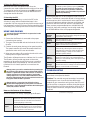
3 Governor
Mode LOW
For collective pitch helicopters only: Governor
mode acts as an RPM control, rather than a
throttle control. Throttle stick position (or
throttle curve %) determines the RPM that the
motor will run and the controller will attempt
to hold that RPM regardless of how the load
(collective) changes. This is useful in a collective
pitch helicopter where a constant head speed
is desirable. The low RPM range has finer RPM
control at lower RPMs. The low RPM range is
useful for low pole count motors (Hacker, Feigao,
HiMax, etc.) and low RPMs on higher pole count
motors. Brake is ALWAYS disabled in Governor
Mode.
4 Governor
Same operation as Low Governor, but allows for
Mode HIGH higher head speeds if the desired head speed
cannot be reached in Low Governor. RPM range
has finer RPM control at higher RPMs. The high
RPM range is useful for higher pole count motors
(Aveox, Astro, Mega, Neu, and all outrunners)
and higher RPMs. Brake is ALWAYS disabled in
Governor Mode.
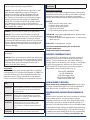
Setting 5: Electronic Timing Advance
Electronic timing advance may be used to fine tune either
a bit more power or a bit more efficiency out of an electric
power system.
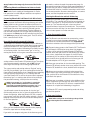
Setting 7: Soft Start
Option
Recommended Use
1 Very
Soft
Start
Governor mode: slowest spool up, and softest start.
Other throttle types: softest start, most throttle
change dampening.
2 Soft
Governor mode: soft start, medium spool up. Other
Start* Throttle types: soft start, slight throttle change
dampening. This is the FACTORY setting.
3 Fast
Start
Governor mode: faster start, fast spool up. Best on
manually optimized pitch and throttle curves with
fixed throttle type. Other throttle types: fast start,
least throttle change dampening.
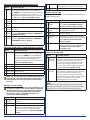
Setting 8: PWM Switching Rate
Note: The following settings apply only to the Phoenix-35
and above.
Option
Recommended Use
1
12 kHz
Recommended for most brushless motors.
2
16 kHz
Recommended for low inductance motors. RARE.
Suggested for Kontronik Tango motors.
3
24 kHz
Recommended for very low inductance motors.
4
Outrunner Recommended for all outrunner motors.
Mode
Option
Recommended Use
1 High
Advance
May give an increase in RPM and current draw at
the expense of runtime and a hotter motor and
batteries.
If you choose, you may simply connect the wires to your
components and go fly.
2 Standard
Advance*
Almost always the best balance of power and
efficiency for any motor. This is the FACTORY
setting.
The following standard settings will work for most
applications.
3 Low
Advance
May slightly decrease RPM and current draw,
and will give longer runtime and a cooler motor
and batteries. This is the preferred setting for
outrunner motors.
PHOENIX ESC REQUIRES NO PROGRAMMING!
STANDARD SETTINGS:
★★ Auto-LiPo cell detection with soft cutoff when cells
reach discharged state
★★ Throttle Range is self-adjusting
Setting 6: Low Voltage Cutoff Type
Option
Recommended Use
1
Hard
Cutoff*
Will shut the motor off when the
programmed cutoff voltage is
reached. The motor may be restarted by lowering
the throttle to the brake position, and re-arming.
For gliders and some parkflyers where a “motor off”
situation does not put the model
in danger. This is the FACTORY
setting.
2
Soft
Cutoff
Instead of turning the motor off, the Phoenix ESC
ramps down the throttle to safely maintain the
battery voltage at the programmed cutoff level. Very
useful for 3D flying, indoor flying, all helicopters,
and most any sport flying where you do not want
the motor to turn off when the low voltage cutoff is
reached.
★★ Auto motor cutoff when radio signal is lost or radio
interference becomes severe
The Castle Link USB programming kit (sold separately)
gives you access to many advanced programming options,
such as incredible helicopter
governor modes, control line
governor settings, motor timing,
audible alert tones, as well as
incredible data logging capabilities
for the Phoenix Ice. Please visit
castlecreations.com to download the
latest software!
Designed in Kansas
Components manufactured in the USA, Mexico, and China.
Castle Creations logos and Phoenix logos are trademarks of Castle Creations, Inc.
This manual is copyright © Castle Creations, Inc. 2012.
U.S. patent #7,492,122 and 7,400,103 apply. Other patents pending.
© 2012 Castle Creations, Inc.
P/N: 095-0000-00
Revision Date - 05/2012