1
DO-IT-YOURSELF LABELLING INTRODUCTION
Produce Professional
Quality, Customised
Labels On Demand
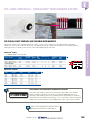
HIGH PERFORMANCE PRINTING AND LABELS AT YOUR FINGERTIPS.
With Brady DIY Labelling solutions, you have control.
No external supplier minimum order quantities or lead times – simply print whatever you like –
instantly, whenever you need to. Investing in a DIY printing solution can help your business to
save money, improve productivity and stay compliant with safety standards.
Brady invests millions of dollars into researching and developing materials for labels that
stand the test of time under the toughest conditions. Whether it’s adhering to a frozen test
tube or resisting heat and chemicals in an aerospace environment, Brady has a label to
meet your demands.
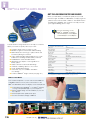
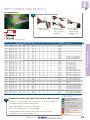
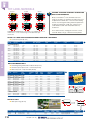
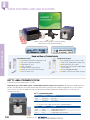
PRINTING SYSTEMS
DO-IT-YOURSELF LABELLING
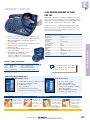
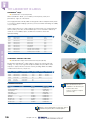
Brady printers use Thermal Heat Transfer
technology to create a clear, crisp print
finish that can survive in even the most
demanding environments. They are
designed to be easy to use and rugged
to stand the test of time. With in-built
symbols, barcode and serialisation
options, you can create the exact labels
you need with minimal manual entry.
Whether you require a handheld labeller
or high end, industrial desktop printer,
Brady has the solution to fit your needs.
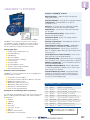
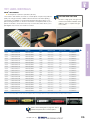
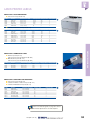
LABEL DESIGN SOFTWARE
Design your labels on your PC and print directly to a Brady printer for maximum efficiency,
ease of use and customisation options. See pages 116-117 for further information.
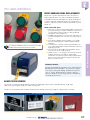
HOW TO SELECT YOUR PRINTING SOLUTION
The best starting point in identifying your solution is to consider the specifications that your labels must meet.
There are 3 key factors to consider:
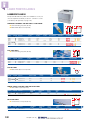
Size of labels – This will affect which printer you need. Smaller, portable printers have a limit on the width of the labels they can
print on. If you are looking to print on labels wider than 50mm, you will need an industrial, desktop (THT) printer
(see page 164 for more details).
Output per day – If you are looking to print in high volumes (over 1,500 labels per day) you will need
an industrial, desktop (THT) printer (see page 164 for more details).
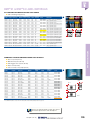
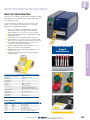
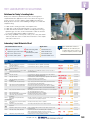
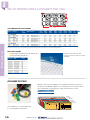
Label application and performance requirements – Certain printers are
better designed to handle specific applications such as wire and cable or
laboratory identification. You should also consider special properties such
as resistance to temperature, chemicals and UV. Brady has researched and
developed a wide range of label materials to suit your needs. These are
each given a “B number” e.g. B-427. The pages after each printer overview
page list the compatible labels. You can then find more detailed performance
characteristics on each material in the guide starting on page 361.
112
bradyID.com.au |
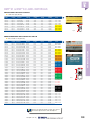
The Printer Selector Guide on pages
114-115 is aimed to help quickly
identify the right printer and labels
that match your needs.