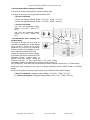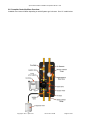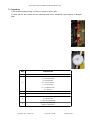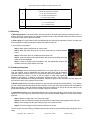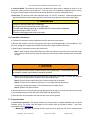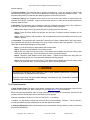
1
Apricus OG-300 Solar Water Heating System Installation and Operation Manual USA Edition (Revision 1.5 - July 2011) Apricus makes serious efforts to reduce paper wastage. Please be GREEN and read this document on your screen. Thank you Apricus Solar Collector Installation & Operation Manual - USA IMPORTANT INFORMATION READ CAREFULLY All components of the solar thermal system must be installed in accordance with those installation regulations required in the area the installation is to be completed. All regulations must be adhered to in all cases. Consultation with local authorities must be made before installation is commenced. Inspection by a plumbing inspector prior to final commissioning may also be required. All installation work must be completed by licensed, suitably qualified and experienced installers. The installer of the solar collector system must have attended an Authorized Apricus Training Session and be registered with Apricus. If you have NOT attended an Apricus training session, please contact your local Apricus supplier to organize training or contact Apricus: Email: [email protected] Phone: 877 458 2634 The following terms are used through this document to bring attention to the presence of hazards of various risk levels or to important information concerning product operation. WARNING Indicates a potentially hazardous situation, which, if not avoided, could result in death, serious injury, or substantial property damage. NOTICE Important information that must be read and understood and adhered to where applicable. All referenced manuals are available in the OG-300 section of the Apricus website: www.apricus.com Copyright © 2011 – Apricus Inc Doc: A7-05.4.12-PB Page 2 of 129 Apricus Solar Collector Installation & Operation Manual - USA BLANK Copyright © 2011 – Apricus Inc Doc: A7-05.4.12-PB Page 3 of 129 1. Glossary & Conversions".............................................................................................................................3 1.1. Glossary of Terms!......................................................................................................................................................................3 1.2. Conversions!...............................................................................................................................................................................3 2. Important Information"..................................................................................................................................4 2.1. Local Code!................................................................................................................................................................................4 2.2. Authorized Person(s)!.................................................................................................................................................................4 2.3. Safety (OSHA / CCOHS)!...........................................................................................................................................................5 2.4. Collector Specifications!.............................................................................................................................................................6 3. System Design".............................................................................................................................................9 3.1. Type of Systems!........................................................................................................................................................................9 3.2. Solar Collector & Storage Tank Location!...................................................................................................................................9 3.3. System Sizing!..........................................................................................................................................................................10 3.4. Pipe Type & Size!......................................................................................................................................................................13 3.5. Pump Selection!........................................................................................................................................................................14 3.6. Stagnation and Overheating!....................................................................................................................................................16 3.7. Multiple Collector Connection!..................................................................................................................................................17 3.8. Boosting!...................................................................................................................................................................................19 3.9. Isolating Parts of Piping!...........................................................................................................................................................20 3.10. Operating Limits!.....................................................................................................................................................................20 3.11. Fluid Expansion!......................................................................................................................................................................21 3.12. Heat Exchangers!...................................................................................................................................................................22 3.13. Wind Loading!.........................................................................................................................................................................22 3.14. Snow Load!.............................................................................................................................................................................24 3.15. Storage Tanks!........................................................................................................................................................................24 3.16. Hail Resistance!......................................................................................................................................................................24 3.17. Lightning Protection!...............................................................................................................................................................25 3.18. Thermo-siphoning!..................................................................................................................................................................25 3.19. Pressure and Temperature Control and Relief!......................................................................................................................25 3.20. Water Quality & Inspection!....................................................................................................................................................26 3.21. Metallic Corrosion!..................................................................................................................................................................26 3.22. Freeze protection!...................................................................................................................................................................27 3.23. Electrical Supply!....................................................................................................................................................................27 3.24. Labeling!.................................................................................................................................................................................27 3.25. Back-flow Prevention!.............................................................................................................................................................27 3.26. Anti-Scald / Tempering Valves!...............................................................................................................................................28 3.27. Building Considerations!.........................................................................................................................................................28 3.28. Pressure & Temperature Relief Valve (PTRV)!.......................................................................................................................28 The storage tank must be fitted with a PTRV. All tanks should be supplied as standard with an approved valve.3.29. Vacuum Breaker!................................................................................................................................................................................................28 3.30. Sediment Buildup (Hard Water / Limescale)!..........................................................................................................................28 3.31. Supporting Pipe and System Components!............................................................................................................................29 3.32. Heat Transfer Fluids!..............................................................................................................................................................29 4. Installation Preparation".............................................................................................................................30 4.1. Product Transport & Delivery!...................................................................................................................................................30 4.2. Unpacking and Inspection!........................................................................................................................................................31 4.3. Equipment Location!.................................................................................................................................................................32 4.4. Before Beginning Each Installation!..........................................................................................................................................32 5. Collector Installation"..................................................................................................................................34 5.1. Collector Mounting!...................................................................................................................................................................34 5.2. Mounting on Suitable Angle Pitched Roof (Standard Frame)!..................................................................................................36 5.3. Mounting on Insufficient Pitched Roof (Angled Frame)!...........................................................................................................37 5.4. Flat Roof Installation!................................................................................................................................................................38 5.5. Wall Mounting (Low, Mid or High Angle Frames)!.....................................................................................................................38 5.6. Connection to Plumbing!...........................................................................................................................................................39 5.7 Evacuated Tube & Heat Pipe Installation!..................................................................................................................................40 5.8 Post Installation!.........................................................................................................................................................................43 6. Controller Installation & Operation"...........................................................................................................44 6.1. Controller Overview!.................................................................................................................................................................44 6.2. Controller Design!.....................................................................................................................................................................44 6.3. Sensors!...................................................................................................................................................................................45 6.4. Electrical & Sensor Connection!...............................................................................................................................................46 6.5. Controller Functions!.................................................................................................................................................................47 6.6. Complete Controller Menu Overview!.......................................................................................................................................49 6.7. Controller Display & Operation!................................................................................................................................................51 6.8. Controller Operation!.................................................................................................................................................................52 Apricus Solar Collector Installation & Operation Manual - USA 7. Closed Loop Pump Station Installation"....................................................................................................53 7.1. Design!......................................................................................................................................................................................53 7.2. Closed Loop Pump Station Technical Data!.............................................................................................................................53 7.3. Unpacking!................................................................................................................................................................................55 7.4. Mounting!..................................................................................................................................................................................56 7.5. Plumbing Connection!...............................................................................................................................................................56 7.6. Controller Connections!............................................................................................................................................................57 7.7. Pump Operation!.......................................................................................................................................................................57 7.8. Expansion Tank!.......................................................................................................................................................................58 7.9. Fill and Pressurize!...................................................................................................................................................................59 7.10. Draining System!.....................................................................................................................................................................61 7.11. Controller Setup and Operation!.............................................................................................................................................61 7.12. Replace Front Case!...............................................................................................................................................................63 8. Direct Flow Pump Station Installation"......................................................................................................63 8.1. Design!......................................................................................................................................................................................63 8.2. Direct Flow Pump Station Technical Data!................................................................................................................................63 8.3. Unpacking!................................................................................................................................................................................64 8.4. Mounting!..................................................................................................................................................................................64 8.5. Plumbing Connection!...............................................................................................................................................................65 8.6. Controller Connections!............................................................................................................................................................65 8.7. Pump Operation!.......................................................................................................................................................................66 8.8. Fill System!...............................................................................................................................................................................66 8.9. Draining System!......................................................................................................................................................................67 8.11. Replace Front Case!...............................................................................................................................................................70 9. Dual Wall Brazed Plate Heat Exchangers"................................................................................................71 9.1. Brazed Plate Heat Exchanger Kits (CL)!..................................................................................................................................71 9.2 Connections!.............................................................................................................................................................................71 10. Apricus OG-300 System Designs"...........................................................................................................71 11. Maintenance & Repair"..............................................................................................................................72 11.1. Cleaning (HOMEOWNER)!.....................................................................................................................................................72 11.2. Inspection (HOMEOWNER)!...................................................................................................................................................72 11.3. Broken Tube!...........................................................................................................................................................................73 11.4. Insulation!................................................................................................................................................................................73 11.5. Heat Transfer Fluid!.................................................................................................................................................................73 11.6. Draining the Collector!.............................................................................................................................................................73 11.7. Other Components!.................................................................................................................................................................73 11.8. Freezing!.................................................................................................................................................................................74 11.9. Maintenance Plan!..................................................................................................................................................................74 11.10. Maintenance Equipment!......................................................................................................................................................74 11.11. Replacement Parts!...............................................................................................................................................................74 12. Troubleshooting"............................................................................................................1 13. Warranty"........................................................................................................................4 14. Disclaimer"......................................................................................................................6 15. Installation Checklist"....................................................................................................7 Appendices"..........................................................................................................................8 Appendix 1 (Standard Frame Kit Assembly Diagram)!..............................................................8 Appendix 2 (High Angle Frame Kit Assembly Diagram)!............................................................9 Appendix 3 (AP-30 SRCC OG-100 Certification)!....................................................................10 Appendix 4 (AP-20 SRCC OG-100 Certification)!....................................................................11 Appendix 5 (AP-10 SRCC OG-100 Certification)!....................................................................12 Appendix 6 (AP-30C SRCC OG-100 Certification)!.................................................................13 Appendix 7 (Closed Loop Pump Station - UPS 15-58 FC Pump Curve)!................................14 Appendix 8 (Direct Flow Pump Station - UPS 15-29 SF Pump Curve)!...................................15 Appendix 9 (Drain-Back and Gas Booster Pump - UP 15-100F Pump Curve)!.......................16 Appendix 10 (Clariant SOL HT Specifications)!.......................................................................17 Appendix 11 (Clariant SOL HT MSDS)!...................................................................................18 Appendix 12 (DOWFROST Specifications)!............................................................................23 Appendix 13 (DOWFROST MSDS)!........................................................................................25 Appendix 14 (J.C. Whitlam Solar Hi-Temp Specifications)!.....................................................32 Copyright © 2011 – Apricus Inc Doc: A7-05.4.12-PB Page 2 of 129 Apricus Solar Collector Installation & Operation Manual - USA Appendix 15 (J.C. Whitlam Solar Hi-Temp MSDS)!.................................................................33 Appendix 16 (DOWFROST HD Specifications)!......................................................................35 Appendix 17 (DOWFROST HD MSDS)!..................................................................................37 1. Glossary & Conversions 1.1. Glossary of Terms Anti-scald Valve (Tempering Valve): A valve installed between the solar water heating system and the fixtures to automatically mix the hot water with cold water to achieve a safe outlet temperature of 120°F (50° C). An anti-scald valve must stop all hot water flow if there is a loss of either cold or hot water supply. Anti-scald valves must be NSF or CSA approved. Closed Loop: A system that, typically, has an anti-freeze, heat transfer fluid circulating through a closed, pressurized solar collector piping loop. This “freeze resistant” fluid is separated from the main’s pressure water by a heat exchanger. Closed loop systems are used in areas where freezing conditions are common. Direct Flow: A system that has potable water under the water main’s pressure flowing directly through the solar loop piping into the collector and back down to the storage tank. This system is normally used in warmer regions that do not have virtually no freeze risk. Drain-back: A system that uses potable water or heat transfer fluid in the solar collector loop, but the fluid drains back down into a tank when the pump turns off, thus preventing overheating or freeze related issues. Expansion Tank: A metal tank with a rubberized liner (bladder) which is pressurized with air on one side of the bladder and accepts water from the closed loop on the other side. Because air can be compressed, the expansion tank can accept the increase in fluid volume that results when the temperature of the system increases. This prevents dumping of fluid from the pressure relief valve (see below). Return Line: The plumbing line supplying hot water FROM the collector back to the storage tank or heat exchanger (compare to Supply Line, below). Insolation: Solar radiation level, expressed in Btu/ft2/day (kWh/m2/day). Peak solar radiation is about 317 Btu/ft2 (1000 W/m2). Pressure Relief Valve: Pressure relief valve is normally incorporated into the pump station of closed loop or direct flow systems. It opens if a set maximum pressure limit is reached, thus preventing damage to the system components. Some PRV are able to be used over and over, while others must be replaced after they have “blown”. Pressure & Temperature Relief Valve (T/P Valve): Pressure & temperature relief valve combines a pressure relief valve with a temperature sensitive core which will open to dump hot water if it reaches 210°F (99°C). PRTV are common on hot water storage tanks, providing a means of releasing pressure and heat if for example a faulty electric element or boiler thermostat causes the tank to be overheated. Supply Line (Flow or Feed Line): The plumbing line supplying water from the storage tank or heat exchanger TO the solar collector for heating (compare to Return Line, above). 1.2. Conversions 1 kWh = 3412 Btu = 859.8 kcal 1 kWh/m2/day = 317.1 Btu/ft2/day 1 kcal will heat 1 litre of water by 1° C 1Btu will heat 1 lb of water by 1° F 1 US Gallon of water = 8.34 lbs Copyright © 2011 – Apricus Inc Doc: A7-05.4.12-PB Page 3 of 129 Apricus Solar Collector Installation & Operation Manual - USA 2. Important Information NOTICE This manual pertains only to the installation and operation of the Apricus solar collector, pump stations, heat dissipator and controller. Details for the installation, operation and maintenance of the complete solar gas/electric water heating system including, but not limited to storage tank, gas/electric booster, valves and other plumbing components should be provided separately by their respective manufacturers. This manual is primarily a reference document for installers, as the solar collector is only permitted to be installed by Authorized Persons. Under no circumstances should any Apricus product be installed by the homeowner. 2.1. Local Code a) Installation must be completed in accordance with relevant local codes, standards and regulations. i) Canada the system must be installed in accordance with CSA F379.1 and the interim TIL MSE-45 document in addition to other relevant CSA standards cover the installation. Visit the following site for more details: http://www.cansia.ca/Default.aspx?pageId=156490 ii) In the US, also refer to the following reference documents: ASHRAE 90003 Active Solar Heating Design Manual ASHRAE 90342 Active Solar Heating Systems Installation Manual 2.2. Authorized Person(s) a) The term “Authorized Person(s)” used throughout this document refers to a suitably qualified professional, who holds appropriate industry licenses or certificates required for the work completed during the installation process. This may also include solar specific certificates such as NABCEP (USA) or CANSIA (Canada). Any installer of the Apricus solar water heating system must have attended an accredited Apricus training session in order to verify that the installer has been provided key safety, design, installation and technical information related to the Apricus range of products. b) Installations may only be completed by Authorized Persons. c) Unless otherwise specified, in section 3, no part of the Apricus solar collector, pump station, controller, heat dissipator or balance of system components may be inspected, repaired or maintained by anybody other than an Authorized Person(s). d) At all times, the guidelines of this installation manual by be adhered to. If any guidelines contradict or fail to meet local codes, regulations or standard practice, the installer must contact Apricus to discuss in order to ensure that the final method meets all relevant codes and regulations and will not void the warranty or cause any safety or operational issues with the Apricus products. ✖ Failure to installed in accordance with the Authorized Persons requirements outlined above, will void the warranty. Copyright © 2011 – Apricus Inc Doc: A7-05.4.12-PB Page 4 of 129 Evacuated Tube Apricus Solar Collector Installation & Operation Manual - USA 2.3. Safety (OSHA / CCOHS) a) At all times, installers must adhere to operation safety and health guidelines as outlined by OSHA (USA) or CCOHS (Canada). For more information please visit www.osha.gov or www.ccohs.ca b) The installer is responsible for his or her own safety while performing installations, at all times. c) Those meeting the “Authorized Persons” requirements must also thoroughly READ and UNDERSTAND this installation manual prior to initiating installation of any Apricus solar water heating product(s). For any queries contact your local Apricus representative or Apricus directly in North America: Ph: +1 203 488 8215 Email: [email protected] d) Evacuated Tubes: i) Be careful while handling the evacuated tubes, as they will break if knocked heavily or dropped. ii) Safety glasses MUST be worn at all times when handling evacuated tubes. iii) If the evacuated tubes are struck by a hard object with sufficient force (ie. branch falling on roof), they may break. During installation consideration should be taken as to the possible path any broken glass may take. Protection should be implemented to prevent broken glass from causing injury or creating walking hazards to those below. iv) The home owner should be made aware by the installer of the location of the solar collector and the possible vicinity of broken glass in the event of an extreme storm or object falling on the collector. e) High Temperatures: i) When installed in the evacuated tube and in good sunlight, the heat pipe tip can reach temperatures in excess of 392°F (200°C). At this temperature, touching the heat pipe will result in serious burns. Thick leather gloves must be worn when handling hot tubes and heat pipes. ii) In an operational system, if the pump stops during daylight hours the collector header and plumbing close to the manifold can reach temperatures in excess of 320°F (160°C). ALWAYS use caution when working near the collector and piping. f) Metal Components: i) ALWAYS use caution and wear appropriate personal protective equipment, including gloves, when working with any and all metal components, especially those with sharp edges. g) Electrical Connections: i) Any electrical installation work must be completed by a licensed electrician. Take special care when working in potential wet environments. Ensure all power outlets, cables and connectors are protected from water ingress, high humidity and condensation. Copyright © 2011 – Apricus Inc Doc: A7-05.4.12-PB Page 5 of 129 Apricus Solar Collector Installation & Operation Manual - USA 2.4. Collector Specifications Copper Heat Exchanger “Header” Collector Manifold Glass Wool Insulation Heat Transfer Fin & Heat Pipe Evacuated Tube Stainless Steel Mounting Frame AP-30 Overall Length 1 Overall Height 2 Overall Width 3 Absorber Area 4 Aperture Area 5 Gross Area 2x AP-30 (AP-60) 80” (2005 mm) 6.14” (156 mm) manifold + standard frame 86.4” (2196 mm) 172.8” (4392 mm) 25.8 ft2 (2.4 m2) 51.6 ft2 (4.8 m2) 30.3 ft2 (2.82 m2) 60.6 ft2 (5.64 m2) 47.4 ft2 (4.4 m2) 94.8 ft2 (8.8 m2) Gross Dry & Wet Weight 208.5 lb. (95 kg) 417 lb (190 kg) (Standard Frame) & 210 lb (95.2kg) & 420 lb (190.4 kg) Fluid Capacity 24 fl. oz (710 ml) 48 fl. oz (1420 ml) 1. Length of standard frame channels; 2. Height of standard frame channels + manifold; 3. Width of manifold (not including inlet/outlet ports); 4. Absorber = Outside diameter of inner tube x exposed tube length; 5. Aperture = Inner diameter of outer glass tube x exposed tube length. Please note that values will differ from SRCC and other reports as each have different calculation methods. Copyright © 2011 – Apricus Inc Doc: A7-05.4.12-PB Page 6 of 129 Apricus Solar Collector Installation & Operation Manual - USA Manifold & Header Copper Header Material >99.93% Copper Reference Grades: T2, C11000, CDA110, C102, ECu-58 Brazing Rod Materials 45% Ag, 30% Cu, 25% Zn (BAg45CuZn) & 93% Cu, 7% P (BCu93P) Recommended Flow Rate 0.026 Gallon/tube/minute = 0.26 Gallon/10 tubes/minute (0.1 L/tube/minute = 1 L/10 tubes/minute) Max Flow Rate 1.0 gpm per AP-30 Max Operating Pressure Rating 116 psi (800 kPa) 123 psi (850 kPa) Pressure Relief Valve acceptable Manifold Material 0.03” (0.8mm) Aluminum Grade 5005-H16 Anodized clear finish Glass Wool Insulation ~4.36 lb/ft3(~70 kg/m3) R-value = 6.6 ft2.oF.h/Btu (1.16K.m2/W) K-value = 0.043 W/mK Acceptable Fluids Water, Solar Hi-temp, or 50/50% or weaker propylene glycol mix. Mounting Frame Frame Material SS Tube Clips 439 Stainless Steel 301 Stainless Steel Bolts, Washers and Nuts 304 Stainless Steel Heat Pipes Length 70.8” (1800 mm) Material ∅0.314” OD x 0.027” (∅8 mm OD x 0.7 mm) copper Reference Grades: TU1, C10200, CDA102, C103, OF-Cu Heat Transfer Fluid Purified water (non-toxic) Maximum Working Temperature 577°F (300°C) Minimum Temperature Fluid in heat pipes will freeze, but will not damage the heat pipe: No minimum operating temperature. Startup Temperature Startup < 86°F (<30°C) Vacuum ~P<5x10⁻³ Pa Installation Angle from horizontal 20° minimum angle, 80° maximum Rubber Components Material HTV Silicone Rubber (UV stabilized) Density 1.15 g/cm3 +/- 0.05 Durometer Hardness (Shore A) 50-70 (depends on component) Elongation 320% Rebound 54% 577•F (300•C) Maximum Working Temperature Tensile Strength 6.4 Mpa Tear Strength 12.5 KNM Evacuated Tubes Tube Length 70.8” (1800 mm) Actual length to tip = 71.25”-72” (1810-1830 mm) Outer Tube Dimensions ∅2.28” x 0.07” (∅58 mm x 1.8 mm) Inner Tube Dimensions ∅1.85” x 0.07” (∅47 mm x 1.8 mm) Copyright © 2011 – Apricus Inc Doc: A7-05.4.12-PB Page 7 of 129 Apricus Solar Collector Installation & Operation Manual - USA Weight 4.4 lb (2 kg) Glass Material Borosilicate Glass 3.3 Absorber Material Graded-index coating Al-N on Al on glass Thermal Expansion 3.3x10⁻⁶ •C Absorptance (α) >92% (AM1.5) Emittance (ε) <8% (80•C) Vacuum P < 5 x10⁻³ Pa Stagnation Temperature >395° F (>200° C) Heat Loss <0.8W/ (m2 •C) Maximum Strength 120 psi (0.8 Mpa) Absorber Area per Tube 0.86 ft2 (0.08 m2) (for standard performance calculations) Thermal Efficiency Efficiency (gross area)* ηo (-) = 0.456, a1 (W/m2K) = 1.3509, a2 (W/m2K2) = 0.00381 Based on gross area of 4.158 m2 / 44.76 ft2 Efficiency (aperture area)* ηo (-) = 0.634, a1 (W/m2K) = 1.877, a2 (W/m2K2) = 0.00529 Based on gross area of 2.99m2 / 32.21ft2 IAM Kθ (longitudinal) 0o Kθ (transversal) 1.0 10 o 20 o 30 o 40 o 50 o 60 o 70 o 80 o 90 o 1.34 1.24 0.95 0.0 0.93 1.02 1.08 1.18 1.37 1.4 AP-30 Thousands of BTU Per Panel Per Day* Category Clear Day Mildly Cloudy Cloudy Day A (-9° F) 46.1 34.8 23.5 B (9° F) 44.0 32.7 21.4 C (36° F) 40.6 29.3 18.0 D (90° F) 34.2 23.0 11.8 (144° F) 27.1 16.8 6.2 E *SRCC test data from report 2007033A - see Appendix 4 for complete SRCC OG-100 certificate. Copyright © 2011 – Apricus Inc Doc: A7-05.4.12-PB Page 8 of 129 Apricus Solar Collector Installation & Operation Manual - USA 3. System Design NOTICE Apricus provides the system design information contained herein as a guide only and does not guarantee the accuracy of such information. In ALL cases the system design and installation must adhere to local codes, regulations and guidelines and the suitability and safety of the system design may need to certified by a licensed engineer, and finally inspected by a plumbing inspector. All systems must be installed by Authorized Persons. 3.1. Type of Systems The three most common system formats for solar thermal hot water installations are described below: a) Direct Flow systems have potable water under the water main’s pressure flowing directly through the solar loop piping into the collector and back down to the storage tank. These systems are suitable for areas that do not fall below 23°F (–5°C) at any time throughout the year. Freeze tolerance limits are based upon assumed set of environmental conditions. In the event of a power outage a drip valve will open to slowly circulate fluid through the collector to prevent freezing. b) Closed loop installations are suitable for cold regions and use an “anti-freeze” heat transfer fluid, instead of potable water. This fluid is not mixed with the potable water. Heat transfer occurs through a coil heat exchanger within the storage tank or an external heat exchanger. Apricus has developed a set of system designs covering each direct flow and closed loop formats. Refer to section 10 for more information. Refer to the Apricus OG-300 Schematic and Parts Lists for component specifications and system diagrams. 3.2. Solar Collector & Storage Tank Location 3.2.1. Collector Direction a) The collector should face as close to True South as possible. A deviation of up to 15° to the East or West is acceptable and will have minimal effect on collector performance. If installed due east or west, the solar collector output will be considerably reduced, with predominately morning output or afternoon output for each direction respectively. If a choice can be made, west is preferable over east as solar radiation levels are often highest early afternoon. NOTE: Installations at or near due East or West will mitigate the passive tracking effect of the round absorbers within the Apricus evacuated tubes. b) If the roof faces E-W rather than South, there are a few options: i) The collector angle can be raised up to 60-70° and positioned near the peak of the roof so that both the front and back of the evacuated tubes can be exposed to light. See image to the right. In such a position wind loading must be carefully considered. Copyright © 2011 – Apricus Inc Doc: A7-05.4.12-PB Page 9 of 129 Apricus Solar Collector Installation & Operation Manual - USA ii) A second option is to mount the collector on the side of the roof as shown in image to the right. This configuration will lose some afternoon or morning light if located on the east or west sides respectively, but still provides good output. The heat pipes and manifold will operate fine in this configuration. The “sun tracking” curve (Incidence Angle Modifier or IAM) will be different than a normally installed collector. Applying standard IAM adjustments to any energy output calculations will not be entirely valid. Note: In either of the above configurations wind loading must be carefully considered. For more information on wind loading refer to section 3.13. 3.2.2. Collector Plane a) The collector manifold is normally installed on the flat horizontal plane, but may be installed at an angle such as when installed sideways on a pitched roof. See previous 3.2.1.b.ii. b) The collector must not be installed up-side-down (tubes pointing upwards) or with tubes lying horizontally, because the heat pipes will not function. 3.2.3. Collector Angle a) The solar collector should be installed at an angle between 20-80° rom horizontal to ensure optimal heat pipe operation. In areas prone to hail, a minimum angle of 45° is advisable (see section 3.16). In areas prone to snow, 45° or higher is advisable (see section 3.14) Even with snow sitting on the bottom of tubes, the heat pipes will work effectively to produce heat, since the aluminum fins tend to conduct heat evenly throughout the full inner tube length. c) Under no circumstances should the collector be oriented more than 90° (East or West) from True South, i.e. Do not mount the collector North. 3.2.4. Avoid Shade a) Collectors should be located so that shading does not occur between 9 am - 3 pm, which are the peak solar hours. Use of a solar shading analysis tool, such as the Solar Pathfinder is recommended. b) Partial shading due to small objects such as antennas and small flues is not a problem. c) If installing multiple rows of collectors, consider the shading of collectors on the row behind (especially in winter when the shadows will be longer). Apricus provides a simple Excel based calculator for determine the length of midday shade at different installation angles. 3.2.5. Proximity a) The collector should be positioned as close as possible to the storage tank to avoid long pipe runs. In new installations, storage tank positioning should therefore consider the location of the solar collector. Long pipe runs will require the pump to use more power due to greater head pressure (line losses). In addition, there will be greater heat loss and increased pipe and insulation cost. b) The storage tank should also be located as close as possible to the most frequent draw off points in the building or an intelligently controlled hot water ring-mains recirculation line should be installed. 3.3. System Sizing For residential domestic water heating applications basic “rules of thumb” exist that depend on local climate. 3.3.1. First Question: How much hot water is needed? a) Rule of thumb: For domestic hot water each person will use 20 gallons (75 L) per day Copyright © 2011 – Apricus Inc Doc: A7-05.4.12-PB Page 10 of 129 Apricus Solar Collector Installation & Operation Manual - USA This rule of thumb is just an example. Adjust this to meet the habits of householders in your local area. b) Calculation: Shower-head flow rate is measured (timed with a bucket or special flow rate device) at 2.5 gpm (9.4 L/min) and the family showers for a total of 35 minutes per day = 87.5 gallons. Add hot water usage for the dish washer = 10 gallons.......etc A calculation can then be completed for a specific household based on their expected water usage patterns. c) Tap vs Storage Tank Flow Rate: In the summer months, the solar storage tank can reach temperatures in excess of 160°F (71°C). Therefore, the useful capacity at the tap is increased, because hot water from the tank is being diluted with cold at the Anti-Scald Valve and, then, once again at the tap in the house (see diagram below). The flow rate through the faucets is not equal to the flow rate at the tank outlet. While tap hot water volume maybe be 90 gallons, if the hot water storage tank is 140°F (60°C), only 63 gallons will be drawn from the hot water storage tank, in which case an 80 gallon tank would be suitable. d) Climate: We can estimate based on three types of climate: Cold, Mild & Hot. Cold climates: Freezing winter and mild summers. Mild climates: Mild winters with occasional freezing at night and fairly hot summers. Hot climates: Warm winters and very hot summers. The three key climate factors that location will effect,in terms of the collector output, are solar radiation levels, ambient temperature and cold water inlet temperature. Take into consideration that there is massive variance in these factors from one area to another, even within a single state and remember this is only an estimate. Cold regions: Hot water draw from the storage tank will be about 70% of the tap hot water volume Mild regions: Hot water draw from the storage tank will be about 65% of the tap hot water volume Hot regions: Hot water draw from the storage tank will be about 60% of the tap hot water volume This variation is due to the difference in incoming cold water temperature, which is mixed with the hot at the tap. The colder the Cold water, the lesser the volume of it necessary to temper the Hot water, hence the greater percentage of storage tank volume used at the tap in colder regions. Apricus provides an Excel based calculator for accurately calculating the ratio of hot and cold water. 3.3.2. Second Question: What temperature rise is required? What is the temperature rise that is required within the hot water tank to heat cold water to the standard outlet temperature of 140°F (60°C)? (140°F and sometimes up to 150°F is required to kill Legionella bacteria). Apricus recommends that you calculate for 90% solar contribution for summer months output so as to not oversize the system. In Cold regions, water will be heated from an average 50°F to 140°F = 95°F rise (10°C to 60°C = 52°C rise) In Hot regions, water will be heated from on average 63°F to 140°F = 77°F rise (17°C to 60°C = 43°C rise) 3.3.3. Calculating Energy Requirements Now that you know how much water is required and the temperature rise, you can calculate the energy required. See examples below: In Cold regions: 63 gallons with 95°F temp rise. 63 gallons x 8.34 lbs. of water per gallon = 525 lbs. 525 lbs. of water x 95°F = 49,875 Btu. Assuming 15% daily tank heat loss = 57,356 Btu/day required. In Hot regions: 63 gallons with 77°F temp rise. Copyright © 2011 – Apricus Inc Doc: A7-05.4.12-PB Page 11 of 129 Apricus Solar Collector Installation & Operation Manual - USA 63 gallons x 8.34 lbs of water per gallon = 525 lbs. 525 lbs. of water x 77°F = 40,425 Btu. Assuming 15% daily tank heat loss = 46,490 Btu/day required. 3.3.4. Calculating Collector Size Requirement Based on the energy requirement calculated above, an estimation of the number of collectors can be made. a) To calculate the output of the solar collector to match the household/application requirements a complex calculation can be completed, but in most cases the following basic guide can be used. These values are based on SRCC data for the Apricus collectors, (SeeAppendix 4), and based on Apricus’ actual field observations of output. Thousands of BTU Per Panel Per Day Category Clear Day Mildly Cloudy Cloudy Day o A (-9 F) 46.1 34.8 23.5 o B (9 F) 44.0 32.7 21.4 o C (36 F) 40.6 29.3 18.0 o D (90 F) 34.2 23.0 11.8 o E (144 F) 27.1 16.8 6.2 Cold region = Average of Clear Day B, C & D and Mild Cloudy B, C & D categories = 33.9 kBtu = 9.9kWh Mild region = Average of Cold region and Hot region values = 36.75 kBtu = 10.75kWh Hot region = Average of Clear Day B, C & D categories = 39.6 kBtu = 11.6kWh The actual daily output will vary based on many factors, including the installation angle, solar radiation levels, ambient temperature and hot water usage patterns. Given that collectors come in multiples of 10 tubes a rough estimate is usually sufficient. A system should be sized to provide 90% contribution in the summer, which normally corresponds to about 60%, 70% & 80% annual contribution for Cold, Mild and Hot regions respectively. b) Based on the requirements from the examples given in 3.3.3, an appropriate collector size can be determined. Cold climate: 57.35 kBtu/day required. 30 tubes averages 33.9 kBtu/day 57.35 kBtu / 33.9 kBtu = 1.7 x 30 tubes is necessary to make up the difference. Therefore, a 30 tube collector plus 20 tubes (or 50 tubes total) will provide nearly all of the summer hot water requirements for this household and ~60% of annual requirements. Alternatively, a good option might be 60 tubes with the collector angle raised to about 50-60° in order to maximize winter output and minimize summertime potential for overheating. Hot climate: 40.43 kBtu/day required. 30 tubes averages 39.6 kBtu/day 40.43 kBtu / 39.6 kBtu = (about) 1. So an AP-30 would be the perfect size, providing nearly all the hot water required in the summer and about 80% throughout the year. c) Apricus OG-300 systems are available in one or two AP-30 sizes. It is important not to oversize the system. 3.3.6. Domestic Storage Tank Sizing a) Tank Size: Choosing the correct tank size for domestic applications is straightforward. On average, houses change hands every 7 years, therefore, it is advisable to size the solar capacity to the potential occupancy of the house, rather than the current occupants. A larger or smaller family may move in. In a mild climate, each person in a household will, generally, require about 20 gallons (76L) per day of solar storage. So, multiply the number of bedrooms plus one (because the master bedroom can hold two), to get the approximate hot water demand for the house. For example, a 3 bedroom house uses 80 gallons (303L) per day 3 bedrooms +1 (for master) = 4 people x 20 gallons = an 80 gallon storage tank Always keep the customer’s budget in mind and contact an Apricus representative if you have any Copyright © 2011 – Apricus Inc Doc: A7-05.4.12-PB Page 12 of 129 Apricus Solar Collector Installation & Operation Manual - USA questions. b) Collector Size: The number of solar collectors should be determined based on actual hot water requirements for the present occupants and should never exceed the storage capacity. If too much collector is installed, there will be wasted energy and excess heat in sunny weather. Letting the collector stagnate is an acceptable means of preventing excessive tank temperatures during summer but excessive stagnation for more than 6 hours a day is unacceptable. c) Minimum Storage Tank Size: The following are the minimum allowed tank sizes for domestic solar thermal installations. Using a smaller capacity tank will lead to the system reaching maximum temperature sooner, which will often result in wasted and/or uncollected energy. The storage capacity can be a single tank or multiple tanks plumbed in parallel. If a solar storage tank is feeding an electric or gas boosted tank, the capacity of the second tank must NOT be included, as solar heat only enters the second tank when hot water is used. 30 tubes = 80 Gallons 60 tubes = 119 Gallons d) Hot Water Usage vs Tank Size: In section 3.3.1, it was determined how much hot water the household used. If they used 90 gallons of tap volume per day, that equates roughly to 63 gallons of draw from the hot water tank. An 80 gallon tank will suffice. That said, bigger is generally better when it comes to storage and if there is space for it and money in the budget, then increase the size of the tank to 119 gallons. This will allow for more energy storage during periods of high solar gain and also ensure that there is plenty of hot water, if relatives visit for the weekend (for electric or direct gas boosted tanks). Going to an even larger tank would be great, but only if the insulation properties are excellent; the increased surface area of a larger tank could cause considerable heat loss. Ideally, passive heat loss from the tank should not exceed 15% of the total required daily hot water production. e) Twin Tank System: For a household with an existing gas or electric hot water tank, the best option is to solar storage option is to add a dedicated solar pre-heat tank, in which the entire volume of the tank is devoted to solar heating. This may not always be possible from a cost or space perspective, but whenever possible, adding a separate tank is advised. In this configuration, instead of the cold water supply entering the existing tank, it enters the solar pre-heat tank, where it gains heat from the collector loop and in turn supplies the secondary “booster” tank with solar preheated water; the outlet of the solar pre-heat tank feeds the inlet of the secondary tank. When using a twin tank system an electric boosted solar tank can be used as a pre heat tank with the electric element disconnected. Refer to system diagrams in the Apricus OG300 Systems Manual for examples available at www.apricus.com. 3.4. Pipe Type & Size 3.4.1. Pipe Material a) The solar collector loop can get very hot and, therefore, the only recommended material choices are copper (hard or soft coiled) or corrugated flexible stainless steel pipe. 3.4.2. Pipe Size a) Pipe Selection: When selecting the size of the pipe for the solar loop or any plumbing, there are two main concerns: flow rate and pressure drop These two factors are closely related; a higher pressure drop will reduce the flow rate. Pressure drop is increased with a smaller diameter pipe, as well as the presence of bends, elbows and other components that will restrict the flow of the water such as corrugated stainless steel piping. A relatively direct, unobstructed flow path is highly desirable. b)Pipe Diameter: All Apricus OG-300 systems utilize 3/4” copper or corrugated stainless steel. It is important to select a pipe material that will not create excessive pressure drop. 3.4.3. Pipe Location Depending on the construction of the building, the route of the pipe run to the collector could be inside, outside or even underground. Always consider the following factors: a) Secure: Pipes must be secured in place with suitable brackets, straps, etc. according to plumbing code requirements for material and pipe diameter and to prevent vibration and placing stress on system Copyright © 2011 – Apricus Inc Doc: A7-05.4.12-PB Page 13 of 129 Apricus Solar Collector Installation & Operation Manual - USA components. b) Inside: Extra care must be taken to any piping leaks inside the building. Avoid joints in attic or overhead spaces that could cause significant property damage if they were to leak. c) Outside: Ideally, run insulated pipe within PVC conduit or similar material, which will protect the insulation from UV degradation and also provide a clean, unobtrusive appearance. d) Underground: Burying pipes underground may be required, if the collectors are mounted at ground level or on a pole mount, etc. i) When running pipes underground, ALWAYS call in the appropriate “locates” before digging, according to local requirements. ii) When running pipes underground, always run in PVC or similar conduit to protect against water ingress that would compromise insulation properties. iii) Always bury piping to the appropriate depth, as required by code. Usually this is at least 24” below grade. Consult your local code before digging for the exact depth in your area. Bury pipes may require a municipal inspection prior to “cover.” Also, consider potential for the pipes to be crushed, if vehicles drove over the area. Reinforce as required. iv) Put markers along the path of the piping to warn anybody who may dig up the ground in that area. v) Consider the frost depth of the soil in cold regions. Burying below the frost depth will provide better insulation. 3.4.4. Noisy Pipes a) Water Hammer: When water is traveling through a pipe and suddenly a tap is turned off it stops with considerable force, which can lead to a loud noise commonly referred to as “water hammer”. Not only is this noise annoying, the resulting vibrations can cause damage to the pipes and attachment points. Hammer arresters are commercially available to eliminate this issue. b) Steam Noise: In direct flow system that is stagnating under pressure, the water can be very hot without forming steam (above 212°F or 100°C). When a hot water tap is opened, the pressure in the system drops, which allows steam to rapidly form and then condense repeatedly in the solar collector causing a popping or banging sound similar to water hammer. This problem is most common when the cold water inlet pressure is less than 50 psi (350 kPa). Refer also to 3.6.2 for more information about pressure and water boiling. 3.5. Pump Selection a) Pump Size: For most domestic installations, using a 3-speed pump is advisable in order to chose a speed to suit the pressure drop of the piping. Speed 1 is generally suitable for a short pipe run, such as on a single story house. Speed 3 (~90-100 Watts) can normally service a 3 story, 60 tubes, pressurized system (not necessarily a drain-back). If the pipe run is very long, a larger pump may be needed. The Apricus Closed Loop Pump Station uses a 3-speed Grundfos UPS 15-58 FC cast iron body pump and the Apricus Direct Flow Pump Station has a single-speed Grundfos UP 15-29 SFC stainless steel body pump. b) Pump Body Material: Cast iron pumps may ONLY be used for closed loop systems; they will rust and fail if used with potable water. Brass/bronze or stainless steel body pumps are suitable for direct flow systems because the material has good corrosion resistance and is suitable for potable water use. c) Pressure Drop Curve: The Apricus 30 tube solar collector pressure drop curve can be found on the following page. d) Use a Flow Meter: Always install a flow meter after the pump to ensure that flow rates are at suitable levels and can be monitored. Most flow meters will incorporate a restrictor valve allowing the flow to be set. If significant restriction is required, a slower speed or smaller pump can be used, which will save electricity. e) Variable Speed vs ON/OFF: The most efficient option is to use a controller with a variable speed pump function that can regulate the pump speed to achieve the desired temperature rise (delta-t). With a normal ON/OFF delta-t setting, “shunting” of water can occur. Shunting is when the pump shuts down before all of Copyright © 2011 – Apricus Inc Doc: A7-05.4.12-PB Page 14 of 129 Apricus Solar Collector Installation & Operation Manual - USA the heated fluid can reach the tank. The hot fluid sits in the return line and loses heat until the next ON cycle, before it finally is delivered back to the tank. This is especially true when high flow rates are used and when there is a long pipe run. A variable speed control helps to prevent this from happening by sending the heat back into the tank as it is produced and results in higher overall system efficiency and heat output. f) Direct Flow - Flow Rate: A high flow rate in a direct flow system may cause turbulence in the solar storage tank and disturb stratification, which can lower the entire tank temp during low solar production periods. A variable speed pump control will ensure that the flow rate matches the heat output and limit tank destratification. g) Correct Pump Choice: Any pump used for solar loop circulation must be able to handle continuous use to at 232°F (110°C) and higher, if required by system design. The solar pump should always be installed on the Supply (aka Flow) Line (i.e. pumping to the collector and away from the heat exchanger or tank) thus limiting exposure to high temperatures. In addition, a check valve should always be installed after the pump to prevent back flow, and nighttime thermo-siphoning, UNLESS the system is a drain-back, which should never have a check valve installed in the solar loop. See Apricus OG-300 Schematics and Parts List system diagrams for reference. The Apricus pump stations incorporate a flow meter, pump and check valve. Refer to Closed Loop and Direct Flow Pump Station Installation instructions in this manual for more details on pump station operation. h) Flow Rate: The flow rate through the collectors should be determined under the following considerations: i) Turbulent flow through the header is necessary for optimal heat transfer during high solar output and is achieved at flow rates of 0.8 gpm (3 Lpm) and greater. In a single collector installation, this flow rate will generally only be achieved during summer. Running a high flow rate during the winter to achieve turbulent flow is NOT recommended or required as the heat output is not as high, and excessive ON/ OFF cycling of the pump will occur which can cause premature pump failure. ii) Temperature rise of the heat transfer fluid during each pass through the collector manifold(s) can be adjusted by changing the flow rate. Reducing the flow rate by half will double the temperature rise per pass. Normally, a temperature rise of 10-30°F is an acceptable range. Lower delta-t levels (temperature rise) attained at higher flow rates may cause the pump to turn ON/OFF too often. Extremely high delta-t levels produced by low flow rates will decrease collector efficiency. This decrease is far less acute with evacuated tubes than that experienced with a flat plate collector and may be acceptable, especially if pressure drop is an issue. A suitable flow rate range for each 30 tube collector is a 0.4-0.8 gpm (1.5-3 Lpm). iii) The following table provides estimated temperature rise at various flow rates: Flow Rate per 30 tubes Temp Rise @ 150Btu/ft2 (Clear Winter Day) Temp Rise @ 320Btu/ft2 (Clear Summer Day) 0.2 gpm (0.75 Lpm) 30°F (16.4°C) 85°F (35°C) 0.4 gpm (1.5 Lpm) 15°F (8.2°C) 42°F (17.5°C) 0.6 gpm (2.3 Lpm) 10°F (5.5°C) 28°F (11.7°C) 0.8 gpm (3 Lpm) 7°F (4.1°C) 21°F (8.7°C) Copyright © 2011 – Apricus Inc Doc: A7-05.4.12-PB Page 15 of 129 Apricus Solar Collector Installation & Operation Manual - USA Flow Rate per 30 tubes Temp Rise @ 150Btu/ft2 (Clear Winter Day) Temp Rise @ 320Btu/ft2 (Clear Summer Day) 1 gpm (3.8 Lpm) 6°F (3.3°C) 17°F (7°C) 3.6. Stagnation and Overheating 3.6.1. What is Stagnation? a) Stagnation: Stagnation refers to the condition that occurs whenever the pump stops running. This could be due to pump failure, power outage or most commonly, as the result of a max tank temperature protection feature setting on the controller. During stagnation, the collector, unable to actively dump heat, will continue to rise in temperature until the heat loss from the collector and piping equals the heat being absorbed. In strong sunlight with high ambient temperatures, the collector will reach a peak stagnation temperatures of about 428°F (220°C), if dry (decommissioned system or drain-back), and a lower level of 320°F (160oC), if the piping and collectors contain fluid (as in pressurized systems). b) Consider High Temperatures: Components that may be exposed to the high temperatures such as valves, plumbing or insulation should be suitably rated. Heat will not migrate downward to the tank because heat rises. But when the pump turns ON, a batch of super-heated water may be delivered to the tank. Although that will only last a minute or so, it should be considered when sourcing materials for the piping on the return line to tank. 3.6.2. System Pressure & Boiling Temperature a) Boiling Temperatures: The boiling temperature of water (or other fluid) is directly related to the pressure of the system. Water will boil at a higher temperature, the more pressure it under. This is a very important concept, as the pressure of the system can greatly influence the operation and reliability. Generally, a higher pressure is better (within reasonable limits). The table below provides pressures and corresponding boiling temperatures for water. These will be slightly higher for 50/50% glycol mixes, which on average have a boiling point of 220°F (104°C) at sea level (i.e.1 atmosphere of pressure) versus pure water at 212°F (100°C). PRESSURE and H2O BOILING POINT PSI oF kPa oC 14.5 212 101 100 28 247 203 120 43.5 271 304 133 58 289 405 143 72.5 304 507 151 87 317 608 158 b) Different Fluids: In a closed loop system using a heat transfer fluid, the properties will be different than plain water. The boiling point of all heat transfer fluids used in Apricus OG-300 systems have a boiling point higher than the temperatures reached during stagnation. See Appendices 10-17 for individual specifications. c) Pressure Loss with Height: Even though a system might be a closed loop and pressurized, there is always some pressure loss caused by height. This is extremely important to understand when deciding the system pressure. The loss of pressure is about 0.5 psi per vertical foot. This means that while the pressure at the pump station may be 40 psi, a vertical rise of 50 ft. will result in only 14.5 psi at the collector, which is the same as atmospheric pressure. A low system pressure can result in bubbles (vapor) forming within the heat transfer fluid due to a lowered fluid boiling temperature. These bubbles will collect in the high points in the solar loop piping, especially within the collector itself and can result in air locks that the pump may not be able to overcome, resulting in no flow and then stagnation. Copyright © 2011 – Apricus Inc Doc: A7-05.4.12-PB Page 16 of 129 Apricus Solar Collector Installation & Operation Manual - USA During other periods of stagnation, the pressure in the system will rise, especially if there is any steam formation, but the same vertical loss still applies, so while the pressure may increase from 40 to 60 psi at the pump station, the collector with a 40’ vertical height will only be about 40 psi. d) Flash Point: The flash point of a fluid is the lowest temperature at which vaporization can occur to form a mixture in air that can be ignited. Propylene glycol has no measurable flash point in concentrations less than 80% and the flash point of J.C. Whitlam Hi-Temp is more than 50°F above the wet stagnation temperature of the collector. Propylene glycol based heat transfer fluids (DOW Frost and Clariant) do not have a measurable flash point. For more information on heat transfer fluids see Appendices 10-17.. 3.6.3. Correct System Sizing to Avoid Overheating a) Avoid Excessive Heat Output: The system should be sized so that overheating of the tank is difficult to achieve in a single day, even during hot, sunny periods. If the system is over-sized, so that stagnation occurs often during summer months, the system must be able to stagnate repeatedly without damage or heat transfer fluid degradation. Using stagnation as a daily means of dealing with an oversized system is NOT recommended. ✖ Gradual loss of vacuum in evacuated tubes over time during normal use is not eligible for warranty claims. 3.6.4. Adjusting Collector Angle to Reduce Overheating a) Increase Angle to Reduce Summer Output: Apart from installing a smaller collector, a good method of reducing summer heat output is to angle the collector for optimal winter absorption. This is achieved by installing the collector at an angle 15°-20° above the latitude angle. This angle corresponds closely to the angle of the sun in the sky during the winter, thus maximizing winter output. Conversely, during the summer when the sun is high in the sky, the relative surface area of the collector exposed to sunlight is reduced, lowering overall heat production by about 20-25%. See also 3.6.3 above. 3.7. Multiple Collector Connection 3.7.1. Connection of Multiple Collectors a) Connecting Collectors in Series: Apricus recommends a maximum flow-rate of 4 gpm (15 L/min) through any Apricus collector. This is for three reasons: i) Excessive high flow rates can “scrub” the walls of the copper header, wearing it away. ii) High flow rates greatly increase the pressure drop, requiring a much larger circulation pump, wasting electricity. iii) Peak 30 tube collector output is about 6141 Btu/hr (1.8 kW), therefore, the maximum temperature rise per pass through the collectors will be 15.6°F (8.6°C) at the maximum flow rate specified above. A faster flow rate provides no major benefit and may result in the pump dropping below the pump delta-t off (dTMin) setting and causing the pump to cycle ON/OFF. iv) Thermal expansion of more collectors in series could cause buckling of the copper header during periods of stagnation. Apricus OG-300 systems have a maximum number of 60 tubes in series and a maximum flow rate per AP-30 collector of 1.0gpm As described earlier in section 3.5, the use of a variable speed pump control is highly recommended. The maximum flow-rate outlined above should not be exceeded by the pump, even at 100% flow during variable speed control. For a single collector, reaching flow rates 20-30% in excess of the specified 0.026 gpm/tube (0.1L/tube/min) level is acceptable but, as described above, will reduce the temperature rise and potentially cause pump cycling. ✖ Damage to collectors due to heat expansion and copper header distortion is not eligible for warranty claims. WARNING Copyright © 2011 – Apricus Inc Doc: A7-05.4.12-PB Page 17 of 129 Apricus Solar Collector Installation & Operation Manual - USA If any solar collectors are isolated, a drain valve located between the two points of isolation must immediately be opened, otherwise a rapid pressure build up may occur potentially resulting in component rupture releasing superheated water or steam. Copyright © 2011 – Apricus Inc Doc: A7-05.4.12-PB Page 18 of 129 Apricus Solar Collector Installation & Operation Manual - USA 3.7.2. Proper Flow a) Using the flow meter on the Apricus pump station you should ensure that the system has the proper flow rate (1.0gpm/AP-30) 3.8. Boosting 3.8.1. Electrical Boosting a) Retrofits: Solar thermal may be retrofitted to an electric boosted tank or a dedicated solar pre-heat can be installed that feeds the existing electric boosted tank. b) Heating Elements: i) Twin Tank: If using the electric boosted tank as a secondary tank, which is supplied by solar preheated water, then no change to the element function is required. c) Solar Integration: Solar needs to be given an opportunity to heat the water in the tank. The element will only operate for as long as is required to achieve the target temperature, which is normally set at 140F/60C. 3 hours is normally long enough to heat cold water to the required temperature. See also below information about calculating heating time. Example: Water volume above the element is 40 gallons, an 80°F temperature rise is required and the element has a 3.6 kW output. 3.6 kW output for 1 hour will provide 12,283 Btu. 40 G x 8.34 lbs = 333.6 lbs of water x 80°F = 26,688Btu. Dividing the required heat by the hourly output will give you the run time: 26,688 / 12,283 = 2.2 hours. WARNING Any modification to the electrical wiring of the storage tank must be completed by an authorized electrician and meet relevant regulations. Power supply must be turned OFF and locked (to avoid accidental connection) while any electrical work is being completed. Take extreme care when working in wet areas to avoid potential contact with energized wiring. 3.8.2. Instant/Tankless Gas Boosting a) Pros & Cons: The most efficient and environmentally responsible boosting format for most domestic and commercial applications is a post-boost, tankless gas booster. The key advantage is that it only heats water as needed. The solar heated water is only boosted if the temperature is not hot enough. The only real disadvantage of this system is if the peak hot water demand exceeds the Btu output of the tankless unit, when the solar storage has been exhausted, the hot water demand at the tap may not be met. b) Operation: The heater chosen must be able to accept water pre-heated up to 160°F (70°C) from the solar tank. If the water is already hot enough, it will pass straight through the booster without causing it to fire up. If it is not hot enough, the booster will raise it to the 140°F (60°C) target temperature. This target temperature is higher than normal for a tankless water heater (normally 122°F or 50°C) because local regulations may require it to kill Legionella bacteria. The water exiting the tankless water heater must be tempered down to 122°F (50°C) by an anti-scald valve. WARNING Suitable tankless gas water heaters will allow solar heated water to pass straight through if above the set temperature. To avoid excessively hot water from reaching the household taps and potentially causing serious burns, an Anti-Scald Valve MUST be installed after the tankless gas booster to bring the water down to a safe temperature. Copyright © 2011 – Apricus Inc Doc: A7-05.4.12-PB Page 19 of 129 Apricus Solar Collector Installation & Operation Manual - USA 3.8.3. Boiler Boosting a) Controlling Boiler Operation: Boiler operation can be regulated by the solar controller using the thermostat function, which activates the circulation pump when the tank temperature drops below a preset level. The boiler system may already have its own boosting controls to achieve the same function. Use the control method that will provide the simplest, most reliable and safest operation. Refer to the manufacturer’s specification for the boiler for detailed operation guidelines. b) Flow Control: If a boiler or tankless heater that requires circulation to operate is used, the pump must be listed on the Apricus Schematics and Parts List for the specific Solar Water Heating Model as it can provide a flow rate of 3-4 gallons per minute while overcoming the manufacturer’s listed pressure drop in the heater. The thermostat function of the Apricus controller can be used to control this pump. See section 6.6 for details. Refer to Apricus OG-300 System Schematics and Parts Lists for more information. 3.9. Isolating Parts of Piping a) Direct Flow: Direct flow system design MUST incorporate both the ability to isolate the solar loop from the rest of the water heating system AND to then drain the solar loop empty. This allows maintenance and repair of the collector system without shutting down the entire hot water system. Install isolation ball valves and drain valves on both the Supply (Flow) and Return Lines inside the mechanical room. When isolating the solar loop, open the drain valves immediately after isolating the loop, otherwise pressure could build up to dangerous levels. An appropriately piped, pressure relief valve must be installed on the collector side of the isolating valves to prevent damage from occurring from unintentional isolation (by the homeowner, etc). b) Closed Loop: A closed loop system is already isolated from the main’s pressure hot water heating system, but the system should also have the ability to isolate the pump so that the whole system does not have to be drained if the pump is changed. When isolating a single tank system, the isolation valves located on the supply and return of the pump station should be used. WARNING When isolating any section of pipe it is essential that pressure be released by opening a drain valve or loosening a fitting. Failure to release pressure on an isolated section of pipe, especially if that includes a solar collector, could result in dangerously high pressures and temperatures. 3.10. Operating Limits a) High Temperature Limits: The high temperature limits of all components in the system must be known and MUST NOT be exceeded. Any components in close proximity to the collector, especially, on the Return Line, can be exposed to 30 or 40 second periods of up to 320°F (160°C) temperatures, when the pump turns ON after stagnation. The following components, in particular, must be high temperature rated, but this list is by no means exclusive: - High-point ball valve (used for auto-air vent during system charging) - Pipe insulation (either high temp EPDM or fiberglass) - Roof flashing, if in direct contact with copper pipe - Soldering material must be rated to more than 480°F (250°C) within 24” linear from collector header - Washers or seals used in any quick-connect, compression or threaded fittings etc. - Heat transfer fluids Apricus solar collectors will not be damaged by thermal shock. b) High Temperature Controller Setting: Some controllers may have a high temperature setting which will Copyright © 2011 – Apricus Inc Doc: A7-05.4.12-PB Page 20 of 129 Apricus Solar Collector Installation & Operation Manual - USA prevent the pump from operating when the collector is above a certain limit. This function is most commonly used with drain-back systems as circulating water through the collector when hot would cause large volumes of steam (depending on pressure setting) resulting in a pressure increases and potential dumping of water/steam from the drain-back tank. c) Low Temperature Limits: The low temperature limits of all components in the system must be known and cannot be exceeded. In every climate region, all materials exposed to winter freezing conditions must be able to withstand such conditions. This is particularly important for any synthetic materials, such as plastics or rubbers that may become brittle when extremely cold. The following are examples of components that should be able to withstand the coldest conditions experienced in the installation location: - High-point ball valve (used for auto-air vent during system charging) - Pipe insulation (either high temp EPDM or fiberglass) - Roof flashing, if in direct contact with copper pipe - Washers or seals used in any quick-connect, compression or threaded fittings etc. - Heat transfer fluids, if closed loop - Rubber/plastic components on solar collectors, particularly if they are structural. Apricus uses silicone rubber components which are able to maintain good flexibility even during freezing conditions. d) Ultraviolet (UV) degradation: Any components installed outside must be able to withstand UV radiation without significant degradation. Color fading is common, but cracking, peeling and other severe degradation should not occur during the design-life of any component in the system. e) Structural Loads: Components must be able to withstand environmental forces such as wind loading, snow loading, rain and hail. They must also be securely and positively fastened to the structure. - Wind loading refer to section 3.13. - Snow loading refer to section 3.14. - Hail refer to section 3.16. 3.11. Fluid Expansion a) Thermal Expansion of Water: Water can expand in volume by up to 2% from cold to hot in a solar thermal system. In the past, most water heaters utilized the cold supply inlet as a vessel to accept this increase in fluid volume; in other words, they literally pushed the excess volume backward against incoming water pressure. Many codes now require back-flow prevention devices that prohibit this method. In these cases, an expansion tank is necessary to accept increased fluid volume, otherwise the T/P Valve will discharge frequently. If there is already an expansion tank present, you will need to install another one or a larger one, as necessary. For example, a direct flow system with an 80 gallon tank and 2 gallons in the solar loop needs between 1.5-2 Gallons of additional volume. The expansion tank needs to be able to accept that amount of fluid. A potable expansion tank is required for direct flow systems. b) Expansion Tank (potable AND direct flow): Direct flow systems AND closed systems that have a check valve or back-flow preventer on the incoming cold potable supply must have an expansion tank installed to accept the potable water’s thermal expansion. The expansion tank must be potable water rated and sized to accept the maximum thermal expansion possible for the entire volume of water heated in any and all the tanks in the system. Contact the expansion tank manufacturer to confirm, which model is necessary given the system fluid type, fluid volume, pressure and operating temperature range. The expansion tank for direct flow systems must be rated for use in potable water systems. c) Expansion Tank (closed loop): For closed loop systems, an appropriately-sized, expansion tank must be installed in the solar loop to accept the heat transfer fluid’s thermal expansion. The expansion tank must be sized to accept the maximum fluid expansion possible for the specific heat transfer fluid and rated for Copyright © 2011 – Apricus Inc Doc: A7-05.4.12-PB Page 21 of 129 Apricus Solar Collector Installation & Operation Manual - USA use with it (without corrosion). Contact the expansion tank manufacturer to confirm which model is necessary, given the system fluid type, fluid volume, pressure and operating temperature range. Heat transfer fluids, such as propylene glycol have a higher expansion coefficient than water, but given the small volume of fluid in most residential closed loops (domestic system only, max 60 tubes) the standard Apricus expansion tank is adequate. d) Steam Formation: When steam forms, the volume it occupies is much greater than water. At atmospheric pressure, 1 gallon of water can expand to occupy 223 ft3 (1L of water = 1.673 m3). Under pressure, steam can be compressed into a much smaller space. At 50 psi, a common operating pressure for the collector during a period of stagnation, the volume that steam would occupy is around half its volume at atmospheric pressure (around 104 ft3 per gallon (0.885 m3 per Liter). In the solar collector, when the fluid temperature exceeds about 290°F (145°C) water (or water in a glycol mix) will form steam in the header. The entire fluid contents of the header, DO NOT form steam, which would result in nearly 10.5 G (40 L) of additional volume, far beyond the capacity of the expansion tank. Instead, the capacity of the header and pipe in very close proximity fill with steam, an expansion volume of about 0.26 G (1 L) per AP-30 collector. Only a very small volume of water is actually turning to steam, about 0.067 fl.oz (2 ml). This steam will quickly clear the header of fluid by pushing the fluid down the return line, since there is a check valve in or after the pump on the Supply (Feed) Line. The standard 4.7G expansion tank provided with the closed loop pump station or a similarly-sized expansion tank on a direct flow system will be able to accept this volume. 3.12. Heat Exchangers 3.12.1. Internal Coil Heat Exchangers a) Coil Design: See the Apricus Schematics and Parts List that notes the correct tank with internal coil heat exchanger designed specifically for solar systems. The approved tank(s) are listed for each system in the Schematics and Parts Lists Document. b) Closed Loop Fluid Volume: When calculating the closed loop fluid volume, remember to include the volume in the coil, which should be listed on the tank’s product specification sheet. 3.12.2. Brazed Plate Heat Exchangers a) Advantages: Brazed plate heat exchangers (BPHE) are a compact and efficient heat transfer unit ideal for use in solar thermal systems. They are superior to coil heat exchangers because they allow the solar collector to run at a lower, more efficient temperature, while transferring the same amount heat energy to the tank. b) Disadvantages: BPHE require an additional pump to facilitate circulation on the potable (end-use) side of the plates. In areas with hard water, limescale can build up restricting flow and requiring periodic flushing. c) Dual Wall: BPHE are dual wall models. Apricus OG-300 systems are only available with dual wall brazed plate heat exchangers with leak detection. WARNING Selecting the proper heat exchanger is important for the safety of the system. You may only use a single wall heat exchanger (internal or external) if the heat transfer fluid being used is Generally Regarded As Safe as approved by the FDA. This information can be found in the Material Data Safety Sheet of the fluid (Appendices 10-17). 3.13. Wind Loading a) Collector wind loading must be considered and the resulting stress on attachment points thoroughly examined. The attachment method may need the stamp of a professional engineer, depending on local Copyright © 2011 – Apricus Inc Doc: A7-05.4.12-PB Page 22 of 129 Apricus Solar Collector Installation & Operation Manual - USA regulation. b) The standard frame and frames kits are all designed to withstand wind speeds of up to 130 mph (208 km/h) without damage, which corresponds to the mid-range of Category 2 cyclones (US SaffirSimpson scale). For higher wind speeds, reinforcement of the manifold and tube to frame attachment and frame to roof attachment is required and must be approved for use by Apricus, a licensed engineer and local authorities. c) Refer to Section 5 for specific roof attachment details for various frame options. d) Other mounting methods in high wind regions may require inspection and approval by a licensed engineer or the local building department. It is the responsibility of the installer to ensure that the frame mounting is of suitable strength. e) In high wind regions, be advised of the following: Collectors installed on flat roofs with full front and rear exposure, can experience vertical pull forces up to 268.4 lbs (122 kg) in a 130 mph (208 km/h) wind on the middle, rear round foot attachment point alone. The horizontal force pushing against the collector can reach 396 lbs (180 kg) on the middle, front round foot. Both of these values are based on an install angle of 60°, with decreased uplift and horizontal force values at lower installation angles. The direction of load on the feet changes based on the angle. For example, at a 30° collector angle with a rear wind, there is an uplift force on the middle, front foot of 49 lbs (22 kg). At a 45° collector angle, however, the same wind will actually create a downward force of 15 lbs (7 kg), because the collector is trying to tip forward. The table below provides peak vertical pull forces and horizontal (pushing) forces for an AP-30 collector. These values represent both rear and frontal winds. The highest force of 396 lbs (180 kg) on the middle, front foot at a 60° collector angle is actually from a frontal, and not rear, wind as it is trying to tip the collector backward. Peak Vertical Pull Load @ 30o / 45o / 60o angle Peak Forward-Backward Load @ 30o / 45o / 60o angle Front Middle 49 lbs / 18 lbs / 88 lbs 130 lbs / 220 lbs / 397 lbs Front Left/Right 34 lbs / 29lbs / 95lbs 70.5 lbs / 163 lbs / 220 lbs Rear Middle 84 lbs / 187 lbs / 269 lbs 40 lbs / 68 lbs / 146 lbs Rear Left/Right 71 lbs / 172 lbs / 251 lbs 38 lbs / 53 lbs / 128 lbs Combined Load 343 lbs / 607 lbs / 1076 lbs 278.5 lbs / 720 lbs / 1782 lbs Round Foot f) Based on the figures provided in the table above, the weight of individual concrete blocks or the strength of fixation points requirements can be determined. A safety factory of at least 1.2 should be used or as specified by local authorities, whichever is higher. If using concreted blocks under the feet, connecting the blocks together, particularly front and rear, is advisable as it can help spread the load. This applies particularly to the middle legs which are exposed to the peak loads. Before ballasting the system with concrete or other weights, be aware of the total weight live and dead load capacity of the roof structure and determine if the roof can safely handle this attachment method. ✖ Wind related frame and collector damage is not eligible for warranty claims. WARNING Failure to implement suitable collector mounting methods to withstand wind loading may result in damage to the solar collector, extreme damage to property and even death. Copyright © 2011 – Apricus Inc Doc: A7-05.4.12-PB Page 23 of 129 Apricus Solar Collector Installation & Operation Manual - USA 3.14. Snow Load a) In areas prone to heavy snow falls, the solar collectors can be installed at an angle of 50o or greater to promote snow sliding off the tubes. In addition, it is advisable to raise the front of the collector frame 6-8” off the roof surface as this allows the collector to sit above moderate snow falls and allow snow to blow away from under the collector. A front track extension (Part #: FR-FTRACK-EXT) can be used for this purpose. See the picture to the right. b) Each tube is strong enough to withstand >110lb loading, but roof attachment points may need to be reinforced. Please refer to local regulations regarding snow loading precautions. ✖ Snow loading damage to the collector is not eligible for warranty claims. 3.15. Storage Tanks a) Glass-lined storage tanks: NOTE: If no hot water is used for 2 weeks at a time or more and the water heater is left in an operating condition, a quantity of highly flammable hydrogen gas may accumulate in the top of the hot water tank. To dissipate this gas safely, it is recommend that a hot water tap be turned on for several minutes at a sink, basin or bath, but not a dishwasher, clothes washer or other appliance. During this process, there must be no smoking or open flame or any other electrical appliance operating nearby. If hydrogen is discharged through the tap it will usually sound like air escaping. THIS STATEMENT IS INCLUDED AS A REQUIREMENT OF CERTAIN COUNTY/STATE REGULATIONS. b) Pressure and Temperature Relief Valve (T/P Valve): The storage tank’s pressure and temperature relief valve must be piped to an approved drainage location with consideration of the high temperature water that may be released. Neither, the t/p relief valve or port or the drain outlet should be sealed, blocked or used for other purposes. c) Insulation: Tanks must be well insulated and meet minimum daily heat loss requirements stipulated by relevant codes, regulations etc. Heat losses are particularly high if there are exposed metal ports, pipes etc. Any exposed metal on the outside of the tank should be covered with insulation material. d) Drip Pans (Trays): For tanks installed indoors, a drip pan must be installed under the tank to collect any water that may accumulate due to leaks. The tray should ideally have a pipe that runs to a suitable drainage point. Follow local codes, in regards to when and where drip pans are necessary and how they can be piped and terminated e) Refer to the manufacturer’s storage tank installation manual for more specific installation, operation, maintenance and safety information. WARNING Always follow tank manufacturers guidelines when installation a storage tank. Do not set controls in any way that can exceed the tanks set limits (temperature, pressure, etc.). Failure to do so can cause unsafe operating conditions. 3.16. Hail Resistance a) Installed glass evacuated tubes are able to handle significant impact stresses once. Testing and impact stress modelling shows that the tubes are able to withstand impact from hail up to 1” (25 mm) in diameter, and even larger when installed at angle of 45° or greater. The ability of the evacuated tubes to withstand impact from hail is greatly influenced by the angle of impact. Installing the collectors at low angles does reduce their impact resistance. b) In areas prone to hail over ∅3/4” (∅20 mm), it is recommended that the solar collector be installed at an angle of 45° or greater to provide optimum impact resistance. Due to collector performance at many latitudes prone to hail, this is generally a common installation angle already. c) In the unlikely case that a tube breaks, it can easily be replaced. The solar collector can still function properly with one or more broken tubes, however, a reduction in heat output will result (depending upon how many tubes are broken). A broken tube should be replaced by Authorized Persons only. Copyright © 2011 – Apricus Inc Doc: A7-05.4.12-PB Page 24 of 129 Apricus Solar Collector Installation & Operation Manual - USA Refer to section 11.3 for more details on tube replacement. ✖ Hail related damage to the collector is not eligible for warranty claims. 3.17. Lightning Protection It is advisable to earth-ground the copper circulation loop of the collector to avoid lightning related damage, or electrical safety issues. It may also help to prevent galvanic corrosion of the copper pipe which can result in blue staining of basins/baths etc. 3.18. Thermo-siphoning a) Thermo-siphoning (convection) can occur if the solar loop pump is off and a low outside air temp makes the collector manifold colder than the fluid or water in the mechanical room. Thermo-siphoning occurs when hot fluid rises up the Return Lines toward the cooler collector and external piping. After it dissipates its heat and cools, it falls back down the Supply (Feed) Line and cools the tank. This can occur with direct flow systems or closed loops with a coil heat exchanger inside the tank. Thermo-siphoning only occurs when the collector is cooler than the tank, so normally at night. If not controlled it can cause considerable heat loss. The following methods can be employed to stop thermo-siphoning: i) Normally, a check valve can be installed on the Supply (feed) Line after the pump and is enough to stop thermo-siphoning. Some pumps have integral check valves, which provide the same benefit. ii) If thermo-siphoning occurs even with a check valve installed, a heat trap should be formed in the return line (line back from collector) close to the tank. The heat trap should be a U-shaped section of pipe, extending downward 8-10” and then back up. Since heat rises, this downward section of pipe will trap hot water and prevent migration of heat up the piping. This section of pipe in particular should be well-insulated. 3.19. Pressure and Temperature Control and Relief a) Direct Flow Max Incoming Pressure: For direct flow systems, the normal operating pressure should be no greater than 72.5 psi (500 kPa), if necessary a pressure limiting (pressure reduction) valve should be installed on the main cold feed line. b) Closed Loop Max Incoming Pressure: For closed loop systems, the solar loop must operate at no greater than 50 psi (350 kPa) and have an expansion tank installed to accept fluid expansion. If a single wall heat exchanger is used, the solar loop operating pressure must be below the water main pressure. The solar controller should have a “max tank temp” function to protect the tank from being overheated. All Apricus controllers provide such this function as standard. Refer to section 6 for more information. c) Maximum Allowable Pressure: The maximum allowable operating pressure for the solar collector in any system configuration (domestic or commercial) is 116 psi (800 kPa) with pressure relief valve discharge rating at no more than 123 psi (850 kPa) or lower as specified by local codes and regulations. Also, check the maximum pressure ratings for all components of the system and only use products that can handle the operational temperatures and pressures of the system design. d) Stagnation: For direct flow systems and closed loop systems with suitable heat transfer fluid, it is acceptable for the system design to allow the solar collector to stagnate (i.e. stop the pump) to prevent overheating of the storage tank above ~177°F (~80°C). An expansion tank must be properly sized and installed to accept the increase in fluid volume due to thermal expansion and potential steam formation, in order to minimize or prevent release of fluid from the pressure relief valve. e) Heat Transfer Fluid: In a closed loop system, it is important to use a heat transfer fluid that is rated to at least 320°F (160°C) to minimize fluid degradation during periods of stagnation (see above). Depending on the pressure of the closed loop the fluid may vaporize (boil) during stagnation causing some degradation of the fluid. If stagnation happens on a regular basis due to excessive heat production (heat supply > demand) or power outages, an inspection of the fluid should be completed. Contact the manufacturer for more information on how to check the fluid. Refer to Section 3.31 and Appendices 11-17 for heat transfer fluid information. ✖ System pressures that exceed those requirements outlined above will void the warranty. Copyright © 2011 – Apricus Inc Doc: A7-05.4.12-PB Page 25 of 129 Apricus Solar Collector Installation & Operation Manual - USA WARNING Failure to safely control system pressure levels could result in the dangerous rupture or explosion of system components. This may cause serious scalding injury and damage. 3.20. Water Quality & Inspection a) In direct flow systems, the water flowing through the manifold header must qualify as potable water and meet the following requirements: Total dissolved solids Chloride Magnesium < 600 p.p.m. < 250 p.p.m. < 10 p.p.m. Total hardness Free Chlorine Sodium < 200 p.p.m. < 5 p.p.m < 150 p.p.m pH 6.5 - 8.5 Electrical conductivity < 850 μS/cm b) In areas with “hard” water (>200ppm), lime scale may form inside the header pipe (direct flow), or inside the storage tanks/heat exchanger (closed loop). In such regions, it is advisable to install a water softening or anti-scale device to ensure the long term efficient operation of the solar water heating system. ✖ Failure to install and maintain a water softening device in an area with “hard” water may void warranties. c) Any heat transfer fluid MUST be GRAS (Generally Recognized As Safe by the FDA) or a dual wall heat exchanger with leak detection must be used. Such liquids should be checked on a periodic basis, ideally once annually, but no less than once every 3 years, or as determined appropriate given experience in that climate and as may be specified by the manufacturer. Refer to 3.31 for more information on heat transfer fluids. As a general rule the following tests should be completed (see also sections 11.5 & 11.9). i) Check for cloudiness or “sludging” that would indicate fluid breakdown ii) Check pH. It should be within the range specified by the manufacturer iii) Use a hydrometer to check freeze protection level ✖ Performance losses due to scale formation is not eligible for warranty claims. ✖ Performance losses or any component failure related to fluid degradation are not eligible for warranty claims. 3.21. Metallic Corrosion a) Chloride: Copper is susceptible to corrosion, especially if high concentrations of chloride are present. The solar collector may be used for heating of spa or pool water, but levels of free chlorine must not exceed 5 ppm, otherwise the copper header may corrode. b) Copper Corrosion: On rare occasions, corrosion of copper pipe may occur causing blue staining at the point of hot water usage. This corrosion is generally due to either poor water quality or electrical current on the copper pipe due to poor grounding or contact with some electrical appliance or electrical source causing galvanic reactions. c) Air Pollutants: Air pollutants such as acid rain, emissions from industrial exhausts and various chemicals in the air may cause corrosion of the collector casing and frame. A site inspection should be completed to identify any potential pollutants prior to installing system. d) Coastal Regions: The 439, 301 and 304 grade stainless steels used for Apricus solar collector frames, clips and fasteners are corrosion resistant to salt water. Installation near the sea is not normally a problem. In some coastal regions, the combination of salt spray and living sea microbes can result in rapid corrosion of the stainless steel. In such cases, the frame needs to cleaned thoroughly and sprayed with an enamel paint to provide protection (zinc based paint is NOT suitable). e) Refer also to water quality requirements above in section 3.20. ✖ Corrosion related damage is not eligible for warranty claims. Copyright © 2011 – Apricus Inc Doc: A7-05.4.12-PB Page 26 of 129 Apricus Solar Collector Installation & Operation Manual - USA 3.22. Freeze protection Freeze protection must be implemented in any regions that experiences freezing conditions at any time throughout the year. a) For areas with temperature not falling below 23° F (–5°C), simple low temp controller based freeze protection may be used. (i.e. pump circulates if the manifold temperature approaches freezing). If possible, backup protection in the form of uninterrupted power supply (UPS) or a power outage drain valve should also be installed. Note: Power outage drain valve is installed on the return line (back from collector to tank) and opens to allow water to slowly run through the collector if power supply is cut. A check valve between the tank and drain valve must be installed, to ensure flow is through the collector. The Apricus direct flow pump station uses this kind of valve. See section 8 for details. In the event that freezing temperatures will occur follow the instructions in section 8.9 to drain the system. b) For areas with temperatures below 23° F (–5°C), a closed loop filled with a freeze resistant heat transfer fluid should be used. Please refer to heat transfer manufacturer’s specifications about the temperature ranges the fluid can withstand. The pH and freeze level of the fluid should be tested every year before cold weather occurs. Always follow the manufacturer’s guidelines when testing the pH and freeze protection of the heat transfer fluid. Refer to sections 11.5,11.9, 3.31 & Appendices 11-17 for more information. c) Evacuated tubes are not susceptible to damage in cold weather, and Apricus heat pipes are protected against damage that could result from the freezing of the water inside. ✖ Freeze related damage is not eligible for warranty claims. WARNING Failure to implement effective freeze protection may result in rupture of piping and can cause substantial property damage. WARNING Extended periods of cold weather at temperatures below the design limitations of the systemʼs freeze protection method may cause freezing and damage to exposed parts of the system. It is the ownerʼs responsibility to protect the system in accordance with the Installerʼs instructions, if weather is anticipated to approach or exceed the specified freeze tolerance limit. 3.23. Electrical Supply a) Any electrical work must be completed by a licensed electrician and/or in accordance with relevant electrical codes and regulations. b) Power supply to the controller must be protected again water ingress. c) Power supply to the controller must be disconnected when the cover is removed and/or work with the pump or other slave devices are conducted. 3.24. Labeling a) All piping and components should be labeled with descriptive stickers/tags to allow easy identification during future troubleshooting, maintenance or upgrading. Labels must be durable enough to last for years and withstand normal handling, wet equipment rooms and high temperatures. 3.25. Back-flow Prevention a) All systems must install a check valve/non-return on the incoming cold supply line before the hot water tank. Local regulations may stipulate that a “back-flow preventer” that meets specific requirements be Copyright © 2011 – Apricus Inc Doc: A7-05.4.12-PB Page 27 of 129 Apricus Solar Collector Installation & Operation Manual - USA installed. Contact your local plumbing department for more information. In Canada, a double check valve is required to fulfill the back-flow requirement. b) With a check valve installed on the cold incoming cold supply the tank must have an expansion tank and pressure relief valve installed. For more information refer to section 3.11. 3.26. Anti-Scald / Tempering Valves a) A certified anti-scald valve must be installed on the hot supply to the building taps to reduce the hot water supply to a safe temperature of no more than 122°F. 3.27. Building Considerations a) Penetration Through Fire-Rated Assemblies: Any piping that needs to penetrate fire-rated assemblies need to be prepared/finished in line with any relevant regulations. b) Roof Penetration: Depending on the location and local codes, there may be various acceptable means of penetrating the roof. Flashing are often used to ensure a neat and water-tight penetration. Regardless of the method used, insulation of the solar lines and water-tightness must be ensured. Roof penetrations may not impair the function of the enclosure. All roof penetrations must be sealed to prevent water, vermin or any other intrusion. c) Direct Flow Systems: Main’s pressure direct flow systems using the pump circulation for freeze protection must not terminate insulation at the flashing and begin again in the roof space. The exposed pipe at the flashing may freeze during a power outage in cold conditions. The insulation should pass through the flashing and be sealed appropriately. If there is concern of water-tightness between the insulation and flashing, a PVC pipe with an elbow facing down the roof pitch can be used, with the insulated pipe passing through the PVC pipe. Ensure that the method used meets local code. The Apricus direct flow pump station has a power outage valve that opens to allow water flow through the manifold to provide extra freeze protection. d) Structural Supports: i) Any points of attachment for the solar collector or other system components must be of suitable structural strength to support the weight of the components plus any loads that may be encountered, such as wind or snow loading. ii) Any damage to structural supports caused by screws, drilled holes or other fastening methods must not undermine the structural integrity. Seek professional advice as required. e) Applicable Codes: All roof penetrations must meet applicable codes and practices put forth by the National Roofing Contractors Association. All members penetrated by solar system components must meet relevant codes. f) Adjacent Materials: Materials adjacent to the solar system components should not be exposed to elevated temperatures. 3.28. Pressure & Temperature Relief Valve (PTRV) The storage tank must be fitted with a PTRV. All tanks should be supplied as standard with an approved valve.3.29. Vacuum Breaker a) A vacuum breaker may need to be installed at the highest point of the cold water inlet to the storage tank to prevent damage to the tank in case of negative system pressure. Check with your local authorities to see if this is a requirement. If a vacuum breaker is required please refer to the storage tank manufacturers guidelines for more information. 3.30. Sediment Buildup (Hard Water / Limescale) a) If in areas prone to limescale formation the storage tank should be flushed by the home owner or Authorized Person as outlined in the tank manufacturer’s operation manual. This should be completed as often as once every 6 month in areas with particularly hard water, and annual in most areas. Copyright © 2011 – Apricus Inc Doc: A7-05.4.12-PB Page 28 of 129 Apricus Solar Collector Installation & Operation Manual - USA b) If installed in a direct flow system or closed loop using a brazed plate heat exchanger (BPHE) an inline strainer should be fitted before the pump to catch any sediment and allow periodic clean out. 3.31. Supporting Pipe and System Components a) Pipe hangers use to support system components should be able to support the components and maintain the proper pitch. Any hangers used should not compress insulation used. 3.32. Heat Transfer Fluids a) Heat transfer fluids are required in areas that routinely experience freezing temperatures. b) There are several types of heat transfer fluids commercially available, each with different properties. The following table provides a summary of key features of common fluids with water as base comparison. Please refer to detailed data files offered by each manufacturer. Apricus makes no claims on the performance of the products listed below. Copyright © 2011 – Apricus Inc Doc: A7-05.4.12-PB Page 29 of 129 Apricus Solar Collector Installation & Operation Manual - USA Whitlam Clariant Dow Dow Solar Hi-Temp Antifrogen SOL-HT Dowfrost Dowfrost HD Water Glycerine base Higher Glycols with Inhibitors Propylene Glycol with Inhibitors Propylene Glycol with Inhibitors High Temp Stability Excellent Excellent Excellent Poor Moderate Viscosity at Freezing Temperatures Excellent Poor Moderate Moderate Moderate Pressure Drop at Freezing Temps Low High Moderate Moderate Moderate Specific Heat High Poor Moderate Moderate Moderate High Moderate Low Low Moderate Non-toxic* Yes Yes Yes Yes Yes FDA GRAS Rating Yes Yes No Yes No Plain Water Type of Fluid Thermal Conductivity *Fluids that are not rated FDA Generally Recognized As Safe require a dual wall heat exchanger with leak detection. In order to be used with a single wall heat exchanger the heat transfer fluid must be Generally Recognized As Safe. Always check the MSDS of the heat transfer fluid to ensure that the right type of heat exchanger is being used. c) When diluting a heat transfer fluid for use in a closed loop solar system always follow manufacturers’ guidelines. 4. Installation Preparation 4.1. Product Transport & Delivery 4.1.1. Solar Collector Transport a) Safe Transport: When possible transport the boxes of evacuated tubes standing upright, NOTE the THIS WAY UP arrows. If the boxes can only be laid down, always place on a flat, firm surface such as a sheet of ply-board. If stacking the boxes, do not place more than 3 boxes high and ensure they are strapped down in place to avoid movement. Straps should be padded with thick cardboard or similar at box corners to avoid cutting into the boxes. b) Freight Companies: Apricus DOES NOT recommend sending single systems using freight companies, unless very well packed on a wooden pallet with the tubes standing upright. Always ensure spare tubes are provided. 4.1.2. Tank Transport a) Always adhere to packing guidelines on tanks, especially for glass lined tanks, which can be damaged if transported lying down. b) Take extra care when transporting heavy tanks especially if moving up and down stairs etc. 4.1.3. Carry Spares a) Always carry spares of commonly used and easily lost or damaged components to avoid the “$100 ball valve”, driving 1 hour to buy a $4 component because you didn’t carry any spares! Copyright © 2011 – Apricus Inc Doc: A7-05.4.12-PB Page 30 of 129 Apricus Solar Collector Installation & Operation Manual - USA For example: - Brass fittings - Evacuated tube caps and clips - Heat transfer paste - Evacuated tubes & heat pipes - Frame fasteners - Sensor cables - Ball valves, drain valves 4.2. Unpacking and Inspection 4.2.1. Evacuated Tube & Heat Pipe Inspection a) Stock Inspection: Open the evacuated tubes boxes. Check to make sure the evacuated tubes are all intact and the bottom of each tube is still silver colored. You may need to remove the rubber caps to do this. If a tube has a white or clear bottom, it is damaged and should be replaced. The heat pipe should be removed from the damaged tube and inserted into a replacement tube. Apricus installers should ALWAYS carry spare tubes when traveling to an installation. b) Protect Tubes: As soon as the evacuated tubes are removed from the box, put on the rubber tube caps, if they are not already on the tubes they will be located in the manifold box. These caps protect the bottom tip of the glass tube from being broken if knocked. c) Copper Heat Pipe Color: Heat pipes are bright and shiny when newly manufactured, but will dull and may form dark-grey surface discoloration over time. This is due to mild surface oxidation and is perfectly normal and does not affect the integrity of the heat pipe or performance. d) Shield from Sunlight: Do not remove the tubes from the box and/or expose the tubes to sunlight until ready to install, otherwise the heat pipe tip will become hot enough to cause serious skin burns. The outer glass surface should not become hot. If it does feel hot, the tube has lost vacuum and should be replaced. WARNING Wear safety glasses and leather gloves at all times when handling evacuated tubes and heat pipes. Never touch the inside of evacuated tubes or the heat pipe tip after exposure to sunlight. ✖ Damage to collectors and other components incurred during transport is not eligible for warranty claims. 4.2.2. Frame a) Unpack Manifold: Unpack the standard frame that is provided together with the manifold. If a frame kit is being used, those components will be packed separately from the manifold and standard frame kit. See Appendix 1 for standard frame diagram. b) Attachment Roof Mounts: Depending on the roof surface and attachment method, rubber pads, track feet, U-feet or round feet may be used to attach the standard frame to the roof. These components are supplied separately from the standard frame. c) Assemble Frame: Assembly of frame is best completed on the ground on a clear flat area. Assembling on the roof is both dangerous and makes it easy to lose bolts and nuts that may roll away. The collector frames are relatively light and can easily be carried onto the roof once assembled. 4.2.3. Balance of System Components a) In addition to the solar collector, storage tank, pump/pump station and controller you may also need the following components: • Expansion tank (for cold water inlet and/or closed loop systems) Copyright © 2011 – Apricus Inc Doc: A7-05.4.12-PB Page 31 of 129 Apricus Solar Collector Installation & Operation Manual - USA • Copper pipe (straight and/or soft rolled) • An automatic air vent solar loop high point • Pipe Insulation Heat transfer fluid • Closed loop pressurizing kit • Anti-scald valve • Various plumbing fittings, ball valves, drain valves, etc. • Scissor lift, cherry picker and/or ladders and harness equipment for roof work • Labels and permanent marker to label system components and flow paths. NOTICE All system components must be installed in a manner that allows access for maintenance and repairs. 4.3. Equipment Location a) Mechanical Room: Position solar storage tank into room and fine-tune placement plan for pump station and solar loop piping route, all other piping and components, including any 3-way valves control wires and power wires. b) If there is a possible for flooding, the tank should be raised off the ground on a concrete paver/slab. c) Confirm the chosen collector location is suitable. Refer to points in section 3.2. d) Consider accessibility to the pump station and other components e)Consider accessibility to other equipment in the equipment room such as the boiler, which may be serviced from time to time. Do this BEFORE starting any actual installation work. 4.4. Before Beginning Each Installation a) Safety: i) Do you have safety glasses, gloves and other required personal protective equipment? ii) Do you have a well-maintained, properly-fitted safety harness, lanyard, rope and appropriate anchor for working on the roof? Also, do you have a harness attachment plan that ensures you aware of the safe working area with your particular harness setup? iii) Do you know First Aid? Do have a first aid kit in case you injure yourself? iv) Have you considered on-site risks? Slippery roof, exposed nails, hot plumbing, sunburn, high winds? v) Are you up-to-date with relevant OSHA regulations? b) Weather: It is important to consider the weather conditions when planning an installation. i) Keep the evacuated tubes out of the sun until 2-3 minutes prior to installation. If you install the solar collector in direct sunlight, the heat pipes will become hot very quickly. Try to install the collector earlier or later in the day. DO NOT install the collector at night. Copyright © 2011 – Apricus Inc Doc: A7-05.4.12-PB Page 32 of 129 Apricus Solar Collector Installation & Operation Manual - USA ii) Safety on the roof is always an important consideration. Avoid roof work if it is raining and ensure that the inside of the manifold does not get wet. Do not let rain enter the evacuated tubes. c) Staff: At least 2 people are required to complete an installation. Do not attempt to complete an installation without a qualified and experienced installation team. Roof work should not be performed without a second installer on-site. Each person performing work on the roof needs to have their own harness, rope, lanyard and anchor, in accordance with OSHA regulations. d) Customer Service: When dealing with the customer, always communicate clearly what the installation process will involve, where you will be going (in the basement, on the roof), what noises to expect, how long it will take, how long until they will have hot water, etc. Make them feel comfortable that you know what you are doing and answer any questions they may have. If they are particularly interested in the system details, refer them to this manual, which they can download or you can provide in electronic format from www.apricus.com. Copyright © 2011 – Apricus Inc Doc: A7-05.4.12-PB Page 33 of 129 Apricus Solar Collector Installation & Operation Manual - USA 5. Collector Installation 5.1. Collector Mounting Apricus solar collectors are come with a standard frame, which is suitable for flush mounting in cases where the roof is suitably pitched. See Appendices 1-3 for frame diagrams. For installation on low-pitched roofs, flat roofs or for wall mounts, an additional adjustable frame kit is available. Depending on the roofing material, the standard frame may be attached to the roof with flashed bracketing solutions (corrugated steel, asphalt), roof attachment straps (tiled roof) or round feet (asphalt). An adjustable frame kit designed and provided by Apricus is capable of turning the standard frame into a rack, in order to position the manifold and tubes at the ideal azimuth and tilt for almost any location. 5.1.1. Frame Material a) All frame components are made of 439 or 304 grade stainless steel making the frame both strong and corrosion resistant*. It is important that frame attachment points and externally supplied fasteners are also of suitable structural strength and corrosion resistance. * The level of corrosion resistance will depend on environmental conditions. 5.1.2. Galvanic Reaction between SS and Zinc Galvanized Steel a) Galvanized Steel: Zinc galvanized steel roofing or Uni-strut must NOT directly contact stainless steel as galvanic reaction between the two metals can cause premature oxidation of the zinc coating and the metal underneath. Apricus offers rubber pads which are perfect for separating the metals. (see image to right) b) Fasteners: Use stainless steel fasteners, if possible. If using galvanized steel bolts, separate dissimilar metals using a nylon, high density EPDM or Silicone rubber washer. 5.1.3. Roof Installation Four types of roof installations are outlined in this manual: 1. Flush installation on a suitable pitch roof. See section 5.2 2. Installing on a roof with insufficient pitch. See section 5.3 3. Installing on a flat surface. See section 5.4 4. Installing on a wall. See section 5.5 5.1.4. Manifold and Bottom Track Attachment a) Attachment Plates: The Manifold and Bottom Track are secured to the standard frame channels using special attachment plates (see diagrams right). These plates are attached to the frame channels before they leave the factory They only need to be LOOSENED in order to allow enough movement to fit the Manifold and Bottom Track in place. The plates are designed so that while somewhat loose, they enable the Manifold and Bottom Track to slide left and right for positioning and allow the standard frame channels to be easily adjusted side to side to suit the roof framing layout. b) Tightening Nuts: Once correctly located, the nuts should be hand tightened ONLY using the supplied wrench, locking the Manifold and Bottom Track in place. DO NOT use a power tool or longer hand tool to tighten the nuts as stainless steel is prone to galling (cold welding), if excessive friction or over-torquing occurs. In other words, the nuts can lock to the shaft before they are completely seated, if they are overtightened. It is also a good idea to use some lubricant on the threads, such as WD-40 which will help to prevent issues. Split washers are supplied to ensure the stainless steel bolts do not loosen over time. In areas with high temperature swings from winter to summer, it may also be worth using thread lock glue. c) Upside-down Bolts: NOTE: Some bolts are upside-down with the nut on top. This so you can see the threads and helps prevent you from loosening the bolt so much that the nut drops off. The bolt head is prevented from rotating by use of nut locks (the rectangular C channel washers), removing the need to use Copyright © 2011 – Apricus Inc Doc: A7-05.4.12-PB Page 34 of 129 Apricus Solar Collector Installation & Operation Manual - USA a second wrench underneath the frame. 5.1.5. Customizing the Frame a) The standard frame, together with the adjustable angle frame kit components can be adapted to a wide range of different installation surfaces and situations. Any modifications to the frame design must be approved by a licensed engineer and done with structural integrity in mind, particularly in high wind areas. WARNING Any modifications to the mounting frame must be approved for strength and safety by a licensed engineer before installation. 5.1.6. Roof Attachment a) Attachment to the roof must consider 2 key factors: i) Strength: Attachment points must be strong enough to withstand the forces that the collector will be exposed to, the main one being wind. This becomes very important when the collector is installed at an angle as the exposed wind load surface area is increased. Download force during wind, or due to snow loading must also be considered and the weight bearing strength of the roof or structure considered. Always select mounting methods which have suitable strength and meet local building guidelines. If in doubt consult a licensed engineer for design approval. Refer also to section 3.13 for estimated wind loading values. ii) Waterproofing: The mount must not compromise the waterproof integrity of the roof. WARNING Ensure the frame attachment points and the structure to which the collector is attached are of suitable strength. Refer to local building guidelines and consult a licensed engineer for design approval. Failure to meet strength requirements could lead to product and property damage and serious injury or death. b) Refer to the following sections for more information on roof mounting options. 5.1.7. Steel Roof Mounting a) Commercially available mounting brackets are available to mount on metal seam or corrugated iron roofing. Apricus recommends S-5. For more information visit http://www.S-5.com Copyright © 2011 – Apricus Inc Doc: A7-05.4.12-PB Page 35 of 129 Apricus Solar Collector Installation & Operation Manual - USA 5.1.8. Asphalt Shingle Roof Mounting a) Apricus recommends EcoFasten Solar flashings that can easily be slipped under 3 tab composition roofing and secured to the roof framing member. The frame front tracks can be attached to the flashing bracket with a U-foot (available from Apricus). Image to the right shows the standard EcoFasten Z shaped bracket. b) Unistrut can be mounted with the same method if installing an adjustable angle kit with a track frame. This is a clean, reliable method for mounting to asphalt shingle roofs. For more information visit http://www.ecofastensolar.com 5.1.9. Tiled Roof Mounting a) For tiled roofs, use a flashing designed for solar mounting such as the one shown to the right from QuickMount PV. This style can be molded to the shape of the tiles and forms a strong and watertight flashing. For more information visit http://www.quickmountpv.com 5.2. Mounting on Suitable Angle Pitched Roof (Standard Frame) Refer to Appendix 1 for assembly diagram. 5.2.1. Installation Planning a) Carefully plan the location of the collector frame and plumbing pipes in order to align with the roof framing members and develop the shortest pipe run possible to the storage tank. Any penetrations in the roof or building shell must be sealed with standard roofing materials and/or appropriate sealants to avoid leaks. 5.2.2. Positioning Manifold a) Securing to Roof: The manifold and bottom track can slide left and right in relation to the standard frame channels, so there is some flexibility when selecting the location. The standard frame channels should be located so that they lay flat, are parallel with one another and, if possible, aligned with the roof rafters. If the frame cannot be aligned with the roof rafters, a rafter upgrade may need to be perform by adding additional wood to the framework. Consult an engineer to ensure roof designs and rafter upgrades meet structural requirements. b) Manifold and Bottom Track Alignment: Ultimately, each Evacuated Tube will be installed with the Heat Copyright © 2011 – Apricus Inc Doc: A7-05.4.12-PB Page 36 of 129 Apricus Solar Collector Installation & Operation Manual - USA Pipe snugly engaged within the Header, the opening of the glass tube inside the Manifold receptacle and the bottom of the tube, protected by the Rubber Cap, will reside in the low spot between each set of tines on the Bottom Track, where it will be held in place by the Bottom Track Clip. Each tube receptacle in the Manifold needs to line up with the corresponding “cradle” on the Bottom Track, otherwise the tubes will not engage properly with the Header and/or Bottom Track Clips will not fit snugly. Make sure to line the center point of the receptacle in the Manifold with the center point in the “cradle” on the Bottom Track and that the Manifold and Bottom Track are square with the standard frame channels. Try to locate standard frame channels under the 2nd or 3rd tube from each end. By locating the standard frame channels directly under the evacuated tubes, the stainless steel frame will be hidden, improving the aesthetics of the installation. For collectors with three standard frame channels (30 tubes), the middle standard frame channels should be positioned roughly centrally, again ideally behind a tube (it is more important for this piece to be over a roof framing member, than that it is out of sight). The horizontal brace (Part #: FR-HBRACE) provided with the standard frame kit gives an indication of the standard location of the standard frame channels. Holes are spaced at 8” centers to match 16” or 24” centered rafters. Additional holes may be drilled in the horizontal brace to meet different standard frame channel locations, however the component is NOT structural and is simply to help with alignment, so it can be removed if not convenient. If NOT using the horizontal brace, a string can be used to check the diagonals corners of the frame to determine if it is square; if the dimension from one set of opposite corners (top-left to bottom-right or top-right to bottom left) is different than the other set, then the frame is out of square and should be corrected before proceeding. If installing a drain-back system, the frame must be rotated slightly to achieve a 1/4” per foot slope toward whichever header port will be the collector outlet (hot), to promote complete drainage. 5.2.6. Manifold and Bottom Track Attachment a) Once the standard frame channels are secured in place, the manifold and bottom track may be attached, taking care to ensure they are correctly aligned (see 5.2.2). The manifold and bottom track will lock into the frame, secured from above and below with the attachment plates that are already in place. See also 5.1.4. 5.3. Mounting on Insufficient Pitched Roof (Angled Frame) If the roof pitch is insufficient, an adjustable angle roof frame kit can be used to increase the angle by 27° to 57°. Adjustable frame kits combine with the standard frame components to form a complete frame assembly. Refer to Appendix 2 for frame assembly diagram. 5.3.1. Frame Options Three frame options are available: a) U-Feet are the new standard Apricus mounting solution. DO NOT forget to order them. They are compatible with most commercially available flashings, such as those outlined in sections 5.1.7, 5.1.8, 5.1.9. b) Roof Tracks are the ideal choice if attaching to Unistrut. They consist of a C-channel similar to the standard frame front track. Rubber pads should be used between the roof track and the Unistrut to prevent galvanic reaction of the dissimilar metals. c) Round Feet are suitable for attachment to concrete ballast on a flat roof. Round feet allow some front and back movement of the rear legs, thus allowing a slight adjustment of the install angle. In cases where any option is viable, U-Feet, together with a suitable flashing mount, provide the most cost effective and flexible solution. 5.3.2. Rear X Brace Adjustment The rear X brace components have a series of holes to allow adjustment of the location of the legs. If further adjustment is needed, additional ∅0.35” (∅9 mm) holes may be drilled to suit. As the grade of stainless steel used is quite hard, good quality drill bits are needed. Take care when using power tools. Never do any drilling of the frame while on the roof. Copyright © 2011 – Apricus Inc Doc: A7-05.4.12-PB Page 37 of 129 Apricus Solar Collector Installation & Operation Manual - USA 5.4. Flat Roof Installation The high angle frame is adjustable and appropriate for installations on flat surfaces and provides adjustment from 27°-57°. The high angle frame kit combines with the standard frame components to form the complete frame assembly. Refer to Appendix 2 for diagram. 5.4.1. Frame Feet Anchoring a) Frame feet should be bolted to the installation surface using 5/16” (8 mm) diameter bolts or a similarly sturdy fastening method. If possible stainless steel bolts should be used. Galvanized bolts must have a nylon/rubber washer under the head to prevent contact with the stainless steel in order to prevent galvanic corrosion. b) The surface or concrete block must be strong/heavy enough to withstand load during high winds. Consult a professional structural engineer for design requirements. Refer also to section 3.13 for estimated wind loading values. 5.4.2. Adjusting Frame Angle a) Angle Adjustment: The rear legs of the high angle frame comprise two interlocking pieces (top and bottom leg), which allow the length of the rear leg to be adjusted, thus changing the collector angle from between 27° and 57°. If using round feet, the legs can be moved backward slightly to lower the angle. The rear legs must never be positioned greater than a 90° angle (perpendicular) with the roof surface, meaning the legs must be behind the position of the manifold, not in front. See diagram to right. b) Rear Legs: Each rear leg has two pieces, a top and a bottom, which allows them to be adjusted. The two pieces must always be joined together by 2 bolts through two sets of holes each in each leg for structural support. c) Lower Angles: If an angle less than 27° is required the legs may be cut short, or contact Apricus for a set of short legs the same as those used on the mini demonstration 4 tube collector frame. d) Higher Angles: If an angle greater than 57° is required, the mounting points of the rear feet may be raised. Raising the angle greatly increases the horizontal force during high winds and may require additional structural and/or hardware upgrades. Consult a building engineer for design requirements. See also section 3.13 on wind loading guidelines. 5.5. Wall Mounting (Low, Mid or High Angle Frames) 5.5.1. Wall Frame Options If mounting on a wall, the high angle frame kit may be used with the legs reversed so that they attach to the bottom of the standard frame channels rather than the top. The legs should be position perpendicular to the wall and adjusted as need in the same manner as described above. 5.5.2. Attachment Methods a) Brick & Concrete: The method used for attachment to the wall will depend on the wall material. For brick or concrete walls, the round feet can be secured with stainless steel expansion bolts. b) Boarding: For wood or synthetic boarding, stainless steel lag screws of at least 5/16” diameter or greater with high sheer strength that can penetrate into the wall framework are necessary. c) Wall Strength: Always consider the weight of the collector and the structural integrity of the wall. If the wall construction is not suitable for the load, it will be necessary to reinforce the wall frame accordingly. Consult a building engineer for design requirements. d) Recommended Angle: Ideally, do not install the collector beyond an angle of 80° (close to vertical) otherwise heat pipe operation will be impaired by 10% or greater. Installing vertically is permitted and will not void the warranty, but performance will be reduced. e) Roof Eves: When installing on a wall, consider the possible shading from eves, particularly in the summer (Unless this is part of the system design, in order to minimize summer heat output). Installing under an eve overhang also minimizes snow buildup on the collector in areas with regular, heavy snowfall. f) Safety Considerations: If installing the collector on a wall above a walkway,keep in mind the danger of Copyright © 2011 – Apricus Inc Doc: A7-05.4.12-PB Page 38 of 129 Apricus Solar Collector Installation & Operation Manual - USA broken glass that could fall on passersby, if the tubes were ever damaged. (E.g. during an extreme storm due to flying debris or tree branch falling on the collector). It may be necessary for a barrier of to be installed below the collector to catch any falling materials, such as a clear roofing material. WARNING If the solar collector is installed above an area where people may walk, take appropriate measures to minimize the risk of injury, if a tube ever broke and glass fell onto the ground or people below. 5.6. Connection to Plumbing 5.6.1. Plumbing Connection a) Once the frame has been mounted and the manifold attached, the manifold header may be connected to the system plumbing. b) Delayed Commissioning: If the collector is to be installed (including evacuated tubes) prior to plumbing connection (e.g. on new house), high temperature resistant covers (aluminum foil) should be placed over the header inlet and outlet to prevent any contaminants (bugs, spiders, leaves, dust) entering the header. The solar collector will not be damaged by a short period of dry stagnation (1-2 weeks), however leaving the solar collector exposed to the sun and not commission for extended periods will void the warranty. c) Soldering: The header connection is standard 3/4” (7/8” OD) copper pipe size and must be connected by soldering using 90/5/5 (tin/silver/antimony) or equivalent lead free solder. Maximum allowable lead content in solder for contact with potable water is normally 0.2% (or as specified by local plumbing code). In addition only use solder that is able to withstand temperature of at least 482°F (250°C) without softening. When soldering, care must be taken to avoid exposing the manifold casing to the torch flame. Place a wet cotton cloth around the base of the header pipe to reduce at the silicone rubber seal. Point the flame away from the collector and anything flammable while soldering. Take care not to set the wet rag on fire. It is advisable to purchase a pocket fire extinguisher and keep it handy while soldering. ✖ Damage to collectors and other components incurred by extended dry or wet stagnation will not be eligible for warranty claims. 5.6.2. System High-Point Air Purge a) In order to completely purge the air from direct flow and closed loop systems, a Tee fitting must be installed at the high point in the system. Usually, this Tee can be soldered direction on the collector outlet (hot), instead of just a 90 elbow. The Tee side-connect (bull, arm) will then be on the collector header pipe, the lower Tee connect (pass-thru, run) on the Return Line and a ball valve can be then be installed on the uppermost Tee connect (pass-thru, run). On the top side of the ball valve, an automatic air vent should be installed TEMPORARILY. After flushing and charging is complete, the ball valve should be closed and the air vent removed and stored on-site. Leaving the air vent in place will lead to degradation over time potentially forming a leak on the roof. b) Complete instructions for purging the collector of air are presented in detail in sections 7 & 8. 5.6.3 Leak Testing a) BEFORE filling the solar loop piping, the collector must be plumbed to the Supply (Feed) and Return Lines and an AIR PRESSURE TEST Copyright © 2011 – Apricus Inc Doc: A7-05.4.12-PB Page 39 of 129 Apricus Solar Collector Installation & Operation Manual - USA performed in the mechanical room. The loop should be tested to 116 psi for at least 15 minutes or in accordance with local codes and regulations. 5.6.4. Insulation a) Insulate Piping: Heavily insulate all piping running to and from the manifold with a high quality insulation of at least 15mm/0.6” thickness, and double that thickness in cold climates. Heat loss from the piping can be significant so particular attention should be taken to insulate any possible points of heat loss, particularly on outdoor piping. b) Seal Insulation: Ensure the insulation is tight against the manifold casing, preventing loss of heat from the inlet and outlet. In order to prevent water from entering the temperature probe port and/or in between the piping and insulation foam, a high quality silicone sealant should be used to form a water-tight seal. This is also important to avoid water running down under the insulation along the copper pipe into the roof space. c) Protect Insulation: EPDM (foam) insulation that is exposed to direct sunlight should be protected against UV related degradation by wrapping/covering with a suitable material such as adhesive back aluminum foil, flexible protective paint, PVC conduit or similar. If using a “line-set,” ensure the casing is suitably rated for outdoor use and will not be easily torn during the installation process. d) Glass Wool Insulation: For systems designed to allow stagnation, high temperature rated insulation such as glass wool or mineral wool should be used on piping, Supply and Return, within ~6 ft (~2 m) of the collector. Glass wool insulation may come with an external foil wrap, but any cuts made during installation should be sealed with watertight and UV stabilized material such as thick adhesive-backed aluminum foil or PVC jacket. e) Extra Insulation: All system piping, both interior and exterior, should be completely insulated. This includes all potable piping between tanks and to the heat exchanger, as well as, the first 5 ft (1.5 m) hot outlet piping from the tank to the taps, as this is a significant point of passive heat loss. Also, insulate any blank ports on the tank, which will radiate heat. An additional insulation wrap around the tank can also further reduce daily passive heat losses. f) Roof Rats: In some regions (California in particular), rats may attack insulation, and so consideration of this may be required. Birds have also been known to steal exposed, exterior EPDM to make nests. Refer to local regulations and common practices to protect the insulation from attacks. g) Public Areas: In areas of public traffic, all exposed components must be maintained under 140°F or insulated/isolated. Adhere to local codes and regulations. 5.7 Evacuated Tube & Heat Pipe Installation The Apricus solar collector is a simple “plug in” system. The heat pipe and evacuated tube assembly just needs to be inserted into the manifold. The contact between the heat pipe condenser/tip and heat pipe port in the header needs to be tight in order to ensure good heat transfer. Under normal use, once the heat pipes are installed they should never have to be removed. NOTICE Do not install the heat pipes and evacuated tubes until system plumbing is completed, the solar loop is charged, the pump and controller are operational and fluid is currently circulating (set controller pump function to ON) unless the system (in particular insulation) is designed to withstand high temperature stagnation or the tubes are covered. WARNING Copyright © 2011 – Apricus Inc Doc: A7-05.4.12-PB Page 40 of 129 Apricus Solar Collector Installation & Operation Manual - USA Safety glasses and leather gloves must be worn at all times when handling evacuated tubes and heat pipes. Never touch the inside of evacuated tubes or the heat pipe tip after exposure to sunlight. 5.7.1. Heat Pipe Preparation a) Shield from Sunlight: Do not remove the tubes from the box and/or expose the tubes to sunlight until ready to install, otherwise the heat pipe tip will become hot enough to cause serious skin burns. The outer glass surface should not become hot. Ideally, transport the tubes close to the bottom of the ladder or other roof access while still in their boxes. (Do not obstruct safe access.) There, the tubes can be be removed the box and prepared on the ground, before being taken up to the roof for insertion. NOTE: At this point, it is often helpful to cut the top 12” (30 cm) or so off the evacuated tube box, in order access the heat pipe bulbs for preparation without exposing the entire length of the tube to sunlight. b) Damaged Tube: If an evacuated tube is damaged for any reason (E.g. knocked heavily or dropped), it will need to be replaced. Either use another tube with heat pipe already inserted or if a plain evacuated tube spare is being used, carefully remove the heat pipe from the broken tube and insert into the new tube. This should be done with care, holding the heat transfer fins in place with one hand while inserting the heat pipe by making a short pushing and twisting action. Never throw heat pipes away, as they are very sturdy and will not be damaged even if the tube has been. They can be kept as spares or inserted into plain spare evacuated tubes. NOTICE The powder content of the heat transfer paste may have settled during storage and freight. In order to ensure optimal thermal conductivity, it is advisable to sit the tube (cap downward) in a glass of warm water (particularly in cool weather) to allow the powder to mix through. This will also allow the paste to become thinner, making application and heat pipe insertion easier. c) Heat Transfer Paste: While holding the spring plate in place, pull the heat pipe out of the evacuated tube by about 3” (8 cm). Using the heat transfer paste, form a thin layer over the heat pipe head (not the top round end). This is easiest to do using a short length of insulation pipe. Squirt some of the heat transfer Copyright © 2011 – Apricus Inc Doc: A7-05.4.12-PB Page 41 of 129 Apricus Solar Collector Installation & Operation Manual - USA paste into the insulation, the use to coat each heat pipe tip with a thin layer and remove any excess from the tip. Using this method half a tube can coat 30 tubes. d) Shake: Heat pipes contain a small amount of copper powder, which aids in heat transfer and provides freeze protection within the heat pipe itself. To ensure that the powder is at the bottom of the heat pipes, where is needs to be, before installing the tube and heat pipe, they should inverted (Fat bulb down), returned upright (Fat bulb at top) and then shaken up and down a few times to ensure the powder has all returned to the bottom. This should be done at ground level where there is no risk of hitting the tube on another object. NOTICE Donʼt forget to “shake” the tubes with heat pipes inserted as failure to do so may negatively effect the freeze protection properties. 5.7.2. Heat Pipe and Evacuated Tube Insertion a) Lubricate Tube: Lubricate the top outer surface of the evacuated tube with a small amount of water. This facilitates easy insertion past the manifold rubber ring seal. A small pump spray bottle is the best method for carrying and applying the water. Note: DO NOT SPRAY WATER INTO THE EVACUATED TUBE b) Insert Tube: While ensuring the metal spring plate is sitting in the mouth of the evacuated tube, firmly hold the evacuated tube and guide the heat pipe tip in past the manifold rubber seal and into the heat pipe port. Ensure the heat pipes are at the TOP DEAD CENTER of the evacuated tube and therefore aligned correctly with the heat pipe port. c) Insert Tube - Rotating: Using no more than a 1/8th turn left and right twisting action, push the evacuated tube up into the manifold. The neck of the evacuated tube will push against the spring at the base of the heat pipe tip, forcing it fully into the port. DO NOT over rotate the tube when inserting otherwise the heat pipe will be turned out of alignment with the top of the tube, which will prevent proper heat pipe operation. d) Correct Insertion Depth: The heat pipe and evacuated tube are fully inserted once the black coating of the evacuated tube has disappeared up into the manifold and no clear glass above the coating is visible. The bottom of the tube will sit so that the groove on the rubber cap lines up with clip point on the bottom track. e) Secure Tube: As each tube is inserted (recommended) or, alternatively, once all tubes have been inserted, secure the tubes to the bottom track using the stainless steel clips as follows: Step 1. Position the rubber cap so it is aligned with the bottom track and the Apricus logo is at the top. This ensures that drain holes in the cap are properly positioned. It DOES NOT have to be pushed hard up on the tube. Step 2. Line up the clip with the hook on the bottom track and push down over the rubber cap. Favoring whichever side is more natural for you. When it engages you will hear a “click.” Step 3. Without losing the first hook, center the clip over the top of the rubber cap and push down the other side until it “clicks” into position. Step 4. Check to ensure both sides are correctly clipped over the hooks. f) Clip Removal: The clip can be removed by using a screwdriver or needle nosed pliers to pull each side of the clip down and outward. Very little force is required. g) Tube Movement: If clipping tubes after all the them have been inserted, it may be necessary to push an adjacent tube slightly off to the side, while attaching the clip to allow enough room to operate. There is some flexibility in the manifold connection and the heat pipe and tube will not be damaged by this slight sidewards movement. Do not be too aggressive. Copyright © 2011 – Apricus Inc Doc: A7-05.4.12-PB Page 42 of 129 Apricus Solar Collector Installation & Operation Manual - USA 5.7.3. Post Installation Cleaning Clean each evacuated tube with a fluid glass cleaner and cloth then dry clean with newspaper. 5.7.4. Take Photographs a) Always take several digital photographs of the solar collector on the roof. These serve as an important record, if there is ever an issue with the installation. b) Send copies of ALL installation photos to Apricus at [email protected] so we can add to the library of installations photos. Your installation may be eligible for creation of a case study, promoting your company, and even awards and prizes that Apricus offers to top installers from time to time. c) Complete an installation record form in triplicate. Leave the original with the owner, retain a copy for your own records and fax or mail a 3rd copy to Apricus office in USA. The home owner should also be encouraged to complete an installation record online at www.apricus.com 5.8 Post Installation 5.8.1. Collector Operation a) Once all the tubes are installed and the sun is shining, the solar collector will begin to produce heat after a 5-10 minute warm up period. Check the controller and pump for correct operation and adjust settings as required. Make sure that you have set the controller in a suitable mode for normal automatic operation. 5.8.2. Clean Up a) Once the system is confirmed as operating correctly, ensure the installation site is cleaned of all garbage. Presentation is extremely important! Copyright © 2011 – Apricus Inc Doc: A7-05.4.12-PB Page 43 of 129 Apricus Solar Collector Installation & Operation Manual - USA b) All trash should be recycled, whenever possible. c) Chemicals, paints and heat transfer fluids must be disposed of in line with their MSDS guidelines provided by the manufacturer. 6. Controller Installation & Operation 6.1. Controller Overview a) The Apricus controller is a dynamic controller that can be programmed to suit specific system needs. Multiple inputs, outputs and system monitoring are all utilized to make ensure the system runs as efficiently as possible. For more detailed information please refer to the complete Apricus Controller Manual. 6.2. Controller Design a) The Apricus controller comes pre-mounted to the direct or closed loop pump station. b) LCD display provides comprehensive system information c) 4 button controls for easy menu navigation d) Fully adjustable system functions and settings e) PC Software based programming of all functions (easy setup) Copyright © 2011 – Apricus Inc Doc: A7-05.4.12-PB Page 44 of 129 Apricus Solar Collector Installation & Operation Manual - USA 6.3. Sensors 6.3.1. Sensor Information a) The Apricus controller comes pre-wired for power and control of the Grundfos pump. All sensor wires must be installed manually. The controller is able to read up to 5 temperature sensors as well as data from digital flow meters. The most common positions for the sensors are as follows: Sensor 1 (T1): Collector Sensor 2 (T2): Bottom of the tank Sensor 3 (T3): Between ⅓ and halfway down from top of tank Correct sensor locations for various system configurations are presented in the system diagrams in the Apricus OG-300 Schematics and Parts List Manual. b) The Apricus controller utilizes PT1000 type sensors (thermistors) that have no polarity. c) Sensors should not be fully immersed in water. d) Sensors should be coated with silicone thermal paste to aid heat transfer. e) Protect Sensor Wires: Sensor wires should not be exposed to sunlight and must be protected from contact with sharp metal edges that could cut the wire or through its insulation. This is especially important Copyright © 2011 – Apricus Inc Doc: A7-05.4.12-PB Page 45 of 129 Apricus Solar Collector Installation & Operation Manual - USA when pulling the T1 wire through the roof space. The collector sensor wire must not be run underneath the insulation against the metal pipe as high temperatures will interfere with accurate readings to the controller and can damage the wire. 6.3.2. Temperature Sensor Installation - Collector a) Sensor Well Location: The temperature should be measured at the hottest point in the collector: the outlet of the collector manifold or the outlet of the last collector manifold in a series. There is a temperature sensor well next to both plumbing ports on the collector. This allows whichever port is most convenient for the particular installation to be chosen as the outlet. b) Sensor Insertion: The solar controller’s temperature sensor should be coated with a thin layer of heat transfer paste (same as is used on the heat pipe bulbs) and inserted into the sensor well to the full depth. The fit may be a bit loose. c) Water Ingress: Use a silicone sealant to prevent water ingress and to help secure the sensor inside the well. d) High Temperatures: Ensure that sensors and, in particular, the sensor wire used on the collector are high temperature rated 395°F (200°C). Make sure that the wire can also be used in an exterior environment. e) Sensor Wire: i) Do not run the wire directly against the metal pipe as the wire may be damaged, instead run outside the insulation. ii) Do not run the wire inside conduit with electrical cables (check local electrical code). iii) Use cable ties (11”cable ties fit nicely around 3/4” pipe with 3/4” wall insulation) to secure at regular intervals. Avoid loose, drooping wire, keep it close to the insulation. iv) Some line-sets include a wire beneath the outer wrap. This should be connected to the sensor wire with good quality, watertight soldered or plug connection. There are weather-resistant connectors available with a silicone crush pack inside, these are ideal. v) The wire can be extended up to 60’ (20 m) using appropriately rated 18/2 thermostat wire. For longer distances, thicker gauge wire may be needed. After installing sensors with long extensions, check to ensure accurate temperature readings are being provided. The easiest way to do this is to have a cup of cold water and a cup of hot water along with a hand held digital thermometer; simply compare the readings from the sensor on the controller to the hand held readings. vi) Ensure the wire is not able to rub against any surfaces that could cause wear or cut the casing. Poor sensor readings are often caused by electrical interference with the wire or exposed wiring shorts etc. 6.3.3. Temperature Sensor Installation - Tank a) Solar Ready Tanks: All tanks recommended for use in Apricus OG-300 systems have a sensor well located at the bottom of the tank. Refer to tank manufactures installation guide for exact location. NOTICE All sensor wiring must be protected from environmental influence which would otherwise effect their intended operation. 6.4. Electrical & Sensor Connection a) Diagram below provides details of the power, relay and sensor connections. Copyright © 2011 – Apricus Inc Doc: A7-05.4.12-PB Page 46 of 129 Apricus Solar Collector Installation & Operation Manual - USA WARNING Any electrical work must be performed by a licensed electrician and adhere to local electrical safety regulations, as required. Do not connect controller to power supply until all wires are connected and the front case is closed. Also, make sure the controller does not turn on the pump until it is flooded. Take care when working near electricity, especially in wet areas. b) In North America, Apricus controllers are 110 Volts, 60 Hz. They should not be used with higher voltage power supplies. c) It is highly recommended that the solar loop (copper or stainless steel) be grounded to avoid lighting related damage. In areas prone to lightning strikes, the power supply to the controller should also be suitably protected. d) The Apricus controllers are supplied with a standard North American plug. No cutting or extension of the cable is permitted unless completed by a qualified electrician. e) The Apricus controller is suitable for INDOOR use only. Also, ensure the operating temperature is within the acceptable range 32°F - 122°F and the unit is not exposed to high humidity or condensation. 6.5. Controller Functions a) Controller Purpose: The primarily purpose of the Apricus controller is to regulate the operation of the solar circulation pump(s). Many additional functions are also available, including: regulating tank temperature, providing freeze protection, measuring energy output and more. b) Basic Operation: In a solar water heating system, maximum efficiency is attained by extracting heat from the collector as quickly as possible, thus allowing the collector to run at the lowest possible temperature. The controller achieves this by measuring the temperature at the outlet of the solar collector and also the bottom of the solar storage tank. This temperature difference is referred to as a delta-t, often written as ∆t. When the collector is hotter than the bottom of the tank by a set amount, usually between 8°F and 20°F (5°C and 11°C) the controller will supply power to the pump which circulates water through the collector. Once the temperature difference drops below a minimum the pump turns off again. This cycle continues throughout the day. The frequency and duration of pump operation is dependent on solar radiation levels. If the variable speed function is activated (recommended), the speed of the pump will be automatically regulated by the controller to maintain an optimum flow rate and keep the collector between the maximum and minimum delta-t set levels. This maximizes the system efficiency and also reduces electricity usage. c) Basic Functions: Basic functions for closed loop and direct flow system are presented in sections 7.11.2 and 8.10.2 respectively. Also, refer to the system schematics in the Apricus OG-300 Systems Manual for recommended settings for each system configuration. d) Pump Run Times with ON/OFF Pump Control: The correct delta-t setting (dTMax tank1 & dTMin tank1) will vary slightly from system to system depending on the flow rate and length of the pipe run. Optimally, each time the pump operates, the heat in the collector is transferred all the way back to the tank and is not allowed to sit in the Return Line, where it would otherwise loose heat. For example: A 16 ft (5 m) pipe run in ½” copper has a fluid content of about 0.24 gallons, plus 0.2 gallons for an AP-30 collector. With a total of 0.44 gallons, a flow rate of 0.8 gpm would take 20-25 seconds to transport the hot fluid in the collector back to the tank. A longer pump run time would waste electricity and promote heat loss from the pipes. A more common pipe run length of 40 ft (12 m) in ½” copper has a fluid content of 0.48 gallons, plus 0.2 gallons for an AP-30 collector. With a total of 0.68 gallons, a flow rate of 0.5 gpm would take about 60 seconds to transport the fluid in the collector back to the tank. This basic calculation can help to determine how long the pump should be running for each cycle. See below for recommended controller settings. The operation of the pump can be tested by feeling the flow and return lines (or using temperature probes if too hot). The pump should turn off shortly after the heat has returned back down the return line and the temperature drops to a similar level as the flow line. Copyright © 2011 – Apricus Inc Doc: A7-05.4.12-PB Page 47 of 129 Apricus Solar Collector Installation & Operation Manual - USA e) Recommended Delta-t Settings for ON/OFF: If the pump is shutting off prematurely, reduce the dTmin value. If the pump is running for too long increase the dTmin value. i) Direct Flow Systems <20’ pipe run suggested setting: dTMax = 14°F (8°C) dTMin = 7°F (4°C) >20’ pipe run suggested setting: dTMax = 14°F (8°C) dTMin = 4°F (2°C) ii) Closed Loop System <20’ pipe run suggested setting: dTMax = 21°F (12°C) dTMin = 11°F (6°C) >20’ pipe run suggested setting: dTMax = 21°F (12°C) dTMin = 7°F ° (4 C) f) Recommended Delta-t Settings for Variable Speed: The length of the pipe run is not such an important consideration for variable speed pump systems. During good sunny conditions the pump will run continually and the controller will modulate the flow rate to maintain a suitable delta-t level. Closed loop systems will require a slightly high dTMax and dTMin, because the heat exchanger requires a higher delta-t to achieve good heat transfer. Setting the DRAIN dTMin to less than 7°F (4°C) could result in the pump running continually because the potable side of the heat exchanger may only ever get within 8°F of the solar loop and will therefore never be able to close the to the 7°F dTMin setting. During poor solar conditions, if the pump is circulating continually, then the dTMin should be increased slightly. During sunny weather, if the pump regularly turns off, the dTMin should be reduced slightly. i) Direct Flow Systems: Suggested setting: dTMax = 14°F (8°C) dTMin = 4°F (2°C) v) Closed Loop Systems: Suggested setting: dTMax = 20°F (12°C) Copyright © 2011 – Apricus Inc Doc: A7-05.4.12-PB dTMin = 5°F (4°C) Page 48 of 129 Apricus Solar Collector Installation & Operation Manual - USA 6.6. Complete Controller Menu Overview Available menu items will differ depending on which System type is chosen. See 1.3 in table below. Copyright © 2011 – Apricus Inc Doc: A7-05.4.12-PB Page 49 of 129 Apricus Solar Collector Installation & Operation Manual - USA 1 Service 1.1 Language English, Deutsch, Français, Svenska, Spanish 1.2 Time & Date Select the date or time line with (+) or (-) 1.3 System Choose between 5 systems, System 1 is default 1.3.1 System 1 Basic system, with 1 tank, 1 pump, 1 collector array and 2 or 3 sensors 1.3.2 System 2 System with 2 tanks, 1 pump, 1 valve, 1 collector array and 3 sensors 1.3.3 System 3 System with 2 tanks, 2 pumps, 1 collector array and 3 sensors 1.3.4 System 4 System with 1 tank, 1 pump, 1 valve, 2 collector arrays with 2 different cardinal directions (East / West) and 3 sensors System with 1 tank, 2 pumps, 2 collector arrays with 2 different cardinal directions (East / West) and 3 sensors 1.3.5 System 5 1.4 Extra function Choose between 3 extra functions 1.4.1 Thermostat Use to connect an auxiliary or back-up heat source to your system 1.4.2 Cooling Use to cool down the primary solar tank during times of high solar irradiation 1.4.3 Diffcontrol Use to transfer heated water from one storage tank to another (System 1 only) 1.5 External Sensor Use for collectors that require the sensor to be mounted on the piping external to the collector manifold 1.6 Protection function Will automatically activate, when the collector temperature reaches the Maxtemp 1.6.1 MaxTemp Adjustable from 230°F to 302°F with factory default set at 248°F 1.6.2 Cooling Activates the solar pump (P1 or P2), if the temperature on the collector arrays (T1 or T4) exceeds the collector Maxtemp 1.6.3 Overheat protection Will stop all collector circulation, when the collector temperature registers more than 50°F above the collector Maxtemp 1.6.4 Freeze Protection Will keep the solar panel temperature above the Freeze Protection Temperature setting level by activating the solar pump 1.7 Flow meter If no flow meter is installed, you must manually enter the max (100%) pump flow in gallons/minute 1.8 Reset to Factory default settings Reset all settings to their factory default 1.9 Reset operation time Reset the all of the operation hours to zero 1.10 Time graph temperatures Adjusts the graphical scale for the Temp vs. Time graphs 1.11 Time graph operation Adjusts the graphical scale for the Operation h menu vs. time graphs 1.12 Calibration of sensors Calibrate all the temperature sensors connected to your system 1.13 US Version Allows selection of the units of measurement that will be displayed 1.14 Pump P1 Choose the type of the pump speed control used on the output P1 (Type: No SC, PhAC SC or PWM SC) 1.15 Pump P2 Choose the type of the pump speed control used on the output P2 (Type: No SC, PhAC SC or PWM SC) 1.16 GDS1 Select inputs for analog GRUNDFOS sensors (Type: NC not connected, VFS Flow sensor or VPS pressure sensor) 1.17 GDS2 Select inputs for analog GRUNDFOS sensors (Type: NC not connected, VFS Flow sensor or VPS pressure sensor) 1.18 Priority tank Designate one of the system tanks as priority (tank1 or tank2) Will only display if configuring a system with two tanks 2 Setting 2.1 Maxtemp tank1 Maximum desired water temperature in tank1 2.2 dTMax tank1 Difference (ΔT) between collector temperature (T1) and tank1 temperature (T2) - will engage pump1 2.3 dTMin tank1 Difference (ΔT) between collector temperature (T1) and Tank1 temperature (T2) - will disengage pump1 2.4 Maxtemp tank2 Maximum desired water temperature in tank2 2.5 dTMax tank2 Difference (ΔT) between collector temperature (T1) and tank2 temperature (T4) - will engage pump1 with system2 or pump2 with system3 2.6 dTMin tank2 Difference (ΔT) between collector temperature (T1) and tank2 temperature (T4) - will disengage pump1 with system2 or pump2 with system3 2.7 Mintemp Prio tank Minimum temperature setting for the priority tank of systems with two tanks 2.8 Min rev pump Minimum speed of pumps set to Phase SC (PhAC SC) 2.9 Boost time (Booster pump) Select the running time of P2 (Booster Pump) 2.10 Mintemp Collector Select the minimum collector temperature required for system start-up Copyright © 2011 – Apricus Inc Doc: A7-05.4.12-PB Page 50 of 129 Apricus Solar Collector Installation & Operation Manual - USA Extra Functions (Only available if the corresponding Extra function was selected in the Service menu) 2.11 Thermostat Function 2.11.1 Start When the water temp. at the location of T3 drop below this setting P3 will start. 2.11.2 Hysteresis When the water temp. at the location of T3 exceeds the Start temperature plus the Hysteresis setting, P3 will shutoff. 2.12 Cooling Function 2.12.1 Cooling start When the water temp. in the top of system tank (T3) is above this setting P3 will start 2.12.2 Cooling hysteresis When the water temp. at the top of system tank (T3) falls below the Start temperature minus the Hysteresis setting P3 will shutoff 2.13 Diffcontrol Function 2.13.1 Max cold tank When the temp. at the top of the external tank (T3) is above this setting P3 will shutoff 2.13.2 Min warm tank When the temp. at the top of the system tank (T4) is above this setting P3 will start 2.13.3 Max cold tank When the temp. at the top of the system tank (T3) is above this setting P3 will shutoff 2.13.4 Min warm tank The temp. at the top of the external tank (T4) is above this setting P3 will start 2.13.5 dTMax Temperature difference (ΔT) between the tank designated as cold storage (TC) and the one designated as warm storage (TW) at which P3 will start 2.13.6 dTMin Temperature difference (ΔT) between TC and TW at which P3 shutoff 3 Operation 3.1 Automatic and Off operation To turn ON the system, change the setting to AUTOMATIC 3.2 Manual testing operation This mode allows you to check the performance of all pumps, valves and sensors 4 Operation Hours This menu offers both a data view and a graph view for the Operation, dT, Power and Energy values. Operation Displays data and graph view of operation hours dT Displays data and graph view of temperature differential Power Displays data and graph view of kBTU/hour Energy Displays data and graph view of kBTU 4.1 SD Card option To store data and transfer system settings from your PC to the Solar Control 5 Temperatures This menu displays the temperatures of all connected sensors. T1 – Collector Displays the temperatures of collector1 sensor T2 – Collector2 Displays the temperatures of collector2 sensor Tank1 bottom Tank top Displays the temperatures of tank bottom sensor Displays the temperatures of tank top sensor 6.7. Controller Display & Operation 1: Simplified drawing of the installation. Copyright © 2011 – Apricus Inc Doc: A7-05.4.12-PB Page 51 of 129 Apricus Solar Collector Installation & Operation Manual - USA • The pump symbols rotate when pumps are activated. • The filled triangles on the 3-way valve symbol indicate the circulation 2: Solar storage is working. 3: SD card is inserted and active. 4: Temperature sensor readings, pump speed indicators, power and energy output. A: Keypad description + Navigation key up or plus key - Navigation key down or minus key < Navigation key left > Navigation key right 6.8. Controller Operation a) To change the settings on your controller please follow these steps: Press > to enter the Navigation Menu. (The active menu is highlighted in black at the top of the display) Use the + or - buttons to navigate the menus. The selection cursor (➧) will indicate the current submenu. Press > to enter the selected menu and/or < to return to the previous menu. For more complete instructions please refer to the complete controller manual, supplied with each unit. Copyright © 2011 – Apricus Inc Doc: A7-05.4.12-PB Page 52 of 129 Apricus Solar Collector Installation & Operation Manual - USA 7. Closed Loop Pump Station Installation NOTICE The following instructions are specific to the Apricus Closed Loop Pump Station, which is designed for use in Apricus OG-300 certified closed loop systems. 7.1. Design a) The Apricus Closed Loop Pump Station (ACLPS) is specifically designed for use with the Apricus solar collector in a closed loop format. It is NOT suitable for direct flow or drain-back systems. b) The ACLPS has the following key features: ☀ 3 Speed Grundfos pump (integrated check valve) ☀ Controller mounted directly into pump station ☀ Controller mounted directly into pump station ☀ Flow meter with built in balancing valve ☀ Purge and fill valve assembly in return line ☀ ☀ 3/4” Quick connector push fittings Integrated remover automatic ☀ air Pressure & temperature gauge ☀ Supplied as standard with a 4.5 gallon expansion tank and mounting/ connection assembly 7.2. Closed Loop Pump Station Technical Data Pump Station Format Closed Loop Overall Depth 8.375” / 213 mm (With Insulated Cover) Overall Height 24.5” / 622 mm Overall Width 17.5” / 444 mm Weight (Empty) 26 lb. / 11.8 kg. Solar Connection ¾” (⅞” OD copper) Quick Connect Fitting Tank Connection ¾” (⅞” OD copper) Quick Connect Fitting Pressure Relief Valve Connection 3/4” FPT Pressure Relief Valve Pressure 75psi / 5.1bar Max. Operating Pressure 50psi / 3.4bar Max. Operating Temperature 230°F / 110°C Copyright © 2011 – Apricus Inc Doc: A7-05.4.12-PB Page 53 of 129 Apricus Solar Collector Installation & Operation Manual - USA Circulation Pump Max. Flow Rates (zero head pressure) Max. Head Grundfos UPS 15-58 FC HI=16.5gpm / MED=13.8gpm / LOW=10gpm HI=19 ft / MED=17.9 ft / LOW=13.5 ft Flow Meter Range Expansion Tank Volume & Weight 0.5 – 4.0gpm 4.5 gallon, 10 lbs / 4.54 kg (Watts ETX-30) System Voltage Acceptable Fluids Copyright © 2011 – Apricus Inc 120 VAC J.C. Whitlam Solar Hi Temp, Dow Frost, Dow Frost HD, Clariant SOL-HT Doc: A7-05.4.12-PB Page 54 of 129 Apricus Solar Collector Installation & Operation Manual - USA 7.3. Unpacking a) Pull off front insulation casing - there are no screws or clips to undo b) Check that the box contains ALL the materials listed below. Immediately report missing or damaged parts. Qty Components 1 Closed Loop Pump Station with Controller and Insulated Cover Pump Station Mounting Kit (1 x 1 3/8” Steel Sleeve) (2 x 3” Wall Screws) 1 (2 x 1 1/2” Wall Screws) (1 x 1” Wall Screws) (4 x 1 1/2” Wall Anchors) (4 x Washers) 1 Solar Controller Collector Temperature Sensor (RED) 2 Solar Controller Tank Temperature Sensor (Gray) Solar Controller Data Log Kit 1 (1 x 1GB SD Card) (1 x SD Card / USB Adapter) 1 Copyright © 2011 – Apricus Inc EXT-30 Expansion Tank (shipped in separate box) Doc: A7-05.4.12-PB Page 55 of 129 Apricus Solar Collector Installation & Operation Manual - USA Expansion Tank Connection Kit (1 x Expansion Tank Mounting Bracket) 1 (1 x 1/2” FPT / 3/8” Barbed Onix) (1 x 1/2” MPT / 3/8” Barbed Onix ) (2 x 3/8” Onix Ring Clamps) Expansion Tank Mounting Kit 1 (4 x 1 1/2” Wall Screws) (4 x 1 1/2” Wall Anchors) 1 Expansion Tank Hose (black ONYX) 7.4. Mounting a) Mounting Surface: The pump station can be mounted on most wall types using the provided screws. If building structural members are not available a wooden board or the provided hollow wall anchors should be used to provide secure attachment points. b) Pipe Layout: It is a good idea to layout all piping before securing the pump station in place, to make sure that everything fits properly and sensor cables can reach the tank, etc. c) To mount the pump station: Step 1. Mark and drill a pilot hole for center screw. Step 2. Mark and drill a pilot hole 6-1/4” left of center hole for controller bracket screw. NOTE: System 4 Step 3. Insert steel sleeve in insulation around center hole. Step 4. Insert the plastic hollow wall anchors into the holes if building structural members are not available. Step 5. Using a Phillips head screwdriver and the appropriate screws and washers secure the pump station to the wall. 7.5. Plumbing Connection a) Leak Testing: Before commencing attachment of the pump station to the solar loop, the collector must be plumbed to the feed and return lines and air pressure tested to 116psi for at least 15min or in line with local codes and regulations. This is important because if there is a leak in the roof space it could cause significant damage to the building. In addition, by doing the pressure test first, once the pump station is then attached and fill and pressurization completed, piping on the roof and in the roof space can be ruled out if there is any pressure drop or leaks. b) Quick Connect: All pump stations provide 3/4” quick connect fittings both top and bottom. If you wish to use 3/4” flexible stainless steel piping for the solar loop, remove the quick connect fittings and use additional fittings as required. If using an Apricus brazed plate heat exchanger kit, slip the kit into the bottom of the pump station and push in until kit is firmly seated in the quick connects. c) Connection Process: Only standard hard drawn 3/4” copper pipe should be used for with quick connect fittings. If 1/2” or 3/8” copper is being used for the solar loop use standard adapters to reduce to that smaller pipe size. Step 1. Mark the copper pipe 1-3/8” from end of pipe. Step 2. De-burr the inside and outside of the pipe end to ease insertion and possible future removal. Step 3. Push the pipe into the push fitting until you can not see the mark. Step 4. Pull back on pipe to insure internal connection is secure. To remove pipe from push fitting, simultaneously push the plastic ring toward fitting while pulling pipe out of fitting. Copyright © 2011 – Apricus Inc Doc: A7-05.4.12-PB Page 56 of 129 Apricus Solar Collector Installation & Operation Manual - USA d) Pressure Relief: The pressure relief valve is included as a safety device, designed to open at 75 psi should the system pressure rise to that level. This may occur if for example the expansion tank is not big enough or some blockage occurs that prevent normal operation or extreme overheating occurs. e)Drain Pipe: The pressure relief valve drain pipe fitting is a 3/4” FPT connection. Install and tighten drain pipe fitting with two wrenches taking special care not to stress the pressure relief valve support pipe. WARNING - Pressure relief valve must NOT be blocked. - A drain pipe must be connected to the relief valve. - The drain pipe diameter must be no smaller than 3/4” and be able to withstand temperature of up to 230° F (110°C). - Pressure relief piping must meet local codes 7.6. Controller Connections a) The Apricus controller comes pre-installed on the left side of the pump station. b) Remove the controller cover by removing the screw with a small straight blade or star screwdriver. Pull the cover straight off to expose the electrical (left) and sensor (right) terminal connections. c) Install system temperature sensors. (See section 6.4) Step 1. Insert collector sensor (RED high temp wire) into collector sensor well on the solar return side of the collector. Route the wire along the return pipe to the pump station avoiding direct contact with the pipe. NOTICE Do not install the sensor wires in direct contact with system pipes. Route sensor wires on the outside of system pipe insulation whenever possible. Step 2. Insert storage tank sensor (GRAY wire) into storage tank sensor well. Route the wire along the return pipe to the pump station avoiding direct contact with the pipe. Step 3. Remove the wire strain relief bar on sensor terminal side of controller. Step 4. Connect the red collector sensor wire to T1 terminals (red and white wires). Connect grey storage tank sensor to T2 terminals (brown and white wires). Step 5. Replace wire strain relief bar. d) Sensors wires can be fed through the pump station and out the top to run along the collector return pipe or out the bottom along the tank return pipe (OUTSIDE THE INSULATION). e) Once all wires are connected to the controller the cover can be replaced. 7.7. Pump Operation a) Fixed Speed Operation: The Apricus Closed Loop Pump station is supplied standard with a 3 speed Grundfos pump. The speed used will depend on the system head (line pressure losses). See pump specification sheet in Appendix 7. i) Measuring Flow Rate: By utilizing the flow meter above the pump the flow can be monitored and Copyright © 2011 – Apricus Inc Doc: A7-05.4.12-PB Page 57 of 129 Apricus Solar Collector Installation & Operation Manual - USA the pump speed adjusted accordingly. The system flow rate can be further adjusted by turning the flow restrictor screw (5/32” or 4mm Allen) on the flow meter. ii) Nominal Flow Rate: The recommended nominal flow rate for Apricus evacuated tube solar collectors is 0.026 G/tube/minute or 0.1L/tube/minute. Refer to section 3.5. b) Variable Speed Operation (recommended): The Apricus Controller allows for variable speed control of the 3 speed Grundfos pump. Refer to section 6.4 for programming details. i) Flow Rate: When using variable speed control, the pump should always be set to Speed 3 unless this achieves an excessive flow rate. The full speed flow rate should be no more than 1.3 gpm / 5 lpm per 30 tube collector. The restrictor screw on the flow meter can be used to adjust the flow rate slightly. If both full and minimum flow rates are more than 50% faster than the recommended levels, reducing to pump Speed 2 may be required. ii) Speed Setting: Initially, set the “Min rev pump” value to 50%, then manually test the pump operation (Operation Menu) at this level and monitor the flow rate. The flow rate at the slowest pump operation level should be around 40-50% of the full flow rate. Adjust the “Min rev pump” until a suitable flow rate is achieved. 30% is the minimum possible setting. ii) Operation: The pump will operate between the dTMax and dTMin temperature range, switching on at 100% when dTMax is reached and reaching minimum pump speed at dTMin. If dTMin is under-run, the pump will switch off. If the “Min rev pump” setting does not achieve a slow enough speed, reducing the dTMin down to 2-3° F will help to prevent the pump cycling on and off throughout the day. c) Check Valve: All Apricus pump stations are manufactured with the pump check valve installed. 7.8. Expansion Tank a) Expansion Tank Purpose: The expansion tank is used to accept expansion of the heat transfer fluid as it heats, preventing a pressure increase and subsequent dumping from the pressure relief valve. For a standard domestic installation using an Apricus pump station, the 4.7 gallon expansion tank provided is a Copyright © 2011 – Apricus Inc Doc: A7-05.4.12-PB Page 58 of 129 Apricus Solar Collector Installation & Operation Manual - USA suitable capacity. b) Pressure Setting: The expansion tank is already pre-charged to 12 psi, but should be raised to the same pressure as the system. It is recommended that the closed loop systems be operated at 40 psi. This pressure setting MUST be lower than the operating pressure of the main’s pressure. c) Pressure Testing: The integrated check valve on the side of the pump station is opened when the threaded Onix fitting is connected. System pressure tests (with air or water) should be performed before attaching expansion tank. d) Mounting: The expansion tank is supported using the L-shaped mounting bracket. The L-bracket is mounted to the wall with the hardware provided in the expansion tank mounting kit. Step 1. Mark and drill two (2) pilot holes using the mounting bracket as the guide. Step 2. Insert the plastic hollow wall anchors into the holes, if building structural members are not available. Step 3. Using a Phillips head screwdriver and the appropriate screws and washers secure the pump station to the wall. e) Connection: The expansion tank connection is located on the lower, lefthand side of the pump station. The expansion tank should be connected to the pump station using the Onix pipe provided. The use of Teflon tape on the threaded fittings is recommended. Step 1. Cut the Onix tubing to desired length with a sharp blade. Step 2. Thread the female adapter to the expansion tank. Step 3. Slip ring clamp onto the Onix tubing. Press barbed end of adapter into the Onix tubing (a little water on the barbs will help). Place ring clamp over center of barbs and release. Step 4. Thread the male adapter into the pump station. Tighten the expansion tank fitting with two wrenches taking special care not to stress the expansion tank support pipe. Step 5. Slip ring clamp onto the Onix tubing. Press barbed end of adapter into the Onix tubing (a little water on the barbs will help). Place ring clamp over center of barbs and tighten. NOTICE Only make final expansion tank connection (Step 5) after system pressure test is complete and test pressure is released from the system. Expansion vessel may only be installed with pipe connection on top. Horizontal or inverted orientations are not acceptable. 7.9. Fill and Pressurize a) Heat Transfer Fluid: The Apricus pump station is designed for closed loop configuration using a freeze resistance heat transfer fluid. Refer to Section 3.31 and Appendices 11-18 for information. Before commencing installation make a rough calculation of the volume of heat transfer fluid that will be required, and what size buckets will be needed during the fill process. Example: Installation of 50 foot of ¾” pipe and one AP-30 = 1.44 Gallons In addition, you will need to consider the volume of the coil heat exchanger, if present. The coil volume is normally provided by the tank manufacturer on the tank specification sheet. b) Charging Equipment: Apricus recommends using a professional charging station in order to streamline the process considerably. Copyright © 2011 – Apricus Inc Doc: A7-05.4.12-PB Page 59 of 129 Apricus Solar Collector Installation & Operation Manual - USA c) Follow this process to fill and pressurize the system: Step 1. Connect hoses (garden hose fittings) to fill (bottom) and drain (top) ports on pump. Step 2. Open the valves on both the drain and fill ports and turn the isolation valve between the fill/ drain ports to the closed position (horizontal). Open the auto air vents on the highest point of the system (normally collector outlet). Step 3. Start the fill process, first with water to flush/clean the system. If the lines have many soldered connections it is advisable to flush the system first with a TSP solution to clean the piping before flushing with water. Continue filling until no more air bubbles are visible from the drain hose. Step 4. Clear out the water in the system using compressed air. It is advisable to measure the volume of expelled water, as this can confirm how much heat transfer fluid is required, and what sized metal bucket may need to be used under the PRV drain pipe. Connect the expansion tank to the pump station. Step 5. Change the fill hose to the heat transfer fluid and fill the system draining any remaining water into the flush bucket. Once the heat transfer fluid starts to emerge (bright color) from the drain hose place the drain hose into the heat transfer fluid container and circulate for 15 minutes. Open and close the isolation valve once and run the circulation pump for at least 30 seconds to eliminate all air. Step 6. Once the system is free of air, close the drain port. Step 7. Continue to run the fill pump until the desired pressure is reached (40-50psi), then close the fill port, open the ball valve (return to vertical orientation) and turn off the fill pump. Monitor the pressure gauge for for at least 15min for a drop in pressure that would indicate leaks in the system. Step 8. Manually start the system pump (P1) using the Manual Testing function of the controller. Set pump to speed 3 and run for 5 minutes. If required re-pressurize the system by turning on the fill pump and opening the fill valve. Step 9. Check pump and flow rate, adjusting as required. NOTICE Before connecting the pump station and completing the fill and pressurisation, pressure test the collector loop with compressed air in accordance with standard plumbing practices. This is important to ensure no leaks are present in the roof space, attic etc. Copyright © 2011 – Apricus Inc Doc: A7-05.4.12-PB Page 60 of 129 Apricus Solar Collector Installation & Operation Manual - USA 7.10. Draining System a) If servicing the collector or any part of the solar loop or the storage tank, the system should be drained of fluid. WARNING Only drain the system once the solar collector is below 113°F (45°C). Draining the system while the system is hot could result in release of high pressure, hot fluid which could cause serious injury. WARNING If the installer/contractor leaves the site at any time a clear sign should be mounted on the front of the pump station and/or storage tank that reads: “This equipment is currently being maintained. Under no circumstances should any valves be opened or closed or the power supply to any equipment be restored.” Opening closed isolation valves could release high pressure water that is potentially hot enough to cause serious scalding. b) DRAINING COLLECTOR LOOP: Step 1. Cover the solar collector to prevent exposure to sunlight. At least 30 minutes is required to allow the collector temperature to drop. Another option is to complete the work before sunrise, or after sunset. Step 2. Once collector temperature has dropped to below 113°F (45°C) turn the solar controller to OFF mode so the pump and boosting does not turn on, but leave controller powered on. Step 3. Connect garden hose to drain port and run pipe to a bucket with capacity of at least 4 gallons for a standard domestic installation. Check the MSDS of the heat transfer fluid for guidelines of disposal methods and in all cases dispose of fluid in accordance with relevant local, state and federal regulations. See Appendices 11-18 for more information on heat transfer fluids. Step 4. Turn off the isolation valve with RED handle between the Drain and Fill valves. Step 5. Connect air compressor to Fill valve. Open Drain valve and purge fluid out using the compressed air. Not all fluid will be able to be purged, with some left in the piping below the level of the pump station. If removing the pump station, or any other piping that is likely to still contain some fluid, take care to avoid any spillage. Any spillage should be quickly cleaned up in line with manufacture’s MSDS recommendations found in Appendix 11-18 Step 6. Once the system is fully drained maintenance work can be completed. Refill and pressurize in accordance with instructions in section 7.9. 7.11. Controller Setup and Operation a) Controller Programming: Following these steps to complete initial programming of the controller. Step 1. Plug controller into protected outlet or uninterrupted power supply (UPS). The controller will startup in OFF mode. Pumps and valve will not operate until Operation Mode is changed to Automatic. Step 2. From the Navigation Menu select the Service Menu. Program the controller date and time function. Step 3. Program the remaining controller functions to accommodate your system design. Sample system designs with suggested controller setting are presented in section 10. Step 4. If more advanced systems or control functions are needed, refer to the controller manual Copyright © 2011 – Apricus Inc Doc: A7-05.4.12-PB Page 61 of 129 Apricus Solar Collector Installation & Operation Manual - USA include with the pump station. Step 5. Controller can also be programmed by using the included SD memory card. i) Initialize the SD Card by first inserting it into the controller. Turn the SD Card function ON then OFF in the Operation h Menu. ii) Press the SD Card in to release it from the controller. Insert the SD Card into the USB adapter and connect to your computer USB port. iii) Open ReadMe file before proceeding to DataViewer software. iv) If Windows NetFramework 2.0 is not installed on your computer, you will need to install it before using DataViewer. NetFramework 2.0 software is located in the WE folder on the SD Card. v) Open DataViewer. Follow the onscreen instructions. Data fields will not populate until the SD Card has been inserted into the controller long enough to record data. vi) Reinsert the SD Card into the controller. Turn the SD Card function ON in the “Operation h” Menu, then select YES to update setting from the SD Card. vii) Leave the SD Card in the controller to gather up to one year of system operation data. NOTICE 1. The controller will start in OFF mode. Pumps and valve will not operate until Operation Mode is changed to Automatic. 2. Do not remove the SD Card from the controller without first turning the SD Card function OFF. b) Basic Controller Settings: Depending on the system configuration the controller settings may be adjusted. The following table provides the recommended values for the most basic functions that will be used in a closed loop system. A complete list of all controller functions is presented in section 6.6, and suggested settings for each system type can be found in the Apricus OG-300 Schematics and Parts List Manual. Function Description 1.3.1. System 1 Choose System 1 1.13. US Version Sets units to °F, Btu and US Gallons 1.14. Pump P1 Set to PhAC SC, which is variable speed pump control 1.15. Pump P2 Set to No SCPh, which is not a non-variable speed pump 2.1. Maxtemp tank1 Maximum allowed temperature in tank 1 (T2) during normal operation - set to 176°F 2.2. dTMax tank1 Difference (ΔT) between collector temperature (T1) and tank1 temperature (T2) that will automatically engage pump1. Set to 14°F Copyright © 2011 – Apricus Inc Doc: A7-05.4.12-PB Page 62 of 129 Apricus Solar Collector Installation & Operation Manual - USA Function 2.3. dTMin tank1 Description Difference (ΔT) between collector temperature (T1) and Tank1 temperature (T2) that will automatically disengage pump1. Set to 4°F 2.10. Mintemp Collector Select the minimum collector temperature required for system start-up. Set to 85°F 2.11.1. Thermostat Start When the water temp. at the location of T3 drop below this setting P3 will start. Set to 125°F 2.11.2. Hysteresis When the water temp. at the location of T3 exceeds the Start temperature plus the Hysteresis setting, P3 will shutoff. Set to 30°F 7.12. Replace Front Case Push the front case into place while making sure to feed the pump power cable through the hole into the controller enclosure. The casing will simply lock into place. 8. Direct Flow Pump Station Installation NOTICE The following instructions are specific to the Apricus Direct Flow Pump Station, which is designed for use in Apricus OG-300 certified open loop systems. 8.1. Design a) The Apricus Direct Flow Pump Station (ADFPS) is specifically designed for use with the Apricus solar collector in a direct flow format. It is NOT suitable for closed loop or drain-back systems. b) The ADFPS has the following key features: ☀ Single Speed Stainless Steel Grundfos pump (with integrated check valve) ☀ Controller mounted directly into pump station ☀ 3/4” Quick connector push fittings ☀ 75 psi pressure relief valve ☀ Flow meter with built in balancing valve ☀ Power outage drain valve for freeze protection even without power. 8.2. Direct Flow Pump Station Technical Data Pump Station Direct Flow Overall Depth 8.375” / 213 mm (With Insulated Cover) Overall Height 24.5” / 622 mm Overall Width 17.5” / 444 mm Weight (Empty) 24 lb. /10.9 kg. Solar Connection ¾” (7/8” OD copper) Quick Connect Fitting Tank Connection ¾” (7/8” OD copper) Quick Connect Fitting Pressure Relief Valve Connection ¾” FPT Pressure Relief Valve Pressure Copyright © 2011 – Apricus Inc 75psi / 5.1bar Doc: A7-05.4.12-PB Page 63 of 129 Apricus Solar Collector Installation & Operation Manual - USA Recommended Max. Operating Pressure 50psi / 3.5bar Max. Operating Temperature 230°F / 110°C Circ. Pump Grundfos UPS 15-29 SF Max. Flow Rate 20.5 gpm Max. Head 9.7 ft Flow Meter Range 0.5 – 4.0 gpm System Voltage 120 VAC Acceptable Fluids Potable grade water 8.3. Unpacking a) Pull off front insulation casing - there are no screws or clips to undo b) Check that the box contains ALL the materials listed below. Immediately report missing or damaged parts. Qty Direct Flow 1 Direct Flow Pump Station with Controller and Insulated Cover Pump Station Mounting Kit (1 x 1 3/8” Steel Sleeve) (2 x 3” Wall Screws) 1 (2 x 1 1/2” Wall Screws) (1 x 1” Wall Screws) (4 x 1 1/2” Wall Anchors) (4 x Washers) 1 Solar Controller Collector Temperature Sensor (RED) 2 Solar Controller Tank Temperature Sensor (Gray) Solar Controller Data Log Kit 1 (1 x 1GB SD Card) (1 x SD Card / USB Adapter) 8.4. Mounting a) Mounting Surface: The pump station can be mounted on most wall types using the provided screws. If building structural members are not available a wooden board or the provided hollow wall anchors should be used to provide secure attachment points. b) Pipe Layout: It is a good idea to layout all piping before securing the pump station in place, to make sure that everything fits properly and sensor cables can reach the tank, etc. c) To mount the pump station: Step 1. Mark and drill a pilot hole for center screw. Step 2. Mark and drill a pilot hole 6-1/4” left of center hole for controller bracket screw. Step 3. Insert steel sleeve in insulation around center hole. Step 4. Insert the plastic hollow wall anchors into the holes if building structural members are not available. Step 5. Using a Phillips head screwdriver and the appropriate screws and washers secure the pump station to the wall. Copyright © 2011 – Apricus Inc Doc: A7-05.4.12-PB Page 64 of 129 Apricus Solar Collector Installation & Operation Manual - USA 8.5. Plumbing Connection a) Leak Testing: Before commencing attachment of the pump station to the solar loop, the collector must be plumbed to the feed and return lines and an air pressure test to 116 psi for at least 15 minutes or in line with local codes and regulations. This is important because if there is a leak in the roof space it could cause significant damage to the building. In addition, by doing the pressure test first, once the pump station is then attached and fill and pressurization completed, piping on the roof and in the roof space can be ruled out if there is any pressure drop or leaks. b) Quick Connect: All pump stations provide 3/4” quick connect fittings both top and bottom. If you wish to use 1/2” or 3/4” flexible stainless steel piping for the solar loop, remove the quick connect fittings and use additional fittings as required. c) Connection Process: Only standard hard drawn 3/4” copper pipe should be used for with quick connect fittings. If 1/2” or 3/8” copper is being used for the solar loop use standard adapters to reduce to that smaller pipe size. Step 1. Mark the copper pipe 1-3/8” from end of pipe. Step 2. De-burr the inside and outside of the pipe end to ease insertion and possible future removal. Step 3. Push the pipe into the push fitting until you can not see the mark. Step 4. Pull back on pipe to insure internal connection is secure. To remove pipe from push fitting, simultaneously push the plastic ring toward fitting while pulling pipe out of fitting. d) Pressure Relief: The pressure relief valve is included as a safety device, designed to open at 75 psi should the system pressure rise to that level. This may occur if for example the expansion tank is not big enough or some blockage occurs that prevent normal operation, or extreme overheating occurs. If the incoming main’s pressure is higher than 50 psi a pressure reduction valve must be fitted. WARNING If incoming mainʼs pressure exceeds 50 psi a pressure reduction valve must be installed to limit system pressure to no more than 50 psi. d) Drain Pipe: The pressure relief valve drain pipe fitting is a 3/4” FPT connection. Install and tighten drain pipe fitting with two wrenches taking special care not to stress the pressure relief valve support pipe. e) Power Outage Drain Valve: This component is designed to allow slow flow through the collector in the event of a power outage thus preventing freezing from occurring. It is therefore a backup to the normal controller based freeze protection function. The Power Outage Drain Valve should be connected to a suitable drain with the Onix pipe provided. Step 1. Slip the ring clamp onto the Onix tubing. Press the Onix tubing onto the barbed end of the drain valve (a little water on the barbs will help). Place ring clamp over center of barbs and release. Step 2. Cut the Onix tubing to desired length with a sharp blade. Step 3. Insert the other end of the Onix tubing into a drain. 8.6. Controller Connections a) The Apricus controller comes pre-installed on the left side of the pump station. b) Remove the controller cover by removing the screw with a small straight blade or star screwdriver. Pull the cover straight off to expose the electrical (left) and sensor (right) terminal connections. c) Install system temperature sensors. (See section 6.4) Copyright © 2011 – Apricus Inc Doc: A7-05.4.12-PB Page 65 of 129 Apricus Solar Collector Installation & Operation Manual - USA Step 1. Insert collector sensor (RED high temp wire) into collector sensor well on the solar return side of the collector. Route the wire along the return pipe to the pump station avoiding direct contact with the pipe. Step 2. Insert storage tank sensor (GRAY wire) into storage tank sensor well. Route the wire along the return pipe to the pump station avoiding direct contact with the pipe. Step 3. Remove the wire strain relief bar on sensor terminal side of controller. Step 4. Connect the red collector sensor wire to T1 terminals (red and white wires). Connect grey storage tank sensor to T2 terminals (brown and white wires). Step 5. Replace wire strain relief bar. NOTICE Do not install the sensor wires in direct contact with system pipes. Route sensor wires on the outside of system pipe insulation when ever possible. d) Sensors wires can be fed through the pump station and out the top to run along the collector return pipe or out the bottom along the tank return pipe (OUTSIDE THE INSULATION). e) Once all wires are connected to the controller and the strain relief bar screwed into place the cover can be replaced. 8.7. Pump Operation a) Fixed Speed Operation: The Apricus direct flow pump station is supplied standard with a single speed Grundfos pump. In most domestic installs this standard pump will have sufficient head pressure. See the performance curve to the right. See pump specification sheet in Appendix 8. i) Measuring Flow Rate: By utilizing the flow meter above the pump, the flow can be monitored. The system flow rate can be adjusted by turning the flow restrictor screw (5/32” or 4mm Allen) on the flow meter. ii) Nominal Flow Rate: The recommended nominal flow rate for Apricus evacuated tube solar collectors is 0.026 G/tube/min or 0.1 L/tube/min. Refer also to section 3.5. b) Variable Speed Operation (recommended): The Apricus Controller allows for variable speed control of the Grundfos pump. Refer to section 6.4 for programming details. i) Flow Rate: When using variable speed control the full speed flow rate should be no more than 1.3 gpm / 5 lpm per 30 tube collector. The restrictor screw on the flow meter can be used to adjust the flow rate to a suitable level. ii) Speed Setting: Initially set the “Min rev pump” value to 50%, then manually test the pump operation (Operation Menu) at this level and monitor the flow rate. The flow rate at the slowest pump operation level should be around 40-50% of the full flow rate. Adjust the “Min rev pump” until a suitable flow rate is achieved. 30% is the minimum possible setting. ii) Operation: The pump will operate between the dTMax and dTMin temperature range, switching on at 100% when dTMax is reached, and reaching minimum pump speed at dTMin. If dTMin is under-run, the pump will switch off. If a slow enough flow rate is not able to be achieved with the “Min rev pump” setting, reducing the dTMin down to 2-3°F (if not already) will help to prevent the pump cycling on and off throughout the day. c) Check Valve: All Apricus pump stations are supplied with the pump check valve installed. 8.8. Fill System a) The Apricus direct flow pump station is designed to fill using the domestic water system pressure. Copyright © 2011 – Apricus Inc Doc: A7-05.4.12-PB Page 66 of 129 Apricus Solar Collector Installation & Operation Manual - USA b) Follow this process to fill the system: Step 1. Close isolation valves (horizontal is closed) between water tank and pump station. The first one is beneath the pump yellow handle and second is on right hand side with red handle. Step 2. Fill and purge water tank as normal. Step 3. Connect hose (garden hose fitting) to drain port on solar return (right side) and run other end of the hose to a suitable drain location. Consider the movement of the pipe that could result with high pressure and flow rate during draining. Step 4. Open the isolation valves between water tank and pump station. Open drain valve on the drain port until no more air bubbles are visible from the drain hose. Step 5. An air vent should also be installed (temporarily) on the outlet of the collector, or highest point of the plumbing to aid in air removal from the system. Step 6. Once the system is free of air, close the drain port. Step 7. Manually start the system pump (P1) using the Manual Testing function of the controller. Run for 5 minutes checking the flow rate options, and eliminating any additional air from the system. Only fully bled, remove the air vent from the collector outlet/highest point of system. NOTICE Before connecting the pump station and completing the filling procedure, pressure test the collector loop with compressed air in accordance with standard plumbing practices. This is important to ensure no leaks are present in the roof space, attic etc. WARNING Auto air vent MUST be removed after bleeding of air is completed. The auto air vent will not be able to withstand stagnation temperature, may block with scale over time, and will release steam if the system ever stagnates, wasting water and also poses a DANGER of scalding any nearby persons. 8.9. Draining System a) If servicing the collector or any part of the solar loop or the storage tank, the system should be drained of water. WARNING Only drain the system once the solar collector is below 113° F (45° C). Draining the system while the system is hot could result in release of high pressure hot fluid which could cause serious scalding. WARNING If the installer/contractor leaves the site at any time a clear sign should be mounted on the front of the pump station and/or storage tank that reds: “This equipment is currently being maintained. Under no circumstances should any valves be opened or closed or the power supply to any equipment be restored.” Opening closed isolation valves could release high pressure water that is potentially hot enough to cause serious scalding. b) DRAINING COLLECTOR ONLY: Step 1. Cover the solar collector to prevent exposure to sunlight. At least 30 minutes is required to Copyright © 2011 – Apricus Inc Doc: A7-05.4.12-PB Page 67 of 129 Apricus Solar Collector Installation & Operation Manual - USA allow the collector temperature to drop. Another option is to complete the work before sunrise, or after sunset. Step 2. Once collector temperature has dropped to below 113° F (45° C) turn the solar controller to Manual mode so the pump and boosting does not turn on, but leave power on. Step 3. Connect garden hose to left hand drain valve and run pipe to a suitable drainage point, such as a drain or bucket with capacity of at least 4 gallons (or more depending on the pipe run length) Step 4. Turn off the isolation valve beneath the pump with the yellow handle, and the one on the right hand side with red handle. Immediately turn off the power supply to the controller which which will open the Power Outage Drain Valve, helping to drain the solar collector piping. Step 5. Open the left hand drain valve to allow the water to drain from the collector. Open the ball valve where the auto-air vent mounts to allow air to enter the top of the piping. Step 6. Once the system is fully drained maintenance work can be completed. Handles should be removed from the two closed isolation valves to avoid accidental opening which would release high pressure and potentially hot water. c) SINGLE TANK SYSTEM - DRAINING TANK AND COLLECTOR: The following drainage procedure applies to a single tank that is both heated by solar and some other heating source. For any other single system formats, refer to standard plumbing practices in accordance with local codes, or if unsure, contact Apricus. Step 1. Cover the solar collector to prevent exposure to sunlight. At least 30 minutes is required to allow the collector temperature to drop. Another option is to complete the work before sunrise or after sunset. Step 2. Turn OFF and disconnect from power supply any auxiliary boosting (electric, gas or other) that acts on the solar storage tank. Do not disconnect power supply to the solar controller. Step 3. Once collector temperature has dropped to below 113° F (45° C) turn the solar controller to Manual mode so the pump and boosting does not turn on, but leave power on. Step 4. If the tank contains hot water, turn on one or more hot water taps in the building and run until the hot water has been depleted. Step 5. Turn off the main’s pressure cold water supply to the storage tank and open a hot water tap to allow air to enter the tank. Step 6. Open the drain valve on the tank - ensure it is draining to a suitable location via gravity or pumped. Open the ball valve where the auto-air vent mounts to allow air to enter the top of the piping. Step 7. Disconnect power supply to the controller which will open the Power Outage Drain Valve and help to drain the solar collector piping. Step 8. Once fully drained, the system repairs/maintenance can be completed and then, the fill process above is repeated to return the system to service. d) TWIN TANK SYSTEM (Solar Feed) - DRAINING FIRST TANK AND COLLECTOR: The following draining procedure applies to twin tank systems that a solar pre-heat tank with no auxiliary boosting that feeds into a secondary tank with auxiliary boosting. The plumbing design must allow the solar tank to be isolated such that the second tank can continue to supply hot water to the building. For any other system format, refer to standard plumbing practices in accordance with local codes, or if unsure, contact Apricus. Step 1. Cover the solar collector to prevent exposure to sunlight. At least 30 minutes is required to allow the collector temperature to drop. Another option is to complete the work before sunrise, or after sunset. Step 2. Once collector temperature has dropped to below 113° F (45° C) turn the solar controller to Manual mode so the pump and boosting does not turn on, but leave power on. Step 3. Connect a drain pipe to the tank drain port and run to a suitable drain location. The water in the storage tank may be hot, so care should be taken to avoid scalding. Step 4. Isolate the solar storage tank from the second tank. The second tank should be able to Copyright © 2011 – Apricus Inc Doc: A7-05.4.12-PB Page 68 of 129 Apricus Solar Collector Installation & Operation Manual - USA continue to supply hot water to the building. Please confirm this is working before proceeding. Step 5. Open the drain valve on the tank. Open the ball valve where the auto-air vent mounts to allow air to enter the top of the piping. Step 6. Disconnect power supply to the controller, which will open the Power Outage Drain Valve and help to drain the solar collector piping. Step 7. Once fully drained, the system repairs/maintenance can be completed and then, the fill process above is repeated to return the system to service. 8.10. Controller Setup and Operation a) Controller Programming Step 1. Plug controller into protected outlet or uninterrupted power supply (UPS). The controller will startup in OFF mode. Pumps and valve will not operate until Operation Mode is changed to Automatic. Step 2. From the Navigation Menu, select the Service Menu. Program the controller date and time function. Step 3. Program the remaining controller functions to accommodate your system design. Sample system designs with suggested controller setting are presented in the separate document “Apricus_Nth_American_Systems_Schematics”. Step 4. If more advanced systems or control functions are needed, refer to the controller manual include with the pump station. Step 5. Controller can also be programmed by using the included SD memory card. i) Initialize the SD Card by first inserting it into the controller. Turn the SD Card function ON, then OFF in the Operation h Menu. ii) Press the SD Card in to release it from the controller. Insert the SD Card into the USB adapter and connect to your computer USB port. iii) Open ReadMe file before proceeding to DataViewer software. iv) If Windows NetFramework 2.0 is not installed on your computer, you will need to install it before using DataViewer. NetFramework 2.0 software is located in the WE folder on the SD Card. v) Open DataViewer. Follow the on screen instructions. Data fields will not populate until the SD Card has been inserted into the controller long enough to record data. vi) Reinsert the SD Card into the controller. Turn the SD Card function ON in the “Operation h” Menu, then select YES to update setting from the SD Card. vii) Leave the SD Card in the controller to gather up to one year of system operation data. NOTICE 1. The controller will start in OFF mode. Pumps and valve will not operate until Operation Mode is changed to Automatic. 2. Do not remove the SD Card from the controller without first turning the SD Card function OFF. b) Basic Controller Settings: Depending on the system configuration the controller settings may be adjusted. The following table provides the recommended values for the most basic functions that will be used in a direct flow system. A complete list of all controller functions is presented in section 6.6 and sample system designs with suggested controller setting are presented in the separate document “Apricus_Nth_American_Systems_Schematics”. Function Description 1.3.1. System 1 Choose System 1 1.13. US Version Sets units to °F, Btu and US Gallons Copyright © 2011 – Apricus Inc Doc: A7-05.4.12-PB Page 69 of 129 Apricus Solar Collector Installation & Operation Manual - USA Function Description 1.14. Pump P1 Set to PhAC SC, which is variable speed pump control 1.15. Pump P2 Set to No SCPh, which is not a non-variable speed pump 1.6.4. Freeze Protection Will keep the solar panel temperature above the Freeze Protection Temperature setting level by activating the solar pump. Set to 35° F 2.1. Maxtemp tank1 Maximum allowed temperature in tank 1 (T2) during normal operation 2.2. dTMax tank1 Difference (ΔT) between collector temperature (T1) and tank1 temperature (T2) that will automatically engage pump1. Set to 14° F 2.3. dTMin tank1 Difference (ΔT) between collector temperature (T1) and Tank1 temperature (T2) that will automatically disengage pump1. Set to 4° F 2.10. Mintemp Collector Select the minimum collector temperature required for system start-up. Set to 85° F 2.11.1. Thermostat Start When the water temp. at the location of T3 drop below this setting P3 will start. 2.11.2. Hysteresis When the water temp. at the location of T3 exceeds the Start temperature plus the Hysteresis setting, P3 will shutoff. 8.11. Replace Front Case Push the front case into place while making sure to feed the pump power cable through the hole into the controller enclosure. The casing will simply lock into place. Copyright © 2011 – Apricus Inc Doc: A7-05.4.12-PB Page 70 of 129 Apricus Solar Collector Installation & Operation Manual - USA 9. Dual Wall Brazed Plate Heat Exchangers 9.1. Brazed Plate Heat Exchanger Kits (CL) a) The brazed plate heat exchanger kits can be used in closed loop systems to heat any suitable storage tank, instead of using an internal tank coil heat exchanger. All Apricus OG-300 system utilize a 12 plates dual wall heat exchanger with leak detection. A Grundfos UP 15-29 SF single speed circulation pump is included as part of the kit and will provide the heat exchanger with a flow rate of ~3gpm. 9.2 Connections a) The brazed plate heat exchanger kit will be connected to the P2 relay of the Apricus Solar Controller. For information on systems using this kit and controller settings refer to the Apricus OG-300 Schematics and Parts List Manual 10. Apricus OG-300 System Designs Apricus has developed a set of system designs, which represent the most common installation formats. Prior to installation, ensure the system design meets local codes and regulations. Any modifications to the design during installation will void the SRCC OG-300 certification and should be checked by a qualified engineer. All systems must be installed by Authorized Persons. Upon completion of the installation, the system may also need to be checked by a plumbing inspector prior to commissioning. A comprehensive set of direct flow and closed loop system schematics are presented in the Apricus OG-300 System Schematics and Parts Lists Manual. Copyright © 2011 – Apricus Inc Doc: A7-05.4.12-PB Page 71 of 129 Apricus Solar Collector Installation & Operation Manual - USA 11. Maintenance & Repair The solar collector is virtually maintenance free. Other system components such as the pump, heat transfer fluid (closed loop only) require periodic inspection and may need to be replaced in the future. Please refer to the documentation provided by the manufacturer of these other components. WARNING Apart from maintenance specifically outlined as “HOMEOWNER”, any maintenance or repair MUST ONLY be performed by Authorized Persons. At no time should any inspection or maintenance be performed by the homeowner, if it involves climbing on the roof or any potentially unsafe behavior. The solar collector warranty will be void, if non-Authorized Persons attempt to maintain or repair the solar collector or associated system components. The solar system operates at high pressure and high temperature and can cause damage to property and severe personal injury, if not correctly operated and maintained. Periodic inspections by an Apricus Authorized Person is recommended to ensure optimum system operation. The following basic maintenance or inspection MAY be completed by the HOMEOWNER 11.1. Cleaning (HOMEOWNER) In most cases, periodic rain will keep the evacuated tubes clean. If particularly dirty, they may be washed from a safe location with a high-pressure water spray. If the collectors are located where they are easily and safely accessible, a soft cloth and warm, soapy water or glass cleaning solution may be used. During autumn, leaves may accumulate between or beneath the tubes. Please remove these leaves regularly to ensure optimal performance and to prevent accumulation of ignitable material (if in high fire risk area). The solar collector will NOT cause the ignition of flammable materials. Such cleaning may only be completed by the homeowner if the tubes are easily and safely accessible (refer also to 3.1 for safety considerations) 11.2. Inspection (HOMEOWNER) If there is any problem with the system, the installer will, generally, ask the homeowner to inspect various portions of the system before making a service call. The following inspections may be performed by the homeowner, ONLY if they are easily and safely accessible. The homeowner should be given a copy of the Owner’s Manual which outlines these maintenance procedures. a) The pump station foam casing may be removed (pulled toward you and off) to check the following system information: i) Pressure gauge reading ii) Temperature gauge reading (both of these are on the different portions of the same gauge) iii) Pump operation (i.e. sound) iv)Flow meter reading b) Visual check for degradation of pipe insulation c) Visual inspection of solar collector tubes Copyright © 2011 – Apricus Inc Doc: A7-05.4.12-PB Page 72 of 129 Apricus Solar Collector Installation & Operation Manual - USA WARNING The following maintenance may ONLY be completed by Authorized Persons 11.3. Broken Tube a) If a tube breaks, it should be replaced, as soon as possible to maintain maximum collector performance. b) The system will still operate normally and safely even with a tube broken. c) Always wear safety goggles and gloves when handling broken glass. Any broken glass should be cleared away to prevent injury. d) To replace a tube: i) Remove the tube clip(s), slide broken tube out and carefully pick up any glass pieces. Protective gloves and safety glasses must be worn when handling broken glass. ii) Avoid touching the glass wool insulation with bare hands, as it can cause mild skin irritation. Wear gloves. iii) If the heat pipe is not easily removed (commonly the case), it can be left in place and a new evacuated tube inserted, guiding the heat pipe down the groove between the evacuated tube inner wall and heat transfer fin. If the heat pipe is easily removed, the easiest option is to replace the heat pipe and evacuated completely. 11.4. Insulation a) The pipes running to and from the collector should be completely insulated. Insulation should be checked periodically (at least once every 3 years) for damage or gaps, especially exterior EPDM foam insulation. b) For any insulation that is exposed exterior conditions, (sunlight and water), ensure protective cover/wrap/ foil is in good condition, replacing as required. 11.5. Heat Transfer Fluid a) Heat transfer fluids that are exposed to stagnation temperature may break down over time, which will cause the fluid to become acidic and lose anti-freeze properties. It will general become “sludgy,” which can reduce circulation efficiency. Refer to 3.31 for more information on heat transfer fluids or consult the manufacturer of the fluid or see Appendices 11-18. b) Ideally, heat transfer fluid should be inspected and tested annually, but least once every 3 years. The following checks should be completed: i) Check for cloudiness or sludging that would indicate fluid breakdown ii) Check pH, should be within the range specified by the manufacturer iii) Use hydrometer to check freeze protection level 11.6. Draining the Collector a) During system maintenance or in preparation for extremely and/or extended cold conditions, draining the collector manifold may be required. If the building is going to be vacant for longer than 45 days at a time, the system must be drained and the collectors covered with a tarp. Refer to sections 7.10 and 8.9 for specific instruction on draining. 11.7. Other Components a) Other parts of the system such as the storage tank and the electric, gas or tankless water heater or boiler should be serviced and inspected according to their specific manufacturer’s maintenance guidelines. Copyright © 2011 – Apricus Inc Doc: A7-05.4.12-PB Page 73 of 129 Apricus Solar Collector Installation & Operation Manual - USA 11.8. Freezing a) If the pump or controller fails or a power outage occurs, during an extended sub-zero period, a direct flow (water) system may suffer from freeze related damage. This can be indicated by no pump flow due to pipe blockage or, after the system thaws out, leaking due to a burst pipe. b) Exposed copper piping, particularly near elbows or connections is the most likely location for freeze damage to occur. Once the system thaws, leaks will need to be repaired. c) To repair, isolate flow to the collector or drain the system and repair/replace any damaged piping, then recommission the system. An air test is recommended before recommissioning. Refer to 7.10 and 8.9 for instruction on draining the system. d) If freezing is a regular occurrence, a closed loop system is a better option for the climate and the system should be converted. 11.9. Maintenance Plan It is recommended that as a minimum the following maintenance plan is followed: Component Time Frequency Inspection Insulation 3 years Check for degradation Controller 3 years Check data-logger operation, system settings. Pump operation 3 years Check flow rates, pump noise, vibration etc Solar Collector 3 years Check tubes for any vacuum loss Heat Transfer Fluid 1 year Check appearance, pH and hydrometer reading. 11.10. Maintenance Equipment In order to allow efficient completion of maintenance activities, the following equipment should be kept on site, if applicable to the system configuration. a) Automatic Air Vent - this should have been removed after initial filling of the system. It should be kept on site in a sealed plastic bag,cable tied to the tank or pump station piping and marked as follows: “Automatic air vent for highest point of solar collector loop. DO NOT discard and DO NOT install permanently.” b) Copies of the installation manuals, MSDS sheets and any other documentation supplied with the components of the system. c) A copy of system diagram along with notes of any non-standard or notable aspects of the design. See Apricus OG-300 Systems Manual for system diagrams. d) Labeling of key components and piping. See also 3.24. 11.11. Replacement Parts For all major component replacements, contact the local Apricus dealer or distributor or contact Apricus Inc. via email at [email protected] or phone 877-458-2634. Copyright © 2011 – Apricus Inc Doc: A7-05.4.12-PB Page 74 of 129 12. Troubleshooting WARNING Apart from those inspection items specifically outlined as “HOMEOWNER”, any maintenance or repair must only be completed by Authorized Persons. The solar collector warranty may be void if non-Authorized Person attempt to maintain or repair the solar collector or associated system components. The solar system operates at high pressure and high temperature and can result in damage to both property and personal injury if not correctly operated and maintained. CL = Specific to Closed Loop DF = Specific to Direct Flow Problem Cause Temperature sensors not working properly Pump not ON during good solar radiation conditions Pump cycling ON and OFF during good solar conditions Pump running at night • Check that sensor is installed correctly • Check that sensor wire is not damaged • Check sensor Ohm reading with Ohm to °F chart in controller manual Controller settings incorrect • Check controller is set to AUTO operation • Check maximum tank and collector settings Controller Max Temp setting has been reached • Check maximum tank and collector settings Partial shading of collector • Check collector location for shading Excessive system flow rate • Adjust restrictor screw on flow meter • Reduce pump speed (select slower speed) Controller settings incorrect • Check if differential (dT function) is correct, dTMin may be set too high, reduce to 2°C / 4°F Insufficient flow rate Pump always ON even during minimal solar radiation conditions Solution • Check flow gauge for proper flow rate • Adjust restrictor screw on flow meter • Check that all isolation valves are open Air lock in piping system • (DF/CL) Release air from air vent on highest point • (CL) Purge system of air by following Fill and Pressurize procedure described in section 7.9. Sensor location too low • T2 sensor (bottom tank) should be slightly above the level of the solar flow port. If below the flow port, the pump may run continually even when there is no solar heat. Controller settings incorrect • dTMin may be set too low. Increase 2-3° especially if closed loop system. Controller settings incorrect • (DF) Check that freeze protection setting is correct. Intermittent circulation is freezing conditions is normal. Ensure pipes are well insulated. Poor Sensor Reading Fluid dumping from pressure relief valve on pump station Faulty pressure relief valve Fluid dumping from pressure relief valve on tank Excessive tank temperature Faulty expansion tank Faulty expansion tank • (DF) Tank S2 sensor not getting accurate reading • Replace pressure relief valve • (CL) Replace expansion tank on pump station • Check Maxtemp Tank1 setting of controller • Check tank sensor (T2) operation • Replace expansion tank on potable water side Apricus Solar Collector Installation & Operation Manual - USA Problem Cause Solution Increased hot water demand • Check if hot water demand has increased, which would reduce the % contribution from solar even with the same level of output • Check flow gauge for proper flow rate, check pump operation if flow rate insufficient • Adjust restrictor screw on flow meter • Check heat transfer fluid pH, color and viscosity, may need to be flushed and replaced. Insufficient flow rate Poor Solar Heating Contribution (Compared to previous output at same time of year) • Check collector location for shading or snow build up. If snow buildup, ensure bottom of collector is raised off roof, and angle of install is at least 45° Partial shading of collector • Check that insulation is still in good condition with no exposed hot piping Heat loss from pipes Damage to evacuated tubes • Check that evacuated tubes are all intact and the bottom is still silver Heat pipes not operating • Check that heat pipes are making good contact in header, and are hot at the tip Scale build up in brazed plate HE (if BPHE used) Poor Solar Contribution (Compared to expected levels) Thermo-siphoning • System may be reverse thermo-siphoning at night. Ensure check valve after or in pump is working. May need to install heat trap (downward U shaped pipe) on return line close to tank. Insufficient pump run time • For normal ON/OFF pump operation (not variable speed) ensure the pump is running long enough for the heat from the collector to return to tank - feel return line with hand (careful) to check. Reduce dTMin value slightly. Pump cycling too long and dissipating heat • dTMin value set too low, especially if closed loop system (applies to ON/OFF or variable speed) • T2 sensor too low in tank, always reading cold water. Move to correct location. Excessive tank heat losses • Insulate both the hot and cold water pipes connected to the storage tank. A check valve (spring not flap) on the cold and hot pipe close to the tank will help reduce heat migration up the pipe. • Insulate any exposed fittings and valves on the storage tank. DO NOT impair the operation of the PTRV. • Check operation and power supply to element • Replace element if necessary • Check controller boost settings IF ELECTRIC Electric not heating water Not enough hot water Intermittent short batches of cold water when showering • Flush sediment from tank • Back flush BPHE with vinegar (or equivalent) • Install sieve and clean out valve before pump on BPHE loop. IF BOILER or GAS TANKLESS Booster not heating water • Check gas/fuel supply • Check operation of boiler/heater • Check controller boost settings Faulty tempering valve • Check operation of tempering valve Increased hot water demand • Install larger capacity boiler/booster • Revise boost settings of controller • Install larger storage tank Faulty tempering valve • Check operation of tempering valve Faulty tankless gas booster operation (if post gas system) Copyright 2011 – Apricus Inc • Check operation of tankless gas booster Doc: A7-05.4.12-PB Page 2 of 129 Apricus Solar Collector Installation & Operation Manual - USA Problem Cause Air in system piping System operation is noisy Steam forming in collector Solution • Release air from air vent • Purge system of air by following Fill and Pressurize procedure described in section 3.7 • Check system pressure, collector pressure must be at least 20 psi / 1.37 bar • Use Solar Hi-temp heat transfer fluid Flush tank clean of sediment. If tank is more than 7-10 Sediment buildup in bottom of tank years old, replace. If in area with hard water should flush or on electric element every 6-12 months and/or install water softening equipment. Copyright 2011 – Apricus Inc Doc: A7-05.4.12-PB Page 3 of 129 Apricus Solar Collector Installation & Operation Manual - USA 13. Warranty MANUFACTURER LIMITED WARRANTY Solar Thermal Components LIMIT OF LIABILITY WARRANTY PERIOD EXCEPT FOR THE EXPRESS LIMITED WARRANTY PROVIDED FOR HEREIN APRICUS HEREBY DISCLAIMS AND EXCLUDES ANY AND ALL OTHER WRITTEN OR ORAL EXPRESS WARRANTIES OR REPRESENTATIONS. ANY IMPLIED WARRANTY OF MERCHANTABILITY OR IMPLIED WARRANTY OF FITNESS FOR A PARTICULAR PURPOSE MUST ARISE UNDER STATE LAW TO APPLY, AND IS HEREBY LIMITED IN DURATION TO THE DURATION OF THE WRITTEN LIMITED WARRANTIES PROVIDED HEREIN UNLESS OTHERWISE BARRED BY ANY APPLICABLE STATUTE OF LIMITATION. APRICUS DISCLAIMS ANY RESPONSIBILITY FOR SPECIAL, INDIRECT, SECONDARY, INCIDENTAL, OR CONSEQUENTIAL DAMAGES ARISING FROM OWNERSHIP OR USE OF THESE PRODUCTS, INCLUDING PERSONAL INJURY, INCONVENIENCE, LOSS OF USE OR LOSS OF INCOME. NO AGENT OR REPRESENTATIVE OF APRICUS HAS ANY AUTHORITY TO EXTEND OR MODIFY THIS WARRANTY UNLESS SUCH EXTENSION OR MODIFICATION IS MADE IN WRITING BY A CORPORATE OFFICER. WHERE ANY DISCLAIMERS AND LIMITATIONS CONFLICT WITH APPLICABLE STATE LAW, APPLICABLE STATE LAW SHALL PREVAIL. The “Effective Date” of warranty coverage is the installation date as recorded on the installation record form, purchase invoice date, or, if neither are available, the date of manufacture plus sixty (60) days. Some states do not allow the exclusion or limitation of incidental or consequential damages and some states do not allow limitations on how long implied warranties may last, so the above limitations may not apply to you. This warranty shall be void and shall have no effect if: (a) The design or structure of the Products are attempted to be modified or altered in any way, including by not limited to attaching non-Apricus approved appliances or equipment; (b) The Products are not installed or repaired in accordance with applicable local codes; (c) The Products are not installed by qualified, suitably licensed persons; (d) The installer had not received Product installation training by an authorized Apricus distribution partner: (e) The installation was not completed in line with the guidelines of the then current Apricus installation manual; (f) System is exposed to excessive system pressure; (g) Solar collector is exposed to flow rates in excess of 15Lpm / 4gpm; (h) Any system component is damaged due to freezing; (i) Any system component leaks due to corrosion; (j) Water quality is not within specified limits, and/or nonapproved heat transfer liquids are used; (k) Damage to the collector header is caused due to heat buckling; (l) Failure is due to wind, hail, storms or other acts of God; (m) Failure or loss of efficiency is due to lime-scale formation; (n) Failure is due to lightning damage, electrical power interruption or dirty power supply; (o) Electrical devices are installed in an environment that exceeds their specified operating range; (p) Temperature sensors fail due to water ingress, electrical shorting, or electrical interference; (q) Failure of the circulation pump due to running the system dry; (r) Product serial tag or other identification is defaced or removed; (s) Product is relocated from its original point of installation; (t) Collector is not commissioned and is left to dry stagnate for a period exceeding 14 consecutive days; (u) Any operation exceeds the documented design limits of the system components. WITH RESPECT TO ANY END-USER OTHER THAN A CONSUMER END-USER WHICH PURCHASES APRICUS PRODUCTS FOR COMMERCIAL, INSTITUTIONAL, INDUSTRIAL OR OTHER NON-RESIDENTIAL PURPOSES, APRICUS DISCLAIMS ANY IMPLIED WARRANTY OF MERCHANTABILITY OR IMPLIED WARRANT OF FITNESS FOR A PARTICULAR PURPOSE AND FURTHER DISCLAIMS ANY LIABILITY FOR SPECIAL, INDIRECT, SECONDARY, INCIDENTAL, OR CONSEQUENTIAL DAMAGES ARISING FROM OWNERSHIP OR USE OF THESE PRODUCTS, INCLUDING PERSONAL INJURY, INCONVENIENCE, LOSS OF USE OR LOSS OF INCOME. Apricus assumes no responsibility under this Limited Warranty for any damage to the Products caused after they have left the control of Apricus, including but not limited to damages caused by any trades people or visitors on the job site, or damage caused as a result of post-installation work. This Limited Warranty shall be invalidated by any abuse, misuse, misapplication or improper installation of the Products. GENERAL Apricus warrants its Solar Collectors and Accessories (the “Products”) to be free from defects in workmanship under normal usage for the applicable Warranty Period from the date of installation. This Limited Warranty extends to the End-User of the product at the original installation location, and is not transferable. In the event of a defect, malfunction or other failure of the Products occurring within the applicable Warranty Period which is not caused by any misuse or damage to the Product while in the possession of the End-User, Apricus will remedy the failure or defect within a reasonable amount of time. The remedy will consist of repair or replacement of the Products, or refund of the purchase price, in Apricusʼs sole discretion. However, Apricus will not elect to refund the purchase price unless it is unable to provide a replacement, and repair is not commercially practical and cannot be made within a reasonable timeframe. After a reasonable number of attempts by Apricus to remedy any defects or malfunction, the End-User will be entitled to either a refund or replacement of the product or its component parts. The remedies stated herein are the sole remedies for defects within the applicable warranty period. Copyright 2011 – Apricus Inc Component Coverage Apricus Solar Collector: Copper heat transfer header Fifteen years parts Apricus Solar Collector: Evacuated Tubes and Heat Pipes Ten years parts Apricus Solar Collector: Mounting Frame Fifteen years parts Heat Dissipater Ten years parts Five years parts Pump Station Three years parts for circulation pumps Solar Controller Two years parts WARRANTY EXCLUSIONS Doc: A7-05.4.12-PB Page 4 of 129 Apricus Solar Collector Installation & Operation Manual - USA MANUFACTURER LIMITED WARRANTY Solar Thermal Collector HOW TO OBTAIN WARRANTY CLAIM SUPPORT End User Obligations In order to obtain performance of any obligation under this warranty, the End-User must: (a) Firstly determine if the Product is within the applicable Warranty Periods. This can be determined by referring to the installation record form, or alternatively the original purchase invoice. If neither documents are available, the serial number and manufacturing date will need to be read off the Product serial tag. Some Products may be installed in a location that is not accessible to the End-User and so the information may only be obtained by a qualified service technician. (b) Contact the company who installed the original Product, or, if unknown or unable to be contacted, contact Apricus directly: PO BOX 167 Branford, CT, 06405, USA. Phone: 203 488 8215 Fax: 203 488 8572 Email: [email protected] The following information may be required to determine if the Product issue is eligible for coverage under the terms of this Limited Warranty. (i) Information related to the manner in which the Product(s) were installed (ii) The history of operation (iii) Any repairs that may have been made (iv) Evidence that the Product(s) were installed by a qualified, licensed contractor. (v) Evidence that the Product(s) were installed in accordance with the applicable Products Installation Manuals and any special written design or installation guidelines by Apricus for this project. (vi) Evidence that the Product(s) were installed in accordance with all applicable local building, plumbing and electrical codes. Customer Satisfaction We believe you will be fully satisfied by the service you receive from the local Apricus representatives and from Apricus. However, because our aim is your complete and lasting satisfaction, Apricus adds another feature to your warranty's protection. In the unlikely event that you feel our response to a warranty service request is not satisfactory, Apricus offers you an opportunity to air your complaint in an impartial Mediation process. The opportunity to mediate any complaint made by an End-User is hereby extended to all End-Users. If you are a Consumer End-User, the provisions of the federal Magnuson-Moss Warranty Act provide that you may not file suit against Apricus until your claim has been submitted to Mediation for an informal dispute settlement and a decision has been reached. Copyright 2011 – Apricus Inc Doc: A7-05.4.12-PB Page 5 of 129 Apricus Solar Collector Installation & Operation Manual - USA 14. Disclaimer Apricus Solar Co., Ltd. and Apricus, Inc. withhold the right to change dimensions and the characteristics of the product without any forewarning and rejects any kind of responsibility for misprints. This booklet is only a guide and as such neither, Apricus Solar Co., Ltd. nor Apricus, Inc. will not be held responsible for any damage to person or property that results during the installation or subsequent use of this solar collector and related system components. Copyright 2011 – Apricus Inc Doc: A7-05.4.12-PB Page 6 of 129 Apricus Solar Collector Installation & Operation Manual - USA 15. Installation Checklist The following list is a guide only. Specific items will depend on the nature of the installation. ROOF Collector is facing due south, or as close to as possible. Manifold is not significantly shaded between 9 am - 3 pm. Manifold is not likely to be struck by falling objects such as branches, falling fruit, or other nearby objects Collector is installed at an angle of between 20° – 80°, preferably at 15-20° above latitude angle. In areas prone to large hail (>∅20mm or ∅3/4”), collector is installed at an angle of 40° or greater. In areas prone to snow, collectors is installed at angle of 45° or greater. Tank and pump station are easily accessible and not blocking other equipment Collector is attached to framework of suitable strength and wind loading has been fully considered. Framework has been reinforced as required. All piping is suitably insulated and any external piping is protected from UV damage and water ingress. All piping is held securely in place and will not vibrate or sag. Roof penetrations are well sealed and will not leak. If drain-back system, collector and piping are installed with ¼” per foot slope continuously to mech. room Path of broken glass in case of collector storm damage has been considered and explained to the customer. Evacuated tubes have been cleaned. UTILITY ROOM System and expansion tank have been pressurized to the recommended level (Closed loop) System is free of air and flushed correctly with heat transfer fluid (Closed loop) Water quality is within allowable limits (Direct flow) Flow rates have been checked; peak, minimum and variable speed flow rates All piping is suitably insulated Pump station is mounted correctly and to suitable strength framework. Controller operation has been checked and turned to Automatic. Controller SD card has been turned ON. If direct flow system, frost protection has been turned ON. Pressure relief valves are in place and drain to suitable location Plumbing is leak free - solar loop has been air pressure tested to 116 psi for at least 15min. Pump, controller and all electrical connections are protected from water ingress. CUSTOMER SERVICE System operation has been explained to customer Installation record form has been completed and copy provided to customer Customer has received a copy of the Apricus Owners manual as well as all other component manuals and warranties. All applicable items should be ticked for the installation to be considered completed and satisfactory. Copyright 2011 – Apricus Inc Doc: A7-05.4.12-PB Page 7 of 129 Apricus Solar Collector Installation & Operation Manual - USA Appendices Appendix 1 (Standard Frame Kit Assembly Diagram) Copyright 2011 – Apricus Inc Doc: A7-05.4.12-PB Page 8 of 129 Apricus Solar Collector Installation & Operation Manual - USA Appendix 2 (High Angle Frame Kit Assembly Diagram) Part #: FR-XX-HIGH-RFOOT Copyright 2011 – Apricus Inc Doc: A7-05.4.12-PB Page 9 of 129 Apricus Solar Collector Installation & Operation Manual - USA Appendix 3 (AP-30 SRCC OG-100 Certification) Copyright 2011 – Apricus Inc Doc: A7-05.4.12-PB Page 10 of 129 Apricus Solar Collector Installation & Operation Manual - USA Appendix 4 (AP-20 SRCC OG-100 Certification) Copyright 2011 – Apricus Inc Doc: A7-05.4.12-PB Page 11 of 129 Apricus Solar Collector Installation & Operation Manual - USA Appendix 5 (AP-10 SRCC OG-100 Certification) Copyright 2011 – Apricus Inc Doc: A7-05.4.12-PB Page 12 of 129 Apricus Solar Collector Installation & Operation Manual - USA Appendix 6 (AP-30C SRCC OG-100 Certification) Copyright 2011 – Apricus Inc Doc: A7-05.4.12-PB Page 13 of 129 Apricus Solar Collector Installation & Operation Manual - USA Appendix 7 (Closed Loop Pump Station - UPS 15-58 FC Pump Curve) TECHNICAL DATA GRUNDFOS SERIES UP UPS 15-58FC/FRC SUPERBRUTE 20 18 Without Check Valve HI With Check Valve 16 MED 14 Head (ft.) 12 10 LOW 8 6 4 2 0 0 2 4 6 8 10 12 14 16 18 Flow (GPM) Flow range: Head range: Motors: Maximum fluid temperature: Min. fluid temperature: Maximum working pressure: UPS15-58FC/FRC 115V Spd. 3 Spd. 2 Spd. 1 0 - 17.5 U.S. GPM 0 - 19 FEET 2 Pole, Single Phase 230°F (110°C) 36°F (2°C) 145 PSI AMPS 0.75 0.66 0.55 WATTS 87 80 60 HP 1/25 1/25 1/25 B C A CAPACITOR 10mF/180V 10mF/180V 10mF/180V E D F 34 Copyright 2011 – Apricus Inc Doc: A7-05.4.12-PB Page 14 of 129 Apricus Solar Collector Installation & Operation Manual - USA Appendix 8 (Direct Flow Pump Station - UPS 15-29 SF Pump Curve) Technical data UP Series UP 15-29SU/SF Flow range: Head range: Motors: Max. liquid temperature: 0-20.5 U.S. gpm 0-9.7 feet 2-pole, single-phase 230 °F (110 °C) and 150 °F for UP 15-29SU/TLC Min. liquid temperature: 36 °F (2 °C) Max. system pressure: 145 psi Open system H [ft] 10 9 8 7 Note: If the UP pump is equipped with a timer, the maximum liquid temperature is 150 °F (66 °C). 6 5 Model Volts UP 15-29SF 4 UP 15-29SUC 3 UP 15-29SU 115 230 Amps Watts Hp Capacitor 0.75 87 0.12 10µF/180 V 0.75 87 0.12 10µF/180 V 0.42 97 0.15 2µF/400 V 0 2 4 6 8 10 12 16 18 20 Model type 22 Q [US GPM] UP 15-29SU/LC Product number 115 V UP 15-29SU/TLC TM03 8777 2507 UP 15-29SU TM03 8776 2507 UP 15-29SF 14 230 V TM03 8777 2507 0 TM03 8778 250 1 TM03 8847 2607 2 A B C D E F Connection type and size Shipping weight [lbs] UP 15-29SF 59896771 - 6 8/16 5 8/16 4 2/16 3 14/16 2 15/16 3 2/16 GF15/26 6 UP 15-29SU 59896775 59896784 5 14/16 5 8/16 4 2/16 3 7/16 2 15/16 - GU125 5.4 UP 15-29SU/LC 59896776 - 5 14/16 5 8/16 4 2/16 3 7/16 2 15/16 - GU125 5.7 UP 15-29SUC/TLC 59896777 - 5 14/16 5 8/16 4 2/16 3 7/16 2 15/16 - GU125 6.2 Note: The UP 15-29SUC/TLC model has a removable check valve. LC/TLC Models have 6-foot 3-prong power cord. 35 Copyright 2011 – Apricus Inc Doc: A7-05.4.12-PB Page 15 of 129 Apricus Solar Collector Installation & Operation Manual - USA Appendix 9 (Drain-Back and Gas Booster Pump - UP 15-100F Pump Curve) Technical data UP Series UP 15-100F Flow range: Head range: Motors: Max. liquid temperature: Min. liquid temperature: Max. system pressure: Closed system H [ft] 36 32 28 24 Model UP 15-100F 20 0-8.4 U.S. gpm 0-36 feet 2-pole, single-phase 205 °F (96 °C) 36 °F (2 °C) 145 psi Volts Amps Watts Hp Capacitor 115 1.1 135 1/25 12µF/180 V 16 12 4 0 0 1 2 3 4 5 6 7 8 9 Q [US GPM] TM03 5534 3806 8 TM03 8530 1907 UP 15-100F Model type Product number A B C D E F Connection type and size Shipping weight [lbs] UP 15-100F 59896300 6 1/2 5 1/4 4 4 3/16 3 1/4 3 5/32 GF 15/26 flange (2) 1/2" dia. bolt boles 7 1/4 48 Copyright 2011 – Apricus Inc Doc: A7-05.4.12-PB Page 16 of 129 Apricus Solar Collector Installation & Operation Manual - USA Appendix 10 (Clariant SOL HT Specifications) ! "#$%&'($)*!+,-.'%)*/!0'1'/'($! ! ! ! £ 2$&'34(5-$!678!9:! Premixed heat transfer medium for solar applications with high thermal loads including antifreeze and corrosion-inhibiting protection. Product description Safeflow SOL HT is a physiologically harmless, green-tinted, clear liquid based on an aqueous solution of higher glycols, which is used as a heat transfer medium in solar heating systems, especially those exposed to high thermal loads. The product is premixed with deionized water to give a frost resistance of about -23 °C. It meets the requirements of DIN 4757, part 3, for solar heating systems. Density at 20 °C (DIN 51757) x! x! x! x! Based on higher glycoles x! x! x! Suitability of plastics/elastomers ĺ!page 4 Plus anticorrosion additives Premixed heat transfer medium Permanent usage temperatures: approx. -23 to +200 °C (-9 to 392 °F) Harmless to health Applicable in any thermal solar collector lbs/gal about 9.01 Refractive index nD at 20 °C (DIN 51423, part 2) about. 1.401 pH-value (undiluted, DIN 51369) about 9 Residual alkalinity (ASTM D 1121) ml c(HCI) 0.1 M 3-4 Boiling point at 1013 mbar (ASTM D 1120) °C about 105 Pour point (DIN 51583) °C about –28 Kinematic Viskosity at 20 °C (DIN 51562) at 80 °C mm!/s about 7.4 about 1.44 Specific heat at 20 °C kJ/kg*K about 3.2 Thermal conductivity at 20 °C W/m*K about 0.36 Specific electrical conductivity at 20 °C µS/cm > 1000 Freezing Point (ASTM D 1177) °C about -23 June 2008 = registered trademark !"#$%#&'(!)$*)$#'%)&( +,&-'%)&#"(!./0%-#"1(2%3%1%)&( 4'5(6)""78(9! Copyright 2011 – Apricus Inc Page 1/12 Contact Informaiton: Jeff McManus [email protected] Doc: A7-05.4.12-PB Page 17 of 129 Apricus Solar Collector Installation & Operation Manual - USA Appendix 11 (Clariant SOL HT MSDS) MATERIAL SAFETY DATA SHEET Page 1 Antifrogen SOL HT Substance key: 000000324944 Version : 1 - / USA Revision Date: 08/25/2008 Date of printing :08/25/2008 Section 01 - Product Information Identification of the company: Clariant Corporation 4000 Monroe Road Charlotte, NC, 28205 Telephone No.: +1 704 331 7000 Information of the substance/preparation: Product Safety 1-704-331-7710 Emergency tel. number: +1 800-424-9300 CHEMTREC Trade name: Antifrogen SOL HT Primary product use: Product for solar installations Chemical family: Mixture of higher boiling glycols with corrosion inhibitors Section 02 - Composition information on hazardous ingredients Hazardous ingredients: Component Sodium-2-ethylhexanoate CAS-no. (Trade secret no.) 19766-89-3 Concentration < 1.5 % Section 03 - Hazards identification Emergency overview: Expected Route of entry: Inhalation: Skin contact: Eye contact: Ingestion: Skin absorption: Liquid May cause eye and skin irritation. May cause respiratory irritation. May cause respiratory tract irritation. May cause skin irritation. May cause eye irritation. Not expected to be toxic. yes Health effects of exposure: Hexanoic acid, 2-ethyl, sodium salt ( 19766-89-3 ) Adverse reproductive effects have been reported in animals. Known effects on other illnesses: Listed carcinogen: Copyright 2011 – Apricus Inc None known. IARC: No NTP: No OSHA: No Other: No Doc: A7-05.4.12-PB Page 18 of 129 Apricus Solar Collector Installation & Operation Manual - USA MATERIAL SAFETY DATA SHEET Page 2 Antifrogen SOL HT Substance key: 000000324944 Version : 1 - / USA Revision Date: 08/25/2008 Date of printing :08/25/2008 HMIS: Health: 1* Flammability: 1 Reactivity: 0 Personal protection: D Section 04 - First aid measures After inhalation: Get victim to fresh air. Give artificial respiration or oxygen if breathing has stopped. Get prompt medical attention. Do not give fluids if victim is unconscious. After contact with skin: Wash thoroughly with soap and water for 15 minutes. If skin irritation occurs, seek medical attention. After contact with eyes: Flush thoroughly with water for 15 minutes. Get immediate medical help. After ingestion: Seek medical attention immediately. Advice to doctor / Treatment: None known. Section 05 - Fire fighting measures Flashpoint: Not flammable (water-based) Lower explosion limit: not tested. Upper explosion limit: not tested. Self ignition: Not applicable Ignition temperature: approx. 788 °F Method: DIN 51794 Hazardous combustion products: In case of fires, hazardous combustion gases are formed: Carbon monoxide (CO) Carbon dioxide (CO2) Nitrogen oxides (NOx) Extinguishing media: Product itself is non-combustible; Fire extinguishing method of surrounding areas must be discussed. Special fire fighting procedure: Use self-contained breathing apparatus and full protective clothing. Section 06 - Accidental release measures Steps to be taken in case of spill or leak: Contain spill. Ensure adequate ventilation and wear appropriate personal protective equipment. Collect onto inert absorbent. Place in sealable container. Do not allow to contaminate water sources or sewers. Copyright 2011 – Apricus Inc Doc: A7-05.4.12-PB Page 19 of 129 Apricus Solar Collector Installation & Operation Manual - USA MATERIAL SAFETY DATA SHEET Page 3 Antifrogen SOL HT Substance key: 000000324944 Version : 1 - / USA Revision Date: 08/25/2008 Date of printing :08/25/2008 Section 07 - Handling and storage Advice on safe handling: Use only with adequate ventilation and proper protective eyewear, gloves, and clothing. Wash thoroughly after handling. Section 08 - Exposure controls / personal protection Respiratory protection: If airborne concentrations pose a health hazard, become irritating, or exceed recommended limits, use a NIOSH approved respirator in accordance with OSHA respiratory protection requirements under 29CFR1910.134. Hand protection: Butyl rubber or nitrile. Eye protection: Chemical splash goggles. Other protective equipment: Clothing suitable to prevent skin contact. Section 09 - Physical and chemical properties Form: Liquid Color: blue-green Odor: slightly perceptible pH: approx. 9 Determined in the undiluted form Solubility in water: (20 °C) soluble Soluble in ... : fat not tested. Density: approx. 1.08 g/cm3 (20 °C) Method: DIN 51757 Melting point : approx. -18 °F Method: DIN 51583 Boiling temperature : approx. 221 °F Method: ASTM D 1120 Vapor pressure: < 0.75 Torr (20 °C) Method: Calculated by Syracuse. Data relate to the main component Bulk density: Not applicable Relative vapor density: not tested. Partitioning coef. octanol/water: Not applicable Viscosity / (dynamic): approx. 8 mPa.s Method: calculated Copyright 2011 – Apricus Inc Doc: A7-05.4.12-PB Page 20 of 129 Apricus Solar Collector Installation & Operation Manual - USA MATERIAL SAFETY DATA SHEET Antifrogen SOL HT Substance key: 000000324944 Version : 1 - / USA Viscosity / (kinematic): Page 4 Revision Date: 08/25/2008 Date of printing :08/25/2008 approx. 7.4 mm2/s Method: DIN 51562 Section 10 - Stability and reactivity Thermal decomposition: approx. 204 °C Method: DSC Data indicate that decomposition starts on contact with air/oxygen. In the absence of air/oxygen, no decomposition occurs below a temperature of at least 300 °C. Chemical stability: Stable. Hazardous Polymerization: Will not occur. Section 11 - Toxicological information Product information: Acute oral toxicity: not tested. Acute inhalation toxicity: not tested. Acute dermal toxicity: not tested. Skin irritation: Not tested Eye irritation: Not tested Section 12 - Ecological information Section 13 - Disposal considerations Waste disposal information: Recommended disposal is by incineration in approved facilities. RCRA hazardous waste: No -- Not as sold. Section 14 - Transport information DOT not restricted IATA not restricted IMDG not restricted Section 15 - Regulatory information TSCA Status: All components of this product are listed on the TSCA Inventory. Copyright 2011 – Apricus Inc Doc: A7-05.4.12-PB Page 21 of 129 Apricus Solar Collector Installation & Operation Manual - USA MATERIAL SAFETY DATA SHEET Page 5 Antifrogen SOL HT Substance key: 000000324944 Version : 1 - / USA SARA (section 311/312): Reactive hazard: Pressure hazard: Fire hazard: Immediate/acute: Delayed/chronic: Revision Date: 08/25/2008 Date of printing :08/25/2008 no yes no no yes SARA 313 information: This product is not subject to SARA Title III Section 313 reporting requirements under 40 CFR 372. Clean Water Act: Contains no known priority pollutants at concentrations greater than 0.1%. Section 16 - Other information Label information: CAUTION! MAY CAUSE IRRITATION TO EYES AND SKIN MAY CAUSE RESPIRATORY TRACT IRRITATION POSSIBLE REPRODUCTIVE HAZARD BASED ON TESTS WITH LABORATORY ANIMALS Avoid breathing fumes, vapors, mists, or spray. Avoid contact with skin, eyes and clothing. Do not swallow. Use with adequate ventilation and/or approved respiratory protection. Wear proper protective equipment. Wash thoroughly after handling. Keep container closed when not in use. Skin contact: wash thoroughly with soap and water for 15 minutes. If skin irritation occurs, seek medical attention. Wash contaminated clothing before reuse. Eye contact: flush with water for at least 15 minutes while holding eyelids open. Seek immediate medical attention. INGESTION: Seek medical attention immediately. Inhalation: remove to fresh air. If not breathing, give artificial respiration. If breathing is difficult, give oxygen. Seek medical attention if respiratory irritation continues. This information is supplied under the OSHA Hazard Communication Standard, 29 CFR 1910.1200, and is offered in good faith based on data available to us that we believe to be true and accurate. The recommended industrial hygiene and safe handling procedures are believed to be generally applicable to the material. However, each user should review these recommendations in the specific context of the intended use and determine whether they are appropriate for that use. No warranty, express or implied, is made regarding the accuracy of this data, the hazards connected with the use of the material, or the results to be obtained from the use thereof. We assume no responsibility for damage or injury from the use of the product described herein. Data provided here are typical and not intended for use as product specifications. (R) and TM indicate trademarks of Clariant AG, its business partners or suppliers. Copyright 2011 – Apricus Inc Doc: A7-05.4.12-PB Page 22 of 129 Apricus Solar Collector Installation & Operation Manual - USA Appendix 12 (DOWFROST Specifications) DOWFROST H E AT T R A N S F E R F L U I D Engineering Specifications for Closed-Loop HVAC and Refrigeration Systems Where Incidental Contact with Food or Drinking Water is Possible MANUFACTURER The Dow Chemical Company Thermal Fluids Business 100 Larkin Center Midland, Michigan 48674 Phone: 1-800-447-4369 GENERAL PRODUCT DESCRIPTION DOWFROST* industrially inhibited propylene glycol-based heat transfer fluid is manufactured by The Dow Chemical Company. Aqueous solutions of DOWFROST fluid are designed to provide freeze/burst and corrosion protection, as well as efficient heat transfer, in water-based, closed-loop heating and air-conditioning systems. DOWFROST fluid has an operating temperature range of -50°F to 250°F; with fluid freeze protection to below -60°F, and system burst protection to below -100°F. The fluid contains corrosion inhibitors that are specially formulated for HVAC systems to keep pipes free of corrosion without fouling. DOWFROST fluid is low in toxicity. Fluid ingredients are generally recognized as safe (GRAS) by the FDA. DOWFROST fluid can be specified for use in new HVAC systems, or as a replacement fluid for use in existing systems where incidental contact with food or drinking water is likely. The fluid is colorless (water white). Since the toxicity of heat transfer fluids may be adversely altered in HVAC systems, used fluids should be handled with reasonable care, and not be taken internally. HVAC SYSTEM FLUID SPECIFICATION Closed-loop, water-based systems 1. FLUID MATERIAL The propylene glycol fluid to be used in such a system must meet the following requirements: 1.1 The fluid must be industrially inhibited propylene glycol (phosphate-based). 1.2 The fluid must be easily analyzed for glycol concentration and inhibitor level, and easily reinhibited using inhibitors readily available from the fluid manufacturer. 1.3 If the system contains more than 250 gallons of fluid, annual analysis must be provided free of charge by the fluid manufacturer. Manufacturer must also provide testing guidelines for use by the operator of a smaller system. 1.4 The fluid must pass ASTM D1384 (less than 0.5 mils penetration per year for all system metals). 2. FLUID INSTALLATION Follow these installation procedures: 2.1 Clean new or lightly corroded existing systems with a 1% to 2% solution of trisodium phosphate in water prior to the installation of industrially inhibited propylene glycol fluid. 2.2 Extensively corroded existing systems should be cleaned by an industrial cleaning company and all necessary replacements and repairs should be made. 2.3 Use only good quality water in solution with the propylene glycol fluid. Use water with low levels (less than 25 ppm) of chloride and sulfate, and less than 50 ppm of hard water ions (Ca++, Mg++). Distilled or deionized water is recommended. If good quality water is unavailable, purchase pre-diluted solutions of industrially inhibited propylene glycol fluid from the fluid manufacturer or, if available, from the distributor. 3. SYSTEM DESIGN CONSIDERATIONS 3.1 Avoid use of automatic water make-up systems to prevent undetected dilution of the propylene glycol and possible contamination of the water system. *Trademark of The Dow Chemical Company Copyright 2011 – Apricus Inc Doc: A7-05.4.12-PB Page 23 of 129 Apricus Solar Collector Installation & Operation Manual - USA 4. 4.1 TECHNICAL DATA DOWFROST Fluid, Product Description Composition, % by weight Glycols Inhibitors and water Color Specific gravity at 60/60°F pH of solution containing 50% glycol Reserve alkalinity, minimum 4.2 95.5 4.5 Colorless 1.050 - 1.060 9.5 - 10.5 10.6 ml Typical Properties of Aqueous Solutions† (Glycol percentage by volume) Physical Property 30% Glycol Solution 40% Glycol Solution Thermal 40 Conductivity 180 Btu/(hr•ft2)(°F/ft) 250 0.247 0.279 0.279 0.225 0.249 0.248 0.204 0.221 0.219 0.184 0.195 0.192 Specific Heat, Btu/(lb•°F) 40 180 250 0.909 0.961 0.986 0.872 0.934 0.965 0.830 0.902 0.937 0.782 0.864 0.905 Viscosity, Centipoise 40 180 250 5.75 0.68 0.42 9.63 0.85 0.52 14.28 1.08 0.59 23.65 1.29 0.68 Density, (1b/ft3) 40 180 250 64.67 61.92 59.82 65.21 62.22 59.99 65.67 62.45 60.11 66.05 62.61 60.18 †Typical Temp. °F 50% Glycol Solution 60% Glycol Solution properties, not to be construed as specifications. 4.3 Freezing and Boiling Points of Aqueous Solutions Freezing Temperature, °F 26 19 8 -7 -28 -60 <-60 <-60 <-60 % Glycol by Volume 10 20 30 40 50 60 70 80 90 Boiling Temperature, °F 212 213 216 219 222 225 230 245 270 For further information, call... In The United States And Canada: 1-800-447-4369 • Fax 1-989-832-1465 In Europe: +32 3 450 2240 • Fax +32 3 450 2815 In The Pacific: +886-2-25478732 • Fax +886-2-27174115 In Other Global Areas: 1-989-832-1560 • Fax 1-989-832-1465 www.dowtherm.com NOTICE: No freedom from any patent owned by Seller or others is to be inferred. Because use conditions and applicable laws may differ from one location to another and may change with time, Customer is responsible for determining whether products and the information in this document are appropriate for Customer’s use and for ensuring that Customer’s workplace and disposal practices are in compliance with applicable laws and other governmental enactments. Seller assumes no obligation or liability for the information in this document. NO WARRANTIES ARE GIVEN; ALL IMPLIED WARRANTIES OF MERCHANTABILITY OR FITNESS FOR A PARTICULAR PURPOSE ARE EXPRESSLY EXCLUDED. Published April 2002. *Trademark of The Dow Chemical Company Copyright 2011 – Apricus Inc Doc: A7-05.4.12-PB Form No. 180-01272-402AMS Page 24 of 129 Apricus Solar Collector Installation & Operation Manual - USA Appendix 13 (DOWFROST MSDS) Material Safety Data Sheet The Dow Chemical Company Product Name: DOWFROST* Heat Transfer Fluid Issue Date: 11/05/2007 Print Date: 12 May 2010 The Dow Chemical Company encourages and expects you to read and understand the entire (M)SDS, as there is important information throughout the document. We expect you to follow the precautions identified in this document unless your use conditions would necessitate other appropriate methods or actions. 1. Product and Company Identification Product Name DOWFROST* Heat Transfer Fluid COMPANY IDENTIFICATION The Dow Chemical Company 2030 Willard H. Dow Center Midland, MI 48674 USA Customer Information Number: 800-258-2436 EMERGENCY TELEPHONE NUMBER 989-636-4400 989-636-4400 24-Hour Emergency Contact: Local Emergency Contact: 2. Hazards Identification Emergency Overview Color: Colorless Physical State: Liquid Odor: Characteristic Hazards of product: No significant immediate hazards for emergency response are known. OSHA Hazard Communication Standard This product is not a "Hazardous Chemical" as defined by the OSHA Hazard Communication Standard, 29 CFR 1910.1200. Potential Health Effects Eye Contact: May cause slight temporary eye irritation. Corneal injury is unlikely. Skin Contact: Prolonged contact is essentially nonirritating to skin. Repeated contact may cause flaking and softening of skin. Skin Absorption: Prolonged skin contact is unlikely to result in absorption of harmful amounts. Inhalation: At room temperature, exposure to vapor is minimal due to low volatility. Mist may cause irritation of upper respiratory tract (nose and throat). * Indicates a Trademark Page 1 of 7 Copyright 2011 – Apricus Inc Doc: A7-05.4.12-PB Page 25 of 129 Apricus Solar Collector Installation & Operation Manual - USA Product Name: DOWFROST* Heat Transfer Fluid Issue Date: 11/05/2007 Ingestion: Very low toxicity if swallowed. Harmful effects not anticipated from swallowing small amounts. Effects of Repeated Exposure: In rare cases, repeated excessive exposure to propylene glycol may cause central nervous system effects. 3. Composition Information Component CAS # Propylene glycol Dipotassium hydrogen phosphate Deionized water 57-55-6 7758-11-4 7732-18-5 4. Amount > 95.0 % < 3.0 % < 3.0 % First-aid measures Eye Contact: Flush eyes thoroughly with water for several minutes. Remove contact lenses after the initial 1-2 minutes and continue flushing for several additional minutes. If effects occur, consult a physician, preferably an ophthalmologist. Skin Contact: Wash skin with plenty of water. Inhalation: Move person to fresh air; if effects occur, consult a physician. Ingestion: No emergency medical treatment necessary. Notes to Physician: No specific antidote. Treatment of exposure should be directed at the control of symptoms and the clinical condition of the patient. 5. Fire Fighting Measures Extinguishing Media: Water fog or fine spray. Dry chemical fire extinguishers. Carbon dioxide fire extinguishers. Foam. Do not use direct water stream. May spread fire. Alcohol resistant foams (ATC type) are preferred. General purpose synthetic foams (including AFFF) or protein foams may function, but will be less effective. Fire Fighting Procedures: Keep people away. Isolate fire and deny unnecessary entry. Use water spray to cool fire exposed containers and fire affected zone until fire is out and danger of reignition has passed. Fight fire from protected location or safe distance. Consider the use of unmanned hose holders or monitor nozzles. Immediately withdraw all personnel from the area in case of rising sound from venting safety device or discoloration of the container. Burning liquids may be extinguished by dilution with water. Do not use direct water stream. May spread fire. Move container from fire area if this is possible without hazard. Burning liquids may be moved by flushing with water to protect personnel and minimize property damage. Special Protective Equipment for Firefighters: Wear positive-pressure self-contained breathing apparatus (SCBA) and protective fire fighting clothing (includes fire fighting helmet, coat, trousers, boots, and gloves). If protective equipment is not available or not used, fight fire from a protected location or safe distance. Unusual Fire and Explosion Hazards: Container may rupture from gas generation in a fire situation. Violent steam generation or eruption may occur upon application of direct water stream to hot liquids. Hazardous Combustion Products: During a fire, smoke may contain the original material in addition to combustion products of varying composition which may be toxic and/or irritating. Combustion products may include and are not limited to: Carbon monoxide. Carbon dioxide. 6. Accidental Release Measures Steps to be Taken if Material is Released or Spilled: Small spills: Absorb with materials such as: Cat litter. Sawdust. Vermiculite. Zorb-all®. Collect in suitable and properly labeled containers. Large spills: Dike area to contain spill. Recover spilled material if possible. See Section 13, Disposal Considerations, for additional information. Page 2 of 7 Copyright 2011 – Apricus Inc Doc: A7-05.4.12-PB Page 26 of 129 Apricus Solar Collector Installation & Operation Manual - USA Product Name: DOWFROST* Heat Transfer Fluid Issue Date: 11/05/2007 Personal Precautions: Use appropriate safety equipment. For additional information, refer to Section 8, Exposure Controls and Personal Protection. Environmental Precautions: Prevent from entering into soil, ditches, sewers, waterways and/or groundwater. See Section 12, Ecological Information. 7. Handling and Storage Handling General Handling: No special precautions required. Keep container closed. Spills of these organic materials on hot fibrous insulations may lead to lowering of the autoignition temperatures possibly resulting in spontaneous combustion. See Section 8, EXPOSURE CONTROLS AND PERSONAL PROTECTION. Storage Do not store in: Galvanized steel. Opened or unlabeled containers. Store in original unopened container. See Section 10 for more specific information. Additional storage and handling information on this product may be obtained by calling your Dow sales or customer service contact. 8. Exposure Controls / Personal Protection Exposure Limits Component List Type Value WEEL TWA Aerosol. 10 mg/m3 | Propylene glycol | Personal Protection Eye/Face Protection: Use safety glasses. Skin Protection: Wear clean, body-covering clothing. Hand protection: Use gloves chemically resistant to this material when prolonged or frequently repeated contact could occur. Examples of preferred glove barrier materials include: Butyl rubber. Natural rubber ("latex"). Neoprene. Nitrile/butadiene rubber ("nitrile" or "NBR"). Polyethylene. Ethyl vinyl alcohol laminate ("EVAL"). Polyvinyl alcohol ("PVA"). Polyvinyl chloride ("PVC" or "vinyl"). NOTICE: The selection of a specific glove for a particular application and duration of use in a workplace should also take into account all relevant workplace factors such as, but not limited to: Other chemicals which may be handled, physical requirements (cut/puncture protection, dexterity, thermal protection), potential body reactions to glove materials, as well as the instructions/specifications provided by the glove supplier. Respiratory Protection: Respiratory protection should be worn when there is a potential to exceed the exposure limit requirements or guidelines. If there are no applicable exposure limit requirements or guidelines, wear respiratory protection when adverse effects, such as respiratory irritation or discomfort have been experienced, or where indicated by your risk assessment process. In misty atmospheres, use an approved particulate respirator. The following should be effective types of airpurifying respirators: Organic vapor cartridge with a particulate pre-filter. Ingestion: Use good personal hygiene. Do not consume or store food in the work area. Wash hands before smoking or eating. Engineering Controls Ventilation: Use local exhaust ventilation, or other engineering controls to maintain airborne levels below exposure limit requirements or guidelines. If there are no applicable exposure limit requirements or guidelines, general ventilation should be sufficient for most operations. Local exhaust ventilation may be necessary for some operations. Page 3 of 7 Copyright 2011 – Apricus Inc Doc: A7-05.4.12-PB Page 27 of 129 Apricus Solar Collector Installation & Operation Manual - USA Product Name: DOWFROST* Heat Transfer Fluid 9. Physical and Chemical Properties Physical State Color Odor Flash Point - Closed Cup Flammable Limits In Air Autoignition Temperature Vapor Pressure Boiling Point (760 mmHg) Vapor Density (air = 1) Specific Gravity (H2O = 1) Freezing Point Melting Point Solubility in Water (by weight) pH Kinematic Viscosity 10. Issue Date: 11/05/2007 Liquid Colorless Characteristic 104 °C (219 °F) Pensky-Martens Closed Cup ASTM D 93 (based on major component), Propylene glycol Lower: 2.6 %(V) Literature Propylene glycol Upper: 12.5 %(V) Literature Propylene glycol 371 °C (700 °F) Literature Propylene glycol 2.2 mmHg Literature 152 °C (306 °F) Literature . >1.0 Literature 1.05 20 °C/20 °C Literature supercools Not applicable to liquids 100 % Literature 10.0 Literature 43.4 cSt @ 20 °C Literature Stability and Reactivity Stability/Instability Stable under recommended storage conditions. See Storage, Section 7. Hygroscopic. Conditions to Avoid: Exposure to elevated temperatures can cause product to decompose. Generation of gas during decomposition can cause pressure in closed systems. Avoid direct sunlight or ultraviolet sources. Incompatible Materials: Avoid contact with: Strong acids. Strong bases. Strong oxidizers. Hazardous Polymerization Will not occur. Thermal Decomposition Decomposition products depend upon temperature, air supply and the presence of other materials. Decomposition products can include and are not limited to: Aldehydes. Alcohols. Ethers. Organic acids. 11. Toxicological Information Acute Toxicity Ingestion LD50, Rat, female 20,300 mg/kg Skin Absorption For similar material(s): LD50, Rabbit > 10,000 mg/kg Repeated Dose Toxicity In rare cases, repeated excessive exposure to propylene glycol may cause central nervous system effects. Chronic Toxicity and Carcinogenicity Similar formulations did not cause cancer in laboratory animals. Developmental Toxicity For the major component(s): Did not cause birth defects or any other fetal effects in laboratory animals. Page 4 of 7 Copyright 2011 – Apricus Inc Doc: A7-05.4.12-PB Page 28 of 129 Apricus Solar Collector Installation & Operation Manual - USA Product Name: DOWFROST* Heat Transfer Fluid Issue Date: 11/05/2007 Reproductive Toxicity For the major component(s): In animal studies, did not interfere with reproduction. In animal studies, did not interfere with fertility. Genetic Toxicology In vitro genetic toxicity studies were negative. For the major component(s): Animal genetic toxicity studies were negative. 12. Ecological Information CHEMICAL FATE Movement & Partitioning For the major component(s): Bioconcentration potential is low (BCF less than 100 or log Pow less than 3). Potential for mobility in soil is very high (Koc between 0 and 50). Persistence and Degradability For the major component(s): Material is readily biodegradable. Passes OECD test(s) for ready biodegradability. ECOTOXICITY For the major component(s): Material is practically non-toxic to aquatic organisms on an acute basis (LC50/EC50 >100 mg/L in the most sensitive species tested). 13. Disposal Considerations DO NOT DUMP INTO ANY SEWERS, ON THE GROUND, OR INTO ANY BODY OF WATER. All disposal practices must be in compliance with all Federal, State/Provincial and local laws and regulations. Regulations may vary in different locations. Waste characterizations and compliance with applicable laws are the responsibility solely of the waste generator. DOW HAS NO CONTROL OVER THE MANAGEMENT PRACTICES OR MANUFACTURING PROCESSES OF PARTIES HANDLING OR USING THIS MATERIAL. THE INFORMATION PRESENTED HERE PERTAINS ONLY TO THE PRODUCT AS SHIPPED IN ITS INTENDED CONDITION AS DESCRIBED IN MSDS SECTION: Composition Information. FOR UNUSED & UNCONTAMINATED PRODUCT, the preferred options include sending to a licensed, permitted: Recycler. Reclaimer. Incinerator or other thermal destruction device. As a service to its customers, Dow can provide names of information resources to help identify waste management companies and other facilities which recycle, reprocess or manage chemicals or plastics, and that manage used drums. Telephone Dow's Customer Information Group at 1-800-258-2436 or 1-989-832-1556 (U.S.), or 1-800-331-6451 (Canada) for further details. 14. Transport Information DOT Non-Bulk NOT REGULATED DOT Bulk NOT REGULATED IMDG NOT REGULATED ICAO/IATA NOT REGULATED Page 5 of 7 Copyright 2011 – Apricus Inc Doc: A7-05.4.12-PB Page 29 of 129 Apricus Solar Collector Installation & Operation Manual - USA Product Name: DOWFROST* Heat Transfer Fluid Issue Date: 11/05/2007 This information is not intended to convey all specific regulatory or operational requirements/information relating to this product. Additional transportation system information can be obtained through an authorized sales or customer service representative. It is the responsibility of the transporting organization to follow all applicable laws, regulations and rules relating to the transportation of the material. 15. Regulatory Information OSHA Hazard Communication Standard This product is not a "Hazardous Chemical" as defined by the OSHA Hazard Communication Standard, 29 CFR 1910.1200. Superfund Amendments and Reauthorization Act of 1986 Title III (Emergency Planning and Community Right-to-Know Act of 1986) Sections 311 and 312 No No No No No Immediate (Acute) Health Hazard Delayed (Chronic) Health Hazard Fire Hazard Reactive Hazard Sudden Release of Pressure Hazard Superfund Amendments and Reauthorization Act of 1986 Title III (Emergency Planning and Community Right-to-Know Act of 1986) Section 313 To the best of our knowledge, this product does not contain chemicals at levels which require reporting under this statute. Pennsylvania (Worker and Community Right-To-Know Act): Pennsylvania Hazardous Substances List and/or Pennsylvania Environmental Hazardous Substance List: The following product components are cited in the Pennsylvania Hazardous Substance List and/or the Pennsylvania Environmental Substance List, and are present at levels which require reporting. Component CAS # Amount Propylene glycol 57-55-6 > 95.0 % Pennsylvania (Worker and Community Right-To-Know Act): Pennsylvania Special Hazardous Substances List: To the best of our knowledge, this product does not contain chemicals at levels which require reporting under this statute. California Proposition 65 (Safe Drinking Water and Toxic Enforcement Act of 1986) This product contains no listed substances known to the State of California to cause cancer, birth defects or other reproductive harm, at levels which would require a warning under the statute. Toxic Substances Control Act (TSCA) All components of this product are on the TSCA Inventory or are exempt from TSCA Inventory requirements under 40 CFR 720.30 CEPA - Domestic Substances List (DSL) All substances contained in this product are listed on the Canadian Domestic Substances List (DSL) or are not required to be listed. 16. Other Information Hazard Rating System NFPA Health 0 Fire 1 Reactivity 0 Recommended Uses and Restrictions Page 6 of 7 Copyright 2011 – Apricus Inc Doc: A7-05.4.12-PB Page 30 of 129 Apricus Solar Collector Installation & Operation Manual - USA Product Name: DOWFROST* Heat Transfer Fluid Issue Date: 11/05/2007 Intended as a heat transfer fluid for closed-loop systems. This product is acceptable for use where there is possibility of incidental food contact and as a product for use in the immersion or spray freezing of wrapped meat and packaged poultry products. Dow recommends that you use this product in a manner consistent with the listed use. If your intended use is not consistent with Dow's stated use, please contact Dow's Customer Information Group. Revision Identification Number: 1376 / 1001 / Issue Date 11/05/2007 / Version: 2.0 Most recent revision(s) are noted by the bold, double bars in left-hand margin throughout this document. Legend N/A W/W OEL STEL TWA ACGIH DOW IHG WEEL HAZ_DES Action Level Not available Weight/Weight Occupational Exposure Limit Short Term Exposure Limit Time Weighted Average American Conference of Governmental Industrial Hygienists, Inc. Dow Industrial Hygiene Guideline Workplace Environmental Exposure Level Hazard Designation A value set by OSHA that is lower than the PEL which will trigger the need for activities such as exposure monitoring and medical surveillance if exceeded. The Dow Chemical Company urges each customer or recipient of this (M)SDS to study it carefully and consult appropriate expertise, as necessary or appropriate, to become aware of and understand the data contained in this (M)SDS and any hazards associated with the product. The information herein is provided in good faith and believed to be accurate as of the effective date shown above. However, no warranty, express or implied, is given. Regulatory requirements are subject to change and may differ between various locations. It is the buyer's/user's responsibility to ensure that his activities comply with all federal, state, provincial or local laws. The information presented here pertains only to the product as shipped. Since conditions for use of the product are not under the control of the manufacturer, it is the buyer's/user's duty to determine the conditions necessary for the safe use of this product. Due to the proliferation of sources for information such as manufacturer-specific (M)SDSs, we are not and cannot be responsible for (M)SDSs obtained from any source other than ourselves. If you have obtained an (M)SDS from another source or if you are not sure that the (M)SDS you have is current, please contact us for the most current version. Page 7 of 7 Copyright 2011 – Apricus Inc Doc: A7-05.4.12-PB Page 31 of 129 Apricus Solar Collector Installation & Operation Manual - USA Appendix 14 (J.C. Whitlam Solar Hi-Temp Specifications) WHITLAM PRODUCT SOLAR HI-TEMP Heat Transfer Fluid and Anti-Freeze Solution for HVAC, Potable Water, and Solar Systems. SOLAR HI TEMP TYPE Nontoxic, Glycerin Based, Heat Transfer Fluid and Anti-Freeze Solution with special anti-corrosion inhibitors, and color indicators, that provides heat transfer up to 356°F (180°C), freeze protection to –20°F (-29°C) and burst protection to -50°F (-46°C). RECOMMENDED USES SOLAR HI-TEMP Heat Transfer Fluid and Anti-Freeze Solution provides optimal heat transfer, freeze and corrosion protection for water based systems without the risk of environmental contamination. SOLAR HI-TEMP Heat Transfer Fluid and Anti-Freeze Solution works excellent in: ʁ Drain Back Heating Systems ʁ Closed Loop Solar Systems ʁ Hydronic HVAC Systems ʁ Potable Water Lines ʁ Fire Sprinkler Systems SOLAR HI-TEMP Heat Transfer Fluid and Anti-Freeze Solution is ready to use. No dilution is necessary to maintain maximum heat transfer and freeze protection. The formula provides an error free method to protect the system. SOLAR HI-TEMP Heat Transfer Fluid and Anti-Freeze Solution is suitable for use with continuous operating systems with temperatures up to 356°F (180°C), and will not degrade significantly from short term exposures to temperatures up to 450°F (232°C). J.C. Whitlam Manufacturing Co. P.O. Box 380 Ɣ Wadsworth, Ohio 44282 U.S. & Canada Phone: 800-321-8358 Fax: 800-537-0588 International Phone: 330-334-2524 Fax: 330-334-3005 © 2010 J.C. Whitlam Manufacturing Co. Copyright 2011 – Apricus Inc SOLAR HI-TEMP Heat Transfer Fluid and Anti-Freeze Solution works excellent in optimizing heat transfer in drain back systems with vacuum tube solar collectors. It is nontoxic, nonflammable, and non-corrosive. SOLAR HI-TEMP Heat Transfer Fluid and Anti-Freeze Solution is also considered “Generally Recognized as Safe” by the Federal Food and Drug Administration. SOLAR HI-TEMP is a Nontoxic, Glycerin Based, Heat Transfer Fluid and Anti-Freeze Solution with special anti-corrosion inhibitors, and color indicators, that provides heat transfer up to 356°F (180°C), freeze protection to -20°F (-29°C) and burst protection to -50°F (-46°C). Product Stock Code Size Container Items per Case SH1 SH5 SH55 1 Gallon (3.785 L) 5 Gallon (18.9 L) 55 Gallon (208 L) Plastic Jug w/Spout Pail w/Handle 55 Gallon Drum 6 1 1 Temperature (Celsius) 0 10 20 30 40 Case Weight Lbs. Kg. 62 51 580 28.1 23.1 263.1 50 60 70 80 90 6.6 4.9 3.8 2.9 1.9 Viscosity of Solar Hi-Temp Centipoises 76.0 38.8 22.5 14.1 9.4 Heat Coefficient of Solar Hi-Temp Coefficient of Thermal Conductivity 0.00110 0.00112 0.00115 0.00117 0.00120 0.00122 0.00124 0.00126 0.00129 0.00131 K1=0.00110+0.00000234(t) Coefficient of Thermal Expansion (Gravimetric): 0.000570 at 20° C Molar Heat of Solution: 962 Cal (4027 Joules) Surface Tension: 64 dynes/cm at 20°C Specific Gravity: 1.18 g/cm³ Boiling Point: 397° F (242° C) Color: Deep Blue pH: 8.3 ± 0.2 The BOD5/COD ratio is >0.5 which suggests that this product is readily biodegradable. This normally allows the solution to be water flushed down sewers. Check with local ordinances and regulations in your area prior to disposal. Doc: A7-05.4.12-PB www.solarhitemp.com Page 32 of 129 Apricus Solar Collector Installation & Operation Manual - USA Appendix 15 (J.C. Whitlam Solar Hi-Temp MSDS) HMIS CODES: MATERIAL SAFETY DATA SHEET H F R P 1 0 0 A U.S. Departm ent of Labor Occupational Safety and Health Adm inistrator (Non-Mandatory Form ) Form Approved OMB No. 1218-0072 May be used to com ply with OSHA’s Hazard Com m unication Standard, 29 CFR 1910.1200. Standard m ust be consulted for specific requirem ents. Identity (as used on label and list): SOLAR HI-TEM P HEAT TRANSFER AND ANTI-FREEZE SOLUTION NOTE: Blank spaces are not perm itted. If any item is not applicable, or no inform ation is available, the space m ust be m arked to indicate that. Section I Manufacturer’s Nam e: J.C. W HITLAM MANUFACTURING COMPANY Em ergency Telephone Num ber: (330) 334 - 2524 Address (Num ber, Street, City, State, and ZIP Code): 200 W EST W ALNUT STREET Telephone Num ber for Inform ation: (330) 334 - 2524 P.O. BOX 380 Date Prepared: August 18, 2008 W ADSW ORTH, OHIO 44282-0380 Signature of Preparer (optional): Section II - Hazardous Ingredients/Identity Information HAZARDOUS COMPONENTS (SPECIFIC CHEMICAL IDENTITY: COMMON NAME(S) NONE KNOW N. OSHA PEL ACGIH TLV OTHER LIMITS Recom m ended N/A N/A N/A % (optional) THIS FORMULA CONTAINS NO COMPONENTS W HICH ARE HAZARDOUS. Section III - Physical/Chem ical Characteristics Chem ical Description: Boiling Point: Specific Gravity (H20 =1): 1.19 Melting Point: N/A Evaporation Rate (Butyl Acetate = 1): <.01 Vapor Pressure (m m Hg): Vapor Density (AIR = 1): 468�F (242�C) <1.0 m m Hg 68�F 2.62 1,2,3-propanetriol Solubility in W ater: Miscible Appearance and Odor: BLUE LIQUID - NO ODOR Section IV - Fire and Explosion Hazard Data Flash Point (Method Used): 211�F (99.4�C) (TTC) Flam m able Lim its: LEL: 2.6% UEL: 12.6% Extinguishing Media: ALCOHOL RESISTANT FOAM OR CARBON DIOXIDE OR DRY CHEMICAL. DON NOT USE DIRECT W ATER STREAM. IT W ILL SPREAD FIRE. Special Fire Fighting Procedures: W EAR SELF-CONTAINED BREATHING APPARATUS W ITH A FULL FACE PIECE OPERATED IN THE POSITIVE PRESSURE DEMAND MODE. Unusual Fire and Explosion Hazards: W HEN EXTINGUISHING A VIOLENT STREAM GENERATION OR ERUPTION MAY OCCUR UPON APPLICATION OF DIRECT W ATER STREAM. Page 1 Copyright 2011 – Apricus Inc Doc: A7-05.4.12-PB Page 33 of 129 Apricus Solar Collector Installation & Operation Manual - USA Section V - Reactivity Data SOLAR HI-TEMP HEAT TRANSFER AND ANTI-FREEZE SOLUTION Unstable: Stability: Stable: Conditions to Avoid: N/A X Incompatibility (Materials to Avoid): AVOID CONTACT WITH STRONG OXIDIZING AGENTS. Hazardous Decomposition or Byproducts: ACROLEIN Hazardous Polymerization: May Occur: Will Not Occur: Conditions to Avoid: N/A X Section VI - Health Hazard Data Route(s) of Entry: Inhalation? YES Skin? YES Ingestion? YES Health Hazards (Acute and Chronic): EYES: MAY CAUSE IRRITATION. SKIN: CAN CAUSE IRRITATION. INHALATION: BREATHING OF MIST CAN CAUSE IRRITATION OF NASAL AND RESPIRATORY PASSAGES. INGESTION: SINGLE DOSE ORAL TOXICITY IS CONSIDERED TO BE EXTREMELY LOW. LARGER DOSED CAN CAUSE GASTROINTESTINAL IRRITATION, NAUSEA, INCREASED BLOOD SUGAR LEVELS OR DIARRHEA. Carcinogenicity: NTP? NO IARC Monographs? NO OSHA Regulated? NO Signs and Symptoms of Exposure: EYES: RED WATERING EYES. SKIN: MAY CAUSE IRRITATION. INGESTION: MAY CAUSE NAUSEA. Medical Conditions Generally Aggravated by Exposure: MAY BE ABSORBED IN POTENTIALLY HARMFUL AMOUNTS WHEN APPLIED IN LARGE QUANTITIES TO SEVERE BURNS (2ND AND 3RD DEGREE). ABSORPTION CAN ELEVATE SERUM OSMOLAITY AND MAY RESULT IN OSOMOTIC SHOCK. Emergency and First Aid Procedures: SKIN: WASH EXPOSED AREAS THOROUGHLY WITH WATER. EYES: FLUSH WITH LARGE AMOUNTS OF WATER. INGESTION: GET MEDICAL HELP. DO NOT INDUCE VOMITING UNLESS DIRECTED TO DO SO BY MEDICAL PERSONNEL. INHALATION: MOVE INDIVIDUAL TO FRESH AIR. Section VII - Precautions for Safe Handling and Use Steps to Be Taken in Case Material is Released or Spilled: ABSORB LIQUID WITH VERMICULITE, FLOOR ABSORBENT OR OTHER ABSORBENT MATERIAL AND TRANSFER TO HOOD. Waste Disposal Method: DISPOSE OF MATERIAL IN ACCORDANCE TO LOCAL, STATE AND FEDERAL REGULATIONS. Precautions to Be Taken in Handling and Storing: EXERCISE REASONABLE CARE AND CAUTION. Other Precautions: NONE Section VIII - Control Measures Respiratory Protection (Specify Type): NO SPECIAL RESPIRATORY PROTECTION IS RECOMMENDED UNDER NORMAL AND ADEQUATE VENTILATION. Ventilation: Local Exhaust: YES Special: N/A Mechanical (General): PROVIDE SUFFICIENT MECHANICAL VENTILATION. Other: N/A Protective Gloves: WEAR POLYETHYLENE RESISTANT GLOVES. Eye Protection: WEAR SPLASH GOGGLES IN COMPLIANCE WITH OSHA REGULATIONS. Other Protective Clothing or Equipment: TO PREVENT REPEATED OR PROLONGED SKIN CONTACT, WEAR IMPERVIOUS CLOTHING AND BOOTS. Work/Hygienic Practices: WASH HANDS BEFORE EATING. PROMPTLY REMOVE SOILED CLOTHING AND WASH THOROUGHLY. Page 2 Copyright 2011 – Apricus Inc Doc: A7-05.4.12-PB Page 34 of 129 Apricus Solar Collector Installation & Operation Manual - USA Appendix 16 (DOWFROST HD Specifications) Product Information DOWFROST HD Inhibited Propylene Glycol-based Heat Transfer Fluid DOWFROST* HD heat transfer fluid is a formulation of 94.0 percent propylene glycol and a specially designed package of industrial corrosion inhibitors. The fluid is dyed bright yellow to aid in leak detection. Solutions in water provide freeze protection to below -50°C (-60°F) and burst protection to below -73°C (-100°F). Recommended use temperature range: -45°C (-50°F) to 160°C (325°F) Suitable applications: single fluid process heating and cooling, closed-loop, waterbased HVAC applications where propylene glycol solutions are preferred or required. For health and safety information for this product, contact your Dow sales representative or call the number for your area on the second page of this sheet for a Material Safety Data Sheet (MSDS). Typical Concentrations of DOWFROST HD Fluid Required to Provide Freeze and Burst Protection at Various Temperatures Percent DOWFROST HD Fluid Concentration Required Temperature °C (°F) -7 -12 -18 -23 -29 -34 -40 -46 -51 For Freeze Protection Volume % For Burst Protection Volume % 18 29 36 42 46 50 54 57 60 12 20 24 28 30 33 35 35 35 (20) (10) (0) (-10) (-20) (-30) (-40) (-50) (-60) NOTE: These figures are examples only and may not be appropriate to your situation. Generally, for an extended margin of protection, you should select a temperature in this table that is at least 3°C (5°F) lower than the expected lowest ambient temperature. Inhibitor levels should be adjusted for solutions of less than 20% glycol. Contact Dow for information on specific cases or further assistance. ATTENTION: These are typical numbers only and are not to be regarded as specifications. As use conditions are not within its control, Dow does not guarantee results from use of the information or products herein; and gives no warranty, express or implied. Typical Freezing and Boiling Points of DOWFROST HD Fluid† Wt. % Propylene Glycol 0.0 5.0 10.0 15.0 20.0 25.0 30.0 35.0 40.0 45.0 50.0 55.0 60.0 65.0 70.0 75.0 80.0 85.0 90.0 95.0 Vol. % Propylene Glycol Wt. % DOWFROST HD Vol. % DOWFROST HD 0.0 4.8 9.6 14.5 19.4 24.4 29.4 34.4 39.6 44.7 49.9 55.0 60.0 65.0 70.0 75.0 80.0 85.0 90.0 95.0 0.0 5.3 10.7 16.0 21.3 26.6 31.9 37.2 42.6 47.9 53.2 58.5 63.8 69.1 74.5 79.8 85.1 90.4 95.7 a 0.0 5.1 10.2 15.4 20.6 26.0 31.3 36.6 42.1 47.6 53.1 58.5 63.8 69.1 74.5 79.8 85.1 90.4 95.7 a Freezing Point °C (°F) 0 -1.6 -3.3 -5.1 -7.1 -9.6 -12.7 -16.4 -21.1 -26.7 -33.5 -41.6 -51.1 (32.0) (29.1) (26.1) (22.9) (19.2) (14.7) (9.2) (2.4) (-6.0) (-16.1) (-28.3) (-42.8) (-59.9) b b b b b b b Boiling Point °C @ 101 kPa (°F@ 760 mmHg) 100.0 100.0 100.0 100.0 100.6 101.1 102.2 102.8 103.9 104.4 105.6 106.1 107.2 108.3 110.0 113.9 118.3 125.0 132.2 154.4 (212) (212) (212) (212) (213) (214) (216) (217) (219) (220) (222) (223) (225) (227) (230) (237) (245) (257) (270) (310) Degree Brix†† Refractive Index 22°C (72°F) 0.0 4.8 8.4 12.9 15.4 19.0 22.0 26.1 29.1 31.8 34.7 38.0 40.6 42.1 44.1 46.1 48.0 50.0 51.4 52.8 1.3328 1.3383 1.3438 1.3495 1.3555 1.3615 1.3675 1.3733 1.3790 1.3847 1.3903 1.3956 1.4008 1.4058 1.4104 1.4150 1.4193 1.4235 1.4275 1.4315 † Typical properties, not to be construed as specifications. †† Degree Brix is a measure of the sugar concentration in a fluid and is important in fermentation and syrups applications. Although there is no sugar present in DOWFROST heat transfer fluids, the glycol affects the refractive index of the fluid in a similar fashion. a Propylene glycol concentrations greater than 94% are not attainable with DOWFROST HD fluid. b Freezing points are below -50°C (-60°F). NOTE: Generally, for an extended margin of protection, you should select a temperature in this table that is at least 3°C (5°F) lower than the expected lowest ambient temperature. Inhibitor levels should be adjusted for solutions of less than 20% glycol. Contact Dow for information on specific cases or further assistance. *Trademark of The Dow Chemical Company Copyright 2011 – Apricus Inc Doc: A7-05.4.12-PB Page 35 of 129 Apricus Solar Collector Installation & Operation Manual - USA DOWFROST HD Inhibited Propylene Glycol-based Heat Transfer Fluid Typical Properties of DOWFROST HD Fluid† Saturation Properties of DOWFROST HD Fluid at 30% Propylene Glycol Concentration by Volume DOWFROST HD Heat Transfer Fluid Composition (% by weight) Propylene Glycol 94 Performance Additives 6 Color Fluorescent Yellow Specific Gravity 15/15°C (60/60°F) 1.053–1.063 pH of Solution (50% glycol) 9.5–10.5 Reserve Alkalinity (min.) 15.0 ml † Typical properties, not to be construed as specifications. Complete sales specifications are available on request. Specific Heat Temp. kJ/(kg)(K) °C (°F) (Btu/lb°F) Density kg/m3 (lb/ft3) Therm. Cond. W/mK [Btu/hr ft2 (°F/ft)] Viscosity mPa·s (cps) 10 40 (50) (104) 3.756 (0.898) 1043.85 (65.17) 3.841 (0.918) 1029.85 (64.29) 0.4344 0.4622 (0.2510) (0.2670) 4.5068 1.6295 (4.51) (1.63) 65 90 120 (149) (194) (248) 3.913 (0.935) 1014.87 (63.36) 3.984 (0.952) 996.86 (62.23) 4.070 (0.973) 971.26 (60.63) 0.4771 0.4846 0.4838 (0.2757) (0.2800) (0.2795) 0.9144 0.6040 0.4246 (0.91) (0.60) (0.42) Saturation Properties of DOWFROST HD Fluid at 40% Propylene Glycol Concentration by Volume Temp. °C (°F) Specific Heat kJ/(kg)(K) (Btu/lb°F) (0.825) (0.852) (0.878) (0.900) Density kg/m3 (lb/ft3) 1066.76 1055.38 1039.77 1023.55 Therm. Cond. W/mK [Btu/hr ft2 (°F/ft)] Viscosity mPa·s (cps) -20 10 40 65 (-4) (50) (104) (149) 3.453 3.564 3.675 3.767 (66.60) (65.89) (64.91) (63.90) 0.3635 0.3936 0.4150 0.4262 (0.2100) (0.2274) (0.2398) (0.2463) 48.9043 (48.90) 7.2173 (7.22) 2.2389 (2.24) 1.1762 (1.18) 90 120 (194) (248) 3.859 (0.922) 1004.39 (62.70) 3.970 (0.949) 977.53 (61.03) 0.4313 0.4294 (0.2492) (0.2481) 0.7462 (0.75) 0.5084 (0.51) Saturation Properties of DOWFROST HD Fluid at 50% Propylene Glycol Concentration by Volume Temp. °C (°F) Specific Heat kJ/(kg)(K) (Btu/lb°F) Density kg/m3 (lb/ft3) Therm. Cond. W/mK [Btu/hr ft2 (°F/ft)] Viscosity mPa·s (cps) -30 (-22) 3.165 (0.756) 1081.98 (67.55) 0.3246 (0.1875) 172.8273 (172.83) -20 (-4) 3.210 (0.767) 1078.51 (67.33) 0.3336 (0.1927) 73.0193 (73.02) 10 (50) 3.346 (0.800) 1065.40 (66.51) 0.3560 (0.2057) 10.6481 (10.65) 40 (104) 3.481 (0.832) 1048.23 (65.44) 0.3716 (0.2147) 3.1103 (3.11) 65 (149) 3.594 (0.859) 1030.83 (64.35) 0.3792 (0.2191) 1.5483 (1.55) 90 (194) 3.707 (0.886) 1010.61 (63.09) 0.3821 (0.2208) 0.9339 (0.93) 120 (248) 3.843 (0.919) 982.63 (61.34) 0.3792 (0.2191) 0.6029 (0.60) For further information, call... In the United States and Canada: 1-800-447-4369 • FAX: 1-989-832-1465 In Europe: +32 3 450 2240 • FAX: +32 3 450 2815 In the Pacific: +886 22 547 8731 • FAX: +886 22 713 0092 In other Global Areas: 1-989-832-1560 • FAX: 1-989-832-1465 www.dowfrost.com NOTICE: No freedom from any patent owned by Seller or others is to be inferred. Because use conditions and applicable laws may differ from one location to another and may change with time, Customer is responsible for determining whether products and the information in this document are appropriate for Customer’s use and for ensuring that Customer’s workplace and disposal practices are in compliance with applicable laws and other governmental enactments. Seller assumes no obligation or liability for the information in this document. NO WARRANTIES ARE GIVEN; ALL IMPLIED WARRANTIES OF MERCHANTABILITY OR FITNESS FOR A PARTICULAR PURPOSE ARE EXPRESSLY EXCLUDED. * Published November 2001 Printed in U.S.A. Copyright 2011 – Apricus Inc *Trademark of The Dow Chemical Company Doc: A7-05.4.12-PB NA/LA/Pacific: Form No. 180-01315-1101 AMS Page 36 of 129 Apricus Solar Collector Installation & Operation Manual - USA Appendix 17 (DOWFROST HD MSDS) Material Safety Data Sheet The Dow Chemical Company Product Name: DOWFROST* HD Heat Transfer Fluid, Dyed Issue Date: 08/31/2007 Print Date: 18 Feb 2010 The Dow Chemical Company encourages and expects you to read and understand the entire (M)SDS, as there is important information throughout the document. We expect you to follow the precautions identified in this document unless your use conditions would necessitate other appropriate methods or actions. !"# $%&'()*#+,'#-&./+,0#1'2,*343)+*3&,# Product Name DOWFROST* HD Heat Transfer Fluid, Dyed COMPANY IDENTIFICATION The Dow Chemical Company 2030 Willard H. Dow Center Midland, MI 48674 USA Customer Information Number: 800-258-2436 EMERGENCY TELEPHONE NUMBER 24-Hour Emergency Contact: Local Emergency Contact: 5"# 989-636-4400 989-636-4400 6+7+%'8#1'2,*343)+*3&,# Emergency Overview Color: Yellow Physical State: Liquid Odor: Characteristic Hazards of product: No significant immediate hazards for emergency response are known. OSHA Hazard Communication Standard This product is not a "Hazardous Chemical" as defined by the OSHA Hazard Communication Standard, 29 CFR 1910.1200. Potential Health Effects Eye Contact: May cause slight temporary eye irritation. Corneal injury is unlikely. Skin Contact: Prolonged contact is essentially nonirritating to skin. Repeated contact may cause flaking and softening of skin. Skin Absorption: Prolonged skin contact is unlikely to result in absorption of harmful amounts. Inhalation: At room temperature, exposure to vapor is minimal due to low volatility. Mist may cause irritation of upper respiratory tract (nose and throat). * Indicates a Trademark Page 1 of 7 Copyright 2011 – Apricus Inc Doc: A7-05.4.12-PB Page 37 of 129 Apricus Solar Collector Installation & Operation Manual - USA Product Name: DOWFROST* HD Heat Transfer Fluid, Dyed Issue Date: 08/31/2007 Ingestion: Very low toxicity if swallowed. Harmful effects not anticipated from swallowing small amounts. Effects of Repeated Exposure: In rare cases, repeated excessive exposure to propylene glycol may cause central nervous system effects. 3. 9:,;:'%(%:2#<2=:&,*(%:2 Component CAS # Propylene glycol Water Dipotassium hydrogen phosphate 57-55-6 7732-18-5 7758-11-4 !"# Amount > 93.0 % < 5.0 % < 5.0 % $%&'()*%+#,-*'.&-'# Eye Contact: Flush eyes thoroughly with water for several minutes. Remove contact lenses after the initial 1-2 minutes and continue flushing for several additional minutes. If effects occur, consult a physician, preferably an ophthalmologist. Skin Contact: Wash skin with plenty of water. Inhalation: Move person to fresh air; if effects occur, consult a physician. Ingestion: No emergency medical treatment necessary. Notes to Physician: No specific antidote. Treatment of exposure should be directed at the control of symptoms and the clinical condition of the patient. /"# $%&-#$%01(%20#3-*'.&-'# Extinguishing Media: Water fog or fine spray. Dry chemical fire extinguishers. Carbon dioxide fire extinguishers. Foam. Do not use direct water stream. May spread fire. Alcohol resistant foams (ATC type) are preferred. General purpose synthetic foams (including AFFF) or protein foams may function, but will be less effective. Fire Fighting Procedures: Keep people away. Isolate fire and deny unnecessary entry. Use water spray to cool fire exposed containers and fire affected zone until fire is out and danger of reignition has passed. Fight fire from protected location or safe distance. Consider the use of unmanned hose holders or monitor nozzles. Immediately withdraw all personnel from the area in case of rising sound from venting safety device or discoloration of the container. Burning liquids may be extinguished by dilution with water. Do not use direct water stream. May spread fire. Move container from fire area if this is possible without hazard. Burning liquids may be moved by flushing with water to protect personnel and minimize property damage. Special Protective Equipment for Firefighters: Wear positive-pressure self-contained breathing apparatus (SCBA) and protective fire fighting clothing (includes fire fighting helmet, coat, trousers, boots, and gloves). If protective equipment is not available or not used, fight fire from a protected location or safe distance. Unusual Fire and Explosion Hazards: Container may rupture from gas generation in a fire situation. Violent steam generation or eruption may occur upon application of direct water stream to hot liquids. Hazardous Combustion Products: During a fire, smoke may contain the original material in addition to combustion products of varying composition which may be toxic and/or irritating. Combustion products may include and are not limited to: Carbon monoxide. Carbon dioxide. 4"# 566%+-2(*7#8-7-*'-#3-*'.&-'# Steps to be Taken if Material is Released or Spilled: Small spills: Absorb with materials such as: Cat litter. Sawdust. Vermiculite. Zorb-all®. Collect in suitable and properly labeled containers. Large spills: Dike area to contain spill. See Section 13, Disposal Considerations, for additional information. Page 2 of 7 Copyright 2011 – Apricus Inc Doc: A7-05.4.12-PB Page 38 of 129 Apricus Solar Collector Installation & Operation Manual - USA Product Name: DOWFROST* HD Heat Transfer Fluid, Dyed Issue Date: 08/31/2007 Personal Precautions: Keep unnecessary and unprotected personnel from entering the area. Use appropriate safety equipment. For additional information, refer to Section 8, Exposure Controls and Personal Protection. Environmental Precautions: Prevent from entering into soil, ditches, sewers, waterways and/or groundwater. See Section 12, Ecological Information. !"# $%&'()&*#%&'#+,-.%*/# Handling General Handling: No special precautions required. Keep container closed. Spills of these organic materials on hot fibrous insulations may lead to lowering of the autoignition temperatures possibly resulting in spontaneous combustion. See Section 8, EXPOSURE CONTROLS AND PERSONAL PROTECTION. Storage Do not store in: Galvanized steel. Opened or unlabeled containers. Store in the following material(s): Carbon steel. Stainless steel. Store in original unopened container. See Section 10 for more specific information. Additional storage and handling information on this product may be obtained by calling your Dow sales or customer service contact. 0"# 123-45./#6-&,.-(4#7#8/.4-&%(#8.-,/9,)-&# Exposure Limits Component List Type Value WEEL TWA Aerosol. 10 mg/m3 | Propylene glycol | Personal Protection Eye/Face Protection: Use safety glasses. Skin Protection: Wear clean, body-covering clothing. Hand protection: Use gloves chemically resistant to this material when prolonged or frequently repeated contact could occur. Examples of preferred glove barrier materials include: Butyl rubber. Natural rubber ("latex"). Neoprene. Nitrile/butadiene rubber ("nitrile" or "NBR"). Polyethylene. Ethyl vinyl alcohol laminate ("EVAL"). Polyvinyl alcohol ("PVA"). Polyvinyl chloride ("PVC" or "vinyl"). NOTICE: The selection of a specific glove for a particular application and duration of use in a workplace should also take into account all relevant workplace factors such as, but not limited to: Other chemicals which may be handled, physical requirements (cut/puncture protection, dexterity, thermal protection), potential body reactions to glove materials, as well as the instructions/specifications provided by the glove supplier. Respiratory Protection: Respiratory protection should be worn when there is a potential to exceed the exposure limit requirements or guidelines. If there are no applicable exposure limit requirements or guidelines, wear respiratory protection when adverse effects, such as respiratory irritation or discomfort have been experienced, or where indicated by your risk assessment process. In misty atmospheres, use an approved particulate respirator. The following should be effective types of airpurifying respirators: Organic vapor cartridge with a particulate pre-filter. Ingestion: Use good personal hygiene. Do not consume or store food in the work area. Wash hands before smoking or eating. Engineering Controls Ventilation: Use local exhaust ventilation, or other engineering controls to maintain airborne levels below exposure limit requirements or guidelines. If there are no applicable exposure limit requirements or guidelines, general ventilation should be sufficient for most operations. Local exhaust ventilation may be necessary for some operations. Page 3 of 7 Copyright 2011 – Apricus Inc Doc: A7-05.4.12-PB Page 39 of 129 Apricus Solar Collector Installation & Operation Manual - USA Product Name: DOWFROST* HD Heat Transfer Fluid, Dyed !"# $%&'()*+#*,-#.%/0()*+#$123/14(/'# Physical State Color Odor Flash Point - Closed Cup Flammable Limits In Air Autoignition Temperature Vapor Pressure Boiling Point (760 mmHg) Vapor Density (air = 1) Specific Gravity (H2O = 1) Freezing Point Melting Point Solubility in Water (by weight) pH Kinematic Viscosity 56"# Issue Date: 08/31/2007 Liquid Yellow Characteristic 104 °C (219 °F) Pensky-Martens Closed Cup ASTM D 93 (based on major component), Propylene glycol Lower: 2.6 %(V) Literature Propylene glycol Upper: 12.5 %(V) Literature Propylene glycol 371 °C (700 °F) Literature Propylene glycol 2.2 mmHg Literature 152 °C (306 °F) Literature . >1.0 Literature 1.06 20 °C/20 °C Literature supercools Not applicable to liquids 100 % Literature 9.5 (@ 50 %) Literature 43.4 cSt @ 20 °C Literature 74*8(+(4&#*,-#9/*)4(:(4&# Stability/Instability Stable under recommended storage conditions. See Storage, Section 7. Hygroscopic. Conditions to Avoid: Exposure to elevated temperatures can cause product to decompose. Generation of gas during decomposition can cause pressure in closed systems. Avoid direct sunlight or ultraviolet sources. Incompatible Materials: Avoid contact with: Strong acids. Strong bases. Strong oxidizers. Hazardous Polymerization Will not occur. Thermal Decomposition Decomposition products depend upon temperature, air supply and the presence of other materials. Decomposition products can include and are not limited to: Aldehydes. Alcohols. Ethers. Organic acids. 55"# ;2<()2+2=()*+#>,?210*4(2,# Acute Toxicity Ingestion LD50, Rat, female 20,300 mg/kg Skin Absorption For similar material(s): LD50, Rabbit > 10,000 mg/kg Repeated Dose Toxicity In rare cases, repeated excessive exposure to propylene glycol may cause central nervous system effects. Chronic Toxicity and Carcinogenicity Similar formulations did not cause cancer in laboratory animals. Developmental Toxicity For the major component(s): Did not cause birth defects or any other fetal effects in laboratory animals. Page 4 of 7 Copyright 2011 – Apricus Inc Doc: A7-05.4.12-PB Page 40 of 129 Apricus Solar Collector Installation & Operation Manual - USA Product Name: DOWFROST* HD Heat Transfer Fluid, Dyed Issue Date: 08/31/2007 Reproductive Toxicity For the major component(s): In animal studies, did not interfere with reproduction. In animal studies, did not interfere with fertility. Genetic Toxicology In vitro genetic toxicity studies were negative. For the major component(s): Animal genetic toxicity studies were negative. !"#$ %&'(')*&+($,-.'/0+1*'-$ 23%4,256$758% Movement & Partitioning For the major component(s): Bioconcentration potential is low (BCF less than 100 or log Pow less than 3). Potential for mobility in soil is very high (Koc between 0 and 50). Persistence and Degradability For the major component(s): Material is readily biodegradable. Passes OECD test(s) for ready biodegradability. %2989:,2,8; $ For the major component(s): Material is practically non-toxic to aquatic organisms on an acute basis (LC50/EC50 >100 mg/L in the most sensitive species tested). !<#$ =*>?'>+($2'->*@A/+1*'->$ DO NOT DUMP INTO ANY SEWERS, ON THE GROUND, OR INTO ANY BODY OF WATER. All disposal practices must be in compliance with all Federal, State/Provincial and local laws and regulations. Regulations may vary in different locations. Waste characterizations and compliance with applicable laws are the responsibility solely of the waste generator. DOW HAS NO CONTROL OVER THE MANAGEMENT PRACTICES OR MANUFACTURING PROCESSES OF PARTIES HANDLING OR USING THIS MATERIAL. THE INFORMATION PRESENTED HERE PERTAINS ONLY TO THE PRODUCT AS SHIPPED IN ITS INTENDED CONDITION AS DESCRIBED IN MSDS SECTION: Composition Information. FOR UNUSED & UNCONTAMINATED PRODUCT, the preferred options include sending to a licensed, permitted: Recycler. Reclaimer. Incinerator or other thermal destruction device. As a service to its customers, Dow can provide names of information resources to help identify waste management companies and other facilities which recycle, reprocess or manage chemicals or plastics, and that manage used drums. Telephone Dow's Customer Information Group at 1-800-258-2436 or 1-989-832-1556 (U.S.), or 1-800-331-6451 (Canada) for further details. !B#$ 8/+->?'/1$,-.'/0+1*'-$ DOT Non-Bulk NOT REGULATED DOT Bulk NOT REGULATED IMDG NOT REGULATED ICAO/IATA NOT REGULATED Page 5 of 7 Copyright 2011 – Apricus Inc Doc: A7-05.4.12-PB Page 41 of 129 Apricus Solar Collector Installation & Operation Manual - USA Product Name: DOWFROST* HD Heat Transfer Fluid, Dyed Issue Date: 08/31/2007 This information is not intended to convey all specific regulatory or operational requirements/information relating to this product. Additional transportation system information can be obtained through an authorized sales or customer service representative. It is the responsibility of the transporting organization to follow all applicable laws, regulations and rules relating to the transportation of the material. !"#$ %&'()*+,-.$/01,-2*+3,0$ OSHA Hazard Communication Standard This product is not a "Hazardous Chemical" as defined by the OSHA Hazard Communication Standard, 29 CFR 1910.1200. Superfund Amendments and Reauthorization Act of 1986 Title III (Emergency Planning and Community Right-to-Know Act of 1986) Sections 311 and 312 Immediate (Acute) Health Hazard Delayed (Chronic) Health Hazard Fire Hazard Reactive Hazard Sudden Release of Pressure Hazard No No No No No Superfund Amendments and Reauthorization Act of 1986 Title III (Emergency Planning and Community Right-to-Know Act of 1986) Section 313 To the best of our knowledge, this product does not contain chemicals at levels which require reporting under this statute. Pennsylvania (Worker and Community Right-To-Know Act): Pennsylvania Hazardous Substances List and/or Pennsylvania Environmental Hazardous Substance List: The following product components are cited in the Pennsylvania Hazardous Substance List and/or the Pennsylvania Environmental Substance List, and are present at levels which require reporting. Component CAS # Amount Propylene glycol 57-55-6 > 93.0 % Pennsylvania (Worker and Community Right-To-Know Act): Pennsylvania Special Hazardous Substances List: To the best of our knowledge, this product does not contain chemicals at levels which require reporting under this statute. California Proposition 65 (Safe Drinking Water and Toxic Enforcement Act of 1986) This product contains no listed substances known to the State of California to cause cancer, birth defects or other reproductive harm, at levels which would require a warning under the statute. Toxic Substances Control Act (TSCA) All components of this product are on the TSCA Inventory or are exempt from TSCA Inventory requirements under 40 CFR 720.30 CEPA - Domestic Substances List (DSL) This product contains one or more substances which are not listed on the Canadian Domestic Substances List (DSL). Contact your Dow representative for more information. !4#$ 5+6&-$/01,-2*+3,0$ Hazard Rating System NFPA Health 0 Fire 1 Reactivity 0 Recommended Uses and Restrictions Page 6 of 7 Copyright 2011 – Apricus Inc Doc: A7-05.4.12-PB Page 42 of 129 Apricus Solar Collector Installation & Operation Manual - USA Product Name: DOWFROST* HD Heat Transfer Fluid, Dyed Issue Date: 08/31/2007 This information is not intended to convey all specific regulatory or operational requirements/information relating to this product. Additional transportation system information can be obtained through an authorized sales or customer service representative. It is the responsibility of the transporting organization to follow all applicable laws, regulations and rules relating to the transportation of the material. !"#$ %&'()*+,-.$/01,-2*+3,0$ OSHA Hazard Communication Standard This product is not a "Hazardous Chemical" as defined by the OSHA Hazard Communication Standard, 29 CFR 1910.1200. Superfund Amendments and Reauthorization Act of 1986 Title III (Emergency Planning and Community Right-to-Know Act of 1986) Sections 311 and 312 Immediate (Acute) Health Hazard Delayed (Chronic) Health Hazard Fire Hazard Reactive Hazard Sudden Release of Pressure Hazard No No No No No Superfund Amendments and Reauthorization Act of 1986 Title III (Emergency Planning and Community Right-to-Know Act of 1986) Section 313 To the best of our knowledge, this product does not contain chemicals at levels which require reporting under this statute. Pennsylvania (Worker and Community Right-To-Know Act): Pennsylvania Hazardous Substances List and/or Pennsylvania Environmental Hazardous Substance List: The following product components are cited in the Pennsylvania Hazardous Substance List and/or the Pennsylvania Environmental Substance List, and are present at levels which require reporting. Component CAS # Amount Propylene glycol 57-55-6 > 93.0 % Pennsylvania (Worker and Community Right-To-Know Act): Pennsylvania Special Hazardous Substances List: To the best of our knowledge, this product does not contain chemicals at levels which require reporting under this statute. California Proposition 65 (Safe Drinking Water and Toxic Enforcement Act of 1986) This product contains no listed substances known to the State of California to cause cancer, birth defects or other reproductive harm, at levels which would require a warning under the statute. Toxic Substances Control Act (TSCA) All components of this product are on the TSCA Inventory or are exempt from TSCA Inventory requirements under 40 CFR 720.30 CEPA - Domestic Substances List (DSL) This product contains one or more substances which are not listed on the Canadian Domestic Substances List (DSL). Contact your Dow representative for more information. !4#$ 5+6&-$/01,-2*+3,0$ Hazard Rating System NFPA Health 0 Fire 1 Reactivity 0 Recommended Uses and Restrictions Page 6 of 7 Copyright 2011 – Apricus Inc Doc: A7-05.4.12-PB Page 43 of 129