1
2
Other transparent cache switching options
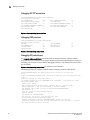
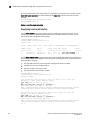
Displaying the hash values per BP
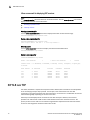
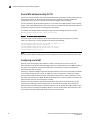
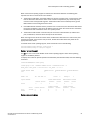
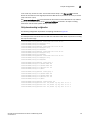
You can display the hash values for a specific source and destination IP pair. The output first
displays the current hash table size, then the hash value which is the bucket number for the given
destination and source IP addresses. If a cache server is selected for this bucket, the selected
cache server name is displayed and if no cache server is selected for this bucket, "empty" is
displayed, as shown in the following examples.
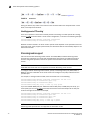
ServerIronADX1/1#show cache-hash 1 10.2.3.4 192.168.1.1
Cache-group 1:
Hash table size:
512
Hash_info: Dest_mask = 255.255.255.255 Src_mask = 0.0.0.0
bucket#:
38 -> cs1
ServerIronADX1/1#show cache-hash 1 10.2.3.4 192.168.1.1
Cache-group 1:
Hash table size:
512
Hash_info: Dest_mask = 255.255.255.255 Src_mask = 0.0.0.0
bucket#:
39 -> empty
Syntax: show cache-hash cache-group destination-IP source-IP
NOTE
This command is available at the BP console only.
NOTE
The hash table is not synced between ServerIron ADX switches for both Hot-Standby HA and
Symmetric Active-Active HA mode.
Enabling cache server spoofing support
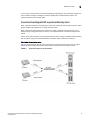
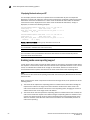
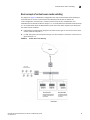
In TCS, when a client makes a request for HTTP content on the Internet, the ServerIron ADX directs
the request to a cache server, rather than to the Internet. If the requested content is not on a cache
server, it is obtained from a Web server of origin on the Internet, stored on a cache server to
accommodate future requests, and sent from the cache server back to the requesting client.
NOTE
You cannot use the cache server spoofing feature with the reverse proxy SLB feature on the same
ServerIron ADX.
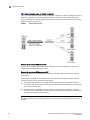
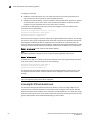
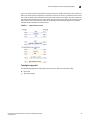
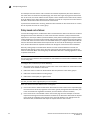
When a cache server makes a request for content from the origin server, it can perform one of the
following actions:
• The cache server replaces the requesting client's IP address with its own before sending the
request to the Internet. The origin server then sends the content to the cache server. The
cache server stores the content and sends it to the requesting client, changing the source IP
address from its own to the origin server's IP address.
• The cache server does not replace the requesting client's IP address with its own. Instead, the
cache server sends the request to the Internet using the requesting client's IP address as the
source. This allows the origin server to perform authentication and accounting based on the
client’s IP address, rather than the cache server’s IP address. This functionality is known as
cache server spoofing.
62
Brocade ServerIron ADX Advanced Server Load Balancing Guide
53-1003441-01