1
FIRE-LIGHTING
1.
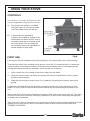
Open the lower control.
2.
Lay firelighters or rolled up newspapers on the grate with a reasonable quantity of dry
kindling wood. Place 2 or 3 small logs on top.
3.
Light the newspaper or firelighters using a long taper and close the door.
4.
When the fire is burning strongly, add further logs of a diameter up to 10cms.
5.
When the stove is very hot, close the lower control.
6.
Ensure there are lasting flames untill the wood becomes charcoal.
7.
It is not recommended to leave the stove alight at night or to continue using the stove in
warm weather. It offers a poor use of wood and gives poor combustion leading to greater
buildup of soot. If a weaker fire is required, less wood should be stoked to the stove.
WARNING: Over-firing the stove may cause a house fire. If the
chimney is seen to be glowing the stove is over-fired.
REFUELLING
1.
Open the upper and lower air controls.
2.
Open the door and add logs. Open the door slowly to avoid a sudden rush of intake air and
smoke escaping into the room.
3.
Leave the lower control open for a few minutes to allow the gasses in the wood to burn.
4.
Close the lower control.
TYPES OF FUEL
This stove will function with all kinds of either solid fuel or wood but in general all fuel should be
dry and timber should be well seasoned. Suitable solid fuels may include smokeless fuels such
as Phurnacite, Coalite Nuts or Extracite. Avoid using ‘green’ unseasoned wood, treated wood
such as telegraph poles, or plywood or chipboard containing glues and resins which pollute the
environment and cause the fire to burn too quickly. The use of damp wood will result in more soot
being left in the chimney, flu and stove.
The use of damp wood will result in more soot being left in the chimney, flu and stove.
The maximum length of of fuel suitable for this stove is 26cm so as to lay flat over the embers
and logs of greather than 10cm diameter should be split.
8