1
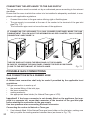
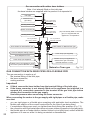
2. Connect the cooker to the gas supply using a suitable rubber hose (internal diameter 13 mm).
The hose must comply with the applicable local regulations and be of the correct construction for the type of gas being used.
3. Make sure that the hose is tightly and securely fitted at both ends.
4. Use a standard hose clamp (not supplied) to fasten the hose.
Connecting the cooker to LPG
1. If not already fitted, fit the LPG hose holder on the inlet pipe, making sure that you
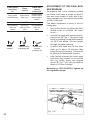
place the sealing washer between them (as shown in Fig. 7.2).
Important! The LPG hose holder is composed by Natural/Town gas hose holder with LPG hose adapter screwed at the bottom end (interposing the proper
sealing washer between them).
2. Connect the cooker to the gas supply using a suitable rubber hose (internal diameter
8 mm).
The hose must comply with the applicable local regulations and be of the correct construction for the type of gas being used.
3. Make sure that the hose is tightly and securely fitted at both ends.
4. Use a standard hose clamp (not supplied) to fasten the hose.
5. Install a gas pressure regulator.
Important! To comply with applicable local regulations, a gas pressure regulator
(conforming to the local regulations in force) must be installed when connecting the
cooker to an LPG cylinder.
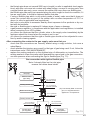
When connecting the cooker to the gas supply with a rubber hose, make sure that
the hose is as short as possible, without twists or kinks.
the hose is not longer than 750 mm (or refer to applicable local regulations) and does
not come into contact with sharp edges, corners or moving parts. Use a single rubber
hose only; never connect the appliance with more than one rubber hose.
• the hose is not under tension, twisted, kinked, or too tightly bent, neither while the
appliance is in use nor while it is being connected or disconnected.
• the hose does not come into contact with any part of the cooker with a surface temperature of 70°C or above (or refer to applicable local regulations).
• the hose is not subject to excessive heat by direct exposure to flue products or by
contact with hot surfaces.
• the hose can easily be inspected along its entire length to check its condition.
• the hose is replaced at the printed due date or if it shows signs of wear or damage, and
replaced regardless of its condition after a maximum of three years.
• you inform the customer that the gas cylinder valve or the gas supply valve immediately by the cooker should be closed when the cooker is not in use.
• you inform the customer that the hose should not be subjected to corrosion by acidic
cleaning agents.
•
•
After connecting the cooker to the gas supply, make sure that you
• check that the connections are correctly sealed using a soapy solution, but never a
naked flame.
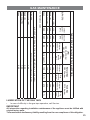
• check whether the injectors are correct for the type of gas being used. If not, follow the
instructions under “GAS MAINTENANCE”.
• replace the sealing washer/s on the slightest sign of deformation or imperfection. The
sealing washer/s is/are the part/s which guarantees a good seal in the gas connection.
• use two spanners when fitting the parts (Fig. 7.2).
21