1
Small Vision System User Manual
1.2
7
The Small Vision System
The Small Vision System (SVS) is meant to be an accessible development environment for
experimenting with applications for stereo processing. It consists of a library of functions for performing
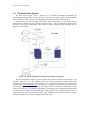
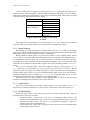
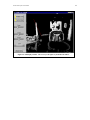
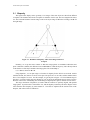
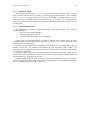
stereo correlation. Figure 1-2 shows the relationship between the SVS library and PC hardware.
Images come in via a pair of aligned video cameras, called a stereo head. A video capture board or
boards in the PC digitizes the video streams into main memory. The SVS functions are then invoked,
and given a stereo pair as an argument. These functions compute a disparity image, which the user can
display or process further.
Figure 1-2. The development environment of the Small Vision System.
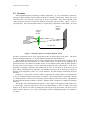
The SVS environment of Figure 1-2 shows a typical setup for stereo processing of video images. The
user may supply his or her own cameras: the SVS has special processing for dealing with camera
distortion and calibrating the stereo image (Section 2.4.2). Special stereo heads are also available from
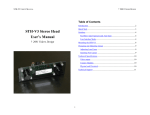
Videre Design (www.videredesign.com). The STH-V3 is an analog head with the ability to send a stereo
pair on just a single video signal, so only one video capture device is required (more information on video
capture is in Section 2.1). The MEGA-D (STH-MD1) is an all-digital device with megapixel imagers that
uses the 1394 bus (FireWire) for direct digital input. Finally, other sources of images may also be used, as
long as the images can be placed in PC memory. Some examples are images stored on disk, or images
obtained from other devices such as scanning electron microscopes.