1
PREFLIGHT
MOTOR SAFETY PRECAUTIONS
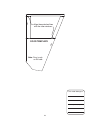
Identify Your Model
Failure to follow these safety precautions may result
in severe injury to yourself and others.
No matter if you fly at an AMA sanctioned R/C club site or
if you fly somewhere on your own, you should always have
your name, address, telephone number and AMA number on
or inside your model. It is required at all AMA R/C club flying
sites and AMA sanctioned flying events. Fill out the included
identification tag on page 29 and place it on or inside your
model.
Balance Propellers
• Get help from an experienced pilot when learning to
operate electric motors.
• Use safety glasses when operating motors.
• Do not operate the motor in an area of loose gravel or sand;
the propeller may throw such material in your face or eyes.
• Keep your face and body as well as all spectators away
from the plane of rotation of the propeller as you operate
the motor.
• Keep these items away from the prop: loose clothing, shirt
sleeves, sweater strings, ties, scarves, long hair or loose
objects such as pencils or screwdrivers that may fall out of
shirt or jacket pockets into the prop.
• Always keep your radio on when plugging the motor
batteries into the ESC.
• Stay clear of the propeller at all times: Some ESC units do
not have safety arming features, so any movement of the
throttle stick may cause the propeller to turn.
• Always use a charger designed to charge LiPo batteries for
charging the LiPo flight battery.
Carefully balance your propeller and spare propellers before
you fly. An unbalanced prop can be the single most significant
cause of vibration that can damage your model. Not only
will motor mounting screws loosen, possibly with disastrous
effect, but vibration may also damage your radio gear.
We use a Top Flite Precision Magnetic Prop Balancer
(TOPQ5700) in the workshop and keep a Great Planes
Fingertip Prop Balancer (GPMQ5000) in our flight box.
Range Check
• Never leave the LiPo battery unattended while charging. If
the battery becomes hot, discontinue charging.
AMA SAFETY CODE (EXCERPTS)
Read and abide by the following excerpts from the Academy
of Model Aeronautics Safety Code. For the complete Safety
Code refer to Model Aviation magazine, the AMA web site or
the Code that came with your AMA license.
General
1) I will not fly my model aircraft in sanctioned events, air shows,
When you get to your flying site ground check the operational
or model flying demonstrations until it has been proven to be
range of the radio before the first flight of the day. With the
airworthy by having been previously, successfully flight tested.
transmitter antenna collapsed or the transmitter in “power
down” mode and the receiver and transmitter on, you should 2) I will not fly my model aircraft higher than approximately
be able to walk at least 100 feet away from the model and 400 feet within 3 miles of an airport without notifying the
still have control. Have an assistant stand by your model airport operator. I will give right-of-way and avoid flying in the
and, while you work the controls, tell you what the control proximity of full-scale aircraft. Where necessary, an observer
surfaces are doing. Repeat this test with the motor running shall be utilized to supervise flying to avoid having models fly
at various speeds with an assistant holding the model, using in the proximity of full-scale aircraft.
hand signals to show you what is happening. If the control 3) Where established, I will abide by the safety rules for the
surfaces do not respond correctly, do not fly! Find and correct flying site I use, and I will not willfully and deliberately fly my
the problem first. Look for loose servo or battery connections, models in a careless, reckless and/or dangerous manner.
damaged wires or a damaged receiver crystal from a previous
crash in another model. One other possible source of radio 5) I will not fly my model unless it is identified with my name
“noise” that could cause interference is the arrangement and and address or AMA number, on or in the model. Note: This
relative location of the receiver, receiver antenna and motor does not apply to models while being flown indoors.
wires. If possible, remount the receiver in a different location 7) I will not operate models with pyrotechnics (any device
or reroute some of the wires. Then try the range check again. that explodes, burns, or propels a projectile of any kind).
26