1
Installation and Operation Manual
Chapter 1 Introduction
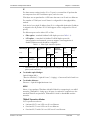
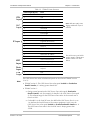
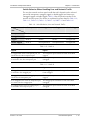
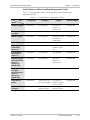
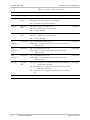
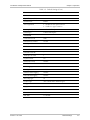
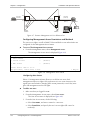
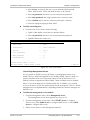
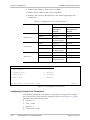
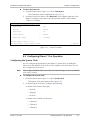
Switch Behavior When Handling User and Network Traffic
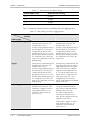
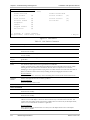
The way the network and user ports handle the traffic depends on the selected
port mode (transparent, untagged, tagged or double tagged) and frame type
(untagged, tagged or double tagged). Table 1-9 lists all operation modes of the
network and user ports. The modes are explained in greater detail in Table 1-10,
Table 1-11, Table 1-12, Table 1-13, Table 1-14, Table 1-15 and Table 1-16.
Table 1-9. Switch Behavior (User and Network Traffic)
Network
Transparent
Untagged
Tagged
Double Tagged
User
Transparent
Mode A
Mode B
Mode C
Not applicable
Untagged
Mode B
Mode D
Mode E
Not applicable
Tagged
Mode C
Mode E
Mode F
Not applicable
Double Tagged
Mode G
Not implemented
Not implemented
Not applicable
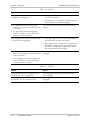
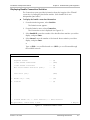
Table 1-10. Mode A
Ingress
Egress
If a tagged frame enters a transparent port, it is
switched to the other transparent port
The transparent port transmits the frame unmodified
(tagged)
If an untagged frame enters a transparent port, it
is switched to the other transparent port
The transparent port transmits the frame unmodified
(untagged)
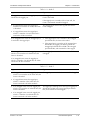
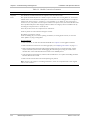
Table 1-11. Mode B
Ingress
Egress
If a tagged frame enters the transparent port, it
is switched to the untagged port
The untagged port removes the tag, and transmits the
frame untagged
If a tagged frame enters the untagged port, it is
switched to the transparent port
The transparent port transmits the frame unmodified
(tagged)
If an untagged frame enters the transparent port,
it is switched to the untagged port
The untagged port transmits the frame unmodified
(untagged)
If a untagged frame enters the untagged port, it
is switched to the transparent port
The transparent port transmits the frame unmodified
(untagged)
IPmux-11 Ver. 2.00
Functional Description
1-19