1
Programming the DC Source - 7
interval and the number of data points so that an integral number of waveform cycles will end up in the
measurement buffer.
Voltage and Current Measurements
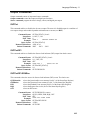
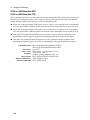
The Agilent 66311B has a number of waveform measurement capabilities. The SCPI language MEASure
and FETCh queries are used to return the various measurement parameters of voltage and current
waveforms.
Average Measurements
To measure the average output voltage or current, use:
MEASure:VOLTage?
MEASure:CURRent?
or
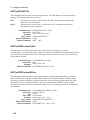
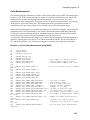
Average voltage and current is measured by acquiring a number of readings at the selected time interval,
applying the Hanning window function to the readings, and averaging the readings. Windowing is a
signal conditioning process that reduces the error in average measurements made in the presence of
periodic signals such as pulse current waveforms, which are generated when TDMA cellular phones are
transmitting. The power-on and *RST sample interval and sweep size settings yield a data acquisition
time of 32 milliseconds per measurement.
Ripple rejection is a function of the number of cycles of the ripple frequency contained in the acquisition
window. More cycles in the acquisition window results in better ripple rejection. If you increase the data
acquisition time for each measurement to 45 microseconds for example, this results in 5.53 cycles in the
acquisition window at 60 Hz, for a ripple rejection of about 70 dB.
RMS Measurements (Agilent Model 66311B Only)
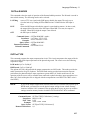
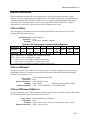
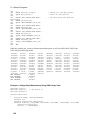
To read the rms content of a voltage or current waveform, use:
MEASure:VOLTage:ACDC? or
MEASure:CURRent:ACDC?
This returns the total rms measurement.
Making rms or average measurements on ac waveforms for which a non-integral number of cycles of data
has been acquired may result in measurement errors due to the last partial cycle of acquired data. The
instrument reduces this error by using a Hanning window function when making the measurement. If the
measurement readings vary from sample to sample, try increasing the data acquisition time to reduce
measurement error.
Pulse Measurements (Agilent Model 66311B Only)
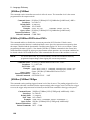
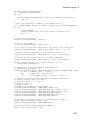
Use fetch queries to return all measurement data in the shortest time. The fetch functions do not trigger
the acquisition of new measurement data, but are used to return different calculations from the data that
was retrieved by the acquisition trigger. If you take a voltage measurement you can fetch only voltage
data; if you take a current measurement you can fetch only current data, otherwise an error will occur.
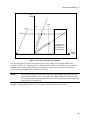
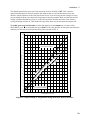
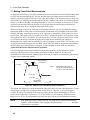
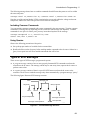
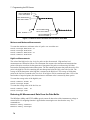
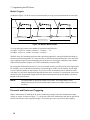
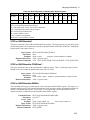
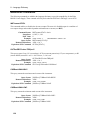
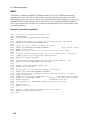
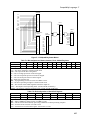
The dc source has several measurement queries that return key parameters of pulse waveforms as shown
in Figure 7-3.
73