1
DOCSIS 1.1 for Cisco uBR905 and Cisco uBR925 Cable Access Routers and Cisco CVA122 Cable Voice Adapters
Prerequisites for DOCSIS 1.1 Support
•
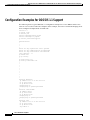
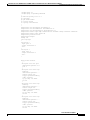
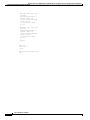
Configuration Examples for DOCSIS 1.1 Support, page 36
•
Additional References, page 39
•
Command Reference, page 42
Prerequisites for DOCSIS 1.1 Support
Before you implement a DOCSIS 1.1 network, ensure that the following are true for your cable network:
•
The Cisco uBR905 and Cisco uBR925 cable access routers and Cisco CVA122 cable voice adapter
must contain the proper digital certificates for BPI+ operation and Secure Software Download.
Initial versions of the Cisco uBR905 and Cisco uBR925 cable access routers and Cisco CVA122
cable voice adapter contained certificates for an early version of the DOCSIS 1.1 specification that
are no longer valid. To upgrade these certificates, see the document Upgrading the DOCSIS
Certificates in
Cisco uBR905/uBR925 Cable Access Routers and CVA122 Cable Voice Adapters at the following
URL:
http://www.cisco.com/univercd/cc/td/doc/product/software/ios122/122newft/122limit/122cz/upgdc
ert.htm
Note
To update the digital certificates, you must also obtain the Cisco DOCSIS 1.1 Cable Modem
Certificate Upgrade CD-ROM (part number UBR/CVA-CERT-UPG). This one CD-ROM
works with the Cisco uBR905 and Cisco uBR925 cable access routers and Cisco CVA122
Cable Voice Adapters.
•
Ensure that your network supports reliable broadband data transmission. Your plant must be swept,
balanced, and certified to NTSC or appropriate international cable plant recommendations. Ensure
that your plant meets all DOCSIS downstream and upstream RF requirements.
•
Ensure that your CMTS is installed and configured to support DOCSIS 1.1 operation.
•
Ensure that all other required headend or distribution hub routing and network interface equipment
is installed, configured, and operational, based on the services to support. This includes all routers,
servers (DHCP, TFTP, and ToD), network management systems, and other configuration or billing
systems. This includes IP telephony equipment including gatekeepers and gateways; backbone and
other equipment if supporting VPN; and dialup access servers, telephone circuits and connections,
and other equipment if supporting telco return.
•
Ensure that the system clocks on the CMTS and on the time-of-day (ToD) servers are synchronized.
If this does not occur, the clocks on the CMs will not match the clocks on the CMTS, which could
interfere with BPI+ operations. In particular, this could prevent the proper verification of the digital
certificates on the CM.
•
The DOCSIS specifications require that when the DOCSIS configuration file enables BPI+
encryption, the configuration file must also include a value for the Baseline Privacy Configuration
Settings Option field (TLV 17). If this field is not included when BPI is enabled, the router rejects
the BPI configuration. If MAC debugging is enabled (using the debug cable-modem mac
command), the router also displays the displays the debugging message
CMAC_LOG_BPKM_REQUIRED_TLV17_ABSENT on the console.
•
Ensure that DHCP and DOCSIS 1.1 configuration files have been created and pushed to appropriate
servers such that each cable modem, when initialized, can transmit a DHCP request, receive an IP
address, obtain TFTP and ToD server addresses, and download DOCSIS 1.1 configuration files.
Cisco IOS Release 12.2(15)CZ
2