1
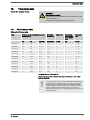
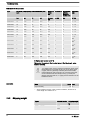
Troubleshooting
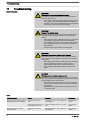
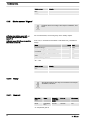
Fault description
Cause
Remedy
Personnel
The motor is wired incor‐
rectly.
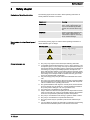
1. Check the mains voltage and
mains frequency.
Electrician
2. Wire the motor correctly.
The mains voltage has
failed.
Eliminate the cause.
Electrician
The dosing head screws
are no longer tight enough.
Tighten the screws crosswise to the
specified tightening torque.
Technical per‐
sonnel
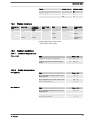
The diaphragm leaks.
Replace the diaphragm - refer to the
"Repair" chapter.
Technical per‐
sonnel
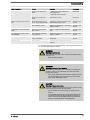
Large leaks occur at the relief
valve.
The ball or ball seat are
dirty or worn.
Clean or replace the ball and ball
seat.
Technical per‐
sonnel
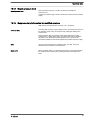
The diaphragm rupture sensor
has triggered.
The operating diaphragm
has ruptured.**
Replace the diaphragm - refer to the
"Repair" chapter.
Technical per‐
sonnel
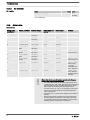
The drive motor is very hot.
The discharge line is seri‐
ously constricted.
Rectify any constriction of the dis‐
charge line.
Technical per‐
sonnel
All other faults.
Other causes.
Call ProMinent ProMaqua customer
services.
Fluid is escaping from the end
disc
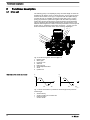
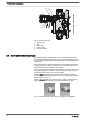
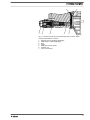
* If necessary use the cross-section drawing of the integral relief valve in
the "Functional Description" chapter.
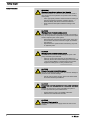
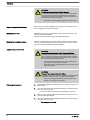
WARNING!
Warning of eye injuries
When opening the relief valve, a spring under high tension
can jump out.
–
Wear protective glasses.
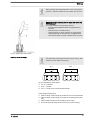
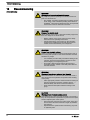
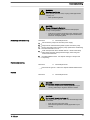
**
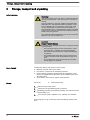
WARNING!
Warning of escaping feed chemical
When dosing combustible feed chemicals or in hazardous
locations, under no circumstances must the second dia‐
phragm also rupture.
–
If the pump membrane rupture sensor triggers, stop the
pump immediately and only restart once a new multilayer safety diaphragm is fitted.
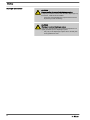
CAUTION!
Warning of inaccurate dosing
Once the operating membrane has ruptured, precise dosing
of the pump can no longer be guaranteed.
–
–
Do not continue to use the pump for critical process
dosing.
For uncritical processes, the pump can continue to be
operated for some time after the break in emergency
service mode at full operating pressure and free from
leaks up until replacement of the diaphragm.
39