1
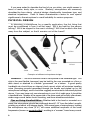
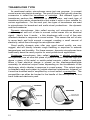
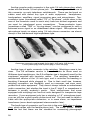
4. “Popping” and wind noise — Popping is caused by an explosive
sound wave striking the microphone diaphragm, such as that which
occurs when a talker says words beginning with the letters “p” or “t”.
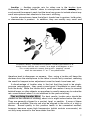
To lessen the likelihood of this phenomenon occurring, you should: 1)
keep the microphone at least 6 inches away from the talker’s mouth,
tilted toward the user at about 45 degrees from vertical, and 2) use a
foam windscreen if the microphone’s built-in pop filter is insufficient or
if a very close source-to-mic distance is required.
Wind noise is frequently a problem outdoors, especially with
condenser microphones. The only solution is to use a foam
windscreen, and in extreme conditions, a “zeppelin” or “blimp” type
windscreen such as those used on shotgun microphones.
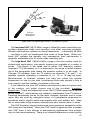
5. Vibration noise — This is usually heard in the form of low “thumping”
when someone taps or bangs on the stand or lectern on which the
microphone is mounted. It can be reduced (although not always
eliminated) through the use of a shock mount. This is a special
mounting bracket for the microphone which uses rubber or elastic
to isolate the microphone body form mechanical noise. An external
shock mount may be essential if the microphone has little or no
internal shock mount of its own.
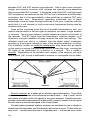
6. Feedback — If you are using microphones to feed a loudspeaker system
in the same room, you may occasionally encounter feedback (a loud
howl or squeal when microphones are moved too close to the
loudspeakers.) Feedback is usually caused by a combination of several
factors such a speaker volume, placement of mics and loudspeakers,
and room acoustics. The easiest way to improve the situation is to
adjust those factors over which you have some control - microphone
pickup pattern, mic placement, loudspeaker location, and loudspeaker
volume - so that they don’t interfere with each other. For instance, in any
given feedback situation, you could: 1) move the microphone farther
away from the loudspeakers, 2) move the loudspeakers farther away
from the microphone, 3) switch to a microphone with a more directional
pickup pattern, or 4) turn down the overall volume of the sound system.
There is no known device which will eliminate feedback; proper use of
microphones and loudspeakers is usually the only solution.
33