1
If you were asked to describe the kind of car you drive, you might answer in
terms of make, body style, or color. Similarly, microphones are commonly
described by four criteria: physical design, directionality, transducer type, and
electrical impedance. Each of these characteristics carries its own special
significance to the microphone’s overall suitability for various purposes.
PHYSICAL DESIGN
In choosing a microphone for a specific application, the first thing that
must be considered is how it will be used. Will it be held by the person
talking? Will it be clipped to the user’s clothing? Will it be located a few feet
away from the subject, so that it remains out of the frame?
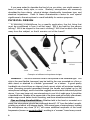
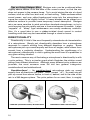
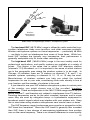
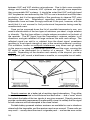
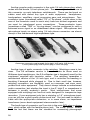
MX393
WH10
MX202
WL183
SM58
SM89
U2/87
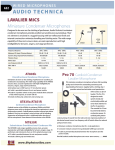
Examples of different microphone designs
Handheld — The most common kind of microphone is the handheld type. This
style is the most flexible, because it can be held by the user, mounted on a floor or
desk stand, or attached to a flexible “gooseneck” on a lectern. A good quality
handheld mic should have an internal shock mount which will minimize handling
noise (thumping sounds transmitted through the handle and picked up by the
microphone cartridge), and it should be ruggedly constructed to withstand physical
abuse. If you can have only one microphone in your kit of audio gear, it should be
a handheld mic. Models at the upper end of the price scale will usually offer clearer,
wider-range sound, better shock mounting, and more durable construction.
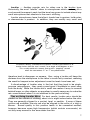
Tips on Using Handheld Mics: Whether held in the hand or mounted on a
stand, the microphone should be positioned about 6”-12” from the talker’s mouth,
pointing up at about a 45-degree angle. With some types of microphones, holding
the microphone very close (3”-6”) will cause additional emphasis of the lower
frequencies (known as proximity effect), resulting in a “warmer”, bass-heavy sound.
6