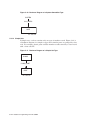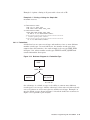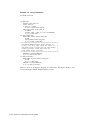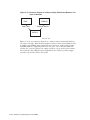
1
HP COBOL
DBMS Database Programming
Manual
Order Number: AA-Q6PGD-TE
January 2005
This manual explains how to develop Oracle DBMS database programs
with HP COBOL on the OpenVMS Alpha, OpenVMS I64, and the
OpenVMS VAX operating systems.
Revision/Update Information:
This manual supersedes the
COMPAQ COBOL DBMS Database
Programming Manual.
Operating System and Version: OpenVMS I64 Version 8.2
OpenVMS Alpha Version 6.2 or higher
OpenVMS VAX Version 6.2 or higher
Software Version:
Hewlett-Packard Company
Palo Alto, California
HP COBOL for OpenVMS I64
Version 2.8
HP COBOL for OpenVMS Alpha
Version 2.8
HP COBOL for OpenVMS VAX
Version 5.7A
© 2005 Copyright Hewlett-Packard Development Company, L.P.
Confidential computer software. Valid license from HP required for possession, use, or copying.
Consistent with FAR 12.211 and 12.212, Commercial Computer Software, Computer Software
Documentation, and Technical Data for Commercial Items are licensed to the U.S. Government
under vendor’s standard commercial license.
The information contained herein is subject to change without notice. The only warranties for HP
products and services are set forth in the express warranty statements accompanying such products
and services. Nothing herein should be construed as constituting an additional warranty. HP shall
not be liable for technical or editorial errors or omissions contained herein.
Intel and Itanium are trademarks or registered trademarks of Intel Corporation or its subsidiaries
in the United States and other countries.
Printed in the US
ZK6393
The HP COBOL documentation set is available on CD-ROM.
This document was prepared using DECdocument, Version 3.3-1b.
Contents
Preface . . . . . . . . . . . . . . . . . . . . . . . . . . . . . . . . . . . . . . . . . . . . . . . . . . . . . . . . . . . .
ix
1 Program Organization and Structure
1.1
1.2
1.3
1.4
1.4.1
1.4.2
1.5
1.6
Program Structure . . . . . . . . . . . . . . . . . . . . . . . . . . . . . . .
HP COBOL Data Manipulation Language (DML) . . . . . . .
Creating an HP COBOL DML Program . . . . . . . . . . . . . . .
Compiling an HP COBOL DML Program . . . . . . . . . . . . .
Copying Database Records in an HP COBOL Program
Using the /MAP Compiler Qualifier . . . . . . . . . . . . . . .
Linking an HP COBOL DML Program . . . . . . . . . . . . . . .
Running an HP COBOL DML Program . . . . . . . . . . . . . . .
.
.
.
.
.
.
.
.
.
.
.
.
.
.
.
.
.
.
.
.
.
.
.
.
.
.
.
.
.
.
.
.
.
.
.
.
.
.
.
.
.
.
.
.
.
.
.
.
.
.
.
.
.
.
.
.
.
.
.
.
.
.
.
.
.
.
.
.
.
.
.
.
.
.
.
.
.
.
.
.
.
.
.
.
.
.
.
.
.
.
.
.
.
.
.
.
1–1
1–3
1–4
1–5
1–5
1–5
1–5
1–6
.
.
.
.
.
.
.
.
.
.
.
.
.
.
.
.
.
.
.
.
.
.
.
.
.
.
.
.
.
.
.
.
.
.
.
.
.
.
.
.
.
.
.
.
.
.
.
.
.
.
.
.
.
.
.
.
.
.
.
.
.
.
.
.
.
.
.
.
.
.
.
.
.
.
.
.
.
.
.
.
.
.
.
.
2–1
2–2
2–2
2–2
2–3
2–3
2–3
DATA DIVISION General Format and Rules . . . . . . . . . . . . . . . . . . . . . . .
DB (Subschema Description) . . . . . . . . . . . . . . . . . . . . . . . . . . . . . . . . . . .
LD (Keeplist Description) . . . . . . . . . . . . . . . . . . . . . . . . . . . . . . . . . . . . . .
3–2
3–5
3–9
2 Database Programming Elements of HP COBOL
2.1
2.2
2.2.1
2.2.2
2.2.3
2.2.4
2.2.5
Database-Related User-Defined Words .
Database-Related Reserved Words . . . .
DB-CONDITION . . . . . . . . . . . . . .
DB-CURRENT-RECORD-NAME . .
DB-CURRENT-RECORD-ID . . . . .
DB-KEY . . . . . . . . . . . . . . . . . . . . .
DB-UWA . . . . . . . . . . . . . . . . . . . .
.
.
.
.
.
.
.
.
.
.
.
.
.
.
.
.
.
.
.
.
.
.
.
.
.
.
.
.
.
.
.
.
.
.
.
.
.
.
.
.
.
.
.
.
.
.
.
.
.
.
.
.
.
.
.
.
.
.
.
.
.
.
.
.
.
.
.
.
.
.
.
.
.
.
.
.
.
.
.
.
.
.
.
.
.
.
.
.
.
.
.
.
.
.
.
.
.
.
.
.
.
.
.
.
.
3 Data Division
3.1
4 Procedure Division
4.1
4.1.1
4.1.2
4.2
4.3
4.4
4.5
4.5.1
4.5.2
4.5.3
4.5.4
4.6
4.7
COBOL Statements for the Database Programmer . . . . . .
Compiler-Directing Statements and Sentences . . . . . .
Imperative and Conditional Statements and Sentences
Explicit and Implicit Scope Terminators . . . . . . . . . . . . . .
Scope of Names . . . . . . . . . . . . . . . . . . . . . . . . . . . . . . . . .
Database Key Identifiers . . . . . . . . . . . . . . . . . . . . . . . . . .
Database Conditions . . . . . . . . . . . . . . . . . . . . . . . . . . . . .
Tenancy Conditions . . . . . . . . . . . . . . . . . . . . . . . . . . .
Empty Condition . . . . . . . . . . . . . . . . . . . . . . . . . . . . .
Database Key Condition . . . . . . . . . . . . . . . . . . . . . . . .
Condition Evaluation Rules . . . . . . . . . . . . . . . . . . . . .
Record Selection Expressions (RSE) . . . . . . . . . . . . . . . . . .
Set Membership Options and DML Verbs . . . . . . . . . . . . .
.
.
.
.
.
.
.
.
.
.
.
.
.
.
.
.
.
.
.
.
.
.
.
.
.
.
.
.
.
.
.
.
.
.
.
.
.
.
.
.
.
.
.
.
.
.
.
.
.
.
.
.
.
.
.
.
.
.
.
.
.
.
.
.
.
.
.
.
.
.
.
.
.
.
.
.
.
.
.
.
.
.
.
.
.
.
.
.
.
.
.
.
.
.
.
.
.
.
.
.
.
.
.
.
.
.
.
.
.
.
.
.
.
.
.
.
.
.
.
.
.
.
.
.
.
.
.
.
.
.
.
.
.
.
.
.
.
.
.
.
.
.
.
.
.
.
.
.
.
.
.
.
.
.
.
.
4–1
4–3
4–3
4–4
4–4
4–4
4–6
4–7
4–7
4–8
4–9
4–9
4–15
iii
4.8
4.8.1
4.8.2
4.8.3
4.8.4
4.9
4.9.1
Programming for Database Exceptions and Error Handling . . . . . . . . .
Database On Error Condition . . . . . . . . . . . . . . . . . . . . . . . . . . . . .
At End Condition . . . . . . . . . . . . . . . . . . . . . . . . . . . . . . . . . . . . . . .
Exception Conditions and the USE Statement . . . . . . . . . . . . . . . . .
Translating DB-CONDITION Values to Exception Messages . . . . . .
Database Programming Statements in the COBOL Procedure Division .
COMMIT . . . . . . . . . . . . . . . . . . . . . . . . . . . . . . . . . . . . . . . . . . . . . . . .
CONNECT . . . . . . . . . . . . . . . . . . . . . . . . . . . . . . . . . . . . . . . . . . . . . . .
DISCONNECT . . . . . . . . . . . . . . . . . . . . . . . . . . . . . . . . . . . . . . . . . . . .
ERASE . . . . . . . . . . . . . . . . . . . . . . . . . . . . . . . . . . . . . . . . . . . . . . . . . .
FETCH . . . . . . . . . . . . . . . . . . . . . . . . . . . . . . . . . . . . . . . . . . . . . . . . .
FIND . . . . . . . . . . . . . . . . . . . . . . . . . . . . . . . . . . . . . . . . . . . . . . . . . . .
FREE . . . . . . . . . . . . . . . . . . . . . . . . . . . . . . . . . . . . . . . . . . . . . . . . . . .
GET . . . . . . . . . . . . . . . . . . . . . . . . . . . . . . . . . . . . . . . . . . . . . . . . . . . .
KEEP . . . . . . . . . . . . . . . . . . . . . . . . . . . . . . . . . . . . . . . . . . . . . . . . . . .
MODIFY . . . . . . . . . . . . . . . . . . . . . . . . . . . . . . . . . . . . . . . . . . . . . . . .
READY . . . . . . . . . . . . . . . . . . . . . . . . . . . . . . . . . . . . . . . . . . . . . . . . .
RECONNECT . . . . . . . . . . . . . . . . . . . . . . . . . . . . . . . . . . . . . . . . . . . .
ROLLBACK . . . . . . . . . . . . . . . . . . . . . . . . . . . . . . . . . . . . . . . . . . . . . .
STORE . . . . . . . . . . . . . . . . . . . . . . . . . . . . . . . . . . . . . . . . . . . . . . . . . .
USE . . . . . . . . . . . . . . . . . . . . . . . . . . . . . . . . . . . . . . . . . . . . . . . . . . . .
RETAINING Clause . . . . . . . . . . . . . . . . . . . . . . . . . . . . . . . . . . . . .
.
.
.
.
.
.
.
.
.
.
.
.
.
.
.
.
.
.
.
.
.
.
.
.
.
.
.
.
.
.
.
.
.
.
.
.
.
.
.
.
.
.
.
4–15
4–15
4–17
4–18
4–19
4–20
4–21
4–23
4–26
4–28
4–31
4–35
4–39
4–41
4–43
4–45
4–49
4–53
4–57
4–59
4–62
4–66
5 Database Programming with HP COBOL
The Self-Paced Demonstration Package . . . . . . . . . . . . . . . . . . . . . . . . . . .
Concepts and Definitions . . . . . . . . . . . . . . . . . . . . . . . . . . . . . . . . . . . . . .
Database . . . . . . . . . . . . . . . . . . . . . . . . . . . . . . . . . . . . . . . . . . . . . . .
Schema . . . . . . . . . . . . . . . . . . . . . . . . . . . . . . . . . . . . . . . . . . . . . . . .
Storage Schema . . . . . . . . . . . . . . . . . . . . . . . . . . . . . . . . . . . . . . . . . .
Subschema . . . . . . . . . . . . . . . . . . . . . . . . . . . . . . . . . . . . . . . . . . . . . .
Stream . . . . . . . . . . . . . . . . . . . . . . . . . . . . . . . . . . . . . . . . . . . . . . . . .
Using Oracle CDD/Repository . . . . . . . . . . . . . . . . . . . . . . . . . . . . . . . . . .
Database Records . . . . . . . . . . . . . . . . . . . . . . . . . . . . . . . . . . . . . . . . . . . .
Database Data Item . . . . . . . . . . . . . . . . . . . . . . . . . . . . . . . . . . . . . . . . . .
Database Key . . . . . . . . . . . . . . . . . . . . . . . . . . . . . . . . . . . . . . . . . . . . . . .
Record Types . . . . . . . . . . . . . . . . . . . . . . . . . . . . . . . . . . . . . . . . . . . . . . .
Set Types . . . . . . . . . . . . . . . . . . . . . . . . . . . . . . . . . . . . . . . . . . . . . . . . . .
Sets . . . . . . . . . . . . . . . . . . . . . . . . . . . . . . . . . . . . . . . . . . . . . . . . . . . . . .
Simple Set Relationships . . . . . . . . . . . . . . . . . . . . . . . . . . . . . . . . . . .
System-Owned Sets . . . . . . . . . . . . . . . . . . . . . . . . . . . . . . . . . . . .
Simple Sets . . . . . . . . . . . . . . . . . . . . . . . . . . . . . . . . . . . . . . . . . .
Forked Sets . . . . . . . . . . . . . . . . . . . . . . . . . . . . . . . . . . . . . . . . . .
Multiset Relationships . . . . . . . . . . . . . . . . . . . . . . . . . . . . . . . . . . . . .
Many-to-Many Relationships Between Two Types of Records . . . .
Many-to-Many Relationships Between Records of the Same
Type . . . . . . . . . . . . . . . . . . . . . . . . . . . . . . . . . . . . . . . . . . . . . . . .
5.9.2.3
One-to-Many Relationships Between Records of the Same
Type . . . . . . . . . . . . . . . . . . . . . . . . . . . . . . . . . . . . . . . . . . . . . . . .
5.10
Areas . . . . . . . . . . . . . . . . . . . . . . . . . . . . . . . . . . . . . . . . . . . . . . . . . . . . .
5.11
Realms . . . . . . . . . . . . . . . . . . . . . . . . . . . . . . . . . . . . . . . . . . . . . . . . . . . .
5.12
Run Unit . . . . . . . . . . . . . . . . . . . . . . . . . . . . . . . . . . . . . . . . . . . . . . . . . .
5.1
5.2
5.2.1
5.2.2
5.2.3
5.2.4
5.2.5
5.3
5.4
5.5
5.6
5.7
5.8
5.9
5.9.1
5.9.1.1
5.9.1.2
5.9.1.3
5.9.2
5.9.2.1
5.9.2.2
iv
5–1
5–2
5–3
5–3
5–3
5–3
5–3
5–4
5–5
5–5
5–5
5–5
5–6
5–9
5–11
5–11
5–12
5–13
5–15
5–15
5–17
5–22
5–24
5–25
5–25
5.13
Currency Indicators . . . . . . . . . . . . . . . . . . . . . . . . . .
5.13.1
Current of Realm . . . . . . . . . . . . . . . . . . . . . . . . .
5.13.2
Current of Set Type . . . . . . . . . . . . . . . . . . . . . . .
5.13.3
Current of Record Type . . . . . . . . . . . . . . . . . . . .
5.13.4
Current of Run Unit . . . . . . . . . . . . . . . . . . . . . .
5.14
Currency Indicators in an HP COBOL DML Program
5.14.1
Using the RETAINING Clause . . . . . . . . . . . . . .
5.14.2
Using Keeplists . . . . . . . . . . . . . . . . . . . . . . . . . .
5.14.3
Transactions and Quiet Points . . . . . . . . . . . . . . .
..
..
..
..
..
..
..
..
..
.
.
.
.
.
.
.
.
.
.
.
.
.
.
.
.
.
.
.
.
.
.
.
.
.
.
.
.
.
.
.
.
.
.
.
.
.
.
.
.
.
.
.
.
.
.
.
.
.
.
.
.
.
.
.
.
.
.
.
.
.
.
.
.
.
.
.
.
.
.
.
.
.
.
.
.
.
.
.
.
.
.
.
.
.
.
.
.
.
.
.
.
.
.
.
.
.
.
.
.
.
.
.
.
.
.
.
.
.
.
.
.
.
.
.
.
.
.
.
.
.
.
.
.
.
.
5–25
5–26
5–27
5–27
5–28
5–28
5–30
5–32
5–34
.
.
.
.
.
.
.
.
.
.
.
.
.
.
.
.
.
.
.
.
.
.
.
.
.
.
.
.
.
.
.
.
.
.
.
.
.
.
.
.
.
.
.
.
.
.
.
.
.
.
.
.
.
.
.
.
.
.
.
.
.
.
.
.
.
.
.
.
.
.
.
.
.
.
.
.
.
.
.
.
.
.
.
.
.
.
.
.
.
.
.
.
.
.
.
.
.
.
.
.
.
.
.
.
.
.
.
.
.
.
.
.
.
.
.
.
.
.
.
.
.
.
.
.
.
.
.
.
.
.
.
.
.
.
.
.
.
.
.
.
.
.
.
.
.
.
.
.
.
.
.
.
.
.
.
.
.
.
.
.
.
.
.
.
.
.
.
.
.
.
.
.
.
.
.
.
.
.
.
.
.
.
.
.
.
.
.
.
.
.
.
.
.
.
.
.
.
.
.
.
.
.
.
.
.
.
.
.
.
.
.
.
.
.
.
.
.
.
.
.
.
.
.
.
.
.
.
.
.
.
.
.
.
.
.
.
.
.
.
.
.
.
.
.
.
.
.
.
.
.
.
.
.
.
.
.
.
.
.
.
.
.
.
.
.
.
.
.
.
.
.
.
.
.
.
.
.
.
.
.
.
.
.
.
.
.
.
.
.
6–1
6–2
6–3
6–5
6–6
6–6
6–8
6–9
6–10
6–11
6–12
6–12
6–14
6–14
6–14
6–15
6–17
.
.
.
.
.
.
.
.
.
.
.
.
.
.
.
.
.
.
.
.
.
.
.
.
.
.
.
.
.
.
.
.
.
.
.
.
.
.
.
.
.
.
.
.
.
.
.
.
.
.
.
.
.
.
.
.
.
.
.
.
.
.
.
.
.
.
.
.
.
.
.
.
.
.
.
.
.
.
.
.
.
.
.
.
.
7–1
7–2
7–10
7–10
7–14
Populating a Database . . . . . . . . . . . . . . . . . . . . . . . . . . . . . . . . . . . .
Backing Up a Database . . . . . . . . . . . . . . . . . . . . . . . . . . . . . . . . . . .
Accessing and Displaying Database Information . . . . . . . . . . . . . . . .
PARTBOM Sample Run . . . . . . . . . . . . . . . . . . . . . . . . . . . . . . . . . . .
Creating Relationships Between Records of the Same Type . . . . . . . .
STOOL Program Parts Breakdown Report—Sample Run . . . . . . . . .
Creating New Record Relationships . . . . . . . . . . . . . . . . . . . . . . . . . .
PERSONNEL-UPDATE Sample Run—Listing Before Promotion
PERSONNEL-UPDATE Sample Run—Listing After Promotion .
.
.
.
.
.
.
.
.
.
.
.
.
.
.
.
.
.
.
.
.
.
.
.
.
.
.
.
.
.
.
.
.
.
.
.
.
8–1
8–9
8–15
8–17
8–17
8–22
8–22
8–28
8–29
6 DML Programming—Tips and Techniques
6.1
6.1.1
6.2
6.3
6.4
6.5
6.6
6.7
6.8
6.9
6.10
6.10.1
6.10.2
6.11
6.12
6.13
6.14
The Ready Modes . . . . . . . . . . . . . . . . . . . . . . .
Record Locking . . . . . . . . . . . . . . . . . . . . . .
COMMIT and ROLLBACK . . . . . . . . . . . . . . .
The Owner and Member Test Condition . . . . . .
Using IF EMPTY Instead of IF OWNER . . . . .
Modifying Members of Sorted Sets . . . . . . . . . .
CONNECT and DISCONNECT . . . . . . . . . . . .
RECONNECT . . . . . . . . . . . . . . . . . . . . . . . . .
ERASE ALL . . . . . . . . . . . . . . . . . . . . . . . . . . .
ERASE Record-Name . . . . . . . . . . . . . . . . . . . .
Freeing Currency Indicators . . . . . . . . . . . . . .
Establishing a Known Currency Condition
Releasing Record Locks . . . . . . . . . . . . . . .
FIND and FETCH Statements . . . . . . . . . . . . .
FIND ALL Option . . . . . . . . . . . . . . . . . . . . . .
FIND NEXT and FETCH NEXT Loops . . . . . .
Qualifying FIND and FETCH . . . . . . . . . . . . .
.
.
.
.
.
.
.
.
.
.
.
.
.
.
.
.
.
.
.
.
.
.
.
.
.
.
.
.
.
.
.
.
.
.
.
.
.
.
.
.
.
.
.
.
.
.
.
.
.
.
.
.
.
.
.
.
.
.
.
.
.
.
.
.
.
.
.
.
7 Debugging and Testing HP COBOL DML Programs
7.1
7.2
7.3
7.3.1
7.3.2
DBQ Commands and DML Statements .
Sample Debugging and Testing Session .
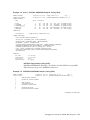
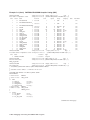
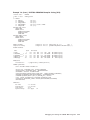
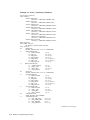
Program Map Listings on Alpha or VAX
Listings on Alpha and I64 . . . . . . . .
Listings on VAX . . . . . . . . . . . . . . . .
.
.
.
.
.
.
.
.
.
.
.
.
.
.
.
.
.
.
.
.
.
.
.
.
.
.
.
.
.
.
.
.
.
.
.
.
.
.
.
.
.
.
.
.
.
8 Database Programming Examples
8.1
8.2
8.3
8.4
8.5
8.6
8.7
8.7.1
8.7.2
v
A COBOL Database Programming Reserved Words
Glossary of Oracle DBMS-Related Terms
Index
Examples
4–1
4–2
5–1
5–2
5–3
5–4
6–1
6–2
6–3
6–4
6–5
6–6
7–1
7–2
7–3
7–4
7–5
7–6
8–1
8–2
8–3
8–4
8–5
8–6
8–7
8–8
A Single USE Statement . . . . . . . . . . . . . . . . . . . . . . . . . . .
Multiple USE Statements . . . . . . . . . . . . . . . . . . . . . . . . . .
Printing a Listing of a Simple Set . . . . . . . . . . . . . . . . . . . .
Using Forked Sets . . . . . . . . . . . . . . . . . . . . . . . . . . . . . . . .
Currency Indicators . . . . . . . . . . . . . . . . . . . . . . . . . . . . . . .
Using the RETAINING Clause . . . . . . . . . . . . . . . . . . . . . .
ROLLBACK Statement . . . . . . . . . . . . . . . . . . . . . . . . . . . .
Owner and Member Test Condition . . . . . . . . . . . . . . . . . . .
RECONNECT Statement . . . . . . . . . . . . . . . . . . . . . . . . . . .
FREE CURRENT Statement . . . . . . . . . . . . . . . . . . . . . . . .
FETCH NEXT Loop . . . . . . . . . . . . . . . . . . . . . . . . . . . . . . .
Using a FETCH NEXT Loop to Walk Through a Set Type . .
Sample HP COBOL DML Program Statements . . . . . . . . . .
Sample DML Program Statements . . . . . . . . . . . . . . . . . . .
PARTSS1-PROGRAM Compiler Listing (Alpha, I64) . . . . . .
PARTSS3-PROGRAM Compiler Listing (Alpha, I64) . . . . . .
PARTSS1-PROGRAM Compiler Listing (VAX) . . . . . . . . . . .
PARTSS3-PROGRAM Compiler Listing (VAX) . . . . . . . . . . .
Populating a Database . . . . . . . . . . . . . . . . . . . . . . . . . . . . .
Backing Up a Database . . . . . . . . . . . . . . . . . . . . . . . . . . . .
Accessing and Displaying Database Information . . . . . . . . .
Sample Run of the PARTBOM Program . . . . . . . . . . . . . . . .
Creating Relationships Between Records of the Same Type .
Creating New Record Relationships . . . . . . . . . . . . . . . . . . .
Sample Run of PERSONNEL-UPDATE Before Promotion . .
Sample Run of PERSONNEL-UPDATE After Promotion . . .
.
.
.
.
.
.
.
.
.
.
.
.
.
.
.
.
.
.
.
.
.
.
.
.
.
.
.
.
.
.
.
.
.
.
.
.
.
.
.
.
.
.
.
.
.
.
.
.
.
.
.
.
.
.
.
.
.
.
.
.
.
.
.
.
.
.
.
.
.
.
.
.
.
.
.
.
.
.
.
.
.
.
.
.
.
.
.
.
.
.
.
.
.
.
.
.
.
.
.
.
.
.
.
.
.
.
.
.
.
.
.
.
.
.
.
.
.
.
.
.
.
.
.
.
.
.
.
.
.
.
.
.
.
.
.
.
.
.
.
.
.
.
.
.
.
.
.
.
.
.
.
.
.
.
.
.
.
.
.
.
.
.
.
.
.
.
.
.
.
.
.
.
.
.
.
.
.
.
.
.
.
.
.
.
.
.
.
.
.
.
.
.
.
.
.
.
.
.
.
.
.
.
.
.
.
.
.
.
4–18
4–19
5–13
5–14
5–29
5–31
6–5
6–6
6–10
6–13
6–15
6–16
7–3
7–7
7–11
7–13
7–15
7–19
8–1
8–9
8–15
8–17
8–18
8–22
8–28
8–29
Structure of a COBOL Program . . . . . . . . . . . . . . . . . . .
Database and Application Program Relationship . . . . . .
Usage Mode Conflicts . . . . . . . . . . . . . . . . . . . . . . . . . . .
Bachman Diagram . . . . . . . . . . . . . . . . . . . . . . . . . . . . .
Partial Bachman Diagram of the PARTSS1 Subschema
Bachman Diagram of the PARTSS3 Subschema . . . . . .
Sample Occurrence Diagram 1 . . . . . . . . . . . . . . . . . . . .
Sample Occurrence Diagram 2 . . . . . . . . . . . . . . . . . . . .
One Occurrence of Set PART_SUPPLY . . . . . . . . . . . . .
Set Relationship . . . . . . . . . . . . . . . . . . . . . . . . . . . . . . .
.
.
.
.
.
.
.
.
.
.
.
.
.
.
.
.
.
.
.
.
.
.
.
.
.
.
.
.
.
.
.
.
.
.
.
.
.
.
.
.
.
.
.
.
.
.
.
.
.
.
.
.
.
.
.
.
.
.
.
.
.
.
.
.
.
.
.
.
.
.
.
.
.
.
.
.
.
.
.
.
1–1
1–6
4–51
5–6
5–7
5–7
5–8
5–9
5–10
5–10
Figures
1–1
1–2
4–1
5–1
5–2
5–3
5–4
5–5
5–6
5–7
vi
.
.
.
.
.
.
.
.
.
.
.
.
.
.
.
.
.
.
.
.
.
.
.
.
.
.
.
.
.
.
5–8
5–9
5–10
5–11
5–12
5–13
5–14
5–15
5–16
5–17
5–18
5–19
5–20
5–21
5–22
5–23
5–24
5–25
5–26
5–27
5–28
5–29
5–30
5–31
5–32
5–33
6–1
6–2
6–3
6–4
6–5
6–6
6–7
6–8
6–9
6–10
7–1
7–2
7–3
7–4
7–5
Set Relationships . . . . . . . . . . . . . . . . . . . . . . . . . . . . . . . . . . . . . . . . .
Occurrence Diagram of a Relationship Between Two Set Types . . . . . .
Bachman Diagram of a System-Owned Set Type . . . . . . . . . . . . . . . . .
Bachman Diagram of a Simple Set Type . . . . . . . . . . . . . . . . . . . . . . .
Bachman Diagram of a Forked Set Type . . . . . . . . . . . . . . . . . . . . . . .
Forked Set Occurrence . . . . . . . . . . . . . . . . . . . . . . . . . . . . . . . . . . . . .
Bachman Diagram of a Many-to-Many Relationship Between Two
Types of Records . . . . . . . . . . . . . . . . . . . . . . . . . . . . . . . . . . . . . . . . .
Many-to-Many Relationship Between Two Types of Records . . . . . . . .
Bachman Diagram of a Many-to-Many Relationship Between Records
of the Same Type . . . . . . . . . . . . . . . . . . . . . . . . . . . . . . . . . . . . . . . . .
Current of PART_USES and PART_USED_ON . . . . . . . . . . . . . . . . . .
Retain PART_USES Currency . . . . . . . . . . . . . . . . . . . . . . . . . . . . . . .
COMPONENT Is Connected to Both Set Types . . . . . . . . . . . . . . . . . .
Finding the Stool Legs While Keeping STOOL Current of
PART_USES . . . . . . . . . . . . . . . . . . . . . . . . . . . . . . . . . . . . . . . . . . . .
Completed Bill of Materials . . . . . . . . . . . . . . . . . . . . . . . . . . . . . . . . .
Occurrence Diagram of a Many-to-Many Relationship Between
Records of the Same Type . . . . . . . . . . . . . . . . . . . . . . . . . . . . . . . . . .
Sample Parts Breakdown Report . . . . . . . . . . . . . . . . . . . . . . . . . . . . .
One-to-Many Relationship Between Records of the Same Type . . . . . .
Sample Data Prior to Update . . . . . . . . . . . . . . . . . . . . . . . . . . . . . . . .
Sample Data After Update . . . . . . . . . . . . . . . . . . . . . . . . . . . . . . . . . .
Database Relationships . . . . . . . . . . . . . . . . . . . . . . . . . . . . . . . . . . . .
Currency Status by Executable DML Statement . . . . . . . . . . . . . . . . .
Physical Representation of a Realm Without a RETAINING
Clause . . . . . . . . . . . . . . . . . . . . . . . . . . . . . . . . . . . . . . . . . . . . . . . . .
Physical Representation of a Realm with a RETAINING Clause . . . . .
State of KEEPLIST-1 After Executing Line 000160 . . . . . . . . . . . . . . .
State of KEEPLIST-1 After Executing Lines 000190 and 000200 . . . .
Transactions and Quiet Points . . . . . . . . . . . . . . . . . . . . . . . . . . . . . . .
Using the COMMIT Statement . . . . . . . . . . . . . . . . . . . . . . . . . . . . . .
Occurrences of the RESPONSIBLE_FOR Set Type . . . . . . . . . . . . . . .
Modifying Members of Sorted Sets . . . . . . . . . . . . . . . . . . . . . . . . . . . .
After Modifying MEMBER_B and Using RETAINING . . . . . . . . . . . .
Occurrence Diagram Prior to RECONNECT . . . . . . . . . . . . . . . . . . . .
Occurrence Diagram After RECONNECT . . . . . . . . . . . . . . . . . . . . . .
Results of an ERASE ALL . . . . . . . . . . . . . . . . . . . . . . . . . . . . . . . . . .
Results of an ERASE Record-Name (with Both OPTIONAL and
FIXED Retention Classes) . . . . . . . . . . . . . . . . . . . . . . . . . . . . . . . . . .
Record Locking . . . . . . . . . . . . . . . . . . . . . . . . . . . . . . . . . . . . . . . . . . .
Using FIND NEXT and FETCH NEXT Loops . . . . . . . . . . . . . . . . . . .
Split Screen After FETCH FIRST PART USING PART_ID . . . . . . . . .
Split Screen After FETCH NEXT WITHIN PART_SUPPLY . . . . . . . .
Split Screen After MODIFY SUP_RATING . . . . . . . . . . . . . . . . . . . . .
Split Screen After FETCH OWNER WITHIN VENDOR_SUPPLY . . . .
Split Screen After FETCH CURRENT PART RETAINING
PART_SUPPLY . . . . . . . . . . . . . . . . . . . . . . . . . . . . . . . . . . . . . . . . . .
5–11
5–11
5–12
5–12
5–13
5–15
5–16
5–17
5–18
5–18
5–19
5–19
5–20
5–20
5–21
5–21
5–22
5–23
5–24
5–25
5–30
5–31
5–32
5–33
5–33
5–34
6–4
6–5
6–7
6–8
6–9
6–10
6–11
6–12
6–14
6–15
7–4
7–5
7–6
7–6
7–8
vii
7–6
7–7
Split Screen After FETCH NEXT WITHIN PART_SUPPLY . . . . . . . .
Split Screen After FETCH 2 WITHIN PART_SUPPLY . . . . . . . . . . . .
7–9
7–10
Tables
2–1
3–1
4–1
4–2
viii
COBOL Database-Related User-Defined Words . . . . . .
HP COBOL and DDL Utility Data Type Equivalences .
Types of COBOL Statements . . . . . . . . . . . . . . . . . . . .
Contents of COBOL Sentences . . . . . . . . . . . . . . . . . . .
.
.
.
.
.
.
.
.
.
.
.
.
.
.
.
.
.
.
.
.
.
.
.
.
.
.
.
.
.
.
.
.
.
.
.
.
.
.
.
.
.
.
.
.
.
.
.
.
2–2
3–6
4–2
4–3
Preface
This manual describes how to develop Oracle CODASYL DBMS database
programs with HP COBOL on the OpenVMS Alpha, OpenVMS Industry Standard
64 (OpenVMS I64), or OpenVMS VAX operating system. It also contains
information about HP COBOL language features specific to OpenVMS.
The HP COBOL DBMS Database Programming Manual is a component of the
HP COBOL documentation set. Complete information about HP COBOL can be
found in the HP COBOL User Manual and HP COBOL Reference Manual.
HP COBOL is a Hewlett-Packard Company implementation of COBOL (COmmon
Business-Oriented Language), which is widely used throughout the world for
business data processing. HP COBOL is a high-performance language for
commercial application development that runs under the OpenVMS Alpha,
OpenVMS I64, or OpenVMS VAX operating system. HP COBOL is based on the
1985 ANSI COBOL Standard X3.23–1985 and Federal Information Processing
Standard Publication 21-3 (FIPS-PUB 21-3). The FIPS standard identifies the
ANSI standard as the standard adopted by the U.S. federal government and
as the criteria on which federal validation is based. HP COBOL also contains
Hewlett-Packard extensions to COBOL.
Oracle CODASYL DBMS, including DML (data manipulation language), is based
on the 1979 CODASYL Standard for databases.
HP COBOL is the new name for what has formerly been known as Compaq
COBOL, DEC COBOL, DIGITAL COBOL, and VAX COBOL. HP COBOL,
unmodified, refers to the following products:
HP
HP
HP
HP
COBOL
COBOL
COBOL
COBOL
for
for
for
for
OpenVMS Industry Standard 64
OpenVMS Alpha
Tru64 UNIX
OpenVMS VAX
Any references to the former names in product documentation or other
components should be construed as references to the HP COBOL names.
Intended Audience
This manual is designed for experienced applications programmers who have
a basic understanding of the usage of the COBOL language and database
programming. If you are a new COBOL user, you may need to read introductory
COBOL textbooks or take COBOL courses. Some familiarity with your operating
system is also recommended. This is not a tutorial manual.
ix
Document Structure
This manual is organized as follows:
•
Chapter 1, Program Organization and Structure, describes the structure
and organization of an HP COBOL database program, and explains how you
compile, link, and run your program.
•
Chapter 2, Database Programming Elements of HP COBOL, describes
elements of the HP COBOL language that support database programming.
•
Chapter 3, Data Division, describes logical and physical concepts of the Data
Division in relation to database programs.
•
Chapter 4, Procedure Division, describes statements, names, rules, and
conditions used in the Procedure Division of an HP COBOL database
program.
•
Chapter 5, Database Programming with HP COBOL, describes HP COBOL
for OpenVMS database program development and HP COBOL database
concepts.
•
Chapter 6, DML Programming—Tips and Techniques, describes tips and
techniques you can use to improve program performance and reduce
development and debugging time.
•
Chapter 7, Debugging and Testing HP COBOL DML Programs, describes
commands and generic DML statements you use to debug and test your
COBOL program’s DML statements.
•
Chapter 8, Database Programming Examples, provides examples of how you
populate and manipulate a database.
•
Appendix A, COBOL Database Programming Reserved Words, lists COBOL
reserved words related to HP COBOL database programming, and those
shared by database programs and other programs.
•
Glossary of Oracle DBMS-Related Terms, provides a glossary of terms related
to HP COBOL database programs.
Related Documents
The following documents contain additional information directly related to
various topics in this manual:
HP COBOL Reference Manual
Describes the concepts and rules of the HP COBOL programming language under
the supported operating systems.
HP COBOL User Manual
Describes how to develop HP COBOL programs and how to use supported
operating system features from the HP COBOL language.
HP COBOL for OpenVMS Alpha and OpenVMS I64 Installation Guide
Provides information on how to install HP COBOL on the Alpha and OpenVMS
I64 operating systems.
Compaq COBOL for OpenVMS VAX Systems Installation Guide
Provides information on how to install HP COBOL on the OpenVMS VAX
operating system.
x
Introduction to Oracle CODASYL DBMS
Introduces the features of Oracle CODASYL DBMS and provides a summary of
product components. It also supplies a documentation directory, a glossary, and a
master index for the entire documentation set.
Oracle CODASYL DBMS Database Administration Reference Manual
Describes the syntax and function of the data definition language (DDL) used
to write schemas, storage schemas, subschemas, and security schemas. It
explains the use of the DDL compiler to compile data definitions into the Oracle
CDD/Repository data dictionary, the commands used in loading and unloading
a database, conditional expressions, and the OpenVMS data types supported by
Oracle CODASYL DBMS. Finally, the manual describes the syntax and function
of each DBO command, and the DBALTER and DRU utilities.
In addition, there is a self-paced demonstration database, which is configured to
show some of the features of Oracle CODASYL DBMS. It is designed to be used
with the PARTS database, which is included in the Oracle CODASYL DBMS
documentation set.
Oracle CODASYL DBMS Programming Guide
Describes how to program against an Oracle CODASYL DBMS database. The
manual explains how to use the Database Query utility (DBQ) to test program
logic, how to embed data manipulation language statements into programs and
compile them with the DML precompiler, and how to use the callable system
subroutines.
Oracle CODASYL DBMS Programming Reference Manual
Describes the syntax and functions of the Oracle CODASYL DBMS data
manipulation language (DML), interactive use of the Database Query utility
(DBQ), and use of the callable system subroutines. The manual also describes the
syntax and functions of the FORTRAN DML (FDML) statements.
Using CDD/Repository on OpenVMS Systems
A guide for repository users who store, maintain, and analyze repository
information in Oracle CDD/Repository using the Common Dictionary Operator
(CDO) utility.
The OpenVMS documentation set
The Oracle CDD/Repository documentation
For additional information about HP OpenVMS products and services, visit the
following World Wide Web address:
http://www.hp.com/go/openvms
Reader’s Comments
HP welcomes your comments on this manual. Please send comments to either of
the following addresses:
Internet
[email protected]
Postal Mail
Hewlett-Packard Company
OSSG Documentation Group, ZKO3-4/U08
110 Spit Brook Rd.
Nashua, NH 03062-2698
xi
How to Order Additional Documentation
For information about how to order additional documentation, visit the following
World Wide Web address:
http://www.hp.com/go/openvms/doc/order
Conventions
The following product names may appear in this manual:
•
HP OpenVMS Industry Standard 64 for Integrity servers
•
OpenVMS I64
•
I64
All three names—the longer form and the two abbreviated forms—refer to the
version of the OpenVMS operating system that runs on the Intel® Itanium®
architecture.
The following typographic conventions may be used in this manual:
xii
Conventions
Meaning
♦
A diamond in the printed manual, or angle brackets
(<>) in the online HTML manual, signals the end of a
section of system-specific information. The beginning
of a system-specific section is identified in the text or
header as Alpha- or I64- or as VAX-specific.
.
.
.
A vertical ellipsis indicates the omission of items from
a code example or command format; the items are
omitted because they are not important to the topic
being discussed. Most program examples are shown
in HP terminal format, rather than in ANSI standard
format.
quotation mark
The quotation mark is used to refer to the double
quotation mark character ( " ).
apostrophe
The apostrophe is used to refer to the single quotation
mark character ( ’ ).
user input
In examples in printed versions of this document, user
input (what you enter) is shown as monospaced text.
In examples in online versions of this document, user
input (what you enter) is shown as monospaced bold
text.
bold type
Bold type represents the introduction of a new term. It
also represents the name of an argument, an attribute,
or a reason.
italic type
Italic type indicates important information, complete
titles of manuals, or variables. Variables include
generic terms (lowercase variable elements in syntax)
when referred to in text; and information that
varies in system output (Internal error number),
in command lines (/PRODUCER=name), and in
command parameters in text (where dd represents
the predefined code for the device type).
Return
In examples, a key name enclosed in a box indicates
that you press a key on the keyboard. (In text, a key
name is not enclosed in a box.)
Conventions
Meaning
The symbol CTRL/x indicates that you hold down the
key labeled CTRL while you simultaneously press
another key; for example, CTRL/C , CTRL/O .
CTRL/x
$
The dollar sign ( $ ) represents the OpenVMS system
prompt.
References
The following table shows certain references and their respective meanings in
this manual:
Reference
Meaning
Alpha
OpenVMS Alpha or Tru64 UNIX operating system
OpenVMS
OpenVMS Alpha or OpenVMS I64 or OpenVMS VAX operating
system
Tru64 UNIX
Tru64 UNIX operating system
DECset
DECset for OpenVMS
CDD
Oracle CDD/Repository
Tru64 UNIX was formerly known as Compaq Tru64 Unix, DEC OSF/1, or as
DIGITAL UNIX. HP COBOL was formerly known as Compaq COBOL, DIGITAL
COBOL, or DEC COBOL. HP COBOL for OpenVMS VAX was formerly known as
Compaq COBOL for OpenVMS VAX, VAX COBOL, or as DIGITAL VAX COBOL.
Acknowledgment
COBOL is an industry language and is not the property of any company or group
of companies, or of any organization or group of organizations.
No warranty, expressed or implied, is made by any contributor or by the
CODASYL COBOL Committee as to the accuracy and functioning of the
programming system and language. Moreover, no responsibility is assumed by
any contributor, or by the committee, in connection therewith.
The authors and copyright holders of the copyrighted material used herein are
as follows: FLOW-MATIC (trademark of Unisys Corporation), Programming
for the UNIVAC ( R ) I and II, Data Automation Systems, copyrighted 1958,
1959, by Unisys Corporation; IBM Commercial Translator Form No. F28-8013,
copyrighted 1959 by IBM; FACT, DSI 27A5260-2760, copyrighted 1960 by
Minneapolis-Honeywell.
They have specifically authorized the use of this material, in whole or in part, in
the COBOL specifications. Such authorization extends to the reproduction and
use of COBOL specifications in programming manuals or similar publications.
Field Test Sites
We are indebted to our field test sites. The people at these sites provide us with
invaluable information, which ultimately results in a higher quality product—an
HP COBOL that does more of what programmers need to produce applications for
today’s data processing.
xiii
1
Program Organization and Structure
The fundamental elements of the COBOL language are described in the current
ANSI standard and the HP COBOL basic documentation set. The elements
specific to database programming have been collected and concentrated in this
optional book for the convenience of programmers who write COBOL database
programs.
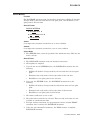
1.1 Program Structure
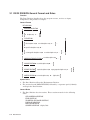
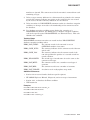
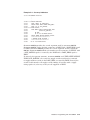
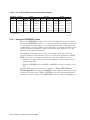
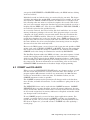
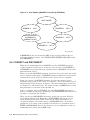
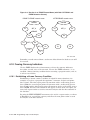
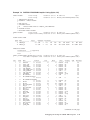
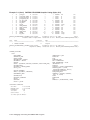
Figure 1–1 shows the basic structure of a COBOL program, which is organized in
divisions, sections, paragraphs, sentences, and entries.
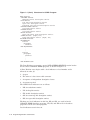
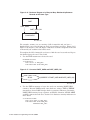
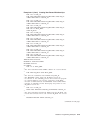
Figure 1–1 Structure of a COBOL Program
IDENTIFICATION DIVISION.
PROGRAM-ID. program-name.
AUTHOR.
INSTALLATION.
DATE-WRITTEN.
DATE-COMPILED.
SECURITY.
ENVIRONMENT DIVISION.
CONFIGURATION SECTION.
SOURCE-COMPUTER.
OBJECT-COMPUTER.
SPECIAL-NAMES.
INPUT-OUTPUT SECTION.
FILE-CONTROL.
I-O-CONTROL.
(continued on next page)
Program Organization and Structure 1–1
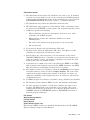
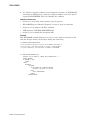
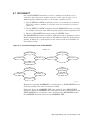
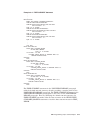
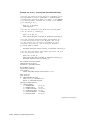
Figure 1–1 (Cont.) Structure of a COBOL Program
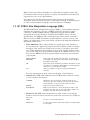
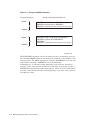
DATA DIVISION.
SUBSCHEMA SECTION.
subschema entries and keeplist entries
FILE SECTION.
file and record description entries
report file description entries
sort-merge file and record description entries
WORKING-STORAGE SECTION.
record description entries
LINKAGE SECTION.
record description entries
REPORT SECTION.
report and report group description entries.
SCREEN SECTION. (Alpha, I64)
screen description entries (Alpha, I64)
PROCEDURE DIVISION.
DECLARATIVES.
sections
paragraphs
sentences
END DECLARATIVES.
.
.
.
sections
paragraphs
sentences
.
.
.
END PROGRAM header
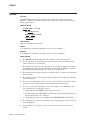
The Data Division can contain a special SUB-SCHEMA SECTION section header
for the Oracle CODASYL DBMS program, as shown in Figure 1–1.
A Data Division entry begins with a level indicator or level-number and is
followed, in order, by:
1. A space
2. The name of a data item or file connector
3. A sequence of independent descriptive clauses
4. A separator period
The COBOL level indicators are as follows:
•
DB (for subschema entries)
•
LD (for keeplist entries)
•
FD (for file description entries)
•
SD (for sort-merge file description entries)
•
RD (for report file description entries)
The first two level indicators in this list, DB and LD, are used in Oracle
CODASYL DBMS database programs. FD, SD, and RD can be in database
programs as well as in other programs.
Level indicators start in Area A.
1–2 Program Organization and Structure
Entries that begin with level-numbers are called data description entries. The
level-number values are 01 to 49, 66, 77, and 88. Level-numbers 01 to 09 can be
represented as one- or two-digit numbers.
Level 01 and 77 data description entries begin in Area A. All other data
description entries can begin anywhere to the right of Margin A. Indentation has
no effect on level-number magnitude; it merely enhances readability.
1.2 HP COBOL Data Manipulation Language (DML)
The HP COBOL data manipulation language (DML) is a programming language
extension that provides a way for a COBOL application program to access
a database. An HP COBOL database application program contains DML
statements that tell the Database Control System (DBCS) what to do with
specified data; the DBCS provides all database processing control at run time.
The four classes of DML statements are data definition, control, retrieval, and
update. An explanation of each class follows, together with important definitions
of members of that class:
•
Data definition—These entries define the specific part of the database to
be accessed by the application program and any keeplists needed to navigate
through it. The entries also result in the creation of a database user work
area (UWA). Transfer of data between your program and the database takes
place in the UWA. Your program delivers data for the DBCS to this area; it is
here that the DBCS places data requested from the database for retrieval to
your program.
SUB-SCHEMA
SECTION
Is the first section of the Data Division. It contains two
paragraphs: the Subschema entry (DB) and the Keeplist
Description entry (LD).
DB
Names the target subschema, translates subschema record
descriptions to compatible HP COBOL record descriptions,
and creates a user work area (UWA).
LD
Names a keeplist to help you navigate through the
database.
For more information on these entries see Chapter 3, Data Division.
•
•
Control—The DML control functions tell the DBCS when and how to begin
or end a database transaction.
COMMIT
Terminates your transaction, makes permanent all
changes made to the database since the last quiet point,
and establishes a new quiet point for the run unit.
READY
Prepares selected realms for use.
ROLLBACK
Ends your transaction, cancels all changes made to the
database since the start of your transaction, empties all
keeplists, and nulls all currency indicators.
Retrieval—The DML retrieval functions are used to find a record in the
database and, if necessary, retain the record in the user work area (UWA) for
later use.
FIND
Locates a record in the database.
FIND ALL
Locates all specified records in the database and puts them
in a keeplist.
Program Organization and Structure 1–3
FETCH
Locates a record in the database, retrieves its data item
values, and places them in the user work area (UWA).
FREE
Releases references to records.
GET
Retrieves data item values of a previously located record
and places them in the user work area (UWA).
KEEP
Remembers a record so you can later refer to it.
Records can be found in several ways in the database. By using a Record
Selection Expression in a FIND or FETCH statement, a program has four
formats to choose from: ( 1 ) database key identifier access, ( 2 ) set owner
access, ( 3 ) record search access, or ( 4 ) DB-KEY access. Chapter 4, Procedure
Division, explains these in detail.
A COBOL program can sequentially search the database or individual realm.
In all cases, once a record is found by the COBOL application program, the
DBCS sets a currency indicator to hold the database key value of that record
or the position of that record. The COBOL program can indirectly use this
value in KEEP, FIND ALL, or FREE statements or use the RETAINING
option as a placemarker to help the program navigate through the database.
•
Update—These functions allow the creation, modification, and deletion of
database records.
CONNECT
Makes a record a member in one or more sets.
DISCONNECT
Removes a record from one or more sets.
ERASE
Deletes records from the database.
MODIFY
Changes the contents of a record in the database.
RECONNECT
Moves a record from one occurrence of a set type to
another (possibly the same) occurrence.
STORE
Adds a record to the database.
Chapter 4 discusses the effects of the schema data definition language (DDL)
INSERTION and RETENTION options on each of the DML update verbs.
Once a record has been located by a COBOL program, it can be changed or
even erased from the database. DML programming operations also change the
fundamental relationships within sets, causing records to change as well. For
example, each set is owned by a record or Oracle CODASYL DBMS itself. If the
program erases a record that is the owner of the set, all member records may also
be deleted.
Section 4.5 contains more information on DML statements, database conditional
expressions, and the special registers DB-CONDITION, DB-CURRENT-RECORDNAME, DB-CURRENT-RECORD-ID, DB-UWA, and DB-KEY.
1.3 Creating an HP COBOL DML Program
When you create an HP COBOL DML program, you must include the SUBSCHEMA SECTION entry as the first section in the Data Division. The
SUB-SCHEMA SECTION is followed by a DB statement and any LD statements.
The Procedure Division contains all occurrences of the DML verbs.
1–4 Program Organization and Structure
1.4 Compiling an HP COBOL DML Program
Your database administrator (DBA) creates schema and subschema definitions in
Oracle CDD/Repository. These record definitions are defined in DMU format and
are intended to serve all OpenVMS languages that might access them. In this
format, the record definitions are not compatible with COBOL record definitions.
Therefore, when the HP COBOL compiler retrieves the subschema definition from
Oracle CDD/Repository, it translates the file into an internal form acceptable to
the HP COBOL compiler.
If the translation results in compiler errors, they will probably be fatal.
You should alert your DBA to any errors resulting from a DB statement.
You can define the logical name CDD$DEFAULT as the starting schema node
in Oracle CDD/Repository. There is only one logical name translation in the DB
statement for schema-name. If you do not define it, CDD$TOP is the default.
Note
You must recompile an HP COBOL DML program each time the
subschema referenced by a DB statement is created. At compile time, the
date and time of subschema creation (date and time stamps) are included
with the translated subschema record definitions. If you do not recompile,
your program will receive a fatal error at run time.
1.4.1 Copying Database Records in an HP COBOL Program
A separately compiled HP COBOL database program must include the SUBSCHEMA SECTION header and only one DB statement. The compiler copies and
translates the record, set, and realm definitions in the subschema named by the
DB statement into compatible HP COBOL record definitions. You will not see any
database record definitions listed immediately following the DB statement. The
translated record, set, and realm definitions are only in the compiler’s subschema
map listing. To list these definitions in your program listing, use the /MAP
compiler command line qualifier.
1.4.2 Using the /MAP Compiler Qualifier
Use the /MAP compiler qualifier to generate a subschema map containing a
translated subschema listing. Section 7.3 contains two subschema map listings
on Alpha and I64 and two on VAX and explains how to read them. The following
example compiles DBPROG and creates a listing that includes a subschema map:
$ COBOL/LIST/MAP DBPROG
1.5 Linking an HP COBOL DML Program
HP COBOL DML programs must be linked with the shareable Oracle CODASYL
DBMS Library (SYS$LIBRARY:DBMDML/OPT). This library was created as part
of the Oracle CODASYL DBMS installation procedure. Therefore, to link an HP
COBOL DML object program named DMLPROG.OBJ with the shareable Oracle
CODASYL DBMS Library, you use this DCL command:
$ LINK DMLPROG,SYS$LIBRARY:DBMDML/OPT
Program Organization and Structure 1–5
This file name may vary depending on the version of DBMS you are using.
For example, if you are using DBMS Version 7.2, the command would be the
following:
$ LINK DMLPROG,SYS$LIBRARY:DBMDML72/OPT
1.6 Running an HP COBOL DML Program
You use the DCL command RUN to execute your HP COBOL DML program.
At run time, the Database Control System (DBCS) fills a variety of roles in
HP COBOL. Its major functions are to monitor database usage, act as an
intermediary between HP COBOL and the OpenVMS operating system, and
manipulate database records on behalf of user programs. Upon execution of the
first DML statement, the DBCS implicitly executes a BIND statement that links
the run unit to the database. If the BIND statement is unsuccessful, a database
exception occurs.
The DBCS also enforces the subschema view of the database. For example, a
database schema record may contain 20 data items. However, a subschema
record may only define 10 of those data items. If a FETCH statement references
this record, the DBCS only retrieves those defined 10 data items and makes
them available to the COBOL program in the user work area (UWA). The other
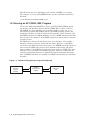
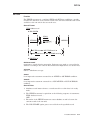
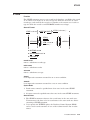
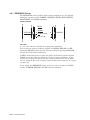
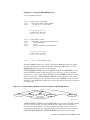
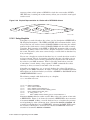
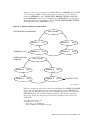
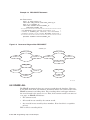
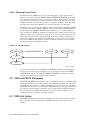
10 items are not available to the COBOL program. Figure 1–2 illustrates the
run-time relationships between an application program requesting subschema
data (a FETCH statement, for example), the DBCS, and the data the subschema
describes.
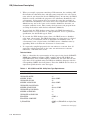
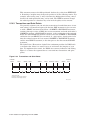
Figure 1–2 Database and Application Program Relationship
COBOL
Application
Program
(FETCH)
Database
Control System
(DBCS)
Subschema
Data
ZK-1478-AI
1–6 Program Organization and Structure
2
Database Programming Elements of HP
COBOL
In your database programming project you will need familiarity with:
•
Database-related user-defined words
•
Database-related reserved words
2.1 Database-Related User-Defined Words
A user-defined word is a COBOL word that you must supply to satisfy the format
of a clause or statement. This word consists of characters selected from the set
A to Z, 0 to 9, the currency sign ( $ ), underline ( _ ), and hyphen ( - ). Throughout
this manual, and except where specific rules apply, the hyphen ( - ) and the
underline ( _ ) are treated as the same character in a user-defined word. The
underline ( _ ), however, can begin or end a user-defined word, and the hyphen
( - ) cannot. By convention, names containing a currency sign ( $ ) are reserved for
Hewlett-Packard.
Within a given source program, but excluding any contained program, each
database-related user-defined word belongs to one of the following disjoint sets:
Keeplist-names
Realm-names
Schema-names
Set-names
Sub-schema-names
Record-names
Data-item-names
Each user-defined database-related word in a program can belong to only one of
these sets. User-defined words in each set must be unique, except as described
in the rules for uniqueness of reference. (Refer to the section on Uniqueness of
Reference in the Procedure Division chapter of the HP COBOL Reference Manual.
The same chapter defines user-defined names.)
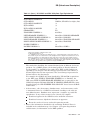
Table 2–1 provides brief descriptions of the COBOL database-related user-defined
words.
Database Programming Elements of HP COBOL 2–1
Table 2–1 COBOL Database-Related User-Defined Words
User-Defined Word
Set
Purpose
Keeplist-name
Names a list of database keys used by the run unit to lock records for later use.
Realm-name
Names a database realm. (See the READY statement in the Procedure Division
chapter.)
Schema-name
Names a database schema. (See the DB statement in the Data Division chapter.)
Set-name
Identifies a database set type.
Sub-schema-name
Names a database subschema. (See the DB statement in the Data Division
chapter.)
Record-name
Names a database record type.
Data-item-name
Names a data-item that is defined for a record type.
2.2 Database-Related Reserved Words
A reserved word can be used only as specified in the general formats. It cannot
be a user-defined word. (See the appendix that lists Reserved Words.) Among the
COBOL reserved words are required words, optional words, and special-purpose
words. One of the special-purpose words, DB-CONDITION, is of special interest
to the database programmer.
2.2.1 DB-CONDITION
The reserved word DB-CONDITION names a database exception condition
register. It is a longword COMP item represented by PIC S9(9) USAGE IS
COMP. The execution of every COBOL data manipulation language (DML)
statement causes the Database Control System (DBCS) to place a status code
value in this register indicating either a successful condition or an exception
condition.
Before the program executes the first DML statement, the value of DBCONDITION is initialized to DBM$_NOT_BOUND. For an explanation of this
and other Oracle CODASYL DBMS status codes, refer to the Oracle CODASYL
DBMS documentation set.
If a DML statement causes an exception condition, the return status code in
DB-CONDITION equals the condition value. If the execution of a DML statement
does not result in a database exception condition, DB-CONDITION contains a
successful return status. Procedure Division statements can access the values in
this register; however, only the DBCS can change the value.
2.2.2 DB-CURRENT-RECORD-NAME
This reserved word names a database register. It consists of 31 alphanumeric
characters represented by PIC X(31) USAGE IS DISPLAY. The execution of
COBOL data manipulation language (DML) statements that alter currency
indicators causes the Database Control System (DBCS) to place a value in this
register.
If the currency indicator for the run unit is not null, the register contains the
name of the record type of the current record of the run unit. If the currency
indicator for the run unit is null, the register contains spaces. Procedure Division
statements can access the values in this register; however, only the DBCS can
change the value.
2–2 Database Programming Elements of HP COBOL
2.2.3 DB-CURRENT-RECORD-ID
The reserved word DB-CURRENT-RECORD-ID names a database register. It
consists of a word COMP item represented by PIC S9(4) USAGE IS COMP. The
execution of COBOL data manipulation language (DML) statements that alter
currency indicators causes the Database Control System (DBCS) to place a value
in this register.
If the currency indicator for the run unit is not null, the register contains the
subschema User ID number (UID) of the record type of the current record of the
run unit. If the currency indicator for the run unit is null, the register contains
zero. Procedure Division statements can access the values in this register;
however, only the DBCS can change the value.
2.2.4 DB-KEY
The reserved word DB-KEY names a database register. It consists of a quadword
COMP item represented by PIC S9(18) USAGE IS COMP. The execution of the
COBOL data manipulation language (DML) statements FETCH, FIND, and
STORE causes the Database Control System (DBCS) to place a value in this
register.
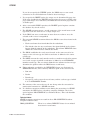
The DB-KEY special register contains three values. To access the individual
values, move the DB-KEY register to a record as follows:
01 DATABASE-KEY
02 LINE-NUMBER
02 PAGE-NUMBER
02 AREA-NUMBER
PIC 9(4) USAGE IS COMP.
PIC 9(9) USAGE IS COMP.
PIC 9(4) USAGE IS COMP.
2.2.5 DB-UWA
The reserved word DB-UWA names a database register. It consists of 108
alphanumeric characters represented by PIC X(108) USAGE IS DISPLAY. The
Database Control System (DBCS) makes data items available to your program
through the DB-UWA record delivery area. The DB-UWA register can be used
with callable DBQ routines. Procedure Division statements can access the
values in this register; however, only the DBCS can change the value. For more
information, refer to the the discussion of the DBO/WORK_AREA command in
the Oracle CODASYL DBMS documentation set.
Database Programming Elements of HP COBOL 2–3
3
Data Division
The logical and physical concepts that apply to the Data Division in any COBOL
program also apply to your database programs. The HP COBOL Reference
Manual presents the general formats for Data Division entries and clauses,
describes their basic elements, and lists rules of use. Information of special
interest to the database programmer will be found here.
The Data Division defines the data processed by your COBOL program in both
physical and logical terms. It also specifies whether the data is contained in files,
a database, or Oracle CDD/Repository, or is developed only for local use in your
program.
The Subschema Section specifies data contained in a database or Oracle
CDD/Repository. The Working-Storage and Linkage Sections contain data
description entries, which describe characteristics of data developed for use in
your program.
Data Division 3–1
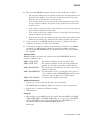
3.1 DATA DIVISION General Format and Rules
Function
The Data Division describes data the program creates, receives as input,
manipulates, and produces as output.
General Format
DATA DIVISION.
2 SUB-SCHEMA SECTION. 3
66 sub-schema-entry.
7
77
6
4 f keeplist-entry g . . . 5
2 FILE SECTION.
66 66
record-description-entry
file-description-entry
f
g
.
.
.
...
66
66
66 [ report-file-description-entry ] . . .
66 4 sort-merge-file-description-entry f record-description-entry g . . . . . .
WORKING-STORAGE SECTION.
[
record-description-entry ] . . .
LINKAGE SECTION.
2
4
3
77
77
77
77
77
77
5
[
REPORT SECTION.
record-description-entry ] . . .
report-description-entry f report-group-description-entry g . . .
3
5
SCREEN SECTION.
[
screen-description-entry
]
. . . (Alpha, I64)
Syntax Rules
1. The Data Division follows the Environment Division.
2. The reserved words DATA DIVISION, followed by a separator period, identify
and begin the Data Division.
General Rules
1. The Data Division has six sections. These sections must be in the following
order:
SUB-SCHEMA SECTION.
FILE SECTION.
WORKING-STORAGE SECTION.
LINKAGE SECTION.
REPORT SECTION.
SCREEN SECTION. (Alpha, I64)
3–2 Data Division
Subschema Section
2. The Subschema Section names the subschema you want to use. It describes
a logical view of the database as it is to be accessed by the COBOL program.
It begins with the Subschema Section header containing the reserved words
SUB-SCHEMA SECTION followed by a period ( . ) separator character.
3. The Subschema entry follows the Subschema Section header.
4. The Subschema entry consists of a level indicator (DB), a sub-schema-name,
the reserved word WITHIN, a schema-name, and an optional database clause.
5. A DB entry specifies the following:
•
Which subschema contains the descriptions of the data to be made
available to the COBOL program
•
Which schema contains the subschema definition in Oracle
CDD/Repository
•
The name of the database that the program is to be run against
•
The stream name
6. A run unit can declare only one Subschema (DB) entry.
7. Keeplist entries follow the Subschema (DB) entry. A keeplist is a table
containing an ordered list of database key values.
8. Each database key value represents a record occurrence in the Oracle
CODASYL DBMS database. A keeplist can contain the same database key
value any number of times. Any number of keeplists can contain the same
database key value any number of times.
9. A database key is added to the end of a keeplist by the KEEP or the FIND
ALL statement and selectively removed by the FREE statement. One FIND
ALL statement can add multiple database keys to a keeplist.
10. The number of entries in a keeplist is called the cardinality of the keeplist.
A keeplist with zero entries is called an empty keeplist. The order of the
entries in the keeplist reflects their sequence of insertion. As entries are
added, the cardinality of the keeplist increases. As entries are removed, the
cardinality decreases.
11. A COBOL program can reference a keeplist by using a database key identifier.
12. The Database Control System (DBCS) creates and maintains all keeplists.
13. No other run unit can update a record whose database key value is in a
keeplist. The DBCS locks each record that is in a keeplist. The record
remains locked until the program frees it or until the program executes a
COMMIT (without the RETAINING option) or ROLLBACK statement, or
until the program terminates.
File Section
Working-Storage Section
Linkage Section
Report Section
Screen Section (Alpha, I64)
The last five COBOL sections are described and discussed in the HP COBOL
Reference Manual chapter on Data Division.
Data Division 3–3
Additional References
Refer to the HP COBOL Reference Manual for:
•
REPORT clause
•
VALUE IS clause
•
CALL statement
•
User-defined words
3–4 Data Division
DB (Subschema Description)
DB (Subschema Description)
Function
The Subschema entry allows a program to access a subschema in Oracle
CDD/Repository under the schema name.
General Format
DB sub-schema-name WITHIN schema-name
[
2
FOR database-name ] 4
THRU
THROUGH
stream-name
3
5
.
sub-schema-name
references a subschema name in Oracle CDD/Repository under the schema name.
See Technical Notes for more information.
schema-name
references a schema name in Oracle CDD/Repository. See Technical Notes for
more information.
database-name
represents a complete or partial file specification defining the database
occurrence. A database occurrence is a root file. At run time, database-name
points the Database Control System (DBCS) to the root file. See Technical Notes
for more information.
stream-name
represents the name of the stream. See Technical Notes for more information.
General Rules
1. The compiler finds the schema-name within Oracle CDD/Repository under
your CDD$DEFAULT and includes these sub-schema-name definitions
in your program: realm names, set names, record names, database datanames. These definitions are user-defined words. Other definitions include
the database registers DB-CONDITION, DB-CURRENT-RECORD-NAME,
DB-UWA, DB-CURRENT-RECORD-ID, and DB-KEY. Subschema definitions
are also called database objects.
2. Database objects implicitly have the global attribute. Therefore, any program
contained within a program declaring the DB statement can access any of the
declaring program’s database objects.
3. Only one DB statement is allowed for each separately compiled program;
however, more than one DB statement is allowed in the run unit if its
separately compiled programs define identical DB statements, or if each
separately compiled program uses a stream.
4. Database objects either explicitly or implicitly defined in the subschema
section are external objects by default. However, these objects can only be
referenced by a program defining the DB statement or a program contained
within that program.
Data Division 3–5
DB (Subschema Description)
5. When you compile a program containing a DB statement, the resulting .OBJ
file includes the subschema date and time stamp assigned to the sub-schemaname when it was inserted in Oracle CDD/Repository. At run time, the DBCS
finds the root file and binds the program to the subschema identified by subschema-name. If the program does not contain the same date and time as
the subschema identified by sub-schema-name, then compile-time subschema
definitions may not be the same as the run-time definitions; therefore, an
exception condition occurs. This security check prevents your program from
accessing the database with obsolete subschema definitions.
6. If you include the FOR database-name clause, the DBCS determines if
database-name is a logical name or a file specification. If it is a partial file
specification, the default file type is .ROO.
7. If you omit the FOR database-name clause, the DBCS creates a databasename from schema-name. The DBCS determines if schema-name is a logical
name. If it is, a translation is done to determine the database-name. If
schema-name is not a logical name, the DBCS creates a database-name by
appending .ROO to the first nine characters of schema-name.
8. If a separately compiled program in the run unit uses a stream, then all
separately compiled programs in the same run unit must use streams.
Otherwise, a run-time error occurs.
Technical Notes
•
Table 3–1 describes the representation of data types in the Oracle CODASYL
DBMS data definition language (DDL) compiler and the HP COBOL for
OpenVMS Alpha, I64, or VAX compiler. Additionally, this table lists all data
types that can be specified using the DDL data definition language with the
corresponding COBOL data item picture. Note that COBOL does not have an
equivalent specification for some data types.
Table 3–1 HP COBOL and DDL Utility Data Type Equivalences
DDL
COBOL
SIGNED BYTE
UNSIGNED BYTE
SIGNED WORD
UNSIGNED WORD
SIGNED LONGWORD
UNSIGNED LONGWORD
SIGNED QUADWORD
UNSIGNED QUADWORD
SIGNED OCTAWORD
UNSIGNED OCTAWORD
FLOATING
FLOATING COMPLEX
D_FLOATING
(a)
(a)
S9(4) COMP
(b)
S9(9) COMP
(b)
S9(18) COMP
(b)
(a)
(a)
COMP-1
(a)
COMP-2 (/FLOAT=D on Alpha, I64,
VAX)
(continued on next page)
3–6 Data Division
DB (Subschema Description)
Table 3–1 (Cont.) HP COBOL and DDL Utility Data Type Equivalences
DDL
COBOL
D_FLOATING COMPLEX
G_FLOATING
G_FLOATING COMPLEX
H_FLOATING
H_FLOATING COMPLEX
CHARACTER l
UNSIGNED NUMERIC l s
LEFT SEPARATE NUMERIC l s
LEFT OVERPUNCHED NUMERIC l s
RIGHT SEPARATE NUMERIC l s
RIGHT OVERPUNCHED NUMERIC l s
ZONED NUMERIC l s
PACKED DECIMAL l s
(a)
COMP-2 (/FLOAT=G on Alpha, I64)
(a)
(a)
(a)
X(l)
9(m)V9(n)
S9(m)V9(n) LEADING SEPARATE
S9(m)V9(n) LEADING
S9(m)V9(n) TRAILING SEPARATE
S9(m)V9(n) TRAILING
(a)
S9(m)V9(n) COMP-3
Legend:
l—The total number of digits for the item.
s—The decimal offset to 1.
( a )—COBOL has no equivalent for this data type. A fatal diagnostic is issued for such an
item, which is part of a subschema record description. The compiler treats this item as if it
had been specified as an alphanumeric data item that occupies the same number of bytes.
( b )—COBOL has no exact equivalent for this data type. A warning diagnostic is issued for
such an item, which is part of a subschema record description. The compiler treats this item
as if it had been specified as the equivalent unsigned COMP item.
The method for describing the assumed decimal point is different in the two
products. In a COBOL picture, the decimal position is directly indicated
by the symbol V or implied by the symbol P. In DDL, scaled numbers are
specified by two integers. The first integer represents the total number of
decimal digits that the item represents. The second integer represents the
decimal offset to the first integer.
For example, the COBOL data item described by PIC 9(4)V99 is equivalent
to the DDL entry TYPE IS UNSIGNED NUMERIC 6 -2. Similarly, the
DDL entry TYPE IS LEFT SEPARATE NUMERIC 6 2 is equivalent to the
COBOL description PIC S9(6)PP SIGN IS LEADING SEPARATE. The items
described using the CDD INDEXED FOR COBOL BY clause become COBOL
index-names.
•
Schema-name, sub-schema-name, database-name, and stream-name can be
a nonnumeric literal or a COBOL word formed according to the rules for
user-defined names. Database-name represents a complete or partial file
specification. If any of these names is not a literal, the compiler:
Translates hyphens in the COBOL word to underline characters
Translates lowercase alphabetic characters to uppercase
Treats the word as if it were enclosed in quotation marks
•
Most of the information described in the remaining Technical Notes is
included in the subschema map. See Chapter 1, Program Organization
and Structure, for information on the /MAP qualifier.
Data Division 3–7
DB (Subschema Description)
•
You can use this Database Operator (DBO) utility command to display date
and time stamp information on schema-name and sub-schema-name:
$ DBO/REPORT
Additional information is available with the HELP DBO/REPORT command.
•
You can use the DBO utility command to create a sub-schema-name output
file from Oracle CDD/Repository:
$ DBO/EXTRACT
schema-name/SUB-SCHEMAS=sub-schema-name/OUTPUT=filename $_ /OPTION=FULL
$ PRINT filename
Additional information is available with the HELP DBO/EXTRACT command.
•
You can use the DBO utility command to create a sub-schema-name output
file from the root file:
$ DBO/DUMP database-name/SUB-SCHEMAS=sub-schema-name/OUTPUT=filename
$ PRINT filename
Additional information is available with the HELP DBO/DUMP command.
Additional Reference
Refer to the Oracle CODASYL DBMS documentation set for more information.
Examples
1. This example references the default subschema in the PARTS database:
DB DEFAULT_SUB-SCHEMA WITHIN PARTS.
2. This example references the NEW database that contains the PARTS schema
and the PARTSS1 subschema:
DB PARTSS1 WITHIN PARTS FOR "DB1:[COBOL88]NEW.ROO".
3. This example references the default subschema in the PARTS database
through the stream STREAM1.
DB DEFAULT_SUB-SCHEMA WITHIN PARTS THRU "STREAM1".
3–8 Data Division
LD (Keeplist Description)
LD (Keeplist Description)
Function
The Keeplist Description entry names a keeplist.
General Format
LD keeplist-name [ LIMIT IS integer ] .
keeplist-name
is a user-defined name.
integer
is a positive integer.
Syntax Rules
1. The LD entry can appear only in the Subschema Section following the DB
entry or another LD entry.
2. The LIMIT clause is for documentation only. The compiler ignores this clause.
General Rules
1. Keeplist-name implicitly has the global attribute. Any program defining
the name, and any program contained within that defining program, can
reference keeplist-name.
2. A keeplist is a table containing an ordered list of database key values.
3. At program initiation, each existing keeplist is empty.
4. A KEEP or a FIND ALL statement adds a database key value to the end of
keeplist-name. FIND ALL can add multiple database keys to a keeplist.
5. A FREE statement selectively removes a database key value from keeplistname.
6. A keeplist with zero entries is called an empty keeplist. The order of the
entries in the keeplist reflects their sequence of insertion. As entries are
added, the cardinality increases. As entries are removed, the cardinality
decreases.
7. A COBOL program can reference a keeplist entry by using a database key
identifier.
8. The Database Control System (DBCS) creates and maintains all keeplists.
9. Each value in keeplist-name represents a database record in the database.
10. A keeplist can contain the same database key value more than once.
11. More than one keeplist can contain the same database key value at the same
time.
12. No other run unit can update a record whose database key value is in a
keeplist. Every entry in the keeplist causes the DBCS to perform a retrieval
lock on the record it identifies. The record remains locked until the entry is
freed, or until the program executes a COMMIT (without the RETAINING
option) or ROLLBACK statement, or until the program terminates. If another
run unit references a locked record, the DBCS forces the run unit to wait
until the record is unlocked.
Data Division 3–9
LD (Keeplist Description)
Additional Reference
•
Section 4.4, on database key identifiers
Example
The following example defines three keeplists to navigate through the PARTSS1
subschema: KEEP-COMPONENT, K-EMPLOYEE, and KL-ID:
DB
LD
LD
LD
3–10 Data Division
PARTSS1 WITHIN PARTS.
KEEP-COMPONENT.
K-EMPLOYEE.
KL-ID.
4
Procedure Division
The Procedure Division of your COBOL database programs may contain
declarative and nondeclarative procedures. These may include:
•
Directive and imperative statements
•
Conditional statements
•
Database key identifiers
•
Explicit and implicit scope terminators
•
Section 4.6, on record selection expressions
4.1 COBOL Statements for the Database Programmer
There are four types of COBOL statements:
•
Compiler-directing statements specify an action taken by the compiler during
compilation.
•
Imperative statements specify an unconditional action taken by the object
program at run time.
•
Conditional statements specify a conditional action taken by the object
program at run time; the action depends upon a truth value that is generated
by the program. (A truth value is either a yes or no answer to the question,
‘‘Is the condition true?’’)
•
Delimited-scope statements specify their explicit scope terminator.
Table 4–1 shows the three types of COBOL statements (conditional, imperative,
delimited-scope) that are considered particularly relevant to database
programming.
Procedure Division 4–1
Table 4–1 Types of COBOL Statements
Type
Verb
Conditional
COMMIT ([NOT] ON ERROR)
CONNECT ([NOT] ON ERROR)
DISCONNECT ([NOT] ON ERROR)
ERASE ([NOT] ON ERROR)
FETCH ([NOT] AT END or
[NOT] ON ERROR)
FIND ([NOT] AT END or
[NOT] ON ERROR)
FREE ([NOT] ON ERROR)
GET ([NOT] ON ERROR)
KEEP ([NOT] ON ERROR)
MODIFY ([NOT] ON ERROR)
READY ([NOT] ON ERROR)
RECONNECT ([NOT] ON ERROR)
ROLLBACK ([NOT] ON ERROR)
STORE ([NOT] ON ERROR)
Imperative
COMMIT ( 1 )
CONNECT ( 1 )
DISCONNECT ( 1 )
ERASE ( 1 )
FETCH ( 2 )
FIND ( 2 )
FREE ( 1 )
GET ( 1 )
KEEP ( 1 )
MODIFY ( 1 )
READY ( 1 )
RECONNECT ( 1 )
ROLLBACK ( 1 )
STORE ( 1 )
Delimited-Scope
COMMIT (END-COMMIT)
CONNECT (END-CONNECT)
DISCONNECT (END-DISCONNECT)
ERASE (END-ERASE)
FETCH (END-FETCH)
FIND (END-FIND)
FREE (END-FREE)
GET (END-GET)
KEEP (END-KEEP)
MODIFY (END-MODIFY)
READY (END-READY)
RECONNECT (END-RECONNECT)
ROLLBACK (END-ROLLBACK)
STORE (END-STORE)
Legend:
( 1 ) Without the optional [NOT] ON ERROR phrase
( 2 ) Without the optional [NOT] AT END or [NOT] ON ERROR phrase
Like statements, COBOL sentences also can be compiler-directing, imperative,
or conditional. Sentence type depends upon the types of clauses the statement
contains. Table 4–2 summarizes the contents of the three types of COBOL
4–2 Procedure Division
sentences. The remaining text in this section discusses each type of statement
and sentence in greater detail.
Table 4–2 Contents of COBOL Sentences
Type
Contents of Sentence
Imperative
One or more consecutive imperative statements ending with a
period
Conditional
One or more conditional statements, optionally preceded by an
imperative statement, terminated by the separator period
Compiler-Directing
Only one compiler-directing statement ending with a period
4.1.1 Compiler-Directing Statements and Sentences
A compiler-directing statement causes the compiler to take an action during
compilation. The verbs COPY, REPLACE, RECORD, or USE define a compilerdirecting statement. When it is part of a sentence that contains more than one
statement, the COPY, REPLACE, RECORD, or USE statement must be the last
statement in the sentence.
A compiler-directing sentence is one COPY, REPLACE, RECORD, or USE
statement that ends with a period.
4.1.2 Imperative and Conditional Statements and Sentences
An imperative statement specifies an unconditional action for the program. It
must contain a verb and the verb’s operands, and cannot contain any conditional
phrases. For example, the following statement is imperative:
READY UPDATE.
However, the following statement is not imperative because it contains the phrase
ON ERROR, which makes the program’s action conditional:
STORE PART-REC ON ERROR PERFORM BAD-STORE.
A delimited-scope statement is a special category of imperative statement used
in structured programming. A delimited-scope statement is any statement that
includes its explicit scope terminator. For more information, see the section on
Explicit and Implicit Attributes.
In the Procedure Division rules, an imperative statement can be a sequence
of consecutive imperative statements. The sequence must end with: ( 1 ) a
separator period or ( 2 ) any phrase associated with a statement that contains the
imperative statement. For example, the following sentence contains a sequence of
two imperative statements following the AT END phrase.
FIND NEXT PART-REC AT END PERFORM NO-MORE-RECS
DISPLAY "No more records."
END-FIND.
An imperative sentence contains only imperative statements and ends with a
separator period.
Procedure Division 4–3
4.2 Explicit and Implicit Scope Terminators
Scope terminators delimit the scope of some Procedure Division statements.
Explicit scope terminators for database programs are as follows:
END-COMMIT
END-FIND
END-READY
END-CONNECT
END-FREE
END-RECONNECT
END-DISCONNECT
END-GET
END-ROLLBACK
END-ERASE
END-KEEP
END-STORE
END-FETCH
END-MODIFY
Implicit scope terminators are as follows:
•
At the end of a sentence: the separator period. It terminates the scope of all
previously unterminated statements.
•
In a statement containing another statement: the next phrase of the
containing statement after the contained statement terminates the scope of
all unterminated contained statements. Examples are ELSE and WHEN.
4.3 Scope of Names
A contained COBOL program can refer to a user-defined word in its containing
program if the user-defined word has the global attribute. (See the section on
User-Defined Words.) Some user-defined words always have the global attribute,
some never have the attribute (that is, they are local), and some may or may not,
depending on the use of the GLOBAL clause. The following rules explain how to
use different kinds of user-defined words and what kinds of local and global name
scoping to expect.
User-defined words in the Subschema Section are always global. The program
defining this section and in any program it contains can reference these
user-defined words:
•
Data-name
•
Keeplist-name
•
Realm-name
•
Record-name
•
Set-name
4.4 Database Key Identifiers
Database key identifiers are indicated by the reserved words CURRENT,
OFFSET, FIRST, and LAST as shown in the two formats below. FETCH
and FIND may use database key identifiers to access database data records.
Conditional clauses may also use them.
General Formats
Format 1—Currency Indicator Access
2
6
CURRENT 4
4–4 Procedure Division
(
WITHIN
record-name
set-name
realm-name
)3
75
Format 2—Keeplist Access
(
OFFSET integer-exp
FIRST
LAST
)
WITHIN keeplist-name
General Rules
Format 1
1. Record-name references a database record in the subschema.
2. Set-name references a database set in the subschema.
3. Realm-name references a subschema realm.
4. Use this format to select a record whose database key value is in a currency
indicator.
5. The referenced currency indicator is the currency indicator for the record, set,
or realm you specify in record-name, set-name, or realm-name.
6. If you do not specify the WITHIN phrase, the referenced currency indicator is
the currency indicator of the current record of the run unit.
7. An exception condition occurs if the referenced currency indicator is null:
a. Run-unit currency indicator (DB-CONDITION is set to DBM$_CRUN_
NULL).
b. Record type currency indicator (DB-CONDITION is set to DBM$_CRTYP_
NULL).
c. Set type currency indicator (DB-CONDITION is set to DBM$_CSTYP_
NULL).
d. Realm currency indicator (DB-CONDITION is set to DBM$_CRELM_
NULL).
See the USE statement for information on USE FOR DB-EXCEPTION.
8. Other exception conditions occur if the referenced currency indicator points to
a vacant position in the database collection:
a. Run-unit currency indicator (DB-CONDITION is set to DBM$_CRUN_
POS).
b. Set type currency indicator (DB-CONDITION is set to DBM$_CSTYP_
POS).
c. Realm currency indicator (DB-CONDITION is set to DBM$_CRELM_
POS).
See the USE statement for information on USE FOR DB-EXCEPTION.
Format 2
9. Integer-exp is an arithmetic expression or integer. It refers to a position in
keeplist-name. Integer-exp cannot be zero.
10. Keeplist-name is a keeplist defined in the Subschema Section.
11. Use this format to select a record whose database key value is in a keeplist.
Because a keeplist can contain more than one entry, you must specify which
keeplist entry you want.
Procedure Division 4–5
12. Integer-exp can be either an integer or an arithmetic expression. Both result
in a longword integer value.
13. Using the FIRST clause is equivalent to OFFSET plus 1. It references the
first database key value in the keeplist.
14. Using the LAST clause is equivalent to OFFSET minus 1. It references the
last database key value in the keeplist.
15. The value of integer-exp points to an entry in keeplist-name. The entry whose
ordinal position in the keeplist is equal to the value of integer-exp is called the
referenced keeplist entry.
a. If integer-exp is positive, the ordinal position is relative to the first entry
in the keeplist.
b. If integer-exp is negative, the ordinal position is relative to the last entry
in the keeplist.
16. An exception condition occurs if:
a. Integer-exp is zero. DB-CONDITION is set to DBM$_BADZERO.
b. The absolute value of integer-exp is greater than the number of database
key values in the keeplist. DB-CONDITION is set to DBM$_END.
c. The identified keeplist is empty. DB-CONDITION is set to DBM$_END.
See the USE statement for information on the USE FOR DB-EXCEPTION
statement.
4.5 Database Conditions
Database conditions allow alternate paths of control depending on the truth value
of a test involving conditions specific to the database environment. The database
conditions are the tenancy, member, and database key conditions.
Database exception conditions can occur during evaluation of these conditions.
If a database exception condition occurs during the execution of a database
condition, the Database Control System (DBCS) places a database exception
condition code in the special register DB-CONDITION. This code identifies the
condition. The DBCS also does the following:
1. Places the record name of database-record in the special register DBCURRENT-RECORD-NAME.
2. Places the UID (User ID number) of the database record in DB-CURRENTRECORD-ID.
3. Invokes an applicable USE FOR DB-EXCEPTION Declaratives procedure, if
any; otherwise, the DBCS abnormally terminates the run unit (see the USE
statement). Under these circumstances, the result of the test is false.
4–6 Procedure Division
4.5.1 Tenancy Conditions
These conditions determine whether a record in the database is an owner, or
member, or a tenant in one or more sets.
General Format
[
NOT
] [
8
>
>
>
<
set-name ]
>
>
>
:
OWNER
MEMBER
TENANT
9
>
>
>
=
>
>
>
;
set-name
is a subschema set name.
The result of the test is true if the current record of the run unit is as follows:
•
Owner of an occurrence of set-name (OWNER clause)
•
Member of an occurrence of set-name (MEMBER clause)
•
Owner or member of an occurrence of set-name (TENANT clause)
Otherwise, the result of the test is false. For example:
IF PART_USES OWNER PERFORM 100-PART-OWNER.
IF PART_USED_ON MEMBER . . .
IF RESPONSIBLE_FOR TENANT . . .
If NOT is used, the result of the test is reversed.
Omitting set-name allows all subschema set types in which the record participates
to be considered in determining the truth value of the condition.
If the run-unit currency indicator is null, a database exception condition
occurs and DB-CONDITION is set to DBM$_CRUN_NULL. If the run-unit
currency indicator only specifies a position, a database exception condition
occurs and DB-CONDITION is set to DBM$_CRUN_POS. See Section 4.8.3,
Exception Conditions and the USE Statement for information on USE FOR
DB-EXCEPTION.
4.5.2 Empty Condition
The empty condition determines whether member records are present in one
or more sets. Only member record types defined in the Subschema Section are
considered in determining the truth value of the condition.
General Format
[
set-name IS
] [
NOT ] EMPTY
set-name
is a subschema set name.
If set-name is specified, the object set is the current set of that set type. If the
object set has no member records, the result of the test is true. If the object set
has member records, the result of the test is false.
If set-name is not specified, the object sets, if any, are owned by the current record
of the run unit whose set type is defined in the Subschema Section. If each object
set has no member records, the result of the test is true. If any object set has
member records, the result of the test is false. For example:
Procedure Division 4–7
IF PART_USES EMPTY . . .
IF EMPTY . . .
If NOT is used, the result of the test is reversed.
A database exception condition occurs if either:
•
The currency indicator for the run unit is null (DB-CONDITION is set to
DBM$_CRUN_NULL).
•
The currency indicator for the run unit specifies a position (DB-CONDITION
is set to DBM$_CRUN_POS).
•
The current record of run unit is not the owner of set-name (DB-CONDITION
is set to DBM$_NOTOTYP).
See Section 4.8.3, Exception Conditions and the USE Statement for information
on USE FOR DB-EXCEPTION.
4.5.3 Database Key Condition
The database key condition determines whether: ( 1 ) two database key values
identify the same database record, ( 2 ) a database key value is null, or ( 3 ) a
database key value is identical to any database key value in a keeplist.
General Format
database-key IS [ NOT
(
]
ALSO database-key
NULL
WITHIN keeplist-name
)
database-key
references a currency indicator (see section on Database Key Identifiers) or a
keeplist entry in the Subschema Section.
The result of the test is true if:
•
When using the ALSO phrase, both database-keys reference identical
database key values. This example compares a set currency indicator for
ALL_PARTS to the currency indicator of the current record.
IF CURRENT WITHIN ALL_PARTS IS ALSO CURRENT . . .
•
When using the NULL phrase, the currency indicator referenced by databasekey is null. This example checks the currency indicator for the current record
before storing its key in a keeplist:
IF CURRENT IS NULL NEXT SENTENCE
ELSE
KEEP USING KEEP-LIST-A.
•
When using the WITHIN phrase, any database key value in keeplist-name is
identical to database-key. For example:
IF CURRENT IS WITHIN KEEP-LIST-A
PERFORM 200-ITS-IN-THE-LIST.
Otherwise, the result of the test is false.
If NOT is used, the result of the test is reversed.
A database exception condition occurs if:
•
The program identifies an invalid database key identifier. (See the Database
Key Identifiers section for more information.)
4–8 Procedure Division
•
For the NULL condition, the referenced currency indicator points to a vacant
position in the database or collection:
Realm currency indicator (DB-CONDITION is set to DBM$_CRELM_
POS).
Set currency indicator (DB-CONDITION is set to DBM$_CSTYP_POS).
Run-unit currency indicator (DB-CONDITION is set to DBM$_CRUN_
POS).
See the USE statement for more information on USE FOR DB-EXCEPTION.
4.5.4 Condition Evaluation Rules
Parentheses can specify the evaluation order in complex conditions. Conditions in
parentheses are evaluated first. In nested parentheses, evaluation starts with the
innermost set of parentheses. It proceeds to the outermost set.
Conditions are evaluated in a hierarchical order when there are no parentheses
in a complex condition. This same order applies when all sets of parentheses are
at the same level (none are nested). The hierarchy is shown in the following list:
1. Values for arithmetic expressions
2. Truth values for simple conditions, in this order:
a. Relation
b. Class
c. Condition-name
d. Switch-status
e. Sign
f. Database
g. Success/failure
3. Truth values for negated simple conditions
4. Truth values for combined conditions, in this order:
a. AND logical operators
b. OR logical operators
5. Truth values for negated combined conditions
In the absence of parentheses, the order of evaluation of consecutive operations at
the same hierarchical level is from left to right.
4.6 Record Selection Expressions (RSE)
A record selection expression is used to select a record in the database. It can
be used in a FETCH or FIND statement. The record thus selected becomes the
current record of the run unit upon which subsequent statements may operate
when accessing the database.
Refer also to the Oracle CODASYL DBMS Programming Guide and the Oracle
CODASYL DBMS Programming Reference Manual for additional information.
Procedure Division 4–9
General Formats
Format 1—Database Key Identifier Access
This format selects a record by a database key value held by the Database Control
System (DBCS) in a currency indicator or a keeplist entry.
database-key-identifier
database-key-identifier
identifies a record according to the rules of database key identifiers. (See
Section 4.4, Database Key Identifiers for more information.)
For example:
FIND CURRENT WITHIN PART-REC
Format 2—Set Owner Access
This format selects the record that owns a set.
OWNER WITHIN set-name
set-name
is a subschema set name. The DBCS uses the currency indicator for set-name to
choose the owner record of that set occurrence. A database exception condition
occurs if set-name is a singular set (DB-CONDITION is set to DBM$_SINGTYP)
or if the currency indicator for the set type is null (DB-CONDITION is set to
DBM$_CSTYP_NULL).
Format 3—DB Key Access
This format selects the record that is referred to by the database key contained in
the special register DB-KEY.
[
DBKEY
]
Format 4—Record Position Access
This format selects a record by its position within a collection of records and
optionally by its record type and contents.
8
>
>
>
>
>
>
>
>
>
>
>
>
>
>
>
>
>
>
>
>
<
>
>
>
>
>
>
>
>
>
>
>
>
>
>
>
>
>
>
>
>
:
FIRST
LAST
NEXT
PRIOR
ANY
DUPLICATE
[
[
RELATIVE ] int-exp
2
6
record-name ] 4
bool-expression:
4–10 Procedure Division
9
>
>
>
>
>
>
>
>
>
>
>
>
>
>
>
>
>
>
>
>
=
>
>
>
>
>
>
>
>
>
>
>
>
>
>
>
>
>
>
>
>
;
(
realm-name
WITHIN
set-name
) 32
75 64
3
75
USING [ rec-key ] . . .
WHERE [ bool-expression
]
bool-alternate [ OR bool-alternate ] . . .
bool-alternate:
simple-bool-relation [ AND simple-bool-relation
]
...
simple-bool-relation:
bool-condition
NOT bool-expression
bool-condition:
8
>
>
>
>
>
>
>
>
>
>
>
>
>
>
>
>
>
>
>
>
>
>
>
>
>
>n
<
>
>
>
>
>
>
>
>
>
>
>
>
>
>
>
>
>
>
>
>
>
>
>
>
>
>
:
id
lit
8 8
>
GREATER THAN OR EQUAL TO
>
>
>
< >=
>
>
>
>
IS
>
>
>
>
: LESS THAN OR EQUAL TO
>
>
>
<=
>
>
>
>
8 EQUAL TO
9
>
>
>
>
>
>
>
>
>
>
>
>
>
=
>
>
>
< GREATER THAN >
=
<
o>
IS [ NOT ]
>
>
>
>
>
>
>
>
>
>
>
>
>
LESS
THAN
>
>
>
:
;
>
>
>
<
>
>
>
>
8 CONTAIN 9
>
>
>
>
>
< CONTAINS >
=
>
>
>
>
NOT
DOES
[
]
>
>
>
>
: MATCH >
;
>
>
:
MATCHES
9
>
=
>
;
9
>
>
>
>
>
>
>
>
>
>
>
>
>
>
>
>
>
>
>
>
>
>
>
>
>
=n
>
>
>
>
>
>
>
>
>
>
>
>
>
>
>
>
>
>
>
>
>
>
>
>
>
;
id
lit
9
>
>
>
>
>
>
>
>
>
>
>
>
>
>
>
>
>
>
>
>
>
>
>
>
>
=
o>
>
>
>
>
>
>
>
>
>
>
>
>
>
>
>
>
>
>
>
>
>
>
>
>
>
>
;
int-exp
is an integer or arithmetic expression resulting in a longword integer value. It
cannot be zero. It may be an embedded literal or an integer data-name.
realm-name
is a subschema realm name.
record-name
is a subschema record name.
set-name
is a subschema set name.
rec-key
is a key data item within the subschema record occurrence. The same rec-key can
appear only once in a given USING phrase.
bool-expression
is a conditional expression that involves data items of the object record. It is used
to specify additional requirements of a qualifying record.
bool-alternate
is one or more sub-expressions (simple-bool-relation). Pairs of sub-expressions are
joined by the logical operator AND.
Procedure Division 4–11
simple-bool-relation
is a simple-condition (bool-condit), an expression, or the negation of either.
bool-condition
is a relation involving two operands joined by a relational operator.
Relational operators can be one of the following:
[NOT] EQUAL ( = ) TO
[NOT] LESS (<) THAN
[NOT] GREATER (>) THAN
GREATER THAN OR EQUAL (>=) TO
LESS THAN OR EQUAL (<=) TO
[NOT] CONTAIN
[NOT] CONTAINS
[NOT] MATCH
[NOT] MATCHES
The relational operator CONTAINS is used to check that a given data item in
the record contains the specified string anywhere within it. At least one of the
operands must be the identifier of a nondatabase item or a nonnumeric literal; the
other operand must be an elementary item in the record being found or fetched.
The relational operator MATCHES checks that a given item in the records
matches the specified pattern string. At least one of the operands must be the
identifier of a nondatabase item or a nonnumeric literal; the other must be an
elementary item in the record being found or fetched.
The pattern string is formed from any character string; however, two characters,
the percent sign ( % ) and the asterisk ( * ), have special meanings. If the percent
sign ( % ) occurs in the pattern string, it will match the current single character
in the item being matched. If the asterisk ( * ) occurs in the pattern string, it will
match any number of characters starting at the current character in the item
being matched. For example:
FIND ALL KEEP-1 WHERE PARTDESC MATCHES ’*DISK*’
FIND ALL KEEP-1 WHERE PARTDESC MATCHES ’*F%%’
To match either the percent sign ( % ) or asterisk ( * ) in the pattern string, precede
it with the caret (that is, to match percent sign ( % ) use caret and percent (^%),
and to match asterisk ( * ) use caret and asterisk (^*)).
Collection Clause
The reserved word WITHIN with set-name or realm-name is called the collection
clause. Use the collection clause to restrict a search to a specific collection
of records in the database. If you do not use the collection clause, the DBCS
searches through all the records in the database to which you have access.
The collection clause specifies the object collection. The following rules govern its
use:
1. When you use WITHIN realm-name, realm records make up the object
collection. The realm currency indicator is called the object currency indicator.
The ordering of the object collection is unspecified.
2. When you use WITHIN set-name, the member records of the current set of
the specified set type make up the object collection. The set type’s currency
indicator is called the object currency indicator. The ordering of the object
collection is the ordering of the records in the current set of the specified set
type.
4–12 Procedure Division
3. If you use neither WITHIN realm-name nor WITHIN set-name, all records
defined in the subschema make up the object collection. The object currency
indicator defaults to the currency indicator for the run unit. The ordering of
the object collection is unspecified.
Qualification Clause
Use record-name to restrict the search to records of a particular type. If you do
not use record-name, the DBCS searches each record type in the subschema.
You can further restrict the search to records with specific data item values.
You do this by specifying the qualification clause. The qualification clause is
either the reserved word USING followed by one or more rec-keys, or the reserved
word WHERE followed by a Boolean expression. When USING is specified, the
DBCS searches for only those database records whose key data items equal the
corresponding data items in your user work area. When WHERE is specified, the
DBCS searches for database records of the object record type whose item values
cause the Boolean expression to evaluate to true.
The qualification clause optionally specifies the following additional rules for
determining the object record type, the qualifying record, and the key data item:
1. If record-name is used, its record type is called the object record type.
2. Rec-key must be a data item defined in the subschema database record type,
record-name.
3. If the key data item consists of one or more rec-keys, it describes additional
criteria for selecting a record.
4. If the USING clause is used, a qualifying record is an occurrence of the object
record whose corresponding variables in the user work area (UWA) equal the
contents of the key data item.
5. If the WHERE clause is used, each occurrence of the object record type for
which the bool-expression is true is called a qualifying record.
6. If you do not use the qualification clause, each occurrence of record-name,
regardless of its contents, is called the qualifying record.
7. At least one operand in every relation condition of a WHERE Boolean
expression must be an elementary item in the record being found or fetched.
Position Clause
The reserved words FIRST, LAST, NEXT, PRIOR, ANY, DUPLICATE, and
RELATIVE make up the position clause. The position clause selects a specific
qualifying record in the object collection. The position clause rules follow:
1. Int-exp refers to an embedded integer literal or to an integer variable. Intexp can be either an integer or an arithmetic expression. Both result in a
longword integer value. Int-exp cannot be zero.
2. ANY is equivalent to FIRST.
3. DUPLICATE is equivalent to NEXT.
4. Using the FIRST clause is equivalent to assigning +1 to int-exp. It refers to
the first record in the object collection.
5. Using the LAST clause is equivalent to assigning –1 to int-exp. It refers to
the last record in the object collection.
6. Using the NEXT clause is equivalent to using RELATIVE +1. It refers to the
record in the object collection immediately after the current position.
Procedure Division 4–13
7. Using the PRIOR clause is equivalent to using RELATIVE –1. It refers to the
record in the object collection immediately before the current position.
8. If you use int-exp without the RELATIVE clause, the DBCS selects the record
whose ordinal position in the object collection is equal to int-exp.
•
If int-exp is positive, the ordinal position is relative to the first record of
the object collection.
•
If int-exp is negative, the ordinal position is relative to the last record of
the object collection.
•
If int-exp is zero, a database exception condition occurs.
•
If int-exp is greater than the cardinality of the collection, a database
exception condition occurs.
9. If you use the RELATIVE int-exp clause, the selected record is the one whose
ordinal position in the object collection, relative to the position specified by
the object currency indicator, is equal to int-exp.
If the object currency indicator does not specify a position in the object
collection, it is as though the RELATIVE clause did not appear.
•
If int-exp is positive, the search in the object collection proceeds in the
next direction.
•
If int-exp is negative, the search in the object collection proceeds in the
prior direction.
•
If int-exp is zero, a database exception condition occurs.
•
If the current position, modified by int-exp, is zero or is greater in
magnitude than the cardinality of the collection, a database exception
condition occurs.
All Formats
The record selection expression causes a database exception condition to occur if:
1. The selected set currency indicator does not identify a record (DBCONDITION is set to DBM$_CSTYP_NULL).
2. Int-exp is zero (DB-CONDITION is set to DBM$_BADZERO).
3. The program attempts to find or fetch a record following the last record in the
selected collection (DB-CONDITION is set to DBM$_END).
4. The program attempts to find or fetch a record preceding the first record in
the selected collection (DB-CONDITION is set to DBM$_END).
5. A realm required to carry out the record selection is not in ready mode
(DB-CONDITION is set to DBM$_NOTIP).
6. The bool-exp clause is used and any specified data item is not included in the
Subschema Record Description entry for the object record type.
See Section 4.8.3, Exception Conditions and the USE Statement statement for an
explanation of DBM$_symbolic constants.
4–14 Procedure Division
4.7 Set Membership Options and DML Verbs
The HP COBOL data manipulation language (DML) verbs CONNECT,
DISCONNECT, ERASE, MODIFY, RECONNECT, and STORE can affect a
record’s set membership. The effects of these verbs depend on the INSERTION
and RETENTION clauses declared for the record’s membership in each set in the
schema.
The member’s INSERTION clause determines whether the record is automatically
inserted into a set when it is stored:
•
If the INSERTION IS AUTOMATIC clause is used, the member is
automatically inserted into the set.
•
If the INSERTION IS MANUAL clause is used, the member must be
manually inserted into the set with a CONNECT statement.
The member’s RETENTION clause determines whether the record can be
removed from a set with the verbs ERASE, DISCONNECT, and RECONNECT.
If the RETENTION IS FIXED clause is used, you cannot remove the record
from a set occurrence at all unless you erase the record at the same time. If the
RETENTION IS MANDATORY clause is used, you cannot use DISCONNECT to
remove the record from a set occurrence; you can use RECONNECT to move it
from one occurrence of the set type to another. If the RETENTION IS OPTIONAL
clause is used, you can use either DISCONNECT or RECONNECT to remove the
record from a set occurrence.
The ERASE statement always removes the erased record from all sets of which
it is a member. ERASE also affects sets owned by that record. If you use the
ERASE ALL option, all members of sets owned by an erased record are erased in
a recursive process. If you use ERASE without the ALL option, the effect on each
set member depends on the member’s RETENTION clause: FIXED members are
erased; OPTIONAL members are not erased (but are removed from the set, since
the set is about to vanish). If any members have a RETENTION MANDATORY
clause, an exception occurs because they can exist in the database without being
members of this set occurrence. However, the Database Control System does not
know into which set occurrence the members should be inserted.
The MODIFY statement may reposition a record within the same set occurrence
if its sort key for that set is one of the data items being modified.
See the Oracle CODASYL DBMS DML documentation that summarizes the
effects of the various verbs on the record directly modified and on any members
(ERASE only).
4.8 Programming for Database Exceptions and Error Handling
Your program must contain logic to accommodate exceptions and errors. The
items of syntax in HP COBOL that are used for this purpose are ON ERROR, AT
END, and USE.
4.8.1 Database On Error Condition
The database on error exception condition occurs when the DBCS encounters
a database exception condition for any data manipulation language (DML)
statement.
The ON ERROR phrase in a DML statement allows the selection of an imperative
statement sequence when any database exception condition occurs.
Procedure Division 4–15
The NOT ON ERROR phrase allows execution of an imperative statement when
a database exception condition does not occur.
The format is as follows:
[
NOT ] ON ERROR stment
Stment is an imperative statement.
When a database exception condition occurs and the statement contains an ON
ERROR phrase:
1. The imperative statement associated with the ON ERROR phrase executes.
2. The NOT ON ERROR phrase, if specified, is ignored.
3. Control is transferred to the end of database statement unless control has
been transferred by executing the imperative statement of the ON ERROR
phrase.
When a database exception condition occurs and the statement does not contain
an ON ERROR phrase:
1. The applicable USE FOR DB-EXCEPTION, if specified, executes.
2. If an applicable USE procedure does not exist, the run unit terminates
abnormally.
3. The NOT ON ERROR phrase, if specified, is ignored.
When a database exception condition does not occur:
1. The imperative statement associated with the NOT ON ERROR phrase, if
specified, is executed.
2. The ON ERROR phrase, if specified, is ignored.
3. Control is transferred to the end of the database statement unless control
has been transferred by executing the imperative statement of the NOT ON
ERROR phrase.
Use the ON ERROR phrase to transfer execution control to the associated
statements’ error handling routine, where your program can supply useful and
effective debugging information. (See Section 4.8.3 for examples and Glossary of
Oracle DBMS-Related Terms for more information on Oracle CODASYL DBMS
Database Special Registers.) The ON ERROR phrase can be part of every DML
statement. It allows you to plan the graceful termination of a program that
would otherwise terminate abnormally. (In a FETCH or FIND statement, you
cannot specify both the ON ERROR and AT END phrases in the same statement.)
For example:
PROCEDURE DIVISION.
.
.
.
RECONNECT PARTS_RECORD WITHIN ALL
ON ERROR DISPLAY "Exception on RECONNECT"
PERFORM PROCESS-EXCEPTION.
4–16 Procedure Division
.
.
.
PROCESS-EXCEPTION.
DISPLAY "Database Exception Condition Report".
DISPLAY " ".
DISPLAY "DB-CONDITION
= ", DB-CONDITION
WITH CONVERSION.
DISPLAY "DB-CURRENT-RECORD-NAME = ", DB-CURRENT-RECORD-NAME.
DISPLAY "DB-CURRENT-RECORD-ID
= ", DB-CURRENT-RECORD-ID
WITH CONVERSION.
DISPLAY " ".
CALL "DBM$SIGNAL".
STOP RUN.
4.8.2 At End Condition
An at end condition occurs when a program detects the end of a file. The at end
condition may occur as a result of a FETCH or FIND statement execution in
your database program. You use the AT END phrase to specify the action your
program is to take when an at end condition occurs.
The NOT AT END phrase specifes the action your program takes if an AT END
does not occur.
Use the AT END phrase of the FETCH and FIND statements to handle the end
of a collection of records condition. Your program will terminate if: ( 1 ) an at end
condition occurs, ( 2 ) the program does not include the AT END phrase, and ( 3 )
there is no applicable USE statement.
When an at end condition occurs and the statement contains an AT END phrase:
1. The imperative statement associated with the AT END phrase, if specified,
executes.
2. The NOT AT END phrase, if specified, is ignored.
3. Control is transferred to the end of the I/O statement unless control has been
transferred by executing the imperative statement of the AT END phrase.
When an at end condition occurs and the statement does not contain an AT END
phrase:
1. If the at end condition is associated with a FETCH or FIND statement, an
applicable USE FOR DB-EXCEPTION procedure, if specified, executes. If the
AT END phrase or USE FOR DB-EXCEPTION procedure is not specified, the
run unit terminates abnormally.
2. If the at end condition is associated with a FETCH or FIND statement,
DB-CONDITION is set to DBM$_END.
3. The NOT AT END phrase, if specified, is ignored.
When an at end condition (or any other error condition) does not occur:
1. The AT END phrase, if specified, is ignored.
2. The imperative statement associated with the NOT AT END phrase, if
specified, is executed.
3. Control is transferred to the end of the I/O statement unless control has
been transferred by executing the imperative statement of the NOT AT END
phrase.
Procedure Division 4–17
4.8.3 Exception Conditions and the USE Statement
Planning for exception conditions is an effective way to increase program and
programmer productivity. A program with USE statements is more flexible than
a program without them. They minimize operator intervention and often reduce
or eliminate the time you need to debug and rerun the program.
The USE statement traps unsuccessful run-time Oracle CODASYL DBMS
exception conditions that cause the execution of a Declaratives procedure. A
Declaratives procedure can:
•
Supply useful and effective database debugging information (see Section 2.2
for more information on Oracle CODASYL DBMS Database Special Registers)
•
Provide alternate processing paths for specific exception conditions
Two sets of USE statements follow:
•
The first set, shown in Example 4–1, consists of a single USE statement.
This database USE procedure executes for any and all database exception
conditions. If you select this set, it must be the only database USE statement
in the Declaratives Section. Its format is:
USE [ GLOBAL ] FOR DB-EXCEPTION.
Example 4–1 A Single USE Statement
PROCEDURE DIVISION.
DECLARATIVES.
200-DATABASE-EXCEPTIONS SECTION. USE FOR DB-EXCEPTION.
DB-ERROR-ROUTINE.
DISPLAY "Database Exception Condition Report".
DISPLAY "-------------------------------------------".
DISPLAY "DB-CONDITION
= ", DB-CONDITION
WITH CONVERSION.
DISPLAY "DB-CUR-REC-NAME = ", DB-CURRENT-RECORD-NAME.
DISPLAY "DB-CURRENT-RECORD-ID
= ", DB-CURRENT-RECORD-ID
WITH CONVERSION.
DISPLAY "DB-CUR-REC-ID
= ", DB-CRID.
DISPLAY " ".
CALL "DBM$SIGNAL".
END DECLARATIVES.
•
The second set, shown in Example 4–2, consists of one or more Format 1 USE
statements, and one Format 2 USE statement.
Format 1
maximum
USE [GLOBAL] FOR DB-EXCEPTION ON DBM$_exception-condition [, DBM$_exception-condition]...
A Format 1 database declarative executes whenever a database exception
condition occurs and the corresponding DBM$_exception-condition is explicitly
stated in the USE statement.
Format 2
USE [ GLOBAL ] FOR DB-EXCEPTION ON OTHER.
4–18 Procedure Division
A Format 2 declarative executes whenever a database exception condition
occurs and the corresponding DBM$_exception-condition is not explicitly
stated in any Format 1 USE statement.
Example 4–2 Multiple USE Statements
PROCEDURE DIVISION.
DECLARATIVES.
200-DATABASE-EXCEPTIONS SECTION.
USE FOR DB-EXCEPTION ON DBM$_CRELM_NULL,
DBM$_CRTYPE_NULL.
200-DATABASE.
PERFORM 300-REPORT-DATABASE-EXCEPTIONS.
IF DB-CONDITION = ..... GO TO ...
IF DB-CONDITION = ..... GO TO ...
STOP RUN.
225-DATABASE-EXCEPTIONS SECTION.
USE FOR DB-EXCEPTION ON DBM$_DUPNOTALL.
225-DATABASE.
PERFORM 300-REPORT-DATABASE-EXCEPTIONS.
GO TO ...
250-DATABASE-EXCEPTIONS SECTION.
USE FOR DB-EXCEPTION ON OTHER.
250-DATABASE.
PERFORM 300-REPORT-DATABASE-EXCEPTIONS.
EVALUATE DB-CONDITION
WHEN .....
GO TO ...
WHEN .....
GO TO ...
WHEN .....
GO TO ...
WHEN .....
GO TO ...
WHEN .....
GO TO ...
WHEN .....
GO TO ...
WHEN .....
GO TO ...
WHEN .....
GO TO ...
WHEN .....
GO TO ...
WHEN OTHER
PERFORM... .
STOP RUN.
300-REPORT-DATABASE-EXCEPTIONS.
DISPLAY "Database Exception Condition Report".
DISPLAY " ".
DISPLAY "DB-CONDITION
= ",
DB-CONDITION
WITH CONVERSION.
DISPLAY "DB-CUR-REC-NAME = ",
DB-CURRENT-RECORD-NAME.
DISPLAY "DB-CURRENT-RECORD-ID = ", DB-CURRENT-RECORD-ID
DISPLAY " ".
CALL "DBM$SIGNAL".
4.8.4 Translating DB-CONDITION Values to Exception Messages
Oracle CODASYL DBMS includes the following procedure for exception condition
handling:
CALL "DBM$SIGNAL".
Use this procedure when it is necessary to output an exception message rather
than, or in addition to, displaying the numeric value of DB-CONDITION. For
more information on the Oracle CODASYL DBMS database special register
DB-CONDITION, see Section 2.2.1, DB-CONDITION.
Procedure Division 4–19
4.9 Database Programming Statements in the COBOL Procedure
Division
The HP COBOL Oracle CODASYL DBMS DML statements are:
•
COMMIT
•
CONNECT
•
DISCONNECT
•
ERASE
•
FETCH
•
FIND
•
FREE
•
GET
•
KEEP
•
MODIFY
•
READY
•
RECONNECT
•
ROLLBACK
•
STORE
•
USE (Format 3)
•
The RETAINING clause
4–20 Procedure Division
COMMIT
COMMIT
Function
The COMMIT statement ends your database transaction, makes permanent all
changes made to the database since the last quiet point, and establishes a new
quiet point for this run unit.
General Format
COMMIT [ STREAM stream name
[
ON ERROR stment
[
NOT ON ERROR stment2
[
END-COMMIT
] [
RETAINING {retaining list}
]
]
]
]
stment
is an imperative statement executed for an on error condition.
stment2
is an imperative statement executed for a not on error condition.
Syntax Rules
1. The STREAM clause cannot be specified if the subschema entry (DB) does not
name a stream.
General Rules
1. The COMMIT statement ends the database transaction.
2. If you do not specify the STREAM clause, the COMMIT statement makes all
changes made to the database since the last quiet point for this run unit; a
new quiet point is established for the run unit.
3. If you specify the STREAM clause, the COMMIT statement makes all changes
made to the database since the last quiet point permanent for the specified
stream; a new quiet point is then established for the stream.
4. If you do not use the RETAINING clause (see Section 4.9.1, RETAINING
Clause), COMMIT:
•
Empties all keeplists
•
Resets all your currency indicators to null
•
Releases all realm and record locks
•
Makes visible any changes you made to the database
•
Terminates the READY mode for each target realm
5. If you do use the RETAINING clause, COMMIT:
•
Does not empty keeplists
•
Retains all currency indicators
•
Does not release realm locks
•
Demotes no-read record locks to read-only record locks, then releases
locks for all records except those in currency indicators or keeplists
Procedure Division 4–21
COMMIT
•
Makes visible any changes you made to the database
•
Maintains READY modes for each target realm
6. If a database exception condition occurs during the execution of a COMMIT
statement, the DBCS places a database exception condition code in the special
register DB-CONDITION. This code identifies the condition.
Additional References
•
Section 2.2 on reserved words (database special registers)
•
HP COBOL Reference Manual, Chapter 6, section on scope of statements
•
Section 4.8.1, on database On Error condition
•
USE statement (Format 3)
•
Section 5.2.4, on subschema description (DB)
Example
COMMIT ON ERROR PERFORM 200-DISPLAY-ERROR-ON-COMMIT
END-COMMIT.
4–22 Procedure Division
CONNECT
CONNECT
Function
The CONNECT statement inserts the current record of the run unit as a member
record into one or more sets. The set occurrence for each insertion is determined
by the currency indicator for the corresponding set type.
General Format
CONNECT [ record-name
2
28
>
66
>
>
6
>
66
66 >
>
>
>
66
66 < 66 RETAINING 66 > >
66
66 >
>
>
>
>
4:
> 46
[
[
ON ERROR stment
END-CONNECT
]
TO
{ set-name } . . .
ALL
REALM
RECORD
8
>
< SET [ set-name ] . . .
>
: f set-name g . . .
] [
9
>
=
>
;
NOT ON ERROR stment2
93
>
>
77
>
>
>
>
>
>
= 777
77 CURRENCY
>
>
77
>
>
>
>
5
>
>
;
3
77
77
77
77
77
75
]
]
record-name
names a subschema record type.
set-name
names a subschema set type.
stment
is an imperative statement executed for an on error condition.
stment2
is an imperative statement executed for a not on error condition.
Syntax Rules
1. Record-name must reference a subschema record type.
2. Set-name must reference a subschema set type.
3. For each set-name in the TO set-name clause, the record type of record-name
must be a member record type of the set type.
4. The same set-name cannot be specified more than once in the TO set-name
clause.
5. The same set-name cannot be specified more than once in the RETAINING
clause.
Procedure Division 4–23
CONNECT
General Rules
1. The current record of the run unit must be in a realm in ready update
mode and all records required by the Database Control System (DBCS) to
execute the CONNECT statement must be in a realm in available mode. The
CONNECT statement uses the current record of the run unit.
2. Use record-name to check that the current record of the run unit is a record
type identical to the record-name record type.
3. The current record of the run unit must not already be a member of set-name.
4. For each set-name in the TO clause:
a. The DBCS inserts the current record of the run unit into each set-name as
determined by the set currency indicator associated with each set-name.
b. The position where the DBCS inserts the record into the set is determined
according to the criteria for ordering the set defined in the schema for
set-name.
5. When specifying the ALL option:
a. The DBCS considers only those set types specified in your subschema for
which:
•
The current record is not presently a member of any occurrence of the
set type.
•
The record type of the current record is defined in the schema as a
member record type of the set type.
b. For each such selected set type:
•
The DBCS inserts the current record into the set determined by the
set currency indicator associated with the selected set type.
•
The position where the DBCS inserts the current record into the set
is determined according to the set-ordering criteria in the schema for
the selected set type.
6. Unless otherwise specified by the RETAINING clause (see Section 4.9.1,
RETAINING Clause), set type currency indicators for the connected sets point
to the connected record. All other currency indicators are not affected.
7. If a database exception condition occurs during the execution of a CONNECT
statement, the DBCS places a database exception condition code in the
special register DB-CONDITION (see Technical Notes). This code identifies
the condition.
8. If the execution of a CONNECT statement results in a database exception
condition, no changes are made to the membership of the current record in
the database.
Technical Notes
CONNECT statement execution can result in these DB-CONDITION database
exception condition codes:
DBM$_CRUN_NULL
DBM$_CRUN_POS
4–24 Procedure Division
The currency indicator for the run unit is null.
The currency indicator for the run unit specifies the
position of a vacated record in a record collection.
CONNECT
DBM$_WRONGRTYP
DBM$_NOT_MTYP
DBM$_NOW_MBR
DBM$_CSTYP_NULL
DBM$_DUPNOTALL
DBM$_NOT_UPDATE
DBM$_CHKMEMBER
The record type of record-name is not the same as the
current record’s type.
The current record is not a member record type of a set
in the TO set-name phrase.
The current record is already a member of the set
specified in the TO set-name phrase.
There is no current of set type for the set specified in
the TO set-name phrase. This occurs only if the set is
not a singular set.
The program attempts to connect a record to a set and
its sort key value is identical to another record’s sort
key value already in the set.
A realm is not in update usage mode.
The Oracle CODASYL DBMS CHECK (member)
condition was evaluated to be false. The database
remains unchanged.
Additional References
•
Section 2.2 on reserved words (database special registers)
•
HP COBOL Reference Manual, Chapter 6, section on scope of statements
•
Section 4.8.1, on database On Error condition
•
Section 5.14.1, on RETAINING clause
•
USE statement
Examples
1. Connecting EMPLOYEE record to the CONSISTS_OF set:
CONNECT EMPLOYEE TO CONSISTS_OF.
2. Connecting EMPLOYEE record to all sets:
CONNECT EMPLOYEE TO ALL.
3. Connecting EMPLOYEE record to the CONSISTS_OF set without changing
the currency indicator of the CONSISTS_OF set:
CONNECT EMPLOYEE TO CONSISTS_OF
RETAINING SET CONSISTS_OF CURRENCY.
Procedure Division 4–25
DISCONNECT
DISCONNECT
Function
The DISCONNECT statement logically removes the current record of the run
unit from one or more sets.
General Format
(
DISCONNECT [ record-name
]
[
ON ERROR stment
[
NOT ON ERROR stment2
[
END-DISCONNECT
FROM
f set-name g . . .
ALL
)
]
]
]
record-name
names a subschema record type.
set-name
names a subschema set type.
stment
is an imperative statement executed for an on error condition.
stment2
is an imperative statement executed for a not on error condition.
Syntax Rules
1. The record type of record-name must be a member record type of the set type
for each set-name.
2. The same set-name cannot be specified more than once in the same
DISCONNECT statement.
General Rules
1. The DISCONNECT statement references the current record of the run unit.
2. The current record of the run unit must be in a realm in ready mode and all
records required by the DBCS to execute the DISCONNECT statement must
be in a realm in available mode.
3. Use record-name to check that the current record of the run unit has the
same record type as record-name.
4. The current record of the run unit must be an OPTIONAL member of each
set-name.
5. The record type of the current record of the run unit must be a member record
type of the set type for each set-name.
6. The DBCS removes the current record of the run unit from each set-name.
7. Use the ALL clause to remove the current record of the run unit from as
many sets as possible. The DBCS considers only those set types defined in
the subschema for which the record is an OPTIONAL member. Set types
not included in your subschema and set types of which the record is not a
4–26 Procedure Division
DISCONNECT
member are ignored. The current record of the run unit is removed from each
remaining set type.
8. If the set type currency indicator for a disconnected set pointed to the current
record, that currency indicator now points to the position in the set vacated
by the record. All other currency indicators are not affected.
9. If the execution of a DISCONNECT statement results in a database exception
condition, no changes are made to the membership of the current record in
the database.
10. If a database exception condition occurs during the execution of a
DISCONNECT statement, the DBCS places a database exception condition
code in the special register DB-CONDITION (see Technical Notes). This code
identifies the condition.
Technical Notes
DISCONNECT statement execution can result in these DB-CONDITION
database exception condition codes:
DBM$_NOT_OPTNL
DBM$_CRUN_NULL
DBM$_CRUN_POS
DBM$_WRONGRTYP
DBM$_NOT_MTYP
DBM$_NOT_MBR
DBM$_NOT_UPDATE
The current record of the run unit is not an
OPTIONAL member of set-name.
The currency indicator for the current record of the run
unit is null.
The currency indicator for the current record of the
run unit specifies the position of a vacated record in a
record collection.
The record type of record-name is not the same as the
current record’s type.
The current record is not a member record type of
set-name.
The current record is not a member of set-name.
A realm is not in ready update usage mode.
Additional References
•
Section 2.2 on reserved words (database special registers)
•
HP COBOL Reference Manual, Chapter 6, section on scope of statements
•
Section 4.8.1, on database On Error condition
•
USE statement
Examples
DISCONNECT EMPLOYEE FROM CONSISTS_OF.
DISCONNECT EMPLOYEE FROM ALL.
DISCONNECT FROM ALL.
DISCONNECT FROM CONSISTS_OF.
Procedure Division 4–27
ERASE
ERASE
Function
The ERASE statement deletes the current record of the run unit from the
database. Additional records owned by the current record may also be deleted
and/or disconnected.
General Format
ERASE [ ALL
] [
record-name
]
[
ON ERROR stment
[
NOT ON ERROR stment2
[
END-ERASE
]
]
]
record-name
names a subschema record type.
stment
is an imperative statement executed for an on error condition.
stment2
is an imperative statement executed for a not on error condition.
General Rules
1. The ERASE statement references the current record of the run unit.
2. Use record-name to check that the current record of the run unit has the
same record type as record-name.
3. The current record of the run unit must be in a realm in update ready mode,
and all records required by the Database Control System (DBCS) to execute
the ERASE statement must be in a realm in available mode.
4. The current record of the run unit is called the object record for the remaining
General Rules.
5. The object record is erased from all sets in which it is a member and deleted
from the database.
6. If you use the ALL phrase, the object record and all sets owned by the object
record are erased (independent of set membership retention class).
7. If you do not use the ALL phrase, these rules apply to the members of the
sets owned by the erased object record:
•
Each member with FIXED membership is erased.
•
Each member with OPTIONAL membership is disconnected from the set
but not deleted from the database.
•
An exception occurs if any members have MANDATORY membership.
8. The database key value corresponding to the erased object record is removed
from all keeplists.
9. General Rules 5 to 8 apply to each erased record as if it were the object
record.
4–28 Procedure Division
ERASE
10. The successful ERASE statement changes currency indicators as follows:
•
The currency indicator for the current record of the run unit points to the
position in the database vacated by the current record of the run unit.
However, you no longer have a current record.
•
If an erased record is the current record of a disconnected set type, that
set type currency indicator now points to the position in the set vacated
by that record.
•
If an erased record is the owner of the current set of any set type, that set
type’s currency indicator becomes null.
•
If an erased record is the current record of a record type, that record type
currency indicator becomes null.
•
If the erased record is the current record of the realm, that realm currency
indicator now points to the position in the realm vacated by that record.
11. If the execution of an ERASE statement results in a database exception
condition, no changes are made to the database.
12. If a database exception condition occurs during the execution of an ERASE
statement, the DBCS places a database exception condition code in the
special register DB-CONDITION (see Technical Notes). This code identifies
the condition.
Technical Notes
ERASE statement execution can result in these DB-CONDITION database
exception condition codes:
DBM$_CRUN_NULL
DBM$_CRUN_POS
DBM$_WRONGRTYP
DBM$_ERASEMANDT
DBM$_NOT_UPDATE
The currency indicator for the run unit is null.
The currency indicator for the run unit specifies the
position of a vacated record in the record collection.
The record type of record-name is not the same as the
current record’s type.
You attempted to erase a record that is the owner of
a set occurrence with a MANDATORY member record
occurrence, but you did not use the ALL option.
A realm is not in update usage mode.
Additional References
•
Section 2.2, on reserved words (database special registers)
•
HP COBOL Reference Manual, Chapter 6, section on scope of statements
•
Section 4.8.1, on database On Error condition
•
USE statement
Examples
1. This example erases PART record, all records owned by PART in the PART_
USES, PART_INFO, and PART_USED_ON sets. It also erases all SUPPLY
and PR_QUOTE records that it owns through the PART_INFO set. It
disconnects PART from the RESPONSIBLE_FOR set.
ERASE PART.
Procedure Division 4–29
ERASE
2. This example has the same effect as in example 1 for each PART record that
the CLASS1 record owns; however, it also erases the CLASS1 record.
ERASE ALL CLASS1.
Note
Because CLASS1 has MANDATORY members, you cannot erase only
CLASS1.
4–30 Procedure Division
FETCH
FETCH
Function
The FETCH statement is a combined FIND and GET that establishes a specific
record in the database as the current record of the run unit and makes the record
available to the run unit in the user work area.
General Format
FETCH database-record
[
FOR UPDATE
]
2
28
66
>
66 >
>
>
66
66 < 66 RETAINING 6 > n
64 >
>
> :
46
2
66
4
[
8
>
<[
>
:[
AT END stment
REALM
RECORD
SET [ set-name ] . . .
{ set-name } . . .
] [
NOT AT END stment2
ON ERROR stment
END-FETCH
3
9
>
>
>
=
> 777
o 77 CURRENCY
>
>
>
> 57
;
] [
]
NOT ON ERROR stment2
]
9
>
=
>
;
3
77
77
77
75
3
77
5
]
database-record
represents a record selection expression. References are made to a record in the
database according to the rules for Record Selection Expressions (see Section 4.6).
set-name
names a subschema set type.
stment
is an imperative statement executed for an AT END or ON ERROR condition.
stment2
is an imperative statement executed for a NOT AT END or NOT ON ERROR
condition.
General Rules
1. database-record must reference a record stored in a realm that is in ready
mode.
2. The FETCH statement is equivalent to the following sequence of statements:
FIND database-record . . .
GET . . .
3. Execution of the FETCH statement causes database-record to become the
current record of the run unit.
4. The FOR UPDATE option puts a no-read lock on the specified record.
Procedure Division 4–31
FETCH
5. The DBCS makes a copy of the selected database record available to the
program in the user work area. Any change made to the user work area
does not affect the record in the database. You must execute a MODIFY and
COMMIT statement to make permanent changes to the database.
6. Unless otherwise specified by the RETAINING clause (see Section 4.9.1,
RETAINING Clause), the successful FETCH statement causes the DBCS to
update these currency indicators to point to the selected record:
•
Run unit.
•
Realm.
•
Record type.
•
Set type. If it is an owner record type of the set type, this currency
indicator points to the selected record even if the set is empty. If it is a
member record type of the set type, this currency indicator points to the
selected record only if it is currently a member of some set of that record
type.
7. The DBCS places the database key of the fetched record in the special register
DB-KEY.
8. If a database exception condition occurs during the execution of a FETCH
statement, the DBCS places a database exception condition code in the
special register DB-CONDITION (see Technical Note). This code identifies
the condition.
9. [NOT]ON ERROR and [NOT]AT END cannot be used concurrently in a Fetch
statement.
10. If either AT END or ON ERROR is used, it must precede USE.
11. If ON ERROR and NOT ON ERROR are used concurrently in a Fetch
statement, USE procedures will not be activated.
Technical Note
FETCH statement execution can result in these database exception conditions
and those associated with the evaluation of the record selection expression:
DBM$_CONVERR
DBM$_ILLNCHAR
DBM$_NONDIGIT
DBM$_OVERFLOW
DBM$_TRUNCATION
DBM$_UNDERFLOW
A data conversion error occurred in the FETCH
operation.
Invalid character found in a numeric field.
Nonnumeric character found in a numeric field.
A data overflow error occurred in the FETCH
operation.
A data truncation error occurred in the FETCH
operation.
A data underflow error occurred in the FETCH
operation.
Additional References
•
Section 2.2, on reserved words (database special registers)
•
HP COBOL Reference Manual, Chapter 6, section on scope of statements
•
Section 4.6, on record selection expressions
•
HP COBOL Reference Manual, Chapter 6, section on AT END phrase
4–32 Procedure Division
FETCH
•
Section 4.8.1, on database On Error condition
•
Section 5.14.1, on RETAINING clause
•
USE statement
Examples
1. Currency indicator access. To retrieve the:
•
Current record of the run unit
FETCH CURRENT.
•
Current record of the MAKE realm
FETCH CURRENT WITHIN MAKE.
•
Current record of the CLASS_PART set
FETCH CURRENT WITHIN CLASS_PART.
•
Current PART record
FETCH CURRENT WITHIN PART.
2. Keeplist access. To retrieve the:
•
First entry in the keeplist
FETCH FIRST WITHIN KEEPLIST-A.
•
Last entry in the keeplist
FETCH LAST WITHIN KEEPLIST-B.
•
N(th) entry in the keeplist
FETCH OFFSET RECORD-COUNT WITHIN KEEPLIST-C.
3. Set owner access. To retrieve the owner (PART) of the PART_USES set:
FETCH OWNER WITHIN PART_USES.
4. Record search access. To retrieve the:
•
First member within the PART_USES set
FETCH FIRST WITHIN PART_USES.
•
First part whose PART-COST is greater than 300 dollars
FETCH FIRST PART WHERE PARTCOST GREATER THAN 300
•
Last member within the BUY realm
FETCH LAST WITHIN BUY.
•
Next COMPONENT record in the PART_USED_ON set
FETCH NEXT COMPONENT WITHIN PART_USED_ON.
•
Prior COMPONENT record in the PART_USES set using COMP_SUB_
PART and COMP_OWNER_PART as record keys
FETCH PRIOR COMPONENT WITHIN PART_USES
USING COMP_SUB_PART, COMP_OWNER_PART.
Procedure Division 4–33
FETCH
•
Record relative to the current record, this statement starts from the
current position to the position defined by this offset
FETCH RELATIVE SEARCH-NUMBER
ON ERROR PERFORM 300-FETCH-IN-ERROR-ROUTINE
END-FETCH.
•
PART record with PART_STATUS equal to ‘‘G’’ from the CLASS_PART set
MOVE "G" TO PART_STATUS.
FETCH NEXT CLASS WITHIN ALL_CLASS.
FETCH NEXT PART WITHIN CLASS_PART USING PART_STATUS
AT END . . .
•
DB-KEY access. To retrieve the item referred to by the DB-KEY special
register:
FETCH DBKEY.
4–34 Procedure Division
FIND
FIND
Function
The FIND statement locates a specific record in the database and establishes it
as the current record of the run unit. The FIND ALL statement locates zero or
more records in the database and inserts them into the named keeplist.
General Formats
Format 1
FIND database-record [ FOR UPDATE
2
28
66
>
>
66 >
>
>
66
> 66 RETAINING 666 < (
66
66 >
>
>
>
>
6
4
> :
4
2
66
4
[
8
>
<[
>
:[
END-FIND
AT END stment
]
REALM
RECORD
SET [ set-name ] . . .
{ set-name } . . .
] [
NOT AT END stment2
ON ERROR stment
] [
"
[
USING { rec-key } . . .
WHERE { bool-expres }
8
>
<[
>
:[
END-FIND
]
9
>
=
>
;
3
77
77
77
77
75
3
77
5
]
FIND ALL keeplist-name [ record-name
2
66
4
]
NOT ON ERROR stment2
Format 2
3
9
>
77
>
>
>
>
>
=
) 77 CURRENCY
77
>
>
7
>
>
>
>5
;
AT END stment
] [
]
WITHIN
n
realm-name
set-name
o #
[
FOR UPDATE
]
NOT AT END stment2
ON ERROR stment
] [
]
NOT ON ERROR stment2
]
9
>
=
>
;
3
77
5
]
database-record
represents a record selection expression. References are made to a record in the
database according to the rules for Record Selection Expressions (see Section 4.6).
set-name
names a subschema set type.
stment
is an imperative statement executed for an at end or on error condition.
stment2
is an imperative statement executed for a not at end or not on error condition.
Procedure Division 4–35
FIND
keeplist-name
names a list of database keys used by a run unit to lock records for later
reference.
record-name
names a subschema record type.
realm-name
names a subschema realm.
rec-key
is a key data item within the subschema record occurrence.
bool-expres
is a conditional expression that involves data items of the object record.
General Rules
Format 1
1. database-record must reference a record stored in a realm that is in ready
mode.
2. Execution of the FIND statement causes database-record to become the
current record of the run unit.
3. The Database Control System (DBCS) does not make a copy of the database
record available to the program. To retrieve the record you must use a
FETCH or GET statement.
4. The FOR UPDATE option puts a no-read lock on the specified record.
5. Unless otherwise specified by the RETAINING clause (see Section 4.9.1,
RETAINING Clause), the successful FIND statement causes the DBCS to
update these currency indicators to point to the selected record:
•
Run unit.
•
Realm.
•
Record type.
•
Set type. If the record is an owner record of the set type, this currency
indicator points to the selected record even if the set is empty. If the
record is a member record of the set type, this currency indicator points
to the selected record only if it is currently a member of some set of that
record type.
Format 2
6. keeplist-name identifies the object keeplist for the statement.
7. Using FIND ALL puts the database key values corresponding to each
qualifying record at the end of the object keeplist.
8. When FIND ALL keeplist-name is used, no currency indicators are affected.
9. The same rec-key can appear only once in a given USING phrase.
10. The bool-expres expression is used to specify additional requirements of a
qualifying record.
11. When FOR UPDATE is used, no-read locks may be placed on more than one
record.
4–36 Procedure Division
FIND
All Formats
12. If a database exception condition occurs during the execution of a FIND
statement, the DBCS places a database exception condition code in the
special register DB-CONDITION (see Technical Note). This code identifies
the condition.
13. The DBCS places the database key of the record found in the special register
DB-KEY.
14. [NOT]ON ERROR and [NOT]AT END cannot be used concurrently in a Find
statement.
15. If either AT END or ON ERROR is used, it must precede USE.
16. If ON ERROR and NOT ON ERROR are used concurrently in a Find
statement, USE procedures will not be activated.
Technical Note
FIND statement execution can result in the database exception conditions
associated with the evaluation of the record selection expression.
Additional References
•
Section 2.2, on reserved words (database special registers)
•
HP COBOL Reference Manual, Chapter 6, section on scope of statements
•
HP COBOL Reference Manual, Chapter 6, section on AT END phrase
•
Section 4.6, on record selection expressions
•
Section 4.8.1, on database On Error condition
•
Section 5.14.1, on RETAINING clause
•
USE statement
Examples
1. Currency indicator access. To locate the following items, use the statement
listed with each item:
•
Current record of the run unit
FIND CURRENT.
•
Current record of the MAKE realm
FIND CURRENT WITHIN MAKE.
•
Current record of the CLASS_PART set
FIND CURRENT WITHIN CLASS_PART.
•
Current PART record
FIND CURRENT WITHIN PART.
2. Keeplist access. To locate the following items, use the statement listed with
each item:
•
(ALL) PART records with a PARTSTATUS OF H and put their dbkey
values in keeplist THREE
FIND ALL THREE PART USING PARTSTATUS
PARTSTATUS [X(1)] = H
Procedure Division 4–37
FIND
•
First entry in the keeplist
FIND FIRST WITHIN KEEPLIST-A.
•
Last entry in the keeplist
FIND LAST WITHIN KEEPLIST-B.
•
N(th) entry in the keeplist
FIND OFFSET RECORD-COUNT
WITHIN KEEPLIST-C.
3. Set owner access. To locate the owner (PART) of the PART_USES set:
FIND OWNER WITHIN PART_USES.
4. Record search access. To locate the following items, use the statement listed
with each item:
•
NEXT DEALER record whose DEAL-PHONE item begins with the area
code numbers 617
FIND NEXT DEALER WHERE DEAL-PHONE MATCHES "617"
•
First member within the PART_USES set
FIND FIRST WITHIN PART_USES.
•
Last member within the BUY realm
FIND LAST WITHIN BUY.
•
Next COMPONENT record in the PART_USED_ON set
FIND NEXT COMPONENT WITHIN PART_USED_ON.
•
Prior COMPONENT record in the PART_USES set (uses COMP_SUB_
PART and COMP_OWNER_PART as record keys)
FIND PRIOR COMPONENT WITHIN PART_USES
USING COMP_SUB_PART, COMP_OWNER_PART.
•
A record relative to the current record (this statement starts from the
current position to the position defined by this offset)
FIND RELATIVE SEARCH-NUMBER
ON ERROR PERFORM 300-FIND-IN-ERROR-ROUTINE
END-FIND.
•
PART record with PART_STATUS equal to ‘‘G’’ from the CLASS_PART set
MOVE "G" TO PART_STATUS.
FIND NEXT CLASS WITHIN ALL_CLASS.
FIND NEXT PART WITHIN CLASS_PART USING PART_STATUS
AT END . . .
•
All PART records with PART_STATUS OF G (this statement puts their
dbkey values in KEEPLIST-4)
FIND ALL KEEPLIST-4 PART USING PART_STATUS
•
DB-KEY access. To locate the item referred to by the DB-KEY special
register:
FIND DBKEY.
4–38 Procedure Division
FREE
FREE
Function
The FREE statement empties selected keeplists or removes a database key value
from a keeplist or currency indicator.
General Format
8
>
>
>
<
FREE
>
>
>
:
database-key-id
2
ALL 4
FROM { keeplist-name } . . .
CURRENT
[
ON ERROR stment
[
NOT ON ERROR stment2
[
END-FREE
3
5
9
>
>
>
=
>
>
>
;
]
]
]
database-key-id
represents a database key identifier. References are made to a keeplist entry or a
currency indicator according to the rules for Database Key Identifiers.
keeplist-name
names a keeplist in the Subschema Section.
stment
is an imperative statement executed for an on error condition.
stment2
is an imperative statement executed for a not on error condition.
Syntax Rule
Keeplist-name cannot be specified more than once in a given FREE statement.
General Rules
1. If database-key-id references a keeplist entry, the DBCS deletes that keeplist
entry from the keeplist containing it. Removing an entry from a keeplist
changes the position of all subsequent entries in the keeplist.
2. If database-key-id references a currency indicator, the DBCS sets that
currency indicator to null.
3. If ALL is specified and the FROM phrase is omitted, the DBCS empties all
keeplists in the program.
4. If ALL CURRENT is specified, the DBCS nulls all of your currencies. It does
not free entries in a keeplist.
5. If the FROM phrase is specified, the DBCS empties each keeplist-name.
6. The FREE statement releases retrieval update locks on the target record.
7. If a database exception condition occurs during the execution of a FREE
statement, the DBCS places a database exception condition code in the
special register DB-CONDITION (see Technical Note). This code identifies
the condition.
Procedure Division 4–39
FREE
Technical Note
FREE statement execution can result in these database exception conditions and
those associated with a Database Key Identifier:
DBM$_BADZERO
DBM$_END
Integer-exp is zero.
You accessed a keeplist with fewer entries than you
expected.
Additional References
•
Section 2.2, on reserved words (database special registers)
•
HP COBOL Reference Manual, Chapter 6, section on scope of statements
•
Section 4.4, on database key identifiers
•
Section 4.8.1, on database On Error condition
•
USE statement
Examples
1. Currency indicator access
•
To free the current record of the run unit:
FREE CURRENT.
•
To free the currency indicator for the PART record:
FREE CURRENT WITHIN PART.
•
To free all currencies:
FREE ALL CURRENT.
2. Keeplist access
•
To free the first keeplist entry in KEEPLIST-A:
FREE FIRST WITHIN KEEPLIST-A.
•
To free the last keeplist entry in KEEPLIST-A:
FREE LAST WITHIN KEEPLIST-A.
•
To free the second keeplist entry relative to the current position in the
keeplist:
FREE OFFSET 2 WITHIN KEEPLIST-B.
•
To empty a keeplist:
FREE ALL FROM KEEPLIST-B
•
To empty all keeplists:
FREE ALL
4–40 Procedure Division
GET
GET
Function
The GET statement moves the contents of the current database record of the run
unit to your user work area.
General Format
GET
h
record-name
{ record-item } . . .
i
[
ON ERROR stment
[
NOT ON ERROR stment2
[
END-GET
]
]
]
record-name
names a subschema record type.
record-item
is a group or elementary data item in a subschema record type. Record-item may
be qualified.
stment
is an imperative statement executed for an on error condition.
stment2
is an imperative statement executed for a not on error condition.
Syntax Rules
1. Each record-item must reference a data item in the same subschema record
type.
2. If record-item is a group item, its subordinate group and elementary items
cannot be referenced in the same GET statement.
General Rules
1. The GET statement references the current record of the run unit.
2. If you use the record-name option, or if you do not specify either the recorditem or the record-name option, the DBCS makes a copy of the entire current
record of the run unit available to the program in the user work area.
3. If you use the record-item option, only those items in the current record of the
run unit are made available to the program in the user work area.
4. Any change made to the user work area does not affect the record in the
database. You must execute a MODIFY and a COMMIT statement to make
permanent changes to the database.
5. Use record-name to check that the record type of the current record is
identical to the record type specified by record-name.
6. The GET statement has no effect on currency indicators.
Procedure Division 4–41
GET
7. If a database exception condition occurs during the execution of a GET
statement, the DBCS places a database exception condition code in the
special register DB-CONDITION (see Technical Note). This code identifies
the condition.
Technical Note
GET statement execution can result in these DB-CONDITION database exception
condition codes:
DBM$_CRUN_NULL
DBM$_CRUN_POS
DBM$_WRONGRTYP
DBM$_CONVERR
DBM$_ILLNCHAR
DBM$_NONDIGIT
DBM$_OVERFLOW
DBM$_TRUNCATION
DBM$_UNDERFLOW
The currency indicator for the run unit is null.
The currency indicator for the run unit points to a
vacated position in the database.
The record type for record-name is not identical to the
current record type, or a record-item is not a group or
elementary item in the current record.
A data conversion error occurred in the GET operation.
An invalid character was found in a numeric field.
A nonnumeric character was found in a numeric field.
A data overflow error occurred in the GET operation.
A data truncation error occurred in the GET operation.
A data underflow error occurred in the GET operation.
Additional References
•
Section 2.2, on reserved words (database special registers)
•
HP COBOL Reference Manual, Chapter 6, section on scope of statements
•
Section 4.8.1, on database On Error condition
•
USE statement
Examples
1. This example gets the current record of the run unit:
GET.
2. This example gets a PART record only if it is the current record of the run
unit:
GET PART.
3. This example gets these items only if they are part of the current record of
the run unit:
GET PART_ID, PART_DESC.
4–42 Procedure Division
KEEP
KEEP
Function
The KEEP statement inserts a database key value from a currency indicator or
keeplist into a keeplist.
General Format
KEEP [ database-key-id ] USING destination-keeplist
[
ON ERROR stment
[
NOT ON ERROR stment2
[
END-KEEP
]
]
]
database-key-id
represents a database key identifier. References are made to a keeplist entry or a
currency indicator according to the rules for Database Key Identifiers.
destination-keeplist
names a keeplist in the Subschema Section to receive the database key value.
stment
is an imperative statement executed for an on error condition.
stment2
is an imperative statement executed for a not on error condition.
General Rules
1. If database-key-id references a database key value in either a currency
indicator or a keeplist, the DBCS:
•
Inserts that value as the last entry in destination-keeplist
•
Sets a lock on the associated record to prevent concurrent run units from
accessing it
2. If the program does not specify database-key-id, the DBCS inserts the
database key value of the current record of the run unit as the last entry
of destination-keeplist.
3. The KEEP statement has no effect on currency indicators.
4. If a database exception condition occurs during the execution of a KEEP
statement, the DBCS places a database exception condition code in the
special register DB-CONDITION (see Technical Note). This code identifies
the condition.
Technical Note
KEEP statement execution can result in the database exception conditions
associated with the evaluation of the database key identifier.
Additional References
•
Section 2.2, on reserved words (database special registers)
•
Keeplist Description entry
•
HP COBOL Reference Manual, Chapter 6, section on scope of statements
Procedure Division 4–43
KEEP
•
Section 4.4, on database key identifiers
•
Section 4.8.1, on database On Error condition
•
USE statement
Examples
1. Currency indicator access
•
To insert the database key value of the current record of the run unit into
KEEPLIST-A:
KEEP CURRENT USING KEEPLIST-A.
•
To insert the database key value of the current record of the CLASS_
PART set into KEEPLIST-B:
KEEP CURRENT WITHIN CLASS_PART USING KEEPLIST-B.
•
To insert the database key value of the current record of the BUY realm
into KEEPLIST-B:
KEEP CURRENT WITHIN BUY USING KEEPLIST-B.
•
To insert the database key value of PART record into KEEPLIST-B:
KEEP CURRENT WITHIN PART USING KEEPLIST-B.
2. Keeplist access
•
To insert the first keeplist entry from KEEPLIST-A as the last entry in
KEEPLIST-B:
KEEP FIRST WITHIN KEEPLIST-A USING KEEPLIST-B.
•
To insert the last keeplist entry in KEEPLIST-A as the last entry in
KEEPLIST-B:
KEEP LAST WITHIN KEEPLIST-A USING KEEPLIST-B.
•
To insert the fourth keeplist entry relative to the current position in
KEEPLIST-A as the last entry in KEEPLIST-B:
KEEP OFFSET 4 WITHIN KEEPLIST-A USING KEEPLIST-B.
4–44 Procedure Division
MODIFY
MODIFY
Function
The MODIFY statement changes the contents of specified data items in a
database record.
General Format
MODIFY
h
record-name
{ record-item } . . .
2
28
66
>
66 >
>
>
<
66
6 66 RETAINING 66 > n
64 >
>
> 46
:
i
REALM
RECORD
SET [ set-name ] . . .
{ set-name } . . .
[
ON ERROR stment
[
NOT ON ERROR stment2
[
END-MODIFY
3
9
>
>
>
> 777
=
o 77 CURRENCY
>
>
>
> 57
;
3
77
77
77
75
]
]
]
record-name
names a subschema record type.
record-item
is a group or elementary data item in a subschema record type. Record-item can
be qualified.
set-name
names a subschema set type.
stment
is an imperative statement executed for an on error condition.
stment2
is an imperative statement executed for a not on error condition.
Syntax Rules
1. Each record-item must reference a data item in the same subschema record
type.
2. If record-item is a group item, its subordinate group and elementary data
items cannot be referenced as a record-item in the same MODIFY statement.
3. Use record-name to check that the current record of the run unit is a record
type identical to the record-name record type.
General Rules
1. Changes are made to a database record by:
•
Locating the target record (FIND and GET, or FETCH)
•
Moving the new data to the data-name references in the user work area
•
Executing the MODIFY statement
Procedure Division 4–45
MODIFY
2. The DBCS changes the contents of the entire database record:
•
If you specify record-name
•
If you specify neither record-name nor record-item
3. Using record-item limits the changes to the database record to only those
items you specify.
4. If you modify any data item that is the sort key for that record’s position in
a sorted set, the DBCS automatically repositions the record in that set in
accordance with the set-ordering criteria of the set type.
If the value of the sort key is identical to another record of this type, and if
duplicates are not allowed for this sorted set, the DBCS does not perform the
MODIFY operation, and a database exception condition occurs.
5. Currency indicator update rules for record insertion and removal are as
follows:
•
If the MODIFY statement removes a record from the current set, the
currency indicator for that set points to the position in the set vacated by
the record. (At this position the record is no longer accessible.)
•
If the MODIFY statement reinserts a record in a set in another location,
the set currency indicator changes to point to the record in this new
location.
•
If you do not include the RETAINING clause (see Section 4.9.1,
RETAINING Clause), the currency indicator for the set is modified to
the current record of the run unit.
6. The current record of the run unit must be in a realm in ready update mode
and all records required by the DBCS to execute the MODIFY statement
must be in realms in one of the appropriate READY modes.
7. The contents of the user work area (UWA) do not change after the successful
or unsuccessful execution of a MODIFY statement.
8. If the execution of a MODIFY statement results in an exception condition, the
record is not changed.
9. If a database exception condition occurs during the execution of a MODIFY
statement, the DBCS places a database exception condition code in the
special register DB-CONDITION (see Technical Notes). This code identifies
the condition.
Technical Notes
MODIFY statement execution can result in these DB-CONDITION database
exception condition codes:
DBM$_CRUN_NULL
DBM$_CRUN_POS
DBM$_WRONGRTYP
4–46 Procedure Division
The currency indicator for the run unit is null.
The currency indicator for the run unit specifies the
position of a vacated record in a record collection.
The record type of record-name is not the same type as
the current record of the run unit, or the record-item
is not a group or elementary item of the current record
type.
MODIFY
DBM$_DUPNOTALL
DBM$_NOT_UPDATE
DBM$_CHKITEM
DBM$_CHKMEMBER
DBM$_CHKRECORD
DBM$_CONVERR
DBM$_ILLNCHAR
DBM$_NONDIGIT
DBM$_OVERFLOW
DBM$_TRUNCATION
DBM$_UNDERFLOW
A sort key data item is modified creating a duplicate
value in a DUPLICATES NOT ALLOWED set.
A realm is not in ready update usage mode.
A modified data item failed to pass the schema CHECK
ITEM condition.
A modified data item failed to pass the schema CHECK
MEMBER condition.
A modified data item failed to pass the schema CHECK
RECORD condition.
A data conversion error occurred in the MODIFY
operation.
An invalid character was found in a numeric field.
A nonnumeric character was found in a numeric field.
A data overflow error occurred in the MODIFY
operation.
A data truncation error occurred in the MODIFY
operation.
A data underflow error occurred in the MODIFY
operation.
Additional References
•
Section 2.2, on reserved words (database special registers)
•
HP COBOL Reference Manual, Chapter 6, section on scope of statements
•
Section 4.8.1, on database On Error condition
•
Section 5.14.1, on RETAINING clause
•
USE statement
Examples
1. This example modifies an entire database record. It is a partial update
routine. Except for the PART_ID number in PARTS, the set was originally
created with empty parts records. As new information for a part is made
available, it is included in the record.
150-UPDATE-PARTS-RECORD.
DISPLAY "ENTER A PART-ID NUMBER - X(8): "
WITHOUT ADVANCING.
ACCEPT PART_ID.
IF PART_ID NOT = "TERMINAL"
FIND FIRST PART WITHIN ALL_PART USING PART_ID
ON ERROR DISPLAY "ERROR IN FIND "
PERFORM 200-PARTS-RECORD-ERROR
GO TO 150-UPDATE-PARTS-RECORD
END-FIND
PERFORM VERIFY-PART-ROUTINE
ELSE
PERFORM TERMINAL-ROUTINE.
Procedure Division 4–47
MODIFY
DISPLAY "ENTER PART DESCRIPTION - X(50): "
WITHOUT ADVANCING.
ACCEPT PART_DESC.
.
.
.
MODIFY PART
ON ERROR DISPLAY "ERROR MODIFYING PARTS_RECORD . . . "
PERFORM 200-PARTS-RECORD-ERROR-ROUTINE.
GO TO 150-UPDATE-PARTS-RECORD.
2. In this example, PART_ID in the PART record is modified. PART_ID is a sort
key for the CLASS_PART set. This routine will retain the current position in
the CLASS_PART set after you modify the record.
300-FIX-ID-ROUTINE.
DISPLAY "ENTER PART ID TO BE CHANGED - X(8): "
WITHOUT ADVANCING.
ACCEPT PART_ID.
FIND FIRST PART WITHIN CLASS_PART USING PART_ID
ON ERROR DISPLAY "ERROR IN FIND PARTS_RECORD . . . "
PERFORM 200-PARTS-RECORD-ERROR-ROUTINE.
DISPLAY "ENTER NEW PART ID - X(8): "
WITHOUT ADVANCING.
ACCEPT PART_ID.
MODIFY PART_ID RETAINING CLASS_PART
ON ERROR DISPLAY "ERROR MODIFYING PARTS_RECORD . . . "
PERFORM 200-PARTS-RECORD-ERROR-ROUTINE.
4–48 Procedure Division
READY
READY
Function
The READY statement begins a database transaction, prepares one or more
database realms for processing, and places each specified realm in a ready mode.
General Format
READY [ realm-name ] . . .
2
88
>
CONCURRENT 9
66
>
>
>
>
>
>
>
>
>
>
>
2(
>
66
>
>
>
>
>
>
>
>
>
>
RETRIEVAL
EXCLUSIVE
<
=
66
>
>
64
>
>
66
>
>
>
>
>
>
>
UPDATE
PROTECTED >
>
>
66
>
>
>
>
>
>
>
>
>
>
>
>
66
>
:
;
>
>
>
66
> BATCH
<
66 USAGE-MODE IS
28
>
CONCURRENT
66
>
>
>
>
66 >
>
>
66
>
>
>
>
>
( RETRIEVAL ) 66 >
>
>
66
>
< EXCLUSIVE
>
>
6
>
66
>
66 >
>
>
>
UPDATE
PROTECTED
66
>
>
66 >
>
>
>
>
>
>
66
>
4>
>
:
>
>
BATCH
4
>
:
[
WITH WAIT
[
ON ERROR stment
[
NOT ON ERROR stment2
[
END-READY
)3
75
9
>
>
>
>
>
>
>
=
>
>
>
>
>
>
>
;
3
77
77
77
77
75
9
>
>
>
>
>
>
>
>
>
>
>
>
>
>
>
>
>
>
>
>
>
>
>
>
>
>
=
>
>
>
>
>
>
>
>
>
>
>
>
>
>
>
>
>
>
>
>
>
>
>
>
>
>
;
3
77
77
77
77
77
77
77
77
77
77
77
77
77
77
5
]
]
]
]
realm-name
names a subschema realm.
stment
is an imperative statement executed for an on error condition.
stment2
is an imperative statement executed for a not on error condition.
Syntax Rule
The same realm-name cannot be specified more than once in a single READY
statement.
General Rules
1. The READY statement begins a database transaction.
2. Execution of the READY statement is successful only when all specified
realm-names are placed in the ready mode.
Procedure Division 4–49
READY
3. If you do not specify a realm-name, the DBCS (Database Control System)
readies all realms in your subschema except those already readied.
4. The USAGE-MODE phrase establishes run-time privileges for this run unit.
It also affects other run units running concurrently. It consists of two parts:
( a ) the allow mode, and ( b ) the access mode.
5. If the program does not specify a usage mode, PROTECTED RETRIEVAL is
the default.
6. The allow mode specifies what you will allow other concurrent run units to
do. It consists of the reserved words BATCH, CONCURRENT, EXCLUSIVE,
and PROTECTED.
7. The BATCH RETRIEVAL option allows concurrent run units to update the
realm. You can retrieve data as though a copy of the database had been made
at the time you readied the realm. This eliminates the possibility of deadlocks
due to record lock conflicts. Any updates made by concurrent run units will
not be available to your transaction.
If you ready any realm in BATCH, you must ready all realms in BATCH.
8. The BATCH UPDATE option allows you to access or update any data in the
realm while preventing concurrent run units from accessing or updating the
realm.
9. The CONCURRENT clause permits other run units to update records in
the same areas that map to the readied realm-name. Record-locking will be
done for you by the DBCS to protect the integrity of your currency indicators,
keeplists, and uncommitted changes. You will not be able to see any other
user’s uncommitted changes.
10. The EXCLUSIVE clause prevents concurrent run units from accessing records
in the same areas that map to the readied realm-name.
11. The PROTECTED clause (the default) prohibits concurrent run units from
updating records in the same areas that map to the readied realm-name.
Concurrent run units will be able to ready the realm for retrieval only.
12. The access mode indicates what your run unit will do. It consists of the
reserved words RETRIEVAL and UPDATE.
13. The RETRIEVAL clause (the default) allows your run unit read-only
privileges. It prevents your unit from updating records in the readied realms.
14. The UPDATE clause permits your run unit to update records in a readied
realm. It allows the run unit to execute any DML statement against the
specified realm.
15. The WAIT option tells the DBCS to READY the specified realms as soon as
possible. You will get a response only when the realms can be readied or
when an error other than a lock conflict occurs.
16. Currency indicators are not affected by the READY statement.
17. If a database exception condition occurs during the execution of a READY
statement, the DBCS places a database exception condition code in the
special register DB-CONDITION (see Technical Notes). This code identifies
the condition.
4–50 Procedure Division
READY
18. Figure 4–1 summarizes the effects of the allow and access options on
concurrent run units readying the same realm-name. A database exception
condition will occur if a concurrent run unit has a realm-name readied in a
conflicting or incompatible mode (see Technical Notes).
The First Run Unit column refers to a READY statement that has already
been executed in a concurrent run unit. The Second Run Unit column
refers to a READY statement being attempted by the current run unit.
The intersection indicates whether the attempted READY statement can be
executed immediately or if there is a conflict.
Because Figure 4–1 is symmetrical, the chronology of access (that is, did the
First Run Unit ready the realm first) does not matter.
The locking effects of the BATCH RETRIEVAL usage mode are equivalent
to those of the CONCURRENT RETRIEVAL usage mode; however, BATCH
RETRIEVAL performs no record locking.
The locking effects of the BATCH UPDATE usage mode are equivalent to
those of the EXCLUSIVE UPDATE usage mode.
Note also that the two EXCLUSIVE usage modes have identical locking
effects.
Figure 4–1 Usage Mode Conflicts
Second
Run
Unit
First
Run
Unit
Concurrent
Retrieval
Protected
Retrieval
Exclusive
Retrieval
Concurrent
Update
Protected
Update
Exclusive
Update
CONCURRENT
RETRIEVAL
Yes
Yes
No
Yes
Yes
No
PROTECTED
RETRIEVAL
Yes
Yes
No
No
No
No
EXCLUSIVE
RETRIEVAL
No
No
No
No
No
No
CONCURRENT
UPDATE
Yes
No
No
Yes
No
No
PROTECTED
UPDATE
Yes
No
No
No
No
No
EXCLUSIVE
UPDATE
No
No
No
No
No
No
Yes = The second READY statement is allowed to execute immediately. The two run units are compatible.
No = The second READY statement is not allowed to execute immediately. The two run units are incompatible.
ZK−1411A−GE
Technical Notes
READY statement execution can result in these DB-CONDITION database
exception condition codes:
DBM$_ALLREADY
DBM$_READY
All subschema realms are already readied.
Realm-name is already readied.
Procedure Division 4–51
READY
DBM$_AREABUSY
Your usage mode conflicts with another run unit’s usage
mode. See Figure 4–1.
Additional References
•
HP COBOL Reference Manual, Chapter 6, section on scope of statements
•
Section 4.8.1, on database On Error condition
Example
Depending on the contents of PROCESS-MODE, this statement readies the BUY,
MAKE, and PERSONNEL realms in either PROTECTED UPDATE mode or
CONCURRENT RETRIEVAL mode (default for USAGE-MODE).
IF PROCESS-MODE = "UPDATE"
READY BUY, MAKE, PERSONNEL
USAGE-MODE IS PROTECTED UPDATE
ON ERROR DISPLAY "ERROR READYING . . . "
DISPLAY "IN PROTECTED UPDATE MODE . . . "
PERFORM ERROR-ROUTINE
END-READY
PERFORM UPDATE-ROUTINE
ELSE
READY BUY, MAKE, PERSONNEL
ON ERROR DISPLAY "ERROR READYING . . . "
DISPLAY "IN CONCURRENT RETRIEVAL MODE . . . "
PERFORM ERROR-ROUTINE
END-READY.
4–52 Procedure Division
RECONNECT
RECONNECT
Function
The RECONNECT statement moves the current database record of the run unit
from one set to another (possibly the same) set.
General Format
RECONNECT [ record-name ] WITHIN
2
28
>
66
>
>
6
>
>
66
66 <
> 66 RETAINING 66 (
66
66 >
>
>
>
>
4:
> 46
[
ON ERROR stment
[
NOT ON ERROR stment2
[
END-RECONNECT
{ set-name } . . .
ALL
REALM
RECORD
SET [ set-name ] . . .
{ set-name } . . .
3
9
>
7
>
>
>
>
> 77
=
) 7 CURRENCY
77
>
7
>
>
>
>
>5
;
3
77
77
77
77
75
]
]
]
record-name
names a subschema record type.
set-name
names a subschema set type.
stment
is an imperative statement executed for an on error condition.
stment2
is an imperative statement executed for a not on error condition.
Syntax Rules
1. The record type of record-name must be a member record type of the set type
for each set-name.
2. Set-name cannot be specified more than once in the WITHIN clause.
3. Set-name cannot be specified more than once in the RETAINING clause.
General Rules
1. RECONNECT uses the current record of the run unit.
2. The current run unit record must be in a realm in ready update mode and
all records required by the Database Control System (DBCS) to execute the
RECONNECT statement must be in realms in available mode.
3. Use record-name to check that the record type of the current record of the run
unit is identical to the record type specified by record-name.
Procedure Division 4–53
RECONNECT
4. For each set-name you specify in the WITHIN clause:
a. The DBCS disconnects the current record of the run unit from the set in
which it is currently a member and inserts this record in the current set
of the set-name set type.
b. The position where the DBCS inserts the record into the set is determined
by the set-ordering criteria defined in the schema for set-name.
5. If the program specifies the ALL option:
a. The DBCS considers only those set types that satisfy these requirements:
•
The set type is in your subschema.
•
The current run-unit record type is defined in the schema as an
OPTIONAL or MANDATORY member record type of the set type.
•
The current run-unit record is presently a member of a set of the set
type.
b. For each selected set type:
•
The DBCS disconnects the current record of the run unit from the
set in which it is currently a member and inserts this record in the
current set of the selected set type.
•
The position where the DBCS inserts the record into the set is
determined by the set-ordering criteria defined in the schema for
set-name.
6. Unless otherwise specified by the RETAINING clause (see Section 4.9.1,
RETAINING Clause), the DBCS updates the set type currency indicators for
the reconnected sets to point to the connected record.
7. If a database exception condition occurs during the execution of a
RECONNECT statement, the DBCS places a database exception condition
code in the special register DB-CONDITION (see Technical Notes). This code
identifies the condition.
Technical Notes
RECONNECT statement execution can result in these DB-CONDITION database
exception condition codes:
DBM$_CRUN_NULL
DBM$_CRUN_POS
DBM$_WRONGRTYP
DBM$_CSTYP_NULL
DBM$_DUPNOTALL
DBM$_FIXED
4–54 Procedure Division
The currency indicator for the run unit is null.
The currency indicator for the run unit points to a
vacated position in the database.
The record type of record-name is not identical to the
current record type.
There is no current of set type for the set specified in
the TO set-name phrase. This occurs only if the set is
not a singular set.
A sort key data item in the record to be reconnected is
the same as the sort key of a record already in the set.
The program attempted to reconnect a FIXED member
record from one set type to another set of a given set
type.
RECONNECT
DBM$_NOT_UPDATE
DBM$_NOT_MBR
DBM$_CHKMEMBER
The realm is not in ready update usage mode.
You attempted to reconnect a record to a set in which
it is not a member.
The Oracle CODASYL DBMS CHECK (member)
condition was evaluated to be false. The database has
not been changed.
Additional References
•
Section 2.2, on reserved words (database special registers)
•
HP COBOL Reference Manual, Chapter 6, section on scope of statements
•
Section 4.8.1, on database On Error condition
•
Section 5.14.1, on RETAINING clause
•
USE statement
Example
This example shows how to change a record’s set membership (terminal
classifications) when the record (VT3) is a MANDATORY member. (OPTIONAL
members must be DISCONNECTED from the old set occurrence and
CONNECTED to the new set occurrence.)
BEFORE
TERMINALS SUPPORTED
VT1
VT3
TERMINALS NOT SUPPORTED
VT4
VT2
ZK−6157−GE
MOVE "TERMINALS NOT SUP" TO CLASS_DESC.
FIND FIRST CLASS-REC WITHIN ALL_CLASS
USING CLASS_DESC.
MOVE "VT3" TO PART_DESC.
FIND FIRST PART WITHIN ALL_PARTS_ACTIVE.
USING PART_DESC
RETAINING CLASS_PART.
RECONNECT PART WITHIN CLASS_PART.
Procedure Division 4–55
RECONNECT
AFTER
TERMINALS SUPPORTED
TERMINALS NOT SUPPORTED
VT1
VT3
VT4
VT2
ZK−6155−GE
4–56 Procedure Division
ROLLBACK
ROLLBACK
Function
The ROLLBACK statement ends your database transaction, nullifies all database
changes made by this run unit since its last quiet point, and establishes a new
quiet point for this run unit.
General Format
ROLLBACK [ STREAM
]
[
ON ERROR stment
[
NOT ON ERROR stment2
[
END-ROLLBACK
]
]
]
stment
is an imperative statement executed for an on error condition.
stment2
is an imperative statement executed for a not on error condition.
Syntax Rules
1. The STREAM clause cannot be specified if the subschema entry (DB) does not
name a stream.
General Rules
1. The ROLLBACK statement ends your database transaction.
2. All keeplists are emptied.
3. If you do not use the STREAM clause, the ROLLBACK statement does the
following:
•
Nullifies all database changes made by the run unit since the last quiet
point
•
Terminates the ready mode of all ready realms for the run unit
•
Establishes a new quiet point for the run unit
4. If you use the STREAM clause, the ROLLBACK statement does the
following:
•
Nullifies all database changes made by this stream since the last quiet
point
•
Terminates the ready mode of all ready realms for this stream
•
Establishes a new quiet point for this stream
5. All currency indicators are set to null.
6. All realm and record locks are released. These records and realms are now
available to concurrent run units.
7. To begin another transaction, the program must execute another READY
statement after it executes the ROLLBACK statement.
8. If the run unit abnormally terminates, the DBCS executes an implicit
ROLLBACK statement.
Procedure Division 4–57
ROLLBACK
9. If a database exception condition occurs during the execution of a ROLLBACK
statement, the DBCS places a database exception condition code in the special
register DB-CONDITION. This code identifies the condition.
Additional References
•
Section 2.2, on reserved words (database special registers)
•
HP COBOL Reference Manual, Chapter 6, section on scope of statements
•
Section 4.8.1, on database On Error condition
•
USE statement (USE FOR DB-EXCEPTION)
•
Section 5.2.4, on subschema description (DB)
Example
This ROLLBACK example illustrates one way to end a database transaction and
undo the changes made to the database during the transaction.
010-BEGIN-UPDATE-TRANSACTION.
* This transaction begins with the first READY statement in
* the run unit, continues through a series of DML database
* access statements, and ends with a COMMIT or ROLLBACK.
.
.
.
100-END-UPDATE-TRANSACTION.
DISPLAY "DO YOU WANT TO COMMIT THIS TRANSACTION ? ".
ACCEPT ANSWER.
IF ANSWER = "YES"
COMMIT . . .
ELSE
ROLLBACK
ON ERROR
IF DB-CONDITION = DBM-NOT-BOUND
DISPLAY " Database not bound"
ELSE
CALL "DBM$SIGNAL".
END-IF
END-ROLLBACK.
4–58 Procedure Division
STORE
STORE
Function
The STORE statement stores a new record in the database, establishes the record
as an owner of an empty set of each set type for which the record is an owner
record type, and connects the record as a member to the current set of each set
type for which the record is an AUTOMATIC member record type.
General Format
STORE record-name
[
NEXT TO ] DBKEY
2
28
>
66
>
>
6
>
>
66
66 <
> 66 RETAINING 66 (
66
66 >
>
>
>
>
4:
> 46
[
WITHIN { realm-name } . . .
REALM
RECORD
SET [ set-name ] . . .
{ set-name } . . .
[
ON ERROR stment
[
NOT ON ERROR stment2
[
END-STORE
3
9
>
7
>
>
>
>
> 77
=
) 7 CURRENCY
77
>
7
>
>
>
>
>5
;
]
3
77
77
77
77
75
]
]
]
record-name
names a subschema record type.
realm-name
names a subschema realm.
set-name
names a subschema set type.
stment
is an imperative statement executed for an on error condition.
stment2
is an imperative statement executed for a not on error condition.
Syntax Rules
1. Realm-name cannot be specified more than once in the same STORE
statement.
2. Set-name cannot be specified more than once in the same STORE statement.
General Rules
1. The STORE statement references the record-name in the user work area.
You must move the data to be in record-name to the user work area before
executing a STORE statement.
2. If you specify the WITHIN option, the Database Control System (DBCS)
stores a new record occurrence in one of the realms from the list of realmnames.
Procedure Division 4–59
STORE
If you do not specify the WITHIN option, the DBCS stores a new record
occurrence in one valid subschema realm for that record type.
3. If you specify the DBKEY option, the target area is determined by page size.
If the page specified by the DB-KEY special register has space available, that
page is the target area. Otherwise, the DBCS chooses the next page that has
available space.
4. After a successful STORE operation, the DB-KEY special register contains
the database key for the record.
5. The STORE statement stores a record occurrence of the record-name record
type from your user work area to a single target area.
6. If the DBCS can store record-name in more than one realm or area, the
selected realm or area is unspecified.
7. The successful STORE statement directs the DBCS to store these items in the
target area:
•
Each record-name data item defined in the subschema.
•
The default value for any record-name data items defined in the schema
but not defined (omitted) in the subschema. The schema DEFAULT clause
defines the values for these omitted data items.
8. The DBCS establishes the newly stored record as the owner record of an
empty set for each set type for which record-name is defined as the owner
record type.
9. The DBCS connects the newly stored record as a member record of the current
set of each set type for which record-name is defined as an AUTOMATIC
member record type. The set criteria defined in the schema for that set type
determine the position where the DBCS inserts record-name.
10. Unless otherwise specified by the RETAINING clause (see Section 4.9.1,
RETAINING Clause), these currency indicators point to the stored record:
•
Run unit
•
Realm
•
Record type
•
Set type for each set type the record owns, and for each set type of which
it is an AUTOMATIC member
11. The contents of the user work area do not change after the successful or
unsuccessful execution of a STORE statement.
12. If a database exception condition occurs during the processing of a STORE
statement, the DBCS places a database exception condition code in the
special register DB-CONDITION (see Technical Notes). This code identifies
the condition.
Technical Notes
STORE statement execution can result in these DB-CONDITION database
exception condition codes:
DBM$_NODEFVAL
4–60 Procedure Division
There is no schema DEFAULT clause for an omitted
data item in record-name.
STORE
DBM$_CHKITEM
DBM$_CHKMEMBER
DBM$_CHKRECORD
DBM$_CSTYP_NULL
DBM$_CONVERR
DBM$_ILLNCHAR
DBM$_NONDIGIT
DBM$_OVERFLOW
DBM$_TRUNCATION
DBM$_UNDERFLOW
DBM$_SETSELECT
A record-name item contains an invalid value as
determined by a schema CHECK clause.
A record-name item contains an invalid value as
determined by a schema CHECK clause.
A record-name item contains an invalid value as
determined by a schema CHECK clause.
The set currency indicator for an AUTOMATIC,
nonsingular set type in which record-name is a member
is null.
A data conversion error occurred in the STORE
operation.
Invalid character found in a numeric field.
Nonnumeric character found in a numeric field.
A data overflow error occurred in the STORE operation.
A data truncation error occurred in the STORE
operation.
A data underflow error occurred in the STORE
operation.
You cannot store this record using this subschema.
Either add the specified set type to your subschema or
use a different subschema.
Additional References
•
Section 2.2, on reserved words (database special registers)
•
HP COBOL Reference Manual, Chapter 6, section on scope of statements
•
Section 4.8.1, on database On Error condition
•
Section 5.14.1, on RETAINING clause
•
USE statement
Example
010-ADD-NEW-CLASS-RECORDS.
DISPLAY
ACCEPT
DISPLAY
ACCEPT
DISPLAY
ACCEPT
"ENTER CLASS CODE".
CLASS_CODE.
"ENTER CLASS DESCRIPTION".
CLASS_DESC.
"ENTER CLASS STATUS".
CLASS_STATUS.
STORE CLASS_REC WITHIN MAKE
ON ERROR DISPLAY "ERROR STORING CLASS . . . "
PERFORM 200-STORE-CLASS-ERROR
END-STORE.
Procedure Division 4–61
USE
USE
Function
The USE statement specifies Declaratives procedures to handle file input/output
errors and database exception conditions. It can also specify procedures to be
executed before the program processes a specific report group.
These procedures supplement the procedures in the COBOL Run-Time System
and RMS.
USE is part of the COBOL ANSI standard.
Formats 1 and 2
Refer to the HP COBOL Reference Manual for Formats 1 and 2. Only Format 3
is applicable to DBMS DML.
Format 3
USE [ GLOBAL ] FOR DB-EXCEPTION
2
4
ON
{DBM$_exception-condition} . . .
OTHER
3
5.
DBM$_exception-condition
is a symbolic constant name beginning with the characters DBM$_. It identifies
an Oracle CODASYL DBMS exception condition. Refer to the Oracle CODASYL
DBMS documentation set for information on DML error and warning messages.
Syntax Rules
All Formats
1. A USE statement can be used only in a sentence immediately after a section
header in the Procedure Division Declaratives area. It must be the only
statement in the sentence. The rest of the section can contain zero, one, or
more paragraphs to define the particular USE procedures.
2. The USE statement itself does not execute. It defines the conditions that
cause execution of the associated USE procedure.
3. Refer to HP COBOL Reference Manual for information on USE formats 1 and
2.
Format 3
1. The DBM$_exception-condition argument must begin with these five
characters: DBM$_.
2. If the phrase USE [GLOBAL] FOR DB-EXCEPTION. occurs, it is the only
USE procedure allowed in the program.
3. Multiple occurrences of the USE statement can exist within a program only if
the ON phrase is specified. DBM$_exception-condition in each USE statement
must be unique. Multiple USE statements must not cause the simultaneous
request for execution of more than one USE procedure. The OTHER phrase
may be specified only once in a program.
4. If a USE FOR DB-EXCEPTION statement does not specify the ON phrase,
it must be the only occurrence of Format 3 of the USE statement in the
program.
4–62 Procedure Division
USE
General Rules
All Formats
1. At run time, two special precedence rules apply for the selection of a USE
procedure when a program is contained within another program. In applying
these rules, only the first qualifying USE procedure is selected for execution.
The order of precedence for the selection of a USE procedure is as follows:
•
First, select the USE procedure within the program containing the
statement that caused the qualifying condition.
•
If a USE procedure is not found in the program using the previous
rule, the Run-Time System searches all programs directly or indirectly
containing that program for a USE GLOBAL . . . Declaratives procedure.
This search continues until the Run-Time System either: ( a ) finds
an applicable USE GLOBAL Declaratives procedure, or ( b ) finds the
outermost containing program, if there is no applicable USE GLOBAL
Declaratives. Either condition terminates the search.
2. A USE procedure cannot refer to a non-Declaratives procedure. However, only
the PERFORM statement can transfer execution control from:
•
A Declaratives procedure to another Declaratives procedure
•
A non-Declaratives procedure to a Declaratives procedure
3. After a USE procedure executes, control returns to the next executable
statement in the invoking routine, if one is defined. Otherwise, control
transfers according to the rules for Explicit and Implicit Transfers of Control.
4. A program must not execute a statement in a USE procedure that would
cause execution of a USE procedure that had been previously executed and
had not yet returned control to the routine that invoked it.
Format 3
5. Prior to the execution of a database USE procedure, the DBCS places
appropriate values in the DB-CONDITION, DB-CURRENT-RECORD-NAME,
and DB-CURRENT-RECORD-ID special registers.
6. A database USE procedure executes automatically:
•
After standard database exception condition processing ends
•
When an on error condition or an at end condition results from a COBOL
DML (data manipulation language) statement that has no applicable ON
ERROR or AT END clause
7. Use of a DML verb in a USE FOR DB-EXCEPTION is not supported.
8. If there is an applicable USE FOR DB-EXCEPTION procedure, it executes
whenever a database exception condition occurs. However, it does not execute
if: ( a ) the condition is at end and there is an AT END phrase or ( b ) the
condition is any database exception and there is an ON ERROR phrase.
9. If the DBCS (Database Control System) detects more than one database
exception condition during the execution of a COBOL DML statement, the
database USE procedure to which control transfers is determined by the
contents of DB-CONDITION.
10. One COBOL DML error cannot cause more than one USE FOR DBEXCEPTION procedure to execute.
Procedure Division 4–63
USE
11. A database USE procedure executes for a COBOL DML statement’s exception
condition: ( a ) if the OTHER phrase is the only phrase specified in the
program, and ( b ) if these conditions are also true:
•
The COBOL DML statement has no ON ERROR phrase
•
The COBOL DML statement has no AT END phrase
•
The program does not specify an ON phrase for that exception condition
After the USE procedure executes, control returns to the next executable
statement in the invoking routine, if one is defined. Otherwise, control
transfers according to the rules for Explicit and Implicit Transfers of Control.
12. If the ON DBM$_exception-condition phrase is specified and a COBOL DML
statement results in a database exception condition, execution continues as
follows:
•
If the value of DB-CONDITION is equal to a DBM$_exception-condition,
the procedures associated with that DBM$_exception-condition execute.
•
If the value of DB-CONDITION is not equal to any DBM$_exceptioncondition, the procedures associated with the OTHER phrase execute.
13. If a database exception condition occurs and there is no applicable USE FOR
DB-EXCEPTION procedure, uncommitted transactions roll back and the
image terminates abnormally.
Additional Reference
•
Section 4.3, Scope of Names
Example
(The Technical Notes following this example explain execution of the USE
procedures shown.)
PROCEDURE DIVISION.
DECLARATIVES.
200-DATABASE-EXCEPTIONS SECTION.
USE FOR DB-EXCEPTION ON OTHER.
201-PROCEDURE.
DISPLAY "DATABASE EXCEPTION CONDITION".
PERFORM 250-DISPLAY-MNEMONIC.
210-DATABASE-EXCEPTIONS SECTION.
USE FOR DB-EXCEPTION ON DBM$_NOTIP.
211-PROCEDURE.
DISPLAY "DATABASE EXCEPTION CONDITION ON READY STATEMENT"
PERFORM 250-DISPLAY-MNEMONIC.
250-DISPLAY-MNEMONIC.
*
*
*
*
*
DBM$SIGNAL displays a diagnostic message based on the
status code in DB-CONDITION.
CALL "DBM$SIGNAL".
STOP RUN.
END DECLARATIVES.
4–64 Procedure Division
USE
Technical Notes
•
If this program has an exception condition when executing a READY
statement, or if the program does not ready the database before executing
a DML statement, 210-DATABASE-EXCEPTIONS executes.
•
If any other database exception condition occurs during program execution,
200-DATABASE-EXCEPTIONS executes.
Procedure Division 4–65
4.9.1 RETAINING Clause
The RETAINING clause specifies which currency indicators are not updated
during the execution of the COMMIT, CONNECT, FETCH, FIND, MODIFY,
RECONNECT, and STORE statements.
General Format
2
66
66
66
66
66
66
46
28
>
>
66 >
>
>
>
66 >
>
>
> 66 <
RETAINING 6
66 >
>
>
>
66 >
>
>
>
>
4:
> REALM
RECORD
8
>
< SET [ set-name ] . . .
>
: [ set-name ] . . .
9
>
=
>
;
93
>
>
77
>
>
>
>
7
>
>
>
>
= 777
77 CURRENCY
>
>
77
>
>
>
>
7
>
>
>
>
;5
3
77
77
77
77
77
77
75
set-name
is a set name which is available in the program’s subschema.
You can prevent currency indicator updates for REALM, RECORD, or SET.
Specifying REALM retains all realm currency indicators; specifying RECORD
retains all record currency indicators.
If SET is used without the set-name list option, the Database Control System
(DBCS) retains the currency indicators for all sets in the subschema. If you
specify the set-name list option, only the currency indicators for the specified
sets are retained. The same set-name cannot be listed more than once in a given
set-name list.
If you specify the RETAINING clause and do not select an option, the DBCS
retains all REALM, RECORD, and SET currency indicators.
4–66 Procedure Division
5
Database Programming with HP COBOL
With HP COBOL database programming you can access data without
designing separate files for specific applications. You accomplish this with the
database management system (Oracle CODASYL DBMS) and the COBOL data
manipulation language (DML). This chapter is a resource for information on:
•
HP COBOL database program development
•
HP COBOL database concepts
•
HP COBOL programming tips and techniques
•
Debugging and testing HP COBOL database programs
Database programmers and readers unfamiliar with Oracle CODASYL DBMS
concepts and definitions should run the online self-paced demonstration package
(see Section 5.1) as a prerequisite to this chapter. The demonstration package
lets you test Oracle CODASYL DBMS features and concepts as you learn them.
Additional useful information can be found in:
•
Introduction to Oracle CODASYL DBMS
•
Oracle CODASYL DBMS Database Administration Reference Manual
5.1 The Self-Paced Demonstration Package
To help you learn how to use a database, Oracle has provided you with a database
called PARTS. PARTS is an online self-paced demonstration database configured
to show some of the features of Oracle CODASYL DBMS. You create the PARTS
database as part of the demonstration package. Examples in this chapter refer
to either the PARTSS1 or PARTSS3 subschema in the PARTS database. A
complete listing of the PARTS schema, including the PARTSS1 and PARTSS3
subschemas, can be found in the Oracle CODASYL DBMS documentation on data
manipulation.
Before beginning the demonstration, you should do the following:
1. Create your own node in Oracle CDD/Repository using the Dictionary
Management Utility (DMU). (Refer to the Oracle CDD/Repository
documentation for more information.)
$ RUN SYS$SYSTEM:DMU RET
DMU> CREATE nodename RET
DMU> SHOW DEFAULT RET
defaultname
DMU> EXIT RET
$
Database Programming with HP COBOL 5–1
where:
nodename
names the new node in the CDD to contain your personal PARTS
database.
defaultname
is your CDD default.
For example:
$ RUN SYS$SYSTEM:DMU RET
DMU> CREATE DEMONODE RET
DMU> SHOW DEFAULT RET
CDD$TOP
DMU> EXIT RET
$
2. Define CDD$DEFAULT using the defaultname, a period, and the nodename
from step 1. For example:
$ DEFINE CDD$DEFAULT "CDD$TOP.DEMONODE"
defaultname
separator period
nodename
ZK−1434A−GE
As of Version 7.0, DBMS ships a kit that allows you to choose either a standard
or multi-version DBMS environment.
The multi-version environment is the same as the standard environment, except
that it allows multiple versions of DBMS to exist concurrently on the same
system. This is implemented by adding the major and minor version number to
the image file names, the command procedures that exist in common locations,
and the [.DBM] subdirectory located in SYS$COMMON:[SYSTEST].
To run the demonstration package after a standard installation, (of any version of
DBMS) issue the following command:
$ @SYS$COMMON:[SYSTEST.DBM]DBMDEMO
RET
To run the demonstration package after a multi-version installation, issue the
following command:
$ @SYS$COMMON:[SYSTEST.DBMnn]DBMDEMO
RET
where nn is the DBMS major and minor version.
For example, to run the demonstration package on OpenVMS I64 with DBMS
Version 7.2, issue the following command:
$ @SYS$COMMON:[SYSTEST.DBM72]DBMDEMO
RET
You must run the entire demonstration to create and load the PARTS database.
If you have already created the PARTS database but are unsure of or have
changed its contents, you can reload it by running option 11 of the self-paced
demonstration package. The demonstration package creates the NEW.ROO
database instance. If you have any problems with the demonstration package,
see your system manager or database administrator.
5.2 Concepts and Definitions
Some of the important concepts in database programming are described in the
definitions of databases, schemas, and streams.
5–2 Database Programming with HP COBOL
5.2.1 Database
A database is a collection of your organization’s data gathered into a number of
logically related units. The database administrator (DBA) and representatives
from user departments decide on the organization’s informational needs. After
these individuals agree on the contents of the database, the DBA assumes
responsibility for designing, creating, and maintaining the database.
5.2.2 Schema
The schema is a program written by the DBA using DDL statements. It describes
the logical structure of the database, defining all record types, set types, areas,
and data items in the database. The DBA writes the schema independently of
any application run unit. Only one schema can exist for a database. For a more
detailed description of the schema DDL, refer to the Oracle CODASYL DBMS
documentation on database administration and design.
5.2.3 Storage Schema
The storage schema describes the physical structure of the database. It is written
by the DBA using data storage description language (DSDL) statements. For a
complete description of the storage schema, refer to the Oracle CODASYL DBMS
documentation on database administration and design.
5.2.4 Subschema
The subschema is a subset of the schema; it is your run unit’s view of the
database. The DBA uses the subschema DDL to write a subschema, defining
only those areas, set types, record types, and data items needed by one or
more run units. You specify a subschema to be used by your run unit with
the DB statement. A subschema contains data description entries like the
record description entries you use for file processing. However, subschema data
description entries are not compatible with COBOL data description entries;
the HP COBOL compiler must translate them. The translated entries are made
available to the COBOL program at compile time. By using the /MAP compiler
qualifier, you obtain a database map showing the translated entries as part of
your program listing.
Many subschemas can exist for a database. For further information on writing
a subschema, refer to the Oracle CODASYL DBMS Database Administration
Reference Manual.
5.2.5 Stream
A stream is an independent access channel between a run unit and a database.
A stream has its own keeplists, locks, and currency indicators. You specify a
stream to be used by your run unit with the DB statement. Streams let you do
the following:
•
Access multiple subschemas within the same database
•
Access multiple databases
Because streams can lock against one another, it is possible to deadlock within a
single process.
In HP COBOL, you can only specify one stream per separately compiled program.
To access multiple subschemas within the same database or multiple databases,
you must use multiple separately compiled programs and execute calls between
the programs. For example, to gain multiple access to the databases OLD.ROO
and NEW.ROO, you could set up a run unit as follows:
Database Programming with HP COBOL 5–3
IDENTIFICATION DIVISION.
PROGRAM-ID. MULTI-STREAM-1.
DATA DIVISION.
SUB-SCHEMA SECTION.
DB PARTS1 WITHIN PARTS FOR "NEW.ROO" THRU STREAM-1.
.
.
.
CALL MULTI-STREAM-2
.
.
.
END PROGRAM MULTI-STREAM-1.
IDENTIFICATION DIVISION.
PROGRAM-ID. MULTI-STREAM-2.
DATA DIVISION.
SUB-SCHEMA SECTION.
DB DEFAULT_SUBSCHEMA WITHIN PARTS FOR "NEW.ROO" THRU STREAM-2.
.
.
.
CALL MULTI-STREAM-3.
EXIT PROGRAM.
IDENTIFICATION DIVISION.
PROGRAM-ID. MULTI-STREAM-3.
DATA DIVISION.
SUB-SCHEMA SECTION.
DB OLDPARTS1 WITHIN OLDPARTS FOR "OLD.ROO" THRU "STREAM-3".
.
.
.
EXIT PROGRAM.
In this run unit, the main program (MULTI-STREAM-1) accesses the database
NEW.ROO through STREAM-1 and performs a call to a subprogram. The
subprogram (MULTI-STREAM-2) accesses another subschema to the database
NEW.ROO through STREAM-2 and calls another subprogram. This subprogram
(MULTI-STREAM-3) accesses a second database (OLD.ROO) through STREAM-3.
STREAM-1, STREAM-2, and STREAM-3 are stream names. Stream names
assign a character string name to the database/subschema combination you
specify in your DB statement. For more information, refer to the HP COBOL
Reference Manual and the Oracle CODASYL DBMS documentation.
5.3 Using Oracle CDD/Repository
Oracle CODASYL schemas, storage schemas, and subschemas are stored in
Oracle CDD/Repository. Oracle CDD/Repository separates data descriptions from
actual data values that reside in VMS files. (For more information, refer to the
Oracle CODASYL DBMS documentation on Common Data Dictionary Utilities
and the Oracle CDD/Repository documentation.) Because of this separation,
HP COBOL DML programs can be written independently of data. In addition,
several subschemas can describe the same data according to their particular
needs. This eliminates the need for redundant data and ensures data integrity.
At compile time, the COBOL DB statement, in effect, references Oracle
CDD/Repository to obtain the data descriptions of a specific subschema. It
is not until run time that the COBOL program has access to the database data
values.
5–4 Database Programming with HP COBOL
5.4 Database Records
A database record, like a record in a file, is a named collection of elementary
database data items. Records appear in the database as record occurrences.
Oracle CODASYL DBMS records are linked into sets.
In HP COBOL database applications, you do not describe database records in
the COBOL program. Rather, you must use the DB statement to extract and
translate subschema record definitions into your COBOL program as COBOL
record definitions.
Each record description entry defined by the DBA in the schema describes one
record type (see Section 5.7). For example, in Figure 5–7, PART is one record
type and SUPPLY is another record type. Any number of records can be stored in
a database.
In Oracle CODASYL DBMS, records are also called record occurrences.
Figure 5–6 shows one occurrence of PART record type and two occurrences
of SUPPLY record type.
The subschema describes records that you can access in your program. Note
that subschema record descriptions might define only a portion of a schema
record. For example, if a schema record description is 200 characters long, a
corresponding subschema record description could be less than 200 characters
long and use different data types.
Individual database records are locked by the DBCS as they are retrieved by the
run unit, and the degree of locking depends on the specific DML command used.
For more information, see Section 6.1.1.
5.5 Database Data Item
A database data item is the smallest unit of named data. Data items occur in the
database as data values. These values can be character strings or any of several
numeric data types.
5.6 Database Key
A database key (dbkey) identifies a record in the database. The value of the
database key is the storage address of the database record. You can use this key
to refer to the record pointed to by a currency indicator or an entry in a keeplist.
For example, KEEP, FIND ALL, and FREE statements store and release these
values from a keeplist you define in the subschema section.
5.7 Record Types
Records are grouped according to common features into record types. The
database administrator (DBA) describes record types in the schema; record
occurrences exist in the database. For example, a record that contains a specific
part name, weight, and cost is a record occurrence. The PART record type,
describing the structure of all occurrences of part records, would be defined in the
schema. The unqualified term record implies record occurrence.
Database Programming with HP COBOL 5–5
5.8 Set Types
A set type is a named relationship between two or more record types. The major
characteristic of a set type is a relationship that relates one or more member
records to an owner record. The owner and members of a set are called tenants of
the set. For example, the PART record type could own a SUPPLIER record type
in the set PART_INFO.
As with records, the DBA describes set types in the schema; set occurrences
exist in the database. The unqualified term set implies set occurrence. A set
occurrence is the actual data in the set, not its definition, which is the set type.
Figure 5–1 illustrates a set relationship using a Bachman diagram.
Figure 5–1 Bachman Diagram
PART
Set type
Owner
PART_INFO
SUPPLY
Tenants
Member
ZK−1479−GE
A Bachman diagram shows how member records are linked with owner records
by arrows that point toward the members. It is a graphic representation of
the set relationships between owner and member records used to analyze and
document a database design. This simple format can be extended to describe
many complex set relationships. The Oracle CODASYL DBMS documentation on
data manipulation contains a complete Bachman diagram of the PARTS database.
Most of the examples in this chapter use the set types in the PARTSS1 and
PARTSS3 subschemas (see the subschema compiler listings in Section 7.3, and
the Bachman diagrams in this chapter, Figure 5–2 and Figure 5–3). Figure 5–4
and Figure 5–5 contain three PART records, two VENDOR records, and six
SUPPLY records. The SUPPLY records show suppliers’ lag times. Lag time starts
when an item is ordered and ends when the item is received.
The examples assume the records are in the following order:
1. PART record type: LABEL, CASSETTE, TAPE
2. SUPPLY record type: 4-DAYS, 2-DAYS, 1-MONTH, 1-WEEK, 2-WEEKS,
5-DAYS
5–6 Database Programming with HP COBOL
3. VENDOR record type: MUSICO INC., SOUND-OFF CO.
Note
All occurrence diagrams display member records within a set in
counterclockwise order.
Figure 5–2 Partial Bachman Diagram of the PARTSS1 Subschema
PART
VENDOR
VENDOR_SUPPLY
PART_USES
PART_USED_ON
PART_INFO
COMPONENT
SUPPLY
ZK−1480−GE
Figure 5–3 Bachman Diagram of the PARTSS3 Subschema
PART
VENDOR
PART_SUPPLY
VENDOR_SUPPLY
SUPPLY
ZK−1481−GE
Database Programming with HP COBOL 5–7
Figure 5–4 Sample Occurrence Diagram 1
PART_INFO SET
CASSETTE
1−MONTH
LABEL
4−DAYS
TAPE
2−WEEKS
2−DAYS
5−DAYS
1−WEEK
VENDOR_SUPPLY SET
MUSICO, INC.
2−WEEKS
SOUND−OFF CO.
2−DAYS
4−DAYS
1−MONTH
5−DAYS
1−WEEK
ZK−1482−GE
5–8 Database Programming with HP COBOL
Figure 5–5 Sample Occurrence Diagram 2
SOUND−OFF CO
LABEL
4−DAYS
CASSETTE
2−WEEKS
MUSICO, INC.
1−MONTH
2−DAYS
1−WEEK
5−DAYS
TAPE
PART_INFO SET
VENDOR RECORD TYPE
VENDOR_SUPPLY SET
PART RECORD TYPE
SUPPLY RECORD TYPE
ZK−1483−GE
5.9 Sets
Sets are the basic structural units of a database. A set occurrence has one
owner record occurrence and zero, one, or several member record occurrences.
Figure 5–6 shows one occurrence of PART_SUPPLY set where PART A owner
record occurrence owns two SUPPLY member record occurrences.
Set types establish a logical relationship between two or more types of records. A
subschema usually includes one or more set types. Each set type has one record
type that participates as the owner record and one or more record types that
participate as members. These owner and member records are grouped into set
occurrences.
Database Programming with HP COBOL 5–9
Figure 5–6 One Occurrence of Set PART_SUPPLY
PART_SUPPLY
PART A
S−1
S−7
ZK−1484−GE
The DBA can specify a set type where each PART record occurrence can own
SUPPLY record occurrences. Figure 5–7 is a Bachman diagram that shows the
relationship between PART record types and SUPPLY record types. Bachman
diagrams give you a picture of the schema or a portion of the schema. Each
record type is enclosed in a box. Each set type is represented by an arrow
pointing from the owner record type to the member record type or types. Thus, in
Figure 5–7, PART is the owner record type of the PART_SUPPLY set type, and
SUPPLY is the member record type.
Figure 5–7 Set Relationship
PART
PART_SUPPLY
SUPPLY
ZK−1485−GE
You can have many set relationships in a subschema. Figure 5–8 shows a set
relationship where vendor records are also owners of supply records. You would
use this relationship when many parts are supplied by one vendor, and many
vendors supply one part. For example, Figure 5–9 shows a gasket supplied by
three vendors. The supply records show the minimum quantity each vendor is
willing to ship.
5–10 Database Programming with HP COBOL
Figure 5–8 Set Relationships
PART
VENDOR
PART_SUPPLY
VENDOR_SUPPLY
SUPPLY
ZK−1486−GE
Figure 5–9 Occurrence Diagram of a Relationship Between Two Set Types
PART_SUPPLY
VENDOR_SUPPLY
GASKET
500
U.S. SEALS
100
EASTERN GASKETS
750
SEAL−TITE
ZK−1487−GE
5.9.1 Simple Set Relationships
A simple set relationship contains one owner record type and one or more
member record types. Simple relationships are used to represent a basic one-tomany relationship where one owner record occurrence owns zero, one, or several
member record occurrences. Simple relationships are created with a single set
type. There are three kinds of sets in simple relationships: system-owned sets,
simple sets, and forked sets.
5.9.1.1 System-Owned Sets
By definition, a set contains one owner record and may contain zero or more
member records. Sets owned by the system, however, have only one occurrence in
the database and are called system-owned sets. System-owned sets are used as
entry points into the database. You cannot access the owner of a system-owned
set (the system), but you can access its member records. System-owned sets are
also called singular sets. Figure 5–10 is an example of a system-owned set type.
Database Programming with HP COBOL 5–11
Figure 5–10 Bachman Diagram of a System-Owned Set Type
SYSTEM
ALL_PARTS
PART
ZK−1488−GE
5.9.1.2 Simple Sets
In simple sets, each set contains only one type of member record. Figure 5–11 is
a Bachman diagram of a simple set type where similar parts are grouped by class
code. For example, plastic parts could be member records owned by a class record
with a class code PL.
Figure 5–11 Bachman Diagram of a Simple Set Type
CLASS
CLASS_PART
PART
ZK−1489−GE
5–12 Database Programming with HP COBOL
Example 5–1 prints a listing of all parts with a class code of PL.
Example 5–1 Printing a Listing of a Simple Set
PROCEDURE DIVISION.
.
.
.
100-GET-PLASTICS-CLASS.
MOVE "PL" TO CLASS_CODE
FIND FIRST CLASS USING CLASS_CODE.
200-GET-PLASTICS-PARTS.
FETCH NEXT PART WITHIN CLASS_PART
AT END GO TO 900-DONE-PLASTIC-PARTS.
*****************************************************
* Plastic parts print routine.
*****************************************************
GO TO 200-GET-PLASTICS-PARTS.
5.9.1.3 Forked Sets
A forked set has one owner record type and members of two or more different
member record types. In most forked sets, the member record types have
common data characteristics. One such example is the set type PART_INFO
in Figure 5–12, where member record types SUPPLY and PR_QUOTE both
contain information about parts.
Figure 5–12 Bachman Diagram of a Forked Set Type
PART
PART_INFO
SUPPLY
PR_QUOTE
ZK−1490−GE
One advantage of a forked set type is the ability to connect many different
record types to one set type. Another advantage is that owner records need only
one set of pointers to access more than one member record type. Example 5–2
uses the forked set type shown in Figure 5–12 and the forked set occurrence in
Figure 5–13 to perform a part analysis.
Database Programming with HP COBOL 5–13
Example 5–2 Using Forked Sets
PROCEDURE DIVISION.
.
.
.
100-GET-PART.
DISPLAY "TYPE PART ID".
ACCEPT PART_ID.
IF PART_ID = "DONE"
GO TO 900-DONE-PART-INQUIRY.
FETCH FIRST PART USING PART_ID
ON ERROR
DISPLAY "PART " PART_ID " NOT IN DATABASE"
GO TO 100-GET-PART.
200-GET-SUPPLY-INFO.
FETCH NEXT SUPPLY WITHIN PART_INFO
AT END
FETCH OWNER WITHIN PART_INFO
GO TO 300-GET-QUOTE-INFO.
*****************************************************
* The FETCH OWNER statement resets currency to
*
* point to the owner. This allows the search for
*
* PR_QUOTE records to begin with the first member *
* record occurrence rather than after the
*
* last SUPPLY record occurrence.
*
*****************************************************
PERFORM 500-SUPPLY-ANALYSIS.
GO TO 200-GET-SUPPLY-INFO.
300-GET-QUOTE-INFO.
FETCH NEXT PR_QUOTE WITHIN PART_INFO
AT END
GO TO 100-GET-PART.
PERFORM 600-QUOTE-ANALYSIS.
GO TO 300-GET-QUOTE-INFO.
Figure 5–13 is an occurrence diagram of a forked set. The figure shows a part
record owning five PART_INFO member records.
5–14 Database Programming with HP COBOL
Figure 5–13 Forked Set Occurrence
PART_INFO
PART
SUPPLY
PR_QUOTE
PR_QUOTE
PR_QUOTE
SUPPLY
ZK−1491−GE
5.9.2 Multiset Relationships
A set cannot contain an owner record and a member record of the same type.
Nor can a simple set represent a many-to-many relationship. To simulate such
relationships, Oracle CODASYL DBMS uses the concept of multiset relationships.
Multiset relationships occur when two set types share a common record type
called a junction record. The junction record can contain information specific
to the relationship. An empty junction record contains only pointer information
used by the DBCS to establish the multiset relationship. This section discusses
three kinds of multiset relationships:
•
Many-to-many relationships between two types of records
•
Many-to-many relationships between records of the same type
•
One-to-many relationships between records of the same type
5.9.2.1 Many-to-Many Relationships Between Two Types of Records
To build a many-to-many relationship between two types of records, the DBA uses
a junction record. For example, a part can be supplied by many vendors, and one
vendor can supply many parts. The SUPPLY record type in Figure 5–14 links or
joins PART records with VENDOR records.
Database Programming with HP COBOL 5–15
Figure 5–14 Bachman Diagram of a Many-to-Many Relationship Between Two
Types of Records
PART
PART_INFO
VENDOR
VENDOR_SUPPLY
SUPPLY
ZK−1492−GE
Figure 5–15 is an occurrence diagram of a many-to-many relationship between
two types of records. This diagram typifies a many-to-many relationship because
it shows a part (TAPE) being supplied by more than one vendor and a vendor
(SOUND-OFF CO.) supplying more than one part. You could add additional
vendors for a part by joining new supply records to a part and its new vendors.
You could also add additional parts supplied by one vendor by joining supply
records to the vendor and the new parts.
5–16 Database Programming with HP COBOL
Figure 5–15 Many-to-Many Relationship Between Two Types of Records
SOUND−OFF CO
CASSETTE
1−MONTH
1−WEEK
5−DAYS
2−DAYS
Musico, Inc.
TAPE
VENDOR RECORD TYPE
PART_SUPPLY SET
PART RECORD TYPE
SUPPLY RECORD TYPE
VENDOR_SUPPLY SET
ZK−1493−GE
5.9.2.2 Many-to-Many Relationships Between Records of the Same Type
To represent a relationship between record occurrences of the same type, the DBA
builds a many-to-many relationship using member records to create the necessary
links. Figure 5–16 shows a many-to-many relationship between records of the
same type, where PART is the owner of both PART_USES and PART_USED_ON
set types and COMPONENT is the junction record.
PART_USES is a bill of materials set type that links a PART owner record
through its COMPONENT member records to the part’s subassemblies. The link
to the subassemblies is from COMPONENT member records up to the PART_
USED_ON set type and back to PART owner records.
Database Programming with HP COBOL 5–17
Figure 5–16 Bachman Diagram of a Many-to-Many Relationship Between
Records of the Same Type
PART
PART_USES
PART_USED_ON
COMPONENT
ZK−1494−GE
For example, assume you are creating a bill of materials and you have a
finished part, a stool, made from one stool seat and four stool legs. Figure 5–17,
Figure 5–18, Figure 5–19, and Figure 5–20 show occurrence diagrams of the bill
of materials you would need to build a stool.
To complete the bill of materials you have to link the stool seat and stool legs to
the finished part, the stool. You would:
1. Use the FIND statement to locate the stool.
PROCEDURE DIVISION.
100-FIND-STOOL.
MOVE "STOOL" TO PART_DESC.
FIND FIRST PART USING PART_DESC.
Figure 5–17 Current of PART_USES and PART_USED_ON
STOOL
(CURRENT OF PART_USES AND PART_USED_ON)
ZK−1495−GE
2. Use the FIND statement to locate the stool seat retaining PART_USES
currency. Because PART usually owns both sets, using a FIND or FETCH
statement to locate PART changes both set currency indicators. Retaining
PART_USES currency keeps a pointer at STOOL; otherwise, STOOL SEAT
would be current for both sets. Section 5.13 discusses currency indicators in
more detail.
200-FIND-STOOL-SEAT.
MOVE "STOOL SEAT" TO PART_DESC.
FIND FIRST PART USING PART_DESC
RETAINING PART_USES.
5–18 Database Programming with HP COBOL
Figure 5–18 Retain PART_USES Currency
STOOL
(CURRENT OF PART_USES)
STOOL SEAT
(CURRENT OF
PART_USED_ON)
ZK−1496−GE
3. Build a COMPONENT record (component 1), and store it retaining PART_
USES currency. Because COMPONENT participates in the PART_USES set,
storing it normally changes the set’s currency. Therefore, executing a STORE
statement with the retaining clause keeps STOOL as current of PART_USES.
At this point, STOOL is the PART_USES owner of component 1, and STOOL
SEAT is the PART_USED_ON owner of component 1.
Since the insertion mode for COMPONENT is automatic in both set types,
a STORE COMPONENT automatically connects COMPONENT to both set
types.
300-CONNECT-COMPONENT-1.
MOVE 1 TO COMP_QUANTITY.
STORE COMPONENT RETAINING PART_USES.
Figure 5–19 COMPONENT Is Connected to Both Set Types
STOOL
(CURRENT OF PART_USES)
COMPONENT 1
STOOL SEAT
(CURRENT OF PART_USED_ON)
ZK−1497−GE
4. Use the FIND statement to locate the stool legs, again retaining PART_USES
currency, thus keeping STOOL current of PART_USES.
400-FIND-STOOL-LEGS.
MOVE "STOOL LEGS" TO PART_DESC.
FIND FIRST PART USING PART_DESC
RETAINING PART_USES.
Database Programming with HP COBOL 5–19
Figure 5–20 Finding the Stool Legs While Keeping STOOL Current of PART_
USES
STOOL
(CURRENT OF PART_USES)
COMPONENT 1
STOOL LEGS
STOOL SEAT
(CURRENT OF
PART_USED_ON)
ZK−1498−GE
5. Build a second COMPONENT record (component 4) and store it. This links
both PART_USES owner STOOL and PART_USED_ON owner STOOL LEGS
to component 4. This completes all the necessary relationships you need to
create the bill of materials shown in Figure 5–21.
500-CONNECT-COMPONENT-4.
MOVE 4 TO COMP_QUANTITY.
STORE COMPONENT.
Figure 5–21 Completed Bill of Materials
STOOL
(CURRENT OF PART_USES
AND PART_USED_ON)
COMPONENT 1
COMPONENT 4
STOOL SEAT
STOOL LEGS
ZK−1499−GE
Figure 5–22 shows the relationship between PART records and COMPONENT
records. The solid lines connect PART_USES owners to their members and the
dotted lines connect PART_USED_ON owners to their members.
5–20 Database Programming with HP COBOL
Figure 5–22 Occurrence Diagram of a Many-to-Many Relationship Between Records of the
Same Type
PART
A
B
C
PART_USES
D
PART_USED_ON
1
COMPONENT
4
2
3
5
PART_USES
PART_USED_ON
ZK−1500−GE
The STOOL program in Example 8–5 loads and connects the parts for the
STOOL bill of materials presented earlier in this section. It uses the relationship
represented in Figure 5–16 to print its parts breakdown report in Section 8.6.
Figure 5–23 explains how to read the parts breakdown report.
Figure 5–23 Sample Parts Breakdown Report
PARTS BREAKDOWN REPORT
PART A (Part A information)
PART B (Part B information)
PART C (Part C information)
PART D (Part D information)
PART D (Part D information)
PART D (Part D information)
ZK−6062−GE
The sample parts breakdown report shows that:
•
PART A is built using two subassemblies: PART B and PART D.
•
PART B is built using PART C and PART D.
•
PART C is built using PART D.
Database Programming with HP COBOL 5–21
5.9.2.3 One-to-Many Relationships Between Records of the Same Type
To build a one-to-many relationship between records of the same type, the DBA
uses junction records. In a one-to-many relationship between records of the same
type, either record type can be the junction record. However, in Figure 5–24 the
WK_GROUP record type serves as the junction record because the EMPLOYEE
record type has most of the relationship’s data.
The record type EMPLOYEE includes all employees—supervisors, managers,
and so forth. A manager can have many supervisors and a supervisor can have
many employees. Conversely, an employee can have only one supervisor, and a
supervisor can have only one manager.
Figure 5–24 One-to-Many Relationship Between Records of the Same Type
BACHMAN DIAGRAM
DATABASE REPRESENTATION
WK_GROUP
EMPLOYEE
CONSISTS_OF
MANAGES
EMPLOYEE
MANAGES
WK_GROUP
CONSISTS_OF
EMPLOYEE
ZK−1501−GE
To show a relationship between employees (that is, who works for whom),
Figure 5–24 uses the record type WK_GROUP as a link to establish an ownerto-member relationship. For example, a manager or supervisor would own a
WK_GROUP record occurrence in the MANAGES set, and the same WK_GROUP
occurrence owns any number of EMPLOYEE records in the CONSISTS_OF set.
The relationship would be as follows: one occurrence of EMPLOYEE owns a
WK_GROUP record occurrence, which in turn owns zero or more occurrences of
the EMPLOYEE record type.
A one-to-many relationship between records of the same type is different from a
many-to-many relationship between records of the same type because:
•
An employee can have only one manager, while a part can be used on many
subassemblies.
•
The EMPLOYEE record type can participate both as an owner and a member
in its relationship with WK_GROUP.
•
The PART record type can participate only as an owner in its relationship
with COMPONENT.
Example 8–6 shows how to use DML for hierarchical relationships. The example
uses the diagram in Figure 5–24.
5–22 Database Programming with HP COBOL
The data in Figure 5–25 shows sample EMPLOYEE records and the connecting
WK_GROUP links (Groups A, B1, and B2). For example, employee Howell
manages a group that consists of employees Noyce and Moore.
Figure 5–25 Sample Data Prior to Update
10500
HOWELL
MANAGES
GROUP A
CONSISTS_OF
01000
RAVAN
CONSISTS_OF
08400
NOYCE
06600
MOORE
MANAGES
MANAGES
GROUP B1
GROUP B2
CONSISTS_OF
CONSISTS_OF
04000
BURLEW
07000
NEILS
05000
KLEIN
02000
DEANE
01400
RILEY
05500
BAKER
07400
FIFER
ZK−1502−GE
Assume that employee Klein is promoted to supervisor with Neils and Riley
reassigned to work for him. Figure 5–25 shows the relationship between
EMPLOYEE and WK_GROUP record types prior to the update, and Figure 5–26
shows the relationship after the update.
Database Programming with HP COBOL 5–23
Figure 5–26 Sample Data After Update
10500
HOWELL
MANAGES
GROUP A
CONSISTS_OF
08400
NOYCE
05000
KLEIN
06600
MOORE
MANAGES
MANAGES
MANAGES
GROUP B1
GROUP B3
GROUP B2
CONSISTS_OF
CONSISTS_OF
CONSISTS_OF
01000
RAVAN
04000
BURLEW
07000
NEILS
01400
RILEY
02000
DEANE
05500
BAKER
07400
FIFER
ZK−1503−GE
Example 8–6 (PERSONNEL-UPDATE program) uses the data in Figure 5–25 and
shows you how to:
1. Load the database (PERSONNEL-UPDATE).
2. Display the contents of the database on your terminal using the Report Writer
before changing relationships (PERSONNEL-REPORT) (see Figure 5–25 and
Example 8–7).
3. Create new relationships (PROMOTION-UPDATE).
4. Display the contents of the database on your terminal using the Report Writer
after changing relationships (PERSONNEL-REPORT) (see Figure 5–26 and
Example 8–8).
5.10 Areas
The DBA divides the database into areas so you can reference the database in
sections instead of an entire unit. Areas are physical divisions of the database
that are defined in the schema and are used to dump selectively, verify, or recover
sections of the database; improve I/O; group logically related record types; and
provide protection restrictions. Areas are stored as separate files and can be on
separate volumes.
5–24 Database Programming with HP COBOL
5.11 Realms
A realm is a group of one or more areas. Realms are logical divisions of the
database. A realm is the object of the DML READY statement. Figure 5–27
shows the relationship between the schema, areas, subschema, and realms. Even
though realms can contain data from more than one area, the type of data they
contain is dependent on the subschema. It acts as a filter, allowing access to only
specific data items.
Entire realms, as well as individual database records, are locked by the DBCS
as they are retrieved by the run unit, and the degree of locking depends on the
specific DML command used. For more information, see Section 6.1.
Figure 5–27 Database Relationships
SCHEMA FOR THE PARTS DATABASE
PERSONNEL
BUY
PERSONNEL
MARKET
MARKETS
SUBSCHEMA FOR ACCESS TO THE PARTS DATABASE
AREAS
REALMS
ZK−1504−GE
5.12 Run Unit
The term run unit and program are not the same. A run unit is an executable
image that may access a database, while a program can be used in two or more
run units. For example, program SHOW-EMPLOYEE can be run simultaneously
by a payroll department employee to obtain employee data, and by an accountant
to obtain job cost data. Each person controls his or her own run unit.
5.13 Currency Indicators
When you access database records, the database control system (DBCS) uses
pointers called currency indicators to keep track of record storage and retrieval.
HP COBOL uses currency indicators to remember records and their positions in
the database. Currency indicators can be changed by DML statement execution.
Thus, they assist in defining the environment of a DML statement and are
updated as a result of executing DML statements.
Database Programming with HP COBOL 5–25
One currency indicator exists for each realm, set type, and record type defined
in your subschema. Another currency indicator, called the run-unit currency
indicator, also exists for the run unit.
All the currency indicators in a run unit are null prior to execution of the first
DML statement. The null value indicates there is neither a current record nor
a current position. Execution of certain DML statements can change the value
of currency indicators. However, currency indicators do not change if statement
execution fails.
The DBCS also uses currency indicators as place markers to control its sequence
of access to the database. For example, if VENDOR is the name of the vendor
records in Figure 5–2, then the current of VENDOR is normally the vendor record
most recently accessed. Likewise, in the set VENDOR_SUPPLY, the current of
VENDOR_SUPPLY is normally the most recently accessed record of that set.
Note that current of set could be either a member or owner record because both
record types are part of the VENDOR_SUPPLY set.
Failure to establish correct currency can produce incorrect or unpredictable
results. For example, you might unknowingly modify or delete the wrong record.
The following sections describe how the DBCS sets currency indicators and how
to use currency status in a DML program.
5.13.1 Current of Realm
Each realm currency indicator can be null or it can identify:
•
A record and its position in the realm
•
A position in the realm but not a specific record
A record identified by the realm currency is called current of realm. The DBCS
updates current of realm only when you reference a different record within the
realm. For example:
000100 PROCEDURE DIVISION.
000110
.
000120
.
000130
.
000500
FIND FIRST PART WITHIN BUY.
000510
FIND FIRST PART WITHIN MAKE.
000520
FIND NEXT PART WITHIN BUY.
000600
FIND NEXT SUPPLY WITHIN PART_INFO.
000610
.
000620
.
000630
.
For example, if LABEL and CASSETTE are in the BUY realm, while TAPE is
in the MAKE realm, statement 000500 sets the first occurrence of PART record
in realm BUY (LABEL) as current of realm BUY. Statement 000510 sets the
first occurrence of PART record in realm MAKE (TAPE) as current of realm
MAKE. Notice that current of realm BUY is still the record occurrence accessed
in statement 000500. Statement 000520 changes the current of realm BUY to
the next occurrence PART record in realm BUY (CASSETTE). Current of realm
MAKE remains the record accessed in statement 000510. Because the SUPPLY
record type is located in the MARKET realm, statement 000600 sets the current
of MARKET realm to the first SUPPLY record in the current PART_INFO set.
5–26 Database Programming with HP COBOL
5.13.2 Current of Set Type
Each set type currency indicator can be null or it can identify:
•
A record and its position in the set type
•
A position in the set type but not a record
A record identified by a set type currency indicator is the current record for the
set type, or current of set type.
If the ordering criterion for a set type is NEXT or PRIOR, the set type’s currency
indicator specifies the insertion point for member records. Therefore, if the
currency indicator points to an empty position, a member record can be inserted
in the specified position. If the currency indicator points to a record and NEXT
is specified, a member record can be inserted after the current record for the
set type. If the currency indicator points to a record and PRIOR is specified, a
member record can be inserted before the current record for the set type.
The DBCS updates current of set type only when you reference a record that
participates either as an owner or member in a set type occurrence. For example:
000100 PROCEDURE DIVISION.
.
.
.
000500
FIND FIRST PART.
000510
FIND FIRST SUPPLY WITHIN PART_INFO.
000520
FIND OWNER WITHIN VENDOR_SUPPLY.
000600
.
.
.
Statement 000500 sets the first occurrence of PART (LABEL) as current of set
types PART_USES, PART_USED_ON, and PART_INFO. This is because PART
records participate in three sets (see Figure 5–2). Because LABEL is current of
PART_INFO, statement 000510 sets the first occurrence of SUPPLY (4-DAYS)
owned by LABEL as current of set type PART_INFO. Because SUPPLY also
participates in the VENDOR_SUPPLY set, this statement also sets the current
occurrence of SUPPLY as current of set type VENDOR_SUPPLY. Statement
000520 sets the VENDOR owner record occurrence (SOUND-OFF CO.), which
owns the current SUPPLY record, as current of set type VENDOR_SUPPLY.
5.13.3 Current of Record Type
Each record type currency indicator can be null or it can identify:
•
A record and its position among other records of the same type
•
A position among records of the same type, but not identify a record
Record type currency indicators do not identify a record type’s relationship with
other record types.
A record identified by a record type currency indicator is called current of record
type. The DBCS updates the current of record type only when you reference a
different record occurrence of the record type. References to other record types do
not affect this currency. For example:
Database Programming with HP COBOL 5–27
000100 PROCEDURE DIVISION
.
.
.
000500
FIND LAST PART.
000510
FIND FIRST SUPPLY WITHIN PART_INFO.
000520
FIND NEXT WITHIN PART_INFO.
000530
FIND FIRST VENDOR.
.
.
.
Statement 000500 sets the last occurrence of PART (TAPE) as current of record
type PART. Statement 000510 sets the SUPPLY record occurrence (2-DAYS) as
current of record type SUPPLY. Statement 000520 updates current of record type
for SUPPLY to record occurrence (1-WEEK). Statement 000530 sets VENDOR
record occurrence (MUSICO INC.) as current of record type VENDOR.
5.13.4 Current of Run Unit
The Database Control System (DBCS) updates the currency indicator for current
of run unit each time a run unit refers to a different record occurrence, regardless
of realm, set, or record type. For example:
000100 PROCEDURE DIVISION.
.
.
.
000500
FIND FIRST PART.
000510
FIND FIRST SUPPLY.
000520
FIND FIRST VENDOR.
000600
.
000610
.
000620
.
Statement 000500 sets the current of run unit to the first PART record occurrence
(LABEL). Statement 000510 then sets the first SUPPLY record occurrence (4DAYS) as current of run unit. Finally, statement 000520 sets the first VENDOR
record (MUSICO INC.) as current of run unit. The first VENDOR record
occurrence remains current of run unit until the run unit refers to another record
occurrence.
5.14 Currency Indicators in an HP COBOL DML Program
Currency indicators are the tools you use to navigate through a database.
Because of the many set relationships a database can contain, touching a record
with a DML statement often changes more than one currency indicator. For
example, a FETCH to a set type record can change currency for the set type, the
record type, the realm, and the run unit. Knowing currency indicator status,
how currency indicators change, and what statements control them, will help you
locate the correct data.
Example 5–3 searches for TAPE vendors with a supply rating equal to A. Assume
that record TAPE resides in BUY realm and that the SUPPLY record occurrences
2-DAYS and 5-DAYS have a SUP_RATING equal to A. Figure 5–28 shows how
DML statements affect currency status.
5–28 Database Programming with HP COBOL
Example 5–3 Currency Indicators
000100 PROCEDURE DIVISION
.
.
.
000490 100-FETCH-THE-PART.
000500
MOVE "TAPE" TO PART_DESC.
000510
FETCH FIRST PART USING PART_DESC.
000520
MOVE "A" TO SUP_RATING.
000550 200-FIND-SUPPLY.
000560
FIND NEXT SUPPLY WITHIN PART_INFO
000570
USING SUP_RATING.
000580
AT END
000590
GO TO 500-NO-MORE-SUPPLY.
000600
FETCH OWNER WITHIN VENDOR_SUPPLY.
000610
************************
000620
* VENDOR PRINT ROUTINE *
000630
************************
000640
GO TO 200-FIND-SUPPLY.
Statement 000500 provides the search argument used by statement 000510.
Statement 000510 fetches the first occurrence of PART with a PART_DESC equal
to TAPE. Statement 000520 provides the search argument used by statement
000560. Statement 000560 finds each member record occurrence of SUPPLY with
a SUP_RATING equal to A owned by the PART with a PART_DESC equal to
TAPE.
If, instead of its present structure, statement 000560 read ‘‘FIND NEXT SUPPLY
USING SUP_RATING,’’ the search for supply records would not be restricted
to supply member records in the PART_INFO set owned by TAPE. Instead, the
search would extend to all supply records, finding all vendors with a supply
rating equal to A, who may or may not be suppliers of TAPE.
Database Programming with HP COBOL 5–29
Figure 5–28 Currency Status by Executable DML Statement
STATEMENT
RUN UNIT
REALM
MARKET
510
MAKE
BUY
SET TYPE
VENDOR_
SUPPLY
PART_INFO
RECORD
PART
VENDOR
SUPPLY
CASSETTE
NULL
NULL
CASSETTE
CASSETTE
NULL
CASSETTE NULL
NULL
*560
2−DAYS
2−DAYS
NULL
CASSETTE
2−DAYS
2−DAYS
CASSETTE NULL
2−DAYS
*600
MUSICO INC. MUSICO INC.
NULL
CASSETTE
2−DAYS
MUSICO INC. CASSETTE MUSICO INC.
2−DAYS
**560
5−DAYS
NULL
CASSETTE
5−DAYS
5−DAYS
CASSETTE MUSICO INC.
5−DAYS
**600
SOUND−OFF SOUND−OFF
NULL
CASSETTE
5−DAYS
SOUND−OFF
CASSETTE SOUND−OFF
5−DAYS
5−DAYS
* First execution
** Second execution
ZK−1505−GE
5.14.1 Using the RETAINING Clause
You use the RETAINING clause to save a currency indicator you want to refer to.
You use the RETAINING clause to: ( 1 ) navigate through the database and return
to your original starting point, or ( 2 ) walk through a set type. (The expression
‘‘walk through a set type’’ implies a procedure where you access all owner records
and their respective members.) Refer to the Section 4.9.1, Section 5.14.1, and
Section 6.11 for further information.
After finding all members for an owner, the current of run unit is the last
accessed member record occurrence in the set. If the next statement is a FIND
NEXT for an owner, you may not retrieve the next owner. This is because:
•
Current of set type (in this case, the last member record occurrence) is also
current of run unit.
•
Without a WITHIN clause, the FIND (or FETCH) is based on current of run
unit.
Because DBCS uses currency status as pointers, a FIND NEXT VENDOR
WITHIN MARKET uses current of MARKET realm to find the next owner record
occurrence. To make sure a FIND (or FETCH) next owner statement finds the
next logical owner record, use the RETAINING clause, as shown in Example 5–4.
5–30 Database Programming with HP COBOL
Example 5–4 Using the RETAINING Clause
000100 PROCEDURE DIVISION.
.
.
.
000400 100-VENDOR-SUPPLY-WALKTHRU.
000410
FETCH NEXT VENDOR WITHIN MARKET
000420
AT END GO TO 900-ALL-DONE.
.
.
.
************************
* VENDOR PRINT ROUTINE *
************************
.
.
.
000500 300-GET-VENDORS-SUPPLY.
000510
FETCH NEXT SUPPLY WITHIN VENDOR_SUPPLY
000520
RETAINING REALM
000530
AT END
000540
GO TO 100-VENDOR-SUPPLY-WALKTHRU.
.
.
.
************************
* SUPPLY PRINT ROUTINE *
************************
.
.
.
000550
GO TO 300-GET-VENDORS-SUPPLY.
Statement 000410 fetches the vendors. Statement 000510 fetches the supply
records owned by their respective vendors. Statement 000510 also uses the
RETAINING clause to save the realm currency.
A FETCH NEXT SUPPLY (statement 000510) without the RETAINING clause
makes SUPPLY current for the run unit, its record type, all sets in which it
participates, and its realm. When SUPPLY record 2-WEEKS in Figure 5–29 is
current of run unit, a FETCH NEXT VENDOR statement fetches the vendor
whose physical location in the database follows the 2-WEEKS record. As shown
in Figure 5–29, MUSICO would be the next vendor and the program would be in
an infinite loop.
Figure 5–29 Physical Representation of a Realm Without a RETAINING Clause
4−DAYS
2−WEEKS
2−DAYS
MUSICO
(start walkthrough)
SOUND−OFF
without retaining
ZK−1389−GE
A FETCH NEXT SUPPLY with the RETAINING clause makes SUPPLY current
for the run unit and the set types but keeps the vendor record current for
the realm shown in Figure 5–30. By retaining the realm currency when you
fetch supply records, the last accessed vendor record remains current of realm.
A FETCH NEXT VENDOR WITHIN MARKET statement uses the realm
Database Programming with HP COBOL 5–31
currency pointer, which points to MUSICO to fetch the next vendor, SOUNDOFF. Therefore, retaining the realm currency allows you to fetch the next logical
vendor record.
Figure 5–30 Physical Representation of a Realm with a RETAINING Clause
4−DAYS
2−WEEKS
2−DAYS
MUSICO
(start walkthrough)
SOUND−OFF
with retaining
ZK−1507−GE
5.14.2 Using Keeplists
A keeplist is a stack of database key values (see the description of KEEPLIST in
LD (Keeplist Description)). The KEEP and FIND ALL statements build a stack
of keys that lets you retrieve Oracle CODASYL DBMS records using the ordinal
position of the stack entries. Oracle CODASYL DBMS calls the table of entries
a keeplist. Each execution of the KEEP or FIND ALL statement adds a record’s
database key (dbkey) value to the end of a keeplist and places a retrieval lock on
the record. Therefore, other users cannot change a record while its database key
is in your keeplist.
You can use a keeplist to retain the database key of a record after that record is
no longer current. That is, by inserting a database key into a keeplist, you can
continue to reference that record by specifying the keeplist name and database
key value in your DML statement. This is especially useful when you want
to remember a record during a long sequence of DML commands that affect
currency, or when you want to remember a list of records.
A keeplist can contain zero, one, or several database key values. To activate a
keeplist, use the KEEP statement. To empty a keeplist, use the FREE statement.
All keeplists are deallocated when you execute a COMMIT or ROLLBACK unless
COMMIT RETAINING is used.
The following example adds database keys to a keeplist.
000100 PROCEDURE DIVISION.
.
.
.
000140 100-KEEPLIST-EXAMPLE.
000150
FETCH FIRST VENDOR.
000160
KEEP CURRENT USING KEEPLIST-1.
000170
FETCH FIRST SUPPLY WITHIN VENDOR_SUPPLY.
000180
FETCH OWNER WITHIN PART_INFO.
000190
IF PART_STATUS = "M"
000200
KEEP CURRENT WITHIN VENDOR_SUPPLY USING KEEPLIST-1.
Statement 000160 adds the vendor record’s dbkey value (the current of run unit)
to KEEPLIST-1. Figure 5–31 shows the contents of KEEPLIST-1 after execution
of statement 000160. Adding a record’s database key to a keeplist also prevents
record updating by other concurrent users. Statements 000190 and 000200 add
a supply record’s database key to KEEPLIST-1 whenever its PART_INFO owner
has a status of M. Figure 5–32 shows the contents of KEEPLIST-1 after the
execution of statements 000190 and 000200.
5–32 Database Programming with HP COBOL
Figure 5–31 State of KEEPLIST-1 After Executing Line 000160
KEEPLIST−1
Database Key
(DBKEY)
ORDINAL
POSITION
vendor dbkey
1
ZK−6063−GE
Figure 5–32 State of KEEPLIST-1 After Executing Lines 000190 and 000200
KEEPLIST−1
Database Key
(DBKEY)
ORDINAL
POSITION
vendor dbkey
1
supply dbkey
2
ZK−6064−GE
You can use database key values as search arguments to locate database records.
For example:
FIND 2 WITHIN KEEPLIST-1
This statement:
•
Uses the value of the number 2 to locate the ordinal position of a database
key value
•
Uses the database key value to find a record
The KEEP statement can also transfer database key values from one keeplist to
another. For example:
KEEP OFFSET 2 WITHIN KEEPLIST-1 USING KEEPLIST-2
This statement copies the second-positioned database key value in KEEPLIST-1
to the end of KEEPLIST-2.
The FREE statement removes database key value entries from a keeplist. For
example:
FREE ALL FROM KEEPLIST-1
This statement removes all the entries from KEEPLIST-1.
You can remove keeplist entries by identifying their ordinal position within the
keeplist. For example:
FREE 5 FROM KEEPLIST-2
Database Programming with HP COBOL 5–33
This statement removes the fifth-positioned database key value from KEEPLIST2. Removing a keeplist entry changes the position of all the following entries. For
example, after freeing entry 5, entry 6 becomes the fifth-positioned entry, entry 7
becomes the sixth-positioned entry, and so forth. The FREE statement changes
the ordinal position of a database key value in the keeplist, not its contents.
5.14.3 Transactions and Quiet Points
You generally segment your run unit into transactions, bounded instances of rununit activity. A transaction begins with the first DML statement in the run unit
or with a READY statement that follows a COMMIT or ROLLBACK statement;
continues through a series of DML data access statements; and ends with either a
COMMIT statement, a ROLLBACK statement, or the termination of the run unit.
Before the initial READY statement is issued, after the COMMIT or ROLLBACK,
and before the next READY, the run unit is at a quiet point. A quiet point is the
time that exists between the last executed COMMIT or ROLLBACK statement
and the next READY statement, or the time prior to the first executed READY
statement.
The Quiet Point—Transaction—Quiet Point continuum provides the DBCS with
a structure that allows it to control access to and ensure the integrity of your
data. To implement this control, the DBCS uses currency indicators and locking.
Figure 5–33 shows the segmentation of a run unit into transactions and quiet
points.
Figure 5–33 Transactions and Quiet Points
PROGRAM
BEGINS
READY*
Quiet point
COMMIT** READY*
Transaction
Quiet point
COMMIT**
Transaction
READY*
Quiet point
ROLLBACK*** READY*
Transaction
Quiet point
COMMIT**
Transaction
PROGRAM
ENDS
Quiet point
*Transaction begins
**Transaction ends and get committed
***Transaction ends and gets aborted
ZK−1508−GE
5–34 Database Programming with HP COBOL
6
DML Programming—Tips and Techniques
We’ve gathered some tips and techniques you can use to improve program
performance and reduce development and debugging time. These include special
use of modes, indicators, conditions and statements, as well as debugging
techniques.
6.1 The Ready Modes
Proper use of the READY usage modes can improve system performance.
You inform the DBCS of your record-locking requirements when you issue the
READY command. The command takes the form:
READY <allow-mode> <access-mode>
or
READY <access-mode> <allow-mode>
The allow- and the access-mode arguments pass your requirements to the DBCS.
The allow-mode object of the READY command indicates what you will allow
other run units to do while your run unit works with storage areas within the
realm you readied. There are four different allow modes as follows:
CONCURRENT Permits other run units to ready the same realm or realms that
contain the same storage areas as the realms your run unit readied.
CONCURRENT also allows other run units to perform any DML function
on those storage areas, including updates.
PROTECTED
Permits other run units to use the same storage areas as your run unit,
but does not allow those run units to update records in the storage areas.
EXCLUSIVE
Prohibits other run units from even reading records from the restricted
storage areas.
BATCH
Allows concurrent run units to update the realm. BATCH also allows you
to access or update any data in the realm while preventing concurrent
run units from accessing or updating the realm.
While the allow mode says what your run unit will allow other run units to
do, the access mode says that your run unit will either read or write records
(RETRIEVAL or UPDATE).
Because the UPDATE access mode can lock out other users, use it only for
applications that perform database updates. If an application accesses the
database for inquiries only, use the RETRIEVAL access mode. The RETRIEVAL
mode also prevents a run unit from accidentally updating the database.
The combination of the allow mode and the access mode is called the usage mode.
There are eight READY usage modes as follows:
•
CONCURRENT RETRIEVAL
•
CONCURRENT UPDATE
DML Programming—Tips and Techniques 6–1
•
PROTECTED RETRIEVAL (the system default)
•
PROTECTED UPDATE
•
EXCLUSIVE RETRIEVAL
•
EXCLUSIVE UPDATE
•
BATCH RETRIEVAL
•
BATCH UPDATE
Use the CONCURRENT usage modes for applications requiring separate run
units to simultaneously access the database. They allow other run units to
perform a READY statement on your realm, and possibly change or delete the
database records in that realm.
Use the PROTECTED usage modes only when unrestricted access might produce
incorrect or incomplete results. Protected access prevents other run units from
making changes to the data in your realm. However, run units in RETRIEVAL
mode can still access (read-only) your realm.
Use the EXCLUSIVE usage modes only when you want to lock out all other
users. The EXCLUSIVE mode speeds processing for your run unit and prevents
other run units from executing a READY statement on your realm. When you
specify EXCLUSIVE access, use only the realms you need. Eliminating the use
of unnecessary realms minimizes lockout. Use the EXCLUSIVE allow mode to
get the best performance from a single run-unit application. Care must be taken,
however, because other run units are locked out and must wait for the exclusive
run unit to finish before it can begin operations.
Use the BATCH RETRIEVAL usage mode for concurrent run units to update the
realm. Use the BATCH UPDATE usage mode to access or update any data in
the realm while preventing concurrent run units from accessing or updating the
realm.
For more information on READY usage mode conflicts, see the READY statement
in the READY. It summarizes the effects of usage mode options on run units
readying the same realms.
6.1.1 Record Locking
Concurrent run units can reference realms that map to the same storage area;
the same records can be requested by more than one transaction at the same
time. If two different transactions were allowed to modify the same data, that
data would be rendered invalid. Each modification to the original data would be
made in ignorance of other modifications, and with unpredictable results. Oracle
CODASYL DBMS preserves the integrity of data shared by multiple transactions.
It also provides levels and degrees of record locking. You can control access to, or
lock:
•
All records in a realm you intend to access
•
Individual records as they are retrieved by DML statements
You can also lock records totally or allow some retrieval functions.
Record locking begins with the execution of the first READY statement in the run
unit. At that time the DBCS is told of your storage area locking requirements.
If you specify EXCLUSIVE allow mode, no other run unit is allowed to access
records in the specified realms. This is all the locking that the DBCS need do. If
6–2 DML Programming—Tips and Techniques
you specify CONCURRENT or PROTECTED modes, the DBCS initiates locking
at the record level.
Individual records are locked as they are retrieved by the run unit. The degree
of locking depends on the specific DML command used. For example, if your run
unit executes a FETCH or FIND statement, the DBCS sets a read-only record
lock, allowing other run units to read, but not update, the records. This lock is
also set if your run unit assigns the database key associated with the record to a
keeplist with the KEEP verb. (Note if you use FETCH or FIND FOR UPDATE, a
no-read lock is placed on the specified record.)
As a record is retrieved, the lock is held at this level until there are no more
currency indicators pointing to the record. If the program assigns a record to
a keeplist, the lock is held by your run unit until it frees the record from the
keeplist with a FREE statement. However, if a currency indicator points to a
record whose database key is also in a keeplist, then a FREE statement to that
keeplist entry still leaves the read-only lock active for that record. Similarly, if
the same database key is in several keeplists, then freeing it from one keeplist
does not release the other read-only locks.
However, the DBCS grants a no-read access lock if your run unit specifies a DML
update verb, such as STORE, CONNECT, or MODIFY. Your run unit retains the
lock on this record until the change is committed to the database by the DML
COMMIT verb or the change is terminated or canceled by ROLLBACK.
The Run-Time System notifies the DBCS each time a run unit requests a locked
record, thus keeping track of which records are locked and who is waiting for
which records. This logging helps the DBCS determine whether a conflict exists,
such as multiple run units requesting, but not being allowed, to access or change
the same record. For more information on record locking, refer to the Oracle
CODASYL DBMS documentation on database design and programming.
6.2 COMMIT and ROLLBACK
When you are in CONCURRENT UPDATE mode, any changes made to a record
lock the record and prevent its access by other run units. For example, if a
program updates 200 customer records in one transaction, the 200 customer
records are unavailable to other run units. To minimize lockout, use the
COMMIT statement as often as possible.
The COMMIT statement makes permanent all changes made to the database,
frees all locks, and nulls all currencies. It also establishes a quiet point for your
run unit.
The RETAINING clause can be used with the COMMIT statement. COMMIT
RETAINING does not empty keeplists; retains all currency indicators; does not
release realm locks; demotes no-read locks to read-only locks; then releases locks
for all records except those in currency indicators or keeplists and makes visible
any changes made to the database.
To use COMMIT properly, you need to know about application systems. For
example, you might want to execute a COMMIT each time you accomplish a
logical unit of work. Or, if you were updating groups of interdependent records
like those in Figure 6–1, you would execute a COMMIT only after updating a
record group.
DML Programming—Tips and Techniques 6–3
Figure 6–1 Using the COMMIT Statement
Program Statement
READY
.
.
.
COMMIT
.
.
.
READY
.
.
.
COMMIT
.
.
.
Groups of Interdependent Records
RECORD 1 (transfers data to RECORD 2)
RECORD 2 (transfers data to RECORD 1)
RECORD 3 (summarizes data changes for the group)
RECORD 4 (adds a credit amount to RECORD 5)
RECORD 5 (updates data in RECORD 6)
RECORD 6
RECORD 7 (summarizes data changes for the group)
ZK−6065−GE
The ROLLBACK statement cancels all changes made to the database since the
last executed READY statement and returns the database to its condition at the
last quiet point. The DBCS performs an automatic ROLLBACK if your run unit
ends without executing a COMMIT or if it ends abnormally.
In Example 6–1 an order-processing application totals all items ordered by a
customer. If the order amount exceeds the credit limit, the program executes a
ROLLBACK and cancels the transaction updates. Notice that the credit limit is
tested for each ordered item, thus avoiding printing of an entire invoice prior to
cancelling the order.
6–4 DML Programming—Tips and Techniques
Example 6–1 ROLLBACK Statement
.
.
.
READY-UPDATE.
READY TEST_REALM CONCURRENT UPDATE.
**************************
* FETCH CUSTOMER ROUTINE *
**************************
.
.
.
*******************************
* FETCH ORDERED ITEMS ROUTINE *
*******************************
.
.
.
CREDIT-LIMIT-CHECK.
MULTIPLY ORDERED-QUANTITY BY UNIT-PRICE
GIVING ORDER-AMOUNT.
ADD ORDER-AMOUNT TO TOTAL-AMT.
IF TOTAL-AMT IS GREATER THAN CUST-CREDIT-LIMIT
ROLLBACK
PERFORM CREDIT-LIMIT-EXCEEDED
ELSE PERFORM PRINT-INVOICE-LINE.
6.3 The Owner and Member Test Condition
The FIND OWNER statement finds the owner of the current of set type, which
may not be the same as the current of run unit. Thus, executing a FIND OWNER
WITHIN set-name when the current of run unit record is not connected to the
specified set returns the owner of the member that is current of set type.
Figure 6–2 shows occurrences of the RESPONSIBLE_FOR set type where
employees are responsible for the design of certain parts.
Figure 6–2 Occurrences of the RESPONSIBLE_FOR Set Type
EMP1
PART A
PART D
PART L
EMP2
EMP3
PART R
PART Z
EMP4
ZK−1509−GE
Example 6–2 uses the data in Figure 6–2 to perform an analysis of PART
D, PART L, and the work of the engineer responsible for each part. The set
retention class is optional.
DML Programming—Tips and Techniques 6–5
Example 6–2 Owner and Member Test Condition
.
.
.
000130 MAIL-LINE ROUTINE.
000140
MOVE "PART D" TO PART_DESC.
000150
PERFORM FIND-PARTS.
000160
MOVE "PART L" TO PART_DESC.
000170
PERFORM FIND-PARTS.
000180
GO TO ALL-FINISHED.
000190 FIND-PARTS.
000200
FIND FIRST PART USING PART_DESC.
000210
IF PART-IS-MISSING
000220
PERFORM PART-MISSING.
000230
PERFORM PARTS-ANALYSIS.
000240
FIND OWNER WITHIN RESPONSIBLE_FOR.
000250
PERFORM WORKLOAD-ANALYSIS.
000250 DONE-ANALYSIS.
000260
EXIT.
.
.
.
When PART L becomes current of run unit, a FIND OWNER (statement 000240)
finds PART D’s owner, thus producing incorrect results. This is because a FIND
OWNER WITHIN set-name uses the current of set type and PART L is not a
member of any RESPONSIBLE_FOR set type occurrence. To prevent this error,
statement 000240 should read:
IF RESPONSIBLE_FOR MEMBER
FIND OWNER WITHIN RESPONSIBLE_FOR
ELSE
PERFORM PART-HAS-NO-OWNER.
6.4 Using IF EMPTY Instead of IF OWNER
The OWNER test condition does not test whether the current record owns any
member records. Rather, this condition tests if the current record participates
as an owner record. If a record type is declared as the owner of a set type, an
OWNER test for that record type will always be true. Therefore, referring to
Figure 6–2, if EMP4 is the object of an IF RESPONSIBLE_FOR OWNER test, the
result is true because EMP4 is an owner record, even though the set occurrence
is empty.
To test if an owner record owns any members, use the EMPTY test condition. For
example:
IF RESPONSIBLE_FOR IS EMPTY PERFORM EMPTY-ROUTINE
ELSE ...
Thus, if EMP4 is the object of an IF RESPONSIBLE_FOR IS EMPTY test, the
result is true because the set occurrence has no members.
6.5 Modifying Members of Sorted Sets
If the schema defines a set’s order to be SORTED and you modify any data items
specified in the ORDER IS clause of the schema, the record may change position
within the set occurrence. If the record does change position, the set’s currency
changes to point to the member record’s new position.
6–6 DML Programming—Tips and Techniques
Figure 6–3 shows a set occurrence for SORT_SET where MEMBER-B’s key (KEY
3) was changed to KEY 8. Before altering the record’s key, the set currency
pointed to MEMBER-B, and a FETCH NEXT MEMBER WITHIN SORT_SET
fetched MEMBER-C. However, the modification to MEMBER-B’s key repositions
the record within the set occurrence. Now, a FETCH NEXT MEMBER WITHIN
SORT_SET fetches the MEMBER-D record.
Figure 6–3 Modifying Members of Sorted Sets
BEFORE MODIFYING MEMBER B
(CURRENT OF SET)
AFTER MODIFYING
MEMBER B
SORT−OWNER
MEMBER−A
KEY 1
MEMBER−D
KEY 9
MEMBER−B
KEY 3
MEMBER−C
KEY 6
SORT−OWNER
MEMBER−A
KEY 1
MEMBER−D
KEY 9
MEMBER−C
KEY 6
MEMBER−B
KEY 8
(CURRENT OF SET)
ZK−1510−GE
When you change the contents of a data item specified in the ORDER IS SORTED
clause and you do not want the set’s currency to change, use the RETAINING
clause with the MODIFY statement. Thus, MODIFY repositions the record and
RETAINING keeps the currency indicator pointing at the position vacated by
the record. Figure 6–4 shows how the following example retains currency for
SORT_SET.
FETCH NEXT WITHIN SORT_SET.
IF MEMBER_KEY = "KEY 3"
MOVE "KEY 8" TO MEMBER_KEY
MODIFY MEMBER_KEY RETAINING SORT_SET.
DML Programming—Tips and Techniques 6–7
Figure 6–4 After Modifying MEMBER_B and Using RETAINING
SORT−OWNER
MEMBER−A
KEY 1
POSTION VACATED
BY MEMBER−B
(CURRENT OF SET)
MEMBER−C
MEMBER−D
KEY 9
MEMBER−B
KEY 8
KEY 6
ZK−1512−GE
If MEMBER_B’s key was changed to KEY 4, the record’s position in the set
occurrence would not change, and a FETCH NEXT WITHIN SORT_SET would
fetch MEMBER_C.
6.6 CONNECT and DISCONNECT
When the set membership class is MANUAL, use the CONNECT statement
to link a member record to its set occurrence. You can also use CONNECT for
AUTOMATIC sets, provided that the retention class is OPTIONAL and you have
disconnected the record.
When you use the CONNECT statement, specify the set or sets where the record
is to be connected. Executing a CONNECT statement without the set list clause
connects the record to all sets in which it can be, but is not yet, a member.
Before you execute a CONNECT statement, be sure that currency for the
specified set type points to the correct set occurrence. If not, the member record
will participate in the wrong set occurrence. (For more information on currency,
see Section 5.13 and Section 5.14.) You cannot execute a CONNECT for a record
that participates as an owner of the specified set.
If the set retention class is OPTIONAL, use the DISCONNECT statement to
remove a member record from a specified set. The DISCONNECT statement does
not delete a record from the database.
When you use the DISCONNECT statement, specify the sets from which the
record will be disconnected. Executing a DISCONNECT without the set list
clause disconnects the record from all the sets in which it participates as
an optional member. You cannot execute a DISCONNECT for a record that
participates as an owner of the specified set or that has a set retention class of
FIXED or MANDATORY. Refer to the Section 4.7 for an explanation of how set
membership class affects certain DML verbs.
6–8 DML Programming—Tips and Techniques
6.7 RECONNECT
Use the RECONNECT statement to remove a member record from one set
occurrence and connect it to another occurrence of the same set type, or to a
different position within the same set. To transfer a member record:
1. Use the FETCH (or FIND) statement to select a record in the set occurrence.
This can be either a member or an owner of the set occurrence you want to
connect to.
2. Use the FETCH (or FIND) statement with the RETAINING clause to transfer
the member record you want. This keeps the currency for the targeted record.
3. Execute a RECONNECT statement using the WITHIN clause.
The RECONNECT statement is useful in applications such as production control
where manufactured items move down an assembly line from one work station to
another. In Figure 6–5, work stations are the owner records and assemblies are
the member records.
Figure 6–5 Occurrence Diagram Prior to RECONNECT
ASSEMBLY_SET
WORK STATION
1
ASSEMBLY E
WORK STATION
2
ASSEMBLY A
ASSEMBLY C
ASSEMBLY F
ASSEMBLY R
WORK STATION
4
WORK STATION
3
ASSEMBLY K
ASSEMBLY B
ASSEMBLY H
ASSEMBLY J
ZK−1513−GE
Example 6–3 transfers ASSEMBLY R, a machine base, to WORK STATION 2 for
electrical assembly. The order of insertion is LAST.
Figure 6–6 shows the ASSEMBLY_SET after execution of the RECONNECT
statement. Notice the ASSEMBLY A record replaces the R record’s position in the
WORK STATION 1 set occurrence. Also, execution of the RECONNECT makes
the ASSEMBLY R record current for the ASSEMBLY_SET.
DML Programming—Tips and Techniques 6–9
Example 6–3 RECONNECT Statement
.
.
.
GET-WORK-STATION.
MOVE 2 TO WORK_STATION_ID.
FIND FIRST WORK_STATION USING WORK_STATION_ID.
MOVE "R" TO ASSEMBLY_ID.
FIND FIRST ASSEMBLY USING ASSEMBLY_ID
RETAINING ASSEMBLY_SET.
*********************************************************
* The RETAINING clause retains work station 2 as
*
* current of ASSEMBLY_SET. Otherwise, the found member *
* would be current of set and the RECONNECT would fail. *
*********************************************************
RECONNECT ASSEMBLY WITHIN ASSEMBLY_SET.
.
.
.
Figure 6–6 Occurrence Diagram After RECONNECT
ASSEMBLY_SET
WORK STATION
1
ASSEMBLY E
WORK STATION
2
ASSEMBLY A
ASSEMBLY C
ASSEMBLY R
ASSEMBLY F
WORK STATION
3
ASSEMBLY K
ASSEMBLY B
WORK STATION
4
ASSEMBLY J
ASSEMBLY H
ZK−1514−GE
6.8 ERASE ALL
The ERASE statement deletes one or more records from the database. However,
it can delete more than you intended. Accidental deletes can occur because of the
ERASE statement’s cascading effect. The cascading effect can happen whenever
the erased record is the owner of a set. Thus, if the current record is an owner of
a set type, an ERASE ALL deletes:
•
The current record.
•
All records in sets owned by the current record.
•
Any records in sets owned by those members. Note that this is a repetitive
process.
This is called a cascading delete.
6–10 DML Programming—Tips and Techniques
The occurrence diagrams in Figure 6–7 show the results of using the ERASE ALL
statement.
Figure 6–7 Results of an ERASE ALL
PRIOR TO ERASE ALL
AFTER ERASE ALL
OWNER
OWNER
SET_A
A1
A1
A4
SET_A
A4
ERASE
A2
B1
SET_B
A3
A3
B3
SET_C
C2
B2
C1
ZK−1515−GE
The ERASE ALL statement is the only way to erase an owner of sets with
MANDATORY members.
6.9 ERASE Record-Name
If you do not use the ERASE ALL statement but use the ERASE record-name,
and the erased record is the owner of a set, the ERASE statement deletes:
•
The current record.
•
All FIXED members of sets owned by the current record.
•
All FIXED members of sets owned by records in rule 2. Note that this is a
repetitive process.
If the current record owns sets with OPTIONAL members, these records are
disconnected from the set, but remain in the database.
The occurrence diagrams in Figure 6–8 show the results of using the ERASE
record-name statement when affected members have an OPTIONAL set
membership. In this figure, B records are FIXED members of the SET_B
set and C records are OPTIONAL members of the SET_C set. Notice that records
C1 and C2 are disconnected from the set, but remain in the database while B1
through B3 are erased.
DML Programming—Tips and Techniques 6–11
Figure 6–8 Results of an ERASE Record-Name (with Both OPTIONAL and
FIXED Retention Classes)
PRIOR TO ERASE <record−name>
AFTER ERASE <record−name>
OWNER
OWNER
SET_A
A1
A1
A4
SET_A
A4
ERASE
A2
B1
SET_B
A3
A3
B3
SET_C
C2
C1
C2
B2
C1
ZK−1516−GE
Remember, records removed from a set but not deleted from the database can still
be accessed.
6.10 Freeing Currency Indicators
Use the FREE database-key-id statement to release the currency indicators
for realms, records, sets, or the run unit. You use the FREE statement: ( 1 ) to
establish a known currency condition before executing a program routine, and ( 2 )
to release record locks.
6.10.1 Establishing a Known Currency Condition
Establishing a known currency condition is helpful in many situations—for
example, if you have a program that performs a customer analysis and prints
three reports. The first report prints all customers with a credit rating greater
than $1,000, the second report prints all customers with a credit rating greater
than $5,000, and the third report prints all customers with a credit rating greater
than $10,000. Because some customers will appear on more than one report, you
want each report routine to start its customer analysis with the first customer in
the database.
By using the FREE CURRENT statement at the end of a report routine, as shown
in Example 6–4, you null the currency and allow the next print routine to start
its analysis at the first customer.
6–12 DML Programming—Tips and Techniques
Example 6–4 FREE CURRENT Statement
.
.
.
MAIN-ROUTINE.
READY TEST_REALM CONCURRENT RETRIEVAL.
PERFORM FIRST-REPORT-HEADINGS.
PERFORM PRINT-FIRST-REPORT THRU PFR-EXIT
UNTIL AT-END = "Y".
MOVE "N" TO AT-END.
PERFORM SECOND-REPORT-HEADINGS.
PERFORM PRINT-SECOND-REPORT THRU PSR-EXIT
UNTIL AT-END = "Y".
MOVE "N" TO AT-END.
PERFORM THIRD-REPORT-HEADINGS.
PERFORM PRINT-THIRD-REPORT THRU PTR-EXIT
UNTIL AT-END = "Y".
MOVE "N" TO AT-END.
.
.
.
STOP RUN.
PRINT-FIRST-REPORT.
FETCH NEXT CUSTOMER_MASTER
AT END FREE CURRENT
MOVE "Y" TO AT-END.
IF AT-END = "N" AND
CUSTOMER_CREDIT_RATING IS GREATER THAN 1000
PERFORM PRINT-ROUTINE.
PFR-EXIT.
EXIT.
PRINT-SECOND-REPORT.
FETCH NEXT CUSTOMER_MASTER
AT END FREE CURRENT
MOVE "Y" TO AT-END.
IF AT-END = "N" AND
CUSTOMER_CREDIT_RATING IS GREATER THAN 5000
PERFORM PRINT-ROUTINE.
PSR-EXIT.
EXIT.
PRINT-THIRD-REPORT.
FETCH NEXT CUSTOMER_MASTER
AT END MOVE "Y" TO AT-END.
IF AT-END = "N" AND
CUSTOMER_CREDIT_RATING IS GREATER THAN 10000
PERFORM PRINT-ROUTINE.
PTR-EXIT.
EXIT.
The FREE CURRENT statement in the PRINT-FIRST-REPORT paragraph
nulls the default run-unit currency, thereby providing a starting point for the
PRINT-SECOND-REPORT paragraph. The FREE CURRENT statement in the
PRINT-SECOND-REPORT paragraph does the same for the PRINT-THIRDREPORT paragraph. Thus, by nullifying the default run-unit currency, the
FREE CURRENT statements allow the first execution of the FETCH NEXT
CUSTOMER_MASTER statement to fetch the first customer master in TEST_
REALM.
DML Programming—Tips and Techniques 6–13
6.10.2 Releasing Record Locks
Regardless of the READY mode used, you always have a record lock on the
current of run unit. Even the READY CONCURRENT RETRIEVAL mode locks
the current record and puts it in a read-only condition. Furthermore, if you are
traversing the database, the current record for each record type you touch with
a DML statement is locked and placed in a read-only condition. Record locking
prevents other users from updating any records locked by your run unit.
A locked record can prevent accessing of other records. Figure 6–9 shows PART
A locked by run unit A. Assume PART A has been locked by a FETCH statement.
If run unit B is in READY UPDATE mode and tries to: ( 1 ) update PART A,
and ( 2 ) find all of PART A’s member records and their vendor owners, then run
unit B is locked out and placed in a wait state. A wait state occurs when a run
unit cannot continue processing until another run unit completes its database
transaction. Because run unit B uses PART A as an entry point for an update,
the lock on PART A also prevents access to PART A’s member records and the
vendor owners of these member records.
Figure 6–9 Record Locking
PART A
(LOCKED BY RUN−UNIT A)
VEND 1
VEND 2
S−1
S−7
ZK−1517−GE
If a record is not locked by a STORE or a MODIFY statement, or the database
key for the record is not in a keeplist, you can unlock it by using the FREE
CURRENT statement. By using the FREE CURRENT statement, you reduce
lockout and optimize processing for other run units.
6.11 FIND and FETCH Statements
The FIND and FETCH statements locate a record in the database and make that
record the current record of the run unit. The FETCH statement also copies the
record to the user work area (UWA), thus giving you access to the record’s data.
The FIND does not place a record in the UWA. However, if your only requirement
is to make a record current of run unit, use the more efficient FIND statement.
For example, use the FIND statement if you want to connect, disconnect, or
reconnect without examining a record’s contents.
6.12 FIND ALL Option
The FIND ALL statement puts the database key values of one or more records
into a keeplist. (See the description of FIND ALL in Section 4.9 for syntax
details.)
6–14 DML Programming—Tips and Techniques
The following example locates all PART records with a PART_STATUS of J and
puts their dbkey values in keeplist TWO.
FIND ALL TWO PART USING PART_STATUS
PART_STATUS X(l) = J
6.13 FIND NEXT and FETCH NEXT Loops
If you have a FIND NEXT or FETCH NEXT loop in your program, the first
execution of the loop is the same as executing a FIND FIRST or FETCH FIRST.
Unless you properly initialize them, currency indicators can affect selection of
the specified record. For example, if ITEM B in Figure 6–10 is current for INV_
ITEMS, a FIND NEXT INV_ITEMS makes ITEM C the current record for the
run unit. You can null a currency by executing a FREE CURRENT statement.
Figure 6–10 Using FIND NEXT and FETCH NEXT Loops
WHSE A
ACME SUPPLY
WAREHOUSE_SET
(INV_ITEMS)
ITEM A
SUPPLIER_SET
ITEM B
ITEM C
ITEM D
ITEM E
ZK−1518−GE
Example 6–5 makes the INV_ITEMS currency null prior to executing a FETCH
NEXT loop.
Example 6–5 FETCH NEXT Loop
.
.
.
000100 GET-WAREHOUSE.
000110
MOVE "A" TO WHSE-ID.
000120
FIND FIRST WHSE_REC USING WHSE-ID.
000130 UPDATE-ITEM.
000140
MOVE "B" TO ITEM-ID.
000150
FETCH FIRST WITHIN WAREHOUSE_SET
000160
USING ITEM-ID.
****************************
* INVENTORY UPDATE ROUTINE *
****************************
.
.
.
*****************************************************
* The next statement nulls the run unit currency. *
* Therefore, the first execution of the FETCH NEXT *
* gets the first INV_ITEMS record.
*
*****************************************************
(continued on next page)
DML Programming—Tips and Techniques 6–15
Example 6–5 (Cont.) FETCH NEXT Loop
000170
FREE CURRENT.
000180 ANALYZE-INVENTORY.
000190
FETCH NEXT INV_ITEMS
000200
AT END GO TO END-OF-PROGRAM.
000210
GO TO ANALYZE-INVENTORY.
.
.
.
You can also use FETCH NEXT and FIND NEXT loops to walk through a set
type. Assume you have to walk through the WAREHOUSE_SET and reduce the
reorder point quantity by 10 percent for all items with a cost greater than $500.
Furthermore, you also want to check the supplier’s credit terms for each of these
items. You could perform the task as shown in Example 6–6.
Example 6–6 Using a FETCH NEXT Loop to Walk Through a Set Type
.
.
.
000100 FETCH-WAREHOUSE.
000110
FETCH NEXT WHSE_REC
000120
AT END PERFORM END-OF-WAREHOUSE
000130
PERFORM WRAP-UP.
000140 ITEM-LOOP.
000150
FETCH NEXT INV_ITEM WITHIN WAREHOUSE_SET
000160
AT END
000170
FIND OWNER WITHIN WAREHOUSE_SET
000180
PERFORM FETCH-WAREHOUSE.
000190
IF INV_ITEM_COST IS GREATER THAN 500
000200
PERFORM SUPPLIER-ANALYSIS.
000210*
Reduce reorder point quantity by 10%.
000220
MODIFY INV_ITEM.
000230
GO TO ITEM-LOOP.
000240 SUPPLIER-ANALYSIS.
000250
IF NOT SUPPLIER_SET MEMBER
000260
DISPLAY "NO SUPPLIER FOR THIS ITEM"
000270
EXIT.
000280
FETCH OWNER WITHIN SUPPLIER_SET.
000290*
Check credit terms.
.
.
.
Notice the FIND OWNER WITHIN WAREHOUSE_SET statement on line
000170. At the end of a WAREHOUSE_SET collection, statement 000170 sets the
WAREHOUSE_SET type currency to the owner of the current occurrence. This
allows the next execution of FETCH NEXT WHSE_REC to use current of record
type WHSE_REC to find the next occurrence of WHSE_REC. Without statement
000170, a FETCH NEXT WHSE_REC would use the current of run unit, which is
an INV_ITEM record type.
6–16 DML Programming—Tips and Techniques
6.14 Qualifying FIND and FETCH
You can locate records by using the contents of data items as search arguments.
You can use more than one qualifier as a search argument. For example, assume
you want to print a report of all employees in department 5 with a pay rate of
$7.50 per hour. You could use the department number as a search argument and
use a conditional test to find all employees with a pay rate of $7.50. Or you could
use both the department number and pay rate as search arguments, as follows:
.
.
.
000500 SETUP-QUALIFIES.
000510
MOVE 5
TO DEPARTMENT-NUMBER.
000520
MOVE 7.50 TO EMPLOYEE-RATE.
000530
FREE CURRENT.
000540 FETCH-EMPLOYEES.
000550
FETCH NEXT EMPLOYEE
000560
USING DEPARTMENT-NUMBER EMPLOYEE-RATE
000570
AT END GO TO EXIT-ROUTINE.
000580
PERFORM EMPLOYEE-PRINT.
000590
GO TO FETCH-EMPLOYEES.
.
.
.
You can also locate records by using a WHERE clause to designate a conditional
expression as a search argument. The following example fetches the first
SUPPLY record whose SUP_LAG_TIME is 2 days or less.
000450 FETCH-SUPPLY.
000460
FETCH FIRST SUPPLY
000470
WITHIN PART_INFO
000480
WHERE SUP_LAG_TIME LESS THAN 2
000490
AT END GO TO EXIT-ROUTINE.
DML Programming—Tips and Techniques 6–17
7
Debugging and Testing HP COBOL DML
Programs
The Database Query utility (DBQ) commands and generic DML statements are
the tools you use to debug and test your HP COBOL program’s DML statements.
For example, you can use DBQ commands to display currency indicators, test
program loops, or check your program’s execution efficiency.
It is important to eliminate any logic errors prior to running an HP COBOL
DML program against a live database, because poorly written or incorrect logic
can corrupt a database. You can resolve some logic errors by desk-checking a
program. Desk-checking involves reviewing the logical ordering and proper use of
DML statements; for example, to check for executing a FIND when you intend to
execute a FETCH, or executing a CONNECT instead of a RECONNECT. You can
also use a debugger (refer to the debugging information in the HP COBOL User
Manual). However, neither method gives you information on currency indicators
and the effects DML statements have on them.
Another method of debugging HP COBOL DML programs is to test DML
statements using the DBQ utility. DBQ is an online interactive utility that uses
a split screen to show the results of each execution of a DML statement. It is
also an effective database programming learning tool. For a complete description
of the DBQ utility, refer to the Oracle CODASYL DBMS documentation on data
manipulation and programming.
We recommend that you use all of these tools to design, test, and debug your HP
COBOL DML programs.
7.1 DBQ Commands and DML Statements
The DBQ utility provides both generic DML statements and DBQ-specific
commands. Generic DML statements are similar to the HP COBOL DML
statements explained in Chapter 4. However, not all HP COBOL DML syntax is
applicable to the DBQ utility. These statements and entries do not apply:
•
SUB-SCHEMA SECTION
•
LD statement
•
AT END phrase
•
ON ERROR phrase
•
Scope terminators
•
USE statement
Debugging and Testing HP COBOL DML Programs 7–1
•
DB statement—Use the DBQ utility BIND command to identify the
subschema you will use for testing and debugging. You cannot access a
subschema until you bind it. If your program has this DB statement:
DB PARTSS3 WITHIN PARTS FOR NEW.
the comparable BIND statement is as follows:
dbq>BIND PARTSS3 FOR NEW
•
ANY clause—The DBQ utility does not allow the ANY clause in a Record
Selection Expression. Instead, use the FIRST clause.
•
DUPLICATE clause—The DBQ utility does not allow the DUPLICATE clause
in a Record Selection Expression. Instead, use the NEXT clause.
•
WHERE clause—The operators of this clause are different.
For a complete discussion of generic DML, refer to the Oracle CODASYL DBMS
documentation on data manipulation and programming.
7.2 Sample Debugging and Testing Session
This section shows how to use the DBQ utility for debugging and testing HP
COBOL DML programs. Because the split screen limits the number of lines that
can be displayed at one time, the split screen figures show the Bachman diagram
only. Corresponding DBQ prompts, entries, and messages follow each Bachman
diagram and are shown in their entirety.
The session tests and finds a logic error in the DML program statements in
Example 7–1. The sample COBOL DML program is intended to:
1. Fetch the first PART in the database with a PART_ID equal to AZ177311
2. Fetch all SUPPLY records for the found PART
3. Check the PART’s SUPPLY records for SUP_RATINGs equal to 0
4. Change all SUP_RATINGs equal to 0 to 5, and print SUPPLY records
VENDOR_SUPPLY owners
5. Change PART’s PART_STATUS to X if one or more of its SUPPLY records has
a SUP_RATING equal to 5
Remember, the database key values displayed on your screen may be different
from those in the examples.
Note
If you are currently accessing PARTSS3 with the DBQ utility and have
made any changes to the database, use the ROLLBACK statement to
cancel your changes. Otherwise, you might change the results of the
debugging session.
7–2 Debugging and Testing HP COBOL DML Programs
Example 7–1 Sample HP COBOL DML Program Statements
DATA DIVISION.
DB PARTSS3 WITHIN PARTS FOR NEW.
.
.
.
PROCEDURE DIVISION.
000-BEGIN.
READY PROTECTED UPDATE.
.
.
.
MOVE "AZ177311" TO PART_ID.
FETCH FIRST PART USING PART_ID.
MOVE "N" TO END-OF-COLLECTION.
PERFORM A100-LOOP THROUGH A100-LOOP-EXIT
UNTIL END-OF-COLLECTION = "Y".
.
.
.
STOP RUN.
A100-LOOP.
FETCH NEXT WITHIN PART_SUPPLY
AT END MOVE "Y" TO END-OF-COLLECTION
GO TO A100-LOOP-EXIT.
IF SUP_RATING = "0"
MOVE "5" TO SUP_RATING
MODIFY SUP_RATING
MOVE 1 TO MODIFY-COUNT
FETCH OWNER WITHIN VENDOR_SUPPLY
PERFORM PRINT-VENDOR.
IF MODIFY-COUNT = 1
MOVE "X" TO PART_STATUS
MODIFY PART_STATUS.
A100-LOOP-EXIT.
EXIT.
The following DBQ session tests and debugs the sample DML program statements
in Example 7–1:
$ DBQ
dbq> BIND PARTSS3 FOR NEW
dbq> READY PROTECTED UPDATE
dbq> SET CURSIG
dbq> FETCH FIRST PART USING PART_ID
DBQ prompts you for a PART_ID value:
PART_ID [CHARACTER(8)] =AZ177311
Entering AZ177311 as the PART_ID value causes the Bachman diagram in
Figure 7–1 to appear on your screen.
Debugging and Testing HP COBOL DML Programs 7–3
Figure 7–1 Split Screen After FETCH FIRST PART USING PART_ID
Legend: CURRENT POSITION maintained null
PART
PART_SUPPLY
supply
%DBM − I − CURDISPLA,
%DBM − I − CURDISPLA,
%DBM − I − CURDISPLA,
%DBM − I − CURDISPLA,
PART_ID = AZ177311
PART_DESC = GASKET
PART_STATUS = G
PART_SUPPORT = RE
Currency
Currency
Currency
Currency
for
for
for
for
run unit is 1:2:7
PART_SUPPLY set type is 1:2:7
PART record type is 1:2:7
MARKETS realm is 1:2:7
ZK−6067−GE
The next DML statement in Figure 7–2 is FETCH NEXT WITHIN PART_
SUPPLY. Although this statement is in a performed loop, you can still test its
logic by executing a series of FETCH NEXT WITHIN PART_SUPPLY until you
find a SUP_RATING equal to 0.
dbq> FETCH NEXT WITHIN PART_SUPPLY
7–4 Debugging and Testing HP COBOL DML Programs
Figure 7–2 Split Screen After FETCH NEXT WITHIN PART_SUPPLY
Legend: CURRENT POSITION maintained null
PART
vendor
PART_SUPPLY
VENDOR_SUPPLY
SUPPLY
%DBM − I − CURDISPLA, Currency
%DBM − I − CURDISPLA, Currency
%DBM − I − CURDISPLA, Currency
%DBM − I − CURDISPLA, Currency
%DBM − I − CURDISPLA, Currency
SUP_RATING = 0
SUP_TYPE = OEM
SUP_LAG_TIME = 6−10 DAYS
for
for
for
for
for
run unit is 3:2:3
PART_SUPPLY set type is 3:2:3
VENDOR_SUPPLY set type is 3:2:3
SUPPLY record type is 3:2:3
MARKETS realm is 3:2:3
ZK−6068−GE
Because SUPPLY participates in two sets, the Bachman diagram in Figure 7–2
shows the set relationships for SUPPLY. Notice the SUPPLY record has a SUP_
RATING equal to 0. Therefore, you can test the next DML statement.
dbq> MODIFY SUP_RATING
SUP_RATING [CHARACTER(1)]= 5
Notice how the MODIFY statement causes DBQ to issue a prompt, as shown in
the preceding statement. When you MODIFY or STORE a record, DBQ prompts
you for data entry by displaying the data name and its attributes. After entering
the new SUP_RATING, use the RETURN key to execute the MODIFY statement.
Because this MODIFY statement does not change currency, the Bachman diagram
in Figure 7–3 is the same as the one in Figure 7–2. Also, DBQ does not display
currency update messages.
Debugging and Testing HP COBOL DML Programs 7–5
Figure 7–3 Split Screen After MODIFY SUP_RATING
Legend: CURRENT POSITION maintained null
PART
vendor
PART_SUPPLY
VENDOR_SUPPLY
SUPPLY
ZK−6069−GE
The next statement to test is the FETCH for SUPPLY record’s owner in the
VENDOR_SUPPLY set.
dbq> FETCH OWNER WITHIN VENDOR_SUPPLY
Figure 7–4 Split Screen After FETCH OWNER WITHIN VENDOR_SUPPLY
Legend: CURRENT POSITION maintained null
VENDOR
VENDOR_SUPPLY
SUPPLY
%DBM − I − CURDISPLA, Currency for
%DBM − I − CURDISPLA, Currency for
%DBM − I − CURDISPLA, Currency for
%DBM − I − CURDISPLA, Currency for
VEND_ID = 02321332
VEND_NAME = U.S. SEALS
VEND_CONTACT = R.R. BINGHAM
VEND_ADDRESS = (1) = 132 MAIN ST.
VEND_ADDRESS = (2) = MOLINE, ILL.
VEND_ADDRESS = (3) =
VEND_PHONE = 8168845398
run unit is 3:5:1
VENDOR_SUPPLY set type is 3:5:1
VENDOR record type is 3:5:1
MARKETS realm is 3:5:1
ZK−6070−GE
Assuming the data item MODIFY-COUNT has a value 1, you can test the last
(MODIFY PART) DML statement.
dbq> MODIFY PART_STATUS
PART_STATUS [CHARACTER(1)]= X
dbq> DBM-F-WRONGRTYP, Specified record type not current record type
DBQ generates an error message indicating the MODIFY statement did not
execute because the current of run unit is not a PART record. Comparing the
shading and intensities of the Bachman diagram in Figure 7–4 with the legend
shows the current record is a VENDOR record. Therefore, the diagram indicates
7–6 Debugging and Testing HP COBOL DML Programs
that a MODIFY to the PART record will not work even before you attempt the
MODIFY statement.
To correct the logic error, PART must be the current record type prior to execution
of the MODIFY PART_STATUS statement. One way to correct the logic error
is to execute a FETCH CURRENT PART statement before the MODIFY PART_
STATUS statement. Example 7–2 shows a corrected version of the sample
COBOL DML program statements in Example 7–1.
Example 7–2 Sample DML Program Statements
DATA DIVISION.
DB PARTSS3 WITHIN PARTS FOR NEW.
.
.
.
PROCEDURE DIVISION.
000-BEGIN.
READY PROTECTED UPDATE.
.
.
.
MOVE "AZ177311" TO PART_ID.
FETCH FIRST PART USING PART_ID.
MOVE "N" TO END-OF-COLLECTION.
PERFORM A100-LOOP THROUGH A100-LOOP-EXIT
UNTIL END-OF-COLLECTION = "Y".
.
.
.
STOP RUN.
A100-LOOP.
FETCH NEXT WITHIN PART_SUPPLY
AT END MOVE "Y" TO END-OF-COLLECTION
GO TO A100-LOOP-EXIT.
IF SUP_RATING = "0"
MOVE "5" TO SUP_RATING
MODIFY SUP_RATING
MOVE 1 TO MODIFY-COUNT
FETCH OWNER WITHIN VENDOR_SUPPLY
PERFORM PRINT-VENDOR.
IF MODIFY-COUNT = 1
MOVE "X" TO PART_STATUS
FETCH CURRENT PART RETAINING PART_SUPPLY
MODIFY PART_STATUS.
A100-LOOP-EXIT.
EXIT.
The FETCH CURRENT PART statement uses the RETAINING clause to keep
the current SUPPLY record as current of PART_SUPPLY.
Continue testing, starting with the new FETCH statement.
dbq> FETCH CURRENT PART RETAINING PART_SUPPLY
Figure 7–5 shows that executing FETCH CURRENT PART RETAINING PART_
SUPPLY makes PART the current record type, while the RETAINING clause
keeps SUPPLY current of PART_SUPPLY set. Retaining the current supply
record as current of PART_SUPPLY means the next execution of FETCH NEXT
WITHIN PART_SUPPLY uses the current SUPPLY record’s currency to locate the
next SUPPLY record. If you executed a FETCH CURRENT PART without the
Debugging and Testing HP COBOL DML Programs 7–7
RETAINING clause, a FETCH NEXT WITHIN PART_SUPPLY would use PART’s
currency and FETCH the first SUPPLY record belonging to PART.
Figure 7–5 Split Screen After FETCH CURRENT PART RETAINING PART_SUPPLY
Legend: CURRENT POSITION maintained null
PART
PART_SUPPLY
SUPPLY
%DBM − I − CURDISPLA, Currency for run unit is 1:2:7
%DBM − I − CURDISPLA, Currency for PART record type is 1:2:7
%DBM − I − CURDISPLA, Currency for MARKETS realm is 1:2:7
PART_ID = AZ177311
PART_DESC = GASKET
PART_STATUS = G
PART_SUPPORT = RE
ZK−6072−GE
Now you can retest the MODIFY PART_STATUS.
dbq> MODIFY PART_STATUS
PART_STATUS [CHARACTER(1)]= X
dbq>
The DBQ prompt indicates the MODIFY was successful.
With the logic error found and fixed, you can test to see if the next execution of
the FETCH NEXT WITHIN PART_SUPPLY fetches the next SUPPLY record
belonging to the first PART record.
dbq> FETCH NEXT WITHIN PART_SUPPLY
The database keys displayed by the currency update messages in Figure 7–6 and
Figure 7–7 are the same, thereby showing the A100-LOOP paragraph will fetch
the next SUPPLY record owned by the first PART record.
Notice the data items also have the same value. Comparing data item contents
instead of database key values is not a good practice because duplicate records
may be allowed. For example, a PART may have two or more SUPPLY records
containing the same data. Also, each SUPPLY record could point to a different
owner in the VENDOR_SUPPLY set type.
7–8 Debugging and Testing HP COBOL DML Programs
Figure 7–6 Split Screen After FETCH NEXT WITHIN PART_SUPPLY
Legend: CURRENT POSITION maintained null
PART
VENDOR
PART_SUPPLY
VENDOR_SUPPLY
SUPPLY
%DBM − I − CURDISPLA, Currency
%DBM − I − CURDISPLA, Currency
%DBM − I − CURDISPLA, Currency
%DBM − I − CURDISPLA, Currency
%DBM − I − CURDISPLA, Currency
SUP_RATING = 0
SUP_TYPE = WSUP
SUP_LAG_TIME = 1−2 WEEKS
for
for
for
for
for
run unit is 3:2:2
PART_SUPPLY set type is 3:2:2
VENDOR_SUPPLY set type is 3:2:2
SUPPLY record type is 3:2:2
MARKETS realm is 3:2:2
ZK−6073−GE
To show that the record is indeed the second SUPPLY record belonging to the
first PART record, execute the following statement:
dbq> FETCH 2 WITHIN PART_SUPPLY
Debugging and Testing HP COBOL DML Programs 7–9
Figure 7–7 Split Screen After FETCH 2 WITHIN PART_SUPPLY
Legend: CURRENT POSITION maintained null
PART
VENDOR
PART_SUPPLY
VENDOR_SUPPLY
SUPPLY
%DBM − I − CURDISPLA, Currency
%DBM − I − CURDISPLA, Currency
%DBM − I − CURDISPLA, Currency
%DBM − I − CURDISPLA, Currency
%DBM − I − CURDISPLA, Currency
SUP_RATING = 0
SUP_TYPE = WSUP
SUP_LAG_TIME = 1−2 WEEKS
for
for
for
for
for
run unit is 3:2:2
PART_SUPPLY set type is 3:2:2
VENDOR_SUPPLY set type is 3:2:2
SUPPLY record type is 3:2:2
MARKETS realm is 3:2:2
ZK−6074−GE
7.3 Program Map Listings on Alpha or VAX
Listings are different on OpenVMS Alpha and OpenVMS I64 systems than they
are on OpenVMS VAX systems. This section shows two listings on Alpha and I64
and two on VAX.
7.3.1 Listings on Alpha and I64
This section shows two compiler listing examples for OpenVMS Alpha and
OpenVMS I64.
PARTSS1 Program Map Listing (Alpha, I64)
PARTSS1-PROGRAM in Example 7–3 includes the Oracle CODASYL DBMS
data-names of the PARTSS1 subschema. The complete subschema can be
obtained from the Oracle CDD/Repository DICTIONARY utility, using the
following commands (refer to the Oracle CDD/Repository documentation):
$ DICTIONARY OPERATOR
CDO> SET OUTPUT filename.extension
CDO> SHO GENERIC CDD$DATABASE/FULL database-name
(The logical CDD$DEFAULT must have been previously defined.)
7–10 Debugging and Testing HP COBOL DML Programs
Example 7–3 PARTSS1-PROGRAM Compiler Listing (Alpha, I64)
PARTSS1-PROGRAM
0
1
2
3
4
5
6
7
8
9
Source Listing
Source Listing
18-JUN-2004 08:20:37 HP COBOL V2.8
Page 1
18-JUN-2004 08:17:19 DEVICE:[COBOL.EXAMPLES]PARTSS1.COB;1
IDENTIFICATION DIVISION.
PROGRAM-ID. PARTSS1-PROGRAM.
DATA DIVISION.
SUB-SCHEMA SECTION.
DB
PARTSS5 WITHIN PARTS FOR "DBM$IVP_OUTPUT:DBMPARTS".
PROCEDURE DIVISION.
END PROGRAM PARTSS1-PROGRAM.
PARTSS1-PROGRAM
0
Source Listing
18-JUN-2004 08:20:37 HP COBOL V2.8
Page 2
Program Section Summary 18-JUN-2004 08:17:19 DEVICE:[COBOL.EXAMPLES]PARTSS1.COB;1
PROGRAM SECTION INDEX
Index
----11
12
Name
Bytes
Alignment Attributes
---------------- ---------- --------- ------------------------------------------------------------DBM$UWA_B
576 OCTA
4
PIC
OVR
REL
GBL
SHR NOEXE
RD
WRT NOVEC
DBM$SSC_B
48 OCTA
4
PIC
CON
REL
GBL NOSHR NOEXE
RD NOWRT NOVEC
DIAGNOSTICS SUMMARY
Informationals
1 (suppressed)
---------------------Total
1
PARTSS1_PROGRAM\PARTSS1_PROGRAM Source Listing 18-JUN-2004 08:20:37 HP COBOL V2.8
Page 3
0
Data Names in Alphabetic Order 18-JUN-2004 08:17:19 DEVICE:[COBOL.EXAMPLES]PARTSS1.COB;1
Line
----6
6
6
6
6
6
6
6
6
6
6
Level
----01
02
02
02
02
02
02
02
01
01
01
6
01
6
6
6
6
6
6
6
6
6
6
6
6
6
6
6
6
6
6
01
01
02
02
02
02
02
01
02
01
02
02
02
02
02
02
01
02
Name
Location
------------- ------------CATEGORY
11 000000C8
CLASS_CODE
11 000000C8
CLASS_DESC
11 000000CA
CLASS_STATUS
11 000000DE
COMP_MEASURE
11 000000F0
COMP_OWNER_PART 11 000000E8
COMP_QUANTITY
11 000000F1
COMP_SUB_PART
11 000000E0
COMPONENT
11 000000E0
DB-CONDITION
11 0000003C
DB-CURRENT-RECORD-ID
11 00000000
DB-CURRENT-RECORD-NAME
11 00000019
DB-KEY
11 0000007A
DB-UWA
11 00000000
EMP_FIRST_NAME 11 0000010F
EMP_ID
11 000000F8
EMP_LAST_NAME
11 000000FB
EMP_LOC
11 00000120
EMP_PHONE
11 00000119
EMPLOYEE
11 000000F8
GROUP_NAME
11 00000128
PART
11 00000140
PART_COST
11 00000180
PART_DESC
11 00000148
PART_ID
11 00000140
PART_PRICE
11 0000017B
PART_STATUS
11 0000017A
PART_SUPPORT
11 00000185
PR_QUOTE
11 00000188
QUOTE_DATE
11 0000018F
Size
---------23
2
20
1
1
8
5
8
20
9
Bytes
---------23
2
20
1
1
8
3
8
20
4
4
2
31
18
108
10
5
20
5
7
45
20
71
9
50
8
9
1
2
26
6
31
8
108
10
3
20
5
7
45
20
71
5
50
8
5
1
2
26
6
Usage
-------DISPLAY
DISPLAY
DISPLAY
DISPLAY
DISPLAY
DISPLAY
COMP-3
DISPLAY
DISPLAY
COMP
Category
-------Group
AN
AN
AN
AN
AN
N
AN
Group
N
Subs
----
Attribute
--------Glo
Glo
Glo
Glo
Glo
Glo
Glo
Glo
Glo
Glo
COMP
N
Glo
DISPLAY
COMP
DISPLAY
DISPLAY
COMP-3
DISPLAY
DISPLAY
DISPLAY
DISPLAY
DISPLAY
DISPLAY
COMP-3
DISPLAY
DISPLAY
COMP-3
DISPLAY
DISPLAY
DISPLAY
DISPLAY
AN
N
AN
AN
N
AN
AN
AN
Group
AN
Group
N
AN
AN
N
AN
AN
Group
AN
Glo
Glo
Glo
Glo
Glo
Glo
Glo
Glo
Glo
Glo
Glo
Glo
Glo
Glo
Glo
Glo
Glo
Glo
Glo
(continued on next page)
Debugging and Testing HP COBOL DML Programs 7–11
Example 7–3 (Cont.) PARTSS1-PROGRAM Compiler Listing (Alpha, I64)
6
6
6
6
6
6
6
6
6
6
6
6
6
6
6
02
02
02
02
02
02
02
01
02
02
02
02
02
01
01
QUOTE_ID
QUOTE_MIN_ORDER
QUOTE_QTY_PRICE
QUOTE_UNIT_PRIC
SUP_LAG_TIME
SUP_RATING
SUP_TYPE
SUPPLY
VEND_ADDRESS
VEND_CONTACT
VEND_ID
VEND_NAME
VEND_PHONE
VENDOR
WK_GROUP
11
11
11
11
11
11
11
11
11
11
11
11
11
11
11
00000188
00000195
0000019D
00000198
000001AD
000001A8
000001A9
000001A8
00000206
000001E8
000001B8
000001C0
00000233
000001B8
00000128
7
5
9
9
10
1
4
15
15
30
8
40
10
133
20
7
3
5
5
10
1
4
15
15
30
8
40
10
133
20
DISPLAY
COMP-3
COMP-3
COMP-3
DISPLAY
DISPLAY
DISPLAY
DISPLAY
DISPLAY
DISPLAY
DISPLAY
DISPLAY
DISPLAY
DISPLAY
DISPLAY
AN
N
N
N
AN
AN
AN
Group
AN
AN
AN
AN
AN
Group
Group
1
Glo
Glo
Glo
Glo
Glo
Glo
Glo
Glo
Glo
Glo
Glo
Glo
Glo
Glo
Glo
PARTSS1_PROGRAM\PARTSS1_PROGRAM Source Listing
18-JUN-2004 08:20:37 HP COBOL
Page 4
0
Procedure Names in Alpha Order 18-JUN-2004 08:17:19 DEVICE:[COBOL.EXAMPLES]PARTSS1.COB;1
Line
----2
Name
------------------------------PARTSS1-PROGRAM
Location
------------**
Type
----------------------------------------------------Program
PARTSS1_PROGRAM\PARTSS1_PROGRAM Source Listing
18-JUN-2004 08:20:37 HP COBOL V2.8
Page 5
0
Compilation Summary 18-JUN-2004 08:17:19 DEVICE:[COBOL.EXAMPLES]PARTSS1.COB;1
COMMAND QUALIFIERS
COBOL
/NOALIGNMENT
/NOANALYSIS_DATA
/NOANSI_FORMAT
/ARCHITECTURE = GENERIC
/ARITHMETIC = NATIVE
/NOAUDIT
/CHECK = (NOPERFORM, NOBOUNDS, NODECIMAL, NODUPLICATE_KEYS)
/NOCONDITIONALS
/NOCONVERT = LEADING_BLANKS
/NOCOPY_LIST
/NOCROSS_REFERENCE
/DEBUG = (NOSYMBOLS, TRACEBACK)
/NODEPENDENCY_DATA
/NODIAGNOSTICS
/NODISPLAY_FORMATTED
/NOFIPS
/NOFLAGGER
/FLOAT = D_FLOAT
COMPILATION STATISTICS
CPU time:
Elapsed time:
Pagefaults:
I/O Count:
Source lines:
1.59 seconds
7.59 seconds
1014
343
9
339 lines per CPU minute.
7–12 Debugging and Testing HP COBOL DML Programs
/GRANULARITY = QUAD
/NOINCLUDE
/LIST
/NOMACHINE_CODE
/MAP = ALPHABETICAL
/MATH_INTERMEDIATE = FLOAT
/NATIONALITY = US
/NOOBJECT
/OPTIMIZE = (LEVEL=4,TUNE=GENERIC)
/RESERVED_WORDS = (XOPEN,
NOFOREIGN_EXTENSIONS, NO200X)
/NOSEPARATE_COMPILATION
/NOSEQUENCE_CHECK
/STANDARD = (NOXOPEN, NOSYNTAX,
NOV3, 85, NOMIA)
/NOTIE
/NOTRUNCATE
/VFC
/WARNINGS = (NOINFORMATION, OTHER)
PARTSS3 Program Map Listing (Alpha, I64)
PARTSS3-PROGRAM in Example 7–4 includes the Oracle CODASYL DBMS
data-names of the PARTSS3 subschema.
Example 7–4 PARTSS3-PROGRAM Compiler Listing (Alpha, I64)
PARTSS3-PROGRAM
0
1
2
3
4
5
6
7
8
9
Source Listing
Source Listing
18-JUN-2004 08:33:40 HP COBOL V2.8
Page 1
18-JUN-2004 08:30:39 DEVICE:[COBOL.EXAMPLES]PARTSSE.COB;1
IDENTIFICATION DIVISION.
PROGRAM-ID. PARTSS3-PROGRAM.
DATA DIVISION.
SUB-SCHEMA SECTION.
DB
PARTSS3 WITHIN PARTS FOR "DBM$IVP_OUTPUT:DBMPARTS".
PROCEDURE DIVISION.
END PROGRAM PARTSS3-PROGRAM.
PARTSS3-PROGRAM
0
Source Listing
18-JUN-2004 08:33:40 HP COBOL V2.8
Page 2
Program Section Summary 18-JUN-2004 08:30:39 DEVICE:[COBOL.EXAMPLES]PARTSSE.COB;1
PROGRAM SECTION INDEX
Index
----11
12
Name
Bytes
Alignment Attributes
----------- ---------- --------- ------------------------------------------------------------DBM$UWA_B
376 OCTA
4
PIC
OVR
REL
GBL
SHR NOEXE
RD
WRT NOVEC
DBM$SSC_B
48 OCTA
4
PIC
CON
REL
GBL NOSHR NOEXE
RD NOWRT NOVEC
DIAGNOSTICS SUMMARY
Informationals
1 (suppressed)
---------------------Total
1
PARTSS3_PROGRAM\PARTSS3_PROGRAM Source Listing 18-JUN-2004 08:33:40 HP COBOL V2.8
Page 3
0
Data Names in Alphabetic Order 18-JUN-2004 08:30:39 DEVICE:[COBOL.EXAMPLES]PARTSSE.COB;1
Line
----6
6
Level
----01
01
6
01
6
6
6
6
6
6
6
6
6
6
6
6
6
6
6
6
6
01
01
01
02
02
02
02
02
02
02
01
02
02
02
02
02
01
Name
Location
-------------- ------------DB-CONDITION
11 0000003C
DB-CURRENT-RECORD-ID
11 00000000
DB-CURRENT-RECORD-NAME
11 00000019
DB-KEY
11 0000007A
DB-UWA
11 00000000
PART
11 000000A0
PART_DESC
11 000000A8
PART_ID
11 000000A0
PART_STATUS
11 000000DA
PART_SUPPORT
11 000000DB
SUP_LAG_TIME
11 000000E5
SUP_RATING
11 000000E0
SUP_TYPE
11 000000E1
SUPPLY
11 000000E0
VEND_ADDRESS
11 0000013E
VEND_CONTACT
11 00000120
VEND_ID
11 000000F0
VEND_NAME
11 000000F8
VEND_PHONE
11 0000016B
VENDOR
11 000000F0
Size
---------9
Bytes
---------4
4
2
31
18
108
61
50
8
1
2
10
1
4
15
15
30
8
40
10
133
31
8
108
61
50
8
1
2
10
1
4
15
15
30
8
40
10
133
Usage
Category
-------- -------COMP
N
Subs
----
Attribute
--------Glo
COMP
N
Glo
DISPLAY
COMP
DISPLAY
DISPLAY
DISPLAY
DISPLAY
DISPLAY
DISPLAY
DISPLAY
DISPLAY
DISPLAY
DISPLAY
DISPLAY
DISPLAY
DISPLAY
DISPLAY
DISPLAY
DISPLAY
AN
N
AN
Group
AN
AN
AN
AN
AN
AN
AN
Group
AN
AN
AN
AN
N
Group
Glo
Glo
Glo
Glo
Glo
Glo
Glo
Glo
Glo
Glo
Glo
Glo
Glo
Glo
Glo
Glo
Glo
Glo
1
PARTSS3_PROGRAM\PARTSS3_PROGRAM Source Listing
18-JUN-2004 08:33:40 HP COBOL V2.8
Page 4
0
Procedure Names in Alpha Order 18-JUN-2004 08:30:39 DEVICE:[COBOL.EXAMPLES]PARTSSE.COB;1
(continued on next page)
Debugging and Testing HP COBOL DML Programs 7–13
Example 7–4 (Cont.) PARTSS3-PROGRAM Compiler Listing (Alpha, I64)
Line
----2
Name
Location
---------- ------------PARTSS3-PROGRAM
**
Type
------------------------------------------------------------------------Program
PARTSS3_PROGRAM\PARTSS3_PROGRAM Source Listing
0
Compilation Summary
18-JUN-2004 08:33:40 HP COBOL V2.8
Page 5
18-JUN-2004 08:30:39 DEVICE:[COBOL.EXAMPLES]PARTSSE.COB;1
COMMAND QUALIFIERS
COBOL
/NOALIGNMENT
/NOANALYSIS_DATA
/NOANSI_FORMAT
/ARCHITECTURE = GENERIC
/ARITHMETIC = NATIVE
/NOAUDIT
/CHECK = (NOPERFORM, NOBOUNDS, NODECIMAL, NODUPLICATE_KEYS)
/NOCONDITIONALS
/NOCONVERT = LEADING_BLANKS
/NOCOPY_LIST
/NOCROSS_REFERENCE
/DEBUG = (NOSYMBOLS, TRACEBACK)
/NODEPENDENCY_DATA
/NODIAGNOSTICS
/NODISPLAY_FORMATTED
/NOFIPS
/NOFLAGGER
/FLOAT = D_FLOAT
/GRANULARITY = QUAD
/NOINCLUDE
/LIST
/NOMACHINE_CODE
/MAP = ALPHABETICAL
/MATH_INTERMEDIATE = FLOAT
/NATIONALITY = US
/NOOBJECT
/OPTIMIZE = (LEVEL=4,TUNE=GENERIC)
/RESERVED_WORDS = (XOPEN,
NOFOREIGN_EXTENSIONS, NO200X)
/NOSEPARATE_COMPILATION
/NOSEQUENCE_CHECK
/STANDARD = (NOXOPEN, NOSYNTAX,
NOV3, 85, NOMIA)
/NOTIE
/NOTRUNCATE
/VFC
/WARNINGS = (NOINFORMATION, OTHER)
COMPILATION STATISTICS
CPU time:
Elapsed time:
Pagefaults:
I/O Count:
Source lines:
1.59 seconds
7.63 seconds
1053
340
9
339 lines per CPU minute.
♦
7.3.2 Listings on VAX
This section shows two compiler listing examples on OpenVMS VAX.
PARTSS1 Program Map Listing (VAX)
The HP COBOL for OpenVMS VAX (formerly Compaq COBOL) compiler produces
listings that are different in some respects from those produced by HP COBOL
for OpenVMS Alpha. Following are examples of VAX listings.
PARTSS1-PROGRAM in Example 7–5 includes the HP COBOL for OpenVMS
VAX subschema map of the PARTSS1 subschema.
7–14 Debugging and Testing HP COBOL DML Programs
Example 7–5 PARTSS1-PROGRAM Compiler Listing (VAX)
PARTSS1-PROGRAM
Source Listing
31-May-2004 14:08:50 Compaq COBOL V5.7-63
Page 1
31-May-2004 14:03:05 [SYSTEST.DBM]PARTSS1-PROGRAM.COB;3 (1)
1
IDENTIFICATION DIVISION.
2
PROGRAM-ID. PARTSS1-PROGRAM.
3
4
DATA DIVISION.
5
SUB-SCHEMA SECTION.
6
DB PARTSS5 WITHIN PARTS.
7
8
PROCEDURE DIVISION.
9
END PROGRAM PARTSS1-PROGRAM.
PARTSS1-PROGRAM
31-May-2004 14:08:50 Compaq COBOL V5.7-63
Page 2
Data Names in Alphabetic Order 31-May-2004 14:03:05 [SYSTEST.DBM]PARTSS1-PROGRAM.COB;3 (1)
Line
Level
6
6
6
6
6
6
01
02
02
02
02
02
6
6
6
6
6
02
02
01
01
01
6
01
6
6
6
6
6
6
6
6
6
6
6
6
6
6
6
6
6
6
6
6
6
6
6
6
6
6
6
6
6
6
6
6
6
01
01
02
02
02
02
02
01
02
01
02
02
02
02
02
02
01
02
02
02
02
02
02
02
02
01
02
02
02
02
02
01
01
Name
Location
Size
Bytes
Usage
Category
Subs
CATEGORY
7 000000AC
CLASS_CODE
7 000000AC
CLASS_DESC
7 000000AE
CLASS_STATUS 7 000000C2
COMP_MEASURE 7 000000D4
COMP_OWNER_PART
7 000000CC
COMP_QUANTITY 7 000000D5
COMP_SUB_PART 7 000000C4
COMPONENT
7 000000C4
DB-CONDITION 7 00000028
DB-CURRENT-RECORD-ID
7 00000000
DB-CURRENT-RECORD-NAME
7 00000005
DB-KEY
7 00000064
DB-UWA
7 00000000
EMP_FIRST_NAME 7 000000EF
EMP_ID
7 000000D8
EMP_LAST_NAME 7 000000DB
EMP_LOC
7 00000100
EMP_PHONE
7 000000F9
EMPLOYEE
7 000000D8
GROUP_NAME
7 00000108
PART
7 0000011C
PART_COST
7 0000015C
PART_DESC
7 00000124
PART_ID
7 0000011C
PART_PRICE
7 00000157
PART_STATUS
7 00000156
PART_SUPPORT 7 00000161
PR_QUOTE
7 00000164
QUOTE_DATE
7 0000016B
QUOTE_ID
7 00000164
QUOTE_MIN_ORDER7 00000171
QUOTE_QTY_PRICE7 00000179
QUOTE_UNIT_PRIC7 00000174
SUP_LAG_TIME 7 00000185
SUP_RATING
7 00000180
SUP_TYPE
7 00000181
SUPPLY
7 00000180
VEND_ADDRESS 7 000001DE
VEND_CONTACT 7 000001C0
VEND_ID
7 00000190
VEND_NAME
7 00000198
VEND_PHONE
7 0000020B
VENDOR
7 00000190
WK_GROUP
7 00000108
23
2
20
1
1
23
2
20
1
1
DISPLAY
DISPLAY
DISPLAY
DISPLAY
DISPLAY
Group
AN
AN
AN
AN
Glo
Glo
Glo
Glo
Glo
8
5
8
20
9
8
3
8
20
4
DISPLAY
COMP-3
DISPLAY
DISPLAY
COMP
AN
N
AN
Group
N
Glo
Glo
Glo
Glo
Glo
4
2
COMP
N
Glo
31
18
108
10
5
20
5
7
45
20
71
9
50
8
9
1
2
26
6
7
5
9
9
10
1
4
15
15
30
8
40
10
133
20
31
8
108
10
3
20
5
7
45
20
71
5
50
8
5
1
2
26
6
7
3
5
5
10
1
4
15
15
30
8
40
10
133
20
DISPLAY
COMP
DISPLAY
DISPLAY
COMP-3
DISPLAY
DISPLAY
DISPLAY
DISPLAY
DISPLAY
DISPLAY
COMP-3
DISPLAY
DISPLAY
COMP-3
DISPLAY
DISPLAY
DISPLAY
DISPLAY
DISPLAY
COMP-3
COMP-3
COMP-3
DISPLAY
DISPLAY
DISPLAY
DISPLAY
DISPLAY
DISPLAY
DISPLAY
DISPLAY
DISPLAY
DISPLAY
DISPLAY
AN
N
AN
AN
N
AN
AN
AN
Group
AN
Group
N
AN
AN
N
AN
AN
Group
AN
AN
N
N
N
AN
AN
AN
Group
AN
AN
AN
AN
AN
Group
Group
Glo
Glo
Glo
Glo
Glo
Glo
Glo
Glo
Glo
Glo
Glo
Glo
Glo
Glo
Glo
Glo
Glo
Glo
Glo
Glo
Glo
Glo
Glo
Glo
Glo
Glo
Glo
Glo
Glo
Glo
Glo
Glo
Glo
Glo
1
Attribute
(continued on next page)
Debugging and Testing HP COBOL DML Programs 7–15
Example 7–5 (Cont.) PARTSS1-PROGRAM Compiler Listing (VAX)
PARTSS1-PROGRAM
31-May-2004 14:08:50 Compaq COBOL V5.7-63
Page 3
Procedure Names in Alphabetic Order 31-May-2004 14:03:05 [SYSTEST.DBM]PARTSS1-PROGRAM.COB;3 (1)
Line
Name
2 PARTSS1-PROGRAM
PARTSS1-PROGRAM
References
Location
Type
0 00000000 Program
31-May-2004 14:08:50 Compaq COBOL V5.7-63
Page 4
31-May-2004 14:03:05 [SYSTEST.DBM]PARTSS1-PROGRAM.COB;3 (1)
DBM$_NOT_BOUND
PARTSS1-PROGRAM
31-May-2004 14:08:50 Compaq COBOL V5.7-63
Page 5
Sub-schema Map
31-May-2004 14:03:05 [SYSTEST.DBM]PARTSS1-PROGRAM.COB;3 (1)
* SYS$COMMON:[SYSTEST.DBM.CDDPLUS1]PARTS.DBM$SUBSCHEMAS.PARTSS5
*
* Subschema version number: 31-MAY-2004 14:06:24.23
*
SUBSCHEMA NAME PARTSS5 FOR CDDPLUS1]PARTS SCHEMA
REALM BUY
REALM MAKE
REALM MARKET
REALM PERSONNEL
* Within areas:
BUY
*
MAKE
* Owner of sets: CATEGORY_PART
* Member of sets: ALL_CATEGORIES
*
01 CATEGORY.
02 CLASS_CODE
PIC X(2).
02 CLASS_DESC
PIC X(20).
02 CLASS_STATUS
PIC X.
* Within areas:
MAKE
* Member of sets: PART_USES
*
PART_USED_ON
*
01 COMPONENT.
02 COMP_SUB_PART
PIC X(8).
02 COMP_OWNER_PART
PIC X(8).
02 COMP_MEASURE
PIC X.
02 COMP_QUANTITY
PIC S9(3)V9(2) COMP-3.
* Within areas:
PERSONNEL
* Owner of sets: MANAGES
*
RESPONSIBLE_FOR
* Member of sets: ALL_EMPLOYEES
*
CONSISTS_OF
*
01 EMPLOYEE.
02 EMP_ID
PIC S9(5) COMP-3.
02 EMP_LAST_NAME
PIC X(20).
02 EMP_FIRST_NAME
PIC X(10).
02 EMP_PHONE
PIC X(7).
02 EMP_LOC
PIC X(5).
* Within areas:
PERSONNEL
* Owner of sets: CONSISTS_OF
* Member of sets: MANAGES
*
01 WK_GROUP.
02 GROUP_NAME
PIC X(20).
* Within areas:
BUY
*
MAKE
* Owner of sets: PART_USES
(continued on next page)
7–16 Debugging and Testing HP COBOL DML Programs
Example 7–5 (Cont.) PARTSS1-PROGRAM Compiler Listing (VAX)
PARTSS1-PROGRAM
Sub-schema Map
31-May-2004 14:08:50 Compaq COBOL V5.7-63
Page 6
31-May-2004 14:03:05 [SYSTEST.DBM]PARTSS1-PROGRAM.COB;3 (1)
*
PART_INFO
*
PART_USED_ON
* Member of sets: ALL_PARTS
*
ALL_PARTS_ACTIVE
*
CATEGORY_PART
*
RESPONSIBLE_FOR
*
01 PART.
02 PART_ID
PIC X(8).
02 PART_DESC
PIC X(50).
02 PART_STATUS
PIC X.
02 PART_PRICE
PIC S9(6)V9(3) COMP-3.
02 PART_COST
PIC S9(6)V9(3) COMP-3.
02 PART_SUPPORT
PIC X(2).
* Within areas:
MARKET
* Member of sets: PART_INFO
*
01 PR_QUOTE.
02 QUOTE_ID
PIC X(7).
02 QUOTE_DATE
PIC X(6).
02 QUOTE_MIN_ORDER
PIC S9(5) COMP-3.
02 QUOTE_UNIT_PRIC
PIC S9(6)V9(3) COMP-3.
02 QUOTE_QTY_PRICE
PIC S9(6)V9(3) COMP-3.
* Within areas:
MARKET
* Member of sets: PART_INFO
*
VENDOR_SUPPLY
*
01 SUPPLY.
02 SUP_RATING
PIC X.
02 SUP_TYPE
PIC X(4).
02 SUP_LAG_TIME
PIC X(10).
* Within areas:
MARKET
* Owner of sets: VENDOR_SUPPLY
* Member of sets: ALL_VENDORS
*
01 VENDOR.
02 VEND_ID
PIC X(8).
02 VEND_NAME
PIC X(40).
02 VEND_CONTACT
PIC X(30).
02 VEND_ADDRESS
PIC X(15) OCCURS 3 TIMES.
02 VEND_PHONE
PIC X(10).
SET NAME ALL_CATEGORIES
OWNER SYSTEM
MEMBER CATEGORY
INSERTION AUTOMATIC
RETENTION FIXED
ORDER SYSTEM DEFAULT
SET NAME ALL_EMPLOYEES
OWNER SYSTEM
MEMBER EMPLOYEE
INSERTION AUTOMATIC
RETENTION FIXED
PARTSS1-PROGRAM
31-May-2004 14:08:50 Compaq COBOL V5.7-63
Page 7
Sub-schema Map
31-May-2004 14:03:05 [SYSTEST.DBM]PARTSS1-PROGRAM.COB;3 (1)
ORDER SYSTEM DEFAULT
SET NAME ALL_PARTS
OWNER SYSTEM
MEMBER PART
INSERTION AUTOMATIC
RETENTION FIXED
ORDER SYSTEM DEFAULT
(continued on next page)
Debugging and Testing HP COBOL DML Programs 7–17
Example 7–5 (Cont.) PARTSS1-PROGRAM Compiler Listing (VAX)
SET NAME ALL_PARTS_ACTIVE
OWNER SYSTEM
MEMBER PART
INSERTION AUTOMATIC
RETENTION OPTIONAL
ORDER SYSTEM DEFAULT
SET NAME ALL_VENDORS
OWNER SYSTEM
MEMBER VENDOR
INSERTION AUTOMATIC
RETENTION FIXED
ORDER SORTED
SET NAME CATEGORY_PART
OWNER CATEGORY
MEMBER PART
INSERTION AUTOMATIC
RETENTION MANDATORY
ORDER SORTED
SET NAME CONSISTS_OF
OWNER WK_GROUP
MEMBER EMPLOYEE
INSERTION MANUAL
RETENTION OPTIONAL
ORDER SORTED
SET NAME MANAGES
OWNER EMPLOYEE
MEMBER WK_GROUP
INSERTION AUTOMATIC
RETENTION OPTIONAL
ORDER NEXT
SET NAME PART_USES
OWNER PART
MEMBER COMPONENT
INSERTION AUTOMATIC
RETENTION FIXED
ORDER NEXT
SET NAME PART_INFO
OWNER PART
MEMBER PR_QUOTE
INSERTION AUTOMATIC
RETENTION FIXED
ORDER NEXT
PARTSS1-PROGRAM
Sub-schema Map
31-May-2004 14:08:50 Compaq COBOL V5.7-63
Page 8
31-May-2004 14:03:05 [SYSTEST.DBM]PARTSS1-PROGRAM.COB;3 (1)
MEMBER SUPPLY
INSERTION AUTOMATIC
RETENTION FIXED
ORDER NEXT
SET NAME PART_USED_ON
OWNER PART
MEMBER COMPONENT
INSERTION AUTOMATIC
RETENTION FIXED
ORDER NEXT
SET NAME RESPONSIBLE_FOR
OWNER EMPLOYEE
MEMBER PART
INSERTION MANUAL
RETENTION OPTIONAL
ORDER NEXT
SET NAME VENDOR_SUPPLY
OWNER VENDOR
MEMBER SUPPLY
INSERTION AUTOMATIC
RETENTION FIXED
ORDER NEXT
(continued on next page)
7–18 Debugging and Testing HP COBOL DML Programs
Example 7–5 (Cont.) PARTSS1-PROGRAM Compiler Listing (VAX)
PARTSS1-PROGRAM
Compilation Summary
PROGRAM SECTIONS
Name
0
3
4
5
7
31-May-2004 14:08:50 Compaq COBOL V5.7-63
Page 9
31-May-2004 14:03:05 [SYSTEST.DBM]PARTSS1-PROGRAM.COB;3 (1)
Bytes
$CODE
COB$NAMES_____2
COB$NAMES_____4
DBM$SSC_B
DBM$UWA_B
6
24
16
28
533
Attributes
PIC
PIC
PIC
PIC
PIC
CON
CON
CON
CON
OVR
REL
REL
REL
REL
REL
LCL SHR EXE
LCL SHR NOEXE
LCL SHR NOEXE
GBL NOSHR NOEXE
GBL SHR NOEXE
RD
RD
RD
RD
RD
NOWRT
NOWRT
NOWRT
NOWRT
WRT
Align(2)
Align(2)
Align(2)
Align(2)
Align(2)
DIAGNOSTICS
Informational:
1 (suppressed by command qualifier)
COMMAND QUALIFIERS
COBOL /LIST/MAP PARTSS1-PROGRAM.COB
/NOCOPY_LIST /NOMACHINE_CODE /NOCROSS_REFERENCE
/NOANSI_FORMAT /NOSEQUENCE_CHECK /MAP=ALPHABETICAL
/NOTRUNCATE /NOAUDIT /NOCONDITIONALS
/CHECK=(NOPERFORM,NOBOUNDS,NODUPLICATE_KEYS) /DEBUG=(NOSYMBOLS,TRACEBACK)
/WARNINGS=(NOSTANDARD,OTHER,NOINFORMATION) /NODEPENDENCY_DATA
/STANDARD=(NOSYNTAX,NOPDP11,NOV3,85,NOALPHA_AXP) /NOFIPS
/LIST /OBJECT /NODIAGNOSTICS /NOFLAGGER /NOANALYSIS_DATA
/INSTRUCTION_SET=DECIMAL_STRING /DESIGN=(NOPLACEHOLDERS,NOCOMMENTS)
/NATIONALITY=US
STATISTICS
Run Time:
Elapsed Time:
Page Faults:
Dynamic Memory:
2.16 seconds
5.29 seconds
14236
9695 pages
PARTSS3 Program Map Listing (VAX)
PARTSS3-PROGRAM in Example 7–6 includes the HP COBOL for OpenVMS
VAX subschema map of the PARTSS3 subschema.
Example 7–6 PARTSS3-PROGRAM Compiler Listing (VAX)
PARTSS3-PROGRAM
Source Listing
1
2
3
4
5
6
7
8
9
31-May-2004 12:31:18 Compaq COBOL V5.7-63
Page 1
31-May-2004 12:25:37 [SYSTEST.DBM]PARTSS3-PROGRAM.COB;2 (1)
IDENTIFICATION DIVISION.
PROGRAM-ID. PARTSS3-PROGRAM.
DATA DIVISION.
SUB-SCHEMA SECTION.
DB PARTSS3 WITHIN PARTS.
PROCEDURE DIVISION.
END PROGRAM PARTSS3-PROGRAM.
(continued on next page)
Debugging and Testing HP COBOL DML Programs 7–19
Example 7–6 (Cont.) PARTSS3-PROGRAM Compiler Listing (VAX)
PARTSS3-PROGRAM
Data Names in Alphabetic Order
Line
Level
6
6
01
01
31-May-2004 12:31:18 Compaq COBOL V5.7-63
Page 2
31-May-2004 12:25:37 [SYSTEST.DBM]PARTSS3-PROGRAM.COB;2 (1)
Name
Location
Size
Bytes
Usage
Category
Subs
DB-CONDITION
7 00000028
9
4 COMP
N
DB-CURRENT-RECORD-ID
7 00000000
4
2 COMP
N
6
01 DB-CURRENT-RECORD-NAME
7 00000005
31
31 DISPLAY AN
6
01 DB-KEY
7 00000064
18
8 COMP
N
6
01 DB-UWA
7 00000000
108
108 DISPLAY AN
6
01 PART
7 00000084
61
61 DISPLAY Group
6
02 PART_DESC
7 0000008C
50
50 DISPLAY AN
6
02 PART_ID
7 00000084
8
8 DISPLAY AN
6
02 PART_STATUS
7 000000BE
1
1 DISPLAY AN
6
02 PART_SUPPORT
7 000000BF
2
2 DISPLAY AN
6
02 SUP_LAG_TIME
7 000000C9
10
10 DISPLAY AN
6
02 SUP_RATING
7 000000C4
1
1 DISPLAY AN
6
02 SUP_TYPE
7 000000C5
4
4 DISPLAY AN
6
01 SUPPLY
7 000000C4
15
15 DISPLAY Group
6
02 VEND_ADDRESS
7 00000122
15
15 DISPLAY AN
6
02 VEND_CONTACT
7 00000104
30
30 DISPLAY AN
6
02 VEND_ID
7 000000D4
8
8 DISPLAY AN
6
02 VEND_NAME
7 000000DC
40
40 DISPLAY AN
6
02 VEND_PHONE
7 0000014F
10
10 DISPLAY N
6
01 VENDOR
7 000000D4
133
133 DISPLAY Group
PARTSS3-PROGRAM
31-May-2004 12:31:18
Compaq COBOL V5.7-63
Page 3
Procedure Names in Alphabetic Order 31-May-2004 12:25:37
[SYSTEST.DBM]PARTSS3-PROGRAM.COB;2 (1)
Line
Name
2 PARTSS3-PROGRAM
PARTSS3-PROGRAM
External References
Location
Attribute
Glo
Glo
1
Glo
Glo
Glo
Glo
Glo
Glo
Glo
Glo
Glo
Glo
Glo
Glo
Glo
Glo
Glo
Glo
Glo
Glo
Type
0 00000000 Program
31-May-2004 12:31:18 Compaq COBOL V5.7-63
Page 4
31-May-2004 12:25:37 [SYSTEST.DBM]PARTSS3-PROGRAM.COB;2 (1)
DBM$_NOT_BOUND
PARTSS3-PROGRAM
31-May-2004 12:31:18 Compaq COBOL V5.7-63
Page 5
Sub-schema Map
31-May-2004 12:25:37 [SYSTEST.DBM]PARTSS3-PROGRAM.COB;2 (1)
* SYS$COMMON:[SYSTEST.DBM.CDDPLUS1]PARTS.DBM$SUBSCHEMAS.PARTSS3
*
* Subschema version number: 31-MAY-2004 12:28:53.22
*
SUBSCHEMA NAME PARTSS3 FOR CDDPLUS1]PARTS SCHEMA
REALM MARKETS
* Within areas:
MARKETS
* Owner of sets: PART_SUPPLY
*
01 PART.
02 PART_ID
PIC X(8).
02 PART_DESC
PIC X(50).
02 PART_STATUS
PIC X.
02 PART_SUPPORT
PIC X(2).
* Within areas:
MARKETS
* Member of sets: PART_SUPPLY
*
VENDOR_SUPPLY
*
01 SUPPLY.
02 SUP_RATING
PIC X.
02 SUP_TYPE
PIC X(4).
02 SUP_LAG_TIME
PIC X(10).
(continued on next page)
7–20 Debugging and Testing HP COBOL DML Programs
Example 7–6 (Cont.) PARTSS3-PROGRAM Compiler Listing (VAX)
* Within areas:
MARKETS
* Owner of sets: VENDOR_SUPPLY
*
01 VENDOR.
02 VEND_ID
PIC X(8).
02 VEND_NAME
PIC X(40).
02 VEND_CONTACT
PIC X(30).
02 VEND_ADDRESS
PIC X(15) OCCURS 3 TIMES.
02 VEND_PHONE
PIC 9(10).
SET NAME PART_SUPPLY
OWNER PART
MEMBER SUPPLY
INSERTION AUTOMATIC
RETENTION FIXED
ORDER NEXT
SET NAME VENDOR_SUPPLY
OWNER VENDOR
MEMBER SUPPLY
INSERTION AUTOMATIC
RETENTION FIXED
ORDER NEXT
PARTSS3-PROGRAM
Compilation Summary
31-May-2004 12:31:18 Compaq COBOL V5.7-63
Page 6
31-May-2004 12:25:37 [SYSTEST.DBM]PARTSS3-PROGRAM.COB;2 (1)
PROGRAM SECTIONS
Name
0
3
4
5
7
Bytes
$CODE
6
COB$NAMES_____2 24
COB$NAMES_____4 16
DBM$SSC_B
28
DBM$UWA_B
345
Attributes
PIC
PIC
PIC
PIC
PIC
CON
CON
CON
CON
OVR
REL
REL
REL
REL
REL
LCL SHR EXE
LCL SHR NOEXE
LCL SHR NOEXE
GBL NOSHR NOEXE
GBL SHR NOEXE
RD
RD
RD
RD
RD
NOWRT
NOWRT
NOWRT
NOWRT
WRT
Align(2)
Align(2)
Align(2)
Align(2)
Align(2)
DIAGNOSTICS
Informational:
1 (suppressed by command qualifier)
COMMAND QUALIFIERS
COBOL /LIST/MAP PARTSS3-PROGRAM.COB
/NOCOPY_LIST /NOMACHINE_CODE /NOCROSS_REFERENCE
/NOANSI_FORMAT /NOSEQUENCE_CHECK /MAP=ALPHABETICAL
/NOTRUNCATE /NOAUDIT /NOCONDITIONALS
/CHECK=(NOPERFORM,NOBOUNDS,NODUPLICATE_KEYS) /DEBUG=(NOSYMBOLS,TRACEBACK)
/WARNINGS=(NOSTANDARD,OTHER,NOINFORMATION) /NODEPENDENCY_DATA
/STANDARD=(NOSYNTAX,NOPDP11,NOV3,85,NOALPHA_AXP) /NOFIPS
/LIST /OBJECT /NODIAGNOSTICS /NOFLAGGER /NOANALYSIS_DATA
/INSTRUCTION_SET=DECIMAL_STRING /DESIGN=(NOPLACEHOLDERS,NOCOMMENTS)
/NATIONALITY=US
STATISTICS
Run Time:
Elapsed Time:
Page Faults:
Dynamic Memory:
1.76 seconds
4.23 seconds
13713
♦
8790 pages
Debugging and Testing HP COBOL DML Programs 7–21
8
Database Programming Examples
The next few pages show programming examples of how to do the following:
•
Populate a database
•
Back up a database
•
Access and display database information
•
Create new record relationships
This chapter also provides an example of how to create a bill of materials and
sample runs of some of the programming examples.
8.1 Populating a Database
The DBMPARTLD program in Example 8–1 loads a series of sequential data
files into the PARTS database. The PARTS database consists of a NEW root
file with a default extension of .ROO describing the database instance and a
series of .DBS storage files containing the actual data records. PARTS is the
schema relative to the current position in CDD/Repository when the program is
compiled. As the DBCS inserts the records, it creates set relationships based on
the PARTSS1 subschema definitions. In the DB statement PARTS and NEW can
be logical names. If PARTS is not a logical name, HP COBOL appends PARTS to
CDD$DEFAULT; for example, CDD$DEFAULT.PARTS. If NEW is not a logical
name, the DBCS appends .ROO as the default file type; for example, NEW.ROO.
Example 8–1 Populating a Database
IDENTIFICATION DIVISION.
PROGRAM-ID. DBMPARTLD.
**********************************************************
*
*
* This program loads the PARTS database
*
*
*
**********************************************************
ENVIRONMENT DIVISION.
CONFIGURATION SECTION.
(continued on next page)
Database Programming Examples 8–1
Example 8–1 (Cont.) Populating a Database
INPUT-OUTPUT SECTION.
FILE-CONTROL.
SELECT MAKE-FILE
ASSIGN TO "DBM$PARTS:DBMMAKE.DAT".
SELECT BUY-FILE
ASSIGN TO "DBM$PARTS:DBMBUY.DAT".
SELECT VENDOR-FILE
ASSIGN TO "DBM$PARTS:DBMVENDOR.DAT".
SELECT EMPLOYEE-FILE
ASSIGN TO "DBM$PARTS:DBMEMPLOY.DAT".
SELECT COMPONENT-FILE
ASSIGN TO "DBM$PARTS:DBMCOMPON.DAT".
SELECT SUPPLY-FILE
ASSIGN TO "DBM$PARTS:DBMSUPPLY.DAT".
SELECT DIVISION-FILE
ASSIGN TO "DBM$PARTS:DBMSUPER.DAT".
SELECT RESP-FOR-FILE
ASSIGN TO "DBM$PARTS:DBMRESPON.DAT".
DATA DIVISION.
SUB-SCHEMA SECTION.
DB PARTSS1 WITHIN PARTS FOR NEW.
FILE SECTION.
FD
MAKE-FILE
RECORD VARYING FROM 24 TO 80 CHARACTERS.
01
MAKE-PART-RECORD.
02 CONTROL-FIELD
PIC X.
02 PART_ID
PIC X(8).
02 PART_DESC
PIC X(50).
02 PART_STATUS
PIC X(1).
02 PART_PRICE
PIC 9(6)V9(3).
02 PART_COST
PIC 9(6)V9(3).
02 PART_SUPPORT
PIC X(2).
01
MAKE-CLASS-RECORD.
02 CONTROL-FIELD
PIC X.
02 CLASS_CODE
PIC XX.
02 CLASS_DESC
PIC X(20).
02 CLASS_STATUS
PIC X.
FD
BUY-FILE
RECORD VARYING FROM 24 TO 80 CHARACTERS.
01
BUY-PART-RECORD.
02 CONTROL-FIELD
PIC X.
02 PART_ID
PIC X(8).
02 PART_DESC
PIC X(50).
02 PART_STATUS
PIC X(1).
02 PART_PRICE
PIC 9(6)V9(3).
02 PART_COST
PIC 9(6)V9(3).
02 PART_SUPPORT
PIC X(2).
01
BUY-CLASS-RECORD.
02 CONTROL-FIELD
PIC X.
02 CLASS_CODE
PIC XX.
02 CLASS_DESC
PIC X(20).
02 CLASS_STATUS
PIC X.
FD
COMPONENT-FILE
LABEL RECORDS ARE STANDARD.
01
COMPONENT-RECORD.
02 COMP_SUB_PART
PIC X(8).
02 COMP_OWNER_PART
PIC X(8).
02 COMP_MEASURE
PIC X.
02 COMP_QUANTITY
PIC 9(5).
(continued on next page)
8–2 Database Programming Examples
Example 8–1 (Cont.) Populating a Database
FD
VENDOR-FILE
LABEL RECORDS ARE STANDARD.
01
VENDOR-RECORD.
02 VEND_ID
PIC X(8).
02 VEND_NAME
PIC X(40).
02 VEND_CONTACT
PIC X(30).
02 VEND_ADD OCCURS 3 TIMES
PIC X(15).
02 VEND_PHONE
PIC 9(10).
FD
SUPPLY-FILE
RECORD VARYING FROM 37 TO 64 CHARACTERS.
01
SUPPLY-RECORD.
02 CONTROL-FIELD
PIC X.
02 PART-ID
PIC X(8).
02 VEND-NAME
PIC X(40).
02 SUP_RATING
PIC X.
02 SUP_TYPE
PIC X(4).
02 SUP_LAG_TIME
PIC X(10).
01
QUOTE-RECORD.
02 CONTROL-FIELD
PIC X.
02 QUOTE_ID
PIC X(7).
02 QUOTE_DATE
PIC 9(6).
02 QUOTE_MIN_ORDER
PIC X(5).
02 QUOTE_UNIT_PRIC
PIC 9(6)V9(3).
02 QUOTE_QTY_PRICE
PIC 9(6)V9(3).
FD
EMPLOYEE-FILE
LABEL RECORDS ARE STANDARD.
01
EMPLOYEE-RECORD.
02 EMP_ID
PIC 9(5).
02 EMP_NAME.
03 EMP_LAST_NAME PIC X(20).
03 EMP_FIRST_NAME PIC X(10).
02 EMP_PHONE
PIC X(7).
02 EMP_LOC
PIC X(5).
FD
DIVISION-FILE
RECORD VARYING FROM 6 TO 26 CHARACTERS.
01
MANAGES-RECORD.
02 CONTROL-FIELD
PIC X.
02 GROUP_NAME
PIC X(20).
02 EMP_ID
PIC 9(5).
01
CONSISTS-RECORD.
02 CONTROL-FIELD
PIC X.
02 EMP_ID
PIC 9(5).
FD
RESP-FOR-FILE
LABEL RECORDS ARE STANDARD.
01
RESP-FOR-RECORD.
02 EMP_ID
PIC 9(5).
02 PART_ID
PIC X(8).
(continued on next page)
Database Programming Examples 8–3
Example 8–1 (Cont.) Populating a Database
WORKING-STORAGE SECTION.
77
77
77
77
77
77
77
77
77
77
77
ITEM-USED
STAT
DB-TEMP
CLASS-COUNT
PART-COUNT
COMPONENT-COUNT
VENDOR-COUNT
SUPPLY-COUNT
QUOTE-COUNT
EMPLOYEE-COUNT
DIVISION-COUNT
PIC
PIC
PIC
PIC
PIC
PIC
PIC
PIC
PIC
PIC
PIC
X(70).
9(9) USAGE COMP.
9(9) USAGE IS COMP.
999 VALUE IS 0.
999 VALUE IS 0.
999 VALUE IS 0.
999 VALUE IS 0.
999 VALUE IS 0.
999 VALUE IS 0.
999 VALUE IS 0.
999 VALUE IS 0.
PROCEDURE DIVISION.
DECLARATIVES.
100-DATABASE-EXCEPTIONS SECTION.
USE FOR DB-EXCEPTION ON OTHER.
100-PROCEDURE.
DISPLAY "DATABASE EXCEPTION CONDITION".
PERFORM 150-DISPLAY-MESSAGE.
150-DISPLAY-MESSAGE.
*
* DBM$SIGNAL displays diagnostic messages based on the
* status code in DB-CONDITION.
*
CALL "DBM$SIGNAL".
ROLLBACK.
STOP RUN.
END DECLARATIVES.
DB-PROCESSING SECTION.
INITIALIZATION-ROUT.
READY EXCLUSIVE UPDATE.
CONTROL-ROUT.
OPEN INPUT MAKE-FILE.
PERFORM MAKE-LOAD THRU MAKE-LOAD-END.
CLOSE MAKE-FILE.
*
DISPLAY " ".
*
DISPLAY CLASS-COUNT, " CLASS records loaded from MAKE".
*
DISPLAY PART-COUNT, " PART records loaded from MAKE".
*
*
*
OPEN INPUT BUY-FILE.
MOVE 0 TO CLASS-COUNT.
MOVE 0 TO PART-COUNT.
PERFORM BUY-LOAD THRU BUY-LOAD-END.
CLOSE BUY-FILE.
DISPLAY " ".
DISPLAY CLASS-COUNT, " CLASS records loaded from BUY".
DISPLAY PART-COUNT, " PART records loaded from BUY".
*
*
OPEN INPUT VENDOR-FILE.
PERFORM VENDOR-LOAD THRU VENDOR-LOAD-END.
CLOSE VENDOR-FILE.
DISPLAY " ".
DISPLAY VENDOR-COUNT, " VENDOR records loaded".
(continued on next page)
8–4 Database Programming Examples
Example 8–1 (Cont.) Populating a Database
OPEN INPUT COMPONENT-FILE.
PERFORM COMPONENT-LOAD THRU COMPONENT-LOAD-END.
CLOSE COMPONENT-FILE.
*
DISPLAY " ".
*
DISPLAY COMPONENT-COUNT, " COMPONENT records loaded".
*
*
OPEN INPUT EMPLOYEE-FILE.
PERFORM EMPLOYEE-LOAD THRU EMPLOYEE-LOAD-END.
CLOSE EMPLOYEE-FILE.
DISPLAY " ".
DISPLAY EMPLOYEE-COUNT, " EMPLOYEE records loaded".
*
*
*
OPEN INPUT SUPPLY-FILE.
PERFORM SUPPLY-LOAD THRU SUPPLY-LOAD-END.
CLOSE SUPPLY-FILE.
DISPLAY " ".
DISPLAY SUPPLY-COUNT, " SUPPLY records loaded".
DISPLAY QUOTE-COUNT, " QUOTE records loaded".
*
*
OPEN INPUT DIVISION-FILE.
PERFORM DIVISION-LOAD THRU DIVISION-LOAD-END.
CLOSE DIVISION-FILE.
DISPLAY " ".
DISPLAY DIVISION-COUNT, " DIVISION records loaded".
OPEN INPUT RESP-FOR-FILE.
PERFORM RESP-FOR-LOAD THRU RESP-FOR-LOAD-END.
CLOSE RESP-FOR-FILE.
COMMIT.
STOP RUN.
MAKE-LOAD.
READ MAKE-FILE AT END GO TO MAKE-LOAD-END.
IF CONTROL-FIELD OF MAKE-PART-RECORD = "C"
MOVE CORR MAKE-CLASS-RECORD TO CATEGORY
STORE CATEGORY WITHIN MAKE
ADD 1 TO CLASS-COUNT
ELSE
MOVE CORR MAKE-PART-RECORD TO PART
STORE PART WITHIN MAKE
ADD 1 TO PART-COUNT.
GO TO MAKE-LOAD.
MAKE-LOAD-END.
EXIT.
BUY-LOAD.
READ BUY-FILE AT END GO TO BUY-LOAD-END.
IF CONTROL-FIELD OF BUY-PART-RECORD = "C"
MOVE CORR BUY-CLASS-RECORD TO CATEGORY
STORE CATEGORY WITHIN BUY
ADD 1 TO CLASS-COUNT
ELSE
MOVE CORR BUY-PART-RECORD TO PART
STORE PART WITHIN BUY
ADD 1 TO PART-COUNT.
GO TO BUY-LOAD.
BUY-LOAD-END.
EXIT.
(continued on next page)
Database Programming Examples 8–5
Example 8–1 (Cont.) Populating a Database
VENDOR-LOAD.
READ VENDOR-FILE AT END GO TO VENDOR-LOAD-END.
MOVE VEND_ID OF VENDOR-RECORD TO VEND_ID OF VENDOR.
MOVE VEND_NAME OF VENDOR-RECORD TO VEND_NAME OF VENDOR.
MOVE VEND_CONTACT OF VENDOR-RECORD TO VEND_CONTACT OF VENDOR.
MOVE VEND_ADD (1) TO VEND_ADDRESS (1).
MOVE VEND_ADD (2) TO VEND_ADDRESS (2).
MOVE VEND_ADD (3) TO VEND_ADDRESS (3).
MOVE VEND_PHONE OF VENDOR-RECORD TO VEND_PHONE OF VENDOR.
STORE VENDOR.
ADD 1 TO VENDOR-COUNT.
GO TO VENDOR-LOAD.
VENDOR-LOAD-END.
EXIT.
COMPONENT-LOAD.
READ COMPONENT-FILE AT END GO TO COMPONENT-LOAD-END.
IF COMP_OWNER_PART OF COMPONENT-RECORD =
COMP_OWNER_PART OF COMPONENT
GO TO COMPONENT-SUB-LOAD.
MOVE COMP_OWNER_PART OF COMPONENT-RECORD TO PART_ID OF PART.
FIND FIRST PART WITHIN ALL_PARTS USING PART_ID OF PART
AT END DISPLAY PART_ID OF PART,
"COMP_OWNER_PART does not exist for COMPONENT"
GO TO COMPONENT-LOAD.
COMPONENT-SUB-LOAD.
MOVE COMP_SUB_PART OF COMPONENT-RECORD TO PART_ID OF PART.
FIND FIRST PART WITHIN ALL_PARTS USING PART_ID OF PART
RETAINING PART_USES
AT END DISPLAY PART_ID OF PART,
"COMP_SUB_PART does not exist for COMPONENT"
GO TO COMPONENT-LOAD.
MOVE CORR COMPONENT-RECORD TO COMPONENT.
STORE COMPONENT.
ADD 1 TO COMPONENT-COUNT.
GO TO COMPONENT-LOAD.
COMPONENT-LOAD-END.
EXIT.
EMPLOYEE-LOAD.
READ EMPLOYEE-FILE AT END GO TO EMPLOYEE-LOAD-END.
MOVE CORR EMPLOYEE-RECORD TO EMPLOYEE.
STORE EMPLOYEE.
ADD 1 TO EMPLOYEE-COUNT.
GO TO EMPLOYEE-LOAD.
EMPLOYEE-LOAD-EXIT
EXIT.
(continued on next page)
8–6 Database Programming Examples
Example 8–1 (Cont.) Populating a Database
SUPPLY-LOAD.
READ SUPPLY-FILE AT END GO TO SUPPLY-LOAD-END.
SUPPLY-LOAD-LOOP.
IF CONTROL-FIELD OF SUPPLY-RECORD = "S"
MOVE PART-ID OF SUPPLY-RECORD TO PART_ID OF PART
FIND FIRST PART WITHIN ALL_PARTS USING PART_ID OF PART
AT END
DISPLAY PART_ID OF PART,
" PART-ID for SUPPLY does not exist"
MOVE " " TO CONTROL-FIELD OF SUPPLY-RECORD
PERFORM BAD-SUPPLY THRU BAD-SUPPLY-END
UNTIL CONTROL-FIELD OF SUPPLY-RECORD = "S"
GO TO SUPPLY-LOAD-LOOP
END-FIND
MOVE VEND-NAME OF SUPPLY-RECORD TO VEND_NAME OF VENDOR
FIND FIRST VENDOR WITHIN ALL_VENDORS USING VEND_NAME OF VENDOR
AT END
DISPLAY VEND_NAME OF VENDOR
"VEND-NAME for SUPPLY does not exist"
MOVE " " TO CONTROL-FIELD OF SUPPLY-RECORD
PERFORM BAD-SUPPLY THRU BAD-SUPPLY-END
UNTIL CONTROL-FIELD OF SUPPLY-RECORD = "S"
GO TO SUPPLY-LOAD-LOOP
END-FIND
MOVE CORR SUPPLY-RECORD TO SUPPLY
STORE SUPPLY
ADD 1 TO SUPPLY-COUNT
GO TO SUPPLY-LOAD
ELSE
MOVE CORR QUOTE-RECORD TO PR_QUOTE
STORE PR_QUOTE
ADD 1 TO QUOTE-COUNT
GO TO SUPPLY-LOAD.
BAD-SUPPLY.
READ SUPPLY-FILE AT END GO TO SUPPLY-LOAD-END.
IF CONTROL-FIELD OF SUPPLY-RECORD = "Q"
DISPLAY QUOTE_ID OF QUOTE-RECORD, " QUOTE_ID not stored".
BAD-SUPPLY-END.
EXIT.
SUPPLY-LOAD-END.
EXIT.
DIVISION-LOAD.
READ DIVISION-FILE AT END GO TO DIVISION-LOAD-END.
(continued on next page)
Database Programming Examples 8–7
Example 8–1 (Cont.) Populating a Database
DIVISION-LOAD-LOOP.
IF CONTROL-FIELD OF MANAGES-RECORD = "M"
MOVE EMP_ID OF MANAGES-RECORD TO EMP_ID OF EMPLOYEE
FIND FIRST EMPLOYEE WITHIN ALL_EMPLOYEES
USING EMP_ID OF EMPLOYEE
AT END DISPLAY EMP_ID OF EMPLOYEE,
" EMP_ID for MANAGES does not exist"
MOVE " " TO CONTROL-FIELD OF MANAGES-RECORD
PERFORM BAD-DIVISION THRU BAD-DIVISION-END UNTIL
CONTROL-FIELD OF MANAGES-RECORD = "M"
GO TO DIVISION-LOAD-LOOP
END-FIND
MOVE CORR MANAGES-RECORD TO WK_GROUP
STORE WK_GROUP
ADD 1 TO DIVISION-COUNT
GO TO DIVISION-LOAD
ELSE
MOVE EMP_ID OF CONSISTS-RECORD TO EMP_ID OF EMPLOYEE
FIND FIRST EMPLOYEE WITHIN ALL_EMPLOYEES USING
EMP_ID OF EMPLOYEE
AT END DISPLAY EMP_ID OF CONSISTS-RECORD,
" EMP_ID for CONSISTS_OF does not exist"
GO TO DIVISION-LOAD
END-FIND
CONNECT EMPLOYEE TO CONSISTS_OF
GO TO DIVISION-LOAD.
BAD-DIVISION.
READ DIVISION-FILE AT END GO TO DIVISION-LOAD-END.
IF CONTROL-FIELD OF MANAGES-RECORD = "C"
DISPLAY EMP_ID OF CONSISTS-RECORD, " EMP_ID not connected".
BAD-DIVISION-END.
EXIT.
DIVISION-LOAD-END.
EXIT.
RESP-FOR-LOAD.
READ RESP-FOR-FILE AT END GO TO RESP-FOR-LOAD-END.
RESP-FOR-LOAD-LOOP.
MOVE EMP_ID OF RESP-FOR-RECORD TO EMP_ID OF EMPLOYEE.
FETCH FIRST EMPLOYEE WITHIN ALL_EMPLOYEES
USING EMP_ID OF EMPLOYEE
AT END
DISPLAY EMP_ID OF RESP-FOR-RECORD,
" EMP_ID for RESPONSIBLE_FOR does not exist"
GO TO RESP-FOR-LOAD.
(continued on next page)
8–8 Database Programming Examples
Example 8–1 (Cont.) Populating a Database
RESP-PART-LOOP.
MOVE PART_ID OF RESP-FOR-RECORD TO PART_ID OF PART.
FIND FIRST PART WITHIN ALL_PARTS USING PART_ID OF PART
AT END
DISPLAY PART_ID OF RESP-FOR-RECORD,
" PART_ID for RESPONSIBLE_FOR does not exist"
GO TO RESP-FOR-LOAD.
CONNECT PART TO RESPONSIBLE_FOR.
READ RESP-FOR-FILE AT END GO TO RESP-FOR-LOAD-END.
IF EMP_ID OF RESP-FOR-RECORD = EMP_ID OF EMPLOYEE
GO TO RESP-PART-LOOP
ELSE
GO TO RESP-FOR-LOAD-LOOP.
RESP-FOR-LOAD-END.
EXIT.
8.2 Backing Up a Database
The PARTSBACK program in Example 8–2 unloads all PARTS database records,
independently of their pointers, into a series of sequential data files. It is the first
step in restructuring and reorganizing a database. For example, after backing up
the database, you can change its contents. You can also create a new version of
the database including different keys or new set relationships.
The PARTS database consists of a NEW root file with a default extension of .ROO
describing the database instance and a series of .DBS storage files containing
the actual data records. PARTS is the schema relative to the current position in
CDD/Repository when the program is compiled. In the DB statement, PARTS and
NEW can be logical names. If PARTS is not a logical name, HP COBOL appends
PARTS to CDD$DEFAULT; for example, CDD$DEFAULT.PARTS. If NEW is not
a logical name, the DBCS appends .ROO as the default file type; for example,
NEW.ROO.
Example 8–2 Backing Up a Database
IDENTIFICATION DIVISION.
PROGRAM-ID.
PARTSBACK.
*************************************************************
*
* This program unloads the PARTS database
*
*************************************************************
ENVIRONMENT DIVISION.
CONFIGURATION SECTION.
(continued on next page)
Database Programming Examples 8–9
Example 8–2 (Cont.) Backing Up a Database
INPUT-OUTPUT SECTION.
FILE-CONTROL.
SELECT MAKE-FILE
ASSIGN TO "DBM$PARTS:DBMMAKE.DAT".
SELECT BUY-FILE
ASSIGN TO "DBM$PARTS:DBMBUY.DAT".
SELECT VENDOR-FILE
ASSIGN TO "DBM$PARTS:DBMVENDOR.DAT".
SELECT EMPLOYEE-FILE
ASSIGN TO "DBM$PARTS:DBMEMPLOY.DAT".
SELECT COMPONENT-FILE
ASSIGN TO "DBM$PARTS:DBMCOMPON.DAT".
SELECT SUPPLY-FILE
ASSIGN TO "DBM$PARTS:DBMSUPPLY.DAT".
SELECT DIVISION-FILE
ASSIGN TO "DBM$PARTS:DBMSUPER.DAT".
SELECT RESP-FOR-FILE
ASSIGN TO "DBM$PARTS:DBMRESPON.DAT".
DATA DIVISION.
SUB-SCHEMA SECTION.
DB PARTSS1 WITHIN PARTS FOR NEW.
FILE SECTION.
FD
01
01
FD
01
01
MAKE-FILE
RECORD VARYING FROM 24 TO 80 CHARACTERS.
MAKE-PART-RECORD.
02 CONTROL-FIELD
PIC X.
02 PART_ID
PIC X(8).
02 PART_DESC
PIC X(50).
02 PART_STATUS
PIC X(1).
02 PART_PRICE
PIC 9(6)V9(3).
02 PART_COST
PIC 9(6)V9(3).
02 PART_SUPPORT
PIC X(2).
MAKE-CLASS-RECORD.
02 CONTROL-FIELD
PIC X.
02 CLASS_CODE
PIC XX.
02 CLASS_DESC
PIC X(20).
02 CLASS_STATUS
PIC X.
BUY-FILE
RECORD VARYING FROM 24 TO 80 CHARACTERS.
BUY-PART-RECORD.
02 CONTROL-FIELD
PIC X.
02 PART_ID
PIC X(8).
02 PART_DESC
PIC X(50).
02 PART_STATUS
PIC X(1).
02 PART_PRICE
PIC 9(6)V9(3).
02 PART_COST
PIC 9(6)V9(3).
02 PART_SUPPORT
PIC X(2).
BUY-CLASS-RECORD.
02 CONTROL-FIELD
PIC X.
02 CLASS_CODE
PIC XX.
02 CLASS_DESC
PIC X(20).
02 CLASS_STATUS
PIC X.
(continued on next page)
8–10 Database Programming Examples
Example 8–2 (Cont.) Backing Up a Database
FD
COMPONENT-FILE
LABEL RECORDS ARE STANDARD.
01
COMPONENT-RECORD.
02 COMP_SUB_PART
PIC X(8).
02 COMP_OWNER_PART
PIC X(8).
02 COMP_MEASURE
PIC X.
02 COMP_QUANTITY
PIC 9(5).
FD
01
FD
01
01
FD
01
FD
01
01
FD
01
VENDOR-FILE
LABEL RECORDS ARE STANDARD.
VENDOR-RECORD.
02 VEND_ID
02 VEND_NAME
02 VEND_CONTACT
02 VEND_ADDRESS OCCURS 3 TIMES
02 VEND_PHONE
PIC
PIC
PIC
PIC
PIC
X(8).
X(40).
X(30).
X(15).
9(10).
SUPPLY-FILE
RECORD VARYING FROM 37 TO 64 CHARACTERS.
SUPPLY-RECORD.
02 CONTROL-FIELD
PIC X.
02 PART-ID
PIC X(8).
02 VEND-NAME
PIC X(40).
02 SUP_RATING
PIC X.
02 SUP_TYPE
PIC X(4).
02 SUP_LAG_TIME
PIC X(10).
QUOTE-RECORD.
02 CONTROL-FIELD
PIC X.
02 QUOTE_ID
PIC X(7).
02 QUOTE_DATE
PIC 9(6).
02 QUOTE_MIN_ORDER
PIC X(5).
02 QUOTE_UNIT_PRIC
PIC 9(6)V9(3).
02 QUOTE_QTY_PRICE
PIC 9(6)V9(3).
EMPLOYEE-FILE
LABEL RECORDS ARE STANDARD.
EMPLOYEE-RECORD.
02 EMP_ID
02 EMP_NAME.
03 EMP_LAST_NAME
03 EMP_FIRST_NAME
02 EMP_PHONE
02 EMP_LOC
DIVISION-FILE
RECORD VARYING FROM 6 TO 26
MANAGES-RECORD.
02 CONTROL-FIELD
PIC
02 GROUP_NAME
PIC
02 EMP_ID
PIC
CONSISTS-RECORD.
02 CONTROL-FIELD
PIC
02 EMP_ID
PIC
PIC 9(5).
PIC
PIC
PIC
PIC
X(20).
X(10).
X(7).
X(5).
CHARACTERS.
X.
X(20).
9(5).
X.
9(5).
RESP-FOR-FILE
LABEL RECORDS ARE STANDARD.
RESP-FOR-RECORD.
02 EMP_ID
PIC 9(5).
02 PART_ID
PIC X(8).
(continued on next page)
Database Programming Examples 8–11
Example 8–2 (Cont.) Backing Up a Database
WORKING-STORAGE SECTION.
77
77
77
77
77
77
77
CLASS-COUNT
PART-COUNT
COMPONENT-COUNT
VENDOR-COUNT
SUPPLY-COUNT
QUOTE-COUNT
EMPLOYEE-COUNT
PIC
PIC
PIC
PIC
PIC
PIC
PIC
999
999
999
999
999
999
999
VALUE
VALUE
VALUE
VALUE
VALUE
VALUE
VALUE
IS
IS
IS
IS
IS
IS
IS
0.
0.
0.
0.
0.
0.
0.
PROCEDURE DIVISION.
DECLARATIVES.
100-DATABASE-EXCEPTIONS SECTION.
USE FOR DB-EXCEPTION ON OTHER.
100-PROCEDURE.
DISPLAY "DATABASE EXCEPTION CONDITION".
PERFORM 150-DISPLAY-MESSAGE.
150-DISPLAY-MESSAGE.
*
* DBM$SIGNAL displays diagnostic messages based on the
* status code in DB-CONDITION.
*
CALL "DBM$SIGNAL".
ROLLBACK.
STOP RUN.
END DECLARATIVES.
DB-PROCESSING SECTION.
INITIALIZATION-ROUT.
READY PROTECTED.
CONTROL-ROUT.
OPEN OUTPUT COMPONENT-FILE, SUPPLY-FILE.
OPEN OUTPUT MAKE-FILE.
PERFORM MAKE-UNLOAD THRU MAKE-UNLOAD-END.
CLOSE MAKE-FILE.
DISPLAY " ".
DISPLAY CLASS-COUNT, " CLASS records unloaded from MAKE".
DISPLAY PART-COUNT, " PART records unloaded from MAKE".
OPEN OUTPUT BUY-FILE.
MOVE 0 TO CLASS-COUNT.
MOVE 0 TO PART-COUNT.
PERFORM BUY-UNLOAD THRU BUY-UNLOAD-END.
CLOSE BUY-FILE, COMPONENT-FILE, SUPPLY-FILE.
DISPLAY " ".
DISPLAY CLASS-COUNT, " CLASS records unloaded from BUY".
DISPLAY PART-COUNT, " PART records unloaded from BUY".
DISPLAY " ".
DISPLAY SUPPLY-COUNT, " SUPPLY records unloaded".
DISPLAY QUOTE-COUNT, " QUOTE records unloaded".
DISPLAY COMPONENT-COUNT " COMPONENT records unloaded".
OPEN OUTPUT VENDOR-FILE.
PERFORM VENDOR-UNLOAD THRU VENDOR-UNLOAD-END.
CLOSE VENDOR-FILE.
DISPLAY " ".
DISPLAY VENDOR-COUNT, " VENDOR records unloaded".
(continued on next page)
8–12 Database Programming Examples
Example 8–2 (Cont.) Backing Up a Database
OPEN OUTPUT EMPLOYEE-FILE, RESP-FOR-FILE, DIVISION-FILE.
PERFORM EMPLOYEE-UNLOAD THRU EMPLOYEE-UNLOAD-END.
CLOSE EMPLOYEE-FILE, RESP-FOR-FILE, DIVISION-FILE.
DISPLAY " ".
DISPLAY EMPLOYEE-COUNT, " EMPLOYEE records unloaded".
COMMIT.
STOP RUN.
MAKE-UNLOAD.
FETCH NEXT CATEGORY WITHIN MAKE
AT END GO TO MAKE-UNLOAD-END.
MOVE "C" TO CONTROL-FIELD OF MAKE-CLASS-RECORD.
MOVE CORR CATEGORY TO MAKE-CLASS-RECORD.
ADD 1 TO CLASS-COUNT.
WRITE MAKE-CLASS-RECORD.
MAKE-PART-LOOP.
FETCH NEXT PART WITHIN CLASS_PART RETAINING REALM
AT END GO TO MAKE-UNLOAD.
MOVE "P" TO CONTROL-FIELD OF MAKE-PART-RECORD.
MOVE CORR PART TO MAKE-PART-RECORD.
ADD 1 TO PART-COUNT.
WRITE MAKE-PART-RECORD.
PERFORM COMPONENT-SUPPLY-UNLOAD THRU
COMPONENT-SUPPLY-UNLOAD-END.
GO TO MAKE-PART-LOOP.
MAKE-UNLOAD-END.
EXIT.
BUY-UNLOAD.
FETCH NEXT CATEGORY WITHIN BUY
AT END GO TO BUY-UNLOAD-END.
MOVE "C" TO CONTROL-FIELD OF BUY-CLASS-RECORD.
MOVE CORR CATEGORY TO BUY-CLASS-RECORD.
ADD 1 TO CLASS-COUNT.
WRITE BUY-CLASS-RECORD.
BUY-PART-LOOP.
FETCH NEXT PART WITHIN CLASS_PART RETAINING REALM
AT END GO TO BUY-UNLOAD.
MOVE "P" TO CONTROL-FIELD OF BUY-PART-RECORD.
MOVE CORR PART TO BUY-PART-RECORD.
ADD 1 TO PART-COUNT.
WRITE BUY-PART-RECORD.
PERFORM COMPONENT-SUPPLY-UNLOAD THRU
COMPONENT-SUPPLY-UNLOAD-END.
GO TO BUY-PART-LOOP.
BUY-UNLOAD-END.
EXIT.
COMPONENT-SUPPLY-UNLOAD.
COMPONENT-UNLOAD.
FETCH NEXT COMPONENT WITHIN PART_USES RETAINING REALM
AT END GO TO SUPPLY-QUOTE-LOOP.
MOVE CORR COMPONENT TO COMPONENT-RECORD.
ADD 1 TO COMPONENT-COUNT.
WRITE COMPONENT-RECORD.
GO TO COMPONENT-UNLOAD.
(continued on next page)
Database Programming Examples 8–13
Example 8–2 (Cont.) Backing Up a Database
SUPPLY-QUOTE-LOOP.
FETCH NEXT WITHIN PART_INFO RETAINING REALM
AT END GO TO COMPONENT-SUPPLY-UNLOAD-END.
IF DB-CURRENT-RECORD-NAME = "PR_QUOTE" THEN
MOVE CORR PR_QUOTE TO QUOTE-RECORD
MOVE "Q" TO CONTROL-FIELD OF QUOTE-RECORD
ADD 1 TO QUOTE-COUNT
WRITE QUOTE-RECORD
GO TO SUPPLY-QUOTE-LOOP
ELSE
MOVE CORR SUPPLY TO SUPPLY-RECORD
FETCH OWNER WITHIN VENDOR_SUPPLY
MOVE "S" TO CONTROL-FIELD OF SUPPLY-RECORD
MOVE VEND_NAME OF VENDOR TO VEND-NAME OF SUPPLY-RECORD
MOVE PART_ID OF PART TO PART-ID OF SUPPLY-RECORD
ADD 1 TO SUPPLY-COUNT
WRITE SUPPLY-RECORD
GO TO SUPPLY-QUOTE-LOOP.
COMPONENT-SUPPLY-UNLOAD-END.
EXIT.
VENDOR-UNLOAD.
FREE CURRENT WITHIN MARKET.
VENDOR-UNLOAD-LOOP.
FETCH NEXT VENDOR WITHIN MARKET
AT END GO TO VENDOR-UNLOAD-END.
ADD 1 TO VENDOR-COUNT.
MOVE VEND_ID OF VENDOR TO VEND_ID OF VENDOR-RECORD.
MOVE VEND_NAME OF VENDOR TO VEND_NAME OF VENDOR-RECORD.
MOVE VEND_CONTACT OF VENDOR TO VEND_CONTACT OF VENDOR-RECORD.
MOVE VEND_ADDRESS OF VENDOR (1) TO
VEND_ADDRESS OF VENDOR-RECORD (1).
MOVE VEND_ADDRESS OF VENDOR (2) TO
VEND_ADDRESS OF VENDOR-RECORD (2).
MOVE VEND_ADDRESS OF VENDOR (3) TO
VEND_ADDRESS OF VENDOR-RECORD (3).
MOVE VEND_PHONE OF VENDOR TO VEND_PHONE OF VENDOR-RECORD.
WRITE VENDOR-RECORD.
GO TO VENDOR-UNLOAD-LOOP.
VENDOR-UNLOAD-END.
EXIT.
EMPLOYEE-UNLOAD.
FETCH NEXT EMPLOYEE WITHIN ALL_EMPLOYEES
AT END GO TO EMPLOYEE-UNLOAD-END.
MOVE CORR EMPLOYEE TO EMPLOYEE-RECORD.
ADD 1 TO EMPLOYEE-COUNT.
WRITE EMPLOYEE-RECORD.
DIVISION-UNLOAD.
FETCH NEXT WITHIN MANAGES
AT END GO TO RESP-UNLOAD.
MOVE EMP_ID OF EMPLOYEE TO EMP_ID OF MANAGES-RECORD.
MOVE GROUP_NAME OF WK_GROUP TO GROUP_NAME OF MANAGES-RECORD.
MOVE "M" TO CONTROL-FIELD OF MANAGES-RECORD.
WRITE MANAGES-RECORD.
(continued on next page)
8–14 Database Programming Examples
Example 8–2 (Cont.) Backing Up a Database
CONSISTS-UNLOAD.
FETCH NEXT WITHIN CONSISTS_OF RETAINING MANAGES ALL_EMPLOYEES
AT END GO TO DIVISION-UNLOAD.
MOVE "C" TO CONTROL-FIELD OF CONSISTS-RECORD.
MOVE EMP_ID OF EMPLOYEE TO EMP_ID OF CONSISTS-RECORD.
WRITE CONSISTS-RECORD.
GO TO CONSISTS-UNLOAD.
RESP-UNLOAD.
FETCH CURRENT WITHIN ALL_EMPLOYEES.
RESP-UNLOAD-LOOP.
FETCH NEXT WITHIN RESPONSIBLE_FOR
AT END GO TO EMPLOYEE-UNLOAD.
MOVE PART_ID OF PART TO PART_ID OF RESP-FOR-RECORD.
MOVE EMP_ID OF EMPLOYEE TO EMP_ID OF RESP-FOR-RECORD.
WRITE RESP-FOR-RECORD.
GO TO RESP-UNLOAD-LOOP.
EMPLOYEE-UNLOAD-END.
EXIT.
8.3 Accessing and Displaying Database Information
The PARTBOM program in Example 8–3 produces a report of subcomponents
(bill of materials) for a part in the PARTS database. Refer to Figure 5–23 for an
explanation of the report and Section 8.6 for a sample listing.
Example 8–3 Accessing and Displaying Database Information
IDENTIFICATION DIVISION.
PROGRAM-ID. PARTBOM.
ENVIRONMENT DIVISION.
CONFIGURATION SECTION.
DATA DIVISION.
SUB-SCHEMA SECTION.
DB
LD
PARTSS1 WITHIN PARTS FOR NEW.
KEEP-COMPONENT.
WORKING-STORAGE SECTION.
01
INPUT-REC
PIC X(80).
01
01
INDENT-LEVEL
END-OF-COLLECTION
88 END-COLLECTION
PIC 9(02) VALUE 40.
PIC 9(01) VALUE 0.
VALUE 1.
01
INDENT-TREE.
02 INDENT-TREE-ARRAY
PIC X(03) OCCURS 1 TO 40 TIMES
DEPENDING ON INDENT-LEVEL.
PROCEDURE DIVISION.
INITIALIZATION.
READY MAKE, BUY EXCLUSIVE RETRIEVAL.
MOVE
ALL "| " TO INDENT-TREE.
(continued on next page)
Database Programming Examples 8–15
Example 8–3 (Cont.) Accessing and Displaying Database Information
SOLICIT-INPUT.
MOVE ZERO TO END-OF-COLLECTION.
DISPLAY
" ".
DISPLAY
"Enter PART_ID> " WITH NO ADVANCING.
MOVE
SPACES TO INPUT-REC.
ACCEPT PART_ID
AT END GO TO PARTBOM-DONE.
FETCH
FIRST PART WITHIN ALL_PARTS USING PART_ID
AT END DISPLAY "*** Part number ",
PART_ID, " not found. ***"
GO TO SOLICIT-INPUT.
DISPLAY
" ".
DISPLAY
" ".
DISPLAY "+-----------------------------------+".
DISPLAY "| Parts Bill of Materials Explosion |".
DISPLAY "|
(COBOL Version)
|".
DISPLAY "|
Part-id: " PART_ID "
|".
DISPLAY "+-----------------------------------+".
DISPLAY " ".
DISPLAY " ".
DISPLAY " ".
DISPLAY
PART_ID, " - ", PART_DESC
MOVE ZERO TO INDENT-LEVEL.
FREE ALL FROM KEEP-COMPONENT.
PERFORM PARTBOM-LOOP THRU PARTBOM-LOOP-EXIT
UNTIL END-COLLECTION.
GO TO SOLICIT-INPUT.
PARTBOM-DONE.
COMMIT.
DISPLAY " ".
DISPLAY "END COBOL PARTBOM.".
STOP RUN.
PARTBOM-LOOP.
FIND NEXT COMPONENT WITHIN PART_USES
AT END PERFORM POP-COMPONENT THRU POP-COMPONENT-EXIT
GO TO PARTBOM-LOOP-EXIT.
KEEP CURRENT USING KEEP-COMPONENT.
ADD 1 TO INDENT-LEVEL.
FIND OWNER PART_USED_ON.
GET PART_ID, PART_DESC.
DISPLAY INDENT-TREE, PART_ID, " - ", PART_DESC.
PARTBOM-LOOP-EXIT.
EXIT.
POP-COMPONENT.
FIND LAST WITHIN KEEP-COMPONENT
AT END MOVE 1 TO END-OF-COLLECTION
GO TO POP-COMPONENT-EXIT.
FREE LAST WITHIN KEEP-COMPONENT.
SUBTRACT 1 FROM INDENT-LEVEL.
POP-COMPONENT-EXIT.
EXIT.
8–16 Database Programming Examples
8.4 PARTBOM Sample Run
Example 8–4 displays a sample run of the PARTBOM program in Example 8–3.
Example 8–4 Sample Run of the PARTBOM Program
Enter PARTID> BT163456
+-----------------------------------+
| Parts Bill of Materials Explosion |
|
(COBOL Version)
|
|
Part-id: BT163456
|
+-----------------------------------+
BT163456 - VT100
| BU355678 - VT100 NON REFLECTIVE SCREEN
| BU345670 - TERMINAL TABLE VT100
| | AZ345678 - 3/4 INCH SCREWS
| | AZ167890 - 1/2 INCH SCREWS
| | AZ517890 - 1/4 INCH BOLTS
| | AZ012345 - 3 INCH NAILS
| | AS234567 - 1/4 INCH TACKS
| | AS901234 - 3/8 INCH SCREWS
| | AS456789 - 4/5 INCH CLAMP
| | AS560890 - 1 INCH CLAMP
| BU456789 - PLASTIC KEY ALPHA.
| BU345438 - PLASTIC KEY NUM.
| BU234567 - VIDEO TUBE
| | AZ345678 - 3/4 INCH SCREWS
| | AZ789012 - 3/8 INCH BOLTS
| | AS234567 - 1/4 INCH TACKS
| | AS560890 - 1 INCH CLAMP
| BU890123 - VT100 HOUSING
| BU876778 - VT100 SCREEN
| AZ345678 - 3/4 INCH SCREWS
| AZ567890 - 1/4 INCH SCREWS
| AZ789012 - 3/8 INCH BOLTS
| AS901234 - 3/8 INCH SCREWS
| AS890123 - 3/4 INCH ELECTRICAL TAPE
Enter PARTID>
ctrl/z
END COBOL PARTBOM.
8.5 Creating Relationships Between Records of the Same Type
The STOOL program in Example 8–5 illustrates how to create a relationship
between records of the same type. It loads and connects the parts example
discussed in Section 5.9.2.2 and produces a parts breakdown report illustrating
the relationships. Section 8.6 contains the sample report.
Database Programming Examples 8–17
Example 8–5 Creating Relationships Between Records of the Same Type
IDENTIFICATION DIVISION.
PROGRAM-ID. STOOL.
DATA DIVISION.
SUB-SCHEMA SECTION.
DB PARTSS1 WITHIN PARTS FOR "NEW.ROO".
LD KEEP-COMPONENT.
WORKING-STORAGE SECTION.
01 DB-ERROR-CHECK
PIC 9.
88 DB-ERROR
VALUE 1.
88 DB-OK
VALUE 0.
01 DB-COND
PIC 9(9).
01 DB-ID
PIC 9(4).
PROCEDURE DIVISION.
A000-BEGIN.
READY USAGE-MODE IS CONCURRENT UPDATE.
MOVE 0 TO DB-ERROR-CHECK.
PERFORM B000-STORE-PARTS THROUGH
B300-BUILD-AND-STORE-STOOL-LEG.
IF DB-OK PERFORM C000-STORE-COMPONENTS
THRU 800-VERIFY-ROUTINE.
A100-EOJ.
* IF DB-ERROR
ROLLBACK ON ERROR DISPLAY "Error on ROLLBACK"
PERFORM 900-DISPLAY-DB-CONDITION
END-ROLLBACK
DISPLAY "End of Job".
STOP RUN.
B000-STORE-PARTS.
FIND FIRST PART ON ERROR
DISPLAY "Positioning to first part is unsuccessful"
PERFORM 900-DISPLAY-DB-CONDITION
MOVE 1 TO DB-ERROR-CHECK.
B100-BUILD-AND-STORE-STOOL.
MOVE "SAMP1" TO PART_ID.
MOVE "STOOL" TO PART_DESC.
MOVE "G"
TO PART_STATUS.
MOVE 11
TO PART_PRICE.
MOVE 6
TO PART_COST.
MOVE SPACES TO PART_SUPPORT.
IF DB-OK STORE PART ON ERROR
DISPLAY "B100 Error in storing STOOL"
PERFORM 900-DISPLAY-DB-CONDITION
MOVE 1 TO DB-ERROR-CHECK.
B200-BUILD-AND-STORE-STOOL-SEAT.
MOVE "SAMP2"
TO PART_ID.
MOVE "STOOL SEAT" TO PART_DESC.
MOVE "G"
TO PART_STATUS.
MOVE 3
TO PART_PRICE.
MOVE 2
TO PART_COST.
MOVE SPACES
TO PART_SUPPORT.
IF DB-OK STORE PART ON ERROR
DISPLAY "B200 Error in storing STOOL SEAT"
PERFORM 900-DISPLAY-DB-CONDITION
MOVE 1 TO DB-ERROR-CHECK.
(continued on next page)
8–18 Database Programming Examples
Example 8–5 (Cont.) Creating Relationships Between Records of the Same
Type
B300-BUILD-AND-STORE-STOOL-LEG.
MOVE "SAMP3"
TO PART_ID.
MOVE "STOOL LEGS" TO PART_DESC.
MOVE "G"
TO PART_STATUS.
MOVE 2
TO PART_PRICE.
MOVE 1
TO PART_COST.
MOVE SPACES
TO PART_SUPPORT.
IF DB-OK STORE PART ON ERROR
DISPLAY "B300 Error in storing STOOL LEGS"
PERFORM 900-DISPLAY-DB-CONDITION
MOVE 1 TO DB-ERROR-CHECK.
C000-STORE-COMPONENTS.
MOVE "STOOL" TO PART_DESC.
C100-FIND-STOOL.
FIND FIRST PART USING PART_DESC ON ERROR
DISPLAY "C000 Error in finding STOOL"
PERFORM 900-DISPLAY-DB-CONDITION
MOVE 1 TO DB-ERROR-CHECK.
MOVE "STOOL SEAT" TO PART_DESC.
C200-FIND-STOOL-SEAT.
IF DB-OK
FIND FIRST PART USING PART_DESC RETAINING PART_USES
ON ERROR
DISPLAY "C000 Error in finding STOOL SEAT"
PERFORM 900-DISPLAY-DB-CONDITION
MOVE 1 TO DB-ERROR-CHECK.
C300-CONNECT-COMPONENT-1.
MOVE "SAMP2" TO COMP_SUB_PART.
MOVE "SAMP1" TO COMP_OWNER_PART.
MOVE "U"
TO COMP_MEASURE.
MOVE 1
TO COMP_QUANTITY.
IF DB-OK
STORE COMPONENT RETAINING PART_USES
ON ERROR
DISPLAY "C000 Error in storing first component"
PERFORM 900-DISPLAY-DB-CONDITION
MOVE 1 TO DB-ERROR-CHECK.
C400-FIND-STOOL-LEGS.
MOVE "STOOL LEGS" TO PART_DESC.
IF DB-OK
FIND FIRST PART USING PART_DESC RETAINING PART_USES
ON ERROR
DISPLAY "C000 Error in finding STOOL LEGS"
PERFORM 900-DISPLAY-DB-CONDITION
MOVE 1 TO DB-ERROR-CHECK.
(continued on next page)
Database Programming Examples 8–19
Example 8–5 (Cont.) Creating Relationships Between Records of the Same
Type
C500-CONNECT-COMPONENT-4.
MOVE "SAMP3" TO COMP_SUB_PART.
MOVE "SAMP1" TO COMP_OWNER_PART.
MOVE "U"
TO COMP_MEASURE.
MOVE 4
TO COMP_QUANTITY.
IF DB-OK
STORE COMPONENT
ON ERROR
DISPLAY "C000 Error in storing second component"
PERFORM 900-DISPLAY-DB-CONDITION
MOVE 1 TO DB-ERROR-CHECK.
800-VERIFY-ROUTINE.
CALL "PARTBOM".
900-DISPLAY-DB-CONDITION.
MOVE DB-CONDITION
TO DB-COND.
MOVE DB-CURRENT-RECORD-ID
TO DB-ID.
DISPLAY "DB-CONDITION
- ", DB-COND.
DISPLAY "DB-CURRENT-RECORD-NAME - ",
DB-CURRENT-RECORD-NAME.
DISPLAY "DB-CURRENT-RECORD-ID
- ", DB-ID.
CALL "DBM$SIGNAL".
IDENTIFICATION DIVISION.
PROGRAM-ID. PARTBOM.
ENVIRONMENT DIVISION.
INPUT-OUTPUT SECTION.
FILE-CONTROL.
SELECT INPUT-FILE ASSIGN TO "SYS$COMMAND".
DATA DIVISION.
SUB-SCHEMA SECTION.
* DB PARTSS1 WITHIN PARTS FOR "NEW.ROO".
FILE SECTION.
FD
INPUT-FILE
LABEL RECORDS ARE STANDARD
DATA RECORD IS INPUT-REC.
01
INPUT-REC
PIC X(80).
WORKING-STORAGE SECTION.
01
INDENT-LEVEL
01
DBM$_END
01
01
END-OF-COLLECTION
88 END-COLLECTION
INDENT-TREE.
02 INDENT-TREE-ARRAY
PIC 9(02) VALUE 40.
PIC 9(09) COMP
VALUE EXTERNAL DBM$_END.
PIC 9(01) VALUE 0.
VALUE 1.
PIC X(03)
OCCURS 1 TO 40 TIMES
DEPENDING ON INDENT-LEVEL.
PROCEDURE DIVISION.
INITIALIZATION.
OPEN INPUT INPUT-FILE.
MOVE ALL "| " TO INDENT-TREE.
(continued on next page)
8–20 Database Programming Examples
Example 8–5 (Cont.) Creating Relationships Between Records of the Same
Type
SOLICIT-INPUT.
MOVE ZERO TO END-OF-COLLECTION.
DISPLAY " ".
DISPLAY "Enter PART_ID> " WITH NO ADVANCING.
MOVE SPACES TO INPUT-REC.
READ INPUT-FILE INTO PART_ID
AT END GO TO PARTBOM-DONE.
FETCH FIRST PART WITHIN ALL_PARTS USING PART_ID
AT END DISPLAY "*** Part number ",
PART_ID, " not found. ***"
GO TO SOLICIT-INPUT.
DISPLAY
" ".
DISPLAY
" ".
DISPLAY
DISPLAY "+-----------------------------------+".
DISPLAY "| Parts Bill of Materials Explosion |".
DISPLAY "|
(COBOL Version)
|".
DISPLAY "|
Part-id: " PART_ID "
|".
DISPLAY "+-----------------------------------+".
DISPLAY " ".
DISPLAY " ".
DISPLAY " ".
DISPLAY
PART_ID, " - ", PART_DESC
MOVE ZERO TO INDENT-LEVEL.
FREE ALL FROM KEEP-COMPONENT.
PERFORM PARTBOM-LOOP THRU PARTBOM-LOOP-EXIT
UNTIL END-COLLECTION.
GO TO SOLICIT-INPUT.
PARTBOM-DONE.
CLOSE INPUT-FILE.
EXIT PROGRAM.
PARTBOM-LOOP.
FIND NEXT COMPONENT WITHIN PART_USES
AT END PERFORM POP-COMPONENT
THRU POP-COMPONENT-EXIT
GO TO PARTBOM-LOOP-EXIT.
KEEP CURRENT USING KEEP-COMPONENT.
ADD 1 TO INDENT-LEVEL.
FIND OWNER PART_USED_ON.
GET PART_ID, PART_DESC.
DISPLAY INDENT-TREE, PART_ID, " - ", PART_DESC.
PARTBOM-LOOP-EXIT.
EXIT.
POP-COMPONENT.
FIND
LAST WITHIN KEEP-COMPONENT
AT END MOVE 1 TO END-OF-COLLECTION
GO TO POP-COMPONENT-EXIT.
FREE
LAST WITHIN KEEP-COMPONENT.
SUBTRACT 1 FROM INDENT-LEVEL.
POP-COMPONENT-EXIT.
EXIT.
END PROGRAM PARTBOM.
END PROGRAM STOOL.
Database Programming Examples 8–21
8.6 STOOL Program Parts Breakdown Report—Sample Run
This is the report output by the STOOL program in Example 8–5.
Enter PARTID> (SAMP1 RET
+-----------------------------------+
| Parts Bill of Materials Explosion |
|
(COBOL Version)
|
|
Part-id: SAMP1
|
+-----------------------------------+
SAMP1
SAMP3
SAMP2
- STOOL
- STOOL LEGS
- STOOL SEAT
Enter PARTID>
End of Job
ctrl/z
8.7 Creating New Record Relationships
The PERSONNEL-UPDATE program in Example 8–6 creates the records and
implements the relationships described in Section 5.9.2.3. It directly contains
two other programs: PROMOTION-UPDATE and PERSONNEL-REPORT.
PROMOTION-UPDATE is directly contained by PERSONNEL-UPDATE.
It changes the record relationships created by PERSONNEL-UPDATE.
PERSONNEL-REPORT is also directly contained by PERSONNEL-UPDATE.
It generates one report showing the record relationships just after creation
by PERSONNEL-UPDATE and another report showing the new record
relationships. PERSONNEL-REPORT is a Report Writer program. Section 8.7.1
and Section 8.7.2 each contain a report generated by the PERSONNEL-UPDATE
program.
Example 8–6 Creating New Record Relationships
IDENTIFICATION DIVISION.
PROGRAM-ID. PERSONNEL-UPDATE.
DATA DIVISION.
SUB-SCHEMA SECTION.
DB PARTSS1 WITHIN PARTS FOR "NEW.ROO".
LD KEEPSUPER.
LD KEEP-EMPLOYEE.
WORKING-STORAGE SECTION.
01 ANSWER
PIC X.
(continued on next page)
8–22 Database Programming Examples
Example 8–6 (Cont.) Creating New Record Relationships
PROCEDURE DIVISION.
A000-BEGIN.
READY USAGE-MODE IS UPDATE.
PERFORM A100-EMPLOYEE-LOAD.
PERFORM A200-CONNECTING-TO-CONSISTS-OF.
DISPLAY "Employees and groups are loaded".
DISPLAY "Personnel Report before update ..."
CALL "PERSONNEL-REPORT".
DISPLAY "Press your carriage return key to continue".
ACCEPT ANSWER.
CALL "PROMOTION-UPDATE".
DISPLAY "Promotions completed".
DISPLAY "Press your carriage return key to continue".
ACCEPT ANSWER.
DISPLAY "Personnel Report after update ...".
CALL "PERSONNEL-REPORT".
A010-EOJ.
ROLLBACK.
DISPLAY "End of PERSONNEL-UPDATE".
STOP RUN.
A100-EMPLOYEE-LOAD.
MOVE 10500
TO
MOVE "HOWELL" TO
MOVE "JOHN"
TO
MOVE 1111111 TO
MOVE "N.H."
TO
STORE EMPLOYEE.
EMP_ID.
EMP_LAST_NAME.
EMP_FIRST_NAME.
EMP_PHONE.
EMP_LOC.
MOVE 08400
TO
MOVE "NOYCE" TO
MOVE "BILL"
TO
MOVE 2222222 TO
MOVE "N.H."
TO
STORE EMPLOYEE.
EMP_ID.
EMP_LAST_NAME.
EMP_FIRST_NAME.
EMP_PHONE.
EMP_LOC.
MOVE 06600
TO
MOVE "MOORE" TO
MOVE "BRUCE" TO
MOVE 3333333 TO
MOVE "N.H."
TO
STORE EMPLOYEE.
EMP_ID.
EMP_LAST_NAME.
EMP_FIRST_NAME.
EMP_PHONE.
EMP_LOC.
MOVE 01000
TO
MOVE "RAVAN" TO
MOVE "JERRY" TO
MOVE 5555555 TO
MOVE "N.H."
TO
STORE EMPLOYEE.
EMP_ID.
EMP_LAST_NAME.
EMP_FIRST_NAME.
EMP_PHONE.
EMP_LOC.
MOVE 04000
TO
MOVE "BURLEW" TO
MOVE "THOMAS" TO
MOVE 6666666 TO
MOVE "N.H."
TO
STORE EMPLOYEE.
EMP_ID.
EMP_LAST_NAME.
EMP_FIRST_NAME.
EMP_PHONE.
EMP_LOC.
(continued on next page)
Database Programming Examples 8–23
Example 8–6 (Cont.) Creating New Record Relationships
MOVE 07000
TO
MOVE "NEILS" TO
MOVE "ALBERT" TO
MOVE 7777777 TO
MOVE "N.H."
TO
STORE EMPLOYEE.
EMP_ID.
EMP_LAST_NAME.
EMP_FIRST_NAME.
EMP_PHONE.
EMP_LOC.
MOVE 05000
TO
MOVE "KLEIN" TO
MOVE "DON"
TO
MOVE 8888888 TO
MOVE "N.H."
TO
STORE EMPLOYEE.
EMP_ID.
EMP_LAST_NAME.
EMP_FIRST_NAME.
EMP_PHONE.
EMP_LOC.
MOVE 02000
TO
MOVE "DEANE" TO
MOVE "FRANK" TO
MOVE 9999999 TO
MOVE "N.H."
TO
STORE EMPLOYEE.
EMP_ID.
EMP_LAST_NAME.
EMP_FIRST_NAME.
EMP_PHONE.
EMP_LOC.
MOVE 01400
TO
MOVE "RILEY" TO
MOVE "GEORGE" TO
MOVE 1234567 TO
MOVE "N.H."
TO
STORE EMPLOYEE.
EMP_ID.
EMP_LAST_NAME.
EMP_FIRST_NAME.
EMP_PHONE.
EMP_LOC.
MOVE 05500
TO
MOVE "BAKER" TO
MOVE "DOUGH" TO
MOVE 7654321 TO
MOVE "N.H."
TO
STORE EMPLOYEE.
EMP_ID.
EMP_LAST_NAME.
EMP_FIRST_NAME.
EMP_PHONE.
EMP_LOC.
MOVE 07400
TO
MOVE "FIFER" TO
MOVE "MIKE"
TO
MOVE 1212121 TO
MOVE "N.H."
TO
STORE EMPLOYEE.
EMP_ID.
EMP_LAST-NAME.
EMP_FIRST_NAME.
EMP_PHONE.
EMP_LOC.
A200-CONNECTING-TO-CONSISTS-OF.
MOVE 10500 TO EMP_ID.
FIND FIRST EMPLOYEE WITHIN ALL_EMPLOYEES USING EMP_ID.
MOVE "A" TO GROUP_NAME.
STORE WK_GROUP.
MOVE 08400 TO EMP_ID.
FIND FIRST EMPLOYEE WITHIN ALL_EMPLOYEES USING EMP_ID.
CONNECT EMPLOYEE TO CONSISTS_OF.
MOVE 06600 TO EMP_ID.
FIND FIRST EMPLOYEE WITHIN ALL_EMPLOYEES USING EMP_ID.
CONNECT EMPLOYEE TO CONSISTS_OF.
MOVE 08400 TO EMP_ID.
FIND FIRST EMPLOYEE WITHIN ALL_EMPLOYEES USING EMP_ID.
MOVE "B1" TO GROUP_NAME.
STORE WK_GROUP.
MOVE 01000 TO EMP_ID.
FIND FIRST EMPLOYEE WITHIN ALL_EMPLOYEES USING EMP_ID.
CONNECT EMPLOYEE TO CONSISTS_OF.
(continued on next page)
8–24 Database Programming Examples
Example 8–6 (Cont.) Creating New Record Relationships
MOVE 04000 TO EMP_ID.
FIND FIRST EMPLOYEE WITHIN ALL_EMPLOYEES USING EMP_ID.
CONNECT EMPLOYEE TO CONSISTS_OF.
MOVE 07000 TO EMP_ID.
FIND FIRST EMPLOYEE WITHIN ALL_EMPLOYEES USING EMP_ID.
CONNECT EMPLOYEE TO CONSISTS_OF.
MOVE 06600 TO EMP_ID.
FIND FIRST EMPLOYEE WITHIN ALL_EMPLOYEES USING EMP_ID.
MOVE "B2" TO GROUP_NAME.
STORE WK_GROUP.
MOVE 01400 TO EMP_ID.
FIND FIRST EMPLOYEE WITHIN ALL_EMPLOYEES USING EMP_ID.
CONNECT EMPLOYEE TO CONSISTS_OF.
MOVE 02000 TO EMP_ID.
FIND FIRST EMPLOYEE WITHIN ALL_EMPLOYEES USING EMP_ID.
CONNECT EMPLOYEE TO CONSISTS_OF.
MOVE 05000 TO EMP_ID.
FIND FIRST EMPLOYEE WITHIN ALL_EMPLOYEES USING EMP_ID.
CONNECT EMPLOYEE TO CONSISTS_OF.
MOVE 05500 TO EMP_ID.
FIND FIRST EMPLOYEE WITHIN ALL_EMPLOYEES USING EMP_ID.
CONNECT EMPLOYEE TO CONSISTS_OF.
MOVE 07400 TO EMP_ID.
FIND FIRST EMPLOYEE WITHIN ALL_EMPLOYEES USING EMP_ID.
CONNECT EMPLOYEE TO CONSISTS_OF.
IDENTIFICATION DIVISION.
PROGRAM-ID. PROMOTION-UPDATE.
PROCEDURE DIVISION.
A000-BEGIN.
MOVE "A" TO GROUP_NAME.
*
* The next statement makes HOWELL’s GROUP "A" record current
*
FIND FIRST WK_GROUP USING GROUP_NAME.
*
* The next two statements fetch KLEIN using EMP_ID.
* The RETAINING clause keeps the WK_GROUP record "A"
* as current of the CONSISTS_OF set. This allows the program
* to connect KLEIN to the correct occurrence of WK_GROUP.
* A fetch to KLEIN without the RETAINING clause makes KLEIN
* current of CONSISTS_OF thus destroying the pointer to the
* WK_GROUP record "A".
*
MOVE 05000 TO EMP_ID.
FETCH FIRST EMPLOYEE USING EMP_ID RETAINING CONSISTS_OF.
*
* The next statement disconnects KLEIN from the WK_GROUP "B1"
* record and connects him to the current WK_GROUP "A" record.
*
RECONNECT EMPLOYEE WITHIN CONSISTS_OF.
(continued on next page)
Database Programming Examples 8–25
Example 8–6 (Cont.) Creating New Record Relationships
*
* The next two sentences create and store a WK_GROUP record.
* Because KLEIN is current of EMPLOYEE, a STORE WK_GROUP
* automatically connects WK_GROUP as a member of the MANAGES
* set owned by KLEIN, and makes "B3" current of the MANAGES
* and CONSISTS_OF sets.
*
MOVE "B3" TO WK_GROUP.
STORE WK_GROUP.
*
* The next two statements fetch NEILS and retain WK_GROUP
* "B3" as current of CONSISTS_OF.
*
MOVE 7000 TO EMP_ID.
FETCH FIRST EMPLOYEE USING EMP_ID RETAINING CONSISTS_OF.
*
* The next statement disconnects NEILS from WK_GROUP "B1"
* record and reconnects him to the WK_GROUP "B3" record.
* It also retains "B3" as current of CONSISTS_OF. This
* maintains the pointer at "B3" allowing the program to
* reassign RILEY to KLEIN.
*
RECONNECT EMPLOYEE WITHIN CONSISTS_OF RETAINING CONSISTS_OF.
*
* The next three statements fetch RILEY, disconnect him from
* "B2" and reconnect him to "B3".
*
MOVE 01400 TO EMP_ID.
FETCH FIRST EMPLOYEE USING EMP_ID RETAINING CONSISTS_OF.
RECONNECT EMPLOYEE WITHIN CONSISTS_OF.
END PROGRAM PROMOTION-UPDATE.
IDENTIFICATION DIVISION.
PROGRAM-ID. PERSONNEL-REPORT.
ENVIRONMENT DIVISION.
INPUT-OUTPUT SECTION.
FILE-CONTROL.
SELECT PERSONNEL-REPORT-FILE ASSIGN TO "TT:".
DATA DIVISION.
FILE SECTION.
FD PERSONNEL-REPORT-FILE
VALUE OF ID IS "PERSONNEL.LIS"
REPORT IS PERSONNEL-LISTING.
WORKING-STORAGE SECTION.
01 CONTROL-FIELDS.
02 MANAGER-NAME
02 MANAGES-GROUP
02 SUPERVISOR-NAME
02 SUPERVISES-GROUP
02 EMPLOYEE-NUMBER
02 EMPLOYEE-NAME
PIC
PIC
PIC
PIC
PIC
PIC
X(20).
XX.
X(20).
XX.
XXXXX.
X(20).
(continued on next page)
8–26 Database Programming Examples
Example 8–6 (Cont.) Creating New Record Relationships
REPORT SECTION.
RD PERSONNEL-LISTING
PAGE LIMIT IS 66
HEADING
1
FIRST DETAIL 3
LAST DETAIL 60
CONTROLS ARE MANAGES-GROUP
SUPERVISES-GROUP.
01 TYPE IS PAGE HEADING.
02 LINE 1 COLUMN 22
PIC X(16) VALUE "EMPLOYEE LISTING".
01 MANAGER-CONTROL TYPE IS CONTROL HEADING MANAGES-GROUP.
02 LINE IS PLUS 1.
03 COLUMN 16 PIC X(17)
VALUE "MANAGER OF GROUP ".
03 COLUMN 33 PIC XX
SOURCE MANAGES-GROUP.
03 COLUMN 35 PIC XXXX
VALUE "IS: ".
03 COLUMN 39 PIC X(20)
SOURCE MANAGER-NAME.
01 GROUP-CONTROL TYPE IS CONTROL HEADING SUPERVISES-GROUP.
02 LINE IS PLUS 1.
03 COLUMN 3 PIC XXXXXXX
VALUE "GROUP: ".
03 COLUMN 10 PIC XX
SOURCE SUPERVISES-GROUP.
02 LINE IS PLUS 1.
03 COLUMN 3 PIC X(15)
VALUE IS "SUPERVISOR IS: ".
03 COLUMN 18 PIC X(20)
SOURCE IS SUPERVISOR-NAME.
02 LINE IS PLUS 2.
03 COLUMN 3 PIC X(6)
VALUE "GROUP ".
03 COLUMN 9 PIC XX
SOURCE IS SUPERVISES-GROUP.
03 COLUMN 12 PIC X(9)
VALUE "EMPLOYEES".
03 COLUMN 24 PIC X(15)
VALUE "EMPLOYEE NUMBER".
03 COLUMN 43 PIC X(13)
VALUE "EMPLOYEE NAME".
01 EMPLOYEE-LINE TYPE IS DETAIL.
02 LINE IS PLUS 1.
03 COLUMN 28 PIC XXXXX SOURCE IS EMPLOYEE-NUMBER.
03 COLUMN 44 PIC X(20) SOURCE IS EMPLOYEE-NAME.
PROCEDURE DIVISION.
A000-BEGIN.
OPEN OUTPUT PERSONNEL-REPORT-FILE.
INITIATE PERSONNEL-LISTING.
PERFORM A100-GET-THE-BOSS THROUGH A700-DONE-THE-BOSS.
TERMINATE PERSONNEL-LISTING.
CLOSE PERSONNEL-REPORT-FILE.
EXIT PROGRAM.
(continued on next page)
Database Programming Examples 8–27
Example 8–6 (Cont.) Creating New Record Relationships
A100-GET-THE-BOSS.
MOVE 10500 TO EMP_ID.
FETCH FIRST EMPLOYEE USING EMP_ID.
MOVE EMP_LAST_NAME TO MANAGER-NAME.
FETCH FIRST WK_GROUP WITHIN MANAGES.
MOVE GROUP_NAME TO MANAGES-GROUP.
A200-GET-SUPERVISORS.
FETCH NEXT EMPLOYEE WITHIN CONSISTS_OF
AT END GO TO A700-DONE-THE-BOSS.
MOVE EMP_LAST_NAME TO SUPERVISOR-NAME.
KEEP CURRENT USING KEEPSUPER.
FETCH NEXT WK_GROUP WITHIN MANAGES.
MOVE GROUP_NAME TO SUPERVISES-GROUP.
PERFORM A500-GET-EMPLOYEES THROUGH A600-DONE-EMPLOYEES.
GO TO A200-GET-SUPERVISORS.
A500-GET-EMPLOYEES.
FETCH NEXT EMPLOYEE WITHIN CONSISTS_OF
AT END GO TO A510-FIND-CURRENT-SUPER.
MOVE EMP_LAST_NAME TO EMPLOYEE-NAME.
MOVE EMP_ID
TO EMPLOYEE-NUMBER.
GENERATE EMPLOYEE-LINE.
GO TO A500-GET-EMPLOYEES.
A510-FIND-CURRENT-SUPER.
FIND FIRST WITHIN KEEPSUPER.
FREE ALL FROM KEEPSUPER.
A600-DONE-EMPLOYEES.
EXIT.
A700-DONE-THE-BOSS.
EXIT.
END PROGRAM PERSONNEL-REPORT.
END PROGRAM PERSONNEL-UPDATE.
8.7.1 PERSONNEL-UPDATE Sample Run—Listing Before Promotion
This sample report (Example 8–7), created by the preceding PERSONNELUPDATE program, corresponds to the data in Figure 5–25.
Example 8–7 Sample Run of PERSONNEL-UPDATE Before Promotion
EMPLOYEE LISTING
MANAGER OF GROUP A IS: HOWELL
GROUP B2
SUPERVISOR IS: MOORE
GROUP B2 EMPLOYEES
EMPLOYEE NUMBER
05500
02000
07400
05000
01400
EMPLOYEE NAME
BAKER
DEANE
FIFER
KLEIN
RILEY
(continued on next page)
8–28 Database Programming Examples
Example 8–7 (Cont.) Sample Run of PERSONNEL-UPDATE Before Promotion
GROUP B1
SUPERVISOR IS: NOYCE
GROUP B1 EMPLOYEES
EMPLOYEE NUMBER
04000
07000
01000
EMPLOYEE NAME
BURLEW
NEILS
RAVAN
8.7.2 PERSONNEL-UPDATE Sample Run—Listing After Promotion
This sample report (Example 8–8, created by PERSONNEL-UPDATE in
Section 8.7, corresponds to the data in Figure 5–26.
Example 8–8 Sample Run of PERSONNEL-UPDATE After Promotion
EMPLOYEE LISTING
MANAGER OF GROUP A IS: HOWELL
GROUP B3
SUPERVISOR IS: KLEIN
GROUP B3 EMPLOYEES
EMPLOYEE NUMBER
07000
01400
EMPLOYEE NAME
NEILS
RILEY
GROUP B2
SUPERVISOR IS: MOORE
GROUP B2 EMPLOYEES EMPLOYEE NUMBER
05500
02000
07400
GROUP B1
SUPERVISOR IS: NOYCE
EMPLOYEE NAME
BAKER
DEANE
FIFER
GROUP B1 EMPLOYEES
EMPLOYEE NUMBER
04000
01000
EMPLOYEE NAME
BURLEW
RAVAN
Database Programming Examples 8–29
A
COBOL Database Programming Reserved
Words
The italicized words in this list are relevant to (both) database programs and
other programs.
ALL
ALSO
ANY
BATCH
COMMIT
CONCURRENT
CONNECT
CONTAIN
CONTAINS
CURRENCY
CURRENT
DB
DB-ACCESS-CONTROL-KEY
DB-CONDITION
DB-CURRENT-RECORD-ID
DB-CURRENT-RECORD-NAME
DB-EXCEPTION
DBKEY
DB-KEY
DB-RECORD-NAME
DB-SET-NAME
DB-STATUS
DB-UWA
DISCONNECT
DUPLICATE
DUPLICATES
EMPTY
END-COMMIT
END-CONNECT
END-DISCONNECT
END-FETCH
END-FIND
END-FREE
END-GET
END-KEEP
END-MODIFY
COBOL Database Programming Reserved Words A–1
END-READY
END-RECONNECT
END-ROLLBACK
END-STORE
ERROR
EXCLUSIVE
FETCH
FIND
FIRST
FREE
GET
KEEP
LAST
LD
LIMIT
LIMITS
MATCH
MATCHES
MEMBER
MEMBERSHIP
MODIFY
NEXT
NULL
OFFSET
OTHER
OTHERS
OWNER
PRIOR
PROTECTED
READY
REALM
REALMS
RECONNECT
RECORD
RELATIVE
RETAINING
ROLLBACK
SET
SETS
STORE
SUB-SCHEMA
TENANT
A–2 COBOL Database Programming Reserved Words
UPDATE
UPDATERS
USING
WAIT
WHERE
WITHIN
COBOL Database Programming Reserved Words A–3
Glossary of Oracle DBMS-Related Terms
access mode
In a database environment, that part of the COBOL data manipulation language
READY statement’s usage mode that describes what capabilities your run unit
will have with regard to records in the realm you have readied. The access mode
can be RETRIEVAL (read only) or UPDATE (read and write). See also usage
mode and allow mode.
allow mode
That part of the DML READY statement’s usage mode that describes what
you will allow other run units to do while your run unit works with storage
areas in the realms you have readied. The allow mode can be CONCURRENT,
PROTECTED, EXCLUSIVE, or BATCH. See also usage mode and access mode.
at end condition
A condition caused during FETCH or FIND statement execution for a database,
when no next logical record exists.
AUTOMATIC member
A database record that automatically becomes a member of a given set when the
record is stored in the database. AUTOMATIC set membership is declared in the
schema.
available mode
The state of a database record that allows its use by the Database Control
System (DBCS) in executing an operation requested by a given run unit. A record
is available if it is stored in a database area accessible to the DBCS, and the
intended use does not conflict with the processing requirements of concurrent run
units.
Bachman diagram
A graphic representation of the set relationships between owner and member
record types used to analyze and document a database design.
BATCH RETRIEVAL usage mode
The state of a realm which allows concurrent run units to update the realm while
the current run unit accesses a copy of the realm which was made at the point
when the READY was executed.
BATCH UPDATE usage mode
The state of a realm in which the current run unit may access or update any data
in the realm while allowing concurrent run units to retrieve from the realm but
preventing them from updating the realm. Effectively similar to PROTECTED
UPDATE.
Glossary–1
CDD/Repository
See Oracle CDD/Repository.
CODASYL
An acronym for the COnference on DAta SYstems Languages, the committee that
produced the document titled CODASYL COBOL Journal of Development. This
document serves as the basis for the standardization of the Oracle CODASYL
DBMS data manipulation language (DML).
CONCURRENT usage mode
The state of a realm in which it may be accessed by concurrent run units.
concurrency
The simultaneous use of a database or a sequential, relative, or indexed file by
more than one user.
currency indicators
Pointers maintained by the Database Control System (DBCS) that serve as place
markers in the database for your run unit.
data definition languages (DDL)
The languages used to describe schemas, subschemas, and storage schemas. See
also schema DDL, storage schema DDL, and subschema DDL.
data manipulation language (DML)
The Oracle CODASYL DBMS language interface that permits programs to
interact with Oracle CODASYL DBMS databases.
data-name
A user-defined word that names a data item described in a data description
entry. In general formats, data-name represents a word that must not be
reference-modified, subscripted, indexed, or qualified unless specifically allowed
by rules of the format.
database
A collection of related records on a mass storage device. All of the records and
sets are controlled by a specific schema.
database administrator (DBA)
The person or group of people responsible for planning, designing, implementing,
and maintaining a database.
database aggregate
A subschema group item or table defining one or more database items. A
database aggregate can contain one or more database aggregates.
Database Control System (DBCS)
The component of Oracle CODASYL DBMS that, together with the OpenVMS
operating systems, provides run-time control of database processing.
Glossary–2
database exception condition
The state that exists for a run unit when the DBCS detects a situation for that
run unit that requires special handling.
database item
An elementary data item defined in a subschema. It corresponds uniquely to a
data item in the subschema’s host schema.
database key (dbkey)
A numeric value that uniquely identifies a record in the database. The Database
Control System assigns the value when a record is stored in the database.
Although your run unit cannot directly access database keys, they are used by
the Database Control System whenever you store, retrieve, or manipulate a
record. Dbkey values are notated in the form x:y:z, where x is the area, y is the
page, and z is the record number.
database key condition
A condition for which a truth value can be determined, that: ( 1 ) two specified
database key values identify the same database record, ( 2 ) a database key value
is null, ( 3 ) or a key value is identical to any database key value in a keeplist.
database key identifier
A phrase in a COBOL source program that refers to a database key value within
a currency indicator or a keeplist.
database management system (Oracle CODASYL DBMS)
A system for creating, maintaining, and accessing a collection of interrelated
database records that may be processed by one or more applications without
regard to physical storage. Oracle CODASYL DBMS establishes logical
relationships among records. Data is described independently of application
programs, providing ease in application development, data security, and data
visibility. Oracle CODASYL DBMS is available under a separate license.
database object
A set type, record type, realm, record key, or data item defined in the schema.
database page
The unit of data transfer between Oracle CODASYL DBMS and the OpenVMS
operating systems. Each database page consists of one or more blocks of 512
bytes each.
Database Query utility (DBQ)
An online interactive utility that allows the user to access a Oracle CODASYL
DBMS database directly and that shows the results of each execution of a DML
statement. This utility provides low-level query facilities for data processors.
DB-CONDITION
A database special register whose value indicates either a successful condition or
an exception condition.
Glossary–3
DB-CURRENT-RECORD-ID
A database special register containing the subschema user ID number (UID) of
the record type of the current record of the run unit. It contains zero if there is
no current record of the run unit.
DB-CURRENT-RECORD-NAME
A database special register containing the name of the record type of the current
record of the run unit. It contains spaces if there is no current record of the run
unit.
DBA
See database administrator.
DBCS
See Database Control System.
dbkey
See database key.
DB-KEY
A database special register that holds the dbkey of the record accessed by the last
FETCH, STORE, or FIND statement. This special register can be used to fine
tune storage strategies in the database.
DBMS
See database management system.
DBQ
See Database Query Utility.
DB-UWA
A database special register which serves as the record delivery area that the
Database Control System (DBCS) uses to make data items available to your
program.
DDL
See data definition languages.
de-edit
The logical removal of all editing characters from a numeric edited data item in
order to determine that item’s unedited numeric value.
deadlock
A database processing situation in which two or more run units are stopped by
conflicting requests for locked records.
DML
See data manipulation language.
DMU
See Dictionary Management Utility.
Glossary–4
empty set
A database set occurrence containing no member records.
EXCLUSIVE usage mode
The state of a realm in which it cannot be accessed by a concurrent run unit.
FIXED member
A record, upon becoming a member of a set occurrence of a FIXED set type, that
must remain a member of that set until it is erased from the database. Fixed
set membership is declared in the schema DDL. Compare with MANDATORY
member.
INSERTION class
An attribute of member records that describes how and when members are added
to database sets. See also AUTOMATIC member and MANUAL member.
journal file
A database file that contains all records modified by a run unit, usually
chronologically ordered. A journal file allows reconstruction of the data to
prefailure conditions in case of database contamination due to system or program
failures.
journaling
The act of creating, writing, or both, to a journal file.
junction record
A record inserted between two records of the same type. You can use a junction
record to simulate what would otherwise be an illegal set relationship for Oracle
CODASYL DBMS, that is, a record type being a member of a set that it owns.
Also, using a junction record helps avoid data redundancy and inconsistency.
keeplist
A list of database keys used by a run unit to lock records for later reference.
locking
HP COBOL has facilities that allow concurrent use of a database or a sequential,
relative, or indexed file without corrupting their records. RMS on OpenVMS VAX
maintains locks on a file, whereas RMS on OpenVMS Alpha maintains locks on
files and records. In Oracle CODASYL DBMS, locks are maintained on individual
records, entire realms, or both.
MANDATORY member
A record, upon becoming a member of a set occurrence of a set type, must remain
a member of that or some other set occurrence of that set type until it is erased
from the database. MANDATORY set membership is declared in the schema.
Compare with FIXED member.
MANUAL member
A database record that becomes a member of a given set by explicit direction
of the application program using the CONNECT statement. MANUAL set
membership is declared in the schema.
Glossary–5
member condition
The condition, for which a truth value can be determined, that a database record
is a member of one or more sets.
member record
A database record, other than the owner record, included in the set. There may
be one or more member record types in a set. There may be zero or more member
records in a set.
nonsingular set
A database set not owned by the SYSTEM. See also SYSTEM-owned set and
owner record.
null
A data attribute associated with currency indicators and database key values.
This attribute is independent of the value of the contents of data items.
OPTIONAL member
A database record that does not necessarily remain a permanent member of a
set. Its membership in a set may be changed using the DISCONNECT statement
without its being deleted from the database. OPTIONAL set membership is
declared in the schema.
Oracle CDD/Repository
The central repository of information about data elements, data structures,
and relationships between data structures. Oracle CDD/Repository is used by
Oracle CODASYL DBMS, Datatrieve, and HP COBOL. It does not contain actual
data files. Rather, it contains definitions of schemas, storage schemas, and
subschemas. Oracle CDD/Repository is available under a separate license.
owner record
The head of a group of database records that make up a set. There can be only
one record type as the owner for each set type and one owner record occurrence
for each set occurrence.
PROTECTED usage mode
The state of a realm in which it may be retrieved from but cannot be modified by
concurrent run units.
quiet point
A time when no run units are accessing a database. Quiet points and
transactions are mutually exclusive (for the entire database). Compare with
transaction.
For the run unit, the time between a COMMIT or ROLLBACK, and the following
READY.
ready mode
The state of a realm after execution of a READY statement for that realm and
before the execution of a COMMIT or ROLLBACK statement for that realm.
realm
One or more schema areas. Realms are declared in the subschema. See also area.
Glossary–6
realm currency indicator
A currency indicator (in other words, database key value) associated with a
particular realm. A realm currency indicator identifies a particular database
record, position in the realm, or both.
record key
A key whose contents identify a record in an indexed file or within a record type
in a database. Within an indexed file, record key is either the prime record key
or an alternate record key. Within a database, a record key may or may not have
ordering significance.
record occurrence
A user-stored instance of a record type. A record occurrence is the actual physical
data representation of a single record in the database, but not its definition,
which is the record type.
record order key
A record key associated with a record type in a database. The definition of a
record order key in the schema causes the DBCS to maintain the records in the
specified logical sequence based on values of the record order key.
record selection expression
A word or group of contiguous words in a COBOL source program that specifies
the algorithm to be used by the Database Control System (DBCS) to identify a
specific database record.
record type currency indicator
A currency indicator associated with a particular database record type. A record
type currency indicator identifies a particular record of the record type. If the
subschema includes a record order key for a record type, its associated currency
indicator identifies a particular record, position in the record type, or both.
RETRIEVAL usage mode
The state of a realm in which the current run-unit may only retrieve from it.
schema
The logical description of a database, including data definitions and data
relationships. The schema is written using the schema data definition language
(schema DDL).
schema DDL
The language used to define the logical structure of a database.
schema-name
A user-defined word that identifies a schema.
section header
A combination of words (followed by a separator period) that indicates the
beginning of a section in the Environment, Data, and Procedure Divisions of
a COBOL program. In the Environment and Data Divisions, a section header
consists of reserved words followed by a separator period in the Division.
SUB-SCHEMA SECTION is a valid section header.
Glossary–7
set
A defined relationship among records in a database. A set contains an owner
record and zero or more member records. See also set occurrence , set type, and
empty set.
set member
A record stored in the database as a nonowner participant in a specific set.
set-name
A user-defined word that identifies a set type.
set occurrence
An instance of a database set type. A set occurrence is the actual data in the set,
not its definition, which is the set type.
set-ordering criteria
The specification for the positioning of a member record in a set by the DBCS.
The schema defines this specification.
set owner
A database record occurrence whose existence establishes the existence of a
specific set occurrence.
set type
A specific named set that has been defined in the schema data definition
language. It is the definition of a collection of sets that have identical
characteristics. Set types are declared by the schema data definition language.
set type currency indicator
A currency indicator associated with a particular database set type. A set type
currency indicator identifies a particular set of the set type and a particular
record, position in that set, or both.
simple condition
Any single condition from the following list:
relation condition
class condition
condition-name condition
switch-status condition
sign condition
success/failure condition
simple-condition (in parentheses)
tenancy condition (Oracle CODASYL DBMS simple condition type)
empty condition (Oracle CODASYL DBMS simple condition type)
database key condition (Oracle CODASYL DBMS simple condition type)
singular set
See SYSTEM-owned set.
storage schema
A description of the physical storage of data in database files. The storage
schema is written using the storage schema data definition language.
Glossary–8
storage schema DDL
The language used to define the physical organization of the database.
SUB-SCHEMA SECTION
The section of the Data Division that defines the subschema and keeplists to be
used by the COBOL program.
subschema
A user view of a database. The subschema can include everything in the original
schema DDL or any part thereof. The subschema is written using the subschema
data definition language (subschema DDL).
subschema DDL
The language used to define the user view of a database.
subschema entry
An entry in the Subschema Section of the Data Division that specifies the
subschema to be accessed by the COBOL program.
subschema-name
A user-defined word or nonnumeric literal that identifies a subschema.
SYSTEM-owned set
A set owned by the SYSTEM rather than by a record type. SYSTEM-owned sets
have only one occurrence in the database and are used for relationships with
large numbers of member occurrences or as entry points into the database.
tenancy condition
The condition, for which a truth value can be determined, that a record is a
member, owner, or either, of one or more sets.
tenant
A database record that is either the owner or a member of a specific set.
tenant record
An owner or member record of a set.
UPDATE usage mode
The state of a realm in which the current run-unit may update it, as well as
retrieve from it.
usage mode
The combination of the DML READY statement’s allow mode and the access
mode. The usage mode describes how a READY realm can be accessed. The eight
usage mode combinations are:
CONCURRENT RETRIEVAL
CONCURRENT UPDATE
EXCLUSIVE RETRIEVAL
EXCLUSIVE UPDATE
Glossary–9
PROTECTED RETRIEVAL
PROTECTED UPDATE
BATCH RETRIEVAL
BATCH UPDATE
PROTECTED and RETRIEVAL are the default.
See also access mode and allow mode.
user work area (UWA)
A portion of memory assigned to the program’s run unit at run time. The run
unit delivers data for the DBCS to this area, and it is here the DBCS places data
requested from the database for retrieval by the run unit.
Glossary–10
Index
A
Access
database key identifier, 1–4
record search, 1–4
set owner, 1–4
Access mode
BATCH, 6–1
CONCURRENT, 6–1
EXCLUSIVE, 6–1
lock, 6–3
PROTECTED, 6–1
UPDATE, 6–1
ANY clause, 7–2
AT END phrase, 4–17, 4–32, 4–37, 7–1
Automatic ROLLBACK, 6–4
AUTOMATIC set membership class, 6–8
B
BATCH
access mode, 6–1
BATCH RETRIEVAL
allow mode, 6–2
usage mode, 6–2
BATCH UPDATE
allow mode, 6–2
usage mode, 6–2
BIND command, 7–2
C
Called programs
Linkage Section of, 3–3
Procedure Division header of, 3–3
Cascade delete, 6–10
CDD$DEFAULT, 1–5
CDD$TOP, 5–2
COBOL, ix
COBOL data manipulation language
See Data manipulation language and DML
statements
COMMIT RETAINING statement, 6–3
COMMIT statement, 1–3, 4–21
Compiler-directing statement, 4–3
Compiling
HP COBOL DML program, 1–5
Concepts and definitions, 5–2
CONCURRENT
access mode, 6–1
allow mode, 6–2
CONCURRENT RETRIEVAL
usage mode, 6–1
CONCURRENT UPDATE
usage mode, 6–1
Conditional expressions, 4–6 to 4–9
database, 1–4
evaluation of, 4–9
CONNECT statement, 1–4, 4–23
set membership options, 4–15
usage, 6–8
Currency indicators, 5–25, 5–34, 7–1
affected by, 5–26
as pointer, 5–30
changing the value of a, 5–26
current of realm, 5–26
current of record type, 5–27
current of set type, 5–27
freeing, 6–12
navigation aid, 5–28
null, 5–26
place markers, 5–26
realm, 5–26
record type, 5–27
run unit, 5–28
saving, 5–30
set type, 5–27
Current of set type, 5–27
D
Database
See also Keeplist and DML statements
administrator (DBA), 1–5, 5–5
areas, 5–24
CDD$DEFAULT, 1–5
CDD$TOP, 1–5
COMMIT RETAINING statement, 6–3
COMMIT statement, 6–3
compiling an HP COBOL DML program, 1–5
using the /MAP qualifier, 1–5
Index–1
Database (cont’d)
conditional expression, 1–4
CONNECT statement, 6–8
copying database records, 1–5
creating, 5–3
creating an HP COBOL DML program, 1–4
creating new record relationships, 8–22
creating records, 1–4
currency indicators, 5–25, 5–28
example, 5–28
freeing, 6–12
example, 6–13
null, 5–26
realm, 5–26
record type, 5–27
run unit, 5–26, 5–28
saving, 5–30
See also Currency indicators, 5–25
set type, 5–27
Database Control System, 1–6
Data Definition Language, 1–5
data item, 5–5
data manipulation language, 1–3
See also DML statements
DBQ utility, 7–1, 7–2
DB statement, 1–5
debugging DML programs, 7–1
sample session, 7–2
definition of, 5–3
degree of record locking, 5–5
deleting records, 1–4, 6–10
demonstration package, 5–1
creating, 5–2
loading, 5–2
designing, 5–3
DISCONNECT statement, 6–8
entry points into, 5–11
ERASE ALL statement, 6–10
ERASE statement, 6–11
erasing records for, 1–4
error handling, 4–15
error-handling routines, 4–16
establishing a known currency condition, 6–12
exception conditions
AT END phrase, 4–17
ON ERROR phrase, 4–16, 4–18
translating DB-CONDITION values, 4–19
USE statement
example, 4–19
exception handling, 4–15
FETCH NEXT, 6–15
FETCH statement
qualifying, 6–17
FIND ALL statement, 6–14
finding records, 1–4
FIND NEXT, 6–15
FIND statement
qualifying, 6–17
Index–2
Database (cont’d)
forked sets, 5–13
IF EMPTY clause, 6–6
keeplists, 5–32
key, 5–5
key identifier access, 1–4
linking an HP COBOL DML program, 1–5
locking out other users, 6–2
logical division, 5–25
maintaining, 5–3
many-to-many relationships
records of the same type, 5–17
two types of records, 5–15
MEMBER test condition, 6–5
minimizing lock out, 6–2
modifying members of sorted sets, 6–6
modifying records, 1–4
multiset relationships, 5–15
example, 8–17, 8–22
NEW.ROO, 5–2
one-to-many relationsships
records of the same type, 5–22
Oracle CDD/Repository, 5–4
OWNER test condition, 6–5
physical division, 5–24
place markers, 1–4
processing control, 1–3
program examples, 8–1
accessing database information, 8–15,
8–17
backing up a database, 8–9
creating relationships, 8–17, 8–22
displaying database information, 8–15,
8–17
populating a database, 8–1
programming techniques, 6–1
READY usage modes, 6–1
See also READY statement, Access
mode, and Usage mode
protected access, 6–2
quiet points, 5–34
figure, 5–34
reading a subschema map listing
example, 7–10, 7–13, 7–14, 7–19
read-only access, 6–2
realms, 5–25
RECONNECT statement, 6–9
record, 5–5
record deleting, 1–4
record locking, 5–25, 6–2
See also Record locking
individual records, 6–2
READY statement, 6–2
realm level, 6–2
record level, 6–3
releasing locks, 6–14
record retrieval, 1–3
record transfers, 6–9
Database (cont’d)
record types, 5–5
RETAINING clause, 5–30
example, 5–31
ROLLBACK statement, 6–3
running an HP COBOL DML program, 1–6
run unit, 5–25
concurrent, 6–2
schema, 5–3
set occurences, 5–9
set relationships, 5–10, 5–11
sets, 5–9
set types, 5–6
simple sets, 5–11, 5–12
simultaneous access to, 6–2
storage address of the record, 5–5
storage schema, 5–3
stream, 5–3
multiple streams, 5–3
subschema, 5–3
SUB-SCHEMA section, 1–5
system-owned sets, 5–11
testing DML programs, 7–1
sample session, 7–2
transaction, 5–34
transactions
figure, 5–34
unrestricted access, 6–2
updating records, 1–4
user work area, 1–6
Database concepts and definitions, 5–2
Database Control System (DBCS), 1–3, 5–28
major functions, 1–6
Database key identifiers, 4–4 to 4–6
Database on error condition, 4–15
Database Query utility (DBQ), 7–1
Data definition, 1–3
Data Definition Language, 1–5
DDL utility, 1–5
Data Definition Language (DDL), 1–3
Data Division, 3–2
Data items
default initial values, 3–3
Data manipulation language (DML), 1–3
See also DML statements
Data Storage Description Language (DSDL), 5–3
DB-CONDITION, 1–4, 2–2
translating values, 4–18
DBCS
See Database Control System
DB-CURRENT-RECORD-ID, 1–4, 2–3
DB-CURRENT-RECORD-NAME, 1–4, 2–2
Dbkey, 5–5
value, 5–32
DB-KEY, 2–3, 4–10
DBM$SIGNAL, 4–19
DBMDEMO, 5–2
DB statement, 1–4, 1–5, 3–2, 3–5, 5–5, 7–2
DB-UWA, 2–3
DDL utility
See Data Definition Language
Debugging
HP COBOL DML programs, 7–1
sample session, 7–2
Declaratives procedures
referencing with the USE statement, 4–62 to
4–65
Delimited-scope statement, 4–3
DISCONNECT statement, 1–4, 4–26, 6–8
set membership options, 4–15
DML
See Data manipulation language and DML
statements
DML statements, 1–3
COMMIT, 1–3, 6–3
CONNECT, 1–4, 6–8
DISCONNECT, 1–4, 6–8
ERASE, 1–4, 6–10
FETCH, 1–4, 6–14
FIND, 1–3, 6–14
FREE, 1–4, 5–32, 6–12
GET, 1–4
KEEP, 1–4, 5–32
MODIFY, 1–4
READY, 5–25
RECONNECT, 1–4, 6–9
ROLLBACK, 1–3, 6–4
STORE, 1–4
DMU Utility, 5–1
DSDL
See Data Storage Description Language
DUPLICATE clause, 7–2
E
Empty member record, 5–15
Entry
SUB-SCHEMA SECTION, 1–4
Entry points
into the database, 5–11
ERASE statement, 1–4, 4–28
set membership options, 4–15
usage, 6–10
Erasing
database records, 1–4
Error handling, 4–15
with the USE statement, 4–62 to 4–65
Exception handling, 4–15
EXCLUSIVE
access mode, 6–1
allow mode, 6–2
Index–3
EXCLUSIVE RETRIEVAL
usage mode, 6–2
EXCLUSIVE UPDATE
usage mode, 6–2
J
F
K
FD
See File description
FD entries, 3–3
FETCH NEXT statement loop, 6–15
FETCH statement, 1–4, 4–31
AT END phrase, 4–17
ON ERROR phrase, 4–16
usage, 6–14
File description
clauses of, 3–3
structure of, 3–3
File Section of Data Division, 3–3
FIND ALL option, 6–14
FIND NEXT statement loop, 6–15
FIND statement, 1–3, 4–35
AT END phrase, 4–17
ON ERROR phrase, 4–16
usage, 6–14
FIXED set membership class, 6–8
FOR DB-EXCEPTION statement
usage, 4–18
Forked set, 5–13
FREE statement, 1–4, 4–39, 5–32
usage, 6–12
Keeplist
activating, 5–32
contents, 5–32
deallocating, 5–32
emptying, 5–32
usage, 5–32
Keeplist description entry (LD), 1–3, 3–9, 5–32,
7–1
KEEP statement, 1–4, 4–43, 5–32
Key identifier access
database, 1–4
G
GET statement, 1–4, 4–41
H
HP COBOL data manipulation language
See Data manipulation language and DML
statements
I
IF EMPTY clause, 6–6
IF OWNER clause, 6–6
Imperative sentence, 4–3
Imperative statement, 4–3
Initialization of data item values
in Linkage Section, 3–3
in Working-Storage Section, 3–3
INSERTION option, 1–4
Index–4
Junction record, 5–15
L
Language
data description, 5–3
data storage description, 5–3
subschema data description, 5–3
LD
See Keeplist description entry
Libraries
Oracle CODASYL DBMS, 1–5
Linkage Section, 3–3
Locking records, 5–34
Logical name
CDD$DEFAULT, 1–5
CDD$TOP, 1–5
DBM$SIGNAL, 4–19
Loops
FETCH NEXT, 6–15
FIND NEXT, 6–15
M
MANDATORY set membership class, 6–8
MANUAL, 6–8
Many-to-many relationship, 5–15
/MAP qualifier, 1–5, 5–3
Member record, 5–6
empty member, 5–15
insertion point, 5–27
MEMBER test condition, 6–5
Modifying
database records, 1–4
MODIFY statement, 1–4, 4–45
set membership options, 4–15
Multiset relationships, 5–15
N
NEXT, 5–27
Node, 5–1
Null currency indicators, 5–26
O
Occurrence
owner record, 5–9
record, 5–9
set, 5–6, 5–9
ON ERROR phrase, 4–16, 4–32, 4–37, 7–1
One-to-many relationship, 5–22
OPTIONAL set membership class, 6–8
Oracle CDD/Repository, 1–5, 5–4
Oracle CODASYL DBMS Data Definition
Language (DDL), 1–5
Owner record, 5–6
occurrence, 5–9
OWNER test condition, 6–5, 6–6
P
PARTS database demonstration package
creating, 5–2
loading, 5–2
Place markers
database, 1–4
Pointer, 5–25
Position
empty, 5–27
PRIOR, 5–27
Processing control, database, 1–3
Program structure, 1–1
PROTECTED
access mode, 6–1
allow mode, 6–2
PROTECTED RETRIEVAL
lock, 5–32
lock keeplist, 5–32
usage mode, 6–2
PROTECTED UPDATE
usage mode, 6–2
R
RD entries, 3–3
Read-only
access lock, 6–3
READY statement, 1–3, 4–49, 5–25, 6–1
access mode, 6–1
allow mode, 6–1
record locking, 6–2
Realm
currency indicator, 5–26
nulling a currency indicator, 6–12
Realm (cont’d)
record locking level, 6–2
RECONNECT statement, 1–4, 4–53
set membership options, 4–15
usage, 6–9
Record
current, 5–26
database, 5–5
junction, 5–15
member, 5–6
nulling a currency indicator, 6–12
occurrence, 5–9
owner, 5–6
Selection Expression, 1–4
subschema definition, 5–5
types, 5–5
Record level
record locking, 6–3
Record locking
database, 5–5, 5–25
individual records, 6–2, 6–3
minimizing lock out, 6–3
no-read access locks, 6–3
read-only locks, 6–3
READY statement, 6–2
realm level, 6–2
record level, 6–3
releasing, 6–12
resolving locking conflicts, 6–3
using keeplists, 6–3
Record occurrence, 5–5
Record search access, 1–4
Record type
currency indicators, 5–27
Relationship
many-to-many, 5–15, 5–16
multiset, 5–15
one-to-many, 5–22
simple set, 5–11
Releasing locks
records, 6–12
Report Section of Data Division, 3–3
RETAINING clause, 5–30
RETENTION option, 1–4
ROLLBACK
automatic, 6–4
DML statement, 6–4
statement, 1–3
ROLLBACK statement, 4–57
Run unit, 5–25
currency indicators, 5–26, 5–28
current of, 5–28
nulling a currency indicator, 6–12
Index–5
S
Schema, 5–3
Scope terminator, 7–1
Screen Section of Data Division, 3–3
SD entries, 3–3
Selection
expression, record, 1–4
Sentences, COBOL
See Statements, COBOL
Set, 5–9
forked, 5–13
nulling a currency indicator, 6–12
simple, 5–12
single relationship, 5–11
system-owned, 5–11
Set membership class
AUTOMATIC, 6–8
FIXED, 6–8
MANDATORY, 6–8
MANUAL, 6–8
OPTIONAL, 6–8
Set membership options and DML verbs, 4–15
Set occurrence, 5–6, 5–9
Set owner
access, 1–4
Set type, 5–6
currency indicator, 5–27
current, 5–27
ordering criteria, 5–27
Simple set, 5–11, 5–12
Singular set
See System-owned set
Special register
DB-CONDITION, 1–4, 4–19
DB-CURRENT-RECORD-ID, 1–4
DB-CURRENT-RECORD-NAME, 1–4
Statements, COBOL
compiler-directing, 4–3
delimited-scope, 4–3
imperative, 4–3
Storage schema, 5–3
STORE statement, 1–4, 4–59
set membership options, 4–15
Stream, 5–3
Subschema, 5–3
Data Storage Description Language, 5–3
entry, 1–3
map listing, 1–5
Record Definition, 5–5
SUB-SCHEMA SECTION, 1–5, 7–1
entry, 1–4
Subschema Section of Data Division, 3–2
Syntax diagrams
COMMIT, 4–21
CONNECT, 4–23
Index–6
Syntax diagrams (cont’d)
CURRENT, 4–4
Database key condition, 4–8
Database key identifier, 4–10
DATA DIVISION, 3–2
DB key access, 4–10
DISCONNECT, 4–26
Empty, 4–7
ERASE, 4–28
FETCH, 4–31
FIND, 4–35
FREE, 4–39
GET, 4–41
KEEP, 4–43
keeplist, 3–9
MODIFY, 4–45
OFFSET, 4–4
ON ERROR, 4–16
READY, 4–49
RECONNECT, 4–53
Record position access, 4–10
RETAINING, 4–66
ROLLBACK, 4–57
Set owner access, 4–10
STORE, 4–59
subschema, 3–5
Tenancy, 4–7
USE, 4–62
USE FOR DB-EXCEPTION, 4–18
System-owned set, 5–11
T
Test condition
member, 6–5
owner, 6–5, 6–6
Testing
HP COBOL DML programs, 7–1
sample session, 7–2
Transaction
database, 5–34
Truth value
defined, 4–1
U
Uniqueness of reference, 2–1
UPDATE access mode, 6–1
Updating database records, 1–4
Usage mode, 6–1
BATCH RETRIEVAL, 6–2
BATCH UPDATE, 6–2
CONCURRENT RETRIEVAL, 6–1
CONCURRENT UPDATE, 6–1
EXCLUSIVE RETRIEVAL, 6–2
EXCLUSIVE UPDATE, 6–2
PROTECTED RETRIEVAL, 6–2
PROTECTED UPDATE, 6–2
User-defined words (database-related), 2–1
User work area (UWA), 1–3, 1–6
USE statement, 4–62 to 4–65, 7–1
FOR DB-EXCEPTION, 4–18
USING phrase
of Procedure Division header, 3–3
Utility
Database Query (DBQ), 7–1
DMU, 5–1
UWA
See User work area
V
VALUE IS clause
use in Linkage Section, 3–3
use in Working-Storage Section, 3–3
W
WHERE clause, 6–17, 7–2
Index–7