1
Section 2
Existing Conditions/Affected Environment
Essential Fish Habitat (EFH). Federal agencies that fund, permit, or carry out
activities that may adversely impact EFH are required to consult with the
National Marine Fisheries Service (NMFS) regarding the potential effects of
their actions on EFH. In conformance with the 1996 amendment to the Act, the
information provided in this Integrated Environmental Impact Statement (EIS)
will comprise the required EFH assessment and has been coordinated with
NMFS.
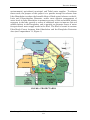
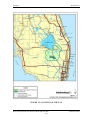
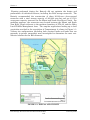
The EFH located within the area affected by the EAA Storage Reservoir occur
within the St. Lucie River Estuary and Southern Indian River Lagoon on the
Atlantic coast and the Caloosahatchee River Estuary on the Gulf coast.
The St. Lucie River Estuary and the Southern Indian River Lagoon are within
the jurisdiction of the South Atlantic Fishery Management Council (SAFMC)
and are located in areas designated as EFH for wormrock, live bottom habitat,
red drum, shrimp, spiny lobster, and the snapper-grouper complex. In addition,
the nearshore hardbottom habitat outside of the St. Lucie and Ft. Pierce Inlets
areas is designated as Essential Fish Habitat-Habitat Areas of Special Concern
(EFH-HAPC) for the snapper-grouper complex.
The Caloosahatchee River Estuary is within the jurisdiction of the Gulf of
Mexico Fishery Management Council (GMFMC). In the estuary EFH is defined
as all estuarine waters and substrates (mud, sand, shell, rock and associated
biological communities), including the sub-tidal vegetation (seagrasses and
algae) and the adjacent inter-tidal vegetation (marshes and mangroves). The
estuary provides EFH for adult and juvenile brown shrimp (Penaeus aztecus),
pink shrimp (Penaeus duorarum), white shrimp (Penaeus setiferus), gray
snapper (Lutjanus griseus), red drum (Sciaenops ocellatus), Spanish mackerel
(Scomberomorus maculates), spiny lobster (Panulirus argus), stone crab
(Menippe mercenaria), and gulf stone crab (Menippe adina).
2.13
WATER MANAGEMENT
This sub-section summarizes the existing water management system in the
Study Area. The summary addresses the status of the Everglades Program, as
defined in the 1994 Everglades Forever Act (EFA), and its implications for the
Project. Also covered are hydrography, drainage basins, water management
practices, and the major groundwater/hydrogeologic features in the Study Area.
Currently, water levels in Lake Okeechobee are regulated by a complex system
of pumps and locks. The regulation schedule attempts to achieve the multipleuse purposes as well as provide seasonal lake level fluctuations. The schedule
maintains a low lake stage to provide both storage capacity and flood protection
for surrounding areas at the beginning of the summer wet season. At the end of
EAA Storage Reservoirs Revised Draft PIR and EIS
2-36
February 2006