1
Installation
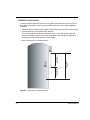
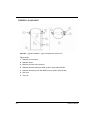
Protect insulation
If insulation is between the measuring assembly and the process, protect the insulation
from liquids. The absorption of a liquid, such as water, can affect the gauge indication
because it blocks some radiation.
Avoid internal obstructions
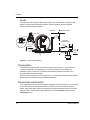
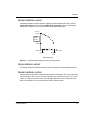
The best possible installation of a nuclear level gauge is on a vessel that has no internal
obstructions (agitator, baffle, manways, and so forth) directly in the path of the radiation
beam. If one of these obstructions is present, it can shield the radiation from the detector,
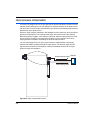
causing an erroneous reading. If the vessel has a central agitator, the source holder and
detector can mount to the vessel on an arc other than a diameter, so that the beam of
radiation does not cross the agitator. You can also avoid other obstructions this way.
Avoid external obstructions
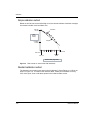
Any material in the path of the radiation can affect the measurement. Some materials that
are present when the gauge initially calibrates pose no problem because the calibration
accounts for their effect. Examples of these materials are:
• Tank walls
• Liners
• Insulation
However, when the materials change or you introduce new ones, the gauge reading can
be erroneous.
Examples of these situations are:
• Insulation that you add after calibration absorbs the radiation and causes the gauge to
erroneously read upscale.
• Rapidly changing tank conditions due to material buildup. Regular standardizations
compensate for slowly changing tank conditions due to material buildup. See the
“Calibration” chapter for information on standardization.
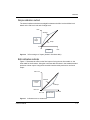
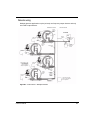
Avoid source cross-talk
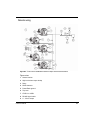
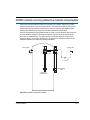
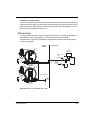
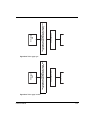
When multiple adjacent pipes or vessels have nuclear gauges, you must consider the
orientation of the source beams so that each detector senses radiation only from its
appropriate source. The best orientation, in this case, is for the source holders to be on
the inside with radiation beams pointing away from each other.
LSGH User Manual
2-3