1
SUPER EXTENDED BASIC UNRAVELLED II
INTRODUCTION
ORIGIN: SPECTRAL ASSOC
REVISED:12/26/99 WALTER K ZYDHEK
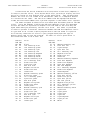
a label and will be found in Appendix B or in Extended Color Basic Unravelled’s
Appendix B.
Super Extended Basic Unravelled only covers the top half of the CoCo 3 ROM.
Extended Color Basic Unravelled covers the bottom half of the ROM. There are
several calls from the Super Extended portion of the ROM into the bottom half that
you will not be able to follow unless you have the Extended Color Basic book. Many
people have the Unravelled series, which was produced for the CoCo 2. The Extended
Color Basic Unravelled book is essentially a merged version of the older Color
Basic Unravelled (version 1.2) and Extended Basic Unravelled (version 1.1). If you
have both of these books, Appendix I provides a listing of all of the changes made
to convert Color Basic 1.2 and Extended Basic 1.1 into the bottom half of the
Extended Color Basic 2.0 ROM. The Disk Basic ROM (1.0 or 1.1) has not been modified
at all.
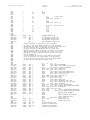
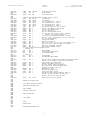
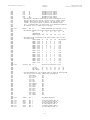
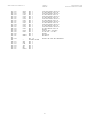
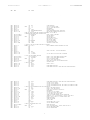
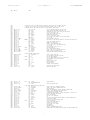
The CoCo 3 ROM (version 2.0) from addresses $C000 - $DFFF contains the code
used to initialize the system and the cute digitized picture of the authors which
you get when you hold down the ALT and CTRL keys on power up or reset. The code
located in this area must be of a temporary nature because the Disk Basic code is
loaded into this area when the contents of the ROMs are transferred to RAM. A
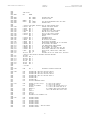
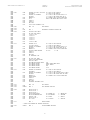
substantial portion of this code is used to patch Color Extended (and Disk if
there) Basic once it has been loaded into RAM. The patches make use of labels of
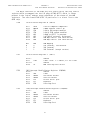
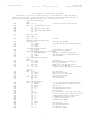
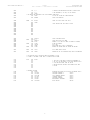
the following types: PATCHxx, ALINKxx and BLINKxx. The PATCHxx addresses correspond
to the actual address where the patch will be made. The ALINKxx addresses
correspond to those addresses where the patches will transfer control. The BLINKxx
addresses correspond to where the patch code will re-enter the mainstream code
after the patch code has been executed. Not all patches will have a BLINKxx type
address since control may be returned by an RTS.
The FCS pseudo-op code is used in this listing. For those readers who are
unfamiliar with this pseudo-op, it means exactly the same as an FCC pseudo-op with
the exception that the last character in the literal string has a bias of $80 added
to it. If, for example, the last character of an FCS instruction was an E, it would
be assembled to $05 ($45+$80).
5