1
GNU Emacs Manual
GNU Emacs Manual
Sixteenth Edition, Updated for Emacs Version 22.1.
Richard Stallman
This is the Sixteenth edition of the GNU Emacs Manual,
updated for Emacs version 22.1.
c 1985, 1986, 1987, 1993, 1994, 1995, 1996, 1997, 1998, 1999, 2000, 2001, 2002,
Copyright 2003, 2004, 2005, 2006, 2007 Free Software Foundation, Inc.
Permission is granted to copy, distribute and/or modify this document under
the terms of the GNU Free Documentation License, Version 1.2 or any later
version published by the Free Software Foundation; with the Invariant Sections
being “The GNU Manifesto,” “Distribution” and “GNU GENERAL PUBLIC
LICENSE,” with the Front-Cover texts being “A GNU Manual,” and with the
Back-Cover Texts as in (a) below. A copy of the license is included in the
section entitled “GNU Free Documentation License.”
(a) The FSF’s Back-Cover Text is: “You have freedom to copy and modify
this GNU Manual, like GNU software. Copies published by the Free Software
Foundation raise funds for GNU development.”
Published by the Free Software Foundation
51 Franklin Street, Fifth Floor
Boston, MA 02110-1301 USA
ISBN 1-882114-86-8
Cover art by Etienne Suvasa.
i
Short Contents
Preface . . . . . . . . . . . . . . . . . . . . . . . . . . . . . . . . . . . . . . . . . . . . . . . . . 1
Distribution . . . . . . . . . . . . . . . . . . . . . . . . . . . . . . . . . . . . . . . . . . . . . 2
Introduction . . . . . . . . . . . . . . . . . . . . . . . . . . . . . . . . . . . . . . . . . . . . . 5
1 The Organization of the Screen . . . . . . . . . . . . . . . . . . . . . . . . . . 6
2 Characters, Keys and Commands . . . . . . . . . . . . . . . . . . . . . . . 11
3 Entering and Exiting Emacs . . . . . . . . . . . . . . . . . . . . . . . . . . . 15
4 Basic Editing Commands . . . . . . . . . . . . . . . . . . . . . . . . . . . . . . 18
5 The Minibuffer . . . . . . . . . . . . . . . . . . . . . . . . . . . . . . . . . . . . . . 28
6 Running Commands by Name . . . . . . . . . . . . . . . . . . . . . . . . . . 35
7 Help . . . . . . . . . . . . . . . . . . . . . . . . . . . . . . . . . . . . . . . . . . . . . . . 36
8 The Mark and the Region . . . . . . . . . . . . . . . . . . . . . . . . . . . . . 45
9 Killing and Moving Text . . . . . . . . . . . . . . . . . . . . . . . . . . . . . . 51
10 Registers . . . . . . . . . . . . . . . . . . . . . . . . . . . . . . . . . . . . . . . . . . . 60
11 Controlling the Display . . . . . . . . . . . . . . . . . . . . . . . . . . . . . . . 64
12 Searching and Replacement . . . . . . . . . . . . . . . . . . . . . . . . . . . . 80
13 Commands for Fixing Typos . . . . . . . . . . . . . . . . . . . . . . . . . . . 97
14 Keyboard Macros . . . . . . . . . . . . . . . . . . . . . . . . . . . . . . . . . . . 103
15 File Handling . . . . . . . . . . . . . . . . . . . . . . . . . . . . . . . . . . . . . . 111
16 Using Multiple Buffers . . . . . . . . . . . . . . . . . . . . . . . . . . . . . . . 145
17 Multiple Windows . . . . . . . . . . . . . . . . . . . . . . . . . . . . . . . . . . . 154
18 Frames and Graphical Displays . . . . . . . . . . . . . . . . . . . . . . . . 159
19 International Character Set Support . . . . . . . . . . . . . . . . . . . . 173
20 Major Modes . . . . . . . . . . . . . . . . . . . . . . . . . . . . . . . . . . . . . . . 192
21 Indentation . . . . . . . . . . . . . . . . . . . . . . . . . . . . . . . . . . . . . . . . 195
22 Commands for Human Languages . . . . . . . . . . . . . . . . . . . . . . 198
23 Editing Programs . . . . . . . . . . . . . . . . . . . . . . . . . . . . . . . . . . . 233
24 Compiling and Testing Programs . . . . . . . . . . . . . . . . . . . . . . . 254
25 Maintaining Large Programs . . . . . . . . . . . . . . . . . . . . . . . . . . 272
26 Abbrevs . . . . . . . . . . . . . . . . . . . . . . . . . . . . . . . . . . . . . . . . . . . 282
27 Sending Mail . . . . . . . . . . . . . . . . . . . . . . . . . . . . . . . . . . . . . . . 288
28 Reading Mail with Rmail . . . . . . . . . . . . . . . . . . . . . . . . . . . . . 297
29 Dired, the Directory Editor . . . . . . . . . . . . . . . . . . . . . . . . . . . 315
30 The Calendar and the Diary . . . . . . . . . . . . . . . . . . . . . . . . . . 329
31 Miscellaneous Commands . . . . . . . . . . . . . . . . . . . . . . . . . . . . . 349
32 Customization . . . . . . . . . . . . . . . . . . . . . . . . . . . . . . . . . . . . . . 377
ii
33 Dealing with Common Problems . . . . . . . . . . . . . . . . . . . . . . .
A GNU GENERAL PUBLIC LICENSE . . . . . . . . . . . . . . . . . . .
B GNU Free Documentation License . . . . . . . . . . . . . . . . . . . . . .
C Command Line Arguments for Emacs Invocation . . . . . . . . . .
D X Options and Resources . . . . . . . . . . . . . . . . . . . . . . . . . . . . .
E Emacs 21 Antinews . . . . . . . . . . . . . . . . . . . . . . . . . . . . . . . . . .
F Emacs and Mac OS . . . . . . . . . . . . . . . . . . . . . . . . . . . . . . . . .
G Emacs and Microsoft Windows/MS-DOS . . . . . . . . . . . . . . . .
The GNU Manifesto . . . . . . . . . . . . . . . . . . . . . . . . . . . . . . . . . . . . .
Glossary . . . . . . . . . . . . . . . . . . . . . . . . . . . . . . . . . . . . . . . . . . . . . .
Key (Character) Index . . . . . . . . . . . . . . . . . . . . . . . . . . . . . . . . . . .
Command and Function Index . . . . . . . . . . . . . . . . . . . . . . . . . . . .
Variable Index . . . . . . . . . . . . . . . . . . . . . . . . . . . . . . . . . . . . . . . . .
Concept Index . . . . . . . . . . . . . . . . . . . . . . . . . . . . . . . . . . . . . . . . .
409
423
429
436
452
458
462
467
474
482
504
512
523
529
iii
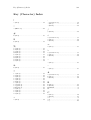
Table of Contents
Preface . . . . . . . . . . . . . . . . . . . . . . . . . . . . . . . . . . . . . . . . . . . . . . 1
Distribution . . . . . . . . . . . . . . . . . . . . . . . . . . . . . . . . . . . . . . . . . 2
Acknowledgments . . . . . . . . . . . . . . . . . . . . . . . . . . . . . . . . . . . . . . . . . . . . . . . . . . . 2
Introduction . . . . . . . . . . . . . . . . . . . . . . . . . . . . . . . . . . . . . . . . 5
1
The Organization of the Screen . . . . . . . . . . . . . . . 6
1.1
1.2
1.3
1.4
2
Characters, Keys and Commands . . . . . . . . . . . . 11
2.1
2.2
2.3
2.4
3
Kinds of User Input . . . . . . . . . . . . . . . . . . . . . . . . . . . . . . . . . . . . . . . . . . .
Keys . . . . . . . . . . . . . . . . . . . . . . . . . . . . . . . . . . . . . . . . . . . . . . . . . . . . . . . . . .
Keys and Commands . . . . . . . . . . . . . . . . . . . . . . . . . . . . . . . . . . . . . . . . . .
Character Set for Text . . . . . . . . . . . . . . . . . . . . . . . . . . . . . . . . . . . . . . . .
11
12
13
14
Entering and Exiting Emacs . . . . . . . . . . . . . . . . . . 15
3.1
4
Point . . . . . . . . . . . . . . . . . . . . . . . . . . . . . . . . . . . . . . . . . . . . . . . . . . . . . . . . . . 6
The Echo Area . . . . . . . . . . . . . . . . . . . . . . . . . . . . . . . . . . . . . . . . . . . . . . . . . 7
The Mode Line. . . . . . . . . . . . . . . . . . . . . . . . . . . . . . . . . . . . . . . . . . . . . . . . . 8
The Menu Bar . . . . . . . . . . . . . . . . . . . . . . . . . . . . . . . . . . . . . . . . . . . . . . . . 10
Exiting Emacs . . . . . . . . . . . . . . . . . . . . . . . . . . . . . . . . . . . . . . . . . . . . . . . . 15
Basic Editing Commands . . . . . . . . . . . . . . . . . . . . . 18
4.1
4.2
4.3
4.4
4.5
4.6
4.7
4.8
4.9
4.10
4.11
Inserting Text . . . . . . . . . . . . . . . . . . . . . . . . . . . . . . . . . . . . . . . . . . . . . . . . .
Changing the Location of Point . . . . . . . . . . . . . . . . . . . . . . . . . . . . . . .
Erasing Text . . . . . . . . . . . . . . . . . . . . . . . . . . . . . . . . . . . . . . . . . . . . . . . . . .
Undoing Changes . . . . . . . . . . . . . . . . . . . . . . . . . . . . . . . . . . . . . . . . . . . . .
Files . . . . . . . . . . . . . . . . . . . . . . . . . . . . . . . . . . . . . . . . . . . . . . . . . . . . . . . . . .
Help . . . . . . . . . . . . . . . . . . . . . . . . . . . . . . . . . . . . . . . . . . . . . . . . . . . . . . . . . .
Blank Lines . . . . . . . . . . . . . . . . . . . . . . . . . . . . . . . . . . . . . . . . . . . . . . . . . . .
Continuation Lines . . . . . . . . . . . . . . . . . . . . . . . . . . . . . . . . . . . . . . . . . . . .
Cursor Position Information . . . . . . . . . . . . . . . . . . . . . . . . . . . . . . . . . . .
Numeric Arguments . . . . . . . . . . . . . . . . . . . . . . . . . . . . . . . . . . . . . . . . . .
Repeating a Command . . . . . . . . . . . . . . . . . . . . . . . . . . . . . . . . . . . . . . .
18
19
21
21
22
22
22
23
23
25
26
iv
5
The Minibuffer . . . . . . . . . . . . . . . . . . . . . . . . . . . . . . . . 28
5.1
5.2
5.3
Minibuffers for File Names . . . . . . . . . . . . . . . . . . . . . . . . . . . . . . . . . . . .
Editing in the Minibuffer . . . . . . . . . . . . . . . . . . . . . . . . . . . . . . . . . . . . . .
Completion . . . . . . . . . . . . . . . . . . . . . . . . . . . . . . . . . . . . . . . . . . . . . . . . . . .
5.3.1 Completion Example . . . . . . . . . . . . . . . . . . . . . . . . . . . . . . . . . . . . .
5.3.2 Completion Commands . . . . . . . . . . . . . . . . . . . . . . . . . . . . . . . . . . .
5.3.3 Strict Completion . . . . . . . . . . . . . . . . . . . . . . . . . . . . . . . . . . . . . . . .
5.3.4 Completion Options . . . . . . . . . . . . . . . . . . . . . . . . . . . . . . . . . . . . . .
5.4 Minibuffer History . . . . . . . . . . . . . . . . . . . . . . . . . . . . . . . . . . . . . . . . . . . .
5.5 Repeating Minibuffer Commands . . . . . . . . . . . . . . . . . . . . . . . . . . . . . .
28
29
30
30
30
31
32
32
33
6
Running Commands by Name . . . . . . . . . . . . . . . 35
7
Help . . . . . . . . . . . . . . . . . . . . . . . . . . . . . . . . . . . . . . . . . . . . 36
7.1
7.2
7.3
7.4
7.5
7.6
7.7
7.8
7.9
8
38
38
39
41
41
42
42
43
44
The Mark and the Region . . . . . . . . . . . . . . . . . . . . 45
8.1
8.2
8.3
8.4
8.5
8.6
8.7
9
Documentation for a Key . . . . . . . . . . . . . . . . . . . . . . . . . . . . . . . . . . . . .
Help by Command or Variable Name . . . . . . . . . . . . . . . . . . . . . . . . . .
Apropos . . . . . . . . . . . . . . . . . . . . . . . . . . . . . . . . . . . . . . . . . . . . . . . . . . . . . .
Help Mode Commands . . . . . . . . . . . . . . . . . . . . . . . . . . . . . . . . . . . . . . . .
Keyword Search for Lisp Libraries . . . . . . . . . . . . . . . . . . . . . . . . . . . . .
Help for International Language Support . . . . . . . . . . . . . . . . . . . . . .
Other Help Commands . . . . . . . . . . . . . . . . . . . . . . . . . . . . . . . . . . . . . . . .
Help Files . . . . . . . . . . . . . . . . . . . . . . . . . . . . . . . . . . . . . . . . . . . . . . . . . . . . .
Help on Active Text and Tooltips . . . . . . . . . . . . . . . . . . . . . . . . . . . . .
Setting the Mark . . . . . . . . . . . . . . . . . . . . . . . . . . . . . . . . . . . . . . . . . . . . . .
Transient Mark Mode . . . . . . . . . . . . . . . . . . . . . . . . . . . . . . . . . . . . . . . . .
Using Transient Mark Mode Momentarily . . . . . . . . . . . . . . . . . . . . .
Operating on the Region . . . . . . . . . . . . . . . . . . . . . . . . . . . . . . . . . . . . . .
Commands to Mark Textual Objects . . . . . . . . . . . . . . . . . . . . . . . . . .
The Mark Ring . . . . . . . . . . . . . . . . . . . . . . . . . . . . . . . . . . . . . . . . . . . . . . .
The Global Mark Ring . . . . . . . . . . . . . . . . . . . . . . . . . . . . . . . . . . . . . . . .
45
46
48
48
48
49
50
Killing and Moving Text . . . . . . . . . . . . . . . . . . . . . . 51
9.1
Deletion and Killing . . . . . . . . . . . . . . . . . . . . . . . . . . . . . . . . . . . . . . . . . . .
9.1.1 Deletion . . . . . . . . . . . . . . . . . . . . . . . . . . . . . . . . . . . . . . . . . . . . . . . . .
9.1.2 Killing by Lines . . . . . . . . . . . . . . . . . . . . . . . . . . . . . . . . . . . . . . . . . .
9.1.3 Other Kill Commands . . . . . . . . . . . . . . . . . . . . . . . . . . . . . . . . . . . .
9.2 Yanking . . . . . . . . . . . . . . . . . . . . . . . . . . . . . . . . . . . . . . . . . . . . . . . . . . . . . .
9.2.1 The Kill Ring . . . . . . . . . . . . . . . . . . . . . . . . . . . . . . . . . . . . . . . . . . . .
9.2.2 Appending Kills . . . . . . . . . . . . . . . . . . . . . . . . . . . . . . . . . . . . . . . . . .
9.2.3 Yanking Earlier Kills . . . . . . . . . . . . . . . . . . . . . . . . . . . . . . . . . . . . .
9.3 Accumulating Text . . . . . . . . . . . . . . . . . . . . . . . . . . . . . . . . . . . . . . . . . . . .
9.4 Rectangles . . . . . . . . . . . . . . . . . . . . . . . . . . . . . . . . . . . . . . . . . . . . . . . . . . . .
9.5 CUA Bindings . . . . . . . . . . . . . . . . . . . . . . . . . . . . . . . . . . . . . . . . . . . . . . . .
51
51
52
53
53
54
54
55
56
57
58
v
10
Registers . . . . . . . . . . . . . . . . . . . . . . . . . . . . . . . . . . . . . . 60
10.1
10.2
10.3
10.4
10.5
10.6
10.7
11
60
60
61
61
61
62
62
Controlling the Display . . . . . . . . . . . . . . . . . . . . . . 64
11.1
11.2
11.3
11.4
11.5
11.6
11.7
11.8
11.9
11.10
11.11
11.12
11.13
11.14
11.15
11.16
11.17
12
Saving Positions in Registers . . . . . . . . . . . . . . . . . . . . . . . . . . . . . . . . .
Saving Text in Registers . . . . . . . . . . . . . . . . . . . . . . . . . . . . . . . . . . . . .
Saving Rectangles in Registers . . . . . . . . . . . . . . . . . . . . . . . . . . . . . . .
Saving Window Configurations in Registers . . . . . . . . . . . . . . . . . . .
Keeping Numbers in Registers. . . . . . . . . . . . . . . . . . . . . . . . . . . . . . . .
Keeping File Names in Registers . . . . . . . . . . . . . . . . . . . . . . . . . . . . .
Bookmarks . . . . . . . . . . . . . . . . . . . . . . . . . . . . . . . . . . . . . . . . . . . . . . . . . .
Scrolling . . . . . . . . . . . . . . . . . . . . . . . . . . . . . . . . . . . . . . . . . . . . . . . . . . . . .
Automatic Scrolling . . . . . . . . . . . . . . . . . . . . . . . . . . . . . . . . . . . . . . . . . .
Horizontal Scrolling . . . . . . . . . . . . . . . . . . . . . . . . . . . . . . . . . . . . . . . . . .
Follow Mode . . . . . . . . . . . . . . . . . . . . . . . . . . . . . . . . . . . . . . . . . . . . . . . . .
Using Multiple Typefaces . . . . . . . . . . . . . . . . . . . . . . . . . . . . . . . . . . . .
Standard Faces . . . . . . . . . . . . . . . . . . . . . . . . . . . . . . . . . . . . . . . . . . . . . .
Font Lock mode . . . . . . . . . . . . . . . . . . . . . . . . . . . . . . . . . . . . . . . . . . . . .
Interactive Highlighting . . . . . . . . . . . . . . . . . . . . . . . . . . . . . . . . . . . . . .
Window Fringes . . . . . . . . . . . . . . . . . . . . . . . . . . . . . . . . . . . . . . . . . . . . .
Displaying Boundaries . . . . . . . . . . . . . . . . . . . . . . . . . . . . . . . . . . . . . .
Useless Whitespace . . . . . . . . . . . . . . . . . . . . . . . . . . . . . . . . . . . . . . . . .
Selective Display . . . . . . . . . . . . . . . . . . . . . . . . . . . . . . . . . . . . . . . . . . . .
Optional Mode Line Features . . . . . . . . . . . . . . . . . . . . . . . . . . . . . . .
How Text Is Displayed . . . . . . . . . . . . . . . . . . . . . . . . . . . . . . . . . . . . . .
Displaying the Cursor . . . . . . . . . . . . . . . . . . . . . . . . . . . . . . . . . . . . . . .
Truncation of Lines . . . . . . . . . . . . . . . . . . . . . . . . . . . . . . . . . . . . . . . . .
Customization of Display . . . . . . . . . . . . . . . . . . . . . . . . . . . . . . . . . . .
64
65
66
67
67
68
70
72
73
74
74
75
75
76
77
78
78
Searching and Replacement . . . . . . . . . . . . . . . . . 80
12.1 Incremental Search . . . . . . . . . . . . . . . . . . . . . . . . . . . . . . . . . . . . . . . . . . .
12.1.1 Basics of Incremental Search . . . . . . . . . . . . . . . . . . . . . . . . . . . .
12.1.2 Repeating Incremental Search . . . . . . . . . . . . . . . . . . . . . . . . . . .
12.1.3 Errors in Incremental Search . . . . . . . . . . . . . . . . . . . . . . . . . . . .
12.1.4 Special Input for Incremental Search . . . . . . . . . . . . . . . . . . . .
12.1.5 Isearch for Non-ASCII Characters . . . . . . . . . . . . . . . . . . . . . . . .
12.1.6 Isearch Yanking . . . . . . . . . . . . . . . . . . . . . . . . . . . . . . . . . . . . . . . . .
12.1.7 Lazy Search Highlighting . . . . . . . . . . . . . . . . . . . . . . . . . . . . . . . .
12.1.8 Scrolling During Incremental Search . . . . . . . . . . . . . . . . . . . . .
12.1.9 Slow Terminal Incremental Search . . . . . . . . . . . . . . . . . . . . . . .
12.2 Nonincremental Search . . . . . . . . . . . . . . . . . . . . . . . . . . . . . . . . . . . . . . .
12.3 Word Search . . . . . . . . . . . . . . . . . . . . . . . . . . . . . . . . . . . . . . . . . . . . . . . . .
12.4 Regular Expression Search . . . . . . . . . . . . . . . . . . . . . . . . . . . . . . . . . . .
12.5 Syntax of Regular Expressions . . . . . . . . . . . . . . . . . . . . . . . . . . . . . . .
12.6 Backslash in Regular Expressions . . . . . . . . . . . . . . . . . . . . . . . . . . . .
12.7 Regular Expression Example . . . . . . . . . . . . . . . . . . . . . . . . . . . . . . . . .
12.8 Searching and Case . . . . . . . . . . . . . . . . . . . . . . . . . . . . . . . . . . . . . . . . . .
12.9 Replacement Commands . . . . . . . . . . . . . . . . . . . . . . . . . . . . . . . . . . . . .
80
80
81
81
82
82
82
83
83
84
84
84
85
86
89
91
91
91
vi
12.9.1 Unconditional Replacement . . . . . . . . . . . . . . . . . . . . . . . . . . . . .
12.9.2 Regexp Replacement . . . . . . . . . . . . . . . . . . . . . . . . . . . . . . . . . . . .
12.9.3 Replace Commands and Case . . . . . . . . . . . . . . . . . . . . . . . . . . .
12.9.4 Query Replace . . . . . . . . . . . . . . . . . . . . . . . . . . . . . . . . . . . . . . . . . .
12.10 Other Search-and-Loop Commands . . . . . . . . . . . . . . . . . . . . . . . . .
13
Commands for Fixing Typos . . . . . . . . . . . . . . . . 97
13.1
13.2
13.3
13.4
13.5
14
Undo . . . . . . . . . . . . . . . . . . . . . . . . . . . . . . . . . . . . . . . . . . . . . . . . . . . . . . . . 97
Killing Your Mistakes . . . . . . . . . . . . . . . . . . . . . . . . . . . . . . . . . . . . . . . . 98
Transposing Text . . . . . . . . . . . . . . . . . . . . . . . . . . . . . . . . . . . . . . . . . . . . 99
Case Conversion . . . . . . . . . . . . . . . . . . . . . . . . . . . . . . . . . . . . . . . . . . . . . 99
Checking and Correcting Spelling . . . . . . . . . . . . . . . . . . . . . . . . . . . 100
Keyboard Macros . . . . . . . . . . . . . . . . . . . . . . . . . . . 103
14.1
14.2
14.3
14.4
14.5
14.6
14.7
15
92
92
93
94
95
Basic Use . . . . . . . . . . . . . . . . . . . . . . . . . . . . . . . . . . . . . . . . . . . . . . . . . . .
The Keyboard Macro Ring . . . . . . . . . . . . . . . . . . . . . . . . . . . . . . . . . .
The Keyboard Macro Counter . . . . . . . . . . . . . . . . . . . . . . . . . . . . . .
Executing Macros with Variations . . . . . . . . . . . . . . . . . . . . . . . . . . .
Naming and Saving Keyboard Macros . . . . . . . . . . . . . . . . . . . . . . .
Editing a Keyboard Macro . . . . . . . . . . . . . . . . . . . . . . . . . . . . . . . . . .
Stepwise Editing a Keyboard Macro . . . . . . . . . . . . . . . . . . . . . . . . .
103
105
106
107
107
108
109
File Handling. . . . . . . . . . . . . . . . . . . . . . . . . . . . . . . . 111
15.1 File Names . . . . . . . . . . . . . . . . . . . . . . . . . . . . . . . . . . . . . . . . . . . . . . . . .
15.2 Visiting Files . . . . . . . . . . . . . . . . . . . . . . . . . . . . . . . . . . . . . . . . . . . . . . .
15.3 Saving Files . . . . . . . . . . . . . . . . . . . . . . . . . . . . . . . . . . . . . . . . . . . . . . . .
15.3.1 Commands for Saving Files . . . . . . . . . . . . . . . . . . . . . . . . . . . .
15.3.2 Backup Files . . . . . . . . . . . . . . . . . . . . . . . . . . . . . . . . . . . . . . . . . . .
15.3.2.1 Numbered Backups . . . . . . . . . . . . . . . . . . . . . . . . . . . . . . .
15.3.2.2 Single or Numbered Backups . . . . . . . . . . . . . . . . . . . . . .
15.3.2.3 Automatic Deletion of Backups . . . . . . . . . . . . . . . . . . . .
15.3.2.4 Copying vs. Renaming . . . . . . . . . . . . . . . . . . . . . . . . . . . .
15.3.3 Customizing Saving of Files . . . . . . . . . . . . . . . . . . . . . . . . . . . .
15.3.4 Protection against Simultaneous Editing. . . . . . . . . . . . . . . .
15.3.5 Shadowing Files. . . . . . . . . . . . . . . . . . . . . . . . . . . . . . . . . . . . . . . .
15.3.6 Updating Time Stamps Automatically. . . . . . . . . . . . . . . . . .
15.4 Reverting a Buffer . . . . . . . . . . . . . . . . . . . . . . . . . . . . . . . . . . . . . . . . . .
15.5 Auto-Saving: Protection Against Disasters . . . . . . . . . . . . . . . . . .
15.5.1 Auto-Save Files . . . . . . . . . . . . . . . . . . . . . . . . . . . . . . . . . . . . . . . .
15.5.2 Controlling Auto-Saving . . . . . . . . . . . . . . . . . . . . . . . . . . . . . . .
15.5.3 Recovering Data from Auto-Saves . . . . . . . . . . . . . . . . . . . . . .
15.6 File Name Aliases . . . . . . . . . . . . . . . . . . . . . . . . . . . . . . . . . . . . . . . . . . .
15.7 Version Control . . . . . . . . . . . . . . . . . . . . . . . . . . . . . . . . . . . . . . . . . . . . .
15.7.1 Introduction to Version Control . . . . . . . . . . . . . . . . . . . . . . . .
15.7.1.1 Supported Version Control Systems. . . . . . . . . . . . . . . .
15.7.1.2 Concepts of Version Control . . . . . . . . . . . . . . . . . . . . . . .
15.7.1.3 Types of Log File . . . . . . . . . . . . . . . . . . . . . . . . . . . . . . . . .
111
112
115
115
117
117
118
118
119
119
120
121
122
122
123
123
124
124
125
125
126
126
127
128
vii
15.7.2 Version Control and the Mode Line . . . . . . . . . . . . . . . . . . . .
15.7.3 Basic Editing under Version Control . . . . . . . . . . . . . . . . . . . .
15.7.3.1 Basic Version Control with Locking . . . . . . . . . . . . . . . .
15.7.3.2 Basic Version Control without Locking . . . . . . . . . . . .
15.7.3.3 Advanced Control in C-x v v . . . . . . . . . . . . . . . . . . . . . .
15.7.3.4 Features of the Log Entry Buffer . . . . . . . . . . . . . . . . . .
15.7.4 Examining And Comparing Old Versions . . . . . . . . . . . . . . .
15.7.5 The Secondary Commands of VC . . . . . . . . . . . . . . . . . . . . . .
15.7.5.1 Registering a File for Version Control . . . . . . . . . . . . . .
15.7.5.2 VC Status Commands . . . . . . . . . . . . . . . . . . . . . . . . . . . . .
15.7.5.3 Undoing Version Control Actions . . . . . . . . . . . . . . . . . .
15.7.6 Multiple Branches of a File. . . . . . . . . . . . . . . . . . . . . . . . . . . . .
15.7.6.1 Switching between Branches . . . . . . . . . . . . . . . . . . . . . . .
15.7.6.2 Creating New Branches . . . . . . . . . . . . . . . . . . . . . . . . . . .
15.7.6.3 Merging Branches . . . . . . . . . . . . . . . . . . . . . . . . . . . . . . . . .
15.7.6.4 Multi-User Branching . . . . . . . . . . . . . . . . . . . . . . . . . . . . .
15.8 File Directories . . . . . . . . . . . . . . . . . . . . . . . . . . . . . . . . . . . . . . . . . . . . .
15.9 Comparing Files . . . . . . . . . . . . . . . . . . . . . . . . . . . . . . . . . . . . . . . . . . . .
15.10 Diff Mode . . . . . . . . . . . . . . . . . . . . . . . . . . . . . . . . . . . . . . . . . . . . . . . . .
15.11 Miscellaneous File Operations . . . . . . . . . . . . . . . . . . . . . . . . . . . . . .
15.12 Accessing Compressed Files . . . . . . . . . . . . . . . . . . . . . . . . . . . . . . . .
15.13 File Archives . . . . . . . . . . . . . . . . . . . . . . . . . . . . . . . . . . . . . . . . . . . . . .
15.14 Remote Files . . . . . . . . . . . . . . . . . . . . . . . . . . . . . . . . . . . . . . . . . . . . . .
15.15 Quoted File Names . . . . . . . . . . . . . . . . . . . . . . . . . . . . . . . . . . . . . . . .
15.16 File Name Cache . . . . . . . . . . . . . . . . . . . . . . . . . . . . . . . . . . . . . . . . . .
15.17 Convenience Features for Finding Files . . . . . . . . . . . . . . . . . . . . .
15.18 Filesets . . . . . . . . . . . . . . . . . . . . . . . . . . . . . . . . . . . . . . . . . . . . . . . . . . . .
16
128
128
129
129
130
130
131
132
132
133
134
134
135
135
135
136
137
138
138
139
140
141
141
142
143
144
144
Using Multiple Buffers . . . . . . . . . . . . . . . . . . . . . 145
16.1
16.2
16.3
16.4
16.5
16.6
16.7
Creating and Selecting Buffers . . . . . . . . . . . . . . . . . . . . . . . . . . . . . .
Listing Existing Buffers . . . . . . . . . . . . . . . . . . . . . . . . . . . . . . . . . . . . .
Miscellaneous Buffer Operations . . . . . . . . . . . . . . . . . . . . . . . . . . . .
Killing Buffers . . . . . . . . . . . . . . . . . . . . . . . . . . . . . . . . . . . . . . . . . . . . . .
Operating on Several Buffers . . . . . . . . . . . . . . . . . . . . . . . . . . . . . . . .
Indirect Buffers . . . . . . . . . . . . . . . . . . . . . . . . . . . . . . . . . . . . . . . . . . . . .
Convenience Features and Customization of Buffer Handling
..............................................................
16.7.1 Making Buffer Names Unique . . . . . . . . . . . . . . . . . . . . . . . . . .
16.7.2 Switching Between Buffers using Substrings . . . . . . . . . . . .
16.7.3 Customizing Buffer Menus . . . . . . . . . . . . . . . . . . . . . . . . . . . . .
145
146
147
148
149
151
151
152
152
152
viii
17
Multiple Windows . . . . . . . . . . . . . . . . . . . . . . . . . . 154
17.1
17.2
17.3
17.4
17.5
17.6
17.7
18
Concepts of Emacs Windows . . . . . . . . . . . . . . . . . . . . . . . . . . . . . . . .
Splitting Windows . . . . . . . . . . . . . . . . . . . . . . . . . . . . . . . . . . . . . . . . . .
Using Other Windows . . . . . . . . . . . . . . . . . . . . . . . . . . . . . . . . . . . . . .
Displaying in Another Window . . . . . . . . . . . . . . . . . . . . . . . . . . . . . .
Forcing Display in the Same Window. . . . . . . . . . . . . . . . . . . . . . . .
Deleting and Rearranging Windows . . . . . . . . . . . . . . . . . . . . . . . . .
Window Handling Convenience Features and Customization
..............................................................
158
Frames and Graphical Displays . . . . . . . . . . . . 159
18.1 Killing and Yanking on Graphical Displays . . . . . . . . . . . . . . . . . .
18.1.1 Mouse Commands for Editing . . . . . . . . . . . . . . . . . . . . . . . . . .
18.1.2 Cut and Paste with Other Window Applications . . . . . . . .
18.1.3 Mouse Commands for Words and Lines . . . . . . . . . . . . . . . . .
18.1.4 Secondary Selection . . . . . . . . . . . . . . . . . . . . . . . . . . . . . . . . . . . .
18.1.5 Using the Clipboard . . . . . . . . . . . . . . . . . . . . . . . . . . . . . . . . . . .
18.2 Following References with the Mouse . . . . . . . . . . . . . . . . . . . . . . . .
18.3 Mouse Clicks for Menus . . . . . . . . . . . . . . . . . . . . . . . . . . . . . . . . . . . . .
18.4 Mode Line Mouse Commands . . . . . . . . . . . . . . . . . . . . . . . . . . . . . . .
18.5 Creating Frames . . . . . . . . . . . . . . . . . . . . . . . . . . . . . . . . . . . . . . . . . . . .
18.6 Frame Commands . . . . . . . . . . . . . . . . . . . . . . . . . . . . . . . . . . . . . . . . . .
18.7 Speedbar Frames . . . . . . . . . . . . . . . . . . . . . . . . . . . . . . . . . . . . . . . . . . .
18.8 Multiple Displays . . . . . . . . . . . . . . . . . . . . . . . . . . . . . . . . . . . . . . . . . . .
18.9 Special Buffer Frames . . . . . . . . . . . . . . . . . . . . . . . . . . . . . . . . . . . . . . .
18.10 Setting Frame Parameters . . . . . . . . . . . . . . . . . . . . . . . . . . . . . . . . .
18.11 Scroll Bars . . . . . . . . . . . . . . . . . . . . . . . . . . . . . . . . . . . . . . . . . . . . . . . .
18.12 Scrolling With “Wheeled” Mice . . . . . . . . . . . . . . . . . . . . . . . . . . . .
18.13 Drag and Drop . . . . . . . . . . . . . . . . . . . . . . . . . . . . . . . . . . . . . . . . . . . .
18.14 Menu Bars . . . . . . . . . . . . . . . . . . . . . . . . . . . . . . . . . . . . . . . . . . . . . . . .
18.15 Tool Bars . . . . . . . . . . . . . . . . . . . . . . . . . . . . . . . . . . . . . . . . . . . . . . . . . .
18.16 Using Dialog Boxes . . . . . . . . . . . . . . . . . . . . . . . . . . . . . . . . . . . . . . . .
18.17 Tooltips . . . . . . . . . . . . . . . . . . . . . . . . . . . . . . . . . . . . . . . . . . . . . . . . . . .
18.18 Mouse Avoidance . . . . . . . . . . . . . . . . . . . . . . . . . . . . . . . . . . . . . . . . . .
18.19 Non-Window Terminals . . . . . . . . . . . . . . . . . . . . . . . . . . . . . . . . . . . .
18.20 Using a Mouse in Terminal Emulators . . . . . . . . . . . . . . . . . . . . . .
19
154
154
155
156
156
157
159
159
161
161
161
162
162
163
164
164
165
166
166
167
168
168
169
169
170
170
170
171
171
171
172
International Character Set Support . . . . . . 173
19.1
19.2
19.3
19.4
19.5
19.6
19.7
19.8
19.9
Introduction to International Character Sets . . . . . . . . . . . . . . . .
Enabling Multibyte Characters . . . . . . . . . . . . . . . . . . . . . . . . . . . . . .
Language Environments. . . . . . . . . . . . . . . . . . . . . . . . . . . . . . . . . . . . .
Input Methods . . . . . . . . . . . . . . . . . . . . . . . . . . . . . . . . . . . . . . . . . . . . . .
Selecting an Input Method . . . . . . . . . . . . . . . . . . . . . . . . . . . . . . . . . .
Unibyte and Multibyte Non-ASCII characters . . . . . . . . . . . . . . . .
Coding Systems. . . . . . . . . . . . . . . . . . . . . . . . . . . . . . . . . . . . . . . . . . . . .
Recognizing Coding Systems . . . . . . . . . . . . . . . . . . . . . . . . . . . . . . . .
Specifying a File’s Coding System . . . . . . . . . . . . . . . . . . . . . . . . . . .
173
174
175
176
178
179
179
181
183
ix
19.10
19.11
19.12
19.13
19.14
19.15
19.16
19.17
19.18
19.19
20
How Major Modes are Chosen . . . . . . . . . . . . . . . . . . . . . . . . . . . . . . 192
Indentation . . . . . . . . . . . . . . . . . . . . . . . . . . . . . . . . . . 195
21.1
21.2
21.3
22
183
184
185
186
187
187
188
189
190
191
Major Modes . . . . . . . . . . . . . . . . . . . . . . . . . . . . . . . . 192
20.1
21
Choosing Coding Systems for Output . . . . . . . . . . . . . . . . . . . . . .
Specifying a Coding System for File Text . . . . . . . . . . . . . . . . . .
Coding Systems for Interprocess Communication . . . . . . . . . . .
Coding Systems for File Names . . . . . . . . . . . . . . . . . . . . . . . . . . . .
Coding Systems for Terminal I/O . . . . . . . . . . . . . . . . . . . . . . . . . .
Fontsets . . . . . . . . . . . . . . . . . . . . . . . . . . . . . . . . . . . . . . . . . . . . . . . . . . .
Defining fontsets . . . . . . . . . . . . . . . . . . . . . . . . . . . . . . . . . . . . . . . . . . .
Undisplayable Characters . . . . . . . . . . . . . . . . . . . . . . . . . . . . . . . . . .
Unibyte Editing Mode . . . . . . . . . . . . . . . . . . . . . . . . . . . . . . . . . . . . .
Charsets . . . . . . . . . . . . . . . . . . . . . . . . . . . . . . . . . . . . . . . . . . . . . . . . . . .
Indentation Commands and Techniques . . . . . . . . . . . . . . . . . . . . . 196
Tab Stops . . . . . . . . . . . . . . . . . . . . . . . . . . . . . . . . . . . . . . . . . . . . . . . . . . 196
Tabs vs. Spaces . . . . . . . . . . . . . . . . . . . . . . . . . . . . . . . . . . . . . . . . . . . . . 197
Commands for Human Languages . . . . . . . . . 198
22.1 Words . . . . . . . . . . . . . . . . . . . . . . . . . . . . . . . . . . . . . . . . . . . . . . . . . . . . . .
22.2 Sentences . . . . . . . . . . . . . . . . . . . . . . . . . . . . . . . . . . . . . . . . . . . . . . . . . . .
22.3 Paragraphs . . . . . . . . . . . . . . . . . . . . . . . . . . . . . . . . . . . . . . . . . . . . . . . . .
22.4 Pages . . . . . . . . . . . . . . . . . . . . . . . . . . . . . . . . . . . . . . . . . . . . . . . . . . . . . . .
22.5 Filling Text . . . . . . . . . . . . . . . . . . . . . . . . . . . . . . . . . . . . . . . . . . . . . . . . .
22.5.1 Auto Fill Mode . . . . . . . . . . . . . . . . . . . . . . . . . . . . . . . . . . . . . . . .
22.5.2 Explicit Fill Commands . . . . . . . . . . . . . . . . . . . . . . . . . . . . . . . .
22.5.3 The Fill Prefix . . . . . . . . . . . . . . . . . . . . . . . . . . . . . . . . . . . . . . . . .
22.5.4 Adaptive Filling . . . . . . . . . . . . . . . . . . . . . . . . . . . . . . . . . . . . . . .
22.5.5 Refill Mode . . . . . . . . . . . . . . . . . . . . . . . . . . . . . . . . . . . . . . . . . . . .
22.5.6 Long Lines Mode . . . . . . . . . . . . . . . . . . . . . . . . . . . . . . . . . . . . . .
22.6 Case Conversion Commands . . . . . . . . . . . . . . . . . . . . . . . . . . . . . . . .
22.7 Text Mode. . . . . . . . . . . . . . . . . . . . . . . . . . . . . . . . . . . . . . . . . . . . . . . . . .
22.8 Outline Mode . . . . . . . . . . . . . . . . . . . . . . . . . . . . . . . . . . . . . . . . . . . . . . .
22.8.1 Format of Outlines . . . . . . . . . . . . . . . . . . . . . . . . . . . . . . . . . . . . .
22.8.2 Outline Motion Commands. . . . . . . . . . . . . . . . . . . . . . . . . . . . .
22.8.3 Outline Visibility Commands . . . . . . . . . . . . . . . . . . . . . . . . . . .
22.8.4 Viewing One Outline in Multiple Views . . . . . . . . . . . . . . . .
22.8.5 Folding Editing . . . . . . . . . . . . . . . . . . . . . . . . . . . . . . . . . . . . . . . .
22.9 TEX Mode . . . . . . . . . . . . . . . . . . . . . . . . . . . . . . . . . . . . . . . . . . . . . . . . . .
22.9.1 TEX Editing Commands . . . . . . . . . . . . . . . . . . . . . . . . . . . . . . .
22.9.2 LaTEX Editing Commands . . . . . . . . . . . . . . . . . . . . . . . . . . . . .
22.9.3 TEX Printing Commands . . . . . . . . . . . . . . . . . . . . . . . . . . . . . . .
22.9.4 TEX Mode Miscellany . . . . . . . . . . . . . . . . . . . . . . . . . . . . . . . . . .
22.10 SGML, XML, and HTML Modes . . . . . . . . . . . . . . . . . . . . . . . . . .
22.11 Nroff Mode . . . . . . . . . . . . . . . . . . . . . . . . . . . . . . . . . . . . . . . . . . . . . . . .
22.12 Editing Formatted Text . . . . . . . . . . . . . . . . . . . . . . . . . . . . . . . . . . . .
198
199
200
201
202
202
203
204
205
206
206
207
208
209
209
210
211
212
212
214
214
215
215
218
218
219
219
x
22.12.1 Requesting to Edit Formatted Text . . . . . . . . . . . . . . . . . . .
22.12.2 Hard and Soft Newlines . . . . . . . . . . . . . . . . . . . . . . . . . . . . . . .
22.12.3 Editing Format Information . . . . . . . . . . . . . . . . . . . . . . . . . . .
22.12.4 Faces in Formatted Text . . . . . . . . . . . . . . . . . . . . . . . . . . . . . .
22.12.5 Colors in Formatted Text . . . . . . . . . . . . . . . . . . . . . . . . . . . . .
22.12.6 Indentation in Formatted Text . . . . . . . . . . . . . . . . . . . . . . . .
22.12.7 Justification in Formatted Text . . . . . . . . . . . . . . . . . . . . . . .
22.12.8 Setting Other Text Properties . . . . . . . . . . . . . . . . . . . . . . . . .
22.12.9 Forcing Enriched Mode . . . . . . . . . . . . . . . . . . . . . . . . . . . . . . .
22.13 Editing Text-based Tables . . . . . . . . . . . . . . . . . . . . . . . . . . . . . . . . .
22.13.1 What is a Text-based Table? . . . . . . . . . . . . . . . . . . . . . . . . . .
22.13.2 How to Create a Table? . . . . . . . . . . . . . . . . . . . . . . . . . . . . . . .
22.13.3 Table Recognition . . . . . . . . . . . . . . . . . . . . . . . . . . . . . . . . . . . .
22.13.4 Commands for Table Cells . . . . . . . . . . . . . . . . . . . . . . . . . . . .
22.13.5 Cell Justification . . . . . . . . . . . . . . . . . . . . . . . . . . . . . . . . . . . . . .
22.13.6 Commands for Table Rows . . . . . . . . . . . . . . . . . . . . . . . . . . . .
22.13.7 Commands for Table Columns . . . . . . . . . . . . . . . . . . . . . . . .
22.13.8 Fix Width of Cells . . . . . . . . . . . . . . . . . . . . . . . . . . . . . . . . . . . .
22.13.9 Conversion Between Plain Text and Tables . . . . . . . . . . . .
22.13.10 Analyzing Table Dimensions . . . . . . . . . . . . . . . . . . . . . . . . .
22.13.11 Table Miscellany . . . . . . . . . . . . . . . . . . . . . . . . . . . . . . . . . . . . .
23
220
220
221
221
222
223
224
225
225
225
226
227
227
228
228
229
229
229
230
231
231
Editing Programs . . . . . . . . . . . . . . . . . . . . . . . . . . . 233
23.1 Major Modes for Programming Languages . . . . . . . . . . . . . . . . . .
23.2 Top-Level Definitions, or Defuns . . . . . . . . . . . . . . . . . . . . . . . . . . . .
23.2.1 Left Margin Convention . . . . . . . . . . . . . . . . . . . . . . . . . . . . . . . .
23.2.2 Moving by Defuns . . . . . . . . . . . . . . . . . . . . . . . . . . . . . . . . . . . . .
23.2.3 Imenu . . . . . . . . . . . . . . . . . . . . . . . . . . . . . . . . . . . . . . . . . . . . . . . . .
23.2.4 Which Function Mode . . . . . . . . . . . . . . . . . . . . . . . . . . . . . . . . .
23.3 Indentation for Programs . . . . . . . . . . . . . . . . . . . . . . . . . . . . . . . . . . .
23.3.1 Basic Program Indentation Commands . . . . . . . . . . . . . . . . .
23.3.2 Indenting Several Lines . . . . . . . . . . . . . . . . . . . . . . . . . . . . . . . .
23.3.3 Customizing Lisp Indentation . . . . . . . . . . . . . . . . . . . . . . . . . .
23.3.4 Commands for C Indentation. . . . . . . . . . . . . . . . . . . . . . . . . . .
23.3.5 Customizing C Indentation . . . . . . . . . . . . . . . . . . . . . . . . . . . . .
23.4 Commands for Editing with Parentheses . . . . . . . . . . . . . . . . . . . .
23.4.1 Expressions with Balanced Parentheses . . . . . . . . . . . . . . . . .
23.4.2 Moving in the Parenthesis Structure . . . . . . . . . . . . . . . . . . . .
23.4.3 Automatic Display Of Matching Parentheses . . . . . . . . . . .
23.5 Manipulating Comments . . . . . . . . . . . . . . . . . . . . . . . . . . . . . . . . . . . .
23.5.1 Comment Commands . . . . . . . . . . . . . . . . . . . . . . . . . . . . . . . . . .
23.5.2 Multiple Lines of Comments . . . . . . . . . . . . . . . . . . . . . . . . . . .
23.5.3 Options Controlling Comments . . . . . . . . . . . . . . . . . . . . . . . . .
23.6 Documentation Lookup . . . . . . . . . . . . . . . . . . . . . . . . . . . . . . . . . . . . .
23.6.1 Info Documentation Lookup . . . . . . . . . . . . . . . . . . . . . . . . . . . .
23.6.2 Man Page Lookup . . . . . . . . . . . . . . . . . . . . . . . . . . . . . . . . . . . . .
23.6.3 Emacs Lisp Documentation Lookup . . . . . . . . . . . . . . . . . . . .
23.7 Hideshow minor mode . . . . . . . . . . . . . . . . . . . . . . . . . . . . . . . . . . . . . .
233
234
234
235
235
236
236
236
237
238
238
239
239
240
241
241
242
242
244
244
245
245
245
246
247
xi
23.8 Completion for Symbol Names . . . . . . . . . . . . . . . . . . . . . . . . . . . . . .
23.9 Glasses minor mode. . . . . . . . . . . . . . . . . . . . . . . . . . . . . . . . . . . . . . . . .
23.10 Other Features Useful for Editing Programs . . . . . . . . . . . . . . . .
23.11 C and Related Modes . . . . . . . . . . . . . . . . . . . . . . . . . . . . . . . . . . . . . .
23.11.1 C Mode Motion Commands . . . . . . . . . . . . . . . . . . . . . . . . . . .
23.11.2 Electric C Characters . . . . . . . . . . . . . . . . . . . . . . . . . . . . . . . . .
23.11.3 Hungry Delete Feature in C . . . . . . . . . . . . . . . . . . . . . . . . . . .
23.11.4 Other Commands for C Mode . . . . . . . . . . . . . . . . . . . . . . . . .
23.12 Asm Mode . . . . . . . . . . . . . . . . . . . . . . . . . . . . . . . . . . . . . . . . . . . . . . . .
24
Compiling and Testing Programs . . . . . . . . . . 254
24.1 Running Compilations under Emacs . . . . . . . . . . . . . . . . . . . . . . . . .
24.2 Compilation Mode . . . . . . . . . . . . . . . . . . . . . . . . . . . . . . . . . . . . . . . . . .
24.3 Subshells for Compilation . . . . . . . . . . . . . . . . . . . . . . . . . . . . . . . . . . .
24.4 Searching with Grep under Emacs. . . . . . . . . . . . . . . . . . . . . . . . . . .
24.5 Finding Syntax Errors On The Fly . . . . . . . . . . . . . . . . . . . . . . . . . .
24.6 Running Debuggers Under Emacs . . . . . . . . . . . . . . . . . . . . . . . . . . .
24.6.1 Starting GUD. . . . . . . . . . . . . . . . . . . . . . . . . . . . . . . . . . . . . . . . . .
24.6.2 Debugger Operation . . . . . . . . . . . . . . . . . . . . . . . . . . . . . . . . . . .
24.6.3 Commands of GUD . . . . . . . . . . . . . . . . . . . . . . . . . . . . . . . . . . . .
24.6.4 GUD Customization . . . . . . . . . . . . . . . . . . . . . . . . . . . . . . . . . . .
24.6.5 GDB Graphical Interface . . . . . . . . . . . . . . . . . . . . . . . . . . . . . . .
24.6.5.1 GDB User Interface Layout . . . . . . . . . . . . . . . . . . . . . . .
24.6.5.2 Source Buffers . . . . . . . . . . . . . . . . . . . . . . . . . . . . . . . . . . . .
24.6.5.3 Breakpoints Buffer . . . . . . . . . . . . . . . . . . . . . . . . . . . . . . . .
24.6.5.4 Stack Buffer . . . . . . . . . . . . . . . . . . . . . . . . . . . . . . . . . . . . . .
24.6.5.5 Other Buffers . . . . . . . . . . . . . . . . . . . . . . . . . . . . . . . . . . . . .
24.6.5.6 Watch Expressions . . . . . . . . . . . . . . . . . . . . . . . . . . . . . . . .
24.7 Executing Lisp Expressions . . . . . . . . . . . . . . . . . . . . . . . . . . . . . . . . .
24.8 Libraries of Lisp Code for Emacs . . . . . . . . . . . . . . . . . . . . . . . . . . . .
24.9 Evaluating Emacs Lisp Expressions . . . . . . . . . . . . . . . . . . . . . . . . .
24.10 Lisp Interaction Buffers . . . . . . . . . . . . . . . . . . . . . . . . . . . . . . . . . . . .
24.11 Running an External Lisp . . . . . . . . . . . . . . . . . . . . . . . . . . . . . . . . .
25
248
248
248
249
249
250
250
251
252
254
255
257
257
258
259
259
260
261
263
263
264
264
265
265
266
267
267
268
269
270
270
Maintaining Large Programs. . . . . . . . . . . . . . . 272
25.1 Change Logs . . . . . . . . . . . . . . . . . . . . . . . . . . . . . . . . . . . . . . . . . . . . . . . .
25.2 Format of ChangeLog . . . . . . . . . . . . . . . . . . . . . . . . . . . . . . . . . . . . . . .
25.3 Tags Tables . . . . . . . . . . . . . . . . . . . . . . . . . . . . . . . . . . . . . . . . . . . . . . . . .
25.3.1 Source File Tag Syntax . . . . . . . . . . . . . . . . . . . . . . . . . . . . . . . .
25.3.2 Creating Tags Tables . . . . . . . . . . . . . . . . . . . . . . . . . . . . . . . . . . .
25.3.3 Etags Regexps . . . . . . . . . . . . . . . . . . . . . . . . . . . . . . . . . . . . . . . . .
25.3.4 Selecting a Tags Table . . . . . . . . . . . . . . . . . . . . . . . . . . . . . . . . .
25.3.5 Finding a Tag. . . . . . . . . . . . . . . . . . . . . . . . . . . . . . . . . . . . . . . . . .
25.3.6 Searching and Replacing with Tags Tables . . . . . . . . . . . . . .
25.3.7 Tags Table Inquiries . . . . . . . . . . . . . . . . . . . . . . . . . . . . . . . . . . .
272
272
273
273
275
277
278
279
280
281
xii
26
Abbrevs. . . . . . . . . . . . . . . . . . . . . . . . . . . . . . . . . . . . . . 282
26.1
26.2
26.3
26.4
26.5
26.6
26.7
27
Abbrev Concepts . . . . . . . . . . . . . . . . . . . . . . . . . . . . . . . . . . . . . . . . . . .
Defining Abbrevs . . . . . . . . . . . . . . . . . . . . . . . . . . . . . . . . . . . . . . . . . . .
Controlling Abbrev Expansion . . . . . . . . . . . . . . . . . . . . . . . . . . . . . .
Examining and Editing Abbrevs . . . . . . . . . . . . . . . . . . . . . . . . . . . .
Saving Abbrevs . . . . . . . . . . . . . . . . . . . . . . . . . . . . . . . . . . . . . . . . . . . . .
Dynamic Abbrev Expansion. . . . . . . . . . . . . . . . . . . . . . . . . . . . . . . . .
Customizing Dynamic Abbreviation . . . . . . . . . . . . . . . . . . . . . . . . .
Sending Mail . . . . . . . . . . . . . . . . . . . . . . . . . . . . . . . . 288
27.1 The Format of the Mail Buffer . . . . . . . . . . . . . . . . . . . . . . . . . . . . . .
27.2 Mail Header Fields. . . . . . . . . . . . . . . . . . . . . . . . . . . . . . . . . . . . . . . . . .
27.3 Mail Aliases . . . . . . . . . . . . . . . . . . . . . . . . . . . . . . . . . . . . . . . . . . . . . . . .
27.4 Mail Mode . . . . . . . . . . . . . . . . . . . . . . . . . . . . . . . . . . . . . . . . . . . . . . . . . .
27.4.1 Mail Sending. . . . . . . . . . . . . . . . . . . . . . . . . . . . . . . . . . . . . . . . . . .
27.4.2 Mail Header Editing . . . . . . . . . . . . . . . . . . . . . . . . . . . . . . . . . . .
27.4.3 Citing Mail . . . . . . . . . . . . . . . . . . . . . . . . . . . . . . . . . . . . . . . . . . . .
27.4.4 Mail Mode Miscellany . . . . . . . . . . . . . . . . . . . . . . . . . . . . . . . . . .
27.5 Mail Amusements . . . . . . . . . . . . . . . . . . . . . . . . . . . . . . . . . . . . . . . . . . .
27.6 Mail-Composition Methods . . . . . . . . . . . . . . . . . . . . . . . . . . . . . . . . .
28
282
282
283
284
285
286
287
288
289
291
292
292
293
294
294
295
296
Reading Mail with Rmail . . . . . . . . . . . . . . . . . . 297
28.1 Basic Concepts of Rmail . . . . . . . . . . . . . . . . . . . . . . . . . . . . . . . . . . . .
28.2 Scrolling Within a Message . . . . . . . . . . . . . . . . . . . . . . . . . . . . . . . . .
28.3 Moving Among Messages . . . . . . . . . . . . . . . . . . . . . . . . . . . . . . . . . . .
28.4 Deleting Messages . . . . . . . . . . . . . . . . . . . . . . . . . . . . . . . . . . . . . . . . . .
28.5 Rmail Files and Inboxes . . . . . . . . . . . . . . . . . . . . . . . . . . . . . . . . . . . .
28.6 Multiple Rmail Files . . . . . . . . . . . . . . . . . . . . . . . . . . . . . . . . . . . . . . . .
28.7 Copying Messages Out to Files . . . . . . . . . . . . . . . . . . . . . . . . . . . . . .
28.8 Labels . . . . . . . . . . . . . . . . . . . . . . . . . . . . . . . . . . . . . . . . . . . . . . . . . . . . . .
28.9 Rmail Attributes . . . . . . . . . . . . . . . . . . . . . . . . . . . . . . . . . . . . . . . . . . .
28.10 Sending Replies . . . . . . . . . . . . . . . . . . . . . . . . . . . . . . . . . . . . . . . . . . . .
28.11 Summaries . . . . . . . . . . . . . . . . . . . . . . . . . . . . . . . . . . . . . . . . . . . . . . . .
28.11.1 Making Summaries . . . . . . . . . . . . . . . . . . . . . . . . . . . . . . . . . . .
28.11.2 Editing in Summaries . . . . . . . . . . . . . . . . . . . . . . . . . . . . . . . . .
28.12 Sorting the Rmail File . . . . . . . . . . . . . . . . . . . . . . . . . . . . . . . . . . . . .
28.13 Display of Messages. . . . . . . . . . . . . . . . . . . . . . . . . . . . . . . . . . . . . . . .
28.14 Rmail and Coding Systems . . . . . . . . . . . . . . . . . . . . . . . . . . . . . . . .
28.15 Editing Within a Message . . . . . . . . . . . . . . . . . . . . . . . . . . . . . . . . .
28.16 Digest Messages . . . . . . . . . . . . . . . . . . . . . . . . . . . . . . . . . . . . . . . . . . .
28.17 Converting an Rmail File to Inbox Format . . . . . . . . . . . . . . . . .
28.18 Reading Rot13 Messages . . . . . . . . . . . . . . . . . . . . . . . . . . . . . . . . . . .
28.19 movemail program . . . . . . . . . . . . . . . . . . . . . . . . . . . . . . . . . . . . . . . . .
28.20 Retrieving Mail from Remote Mailboxes. . . . . . . . . . . . . . . . . . . .
28.21 Retrieving Mail from Local Mailboxes in Various Formats . .
297
297
298
299
300
301
302
303
304
305
306
307
307
308
309
310
311
311
311
312
312
313
314
xiii
29
Dired, the Directory Editor . . . . . . . . . . . . . . . . 315
29.1
29.2
29.3
29.4
29.5
29.6
29.7
29.8
29.9
29.10
29.11
29.12
29.13
29.14
29.15
29.16
29.17
29.18
30
Entering Dired . . . . . . . . . . . . . . . . . . . . . . . . . . . . . . . . . . . . . . . . . . . . . .
Navigation in the Dired Buffer . . . . . . . . . . . . . . . . . . . . . . . . . . . . . .
Deleting Files with Dired . . . . . . . . . . . . . . . . . . . . . . . . . . . . . . . . . . .
Flagging Many Files at Once . . . . . . . . . . . . . . . . . . . . . . . . . . . . . . . .
Visiting Files in Dired . . . . . . . . . . . . . . . . . . . . . . . . . . . . . . . . . . . . . .
Dired Marks vs. Flags . . . . . . . . . . . . . . . . . . . . . . . . . . . . . . . . . . . . . .
Operating on Files . . . . . . . . . . . . . . . . . . . . . . . . . . . . . . . . . . . . . . . . . .
Shell Commands in Dired . . . . . . . . . . . . . . . . . . . . . . . . . . . . . . . . . . .
Transforming File Names in Dired . . . . . . . . . . . . . . . . . . . . . . . . . .
File Comparison with Dired . . . . . . . . . . . . . . . . . . . . . . . . . . . . . . . .
Subdirectories in Dired . . . . . . . . . . . . . . . . . . . . . . . . . . . . . . . . . . . .
Moving Over Subdirectories . . . . . . . . . . . . . . . . . . . . . . . . . . . . . . . .
Hiding Subdirectories . . . . . . . . . . . . . . . . . . . . . . . . . . . . . . . . . . . . . .
Updating the Dired Buffer . . . . . . . . . . . . . . . . . . . . . . . . . . . . . . . . .
Dired and find . . . . . . . . . . . . . . . . . . . . . . . . . . . . . . . . . . . . . . . . . . . .
Editing the Dired Buffer . . . . . . . . . . . . . . . . . . . . . . . . . . . . . . . . . . .
Viewing Image Thumbnails in Dired . . . . . . . . . . . . . . . . . . . . . . .
Other Dired Features . . . . . . . . . . . . . . . . . . . . . . . . . . . . . . . . . . . . . .
315
315
316
316
317
318
319
321
322
323
324
324
325
325
326
326
327
328
The Calendar and the Diary . . . . . . . . . . . . . . . 329
30.1 Movement in the Calendar . . . . . . . . . . . . . . . . . . . . . . . . . . . . . . . . . .
30.1.1 Motion by Standard Lengths of Time. . . . . . . . . . . . . . . . . . .
30.1.2 Beginning or End of Week, Month or Year. . . . . . . . . . . . . .
30.1.3 Specified Dates . . . . . . . . . . . . . . . . . . . . . . . . . . . . . . . . . . . . . . . .
30.2 Scrolling in the Calendar . . . . . . . . . . . . . . . . . . . . . . . . . . . . . . . . . . . .
30.3 Counting Days . . . . . . . . . . . . . . . . . . . . . . . . . . . . . . . . . . . . . . . . . . . . . .
30.4 Miscellaneous Calendar Commands . . . . . . . . . . . . . . . . . . . . . . . . .
30.5 Writing Calendar Files . . . . . . . . . . . . . . . . . . . . . . . . . . . . . . . . . . . . . .
30.6 Holidays . . . . . . . . . . . . . . . . . . . . . . . . . . . . . . . . . . . . . . . . . . . . . . . . . . . .
30.7 Times of Sunrise and Sunset . . . . . . . . . . . . . . . . . . . . . . . . . . . . . . . .
30.8 Phases of the Moon . . . . . . . . . . . . . . . . . . . . . . . . . . . . . . . . . . . . . . . . .
30.9 Conversion To and From Other Calendars . . . . . . . . . . . . . . . . . . .
30.9.1 Supported Calendar Systems . . . . . . . . . . . . . . . . . . . . . . . . . . .
30.9.2 Converting To Other Calendars . . . . . . . . . . . . . . . . . . . . . . . .
30.9.3 Converting From Other Calendars . . . . . . . . . . . . . . . . . . . . . .
30.9.4 Converting from the Mayan Calendar . . . . . . . . . . . . . . . . . .
30.10 The Diary . . . . . . . . . . . . . . . . . . . . . . . . . . . . . . . . . . . . . . . . . . . . . . . . .
30.10.1 Displaying the Diary . . . . . . . . . . . . . . . . . . . . . . . . . . . . . . . . . .
30.10.2 The Diary File . . . . . . . . . . . . . . . . . . . . . . . . . . . . . . . . . . . . . . . .
30.10.3 Date Formats . . . . . . . . . . . . . . . . . . . . . . . . . . . . . . . . . . . . . . . . .
30.10.4 Commands to Add to the Diary . . . . . . . . . . . . . . . . . . . . . . .
30.10.5 Special Diary Entries . . . . . . . . . . . . . . . . . . . . . . . . . . . . . . . . .
30.11 Appointments . . . . . . . . . . . . . . . . . . . . . . . . . . . . . . . . . . . . . . . . . . . . .
30.12 Importing and Exporting Diary Entries . . . . . . . . . . . . . . . . . . . .
30.13 Daylight Saving Time . . . . . . . . . . . . . . . . . . . . . . . . . . . . . . . . . . . . . .
30.14 Summing Time Intervals . . . . . . . . . . . . . . . . . . . . . . . . . . . . . . . . . . .
329
329
330
330
331
331
331
332
333
334
335
336
336
337
338
339
340
340
341
342
343
344
345
346
346
347
xiv
31
Miscellaneous Commands . . . . . . . . . . . . . . . . . . 349
31.1 Gnus . . . . . . . . . . . . . . . . . . . . . . . . . . . . . . . . . . . . . . . . . . . . . . . . . . . . . . .
31.1.1 Gnus Buffers . . . . . . . . . . . . . . . . . . . . . . . . . . . . . . . . . . . . . . . . . . .
31.1.2 When Gnus Starts Up . . . . . . . . . . . . . . . . . . . . . . . . . . . . . . . . .
31.1.3 Summary of Gnus Commands . . . . . . . . . . . . . . . . . . . . . . . . . .
31.2 Running Shell Commands from Emacs . . . . . . . . . . . . . . . . . . . . . .
31.2.1 Single Shell Commands . . . . . . . . . . . . . . . . . . . . . . . . . . . . . . . .
31.2.2 Interactive Inferior Shell . . . . . . . . . . . . . . . . . . . . . . . . . . . . . . .
31.2.3 Shell Mode . . . . . . . . . . . . . . . . . . . . . . . . . . . . . . . . . . . . . . . . . . . .
31.2.4 Shell Prompts. . . . . . . . . . . . . . . . . . . . . . . . . . . . . . . . . . . . . . . . . .
31.2.5 Shell Command History . . . . . . . . . . . . . . . . . . . . . . . . . . . . . . . .
31.2.5.1 Shell History Ring . . . . . . . . . . . . . . . . . . . . . . . . . . . . . . . .
31.2.5.2 Shell History Copying . . . . . . . . . . . . . . . . . . . . . . . . . . . . .
31.2.5.3 Shell History References . . . . . . . . . . . . . . . . . . . . . . . . . . .
31.2.6 Directory Tracking . . . . . . . . . . . . . . . . . . . . . . . . . . . . . . . . . . . . .
31.2.7 Shell Mode Options . . . . . . . . . . . . . . . . . . . . . . . . . . . . . . . . . . . .
31.2.8 Emacs Terminal Emulator . . . . . . . . . . . . . . . . . . . . . . . . . . . . .
31.2.9 Term Mode . . . . . . . . . . . . . . . . . . . . . . . . . . . . . . . . . . . . . . . . . . . .
31.2.10 Page-At-A-Time Output . . . . . . . . . . . . . . . . . . . . . . . . . . . . . .
31.2.11 Remote Host Shell . . . . . . . . . . . . . . . . . . . . . . . . . . . . . . . . . . . .
31.3 Using Emacs as a Server . . . . . . . . . . . . . . . . . . . . . . . . . . . . . . . . . . . .
31.3.1 Invoking emacsclient . . . . . . . . . . . . . . . . . . . . . . . . . . . . . . . . .
31.4 Printing Hard Copies . . . . . . . . . . . . . . . . . . . . . . . . . . . . . . . . . . . . . . .
31.5 PostScript Hardcopy . . . . . . . . . . . . . . . . . . . . . . . . . . . . . . . . . . . . . . . .
31.6 Variables for PostScript Hardcopy . . . . . . . . . . . . . . . . . . . . . . . . . . .
31.7 Printing Package . . . . . . . . . . . . . . . . . . . . . . . . . . . . . . . . . . . . . . . . . . . .
31.8 Sorting Text . . . . . . . . . . . . . . . . . . . . . . . . . . . . . . . . . . . . . . . . . . . . . . . .
31.9 Narrowing . . . . . . . . . . . . . . . . . . . . . . . . . . . . . . . . . . . . . . . . . . . . . . . . . .
31.10 Two-Column Editing . . . . . . . . . . . . . . . . . . . . . . . . . . . . . . . . . . . . . .
31.11 Editing Binary Files . . . . . . . . . . . . . . . . . . . . . . . . . . . . . . . . . . . . . . .
31.12 Saving Emacs Sessions . . . . . . . . . . . . . . . . . . . . . . . . . . . . . . . . . . . . .
31.13 Recursive Editing Levels . . . . . . . . . . . . . . . . . . . . . . . . . . . . . . . . . . .
31.14 Emulation . . . . . . . . . . . . . . . . . . . . . . . . . . . . . . . . . . . . . . . . . . . . . . . . .
31.15 Hyperlinking and Navigation Features. . . . . . . . . . . . . . . . . . . . . .
31.15.1 Following URLs . . . . . . . . . . . . . . . . . . . . . . . . . . . . . . . . . . . . . . .
31.15.2 Activating URLs . . . . . . . . . . . . . . . . . . . . . . . . . . . . . . . . . . . . . .
31.15.3 Finding Files and URLs at Point . . . . . . . . . . . . . . . . . . . . . .
31.16 Dissociated Press . . . . . . . . . . . . . . . . . . . . . . . . . . . . . . . . . . . . . . . . . .
31.17 Other Amusements . . . . . . . . . . . . . . . . . . . . . . . . . . . . . . . . . . . . . . . .
349
349
349
350
351
351
352
353
355
356
356
357
357
358
358
359
360
360
360
360
362
363
363
364
365
366
368
368
369
370
371
371
373
373
373
374
375
375
xv
32
Customization . . . . . . . . . . . . . . . . . . . . . . . . . . . . . . . 377
32.1 Minor Modes . . . . . . . . . . . . . . . . . . . . . . . . . . . . . . . . . . . . . . . . . . . . . . .
32.2 Easy Customization Interface . . . . . . . . . . . . . . . . . . . . . . . . . . . . . . .
32.2.1 Customization Groups . . . . . . . . . . . . . . . . . . . . . . . . . . . . . . . . .
32.2.2 Browsing and Searching for Options and Faces . . . . . . . . .
32.2.3 Changing a Variable . . . . . . . . . . . . . . . . . . . . . . . . . . . . . . . . . . .
32.2.4 Saving Customizations . . . . . . . . . . . . . . . . . . . . . . . . . . . . . . . . .
32.2.5 Customizing Faces . . . . . . . . . . . . . . . . . . . . . . . . . . . . . . . . . . . . .
32.2.6 Customizing Specific Items . . . . . . . . . . . . . . . . . . . . . . . . . . . . .
32.2.7 Customization Themes . . . . . . . . . . . . . . . . . . . . . . . . . . . . . . . . .
32.3 Variables . . . . . . . . . . . . . . . . . . . . . . . . . . . . . . . . . . . . . . . . . . . . . . . . . . .
32.3.1 Examining and Setting Variables . . . . . . . . . . . . . . . . . . . . . . .
32.3.2 Hooks . . . . . . . . . . . . . . . . . . . . . . . . . . . . . . . . . . . . . . . . . . . . . . . . .
32.3.3 Local Variables . . . . . . . . . . . . . . . . . . . . . . . . . . . . . . . . . . . . . . . .
32.3.4 Local Variables in Files . . . . . . . . . . . . . . . . . . . . . . . . . . . . . . . .
32.3.4.1 Specifying File Variables . . . . . . . . . . . . . . . . . . . . . . . . . .
32.3.4.2 Safety of File Variables . . . . . . . . . . . . . . . . . . . . . . . . . . . .
32.4 Customizing Key Bindings . . . . . . . . . . . . . . . . . . . . . . . . . . . . . . . . . .
32.4.1 Keymaps . . . . . . . . . . . . . . . . . . . . . . . . . . . . . . . . . . . . . . . . . . . . . .
32.4.2 Prefix Keymaps . . . . . . . . . . . . . . . . . . . . . . . . . . . . . . . . . . . . . . . .
32.4.3 Local Keymaps . . . . . . . . . . . . . . . . . . . . . . . . . . . . . . . . . . . . . . . .
32.4.4 Minibuffer Keymaps . . . . . . . . . . . . . . . . . . . . . . . . . . . . . . . . . . .
32.4.5 Changing Key Bindings Interactively . . . . . . . . . . . . . . . . . . .
32.4.6 Rebinding Keys in Your Init File . . . . . . . . . . . . . . . . . . . . . . .
32.4.7 Rebinding Function Keys . . . . . . . . . . . . . . . . . . . . . . . . . . . . . .
32.4.8 Named ASCII Control Characters . . . . . . . . . . . . . . . . . . . . . .
32.4.9 Rebinding Mouse Buttons . . . . . . . . . . . . . . . . . . . . . . . . . . . . . .
32.4.10 Disabling Commands . . . . . . . . . . . . . . . . . . . . . . . . . . . . . . . . .
32.5 The Syntax Table . . . . . . . . . . . . . . . . . . . . . . . . . . . . . . . . . . . . . . . . . . .
32.6 The Init File, ‘~/.emacs’. . . . . . . . . . . . . . . . . . . . . . . . . . . . . . . . . . . .
32.6.1 Init File Syntax . . . . . . . . . . . . . . . . . . . . . . . . . . . . . . . . . . . . . . . .
32.6.2 Init File Examples . . . . . . . . . . . . . . . . . . . . . . . . . . . . . . . . . . . . .
32.6.3 Terminal-specific Initialization. . . . . . . . . . . . . . . . . . . . . . . . . .
32.6.4 How Emacs Finds Your Init File . . . . . . . . . . . . . . . . . . . . . . .
32.6.5 Non-ASCII Characters in Init Files . . . . . . . . . . . . . . . . . . . . .
33
377
379
379
380
381
383
384
385
386
387
387
388
389
390
390
392
393
393
394
395
395
396
397
398
399
400
402
402
403
403
404
407
407
407
Dealing with Common Problems . . . . . . . . . . 409
33.1 Quitting and Aborting . . . . . . . . . . . . . . . . . . . . . . . . . . . . . . . . . . . . . .
33.2 Dealing with Emacs Trouble . . . . . . . . . . . . . . . . . . . . . . . . . . . . . . . .
33.2.1 If DEL Fails to Delete. . . . . . . . . . . . . . . . . . . . . . . . . . . . . . . . . .
33.2.2 Recursive Editing Levels . . . . . . . . . . . . . . . . . . . . . . . . . . . . . . .
33.2.3 Garbage on the Screen . . . . . . . . . . . . . . . . . . . . . . . . . . . . . . . . .
33.2.4 Garbage in the Text . . . . . . . . . . . . . . . . . . . . . . . . . . . . . . . . . . .
33.2.5 Running out of Memory . . . . . . . . . . . . . . . . . . . . . . . . . . . . . . . .
33.2.6 Recovery After a Crash . . . . . . . . . . . . . . . . . . . . . . . . . . . . . . . .
33.2.7 Emergency Escape . . . . . . . . . . . . . . . . . . . . . . . . . . . . . . . . . . . . .
33.2.8 Help for Total Frustration . . . . . . . . . . . . . . . . . . . . . . . . . . . . . .
33.3 Reporting Bugs . . . . . . . . . . . . . . . . . . . . . . . . . . . . . . . . . . . . . . . . . . . . .
409
410
410
411
411
412
412
412
413
414
414
xvi
33.3.1 When Is There a Bug . . . . . . . . . . . . . . . . . . . . . . . . . . . . . . . . . .
33.3.2 Understanding Bug Reporting . . . . . . . . . . . . . . . . . . . . . . . . . .
33.3.3 Checklist for Bug Reports . . . . . . . . . . . . . . . . . . . . . . . . . . . . . .
33.3.4 Sending Patches for GNU Emacs . . . . . . . . . . . . . . . . . . . . . . .
33.4 Contributing to Emacs Development . . . . . . . . . . . . . . . . . . . . . . . .
33.5 How To Get Help with GNU Emacs . . . . . . . . . . . . . . . . . . . . . . . . .
414
415
416
420
422
422
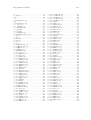
Appendix A GNU GENERAL PUBLIC
LICENSE . . . . . . . . . . . . . . . . . . . . . . . . . . . . . . . . . . . . 423
Preamble . . . . . . . . . . . . . . . . . . . . . . . . . . . . . . . . . . . . . . . . . . . . . . . . . . . . . . . . . 423
TERMS AND CONDITIONS FOR COPYING, DISTRIBUTION AND
MODIFICATION . . . . . . . . . . . . . . . . . . . . . . . . . . . . . . . . . . . . . . . . . . . . 424
How to Apply These Terms to Your New Programs . . . . . . . . . . . . . . . . 428
Appendix B GNU Free Documentation License
. . . . . . . . . . . . . . . . . . . . . . . . . . . . . . . . . . . . . . . . . . . . . . . 429
ADDENDUM: How to use this License for your documents . . . . . . . . 435
Appendix C Command Line Arguments for
Emacs Invocation . . . . . . . . . . . . . . . . . . . . . . . . . . . 436
C.1 Action Arguments . . . . . . . . . . . . . . . . . . . . . . . . . . . . . . . . . . . . . . . . . . .
C.2 Initial Options . . . . . . . . . . . . . . . . . . . . . . . . . . . . . . . . . . . . . . . . . . . . . .
C.3 Command Argument Example . . . . . . . . . . . . . . . . . . . . . . . . . . . . . . .
C.4 Resuming Emacs with Arguments . . . . . . . . . . . . . . . . . . . . . . . . . . .
C.5 Environment Variables . . . . . . . . . . . . . . . . . . . . . . . . . . . . . . . . . . . . . .
C.5.1 General Variables . . . . . . . . . . . . . . . . . . . . . . . . . . . . . . . . . . . . . . .
C.5.2 Miscellaneous Variables . . . . . . . . . . . . . . . . . . . . . . . . . . . . . . . . .
C.5.3 The MS-Windows System Registry. . . . . . . . . . . . . . . . . . . . . .
C.6 Specifying the Display Name . . . . . . . . . . . . . . . . . . . . . . . . . . . . . . . .
C.7 Font Specification Options . . . . . . . . . . . . . . . . . . . . . . . . . . . . . . . . . . .
C.8 Window Color Options . . . . . . . . . . . . . . . . . . . . . . . . . . . . . . . . . . . . . .
C.9 Options for Window Size and Position . . . . . . . . . . . . . . . . . . . . . . .
C.10 Internal and External Borders . . . . . . . . . . . . . . . . . . . . . . . . . . . . . .
C.11 Frame Titles . . . . . . . . . . . . . . . . . . . . . . . . . . . . . . . . . . . . . . . . . . . . . . .
C.12 Icons . . . . . . . . . . . . . . . . . . . . . . . . . . . . . . . . . . . . . . . . . . . . . . . . . . . . . . .
C.13 Other Display Options . . . . . . . . . . . . . . . . . . . . . . . . . . . . . . . . . . . . .
Appendix D
D.1
D.2
D.3
D.4
D.5
X Options and Resources . . . . . . . 452
X Resources . . . . . . . . . . . . . . . . . . . . . . . . . . . . . . . . . . . . . . . . . . . . . . . . .
Table of X Resources for Emacs . . . . . . . . . . . . . . . . . . . . . . . . . . . . .
X Resources for Faces . . . . . . . . . . . . . . . . . . . . . . . . . . . . . . . . . . . . . . .
Lucid Menu X Resources . . . . . . . . . . . . . . . . . . . . . . . . . . . . . . . . . . . .
GTK resources . . . . . . . . . . . . . . . . . . . . . . . . . . . . . . . . . . . . . . . . . . . . . .
Appendix E
436
437
439
439
440
440
443
444
445
445
447
448
450
450
451
451
452
453
454
455
456
Emacs 21 Antinews . . . . . . . . . . . . . 458
xvii
Appendix F
F.1
F.2
F.3
F.4
F.5
F.6
Emacs and Mac OS . . . . . . . . . . . . . 462
Keyboard and Mouse Input on Mac . . . . . . . . . . . . . . . . . . . . . . . . . .
International Character Set Support on Mac . . . . . . . . . . . . . . . . .
Environment Variables and Command Line Arguments. . . . . . .
Volumes and Directories on Mac . . . . . . . . . . . . . . . . . . . . . . . . . . . . .
Specifying Fonts on Mac . . . . . . . . . . . . . . . . . . . . . . . . . . . . . . . . . . . . .
Mac-Specific Lisp Functions . . . . . . . . . . . . . . . . . . . . . . . . . . . . . . . . .
462
463
464
464
465
466
Appendix G Emacs and Microsoft
Windows/MS-DOS . . . . . . . . . . . . . . . . . . . . . . . . . 467
G.1
G.2
G.3
G.4
G.5
G.6
G.7
Text Files and Binary Files . . . . . . . . . . . . . . . . . . . . . . . . . . . . . . . . . .
File Names on MS-Windows . . . . . . . . . . . . . . . . . . . . . . . . . . . . . . . . .
Emulation of ls on MS-Windows . . . . . . . . . . . . . . . . . . . . . . . . . . . .
HOME Directory on MS-Windows . . . . . . . . . . . . . . . . . . . . . . . . . . .
Keyboard Usage on MS-Windows . . . . . . . . . . . . . . . . . . . . . . . . . . . .
Mouse Usage on MS-Windows . . . . . . . . . . . . . . . . . . . . . . . . . . . . . . .
Subprocesses on Windows 9X/ME and Windows NT/2K/XP
..............................................................
G.8 Printing and MS-Windows . . . . . . . . . . . . . . . . . . . . . . . . . . . . . . . . . .
G.9 Miscellaneous Windows-specific features . . . . . . . . . . . . . . . . . . . . .
467
468
469
469
469
470
470
471
473
The GNU Manifesto . . . . . . . . . . . . . . . . . . . . . . . . . . . . . 474
What’s GNU? Gnu’s Not Unix! . . . . . . . . . . . . . . . . . . . . . . . . . . . . . . . . . . .
Why I Must Write GNU . . . . . . . . . . . . . . . . . . . . . . . . . . . . . . . . . . . . . . . . . .
Why GNU Will Be Compatible with Unix . . . . . . . . . . . . . . . . . . . . . . . . .
How GNU Will Be Available . . . . . . . . . . . . . . . . . . . . . . . . . . . . . . . . . . . . . .
Why Many Other Programmers Want to Help . . . . . . . . . . . . . . . . . . . . .
How You Can Contribute . . . . . . . . . . . . . . . . . . . . . . . . . . . . . . . . . . . . . . . . .
Why All Computer Users Will Benefit . . . . . . . . . . . . . . . . . . . . . . . . . . . . .
Some Easily Rebutted Objections to GNU’s Goals . . . . . . . . . . . . . . . . .
474
475
475
475
475
476
476
477
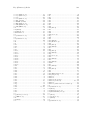
Glossary . . . . . . . . . . . . . . . . . . . . . . . . . . . . . . . . . . . . . . . . . . 482
Key (Character) Index . . . . . . . . . . . . . . . . . . . . . . . . . . 504
Command and Function Index . . . . . . . . . . . . . . . . . . 512
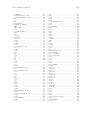
Variable Index. . . . . . . . . . . . . . . . . . . . . . . . . . . . . . . . . . . . 523
Concept Index. . . . . . . . . . . . . . . . . . . . . . . . . . . . . . . . . . . . 529
Preface
1
Preface
This manual documents the use and simple customization of the Emacs editor. Simple
Emacs customizations do not require you to be a programmer, but if you are not interested
in customizing, you can ignore the customization hints.
This is primarily a reference manual, but can also be used as a primer. If you are new
to Emacs, we recommend you start with the on-line, learn-by-doing tutorial, before reading
the manual. To run the tutorial, start Emacs and type C-h t. The tutorial describes
commands, tells you when to try them, and explains the results.
On first reading, just skim chapters 1 and 2, which describe the notational conventions of
the manual and the general appearance of the Emacs display screen. Note which questions
are answered in these chapters, so you can refer back later. After reading chapter 4, you
should practice the commands shown there. The next few chapters describe fundamental
techniques and concepts that are used constantly. You need to understand them thoroughly,
so experiment with them until you are fluent.
Chapters 14 through 19 describe intermediate-level features that are useful for many
kinds of editing. Chapter 20 and following chapters describe optional but useful features;
read those chapters when you need them.
Read the Trouble chapter if Emacs does not seem to be working properly. It explains
how to cope with several common problems (see Section 33.2 [Lossage], page 410), as well
as when and how to report Emacs bugs (see Section 33.3 [Bugs], page 414).
To find the documentation of a particular command, look in the index. Keys (character
commands) and command names have separate indexes. There is also a glossary, with a
cross reference for each term.
This manual is available as a printed book and also as an Info file. The Info file is
for on-line perusal with the Info program, which is the principal means of accessing on-line
documentation in the GNU system. Both the Emacs Info file and an Info reader are included
with GNU Emacs. The Info file and the printed book contain substantially the same text
and are generated from the same source files, which are also distributed with GNU Emacs.
GNU Emacs is a member of the Emacs editor family. There are many Emacs
editors, all sharing common principles of organization.
For information on the
underlying philosophy of Emacs and the lessons learned from its development, see
Emacs, the Extensible, Customizable Self-Documenting Display Editor, available from
ftp://publications.ai.mit.edu/ai-publications/pdf/AIM-519A.pdf.
This edition of the manual is intended for use with GNU Emacs installed on GNU and
Unix systems. GNU Emacs can also be used on VMS, MS-DOS (also called MS-DOG),
Microsoft Windows, and Macintosh systems. Those systems use different file name syntax;
in addition, VMS and MS-DOS do not support all GNU Emacs features. See Appendix G
[Microsoft Windows], page 467, for information about using Emacs on Windows. See Appendix F [Mac OS], page 462, for information about using Emacs on Macintosh. We don’t
try to describe VMS usage in this manual.
Distribution
2
Distribution
GNU Emacs is free software; this means that everyone is free to use it and free to redistribute
it on certain conditions. GNU Emacs is not in the public domain; it is copyrighted and there
are restrictions on its distribution, but these restrictions are designed to permit everything
that a good cooperating citizen would want to do. What is not allowed is to try to prevent
others from further sharing any version of GNU Emacs that they might get from you. The
precise conditions are found in the GNU General Public License that comes with Emacs
and also appears in this manual1 . See Appendix A [Copying], page 423.
One way to get a copy of GNU Emacs is from someone else who has it. You need not
ask for our permission to do so, or tell any one else; just copy it. If you have access to the
Internet, you can get the latest distribution version of GNU Emacs by anonymous FTP;
see http://www.gnu.org/software/emacs on our website for more information.
You may also receive GNU Emacs when you buy a computer. Computer manufacturers
are free to distribute copies on the same terms that apply to everyone else. These terms
require them to give you the full sources, including whatever changes they may have made,
and to permit you to redistribute the GNU Emacs received from them under the usual
terms of the General Public License. In other words, the program must be free for you
when you get it, not just free for the manufacturer.
You can also order copies of GNU Emacs from the Free Software Foundation. This
is a convenient and reliable way to get a copy; it is also a good way to help fund our
work. We also sell hardcopy versions of this manual and An Introduction to Programming
in Emacs Lisp, by Robert J. Chassell. You can find an order form on our web site at
http://www.gnu.org/order/order.html. For further information, write to
Free Software Foundation
51 Franklin Street, Fifth Floor
Boston, MA 02110-1301
USA
The income from distribution fees goes to support the foundation’s purpose: the development of new free software, and improvements to our existing programs including GNU
Emacs.
If you find GNU Emacs useful, please send a donation to the Free Software Foundation
to support our work. Donations to the Free Software Foundation are tax deductible in the
US. If you use GNU Emacs at your workplace, please suggest that the company make a
donation. If company policy is unsympathetic to the idea of donating to charity, you might
instead suggest ordering a CD-ROM from the Foundation occasionally, or subscribing to
periodic updates.
Acknowledgments
Contributors to GNU Emacs include Jari Aalto, Per Abrahamsen, Tomas Abrahamsson,
Jay K. Adams, Michael Albinus, Nagy Andras, Ralf Angeli, Joe Arceneaux, Miles Bader,
1
This manual is itself covered by the GNU Free Documentation License. This license is similar in spirit
to the General Public License, but is more suitable for documentation. See Appendix B [GNU Free
Documentation License], page 429.
Distribution
3
David Bakhash, Juanma Barranquero, Eli Barzilay, Steven L. Baur, Jay Belanger, Alexander L. Belikoff, Boaz Ben-Zvi, Karl Berry, Anna M. Bigatti, Ray Blaak, Jim Blandy, Johan
Bockgård, Per Bothner, Terrence Brannon, Frank Bresz, Peter Breton, Emmanuel Briot,
Kevin Broadey, Vincent Broman, David M. Brown, Georges Brun-Cottan, Joe Buehler,
Wlodek Bzyl, Bill Carpenter, Per Cederqvist, Hans Chalupsky, Chris Chase, Bob Chassell,
Andrew Choi, Sacha Chua, James Clark, Mike Clarkson, Glynn Clements, Andrew Csillag,
Doug Cutting, Mathias Dahl, Satyaki Das, Michael DeCorte, Gary Delp, Matthieu Devin,
Eri Ding, Jan Djärv, Carsten Dominik, Scott Draves, Benjamin Drieu, Viktor Dukhovni,
John Eaton, Rolf Ebert, Paul Eggert, Stephen Eglen, Torbjörn Einarsson, Tsugutomo
Enami, Hans Henrik Eriksen, Michael Ernst, Ata Etemadi, Frederick Farnbach, Oscar
Figueiredo, Fred Fish, Karl Fogel, Gary Foster, Romain Francoise, Noah Friedman, Andreas Fuchs, Hallvard Furuseth, Keith Gabryelski, Peter S. Galbraith, Kevin Gallagher,
Kevin Gallo, Juan León Lahoz Garcı́a, Howard Gayle, Stephen Gildea, Julien Gilles, David
Gillespie, Bob Glickstein, Deepak Goel, Boris Goldowsky, Michelangelo Grigni, Odd Gripenstam, Kai Großjohann, Michael Gschwind, Henry Guillaume, Doug Gwyn, Ken’ichi Handa,
Lars Hansen, Chris Hanson, K. Shane Hartman, John Heidemann, Jon K. Hellan, Jesper Harder, Markus Heritsch, Karl Heuer, Manabu Higashida, Anders Holst, Jeffrey C.
Honig, Kurt Hornik, Tom Houlder, Joakim Hove, Denis Howe, Lars Ingebrigtsen, Andrew
Innes, Seiichiro Inoue, Pavel Janik, Paul Jarc, Ulf Jasper, Michael K. Johnson, Kyle Jones,
Terry Jones, Simon Josefsson, Arne Jørgensen, Tomoji Kagatani, Brewster Kahle, Lute
Kamstra, David Kastrup, David Kaufman, Henry Kautz, Taichi Kawabata, Howard Kaye,
Michael Kifer, Richard King, Peter Kleiweg, Shuhei Kobayashi, Pavel Kobiakov, Larry K.
Kolodney, David M. Koppelman, Koseki Yoshinori, Robert Krawitz, Sebastian Kremer,
Ryszard Kubiak, Geoff Kuenning, David Kågedal, Daniel LaLiberte, Mario Lang, Aaron
Larson, James R. Larus, Vinicius Jose Latorre, Werner Lemberg, Frederic Lepied, Peter
Liljenberg, Lars Lindberg, Chris Lindblad, Anders Lindgren, Thomas Link, Juri Linkov,
Francis Litterio, Emilio C. Lopes, Dave Love, Sascha Lüdecke, Eric Ludlam,Alan Mackenzie, Christopher J. Madsen, Neil M. Mager, Ken Manheimer, Bill Mann, Brian Marick,
Simon Marshall, Bengt Martensson, Charlie Martin, Thomas May, Roland McGrath, Will
Mengarini, David Megginson, Ben A. Mesander, Wayne Mesard, Brad Miller, Lawrence
Mitchell, Richard Mlynarik, Gerd Moellmann, Stefan Monnier, Morioka Tomohiko, Keith
Moore, Glenn Morris, Diane Murray, Sen Nagata, Erik Naggum, Thomas Neumann, ThienThi Nguyen, Mike Newton, Jurgen Nickelsen, Dan Nicolaescu, Hrvoje Niksic, Jeff Norden,
Andrew Norman, Alexandre Oliva, Bob Olson, Michael Olson, Takaaki Ota, Pieter E. J.
Pareit, David Pearson, Jeff Peck, Damon Anton Permezel, Tom Perrine, William M. Perry,
Per Persson, Jens Petersen, Daniel Pfeiffer, Richard L. Pieri, Fred Pierresteguy, Christian
Plaunt, David Ponce, Francesco A. Potorti, Michael D. Prange, Mukesh Prasad, Ken Raeburn, Marko Rahamaa, Ashwin Ram, Eric S. Raymond, Paul Reilly, Edward M. Reingold,
Alex Rezinsky, Rob Riepel, David Reitter, Nick Roberts, Roland B. Roberts, John Robinson, Danny Roozendaal, William Rosenblatt, Guillermo J. Rozas, Martin Rudalics, Ivar
Rummelhoff, Jason Rumney, Wolfgang Rupprecht, Kevin Ryde, James B. Salem, Masahiko
Sato, Jorgen Schaefer, Holger Schauer, William Schelter, Ralph Schleicher, Gregor Schmid,
Michael Schmidt, Ronald S. Schnell, Philippe Schnoebelen, Jan Schormann, Alex Schroeder,
Stephen Schoef, Raymond Scholz, Randal Schwartz, Oliver Seidel, Manuel Serrano, Hovav Shacham, Stanislav Shalunov, Marc Shapiro, Richard Sharman, Olin Shivers, Espen
Skoglund, Rick Sladkey, Lynn Slater, Chris Smith, David Smith, Paul D. Smith, Andre
Spiegel, Michael Staats, William Sommerfeld, Michael Staats, Reiner Steib, Sam Steingold,
Distribution
4
Ake Stenhoff, Peter Stephenson, Ken Stevens, Jonathan Stigelman, Martin Stjernholm, Kim
F. Storm, Steve Strassman, Olaf Sylvester, Naoto Takahashi, Steven Tamm, Jean-Philippe
Theberge, Jens T. Berger Thielemann, Spencer Thomas, Jim Thompson, Luc Teirlinck,
Tom Tromey, Enami Tsugutomo, Eli Tziperman, Daiki Ueno, Masanobu Umeda, Rajesh
Vaidheeswarran, Neil W. Van Dyke, Didier Verna, Ulrik Vieth, Geoffrey Voelker, Johan
Vromans, Inge Wallin, John Paul Wallington, Colin Walters, Barry Warsaw, Morten Welinder, Joseph Brian Wells, Rodney Whitby, John Wiegley, Ed Wilkinson, Mike Williams, Bill
Wohler, Steven A. Wood, Dale R. Worley, Francis J. Wright, Felix S. T. Wu, Tom Wurgler,
Katsumi Yamaoka, Masatake Yamato, Jonathan Yavner, Ryan Yeske, Chong Yidong, Ilya
Zakharevich, Milan Zamazal, Victor Zandy, Eli Zaretskii, Jamie Zawinski, Shenghuo Zhu,
Ian T. Zimmermann, Reto Zimmermann, Neal Ziring, Teodor Zlatanov, and Detlev Zundel.
Introduction
5
Introduction
You are reading about GNU Emacs, the GNU incarnation of the advanced, selfdocumenting, customizable, extensible editor Emacs.
(The ‘G’ in ‘GNU’ is not
silent.)
We call Emacs advanced because it provides much more than simple insertion and deletion. It can control subprocesses, indent programs automatically, show two or more files
at once, and edit formatted text. Emacs editing commands operate in terms of characters,
words, lines, sentences, paragraphs, and pages, as well as expressions and comments in
various programming languages.
Self-documenting means that at any time you can type a special character, Control-h,
to find out what your options are. You can also use it to find out what any command does,
or to find all the commands that pertain to a topic. See Chapter 7 [Help], page 36.
Customizable means that you can alter Emacs commands’ behavior in simple ways. For
example, if you use a programming language in which comments start with ‘<**’ and end
with ‘**>’, you can tell the Emacs comment manipulation commands to use those strings
(see Section 23.5 [Comments], page 242). Another sort of customization is rearrangement
of the command set. For example, you can rebind the basic cursor motion commands (up,
down, left and right) to any keys on the keyboard that you find comfortable. See Chapter 32
[Customization], page 377.
Extensible means that you can go beyond simple customization and write entirely new
commands—programs in the Lisp language to be run by Emacs’s own Lisp interpreter.
Emacs is an “on-line extensible” system, which means that it is divided into many functions
that call each other, any of which can be redefined in the middle of an editing session.
Almost any part of Emacs can be replaced without making a separate copy of all of Emacs.
Most of the editing commands of Emacs are written in Lisp; the few exceptions could have
been written in Lisp but use C instead for efficiency. Writing an extension is programming,
but non-programmers can use it afterwards. See section “Preface” in An Introduction to
Programming in Emacs Lisp, if you want to learn Emacs Lisp programming.
When running on a graphical display, Emacs provides its own menus and convenient
handling of mouse buttons. In addition, Emacs provides many of the benefits of a graphical
display even on a text-only terminal. For instance, it can highlight parts of a file, display
and edit several files at once, move text between files, and edit files while running shell
commands.
Chapter 1: The Organization of the Screen
6
1 The Organization of the Screen
On a text-only terminal, the Emacs display occupies the whole screen. On a graphical
display, such as on GNU/Linux using the X Window System, Emacs creates its own windows
to use. We use the term frame to mean the entire text-only screen or an entire system-level
window used by Emacs. Emacs uses both kinds of frames, in the same way, to display
your editing. Emacs normally starts out with just one frame, but you can create additional
frames if you wish. See Chapter 18 [Frames], page 159.
When you start Emacs, the main central area of the frame, all except for the top and
bottom and sides, displays the text you are editing. This area is called the window. At the
top there is normally a menu bar where you can access a series of menus; then there may
be a tool bar, a row of icons that perform editing commands if you click on them. Below
this, the window begins, often with a scroll bar on one side. Below the window comes the
last line of the frame, a special echo area or minibuffer window, where prompts appear and
you enter information when Emacs asks for it. See following sections for more information
about these special lines.
You can subdivide the window horizontally or vertically to make multiple text windows,
each of which can independently display some file or text (see Chapter 17 [Windows],
page 154). In this manual, the word “window” refers to the initial large window if not
subdivided, or any one of the multiple windows you have subdivided it into.
At any time, one window is the selected window. On graphical displays, the selected
window normally shows a more prominent cursor (usually solid and blinking) while other
windows show a weaker cursor (such as a hollow box). Text terminals have just one cursor,
so it always appears in the selected window.
Most Emacs commands implicitly apply to the text in the selected window; the text in
unselected windows is mostly visible for reference. However, mouse commands generally
operate on whatever window you click them in, whether selected or not. If you use multiple
frames on a graphical display, then giving the input focus to a particular frame selects a
window in that frame.
Each window’s last line is a mode line, which describes what is going on in that window.
It appears in different color and/or a “3D” box if the terminal supports them; its contents
normally begin with ‘--:-- *scratch*’ when Emacs starts. The mode line displays status
information such as what buffer is being displayed above it in the window, what major and
minor modes are in use, and whether the buffer contains unsaved changes.
1.1 Point
Within Emacs, the active cursor shows the location at which editing commands will take
effect. This location is called point. Many Emacs commands move point through the text,
so that you can edit at different places in it. You can also place point by clicking mouse
button 1 (normally the left button).
While the cursor appears to be on a character, you should think of point as between two
characters; it points before the character that appears under the cursor. For example, if
your text looks like ‘frob’ with the cursor over the ‘b’, then point is between the ‘o’ and the
‘b’. If you insert the character ‘!’ at that position, the result is ‘fro!b’, with point between
the ‘!’ and the ‘b’. Thus, the cursor remains over the ‘b’, as before.
Chapter 1: The Organization of the Screen
7
Sometimes people speak of “the cursor” when they mean “point,” or speak of commands
that move point as “cursor motion” commands.
If you are editing several files in Emacs, each in its own buffer, each buffer has its own
point location. A buffer that is not currently displayed remembers its point location in case
you display it again later. When Emacs displays multiple windows, each window has its
own point location. If the same buffer appears in more than one window, each window has
its own point position in that buffer, and (when possible) its own cursor.
A text-only terminal has just one cursor, in the selected window. The other windows
do not show a cursor, even though they do have their own position of point. When Emacs
updates the screen on a text-only terminal, it has to put the cursor temporarily at the place
the output goes. This doesn’t mean point is there, though. Once display updating finishes,
Emacs puts the cursor where point is.
On graphical displays, Emacs shows a cursor in each window; the selected window’s
cursor is solid and blinking, and the other cursors are just hollow. Thus, the most prominent
cursor always shows you the selected window, on all kinds of terminals.
See Section 11.15 [Cursor Display], page 77, for customizable variables that control
display of the cursor or cursors.
The term “point” comes from the character ‘.’, which was the command in TECO
(the language in which the original Emacs was written) for accessing the value now called
“point.”
1.2 The Echo Area
The line at the bottom of the frame (below the mode line) is the echo area. It is used to
display small amounts of text for various purposes.
Echoing means displaying the characters that you type. At the command line, the
operating system normally echoes all your input. Emacs handles echoing differently.
Single-character commands do not echo in Emacs, and multi-character commands echo
only if you pause while typing them. As soon as you pause for more than a second in
the middle of a command, Emacs echoes all the characters of the command so far. This
is to prompt you for the rest of the command. Once echoing has started, the rest of the
command echoes immediately as you type it. This behavior is designed to give confident
users fast response, while giving hesitant users maximum feedback. You can change this
behavior by setting a variable (see Section 11.17 [Display Custom], page 78).
If a command cannot do its job, it may display an error message in the echo area. Error
messages are accompanied by beeping or by flashing the screen. The error also discards any
input you have typed ahead.
Some commands display informative messages in the echo area. These messages look
much like error messages, but they are not announced with a beep and do not throw away
input. Sometimes the message tells you what the command has done, when this is not
obvious from looking at the text being edited. Sometimes the sole purpose of a command
is to show you a message giving you specific information—for example, C-x = (hold down
CTRL and type x, then let go of CTRL and type =) displays a message describing the
character position of point in the text and its current column in the window. Commands
that take a long time often display messages ending in ‘...’ while they are working, and add
‘done’ at the end when they are finished. They may also indicate progress with percentages.
Chapter 1: The Organization of the Screen
8
Echo-area informative messages are saved in an editor buffer named ‘*Messages*’. (We
have not explained buffers yet; see Chapter 16 [Buffers], page 145, for more information
about them.) If you miss a message that appears briefly on the screen, you can switch to
the ‘*Messages*’ buffer to see it again. (Successive progress messages are often collapsed
into one in that buffer.)
The size of ‘*Messages*’ is limited to a certain number of lines. The variable messagelog-max specifies how many lines. Once the buffer has that many lines, adding lines at the
end deletes lines from the beginning, to keep the size constant. See Section 32.3 [Variables],
page 387, for how to set variables such as message-log-max.
The echo area is also used to display the minibuffer, a window where you can input
arguments to commands, such as the name of a file to be edited. When the minibuffer is
in use, the echo area begins with a prompt string that usually ends with a colon; also, the
cursor appears in that line because it is the selected window. You can always get out of the
minibuffer by typing C-g. See Chapter 5 [Minibuffer], page 28.
1.3 The Mode Line
Each text window’s last line is a mode line, which describes what is going on in that window.
The mode line starts and ends with dashes. When there is only one text window, the mode
line appears right above the echo area; it is the next-to-last line in the frame. On a textonly terminal, the mode line is in inverse video if the terminal supports that; on a graphics
display, the mode line has a 3D box appearance to help it stand out. The mode line of the
selected window is highlighted if possible; see Section 11.13 [Optional Mode Line], page 75,
for more information.
Normally, the mode line looks like this:
-cs :ch-fr buf
pos line
(major minor )-----This gives information about the window and the buffer it displays: the buffer’s name, what
major and minor modes are in use, whether the buffer’s text has been changed, and how
far down the buffer you are currently looking.
ch contains two stars ‘**’ if the text in the buffer has been edited (the buffer is “modified”), or ‘--’ if the buffer has not been edited. For a read-only buffer, it is ‘%*’ if the buffer
is modified, and ‘%%’ otherwise.
fr gives the selected frame name (see Chapter 18 [Frames], page 159). It appears only
on text-only terminals. The initial frame’s name is ‘F1’.
buf is the name of the window’s buffer. Usually this is the same as the name of a file
you are editing. See Chapter 16 [Buffers], page 145.
The buffer displayed in the selected window (the window with the cursor) is the current
buffer, where editing happens. When a command’s effect applies to “the buffer,” we mean
it does those things to the current buffer.
pos tells you whether there is additional text above the top of the window, or below the
bottom. If your buffer is small and it is all visible in the window, pos is ‘All’. Otherwise,
it is ‘Top’ if you are looking at the beginning of the buffer, ‘Bot’ if you are looking at the
end of the buffer, or ‘nn %’, where nn is the percentage of the buffer above the top of the
window. With Size Indication mode, you can display the size of the buffer as well. See
Section 11.13 [Optional Mode Line], page 75.
Chapter 1: The Organization of the Screen
9
line is ‘L’ followed by the current line number of point. This is present when Line
Number mode is enabled (it normally is). You can display the current column number too,
by turning on Column Number mode. It is not enabled by default because it is somewhat
slower. See Section 11.13 [Optional Mode Line], page 75.
major is the name of the major mode in effect in the buffer. A buffer can only be in
one major mode at a time. The major modes available include Fundamental mode (the
least specialized), Text mode, Lisp mode, C mode, Texinfo mode, and many others. See
Chapter 20 [Major Modes], page 192, for details of how the modes differ and how to select
them.
Some major modes display additional information after the major mode name. For example, Rmail buffers display the current message number and the total number of messages.
Compilation buffers and Shell buffers display the status of the subprocess.
minor is a list of some of the minor modes that are turned on at the moment in the
window’s chosen buffer. For example, ‘Fill’ means that Auto Fill mode is on. ‘Abbrev’
means that Word Abbrev mode is on. ‘Ovwrt’ means that Overwrite mode is on. See
Section 32.1 [Minor Modes], page 377, for more information.
‘Narrow’ means that the buffer being displayed has editing restricted to only a portion
of its text. (This is not really a minor mode, but is like one.) See Section 31.9 [Narrowing],
page 368. ‘Def’ means that a keyboard macro is being defined. See Chapter 14 [Keyboard
Macros], page 103.
In addition, if Emacs is inside a recursive editing level, square brackets (‘[...]’) appear
around the parentheses that surround the modes. If Emacs is in one recursive editing level
within another, double square brackets appear, and so on. Since recursive editing levels
affect Emacs globally, not just one buffer, the square brackets appear in every window’s
mode line or not in any of them. See Section 31.13 [Recursive Edit], page 371.
cs states the coding system used for the file you are editing. A dash indicates the default
state of affairs: no code conversion, except for end-of-line translation if the file contents call
for that. ‘=’ means no conversion whatsoever. Nontrivial code conversions are represented
by various letters—for example, ‘1’ refers to ISO Latin-1. See Section 19.7 [Coding Systems],
page 179, for more information.
On a text-only terminal, cs includes two additional characters which describe the coding
system for keyboard input and the coding system for terminal output. They come right
before the coding system used for the file you are editing.
If you are using an input method, a string of the form ‘i >’ is added to the beginning of
cs; i identifies the input method. (Some input methods show ‘+’ or ‘@’ instead of ‘>’.) See
Section 19.4 [Input Methods], page 176.
When multibyte characters are not enabled, cs does not appear at all. See Section 19.2
[Enabling Multibyte], page 174.
The colon after cs changes to another string in some cases. Emacs uses newline characters
to separate lines in the buffer. Some files use different conventions for separating lines: either
carriage-return linefeed (the MS-DOS convention) or just carriage-return (the Macintosh
convention). If the buffer’s file uses carriage-return linefeed, the colon changes to either a
backslash (‘\’) or ‘(DOS)’, depending on the operating system. If the file uses just carriagereturn, the colon indicator changes to either a forward slash (‘/’) or ‘(Mac)’. On some
Chapter 1: The Organization of the Screen
10
systems, Emacs displays ‘(Unix)’ instead of the colon for files that use newline as the line
separator.
See Section 11.13 [Optional Mode Line], page 75, to add other handy information to the
mode line, such as the size of the buffer, the current column number of point, and whether
new mail for you has arrived.
The mode line is mouse-sensitive; when you move the mouse across various parts of it,
Emacs displays help text to say what a click in that place will do. See Section 18.4 [Mode
Line Mouse], page 164.
1.4 The Menu Bar
Each Emacs frame normally has a menu bar at the top which you can use to perform
common operations. There’s no need to list them here, as you can more easily see them
yourself.
On a graphical display, you can use the mouse to choose a command from the menu bar.
A right-arrow at the end of the menu item means it leads to a subsidiary menu; ‘...’ at the
end means that the command invoked will read arguments (further input from you) before
it actually does anything.
You can also invoke the first menu bar item by pressing F10 (to run the command menubar-open). You can then navigate the menus with the arrow keys. You select an item by
pressing RET and cancel menu navigation with ESC.
To view the full command name and documentation for a menu item, type C-h k, and
then select the menu bar with the mouse in the usual way (see Section 7.1 [Key Help],
page 38).
On text-only terminals with no mouse, you can use the menu bar by typing M-‘ or F10
(these run the command tmm-menubar). This lets you select a menu item with the keyboard.
A provisional choice appears in the echo area. You can use the up and down arrow keys to
move through the menu to different items, and then you can type RET to select the item.
Each menu item also has an assigned letter or digit which designates that item; it is
usually the initial of some word in the item’s name. This letter or digit is separated from
the item name by ‘=>’. You can type the item’s letter or digit to select the item.
Some of the commands in the menu bar have ordinary key bindings as well; one such
binding is shown in parentheses after the item itself.
Chapter 2: Characters, Keys and Commands
11
2 Characters, Keys and Commands
This chapter explains the character sets used by Emacs for input commands and for the
contents of files, and the fundamental concepts of keys and commands, whereby Emacs
interprets your keyboard and mouse input.
2.1 Kinds of User Input
GNU Emacs is designed for use with keyboard commands because that is the most efficient
way to edit. You can do editing with the mouse, as in other editors, and you can give
commands with the menu bar and tool bar, and scroll with the scroll bar. But if you
keep on editing that way, you won’t get the benefits of Emacs. Therefore, this manual
documents primarily how to edit with the keyboard. You can force yourself to practice
using the keyboard by using the shell command ‘emacs -nw’ to start Emacs, so that the
mouse won’t work.
Emacs uses an extension of the ASCII character set for keyboard input; it also accepts
non-character input events including function keys and mouse button actions.
ASCII consists of 128 character codes. Some of these codes are assigned graphic symbols
such as ‘a’ and ‘=’; the rest are control characters, such as Control-a (usually written C-a
for short). C-a gets its name from the fact that you type it by holding down the CTRL key
while pressing a.
Some ASCII control characters have special names, and most terminals have special keys
you can type them with: for example, RET, TAB, DEL and ESC. The space character is
usually known as SPC, even though strictly speaking it is a graphic character that is blank.
Emacs extends the ASCII character set with thousands more printing characters (see
Chapter 19 [International], page 173), additional control characters, and a few more modifiers that can be combined with any character.
On ASCII terminals, there are only 32 possible control characters. These are the control
variants of letters and ‘@[]\^_’. In addition, the shift key is meaningless with control
characters: C-a and C-A are the same character, and Emacs cannot distinguish them.
The Emacs character set has room for control variants of all printing characters, and
distinguishes C-A from C-a. Graphical terminals make it possible to enter all these characters. For example, C-- (that’s Control-Minus) and C-5 are meaningful Emacs commands
on a graphical terminal.
Another Emacs character-set extension is additional modifier bits. Only one modifier bit
is commonly used; it is called Meta. Every character has a Meta variant; examples include
Meta-a (normally written M-a, for short), M-A (different from M-a, but they are normally
equivalent in Emacs), M-RET, and M-C-a. That last means a with both the CTRL and
META modifiers. We usually write it as C-M-a rather than M-C-a, for reasons of tradition.
Some terminals have a META key, and allow you to type Meta characters by holding
this key down. Thus, you can type Meta-a by holding down META and pressing a. The
META key works much like the SHIFT key. In fact, this key is more often labeled ALT or
EDIT, instead of META; on a Sun keyboard, it may have a diamond on it.
If there is no META key, you can still type Meta characters using two-character sequences
starting with ESC. Thus, you can enter M-a by typing ESC a. You can enter C-M-a by typing
Chapter 2: Characters, Keys and Commands
12
ESC C-a. Unlike META, which modifies other characters, ESC is a separate character. You
don’t hold down ESC while typing the next character; instead, you press it and release it,
then you enter the next character. ESC is allowed on terminals with META keys, too, in
case you have formed a habit of using it.
Emacs defines several other modifier keys that can be applied to any input character.
These are called SUPER, HYPER and ALT. We write ‘s-’, ‘H-’ and ‘A-’ to say that a
character uses these modifiers. Thus, s-H-C-x is short for Super-Hyper-Control-x. Not
all graphical terminals actually provide keys for these modifier flags—in fact, many terminals
have a key labeled ALT which is really a META key. The standard key bindings of Emacs
do not include any characters with these modifiers. But you can assign them meanings of
your own by customizing Emacs.
If your keyboard lacks one of these modifier keys, you can enter it using C-x @: C-x
@ h adds the “hyper” flag to the next character, C-x @ s adds the “super” flag, and C-x
@ a adds the “alt” flag. For instance, C-x @ h C-a is a way to enter Hyper-Control-a.
(Unfortunately there is no way to add two modifiers by using C-x @ twice for the same
character, because the first one goes to work on the C-x.)
Keyboard input includes keyboard keys that are not characters at all, such as function
keys and arrow keys. Mouse buttons are also not characters. However, you can modify
these events with the modifier keys CTRL, META, SUPER, HYPER and ALT, just like
keyboard characters.
Input characters and non-character inputs are collectively called input events. See section
“Input Events” in The Emacs Lisp Reference Manual, for the full Lisp-level details. If you
are not doing Lisp programming, but simply want to redefine the meaning of some characters
or non-character events, see Chapter 32 [Customization], page 377.
ASCII terminals cannot really send anything to the computer except ASCII characters.
These terminals use a sequence of characters to represent each function key. But that
is invisible to the Emacs user, because the keyboard input routines catch these special
sequences and convert them to function key events before any other part of Emacs gets to
see them.
On graphical displays, the window manager is likely to block the character Meta-TAB
before Emacs can see it. It may also block Meta-SPC, C-M-d and C-M-l. If you have
these problems, we recommend that you customize your window manager to turn off those
commands, or put them on key combinations that Emacs does not use.
2.2 Keys
A key sequence (key, for short) is a sequence of input events that is meaningful as a unit—a
“single command.” Some Emacs command sequences are invoked by just one character or
one event; for example, just C-f moves forward one character in the buffer. But Emacs also
has commands that take two or more events to invoke.
If a sequence of events is enough to invoke a command, it is a complete key. Examples
of complete keys include C-a, X, RET, NEXT (a function key), DOWN (an arrow key), C-x
C-f, and C-x 4 C-f. If it isn’t long enough to be complete, we call it a prefix key. The
above examples show that C-x and C-x 4 are prefix keys. Every key sequence is either a
complete key or a prefix key.
Chapter 2: Characters, Keys and Commands
13
Most single characters constitute complete keys in the standard Emacs command bindings. A few of them are prefix keys. A prefix key combines with the following input event
to make a longer key sequence, which may itself be complete or a prefix. For example, C-x
is a prefix key, so C-x and the next input event combine to make a two-event key sequence.
Most of these key sequences are complete keys, including C-x C-f and C-x b. A few, such as
C-x 4 and C-x r, are themselves prefix keys that lead to three-event key sequences. There’s
no limit to the length of a key sequence, but in practice people rarely use sequences longer
than four events.
You can’t add input events onto a complete key. For example, the two-event sequence
C-f C-k is not a key, because the C-f is a complete key in itself. It’s impossible to give C-f
C-k an independent meaning as a command. C-f C-k is two key sequences, not one.
All told, the prefix keys in Emacs are C-c, C-h, C-x, C-x RET, C-x @, C-x a, C-x n, C-x r,
C-x v, C-x 4, C-x 5, C-x 6, ESC, M-g, and M-o. (F1 and F2 are aliases for C-h and C-x 6.)
This list is not cast in stone; it describes the standard key bindings. If you customize Emacs,
you can make new prefix keys, or eliminate some of the standard ones (not recommended
for most users). See Section 32.4 [Key Bindings], page 393.
If you make or eliminate prefix keys, that changes the set of possible key sequences. For
example, if you redefine C-f as a prefix, C-f C-k automatically becomes a key (complete,
unless you define that too as a prefix). Conversely, if you remove the prefix definition of
C-x 4, then C-x 4 f and C-x 4 anything are no longer keys.
Typing the help character (C-h or F1) after a prefix key displays a list of the commands
starting with that prefix. There are a few prefix keys after which C-h does not work—for
historical reasons, they define other meanings for C-h which are painful to change. F1 works
after all prefix keys.
2.3 Keys and Commands
This manual is full of passages that tell you what particular keys do. But Emacs does not
assign meanings to keys directly. Instead, Emacs assigns meanings to named commands,
and then gives keys their meanings by binding them to commands.
Every command has a name chosen by a programmer. The name is usually made of
a few English words separated by dashes; for example, next-line or forward-word. A
command also has a function definition which is a Lisp program; this is how the command
does its work. In Emacs Lisp, a command is a Lisp function with special options to read
arguments and for interactive use. For more information on commands and functions, see
section “What Is a Function” in The Emacs Lisp Reference Manual. (The definition here
is simplified slightly.)
The bindings between keys and commands are recorded in tables called keymaps. See
Section 32.4.1 [Keymaps], page 393.
When we say that “C-n moves down vertically one line” we are glossing over a subtle
distinction that is irrelevant in ordinary use, but vital for Emacs customization. The command next-line does a vertical move downward. C-n has this effect because it is bound to
next-line. If you rebind C-n to the command forward-word, C-n will move forward one
word instead. Rebinding keys is an important method of customization.
In the rest of this manual, we usually ignore this distinction to keep things simple. We
will often speak of keys like C-n as commands, even though strictly speaking the key is
Chapter 2: Characters, Keys and Commands
14
bound to a command. Usually we state the name of the command which really does the
work in parentheses after mentioning the key that runs it. For example, we will say that
“The command C-n (next-line) moves point vertically down,” meaning that the command
next-line moves vertically down, and the key C-n is normally bound to it.
Since we are discussing customization, we should tell you about variables. Often the
description of a command will say, “To change this, set the variable mumble-foo.” A
variable is a name used to store a value. Most of the variables documented in this manual are
meant for customization: some command or other part of Emacs examines the variable and
behaves differently according to the value that you set. You can ignore the information about
variables until you are interested in customizing them. Then read the basic information on
variables (see Section 32.3 [Variables], page 387) and the information about specific variables
will make sense.
2.4 Character Set for Text
Text in Emacs buffers is a sequence of characters. In the simplest case, these are ASCII
characters, each stored in one 8-bit byte. Both ASCII control characters (octal codes 000
through 037, and 0177) and ASCII printing characters (codes 040 through 0176) are allowed.
The other modifier flags used in keyboard input, such as Meta, are not allowed in buffers.
Non-ASCII printing characters can also appear in buffers, when multibyte characters are
enabled. They have character codes starting at 256, octal 0400, and each one is represented
as a sequence of two or more bytes. See Chapter 19 [International], page 173. Single-byte
characters with codes 128 through 255 can also appear in multibyte buffers. However,
non-ASCII control characters cannot appear in a buffer.
Some ASCII control characters serve special purposes in text, and have special names.
For example, the newline character (octal code 012) is used in the buffer to end a line,
and the tab character (octal code 011) is used for indenting to the next tab stop column
(normally every 8 columns). See Section 11.14 [Text Display], page 76.
If you disable multibyte characters, then you can use only one alphabet of non-ASCII
characters, which all fit in one byte. They use octal codes 0200 through 0377. See Section 19.18 [Unibyte Mode], page 190.
Chapter 3: Entering and Exiting Emacs
15
3 Entering and Exiting Emacs
The usual way to invoke Emacs is with the shell command emacs. Emacs clears the screen,
then displays an initial help message and copyright notice. Some operating systems discard
your type-ahead when Emacs starts up; they give Emacs no way to prevent this. On those
systems, wait for Emacs to clear the screen before you start typing.
From a shell window under the X Window System, run Emacs in the background with
emacs&. This way, Emacs won’t tie up the shell window, so you can use it to run other shell
commands while Emacs is running. You can type Emacs commands as soon as you direct
your keyboard input to an Emacs frame.
When Emacs starts up, it creates a buffer named ‘*scratch*’. That’s the buffer you
start out in. The ‘*scratch*’ buffer uses Lisp Interaction mode; you can use it to type
Lisp expressions and evaluate them. You can also ignore that capability and just write
notes there. You can specify a different major mode for this buffer by setting the variable
initial-major-mode in your init file. See Section 32.6 [Init File], page 403.
It is possible to specify files to be visited, Lisp files to be loaded, and functions to
be called through Emacs command-line arguments. See Appendix C [Emacs Invocation],
page 436. The feature exists mainly for compatibility with other editors, and for scripts.
Many editors are designed to edit one file. When done with that file, you exit the editor.
The next time you want to edit a file, you must start the editor again. Working this way,
it is convenient to use a command-line argument to say which file to edit.
However, killing Emacs after editing one each and starting it afresh for the next file is
both unnecessary and harmful, since it denies you the full power of Emacs. Emacs can visit
more than one file in a single editing session, and that is the right way to use it. Exiting
the Emacs session loses valuable accumulated context, such as the kill ring, registers, undo
history, and mark ring. These features are useful for operating on multiple files, or even
continuing to edit one file. If you kill Emacs after each file, you don’t take advantage of
them.
The recommended way to use GNU Emacs is to start it only once, just after you log in,
and do all your editing in the same Emacs session. Each time you edit a file, you visit it
with the existing Emacs, which eventually has many files in it ready for editing. Usually
you do not kill Emacs until you are about to log out. See Chapter 15 [Files], page 111, for
more information on visiting more than one file.
To edit a file from another program while Emacs is running, you can use the emacsclient
helper program to open a file in the already running Emacs. See Section 31.3 [Emacs Server],
page 360.
3.1 Exiting Emacs
There are two commands for exiting Emacs, and three kinds of exiting: iconifying Emacs,
suspending Emacs, and killing Emacs.
Iconifying means replacing the Emacs frame with a small box or “icon” on the screen.
This is the usual way to exit Emacs when you’re using a graphical display—if you bother
to “exit” at all. (Just switching to another application is usually sufficient.)
Chapter 3: Entering and Exiting Emacs
16
Suspending means stopping Emacs temporarily and returning control to its parent process (usually a shell), allowing you to resume editing later in the same Emacs job. This is
the usual way to exit Emacs when running it on a text terminal.
Killing Emacs means destroying the Emacs job. You can run Emacs again later, but
you will get a fresh Emacs; there is no way to resume the same editing session after it has
been killed.
C-z
Suspend Emacs (suspend-emacs) or iconify a frame (iconify-or-deiconifyframe).
C-x C-c
Kill Emacs (save-buffers-kill-emacs).
On graphical displays, C-z runs the command iconify-or-deiconify-frame, which
temporarily iconifies (or “minimizes”) the selected Emacs frame (see Chapter 18 [Frames],
page 159). You can then use the window manager to select some other application. (You
could select another application without iconifying Emacs first, but getting the Emacs frame
out of the way can make it more convenient to find the other application.)
On a text terminal, C-z runs the command suspend-emacs. Suspending Emacs takes
you back to the shell from which you invoked Emacs. You can resume Emacs with the
shell command %emacs in most common shells. On systems that don’t support suspending
programs, C-z starts an inferior shell that communicates directly with the terminal, and
Emacs waits until you exit the subshell. (The way to do that is probably with C-d or exit,
but it depends on which shell you use.) On these systems, you can only get back to the
shell from which Emacs was run (to log out, for example) when you kill Emacs.
Suspending can fail if you run Emacs under a shell that doesn’t support suspendion of
its subjobs, even if the system itself does support it. In such a case, you can set the variable
cannot-suspend to a non-nil value to force C-z to start an inferior shell.
To exit and kill Emacs, type C-x C-c (save-buffers-kill-emacs). A two-character
key is used to make it harder to type by accident. This command first offers to save any
modified file-visiting buffers. If you do not save them all, it asks for confirmation with
yes before killing Emacs, since any changes not saved now will be lost forever. Also, if
any subprocesses are still running, C-x C-c asks for confirmation about them, since killing
Emacs will also kill the subprocesses.
If the value of the variable confirm-kill-emacs is non-nil, C-x C-c assumes that its
value is a predicate function, and calls that function. If the result is non-nil, the session
is killed, otherwise Emacs continues to run. One convenient function to use as the value of
confirm-kill-emacs is the function yes-or-no-p. The default value of confirm-killemacs is nil.
You can’t resume an Emacs session after killing it. Emacs can, however, record certain
session information when you kill it, such as which files you visited, so the next time you
start Emacs it will try to visit the same files. See Section 31.12 [Saving Emacs Sessions],
page 370.
The operating system usually listens for certain special characters whose meaning is to
kill or suspend the program you are running. This operating system feature is turned off
while you are in Emacs. The meanings of C-z and C-x C-c as keys in Emacs were inspired
by the use of C-z and C-c on several operating systems as the characters for stopping or
killing a program, but that is their only relationship with the operating system. You can
Chapter 3: Entering and Exiting Emacs
17
customize these keys to run any commands of your choice (see Section 32.4.1 [Keymaps],
page 393).
Chapter 4: Basic Editing Commands
18
4 Basic Editing Commands
Here we explain the basics of how to enter text, make corrections, and save the text in a file.
If this material is new to you, we suggest you first run the Emacs learn-by-doing tutorial,
by typing Control-h t inside Emacs. (help-with-tutorial).
To clear and redisplay the screen, type C-l (recenter).
4.1 Inserting Text
Typing printing characters inserts them into the text you are editing. It inserts them into
the buffer at the cursor; more precisely, it inserts them at point, but the cursor normally
shows where point is. See Section 1.1 [Point], page 6.
Insertion moves the cursor forward, and the following text moves forward with the cursor.
If the text in the buffer is ‘FOOBAR’, with the cursor before the ‘B’, and you type XX, you
get ‘FOOXXBAR’, with the cursor still before the ‘B’.
To delete text you have just inserted, use the large key labeled DEL, BACKSPACE or
DELETE which is a short distance above the RET or ENTER key. Regardless of the label
on that key, Emacs thinks of it as DEL, and that’s what we call it in this manual. DEL is
the key you normally use outside Emacs to erase the last character that you typed.
The DEL key deletes the character before the cursor. As a consequence, the cursor and
all the characters after it move backwards. If you type a printing character and then type
DEL, they cancel out.
On most computers, Emacs sets up DEL automatically. In some cases, especially with
text-only terminals, Emacs may guess wrong. If the key that ought to erase the last character doesn’t do it in Emacs, see Section 33.2.1 [DEL Does Not Delete], page 410.
Most PC keyboards have both a BACKSPACE key a little ways above RET or ENTER,
and a DELETE key elsewhere. On these keyboards, Emacs tries to set up BACKSPACE
as DEL. The DELETE key deletes “forwards” like C-d (see below), which means it deletes
the character underneath the cursor (after point).
To end a line and start typing a new one, type RET. (This key may be labeled RETURN
or ENTER, but in Emacs we call it RET.) This inserts a newline character in the buffer. If
point is at the end of the line, this creates a new blank line after it. If point is in the middle
of a line, the effect is to split that line. Typing DEL when the cursor is at the beginning of
a line deletes the preceding newline character, thus joining the line with the one before it.
Emacs can split lines automatically when they become too long, if you turn on a special
minor mode called Auto Fill mode. See Section 22.5 [Filling], page 202, for Auto Fill mode
and other methods of filling text.
If you prefer printing characters to replace (overwrite) existing text, rather than shove
it to the right, you should enable Overwrite mode, a minor mode. See Section 32.1 [Minor
Modes], page 377.
Only printing characters and SPC insert themselves in Emacs. Other characters act
as editing commands and do not insert themselves. These include control characters, and
characters with codes above 200 octal. If you need to insert one of these characters in the
buffer, you must quote it by typing the character Control-q (quoted-insert) first. (This
character’s name is normally written C-q for short.) There are two ways to use C-q:
Chapter 4: Basic Editing Commands
19
• C-q followed by any non-graphic character (even C-g) inserts that character.
• C-q followed by a sequence of octal digits inserts the character with the specified octal
character code. You can use any number of octal digits; any non-digit terminates the
sequence. If the terminating character is RET, it serves only to terminate the sequence.
Any other non-digit terminates the sequence and then acts as normal input—thus, C-q
1 0 1 B inserts ‘AB’.
The use of octal sequences is disabled in ordinary non-binary Overwrite mode, to give
you a convenient way to insert a digit instead of overwriting with it.
When multibyte characters are enabled, if you specify a code in the range 0200 through
0377 octal, C-q assumes that you intend to use some ISO 8859-n character set, and converts
the specified code to the corresponding Emacs character code. See Section 19.2 [Enabling
Multibyte], page 174. You select which of the ISO 8859 character sets to use through your
choice of language environment (see Section 19.3 [Language Environments], page 175).
To use decimal or hexadecimal instead of octal, set the variable read-quoted-charradix to 10 or 16. If the radix is greater than 10, some letters starting with a serve as part
of a character code, just like digits.
A numeric argument tells C-q how many copies of the quoted character to insert (see
Section 4.10 [Arguments], page 25).
Customization information: DEL in most modes runs the command delete-backwardchar; RET runs the command newline, and self-inserting printing characters run the command self-insert, which inserts whatever character you typed. Some major modes rebind
DEL to other commands.
4.2 Changing the Location of Point
To do more than insert characters, you have to know how to move point (see Section 1.1
[Point], page 6). The simplest way to do this is with arrow keys, or by clicking the left
mouse button where you want to move to.
There are also control and meta characters for cursor motion. Some are equivalent to
the arrow keys (it is faster to use these control keys than move your hand over to the arrow
keys). Others do more sophisticated things.
C-a
Move to the beginning of the line (move-beginning-of-line).
C-e
Move to the end of the line (move-end-of-line).
C-f
Move forward one character (forward-char). The right-arrow key does the
same thing.
C-b
Move backward one character (backward-char). The left-arrow key has the
same effect.
M-f
Move forward one word (forward-word).
M-b
Move backward one word (backward-word).
C-n
Move down one line vertically (next-line). This command attempts to keep
the horizontal position unchanged, so if you start in the middle of one line, you
move to the middle of the next. The down-arrow key does the same thing.
Chapter 4: Basic Editing Commands
20
C-p
Move up one line, vertically (previous-line). The up-arrow key has the same
effect. This command preserves position within the line, like C-n.
M-r
Move point to left margin, vertically centered in the window (move-to-windowline). Text does not move on the screen. A numeric argument says which
screen line to place point on, counting downward from the top of the window
(zero means the top line). A negative argument counts lines up from the bottom
(−1 means the bottom line).
M-<
Move to the top of the buffer (beginning-of-buffer). With numeric argument
n, move to n/10 of the way from the top. See Section 4.10 [Arguments], page 25,
for more information on numeric arguments.
M->
Move to the end of the buffer (end-of-buffer).
C-v
PAGEDOWN
PRIOR
Scroll the display one screen forward, and move point if necessary to put it on
the screen (scroll-up). This doesn’t always move point, but it is commonly
used to do so. If your keyboard has a PAGEDOWN or PRIOR key, it does the
same thing.
Scrolling commands are described further in Section 11.1 [Scrolling], page 64.
M-v
PAGEUP
NEXT
Scroll one screen backward, and move point if necessary to put it on the screen
(scroll-down). This doesn’t always move point, but it is commonly used to
do so. If your keyboard has a PAGEUP or NEXT key, it does the same thing.
M-x goto-char
Read a number n and move point to buffer position n. Position 1 is the beginning of the buffer.
M-g M-g
M-g g
M-x goto-line
Read a number n and move point to the beginning of line number n. Line 1 is
the beginning of the buffer. If point is on or just after a number in the buffer,
and you type RET with the minibuffer empty, that number is used for n.
C-x C-n
Use the current column of point as the semipermanent goal column for C-n
and C-p (set-goal-column). When a semipermanent goal column is in effect,
those commands always try to move to this column, or as close as possible to
it, after moving vertically. The goal column remains in effect until canceled.
C-u C-x C-n
Cancel the goal column. Henceforth, C-n and C-p try to preserve the horizontal
position, as usual.
If you set the variable track-eol to a non-nil value, then C-n and C-p, when starting
at the end of the line, move to the end of another line. Normally, track-eol is nil. See
Section 32.3 [Variables], page 387, for how to set variables such as track-eol.
Chapter 4: Basic Editing Commands
21
C-n normally stops at the end of the buffer when you use it on the last line of the buffer.
However, if you set the variable next-line-add-newlines to a non-nil value, C-n on the
last line of a buffer creates an additional line at the end and moves down into it.
4.3 Erasing Text
DEL
Delete the character before point (delete-backward-char).
C-d
Delete the character after point (delete-char).
DELETE
BACKSPACE
One of these keys, whichever is the large key above the RET or ENTER key,
deletes the character before point—it is DEL. If BACKSPACE is DEL, and
your keyboard also has DELETE, then DELETE deletes forwards, like C-d.
C-k
Kill to the end of the line (kill-line).
M-d
Kill forward to the end of the next word (kill-word).
M-DEL
Kill back to the beginning of the previous word (backward-kill-word).
You already know about the DEL key which deletes the character before point (that
is, before the cursor). Another key, Control-d (C-d for short), deletes the character after
point (that is, the character that the cursor is on). This shifts the rest of the text on the
line to the left. If you type C-d at the end of a line, it joins that line with the following line.
To erase a larger amount of text, use the C-k key, which erases (kills) a line at a time.
If you type C-k at the beginning or middle of a line, it kills all the text up to the end of the
line. If you type C-k at the end of a line, it joins that line with the following line.
See Chapter 9 [Killing], page 51, for more flexible ways of killing text.
4.4 Undoing Changes
Emacs records a list of changes made in the buffer text, so you can you can undo recent
changes, as far as the records go. Usually each editing command makes a separate entry in
the undo records, but sometimes an entry covers just part of a command, and very simple
commands may be grouped.
C-x u
Undo one entry of the undo records—usually, one command worth (undo).
C-_
C-/
The same.
The command C-x u (or C-_ or C-/) is how you undo. Normally this command undoes
the last change, and moves point back to where it was before the change.
If you repeat C-x u (or its aliases), each repetition undoes another, earlier change, back
to the limit of the undo information available. If all recorded changes have already been
undone, the undo command displays an error message and does nothing.
The undo command applies only to changes in the buffer; you can’t use it to undo mere
cursor motion. However, some cursor motion commands set the mark, so if you use these
commands from time to time, you can move back to the neighborhoods you have moved
through by popping the mark ring (see Section 8.6 [Mark Ring], page 49).
Chapter 4: Basic Editing Commands
22
4.5 Files
Text that you insert in an Emacs buffer lasts only as long as the Emacs session. To keep
any text permanently you must put it in a file. Files are named units of text which are
stored by the operating system for you to retrieve later by name. To use the contents of a
file in any way, you must specify the file name. That includes editing the file with Emacs.
Suppose there is a file named ‘test.emacs’ in your home directory. To begin editing
this file in Emacs, type
C-x C-f test.emacs RET
Here the file name is given as an argument to the command C-x C-f (find-file). That
command uses the minibuffer to read the argument, and you type RET to terminate the
argument (see Chapter 5 [Minibuffer], page 28).
Emacs obeys this command by visiting the file: it creates a buffer, it copies the contents
of the file into the buffer, and then displays the buffer for editing. If you alter the text, you
can save the new text in the file by typing C-x C-s (save-buffer). This copies the altered
buffer contents back into the file ‘test.emacs’, making them permanent. Until you save,
the changed text exists only inside Emacs, and the file ‘test.emacs’ is unaltered.
To create a file, just visit it with C-x C-f as if it already existed. This creates an empty
buffer, in which you can insert the text you want to put in the file. Emacs actually creates
the file the first time you save this buffer with C-x C-s.
To learn more about using files in Emacs, see Chapter 15 [Files], page 111.
4.6 Help
If you forget what a key does, you can find out with the Help character, which is C-h (or
F1, which is an alias for C-h). Type C-h k followed by the key of interest; for example, C-h
k C-n tells you what C-n does. C-h is a prefix key; C-h k is just one of its subcommands
(the command describe-key). The other subcommands of C-h provide different kinds of
help. Type C-h twice to get a description of all the help facilities. See Chapter 7 [Help],
page 36.
4.7 Blank Lines
Here are special commands and techniques for inserting and deleting blank lines.
C-o
Insert one or more blank lines after the cursor (open-line).
C-x C-o
Delete all but one of many consecutive blank lines (delete-blank-lines).
To insert a new line of text before an existing line, type the new line of text, followed
by RET. However, it may be easier to see what you are doing if you first make a blank line
and then insert the desired text into it. This is easy to do using the key C-o (open-line),
which inserts a newline after point but leaves point in front of the newline. After C-o, type
the text for the new line. C-o F O O has the same effect as F O O RET, except for the final
location of point.
You can make several blank lines by typing C-o several times, or by giving it a numeric
argument specifying how many blank lines to make. See Section 4.10 [Arguments], page 25,
for how. If you have a fill prefix, the C-o command inserts the fill prefix on the new line, if
typed at the beginning of a line. See Section 22.5.3 [Fill Prefix], page 204.
Chapter 4: Basic Editing Commands
23
The easy way to get rid of extra blank lines is with the command C-x C-o (deleteblank-lines). C-x C-o in a run of several blank lines deletes all but one of them. C-x C-o
on a lone blank line deletes that one. When point is on a nonblank line, C-x C-o deletes all
following blank lines (if any).
4.8 Continuation Lines
When a text line is too long to fit in one screen line, Emacs displays it on two or more
screen lines. This is called continuation or line wrapping. On graphical displays, Emacs
indicates line wrapping with small bent arrows in the left and right window fringes. On
text-only terminals, Emacs displays a ‘\’ character at the right margin of a screen line if it
is not the last in its text line. This ‘\’ character says that the following screen line is not
really a new text line.
When line wrapping occurs just before a character that is wider than one column, some
columns at the end of the previous screen line may be “empty.” In this case, Emacs displays
additional ‘\’ characters in the “empty” columns before the ‘\’ character that indicates
continuation.
Continued lines can be difficult to read, since lines can break in the middle of a word. If
you prefer, you can make Emacs insert a newline automatically when a line gets too long,
by using Auto Fill mode. Or enable Long Lines mode, which ensures that wrapping only
occurs between words. See Section 22.5 [Filling], page 202.
Emacs can optionally truncate long lines—this means displaying just one screen line
worth, and the rest of the long line does not appear at all. ‘$’ in the last column or a small
straight arrow in the window’s right fringe indicates a truncated line.
See Section 11.16 [Line Truncation], page 78, for more about line truncation, and other
variables that control how text is displayed.
4.9 Cursor Position Information
Here are commands to get information about the size and position of parts of the buffer,
and to count lines.
M-x what-page
Display the page number of point, and the line number within that page.
M-x what-line
Display the line number of point in the whole buffer.
M-x line-number-mode
M-x column-number-mode
Toggle automatic display of the current line number or column number. See
Section 11.13 [Optional Mode Line], page 75.
M-=
Display the number of lines in the current region (count-lines-region). See
Chapter 8 [Mark], page 45, for information about the region.
C-x =
Display the character code of character after point, character position of point,
and column of point (what-cursor-position).
Chapter 4: Basic Editing Commands
24
M-x hl-line-mode
Enable or disable highlighting of the current line. See Section 11.15 [Cursor
Display], page 77.
M-x size-indication-mode
Toggle automatic display of the size of the buffer. See Section 11.13 [Optional
Mode Line], page 75.
M-x what-line displays the current line number in the echo area. You can also see
the current line number in the mode line; see Section 1.3 [Mode Line], page 8; but if you
narrow the buffer, the line number in the mode line is relative to the accessible portion (see
Section 31.9 [Narrowing], page 368). By contrast, what-line shows both the line number
relative to the narrowed region and the line number relative to the whole buffer.
M-x what-page counts pages from the beginning of the file, and counts lines within the
page, showing both numbers in the echo area. See Section 22.4 [Pages], page 201.
Use M-= (count-lines-region) to displays the number of lines in the region (see Chapter 8 [Mark], page 45). See Section 22.4 [Pages], page 201, for the command C-x l which
counts the lines in the current page.
The command C-x = (what-cursor-position) shows what cursor’s column position,
and other information about point and the character after it. It displays a line in the echo
area that looks like this:
Char: c (99, #o143, #x63) point=28062 of 36168 (78%) column=53
The four values after ‘Char:’ describe the character that follows point, first by showing it
and then by giving its character code in decimal, octal and hex. For a non-ASCII multibyte
character, these are followed by ‘file’ and the character’s representation, in hex, in the
buffer’s coding system, if that coding system encodes the character safely and with a single
byte (see Section 19.7 [Coding Systems], page 179). If the character’s encoding is longer
than one byte, Emacs shows ‘file ...’.
However, if the character displayed is in the range 0200 through 0377 octal, it may
actually stand for an invalid UTF-8 byte read from a file. In Emacs, that byte is represented
as a sequence of 8-bit characters, but all of them together display as the original invalid
byte, in octal code. In this case, C-x = shows ‘part of display ...’ instead of ‘file’.
‘point=’ is followed by the position of point expressed as a character count. The start
of the buffer is position 1, one character later is position 2, and so on. The next, larger,
number is the total number of characters in the buffer. Afterward in parentheses comes the
position expressed as a percentage of the total size.
‘column=’ is followed by the horizontal position of point, in columns from the left edge
of the window.
If the buffer has been narrowed, making some of the text at the beginning and the end
temporarily inaccessible, C-x = displays additional text describing the currently accessible
range. For example, it might display this:
Char: C (67, #o103, #x43) point=252 of 889 (28%) <231-599> column=0
where the two extra numbers give the smallest and largest character position that point is
allowed to assume. The characters between those two positions are the accessible ones. See
Section 31.9 [Narrowing], page 368.
Chapter 4: Basic Editing Commands
25
If point is at the end of the buffer (or the end of the accessible part), the C-x = output
does not describe a character after point. The output might look like this:
point=36169 of 36168 (EOB) column=0
C-u C-x = displays the following additional information about a character.
• The character set name, and the codes that identify the character within that character
set; ASCII characters are identified as belonging to the ascii character set.
• The character’s syntax and categories.
• The character’s encodings, both internally in the buffer, and externally if you were to
save the file.
• What keys to type to input the character in the current input method (if it supports
the character).
• If you are running Emacs on a graphical display, the font name and glyph code for the
character. If you are running Emacs on a text-only terminal, the code(s) sent to the
terminal.
• The character’s text properties (see section “Text Properties” in the Emacs Lisp Reference Manual), and any overlays containing it (see section “Overlays” in the same
manual).
Here’s an example showing the Latin-1 character A with grave accent, in a buffer whose
coding system is iso-latin-1, whose terminal coding system is iso-latin-1 (so the terminal actually displays the character as ‘À’), and which has font-lock-mode (see Section 11.7
[Font Lock], page 70) enabled:
character: À (2240, #o4300, #x8c0, U+00C0)
charset: latin-iso8859-1
(Right-Hand Part of Latin Alphabet 1...
code point: #x40
syntax: w which means: word
category: l:Latin
to input: type "‘A" with latin-1-prefix
buffer code: #x81 #xC0
file code: #xC0 (encoded by coding system iso-latin-1)
display: terminal code #xC0
There are text properties here:
fontified
t
4.10 Numeric Arguments
In mathematics and computer usage, argument means “data provided to a function or
operation.” You can give any Emacs command a numeric argument (also called a prefix
argument). Some commands interpret the argument as a repetition count. For example,
C-f with an argument of ten moves forward ten characters instead of one. With these
commands, no argument is equivalent to an argument of one. Negative arguments tell most
such commands to move or act in the opposite direction.
If your terminal keyboard has a META key (labeled ALT on PC keyboards), the easiest
way to specify a numeric argument is to type digits and/or a minus sign while holding down
the META key. For example,
M-5 C-n
Chapter 4: Basic Editing Commands
26
moves down five lines. The characters Meta-1, Meta-2, and so on, as well as Meta--, do this
because they are keys bound to commands (digit-argument and negative-argument) that
are defined to set up an argument for the next command. Meta-- without digits normally
means −1. Digits and - modified with Control, or Control and Meta, also specify numeric
arguments.
You can also specify a numeric argument by typing C-u (universal-argument) followed
by the digits. The advantage of C-u is that you can type the digits without modifier keys;
thus, C-u works on all terminals. For a negative argument, type a minus sign after C-u. A
minus sign without digits normally means −1.
C-u alone has the special meaning of “four times”: it multiplies the argument for the
next command by four. C-u C-u multiplies it by sixteen. Thus, C-u C-u C-f moves forward
sixteen characters. This is a good way to move forward “fast,” since it moves about 1/5 of
a line in the usual size screen. Other useful combinations are C-u C-n, C-u C-u C-n (move
down a good fraction of a screen), C-u C-u C-o (make “a lot” of blank lines), and C-u C-k
(kill four lines).
Some commands care whether there is an argument, but ignore its value. For example,
the command M-q (fill-paragraph) fills text; with an argument, it justifies the text as
well. (See Section 22.5 [Filling], page 202, for more information on M-q.) Plain C-u is a
handy way of providing an argument for such commands.
Some commands use the value of the argument as a repeat count, but do something
peculiar when there is no argument. For example, the command C-k (kill-line) with
argument n kills n lines, including their terminating newlines. But C-k with no argument
is special: it kills the text up to the next newline, or, if point is right at the end of the line,
it kills the newline itself. Thus, two C-k commands with no arguments can kill a nonblank
line, just like C-k with an argument of one. (See Chapter 9 [Killing], page 51, for more
information on C-k.)
A few commands treat a plain C-u differently from an ordinary argument. A few others
may treat an argument of just a minus sign differently from an argument of −1. These
unusual cases are described when they come up; they exist to make an individual command
more convenient, and they are documented in that command’s documentation string.
You can use a numeric argument before a self-inserting character to insert multiple
copies of it. This is straightforward when the character is not a digit; for example, C-u 6 4
a inserts 64 copies of the character ‘a’. But this does not work for inserting digits; C-u 6
4 1 specifies an argument of 641. You can separate the argument from the digit to insert
with another C-u; for example, C-u 6 4 C-u 1 does insert 64 copies of the character ‘1’.
We use the term “prefix argument” as well as “numeric argument,” to emphasize that
you type these argument before the command, and to distinguish them from minibuffer
arguments that come after the command.
4.11 Repeating a Command
Many simple commands, such as those invoked with a single key or with M-x command-name
RET, can be repeated by invoking them with a numeric argument that serves as a repeat
count (see Section 4.10 [Arguments], page 25). However, if the command you want to repeat
prompts for input, or uses a numeric argument in another way, that method won’t work.
Chapter 4: Basic Editing Commands
27
The command C-x z (repeat) provides another way to repeat an Emacs command many
times. This command repeats the previous Emacs command, whatever that was. Repeating
a command uses the same arguments that were used before; it does not read new arguments
each time.
To repeat the command more than once, type additional z’s: each z repeats the command
one more time. Repetition ends when you type a character other than z, or press a mouse
button.
For example, suppose you type C-u 2 0 C-d to delete 20 characters. You can repeat that
command (including its argument) three additional times, to delete a total of 80 characters,
by typing C-x z z z. The first C-x z repeats the command once, and each subsequent z
repeats it once again.
Chapter 5: The Minibuffer
28
5 The Minibuffer
The minibuffer is where Emacs commands read complicated arguments (anything more
a single number). We call it the “minibuffer” because it’s a special-purpose buffer with
a small amount of screen space. Minibuffer arguments can be file names, buffer names,
Lisp function names, Emacs command names, Lisp expressions, and many other things—
whatever the command wants to read. You can use the usual Emacs editing commands in
the minibuffer to edit the argument text.
When the minibuffer is in use, it appears in the echo area, with a cursor. The minibuffer
display starts with a prompt in a distinct color; it says what kind of input is expected and
how it will be used. Often the prompt is derived from the name of the command that is
reading the argument. The prompt normally ends with a colon.
Sometimes a default argument appears in the prompt, inside parentheses before the
colon. The default will be used as the argument value if you just type RET. For example,
commands that read buffer names show a buffer name as the default. You can type RET
to operate on that default buffer.
The simplest way to enter a minibuffer argument is to type the text, then RET to exit
the minibuffer. You can cancel the minibuffer, and the command that wants the argument,
by typing C-g.
Since the minibuffer appears in the echo area, it can conflict with other uses of the echo
area. Here is how Emacs handles such conflicts:
• An error occurs while the minibuffer is active.
The error message hides the minibuffer for a few seconds, or until you type something.
Then the minibuffer comes back.
• A command such as C-x = needs to display a message in the echo area.
The message hides the minibuffer for a few seconds, or until you type something. Then
the minibuffer comes back.
• Keystrokes don’t echo while the minibuffer is in use.
5.1 Minibuffers for File Names
When you use the minibuffer to enter a file name, it starts out with some initial text—the
default directory, ending in a slash. The file you specify will be in this directory unless you
alter or replace it.
For example, if the minibuffer starts out with these contents:
Find File: /u2/emacs/src/
(where ‘Find File: ’ is the prompt), and you type buffer.c as input, that specifies the
file ‘/u2/emacs/src/buffer.c’. You can specify the parent directory by adding ‘..’; thus,
if you type ../lisp/simple.el, you will get ‘/u2/emacs/lisp/simple.el’. Alternatively,
you can use M-DEL to kill the directory names you don’t want (see Section 22.1 [Words],
page 198).
You can kill the entire default with C-a C-k, but there’s no need to do that. It’s easier
to ignore the default, and enter an absolute file name starting with a slash or a tilde after
the default directory. For example, to specify ‘/etc/termcap’, just type that name:
Chapter 5: The Minibuffer
29
Find File: /u2/emacs/src//etc/termcap
GNU Emacs interprets a double slash (which is not normally useful in file names) as, “ignore
everything before the second slash in the pair.” In the example above. ‘/u2/emacs/src/’
is ignored, so you get ‘/etc/termcap’. The ignored part of the file name is dimmed if the
terminal allows it; to disable this dimming, turn off File Name Shadow mode (a minor
mode) with the command M-x file-name-shadow-mode.
If the variable insert-default-directory is nil, the default directory is never inserted
in the minibuffer—so the minibuffer starts out empty. Nonetheless, relative file name arguments are still interpreted based on the same default directory.
5.2 Editing in the Minibuffer
The minibuffer is an Emacs buffer (albeit a peculiar one), and the usual Emacs commands
are available for editing the argument text.
Since RET in the minibuffer is defined to exit the minibuffer, you can’t use it to insert
a newline in the minibuffer. To do that, type C-o or C-q C-j. (The newline character is
really the ASCII character control-J.)
The minibuffer has its own window, which normally has space in the frame at all times,
but it only acts like an Emacs window when the minibuffer is active. When active, this
window is much like any other Emacs window; for instance, you can switch to another
window (with C-x o), edit text there, then return to the minibuffer window to finish the
argument. You can even kill text in another window, return to the minibuffer window, and
then yank the text into the argument. See Chapter 17 [Windows], page 154.
There are some restrictions on the minibuffer window, however: you cannot kill it, or
split it, or switch buffers in it—the minibuffer and its window are permanently attached.
The minibuffer window expands vertically as necessary to hold the text that you put in
the minibuffer. If resize-mini-windows is t (the default), the window always resizes as
needed by its contents. If its value is the symbol grow-only, the window grows automatically as needed, but shrinks (back to the normal size) only when the minibuffer becomes
inactive. If its value is nil, you have to adjust the height yourself.
The variable max-mini-window-height controls the maximum height for resizing the
minibuffer window: a floating-point number specifies a fraction of the frame’s height; an
integer specifies the maximum number of lines; nil means do not resize the minibuffer
window automatically. The default value is 0.25.
The C-M-v command in the minibuffer scrolls the help text from commands that display
help text of any sort in another window. M-PAGEUP and M-PAGEDOWN also operate on that
help text. This is especially useful with long lists of possible completions. See Section 17.3
[Other Window], page 155.
Emacs normally disallows most commands that use the minibuffer while the minibuffer
is active. (Entering the minibuffer from the minibuffer can be confusing.) To allow such
commands in the minibuffer, set the variable enable-recursive-minibuffers to t.
Chapter 5: The Minibuffer
30
5.3 Completion
Some arguments allow completion to enter their value. This means that after you type part
of the argument, Emacs can fill in the rest, or some of it, based on what you have typed so
far.
When completion is available, certain keys—TAB, RET, and SPC—are rebound to
complete the text in the minibuffer before point into a longer string chosen from a set of
completion alternatives provided by the command that requested the argument. (SPC does
not do completion in reading file names, because it is common to use spaces in file names
on some systems.) ? displays a list of the possible completions at any time.
For example, M-x uses the minibuffer to read the name of a command, so it provides a
list of all Emacs command names for completion candidates. The completion keys match
the minibuffer text against these candidates, find any additional name characters implied
by the text already present in the minibuffer, and add those characters. This makes it
possible to type M-x ins SPC b RET instead of M-x insert-buffer RET, for example.
Case is significant in completion when it is significant in the argument you are entering
(buffer names, file names, command names, for instance). Thus, ‘fo’ does not complete to
‘Foo’. Completion ignores case distinctions for certain arguments in which case does not
matter.
Completion acts only on the text before point. If there is text in the minibuffer after
point—i.e., if you move point backward after typing some text into the minibuffer—it
remains unchanged.
5.3.1 Completion Example
A concrete example may help here. If you type M-x au TAB, the TAB looks for alternatives
(in this case, command names) that start with ‘au’. There are several, including autofill-mode and auto-save-mode, but they all begin with auto-, so the ‘au’ in the minibuffer
completes to ‘auto-’.
If you type TAB again immediately, it cannot determine the next character; it could
be any of ‘cfilrs’. So it does not add any characters; instead, TAB displays a list of all
possible completions in another window.
Now type f TAB. This TAB sees ‘auto-f’. The only command name starting with that
is auto-fill-mode, so completion fills in the rest of that. You have been able to enter
‘auto-fill-mode’ by typing just au TAB f TAB.
5.3.2 Completion Commands
Here is a list of the completion commands defined in the minibuffer when completion is
allowed.
TAB
Complete the text before point in the minibuffer as much as possible
(minibuffer-complete).
SPC
Complete up to one word from the minibuffer text before point (minibuffercomplete-word). SPC for completion is not available when entering a file name,
since file names often include spaces.
RET
Submit the text in the minibuffer as the argument, possibly completing first as
described in the next subsection (minibuffer-complete-and-exit).
Chapter 5: The Minibuffer
?
31
Display a list of possible completions of the text before point (minibuffercompletion-help).
SPC completes like TAB, but only up to the next hyphen or space. If you have ‘auto-f’
in the minibuffer and type SPC, it finds that the completion is ‘auto-fill-mode’, but it
only inserts ‘ill-’, giving ‘auto-fill-’. Another SPC at this point completes all the way
to ‘auto-fill-mode’. The command that implements this behavior is called minibuffercomplete-word.
When you display a list of possible completions, you can choose one from it:
Mouse-1
Mouse-2
PRIOR
M-v
Clicking mouse button 1 or 2 on a completion possibility chooses that completion (mouse-choose-completion). You must click in the list of completions,
not in the minibuffer.
Typing PRIOR or PAGE-UP, or M-v, while in the minibuffer, selects the window showing the completion list buffer (switch-to-completions). This paves
the way for using the commands below. (Selecting that window in other ways
has the same effect.)
RET
Typing RET in the completion list buffer chooses the completion that point
is in or next to (choose-completion). To use this command, you must first
switch to the completion list window.
RIGHT
Typing the right-arrow key RIGHT in the completion list buffer moves point
to the following completion possibility (next-completion).
LEFT
Typing the left-arrow key LEFT in the completion list buffer moves point to
the previous completion possibility (previous-completion).
5.3.3 Strict Completion
There are three different ways that RET can do completion, depending on how the argument
will be used.
• Strict completion accepts only known completion candidates. For example, when C-x
k reads the name of a buffer to kill, only the name of an existing buffer makes sense. In
strict completion, RET refuses to exit if the text in the minibuffer does not complete
to an exact match.
• Cautious completion is similar to strict completion, except that RET exits only if the
text is an already exact match. Otherwise, RET does not exit, but it does complete
the text. If that completes to an exact match, a second RET will exit.
Cautious completion is used for reading file names for files that must already exist, for
example.
• Permissive completion allows any input; the completion candidates are just suggestions.
For example, when C-x C-f reads the name of a file to visit, any file name is allowed,
including nonexistent file (in case you want to create a file). In permissive completion,
RET does not complete, it just submits the argument as you have entered it.
The completion commands display a list of all possible completions whenever they can’t
determine even one more character by completion. Also, typing ? explicitly requests such
a list. You can scroll the list with C-M-v (see Section 17.3 [Other Window], page 155).
Chapter 5: The Minibuffer
32
5.3.4 Completion Options
When completing file names, certain file names are usually ignored. The variable
completion-ignored-extensions contains a list of strings; a file name ending in any of
those strings is ignored as a completion candidate. The standard value of this variable has
several elements including ".o", ".elc", ".dvi" and "~". The effect is that, for example,
‘foo’ can complete to ‘foo.c’ even though ‘foo.o’ exists as well. However, if all the
possible completions end in “ignored” strings, then they are not ignored. Displaying a list
of possible completions disregards completion-ignored-extensions; it shows them all.
If an element of completion-ignored-extensions ends in a slash (‘/’), it’s a subdirectory name; then that directory and its contents are ignored. Elements of completionignored-extensions which do not end in a slash are ordinary file names, and do not apply
to names of directories.
If completion-auto-help is set to nil, the completion commands never display a list
of possibilities; you must type ? to display the list.
Partial Completion mode implements a more powerful kind of completion that can complete multiple words in parallel. For example, it can complete the command name abbreviation p-b into print-buffer if no other command starts with two words whose initials
are ‘p’ and ‘b’.
To enable this mode, use M-x partial-completion-mode, or customize the variable
partial-completion-mode. This mode binds special partial completion commands to
TAB, SPC, RET, and ? in the minibuffer. The usual completion commands are available on M-TAB (or C-M-i), M-SPC, M-RET and M-?.
Partial completion of directories in file names uses ‘*’ to indicate the places for completion; thus, ‘/u*/b*/f*’ might complete to ‘/usr/bin/foo’. For remote files, partial
completion enables completion of methods, user names and host names. See Section 15.14
[Remote Files], page 141.
Partial Completion mode also extends find-file so that ‘<include >’ looks for the
file named include in the directories in the path PC-include-file-path. If you set PCdisable-includes to non-nil, this feature is disabled.
Icomplete mode presents a constantly-updated display that tells you what completions
are available for the text you’ve entered so far. The command to enable or disable this
minor mode is M-x icomplete-mode.
5.4 Minibuffer History
Every argument that you enter with the minibuffer is saved on a minibuffer history list so
you can easily use it again later. Special commands fetch the text of an earlier argument
into the minibuffer, replacing the old minibuffer contents. You can think of them as moving
through the history of previous arguments.
UP
M-p
DOWN
M-n
Move to the previous item in the minibuffer history, an earlier argument
(previous-history-element).
Move to the next item in the minibuffer history (next-history-element).
Chapter 5: The Minibuffer
33
M-r regexp RET
Move to an earlier item in the minibuffer history that matches regexp
(previous-matching-history-element).
M-s regexp RET
Move to a later item in the minibuffer history that matches regexp (nextmatching-history-element).
To move through the minibuffer history list one item at a time, use M-p or up-arrow
(previous-history-element) to fetch the next earlier minibuffer input, and use M-n or
down-arrow (next-history-element) to fetch the next later input. These commands don’t
move the cursor, they pull different saved strings into the minibuffer. But you can think of
them as “moving” through the history list.
The input that you fetch from the history entirely replaces the contents of the minibuffer.
To use it again unchanged, just type RET. You can also edit the text before you reuse it;
this does not change the history element that you “moved” to, but your new argument does
go at the end of the history list in its own right.
For many minibuffer arguments there is a “default” value. You can insert the default
value into the minibuffer as text by using M-n. You can think of this as moving “into the
future” in the history.
There are also commands to search forward or backward through the history; they
search for history elements that match a regular expression. M-r (previous-matchinghistory-element) searches older elements in the history, while M-s (next-matchinghistory-element) searches newer elements. These commands are unusual; they use the
minibuffer to read the regular expression even though they are invoked from the minibuffer.
As with incremental searching, an upper-case letter in the regular expression makes the
search case-sensitive (see Section 12.8 [Search Case], page 91).
All uses of the minibuffer record your input on a history list, but there are separate
history lists for different kinds of arguments. For example, there is a list for file names,
used by all the commands that read file names. (As a special feature, this history list
records the absolute file name, even if the name you entered was not absolute.)
There are several other specific history lists, including one for buffer names, one for
arguments of commands like query-replace, one used by M-x for command names, and
one used by compile for compilation commands. Finally, there is one “miscellaneous”
history list that most minibuffer arguments use.
The variable history-length specifies the maximum length of a minibuffer history list;
adding a new element deletes the oldest element if the list gets too long. If the value of
history-length is t, though, there is no maximum length.
The variable history-delete-duplicates specifies whether to delete duplicates in history. If it is t, adding a new element deletes from the list all other elements that are equal
to it.
5.5 Repeating Minibuffer Commands
Every command that uses the minibuffer once is recorded on a special history list, the
command history, together with the values of its arguments, so that you can repeat the
Chapter 5: The Minibuffer
34
entire command. In particular, every use of M-x is recorded there, since M-x uses the
minibuffer to read the command name.
C-x ESC ESC
Re-execute a recent minibuffer command from the command history (repeatcomplex-command).
M-x list-command-history
Display the entire command history, showing all the commands C-x ESC ESC
can repeat, most recent first.
C-x ESC ESC is used to re-execute a recent command that used the minibuffer. With no
argument, it repeats the last such command. A numeric argument specifies which command
to repeat; 1 means the last one, 2 the previous, and so on.
C-x ESC ESC works by turning the previous command into a Lisp expression and then
entering a minibuffer initialized with the text for that expression. Even if you don’t understand Lisp syntax, it will probably be obvious which command is displayed for repetition.
If you type just RET, that repeats the command unchanged. You can also change the
command by editing the Lisp expression before you execute it. The repeated command is
added to the front of the command history unless it is identical to the most recently item.
Once inside the minibuffer for C-x ESC ESC, you can use the minibuffer history commands
(M-p, M-n, M-r, M-s; see Section 5.4 [Minibuffer History], page 32) to move through the
history list of saved entire commands. After finding the desired previous command, you
can edit its expression as usual and then repeat it by typing RET.
Incremental search does not, strictly speaking, use the minibuffer. Therefore, although
it behaves like a complex command, it normally does not appear in the history list for C-x
ESC ESC. You can make incremental search commands appear in the history by setting
isearch-resume-in-command-history to a non-nil value. See Section 12.1 [Incremental
Search], page 80.
The list of previous minibuffer-using commands is stored as a Lisp list in the variable
command-history. Each element is a Lisp expression which describes one command and its
arguments. Lisp programs can re-execute a command by calling eval with the commandhistory element.
Chapter 6: Running Commands by Name
35
6 Running Commands by Name
Every Emacs command has a name that you can use to run it. For convenience, many
commands also have key bindings. You can run those commands by typing the keys, or run
them by name. Most Emacs commands have no key bindings, so the only way to run them
is by name. (See Section 32.4 [Key Bindings], page 393, for how to set up key bindings.)
By convention, a command name consists of one or more words, separated by hyphens;
for example, auto-fill-mode or manual-entry. Command names mostly use complete
English words to make them easier to remember.
To run a command by name, start with M-x, type the command name, then terminate it
with RET. M-x uses the minibuffer to read the command name. The string ‘M-x’ appears
at the beginning of the minibuffer as a prompt to remind you to enter a command name
to be run. RET exits the minibuffer and runs the command. See Chapter 5 [Minibuffer],
page 28, for more information on the minibuffer.
You can use completion to enter the command name. For example, to invoke the command forward-char, you can type
M-x forward-char RET
or
M-x forw TAB c RET
Note that forward-char is the same command that you invoke with the key C-f. The
existence of a key binding does not stop you from running the command by name.
To cancel the M-x and not run a command, type C-g instead of entering the command
name. This takes you back to command level.
To pass a numeric argument to the command you are invoking with M-x, specify the numeric argument before M-x. The argument value appears in the prompt while the command
name is being read, and finally M-x passes the argument to that command.
When the command you run with M-x has a key binding, Emacs mentions this in the
echo area after running the command. For example, if you type M-x forward-word, the
message says that you can run the same command by typing M-f. You can turn off these
messages by setting the variable suggest-key-bindings to nil.
In this manual, when we speak of running a command by name, we often omit the
RET that terminates the name. Thus we might say M-x auto-fill-mode rather than M-x
auto-fill-mode RET. We mention the RET only for emphasis, such as when the command
is followed by arguments.
M-x works by running the command execute-extended-command, which is responsible
for reading the name of another command and invoking it.
Chapter 7: Help
36
7 Help
Emacs provides extensive help features, all accessible through the help character, C-h. This
is a prefix key that is used for commands that display documentation; the next character
you type should be a help options, to ask for a particular kind of help. You can cancel the
C-h command with C-g. The function key F1 is equivalent to C-h.
C-h itself is one of the help options; C-h C-h displays a list of help options, with a brief
description of each one (help-for-help). You can scroll the list with SPC and DEL, then
type the help option you want. To cancel, type C-g.
C-h or F1 means “help” in various other contexts as well. For instance, you can type
them after a prefix key to display list of the keys that can follow the prefix key. (A few
prefix keys don’t support C-h in this way, because they define other meanings for it, but
they all support F1 for help.)
Most help buffers use a special major mode, Help mode, which lets you scroll conveniently
with SPC and DEL. You can also follow hyperlinks to URLs, and to other facilities including
Info nodes and customization buffers. See Section 7.4 [Help Mode], page 41.
If you are looking for a certain feature, but don’t know what it is called or where to
look, we recommend three methods. First, try an apropos command, then try searching
the manual index, then look in the FAQ and the package keywords.
C-h a topics RET
This searches for commands whose names match the argument topics. The
argument can be a keyword, a list of keywords, or a regular expression (see
Section 12.5 [Regexps], page 86). This command displays all the matches in a
new buffer. See Section 7.3 [Apropos], page 39.
C-h i d m emacs RET i topic RET
This searches for topic in the indices of the on-line Emacs manual, and displays
the first match found. Press , to see subsequent matches. You can use a regular
expression as topic.
C-h i d m emacs RET s topic RET
Similar, but searches the text of the manual rather than the indices.
C-h C-f
This displays the Emacs FAQ. You can use the Info commands to browse it.
C-h p
This displays the available Emacs packages based on keywords. See Section 7.5
[Library Keywords], page 41.
Here is a summary of the Emacs interactive help commands. (The character that follows
C-h is the “help option.”) See Section 7.8 [Help Files], page 43, for other help commands
that display fixed files of information.
C-h a topics RET
Display a list of commands whose names match topics (apropos-command; see
Section 7.3 [Apropos], page 39).
C-h b
Display all active key bindings; minor mode bindings first, then those of the
major mode, then global bindings (describe-bindings).
Chapter 7: Help
37
C-h c key Given a key sequence key, show the name of the command that it runs
(describe-key-briefly). Here c stands for “character.” For more extensive
information on key, use C-h k.
C-h d topics RET
Display the commands and variables whose documentation matches topics
(apropos-documentation).
C-h e
Display the *Messages* buffer (view-echo-area-messages).
C-h f function RET
Display documentation on the Lisp function named function (describefunction). Since commands are Lisp functions, this works for commands
too.
C-h h
Display the ‘HELLO’ file, which shows examples of various character sets.
C-h i
Run Info, the GNU documentation browser (info). The complete Emacs manual is available on-line in Info.
C-h k key Display the name and documentation of the command that key runs
(describe-key).
C-h l
Display a description of the last 100 characters you typed (view-lossage).
C-h m
Display documentation of the current major mode (describe-mode).
C-h p
Find packages by topic keyword (finder-by-keyword).
C-h s
Display the current contents of the syntax table, with an explanation of what
they mean (describe-syntax). See Section 32.5 [Syntax], page 402.
C-h t
Enter the Emacs interactive tutorial (help-with-tutorial).
C-h v var RET
Display the documentation of the Lisp variable var (describe-variable).
C-h w command RET
Show which keys run the command named command (where-is).
C-h C coding RET
Describe the coding system coding (describe-coding-system).
C-h C RET Describe the coding systems currently in use.
C-h I method RET
Describe the input method method (describe-input-method).
C-h L language-env RET
Display information on the character sets, coding systems, and input
methods used in language environment language-env (describe-languageenvironment).
C-h F function RET
Enter Info and goes to the node that documents the Emacs function function
(Info-goto-emacs-command-node).
Chapter 7: Help
38
C-h K key Enter Info and goes to the node that documents the key sequence key (Infogoto-emacs-key-command-node).
C-h S symbol RET
Display the Info documentation on symbol symbol according to the programming language you are editing (info-lookup-symbol).
C-h .
Display the help message for a special text area, if point is in one (displaylocal-help). (These include, for example, links in ‘*Help*’ buffers.)
7.1 Documentation for a Key
The help commands to get information about a key sequence are C-h c and C-h k. C-h c
key displays in the echo area the name of the command that key is bound to. For example,
C-h c C-f displays ‘forward-char’. Since command names are chosen to describe what the
commands do, this gives you a very brief description of what key does.
C-h k key is similar but gives more information: it displays the documentation string
of the command as well as its name. It displays this information in a window, since it may
not fit in the echo area.
To find the documentation of a key sequence key, type C-h K key . This displays the
appropriate manual section which contains the documentation of key.
C-h c, C-h k and C-h K work for any sort of key sequences, including function keys,
menus, and mouse events. For instance, after C-h k you can select a menu item from the
menu bar, to view the documentation string of the command it runs.
C-h w command RET lists the keys that are bound to command. It displays the list in the
echo area. If it says the command is not on any key, that means you must use M-x to run
it. C-h w runs the command where-is.
7.2 Help by Command or Variable Name
C-h f function RET (describe-function) displays the documentation of Lisp function
function, in a window. Since commands are Lisp functions, you can use this method to
view the documentation of any command whose name you know. For example,
C-h f auto-fill-mode RET
displays the documentation of auto-fill-mode. This is the only way to get the documentation of a command that is not bound to any key (one which you would normally run using
M-x).
C-h f is also useful for Lisp functions that you use in a Lisp program. For example, if you
have just written the expression (make-vector len) and want to check that you are using
make-vector properly, type C-h f make-vector RET. Because C-h f allows all function
names, not just command names, you may find that some of your favorite completion
abbreviations that work in M-x don’t work in C-h f. An abbreviation that is unique among
command names may not be unique among all function names.
If you type C-h f RET, it describes the function called by the innermost Lisp expression in
the buffer around point, provided that function name is a valid, defined Lisp function. (That
name appears as the default while you enter the argument.) For example, if point is located
Chapter 7: Help
39
following the text ‘(make-vector (car x)’, the innermost list containing point is the one
that starts with ‘(make-vector’, so C-h f RET will describe the function make-vector.
C-h f is also useful just to verify that you spelled a function name correctly. If the
minibuffer prompt for C-h f shows the function name from the buffer as the default, it
means that name is defined as a Lisp function. Type C-g to cancel the C-h f command if
you don’t really want to view the documentation.
C-h v (describe-variable) is like C-h f but describes Lisp variables instead of Lisp
functions. Its default is the Lisp symbol around or before point, if that is the name of a
defined Lisp variable. See Section 32.3 [Variables], page 387.
Help buffers that describe Emacs variables and functions normally have hyperlinks to
the corresponding source definition, if you have the source files installed. (See Section 31.15
[Hyperlinking], page 373.) If you know Lisp (or C), this provides the ultimate documentation. If you don’t know Lisp, you should learn it. (The Introduction to Emacs Lisp
Programming, available from the FSF through fsf.org, is a good way to get started.) If
Emacs feels you are just using it, treating it as an object program, its feelings may be hurt.
For real intimacy, read the Emacs source code.
To find a function’s documentation in a manual, use C-h F (Info-goto-emacs-commandnode). This knows about various manuals, not just the Emacs manual, and finds the right
one.
7.3 Apropos
The apropos commands answer questions like, “What are the commands for working with
files?” More precisely, you specify an apropos pattern, which means either a word, a list of
words, or a regular expression. Each apropos command displays a list of items that match
the pattern, in a separate buffer.
C-h a pattern RET
Search for commands whose names match pattern.
M-x apropos RET pattern RET
Search for functions and variables whose names match pattern. Both interactive functions (commands) and noninteractive functions can be found by this
command.
M-x apropos-variable RET pattern RET
Search for user-option variables whose names match pattern.
M-x apropos-value RET pattern RET
Search for functions whose definitions pattern, and variables whose values match
pattern.
C-h d pattern RET
Search for functions and variables whose documentation strings match pattern.
The simplest kind of apropos pattern is one word. Anything which contains that word
matches the pattern. Thus, to find the commands that work on files, type C-h a file RET.
This displays a list of all command names that contain ‘file’, including copy-file, findfile, and so on. Each command name comes with a brief description and a list of keys you
Chapter 7: Help
40
can currently invoke it with. In our example, it would say that you can invoke find-file
by typing C-x C-f.
The a in C-h a stands for “Apropos”; C-h a runs the command apropos-command. This
command normally checks only commands (interactive functions); if you specify a prefix
argument, it checks noninteractive functions as well.
For more information about a function definition, variable or symbol property listed in
the apropos buffer, you can click on it with Mouse-1 or Mouse-2, or move there and type
RET.
When you specify more than one word in the apropos pattern, a name must contain
at least two of the words in order to match. Thus, if you are looking for commands to
kill a chunk of text before point, you could try C-h a kill back backward behind before
RET. The real command name kill-backward will match that; if there were a command
kill-text-before, it would also match, since it contains two of the specified words.
For even greater flexibility, you can specify a regular expression (see Section 12.5 [Regexps], page 86). An apropos pattern is interpreted as a regular expression if it contains any
of the regular expression special characters, ‘^$*+?.\[’.
Following the conventions for naming Emacs commands, here are some words that you’ll
find useful in apropos patterns. By using them in C-h a, you will also get a feel for the
naming conventions.
char, line, word, sentence, paragraph, region, page, sexp, list, defun, rect, buffer,
frame, window, face, file, dir, register, mode, beginning, end, forward, backward, next, previous, up, down, search, goto, kill, delete, mark, insert, yank,
fill, indent, case, change, set, what, list, find, view, describe, default.
Use M-x apropos instead of C-h a to list all the Lisp symbols that match an apropos
pattern, not just the symbols that are commands. This command does not list key bindings
by default; specify a numeric argument if you want it to list them.
Use M-x apropos-variable to list user-customizable variables that match an apropos
pattern. If you specify a prefix argument, it lists all matching variables.
The apropos-documentation command is like apropos except that it searches documentation strings instead of symbol names for matches.
The apropos-value command is like apropos except that it searches variables’ values for
matches for the apropos pattern. With a prefix argument, it also checks symbols’ function
definitions and property lists.
If the variable apropos-do-all is non-nil, the apropos commands always behave as if
they had been given a prefix argument.
By default, apropos lists the search results in alphabetical order. If the variable apropossort-by-scores is non-nil, the apropos commands try to guess the relevance of each result,
and display the most relevant ones first.
By default, apropos lists the search results for apropos-documentation in order of
relevance of the match. If the variable apropos-documentation-sort-by-scores is nil,
apropos lists the symbols found in alphabetical order.
Chapter 7: Help
41
7.4 Help Mode Commands
Help buffers provide the same commands as View mode (see Section 15.11 [Misc File Ops],
page 139), plus a few special commands of their own.
SPC
Scroll forward.
DEL
Scroll backward.
RET
Follow a cross reference at point.
TAB
Move point forward to the next cross reference.
S-TAB
Move point back to the previous cross reference.
Mouse-1
Mouse-2
Follow a cross reference that you click on.
C-c C-c
Show all documentation about the symbol at point.
When a function name (see Chapter 6 [Running Commands by Name], page 35), variable
name (see Section 32.3 [Variables], page 387), or face name (see Section 11.5 [Faces], page 67)
appears in the documentation, it normally appears inside paired single-quotes. To view the
documentation of that command, variable or face, you can click on the name with Mouse-1
or Mouse-2, or move point there and type RET. Use C-c C-b to retrace your steps.
You can follow cross references to URLs (web pages) also. This uses the browse-url
command to view the page in the browser you choose. See Section 31.15.1 [Browse-URL],
page 373.
There are convenient commands to move point to cross references in the help text. TAB
(help-next-ref) moves point down to the next cross reference. S-TAB moves up to the
previous cross reference (help-previous-ref).
To view all documentation about any symbol name that appears in the text, move point
to the symbol name and type C-c C-c (help-follow-symbol). This shows all available
documentation about the symbol as a variable, function and/or face. As above, use C-c
C-b to retrace your steps.
7.5 Keyword Search for Lisp Libraries
The C-h p command lets you search the standard Emacs Lisp libraries by topic keywords.
Here is a partial list of keywords you can use:
abbrev
bib
c
calendar
comm
convenience
data
docs
emulations
extensions
faces
abbreviation handling, typing shortcuts, macros.
code related to the bib bibliography processor.
support for the C language and related languages.
calendar and time management support.
communications, networking, remote access to files.
convenience features for faster editing.
support for editing files of data.
support for Emacs documentation.
emulations of other editors.
Emacs Lisp language extensions.
support for multiple fonts.
Chapter 7: Help
files
frames
games
hardware
help
hypermedia
i18n
internal
languages
lisp
local
maint
mail
matching
mouse
multimedia
news
oop
outlines
processes
terminals
tex
tools
unix
wp
42
support for editing and manipulating files.
support for Emacs frames and window systems.
games, jokes and amusements.
support for interfacing with exotic hardware.
support for on-line help systems.
support for links between text or other media types.
internationalization and alternate character-set support.
code for Emacs internals, build process, defaults.
specialized modes for editing programming languages.
Lisp support, including Emacs Lisp.
code local to your site.
maintenance aids for the Emacs development group.
modes for electronic-mail handling.
various sorts of searching and matching.
mouse support.
images and sound support.
support for netnews reading and posting.
support for object-oriented programming.
support for hierarchical outlining.
process, subshell, compilation, and job control support.
support for terminal types.
supporting code for the TEX formatter.
programming tools.
front-ends/assistants for, or emulators of, UNIX-like features.
word processing.
7.6 Help for International Language Support
You can use the command C-h L (describe-language-environment) to get information
about a specific language environment. See Section 19.3 [Language Environments], page 175.
This tells you which languages this language environment supports. It also lists the character sets, coding systems, and input methods that work with this language environment,
and finally shows some sample text to illustrate scripts.
The command C-h h (view-hello-file) displays the file ‘etc/HELLO’, which shows how
to say “hello” in many languages.
The command C-h I (describe-input-method) describes an input method—either a
specified input method, or by default the input method currently in use. See Section 19.4
[Input Methods], page 176.
The command C-h C (describe-coding-system) describes coding systems—either a
specified coding system, or the ones currently in use. See Section 19.7 [Coding Systems],
page 179.
7.7 Other Help Commands
C-h i (info) runs the Info program, which browses structured documentation files. The
entire Emacs manual is available within Info, along with many other manuals for the GNU
system. Type h after entering Info to run a tutorial on using Info.
Chapter 7: Help
43
With a numeric argument n, C-h i selects the Info buffer ‘*info*<n >’. This is useful
if you want to browse multiple Info manuals simultaneously. If you specify just C-u as the
prefix argument, C-h i prompts for the name of a documentation file, so you can browse a
file which doesn’t have an entry in the top-level Info menu.
The help commands C-h F function RET and C-h K key , described above, enter Info
and go straight to the documentation of function or key.
When editing a program, if you have an Info version of the manual for the programming
language, you can use C-h S (info-lookup-symbol) to find symbol (keyword, function or
variable) in the proper manual. The details of how this command works depend on the
major mode.
If something surprising happens, and you are not sure what you typed, use C-h l (viewlossage). C-h l displays the last 100 characters you typed in Emacs. If you see commands
that you don’t know, you can use C-h c to find out what they do.
To review recent echo area messages, use C-h e (view-echo-area-messages). This
displays the buffer *Messages*, where those messages are kept.
Each Emacs major mode typically redefines a few keys and makes other changes in how
editing works. C-h m (describe-mode) displays documentation on the current major mode,
which normally describes the commands and features that are changed in this mode.
C-h b (describe-bindings) and C-h s (describe-syntax) show other information
about the current environment within Emacs. C-h b displays a list of all the key bindings
now in effect: first the local bindings of the current minor modes, then the local bindings
defined by the current major mode, and finally the global bindings (see Section 32.4 [Key
Bindings], page 393). C-h s displays the contents of the syntax table, with explanations of
each character’s syntax (see Section 32.5 [Syntax], page 402).
You can get a list of subcommands for a particular prefix key by typing C-h after the
prefix key. (There are a few prefix keys for which this does not work—those that provide
their own bindings for C-h. One of these is ESC, because ESC C-h is actually C-M-h, which
marks a defun.)
7.8 Help Files
The Emacs help commands described above display dynamic help based on the current
state within Emacs, or refer to manuals. Other help commands display pre-written, static
help files. These commands all have the form C-h C-char ; that is, C-h followed by a control
character.
C-h C-c
Display the Emacs copying conditions (describe-copying). These are the
rules under which you can copy and redistribute Emacs.
C-h C-d
Display how to download or order the latest version of Emacs and other GNU
software (describe-distribution).
C-h C-e
Display the list of known Emacs problems, sometimes with suggested
workarounds (view-emacs-problems).
C-h C-f
Display the Emacs frequently-answered-questions list (view-emacs-FAQ).
C-h C-n
Display the Emacs “news” file, which lists new features in the most recent
version of Emacs (view-emacs-news).
Chapter 7: Help
44
C-h C-p
Display general information about the GNU Project (describe-project).
C-h C-t
Display the Emacs to-do list (view-todo).
C-h C-w
Display the full details on the complete absence of warranty for GNU Emacs
(describe-no-warranty).
7.9 Help on Active Text and Tooltips
When a region of text is “active,” so that you can select it with the mouse or a key like
RET, it often has associated help text. For instance, most parts of the mode line have help
text. On graphical displays, the help text is displayed as a “tooltip” (sometimes known as
“balloon help”), when you move the mouse over the active text. See Section 18.17 [Tooltips],
page 171. On some systems, it is shown in the echo area. On text-only terminals, if Emacs
cannot follow the mouse, it cannot show the help text on mouse-over.
You can also access text region help info using the keyboard. The command C-h .
(display-local-help) displays any help text associated with the text at point, using the
echo area. If you want help text to be displayed automatically whenever it is available at
point, set the variable help-at-pt-display-when-idle to t.
Chapter 8: The Mark and the Region
45
8 The Mark and the Region
Many Emacs commands operate on an arbitrary contiguous part of the current buffer. To
specify the text for such a command to operate on, you set the mark at one end of it, and
move point to the other end. The text between point and the mark is called the region.
Emacs highlights the region whenever there is one, if you enable Transient Mark mode (see
Section 8.2 [Transient Mark], page 46).
Certain Emacs commands set the mark; other editing commands do not affect it, so the
mark remains where you set it last. Each Emacs buffer has its own mark, and setting the
mark in one buffer has no effect on other buffers’ marks. When you return to a buffer that
was current earlier, its mark is at the same place as before.
The ends of the region are always point and the mark. It doesn’t matter which of them
was put in its current place first, or which one comes earlier in the text—the region starts
from point or the mark (whichever comes first), and ends at point or the mark (whichever
comes last). Every time you move point, or set the mark in a new place, the region changes.
Many commands that insert text, such as C-y (yank) and M-x insert-buffer, position
point and the mark at opposite ends of the inserted text, so that the region consists of the
text just inserted.
Aside from delimiting the region, the mark is also useful for remembering a spot that
you may want to go back to. To make this feature more useful, each buffer remembers 16
previous locations of the mark in the mark ring.
8.1 Setting the Mark
Here are some commands for setting the mark:
C-SPC
Set the mark where point is (set-mark-command).
C-@
The same.
C-x C-x
Interchange mark and point (exchange-point-and-mark).
Drag-Mouse-1
Set point and the mark around the text you drag across.
Mouse-3
Set the mark where point is, then move point to where you click (mouse-savethen-kill).
For example, suppose you wish to convert part of the buffer to upper case, using the C-x
C-u (upcase-region) command, which operates on the text in the region. You can first go
to the beginning of the text to be capitalized, type C-SPC to put the mark there, move to
the end, and then type C-x C-u. Or, you can set the mark at the end of the text, move to
the beginning, and then type C-x C-u.
The most common way to set the mark is with the C-SPC command (set-mark-command).
This sets the mark where point is. Then you can move point away, leaving the mark behind.
There are two ways to set the mark with the mouse. You can drag mouse button one
across a range of text; that puts point where you release the mouse button, and sets the
mark at the other end of that range. Or you can click mouse button three, which sets the
mark at point (like C-SPC) and then moves point where you clicked (like Mouse-1).
Chapter 8: The Mark and the Region
46
Using the mouse to mark a region copies the region into the kill ring in addition to
setting the mark; that gives behavior consistent with other window-driven applications. If
you don’t want to modify the kill ring, you must use keyboard commands to set the mark.
See Section 18.1.1 [Mouse Commands], page 159.
When Emacs was developed, terminals had only one cursor, so Emacs does not show
where the mark is located–you have to remember. If you enable Transient Mark mode (see
below), then the region is highlighted when it is active; you can tell mark is at the other
end of the highlighted region. But this only applies when the mark is active.
The usual solution to this problem is to set the mark and then use it soon, before you
forget where it is. Alternatively, you can see where the mark is with the command C-x C-x
(exchange-point-and-mark) which puts the mark where point was and point where the
mark was. The extent of the region is unchanged, but the cursor and point are now at the
previous position of the mark. In Transient Mark mode, this command also reactivates the
mark.
C-x C-x is also useful when you are satisfied with the position of point but want to move
the other end of the region (where the mark is); do C-x C-x to put point at that end of the
region, and then move it. Using C-x C-x a second time, if necessary, puts the mark at the
new position with point back at its original position.
For more facilities that allow you to go to previously set marks, see Section 8.6 [Mark
Ring], page 49.
There is no such character as C-SPC in ASCII; when you type SPC while holding down
CTRL on a text terminal, what you get is the character C-@. This key is also bound to
set-mark-command–so unless you are unlucky enough to have a text terminal where typing
C-SPC does not produce C-@, you might as well think of this character as C-SPC.
8.2 Transient Mark Mode
On a terminal that supports colors, Emacs has the ability to highlight the current region.
But normally it does not. Why not?
In the normal mode of use, every command that sets the mark also activates it, and
nothing ever deactivates it. Thus, once you have set the mark in a buffer, there is always a
region in that buffer. Highlighting the region all the time would be a nuisance. So normally
Emacs highlights the region only immediately after you have selected one with the mouse.
If you want region highlighting, you can use Transient Mark mode. This is a more rigid
mode of operation in which the region “lasts” only until you use it; operating on the region
text deactivates the mark, so there is no region any more. Therefore, you must explicitly
set up a region for each command that uses one.
When Transient Mark mode is enabled, Emacs highlights the region, whenever there is a
region. In Transient Mark mode, most of the time there is no region; therefore, highlighting
the region when it exists is useful and not annoying.
To enable Transient Mark mode, type M-x transient-mark-mode. This command toggles the mode; you can use the same command to turn the mode off again.
Here are the details of Transient Mark mode:
Chapter 8: The Mark and the Region
47
• To set the mark, type C-SPC (set-mark-command). This makes the mark active and
thus begins highlighting of the region. As you move point, you will see the highlighted
region grow and shrink.
• The mouse commands for specifying the mark also make it active. So do keyboard
commands whose purpose is to specify a region, including M-@, C-M-@, M-h, C-M-h, C-x
C-p, and C-x h.
• You can tell that the mark is active because the region is highlighted.
• When the mark is active, you can execute commands that operate on the region, such
as killing, indenting, or writing to a file.
• Any change to the buffer, such as inserting or deleting a character, deactivates the
mark. This means any subsequent command that operates on a region will get an error
and refuse to operate. You can make the region active again by typing C-x C-x.
• If Delete Selection mode is also enabled, some commands delete the region when used
while the mark is active. See Section 18.1.1 [Mouse Commands], page 159.
• Quitting with C-g deactivates the mark.
• Commands like M-> and C-s, that “leave the mark behind” in addition to some other
primary purpose, do not activate the new mark. You can activate the new region by
executing C-x C-x (exchange-point-and-mark).
• Commands that normally set the mark before moving long distances (like M-< and C-s)
do not alter the mark in Transient Mark mode when the mark is active.
• Some commands operate on the region if a region is active. For instance, C-x u in
Transient Mark mode operates on the region, when there is a region. (Outside Transient
Mark mode, you must type C-u C-x u if you want it to operate on the region.) See
Section 13.1 [Undo], page 97. Other commands that act this way are identified in their
own documentation.
The highlighting of the region uses the region face; you can customize the appearance
of the highlighted region by changing this face. See Section 32.2.5 [Face Customization],
page 384.
When multiple windows show the same buffer, they can have different regions, because
they can have different values of point (though they all share one common mark position). Ordinarily, only the selected window highlights its region (see Chapter 17 [Windows], page 154). However, if the variable highlight-nonselected-windows is non-nil,
then each window highlights its own region (provided that Transient Mark mode is enabled
and the mark in the window’s buffer is active).
If the variable mark-even-if-inactive is non-nil in Transient Mark mode, then commands can use the mark and the region even when it is inactive. Region highlighting appears
and disappears just as it normally does in Transient Mark mode, but the mark doesn’t really
go away when the highlighting disappears, so you can still use region commands.
Transient Mark mode is also sometimes known as “Zmacs mode” because the Zmacs
editor on the MIT Lisp Machine handled the mark in a similar way.
Chapter 8: The Mark and the Region
48
8.3 Using Transient Mark Mode Momentarily
If you don’t like Transient Mark mode in general, you might still want to use it once in a
while. To do this, type C-SPC C-SPC or C-u C-x C-x. These commands set or activate the
mark, and enable Transient Mark mode only until the mark is deactivated.
C-SPC C-SPC
Set the mark at point (like plain C-SPC), and enable Transient Mark mode just
once until the mark is deactivated. (This is not really a separate command;
you are using the C-SPC command twice.)
C-u C-x C-x
Activate the mark without changing it; enable Transient Mark mode just once,
until the mark is deactivated. (This is the C-x C-x command, exchange-pointand-mark, with a prefix argument.)
One of the secondary features of Transient Mark mode is that certain commands operate
only on the region, when there is an active region. If you don’t use Transient Mark mode,
the region once set never becomes inactive, so there is no way for these commands to make
such a distinction. Enabling Transient Mark mode momentarily gives you a way to use
these commands on the region.
Momentary use of Transient Mark mode is also a way to highlight the region for the
time being.
8.4 Operating on the Region
Once you have a region and the mark is active, here are some of the ways you can operate
on the region:
• Kill it with C-w (see Chapter 9 [Killing], page 51).
• Save it in a register with C-x r s (see Chapter 10 [Registers], page 60).
• Save it in a buffer or a file (see Section 9.3 [Accumulating Text], page 56).
• Convert case with C-x C-l or C-x C-u (see Section 22.6 [Case], page 207).
• Indent it with C-x TAB or C-M-\ (see Chapter 21 [Indentation], page 195).
• Fill it as text with M-x fill-region (see Section 22.5 [Filling], page 202).
• Print hardcopy with M-x print-region (see Section 31.4 [Printing], page 363).
• Evaluate it as Lisp code with M-x eval-region (see Section 24.9 [Lisp Eval], page 269).
• Undo changes within it using C-u C-x u (see Section 13.1 [Undo], page 97).
Most commands that operate on the text in the region have the word region in their
names.
8.5 Commands to Mark Textual Objects
Here are the commands for placing point and the mark around a textual object such as a
word, list, paragraph or page.
M-@
Set mark after end of next word (mark-word). This command and the following
one do not move point.
C-M-@
Set mark after end of following balanced expression (mark-sexp).
Chapter 8: The Mark and the Region
M-h
Put region around current paragraph (mark-paragraph).
C-M-h
Put region around current defun (mark-defun).
C-x h
Put region around the entire buffer (mark-whole-buffer).
C-x C-p
Put region around current page (mark-page).
49
M-@ (mark-word) puts the mark at the end of the next word, while C-M-@ (marksexp) puts it at the end of the next balanced expression (see Section 23.4.1 [Expressions],
page 240). These commands handle arguments just like M-f and C-M-f. Repeating these
commands extends the region. For example, you can type either C-u 2 M-@ or M-@ M-@ to
mark the next two words. These commands also extend the region in Transient Mark mode,
regardless of the last command.
Other commands set both point and mark, to delimit an object in the buffer. For example, M-h (mark-paragraph) moves point to the beginning of the paragraph that surrounds
or follows point, and puts the mark at the end of that paragraph (see Section 22.3 [Paragraphs], page 200). It prepares the region so you can indent, case-convert, or kill a whole
paragraph. With a prefix argument, if the argument’s value is positive, M-h marks that
many paragraphs starting with the one surrounding point. If the prefix argument is −n,
M-h also marks n paragraphs, running back form the one surrounding point. In that last
case, point moves forward to the end of that paragraph, and the mark goes at the start of
the region. Repeating the M-h command extends the region to subsequent paragraphs.
C-M-h (mark-defun) similarly puts point before, and the mark after, the current (or
following) major top-level definition, or defun (see Section 23.2.2 [Moving by Defuns],
page 235). Repeating C-M-h extends the region to subsequent defuns.
C-x C-p (mark-page) puts point before the current page, and mark at the end (see
Section 22.4 [Pages], page 201). The mark goes after the terminating page delimiter (to
include it in the region), while point goes after the preceding page delimiter (to exclude
it). A numeric argument specifies a later page (if positive) or an earlier page (if negative)
instead of the current page.
Finally, C-x h (mark-whole-buffer) sets up the entire buffer as the region, by putting
point at the beginning and the mark at the end. (In some programs this is called “select
all.”)
In Transient Mark mode, all of these commands activate the mark.
8.6 The Mark Ring
Aside from delimiting the region, the mark is also useful for remembering a spot that you
may want to go back to. To make this feature more useful, each buffer remembers 16
previous locations of the mark, in the mark ring. Commands that set the mark also push
the old mark onto this ring. To return to a marked location, use C-u C-SPC (or C-u C-@);
this is the command set-mark-command given a numeric argument. It moves point to where
the mark was, and restores the mark from the ring of former marks.
If you set set-mark-command-repeat-pop to non-nil, then when you repeat the character C-SPC after typing C-u C-SPC, each repetition moves point to a previous mark position
from the ring. The mark positions you move through in this way are not lost; they go to
the end of the ring.
Chapter 8: The Mark and the Region
50
Each buffer has its own mark ring. All editing commands use the current buffer’s mark
ring. In particular, C-u C-SPC always stays in the same buffer.
Many commands that can move long distances, such as M-< (beginning-of-buffer),
start by setting the mark and saving the old mark on the mark ring. This is to make it
easier for you to move back later. Searches set the mark if they move point. However,
in Transient Mark mode, these commands do not set the mark when the mark is already
active. You can tell when a command sets the mark because it displays ‘Mark set’ in the
echo area.
If you want to move back to the same place over and over, the mark ring may not be
convenient enough. If so, you can record the position in a register for later retrieval (see
Section 10.1 [Saving Positions in Registers], page 60).
The variable mark-ring-max specifies the maximum number of entries to keep in the
mark ring. If that many entries exist and another one is pushed, the earliest one in the list
is discarded. Repeating C-u C-SPC cycles through the positions currently in the ring.
The variable mark-ring holds the mark ring itself, as a list of marker objects, with the
most recent first. This variable is local in every buffer.
8.7 The Global Mark Ring
In addition to the ordinary mark ring that belongs to each buffer, Emacs has a single global
mark ring. It records a sequence of buffers in which you have recently set the mark, so you
can go back to those buffers.
Setting the mark always makes an entry on the current buffer’s mark ring. If you have
switched buffers since the previous mark setting, the new mark position makes an entry on
the global mark ring also. The result is that the global mark ring records a sequence of
buffers that you have been in, and, for each buffer, a place where you set the mark.
The command C-x C-SPC (pop-global-mark) jumps to the buffer and position of the
latest entry in the global ring. It also rotates the ring, so that successive uses of C-x C-SPC
take you to earlier and earlier buffers.
Chapter 9: Killing and Moving Text
51
9 Killing and Moving Text
Killing means erasing text and copying it into the kill ring, from which you can bring it
back into the buffer by yanking it. (Some systems use the terms “cutting” and “pasting” for
these operations.) This is the most common way of moving or copying text within Emacs.
Killing and yanking is very safe because Emacs remembers several recent kills, not just the
last one. It is versatile, because the many commands for killing syntactic units can also be
used for moving those units. But there are other ways of copying text for special purposes.
9.1 Deletion and Killing
Most commands which erase text from the buffer save it in the kill ring. These commands
are known as kill commands. The commands that erase text but do not save it in the kill
ring are known as delete commands. The C-x u (undo) command (see Section 13.1 [Undo],
page 97) can undo both kill and delete commands; the importance of the kill ring is that
you can also yank the text in a different place or places. Emacs has only one kill ring for
all buffers, so you can kill text in one buffer and yank it in another buffer.
The delete commands include C-d (delete-char) and DEL (delete-backward-char),
which delete only one character at a time, and those commands that delete only spaces or
newlines. Commands that can erase significant amounts of nontrivial data generally do a
kill operation instead. The commands’ names and individual descriptions use the words
‘kill’ and ‘delete’ to say which kind of operation they perform.
You cannot kill read-only text, since such text does not allow any kind of modification.
But some users like to use the kill commands to copy read-only text into the kill ring,
without actually changing it. Therefore, the kill commands work specially in a read-only
buffer: they move over text, and copy it to the kill ring, without actually deleting it from the
buffer. Normally, kill commands beep and display an error message when this happens. But
if you set the variable kill-read-only-ok to a non-nil value, they just print a message
in the echo area to explain why the text has not been erased.
You can also use the mouse to kill and yank. See Section 18.1 [Cut and Paste], page 159.
9.1.1 Deletion
Deletion means erasing text and not saving it in the kill ring. For the most part, the Emacs
commands that delete text are those that erase just one character or only whitespace.
C-d
DELETE
Delete next character (delete-char). If your keyboard has a DELETE function
key (usually located in the edit keypad), Emacs binds it to delete-char as well.
DEL
BS
Delete previous character (delete-backward-char).
M-\
Delete spaces and tabs around point (delete-horizontal-space).
M-SPC
Delete spaces and tabs around point, leaving one space (just-one-space).
C-x C-o
Delete blank lines around the current line (delete-blank-lines).
M-^
Join two lines by deleting the intervening newline, along with any indentation
following it (delete-indentation).
Chapter 9: Killing and Moving Text
52
The most basic delete commands are C-d (delete-char) and DEL (delete-backwardchar). C-d deletes the character after point, the one the cursor is “on top of.” This doesn’t
move point. DEL deletes the character before the cursor, and moves point back. You can
delete newlines like any other characters in the buffer; deleting a newline joins two lines.
Actually, C-d and DEL aren’t always delete commands; when given arguments, they kill
instead, since they can erase more than one character this way.
Every keyboard has a large key which is a short distance above the RET or ENTER
key and is normally used for erasing what you have typed. It may be labeled DEL,
BACKSPACE, BS, DELETE, or even with a left arrow. Regardless of the label on the
key, in Emacs it called DEL, and it should delete one character backwards.
Many keyboards (including standard PC keyboards) have a BACKSPACE key a short
ways above RET or ENTER, and a DELETE key elsewhere. In that case, the BACKSPACE
key is DEL, and the DELETE key is equivalent to C-d—or it should be.
Why do we say “or it should be”? When Emacs starts up using a graphical display,
it determines automatically which key or keys should be equivalent to DEL. As a result,
BACKSPACE and/or DELETE keys normally do the right things. But in some unusual
cases Emacs gets the wrong information from the system. If these keys don’t do what they
ought to do, you need to tell Emacs which key to use for DEL. See Section 33.2.1 [DEL
Does Not Delete], page 410, for how to do this.
On most text-only terminals, Emacs cannot tell which keys the keyboard really has, so
it follows a uniform plan which may or may not fit your keyboard. The uniform plan is that
the ASCII DEL character deletes, and the ASCII BS (backspace) character asks for help (it
is the same as C-h). If this is not right for your keyboard, such as if you find that the key
which ought to delete backwards enters Help instead, see Section 33.2.1 [DEL Does Not
Delete], page 410.
The other delete commands are those which delete only whitespace characters: spaces,
tabs and newlines. M-\ (delete-horizontal-space) deletes all the spaces and tab characters before and after point. With a prefix argument, this only deletes spaces and tab
characters before point. M-SPC (just-one-space) does likewise but leaves a single space
after point, regardless of the number of spaces that existed previously (even if there were
none before). With a numeric argument n, it leaves n spaces after point.
C-x C-o (delete-blank-lines) deletes all blank lines after the current line. If the
current line is blank, it deletes all blank lines preceding the current line as well (leaving one
blank line, the current line). On a solitary blank line, it deletes that line.
M-^ (delete-indentation) joins the current line and the previous line, by deleting a
newline and all surrounding spaces, usually leaving a single space. See Chapter 21 [Indentation], page 195.
9.1.2 Killing by Lines
C-k
Kill rest of line or one or more lines (kill-line).
C-S-backspace
Kill an entire line at once (kill-whole-line)
The simplest kill command is C-k. If given at the beginning of a line, it kills all the text
on the line, leaving it blank. When used on a blank line, it kills the whole line including its
newline. To kill an entire non-blank line, go to the beginning and type C-k twice.
Chapter 9: Killing and Moving Text
53
More generally, C-k kills from point up to the end of the line, unless it is at the end of
a line. In that case it kills the newline following point, thus merging the next line into the
current one. Spaces and tabs that you can’t see at the end of the line are ignored when
deciding which case applies, so if point appears to be at the end of the line, you can be sure
C-k will kill the newline.
When C-k is given a positive argument, it kills that many lines and the newlines that
follow them (however, text on the current line before point is not killed). With a negative
argument −n, it kills n lines preceding the current line (together with the text on the current
line before point). Thus, C-u - 2 C-k at the front of a line kills the two previous lines.
C-k with an argument of zero kills the text before point on the current line.
If the variable kill-whole-line is non-nil, C-k at the very beginning of a line kills the
entire line including the following newline. This variable is normally nil.
C-S-backspace (kill-whole-line) will kill a whole line including its newline regardless
of the position of point within the line. Note that many character terminals will prevent
you from typing the key sequence C-S-backspace.
9.1.3 Other Kill Commands
C-w
Kill region (from point to the mark) (kill-region).
M-d
Kill word (kill-word). See Section 22.1 [Words], page 198.
M-DEL
Kill word backwards (backward-kill-word).
C-x DEL
Kill back to beginning of sentence (backward-kill-sentence).
Section 22.2 [Sentences], page 199.
M-k
Kill to end of sentence (kill-sentence).
C-M-k
Kill the following balanced expression (kill-sexp). See Section 23.4.1 [Expressions], page 240.
M-z char
Kill through the next occurrence of char (zap-to-char).
See
The most general kill command is C-w (kill-region), which kills everything between
point and the mark. With this command, you can kill any contiguous sequence of characters,
if you first set the region around them.
A convenient way of killing is combined with searching: M-z (zap-to-char) reads a
character and kills from point up to (and including) the next occurrence of that character
in the buffer. A numeric argument acts as a repeat count. A negative argument means to
search backward and kill text before point.
Other syntactic units can be killed: words, with M-DEL and M-d (see Section 22.1 [Words],
page 198); balanced expressions, with C-M-k (see Section 23.4.1 [Expressions], page 240);
and sentences, with C-x DEL and M-k (see Section 22.2 [Sentences], page 199).
9.2 Yanking
Yanking means reinserting text previously killed. This is what some systems call “pasting.”
The usual way to move or copy text is to kill it and then yank it elsewhere one or more
times. This is very safe because Emacs remembers many recent kills, not just the last one.
Chapter 9: Killing and Moving Text
54
C-y
Yank last killed text (yank).
M-y
Replace text just yanked with an earlier batch of killed text (yank-pop).
M-w
Save region as last killed text without actually killing it (kill-ring-save).
Some systems call this “copying.”
C-M-w
Append next kill to last batch of killed text (append-next-kill).
On graphical displays with window systems, if there is a current selection in some other
application, and you selected it more recently than you killed any text in Emacs, C-y copies
the selection instead of text killed within Emacs.
9.2.1 The Kill Ring
All killed text is recorded in the kill ring, a list of blocks of text that have been killed. There
is only one kill ring, shared by all buffers, so you can kill text in one buffer and yank it in
another buffer. This is the usual way to move text from one file to another. (See Section 9.3
[Accumulating Text], page 56, for some other ways.)
The command C-y (yank) reinserts the text of the most recent kill. It leaves the cursor
at the end of the text. It sets the mark at the beginning of the text. See Chapter 8 [Mark],
page 45.
C-u C-y leaves the cursor in front of the text, and sets the mark after it. This happens
only if the argument is specified with just a C-u, precisely. Any other sort of argument,
including C-u and digits, specifies an earlier kill to yank (see Section 9.2.3 [Earlier Kills],
page 55).
The yank commands discard certain text properties from the text that is yanked, those
that might lead to annoying results. For instance, they discard text properties that respond
to the mouse or specify key bindings. The variable yank-excluded-properties specifies
the properties to discard. Yanking of register contents and rectangles also discard these
properties.
To copy a block of text, you can use M-w (kill-ring-save), which copies the region into
the kill ring without removing it from the buffer. This is approximately equivalent to C-w
followed by C-x u, except that M-w does not alter the undo history and does not temporarily
change the screen.
9.2.2 Appending Kills
Normally, each kill command pushes a new entry onto the kill ring. However, two or more
kill commands in a row combine their text into a single entry, so that a single C-y yanks
all the text as a unit, just as it was before it was killed.
Thus, if you want to yank text as a unit, you need not kill all of it with one command;
you can keep killing line after line, or word after word, until you have killed it all, and you
can still get it all back at once.
Commands that kill forward from point add onto the end of the previous killed text.
Commands that kill backward from point add text onto the beginning. This way, any
sequence of mixed forward and backward kill commands puts all the killed text into one
entry without rearrangement. Numeric arguments do not break the sequence of appending
kills. For example, suppose the buffer contains this text:
Chapter 9: Killing and Moving Text
55
This is a line ⋆of sample text.
with point shown by ⋆. If you type M-d M-DEL M-d M-DEL, killing alternately forward and
backward, you end up with ‘a line of sample’ as one entry in the kill ring, and ‘This is
text.’ in the buffer. (Note the double space between ‘is’ and ‘text’, which you can clean
up with M-SPC or M-q.)
Another way to kill the same text is to move back two words with M-b M-b, then kill all
four words forward with C-u M-d. This produces exactly the same results in the buffer and
in the kill ring. M-f M-f C-u M-DEL kills the same text, all going backward; once again, the
result is the same. The text in the kill ring entry always has the same order that it had in
the buffer before you killed it.
If a kill command is separated from the last kill command by other commands (not just
numeric arguments), it starts a new entry on the kill ring. But you can force it to append
by first typing the command C-M-w (append-next-kill) right before it. The C-M-w tells
the following command, if it is a kill command, to append the text it kills to the last killed
text, instead of starting a new entry. With C-M-w, you can kill several separated pieces of
text and accumulate them to be yanked back in one place.
A kill command following M-w does not append to the text that M-w copied into the kill
ring.
9.2.3 Yanking Earlier Kills
To recover killed text that is no longer the most recent kill, use the M-y command (yankpop). It takes the text previously yanked and replaces it with the text from an earlier kill.
So, to recover the text of the next-to-the-last kill, first use C-y to yank the last kill, and
then use M-y to replace it with the previous kill. M-y is allowed only after a C-y or another
M-y.
You can understand M-y in terms of a “last yank” pointer which points at an entry in
the kill ring. Each time you kill, the “last yank” pointer moves to the newly made entry
at the front of the ring. C-y yanks the entry which the “last yank” pointer points to. M-y
moves the “last yank” pointer to a different entry, and the text in the buffer changes to
match. Enough M-y commands can move the pointer to any entry in the ring, so you can
get any entry into the buffer. Eventually the pointer reaches the end of the ring; the next
M-y loops back around to the first entry again.
M-y moves the “last yank” pointer around the ring, but it does not change the order of
the entries in the ring, which always runs from the most recent kill at the front to the oldest
one still remembered.
M-y can take a numeric argument, which tells it how many entries to advance the “last
yank” pointer by. A negative argument moves the pointer toward the front of the ring; from
the front of the ring, it moves “around” to the last entry and continues forward from there.
Once the text you are looking for is brought into the buffer, you can stop doing M-y
commands and it will stay there. It’s just a copy of the kill ring entry, so editing it in the
buffer does not change what’s in the ring. As long as no new killing is done, the “last yank”
pointer remains at the same place in the kill ring, so repeating C-y will yank another copy
of the same previous kill.
If you know how many M-y commands it would take to find the text you want, you can
yank that text in one step using C-y with a numeric argument. C-y with an argument
Chapter 9: Killing and Moving Text
56
restores the text from the specified kill ring entry, counting back from the most recent as 1.
Thus, C-u 2 C-y gets the next-to-the-last block of killed text—it is equivalent to C-y M-y.
C-y with a numeric argument starts counting from the “last yank” pointer, and sets the
“last yank” pointer to the entry that it yanks.
The length of the kill ring is controlled by the variable kill-ring-max; no more than
that many blocks of killed text are saved.
The actual contents of the kill ring are stored in a variable named kill-ring; you can
view the entire contents of the kill ring with the command C-h v kill-ring.
9.3 Accumulating Text
Usually we copy or move text by killing it and yanking it, but there are other convenient
methods for copying one block of text in many places, or for copying many scattered blocks
of text into one place. To copy one block to many places, store it in a register (see Chapter 10
[Registers], page 60). Here we describe the commands to accumulate scattered pieces of
text into a buffer or into a file.
M-x append-to-buffer
Append region to the contents of a specified buffer.
M-x prepend-to-buffer
Prepend region to the contents of a specified buffer.
M-x copy-to-buffer
Copy region into a specified buffer, deleting that buffer’s old contents.
M-x insert-buffer
Insert the contents of a specified buffer into current buffer at point.
M-x append-to-file
Append region to the contents of a specified file, at the end.
To accumulate text into a buffer, use M-x append-to-buffer. This reads a buffer name,
then inserts a copy of the region into the buffer specified. If you specify a nonexistent buffer,
append-to-buffer creates the buffer. The text is inserted wherever point is in that buffer.
If you have been using the buffer for editing, the copied text goes into the middle of the
text of the buffer, starting from wherever point happens to be at that moment.
Point in that buffer is left at the end of the copied text, so successive uses of append-tobuffer accumulate the text in the specified buffer in the same order as they were copied.
Strictly speaking, append-to-buffer does not always append to the text already in the
buffer—it appends only if point in that buffer is at the end. However, if append-to-buffer
is the only command you use to alter a buffer, then point is always at the end.
M-x prepend-to-buffer is just like append-to-buffer except that point in the other
buffer is left before the copied text, so successive prependings add text in reverse order. M-x
copy-to-buffer is similar, except that any existing text in the other buffer is deleted, so
the buffer is left containing just the text newly copied into it.
To retrieve the accumulated text from another buffer, use the command M-x
insert-buffer; this too takes buffername as an argument. It inserts a copy of the whole
text in buffer buffername into the current buffer at point, and sets the mark after the
Chapter 9: Killing and Moving Text
57
inserted text. Alternatively, you can select the other buffer for editing, then copy text from
it by killing. See Chapter 16 [Buffers], page 145, for background information on buffers.
Instead of accumulating text within Emacs, in a buffer, you can append text directly
into a file with M-x append-to-file, which takes filename as an argument. It adds the
text of the region to the end of the specified file. The file is changed immediately on disk.
You should use append-to-file only with files that are not being visited in Emacs.
Using it on a file that you are editing in Emacs would change the file behind Emacs’s back,
which can lead to losing some of your editing.
9.4 Rectangles
The rectangle commands operate on rectangular areas of the text: all the characters between
a certain pair of columns, in a certain range of lines. Commands are provided to kill
rectangles, yank killed rectangles, clear them out, fill them with blanks or text, or delete
them. Rectangle commands are useful with text in multicolumn formats, and for changing
text into or out of such formats.
When you must specify a rectangle for a command to work on, you do it by putting the
mark at one corner and point at the opposite corner. The rectangle thus specified is called
the region-rectangle because you control it in much the same way as the region is controlled.
But remember that a given combination of point and mark values can be interpreted either
as a region or as a rectangle, depending on the command that uses them.
If point and the mark are in the same column, the rectangle they delimit is empty. If
they are in the same line, the rectangle is one line high. This asymmetry between lines and
columns comes about because point (and likewise the mark) is between two columns, but
within a line.
C-x r k
Kill the text of the region-rectangle, saving its contents as the “last killed
rectangle” (kill-rectangle).
C-x r d
Delete the text of the region-rectangle (delete-rectangle).
C-x r y
Yank the last killed rectangle with its upper left corner at point
(yank-rectangle).
C-x r o
Insert blank space to fill the space of the region-rectangle (open-rectangle).
This pushes the previous contents of the region-rectangle rightward.
C-x r c
Clear the region-rectangle by replacing all of its contents with spaces (clearrectangle).
M-x delete-whitespace-rectangle
Delete whitespace in each of the lines on the specified rectangle, starting from
the left edge column of the rectangle.
C-x r t string RET
Replace rectangle contents with string on each line (string-rectangle).
M-x string-insert-rectangle RET string RET
Insert string on each line of the rectangle.
The rectangle operations fall into two classes: commands for deleting and inserting
rectangles, and commands for blank rectangles.
Chapter 9: Killing and Moving Text
58
There are two ways to get rid of the text in a rectangle: you can discard the text (delete
it) or save it as the “last killed” rectangle. The commands for these two ways are C-x r
d (delete-rectangle) and C-x r k (kill-rectangle). In either case, the portion of each
line that falls inside the rectangle’s boundaries is deleted, causing any following text on the
line to move left into the gap.
Note that “killing” a rectangle is not killing in the usual sense; the rectangle is not stored
in the kill ring, but in a special place that can only record the most recent rectangle killed.
This is because yanking a rectangle is so different from yanking linear text that different
yank commands have to be used. It is hard to define yank-popping for rectangles, so we do
not try.
To yank the last killed rectangle, type C-x r y (yank-rectangle). Yanking a rectangle
is the opposite of killing one. Point specifies where to put the rectangle’s upper left corner.
The rectangle’s first line is inserted there, the rectangle’s second line is inserted at the same
horizontal position, but one line vertically down, and so on. The number of lines affected
is determined by the height of the saved rectangle.
You can convert single-column lists into double-column lists using rectangle killing and
yanking; kill the second half of the list as a rectangle and then yank it beside the first line of
the list. See Section 31.10 [Two-Column], page 368, for another way to edit multi-column
text.
You can also copy rectangles into and out of registers with C-x r r r and C-x r i r .
See Section 10.3 [Rectangle Registers], page 61.
There are two commands you can use for making blank rectangles: C-x r c (clearrectangle) which blanks out existing text, and C-x r o (open-rectangle) which inserts a
blank rectangle. Clearing a rectangle is equivalent to deleting it and then inserting a blank
rectangle of the same size.
The command M-x delete-whitespace-rectangle deletes horizontal whitespace starting from a particular column. This applies to each of the lines in the rectangle, and the
column is specified by the left edge of the rectangle. The right edge of the rectangle does
not make any difference to this command.
The command C-x r t (string-rectangle) replaces the contents of a region-rectangle
with a string on each line. The string’s width need not be the same as the width of the
rectangle. If the string’s width is less, the text after the rectangle shifts left; if the string is
wider than the rectangle, the text after the rectangle shifts right.
The command M-x string-insert-rectangle is similar to string-rectangle, but inserts the string on each line, shifting the original text to the right.
9.5 CUA Bindings
The command M-x cua-mode sets up key bindings that are compatible with the Common
User Access (CUA) system used in many other applications. C-x means cut (kill), C-c
copy, C-v paste (yank), and C-z undo. Standard Emacs commands like C-x C-c still work,
because C-x and C-c only take effect when the mark is active (and the region is highlighted).
However, if you don’t want to override these bindings in Emacs at all, set cua-enable-cuakeys to nil.
In CUA mode, using Shift together with the movement keys activates and highlights the
region over which they move. The standard (unshifted) movement keys deactivate the mark,
Chapter 9: Killing and Moving Text
59
and typed text replaces the active region as in Delete-Selection mode (see Section 18.1.1
[Mouse Commands], page 159).
To enter an Emacs command like C-x C-f while the mark is active, use one of the
following methods: either hold Shift together with the prefix key, e.g. S-C-x C-f, or
quickly type the prefix key twice, e.g. C-x C-x C-f.
CUA mode provides enhanced rectangle support with visible rectangle highlighting. Use
C-RET to start a rectangle, extend it using the movement commands, and cut or copy it
using C-x or C-c. RET moves the cursor to the next (clockwise) corner of the rectangle, so
you can easily expand it in any direction. Normal text you type is inserted to the left or
right of each line in the rectangle (on the same side as the cursor).
With CUA you can easily copy text and rectangles into and out of registers by providing
a one-digit numeric prefix to the kill, copy, and yank commands, e.g. C-1 C-c copies the
region into register 1, and C-2 C-v yanks the contents of register 2.
CUA mode also has a global mark feature which allows easy moving and copying of text
between buffers. Use C-S-SPC to toggle the global mark on and off. When the global mark
is on, all text that you kill or copy is automatically inserted at the global mark, and text
you type is inserted at the global mark rather than at the current position.
For example, to copy words from various buffers into a word list in a given buffer, set
the global mark in the target buffer, then navigate to each of the words you want in the
list, mark it (e.g. with S-M-f), copy it to the list with C-c or M-w, and insert a newline
after the word in the target list by pressing RET.
Chapter 10: Registers
60
10 Registers
Emacs registers are compartments where you can save text, rectangles, positions, and other
things for later use. Once you save text or a rectangle in a register, you can copy it into
the buffer once, or many times; you can move point to a position saved in a register once,
or many times.
Each register has a name, which consists of a single character. A register can store a
number, a piece of text, a rectangle, a position, a window configuration, or a file name,
but only one thing at any given time. Whatever you store in a register remains there
until you store something else in that register. To see what a register r contains, use M-x
view-register.
M-x view-register RET r
Display a description of what register r contains.
Bookmarks record files and positions in them, so you can return to those positions when
you look at the file again. Bookmarks are similar enough in spirit to registers that they
seem to belong in this chapter.
10.1 Saving Positions in Registers
Saving a position records a place in a buffer so that you can move back there later. Moving
to a saved position switches to that buffer and moves point to that place in it.
C-x r SPC r
Save position of point in register r (point-to-register).
C-x r j r
Jump to the position saved in register r (jump-to-register).
To save the current position of point in a register, choose a name r and type C-x r SPC
r . The register r retains the position thus saved until you store something else in that
register.
The command C-x r j r moves point to the position recorded in register r. The register
is not affected; it continues to hold the same position. You can jump to the saved position
any number of times.
If you use C-x r j to go to a saved position, but the buffer it was saved from has been
killed, C-x r j tries to create the buffer again by visiting the same file. Of course, this works
only for buffers that were visiting files.
10.2 Saving Text in Registers
When you want to insert a copy of the same piece of text several times, it may be inconvenient to yank it from the kill ring, since each subsequent kill moves that entry further down
the ring. An alternative is to store the text in a register and later retrieve it.
C-x r s r
Copy region into register r (copy-to-register).
C-x r i r
Insert text from register r (insert-register).
M-x append-to-register RET r
Append region to text in register r.
Chapter 10: Registers
61
M-x prepend-to-register RET r
Prepend region to text in register r.
C-x r s r stores a copy of the text of the region into the register named r. C-u C-x r s
r , the same command with a numeric argument, deletes the text from the buffer as well;
you can think of this as “moving” the region text into the register.
M-x append-to-register RET r appends the copy of the text in the region to the text
already stored in the register named r. If invoked with a numeric argument, it deletes the
region after appending it to the register. The command prepend-to-register is similar,
except that it prepends the region text to the text in the register, rather than appending it.
C-x r i r inserts in the buffer the text from register r. Normally it leaves point before
the text and places the mark after, but with a numeric argument (C-u) it puts point after
the text and the mark before.
10.3 Saving Rectangles in Registers
A register can contain a rectangle instead of linear text. The rectangle is represented as a
list of strings. See Section 9.4 [Rectangles], page 57, for basic information on how to specify
a rectangle in the buffer.
C-x r r r
Copy the region-rectangle into register r (copy-rectangle-to-register).
With numeric argument, delete it as well.
C-x r i r
Insert the rectangle stored in register r (if it contains a rectangle) (insertregister).
The C-x r i r command inserts a text string if the register contains one, and inserts a
rectangle if the register contains one.
See also the command sort-columns, which you can think of as sorting a rectangle. See
Section 31.8 [Sorting], page 366.
10.4 Saving Window Configurations in Registers
You can save the window configuration of the selected frame in a register, or even the
configuration of all windows in all frames, and restore the configuration later.
C-x r w r
Save the state of the selected frame’s windows in register r (windowconfiguration-to-register).
C-x r f r
Save the state of all frames, including all their windows, in register r (frameconfiguration-to-register).
Use C-x r j r to restore a window or frame configuration. This is the same command
used to restore a cursor position. When you restore a frame configuration, any existing
frames not included in the configuration become invisible. If you wish to delete these
frames instead, use C-u C-x r j r .
10.5 Keeping Numbers in Registers
There are commands to store a number in a register, to insert the number in the buffer
in decimal, and to increment it. These commands can be useful in keyboard macros (see
Chapter 14 [Keyboard Macros], page 103).
Chapter 10: Registers
62
C-u number C-x r n r
Store number into register r (number-to-register).
C-u number C-x r + r
Increment the number in register r by number (increment-register).
C-x r i r
Insert the number from register r into the buffer.
C-x r i is the same command used to insert any other sort of register contents into the
buffer. C-x r + with no numeric argument increments the register value by 1; C-x r n with
no numeric argument stores zero in the register.
10.6 Keeping File Names in Registers
If you visit certain file names frequently, you can visit them more conveniently if you put
their names in registers. Here’s the Lisp code used to put a file name in a register:
(set-register ?r ’(file . name ))
For example,
(set-register ?z ’(file . "/gd/gnu/emacs/19.0/src/ChangeLog"))
puts the file name shown in register ‘z’.
To visit the file whose name is in register r, type C-x r j r . (This is the same command
used to jump to a position or restore a frame configuration.)
10.7 Bookmarks
Bookmarks are somewhat like registers in that they record positions you can jump to. Unlike
registers, they have long names, and they persist automatically from one Emacs session to
the next. The prototypical use of bookmarks is to record “where you were reading” in
various files.
C-x r m RET
Set the bookmark for the visited file, at point.
C-x r m bookmark RET
Set the bookmark named bookmark at point (bookmark-set).
C-x r b bookmark RET
Jump to the bookmark named bookmark (bookmark-jump).
C-x r l
List all bookmarks (list-bookmarks).
M-x bookmark-save
Save all the current bookmark values in the default bookmark file.
The prototypical use for bookmarks is to record one current position in each of several
files. So the command C-x r m, which sets a bookmark, uses the visited file name as the
default for the bookmark name. If you name each bookmark after the file it points to, then
you can conveniently revisit any of those files with C-x r b, and move to the position of the
bookmark at the same time.
To display a list of all your bookmarks in a separate buffer, type C-x r l (listbookmarks). If you switch to that buffer, you can use it to edit your bookmark definitions
Chapter 10: Registers
63
or annotate the bookmarks. Type C-h m in the bookmark buffer for more information about
its special editing commands.
When you kill Emacs, Emacs offers to save your bookmark values in your default bookmark file, ‘~/.emacs.bmk’, if you have changed any bookmark values. You can also save the
bookmarks at any time with the M-x bookmark-save command. The bookmark commands
load your default bookmark file automatically. This saving and loading is how bookmarks
persist from one Emacs session to the next.
If you set the variable bookmark-save-flag to 1, then each command that sets a bookmark will also save your bookmarks; this way, you don’t lose any bookmark values even if
Emacs crashes. (The value, if a number, says how many bookmark modifications should go
by between saving.)
Bookmark position values are saved with surrounding context, so that bookmark-jump
can find the proper position even if the file is modified slightly. The variable bookmarksearch-size says how many characters of context to record on each side of the bookmark’s
position.
Here are some additional commands for working with bookmarks:
M-x bookmark-load RET filename RET
Load a file named filename that contains a list of bookmark values. You can use
this command, as well as bookmark-write, to work with other files of bookmark
values in addition to your default bookmark file.
M-x bookmark-write RET filename RET
Save all the current bookmark values in the file filename.
M-x bookmark-delete RET bookmark RET
Delete the bookmark named bookmark.
M-x bookmark-insert-location RET bookmark RET
Insert in the buffer the name of the file that bookmark bookmark points to.
M-x bookmark-insert RET bookmark RET
Insert in the buffer the contents of the file that bookmark bookmark points to.
Chapter 11: Controlling the Display
64
11 Controlling the Display
Since only part of a large buffer fits in the window, Emacs tries to show a part that is likely
to be interesting. Display-control commands allow you to specify which part of the text you
want to see, and how to display it. Many variables also affect the details of redisplay. Unless
otherwise stated, the variables described in this chapter have their effect by customizing
redisplay itself; therefore, their values only make a difference at the time of redisplay.
11.1 Scrolling
If a buffer contains text that is too large to fit entirely within a window that is displaying the
buffer, Emacs shows a contiguous portion of the text. The portion shown always contains
point.
Scrolling means moving text up or down in the window so that different parts of the text
are visible. Scrolling “forward” or “up” means that text moves up, and new text appears
at the bottom. Scrolling “backward” or “down” moves text down, and new text appears at
the top.
Scrolling happens automatically if you move point past the bottom or top of the window.
You can also scroll explicitly with the commands in this section.
C-l
Clear screen and redisplay, scrolling the selected window to center point vertically within it (recenter).
C-v
Scroll forward (a windowful or a specified number of lines) (scroll-up).
NEXT
PAGEDOWN
Likewise, scroll forward.
M-v
Scroll backward (scroll-down).
PRIOR
PAGEUP
Likewise, scroll backward.
arg C-l
Scroll so point is on line arg (recenter).
C-M-l
Scroll heuristically to bring useful information onto the screen (repositionwindow).
The most basic scrolling command is C-l (recenter) with no argument. It scrolls the
selected window so that point is halfway down from the top of the window. On a text
terminal, it also clears the screen and redisplays all windows. That is useful in case the
screen is garbled (see Section 33.2.3 [Screen Garbled], page 411).
To read the buffer a windowful at a time, use C-v (scroll-up) with no argument. This
scrolls forward by nearly the whole window height. The effect is to take the two lines at
the bottom of the window and put them at the top, followed by nearly a whole windowful
of lines that were not previously visible. If point was in the text that scrolled off the top,
it ends up at the new top of the window.
M-v (scroll-down) with no argument scrolls backward in a similar way, also with overlap.
The number of lines of overlap that the C-v or M-v commands leave is controlled by the
Chapter 11: Controlling the Display
65
variable next-screen-context-lines; by default, it is 2. The function keys NEXT and
PRIOR, or PAGEDOWN and PAGEUP, are equivalent to C-v and M-v.
The commands C-v and M-v with a numeric argument scroll the text in the selected
window up or down a few lines. C-v with an argument moves the text and point up,
together, that many lines; it brings the same number of new lines into view at the bottom
of the window. M-v with numeric argument scrolls the text downward, bringing that many
new lines into view at the top of the window. C-v with a negative argument is like M-v and
vice versa.
The names of scroll commands are based on the direction that the text moves in the
window. Thus, the command to scroll forward is called scroll-up because it moves the
text upward on the screen. The keys PAGEDOWN and PAGEUP derive their names and
customary meanings from a different convention that developed elsewhere; hence the strange
result that PAGEDOWN runs scroll-up.
Some users like the full-screen scroll commands to keep point at the same screen line.
To enable this behavior, set the variable scroll-preserve-screen-position to a nonnil value. In this mode, when these commands would scroll the text around point off
the screen, or within scroll-margin lines of the edge, they move point to keep the same
vertical position within the window. This mode is convenient for browsing through a file by
scrolling by screenfuls; if you come back to the screen where you started, point goes back
to the line where it started. However, this mode is inconvenient when you move to the next
screen in order to move point to the text there.
Another way to do scrolling is with C-l with a numeric argument. C-l does not clear
the screen when given an argument; it only scrolls the selected window. With a positive
argument n, it repositions text to put point n lines down from the top. An argument of
zero puts point on the very top line. Point does not move with respect to the text; rather,
the text and point move rigidly on the screen. C-l with a negative argument puts point
that many lines from the bottom of the window. For example, C-u - 1 C-l puts point on
the bottom line, and C-u - 5 C-l puts it five lines from the bottom. C-u C-l scrolls to put
point at the center (vertically) of the selected window.
The C-M-l command (reposition-window) scrolls the current window heuristically in
a way designed to get useful information onto the screen. For example, in a Lisp file, this
command tries to get the entire current defun onto the screen if possible.
11.2 Automatic Scrolling
Redisplay scrolls the buffer automatically when point moves out of the visible portion of the
text. The purpose of automatic scrolling is to make point visible, but you can customize
many aspects of how this is done.
Normally, automatic scrolling centers point vertically within the window. However, if
you set scroll-conservatively to a small number n, then if you move point just a little
off the screen—less than n lines—then Emacs scrolls the text just far enough to bring point
back on screen. By default, scroll-conservatively is 0.
When the window does scroll by a longer distance, you can control how aggressively
it scrolls, by setting the variables scroll-up-aggressively and scroll-downaggressively. The value of scroll-up-aggressively should be either nil, or a fraction
f between 0 and 1. A fraction specifies where on the screen to put point when scrolling
Chapter 11: Controlling the Display
66
upward. More precisely, when a window scrolls up because point is above the window
start, the new start position is chosen to put point f part of the window height from the
top. The larger f, the more aggressive the scrolling.
nil, which is the default, scrolls to put point at the center. So it is equivalent to .5.
Likewise, scroll-down-aggressively is used for scrolling down. The value, f, specifies
how far point should be placed from the bottom of the window; thus, as with scroll-upaggressively, a larger value is more aggressive.
The variable scroll-margin restricts how close point can come to the top or bottom of
a window. Its value is a number of screen lines; if point comes within that many lines of the
top or bottom of the window, Emacs recenters the window. By default, scroll-margin is
0.
11.3 Horizontal Scrolling
Horizontal scrolling means shifting all the lines sideways within a window—so that some
of the text near the left margin is not displayed at all. When the text in a window is
scrolled horizontally, text lines are truncated rather than continued (see Section 11.16 [Line
Truncation], page 78). Whenever a window shows truncated lines, Emacs automatically
updates its horizontal scrolling whenever point moves off the left or right edge of the screen.
You can also use these commands to do explicit horizontal scrolling.
C-x <
Scroll text in current window to the left (scroll-left).
C-x >
Scroll to the right (scroll-right).
The command C-x < (scroll-left) scrolls the selected window to the left by n columns
with argument n. This moves part of the beginning of each line off the left edge of the
window. With no argument, it scrolls by almost the full width of the window (two columns
less, to be precise).
C-x > (scroll-right) scrolls similarly to the right. The window cannot be scrolled any
farther to the right once it is displayed normally (with each line starting at the window’s
left margin); attempting to do so has no effect. This means that you don’t have to calculate
the argument precisely for C-x >; any sufficiently large argument will restore the normal
display.
If you use those commands to scroll a window horizontally, that sets a lower bound for
automatic horizontal scrolling. Automatic scrolling will continue to scroll the window, but
never farther to the right than the amount you previously set by scroll-left.
The value of the variable hscroll-margin controls how close to the window’s edges
point is allowed to get before the window will be automatically scrolled. It is measured in
columns. If the value is 5, then moving point within 5 columns of the edge causes horizontal
scrolling away from that edge.
The variable hscroll-step determines how many columns to scroll the window when
point gets too close to the edge. If it’s zero, horizontal scrolling centers point horizontally
within the window. If it’s a positive integer, it specifies the number of columns to scroll by.
If it’s a floating-point number, it specifies the fraction of the window’s width to scroll by.
The default is zero.
To disable automatic horizontal scrolling, set the variable auto-hscroll-mode to nil.
Chapter 11: Controlling the Display
67
11.4 Follow Mode
Follow mode is a minor mode that makes two windows, both showing the same buffer, scroll
as a single tall “virtual window.” To use Follow mode, go to a frame with just one window,
split it into two side-by-side windows using C-x 3, and then type M-x follow-mode. From
then on, you can edit the buffer in either of the two windows, or scroll either one; the other
window follows it.
In Follow mode, if you move point outside the portion visible in one window and into
the portion visible in the other window, that selects the other window—again, treating the
two as if they were parts of one large window.
To turn off Follow mode, type M-x follow-mode a second time.
11.5 Using Multiple Typefaces
You can specify various styles for displaying text using faces. Each face can specify various
face attributes, such as the font family, the height, weight and slant of the characters, the
foreground and background color, and underlining or overlining. A face does not have to
specify all of these attributes; often it inherits most of them from another face.
On graphical display, all the Emacs face attributes are meaningful. On a text-only
terminal, only some of them work. Some text-only terminals support inverse video, bold,
and underline attributes; some support colors. Text-only terminals generally do not support
changing the height and width or the font family.
Emacs uses faces automatically for highlighting, through the work of Font Lock mode.
See Section 11.7 [Font Lock], page 70, for more information about Font Lock mode and syntactic highlighting. You can print out the buffer with the highlighting that appears on your
screen using the command ps-print-buffer-with-faces. See Section 31.5 [PostScript],
page 363.
You control the appearance of a part of the text in the buffer by specifying the face
or faces to use for it. The style of display used for any given character is determined
by combining the attributes of all the applicable faces specified for that character. Any
attribute that isn’t specified by these faces is taken from the default face, whose attributes
reflect the default settings of the frame itself.
Enriched mode, the mode for editing formatted text, includes several commands and
menus for specifying faces for text in the buffer. See Section 22.12.4 [Format Faces],
page 221, for how to specify the font for text in the buffer. See Section 22.12.5 [Format
Colors], page 222, for how to specify the foreground and background color.
To alter the appearance of a face, use the customization buffer. See Section 32.2.5
[Face Customization], page 384. You can also use X resources to specify attributes of
particular faces (see Section D.1 [Resources], page 452). Alternatively, you can change the
foreground and background colors of a specific face with M-x set-face-foreground and
M-x set-face-background. These commands prompt in the minibuffer for a face name and
a color name, with completion, and then set that face to use the specified color. Changing
the colors of the default face also changes the foreground and background colors on all
frames, both existing and those to be created in the future. (You can also set foreground
and background colors for the current frame only; see Section 18.10 [Frame Parameters],
page 168.)
Chapter 11: Controlling the Display
68
If you want to alter the appearance of all Emacs frames, you need to customize the
frame parameters in the variable default-frame-alist; see Section 18.5 [Creating Frames],
page 164.
Emacs can correctly display variable-width fonts, but Emacs commands that calculate
width and indentation do not know how to calculate variable widths. This can sometimes
lead to incorrect results when you use variable-width fonts. In particular, indentation
commands can give inconsistent results, so we recommend you avoid variable-width fonts
for editing program source code. Filling will sometimes make lines too long or too short.
We plan to address these issues in future Emacs versions.
11.6 Standard Faces
To see what faces are currently defined, and what they look like, type M-x
list-faces-display. It’s possible for a given face to look different in different frames;
this command shows the appearance in the frame in which you type it. With a prefix
argument, this prompts for a regular expression, and displays only faces with names
matching that regular expression.
Here are the standard faces for specifying text appearance. You can apply them to
specific text when you want the effects they produce.
default
This face is used for ordinary text that doesn’t specify any face.
bold
This face uses a bold variant of the default font, if it has one. It’s up to you to
choose a default font that has a bold variant, if you want to use one.
italic
This face uses an italic variant of the default font, if it has one.
bold-italic
This face uses a bold italic variant of the default font, if it has one.
underline
This face underlines text.
fixed-pitch
This face forces use of a particular fixed-width font.
variable-pitch
This face forces use of a particular variable-width font. It’s reasonable to customize this face to use a different variable-width font, if you like, but you should
not make it a fixed-width font.
shadow
This face is used for making the text less noticeable than the surrounding
ordinary text. Usually this can be achieved by using shades of gray in contrast
with either black or white default foreground color.
Here’s an incomplete list of faces used to highlight parts of the text temporarily for
specific purposes. (Many other modes define their own faces for this purpose.)
highlight
This face is used for highlighting portions of text, in various modes. For example, mouse-sensitive text is highlighted using this face.
isearch
This face is used for highlighting the current Isearch match.
Chapter 11: Controlling the Display
69
query-replace
This face is used for highlighting the current Query Replace match.
lazy-highlight
This face is used for lazy highlighting of Isearch and Query Replace matches
other than the current one.
region
This face is used for displaying a selected region (when Transient Mark mode
is enabled—see below).
secondary-selection
This face is used for displaying a secondary X selection (see Section 18.1.4
[Secondary Selection], page 161).
trailing-whitespace
The face for highlighting excess spaces and tabs at the end of a line
when show-trailing-whitespace is non-nil; see Section 11.11 [Useless
Whitespace], page 74.
nobreak-space
The face for displaying the character “nobreak space.”
escape-glyph
The face for highlighting the ‘\’ or ‘^’ that indicates a control character. It’s
also used when ‘\’ indicates a nobreak space or nobreak (soft) hyphen.
When Transient Mark mode is enabled, the text of the region is highlighted when the
mark is active. This uses the face named region; you can control the style of highlighting
by changing the style of this face (see Section 32.2.5 [Face Customization], page 384). See
Section 8.2 [Transient Mark], page 46, for more information about Transient Mark mode
and activation and deactivation of the mark.
These faces control the appearance of parts of the Emacs frame. They exist as faces to
provide a consistent way to customize the appearance of these parts of the frame.
mode-line
modeline This face is used for the mode line of the currently selected window, and for
menu bars when toolkit menus are not used. By default, it’s drawn with shadows for a “raised” effect on graphical displays, and drawn as the inverse of the
default face on non-windowed terminals. modeline is an alias for the mode-line
face, for compatibility with old Emacs versions.
mode-line-inactive
Like mode-line, but used for mode lines of the windows other than the selected
one (if mode-line-in-non-selected-windows is non-nil). This face inherits
from mode-line, so changes in that face affect mode lines in all windows.
mode-line-highlight
Like highlight, but used for portions of text on mode lines.
mode-line-buffer-id
This face is used for buffer identification parts in the mode line.
Chapter 11: Controlling the Display
70
header-line
Similar to mode-line for a window’s header line, which appears at the top of
a window just as the mode line appears at the bottom. Most windows do not
have a header line—only some special modes, such Info mode, create one.
vertical-border
This face is used for the vertical divider between windows. By default this
face inherits from the mode-line-inactive face on character terminals. On
graphical displays the foreground color of this face is used for the vertical line
between windows without scrollbars.
minibuffer-prompt
This face is used for the prompt strings displayed in the minibuffer. By default, Emacs automatically adds this face to the value of minibuffer-promptproperties, which is a list of text properties used to display the prompt text.
(This variable takes effect when you enter the minibuffer.)
fringe
The face for the fringes to the left and right of windows on graphic displays.
(The fringes are the narrow portions of the Emacs frame between the text area
and the window’s right and left borders.) See Section 11.9 [Fringes], page 73.
scroll-bar
This face determines the visual appearance of the scroll bar. See Section 18.11
[Scroll Bars], page 168.
border
This face determines the color of the frame border.
cursor
This face determines the color of the cursor.
mouse
This face determines the color of the mouse pointer.
tool-bar
This face determines the color of tool bar icons. See Section 18.15 [Tool Bars],
page 170.
tooltip
This face is used for tooltips. See Section 18.17 [Tooltips], page 171.
menu
This face determines the colors and font of Emacs’s menus. See Section 18.14
[Menu Bars], page 170. Setting the font of LessTif/Motif menus is currently not
supported; attempts to set the font are ignored in this case. Likewise, attempts
to customize this face in Emacs built with GTK and in the MS-Windows/Mac
ports are ignored by the respective GUI toolkits; you need to use system-wide
styles and options to change the appearance of the menus.
11.7 Font Lock mode
Font Lock mode is a minor mode, always local to a particular buffer, which highlights
(or “fontifies”) the buffer contents according to the syntax of the text you are editing. It
can recognize comments and strings in most languages; in several languages, it can also
recognize and properly highlight various other important constructs—for example, names
of functions being defined or reserved keywords. Some special modes, such as Occur mode
and Info mode, have completely specialized ways of assigning fonts for Font Lock mode.
Font Lock mode is turned on by default in all modes which support it. You can toggle
font-lock for each buffer with the command M-x font-lock-mode. Using a positive argu-
Chapter 11: Controlling the Display
71
ment unconditionally turns Font Lock mode on, and a negative or zero argument turns it
off.
If you do not wish Font Lock mode to be turned on by default, customize the variable
global-font-lock-mode using the Customize interface (see Section 32.2 [Easy Customization], page 379), or use the function global-font-lock-mode in your ‘.emacs’ file, like
this:
(global-font-lock-mode 0)
This variable, like all the variables that control Font Lock mode, take effect whenever
fontification is done; that is, potentially at any time.
If you have disabled Global Font Lock mode, you can still enable Font Lock for specific
major modes by adding the function turn-on-font-lock to the mode hooks (see Section 32.3.2 [Hooks], page 388). For example, to enable Font Lock mode for editing C files,
you can do this:
(add-hook ’c-mode-hook ’turn-on-font-lock)
Font Lock mode uses several specifically named faces to do its job, including fontlock-string-face, font-lock-comment-face, and others. The easiest way to find them
all is to use M-x customize-group RET font-lock-faces RET. You can then use that customization buffer to customize the appearance of these faces. See Section 32.2.5 [Face
Customization], page 384.
You can also customize these faces using M-x set-face-foreground or M-x
set-face-background. See Section 11.5 [Faces], page 67.
The variable font-lock-maximum-decoration specifies the preferred level of fontification, for modes that provide multiple levels. Level 1 is the least amount of fontification;
some modes support levels as high as 3. The normal default is “as high as possible.” You
can specify an integer, which applies to all modes, or you can specify different numbers for
particular major modes; for example, to use level 1 for C/C++ modes, and the default level
otherwise, use this:
(setq font-lock-maximum-decoration
’((c-mode . 1) (c++-mode . 1)))
Fontification can be too slow for large buffers, so you can suppress it for buffers above a
certain size. The variable font-lock-maximum-size specifies a buffer size, beyond which
buffer fontification is suppressed.
Comment and string fontification (or “syntactic” fontification) relies on analysis of the
syntactic structure of the buffer text. For the sake of speed, some modes, including Lisp
mode, rely on a special convention: an open-parenthesis or open-brace in the leftmost
column always defines the beginning of a defun, and is thus always outside any string or
comment. (See Section 23.2.1 [Left Margin Paren], page 234.) If you don’t follow this
convention, Font Lock mode can misfontify the text that follows an open-parenthesis or
open-brace in the leftmost column that is inside a string or comment.
The variable font-lock-beginning-of-syntax-function (always buffer-local) specifies how Font Lock mode can find a position guaranteed to be outside any comment or
string. In modes which use the leftmost column parenthesis convention, the default value of
the variable is beginning-of-defun—that tells Font Lock mode to use the convention. If
Chapter 11: Controlling the Display
72
you set this variable to nil, Font Lock no longer relies on the convention. This avoids incorrect results, but the price is that, in some cases, fontification for a changed text must rescan
buffer text from the beginning of the buffer. This can considerably slow down redisplay
while scrolling, particularly if you are close to the end of a large buffer.
Font Lock highlighting patterns already exist for many modes, but you may want to
fontify additional patterns. You can use the function font-lock-add-keywords, to add
your own highlighting patterns for a particular mode. For example, to highlight ‘FIXME:’
words in C comments, use this:
(font-lock-add-keywords
’c-mode
’(("\\<\\(FIXME\\):" 1 font-lock-warning-face t)))
To remove keywords from the font-lock highlighting patterns, use the function fontlock-remove-keywords. See section “Search-based Fontification” in The Emacs Lisp Reference Manual, for documentation of the format of this list.
Fontifying large buffers can take a long time. To avoid large delays when a file is visited,
Emacs fontifies only the visible portion of a buffer. As you scroll through the buffer, each
portion that becomes visible is fontified as soon as it is displayed. The parts of the buffer
that are not displayed are fontified “stealthily,” in the background, i.e. when Emacs is idle.
You can control this background fontification, also called Just-In-Time (or JIT) Lock, by
customizing variables in the customization group ‘jit-lock’. See Section 32.2.6 [Specific
Customization], page 385.
11.8 Interactive Highlighting
Use M-x highlight-changes-mode to enable (or disable) Highlight Changes mode, a minor
mode that uses faces (colors, typically) to indicate which parts of the buffer were changed
most recently.
Hi Lock mode highlights text that matches regular expressions you specify. For example,
you might wish to see all the references to a certain variable in a program source file,
highlight certain parts in a voluminous output of some program, or make certain names
stand out in an article. Use the M-x hi-lock-mode command to enable (or disable) Hi
Lock mode. To enable Hi Lock mode for all buffers, use M-x global-hi-lock-mode or
place (global-hi-lock-mode 1) in your ‘.emacs’ file.
Hi Lock mode works like Font Lock mode (see Section 11.7 [Font Lock], page 70), except
that you specify explicitly the regular expressions to highlight. You control them with these
commands:
C-x w h regexp RET face RET
Highlight text that matches regexp using face face (highlight-regexp). The
highlighting will remain as long as the buffer is loaded. For example, to highlight
all occurrences of the word “whim” using the default face (a yellow background)
C-x w h whim RET RET. Any face can be used for highlighting, Hi Lock provides
several of its own and these are pre-loaded into a history list. While being
prompted for a face use M-p and M-n to cycle through them.
You can use this command multiple times, specifying various regular expressions
to highlight in different ways.
Chapter 11: Controlling the Display
73
C-x w r regexp RET
Unhighlight regexp (unhighlight-regexp).
If you invoke this from the menu, you select the expression to unhighlight from
a list. If you invoke this from the keyboard, you use the minibuffer. It will
show the most recently added regular expression; use M-p to show the next
older expression and M-n to select the next newer expression. (You can also
type the expression by hand, with completion.) When the expression you want
to unhighlight appears in the minibuffer, press RET to exit the minibuffer and
unhighlight it.
C-x w l regexp RET face RET
Highlight entire lines containing a match for regexp, using face face
(highlight-lines-matching-regexp).
C-x w b
Insert all the current highlighting regexp/face pairs into the buffer at point,
with comment delimiters to prevent them from changing your program. (This
key binding runs the hi-lock-write-interactive-patterns command.)
These patterns are extracted from the comments, if appropriate, if you invoke
M-x hi-lock-find-patterns, or if you visit the file while Hi Lock mode is
enabled (since that runs hi-lock-find-patterns).
C-x w i
Extract regexp/face pairs from comments in the current buffer (hilock-find-patterns).
Thus, you can enter patterns interactively
with highlight-regexp, store them into the file with hi-lock-writeinteractive-patterns, edit them (perhaps including different faces for
different parenthesized parts of the match), and finally use this command
(hi-lock-find-patterns) to have Hi Lock highlight the edited patterns.
The variable hi-lock-file-patterns-policy controls whether Hi Lock mode
should automatically extract and highlight patterns found in a file when it is
visited. Its value can be nil (never highlight), t (highlight the patterns), ask
(query the user), or a function. If it is a function, hi-lock-find-patterns calls
it with the patterns as argument; if the function returns non-nil, the patterns
are used. The default is nil. Note that patterns are always highlighted if you
call hi-lock-find-patterns directly, regardless of the value of this variable.
Also, hi-lock-find-patterns does nothing if the current major mode’s symbol is a member of the list hi-lock-exclude-modes.
11.9 Window Fringes
On a graphical display, each Emacs window normally has narrow fringes on the left and
right edges. The fringes display indications about the text in the window.
The most common use of the fringes is to indicate a continuation line, when one line of
text is split into multiple lines on the screen. The left fringe shows a curving arrow for each
screen line except the first, indicating that “this is not the real beginning.” The right fringe
shows a curving arrow for each screen line except the last, indicating that “this is not the
real end.”
The fringes indicate line truncation with short horizontal arrows meaning “there’s more
text on this line which is scrolled horizontally out of view;” clicking the mouse on one of
Chapter 11: Controlling the Display
74
the arrows scrolls the display horizontally in the direction of the arrow. The fringes can
also indicate other things, such as empty lines, or where a program you are debugging is
executing (see Section 24.6 [Debuggers], page 259).
You can enable and disable the fringes for all frames using M-x fringe-mode. To enable
and disable the fringes for the selected frame, use M-x set-fringe-style.
11.10 Displaying Boundaries
On a graphical display, Emacs can indicate the buffer boundaries in the fringes. It indicates
the first line and the last line with angle images in the fringes. This can be combined with
up and down arrow images which say whether it is possible to scroll the window up and
down.
The buffer-local variable indicate-buffer-boundaries controls how the buffer boundaries and window scrolling is indicated in the fringes. If the value is left or right, both
angle and arrow bitmaps are displayed in the left or right fringe, respectively.
If value is an alist, each element (indicator . position ) specifies the position of one
of the indicators. The indicator must be one of top, bottom, up, down, or t which specifies
the default position for the indicators not present in the alist. The position is one of left,
right, or nil which specifies not to show this indicator.
For example, ((top . left) (t . right)) places the top angle bitmap in left fringe, the
bottom angle bitmap in right fringe, and both arrow bitmaps in right fringe. To show just
the angle bitmaps in the left fringe, but no arrow bitmaps, use ((top . left) (bottom .
left)).
The value of the variable default-indicate-buffer-boundaries is the default value
for indicate-buffer-boundaries in buffers that do not override it.
11.11 Useless Whitespace
It is easy to leave unnecessary spaces at the end of a line, or empty lines at the end of a
file, without realizing it. In most cases, this trailing whitespace has no effect, but there
are special circumstances where it matters. It can also be a nuisance that the line has
“changed,” when the change is just spaces added or removed at the end.
You can make trailing whitespace at the end of a line visible on the screen by setting
the buffer-local variable show-trailing-whitespace to t. Then Emacs displays trailing
whitespace in the face trailing-whitespace.
This feature does not apply when point is at the end of the line containing the whitespace.
Strictly speaking, that is “trailing whitespace” nonetheless, but displaying it specially in
that case looks ugly while you are typing in new text. In this special case, the location of
point is enough to show you that the spaces are present.
To delete all trailing whitespace within the current buffer’s accessible portion (see Section 31.9 [Narrowing], page 368), type M-x delete-trailing-whitespace RET. (This command does not remove the form-feed characters.)
Emacs can indicate unused lines at the end of the window with a small image in the left
fringe (see Section 11.9 [Fringes], page 73). The image appears for window lines that do not
correspond to any buffer text. Blank lines at the end of the buffer then stand out because
they do not have this image in the fringe.
Chapter 11: Controlling the Display
75
To enable this feature, set the buffer-local variable indicate-empty-lines to a non-nil
value. The default value of this variable is controlled by the variable default-indicateempty-lines; by setting that variable, you can enable or disable this feature for all new
buffers. (This feature currently doesn’t work on text-only terminals.)
11.12 Selective Display
Emacs has the ability to hide lines indented more than a certain number of columns (you
specify how many columns). You can use this to get an overview of a part of a program.
To hide lines in the current buffer, type C-x $ (set-selective-display) with a numeric
argument n. Then lines with at least n columns of indentation disappear from the screen.
The only indication of their presence is that three dots (‘...’) appear at the end of each
visible line that is followed by one or more hidden ones.
The commands C-n and C-p move across the hidden lines as if they were not there.
The hidden lines are still present in the buffer, and most editing commands see them
as usual, so you may find point in the middle of the hidden text. When this happens, the
cursor appears at the end of the previous line, after the three dots. If point is at the end of
the visible line, before the newline that ends it, the cursor appears before the three dots.
To make all lines visible again, type C-x $ with no argument.
If you set the variable selective-display-ellipses to nil, the three dots do not
appear at the end of a line that precedes hidden lines. Then there is no visible indication
of the hidden lines. This variable becomes local automatically when set.
See also Section 22.8 [Outline Mode], page 209 for another way to hide part of the text
in a buffer.
11.13 Optional Mode Line Features
The buffer percentage pos indicates the percentage of the buffer above the top of the window.
You can additionally display the size of the buffer by typing M-x size-indication-mode to
turn on Size Indication mode. The size will be displayed immediately following the buffer
percentage like this:
POS of SIZE
Here SIZE is the human readable representation of the number of characters in the buffer,
which means that ‘k’ for 10^3, ‘M’ for 10^6, ‘G’ for 10^9, etc., are used to abbreviate.
If you have narrowed the buffer (see Section 31.9 [Narrowing], page 368), the size of the
accessible part of the buffer is shown.
The current line number of point appears in the mode line when Line Number mode is
enabled. Use the command M-x line-number-mode to turn this mode on and off; normally
it is on. The line number appears after the buffer percentage pos, with the letter ‘L’ to
indicate what it is. See Section 32.1 [Minor Modes], page 377, for more information about
minor modes and about how to use this command.
If you have narrowed the buffer (see Section 31.9 [Narrowing], page 368), the displayed
line number is relative to the accessible portion of the buffer. Thus, it isn’t suitable as an
argument to goto-line. (Use what-line command to see the line number relative to the
whole file.)
Chapter 11: Controlling the Display
76
If the buffer is very large (larger than the value of line-number-display-limit), then
the line number doesn’t appear. Emacs doesn’t compute the line number when the buffer
is large, because that would be too slow. Set it to nil to remove the limit.
Line-number computation can also be slow if the lines in the buffer are too long. For this
reason, Emacs normally doesn’t display line numbers if the average width, in characters,
of lines near point is larger than the value of the variable line-number-display-limitwidth. The default value is 200 characters.
You can also display the current column number by turning on Column Number
mode. It displays the current column number preceded by the letter ‘C’. Type M-x
column-number-mode to toggle this mode.
Emacs can optionally display the time and system load in all mode lines. To enable
this feature, type M-x display-time or customize the option display-time-mode. The
information added to the mode line usually appears after the buffer name, before the mode
names and their parentheses. It looks like this:
hh :mm pm l.ll
Here hh and mm are the hour and minute, followed always by ‘am’ or ‘pm’. l.ll is the average
number of running processes in the whole system recently. (Some fields may be missing if
your operating system cannot support them.) If you prefer time display in 24-hour format,
set the variable display-time-24hr-format to t.
The word ‘Mail’ appears after the load level if there is mail for you that you have
not read yet. On a graphical display you can use an icon instead of ‘Mail’ by customizing display-time-use-mail-icon; this may save some space on the mode line. You can
customize display-time-mail-face to make the mail indicator prominent. Use displaytime-mail-file to specify the mail file to check, or set display-time-mail-directory to
specify the directory to check for incoming mail (any nonempty regular file in the directory
is considered as “newly arrived mail”).
By default, the mode line is drawn on graphics displays with 3D-style highlighting, like
that of a button when it is not being pressed. If you don’t like this effect, you can disable
the 3D highlighting of the mode line, by customizing the attributes of the mode-line face.
See Section 32.2.5 [Face Customization], page 384.
By default, the mode line of nonselected windows is displayed in a different face, called
mode-line-inactive. Only the selected window is displayed in the mode-line face. This
helps show which window is selected. When the minibuffer is selected, since it has no mode
line, the window from which you activated the minibuffer has its mode line displayed using
mode-line; as a result, ordinary entry to the minibuffer does not change any mode lines.
You can disable use of mode-line-inactive by setting variable mode-line-in-nonselected-windows to nil; then all mode lines are displayed in the mode-line face.
You can customize the mode line display for each of the end-of-line formats by setting
each of the variables eol-mnemonic-unix, eol-mnemonic-dos, eol-mnemonic-mac, and
eol-mnemonic-undecided to the strings you prefer.
11.14 How Text Is Displayed
ASCII printing characters (octal codes 040 through 0176) in Emacs buffers are displayed
with their graphics, as are non-ASCII multibyte printing characters (octal codes above
0400).
Chapter 11: Controlling the Display
77
Some ASCII control characters are displayed in special ways. The newline character
(octal code 012) is displayed by starting a new line. The tab character (octal code 011) is
displayed by moving to the next tab stop column (normally every 8 columns).
Other ASCII control characters are normally displayed as a caret (‘^’) followed by the
non-control version of the character; thus, control-A is displayed as ‘^A’. The caret appears
in face escape-glyph.
Non-ASCII characters 0200 through 0237 (octal) are displayed with octal escape sequences; thus, character code 0230 (octal) is displayed as ‘\230’. The backslash appears in
face escape-glyph.
If the variable ctl-arrow is nil, control characters in the buffer are displayed with octal
escape sequences, except for newline and tab. Altering the value of ctl-arrow makes it
local to the current buffer; until that time, the default value is in effect. The default is
initially t.
The display of character codes 0240 through 0377 (octal) may be either as escape sequences or as graphics. They do not normally occur in multibyte buffers, but if they do,
they are displayed as Latin-1 graphics. In unibyte mode, if you enable European display
they are displayed using their graphics (assuming your terminal supports them), otherwise
as escape sequences. See Section 19.18 [Unibyte Mode], page 190.
Some character sets define “no-break” versions of the space and hyphen characters, which
are used where a line should not be broken. Emacs normally displays these characters
with special faces (respectively, nobreak-space and escape-glyph) to distinguish them
from ordinary spaces and hyphens. You can turn off this feature by setting the variable
nobreak-char-display to nil. If you set the variable to any other value, that means to
prefix these characters with an escape character.
Normally, a tab character in the buffer is displayed as whitespace which extends to the
next display tab stop position, and display tab stops come at intervals equal to eight spaces.
The number of spaces per tab is controlled by the variable tab-width, which is made local
by changing it. Note that how the tab character in the buffer is displayed has nothing to do
with the definition of TAB as a command. The variable tab-width must have an integer
value between 1 and 1000, inclusive. The variable default-tab-width controls the default
value of this variable for buffers where you have not set it locally.
You can customize the way any particular character code is displayed by means of a
display table. See section “Display Tables” in The Emacs Lisp Reference Manual.
11.15 Displaying the Cursor
You can customize the cursor’s color, and whether it blinks, using the cursor Custom group
(see Section 32.2 [Easy Customization], page 379). On a graphical display, the command
M-x blink-cursor-mode enables or disables the blinking of the cursor. (On text terminals,
the terminal itself blinks the cursor, and Emacs has no control over it.) You can control
how the cursor appears when it blinks off by setting the variable blink-cursor-alist.
Some text terminals offer two different cursors: the normal cursor and the very visible
cursor, where the latter may be e.g. bigger or blinking. By default Emacs uses the very
visible cursor, and switches to it when you start or resume Emacs. If the variable visiblecursor is nil when Emacs starts or resumes, it doesn’t switch, so it uses the normal cursor.
Chapter 11: Controlling the Display
78
Normally, the cursor appears in non-selected windows in the “off” state, with the same
appearance as when the blinking cursor blinks “off.” For a box cursor, this is a hollow
box; for a bar cursor, this is a thinner bar. To turn off cursors in non-selected windows,
customize the variable cursor-in-non-selected-windows and assign it a nil value.
On graphical displays, Emacs can optionally draw the block cursor as wide as the character under the cursor—for example, if the cursor is on a tab character, it would cover
the full width occupied by that tab character. To enable this feature, set the variable
x-stretch-cursor to a non-nil value.
To make the cursor even more visible, you can use HL Line mode, a minor mode that
highlights the line containing point. Use M-x hl-line-mode to enable or disable it in the
current buffer. M-x global-hl-line-mode enables or disables the same mode globally.
11.16 Truncation of Lines
As an alternative to continuation, Emacs can display long lines by truncation. This means
that all the characters that do not fit in the width of the screen or window do not appear
at all. On graphical displays, a small straight arrow in the fringe indicates truncation at
either end of the line. On text-only terminals, ‘$’ appears in the first column when there is
text truncated to the left, and in the last column when there is text truncated to the right.
Horizontal scrolling automatically causes line truncation (see Section 11.3 [Horizontal
Scrolling], page 66). You can explicitly enable line truncation for a particular buffer with
the command M-x toggle-truncate-lines. This works by locally changing the variable
truncate-lines. If that variable is non-nil, long lines are truncated; if it is nil, they
are continued onto multiple screen lines. Setting the variable truncate-lines in any way
makes it local to the current buffer; until that time, the default value is in effect. The
default value is normally nil.
If the variable truncate-partial-width-windows is non-nil, it forces truncation rather
than continuation in any window less than the full width of the screen or frame, regardless of
the value of truncate-lines. For information about side-by-side windows, see Section 17.2
[Split Window], page 154. See also section “Display” in The Emacs Lisp Reference Manual.
If the variable overflow-newline-into-fringe is non-nil on a graphical display, then
Emacs does not continue or truncate a line which is exactly as wide as the window. Instead,
the newline overflows into the right fringe, and the cursor appears in the fringe when
positioned on that newline.
11.17 Customization of Display
This section describes variables (see Section 32.3 [Variables], page 387) that you can change
to customize how Emacs displays. Beginning users can skip it.
If the variable inverse-video is non-nil, Emacs attempts to invert all the lines of the
display from what they normally are.
If the variable visible-bell is non-nil, Emacs attempts to make the whole screen
blink when it would normally make an audible bell sound. This variable has no effect if
your terminal does not have a way to make the screen blink.
The variable echo-keystrokes controls the echoing of multi-character keys; its value is
the number of seconds of pause required to cause echoing to start, or zero, meaning don’t
Chapter 11: Controlling the Display
79
echo at all. The value takes effect when there is someting to echo. See Section 1.2 [Echo
Area], page 7.
The variable baud-rate holds the output speed of the terminal, as far as Emacs knows.
Setting this variable does not change the speed of actual data transmission, but the value
is used for calculations. On text-only terminals, it affects padding, and decisions about
whether to scroll part of the screen or redraw it instead. It also affects the behavior of
incremental search.
On graphical displays, baud-rate is only used to determine how frequently to look for
pending input during display updating. A higher value of baud-rate means that check for
pending input will be done less frequently.
On graphical display, Emacs can optionally display the mouse pointer in a special shape
to say that Emacs is busy. To turn this feature on or off, customize the group cursor. You
can also control the amount of time Emacs must remain busy before the busy indicator is
displayed, by setting the variable hourglass-delay.
On graphical display, this variables specifies the vertical position of an overline above
the text, including the height of the overline itself (1 pixel). The default value is 2 pixels.
On graphical display, Emacs normally draws an underline at the baseline level of the
font. If x-underline-at-descent-line is non-nil, Emacs draws the underline at the same
height as the font’s descent line.
On some text-only terminals, bold face and inverse video together result in text that
is hard to read. Call the function tty-suppress-bold-inverse-default-colors with a
non-nil argument to suppress the effect of bold-face in this case.
On a text-only terminal, when you reenter Emacs after suspending, Emacs normally
clears the screen and redraws the entire display. On some terminals with more than one
page of memory, it is possible to arrange the termcap entry so that the ‘ti’ and ‘te’ strings
(output to the terminal when Emacs is entered and exited, respectively) switch between
pages of memory so as to use one page for Emacs and another page for other output. On
such terminals, you might want to set the variable no-redraw-on-reenter non-nil; this
tells Emacs to assume, when resumed, that the screen page it is using still contains what
Emacs last wrote there.
Chapter 12: Searching and Replacement
80
12 Searching and Replacement
Like other editors, Emacs has commands for searching for occurrences of a string. The
principal search command is unusual in that it is incremental; it begins to search before
you have finished typing the search string. There are also nonincremental search commands
more like those of other editors.
Besides the usual replace-string command that finds all occurrences of one string and
replaces them with another, Emacs has a more flexible replacement command called queryreplace, which asks interactively which occurrences to replace. There are also commands
to find and operate on all matches for a pattern.
You can also search multiple files under control of a tags table (see Section 25.3.6 [Tags
Search], page 280) or through the Dired A command (see Section 29.7 [Operating on Files],
page 319), or ask the grep program to do it (see Section 24.4 [Grep Searching], page 257).
12.1 Incremental Search
An incremental search begins searching as soon as you type the first character of the search
string. As you type in the search string, Emacs shows you where the string (as you have
typed it so far) would be found. When you have typed enough characters to identify the
place you want, you can stop. Depending on what you plan to do next, you may or may
not need to terminate the search explicitly with RET.
C-s
Incremental search forward (isearch-forward).
C-r
Incremental search backward (isearch-backward).
12.1.1 Basics of Incremental Search
C-s starts a forward incremental search. It reads characters from the keyboard, and moves
point past the next occurrence of those characters. If you type C-s and then F, that puts
the cursor after the first ‘F’ (the first following the starting point, since this is a forward
search). Then if you type an O, you will see the cursor move to just after the first ‘FO’ (the
‘F’ in that ‘FO’ may or may not be the first ‘F’). After another O, the cursor moves to just
after the first ‘FOO’ after the place where you started the search. At each step, the buffer
text that matches the search string is highlighted, if the terminal can do that; the current
search string is always displayed in the echo area.
If you make a mistake in typing the search string, you can cancel characters with DEL.
Each DEL cancels the last character of search string. This does not happen until Emacs is
ready to read another input character; first it must either find, or fail to find, the character
you want to erase. If you do not want to wait for this to happen, use C-g as described
below.
When you are satisfied with the place you have reached, you can type RET, which stops
searching, leaving the cursor where the search brought it. Also, any command not specially
meaningful in searches stops the searching and is then executed. Thus, typing C-a would
exit the search and then move to the beginning of the line. RET is necessary only if the
next command you want to type is a printing character, DEL, RET, or another character
that is special within searches (C-q, C-w, C-r, C-s, C-y, M-y, M-r, M-c, M-e, and some other
meta-characters).
Chapter 12: Searching and Replacement
81
When you exit the incremental search, it sets the mark where point was before the
search. That is convenient for moving back there. In Transient Mark mode, incremental
search sets the mark without activating it, and does so only if the mark is not already
active.
12.1.2 Repeating Incremental Search
Sometimes you search for ‘FOO’ and find one, but not the one you expected to find. There
was a second ‘FOO’ that you forgot about, before the one you were aiming for. In this event,
type another C-s to move to the next occurrence of the search string. You can repeat this
any number of times. If you overshoot, you can cancel some C-s characters with DEL.
After you exit a search, you can search for the same string again by typing just C-s C-s:
the first C-s is the key that invokes incremental search, and the second C-s means “search
again.”
If a search is failing and you ask to repeat it by typing another C-s, it starts again
from the beginning of the buffer. Repeating a failing reverse search with C-r starts again
from the end. This is called wrapping around, and ‘Wrapped’ appears in the search prompt
once this has happened. If you keep on going past the original starting point of the search,
it changes to ‘Overwrapped’, which means that you are revisiting matches that you have
already seen.
To reuse earlier search strings, use the search ring. The commands M-p and M-n move
through the ring to pick a search string to reuse. These commands leave the selected search
ring element in the minibuffer, where you can edit it. To edit the current search string in
the minibuffer without replacing it with items from the search ring, type M-e. Type C-s or
C-r to terminate editing the string and search for it.
You can change to searching backwards with C-r. For instance, if you are searching
forward but you realize you were looking for something above the starting point, you can
do this. Repeated C-r keeps looking for more occurrences backwards. A C-s starts going
forwards again. C-r in a search can be canceled with DEL.
If you know initially that you want to search backwards, you can use C-r instead of C-s
to start the search, because C-r as a key runs a command (isearch-backward) to search
backward. A backward search finds matches that end before the starting point, just as a
forward search finds matches that begin after it.
12.1.3 Errors in Incremental Search
If your string is not found at all, the echo area says ‘Failing I-Search’. The cursor is
after the place where Emacs found as much of your string as it could. Thus, if you search
for ‘FOOT’, and there is no ‘FOOT’, you might see the cursor after the ‘FOO’ in ‘FOOL’. At
this point there are several things you can do. If your string was mistyped, you can rub
some of it out and correct it. If you like the place you have found, you can type RET or
some other Emacs command to remain there. Or you can type C-g, which removes from the
search string the characters that could not be found (the ‘T’ in ‘FOOT’), leaving those that
were found (the ‘FOO’ in ‘FOOT’). A second C-g at that point cancels the search entirely,
returning point to where it was when the search started.
The C-g “quit” character does special things during searches; just what it does depends
on the status of the search. If the search has found what you specified and is waiting for
Chapter 12: Searching and Replacement
82
input, C-g cancels the entire search. The cursor moves back to where you started the search.
If C-g is typed when there are characters in the search string that have not been found—
because Emacs is still searching for them, or because it has failed to find them—then the
search string characters which have not been found are discarded from the search string.
With them gone, the search is now successful and waiting for more input, so a second C-g
will cancel the entire search.
12.1.4 Special Input for Incremental Search
An upper-case letter in the search string makes the search case-sensitive. If you delete the
upper-case character from the search string, it ceases to have this effect. See Section 12.8
[Search Case], page 91.
To search for a newline, type C-j. To search for another control character, such as
control-S or carriage return, you must quote it by typing C-q first. This function of C-q
is analogous to its use for insertion (see Section 4.1 [Inserting Text], page 18): it causes
the following character to be treated the way any “ordinary” character is treated in the
same context. You can also specify a character by its octal code: enter C-q followed by a
sequence of octal digits.
M-% typed in incremental search invokes query-replace or query-replace-regexp (depending on search mode) with the current search string used as the string to replace. See
Section 12.9.4 [Query Replace], page 94.
Entering RET when the search string is empty launches nonincremental search (see
Section 12.2 [Nonincremental Search], page 84).
To customize the special characters that incremental search understands, alter their bindings in the keymap isearch-mode-map. For a list of bindings, look at the documentation
of isearch-mode with C-h f isearch-mode RET.
12.1.5 Isearch for Non-ASCII Characters
To enter non-ASCII characters in an incremental search, you can use C-q (see the previous
section), but it is easier to use an input method (see Section 19.4 [Input Methods], page 176).
If an input method is enabled in the current buffer when you start the search, you can use
it in the search string also. Emacs indicates that by including the input method mnemonic
in its prompt, like this:
I-search [im ]:
where im is the mnemonic of the active input method.
You can toggle (enable or disable) the input method while you type the search string
with C-\ (isearch-toggle-input-method). You can turn on a certain (non-default) input method with C-^ (isearch-toggle-specified-input-method), which prompts for the
name of the input method. The input method you enable during incremental search remains
enabled in the current buffer afterwards.
12.1.6 Isearch Yanking
The characters C-w and C-y can be used in incremental search to grab text from the buffer
into the search string. This makes it convenient to search for another occurrence of text at
point. C-w copies the character or word after point as part of the search string, advancing
Chapter 12: Searching and Replacement
83
point over it. (The decision, whether to copy a character or a word, is heuristic.) Another
C-s to repeat the search will then search for a string including that character or word.
C-y is similar to C-w but copies all the rest of the current line into the search string. If
point is already at the end of a line, it grabs the entire next line. Both C-y and C-w convert
the text they copy to lower case if the search is currently not case-sensitive; this is so the
search remains case-insensitive.
C-M-w and C-M-y modify the search string by only one character at a time: C-M-w deletes
the last character from the search string and C-M-y copies the character after point to the
end of the search string. An alternative method to add the character after point into the
search string is to enter the minibuffer by M-e and to type C-f at the end of the search
string in the minibuffer.
The character M-y copies text from the kill ring into the search string. It uses the same
text that C-y as a command would yank. Mouse-2 in the echo area does the same. See
Section 9.2 [Yanking], page 53.
12.1.7 Lazy Search Highlighting
When you pause for a little while during incremental search, it highlights all other possible
matches for the search string. This makes it easier to anticipate where you can get to by
typing C-s or C-r to repeat the search. The short delay before highlighting other matches
helps indicate which match is the current one. If you don’t like this feature, you can turn
it off by setting isearch-lazy-highlight to nil.
You can control how this highlighting looks by customizing the faces isearch (used for
the current match) and lazy-highlight (for all the other matches).
12.1.8 Scrolling During Incremental Search
You can enable the use of vertical scrolling during incremental search (without exiting the
search) by setting the customizable variable isearch-allow-scroll to a non-nil value.
This applies to using the vertical scroll-bar and to certain keyboard commands such as
PRIOR (scroll-down), NEXT (scroll-up) and C-l (recenter). You must run these
commands via their key sequences to stay in the search—typing M-x will terminate the
search. You can give prefix arguments to these commands in the usual way.
This feature won’t let you scroll the current match out of visibility, however.
The feature also affects some other commands, such as C-x 2 (split-windowvertically) and C-x ^ (enlarge-window) which don’t exactly scroll but do affect where
the text appears on the screen. In general, it applies to any command whose name has a
non-nil isearch-scroll property. So you can control which commands are affected by
changing these properties.
For example, to make C-h l usable within an incremental search in all future Emacs
sessions, use C-h c to find what command it runs. (You type C-h c C-h l; it says viewlossage.) Then you can put the following line in your ‘.emacs’ file (see Section 32.6 [Init
File], page 403):
(put ’view-lossage ’isearch-scroll t)
This feature can be applied to any command that doesn’t permanently change point, the
buffer contents, the match data, the current buffer, or the selected window and frame. The
command must not itself attempt an incremental search.
Chapter 12: Searching and Replacement
84
12.1.9 Slow Terminal Incremental Search
Incremental search on a slow terminal uses a modified style of display that is designed to
take less time. Instead of redisplaying the buffer at each place the search gets to, it creates
a new single-line window and uses that to display the line that the search has found. The
single-line window comes into play as soon as point moves outside of the text that is already
on the screen.
When you terminate the search, the single-line window is removed. Emacs then redisplays the window in which the search was done, to show its new position of point.
The slow terminal style of display is used when the terminal baud rate is less than or
equal to the value of the variable search-slow-speed, initially 1200. See also the discussion
of the variable baud-rate (see [Customization of Display], page 79).
The number of lines to use in slow terminal search display is controlled by the variable
search-slow-window-lines. Its normal value is 1.
12.2 Nonincremental Search
Emacs also has conventional nonincremental search commands, which require you to type
the entire search string before searching begins.
C-s RET string RET
Search for string.
C-r RET string RET
Search backward for string.
To do a nonincremental search, first type C-s RET. This enters the minibuffer to read
the search string; terminate the string with RET, and then the search takes place. If the
string is not found, the search command signals an error.
When you type C-s RET, the C-s invokes incremental search as usual. That command is
specially programmed to invoke nonincremental search, search-forward, if the string you
specify is empty. (Such an empty argument would otherwise be useless.) But it does not
call search-forward right away. First it checks the next input character to see if is C-w,
which specifies a word search. C-r RET does likewise, for a reverse incremental search.
Forward and backward nonincremental searches are implemented by the commands
search-forward and search-backward. These commands may be bound to keys in the
usual manner. The feature that you can get to them via the incremental search commands
exists for historical reasons, and to avoid the need to find separate key sequences for them.
12.3 Word Search
Word search searches for a sequence of words without regard to how the words are separated.
More precisely, you type a string of many words, using single spaces to separate them, and
the string can be found even if there are multiple spaces, newlines, or other punctuation
characters between these words.
Word search is useful for editing a printed document made with a text formatter. If you
edit while looking at the printed, formatted version, you can’t tell where the line breaks are
in the source file. With word search, you can search without having to know them.
Chapter 12: Searching and Replacement
85
C-s RET C-w words RET
Search for words, ignoring details of punctuation.
C-r RET C-w words RET
Search backward for words, ignoring details of punctuation.
Word search as a special case of nonincremental search is invoked with C-s RET C-w.
This is followed by the search string, which must always be terminated with RET. Being
nonincremental, this search does not start until the argument is terminated. It works by
constructing a regular expression and searching for that; see Section 12.4 [Regexp Search],
page 85.
Use C-r RET C-w to do backward word search.
You can also invoke word search with C-s M-e C-w or C-r M-e C-w followed by the search
string and terminated with RET, C-s or C-r. This puts word search into incremental mode
where you can use all keys available for incremental search. However, when you type more
words in incremental word search, it will fail until you type complete words.
Forward and backward word searches are implemented by the commands word-searchforward and word-search-backward. These commands may be bound to keys in the usual
manner. They are available via the incremental search commands both for historical reasons
and to avoid the need to find separate key sequences for them.
12.4 Regular Expression Search
A regular expression (regexp, for short) is a pattern that denotes a class of alternative
strings to match, possibly infinitely many. GNU Emacs provides both incremental and
nonincremental ways to search for a match for a regexp. The syntax of regular expressions
is explained in the following section.
Incremental search for a regexp is done by typing C-M-s (isearch-forward-regexp),
by invoking C-s with a prefix argument (whose value does not matter), or by typing M-r
within a forward incremental search. This command reads a search string incrementally
just like C-s, but it treats the search string as a regexp rather than looking for an exact
match against the text in the buffer. Each time you add text to the search string, you make
the regexp longer, and the new regexp is searched for. To search backward for a regexp, use
C-M-r (isearch-backward-regexp), C-r with a prefix argument, or M-r within a backward
incremental search.
All of the control characters that do special things within an ordinary incremental search
have the same function in incremental regexp search. Typing C-s or C-r immediately
after starting the search retrieves the last incremental search regexp used; that is to say,
incremental regexp and non-regexp searches have independent defaults. They also have
separate search rings that you can access with M-p and M-n.
If you type SPC in incremental regexp search, it matches any sequence of whitespace
characters, including newlines. If you want to match just a space, type C-q SPC. You can
control what a bare space matches by setting the variable search-whitespace-regexp to
the desired regexp.
In some cases, adding characters to the regexp in an incremental regexp search can make
the cursor move back and start again. For example, if you have searched for ‘foo’ and you
add ‘\|bar’, the cursor backs up in case the first ‘bar’ precedes the first ‘foo’.
Chapter 12: Searching and Replacement
86
Forward and backward regexp search are not symmetrical, because regexp matching in
Emacs always operates forward, starting with the beginning of the regexp. Thus, forward
regexp search scans forward, trying a forward match at each possible starting position.
Backward regexp search scans backward, trying a forward match at each possible starting
position. These search methods are not mirror images.
Nonincremental search for a regexp is done by the functions re-search-forward and
re-search-backward. You can invoke these with M-x, or bind them to keys, or invoke them
by way of incremental regexp search with C-M-s RET and C-M-r RET.
If you use the incremental regexp search commands with a prefix argument, they perform
ordinary string search, like isearch-forward and isearch-backward. See Section 12.1
[Incremental Search], page 80.
12.5 Syntax of Regular Expressions
This manual describes regular expression features that users typically want to use. There are
additional features that are mainly used in Lisp programs; see section “Regular Expressions”
in The Emacs Lisp Reference Manual.
Regular expressions have a syntax in which a few characters are special constructs and
the rest are ordinary. An ordinary character is a simple regular expression which matches
that same character and nothing else. The special characters are ‘$’, ‘^’, ‘.’, ‘*’, ‘+’, ‘?’,
‘[’, and ‘\’. The character ‘]’ is special if it ends a character alternative (see later). The
character ‘-’ is special inside a character alternative. Any other character appearing in a
regular expression is ordinary, unless a ‘\’ precedes it. (When you use regular expressions
in a Lisp program, each ‘\’ must be doubled, see the example near the end of this section.)
For example, ‘f’ is not a special character, so it is ordinary, and therefore ‘f’ is a regular
expression that matches the string ‘f’ and no other string. (It does not match the string
‘ff’.) Likewise, ‘o’ is a regular expression that matches only ‘o’. (When case distinctions
are being ignored, these regexps also match ‘F’ and ‘O’, but we consider this a generalization
of “the same string,” rather than an exception.)
Any two regular expressions a and b can be concatenated. The result is a regular
expression which matches a string if a matches some amount of the beginning of that string
and b matches the rest of the string.
As a simple example, we can concatenate the regular expressions ‘f’ and ‘o’ to get the
regular expression ‘fo’, which matches only the string ‘fo’. Still trivial. To do something
nontrivial, you need to use one of the special characters. Here is a list of them.
. (Period) is a special character that matches any single character except a newline. Using
concatenation, we can make regular expressions like ‘a.b’, which matches any
three-character string that begins with ‘a’ and ends with ‘b’.
*
is not a construct by itself; it is a postfix operator that means to match the
preceding regular expression repetitively as many times as possible. Thus, ‘o*’
matches any number of ‘o’s (including no ‘o’s).
‘*’ always applies to the smallest possible preceding expression. Thus, ‘fo*’
has a repeating ‘o’, not a repeating ‘fo’. It matches ‘f’, ‘fo’, ‘foo’, and so on.
The matcher processes a ‘*’ construct by matching, immediately, as many repetitions as can be found. Then it continues with the rest of the pattern. If that
Chapter 12: Searching and Replacement
87
fails, backtracking occurs, discarding some of the matches of the ‘*’-modified
construct in case that makes it possible to match the rest of the pattern. For
example, in matching ‘ca*ar’ against the string ‘caaar’, the ‘a*’ first tries to
match all three ‘a’s; but the rest of the pattern is ‘ar’ and there is only ‘r’ left
to match, so this try fails. The next alternative is for ‘a*’ to match only two
‘a’s. With this choice, the rest of the regexp matches successfully.
+
is a postfix operator, similar to ‘*’ except that it must match the preceding
expression at least once. So, for example, ‘ca+r’ matches the strings ‘car’ and
‘caaaar’ but not the string ‘cr’, whereas ‘ca*r’ matches all three strings.
?
is a postfix operator, similar to ‘*’ except that it can match the preceding
expression either once or not at all. For example, ‘ca?r’ matches ‘car’ or ‘cr’;
nothing else.
*?, +?, ?? are non-greedy variants of the operators above. The normal operators ‘*’, ‘+’,
‘?’ are greedy in that they match as much as they can, as long as the overall
regexp can still match. With a following ‘?’, they are non-greedy: they will
match as little as possible.
Thus, both ‘ab*’ and ‘ab*?’ can match the string ‘a’ and the string ‘abbbb’;
but if you try to match them both against the text ‘abbb’, ‘ab*’ will match it
all (the longest valid match), while ‘ab*?’ will match just ‘a’ (the shortest valid
match).
Non-greedy operators match the shortest possible string starting at a given
starting point; in a forward search, though, the earliest possible starting point
for match is always the one chosen. Thus, if you search for ‘a.*?$’ against the
text ‘abbab’ followed by a newline, it matches the whole string. Since it can
match starting at the first ‘a’, it does.
\{n \}
is a postfix operator that specifies repetition n times—that is, the preceding
regular expression must match exactly n times in a row. For example, ‘x\{4\}’
matches the string ‘xxxx’ and nothing else.
\{n,m \}
is a postfix operator that specifies repetition between n and m times—that is,
the preceding regular expression must match at least n times, but no more than
m times. If m is omitted, then there is no upper limit, but the preceding regular
expression must match at least n times.
‘\{0,1\}’ is equivalent to ‘?’.
‘\{0,\}’ is equivalent to ‘*’.
‘\{1,\}’ is equivalent to ‘+’.
[ ... ]
is a character set, which begins with ‘[’ and is terminated by ‘]’. In the simplest
case, the characters between the two brackets are what this set can match.
Thus, ‘[ad]’ matches either one ‘a’ or one ‘d’, and ‘[ad]*’ matches any string
composed of just ‘a’s and ‘d’s (including the empty string), from which it follows
that ‘c[ad]*r’ matches ‘cr’, ‘car’, ‘cdr’, ‘caddaar’, etc.
You can also include character ranges in a character set, by writing the starting
and ending characters with a ‘-’ between them. Thus, ‘[a-z]’ matches any
lower-case ASCII letter. Ranges may be intermixed freely with individual char-
Chapter 12: Searching and Replacement
88
acters, as in ‘[a-z$%.]’, which matches any lower-case ASCII letter or ‘$’, ‘%’
or period.
Note that the usual regexp special characters are not special inside a character
set. A completely different set of special characters exists inside character sets:
‘]’, ‘-’ and ‘^’.
To include a ‘]’ in a character set, you must make it the first character. For
example, ‘[]a]’ matches ‘]’ or ‘a’. To include a ‘-’, write ‘-’ as the first or last
character of the set, or put it after a range. Thus, ‘[]-]’ matches both ‘]’ and
‘-’.
To include ‘^’ in a set, put it anywhere but at the beginning of the set. (At the
beginning, it complements the set—see below.)
When you use a range in case-insensitive search, you should write both ends of
the range in upper case, or both in lower case, or both should be non-letters.
The behavior of a mixed-case range such as ‘A-z’ is somewhat ill-defined, and
it may change in future Emacs versions.
[^ ... ]
‘[^’ begins a complemented character set, which matches any character except
the ones specified. Thus, ‘[^a-z0-9A-Z]’ matches all characters except ASCII
letters and digits.
‘^’ is not special in a character set unless it is the first character. The character
following the ‘^’ is treated as if it were first (in other words, ‘-’ and ‘]’ are not
special there).
A complemented character set can match a newline, unless newline is mentioned
as one of the characters not to match. This is in contrast to the handling of
regexps in programs such as grep.
^
is a special character that matches the empty string, but only at the beginning
of a line in the text being matched. Otherwise it fails to match anything. Thus,
‘^foo’ matches a ‘foo’ that occurs at the beginning of a line.
For historical compatibility reasons, ‘^’ can be used with this meaning only at
the beginning of the regular expression, or after ‘\(’ or ‘\|’.
$
is similar to ‘^’ but matches only at the end of a line. Thus, ‘x+$’ matches a
string of one ‘x’ or more at the end of a line.
For historical compatibility reasons, ‘$’ can be used with this meaning only at
the end of the regular expression, or before ‘\)’ or ‘\|’.
\
has two functions: it quotes the special characters (including ‘\’), and it introduces additional special constructs.
Because ‘\’ quotes special characters, ‘\$’ is a regular expression that matches
only ‘$’, and ‘\[’ is a regular expression that matches only ‘[’, and so on.
See the following section for the special constructs that begin with ‘\’.
Note: for historical compatibility, special characters are treated as ordinary ones if they
are in contexts where their special meanings make no sense. For example, ‘*foo’ treats
‘*’ as ordinary since there is no preceding expression on which the ‘*’ can act. It is poor
practice to depend on this behavior; it is better to quote the special character anyway,
regardless of where it appears.
Chapter 12: Searching and Replacement
89
As a ‘\’ is not special inside a character alternative, it can never remove the special
meaning of ‘-’ or ‘]’. So you should not quote these characters when they have no special
meaning either. This would not clarify anything, since backslashes can legitimately precede
these characters where they have special meaning, as in ‘[^\]’ ("[^\\]" for Lisp string
syntax), which matches any single character except a backslash.
12.6 Backslash in Regular Expressions
For the most part, ‘\’ followed by any character matches only that character. However,
there are several exceptions: two-character sequences starting with ‘\’ that have special
meanings. The second character in the sequence is always an ordinary character when used
on its own. Here is a table of ‘\’ constructs.
\|
specifies an alternative. Two regular expressions a and b with ‘\|’ in between
form an expression that matches some text if either a matches it or b matches
it. It works by trying to match a, and if that fails, by trying to match b.
Thus, ‘foo\|bar’ matches either ‘foo’ or ‘bar’ but no other string.
‘\|’ applies to the largest possible surrounding expressions. Only a surrounding
‘\( ... \)’ grouping can limit the grouping power of ‘\|’.
Full backtracking capability exists to handle multiple uses of ‘\|’.
\( ... \) is a grouping construct that serves three purposes:
1. To enclose a set of ‘\|’ alternatives for other operations.
Thus,
‘\(foo\|bar\)x’ matches either ‘foox’ or ‘barx’.
2. To enclose a complicated expression for the postfix operators ‘*’, ‘+’ and
‘?’ to operate on. Thus, ‘ba\(na\)*’ matches ‘bananana’, etc., with any
(zero or more) number of ‘na’ strings.
3. To record a matched substring for future reference.
This last application is not a consequence of the idea of a parenthetical grouping;
it is a separate feature that is assigned as a second meaning to the same ‘\( ...
\)’ construct. In practice there is usually no conflict between the two meanings;
when there is a conflict, you can use a “shy” group.
\(?: ... \)
specifies a “shy” group that does not record the matched substring; you can’t
refer back to it with ‘\d ’. This is useful in mechanically combining regular expressions, so that you can add groups for syntactic purposes without interfering
with the numbering of the groups that are meant to be referred to.
\d
matches the same text that matched the dth occurrence of a ‘\( ... \)’ construct. This is called a back reference.
After the end of a ‘\( ... \)’ construct, the matcher remembers the beginning
and end of the text matched by that construct. Then, later on in the regular
expression, you can use ‘\’ followed by the digit d to mean “match the same
text matched the dth time by the ‘\( ... \)’ construct.”
The strings matching the first nine ‘\( ... \)’ constructs appearing in a regular expression are assigned numbers 1 through 9 in the order that the open-
Chapter 12: Searching and Replacement
90
parentheses appear in the regular expression. So you can use ‘\1’ through ‘\9’
to refer to the text matched by the corresponding ‘\( ... \)’ constructs.
For example, ‘\(.*\)\1’ matches any newline-free string that is composed of
two identical halves. The ‘\(.*\)’ matches the first half, which may be anything, but the ‘\1’ that follows must match the same exact text.
If a particular ‘\( ... \)’ construct matches more than once (which can easily
happen if it is followed by ‘*’), only the last match is recorded.
\‘
matches the empty string, but only at the beginning of the string or buffer (or
its accessible portion) being matched against.
\’
matches the empty string, but only at the end of the string or buffer (or its
accessible portion) being matched against.
\=
matches the empty string, but only at point.
\b
matches the empty string, but only at the beginning or end of a word. Thus,
‘\bfoo\b’ matches any occurrence of ‘foo’ as a separate word. ‘\bballs?\b’
matches ‘ball’ or ‘balls’ as a separate word.
‘\b’ matches at the beginning or end of the buffer regardless of what text
appears next to it.
\B
matches the empty string, but not at the beginning or end of a word.
\<
matches the empty string, but only at the beginning of a word. ‘\<’ matches
at the beginning of the buffer only if a word-constituent character follows.
\>
matches the empty string, but only at the end of a word. ‘\>’ matches at the
end of the buffer only if the contents end with a word-constituent character.
\w
matches any word-constituent character. The syntax table determines which
characters these are. See Section 32.5 [Syntax], page 402.
\W
matches any character that is not a word-constituent.
\_<
matches the empty string, but only at the beginning of a symbol. A symbol is a
sequence of one or more symbol-constituent characters. A symbol-constituent
character is a character whose syntax is either ‘w’ or ‘_’. ‘\_<’ matches at the
beginning of the buffer only if a symbol-constituent character follows.
\_>
matches the empty string, but only at the end of a symbol. ‘\_>’ matches at the
end of the buffer only if the contents end with a symbol-constituent character.
\sc
matches any character whose syntax is c. Here c is a character that designates
a particular syntax class: thus, ‘w’ for word constituent, ‘-’ or ‘ ’ for whitespace,
‘.’ for ordinary punctuation, etc. See Section 32.5 [Syntax], page 402.
\Sc
matches any character whose syntax is not c.
\cc
matches any character that belongs to the category c. For example, ‘\cc’
matches Chinese characters, ‘\cg’ matches Greek characters, etc. For the description of the known categories, type M-x describe-categories RET.
\Cc
matches any character that does not belong to category c.
The constructs that pertain to words and syntax are controlled by the setting of the
syntax table (see Section 32.5 [Syntax], page 402).
Chapter 12: Searching and Replacement
91
12.7 Regular Expression Example
Here is a complicated regexp—a simplified version of the regexp that Emacs uses, by default,
to recognize the end of a sentence together with any whitespace that follows. We show its
Lisp syntax to distinguish the spaces from the tab characters. In Lisp syntax, the string
constant begins and ends with a double-quote. ‘\"’ stands for a double-quote as part of the
regexp, ‘\\’ for a backslash as part of the regexp, ‘\t’ for a tab, and ‘\n’ for a newline.
"[.?!][]\"’)]*\\($\\| $\\|\t\\|
\\)[ \t\n]*"
This contains four parts in succession: a character set matching period, ‘?’, or ‘!’; a character set matching close-brackets, quotes, or parentheses, repeated zero or more times; a
set of alternatives within backslash-parentheses that matches either end-of-line, a space at
the end of a line, a tab, or two spaces; and a character set matching whitespace characters,
repeated any number of times.
To enter the same regexp in incremental search, you would type TAB to enter a tab,
and C-j to enter a newline. You would also type single backslashes as themselves, instead
of doubling them for Lisp syntax. In commands that use ordinary minibuffer input to read
a regexp, you would quote the C-j by preceding it with a C-q to prevent C-j from exiting
the minibuffer.
12.8 Searching and Case
Incremental searches in Emacs normally ignore the case of the text they are searching
through, if you specify the text in lower case. Thus, if you specify searching for ‘foo’, then
‘Foo’ and ‘foo’ are also considered a match. Regexps, and in particular character sets, are
included: ‘[ab]’ would match ‘a’ or ‘A’ or ‘b’ or ‘B’.
An upper-case letter anywhere in the incremental search string makes the search casesensitive. Thus, searching for ‘Foo’ does not find ‘foo’ or ‘FOO’. This applies to regular
expression search as well as to string search. The effect ceases if you delete the upper-case
letter from the search string.
Typing M-c within an incremental search toggles the case sensitivity of that search. The
effect does not extend beyond the current incremental search to the next one, but it does
override the effect of including an upper-case letter in the current search.
If you set the variable case-fold-search to nil, then all letters must match exactly,
including case. This is a per-buffer variable; altering the variable affects only the current
buffer, but there is a default value in default-case-fold-search that you can also set. See
Section 32.3.3 [Locals], page 389. This variable applies to nonincremental searches also, including those performed by the replace commands (see Section 12.9 [Replace], page 91) and
the minibuffer history matching commands (see Section 5.4 [Minibuffer History], page 32).
Several related variables control case-sensitivity of searching and matching for specific
commands or activities. For instance, tags-case-fold-search controls case sensitivity for
find-tag. To find these variables, do M-x apropos-variable RET case-fold-search RET.
12.9 Replacement Commands
Global search-and-replace operations are not needed often in Emacs, but they are available.
In addition to the simple M-x replace-string command which replaces all occurrences,
Chapter 12: Searching and Replacement
92
there is M-% (query-replace), which presents each occurrence of the pattern and asks you
whether to replace it.
The replace commands normally operate on the text from point to the end of the buffer;
however, in Transient Mark mode (see Section 8.2 [Transient Mark], page 46), when the
mark is active, they operate on the region. The basic replace commands replace one string
(or regexp) with one replacement string. It is possible to perform several replacements
in parallel using the command expand-region-abbrevs (see Section 26.3 [Expanding Abbrevs], page 283).
12.9.1 Unconditional Replacement
M-x replace-string RET string RET newstring RET
Replace every occurrence of string with newstring.
To replace every instance of ‘foo’ after point with ‘bar’, use the command M-x
replace-string with the two arguments ‘foo’ and ‘bar’. Replacement happens only in
the text after point, so if you want to cover the whole buffer you must go to the beginning
first. All occurrences up to the end of the buffer are replaced; to limit replacement to
part of the buffer, narrow to that part of the buffer before doing the replacement (see
Section 31.9 [Narrowing], page 368). In Transient Mark mode, when the region is active,
replacement is limited to the region (see Section 8.2 [Transient Mark], page 46).
When replace-string exits, it leaves point at the last occurrence replaced. It sets the
mark to the prior position of point (where the replace-string command was issued); use
C-u C-SPC to move back there.
A numeric argument restricts replacement to matches that are surrounded by word
boundaries. The argument’s value doesn’t matter.
See Section 12.9.3 [Replacement and Case], page 93, for details about case-sensitivity in
replace commands.
What if you want to exchange ‘x’ and ‘y’: replace every ‘x’ with a ‘y’ and vice versa?
You can do it this way:
M-x replace-string RET x RET @TEMP@ RET
M-< M-x replace-string RET y RET x RET
M-< M-x replace-string RET @TEMP@ RET y RET
This works provided the string ‘@TEMP@’ does not appear in your text.
12.9.2 Regexp Replacement
The M-x replace-string command replaces exact matches for a single string. The similar
command M-x replace-regexp replaces any match for a specified pattern.
M-x replace-regexp RET regexp RET newstring RET
Replace every match for regexp with newstring.
In replace-regexp, the newstring need not be constant: it can refer to all or part
of what is matched by the regexp. ‘\&’ in newstring stands for the entire match being
replaced. ‘\d ’ in newstring, where d is a digit, stands for whatever matched the dth
parenthesized grouping in regexp. (This is called a “back reference.”) ‘\#’ refers to the
count of replacements already made in this command, as a decimal number. In the first
replacement, ‘\#’ stands for ‘0’; in the second, for ‘1’; and so on. For example,
Chapter 12: Searching and Replacement
93
M-x replace-regexp RET c[ad]+r RET \&-safe RET
replaces (for example) ‘cadr’ with ‘cadr-safe’ and ‘cddr’ with ‘cddr-safe’.
M-x replace-regexp RET \(c[ad]+r\)-safe RET \1 RET
performs the inverse transformation. To include a ‘\’ in the text to replace with, you must
enter ‘\\’.
If you want to enter part of the replacement string by hand each time, use ‘\?’ in the
replacement string. Each replacement will ask you to edit the replacement string in the
minibuffer, putting point where the ‘\?’ was.
The remainder of this subsection is intended for specialized tasks and requires knowledge
of Lisp. Most readers can skip it.
You can use Lisp expressions to calculate parts of the replacement string. To do this,
write ‘\,’ followed by the expression in the replacement string. Each replacement calculates
the value of the expression and converts it to text without quoting (if it’s a string, this means
using the string’s contents), and uses it in the replacement string in place of the expression
itself. If the expression is a symbol, one space in the replacement string after the symbol
name goes with the symbol name, so the value replaces them both.
Inside such an expression, you can use some special sequences. ‘\&’ and ‘\n ’ refer here,
as usual, to the entire match as a string, and to a submatch as a string. n may be multiple
digits, and the value of ‘\n ’ is nil if subexpression n did not match. You can also use ‘\#&’
and ‘\#n ’ to refer to those matches as numbers (this is valid when the match or submatch
has the form of a numeral). ‘\#’ here too stands for the number of already-completed
replacements.
Repeating our example to exchange ‘x’ and ‘y’, we can thus do it also this way:
M-x replace-regexp RET \(x\)\|y RET
\,(if \1 "y" "x") RET
For computing replacement strings for ‘\,’, the format function is often useful (see
section “Formatting Strings” in The Emacs Lisp Reference Manual). For example, to add
consecutively numbered strings like ‘ABC00042’ to columns 73 to 80 (unless they are already
occupied), you can use
M-x replace-regexp RET ^.\{0,72\}$ RET
\,(format "%-72sABC%05d" \& \#) RET
12.9.3 Replace Commands and Case
If the first argument of a replace command is all lower case, the command ignores case
while searching for occurrences to replace—provided case-fold-search is non-nil. If
case-fold-search is set to nil, case is always significant in all searches.
In addition, when the newstring argument is all or partly lower case, replacement commands try to preserve the case pattern of each occurrence. Thus, the command
M-x replace-string RET foo RET bar RET
replaces a lower case ‘foo’ with a lower case ‘bar’, an all-caps ‘FOO’ with ‘BAR’, and a
capitalized ‘Foo’ with ‘Bar’. (These three alternatives—lower case, all caps, and capitalized,
are the only ones that replace-string can distinguish.)
If upper-case letters are used in the replacement string, they remain upper case every
time that text is inserted. If upper-case letters are used in the first argument, the second
Chapter 12: Searching and Replacement
94
argument is always substituted exactly as given, with no case conversion. Likewise, if
either case-replace or case-fold-search is set to nil, replacement is done without case
conversion.
12.9.4 Query Replace
M-% string RET newstring RET
M-x query-replace RET string RET newstring RET
Replace some occurrences of string with newstring.
C-M-% regexp RET newstring RET
M-x query-replace-regexp RET regexp RET newstring RET
Replace some matches for regexp with newstring.
If you want to change only some of the occurrences of ‘foo’ to ‘bar’, not all of them,
then you cannot use an ordinary replace-string. Instead, use M-% (query-replace).
This command finds occurrences of ‘foo’ one by one, displays each occurrence and asks
you whether to replace it. Aside from querying, query-replace works just like replacestring. It preserves case, like replace-string, provided case-replace is non-nil, as it
normally is (see Section 12.9.3 [Replacement and Case], page 93). A numeric argument
means consider only occurrences that are bounded by word-delimiter characters.
C-M-% performs regexp search and replace (query-replace-regexp). It works like
replace-regexp except that it queries like query-replace.
These commands highlight the current match using the face query-replace. They
highlight other matches using lazy-highlight just like incremental search (see Section 12.1
[Incremental Search], page 80).
The characters you can type when you are shown a match for the string or regexp are:
SPC
to replace the occurrence with newstring.
DEL
to skip to the next occurrence without replacing this one.
, (Comma)
to replace this occurrence and display the result. You are then asked for another
input character to say what to do next. Since the replacement has already been
made, DEL and SPC are equivalent in this situation; both move to the next
occurrence.
You can type C-r at this point (see below) to alter the replaced text. You can
also type C-x u to undo the replacement; this exits the query-replace, so if
you want to do further replacement you must use C-x ESC ESC RET to restart
(see Section 5.5 [Repetition], page 33).
RET
to exit without doing any more replacements.
. (Period) to replace this occurrence and then exit without searching for more occurrences.
!
to replace all remaining occurrences without asking again.
^
to go back to the position of the previous occurrence (or what used to be an
occurrence), in case you changed it by mistake or want to reexamine it.
Chapter 12: Searching and Replacement
95
C-r
to enter a recursive editing level, in case the occurrence needs to be edited
rather than just replaced with newstring. When you are done, exit the recursive
editing level with C-M-c to proceed to the next occurrence. See Section 31.13
[Recursive Edit], page 371.
C-w
to delete the occurrence, and then enter a recursive editing level as in C-r.
Use the recursive edit to insert text to replace the deleted occurrence of string.
When done, exit the recursive editing level with C-M-c to proceed to the next
occurrence.
e
to edit the replacement string in the minibuffer. When you exit the minibuffer by typing RET, the minibuffer contents replace the current occurrence of
the pattern. They also become the new replacement string for any further
occurrences.
C-l
to redisplay the screen. Then you must type another character to specify what
to do with this occurrence.
C-h
to display a message summarizing these options. Then you must type another
character to specify what to do with this occurrence.
Some other characters are aliases for the ones listed above: y, n and q are equivalent to
SPC, DEL and RET.
Aside from this, any other character exits the query-replace, and is then reread as part
of a key sequence. Thus, if you type C-k, it exits the query-replace and then kills to end
of line.
To restart a query-replace once it is exited, use C-x ESC ESC, which repeats the queryreplace because it used the minibuffer to read its arguments. See Section 5.5 [Repetition],
page 33.
See Section 29.7 [Operating on Files], page 319, for the Dired Q command which performs
query replace on selected files. See also Section 29.9 [Transforming File Names], page 322,
for Dired commands to rename, copy, or link files by replacing regexp matches in file names.
12.10 Other Search-and-Loop Commands
Here are some other commands that find matches for a regular expression. They all ignore
case in matching, if the pattern contains no upper-case letters and case-fold-search is
non-nil. Aside from occur and its variants, all operate on the text from point to the end
of the buffer, or on the active region in Transient Mark mode.
M-x occur RET regexp RET
Display a list showing each line in the buffer that contains a match for regexp.
To limit the search to part of the buffer, narrow to that part (see Section 31.9
[Narrowing], page 368). A numeric argument n specifies that n lines of context
are to be displayed before and after each matching line. Currently, occur can
not correctly handle multiline matches.
The buffer ‘*Occur*’ containing the output serves as a menu for finding the
occurrences in their original context. Click Mouse-2 on an occurrence listed in
‘*Occur*’, or position point there and type RET; this switches to the buffer
Chapter 12: Searching and Replacement
96
that was searched and moves point to the original of the chosen occurrence. o
and C-o display the match in another window; C-o does not select it.
After using M-x occur, you can use next-error to visit the occurrences found,
one by one. Section 24.2 [Compilation Mode], page 255.
M-x list-matching-lines
Synonym for M-x occur.
M-x multi-occur RET buffers RET regexp RET
This function is just like occur, except it is able to search through multiple
buffers. It asks you to specify the buffer names one by one.
M-x multi-occur-in-matching-buffers RET bufregexp RET regexp RET
This function is similar to multi-occur, except the buffers to search are specified by a regular expression that matches visited file names. With a prefix
argument, it uses the regular expression to match buffer names instead.
M-x how-many RET regexp RET
Print the number of matches for regexp that exist in the buffer after point.
In Transient Mark mode, if the region is active, the command operates on the
region instead.
M-x flush-lines RET regexp RET
This command deletes each line that contains a match for regexp, operating on
the text after point; it deletes the current line if it contains a match starting
after point. In Transient Mark mode, if the region is active, the command
operates on the region instead; it deletes a line partially contained in the region
if it contains a match entirely contained in the region.
If a match is split across lines, flush-lines deletes all those lines. It deletes
the lines before starting to look for the next match; hence, it ignores a match
starting on the same line at which another match ended.
M-x keep-lines RET regexp RET
This command deletes each line that does not contain a match for regexp,
operating on the text after point; if point is not at the beginning of a line, it
always keeps the current line. In Transient Mark mode, if the region is active,
the command operates on the region instead; it never deletes lines that are only
partially contained in the region (a newline that ends a line counts as part of
that line).
If a match is split across lines, this command keeps all those lines.
Chapter 13: Commands for Fixing Typos
97
13 Commands for Fixing Typos
In this chapter we describe the commands that are especially useful for the times when
you catch a mistake in your text just after you have made it, or change your mind while
composing text on the fly.
The most fundamental command for correcting erroneous editing is the undo command,
C-x u or C-_ or C-/. This command undoes a single command (usually), a part of a
command (in the case of query-replace), or several consecutive self-inserting characters.
Consecutive repetitions of the undo command undo earlier and earlier changes, back to
the limit of the undo information available. See Section 13.1 [Undo], page 97, for more
information.
13.1 Undo
The undo commands undo recent changes in the buffer’s text. Each buffer records changes
individually, and the undo command always applies to the current buffer. You can undo all
the changes in a buffer for as far as back these records go. Usually each editing command
makes a separate entry in the undo records, but some commands such as query-replace
divide their changes into multiple entries for flexibility in undoing. Meanwhile, self-inserting
characters are usually grouped to make undoing less tedious.
C-x u
C-_
C-/
Undo one entry in the current buffer’s undo records (undo).
To begin to undo, type the command C-x u (or its aliases, C-_ or C-/). This undoes the
most recent change in the buffer, and moves point back to where it was before that change.
Consecutive repetitions of C-x u (or its aliases) undo earlier and earlier changes in the
current buffer, back to the limit of the current buffer’s undo records. If all the recorded
changes have already been undone, the undo command just signals an error.
If you notice that a buffer has been modified accidentally, the easiest way to recover is to
type C-_ repeatedly until the stars disappear from the front of the mode line. At this time,
all the modifications you made have been canceled. Whenever an undo command makes
the stars disappear from the mode line, it means that the buffer contents are the same as
they were when the file was last read in or saved.
If you do not remember whether you changed the buffer deliberately, type C-_ once.
When you see the last change you made undone, you will see whether it was an intentional
change. If it was an accident, leave it undone. If it was deliberate, redo the change as
described below.
Any command other than an undo command breaks the sequence of undo commands.
Starting from that moment, the previous undo commands become ordinary changes that
you can undo. Thus, to redo changes you have undone, type C-f or any other command
that will harmlessly break the sequence of undoing, then type undo commands again. On
the other hand, if you want to resume undoing, without redoing previous undo commands,
use M-x undo-only. This is like undo, but will not redo changes you have just undone.
Ordinary undo applies to all changes made in the current buffer. You can also perform
selective undo, limited to the region.
Chapter 13: Commands for Fixing Typos
98
To do this, specify the region you want, then run the undo command with a prefix
argument (the value does not matter): C-u C-x u or C-u C-_. This undoes the most recent
change in the region. To undo further changes in the same region, repeat the undo command
(no prefix argument is needed). In Transient Mark mode (see Section 8.2 [Transient Mark],
page 46), any use of undo when there is an active region performs selective undo; you do
not need a prefix argument.
Some specialized buffers do not make undo records. Buffers whose names start with
spaces never do; these buffers are used internally by Emacs and its extensions to hold text
that users don’t normally look at or edit.
When the undo records for a buffer becomes too large, Emacs discards the oldest undo
records from time to time (during garbage collection). You can specify how much undo
records to keep by setting three variables: undo-limit, undo-strong-limit, and undoouter-limit. Their values are expressed in units of bytes of space.
The variable undo-limit sets a soft limit: Emacs keeps undo data for enough commands
to reach this size, and perhaps exceed it, but does not keep data for any earlier commands
beyond that. Its default value is 20000. The variable undo-strong-limit sets a stricter
limit: a previous command (not the most recent one) which pushes the size past this amount
is itself forgotten. The default value of undo-strong-limit is 30000.
Regardless of the values of those variables, the most recent change is never discarded
unless it gets bigger than undo-outer-limit (normally 3,000,000). At that point, Emacs
discards the undo data and warns you about it. This is the only situation in which you
cannot undo the last command. If this happens, you can increase the value of undo-outerlimit to make it even less likely to happen in the future. But if you didn’t expect the
command to create such large undo data, then it is probably a bug and you should report
it. See Section 33.3 [Reporting Bugs], page 414.
The reason the undo command has three key bindings, C-x u, C-_ and C-/, is that
it is worthy of a single-character key, but C-x u is more straightforward for beginners to
remember and type. Meanwhile, C-- on a text-only terminal is really C-_, which makes it
a natural and easily typed binding for undoing.
13.2 Killing Your Mistakes
DEL
Delete last character (delete-backward-char).
M-DEL
Kill last word (backward-kill-word).
C-x DEL
Kill to beginning of sentence (backward-kill-sentence).
The DEL character (delete-backward-char) is the most important correction command. It deletes the character before point. When DEL follows a self-inserting character
command, you can think of it as canceling that command. However, avoid the confusion of
thinking of DEL as a general way to cancel a command!
When your mistake is longer than a couple of characters, it might be more convenient
to use M-DEL or C-x DEL. M-DEL kills back to the start of the last word, and C-x DEL kills
back to the start of the last sentence. C-x DEL is particularly useful when you change your
mind about the phrasing of the text you are writing. M-DEL and C-x DEL save the killed
text for C-y and M-y to retrieve. See Section 9.2 [Yanking], page 53.
Chapter 13: Commands for Fixing Typos
99
M-DEL is often useful even when you have typed only a few characters wrong, if you know
you are confused in your typing and aren’t sure exactly what you typed. At such a time,
you cannot correct with DEL except by looking at the screen to see what you did. Often it
requires less thought to kill the whole word and start again.
13.3 Transposing Text
C-t
Transpose two characters (transpose-chars).
M-t
Transpose two words (transpose-words).
C-M-t
Transpose two balanced expressions (transpose-sexps).
C-x C-t
Transpose two lines (transpose-lines).
The common error of transposing two characters can be fixed, when they are adjacent,
with the C-t command (transpose-chars). Normally, C-t transposes the two characters
on either side of point. When given at the end of a line, rather than transposing the last
character of the line with the newline, which would be useless, C-t transposes the last two
characters on the line. So, if you catch your transposition error right away, you can fix
it with just a C-t. If you don’t catch it so fast, you must move the cursor back between
the two transposed characters before you type C-t. If you transposed a space with the last
character of the word before it, the word motion commands are a good way of getting there.
Otherwise, a reverse search (C-r) is often the best way. See Chapter 12 [Search], page 80.
M-t transposes the word before point with the word after point (transpose-words). It
moves point forward over a word, dragging the word preceding or containing point forward as
well. The punctuation characters between the words do not move. For example, ‘FOO, BAR’
transposes into ‘BAR, FOO’ rather than ‘BAR FOO,’.
C-M-t (transpose-sexps) is a similar command for transposing two expressions (see
Section 23.4.1 [Expressions], page 240), and C-x C-t (transpose-lines) exchanges lines.
They work like M-t except as regards what units of text they transpose.
A numeric argument to a transpose command serves as a repeat count: it tells the
transpose command to move the character (word, expression, line) before or containing
point across several other characters (words, expressions, lines). For example, C-u 3 C-t
moves the character before point forward across three other characters. It would change
‘f⋆oobar’ into ‘oobf⋆ar’. This is equivalent to repeating C-t three times. C-u - 4 M-t
moves the word before point backward across four words. C-u - C-M-t would cancel the
effect of plain C-M-t.
A numeric argument of zero is assigned a special meaning (because otherwise a command
with a repeat count of zero would do nothing): to transpose the character (word, expression,
line) ending after point with the one ending after the mark.
13.4 Case Conversion
M-- M-l
Convert last word to lower case. Note Meta-- is Meta-minus.
M-- M-u
Convert last word to all upper case.
M-- M-c
Convert last word to lower case with capital initial.
Chapter 13: Commands for Fixing Typos
100
A very common error is to type words in the wrong case. Because of this, the word caseconversion commands M-l, M-u and M-c have a special feature when used with a negative
argument: they do not move the cursor. As soon as you see you have mistyped the last
word, you can simply case-convert it and go on typing. See Section 22.6 [Case], page 207.
13.5 Checking and Correcting Spelling
This section describes the commands to check the spelling of a single word or of a portion
of a buffer. These commands work with the spelling checker programs Aspell and Ispell,
which are not part of Emacs.
M-x flyspell-mode
Enable Flyspell mode, which highlights all misspelled words.
M-x flyspell-prog-mode
Enable Flyspell mode for comments and strings only.
M-$
M-TAB
ESC TAB
Check and correct spelling of the word at point (ispell-word).
Complete the word before point based on the spelling dictionary (ispellcomplete-word).
M-x ispell
Spell-check the active region or the current buffer.
M-x ispell-buffer
Check and correct spelling of each word in the buffer.
M-x ispell-region
Check and correct spelling of each word in the region.
M-x ispell-message
Check and correct spelling of each word in a draft mail message, excluding cited
material.
M-x ispell-change-dictionary RET dict RET
Restart the Aspell or Ispell process, using dict as the dictionary.
M-x ispell-kill-ispell
Kill the Aspell or Ispell subprocess.
Flyspell mode is a fully-automatic way to check spelling as you edit in Emacs. It operates
by checking words as you change or insert them. When it finds a word that it does not
recognize, it highlights that word. This does not interfere with your editing, but when you
see the highlighted word, you can move to it and fix it. Type M-x flyspell-mode to enable
or disable this mode in the current buffer.
When Flyspell mode highlights a word as misspelled, you can click on it with Mouse-2
to display a menu of possible corrections and actions. You can also correct the word by
editing it manually in any way you like.
Flyspell Prog mode works just like ordinary Flyspell mode, except that it only checks
words in comments and string constants. This feature is useful for editing programs. Type
M-x flyspell-prog-mode to enable or disable this mode in the current buffer.
Chapter 13: Commands for Fixing Typos
101
The other Emacs spell-checking features check or look up words when you give an explicit
command to do so.
To check the spelling of the word around or before point, and optionally correct it as
well, use the command M-$ (ispell-word). If the word is not correct, the command offers
you various alternatives for what to do about it.
To check the entire current buffer, use M-x ispell-buffer. Use M-x ispell-region to
check just the current region. To check spelling in an email message you are writing, use
M-x ispell-message; that command checks the whole buffer, except for material that is
indented or appears to be cited from other messages.
The M-x ispell command spell-checks the active region if the Transient Mark mode is
on (see Section 8.2 [Transient Mark], page 46), otherwise it spell-checks the current buffer.
Each time these commands encounter an incorrect word, they ask you what to do. They
display a list of alternatives, usually including several “near-misses”—words that are close
to the word being checked. Then you must type a single-character response. Here are the
valid responses:
SPC
Skip this word—continue to consider it incorrect, but don’t change it here.
r new RET Replace the word (just this time) with new. (The replacement string will be
rescanned for more spelling errors.)
R new RET Replace the word with new, and do a query-replace so you can replace it
elsewhere in the buffer if you wish. (The replacements will be rescanned for
more spelling errors.)
digit
Replace the word (just this time) with one of the displayed near-misses. Each
near-miss is listed with a digit; type that digit to select it.
a
Accept the incorrect word—treat it as correct, but only in this editing session.
A
Accept the incorrect word—treat it as correct, but only in this editing session
and for this buffer.
i
Insert this word in your private dictionary file so that Aspell or Ispell will
consider it correct from now on, even in future sessions.
u
Insert the lower-case version of this word in your private dictionary file.
m
Like i, but you can also specify dictionary completion information.
l word RET
Look in the dictionary for words that match word. These words become the
new list of “near-misses”; you can select one of them as the replacement by
typing a digit. You can use ‘*’ in word as a wildcard.
C-g
Quit interactive spell checking, leaving point at the word that was being
checked. You can restart checking again afterward with C-u M-$.
X
Same as C-g.
x
Quit interactive spell checking and move point back to where it was when you
started spell checking.
q
Quit interactive spell checking and kill the Ispell subprocess.
Chapter 13: Commands for Fixing Typos
102
C-l
Refresh the screen.
C-z
This key has its normal command meaning (suspend Emacs or iconify this
frame).
?
Show the list of options.
The command ispell-complete-word, which is bound to the key M-TAB in Text mode
and related modes, shows a list of completions based on spelling correction. Insert the
beginning of a word, and then type M-TAB; the command displays a completion list window.
(If your window manager intercepts M-TAB, type ESC TAB or C-M-i.) To choose one of the
completions listed, click Mouse-2 or Mouse-1 fast on it, or move the cursor there in the
completions window and type RET. See Section 22.7 [Text Mode], page 208.
Once started, the Aspell or Ispell subprocess continues to run (waiting for something to
do), so that subsequent spell checking commands complete more quickly. If you want to
get rid of the process, use M-x ispell-kill-ispell. This is not usually necessary, since
the process uses no time except when you do spelling correction.
Ispell and Aspell use two dictionaries together for spell checking: the standard dictionary
and your private dictionary. The variable ispell-dictionary specifies the file name to use
for the standard dictionary; a value of nil selects the default dictionary. The command M-x
ispell-change-dictionary sets this variable and then restarts the subprocess, so that it
will use a different standard dictionary.
Aspell and Ispell use a separate dictionary for word completion. The variable ispellcomplete-word-dict specifies the file name of this dictionary. The completion dictionary
must be different because it cannot use root and affix information. For some languages
there is a spell checking dictionary but no word completion dictionary.
Chapter 14: Keyboard Macros
103
14 Keyboard Macros
In this chapter we describe how to record a sequence of editing commands so you can repeat
it conveniently later.
A keyboard macro is a command defined by an Emacs user to stand for another sequence
of keys. For example, if you discover that you are about to type C-n M-d C-d forty times, you
can speed your work by defining a keyboard macro to do C-n M-d C-d, and then executing
it 39 more times.
You define a keyboard macro by executing and recording the commands which are its
definition. Put differently, as you define a keyboard macro, the definition is being executed
for the first time. This way, you can see the effects of your commands, so that you don’t
have to figure them out in your head. When you close the definition, the keyboard macro
is defined and also has been, in effect, executed once. You can then do the whole thing over
again by invoking the macro.
Keyboard macros differ from ordinary Emacs commands in that they are written in
the Emacs command language rather than in Lisp. This makes it easier for the novice to
write them, and makes them more convenient as temporary hacks. However, the Emacs
command language is not powerful enough as a programming language to be useful for
writing anything intelligent or general. For such things, Lisp must be used.
14.1 Basic Use
F3
C-x (
Start defining a keyboard macro (kmacro-start-macro).
F4
If a keyboard macro is being defined, end the definition; otherwise, execute the
most recent keyboard macro (kmacro-end-or-call-macro).
C-x )
End the definition of a keyboard macro (kmacro-end-macro).
C-x e
Execute the most recent keyboard macro (kmacro-end-and-call-macro).
First end the definition of the keyboard macro, if currently defining it. To
immediately execute the keyboard macro again, just repeat the e.
C-u C-x ( Re-execute last keyboard macro, then add more keys to its definition.
C-u C-u C-x (
Add more keys to the last keyboard macro without re-executing it.
C-x C-k r Run the last keyboard macro on each line that begins in the region (applymacro-to-region-lines).
To start defining a keyboard macro, type the F3 or C-x ( command (kmacro-startmacro). From then on, your keys continue to be executed, but also become part of the
definition of the macro. ‘Def’ appears in the mode line to remind you of what is going
on. When you are finished, the F4 or C-x ) command (kmacro-end-macro) terminates the
definition (without becoming part of it!). For example,
C-x ( M-f foo C-x )
defines a macro to move forward a word and then insert ‘foo’.
Chapter 14: Keyboard Macros
104
The macro thus defined can be invoked again with the C-x e command (kmacro-endand-call-macro), which may be given a repeat count as a numeric argument to execute
the macro many times. If you enter C-x e while defining a macro, the macro is terminated
and executed immediately.
After executing the macro with C-x e, you can use e repeatedly to immediately repeat
the macro one or more times. For example,
C-x ( xyz C-x e e e
inserts ‘xyzxyzxyzxyz’ in the current buffer.
C-x ) can also be given a repeat count as an argument, in which case it repeats the
macro that many times right after defining it, but defining the macro counts as the first
repetition (since it is executed as you define it). Therefore, giving C-x ) an argument of 4
executes the macro immediately 3 additional times. An argument of zero to C-x e or C-x )
means repeat the macro indefinitely (until it gets an error or you type C-g or, on MS-DOS,
C-BREAK).
The key F4 is like a combination of C-x ) and C-x e. If you’re defining a macro, F4 ends
the definition. Otherwise it executes the last macro. For example,
F3 xyz F4 F4 F4
inserts ‘xyzxyzxyz’ in the current buffer.
If you wish to repeat an operation at regularly spaced places in the text, define a macro
and include as part of the macro the commands to move to the next place you want to use
it. For example, if you want to change each line, you should position point at the start of
a line, and define a macro to change that line and leave point at the start of the next line.
Then repeating the macro will operate on successive lines.
When a command reads an argument with the minibuffer, your minibuffer input becomes
part of the macro along with the command. So when you replay the macro, the command
gets the same argument as when you entered the macro. For example,
C-x ( C-a C-SPC C-n M-w C-x b f o o RET C-y C-x b RET C-x )
defines a macro that copies the current line into the buffer ‘foo’, then returns to the original
buffer.
You can use function keys in a keyboard macro, just like keyboard keys. You can even
use mouse events, but be careful about that: when the macro replays the mouse event, it
uses the original mouse position of that event, the position that the mouse had while you
were defining the macro. The effect of this may be hard to predict. (Using the current
mouse position would be even less predictable.)
One thing that sometimes works badly in a keyboard macro is the command C-M-c
(exit-recursive-edit). When this command exits a recursive edit that started within
the macro, it works as you’d expect. But if it exits a recursive edit that started before you
invoked the keyboard macro, it also necessarily exits the keyboard macro as part of the
process.
After you have terminated the definition of a keyboard macro, you can add to the end of
its definition by typing C-u F3 or C-u C-x (. This is equivalent to plain C-x ( followed by
retyping the whole definition so far. As a consequence it re-executes the macro as previously
defined.
Chapter 14: Keyboard Macros
105
You can also add to the end of the definition of the last keyboard macro without reexecuting it by typing C-u C-u C-x (.
The variable kmacro-execute-before-append specifies whether a single C-u prefix
causes the existing macro to be re-executed before appending to it.
The command C-x C-k r (apply-macro-to-region-lines) repeats the last defined keyboard macro on each line that begins in the region. It does this line by line, by moving
point to the beginning of the line and then executing the macro.
14.2 The Keyboard Macro Ring
All defined keyboard macros are recorded in the “keyboard macro ring,” a list of sequences
of keys. There is only one keyboard macro ring, shared by all buffers.
C-x C-k C-k
Execute the keyboard macro at the head of the ring (kmacro-end-or-callmacro-repeat).
C-x C-k C-n
Rotate the keyboard macro ring to the next macro (defined earlier) (kmacrocycle-ring-next).
C-x C-k C-p
Rotate the keyboard macro ring to the previous macro (defined later) (kmacrocycle-ring-previous).
All commands which operate on the keyboard macro ring use the same C-x C-k prefix.
Most of these commands can be executed and repeated immediately after each other without
repeating the C-x C-k prefix. For example,
C-x C-k C-p C-p C-k C-k C-k C-n C-n C-k C-p C-k C-d
will rotate the keyboard macro ring to the “second previous” macro, execute the resulting
head macro three times, rotate back to the original head macro, execute that once, rotate
to the “previous” macro, execute that, and finally delete it from the macro ring.
The command C-x C-k C-k (kmacro-end-or-call-macro-repeat) executes the keyboard macro at the head of the macro ring. You can repeat the macro immediately by
typing another C-k, or you can rotate the macro ring immediately by typing C-n or C-p.
When a keyboard macro is being defined, C-x C-k C-k behaves like C-x ) except that,
immediately afterward, you can use most key bindings of this section without the C-x C-k
prefix. For instance, another C-k will re-execute the macro.
The commands C-x C-k C-n (kmacro-cycle-ring-next) and C-x C-k C-p (kmacrocycle-ring-previous) rotate the macro ring, bringing the next or previous keyboard
macro to the head of the macro ring. The definition of the new head macro is displayed
in the echo area. You can continue to rotate the macro ring immediately by repeating just
C-n and C-p until the desired macro is at the head of the ring. To execute the new macro
ring head immediately, just type C-k.
Note that Emacs treats the head of the macro ring as the “last defined keyboard macro.”
For instance, C-x e will execute that macro, and C-x C-k n will give it a name.
The maximum number of macros stored in the keyboard macro ring is determined by
the customizable variable kmacro-ring-max.
Chapter 14: Keyboard Macros
106
14.3 The Keyboard Macro Counter
C-x C-k C-i
Insert the keyboard macro counter value in the buffer (kmacro-insertcounter).
C-x C-k C-c
Set the keyboard macro counter (kmacro-set-counter).
C-x C-k C-a
Add the prefix arg to the keyboard macro counter (kmacro-add-counter).
C-x C-k C-f
Specify the format for inserting the keyboard macro counter (kmacro-setformat).
Each keyboard macro has an associated counter. Normally, the macro counter is initialized to 0 when you start defining the macro, and incremented by 1 after each insertion of
the counter value; that is, if you insert the macro counter twice while defining the macro,
the counter will increase by 2 on each repetition of the macro.
The command C-x C-k C-i (kmacro-insert-counter) inserts the current value of the
current keyboard macro’s counter, and increments the counter by 1. You can use a numeric
prefix argument to specify a different increment. If you just specify a C-u prefix, then the
increment is zero, so it repeats the last inserted counter value. For example, if you enter
the following sequence while defining a macro
C-x C-k C-i C-x C-k C-i C-u C-x C-k C-i C-x C-k C-i
it inserts ‘0112’ in the buffer. The next two iterations of the macro will insert ‘3445’ and
‘6778’.
This command usually only makes sense while defining a keyboard macro. But its
behavior when no keyboard macro is being defined or executed is predictable: it inserts and
increments the counter of the macro at the head of the keyboard macro ring.
The command C-x C-k C-c (kmacro-set-counter) sets the current macro counter to
the value of the numeric argument. If you use it inside the macro, it operates on each
repetition of the macro. If you specify just C-u as the prefix, while executing the macro,
that resets the counter to the value it had at the beginning of the current repetition of the
macro (undoing any increments so far in this repetition).
The command C-x C-k C-a (kmacro-add-counter) adds the prefix argument to the
current macro counter. With just C-u as argument, it resets the counter to the last value
inserted by any keyboard macro. (Normally, when you use this, the last insertion will be in
the same macro and it will be the same counter.)
The command C-x C-k C-f (kmacro-set-format) prompts for the format to use when
inserting the macro counter. The default format is ‘%d’, which means to insert the number
in decimal without any padding. You can exit with empty minibuffer to reset the format to
this default. You can specify any format string that the format function accepts and that
makes sense with a single integer extra argument (see section “Formatting Strings” in The
Emacs Lisp Reference Manual). Do not put the format string inside double quotes when
you insert it in the minibuffer.
Chapter 14: Keyboard Macros
107
If you use this command while no keyboard macro is being defined or executed, the new
format affects all subsequent macro definitions. Existing macros continue to use the format
in effect when they were defined. If you set the format while defining a keyboard macro,
this affects the macro being defined from that point on, but it does not affect subsequent
macros. Execution of the macro will, at each step, use the format in effect at that step
during its definition. Changes to the macro format during execution of a macro, like the
corresponding changes during its definition, have no effect on subsequent macros.
The format set by C-x C-k C-f does not affect insertion of numbers stored in registers.
14.4 Executing Macros with Variations
C-x q
When this point is reached during macro execution, ask for confirmation (kbdmacro-query).
Using C-x q (kbd-macro-query), you can get an effect similar to that of query-replace,
where the macro asks you each time around whether to make a change. While defining the
macro, type C-x q at the point where you want the query to occur. During macro definition,
the C-x q does nothing, but when you run the macro later, C-x q asks you interactively
whether to continue.
The valid responses when C-x q asks are SPC (or y), DEL (or n), RET (or q), C-l and
C-r. The answers are the same as in query-replace, though not all of the query-replace
options are meaningful.
These responses include SPC to continue, and DEL to skip the remainder of this repetition of the macro and start right away with the next repetition. RET means to skip the
remainder of this repetition and cancel further repetitions. C-l redraws the screen and asks
you again for a character to say what to do.
C-r enters a recursive editing level, in which you can perform editing which is not part
of the macro. When you exit the recursive edit using C-M-c, you are asked again how to
continue with the keyboard macro. If you type a SPC at this time, the rest of the macro
definition is executed. It is up to you to leave point and the text in a state such that the
rest of the macro will do what you want.
C-u C-x q, which is C-x q with a numeric argument, performs a completely different
function. It enters a recursive edit reading input from the keyboard, both when you type
it during the definition of the macro, and when it is executed from the macro. During
definition, the editing you do inside the recursive edit does not become part of the macro.
During macro execution, the recursive edit gives you a chance to do some particularized
editing on each repetition. See Section 31.13 [Recursive Edit], page 371.
Another way to vary the behavior of a keyboard macro is to use a register as a counter,
incrementing it on each repetition of the macro. See Section 10.5 [RegNumbers], page 61.
14.5 Naming and Saving Keyboard Macros
C-x C-k n Give a command name (for the duration of the Emacs session) to the most
recently defined keyboard macro (kmacro-name-last-macro).
C-x C-k b Bind the most recently defined keyboard macro to a key sequence (for the
duration of the session) (kmacro-bind-to-key).
Chapter 14: Keyboard Macros
108
M-x insert-kbd-macro
Insert in the buffer a keyboard macro’s definition, as Lisp code.
If you wish to save a keyboard macro for later use, you can give it a name using C-x C-k
n (kmacro-name-last-macro). This reads a name as an argument using the minibuffer and
defines that name to execute the last keyboard macro, in its current form. (If you later add
to the definition of this macro, that does not alter the name’s definition as a macro.) The
macro name is a Lisp symbol, and defining it in this way makes it a valid command name for
calling with M-x or for binding a key to with global-set-key (see Section 32.4.1 [Keymaps],
page 393). If you specify a name that has a prior definition other than a keyboard macro,
an error message is shown and nothing is changed.
You can also bind the last keyboard macro (in its current form) to a key, using C-x C-k
b (kmacro-bind-to-key) followed by the key sequence you want to bind. You can bind to
any key sequence in the global keymap, but since most key sequences already have other
bindings, you should select the key sequence carefully. If you try to bind to a key sequence
with an existing binding (in any keymap), this command asks you for confirmation before
replacing the existing binding.
To avoid problems caused by overriding existing bindings, the key sequences C-x C-k 0
through C-x C-k 9 and C-x C-k A through C-x C-k Z are reserved for your own keyboard
macro bindings. In fact, to bind to one of these key sequences, you only need to type the
digit or letter rather than the whole key sequences. For example,
C-x C-k b 4
will bind the last keyboard macro to the key sequence C-x C-k 4.
Once a macro has a command name, you can save its definition in a file. Then it can
be used in another editing session. First, visit the file you want to save the definition in.
Then use this command:
M-x insert-kbd-macro RET macroname RET
This inserts some Lisp code that, when executed later, will define the same macro with
the same definition it has now. (You need not understand Lisp code to do this, because
insert-kbd-macro writes the Lisp code for you.) Then save the file. You can load the file
later with load-file (see Section 24.8 [Lisp Libraries], page 268). If the file you save in
is your init file ‘~/.emacs’ (see Section 32.6 [Init File], page 403) then the macro will be
defined each time you run Emacs.
If you give insert-kbd-macro a numeric argument, it makes additional Lisp code to
record the keys (if any) that you have bound to macroname, so that the macro will be
reassigned the same keys when you load the file.
14.6 Editing a Keyboard Macro
C-x C-k C-e
Edit the last defined keyboard macro (kmacro-edit-macro).
C-x C-k e name RET
Edit a previously defined keyboard macro name (edit-kbd-macro).
C-x C-k l Edit the last 100 keystrokes as a keyboard macro (kmacro-edit-lossage).
Chapter 14: Keyboard Macros
109
You can edit the last keyboard macro by typing C-x C-k C-e or C-x C-k RET (kmacroedit-macro). This formats the macro definition in a buffer and enters a specialized major
mode for editing it. Type C-h m once in that buffer to display details of how to edit the
macro. When you are finished editing, type C-c C-c.
You can edit a named keyboard macro or a macro bound to a key by typing C-x C-k e
(edit-kbd-macro). Follow that with the keyboard input that you would use to invoke the
macro—C-x e or M-x name or some other key sequence.
You can edit the last 100 keystrokes as a macro by typing C-x C-k l (kmacro-editlossage).
14.7 Stepwise Editing a Keyboard Macro
You can interactively replay and edit the last keyboard macro, one command at a time,
by typing C-x C-k SPC (kmacro-step-edit-macro). Unless you quit the macro using q or
C-g, the edited macro replaces the last macro on the macro ring.
This macro editing feature shows the last macro in the minibuffer together with the first
(or next) command to be executed, and prompts you for an action. You can enter ? to get
a summary of your options. These actions are available:
• SPC and y execute the current command, and advance to the next command in the
keyboard macro.
• n, d, and DEL skip and delete the current command.
• f skips the current command in this execution of the keyboard macro, but doesn’t
delete it from the macro.
• TAB executes the current command, as well as all similar commands immediately
following the current command; for example, TAB may be used to insert a sequence of
characters (corresponding to a sequence of self-insert-command commands).
• c continues execution (without further editing) until the end of the keyboard macro. If
execution terminates normally, the edited macro replaces the original keyboard macro.
• C-k skips and deletes the rest of the keyboard macro, terminates step-editing, and
replaces the original keyboard macro with the edited macro.
• q and C-g cancels the step-editing of the keyboard macro; discarding any changes made
to the keyboard macro.
• i KEY... C-j reads and executes a series of key sequences (not including the final
C-j), and inserts them before the current command in the keyboard macro, without
advancing over the current command.
• I KEY... reads one key sequence, executes it, and inserts it before the current command
in the keyboard macro, without advancing over the current command.
• r KEY... C-j reads and executes a series of key sequences (not including the final C-j),
and replaces the current command in the keyboard macro with them, advancing over
the inserted key sequences.
• R KEY... reads one key sequence, executes it, and replaces the current command in the
keyboard macro with that key sequence, advancing over the inserted key sequence.
• a KEY... C-j executes the current command, then reads and executes a series of key
sequences (not including the final C-j), and inserts them after the current command
Chapter 14: Keyboard Macros
110
in the keyboard macro; it then advances over the current command and the inserted
key sequences.
• A KEY... C-j executes the rest of the commands in the keyboard macro, then reads
and executes a series of key sequences (not including the final C-j), and appends them
at the end of the keyboard macro; it then terminates the step-editing and replaces the
original keyboard macro with the edited macro.
Chapter 15: File Handling
111
15 File Handling
The operating system stores data permanently in named files, so most of the text you edit
with Emacs comes from a file and is ultimately stored in a file.
To edit a file, you must tell Emacs to read the file and prepare a buffer containing a
copy of the file’s text. This is called visiting the file. Editing commands apply directly to
text in the buffer; that is, to the copy inside Emacs. Your changes appear in the file itself
only when you save the buffer back into the file.
In addition to visiting and saving files, Emacs can delete, copy, rename, and append to
files, keep multiple versions of them, and operate on file directories.
15.1 File Names
Most Emacs commands that operate on a file require you to specify the file name. (Saving
and reverting are exceptions; the buffer knows which file name to use for them.) You
enter the file name using the minibuffer (see Chapter 5 [Minibuffer], page 28). Completion
is available (see Section 5.3 [Completion], page 30) to make it easier to specify long file
names. When completing file names, Emacs ignores those whose file-name extensions appear
in the variable completion-ignored-extensions; see Section 5.3.4 [Completion Options],
page 32.
For most operations, there is a default file name which is used if you type just RET to
enter an empty argument. Normally the default file name is the name of the file visited
in the current buffer; this makes it easy to operate on that file with any of the Emacs file
commands.
Each buffer has a default directory which is normally the same as the directory of the file
visited in that buffer. When you enter a file name without a directory, the default directory
is used. If you specify a directory in a relative fashion, with a name that does not start
with a slash, it is interpreted with respect to the default directory. The default directory is
kept in the variable default-directory, which has a separate value in every buffer.
The command M-x pwd displays the current buffer’s default directory, and the command
M-x cd sets it (to a value read using the minibuffer). A buffer’s default directory changes
only when the cd command is used. A file-visiting buffer’s default directory is initialized to
the directory of the file it visits. If you create a buffer with C-x b, its default directory is
copied from that of the buffer that was current at the time.
For example, if the default file name is ‘/u/rms/gnu/gnu.tasks’ then the default directory is normally ‘/u/rms/gnu/’. If you type just ‘foo’, which does not specify a directory,
it is short for ‘/u/rms/gnu/foo’. ‘../.login’ would stand for ‘/u/rms/.login’. ‘new/foo’
would stand for the file name ‘/u/rms/gnu/new/foo’.
The default directory actually appears in the minibuffer when the minibuffer becomes
active to read a file name. This serves two purposes: it shows you what the default is, so
that you can type a relative file name and know with certainty what it will mean, and it
allows you to edit the default to specify a different directory. This insertion of the default
directory is inhibited if the variable insert-default-directory is set to nil.
Note that it is legitimate to type an absolute file name after you enter the minibuffer,
ignoring the presence of the default directory name as part of the text. The final minibuffer
Chapter 15: File Handling
112
contents may look invalid, but that is not so. For example, if the minibuffer starts out with
‘/usr/tmp/’ and you add ‘/x1/rms/foo’, you get ‘/usr/tmp//x1/rms/foo’; but Emacs
ignores everything through the first slash in the double slash; the result is ‘/x1/rms/foo’.
See Section 5.1 [Minibuffer File], page 28.
You can use ‘~/’ in a file name to mean your home directory, or ‘~user-id /’ to mean
the home directory of a user whose login name is user-id1.
‘$’ in a file name is used to substitute an environment variable. The environment variable name consists of all the alphanumeric characters after the ‘$’; alternatively, it can
be enclosed in braces after the ‘$’. For example, if you have used the shell command
export FOO=rms/hacks to set up an environment variable named FOO, then you can use
‘/u/$FOO/test.c’ or ‘/u/${FOO}/test.c’ as an abbreviation for ‘/u/rms/hacks/test.c’.
If the environment variable is not defined, no substitution occurs: ‘/u/$notdefined’ stands
for itself (assuming the environment variable notdefined is not defined).
Note that shell commands to set environment variables affect Emacs only when done
before Emacs is started.
To access a file with ‘$’ in its name, if the ‘$’ causes expansion, type ‘$$’. This pair
is converted to a single ‘$’ at the same time as variable substitution is performed for a
single ‘$’. Alternatively, quote the whole file name with ‘/:’ (see Section 15.15 [Quoted File
Names], page 142). File names which begin with a literal ‘~’ should also be quoted with
‘/:’.
The Lisp function that performs the ‘$’-substitution is called substitute-in-filename. The substitution is performed only on file names read as such using the minibuffer.
You can include non-ASCII characters in file names if you set the variable file-namecoding-system to a non-nil value. See Section 19.13 [File Name Coding], page 186.
15.2 Visiting Files
C-x C-f
Visit a file (find-file).
C-x C-r
Visit a file for viewing, without allowing changes to it (find-file-read-only).
C-x C-v
Visit a different file instead of the one visited last (find-alternate-file).
C-x 4 f
Visit a file, in another window (find-file-other-window). Don’t alter what
is displayed in the selected window.
C-x 5 f
Visit a file, in a new frame (find-file-other-frame). Don’t alter what is
displayed in the selected frame.
M-x find-file-literally
Visit a file with no conversion of the contents.
Visiting a file means reading its contents into an Emacs buffer so you can edit them.
Emacs makes a new buffer for each file that you visit. We often say that this buffer “is
visiting” that file, or that the buffer’s “visited file” is that file. Emacs constructs the buffer
1
On MS-Windows and MS-DOS systems, where a user doesn’t have a home directory, Emacs replaces
‘~/’ with the value of the environment variable HOME; see Section C.5.1 [General Variables], page 440.
On these systems, the ‘~user-id /’ construct is supported only for the current user, i.e., only if user-id
is the current user’s login name.
Chapter 15: File Handling
113
name from the file name by throwing away the directory, keeping just the name proper.
For example, a file named ‘/usr/rms/emacs.tex’ would get a buffer named ‘emacs.tex’.
If there is already a buffer with that name, Emacs constructs a unique name—the normal method is to append ‘<2>’, ‘<3>’, and so on, but you can select other methods (see
Section 16.7.1 [Uniquify], page 152).
Each window’s mode line shows the name of the buffer that is being displayed in that
window, so you can always tell what buffer you are editing.
The changes you make with editing commands are made in the Emacs buffer. They do
not take effect in the file that you visited, or any permanent place, until you save the buffer.
Saving the buffer means that Emacs writes the current contents of the buffer into its visited
file. See Section 15.3 [Saving], page 115.
If a buffer contains changes that have not been saved, we say the buffer is modified. This
is important because it implies that some changes will be lost if the buffer is not saved. The
mode line displays two stars near the left margin to indicate that the buffer is modified.
To visit a file, use the command C-x C-f (find-file). Follow the command with the
name of the file you wish to visit, terminated by a RET.
The file name is read using the minibuffer (see Chapter 5 [Minibuffer], page 28), with
defaulting and completion in the standard manner (see Section 15.1 [File Names], page 111).
While in the minibuffer, you can abort C-x C-f by typing C-g. File-name completion ignores
certain file names; for more about this, see Section 5.3.4 [Completion Options], page 32.
Your confirmation that C-x C-f has completed successfully is the appearance of new text
on the screen and a new buffer name in the mode line. If the specified file does not exist
and you could not create it, or exists but you can’t read it, then you get an error, with an
error message displayed in the echo area.
If you visit a file that is already in Emacs, C-x C-f does not make another copy. It
selects the existing buffer containing that file. However, before doing so, it checks whether
the file itself has changed since you visited or saved it last. If the file has changed, Emacs
offers to reread it.
If you try to visit a file larger than large-file-warning-threshold (the default is
10000000, which is about 10 megabytes), Emacs will ask you for confirmation first. You
can answer y to proceed with visiting the file. Note, however, that Emacs cannot visit files
that are larger than the maximum Emacs buffer size, which is around 256 megabytes on
32-bit machines (see Chapter 16 [Buffers], page 145). If you try, Emacs will display an error
message saying that the maximum buffer size has been exceeded.
On graphical displays there are two additional methods for visiting files. Firstly, when
Emacs is built with a suitable GUI toolkit, commands invoked with the mouse (by clicking
on the menu bar or tool bar) use the toolkit’s standard File Selection dialog instead of
prompting for the file name in the minibuffer. On Unix and GNU/Linux platforms, Emacs
does that when built with GTK, LessTif, and Motif toolkits; on MS-Windows and Mac,
the GUI version does that by default. For information on how to customize this, see
Section 18.16 [Dialog Boxes], page 170.
Secondly, Emacs supports “drag and drop”; dropping a file into an ordinary Emacs window visits the file using that window. However, dropping a file into a window displaying
a Dired buffer moves or copies the file into the displayed directory. For details, see Section 18.13 [Drag and Drop], page 169, and Section 29.18 [Misc Dired Features], page 328.
Chapter 15: File Handling
114
What if you want to create a new file? Just visit it. Emacs displays ‘(New file)’ in the
echo area, but in other respects behaves as if you had visited an existing empty file. If you
make any changes and save them, the file is created.
Emacs recognizes from the contents of a file which end-of-line convention it uses to
separate lines—newline (used on GNU/Linux and on Unix), carriage-return linefeed (used
on Microsoft systems), or just carriage-return (used on the Macintosh)—and automatically
converts the contents to the normal Emacs convention, which is that the newline character
separates lines. This is a part of the general feature of coding system conversion (see
Section 19.7 [Coding Systems], page 179), and makes it possible to edit files imported from
different operating systems with equal convenience. If you change the text and save the file,
Emacs performs the inverse conversion, changing newlines back into carriage-return linefeed
or just carriage-return if appropriate.
If the file you specify is actually a directory, C-x C-f invokes Dired, the Emacs directory
browser, so that you can “edit” the contents of the directory (see Chapter 29 [Dired],
page 315). Dired is a convenient way to view, delete, or operate on the files in the directory.
However, if the variable find-file-run-dired is nil, then it is an error to try to visit a
directory.
Files which are actually collections of other files, or file archives, are visited in special
modes which invoke a Dired-like environment to allow operations on archive members. See
Section 15.13 [File Archives], page 141, for more about these features.
If the file name you specify contains shell-style wildcard characters, Emacs visits all
the files that match it. (On case-insensitive filesystems, Emacs matches the wildcards
disregarding the letter case.) Wildcards include ‘?’, ‘*’, and ‘[...]’ sequences. To enter
the wild card ‘?’ in a file name in the minibuffer, you need to type C-q ?. See Section 15.15
[Quoted File Names], page 142, for information on how to visit a file whose name actually
contains wildcard characters. You can disable the wildcard feature by customizing findfile-wildcards.
If you visit a file that the operating system won’t let you modify, or that is marked
read-only, Emacs makes the buffer read-only too, so that you won’t go ahead and make
changes that you’ll have trouble saving afterward. You can make the buffer writable with
C-x C-q (toggle-read-only). See Section 16.3 [Misc Buffer], page 147.
If you want to visit a file as read-only in order to protect yourself from entering changes
accidentally, visit it with the command C-x C-r (find-file-read-only) instead of C-x
C-f.
If you visit a nonexistent file unintentionally (because you typed the wrong file name),
use the C-x C-v command (find-alternate-file) to visit the file you really wanted. C-x
C-v is similar to C-x C-f, but it kills the current buffer (after first offering to save it if it is
modified). When C-x C-v reads the file name to visit, it inserts the entire default file name
in the buffer, with point just after the directory part; this is convenient if you made a slight
error in typing the name.
C-x 4 f (find-file-other-window) is like C-x C-f except that the buffer containing
the specified file is selected in another window. The window that was selected before C-x
4 f continues to show the same buffer it was already showing. If this command is used
when only one window is being displayed, that window is split in two, with one window
Chapter 15: File Handling
115
showing the same buffer as before, and the other one showing the newly requested file. See
Chapter 17 [Windows], page 154.
C-x 5 f (find-file-other-frame) is similar, but opens a new frame, or makes visible
any existing frame showing the file you seek. This feature is available only when you are
using a window system. See Chapter 18 [Frames], page 159.
If you wish to edit a file as a sequence of ASCII characters with no special encoding or
conversion, use the M-x find-file-literally command. It visits a file, like C-x C-f, but
does not do format conversion (see Section 22.12 [Formatted Text], page 219), character
code conversion (see Section 19.7 [Coding Systems], page 179), or automatic uncompression
(see Section 15.12 [Compressed Files], page 140), and does not add a final newline because of
require-final-newline. If you already have visited the same file in the usual (non-literal)
manner, this command asks you whether to visit it literally instead.
Two special hook variables allow extensions to modify the operation of visiting files.
Visiting a file that does not exist runs the functions in the list find-file-not-foundfunctions; this variable holds a list of functions, and the functions are called one by one
(with no arguments) until one of them returns non-nil. This is not a normal hook, and
the name ends in ‘-functions’ rather than ‘-hook’ to indicate that fact.
Successful visiting of any file, whether existing or not, calls the functions in the list
find-file-hook, with no arguments. This variable is a normal hook. In the case of a
nonexistent file, the find-file-not-found-functions are run first. See Section 32.3.2
[Hooks], page 388.
There are several ways to specify automatically the major mode for editing the file (see
Section 20.1 [Choosing Modes], page 192), and to specify local variables defined for that file
(see Section 32.3.4 [File Variables], page 390).
15.3 Saving Files
Saving a buffer in Emacs means writing its contents back into the file that was visited in
the buffer.
15.3.1 Commands for Saving Files
These are the commands that relate to saving and writing files.
C-x C-s
Save the current buffer in its visited file on disk (save-buffer).
C-x s
Save any or all buffers in their visited files (save-some-buffers).
M-~
Forget that the current buffer has been changed (not-modified). With prefix
argument (C-u), mark the current buffer as changed.
C-x C-w
Save the current buffer with a specified file name (write-file).
M-x set-visited-file-name
Change the file name under which the current buffer will be saved.
When you wish to save the file and make your changes permanent, type C-x C-s (savebuffer). After saving is finished, C-x C-s displays a message like this:
Wrote /u/rms/gnu/gnu.tasks
Chapter 15: File Handling
116
If the selected buffer is not modified (no changes have been made in it since the buffer was
created or last saved), saving is not really done, because it would have no effect. Instead,
C-x C-s displays a message like this in the echo area:
(No changes need to be saved)
The command C-x s (save-some-buffers) offers to save any or all modified buffers. It
asks you what to do with each buffer. The possible responses are analogous to those of
query-replace:
y
Save this buffer and ask about the rest of the buffers.
n
Don’t save this buffer, but ask about the rest of the buffers.
!
Save this buffer and all the rest with no more questions.
RET
Terminate save-some-buffers without any more saving.
.
Save this buffer, then exit save-some-buffers without even asking about other
buffers.
C-r
View the buffer that you are currently being asked about. When you exit View
mode, you get back to save-some-buffers, which asks the question again.
d
Diff the buffer against its corresponding file, so you can see what changes you
would be saving.
C-h
Display a help message about these options.
C-x C-c, the key sequence to exit Emacs, invokes save-some-buffers and therefore
asks the same questions.
If you have changed a buffer but you do not want to save the changes, you should take
some action to prevent it. Otherwise, each time you use C-x s or C-x C-c, you are liable to
save this buffer by mistake. One thing you can do is type M-~ (not-modified), which clears
out the indication that the buffer is modified. If you do this, none of the save commands will
believe that the buffer needs to be saved. (‘~’ is often used as a mathematical symbol for
‘not’; thus M-~ is ‘not’, metafied.) You could also use set-visited-file-name (see below)
to mark the buffer as visiting a different file name, one which is not in use for anything
important. Alternatively, you can cancel all the changes made since the file was visited or
saved, by reading the text from the file again. This is called reverting. See Section 15.4
[Reverting], page 122. (You could also undo all the changes by repeating the undo command
C-x u until you have undone all the changes; but reverting is easier.) You can also kill the
buffer.
M-x set-visited-file-name alters the name of the file that the current buffer is visiting. It reads the new file name using the minibuffer. Then it marks the buffer as visiting
that file name, and changes the buffer name correspondingly. set-visited-file-name
does not save the buffer in the newly visited file; it just alters the records inside Emacs in
case you do save later. It also marks the buffer as “modified” so that C-x C-s in that buffer
will save.
If you wish to mark the buffer as visiting a different file and save it right away, use
C-x C-w (write-file). It is equivalent to set-visited-file-name followed by C-x C-s
(except that C-x C-w asks for confirmation if the file exists). C-x C-s used on a buffer that
is not visiting a file has the same effect as C-x C-w; that is, it reads a file name, marks the
Chapter 15: File Handling
117
buffer as visiting that file, and saves it there. The default file name in a buffer that is not
visiting a file is made by combining the buffer name with the buffer’s default directory (see
Section 15.1 [File Names], page 111).
If the new file name implies a major mode, then C-x C-w switches to that major mode,
in most cases. The command set-visited-file-name also does this. See Section 20.1
[Choosing Modes], page 192.
If Emacs is about to save a file and sees that the date of the latest version on disk
does not match what Emacs last read or wrote, Emacs notifies you of this fact, because it
probably indicates a problem caused by simultaneous editing and requires your immediate
attention. See Section 15.3.4 [Simultaneous Editing], page 120.
15.3.2 Backup Files
On most operating systems, rewriting a file automatically destroys all record of what the
file used to contain. Thus, saving a file from Emacs throws away the old contents of the
file—or it would, except that Emacs carefully copies the old contents to another file, called
the backup file, before actually saving.
For most files, the variable make-backup-files determines whether to make backup
files. On most operating systems, its default value is t, so that Emacs does write backup
files.
For files managed by a version control system (see Section 15.7 [Version Control],
page 125), the variable vc-make-backup-files determines whether to make backup files.
By default it is nil, since backup files are redundant when you store all the previous
versions in a version control system. See section “General VC Options” in Specialized
Emacs Features.
At your option, Emacs can keep either a single backup for each file, or make a series of
numbered backup files for each file that you edit.
The default value of the backup-enable-predicate variable prevents backup files being
written for files in the directories used for temporary files, specified by temporary-filedirectory or small-temporary-file-directory.
Emacs makes a backup for a file only the first time the file is saved from one buffer. No
matter how many times you save a file, its backup file continues to contain the contents from
before the file was visited. Normally this means that the backup file contains the contents
from before the current editing session; however, if you kill the buffer and then visit the file
again, a new backup file will be made by the next save.
You can also explicitly request making another backup file from a buffer even though it
has already been saved at least once. If you save the buffer with C-u C-x C-s, the version
thus saved will be made into a backup file if you save the buffer again. C-u C-u C-x C-s
saves the buffer, but first makes the previous file contents into a new backup file. C-u C-u
C-u C-x C-s does both things: it makes a backup from the previous contents, and arranges
to make another from the newly saved contents if you save again.
15.3.2.1 Numbered Backups
The choice of single backup file or multiple numbered backup files is controlled by the
variable version-control. Its possible values are:
t
Make numbered backups.
Chapter 15: File Handling
118
nil
Make numbered backups for files that have numbered backups already. Otherwise, make single backups.
never
Never make numbered backups; always make single backups.
The usual way to set this variable is globally, through your ‘.emacs’ file or the customization
buffer. However, you can set version-control locally in an individual buffer to control the
making of backups for that buffer’s file. For example, Rmail mode locally sets versioncontrol to never to make sure that there is only one backup for an Rmail file. See
Section 32.3.3 [Locals], page 389.
If you set the environment variable VERSION_CONTROL, to tell various GNU utilities
what to do with backup files, Emacs also obeys the environment variable by setting the
Lisp variable version-control accordingly at startup. If the environment variable’s value
is ‘t’ or ‘numbered’, then version-control becomes t; if the value is ‘nil’ or ‘existing’,
then version-control becomes nil; if it is ‘never’ or ‘simple’, then version-control
becomes never.
15.3.2.2 Single or Numbered Backups
When Emacs makes a single backup file, its name is normally constructed by appending ‘~’
to the file name being edited; thus, the backup file for ‘eval.c’ would be ‘eval.c~’.
You can change this behavior by defining the variable make-backup-file-namefunction to a suitable function.
Alternatively you can customize the variable
backup-directory-alist to specify that files matching certain patterns should be backed
up in specific directories.
A typical use is to add an element ("." . dir ) to make all backups in the directory
with absolute name dir; Emacs modifies the backup file names to avoid clashes between files
with the same names originating in different directories. Alternatively, adding, say, ("." .
".~") would make backups in the invisible subdirectory ‘.~’ of the original file’s directory.
Emacs creates the directory, if necessary, to make the backup.
If access control stops Emacs from writing backup files under the usual names, it writes
the backup file as ‘%backup%~’ in your home directory. Only one such file can exist, so only
the most recently made such backup is available.
If you choose to have a series of numbered backup files, backup file names contain ‘.~’,
the number, and another ‘~’ after the original file name. Thus, the backup files of ‘eval.c’
would be called ‘eval.c.~1~’, ‘eval.c.~2~’, and so on, all the way through names like
‘eval.c.~259~’ and beyond. The variable backup-directory-alist applies to numbered
backups just as usual.
15.3.2.3 Automatic Deletion of Backups
To prevent excessive consumption of disk space, Emacs can delete numbered backup versions
automatically. Generally Emacs keeps the first few backups and the latest few backups,
deleting any in between. This happens every time a new backup is made.
The two variables kept-old-versions and kept-new-versions control this deletion.
Their values are, respectively, the number of oldest (lowest-numbered) backups to keep
and the number of newest (highest-numbered) ones to keep, each time a new backup is
made. The backups in the middle (excluding those oldest and newest) are the excess middle
Chapter 15: File Handling
119
versions—those backups are deleted. These variables’ values are used when it is time to
delete excess versions, just after a new backup version is made; the newly made backup is
included in the count in kept-new-versions. By default, both variables are 2.
If delete-old-versions is t, Emacs deletes the excess backup files silently. If it is nil,
the default, Emacs asks you whether it should delete the excess backup versions. If it has
any other value, then Emacs never automatically deletes backups.
Dired’s . (Period) command can also be used to delete old versions. See Section 29.3
[Dired Deletion], page 316.
15.3.2.4 Copying vs. Renaming
Backup files can be made by copying the old file or by renaming it. This makes a difference
when the old file has multiple names (hard links). If the old file is renamed into the backup
file, then the alternate names become names for the backup file. If the old file is copied
instead, then the alternate names remain names for the file that you are editing, and the
contents accessed by those names will be the new contents.
The method of making a backup file may also affect the file’s owner and group. If
copying is used, these do not change. If renaming is used, you become the file’s owner, and
the file’s group becomes the default (different operating systems have different defaults for
the group).
Having the owner change is usually a good idea, because then the owner always shows
who last edited the file. Also, the owners of the backups show who produced those versions.
Occasionally there is a file whose owner should not change; it is a good idea for such
files to contain local variable lists to set backup-by-copying-when-mismatch locally (see
Section 32.3.4 [File Variables], page 390).
The choice of renaming or copying is controlled by four variables. Renaming is the
default choice. If the variable backup-by-copying is non-nil, copying is used. Otherwise,
if the variable backup-by-copying-when-linked is non-nil, then copying is used for files
that have multiple names, but renaming may still be used when the file being edited has only
one name. If the variable backup-by-copying-when-mismatch is non-nil, then copying is
used if renaming would cause the file’s owner or group to change. backup-by-copyingwhen-mismatch is t by default if you start Emacs as the superuser. The fourth variable,
backup-by-copying-when-privileged-mismatch, gives the highest numeric user-id for
which backup-by-copying-when-mismatch will be forced on. This is useful when lownumbered user-ids are assigned to special system users, such as root, bin, daemon, etc.,
which must maintain ownership of files.
When a file is managed with a version control system (see Section 15.7 [Version Control],
page 125), Emacs does not normally make backups in the usual way for that file. But checkin and check-out are similar in some ways to making backups. One unfortunate similarity
is that these operations typically break hard links, disconnecting the file name you visited
from any alternate names for the same file. This has nothing to do with Emacs—the version
control system does it.
15.3.3 Customizing Saving of Files
If the value of the variable require-final-newline is t, saving or writing a file silently
puts a newline at the end if there isn’t already one there. If the value is visit, Emacs adds
Chapter 15: File Handling
120
a newline at the end of any file that doesn’t have one, just after it visits the file. (This
marks the buffer as modified, and you can undo it.) If the value is visit-save, that means
to add newlines both on visiting and on saving. If the value is nil, Emacs leaves the end
of the file unchanged; if it’s neither nil nor t, Emacs asks you whether to add a newline.
The default is nil.
Many major modes are designed for specific kinds of files that are always supposed to
end in newlines. These major modes set the variable require-final-newline according to
mode-require-final-newline. By setting the latter variable, you can control how these
modes handle final newlines.
When Emacs saves a file, it invokes the fsync system call to force the data immediately
out to disk. This is important for safety if the system crashes or in case of power outage.
However, it can be disruptive on laptops using power saving, because it requires the disk
to spin up each time you save a file. Setting write-region-inhibit-fsync to a non-nil
value disables this synchronization. Be careful—this means increased risk of data loss.
15.3.4 Protection against Simultaneous Editing
Simultaneous editing occurs when two users visit the same file, both make changes, and
then both save them. If nobody were informed that this was happening, whichever user
saved first would later find that his changes were lost.
On some systems, Emacs notices immediately when the second user starts to change the
file, and issues an immediate warning. On all systems, Emacs checks when you save the
file, and warns if you are about to overwrite another user’s changes. You can prevent loss
of the other user’s work by taking the proper corrective action instead of saving the file.
When you make the first modification in an Emacs buffer that is visiting a file, Emacs
records that the file is locked by you. (It does this by creating a symbolic link in the same
directory with a different name.) Emacs removes the lock when you save the changes. The
idea is that the file is locked whenever an Emacs buffer visiting it has unsaved changes.
If you begin to modify the buffer while the visited file is locked by someone else, this
constitutes a collision. When Emacs detects a collision, it asks you what to do, by calling
the Lisp function ask-user-about-lock. You can redefine this function for the sake of
customization. The standard definition of this function asks you a question and accepts
three possible answers:
s
Steal the lock. Whoever was already changing the file loses the lock, and you
gain the lock.
p
Proceed. Go ahead and edit the file despite its being locked by someone else.
q
Quit. This causes an error (file-locked), and the buffer contents remain
unchanged—the modification you were trying to make does not actually take
place.
Note that locking works on the basis of a file name; if a file has multiple names, Emacs
does not realize that the two names are the same file and cannot prevent two users from
editing it simultaneously under different names. However, basing locking on names means
that Emacs can interlock the editing of new files that will not really exist until they are
saved.
Chapter 15: File Handling
121
Some systems are not configured to allow Emacs to make locks, and there are cases
where lock files cannot be written. In these cases, Emacs cannot detect trouble in advance,
but it still can detect the collision when you try to save a file and overwrite someone else’s
changes.
If Emacs or the operating system crashes, this may leave behind lock files which are
stale, so you may occasionally get warnings about spurious collisions. When you determine
that the collision is spurious, just use p to tell Emacs to go ahead anyway.
Every time Emacs saves a buffer, it first checks the last-modification date of the existing
file on disk to verify that it has not changed since the file was last visited or saved. If the
date does not match, it implies that changes were made in the file in some other way, and
these changes are about to be lost if Emacs actually does save. To prevent this, Emacs
displays a warning message and asks for confirmation before saving. Occasionally you will
know why the file was changed and know that it does not matter; then you can answer yes
and proceed. Otherwise, you should cancel the save with C-g and investigate the situation.
The first thing you should do when notified that simultaneous editing has already taken
place is to list the directory with C-u C-x C-d (see Section 15.8 [Directories], page 137).
This shows the file’s current author. You should attempt to contact him to warn him not
to continue editing. Often the next step is to save the contents of your Emacs buffer under
a different name, and use diff to compare the two files.
15.3.5 Shadowing Files
M-x shadow-initialize
Set up file shadowing.
M-x shadow-define-literal-group
Declare a single file to be shared between sites.
M-x shadow-define-regexp-group
Make all files that match each of a group of files be shared between hosts.
M-x shadow-define-cluster RET name RET
Define a shadow file cluster name.
M-x shadow-copy-files
Copy all pending shadow files.
M-x shadow-cancel
Cancel the instruction to shadow some files.
You can arrange to keep identical shadow copies of certain files in more than one place—
possibly on different machines. To do this, first you must set up a shadow file group, which
is a set of identically-named files shared between a list of sites. The file group is permanent
and applies to further Emacs sessions as well as the current one. Once the group is set up,
every time you exit Emacs, it will copy the file you edited to the other files in its group.
You can also do the copying without exiting Emacs, by typing M-x shadow-copy-files.
To set up a shadow file group, use M-x shadow-define-literal-group or M-x
shadow-define-regexp-group. See their documentation strings for further information.
Before copying a file to its shadows, Emacs asks for confirmation. You can answer “no”
to bypass copying of this file, this time. If you want to cancel the shadowing permanently
for a certain file, use M-x shadow-cancel to eliminate or change the shadow file group.
Chapter 15: File Handling
122
A shadow cluster is a group of hosts that share directories, so that copying to or from
one of them is sufficient to update the file on all of them. Each shadow cluster has a name,
and specifies the network address of a primary host (the one we copy files to), and a regular
expression that matches the host names of all the other hosts in the cluster. You can define
a shadow cluster with M-x shadow-define-cluster.
15.3.6 Updating Time Stamps Automatically
You can arrange to put a time stamp in a file, so that it will be updated automatically each
time you edit and save the file. The time stamp has to be in the first eight lines of the file,
and you should insert it like this:
Time-stamp: <>
or like this:
Time-stamp: " "
Then add the hook function time-stamp to the hook before-save-hook; that hook
function will automatically update the time stamp, inserting the current date and time
when you save the file. You can also use the command M-x time-stamp to update the time
stamp manually. For other customizations, see the Custom group time-stamp. Note that
non-numeric fields in the time stamp are formatted according to your locale setting (see
Section C.5 [Environment], page 440).
15.4 Reverting a Buffer
If you have made extensive changes to a file and then change your mind about them, you
can get rid of them by reading in the previous version of the file. To do this, use M-x
revert-buffer, which operates on the current buffer. Since reverting a buffer unintentionally could lose a lot of work, you must confirm this command with yes.
revert-buffer tries to position point in such a way that, if the file was edited only
slightly, you will be at approximately the same piece of text after reverting as before.
However, if you have made drastic changes, point may wind up in a totally different piece
of text.
Reverting marks the buffer as “not modified” until another change is made.
Some kinds of buffers whose contents reflect data bases other than files, such as Dired
buffers, can also be reverted. For them, reverting means recalculating their contents from
the appropriate data base. Buffers created explicitly with C-x b cannot be reverted; revertbuffer reports an error when asked to do so.
When you edit a file that changes automatically and frequently—for example, a log of
output from a process that continues to run—it may be useful for Emacs to revert the file
without querying you, whenever you visit the file again with C-x C-f.
To request this behavior, set the variable revert-without-query to a list of regular
expressions. When a file name matches one of these regular expressions, find-file and
revert-buffer will revert it automatically if it has changed—provided the buffer itself is
not modified. (If you have edited the text, it would be wrong to discard your changes.)
You may find it useful to have Emacs revert files automatically when they change. Three
minor modes are available to do this.
Chapter 15: File Handling
123
M-x global-auto-revert-mode enables Global Auto-Revert mode, which periodically
checks all file buffers and reverts when the corresponding file has changed.
M-x
auto-revert-mode enables a local version, Auto-Revert mode, which applies only to the
current buffer.
You can use Auto-Revert mode to “tail” a file such as a system log, so that changes
made to that file by other programs are continuously displayed. To do this, just move the
point to the end of the buffer, and it will stay there as the file contents change. However,
if you are sure that the file will only change by growing at the end, use Auto-Revert Tail
mode instead (auto-revert-tail-mode). It is more efficient for this.
The variable auto-revert-interval controls how often to check for a changed file.
Since checking a remote file is too slow, these modes do not check or revert remote files.
See Section 15.7.2 [VC Mode Line], page 128, for Auto Revert peculiarities in buffers
that visit files under version control.
15.5 Auto-Saving: Protection Against Disasters
Emacs saves all the visited files from time to time (based on counting your keystrokes)
without being asked. This is called auto-saving. It prevents you from losing more than a
limited amount of work if the system crashes.
When Emacs determines that it is time for auto-saving, it considers each buffer, and
each is auto-saved if auto-saving is enabled for it and it has been changed since the last
time it was auto-saved. The message ‘Auto-saving...’ is displayed in the echo area during
auto-saving, if any files are actually auto-saved. Errors occurring during auto-saving are
caught so that they do not interfere with the execution of commands you have been typing.
15.5.1 Auto-Save Files
Auto-saving does not normally save in the files that you visited, because it can be very
undesirable to save a program that is in an inconsistent state when you have made half of a
planned change. Instead, auto-saving is done in a different file called the auto-save file, and
the visited file is changed only when you request saving explicitly (such as with C-x C-s).
Normally, the auto-save file name is made by appending ‘#’ to the front and rear of the
visited file name. Thus, a buffer visiting file ‘foo.c’ is auto-saved in a file ‘#foo.c#’. Most
buffers that are not visiting files are auto-saved only if you request it explicitly; when they
are auto-saved, the auto-save file name is made by appending ‘#’ to the front and rear of
buffer name, then adding digits and letters at the end for uniqueness. For example, the
‘*mail*’ buffer in which you compose messages to be sent might be auto-saved in a file
named ‘#*mail*#704juu’. Auto-save file names are made this way unless you reprogram
parts of Emacs to do something different (the functions make-auto-save-file-name and
auto-save-file-name-p). The file name to be used for auto-saving in a buffer is calculated
when auto-saving is turned on in that buffer.
The variable auto-save-file-name-transforms allows a degree of control over the
auto-save file name. It lets you specify a series of regular expressions and replacements to
transform the auto save file name. The default value puts the auto-save files for remote files
(see Section 15.14 [Remote Files], page 141) into the temporary file directory on the local
machine.
Chapter 15: File Handling
124
When you delete a substantial part of the text in a large buffer, auto save turns off
temporarily in that buffer. This is because if you deleted the text unintentionally, you
might find the auto-save file more useful if it contains the deleted text. To reenable autosaving after this happens, save the buffer with C-x C-s, or use C-u 1 M-x auto-save-mode.
If you want auto-saving to be done in the visited file rather than in a separate auto-save
file, set the variable auto-save-visited-file-name to a non-nil value. In this mode,
there is no real difference between auto-saving and explicit saving.
A buffer’s auto-save file is deleted when you save the buffer in its visited file. (You can
inhibit this by setting the variable delete-auto-save-files to nil.) Changing the visited
file name with C-x C-w or set-visited-file-name renames any auto-save file to go with
the new visited name.
15.5.2 Controlling Auto-Saving
Each time you visit a file, auto-saving is turned on for that file’s buffer if the variable
auto-save-default is non-nil (but not in batch mode; see Chapter 3 [Entering Emacs],
page 15). The default for this variable is t, so auto-saving is the usual practice for file-visiting
buffers. Auto-saving can be turned on or off for any existing buffer with the command M-x
auto-save-mode. Like other minor mode commands, M-x auto-save-mode turns autosaving on with a positive argument, off with a zero or negative argument; with no argument,
it toggles.
Emacs does auto-saving periodically based on counting how many characters you have
typed since the last time auto-saving was done. The variable auto-save-interval specifies
how many characters there are between auto-saves. By default, it is 300. Emacs doesn’t
accept values that are too small: if you customize auto-save-interval to a value less than
20, Emacs will behave as if the value is 20.
Auto-saving also takes place when you stop typing for a while. The variable autosave-timeout says how many seconds Emacs should wait before it does an auto save (and
perhaps also a garbage collection). (The actual time period is longer if the current buffer
is long; this is a heuristic which aims to keep out of your way when you are editing long
buffers, in which auto-save takes an appreciable amount of time.) Auto-saving during idle
periods accomplishes two things: first, it makes sure all your work is saved if you go away
from the terminal for a while; second, it may avoid some auto-saving while you are actually
typing.
Emacs also does auto-saving whenever it gets a fatal error. This includes killing the
Emacs job with a shell command such as ‘kill %emacs’, or disconnecting a phone line or
network connection.
You can request an auto-save explicitly with the command M-x do-auto-save.
15.5.3 Recovering Data from Auto-Saves
You can use the contents of an auto-save file to recover from a loss of data with the command M-x recover-file RET file RET. This visits file and then (after your confirmation)
restores the contents from its auto-save file ‘#file #’. You can then save with C-x C-s to
put the recovered text into file itself. For example, to recover file ‘foo.c’ from its auto-save
file ‘#foo.c#’, do:
M-x recover-file RET foo.c RET
Chapter 15: File Handling
125
yes RET
C-x C-s
Before asking for confirmation, M-x recover-file displays a directory listing describing
the specified file and the auto-save file, so you can compare their sizes and dates. If the
auto-save file is older, M-x recover-file does not offer to read it.
If Emacs or the computer crashes, you can recover all the files you were editing from
their auto save files with the command M-x recover-session. This first shows you a list
of recorded interrupted sessions. Move point to the one you choose, and type C-c C-c.
Then recover-session asks about each of the files that were being edited during that
session, asking whether to recover that file. If you answer y, it calls recover-file, which
works in its normal fashion. It shows the dates of the original file and its auto-save file, and
asks once again whether to recover that file.
When recover-session is done, the files you’ve chosen to recover are present in Emacs
buffers. You should then save them. Only this—saving them—updates the files themselves.
Emacs records information about interrupted sessions for later recovery in files
named ‘~/.emacs.d/auto-save-list/.saves-pid-hostname ’. All of this name except
the ‘pid-hostname ’ part comes from the value of auto-save-list-file-prefix.
You can record sessions in a different place by customizing that variable. If you set
auto-save-list-file-prefix to nil in your ‘.emacs’ file, sessions are not recorded for
recovery.
15.6 File Name Aliases
Symbolic links and hard links both make it possible for several file names to refer to the
same file. Hard links are alternate names that refer directly to the file; all the names are
equally valid, and no one of them is preferred. By contrast, a symbolic link is a kind of
defined alias: when ‘foo’ is a symbolic link to ‘bar’, you can use either name to refer to the
file, but ‘bar’ is the real name, while ‘foo’ is just an alias. More complex cases occur when
symbolic links point to directories.
Normally, if you visit a file which Emacs is already visiting under a different name, Emacs
displays a message in the echo area and uses the existing buffer visiting that file. This can
happen on systems that support hard or symbolic links, or if you use a long file name
on a system that truncates long file names, or on a case-insensitive file system. You can
suppress the message by setting the variable find-file-suppress-same-file-warnings
to a non-nil value. You can disable this feature entirely by setting the variable find-fileexisting-other-name to nil: then if you visit the same file under two different names,
you get a separate buffer for each file name.
If the variable find-file-visit-truename is non-nil, then the file name recorded for a
buffer is the file’s truename (made by replacing all symbolic links with their target names),
rather than the name you specify. Setting find-file-visit-truename also implies the
effect of find-file-existing-other-name.
15.7 Version Control
Version control systems are packages that can record multiple versions of a source file,
usually storing the unchanged parts of the file just once. Version control systems also
Chapter 15: File Handling
126
record history information such as the creation time of each version, who created it, and a
description of what was changed in that version.
The Emacs version control interface is called VC. Its commands work with different version control systems—currently, it supports CVS, GNU Arch, RCS, Meta-CVS, Subversion,
and SCCS. Of these, the GNU project distributes CVS, GNU Arch, and RCS; we recommend that you use either CVS or GNU Arch for your projects, and RCS for individual files.
We also have free software to replace SCCS, known as CSSC; if you are using SCCS and
don’t want to make the incompatible change to RCS or CVS, you can switch to CSSC.
VC is enabled by default in Emacs. To disable it, set the customizable variable vchandled-backends to nil (see section “Customizing VC” in Specialized Emacs Features).
15.7.1 Introduction to Version Control
VC allows you to use a version control system from within Emacs, integrating the version
control operations smoothly with editing. VC provides a uniform interface to version control, so that regardless of which version control system is in use, you can use it the same
way.
This section provides a general overview of version control, and describes the version
control systems that VC supports. You can skip this section if you are already familiar
with the version control system you want to use.
15.7.1.1 Supported Version Control Systems
VC currently works with six different version control systems or “back ends”: CVS, GNU
Arch, RCS, Meta-CVS, Subversion, and SCCS.
CVS is a free version control system that is used for the majority of free software projects
today. It allows concurrent multi-user development either locally or over the network. Some
of its shortcomings, corrected by newer systems such as GNU Arch, are that it lacks atomic
commits or support for renaming files. VC supports all basic editing operations under CVS,
but for some less common tasks you still need to call CVS from the command line. Note
also that before using CVS you must set up a repository, which is a subject too complex to
treat here.
GNU Arch is a new version control system that is designed for distributed work. It differs
in many ways from old well-known systems, such as CVS and RCS. It supports different
transports for interoperating between users, offline operations, and it has good branching
and merging features. It also supports atomic commits, and history of file renaming and
moving. VC does not support all operations provided by GNU Arch, so you must sometimes
invoke it from the command line, or use a specialized module.
RCS is the free version control system around which VC was initially built. The VC
commands are therefore conceptually closest to RCS. Almost everything you can do with
RCS can be done through VC. You cannot use RCS over the network though, and it only
works at the level of individual files, rather than projects. You should use it if you want a
simple, yet reliable tool for handling individual files.
Subversion is a free version control system designed to be similar to CVS but without
CVS’s problems. Subversion supports atomic commits, and versions directories, symbolic
links, meta-data, renames, copies, and deletes. It can be used via http or via its own
protocol.
Chapter 15: File Handling
127
Meta-CVS is another attempt to solve problems arising in CVS. It supports directory
structure versioning, improved branching and merging, and use of symbolic links and metadata in repositories.
SCCS is a proprietary but widely used version control system. In terms of capabilities, it
is the weakest of the six that VC supports. VC compensates for certain features missing in
SCCS (snapshots, for example) by implementing them itself, but some other VC features,
such as multiple branches, are not available with SCCS. Since SCCS is non-free, not respecting its users freedom, you should not use it; use its free replacement CSSC instead. But
you should use CSSC only if for some reason you cannot use RCS, or one of the higher-level
systems such as CVS or GNU Arch.
In the following, we discuss mainly RCS, SCCS and CVS. Nearly everything said about
CVS applies to GNU Arch, Subversion and Meta-CVS as well.
15.7.1.2 Concepts of Version Control
When a file is under version control, we also say that it is registered in the version control
system. Each registered file has a corresponding master file which represents the file’s
present state plus its change history—enough to reconstruct the current version or any
earlier version. Usually the master file also records a log entry for each version, describing
in words what was changed in that version.
The file that is maintained under version control is sometimes called the work file corresponding to its master file. You edit the work file and make changes in it, as you would
with an ordinary file. (With SCCS and RCS, you must lock the file before you start to
edit it.) After you are done with a set of changes, you check the file in, which records the
changes in the master file, along with a log entry for them.
With CVS, there are usually multiple work files corresponding to a single master file—
often each user has his own copy. It is also possible to use RCS in this way, but this is not
the usual way to use RCS.
A version control system typically has some mechanism to coordinate between users who
want to change the same file. One method is locking (analogous to the locking that Emacs
uses to detect simultaneous editing of a file, but distinct from it). The other method is to
merge your changes with other people’s changes when you check them in.
With version control locking, work files are normally read-only so that you cannot change
them. You ask the version control system to make a work file writable for you by locking it;
only one user can do this at any given time. When you check in your changes, that unlocks
the file, making the work file read-only again. This allows other users to lock the file to
make further changes. SCCS always uses locking, and RCS normally does.
The other alternative for RCS is to let each user modify the work file at any time. In
this mode, locking is not required, but it is permitted; check-in is still the way to record a
new version.
CVS normally allows each user to modify his own copy of the work file at any time, but
requires merging with changes from other users at check-in time. However, CVS can also
be set up to require locking. (see section “CVS Options” in Specialized Emacs Features).
Chapter 15: File Handling
128
15.7.1.3 Types of Log File
Projects that use a revision control system can have two
the per-file log maintained by the revision control system:
you must fill out a log entry for the change (see Section
This kind of log is called the version control log, also the
CVS log.
types of log for changes. One is
each time you check in a change,
15.7.3.4 [Log Buffer], page 130).
revision control log, RCS log, or
The other kind of log is the file ‘ChangeLog’ (see Section 25.1 [Change Log], page 272).
It provides a chronological record of all changes to a large portion of a program—typically
one directory and its subdirectories. A small program would use one ‘ChangeLog’ file; a
large program may well merit a ‘ChangeLog’ file in each major directory. See Section 25.1
[Change Log], page 272.
A project maintained with version control can use just the per-file log, or it can use both
kinds of logs. It can handle some files one way and some files the other way. Each project
has its policy, which you should follow.
When the policy is to use both, you typically want to write an entry for each change
just once, then put it into both logs. You can write the entry in ‘ChangeLog’, then copy it
to the log buffer when you check in the change. Or you can write the entry in the log buffer
while checking in the change, and later use the C-x v a command to copy it to ‘ChangeLog’
(see section “Change Logs and VC” in Specialized Emacs Features).
15.7.2 Version Control and the Mode Line
When you visit a file that is under version control, Emacs indicates this on the mode line.
For example, ‘RCS-1.3’ says that RCS is used for that file, and the current version is 1.3.
The character between the back-end name and the version number indicates the version
control status of the file. ‘-’ means that the work file is not locked (if locking is in use),
or not modified (if locking is not in use). ‘:’ indicates that the file is locked, or that it is
modified. If the file is locked by some other user (for instance, ‘jim’), that is displayed as
‘RCS:jim:1.3’.
When Auto Revert mode (see Section 15.4 [Reverting], page 122) reverts a buffer that is
under version control, it updates the version control information in the mode line. However,
Auto Revert mode may not properly update this information if the version control status
changes without changes to the work file, from outside the current Emacs session. If you set
auto-revert-check-vc-info to t, Auto Revert mode updates the version control status
information every auto-revert-interval seconds, even if the work file itself is unchanged.
The resulting CPU usage depends on the version control system, but is usually not excessive.
15.7.3 Basic Editing under Version Control
The principal VC command is an all-purpose command that performs either locking or
check-in, depending on the situation.
C-x v v
Perform the next logical version control operation on this file.
The precise action of this command depends on the state of the file, and whether the
version control system uses locking or not. SCCS and RCS normally use locking; CVS
normally does not use locking.
Chapter 15: File Handling
129
As a special convenience that is particularly useful for files with locking, you can let
Emacs check a file in or out whenever you change its read-only flag. This means, for
example, that you cannot accidentally edit a file without properly checking it out first. To
achieve this, bind the key C-x C-q to vc-toggle-read-only in your ‘~/.emacs’ file. (See
Section 32.4.6 [Init Rebinding], page 397.)
15.7.3.1 Basic Version Control with Locking
If locking is used for the file (as with SCCS, and RCS in its default mode), C-x v v can
either lock a file or check it in:
• If the file is not locked, C-x v v locks it, and makes it writable so that you can change
it.
• If the file is locked by you, and contains changes, C-x v v checks in the changes. In
order to do this, it first reads the log entry for the new version. See Section 15.7.3.4
[Log Buffer], page 130.
• If the file is locked by you, but you have not changed it since you locked it, C-x v v
releases the lock and makes the file read-only again.
• If the file is locked by some other user, C-x v v asks you whether you want to “steal
the lock” from that user. If you say yes, the file becomes locked by you, but a message
is sent to the person who had formerly locked the file, to inform him of what has
happened.
These rules also apply when you use CVS in locking mode, except that there is no such
thing as stealing a lock.
15.7.3.2 Basic Version Control without Locking
When there is no locking—the default for CVS—work files are always writable; you do not
need to do anything before you begin to edit a file. The status indicator on the mode line
is ‘-’ if the file is unmodified; it flips to ‘:’ as soon as you save any changes in the work file.
Here is what C-x v v does when using CVS:
• If some other user has checked in changes into the master file, Emacs asks you whether
you want to merge those changes into your own work file. You must do this before you
can check in your own changes. (To pick up any recent changes from the master file
without trying to commit your own changes, type C-x v m RET.) See Section 15.7.6.3
[Merging], page 135.
• If there are no new changes in the master file, but you have made modifications in your
work file, C-x v v checks in your changes. In order to do this, it first reads the log
entry for the new version. See Section 15.7.3.4 [Log Buffer], page 130.
• If the file is not modified, the C-x v v does nothing.
These rules also apply when you use RCS in the mode that does not require locking,
except that automatic merging of changes from the master file is not implemented. Unfortunately, this means that nothing informs you if another user has checked in changes in the
same file since you began editing it, and when this happens, his changes will be effectively
removed when you check in your version (though they will remain in the master file, so they
will not be entirely lost). You must therefore verify that the current version is unchanged,
Chapter 15: File Handling
130
before you check in your changes. We hope to eliminate this risk and provide automatic
merging with RCS in a future Emacs version.
In addition, locking is possible with RCS even in this mode, although it is not required;
C-x v v with an unmodified file locks the file, just as it does with RCS in its normal (locking)
mode.
15.7.3.3 Advanced Control in C-x v v
When you give a prefix argument to vc-next-action (C-u C-x v v), it still performs the
next logical version control operation, but accepts additional arguments to specify precisely
how to do the operation.
• If the file is modified (or locked), you can specify the version number to use for the new
version that you check in. This is one way to create a new branch (see Section 15.7.6
[Branches], page 134).
• If the file is not modified (and unlocked), you can specify the version to select; this lets
you start working from an older version, or on another branch. If you do not enter any
version, that takes you to the highest version on the current branch; therefore C-u C-x
v v RET is a convenient way to get the latest version of a file from the repository.
• Instead of the version number, you can also specify the name of a version control
system. This is useful when one file is being managed with two version control systems
at the same time (see section “Local Version Control” in Specialized Emacs Features).
15.7.3.4 Features of the Log Entry Buffer
When you check in changes, C-x v v first reads a log entry. It pops up a buffer called
‘*VC-Log*’ for you to enter the log entry.
Sometimes the ‘*VC-Log*’ buffer contains default text when you enter it, typically the
last log message entered. If it does, mark and point are set around the entire contents of
the buffer so that it is easy to kill the contents of the buffer with C-w.
If you work by writing entries in the ‘ChangeLog’ (see Section 25.1 [Change Log],
page 272) and then commit the change under revision control, you can generate the Log
Edit text from the ChangeLog using C-c C-a (log-edit-insert-changelog). This looks
for entries for the file(s) concerned in the top entry in the ChangeLog and uses those paragraphs as the log text. This text is only inserted if the top entry was made under your
user name on the current date. See section “Change Logs and VC” in Specialized Emacs
Features, for the opposite way of working—generating ChangeLog entries from the revision
control log.
In the ‘*VC-Log*’ buffer, C-c C-f (M-x log-edit-show-files) shows the list of files to
be committed in case you need to check that. (This can be a list of more than one file if
you use VC Dired mode or PCL-CVS. See section “VC Dired Mode” in Specialized Emacs
Features, and section “About PCL-CVS” in PCL-CVS — The Emacs Front-End to CVS.)
When you have finished editing the log message, type C-c C-c to exit the buffer and
commit the change.
To abort check-in, just don’t type C-c C-c in that buffer. You can switch buffers and
do other editing. As long as you don’t try to check in another file, the entry you were
editing remains in the ‘*VC-Log*’ buffer, and you can go back to that buffer at any time to
complete the check-in.
Chapter 15: File Handling
131
If you change several source files for the same reason, it is often convenient to specify
the same log entry for many of the files. To do this, use the history of previous log entries.
The commands M-n, M-p, M-s and M-r for doing this work just like the minibuffer history
commands (except that these versions are used outside the minibuffer).
Each time you check in a file, the log entry buffer is put into VC Log mode, which
involves running two hooks: text-mode-hook and vc-log-mode-hook. See Section 32.3.2
[Hooks], page 388.
15.7.4 Examining And Comparing Old Versions
One of the convenient features of version control is the ability to examine any version of a
file, or compare two versions.
C-x v ~ version RET
Examine version version of the visited file, in a buffer of its own.
C-x v =
Compare the current buffer contents with the master version from which you
started editing.
C-u C-x v = file RET oldvers RET newvers RET
Compare the specified two versions of file.
C-x v g
Display the file with per-line version information and using colors.
To examine an old version in its entirety, visit the file and then type C-x v ~ version
RET (vc-version-other-window). This puts the text of version version in a file named
‘filename.~version ~’, and visits it in its own buffer in a separate window. (In RCS, you
can also select an old version and create a branch from it. See Section 15.7.6 [Branches],
page 134.)
It is usually more convenient to compare two versions of the file, with the command C-x
v = (vc-diff). Plain C-x v = compares the current buffer contents (saving them in the file
if necessary) with the master version from which you started editing the file (this is not
necessarily the latest version of the file). C-u C-x v =, with a numeric argument, reads a
file name and two version numbers, then compares those versions of the specified file. Both
forms display the output in a special buffer in another window.
You can specify a checked-in version by its number; an empty input specifies the current
contents of the work file (which may be different from all the checked-in versions). You
can also specify a snapshot name (see section “Snapshots” in Specialized Emacs Features)
instead of one or both version numbers.
If you supply a directory name instead of the name of a registered file, this command
compares the two specified versions of all registered files in that directory and its subdirectories.
C-x v = works by running a variant of the diff utility designed to work with the version
control system in use. When you invoke diff this way, in addition to the options specified
by diff-switches (see Section 15.9 [Comparing Files], page 138), it receives those specified
by vc-diff-switches, plus those specified for the specific back end by vc-backend -diffswitches. For instance, when the version control back end is RCS, diff uses the options
in vc-rcs-diff-switches. The ‘vc...diff-switches’ variables are nil by default.
The buffer produced by C-x v = supports the commands of Compilation mode (see Section 24.2 [Compilation Mode], page 255), such as C-x ‘ and C-c C-c, in both the “old”
Chapter 15: File Handling
132
and “new” text, and they always find the corresponding locations in the current work file.
(Older versions are not, in general, present as files on your disk.)
For some back ends, you can display the file annotated with per-line version information
and using colors to enhance the visual appearance, with the command M-x vc-annotate.
It creates a new buffer (the “annotate buffer”) displaying the file’s text, with each part
colored to show how old it is. Text colored red is new, blue means old, and intermediate
colors indicate intermediate ages. By default, the color is scaled over the full range of ages,
such that the oldest changes are blue, and the newest changes are red.
When you give a prefix argument to this command, it uses the minibuffer to read two
arguments: which version number to display and annotate (instead of the current file contents), and the time span in days the color range should cover.
From the annotate buffer, these and other color scaling options are available from the
‘VC-Annotate’ menu. In this buffer, you can also use the following keys to browse the
annotations of past revisions, view diffs, or view log entries:
P
Annotate the previous revision, that is to say, the revision before the one currently annotated. A numeric prefix argument is a repeat count, so C-u 10 P
would take you back 10 revisions.
N
Annotate the next revision—the one after the revision currently annotated. A
numeric prefix argument is a repeat count.
J
Annotate the revision indicated by the current line.
A
Annotate the revision before the one indicated by the current line. This is
useful to see the state the file was in before the change on the current line was
made.
D
Display the diff between the current line’s revision and the previous revision.
This is useful to see what the current line’s revision actually changed in the file.
L
Show the log of the current line’s revision. This is useful to see the author’s
description of the changes in the revision on the current line.
W
Annotate the workfile version–the one you are editing. If you used P and N to
browse to other revisions, use this key to return to your current version.
15.7.5 The Secondary Commands of VC
This section explains the secondary commands of VC; those that you might use once a day.
15.7.5.1 Registering a File for Version Control
You can put any file under version control by simply visiting it, and then typing C-x v i
(vc-register).
C-x v i
Register the visited file for version control.
To register the file, Emacs must choose which version control system to use for it. If
the file’s directory already contains files registered in a version control system, Emacs uses
that system. If there is more than one system in use for a directory, Emacs uses the one
that appears first in vc-handled-backends (see section “Customizing VC” in Specialized
Emacs Features). On the other hand, if there are no files already registered, Emacs uses
Chapter 15: File Handling
133
the first system from vc-handled-backends that could register the file (for example, you
cannot register a file under CVS if its directory is not already part of a CVS tree); with the
default value of vc-handled-backends, this means that Emacs uses RCS in this situation.
If locking is in use, C-x v i leaves the file unlocked and read-only. Type C-x v v if you
wish to start editing it. After registering a file with CVS, you must subsequently commit
the initial version by typing C-x v v. Until you do that, the version appears as ‘@@’ in the
mode line.
The initial version number for a newly registered file is 1.1, by default. You can specify a
different default by setting the variable vc-default-init-version, or you can give C-x v
i a numeric argument; then it reads the initial version number for this particular file using
the minibuffer.
If vc-initial-comment is non-nil, C-x v i reads an initial comment to describe the
purpose of this source file. Reading the initial comment works like reading a log entry (see
Section 15.7.3.4 [Log Buffer], page 130).
15.7.5.2 VC Status Commands
C-x v l
Display version control state and change history.
To view the detailed version control status and history of a file, type C-x v l (vc-printlog). It displays the history of changes to the current file, including the text of the log
entries. The output appears in a separate window. The point is centered at the revision of
the file that is currently being visited.
In the change log buffer, you can use the following keys to move between the logs of
revisions and of files, to view past revisions, and to view diffs:
p
Move to the previous revision-item in the buffer. (Revision entries in the log
buffer are usually in reverse-chronological order, so the previous revision-item
usually corresponds to a newer revision.) A numeric prefix argument is a repeat
count.
n
Move to the next revision-item (which most often corresponds to the previous
revision of the file). A numeric prefix argument is a repeat count.
P
Move to the log of the previous file, when the logs of multiple files are in
the log buffer (see section “VC Dired Mode” in Specialized Emacs Features).
Otherwise, just move to the beginning of the log. A numeric prefix argument
is a repeat count, so C-u 10 P would move backward 10 files.
N
Move to the log of the next file, when the logs of multiple files are in the log
buffer (see section “VC Dired Mode” in Specialized Emacs Features). It also
takes a numeric prefix argument as a repeat count.
f
Visit the revision indicated at the current line, like typing C-x v ~ and specifying
this revision’s number (see Section 15.7.4 [Old Versions], page 131).
d
Display the diff (see Section 15.9 [Comparing Files], page 138) between the
revision indicated at the current line and the next earlier revision. This is
useful to see what actually changed when the revision indicated on the current
line was committed.
Chapter 15: File Handling
134
15.7.5.3 Undoing Version Control Actions
C-x v u
Revert the buffer and the file to the version from which you started editing the
file.
C-x v c
Remove the last-entered change from the master for the visited file. This undoes
your last check-in.
If you want to discard your current set of changes and revert to the version from which
you started editing the file, use C-x v u (vc-revert-buffer). This leaves the file unlocked;
if locking is in use, you must first lock the file again before you change it again. C-x v u
requires confirmation, unless it sees that you haven’t made any changes with respect to the
master version.
C-x v u is also the command to unlock a file if you lock it and then decide not to change
it.
To cancel a change that you already checked in, use C-x v c (vc-cancel-version). This
command discards all record of the most recent checked-in version, but only if your work
file corresponds to that version—you cannot use C-x v c to cancel a version that is not the
latest on its branch. C-x v c also offers to revert your work file and buffer to the previous
version (the one that precedes the version that is deleted).
If you answer no, VC keeps your changes in the buffer, and locks the file. The no-revert
option is useful when you have checked in a change and then discover a trivial error in it;
you can cancel the erroneous check-in, fix the error, and check the file in again.
When C-x v c does not revert the buffer, it unexpands all version control headers in
the buffer instead (see section “Version Headers” in Specialized Emacs Features). This is
because the buffer no longer corresponds to any existing version. If you check it in again,
the check-in process will expand the headers properly for the new version number.
However, it is impossible to unexpand the RCS ‘$Log$’ header automatically. If you use
that header feature, you have to unexpand it by hand—by deleting the entry for the version
that you just canceled.
Be careful when invoking C-x v c, as it is easy to lose a lot of work with it. To help you be
careful, this command always requires confirmation with yes. Note also that this command
is disabled under CVS, because canceling versions is very dangerous and discouraged with
CVS.
15.7.6 Multiple Branches of a File
One use of version control is to maintain multiple “current” versions of a file. For example,
you might have different versions of a program in which you are gradually adding various
unfinished new features. Each such independent line of development is called a branch. VC
allows you to create branches, switch between different branches, and merge changes from
one branch to another. Please note, however, that branches are not supported for SCCS.
A file’s main line of development is usually called the trunk. The versions on the trunk
are normally numbered 1.1, 1.2, 1.3, etc. At any such version, you can start an independent
branch. A branch starting at version 1.2 would have version number 1.2.1.1, and consecutive
versions on this branch would have numbers 1.2.1.2, 1.2.1.3, 1.2.1.4, and so on. If there
is a second branch also starting at version 1.2, it would consist of versions 1.2.2.1, 1.2.2.2,
1.2.2.3, etc.
Chapter 15: File Handling
135
If you omit the final component of a version number, that is called a branch number. It
refers to the highest existing version on that branch—the head version of that branch. The
branches in the example above have branch numbers 1.2.1 and 1.2.2.
15.7.6.1 Switching between Branches
To switch between branches, type C-u C-x v v and specify the version number you want to
select. This version is then visited unlocked (write-protected), so you can examine it before
locking it. Switching branches in this way is allowed only when the file is not locked.
You can omit the minor version number, thus giving only the branch number; this takes
you to the head version on the chosen branch. If you only type RET, Emacs goes to the
highest version on the trunk.
After you have switched to any branch (including the main branch), you stay on it for
subsequent VC commands, until you explicitly select some other branch.
15.7.6.2 Creating New Branches
To create a new branch from a head version (one that is the latest in the branch that contains
it), first select that version if necessary, lock it with C-x v v, and make whatever changes
you want. Then, when you check in the changes, use C-u C-x v v. This lets you specify
the version number for the new version. You should specify a suitable branch number for a
branch starting at the current version. For example, if the current version is 2.5, the branch
number should be 2.5.1, 2.5.2, and so on, depending on the number of existing branches at
that point.
To create a new branch at an older version (one that is no longer the head of a branch),
first select that version (see Section 15.7.6.1 [Switching Branches], page 135), then lock it
with C-x v v. You’ll be asked to confirm, when you lock the old version, that you really
mean to create a new branch—if you say no, you’ll be offered a chance to lock the latest
version instead.
Then make your changes and type C-x v v again to check in a new version. This automatically creates a new branch starting from the selected version. You need not specially
request a new branch, because that’s the only way to add a new version at a point that is
not the head of a branch.
After the branch is created, you “stay” on it. That means that subsequent check-ins
create new versions on that branch. To leave the branch, you must explicitly select a
different version with C-u C-x v v. To transfer changes from one branch to another, use the
merge command, described in the next section.
15.7.6.3 Merging Branches
When you have finished the changes on a certain branch, you will often want to incorporate
them into the file’s main line of development (the trunk). This is not a trivial operation,
because development might also have proceeded on the trunk, so that you must merge the
changes into a file that has already been changed otherwise. VC allows you to do this (and
other things) with the vc-merge command.
C-x v m (vc-merge)
Merge changes into the work file.
Chapter 15: File Handling
136
C-x v m (vc-merge) takes a set of changes and merges it into the current version of the
work file. It firsts asks you in the minibuffer where the changes should come from. If you
just type RET, Emacs merges any changes that were made on the same branch since you
checked the file out (we call this merging the news). This is the common way to pick up
recent changes from the repository, regardless of whether you have already changed the file
yourself.
You can also enter a branch number or a pair of version numbers in the minibuffer. Then
C-x v m finds the changes from that branch, or the differences between the two versions you
specified, and merges them into the current version of the current file.
As an example, suppose that you have finished a certain feature on branch 1.3.1. In the
meantime, development on the trunk has proceeded to version 1.5. To merge the changes
from the branch to the trunk, first go to the head version of the trunk, by typing C-u C-x v
v RET. Version 1.5 is now current. If locking is used for the file, type C-x v v to lock version
1.5 so that you can change it. Next, type C-x v m 1.3.1 RET. This takes the entire set of
changes on branch 1.3.1 (relative to version 1.3, where the branch started, up to the last
version on the branch) and merges it into the current version of the work file. You can now
check in the changed file, thus creating version 1.6 containing the changes from the branch.
It is possible to do further editing after merging the branch, before the next check-in.
But it is usually wiser to check in the merged version, then lock it and make the further
changes. This will keep a better record of the history of changes.
When you merge changes into a file that has itself been modified, the changes might
overlap. We call this situation a conflict, and reconciling the conflicting changes is called
resolving a conflict.
Whenever conflicts occur during merging, VC detects them, tells you about them in the
echo area, and asks whether you want help in merging. If you say yes, it starts an Ediff
session (see section “Ediff” in The Ediff Manual).
If you say no, the conflicting changes are both inserted into the file, surrounded by
conflict markers. The example below shows how a conflict region looks; the file is called
‘name’ and the current master file version with user B’s changes in it is 1.11.
<<<<<<< name
User A’s version
=======
User B’s version
>>>>>>> 1.11
Then you can resolve the conflicts by editing the file manually. Or you can type M-x
vc-resolve-conflicts after visiting the file. This starts an Ediff session, as described
above. Don’t forget to check in the merged version afterwards.
15.7.6.4 Multi-User Branching
It is often useful for multiple developers to work simultaneously on different branches of
a file. CVS allows this by default; for RCS, it is possible if you create multiple source
directories. Each source directory should have a link named ‘RCS’ which points to a common
directory of RCS master files. Then each source directory can have its own choice of selected
versions, but all share the same common RCS records.
This technique works reliably and automatically, provided that the source files contain
RCS version headers (see section “Version Headers” in Specialized Emacs Features). The
Chapter 15: File Handling
137
headers enable Emacs to be sure, at all times, which version number is present in the work
file.
If the files do not have version headers, you must instead tell Emacs explicitly in each
session which branch you are working on. To do this, first find the file, then type C-u C-x
v v and specify the correct branch number. This ensures that Emacs knows which branch
it is using during this particular editing session.
15.8 File Directories
The file system groups files into directories. A directory listing is a list of all the files in a
directory. Emacs provides commands to create and delete directories, and to make directory
listings in brief format (file names only) and verbose format (sizes, dates, and authors
included). Emacs also includes a directory browser feature called Dired; see Chapter 29
[Dired], page 315.
C-x C-d dir-or-pattern RET
Display a brief directory listing (list-directory).
C-u C-x C-d dir-or-pattern RET
Display a verbose directory listing.
M-x make-directory RET dirname RET
Create a new directory named dirname.
M-x delete-directory RET dirname RET
Delete the directory named dirname. It must be empty, or you get an error.
The command to display a directory listing is C-x C-d (list-directory). It reads using
the minibuffer a file name which is either a directory to be listed or a wildcard-containing
pattern for the files to be listed. For example,
C-x C-d /u2/emacs/etc RET
lists all the files in directory ‘/u2/emacs/etc’. Here is an example of specifying a file name
pattern:
C-x C-d /u2/emacs/src/*.c RET
Normally, C-x C-d displays a brief directory listing containing just file names. A numeric
argument (regardless of value) tells it to make a verbose listing including sizes, dates, and
owners (like ‘ls -l’).
The text of a directory listing is mostly obtained by running ls in an inferior process. Two Emacs variables control the switches passed to ls: list-directory-briefswitches is a string giving the switches to use in brief listings ("-CF" by default), and
list-directory-verbose-switches is a string giving the switches to use in a verbose
listing ("-l" by default).
In verbose directory listings, Emacs adds information about the amount of free space on
the disk that contains the directory. To do this, it runs the program specified by directoryfree-space-program with arguments directory-free-space-args.
Chapter 15: File Handling
138
15.9 Comparing Files
The command M-x diff compares two files, displaying the differences in an Emacs buffer
named ‘*diff*’. It works by running the diff program, using options taken from the
variable diff-switches. The value of diff-switches should be a string; the default is
"-c" to specify a context diff. See section “Diff” in Comparing and Merging Files, for more
information about diff output formats.
The command M-x diff-backup compares a specified file with its most recent backup.
If you specify the name of a backup file, diff-backup compares it with the source file that
it is a backup of.
The command M-x compare-windows compares the text in the current window with
that in the next window. (For more information about windows in Emacs, Chapter 17
[Windows], page 154.) Comparison starts at point in each window, after pushing each
initial point value on the mark ring in its respective buffer. Then it moves point forward in
each window, one character at a time, until it reaches characters that don’t match. Then
the command exits.
If point in the two windows is followed by non-matching text when the command starts,
M-x compare-windows tries heuristically to advance up to matching text in the two windows,
and then exits. So if you use M-x compare-windows repeatedly, each time it either skips
one matching range or finds the start of another.
With a numeric argument, compare-windows ignores changes in whitespace. If the
variable compare-ignore-case is non-nil, the comparison ignores differences in case as
well. If the variable compare-ignore-whitespace is non-nil, compare-windows normally
ignores changes in whitespace, and a prefix argument turns that off.
You can use M-x smerge-mode to turn on Smerge mode, a minor mode for editing output
from the diff3 program. This is typically the result of a failed merge from a version control
system “update” outside VC, due to conflicting changes to a file. Smerge mode provides
commands to resolve conflicts by selecting specific changes.
See section “Emerge” in Specialized Emacs Features, for the Emerge facility, which
provides a powerful interface for merging files.
15.10 Diff Mode
Diff mode is used for the output of M-x diff; it is also useful for editing patches and comparisons produced by the diff program. To select Diff mode manually, type M-x diff-mode.
One general feature of Diff mode is that manual edits to the patch automatically correct
line numbers, including those in the hunk header, so that you can actually apply the edited
patch. Diff mode treats each hunk location as an “error message,” so that you can use
commands such as C-x ’ to visit the corresponding source locations. It also provides the
following commands to navigate, manipulate and apply parts of patches:
M-n
Move to the next hunk-start (diff-hunk-next).
M-p
Move to the previous hunk-start (diff-hunk-prev).
M-}
Move to the next file-start, in a multi-file patch (diff-file-next).
M-{
Move to the previous file-start, in a multi-file patch (diff-file-prev).
Chapter 15: File Handling
139
M-k
Kill the hunk at point (diff-hunk-kill).
M-K
In a multi-file patch, kill the current file part. (diff-file-kill).
C-c C-a
Apply this hunk to its target file (diff-apply-hunk). With a prefix argument
of C-u, revert this hunk.
C-c C-c
Go to the source corresponding to this hunk (diff-goto-source).
C-c C-e
Start an Ediff session with the patch (diff-ediff-patch). See section “Ediff”
in The Ediff Manual.
C-c C-n
Restrict the view to the current hunk (diff-restrict-view). See Section 31.9
[Narrowing], page 368. With a prefix argument of C-u, restrict the view to the
current patch of a multiple file patch. To widen again, use C-x n w.
C-c C-r
Reverse the direction of comparison for the entire buffer (diff-reversedirection).
C-c C-s
Split the hunk at point (diff-split-hunk). This is for manually editing
patches, and only works with the unified diff format.
C-c C-u
Convert the entire buffer to unified format (diff-context->unified). With a
prefix argument, convert unified format to context format. In Transient Mark
mode, when the mark is active, this command operates only on the region.
C-c C-w
Refine the current hunk so that it disregards changes in whitespace (diffrefine-hunk).
C-x 4 a in Diff mode operates on behalf of the target file, but gets the function name
from the patch itself. See Section 25.1 [Change Log], page 272. This is useful for making
log entries for functions that are deleted by the patch.
15.11 Miscellaneous File Operations
Emacs has commands for performing many other operations on files. All operate on one
file; they do not accept wildcard file names.
M-x view-file allows you to scan or read a file by sequential screenfuls. It reads a file
name argument using the minibuffer. After reading the file into an Emacs buffer, view-file
displays the beginning. You can then type SPC to scroll forward one windowful, or DEL to
scroll backward. Various other commands are provided for moving around in the file, but
none for changing it; type ? while viewing for a list of them. They are mostly the same as
normal Emacs cursor motion commands. To exit from viewing, type q. The commands for
viewing are defined by a special minor mode called View mode.
A related command, M-x view-buffer, views a buffer already present in Emacs. See
Section 16.3 [Misc Buffer], page 147.
M-x insert-file (also C-x i) inserts a copy of the contents of the specified file into the
current buffer at point, leaving point unchanged before the contents and the mark after
them.
M-x insert-file-literally is like M-x insert-file, except the file is inserted “literally”: it is treated as a sequence of ASCII characters with no special encoding or conversion,
similar to the M-x find-file-literally command (see Section 15.2 [Visiting], page 112).
Chapter 15: File Handling
140
M-x write-region is the inverse of M-x insert-file; it copies the contents of the region
into the specified file. M-x append-to-file adds the text of the region to the end of
the specified file. See Section 9.3 [Accumulating Text], page 56. The variable writeregion-inhibit-fsync applies to these commands, as well as saving files; see Section 15.3.3
[Customize Save], page 119.
M-x delete-file deletes the specified file, like the rm command in the shell. If you are
deleting many files in one directory, it may be more convenient to use Dired (see Chapter 29
[Dired], page 315).
M-x rename-file reads two file names old and new using the minibuffer, then renames
file old as new. If the file name new already exists, you must confirm with yes or renaming
is not done; this is because renaming causes the old meaning of the name new to be lost.
If old and new are on different file systems, the file old is copied and deleted.
If the argument new is just a directory name, the real new name is in that directory,
with the same non-directory component as old. For example, M-x rename-file RET ~/foo
RET /tmp RET renames ‘~/foo’ to ‘/tmp/foo’. The same rule applies to all the remaining
commands in this section. All of them ask for confirmation when the new file name already
exists, too.
The similar command M-x add-name-to-file is used to add an additional name to an
existing file without removing its old name. The new name is created as a “hard link” to
the existing file. The new name must belong on the same file system that the file is on.
On MS-Windows, this command works only if the file resides in an NTFS file system. On
MS-DOS, it works by copying the file.
M-x copy-file reads the file old and writes a new file named new with the same contents.
M-x make-symbolic-link reads two file names target and linkname, then creates a symbolic link named linkname, which points at target. The effect is that future attempts to
open file linkname will refer to whatever file is named target at the time the opening is
done, or will get an error if the name target is nonexistent at that time. This command
does not expand the argument target, so that it allows you to specify a relative name as
the target of the link.
Not all systems support symbolic links; on systems that don’t support them, this command is not defined.
15.12 Accessing Compressed Files
Emacs automatically uncompresses compressed files when you visit them, and automatically
recompresses them if you alter them and save them. Emacs recognizes compressed files by
their file names. File names ending in ‘.gz’ indicate a file compressed with gzip. Other
endings indicate other compression programs.
Automatic uncompression and compression apply to all the operations in which Emacs
uses the contents of a file. This includes visiting it, saving it, inserting its contents into a
buffer, loading it, and byte compiling it.
To disable this feature, type the command M-x auto-compression-mode. You can disable it permanently by customizing the variable auto-compression-mode.
Chapter 15: File Handling
141
15.13 File Archives
A file whose name ends in ‘.tar’ is normally an archive made by the tar program. Emacs
views these files in a special mode called Tar mode which provides a Dired-like list of the
contents (see Chapter 29 [Dired], page 315). You can move around through the list just as
you would in Dired, and visit the subfiles contained in the archive. However, not all Dired
commands are available in Tar mode.
If Auto Compression mode is enabled (see Section 15.12 [Compressed Files], page 140),
then Tar mode is used also for compressed archives—files with extensions ‘.tgz’, .tar.Z
and .tar.gz.
The keys e, f and RET all extract a component file into its own buffer. You can edit
it there, and if you save the buffer, the edited version will replace the version in the Tar
buffer. v extracts a file into a buffer in View mode. o extracts the file and displays it in
another window, so you could edit the file and operate on the archive simultaneously. d
marks a file for deletion when you later use x, and u unmarks a file, as in Dired. C copies
a file from the archive to disk and R renames a file within the archive. g reverts the buffer
from the archive on disk.
The keys M, G, and O change the file’s permission bits, group, and owner, respectively.
If your display supports colors and the mouse, moving the mouse pointer across a file
name highlights that file name, indicating that you can click on it. Clicking Mouse-2 on
the highlighted file name extracts the file into a buffer and displays that buffer.
Saving the Tar buffer writes a new version of the archive to disk with the changes you
made to the components.
You don’t need the tar program to use Tar mode—Emacs reads the archives directly.
However, accessing compressed archives requires the appropriate uncompression program.
A separate but similar Archive mode is used for archives produced by the programs
arc, jar, lzh, zip, and zoo, which have extensions corresponding to the program names.
Archive mode also works for those exe files that are self-extracting executables.
The key bindings of Archive mode are similar to those in Tar mode, with the addition
of the m key which marks a file for subsequent operations, and M-DEL which unmarks all
the marked files. Also, the a key toggles the display of detailed file information, for those
archive types where it won’t fit in a single line. Operations such as renaming a subfile, or
changing its mode or owner, are supported only for some of the archive formats.
Unlike Tar mode, Archive mode runs the archiving program to unpack and repack
archives. Details of the program names and their options can be set in the ‘Archive’
Customize group. However, you don’t need these programs to look at the archive table of
contents, only to extract or manipulate the subfiles in the archive.
15.14 Remote Files
You can refer to files on other machines using a special file name syntax:
/host :filename
/user @host :filename
/user @host #port :filename
/method :user @host :filename
/method :user @host #port :filename
Chapter 15: File Handling
142
To carry out this request, Emacs uses either the FTP program or a remote-login
program such as ssh, rlogin, or telnet. You can always specify in the file name
which method to use—for example, ‘/ftp:user @host :filename ’ uses FTP, whereas
‘/ssh:user @host :filename ’ uses ssh. When you don’t specify a method in the file
name, Emacs chooses the method as follows:
1. If the host name starts with ‘ftp.’ (with dot), then Emacs uses FTP.
2. If the user name is ‘ftp’ or ‘anonymous’, then Emacs uses FTP.
3. Otherwise, Emacs uses ssh.
Remote file access through FTP is handled by the Ange-FTP package, which is documented
in the following. Remote file access through the other methods is handled by the Tramp
package, which has its own manual. See section “Top” in The Tramp Manual.
When the Ange-FTP package is used, Emacs logs in through FTP using your user name
or the name user. It may ask you for a password from time to time; this is used for logging
in on host. The form using port allows you to access servers running on a non-default TCP
port.
If you want to disable backups for remote files, set the variable ange-ftp-make-backupfiles to nil.
By default, the auto-save files (see Section 15.5.1 [Auto Save Files], page 123) for remote
files are made in the temporary file directory on the local machine. This is achieved using
the variable auto-save-file-name-transforms.
Normally, if you do not specify a user name in a remote file name, that means to use
your own user name. But if you set the variable ange-ftp-default-user to a string, that
string is used instead.
To visit files accessible by anonymous FTP, you use special user names ‘anonymous’
or ‘ftp’. Passwords for these user names are handled specially. The variable ange-ftpgenerate-anonymous-password controls what happens: if the value of this variable is a
string, then that string is used as the password; if non-nil (the default), then the value of
user-mail-address is used; if nil, then Emacs prompts you for a password as usual.
Sometimes you may be unable to access files on a remote machine because a firewall in
between blocks the connection for security reasons. If you can log in on a gateway machine
from which the target files are accessible, and whose FTP server supports gatewaying
features, you can still use remote file names; all you have to do is specify the name of
the gateway machine by setting the variable ange-ftp-gateway-host, and set ange-ftpsmart-gateway to t. Otherwise you may be able to make remote file names work, but the
procedure is complex. You can read the instructions by typing M-x finder-commentary
RET ange-ftp RET.
You can entirely turn off the FTP file name feature by removing the entries ange-ftpcompletion-hook-function and ange-ftp-hook-function from the variable file-namehandler-alist. You can turn off the feature in individual cases by quoting the file name
with ‘/:’ (see Section 15.15 [Quoted File Names], page 142).
15.15 Quoted File Names
You can quote an absolute file name to prevent special characters and syntax in it from
having their special effects. The way to do this is to add ‘/:’ at the beginning.
Chapter 15: File Handling
143
For example, you can quote a local file name which appears remote, to prevent it from
being treated as a remote file name. Thus, if you have a directory named ‘/foo:’ and a file
named ‘bar’ in it, you can refer to that file in Emacs as ‘/:/foo:/bar’.
‘/:’ can also prevent ‘~’ from being treated as a special character for a user’s home
directory. For example, ‘/:/tmp/~hack’ refers to a file whose name is ‘~hack’ in directory
‘/tmp’.
Quoting with ‘/:’ is also a way to enter in the minibuffer a file name that contains ‘$’.
In order for this to work, the ‘/:’ must be at the beginning of the minibuffer contents. (You
can also double each ‘$’; see [File Names with $], page 112.)
You can also quote wildcard characters with ‘/:’, for visiting.
‘/:/tmp/foo*bar’ visits the file ‘/tmp/foo*bar’.
For example,
Another method of getting the same result is to enter ‘/tmp/foo[*]bar’, which is a
wildcard specification that matches only ‘/tmp/foo*bar’. However, in many cases there is
no need to quote the wildcard characters because even unquoted they give the right result.
For example, if the only file name in ‘/tmp’ that starts with ‘foo’ and ends with ‘bar’ is
‘foo*bar’, then specifying ‘/tmp/foo*bar’ will visit only ‘/tmp/foo*bar’.
15.16 File Name Cache
You can use the file name cache to make it easy to locate a file by name, without having
to remember exactly where it is located. When typing a file name in the minibuffer, C-TAB
(file-cache-minibuffer-complete) completes it using the file name cache. If you repeat
C-TAB, that cycles through the possible completions of what you had originally typed.
(However, note that the C-TAB character cannot be typed on most text-only terminals.)
The file name cache does not fill up automatically. Instead, you load file names into the
cache using these commands:
M-x file-cache-add-directory RET directory RET
Add each file name in directory to the file name cache.
M-x file-cache-add-directory-using-find RET directory RET
Add each file name in directory and all of its nested subdirectories to the file
name cache.
M-x file-cache-add-directory-using-locate RET directory RET
Add each file name in directory and all of its nested subdirectories to the file
name cache, using locate to find them all.
M-x file-cache-add-directory-list RET variable RET
Add each file name in each directory listed in variable to the file name cache.
variable should be a Lisp variable such as load-path or exec-path, whose
value is a list of directory names.
M-x file-cache-clear-cache RET
Clear the cache; that is, remove all file names from it.
The file name cache is not persistent: it is kept and maintained only for the duration of
the Emacs session. You can view the contents of the cache with the file-cache-display
command.
Chapter 15: File Handling
144
15.17 Convenience Features for Finding Files
In this section, we introduce some convenient facilities for finding recently-opened files,
reading file names from a buffer, and viewing image files.
If you enable Recentf mode, with M-x recentf-mode, the ‘File’ menu includes a submenu containing a list of recently opened files. M-x recentf-save-list saves the current
recent-file-list to a file, and M-x recentf-edit-list edits it.
The M-x ffap command generalizes find-file with more powerful heuristic defaults
(see Section 31.15.3 [FFAP], page 374), often based on the text at point. Partial Completion mode offers other features extending find-file, which can be used with ffap. See
Section 5.3.4 [Completion Options], page 32.
Visiting image files automatically selects Image mode. This major mode allows you to
toggle between displaying the file as an image in the Emacs buffer, and displaying its underlying text representation, using the command C-c C-c (image-toggle-display). This
works only when Emacs can display the specific image type.
See also the Image-Dired package (see Section 29.17 [Image-Dired], page 327) for viewing
images as thumbnails.
15.18 Filesets
If you regularly edit a certain group of files, you can define them as a fileset. This lets you
perform certain operations, such as visiting, query-replace, and shell commands on all the
files at once. To make use of filesets, you must first add the expression (filesets-init)
to your ‘.emacs’ file (see Section 32.6 [Init File], page 403). This adds a ‘Filesets’ menu
to the menu bar.
The simplest way to define a fileset is by adding files to it one at a time. To add a file
to fileset name, visit the file and type M-x filesets-add-buffer RET name RET. If there
is no fileset name, this creates a new one, which initially creates only the current file. The
command M-x filesets-remove-buffer removes the current file from a fileset.
You can also edit the list of filesets directly, with M-x filesets-edit (or by choosing
‘Edit Filesets’ from the ‘Filesets’ menu). The editing is performed in a Customize
buffer (see Section 32.2 [Easy Customization], page 379). Filesets need not be a simple list
of files—you can also define filesets using regular expression matching file names. Some
examples of these more complicated filesets are shown in the Customize buffer. Remember
to select ‘Save for future sessions’ if you want to use the same filesets in future Emacs
sessions.
You can use the command M-x filesets-open to visit all the files in a fileset, and M-x
filesets-close to close them. Use M-x filesets-run-cmd to run a shell command on all
the files in a fileset. These commands are also available from the ‘Filesets’ menu, where
each existing fileset is represented by a submenu.
Chapter 16: Using Multiple Buffers
145
16 Using Multiple Buffers
The text you are editing in Emacs resides in an object called a buffer. Each time you visit a
file, a buffer is created to hold the file’s text. Each time you invoke Dired, a buffer is created
to hold the directory listing. If you send a message with C-x m, a buffer named ‘*mail*’ is
used to hold the text of the message. When you ask for a command’s documentation, that
appears in a buffer called ‘*Help*’.
At any time, one and only one buffer is current. It is also called the selected buffer.
Often we say that a command operates on “the buffer” as if there were only one; but really
this means that the command operates on the current buffer (most commands do).
When Emacs has multiple windows, each window has its own chosen buffer and displays
it; at any time, only one of the windows is selected, and its chosen buffer is the current
buffer. Each window’s mode line normally displays the name of the window’s chosen buffer
(see Chapter 17 [Windows], page 154).
Each buffer has a name, which can be of any length, and you can select any buffer by
giving its name. Most buffers are made by visiting files, and their names are derived from
the files’ names. But you can also create an empty buffer with any name you want. A
newly started Emacs has a buffer named ‘*scratch*’ which can be used for evaluating
Lisp expressions in Emacs. The distinction between upper and lower case matters in buffer
names.
Each buffer records individually what file it is visiting, whether it is modified, and what
major mode and minor modes are in effect in it (see Chapter 20 [Major Modes], page 192).
Any Emacs variable can be made local to a particular buffer, meaning its value in that
buffer can be different from the value in other buffers. See Section 32.3.3 [Locals], page 389.
A buffer’s size cannot be larger than some maximum, which is defined by the largest
buffer position representable by the Emacs integer data type. This is because Emacs tracks
buffer positions using that data type. For 32-bit machines, the largest buffer size is 256
megabytes.
16.1 Creating and Selecting Buffers
C-x b buffer RET
Select or create a buffer named buffer (switch-to-buffer).
C-x 4 b buffer RET
Similar, but select buffer in another window (switch-to-buffer-otherwindow).
C-x 5 b buffer RET
Similar, but select buffer in a separate frame (switch-to-buffer-otherframe).
C-x LEFT
Select the previous buffer in the list of existing buffers.
C-x RIGHT Select the next buffer in the list of existing buffers.
C-u M-g M-g
C-u M-g g Read a number n and move to line n in the most recently selected buffer other
than the current buffer.
Chapter 16: Using Multiple Buffers
146
To select the buffer named bufname, type C-x b bufname RET. This runs the command
switch-to-buffer with argument bufname. You can use completion to enter the buffer
name (see Section 5.3 [Completion], page 30). An empty argument to C-x b specifies the
buffer that was current most recently among those not now displayed in any window.
For conveniently switching between a few buffers, use the commands C-x LEFT and C-x
RIGHT. C-x RIGHT (previous-buffer) selects the previous buffer (following the order of
most recent selection in the current frame), while C-x LEFT (next-buffer) moves through
buffers in the reverse direction.
To select a buffer in a window other than the current one, type C-x 4 b bufname RET.
This runs the command switch-to-buffer-other-window which displays the buffer bufname in another window. By default, if displaying the buffer causes two vertically adjacent
windows to be displayed, the heights of those windows are evened out; to countermand that
and preserve the window configuration, set the variable even-window-heights to nil.
Similarly, C-x 5 b buffer RET runs the command switch-to-buffer-other-frame
which selects a buffer in another frame.
You can control how certain buffers are handled by these commands by customizing the
variables special-display-buffer-names, special-display-regexps, same-windowbuffer-names, and same-window-regexps. See Section 17.5 [Force Same Window],
page 156, and Section 18.9 [Special Buffer Frames], page 167, for more about these
variables. In addition, if the value of display-buffer-reuse-frames is non-nil, and the
buffer you want to switch to is already displayed in some frame, Emacs will just raise that
frame.
Most buffers are created by visiting files, or by Emacs commands that want to display
some text, but you can also create a buffer explicitly by typing C-x b bufname RET. This
makes a new, empty buffer that is not visiting any file, and selects it for editing. Such buffers
are used for making notes to yourself. If you try to save one, you are asked for the file name
to use. The new buffer’s major mode is determined by the value of default-major-mode
(see Chapter 20 [Major Modes], page 192).
Note that C-x C-f, and any other command for visiting a file, can also be used to switch
to an existing file-visiting buffer. See Section 15.2 [Visiting], page 112.
C-u M-g M-g, that is goto-line with a prefix argument of just C-u, reads a number n
using the minibuffer, selects the most recently selected buffer other than the current buffer
in another window, and then moves point to the beginning of line number n in that buffer.
This is mainly useful in a buffer that refers to line numbers in another buffer: if point is
on or just after a number, goto-line uses that number as the default for n. Note that
prefix arguments other than just C-u behave differently. C-u 4 M-g M-g goes to line 4 in the
current buffer, without reading a number from the minibuffer. (Remember that M-g M-g
without prefix argument reads a number n and then moves to line number n in the current
buffer.)
Emacs uses buffer names that start with a space for internal purposes. It treats these
buffers specially in minor ways—for example, by default they do not record undo information. It is best to avoid using such buffer names yourself.
16.2 Listing Existing Buffers
C-x C-b
List the existing buffers (list-buffers).
Chapter 16: Using Multiple Buffers
147
To display a list of existing buffers, type C-x C-b. Each line in the list shows one buffer’s
name, major mode and visited file. The buffers are listed in the order that they were
current; the buffers that were current most recently come first.
‘*’ in the first field of a line indicates the buffer is “modified.” If several buffers are
modified, it may be time to save some with C-x s (see Section 15.3.1 [Save Commands],
page 115). ‘%’ indicates a read-only buffer. ‘.’ marks the current buffer. Here is an example
of a buffer list:
CRM Buffer
. * .emacs
% *Help*
search.c
% src
* *mail*
% HELLO
% NEWS
*scratch*
* *Messages*
Size
3294
101
86055
20959
42
1607
481184
191
1554
Mode
Emacs-Lisp
Help
C
Dired by name
Mail
Fundamental
Outline
Lisp Interaction
Fundamental
File
~/.emacs
~/cvs/emacs/src/search.c
~/cvs/emacs/src/
~/cvs/emacs/etc/HELLO
~/cvs/emacs/etc/NEWS
Note that the buffer ‘*Help*’ was made by a help request; it is not visiting any file. The
buffer src was made by Dired on the directory ‘~/cvs/emacs/src/’. You can list only
buffers that are visiting files by giving the command a prefix argument, as in C-u C-x C-b.
list-buffers omits buffers whose names begin with a space, unless they visit files: such
buffers are used internally by Emacs.
16.3 Miscellaneous Buffer Operations
C-x C-q
Toggle read-only status of buffer (toggle-read-only).
M-x rename-buffer RET name RET
Change the name of the current buffer.
M-x rename-uniquely
Rename the current buffer by adding ‘<number >’ to the end.
M-x view-buffer RET buffer RET
Scroll through buffer buffer.
A buffer can be read-only, which means that commands to change its contents are not
allowed. The mode line indicates read-only buffers with ‘%%’ or ‘%*’ near the left margin.
Read-only buffers are usually made by subsystems such as Dired and Rmail that have
special commands to operate on the text; also by visiting a file whose access control says
you cannot write it.
If you wish to make changes in a read-only buffer, use the command C-x C-q (toggleread-only). It makes a read-only buffer writable, and makes a writable buffer read-only.
This works by setting the variable buffer-read-only, which has a local value in each
buffer and makes the buffer read-only if its value is non-nil. If you have files under version
control, you may find it convenient to bind C-x C-q to vc-toggle-read-only instead.
Then, typing C-x C-q not only changes the read-only flag, but it also checks the file in or
out. See Section 15.7 [Version Control], page 125.
M-x rename-buffer changes the name of the current buffer. You specify the new name
as a minibuffer argument; there is no default. If you specify a name that is in use for some
other buffer, an error happens and no renaming is done.
Chapter 16: Using Multiple Buffers
148
M-x rename-uniquely renames the current buffer to a similar name with a numeric suffix
added to make it both different and unique. This command does not need an argument.
It is useful for creating multiple shell buffers: if you rename the ‘*shell*’ buffer, then do
M-x shell again, it makes a new shell buffer named ‘*shell*’; meanwhile, the old shell
buffer continues to exist under its new name. This method is also good for mail buffers,
compilation buffers, and most Emacs features that create special buffers with particular
names. (With some of these features, such as M-x compile, M-x grep an M-x info, you
need to switch to some other buffer before using the command, in order for it to make a
different buffer.)
M-x view-buffer is much like M-x view-file (see Section 15.11 [Misc File Ops],
page 139) except that it examines an already existing Emacs buffer. View mode provides
commands for scrolling through the buffer conveniently but not for changing it. When
you exit View mode with q, that switches back to the buffer (and the position) which
was previously displayed in the window. Alternatively, if you exit View mode with e, the
buffer and the value of point that resulted from your perusal remain in effect.
The commands M-x append-to-buffer and M-x insert-buffer can be used to copy
text from one buffer to another. See Section 9.3 [Accumulating Text], page 56.
16.4 Killing Buffers
If you continue an Emacs session for a while, you may accumulate a large number of buffers.
You may then find it convenient to kill the buffers you no longer need. On most operating systems, killing a buffer releases its space back to the operating system so that other
programs can use it. Here are some commands for killing buffers:
C-x k bufname RET
Kill buffer bufname (kill-buffer).
M-x kill-some-buffers
Offer to kill each buffer, one by one.
C-x k (kill-buffer) kills one buffer, whose name you specify in the minibuffer. The
default, used if you type just RET in the minibuffer, is to kill the current buffer. If you
kill the current buffer, another buffer becomes current: one that was current in the recent
past but is not displayed in any window now. If you ask to kill a file-visiting buffer that is
modified (has unsaved editing), then you must confirm with yes before the buffer is killed.
The command M-x kill-some-buffers asks about each buffer, one by one. An answer
of y means to kill the buffer. Killing the current buffer or a buffer containing unsaved
changes selects a new buffer or asks for confirmation just like kill-buffer.
The buffer menu feature (see Section 16.5 [Several Buffers], page 149) is also convenient
for killing various buffers.
If you want to do something special every time a buffer is killed, you can add hook
functions to the hook kill-buffer-hook (see Section 32.3.2 [Hooks], page 388).
If you run one Emacs session for a period of days, as many people do, it can fill up
with buffers that you used several days ago. The command M-x clean-buffer-list is a
convenient way to purge them; it kills all the unmodified buffers that you have not used for
a long time. An ordinary buffer is killed if it has not been displayed for three days; however,
Chapter 16: Using Multiple Buffers
149
you can specify certain buffers that should never be killed automatically, and others that
should be killed if they have been unused for a mere hour.
You can also have this buffer purging done for you, every day at midnight, by enabling
Midnight mode. Midnight mode operates each day at midnight; at that time, it runs cleanbuffer-list, or whichever functions you have placed in the normal hook midnight-hook
(see Section 32.3.2 [Hooks], page 388).
To enable Midnight mode, use the Customization buffer to set the variable midnightmode to t. See Section 32.2 [Easy Customization], page 379.
16.5 Operating on Several Buffers
The buffer-menu facility is like a “Dired for buffers”; it allows you to request operations on
various Emacs buffers by editing an Emacs buffer containing a list of them. You can save
buffers, kill them (here called deleting them, for consistency with Dired), or display them.
M-x buffer-menu
Begin editing a buffer listing all Emacs buffers.
M-x buffer-menu-other-window.
Similar, but do it in another window.
The command buffer-menu writes a list of all Emacs buffers1 into the buffer ‘*Buffer
List*’, and selects that buffer in Buffer Menu mode.
The buffer is read-only, and can be changed only through the special commands described
in this section. The usual Emacs cursor motion commands can be used in the ‘*Buffer
List*’ buffer. The following commands apply to the buffer described on the current line.
d
Request to delete (kill) the buffer, then move down. The request shows as a ‘D’
on the line, before the buffer name. Requested deletions take place when you
type the x command.
C-d
Like d but move up afterwards instead of down.
s
Request to save the buffer. The request shows as an ‘S’ on the line. Requested
saves take place when you type the x command. You may request both saving
and deletion for the same buffer.
x
Perform previously requested deletions and saves.
u
Remove any request made for the current line, and move down.
DEL
Move to previous line and remove any request made for that line.
The d, C-d, s and u commands to add or remove flags also move down (or up) one line.
They accept a numeric argument as a repeat count.
These commands operate immediately on the buffer listed on the current line:
Mark the buffer “unmodified.” The command ~ does this immediately when
you type it.
~
1
Buffers which don’t visit files and whose names begin with a space are omitted: these are used internally
by Emacs.
Chapter 16: Using Multiple Buffers
150
%
Toggle the buffer’s read-only flag. The command % does this immediately when
you type it.
t
Visit the buffer as a tags table. See Section 25.3.4 [Select Tags Table], page 278.
There are also commands to select another buffer or buffers:
Quit the buffer menu—immediately display the most recent formerly visible
buffer in its place.
q
RET
f
Immediately select this line’s buffer in place of the ‘*Buffer List*’ buffer.
o
Immediately select this line’s buffer in another window as if by C-x 4 b, leaving
‘*Buffer List*’ visible.
C-o
Immediately display this line’s buffer in another window, but don’t select the
window.
1
Immediately select this line’s buffer in a full-screen window.
2
Immediately set up two windows, with this line’s buffer selected in one, and the
previously current buffer (aside from the buffer ‘*Buffer List*’) displayed in
the other.
b
Bury the buffer listed on this line.
m
Mark this line’s buffer to be displayed in another window if you exit with the
v command. The request shows as a ‘>’ at the beginning of the line. (A single
buffer may not have both a delete request and a display request.)
v
Immediately select this line’s buffer, and also display in other windows any
buffers previously marked with the m command. If you have not marked any
buffers, this command is equivalent to 1.
There is also a command that affects the entire buffer list:
T
Delete, or reinsert, lines for non-file buffers. This command toggles the inclusion
of such buffers in the buffer list.
What buffer-menu actually does is create and switch to a suitable buffer, and turn on
Buffer Menu mode in it. Everything else described above is implemented by the special
commands provided in Buffer Menu mode. One consequence of this is that you can switch
from the ‘*Buffer List*’ buffer to another Emacs buffer, and edit there. You can reselect
the ‘*Buffer List*’ buffer later, to perform the operations already requested, or you can
kill it, or pay no further attention to it.
The list in the ‘*Buffer List*’ buffer looks exactly like the buffer list described in
Section 16.2 [List Buffers], page 146, because they really are the same. The only difference
between buffer-menu and list-buffers is that buffer-menu switches to the ‘*Buffer
List*’ buffer in the selected window; list-buffers displays the same buffer in another
window. If you run list-buffers (that is, type C-x C-b) and select the buffer list manually,
you can use all of the commands described here.
Normally, the buffer ‘*Buffer List*’ is not updated automatically when buffers are
created and killed; its contents are just text. If you have created, deleted or renamed buffers,
Chapter 16: Using Multiple Buffers
151
the way to update ‘*Buffer List*’ to show what you have done is to type g (revertbuffer). You can make this happen regularly every auto-revert-interval seconds if
you enable Auto Revert mode in this buffer, as long as it is not marked modified. Global
Auto Revert mode applies to the ‘*Buffer List*’ buffer only if global-auto-revert-nonfile-buffers is non-nil. See Info file ‘emacs-xtra’, node ‘Autorevert’, for details.
The command buffer-menu-other-window works the same as buffer-menu, except
that it displays the buffers list in another window.
16.6 Indirect Buffers
An indirect buffer shares the text of some other buffer, which is called the base buffer of
the indirect buffer. In some ways it is the analogue, for buffers, of a symbolic link between
files.
M-x make-indirect-buffer RET base-buffer RET indirect-name RET
Create an indirect buffer named indirect-name whose base buffer is base-buffer.
M-x clone-indirect-buffer RET
Create an indirect buffer that is a twin copy of the current buffer.
C-x 4 c
Create an indirect buffer that is a twin copy of the current buffer, and select it
in another window (clone-indirect-buffer-other-window).
The text of the indirect buffer is always identical to the text of its base buffer; changes
made by editing either one are visible immediately in the other. But in all other respects,
the indirect buffer and its base buffer are completely separate. They have different names,
different values of point, different narrowing, different markers, different major modes, and
different local variables.
An indirect buffer cannot visit a file, but its base buffer can. If you try to save the indirect
buffer, that actually works by saving the base buffer. Killing the base buffer effectively kills
the indirect buffer, but killing an indirect buffer has no effect on its base buffer.
One way to use indirect buffers is to display multiple views of an outline. See Section 22.8.4 [Outline Views], page 212.
A quick and handy way to make an indirect buffer is with the command M-x
clone-indirect-buffer. It creates and selects an indirect buffer whose base buffer is
the current buffer. With a numeric argument, it prompts for the name of the indirect
buffer; otherwise it uses the name of the current buffer, with a ‘<n >’ suffix added. C-x 4 c
(clone-indirect-buffer-other-window) works like M-x clone-indirect-buffer, but it
selects the new buffer in another window.
The more general way to make an indirect buffer is with the command M-x
make-indirect-buffer. It creates an indirect buffer from buffer base-buffer, under
the name indirect-name. It prompts for both base-buffer and indirect-name using the
minibuffer.
16.7 Convenience Features and Customization of Buffer
Handling
This section describes several modes and features that make it more convenient to switch
between buffers.
Chapter 16: Using Multiple Buffers
152
16.7.1 Making Buffer Names Unique
When several buffers visit identically-named files, Emacs must give the buffers distinct
names. The usual method for making buffer names unique adds ‘<2>’, ‘<3>’, etc. to the
end of the buffer names (all but one of them).
Other methods work by adding parts of each file’s directory to the buffer name. To
select one, customize the variable uniquify-buffer-name-style (see Section 32.2 [Easy
Customization], page 379).
To begin with, the forward naming method includes part of the file’s directory
name at the beginning of the buffer name; using this method, buffers visiting the
files ‘/u/rms/tmp/Makefile’ and ‘/usr/projects/zaphod/Makefile’ would be named
‘tmp/Makefile’ and ‘zaphod/Makefile’, respectively (instead of ‘Makefile’ and
‘Makefile<2>’).
In contrast, the post-forward naming method would call the buffers ‘Makefile|tmp’
and ‘Makefile|zaphod’, and the reverse naming method would call them ‘Makefile\tmp’
and ‘Makefile\zaphod’. The nontrivial difference between post-forward and reverse
occurs when just one directory name is not enough to distinguish two files; then
reverse puts the directory names in reverse order, so that ‘/top/middle/file’ becomes
‘file\middle\top’, while post-forward puts them in forward order after the file name,
as in ‘file|top/middle’.
Which rule to follow for putting the directory names in the buffer name is not very
important if you are going to look at the buffer names before you type one. But as an
experienced user, if you know the rule, you won’t have to look. And then you may find that
one rule or another is easier for you to remember and apply quickly.
16.7.2 Switching Between Buffers using Substrings
Iswitchb global minor mode provides convenient switching between buffers using substrings
of their names. It replaces the normal definitions of C-x b, C-x 4 b, C-x 5 b, and C-x 4 C-o
with alternative commands that are somewhat “smarter.”
When one of these commands prompts you for a buffer name, you can type in just a
substring of the name you want to choose. As you enter the substring, Iswitchb mode
continuously displays a list of buffers that match the substring you have typed.
At any time, you can type RET to select the first buffer in the list. So the way to select
a particular buffer is to make it the first in the list. There are two ways to do this. You can
type more of the buffer name and thus narrow down the list, excluding unwanted buffers
above the desired one. Alternatively, you can use C-s and C-r to rotate the list until the
desired buffer is first.
TAB while entering the buffer name performs completion on the string you have entered,
based on the displayed list of buffers.
To enable Iswitchb mode, type M-x iswitchb-mode, or customize the variable iswitchbmode to t (see Section 32.2 [Easy Customization], page 379).
16.7.3 Customizing Buffer Menus
M-x bs-show
Make a list of buffers similarly to M-x list-buffers but customizable.
Chapter 16: Using Multiple Buffers
153
M-x bs-show pops up a buffer list similar to the one normally displayed by C-x C-b
but which you can customize. If you prefer this to the usual buffer list, you can bind
this command to C-x C-b. To customize this buffer list, use the bs Custom group (see
Section 32.2 [Easy Customization], page 379).
MSB global minor mode (“MSB” stands for “mouse select buffer”) provides a different
and customizable mouse buffer menu which you may prefer. It replaces the bindings of
mouse-buffer-menu, normally on C-Down-Mouse-1, and the menu bar buffer menu. You
can customize the menu in the msb Custom group.
Chapter 17: Multiple Windows
154
17 Multiple Windows
Emacs can split a frame into two or many windows. Multiple windows can display parts
of different buffers, or different parts of one buffer. Multiple frames always imply multiple
windows, because each frame has its own set of windows. Each window belongs to one and
only one frame.
17.1 Concepts of Emacs Windows
Each Emacs window displays one Emacs buffer at any time. A single buffer may appear in
more than one window; if it does, any changes in its text are displayed in all the windows
where it appears. But these windows can show different parts of the buffer, because each
window has its own value of point.
At any time, one Emacs window is the selected window; the buffer this window is
displaying is the current buffer. The terminal’s cursor shows the location of point in this
window. Each other window has a location of point as well. On text-only terminals, there
is no way to show where those locations are, since the terminal has only one cursor. On a
graphical display, the location of point in a non-selected window is indicated by a hollow
box; the cursor in the selected window is blinking or solid.
Commands to move point affect the value of point for the selected Emacs window only.
They do not change the value of point in other Emacs windows, even those showing the
same buffer. The same is true for commands such as C-x b to switch buffers in the selected
window; they do not affect other windows at all. However, there are other commands such
as C-x 4 b that select a different window and switch buffers in it. Also, all commands
that display information in a window, including (for example) C-h f (describe-function)
and C-x C-b (list-buffers), work by switching buffers in a nonselected window without
affecting the selected window.
When multiple windows show the same buffer, they can have different regions, because
they can have different values of point. However, they all have the same value for the mark,
because each buffer has only one mark position.
Each window has its own mode line, which displays the buffer name, modification status
and major and minor modes of the buffer that is displayed in the window. The selected
window’s mode line appears in a different color. See Section 1.3 [Mode Line], page 8, for
full details on the mode line.
17.2 Splitting Windows
C-x 2
Split the selected window into two windows, one above the other (splitwindow-vertically).
C-x 3
Split the selected window into two windows positioned side by side (splitwindow-horizontally).
C-Mouse-2
In the mode line or scroll bar of a window, split that window.
The command C-x 2 (split-window-vertically) breaks the selected window into two
windows, one above the other. Both windows start out displaying the same buffer, with the
Chapter 17: Multiple Windows
155
same value of point. By default the two windows each get half the height of the window
that was split; a numeric argument specifies how many lines to give to the top window.
C-x 3 (split-window-horizontally) breaks the selected window into two side-by-side
windows. A numeric argument specifies how many columns to give the one on the left. If
you are not using scrollbars, a vertical line separates the two windows. You can customize
its color with the face vertical-border. Windows that are not the full width of the screen
have mode lines, but they are truncated. On terminals where Emacs does not support
highlighting, truncated mode lines sometimes do not appear in inverse video.
You can split a window horizontally or vertically by clicking C-Mouse-2 in the mode line
or the scroll bar. The line of splitting goes through the place where you click: if you click
on the mode line, the new scroll bar goes above the spot; if you click in the scroll bar, the
mode line of the split window is side by side with your click.
When a window is less than the full width, text lines too long to fit are frequent. Continuing all those lines might be confusing, so if the variable truncate-partial-width-windows
is non-nil, that forces truncation in all windows less than the full width of the screen, independent of the buffer being displayed and its value for truncate-lines. See Section 11.16
[Line Truncation], page 78.
Horizontal scrolling is often used in side-by-side windows. See Section 11.3 [Horizontal
Scrolling], page 66.
If split-window-keep-point is non-nil, the default, both of the windows resulting
from C-x 2 inherit the value of point from the window that was split. This means that
scrolling is inevitable. If this variable is nil, then C-x 2 tries to avoid scrolling the text
currently visible on the screen, by putting point in each window at a position already visible
in the window. It also selects whichever window contains the screen line that the cursor
was previously on. Some users prefer that mode on slow terminals.
17.3 Using Other Windows
C-x o
Select another window (other-window). That is o, not zero.
C-M-v
Scroll the next window (scroll-other-window).
M-x compare-windows
Find next place where the text in the selected window does not match the text
in the next window.
Mouse-1
Mouse-1, in a window’s mode line, selects that window but does not move point
in it (mouse-select-window).
To select a different window, click with Mouse-1 on its mode line. With the keyboard,
you can switch windows by typing C-x o (other-window). That is an o, for “other,” not
a zero. When there are more than two windows, this command moves through all the
windows in a cyclic order, generally top to bottom and left to right. After the rightmost
and bottommost window, it goes back to the one at the upper left corner. A numeric
argument means to move several steps in the cyclic order of windows. A negative argument
moves around the cycle in the opposite order. When the minibuffer is active, the minibuffer
is the last window in the cycle; you can switch from the minibuffer window to one of the
other windows, and later switch back and finish supplying the minibuffer argument that is
requested. See Section 5.2 [Minibuffer Edit], page 29.
Chapter 17: Multiple Windows
156
The usual scrolling commands (see Chapter 11 [Display], page 64) apply to the selected
window only, but there is one command to scroll the next window. C-M-v (scroll-otherwindow) scrolls the window that C-x o would select. It takes arguments, positive and
negative, like C-v. (In the minibuffer, C-M-v scrolls the window that contains the minibuffer
help display, if any, rather than the next window in the standard cyclic order.)
The command M-x compare-windows lets you compare two files or buffers visible in two
windows, by moving through them to the next mismatch. See Section 15.9 [Comparing
Files], page 138, for details.
If you set mouse-autoselect-window to a non-nil value, moving the mouse into a
different window selects that window. This feature is off by default.
17.4 Displaying in Another Window
C-x 4 is a prefix key for commands that select another window (splitting the window if there
is only one) and select a buffer in that window. Different C-x 4 commands have different
ways of finding the buffer to select.
C-x 4 b bufname RET
Select buffer bufname in another window.
other-window.
This runs switch-to-buffer-
C-x 4 C-o bufname RET
Display buffer bufname in another window, but don’t select that buffer or that
window. This runs display-buffer.
C-x 4 f filename RET
Visit file filename and select its buffer in another window. This runs findfile-other-window. See Section 15.2 [Visiting], page 112.
C-x 4 d directory RET
Select a Dired buffer for directory directory in another window. This runs
dired-other-window. See Chapter 29 [Dired], page 315.
C-x 4 m
Start composing a mail message in another window. This runs mail-otherwindow; its same-window analogue is C-x m (see Chapter 27 [Sending Mail],
page 288).
C-x 4 .
Find a tag in the current tags table, in another window. This runs find-tagother-window, the multiple-window variant of M-. (see Section 25.3 [Tags],
page 273).
C-x 4 r filename RET
Visit file filename read-only, and select its buffer in another window. This runs
find-file-read-only-other-window. See Section 15.2 [Visiting], page 112.
17.5 Forcing Display in the Same Window
Certain Emacs commands switch to a specific buffer with special contents. For example,
M-x shell switches to a buffer named ‘*shell*’. By convention, all these commands are
written to pop up the buffer in a separate window. But you can specify that certain of
these buffers should appear in the selected window.
Chapter 17: Multiple Windows
157
If you add a buffer name to the list same-window-buffer-names, the effect is that such
commands display that particular buffer by switching to it in the selected window. For
example, if you add the element "*grep*" to the list, the grep command will display its
output buffer in the selected window.
The default value of same-window-buffer-names is not nil: it specifies buffer names
‘*info*’, ‘*mail*’ and ‘*shell*’ (as well as others used by more obscure Emacs packages).
This is why M-x shell normally switches to the ‘*shell*’ buffer in the selected window. If
you delete this element from the value of same-window-buffer-names, the behavior of M-x
shell will change—it will pop up the buffer in another window instead.
You can specify these buffers more generally with the variable same-window-regexps.
Set it to a list of regular expressions; then any buffer whose name matches one of those
regular expressions is displayed by switching to it in the selected window. (Once again,
this applies only to buffers that normally get displayed for you in a separate window.) The
default value of this variable specifies Telnet and rlogin buffers.
An analogous feature lets you specify buffers which should be displayed in their own
individual frames. See Section 18.9 [Special Buffer Frames], page 167.
17.6 Deleting and Rearranging Windows
C-x 0
Delete the selected window (delete-window). The last character in this key
sequence is a zero.
C-x 1
Delete all windows in the selected frame except the selected window (deleteother-windows).
C-x 4 0
Delete the selected window and kill the buffer that was showing in it (killbuffer-and-window). The last character in this key sequence is a zero.
C-x ^
Make selected window taller (enlarge-window).
C-x }
Make selected window wider (enlarge-window-horizontally).
C-x {
Make selected window narrower (shrink-window-horizontally).
C-x -
Shrink this window if its buffer doesn’t need so many lines (shrink-windowif-larger-than-buffer).
C-x +
Make all windows the same height (balance-windows).
To delete a window, type C-x 0 (delete-window). (That is a zero.) The space occupied
by the deleted window is given to an adjacent window (but not the minibuffer window,
even if that is active at the time). Once a window is deleted, its attributes are forgotten;
only restoring a window configuration can bring it back. Deleting the window has no effect
on the buffer it used to display; the buffer continues to exist, and you can select it in any
window with C-x b.
C-x 4 0 (kill-buffer-and-window) is a stronger command than C-x 0; it kills the current buffer and then deletes the selected window.
C-x 1 (delete-other-windows) is more powerful in a different way; it deletes all the
windows except the selected one (and the minibuffer); the selected window expands to use
the whole frame except for the echo area.
Chapter 17: Multiple Windows
158
To readjust the division of space among vertically adjacent windows, use C-x ^
(enlarge-window). It makes the currently selected window one line bigger, or as many
lines as is specified with a numeric argument. With a negative argument, it makes the
selected window smaller. C-x } (enlarge-window-horizontally) makes the selected
window wider by the specified number of columns. C-x { (shrink-window-horizontally)
makes the selected window narrower by the specified number of columns.
When you make a window bigger, the space comes from its peers. If this makes any
window too small, it is deleted and its space is given to an adjacent window. The minimum
size is specified by the variables window-min-height and window-min-width.
The command C-x - (shrink-window-if-larger-than-buffer) reduces the height of
the selected window, if it is taller than necessary to show the whole text of the buffer it is
displaying. It gives the extra lines to other windows in the frame.
You can also use C-x + (balance-windows) to even out the heights of all the windows
in the selected frame.
Mouse clicks on the mode line provide another way to change window heights and to
delete windows. See Section 18.4 [Mode Line Mouse], page 164.
17.7 Window Handling Convenience Features and
Customization
M-x winner-mode is a global minor mode that records the changes in the window configuration (i.e. how the frames are partitioned into windows), so that you can “undo” them. To
undo, use C-c left (winner-undo). If you change your mind while undoing, you can redo
the changes you had undone using C-c right (M-x winner-redo). Another way to enable
Winner mode is by customizing the variable winner-mode.
The Windmove commands move directionally between neighboring windows in
a frame. M-x windmove-right selects the window immediately to the right of the
currently selected one, and similarly for the “left,” “up,” and “down” counterparts.
M-x windmove-default-keybindings binds these commands to S-right etc. (Not all
terminals support shifted arrow keys, however.)
Follow minor mode (M-x follow-mode) synchronizes several windows on the same buffer
so that they always display adjacent sections of that buffer. See Section 11.4 [Follow Mode],
page 67.
M-x scroll-all-mode provides commands to scroll all visible windows together. You
can also turn it on by customizing the variable scroll-all-mode. The commands provided
are M-x scroll-all-scroll-down-all, M-x scroll-all-page-down-all and their corresponding “up” equivalents. To make this mode useful, you should bind these commands to
appropriate keys.
Chapter 18: Frames and Graphical Displays
159
18 Frames and Graphical Displays
When using a graphical display, you can create multiple windows at the system in a single
Emacs session. Each system-level window that belongs to Emacs displays a frame which can
contain one or several Emacs windows. A frame initially contains a single general-purpose
Emacs window which you can subdivide vertically or horizontally into smaller windows. A
frame normally contains its own echo area and minibuffer, but you can make frames that
don’t have these—they use the echo area and minibuffer of another frame.
To avoid confusion, we reserve the word “window” for the subdivisions that Emacs
implements, and never use it to refer to a frame.
Editing you do in one frame affects the other frames. For instance, if you put text in
the kill ring in one frame, you can yank it in another frame. If you exit Emacs through C-x
C-c in one frame, it terminates all the frames. To delete just one frame, use C-x 5 0 (that
is zero, not o).
Emacs compiled for MS-DOS emulates some windowing functionality, so that you can use
many of the features described in this chapter. See section “MS-DOS Mouse” in Specialized
Emacs Features.
18.1 Killing and Yanking on Graphical Displays
This section describes facilities for selecting a region, killing, and yanking using the mouse.
18.1.1 Mouse Commands for Editing
The mouse commands for selecting and copying a region are mostly compatible with the
xterm program. You can use the same mouse commands for copying between Emacs and
other window-based programs. Most of these commands also work in Emacs when you run
it under an xterm terminal.
If you select a region with any of these mouse commands, and then immediately afterward
type the DELETE function key, it deletes the region that you selected. The BACKSPACE
function key and the ASCII character DEL do not do this; if you type any other key in
between the mouse command and DELETE, it does not do this.
Mouse-1
Move point to where you click (mouse-set-point). This is normally the left
button.
Normally, Emacs does not distinguish between ordinary mouse clicks and clicks
that select a frame. When you click on a frame to select it, that also changes
the selected window and cursor position according to the mouse click position.
On the X window system, you can change this behavior by setting the variable
x-mouse-click-focus-ignore-position to t. Then the first click selects the
frame, but does not affect the selected window or cursor position. If you click
again in the same place, since that click will be in the selected frame, it will
change the window or cursor position.
Drag-Mouse-1
Set the region to the text you select by dragging, and copy it to the kill ring
(mouse-set-region). You can specify both ends of the region with this single
command.
Chapter 18: Frames and Graphical Displays
160
If you move the mouse off the top or bottom of the window while dragging,
the window scrolls at a steady rate until you move the mouse back into the
window. This way, you can select regions that don’t fit entirely on the screen.
The number of lines scrolled per step depends on how far away from the window
edge the mouse has gone; the variable mouse-scroll-min-lines specifies a
minimum step size.
If the variable mouse-drag-copy-region is nil, this mouse command does not
copy the selected region into the kill ring.
Mouse-2
Yank the last killed text, where you click (mouse-yank-at-click). This is
normally the middle button.
Mouse-3
This command, mouse-save-then-kill, has several functions depending on
where you click and the status of the region.
The most basic case is when you click Mouse-1 in one place and then Mouse-3
in another. This selects the text between those two positions as the region. It
also copies the new region to the kill ring, so that you can copy it to someplace
else.
If you click Mouse-1 in the text, scroll with the scroll bar, and then click
Mouse-3, it remembers where point was before scrolling (where you put it with
Mouse-1), and uses that position as the other end of the region. This is so that
you can select a region that doesn’t fit entirely on the screen.
More generally, if you do not have a highlighted region, Mouse-3 selects the
text between point and the click position as the region. It does this by setting
the mark where point was, and moving point to where you click.
If you have a highlighted region, or if the region was set just before by dragging
button 1, Mouse-3 adjusts the nearer end of the region by moving it to where
you click. The adjusted region’s text also replaces the old region’s text in the
kill ring.
If you originally specified the region using a double or triple Mouse-1, so that
the region is defined to consist of entire words or lines, then adjusting the region
with Mouse-3 also proceeds by entire words or lines.
If you use Mouse-3 a second time consecutively, at the same place, that kills
the region already selected.
The simplest way to kill text with the mouse is to press Mouse-1 at one end, then press
Mouse-3 twice at the other end. See Chapter 9 [Killing], page 51. To copy the text into the
kill ring without deleting it from the buffer, press Mouse-3 just once—or just drag across
the text with Mouse-1. Then you can copy it elsewhere by yanking it.
To yank the killed or copied text somewhere else, move the mouse there and press
Mouse-2. See Section 9.2 [Yanking], page 53. However, if mouse-yank-at-point is nonnil, Mouse-2 yanks at point. Then it does not matter where you click, or even which of the
frame’s windows you click on. The default value is nil. This variable also affects yanking
the secondary selection.
Many graphical applications follow the convention that insertion while text is selected
deletes the selected text. You can make Emacs behave this way by enabling Delete Selection
mode—with M-x delete-selection-mode or using Custom. Another effect of this mode is
Chapter 18: Frames and Graphical Displays
161
that DEL, C-d and some other keys, when a selection exists, will kill the whole selection.
It also enables Transient Mark mode (see Section 8.2 [Transient Mark], page 46).
18.1.2 Cut and Paste with Other Window Applications
To copy text to another windowing application, kill it or save it in the kill ring. Then use
the “paste” or “yank” command of the other application to insert the text.
To copy text from another windowing application, use its “cut” or “copy” command to
select the text you want. Then yank it in Emacs with C-y or Mouse-2.
When Emacs puts text into the kill ring, or rotates text to the front of the kill ring, it
sets the primary selection in the window system. This is how other windowing applications
can access the text. On the X Window System, emacs also stores the text in the cut buffer,
but only if the text is short enough (the value of x-cut-buffer-max specifies the maximum
number of characters); putting long strings in the cut buffer can be slow.
The commands to yank the first entry in the kill ring actually check first for a primary
selection in another program; after that, they check for text in the cut buffer. If neither of
those sources provides text to yank, the kill ring contents are used.
The standard coding system for X Window System selections is compound-text-withextensions. To specify another coding system for selections, use C-x RET x or C-x RET X.
See Section 19.12 [Communication Coding], page 185.
18.1.3 Mouse Commands for Words and Lines
These variants of Mouse-1 select entire words or lines at a time.
Double-Mouse-1
This key sets the region around the word which you click on. If you click on
a character with “symbol” syntax (such as underscore, in C mode), it sets the
region around the symbol surrounding that character.
If you click on a character with open-parenthesis or close-parenthesis syntax, it
sets the region around the parenthetical grouping which that character starts
or ends. If you click on a character with string-delimiter syntax (such as a
singlequote or doublequote in C), it sets the region around the string constant
(using heuristics to figure out whether that character is the beginning or the
end of it).
Double-Drag-Mouse-1
This key selects a region made up of the words you drag across.
Triple-Mouse-1
This key sets the region around the line you click on.
Triple-Drag-Mouse-1
This key selects a region made up of the lines you drag across.
18.1.4 Secondary Selection
The secondary selection is another way of selecting text using the X Window System. It
does not use point or the mark, so you can use it to kill text without setting point or the
mark.
Chapter 18: Frames and Graphical Displays
162
M-Drag-Mouse-1
Set the secondary selection, with one end at the place where you press down
the button, and the other end at the place where you release it (mouse-setsecondary). The highlighting appears and changes as you drag. You can
control the appearance of the highlighting by customizing the secondaryselection face (see Section 32.2.5 [Face Customization], page 384).
If you move the mouse off the top or bottom of the window while dragging, the
window scrolls at a steady rate until you move the mouse back into the window.
This way, you can mark regions that don’t fit entirely on the screen.
This way of setting the secondary selection does not alter the kill ring.
M-Mouse-1
Set one endpoint for the secondary selection (mouse-start-secondary).
M-Mouse-3
Make a secondary selection, using the place specified with M-Mouse-1 as the
other end (mouse-secondary-save-then-kill). This also puts the selected
text in the kill ring. A second click at the same place kills the secondary
selection just made.
M-Mouse-2
Insert the secondary selection where you click (mouse-yank-secondary). This
places point at the end of the yanked text.
Double or triple clicking of M-Mouse-1 operates on words and lines, much like Mouse-1.
If mouse-yank-at-point is non-nil, M-Mouse-2 yanks at point. Then it does not matter precisely where you click, or even which of the frame’s windows you click on. See
Section 18.1.1 [Mouse Commands], page 159.
18.1.5 Using the Clipboard
Apart from the primary and secondary selection types, Emacs can handle the clipboard
selection type which is used by some applications, particularly under OpenWindows and
Gnome.
The command M-x menu-bar-enable-clipboard makes the Cut, Paste and Copy menu
items, as well as the keys of the same names, all use the clipboard.
You can customize the variable x-select-enable-clipboard to make the Emacs yank
functions consult the clipboard before the primary selection, and to make the kill functions
to store in the clipboard as well as the primary selection. Otherwise they do not access the
clipboard at all. Using the clipboard is the default on MS-Windows and Mac, but not on
other systems.
18.2 Following References with the Mouse
Some read-only Emacs buffers include references you can follow, or commands you can
activate. These include names of files, of buffers, of possible completions, of matches for a
pattern, as well as the buttons in Help buffers and customization buffers. You can follow
the reference or activate the command by moving point to it and typing RET. You can
also do this with the mouse, using either Mouse-1 or Mouse-2.
Chapter 18: Frames and Graphical Displays
163
Since yanking text into a read-only buffer is not allowed, these buffers generally define
Mouse-2 to follow a reference or activate a command. For example, if you click Mouse-2 on
a file name in a Dired buffer, you visit that file. If you click Mouse-2 on an error message in
the ‘*Compilation*’ buffer, you go to the source code for that error message. If you click
Mouse-2 on a completion in the ‘*Completions*’ buffer, you choose that completion.
However, most applications use Mouse-1 to do this sort of thing, so Emacs implements
this too. If you click Mouse-1 quickly on a reference or button, it follows or activates. If
you click slowly, it moves point as usual. Dragging, meaning moving the mouse while it is
held down, also has its usual behavior of setting the region.
Normally, the Mouse-1 click behavior is performed on links in any window. The variable
mouse-1-click-in-non-selected-windows controls whether Mouse-1 has this behavior
even in non-selected windows, or only in the selected window.
You can usually tell when Mouse-1 and Mouse-2 have this special sort of meaning because the sensitive text highlights when you move the mouse over it. The variable mousehighlight controls whether to do this highlighting always (even when such text appears
where the mouse already is), never, or only immediately after you move the mouse.
In Emacs versions before 22, only Mouse-2 follows links and Mouse-1 always sets point.
If you prefer this older behavior, set the variable mouse-1-click-follows-link to nil.
This variable also lets you choose various other alternatives for following links with the
mouse. Type C-h v mouse-1-click-follows-link RET for more details.
18.3 Mouse Clicks for Menus
Several mouse clicks with the CTRL and SHIFT modifiers bring up menus.
C-Mouse-1
This menu is for selecting a buffer.
The MSB (“mouse select buffer”) global minor mode makes this menu smarter
and more customizable. See Section 16.7.3 [Buffer Menus], page 152.
C-Mouse-2
This menu is for specifying faces and other text properties for editing formatted
text. See Section 22.12 [Formatted Text], page 219.
C-Mouse-3
This menu is mode-specific. For most modes if Menu-bar mode is on, this menu
has the same items as all the mode-specific menu-bar menus put together. Some
modes may specify a different menu for this button.1 If Menu-bar mode is off,
this menu contains all the items which would be present in the menu bar—not
just the mode-specific ones—so that you can access them without having to
display the menu bar.
S-Mouse-1
This menu is for specifying the frame’s default font.
1
Some systems use Mouse-3 for a mode-specific menu. We took a survey of users, and found they preferred
to keep Mouse-3 for selecting and killing regions. Hence the decision to use C-Mouse-3 for this menu. To
use Mouse-3 instead, do (global-set-key [mouse-3] ’mouse-popup-menubar-stuff).
Chapter 18: Frames and Graphical Displays
164
18.4 Mode Line Mouse Commands
You can use mouse clicks on window mode lines to select and manipulate windows.
Some areas of the mode line, such as the buffer name and the major mode name, have
their own special mouse bindings. These areas are highlighted when you hold the mouse
over them, and information about the special bindings will be displayed (see Section 18.17
[Tooltips], page 171). This section’s commands do not apply in those areas.
Mouse-1
Mouse-1 on a mode line selects the window it belongs to. By dragging Mouse-1
on the mode line, you can move it, thus changing the height of the windows
above and below. Changing heights with the mouse in this way never deletes
windows, it just refuses to make any window smaller than the minimum height.
Mouse-2
Mouse-2 on a mode line expands that window to fill its frame.
Mouse-3
Mouse-3 on a mode line deletes the window it belongs to. If the frame has only
one window, it buries the current buffer instead, and switches to another buffer.
C-Mouse-2
C-Mouse-2 on a mode line splits the window above horizontally, above the place
in the mode line where you click.
Using Mouse-1 on the divider between two side-by-side mode lines, you can move the
vertical boundary left or right. Using C-Mouse-2 on a scroll bar splits the corresponding
window vertically. See Section 17.2 [Split Window], page 154.
18.5 Creating Frames
The prefix key C-x 5 is analogous to C-x 4, with parallel subcommands. The difference is
that C-x 5 commands create a new frame rather than just a new window in the selected
frame (see Section 17.4 [Pop Up Window], page 156). If an existing visible or iconified
frame already displays the requested material, these commands use the existing frame,
after raising or deiconifying as necessary.
The various C-x 5 commands differ in how they find or create the buffer to select:
C-x 5 2
Create a new frame (make-frame-command).
C-x 5 b bufname RET
Select buffer bufname in another frame. This runs switch-to-buffer-otherframe.
C-x 5 f filename RET
Visit file filename and select its buffer in another frame. This runs find-fileother-frame. See Section 15.2 [Visiting], page 112.
C-x 5 d directory RET
Select a Dired buffer for directory directory in another frame. This runs diredother-frame. See Chapter 29 [Dired], page 315.
C-x 5 m
Start composing a mail message in another frame. This runs mail-otherframe. It is the other-frame variant of C-x m. See Chapter 27 [Sending Mail],
page 288.
Chapter 18: Frames and Graphical Displays
C-x 5 .
165
Find a tag in the current tag table in another frame. This runs find-tagother-frame, the multiple-frame variant of M-.. See Section 25.3 [Tags],
page 273.
C-x 5 r filename RET
Visit file filename read-only, and select its buffer in another frame. This runs
find-file-read-only-other-frame. See Section 15.2 [Visiting], page 112.
You can control the appearance of new frames you create by setting the frame parameters in default-frame-alist. You can use the variable initial-frame-alist to specify
parameters that affect only the initial frame. See section “Initial Parameters” in The Emacs
Lisp Reference Manual, for more information.
The easiest way to specify the principal font for all your Emacs frames is with an X
resource (see Section C.7 [Font X], page 445), but you can also do it by modifying defaultframe-alist to specify the font parameter, as shown here:
(add-to-list ’default-frame-alist ’(font . "10x20"))
Here’s a similar example for specifying a foreground color:
(add-to-list ’default-frame-alist ’(foreground-color . "blue"))
By putting such customizations in your ‘~/.emacs’ init file, you can control the appearance
of all the frames Emacs creates, including the initial one.
18.6 Frame Commands
The following commands let you create, delete and operate on frames:
C-z
Iconify the selected Emacs frame (iconify-or-deiconify-frame).
typed on an Emacs frame’s icon, deiconify instead.
When
The normal meaning of C-z, to suspend Emacs, is not useful under a graphical
display that allows multiple applications to operate simultaneously in their own
windows, so Emacs gives C-z a different binding in that case.
C-x 5 0
Delete the selected frame (delete-frame). This is not allowed if there is only
one frame.
C-x 5 o
Select another frame, raise it, and warp the mouse to it so that it stays selected.
If you repeat this command, it cycles through all the frames on your terminal.
C-x 5 1
Delete all frames except the selected one.
To make the command C-x 5 o work properly, you must tell Emacs how the system (or
the window manager) generally handles focus-switching between windows. There are two
possibilities: either simply moving the mouse onto a window selects it (gives it focus), or
you have to click on it in a suitable way to do so. On X, this focus policy also affects whether
the focus is given to a frame that Emacs raises. Unfortunately there is no way Emacs can
find out automatically which way the system handles this, so you have to explicitly say, by
setting the variable focus-follows-mouse. If just moving the mouse onto a window selects
it, that variable should be t; if a click is necessary, the variable should be nil.
The window manager that is part of MS-Windows always gives focus to a frame that
raises, so this variable has no effect in the native MS-Windows build of Emacs.
Chapter 18: Frames and Graphical Displays
166
18.7 Speedbar Frames
The speedbar is a special frame for conveniently navigating in or operating on another
frame. The speedbar, when it exists, is always associated with a specific frame, called its
attached frame; all speedbar operations act on that frame.
Type M-x speedbar to create the speedbar and associate it with the current frame. To
dismiss the speedbar, type M-x speedbar again, or select the speedbar and type q. (You
can also delete the speedbar frame like any other Emacs frame.) If you wish to associate
the speedbar with a different frame, dismiss it and call M-x speedbar from that frame.
The speedbar can operate in various modes. Its default mode is File Display mode,
which shows the files in the current directory of the selected window of the attached frame,
one file per line. Clicking on a file name visits that file in the selected window of the
attached frame, and clicking on a directory name shows that directory in the speedbar (see
Section 18.2 [Mouse References], page 162). Each line also has a box, ‘[+]’ or ‘<+>’, that you
can click on to expand the contents of that item. Expanding a directory adds the contents
of that directory to the speedbar display, underneath the directory’s own line. Expanding
an ordinary file adds a list of the tags in that file to the speedbar display; you can click on
a tag name to jump to that tag in the selected window of the attached frame. When a file
or directory is expanded, the ‘[+]’ changes to ‘[-]’; you can click on that box to contract
the item, hiding its contents.
You navigate through the speedbar using the keyboard, too. Typing RET while point
is on a line in the speedbar is equivalent to clicking the item on the current line, and SPC
expands or contracts the item. U displays the parent directory of the current directory. To
copy, delete, or rename the file on the current line, type C, D, and R respectively. To create
a new directory, type M.
Another general-purpose speedbar mode is Buffer Display mode; in this mode, the speedbar displays a list of Emacs buffers. To switch to this mode, type b in the speedbar. To
return to File Display mode, type f. You can also change the display mode by clicking
mouse-3 anywhere in the speedbar window (or mouse-1 on the mode-line) and selecting
‘Displays’ in the pop-up menu.
Some major modes, including Rmail mode, Info, and GUD, have specialized ways of
putting useful items into the speedbar for you to select. For example, in Rmail mode, the
speedbar shows a list of Rmail files, and lets you move the current message to another Rmail
file by clicking on its ‘<M>’ box.
For more details on using and programming the speedbar, See section “Top” in Speedbar
Manual.
18.8 Multiple Displays
A single Emacs can talk to more than one X display. Initially, Emacs uses just one display—
the one specified with the DISPLAY environment variable or with the ‘--display’ option (see
Section C.2 [Initial Options], page 437). To connect to another display, use the command
make-frame-on-display:
M-x make-frame-on-display RET display RET
Create a new frame on display display.
Chapter 18: Frames and Graphical Displays
167
A single X server can handle more than one screen. When you open frames on two
screens belonging to one server, Emacs knows they share a single keyboard, and it treats
all the commands arriving from these screens as a single stream of input.
When you open frames on different X servers, Emacs makes a separate input stream for
each server. This way, two users can type simultaneously on the two displays, and Emacs
will not garble their input. Each server also has its own selected frame. The commands
you enter with a particular X server apply to that server’s selected frame.
Despite these features, people using the same Emacs job from different displays can still
interfere with each other if they are not careful. For example, if any one types C-x C-c,
that exits the Emacs job for all of them!
18.9 Special Buffer Frames
You can make certain chosen buffers, which Emacs normally displays in “another window,”
appear in special frames of their own. To do this, set the variable special-displaybuffer-names to a list of buffer names; any buffer whose name is in that list automatically
gets a special frame, when an Emacs command wants to display it “in another window.”
For example, if you set the variable this way,
(setq special-display-buffer-names
’("*Completions*" "*grep*" "*tex-shell*"))
then completion lists, grep output and the TEX mode shell buffer get individual frames of
their own. These frames, and the windows in them, are never automatically split or reused
for any other buffers. They continue to show the buffers they were created for, unless you
alter them by hand. Killing the special buffer deletes its frame automatically.
More generally, you can set special-display-regexps to a list of regular expressions;
then a buffer gets its own frame if its name matches any of those regular expressions. (Once
again, this applies only to buffers that normally get displayed for you in “another window.”)
The variable special-display-frame-alist specifies the frame parameters for these
frames. It has a default value, so you don’t need to set it.
For those who know Lisp, an element of special-display-buffer-names or specialdisplay-regexps can also be a list. Then the first element is the buffer name or regular
expression; the rest of the list specifies how to create the frame. It can be an association
list specifying frame parameter values; these values take precedence over parameter values
specified in special-display-frame-alist. If you specify the symbol same-window as a
“frame parameter” in this list, with a non-nil value, that means to use the selected window
if possible. If you use the symbol same-frame as a “frame parameter” in this list, with a
non-nil value, that means to use the selected frame if possible.
Alternatively, the value can have this form:
(function args...)
where function is a symbol. Then the frame is constructed by calling function; its first
argument is the buffer, and its remaining arguments are args.
An analogous feature lets you specify buffers which should be displayed in the selected
window. See Section 17.5 [Force Same Window], page 156. The same-window feature takes
Chapter 18: Frames and Graphical Displays
168
precedence over the special-frame feature; therefore, if you add a buffer name to specialdisplay-buffer-names and it has no effect, check to see whether that feature is also in
use for the same buffer name.
18.10 Setting Frame Parameters
You can specify the font and colors used for text display, and the colors for the frame
borders, the cursor, and the mouse cursor, by customizing the faces default, border,
cursor and mouse. See Section 32.2.5 [Face Customization], page 384. You can also set a
frame’s default font through a pop-up menu. Press S-Mouse-1 to activate this menu.
These commands are available for controlling the window management behavior of the
selected frame.
M-x auto-raise-mode
Toggle whether or not the selected frame should auto-raise. Auto-raise means
that every time you move the mouse onto the frame, it raises the frame.
Some window managers also implement auto-raise. If you enable auto-raise for
Emacs frames in your window manager, it will work, but it is beyond Emacs’
control, so auto-raise-mode has no effect on it.
M-x auto-lower-mode
Toggle whether or not the selected frame should auto-lower. Auto-lower means
that every time you move the mouse off the frame, the frame moves to the
bottom of the stack on the screen.
The command auto-lower-mode has no effect on auto-lower implemented by
the window manager. To control that, you must use the appropriate window
manager features.
In Emacs versions that use an X toolkit, the color-setting and font-setting functions
don’t affect menus and the menu bar, since they are displayed by their own widget classes.
To change the appearance of the menus and menu bar, you must use X resources (see
Section D.1 [Resources], page 452). See Section C.8 [Colors], page 447, regarding colors.
See Section C.7 [Font X], page 445, regarding choice of font.
Colors, fonts, and other attributes of the frame’s display can also be customized by
setting frame parameters in the variable default-frame-alist (see Section 18.5 [Creating
Frames], page 164). For a detailed description of frame parameters and customization, see
section “Frame Parameters” in The Emacs Lisp Reference Manual.
18.11 Scroll Bars
On graphical displays, Emacs normally makes a scroll bar at the left of each Emacs window.2
The scroll bar runs the height of the window, and shows a moving rectangular inner box
which represents the portion of the buffer currently displayed. The entire height of the
scroll bar represents the entire length of the buffer.
You can use Mouse-2 (normally, the middle button) in the scroll bar to move or drag
the inner box up and down. If you move it to the top of the scroll bar, you see the top of
the buffer. If you move it to the bottom of the scroll bar, you see the bottom of the buffer.
2
Placing it at the left is usually more useful with overlapping frames with text starting at the left margin.
Chapter 18: Frames and Graphical Displays
169
The left and right buttons in the scroll bar scroll by controlled increments. Mouse-1
(normally, the left button) moves the line at the level where you click up to the top of the
window. Mouse-3 (normally, the right button) moves the line at the top of the window
down to the level where you click. By clicking repeatedly in the same place, you can scroll
by the same distance over and over.
You can also click C-Mouse-2 in the scroll bar to split a window vertically. The split
occurs on the line where you click.
You can enable or disable Scroll Bar mode with the command M-x scroll-bar-mode.
With no argument, it toggles the use of scroll bars. With an argument, it turns use of
scroll bars on if and only if the argument is positive. This command applies to all frames,
including frames yet to be created. Customize the variable scroll-bar-mode to control the
use of scroll bars at startup. You can use it to specify that they are placed at the right of
windows if you prefer that. You have to set this variable through the ‘Customize’ interface
(see Section 32.2 [Easy Customization], page 379), or it will not work properly.
You can also use the X resource ‘verticalScrollBars’ to control the initial setting of
Scroll Bar mode. See Section D.1 [Resources], page 452.
To enable or disable scroll bars for just the selected frame, use the command M-x
toggle-scroll-bar.
You can control the scroll bar width by changing the value of the scroll-bar-width
frame parameter.
18.12 Scrolling With “Wheeled” Mice
Some mice have a “wheel” instead of a third button. You can usually click the wheel to
act as either Mouse-2 or Mouse-3, depending on the setup. You can also use the wheel to
scroll windows instead of using the scroll bar or keyboard commands. Mouse wheel support
only works if the system generates appropriate events; whenever possible, it is turned on
by default. To toggle this feature, use M-x mouse-wheel-mode.
The two variables mouse-wheel-follow-mouse and mouse-wheel-scroll-amount
determine where and by how much buffers are scrolled. The variable mouse-wheelprogressive-speed determines whether the scroll speed is linked to how fast you move
the wheel.
18.13 Drag and Drop
Emacs supports drag and drop using the mouse. For instance, dropping text onto an Emacs
frame inserts the text where it is dropped. Dropping a file onto an Emacs frame visits that
file. As a special case, dropping the file on a Dired buffer moves or copies the file (according
to the conventions of the application it came from) into the directory displayed in that
buffer.
Dropping a file normally visits it in the window you drop it on. If you prefer to visit the
file in a new window in such cases, customize the variable dnd-open-file-other-window.
The XDND and Motif drag and drop protocols, and the old KDE 1.x protocol, are
currently supported.
Chapter 18: Frames and Graphical Displays
170
18.14 Menu Bars
You can turn display of menu bars on or off with M-x menu-bar-mode or by customizing
the variable menu-bar-mode. With no argument, this command toggles Menu Bar mode, a
minor mode. With an argument, the command turns Menu Bar mode on if the argument
is positive, off if the argument is not positive. You can use the X resource ‘menuBarLines’
to control the initial setting of Menu Bar mode. See Section D.1 [Resources], page 452.
Expert users often turn off the menu bar, especially on text-only terminals, where this
makes one additional line available for text. If the menu bar is off, you can still pop up
a menu of its contents with C-Mouse-3 on a display which supports pop-up menus. See
Section 18.3 [Menu Mouse Clicks], page 163.
See Section 1.4 [Menu Bar], page 10, for information on how to invoke commands with
the menu bar. See Appendix D [X Resources], page 452, for how to customize the menu
bar menus’ visual appearance.
18.15 Tool Bars
The tool bar is a line (or lines) of icons at the top of the Emacs window, just below the
menu bar. You can click on these icons with the mouse to do various jobs.
The global tool bar contains general commands. Some major modes define their own
tool bars to replace it. A few “special” modes that are not designed for ordinary editing
remove some items from the global tool bar.
Tool bars work only on a graphical display. The tool bar uses colored XPM icons if Emacs
was built with XPM support. Otherwise, the tool bar uses monochrome icons (PBM or
XBM format).
You can turn display of tool bars on or off with M-x tool-bar-mode or by customizing
the option tool-bar-mode.
18.16 Using Dialog Boxes
A dialog box is a special kind of menu for asking you a yes-or-no question or some other
special question. Many Emacs commands use a dialog box to ask a yes-or-no question, if
you used the mouse to invoke the command to begin with.
You can customize the variable use-dialog-box to suppress the use of dialog boxes.
This also controls whether to use file selection windows (but those are not supported on all
platforms).
A file selection window is a special kind of dialog box for asking for file names. You can
customize the variable use-file-dialog to suppress the use of file selection windows, even
if you still want other kinds of dialogs. This variable has no effect if you have suppressed
all dialog boxes with the variable use-dialog-box.
For Gtk+ version 2.4 and newer, Emacs use the Gtk+ file chooser dialog. Emacs adds a
toggle button that enables and disables showing of hidden files (files starting with a dot)
in that dialog. The variable x-gtk-show-hidden-files controls whether to show hidden
files by default.
For Gtk+ versions 2.4 through 2.10, you can select the old file dialog (gtk-fileselector) by setting the variable x-gtk-use-old-file-dialog to a non-nil value. If it
Chapter 18: Frames and Graphical Displays
171
is nil, Emacs uses gtk-file-chooser. If Emacs is built with a Gtk+ version that has
only one file dialog, this variable has no effect.
Emacs adds help text to the Gtk+ file chooser dialog. The variable x-gtk-file-dialoghelp-text specifies the text to add; if it is nil, that disables the added text.
18.17 Tooltips
Tooltips are small windows that display text information at the current mouse position.
They activate when there is a pause in mouse movement. There are two types of tooltip:
help tooltips and GUD tooltips.
Help tooltips typically display over text—including the mode line—but are also available
for other parts of the Emacs frame, such as the tool bar and menu items.
You can toggle display of help tooltips (Tooltip mode) with the command M-x
tooltip-mode. When Tooltip mode is disabled, the help text is displayed in the echo area
instead.
GUD tooltips show values of variables. They are useful when you are debugging a
program. See Section 24.6.2 [Debugger Operation], page 260.
The variables tooltip-delay specifies how long Emacs should wait before displaying a tooltip. For additional customization options for displaying tooltips, use M-x customize-group RET tooltip RET. See Appendix D [X Resources], page 452, for information
on customizing the windows that display tooltips.
18.18 Mouse Avoidance
Mouse Avoidance mode keeps the mouse pointer away from point, to avoid obscuring text
you want to edit. Whenever it moves the mouse, it also raises the frame. To use Mouse
Avoidance mode, customize the variable mouse-avoidance-mode. You can set this to various values to move the mouse in several ways:
banish
Move the mouse to the upper-right corner on any key-press;
exile
Move the mouse to the corner only if the cursor gets too close, and allow it to
return once the cursor is out of the way;
jump
If the cursor gets too close to the mouse, displace the mouse a random distance
& direction;
animate
As jump, but shows steps along the way for illusion of motion;
cat-and-mouse
The same as animate;
proteus
As animate, but changes the shape of the mouse pointer too.
You can also use the command M-x mouse-avoidance-mode to enable the mode.
18.19 Non-Window Terminals
On a text-only terminal, Emacs can display only one Emacs frame at a time. However,
you can still create multiple Emacs frames, and switch between them. Switching frames on
these terminals is much like switching between different window configurations.
Chapter 18: Frames and Graphical Displays
172
Use C-x 5 2 to create a new frame and switch to it; use C-x 5 o to cycle through the
existing frames; use C-x 5 0 to delete the current frame.
Each frame has a number to distinguish it. If your terminal can display only one frame
at a time, the selected frame’s number n appears near the beginning of the mode line, in
the form ‘Fn ’.
‘Fn ’ is in fact the frame’s initial name. You can give frames more meaningful names if you
wish, and you can select a frame by its name. Use the command M-x set-frame-name RET
name RET to specify a new name for the selected frame, and use M-x select-frame-by-name
RET name RET to select a frame according to its name. The name you specify appears in
the mode line when the frame is selected.
18.20 Using a Mouse in Terminal Emulators
Some terminal emulators support mouse clicks in the terminal window.
In a terminal emulator which is compatible with xterm, you can use M-x
xterm-mouse-mode to give Emacs control over simple use of the mouse—basically, only
non-modified single clicks are supported. The normal xterm mouse functionality for such
clicks is still available by holding down the SHIFT key when you press the mouse button.
Xterm Mouse mode is a global minor mode (see Section 32.1 [Minor Modes], page 377).
Repeating the command turns the mode off again.
In the console on GNU/Linux, you can use M-x t-mouse-mode. You need to have the
gpm package installed and running on your system in order for this to work.
Chapter 19: International Character Set Support
173
19 International Character Set Support
Emacs supports a wide variety of international character sets, including European and
Vietnamese variants of the Latin alphabet, as well as Cyrillic, Devanagari (for Hindi and
Marathi), Ethiopic, Greek, Han (for Chinese and Japanese), Hangul (for Korean), Hebrew,
IPA, Kannada, Lao, Malayalam, Tamil, Thai, Tibetan, and Vietnamese scripts. Emacs also
supports various encodings of these characters used by other internationalized software, such
as word processors and mailers.
Emacs allows editing text with international characters by supporting all the related
activities:
• You can visit files with non-ASCII characters, save non-ASCII text, and pass non-ASCII
text between Emacs and programs it invokes (such as compilers, spell-checkers, and
mailers). Setting your language environment (see Section 19.3 [Language Environments], page 175) takes care of setting up the coding systems and other options for a
specific language or culture. Alternatively, you can specify how Emacs should encode
or decode text for each command; see Section 19.11 [Text Coding], page 184.
• You can display non-ASCII characters encoded by the various scripts. This works by
using appropriate fonts on graphics displays (see Section 19.16 [Defining Fontsets],
page 188), and by sending special codes to text-only displays (see Section 19.14 [Terminal Coding], page 187). If some characters are displayed incorrectly, refer to Section 19.17 [Undisplayable Characters], page 189, which describes possible problems and
explains how to solve them.
• You can insert non-ASCII characters or search for them. To do that, you can specify an input method (see Section 19.5 [Select Input Method], page 178) suitable for
your language, or use the default input method set up when you set your language
environment. If your keyboard can produce non-ASCII characters, you can select an
appropriate keyboard coding system (see Section 19.14 [Terminal Coding], page 187),
and Emacs will accept those characters. Latin-1 characters can also be input by using
the C-x 8 prefix, see Section 19.18 [Unibyte Mode], page 190.
On X Window systems, your locale should be set to an appropriate value to make sure
Emacs interprets keyboard input correctly; see Section 19.3 [Language Environments],
page 175.
The rest of this chapter describes these issues in detail.
19.1 Introduction to International Character Sets
The users of international character sets and scripts have established many more-or-less
standard coding systems for storing files. Emacs internally uses a single multibyte character
encoding, so that it can intermix characters from all these scripts in a single buffer or string.
This encoding represents each non-ASCII character as a sequence of bytes in the range 0200
through 0377. Emacs translates between the multibyte character encoding and various other
coding systems when reading and writing files, when exchanging data with subprocesses,
and (in some cases) in the C-q command (see Section 19.6 [Multibyte Conversion], page 179).
The command C-h h (view-hello-file) displays the file ‘etc/HELLO’, which shows how
to say “hello” in many languages. This illustrates various scripts. If some characters can’t
Chapter 19: International Character Set Support
174
be displayed on your terminal, they appear as ‘?’ or as hollow boxes (see Section 19.17
[Undisplayable Characters], page 189).
Keyboards, even in the countries where these character sets are used, generally don’t
have keys for all the characters in them. So Emacs supports various input methods, typically
one for each script or language, to make it convenient to type them.
The prefix key C-x RET is used for commands that pertain to multibyte characters, coding
systems, and input methods.
19.2 Enabling Multibyte Characters
By default, Emacs starts in multibyte mode, because that allows you to use all the supported
languages and scripts without limitations.
You can enable or disable multibyte character support, either for Emacs as a whole, or
for a single buffer. When multibyte characters are disabled in a buffer, we call that unibyte
mode. Then each byte in that buffer represents a character, even codes 0200 through 0377.
The old features for supporting the European character sets, ISO Latin-1 and ISO Latin2, work in unibyte mode as they did in Emacs 19 and also work for the other ISO 8859
character sets. However, there is no need to turn off multibyte character support to use
ISO Latin; the Emacs multibyte character set includes all the characters in these character
sets, and Emacs can translate automatically to and from the ISO codes.
To edit a particular file in unibyte representation, visit it using find-file-literally.
See Section 15.2 [Visiting], page 112. To convert a buffer in multibyte representation into a
single-byte representation of the same characters, the easiest way is to save the contents in a
file, kill the buffer, and find the file again with find-file-literally. You can also use C-x
RET c (universal-coding-system-argument) and specify ‘raw-text’ as the coding system
with which to find or save a file. See Section 19.11 [Text Coding], page 184. Finding a file
as ‘raw-text’ doesn’t disable format conversion, uncompression and auto mode selection
as find-file-literally does.
To turn off multibyte character support by default, start Emacs with the ‘--unibyte’
option (see Section C.2 [Initial Options], page 437), or set the environment variable EMACS_
UNIBYTE. You can also customize enable-multibyte-characters or, equivalently, directly
set the variable default-enable-multibyte-characters to nil in your init file to have
basically the same effect as ‘--unibyte’.
To convert a unibyte session to a multibyte session, set default-enable-multibytecharacters to t. Buffers which were created in the unibyte session before you turn on
multibyte support will stay unibyte. You can turn on multibyte support in a specific buffer
by invoking the command toggle-enable-multibyte-characters in that buffer.
With ‘--unibyte’, multibyte strings are not created during initialization from the values
of environment variables, ‘/etc/passwd’ entries etc. that contain non-ASCII 8-bit characters.
Emacs normally loads Lisp files as multibyte, regardless of whether you used ‘--unibyte’.
This includes the Emacs initialization file, ‘.emacs’, and the initialization files of Emacs
packages such as Gnus. However, you can specify unibyte loading for a particular Lisp file,
by putting ‘-*-unibyte: t;-*-’ in a comment on the first line (see Section 32.3.4 [File
Variables], page 390). Then that file is always loaded as unibyte text, even if you did not
start Emacs with ‘--unibyte’. The motivation for these conventions is that it is more
Chapter 19: International Character Set Support
175
reliable to always load any particular Lisp file in the same way. However, you can load a
Lisp file as unibyte, on any one occasion, by typing C-x RET c raw-text RET immediately
before loading it.
The mode line indicates whether multibyte character support is enabled in the current
buffer. If it is, there are two or more characters (most often two dashes) near the beginning
of the mode line, before the indication of the visited file’s end-of-line convention (colon,
backslash, etc.). When multibyte characters are not enabled, nothing precedes the colon
except a single dash. See Section 1.3 [Mode Line], page 8, for more details about this.
19.3 Language Environments
All supported character sets are supported in Emacs buffers whenever multibyte characters
are enabled; there is no need to select a particular language in order to display its characters
in an Emacs buffer. However, it is important to select a language environment in order to
set various defaults. The language environment really represents a choice of preferred script
(more or less) rather than a choice of language.
The language environment controls which coding systems to recognize when reading
text (see Section 19.8 [Recognize Coding], page 181). This applies to files, incoming mail,
netnews, and any other text you read into Emacs. It may also specify the default coding
system to use when you create a file. Each language environment also specifies a default
input method.
To select a language environment, you can customize the variable current-languageenvironment or use the command M-x set-language-environment. It makes no difference
which buffer is current when you use this command, because the effects apply globally to
the Emacs session. The supported language environments include:
ASCII, Belarusian, Brazilian Portuguese, Bulgarian, Chinese-BIG5,
Chinese-CNS, Chinese-EUC-TW, Chinese-GB, Croatian, Cyrillic-ALT,
Cyrillic-ISO, Cyrillic-KOI8, Czech, Devanagari, Dutch, English, Esperanto,
Ethiopic, French, Georgian, German, Greek, Hebrew, IPA, Italian, Japanese,
Kannada, Korean, Lao, Latin-1, Latin-2, Latin-3, Latin-4, Latin-5, Latin-6,
Latin-7, Latin-8 (Celtic), Latin-9 (updated Latin-1 with the Euro sign),
Latvian, Lithuanian, Malayalam, Polish, Romanian, Russian, Slovak,
Slovenian, Spanish, Swedish, Tajik, Tamil, Thai, Tibetan, Turkish, UTF-8
(for a setup which prefers Unicode characters and files encoded in UTF-8),
Ukrainian, Vietnamese, Welsh, and Windows-1255 (for a setup which prefers
Cyrillic characters and files encoded in Windows-1255).
To display the script(s) used by your language environment on a graphical display, you
need to have a suitable font. If some of the characters appear as empty boxes, you should
install the GNU Intlfonts package, which includes fonts for most supported scripts.1 See
Section 19.15 [Fontsets], page 187, for more details about setting up your fonts.
1
If you run Emacs on X, you need to inform the X server about the location of the newly installed fonts
with the following commands:
xset fp+ /usr/local/share/emacs/fonts
xset fp rehash
Chapter 19: International Character Set Support
176
Some operating systems let you specify the character-set locale you are using by setting
the locale environment variables LC_ALL, LC_CTYPE, or LANG.2 During startup, Emacs looks
up your character-set locale’s name in the system locale alias table, matches its canonical
name against entries in the value of the variables locale-charset-language-names and
locale-language-names, and selects the corresponding language environment if a match
is found. (The former variable overrides the latter.) It also adjusts the display table and
terminal coding system, the locale coding system, the preferred coding system as needed
for the locale, and—last but not least—the way Emacs decodes non-ASCII characters sent
by your keyboard.
If you modify the LC_ALL, LC_CTYPE, or LANG environment variables while running
Emacs, you may want to invoke the set-locale-environment function afterwards to readjust the language environment from the new locale.
The set-locale-environment function normally uses the preferred coding system established by the language environment to decode system messages. But if your locale
matches an entry in the variable locale-preferred-coding-systems, Emacs uses the
corresponding coding system instead. For example, if the locale ‘ja_JP.PCK’ matches
japanese-shift-jis in locale-preferred-coding-systems, Emacs uses that encoding
even though it might normally use japanese-iso-8bit.
You can override the language environment chosen at startup with explicit use of the
command set-language-environment, or with customization of current-languageenvironment in your init file.
To display information about the effects of a certain language environment lang-env, use
the command C-h L lang-env RET (describe-language-environment). This tells you
which languages this language environment is useful for, and lists the character sets, coding
systems, and input methods that go with it. It also shows some sample text to illustrate
scripts used in this language environment. If you give an empty input for lang-env, this
command describes the chosen language environment.
You can customize any language environment with the normal hook set-languageenvironment-hook. The command set-language-environment runs that hook after setting up the new language environment. The hook functions can test for a specific language
environment by checking the variable current-language-environment. This hook is where
you should put non-default settings for specific language environment, such as coding systems for keyboard input and terminal output, the default input method, etc.
Before it starts to set up the new language environment, set-language-environment
first runs the hook exit-language-environment-hook. This hook is useful for undoing
customizations that were made with set-language-environment-hook. For instance, if
you set up a special key binding in a specific language environment using set-languageenvironment-hook, you should set up exit-language-environment-hook to restore the
normal binding for that key.
19.4 Input Methods
An input method is a kind of character conversion designed specifically for interactive input.
In Emacs, typically each language has its own input method; sometimes several languages
2
If more than one of these is set, the first one that is nonempty specifies your locale for this purpose.
Chapter 19: International Character Set Support
177
which use the same characters can share one input method. A few languages support several
input methods.
The simplest kind of input method works by mapping ASCII letters into another alphabet; this allows you to use one other alphabet instead of ASCII. The Greek and Russian
input methods work this way.
A more powerful technique is composition: converting sequences of characters into one
letter. Many European input methods use composition to produce a single non-ASCII letter
from a sequence that consists of a letter followed by accent characters (or vice versa). For
example, some methods convert the sequence a’ into a single accented letter. These input
methods have no special commands of their own; all they do is compose sequences of printing
characters.
The input methods for syllabic scripts typically use mapping followed by composition.
The input methods for Thai and Korean work this way. First, letters are mapped into
symbols for particular sounds or tone marks; then, sequences of these which make up a
whole syllable are mapped into one syllable sign.
Chinese and Japanese require more complex methods. In Chinese input methods, first
you enter the phonetic spelling of a Chinese word (in input method chinese-py, among
others), or a sequence of portions of the character (input methods chinese-4corner and
chinese-sw, and others). One input sequence typically corresponds to many possible Chinese characters. You select the one you mean using keys such as C-f, C-b, C-n, C-p, and
digits, which have special meanings in this situation.
The possible characters are conceptually arranged in several rows, with each row holding
up to 10 alternatives. Normally, Emacs displays just one row at a time, in the echo area;
(i /j ) appears at the beginning, to indicate that this is the ith row out of a total of j rows.
Type C-n or C-p to display the next row or the previous row.
Type C-f and C-b to move forward and backward among the alternatives in the current
row. As you do this, Emacs highlights the current alternative with a special color; type
C-SPC to select the current alternative and use it as input. The alternatives in the row are
also numbered; the number appears before the alternative. Typing a digit n selects the nth
alternative of the current row and uses it as input.
TAB in these Chinese input methods displays a buffer showing all the possible characters
at once; then clicking Mouse-2 on one of them selects that alternative. The keys C-f, C-b,
C-n, C-p, and digits continue to work as usual, but they do the highlighting in the buffer
showing the possible characters, rather than in the echo area.
In Japanese input methods, first you input a whole word using phonetic spelling; then,
after the word is in the buffer, Emacs converts it into one or more characters using a large
dictionary. One phonetic spelling corresponds to a number of different Japanese words; to
select one of them, use C-n and C-p to cycle through the alternatives.
Sometimes it is useful to cut off input method processing so that the characters you have
just entered will not combine with subsequent characters. For example, in input method
latin-1-postfix, the sequence e ’ combines to form an ‘e’ with an accent. What if you
want to enter them as separate characters?
One way is to type the accent twice; this is a special feature for entering the separate
letter and accent. For example, e ’ ’ gives you the two characters ‘e’’. Another way is to
Chapter 19: International Character Set Support
178
type another letter after the e—something that won’t combine with that—and immediately
delete it. For example, you could type e e DEL ’ to get separate ‘e’ and ‘’’.
Another method, more general but not quite as easy to type, is to use C-\ C-\ between
two characters to stop them from combining. This is the command C-\ (toggle-inputmethod) used twice.
C-\ C-\ is especially useful inside an incremental search, because it stops waiting for
more characters to combine, and starts searching for what you have already entered.
To find out how to input the character after point using the current input method, type
C-u C-x =. See Section 4.9 [Position Info], page 23.
The variables input-method-highlight-flag and input-method-verbose-flag control how input methods explain what is happening. If input-method-highlight-flag is
non-nil, the partial sequence is highlighted in the buffer (for most input methods—some
disable this feature). If input-method-verbose-flag is non-nil, the list of possible characters to type next is displayed in the echo area (but not when you are in the minibuffer).
19.5 Selecting an Input Method
C-\
Enable or disable use of the selected input method.
C-x RET C-\ method RET
Select a new input method for the current buffer.
C-h I method RET
C-h C-\ method RET
Describe the input method method (describe-input-method). By default, it
describes the current input method (if any). This description should give you
the full details of how to use any particular input method.
M-x list-input-methods
Display a list of all the supported input methods.
To choose an input method for the current buffer, use C-x RET C-\ (set-input-method).
This command reads the input method name from the minibuffer; the name normally starts
with the language environment that it is meant to be used with. The variable currentinput-method records which input method is selected.
Input methods use various sequences of ASCII characters to stand for non-ASCII characters. Sometimes it is useful to turn off the input method temporarily. To do this, type
C-\ (toggle-input-method). To reenable the input method, type C-\ again.
If you type C-\ and you have not yet selected an input method, it prompts for you to
specify one. This has the same effect as using C-x RET C-\ to specify an input method.
When invoked with a numeric argument, as in C-u C-\, toggle-input-method always
prompts you for an input method, suggesting the most recently selected one as the default.
Selecting a language environment specifies a default input method for use in various
buffers. When you have a default input method, you can select it in the current buffer by
typing C-\. The variable default-input-method specifies the default input method (nil
means there is none).
Chapter 19: International Character Set Support
179
In some language environments, which support several different input methods, you
might want to use an input method different from the default chosen by set-languageenvironment. You can instruct Emacs to select a different default input method for a
certain language environment, if you wish, by using set-language-environment-hook (see
Section 19.3 [Language Environments], page 175). For example:
(defun my-chinese-setup ()
"Set up my private Chinese environment."
(if (equal current-language-environment "Chinese-GB")
(setq default-input-method "chinese-tonepy")))
(add-hook ’set-language-environment-hook ’my-chinese-setup)
This sets the default input method to be chinese-tonepy whenever you choose a ChineseGB language environment.
Some input methods for alphabetic scripts work by (in effect) remapping the keyboard
to emulate various keyboard layouts commonly used for those scripts. How to do this
remapping properly depends on your actual keyboard layout. To specify which layout your
keyboard has, use the command M-x quail-set-keyboard-layout.
You can use the command M-x quail-show-key to show what key (or key sequence) to
type in order to input the character following point, using the selected keyboard layout.
The command C-u C-x = also shows that information in addition to the other information
about the character.
To see a list of all the supported input methods, type M-x list-input-methods. The
list gives information about each input method, including the string that stands for it in
the mode line.
19.6 Unibyte and Multibyte Non-ASCII characters
When multibyte characters are enabled, character codes 0240 (octal) through 0377 (octal)
are not really legitimate in the buffer. The valid non-ASCII printing characters have codes
that start from 0400.
If you type a self-inserting character in the range 0240 through 0377, or if you use C-q
to insert one, Emacs assumes you intended to use one of the ISO Latin-n character sets,
and converts it to the Emacs code representing that Latin-n character. You select which
ISO Latin character set to use through your choice of language environment (see above). If
you do not specify a choice, the default is Latin-1.
If you insert a character in the range 0200 through 0237, which forms the eight-bitcontrol character set, it is inserted literally. You should normally avoid doing this since
buffers containing such characters have to be written out in either the emacs-mule or rawtext coding system, which is usually not what you want.
19.7 Coding Systems
Users of various languages have established many more-or-less standard coding systems for
representing them. Emacs does not use these coding systems internally; instead, it converts
from various coding systems to its own system when reading data, and converts the internal
coding system to other coding systems when writing data. Conversion is possible in reading
Chapter 19: International Character Set Support
180
or writing files, in sending or receiving from the terminal, and in exchanging data with
subprocesses.
Emacs assigns a name to each coding system. Most coding systems are used for one
language, and the name of the coding system starts with the language name. Some coding
systems are used for several languages; their names usually start with ‘iso’. There are also
special coding systems no-conversion, raw-text and emacs-mule which do not convert
printing characters at all.
A special class of coding systems, collectively known as codepages, is designed to support
text encoded by MS-Windows and MS-DOS software. The names of these coding systems
are cpnnnn , where nnnn is a 3- or 4-digit number of the codepage. You can use these
encodings just like any other coding system; for example, to visit a file encoded in codepage
850, type C-x RET c cp850 RET C-x C-f filename RET3 .
In addition to converting various representations of non-ASCII characters, a coding system can perform end-of-line conversion. Emacs handles three different conventions for how
to separate lines in a file: newline, carriage-return linefeed, and just carriage-return.
C-h C coding RET
Describe coding system coding.
C-h C RET Describe the coding systems currently in use.
M-x list-coding-systems
Display a list of all the supported coding systems.
The command C-h C (describe-coding-system) displays information about particular
coding systems, including the end-of-line conversion specified by those coding systems.
You can specify a coding system name as the argument; alternatively, with an empty
argument, it describes the coding systems currently selected for various purposes, both in
the current buffer and as the defaults, and the priority list for recognizing coding systems
(see Section 19.8 [Recognize Coding], page 181).
To display a list of all the supported coding systems, type M-x list-coding-systems.
The list gives information about each coding system, including the letter that stands for it
in the mode line (see Section 1.3 [Mode Line], page 8).
Each of the coding systems that appear in this list—except for no-conversion, which
means no conversion of any kind—specifies how and whether to convert printing characters,
but leaves the choice of end-of-line conversion to be decided based on the contents of each
file. For example, if the file appears to use the sequence carriage-return linefeed to separate
lines, DOS end-of-line conversion will be used.
Each of the listed coding systems has three variants which specify exactly what to do
for end-of-line conversion:
...-unix
Don’t do any end-of-line conversion; assume the file uses newline to separate
lines. (This is the convention normally used on Unix and GNU systems.)
...-dos
Assume the file uses carriage-return linefeed to separate lines, and do the appropriate conversion. (This is the convention normally used on Microsoft systems.4 )
3
4
In the MS-DOS port of Emacs, you need to create a cpnnn coding system with M-x codepage-setup,
before you can use it. See section “MS-DOS and MULE” in Specialized Emacs Features.
It is also specified for MIME ‘text/*’ bodies and in other network transport contexts. It is different
from the SGML reference syntax record-start/record-end format which Emacs doesn’t support directly.
Chapter 19: International Character Set Support
...-mac
181
Assume the file uses carriage-return to separate lines, and do the appropriate
conversion. (This is the convention normally used on the Macintosh system.)
These variant coding systems are omitted from the list-coding-systems display for
brevity, since they are entirely predictable. For example, the coding system iso-latin-1
has variants iso-latin-1-unix, iso-latin-1-dos and iso-latin-1-mac.
The coding systems unix, dos, and mac are aliases for undecided-unix, undecideddos, and undecided-mac, respectively. These coding systems specify only the end-of-line
conversion, and leave the character code conversion to be deduced from the text itself.
The coding system raw-text is good for a file which is mainly ASCII text, but may contain byte values above 127 which are not meant to encode non-ASCII characters. With rawtext, Emacs copies those byte values unchanged, and sets enable-multibyte-characters
to nil in the current buffer so that they will be interpreted properly. raw-text handles
end-of-line conversion in the usual way, based on the data encountered, and has the usual
three variants to specify the kind of end-of-line conversion to use.
In contrast, the coding system no-conversion specifies no character code conversion at
all—none for non-ASCII byte values and none for end of line. This is useful for reading or
writing binary files, tar files, and other files that must be examined verbatim. It, too, sets
enable-multibyte-characters to nil.
The easiest way to edit a file with no conversion of any kind is with the M-x
find-file-literally command. This uses no-conversion, and also suppresses other
Emacs features that might convert the file contents before you see them. See Section 15.2
[Visiting], page 112.
The coding system emacs-mule means that the file contains non-ASCII characters stored
with the internal Emacs encoding. It handles end-of-line conversion based on the data
encountered, and has the usual three variants to specify the kind of end-of-line conversion.
The character translation feature can modify the effect of various coding systems, by
changing the internal Emacs codes that decoding produces. For instance, the command
unify-8859-on-decoding-mode enables a mode that “unifies” the Latin alphabets when
decoding text. This works by converting all non-ASCII Latin-n characters to either Latin-1
or Unicode characters. This way it is easier to use various Latin-n alphabets together.
(In a future Emacs version we hope to move towards full Unicode support and complete
unification of character sets.)
If you set the variable enable-character-translation to nil, that disables all character translation (including unify-8859-on-decoding-mode).
19.8 Recognizing Coding Systems
Emacs tries to recognize which coding system to use for a given text as an integral part of
reading that text. (This applies to files being read, output from subprocesses, text from
X selections, etc.) Emacs can select the right coding system automatically most of the
time—once you have specified your preferences.
Some coding systems can be recognized or distinguished by which byte sequences appear
in the data. However, there are coding systems that cannot be distinguished, not even
potentially. For example, there is no way to distinguish between Latin-1 and Latin-2; they
use the same byte values with different meanings.
Chapter 19: International Character Set Support
182
Emacs handles this situation by means of a priority list of coding systems. Whenever
Emacs reads a file, if you do not specify the coding system to use, Emacs checks the data
against each coding system, starting with the first in priority and working down the list,
until it finds a coding system that fits the data. Then it converts the file contents assuming
that they are represented in this coding system.
The priority list of coding systems depends on the selected language environment (see
Section 19.3 [Language Environments], page 175). For example, if you use French, you
probably want Emacs to prefer Latin-1 to Latin-2; if you use Czech, you probably want
Latin-2 to be preferred. This is one of the reasons to specify a language environment.
However, you can alter the coding system priority list in detail with the command
M-x prefer-coding-system. This command reads the name of a coding system from the
minibuffer, and adds it to the front of the priority list, so that it is preferred to all others. If
you use this command several times, each use adds one element to the front of the priority
list.
If you use a coding system that specifies the end-of-line conversion type, such as iso8859-1-dos, what this means is that Emacs should attempt to recognize iso-8859-1 with
priority, and should use DOS end-of-line conversion when it does recognize iso-8859-1.
Sometimes a file name indicates which coding system to use for the file. The variable file-coding-system-alist specifies this correspondence. There is a special function
modify-coding-system-alist for adding elements to this list. For example, to read and
write all ‘.txt’ files using the coding system chinese-iso-8bit, you can execute this Lisp
expression:
(modify-coding-system-alist ’file "\\.txt\\’" ’chinese-iso-8bit)
The first argument should be file, the second argument should be a regular expression that
determines which files this applies to, and the third argument says which coding system to
use for these files.
Emacs recognizes which kind of end-of-line conversion to use based on the contents of
the file: if it sees only carriage-returns, or only carriage-return linefeed sequences, then it
chooses the end-of-line conversion accordingly. You can inhibit the automatic use of endof-line conversion by setting the variable inhibit-eol-conversion to non-nil. If you do
that, DOS-style files will be displayed with the ‘^M’ characters visible in the buffer; some
people prefer this to the more subtle ‘(DOS)’ end-of-line type indication near the left edge
of the mode line (see Section 1.3 [Mode Line], page 8).
By default, the automatic detection of coding system is sensitive to escape sequences. If
Emacs sees a sequence of characters that begin with an escape character, and the sequence
is valid as an ISO-2022 code, that tells Emacs to use one of the ISO-2022 encodings to
decode the file.
However, there may be cases that you want to read escape sequences in a file as is. In
such a case, you can set the variable inhibit-iso-escape-detection to non-nil. Then
the code detection ignores any escape sequences, and never uses an ISO-2022 encoding. The
result is that all escape sequences become visible in the buffer.
The default value of inhibit-iso-escape-detection is nil. We recommend that you
not change it permanently, only for one specific operation. That’s because many Emacs
Lisp source files in the Emacs distribution contain non-ASCII characters encoded in the
Chapter 19: International Character Set Support
183
coding system iso-2022-7bit, and they won’t be decoded correctly when you visit those
files if you suppress the escape sequence detection.
The variables auto-coding-alist, auto-coding-regexp-alist and auto-codingfunctions are the strongest way to specify the coding system for certain patterns
of file names, or for files containing certain patterns; these variables even override
‘-*-coding:-*-’ tags in the file itself.
Emacs uses auto-coding-alist for tar
and archive files, to prevent it from being confused by a ‘-*-coding:-*-’ tag in a
member of the archive and thinking it applies to the archive file as a whole. Likewise,
Emacs uses auto-coding-regexp-alist to ensure that RMAIL files, whose names in
general don’t match any particular pattern, are decoded correctly. One of the builtin
auto-coding-functions detects the encoding for XML files.
When you get new mail in Rmail, each message is translated automatically from the
coding system it is written in, as if it were a separate file. This uses the priority list of
coding systems that you have specified. If a MIME message specifies a character set, Rmail
obeys that specification, unless rmail-decode-mime-charset is nil.
For reading and saving Rmail files themselves, Emacs uses the coding system specified
by the variable rmail-file-coding-system. The default value is nil, which means that
Rmail files are not translated (they are read and written in the Emacs internal character
code).
19.9 Specifying a File’s Coding System
If Emacs recognizes the encoding of a file incorrectly, you can reread the file using the correct
coding system by typing C-x RET r coding-system RET. To see what coding system Emacs
actually used to decode the file, look at the coding system mnemonic letter near the left
edge of the mode line (see Section 1.3 [Mode Line], page 8), or type C-h C RET.
You can specify the coding system for a particular file in the file itself, using the
‘-*-...-*-’ construct at the beginning, or a local variables list at the end (see Section 32.3.4
[File Variables], page 390). You do this by defining a value for the “variable” named coding.
Emacs does not really have a variable coding; instead of setting a variable, this uses the
specified coding system for the file. For example, ‘-*-mode: C; coding: latin-1;-*-’
specifies use of the Latin-1 coding system, as well as C mode. When you specify the coding
explicitly in the file, that overrides file-coding-system-alist.
If you add the character ‘!’ at the end of the coding system name in coding, it disables
any character translation (see [Character Translation], page 181) while decoding the file.
This is useful when you need to make sure that the character codes in the Emacs buffer will
not vary due to changes in user settings; for instance, for the sake of strings in Emacs Lisp
source files.
19.10 Choosing Coding Systems for Output
Once Emacs has chosen a coding system for a buffer, it stores that coding system in bufferfile-coding-system. That makes it the default for operations that write from this buffer
into a file, such as save-buffer and write-region. You can specify a different coding
system for further file output from the buffer using set-buffer-file-coding-system (see
Section 19.11 [Text Coding], page 184).
Chapter 19: International Character Set Support
184
You can insert any character Emacs supports into any Emacs buffer, but most coding
systems can only handle a subset of these characters. Therefore, you can insert characters
that cannot be encoded with the coding system that will be used to save the buffer. For
example, you could start with an ASCII file and insert a few Latin-1 characters into it, or
you could edit a text file in Polish encoded in iso-8859-2 and add some Russian words to it.
When you save that buffer, Emacs cannot use the current value of buffer-file-codingsystem, because the characters you added cannot be encoded by that coding system.
When that happens, Emacs tries the most-preferred coding system (set by M-x
prefer-coding-system or M-x set-language-environment), and if that coding system
can safely encode all of the characters in the buffer, Emacs uses it, and stores its value in
buffer-file-coding-system. Otherwise, Emacs displays a list of coding systems suitable
for encoding the buffer’s contents, and asks you to choose one of those coding systems.
If you insert the unsuitable characters in a mail message, Emacs behaves a bit differently.
It additionally checks whether the most-preferred coding system is recommended for use in
MIME messages; if not, Emacs tells you that the most-preferred coding system is not recommended and prompts you for another coding system. This is so you won’t inadvertently
send a message encoded in a way that your recipient’s mail software will have difficulty
decoding. (You can still use an unsuitable coding system if you type its name in response
to the question.)
When you send a message with Mail mode (see Chapter 27 [Sending Mail], page 288),
Emacs has four different ways to determine the coding system to use for encoding the
message text. It tries the buffer’s own value of buffer-file-coding-system, if that is
non-nil. Otherwise, it uses the value of sendmail-coding-system, if that is non-nil. The
third way is to use the default coding system for new files, which is controlled by your
choice of language environment, if that is non-nil. If all of these three values are nil,
Emacs encodes outgoing mail using the Latin-1 coding system.
19.11 Specifying a Coding System for File Text
In cases where Emacs does not automatically choose the right coding system for a file’s
contents, you can use these commands to specify one:
C-x RET f coding RET
Use coding system coding for saving or revisiting the visited file in the current
buffer.
C-x RET c coding RET
Specify coding system coding for the immediately following command.
C-x RET r coding RET
Revisit the current file using the coding system coding.
M-x recode-region RET right RET wrong RET
Convert a region that was decoded using coding system wrong, decoding it
using coding system right instead.
The command C-x RET f (set-buffer-file-coding-system) sets the file coding system
for the current buffer—in other words, it says which coding system to use when saving or
reverting the visited file. You specify which coding system using the minibuffer. If you
Chapter 19: International Character Set Support
185
specify a coding system that cannot handle all of the characters in the buffer, Emacs warns
you about the troublesome characters when you actually save the buffer.
You can also use this command to specify the end-of-line conversion (see Section 19.7
[Coding Systems], page 179) for encoding the current buffer. For example, C-x RET f dos
RET will cause Emacs to save the current buffer’s text with DOS-style CRLF line endings.
Another way to specify the coding system for a file is when you visit the file. First use
the command C-x RET c (universal-coding-system-argument); this command uses the
minibuffer to read a coding system name. After you exit the minibuffer, the specified coding
system is used for the immediately following command.
So if the immediately following command is C-x C-f, for example, it reads the file using
that coding system (and records the coding system for when you later save the file). Or if
the immediately following command is C-x C-w, it writes the file using that coding system.
When you specify the coding system for saving in this way, instead of with C-x RET f, there
is no warning if the buffer contains characters that the coding system cannot handle.
Other file commands affected by a specified coding system include C-x i and C-x C-v, as
well as the other-window variants of C-x C-f. C-x RET c also affects commands that start
subprocesses, including M-x shell (see Section 31.2 [Shell], page 351). If the immediately
following command does not use the coding system, then C-x RET c ultimately has no effect.
An easy way to visit a file with no conversion is with the M-x find-file-literally
command. See Section 15.2 [Visiting], page 112.
The variable default-buffer-file-coding-system specifies the choice of coding system to use when you create a new file. It applies when you find a new file, and when you
create a buffer and then save it in a file. Selecting a language environment typically sets
this variable to a good choice of default coding system for that language environment.
If you visit a file with a wrong coding system, you can correct this with C-x RET r
(revert-buffer-with-coding-system). This visits the current file again, using a coding
system you specify.
If a piece of text has already been inserted into a buffer using the wrong coding system,
you can redo the decoding of it using M-x recode-region. This prompts you for the proper
coding system, then for the wrong coding system that was actually used, and does the
conversion. It first encodes the region using the wrong coding system, then decodes it again
using the proper coding system.
19.12 Coding Systems for Interprocess Communication
This section explains how to specify coding systems for use in communication with other
processes.
C-x RET x coding RET
Use coding system coding for transferring selections to and from other windowbased applications.
C-x RET X coding RET
Use coding system coding for transferring one selection—the next one—to or
from another window-based application.
Chapter 19: International Character Set Support
186
C-x RET p input-coding RET output-coding RET
Use coding systems input-coding and output-coding for subprocess input and
output in the current buffer.
C-x RET c coding RET
Specify coding system coding for the immediately following command.
The command C-x RET x (set-selection-coding-system) specifies the coding system
for sending selected text to other windowing applications, and for receiving the text of
selections made in other applications. This command applies to all subsequent selections,
until you override it by using the command again. The command C-x RET X (set-nextselection-coding-system) specifies the coding system for the next selection made in
Emacs or read by Emacs.
The command C-x RET p (set-buffer-process-coding-system) specifies the coding
system for input and output to a subprocess. This command applies to the current buffer;
normally, each subprocess has its own buffer, and thus you can use this command to specify
translation to and from a particular subprocess by giving the command in the corresponding
buffer.
You can also use C-x RET c just before the command that runs or starts a subprocess,
to specify the coding system to use for communication with that subprocess.
The default for translation of process input and output depends on the current language
environment.
The variable locale-coding-system specifies a coding system to use when encoding
and decoding system strings such as system error messages and format-time-string formats and time stamps. That coding system is also used for decoding non-ASCII keyboard
input on X Window systems. You should choose a coding system that is compatible with
the underlying system’s text representation, which is normally specified by one of the environment variables LC_ALL, LC_CTYPE, and LANG. (The first one, in the order specified above,
whose value is nonempty is the one that determines the text representation.)
19.13 Coding Systems for File Names
C-x RET F coding RET
Use coding system coding for encoding and decoding file names.
The variable file-name-coding-system specifies a coding system to use for encoding
file names. It has no effect on reading and writing the contents of files.
If you set the variable to a coding system name (as a Lisp symbol or a string), Emacs
encodes file names using that coding system for all file operations. This makes it possible
to use non-ASCII characters in file names—or, at least, those non-ASCII characters which
the specified coding system can encode. Use C-x RET F (set-file-name-coding-system)
to specify this interactively.
If file-name-coding-system is nil, Emacs uses a default coding system determined
by the selected language environment. In the default language environment, any non-ASCII
characters in file names are not encoded specially; they appear in the file system using the
internal Emacs representation.
Warning: if you change file-name-coding-system (or the language environment) in
the middle of an Emacs session, problems can result if you have already visited files whose
Chapter 19: International Character Set Support
187
names were encoded using the earlier coding system and cannot be encoded (or are encoded
differently) under the new coding system. If you try to save one of these buffers under the
visited file name, saving may use the wrong file name, or it may get an error. If such a
problem happens, use C-x C-w to specify a new file name for that buffer.
If a mistake occurs when encoding a file name, use the command M-x recode-file-name
to change the file name’s coding system. This prompts for an existing file name, its old
coding system, and the coding system to which you wish to convert.
19.14 Coding Systems for Terminal I/O
C-x RET k coding RET
Use coding system coding for keyboard input.
C-x RET t coding RET
Use coding system coding for terminal output.
The command C-x RET t (set-terminal-coding-system) specifies the coding system
for terminal output. If you specify a character code for terminal output, all characters
output to the terminal are translated into that coding system.
This feature is useful for certain character-only terminals built to support specific languages or character sets—for example, European terminals that support one of the ISO
Latin character sets. You need to specify the terminal coding system when using multibyte
text, so that Emacs knows which characters the terminal can actually handle.
By default, output to the terminal is not translated at all, unless Emacs can deduce the
proper coding system from your terminal type or your locale specification (see Section 19.3
[Language Environments], page 175).
The command C-x RET k (set-keyboard-coding-system) or the variable keyboardcoding-system specifies the coding system for keyboard input. Character-code translation
of keyboard input is useful for terminals with keys that send non-ASCII graphic characters—
for example, some terminals designed for ISO Latin-1 or subsets of it.
By default, keyboard input is translated based on your system locale setting. If your
terminal does not really support the encoding implied by your locale (for example, if you
find it inserts a non-ASCII character if you type M-i), you will need to set keyboardcoding-system to nil to turn off encoding. You can do this by putting
(set-keyboard-coding-system nil)
in your ‘~/.emacs’ file.
There is a similarity between using a coding system translation for keyboard input, and
using an input method: both define sequences of keyboard input that translate into single
characters. However, input methods are designed to be convenient for interactive use by
humans, and the sequences that are translated are typically sequences of ASCII printing
characters. Coding systems typically translate sequences of non-graphic characters.
19.15 Fontsets
A font typically defines shapes for a single alphabet or script. Therefore, displaying the
entire range of scripts that Emacs supports requires a collection of many fonts. In Emacs,
Chapter 19: International Character Set Support
188
such a collection is called a fontset. A fontset is defined by a list of fonts, each assigned to
handle a range of character codes.
Each fontset has a name, like a font. However, while fonts are stored in the system
and the available font names are defined by the system, fontsets are defined within Emacs
itself. Once you have defined a fontset, you can use it within Emacs by specifying its name,
anywhere that you could use a single font. Of course, Emacs fontsets can use only the fonts
that the system supports; if certain characters appear on the screen as hollow boxes, this
means that the fontset in use for them has no font for those characters.5
Emacs creates two fontsets automatically: the standard fontset and the startup fontset.
The standard fontset is most likely to have fonts for a wide variety of non-ASCII characters;
however, this is not the default for Emacs to use. (By default, Emacs tries to find a font
that has bold and italic variants.) You can specify use of the standard fontset with the
‘-fn’ option. For example,
emacs -fn fontset-standard
You can also specify a fontset with the ‘Font’ resource (see Appendix D [X Resources],
page 452).
A fontset does not necessarily specify a font for every character code. If a fontset specifies
no font for a certain character, or if it specifies a font that does not exist on your system,
then it cannot display that character properly. It will display that character as an empty
box instead.
19.16 Defining fontsets
Emacs creates a standard fontset automatically according to the value of standardfontset-spec. This fontset’s name is
-*-fixed-medium-r-normal-*-16-*-*-*-*-*-fontset-standard
or just ‘fontset-standard’ for short.
Bold, italic, and bold-italic variants of the standard fontset are created automatically.
Their names have ‘bold’ instead of ‘medium’, or ‘i’ instead of ‘r’, or both.
If you specify a default ASCII font with the ‘Font’ resource or the ‘-fn’ argument,
Emacs generates a fontset from it automatically. This is the startup fontset and its name
is fontset-startup. It does this by replacing the foundry, family, add style, and average width fields of the font name with ‘*’, replacing charset registry field with ‘fontset’,
and replacing charset encoding field with ‘startup’, then using the resulting string to specify a fontset.
For instance, if you start Emacs this way,
emacs -fn "*courier-medium-r-normal--14-140-*-iso8859-1"
Emacs generates the following fontset and uses it for the initial X window frame:
-*-*-medium-r-normal-*-14-140-*-*-*-*-fontset-startup
With the X resource ‘Emacs.Font’, you can specify a fontset name just like an actual font name. But be careful not to specify a fontset name in a wildcard resource
like ‘Emacs*Font’—that wildcard specification matches various other resources, such as
for menus, and menus cannot handle fontsets.
5
The Emacs installation instructions have information on additional font support.
Chapter 19: International Character Set Support
189
You can specify additional fontsets using X resources named ‘Fontset-n ’, where n is an
integer starting from 0. The resource value should have this form:
fontpattern, [charset :font ]. . .
fontpattern should have the form of a standard X font name, except for the last two fields.
They should have the form ‘fontset-alias ’.
The fontset has two names, one long and one short. The long name is fontpattern. The
short name is ‘fontset-alias ’. You can refer to the fontset by either name.
The construct ‘charset :font ’ specifies which font to use (in this fontset) for one particular character set. Here, charset is the name of a character set, and font is the font to
use for that character set. You can use this construct any number of times in defining one
fontset.
For the other character sets, Emacs chooses a font based on fontpattern. It replaces
‘fontset-alias ’ with values that describe the character set. For the ASCII character font,
‘fontset-alias ’ is replaced with ‘ISO8859-1’.
In addition, when several consecutive fields are wildcards, Emacs collapses them into a
single wildcard. This is to prevent use of auto-scaled fonts. Fonts made by scaling larger
fonts are not usable for editing, and scaling a smaller font is not useful because it is better
to use the smaller font in its own size, which is what Emacs does.
Thus if fontpattern is this,
-*-fixed-medium-r-normal-*-24-*-*-*-*-*-fontset-24
the font specification for ASCII characters would be this:
-*-fixed-medium-r-normal-*-24-*-ISO8859-1
and the font specification for Chinese GB2312 characters would be this:
-*-fixed-medium-r-normal-*-24-*-gb2312*-*
You may not have any Chinese font matching the above font specification. Most X
distributions include only Chinese fonts that have ‘song ti’ or ‘fangsong ti’ in family
field. In such a case, ‘Fontset-n ’ can be specified as below:
Emacs.Fontset-0: -*-fixed-medium-r-normal-*-24-*-*-*-*-*-fontset-24,\
chinese-gb2312:-*-*-medium-r-normal-*-24-*-gb2312*-*
Then, the font specifications for all but Chinese GB2312 characters have ‘fixed’ in the
family field, and the font specification for Chinese GB2312 characters has a wild card ‘*’
in the family field.
The function that processes the fontset resource value to create the fontset is called
create-fontset-from-fontset-spec. You can also call this function explicitly to create
a fontset.
See Section C.7 [Font X], page 445, for more information about font naming in X.
19.17 Undisplayable Characters
There may be a some non-ASCII characters that your terminal cannot display. Most textonly terminals support just a single character set (use the variable default-terminalcoding-system (see Section 19.14 [Terminal Coding], page 187) to tell Emacs which one);
characters which can’t be encoded in that coding system are displayed as ‘?’ by default.
Chapter 19: International Character Set Support
190
Graphical displays can display a broader range of characters, but you may not have fonts
installed for all of them; characters that have no font appear as a hollow box.
If you use Latin-1 characters but your terminal can’t display Latin-1, you can arrange
to display mnemonic ASCII sequences instead, e.g. ‘"o’ for o-umlaut. Load the library
‘iso-ascii’ to do this.
If your terminal can display Latin-1, you can display characters from other European
character sets using a mixture of equivalent Latin-1 characters and ASCII mnemonics. Customize the variable latin1-display to enable this. The mnemonic ASCII sequences mostly
correspond to those of the prefix input methods.
19.18 Unibyte Editing Mode
The ISO 8859 Latin-n character sets define character codes in the range 0240 to 0377 octal
(160 to 255 decimal) to handle the accented letters and punctuation needed by various
European languages (and some non-European ones). If you disable multibyte characters,
Emacs can still handle one of these character codes at a time. To specify which of these codes
to use, invoke M-x set-language-environment and specify a suitable language environment
such as ‘Latin-n ’.
For more information about unibyte operation, see Section 19.2 [Enabling Multibyte],
page 174. Note particularly that you probably want to ensure that your initialization files
are read as unibyte if they contain non-ASCII characters.
Emacs can also display those characters, provided the terminal or font in use supports
them. This works automatically. Alternatively, on a graphical display, Emacs can also display single-byte characters through fontsets, in effect by displaying the equivalent multibyte
characters according to the current language environment. To request this, set the variable
unibyte-display-via-language-environment to a non-nil value.
If your terminal does not support display of the Latin-1 character set, Emacs can display these characters as ASCII sequences which at least give you a clear idea of what the
characters are. To do this, load the library iso-ascii. Similar libraries for other Latin-n
character sets could be implemented, but we don’t have them yet.
Normally non-ISO-8859 characters (decimal codes between 128 and 159 inclusive) are
displayed as octal escapes. You can change this for non-standard “extended” versions of
ISO-8859 character sets by using the function standard-display-8bit in the disp-table
library.
There are two ways to input single-byte non-ASCII characters:
• You can use an input method for the selected language environment. See Section 19.4
[Input Methods], page 176. When you use an input method in a unibyte buffer, the
non-ASCII character you specify with it is converted to unibyte.
• If your keyboard can generate character codes 128 (decimal) and up, representing nonASCII characters, you can type those character codes directly.
On a graphical display, you should not need to do anything special to use these keys;
they should simply work. On a text-only terminal, you should use the command
M-x set-keyboard-coding-system or the variable keyboard-coding-system to specify which coding system your keyboard uses (see Section 19.14 [Terminal Coding],
page 187). Enabling this feature will probably require you to use ESC to type Meta
Chapter 19: International Character Set Support
191
characters; however, on a console terminal or in xterm, you can arrange for Meta to be
converted to ESC and still be able type 8-bit characters present directly on the keyboard
or using Compose or AltGr keys. See Section 2.1 [User Input], page 11.
• For Latin-1 only, you can use the key C-x 8 as a “compose character” prefix for entry
of non-ASCII Latin-1 printing characters. C-x 8 is good for insertion (in the minibuffer
as well as other buffers), for searching, and in any other context where a key sequence
is allowed.
C-x 8 works by loading the iso-transl library. Once that library is loaded, the ALT
modifier key, if the keyboard has one, serves the same purpose as C-x 8: use ALT
together with an accent character to modify the following letter. In addition, if the
keyboard has keys for the Latin-1 “dead accent characters,” they too are defined to
compose with the following character, once iso-transl is loaded.
Use C-x 8 C-h to list all the available C-x 8 translations.
19.19 Charsets
Emacs groups all supported characters into disjoint charsets. Each character code belongs to
one and only one charset. For historical reasons, Emacs typically divides an 8-bit character
code for an extended version of ASCII into two charsets: ASCII, which covers the codes 0
through 127, plus another charset which covers the “right-hand part” (the codes 128 and
up). For instance, the characters of Latin-1 include the Emacs charset ascii plus the Emacs
charset latin-iso8859-1.
Emacs characters belonging to different charsets may look the same, but they are still different characters. For example, the letter ‘o’ with acute accent in charset latin-iso8859-1,
used for Latin-1, is different from the letter ‘o’ with acute accent in charset latin-iso88592, used for Latin-2.
There are two commands for obtaining information about Emacs charsets. The command M-x list-charset-chars prompts for a name of a character set, and displays all the
characters in that character set. The command M-x describe-character-set prompts for
a charset name and displays information about that charset, including its internal representation within Emacs.
To find out which charset a character in the buffer belongs to, put point before it and
type C-u C-x =.
Chapter 20: Major Modes
192
20 Major Modes
Emacs provides many alternative major modes, each of which customizes Emacs for editing
text of a particular sort. The major modes are mutually exclusive, and each buffer has one
major mode at any time. The mode line normally shows the name of the current major
mode, in parentheses (see Section 1.3 [Mode Line], page 8).
The least specialized major mode is called Fundamental mode. This mode has no modespecific redefinitions or variable settings, so that each Emacs command behaves in its most
general manner, and each user option variable is in its default state. For editing text of a
specific type that Emacs knows about, such as Lisp code or English text, you should switch
to the appropriate major mode, such as Lisp mode or Text mode.
Selecting a major mode changes the meanings of a few keys to become more specifically
adapted to the language being edited. The ones that are changed frequently are TAB, DEL,
and C-j. The prefix key C-c normally contains mode-specific commands. In addition, the
commands which handle comments use the mode to determine how comments are to be
delimited. Many major modes redefine the syntactical properties of characters appearing
in the buffer. See Section 32.5 [Syntax], page 402.
The major modes fall into three major groups. The first group contains modes for normal
text, either plain or with mark-up. It includes Text mode, HTML mode, SGML mode,
TEX mode and Outline mode. The second group contains modes for specific programming
languages. These include Lisp mode (which has several variants), C mode, Fortran mode,
and others. The remaining major modes are not intended for use on users’ files; they are
used in buffers created for specific purposes by Emacs, such as Dired mode for buffers made
by Dired (see Chapter 29 [Dired], page 315), Mail mode for buffers made by C-x m (see
Chapter 27 [Sending Mail], page 288), and Shell mode for buffers used for communicating
with an inferior shell process (see Section 31.2.2 [Interactive Shell], page 352).
Most programming-language major modes specify that only blank lines separate paragraphs. This is to make the paragraph commands useful. (See Section 22.3 [Paragraphs],
page 200.) They also cause Auto Fill mode to use the definition of TAB to indent the new
lines it creates. This is because most lines in a program are usually indented (see Chapter 21
[Indentation], page 195).
20.1 How Major Modes are Chosen
You can select a major mode explicitly for the current buffer, but most of the time Emacs
determines which mode to use based on the file name or on special text in the file.
To explicitly select a new major, you use an M-x command. Take the name of a major
mode and add -mode to get the name of the command to select that mode. Thus, you can
enter Lisp mode by executing M-x lisp-mode.
When you visit a file, Emacs usually chooses the right major mode based on the file’s
name. For example, files whose names end in ‘.c’ are edited in C mode. The correspondence
between file names and major modes is controlled by the variable auto-mode-alist. Its
value is a list in which each element has this form,
(regexp . mode-function )
or this form,
Chapter 20: Major Modes
193
(regexp mode-function flag )
For example, one element normally found in the list has the form ("\\.c\\’" . c-mode),
and it is responsible for selecting C mode for files whose names end in ‘.c’. (Note that ‘\\’
is needed in Lisp syntax to include a ‘\’ in the string, which must be used to suppress the
special meaning of ‘.’ in regexps.) If the element has the form (regexp mode-function
flag ) and flag is non-nil, then after calling mode-function, Emacs discards the suffix that
matched regexp and searches the list again for another match.
Sometimes the major mode is determined from the way the file’s text begins. The
variable magic-mode-alist controls this. Its value is a list of elements of these forms:
(regexp . mode-function )
(match-function . mode-function )
The first form looks like an element of auto-mode-alist, but it doesn’t work the same:
this regexp is matched against the text at the start of the buffer, not against the file name.
Likewise, the second form calls match-function at the beginning of the buffer, and if the
function returns non-nil, the mode-function is called. magic-mode-alist takes priority
over auto-mode-alist.
You can specify the major mode to use for editing a certain file by special text in the
first nonblank line of the file. The mode name should appear in this line both preceded and
followed by ‘-*-’. Other text may appear on the line as well. For example,
;-*-Lisp-*tells Emacs to use Lisp mode. Such an explicit specification overrides any defaults based on
the file name. Note how the semicolon is used to make Lisp treat this line as a comment.
Another format of mode specification is
-*- mode: modename ;-*which allows you to specify local variables as well, like this:
-*- mode: modename ; var : value ; ... -*See Section 32.3.4 [File Variables], page 390, for more information about this.
On systems with case-insensitive file names, only a single case-insensitive search through
the auto-mode-alist is made. On other systems, Emacs normally performs a single casesensitive search through the alist, but if you set this variable to a non-nil value, Emacs
will perform a second case-insensitive search if the first search fails.
When a file’s contents begin with ‘#!’, it can serve as an executable shell command,
which works by running an interpreter named on the file’s first line. The rest of the file is
used as input to the interpreter.
When you visit such a file in Emacs, if the file’s name does not specify a major mode,
Emacs uses the interpreter name on the first line to choose a mode. If the first line is the
name of a recognized interpreter program, such as ‘perl’ or ‘tcl’, Emacs uses a mode appropriate for programs for that interpreter. The variable interpreter-mode-alist specifies
the correspondence between interpreter program names and major modes.
When the first line starts with ‘#!’, you cannot (on many systems) use the ‘-*-’ feature
on the first line, because the system would get confused when running the interpreter. So
Emacs looks for ‘-*-’ on the second line in such files as well as on the first line.
Chapter 20: Major Modes
194
When you visit a file that does not specify a major mode to use, or when you create
a new buffer with C-x b, the variable default-major-mode specifies which major mode
to use. Normally its value is the symbol fundamental-mode, which specifies Fundamental
mode. If default-major-mode is nil, the major mode is taken from the previously current
buffer.
If you change the major mode of a buffer, you can go back to the major mode Emacs
would choose automatically: use the command M-x normal-mode to do this. This is the
same function that find-file calls to choose the major mode. It also processes the file’s
‘-*-’ line or local variables list (if any). See Section 32.3.4 [File Variables], page 390.
The commands C-x C-w and set-visited-file-name change to a new major mode if
the new file name implies a mode (see Section 15.3 [Saving], page 115). (C-x C-s does this
too, if the buffer wasn’t visiting a file.) However, this does not happen if the buffer contents
specify a major mode, and certain “special” major modes do not allow the mode to change.
You can turn off this mode-changing feature by setting change-major-mode-with-filename to nil.
Chapter 21: Indentation
195
21 Indentation
This chapter describes the Emacs commands that add, remove, or adjust indentation.
TAB
Indent the current line “appropriately” in a mode-dependent fashion.
C-j
Perform RET followed by TAB (newline-and-indent).
M-^
Merge the previous and the current line (delete-indentation). This would
cancel the effect of a preceding C-j.
C-M-o
Split the current line at point; text on the line after point becomes a new line
indented to the same column where point is located (split-line).
M-m
Move (forward or back) to the first nonblank character on the current line
(back-to-indentation).
C-M-\
Indent lines in the region to the same column (indent-region).
C-x TAB
Shift lines in the region rigidly right or left (indent-rigidly).
M-i
Indent from point to the next prespecified tab stop column (tab-to-tab-stop).
M-x indent-relative
Indent from point to under an indentation point in the previous line.
Emacs supports four general categories of operations that could all be called ‘indentation’:
1. Insert a tab character. You can type C-q TAB to do this.
A tab character is displayed as a stretch of whitespace which extends to the next display
tab stop position, and the default width of a tab stop is eight. See Section 11.14 [Text
Display], page 76, for more details.
2. Insert whitespace up to the next tab stop. You can set tab stops at your choice of
column positions, then type M-i to advance to the next tab stop. The default tab stop
settings have a tab stop every eight columns, which means by default M-i inserts a tab
character. To set the tab stops, use M-x edit-tab-stops.
3. Align a line with the previous line. More precisely, the command M-x indent-relative
indents the current line under the beginning of some word in the previous line. In
Fundamental mode and in Text mode, TAB runs the command indent-relative.
4. The most sophisticated method is syntax-driven indentation. Most programming languages have an indentation convention. For Lisp code, lines are indented according to
their nesting in parentheses. C code uses the same general idea, but many details are
different.
Type TAB to do syntax-driven indentation, in a mode that supports it. It realigns the
current line according with the syntax of the preceding lines. No matter where in the
line you are when you type TAB, it aligns the line as a whole.
Normally, most of the above methods insert an optimal mix of tabs and spaces to align to
the desired column. See Section 21.3 [Just Spaces], page 197, for how to disable use of tabs.
However, C-q TAB always inserts a tab, even when tabs are disabled for the indentation
commands.
Chapter 21: Indentation
196
21.1 Indentation Commands and Techniques
To move over the indentation on a line, do M-m (back-to-indentation). This command,
given anywhere on a line, positions point at the first nonblank character on the line, if any,
or else at the end of the line.
To insert an indented line before the current line, do C-a C-o TAB. To make an indented
line after the current line, use C-e C-j.
If you just want to insert a tab character in the buffer, you can type C-q TAB.
C-M-o (split-line) moves the text from point to the end of the line vertically down, so
that the current line becomes two lines. C-M-o first moves point forward over any spaces and
tabs. Then it inserts after point a newline and enough indentation to reach the same column
point is on. Point remains before the inserted newline; in this regard, C-M-o resembles C-o.
To join two lines cleanly, use the M-^ (delete-indentation) command. It deletes the
indentation at the front of the current line, and the line boundary as well, replacing them
with a single space. As a special case (useful for Lisp code) the single space is omitted if
the characters to be joined are consecutive open parentheses or closing parentheses, or if
the junction follows another newline. To delete just the indentation of a line, go to the
beginning of the line and use M-\ (delete-horizontal-space), which deletes all spaces
and tabs around the cursor.
If you have a fill prefix, M-^ deletes the fill prefix if it appears after the newline that is
deleted. See Section 22.5.3 [Fill Prefix], page 204.
There are also commands for changing the indentation of several lines at once. They
apply to all the lines that begin in the region. C-M-\ (indent-region) indents each line
in the “usual” way, as if you had typed TAB at the beginning of the line. A numeric
argument specifies the column to indent to, and each line is shifted left or right so that
its first nonblank character appears in that column. C-x TAB (indent-rigidly) moves all
of the lines in the region right by its argument (left, for negative arguments). The whole
group of lines moves rigidly sideways, which is how the command gets its name.
To remove all indentation from all of the lines in the region, invoke C-x TAB with a large
negative argument, such as -1000.
M-x indent-relative indents at point based on the previous line (actually, the last
nonempty line). It inserts whitespace at point, moving point, until it is underneath the
next indentation point in the previous line. An indentation point is the end of a sequence
of whitespace or the end of the line. If point is farther right than any indentation point in
the previous line, indent-relative runs tab-to-tab-stop (see next section), unless it is
called with a numeric argument, in which case it does nothing.
See Section 22.12.6 [Format Indentation], page 223, for another way of specifying the
indentation for part of your text.
21.2 Tab Stops
For typing in tables, you can use M-i (tab-to-tab-stop). This command inserts indentation before point, enough to reach the next tab stop column.
You can specify the tab stops used by M-i. They are stored in a variable called tabstop-list, as a list of column-numbers in increasing order.
Chapter 21: Indentation
197
The convenient way to set the tab stops is with M-x edit-tab-stops, which creates
and selects a buffer containing a description of the tab stop settings. You can edit this
buffer to specify different tab stops, and then type C-c C-c to make those new tab stops
take effect. The buffer uses Overwrite mode (see Section 32.1 [Minor Modes], page 377).
edit-tab-stops records which buffer was current when you invoked it, and stores the tab
stops back in that buffer; normally all buffers share the same tab stops and changing them
in one buffer affects all, but if you happen to make tab-stop-list local in one buffer then
edit-tab-stops in that buffer will edit the local settings.
Here is what the text representing the tab stops looks like for ordinary tab stops every
eight columns.
:
:
:
:
:
:
0
1
2
3
4
0123456789012345678901234567890123456789012345678
To install changes, type C-c C-c
The first line contains a colon at each tab stop. The remaining lines are present just to
help you see where the colons are and know what to do.
Note that the tab stops that control tab-to-tab-stop have nothing to do with displaying
tab characters in the buffer. See Section 11.14 [Text Display], page 76, for more information
on that.
21.3 Tabs vs. Spaces
Emacs normally uses both tabs and spaces to indent lines. If you prefer, all indentation
can be made from spaces only. To request this, set indent-tabs-mode to nil. This is a
per-buffer variable, so altering the variable affects only the current buffer, but there is a
default value which you can change as well. See Section 32.3.3 [Locals], page 389.
A tab is not always displayed in the same way. By default, tabs are eight columns wide,
but some people like to customize their tools to use a different tab width. So by using
spaces only, you can make sure that your file looks the same regardless of the tab width
setting.
There are also commands to convert tabs to spaces or vice versa, always preserving the
columns of all nonblank text. M-x tabify scans the region for sequences of spaces, and
converts sequences of at least two spaces to tabs if that can be done without changing
indentation. M-x untabify changes all tabs in the region to appropriate numbers of spaces.
Chapter 22: Commands for Human Languages
198
22 Commands for Human Languages
The term text has two widespread meanings in our area of the computer field. One is data
that is a sequence of characters. Any file that you edit with Emacs is text, in this sense
of the word. The other meaning is more restrictive: a sequence of characters in a human
language for humans to read (possibly after processing by a text formatter), as opposed
to a program or binary data. This chapter is concerned with editing text in the narrower
sense.
Human languages have syntactic/stylistic conventions that can be supported or used to
advantage by editor commands: conventions involving words, sentences, paragraphs, and
capital letters. This chapter describes Emacs commands for all of these things. There
are also commands for filling, which means rearranging the lines of a paragraph to be
approximately equal in length. The commands for moving over and killing words, sentences
and paragraphs, while intended primarily for editing text, are also often useful for editing
programs.
Emacs has several major modes for editing human-language text. If the file contains text
pure and simple, use Text mode, which customizes Emacs in small ways for the syntactic
conventions of text. Outline mode provides special commands for operating on text with
an outline structure. See Section 22.8 [Outline Mode], page 209.
For text which contains embedded commands for text formatters, Emacs has other major
modes, each for a particular formatter. Thus, for input to TEX, you would use TEX mode
(see Section 22.9 [TEX Mode], page 214). For input to groff or nroff, use Nroff mode.
Instead of using a text formatter, you can edit formatted text in WYSIWYG style (“what
you see is what you get”), with Enriched mode. Then the formatting appears on the screen
in Emacs while you edit. See Section 22.12 [Formatted Text], page 219.
If you need to edit pictures made out of text characters (commonly referred to as “ASCII
art”), use M-x edit-picture to enter Picture mode, a special major mode for editing such
pictures. See section “Picture Mode” in Specialized Emacs Features.
The “automatic typing” features may be useful when writing text. See Info file
‘autotype’, node ‘Top’.
22.1 Words
Emacs has commands for moving over or operating on words. By convention, the keys for
them are all Meta characters.
M-f
Move forward over a word (forward-word).
M-b
Move backward over a word (backward-word).
M-d
Kill up to the end of a word (kill-word).
M-DEL
Kill back to the beginning of a word (backward-kill-word).
M-@
Mark the end of the next word (mark-word).
M-t
Transpose two words or drag a word across others (transpose-words).
Notice how these keys form a series that parallels the character-based C-f, C-b, C-d,
DEL and C-t. M-@ is cognate to C-@, which is an alias for C-SPC.
Chapter 22: Commands for Human Languages
199
The commands M-f (forward-word) and M-b (backward-word) move forward and backward over words. These Meta characters are thus analogous to the corresponding control
characters, C-f and C-b, which move over single characters in the text. The analogy extends
to numeric arguments, which serve as repeat counts. M-f with a negative argument moves
backward, and M-b with a negative argument moves forward. Forward motion stops right
after the last letter of the word, while backward motion stops right before the first letter.
M-d (kill-word) kills the word after point. To be precise, it kills everything from point
to the place M-f would move to. Thus, if point is in the middle of a word, M-d kills just
the part after point. If some punctuation comes between point and the next word, it is
killed along with the word. (If you wish to kill only the next word but not the punctuation
before it, simply do M-f to get the end, and kill the word backwards with M-DEL.) M-d takes
arguments just like M-f.
M-DEL (backward-kill-word) kills the word before point. It kills everything from point
back to where M-b would move to. For instance, if point is after the space in ‘FOO, BAR’, it
kills ‘FOO, ’. If you wish to kill just ‘FOO’, and not the comma and the space, use M-b M-d
instead of M-DEL.
M-t (transpose-words) exchanges the word before or containing point with the following
word. The delimiter characters between the words do not move. For example, ‘FOO, BAR’
transposes into ‘BAR, FOO’ rather than ‘BAR FOO,’. See Section 13.3 [Transpose], page 99,
for more on transposition.
To operate on the next n words with an operation which applies between point and
mark, you can either set the mark at point and then move over the words, or you can use
the command M-@ (mark-word) which does not move point, but sets the mark where M-f
would move to. M-@ accepts a numeric argument that says how many words to scan for the
place to put the mark. In Transient Mark mode, this command activates the mark.
The word commands’ understanding of word boundaries is controlled by the syntax
table. Any character can, for example, be declared to be a word delimiter. See Section 32.5
[Syntax], page 402.
22.2 Sentences
The Emacs commands for manipulating sentences and paragraphs are mostly on Meta keys,
so as to be like the word-handling commands.
M-a
Move back to the beginning of the sentence (backward-sentence).
M-e
Move forward to the end of the sentence (forward-sentence).
M-k
Kill forward to the end of the sentence (kill-sentence).
C-x DEL
Kill back to the beginning of the sentence (backward-kill-sentence).
The commands M-a and M-e (backward-sentence and forward-sentence) move to the
beginning and end of the current sentence, respectively. They were chosen to resemble C-a
and C-e, which move to the beginning and end of a line. Unlike them, M-a and M-e move
over successive sentences if repeated.
Moving backward over a sentence places point just before the first character of the
sentence; moving forward places point right after the punctuation that ends the sentence.
Neither one moves over the whitespace at the sentence boundary.
Chapter 22: Commands for Human Languages
200
Just as C-a and C-e have a kill command, C-k, to go with them, so M-a and M-e have a
corresponding kill command M-k (kill-sentence) which kills from point to the end of the
sentence. With minus one as an argument it kills back to the beginning of the sentence.
Larger arguments serve as a repeat count. There is also a command, C-x DEL (backwardkill-sentence), for killing back to the beginning of a sentence. This command is useful
when you change your mind in the middle of composing text.
The sentence commands assume that you follow the American typist’s convention of
putting two spaces at the end of a sentence; they consider a sentence to end wherever
there is a ‘.’, ‘?’ or ‘!’ followed by the end of a line or two spaces, with any number of
‘)’, ‘]’, ‘’’, or ‘"’ characters allowed in between. A sentence also begins or ends wherever
a paragraph begins or ends. It is useful to follow this convention, because it makes a
distinction between periods that end a sentence and periods that indicate abbreviations;
that enables the Emacs sentence commands to distinguish, too. These commands do not
stop for periods that indicate abbreviations.
If you want to use just one space between sentences, you can set the variable sentenceend-double-space to nil to make the sentence commands stop for single spaces. However,
this mode has a drawback: there is no way to distinguish between periods that end sentences
and those that indicate abbreviations. For convenient and reliable editing, we therefore
recommend you follow the two-space convention. The variable sentence-end-doublespace also affects filling (see Section 22.5.2 [Fill Commands], page 203) in related ways.
The variable sentence-end controls how to recognize the end of a sentence. If nonnil, it is a regexp that matches the last few characters of a sentence, together with the
whitespace following the sentence. If the value is nil, the default, then Emacs computes
the regexp according to various criteria such as the value of sentence-end-double-space.
See Section 12.7 [Regexp Example], page 91, for a detailed explanation of one of the regular
expressions Emacs uses for this purpose.
Some languages do not use periods to indicate the end of a sentence. For example,
sentences in Thai end with a double space but without a period. Set the variable sentenceend-without-period to t in such cases.
22.3 Paragraphs
The Emacs commands for manipulating paragraphs are also on Meta keys.
M-{
Move back to previous paragraph beginning (backward-paragraph).
M-}
Move forward to next paragraph end (forward-paragraph).
M-h
Put point and mark around this or next paragraph (mark-paragraph).
M-{ moves to the beginning of the current or previous paragraph, while M-} moves to
the end of the current or next paragraph. Blank lines and text-formatter command lines
separate paragraphs and are not considered part of any paragraph. If there is a blank line
before the paragraph, M-{ moves to the blank line, because that is convenient in practice.
In Text mode, an indented line is not a paragraph break. If you want indented lines to
have this effect, use Paragraph-Indent Text mode instead. See Section 22.7 [Text Mode],
page 208.
In major modes for programs, paragraphs begin and end only at blank lines. This makes
the paragraph commands useful, even though there are no paragraphs as such in a program.
Chapter 22: Commands for Human Languages
201
When you have set a fill prefix, then paragraphs are delimited by all lines which don’t
start with the fill prefix. See Section 22.5 [Filling], page 202.
When you wish to operate on a paragraph, you can use the command M-h (markparagraph) to set the region around it. Thus, for example, M-h C-w kills the paragraph
around or after point. The M-h command puts point at the beginning and mark at the end
of the paragraph point was in. In Transient Mark mode, it activates the mark. If point is
between paragraphs (in a run of blank lines, or at a boundary), the paragraph following
point is surrounded by point and mark. If there are blank lines preceding the first line of
the paragraph, one of these blank lines is included in the region.
The precise definition of a paragraph boundary is controlled by the variables paragraphseparate and paragraph-start. The value of paragraph-start is a regexp that should
match any line that either starts or separates paragraphs. The value of paragraphseparate is another regexp that should match only lines that separate paragraphs without
being part of any paragraph (for example, blank lines). Lines that start a new paragraph and
are contained in it must match only paragraph-start, not paragraph-separate. Each
regular expression must match at the left margin. For example, in Fundamental mode,
paragraph-start is "\f\\|[ \t]*$", and paragraph-separate is "[ \t\f]*$".
Normally it is desirable for page boundaries to separate paragraphs. The default values
of these variables recognize the usual separator for pages.
22.4 Pages
Files are often thought of as divided into pages by the formfeed character (ASCII control-L,
octal code 014). When you print hardcopy for a file, this character forces a page break;
thus, each page of the file goes on a separate page on paper. Most Emacs commands treat
the page-separator character just like any other character: you can insert it with C-q C-l,
and delete it with DEL. Thus, you are free to paginate your file or not. However, since
pages are often meaningful divisions of the file, Emacs provides commands to move over
them and operate on them.
C-x [
Move point to previous page boundary (backward-page).
C-x ]
Move point to next page boundary (forward-page).
C-x C-p
Put point and mark around this page (or another page) (mark-page).
C-x l
Count the lines in this page (count-lines-page).
The C-x [ (backward-page) command moves point to immediately after the previous
page delimiter. If point is already right after a page delimiter, it skips that one and stops at
the previous one. A numeric argument serves as a repeat count. The C-x ] (forward-page)
command moves forward past the next page delimiter.
The C-x C-p command (mark-page) puts point at the beginning of the current page and
the mark at the end. The page delimiter at the end is included (the mark follows it). The
page delimiter at the front is excluded (point follows it). In Transient Mark mode, this
command activates the mark.
C-x C-p C-w is a handy way to kill a page to move it elsewhere. If you move to another
page delimiter with C-x [ and C-x ], then yank the killed page, all the pages will be properly
Chapter 22: Commands for Human Languages
202
delimited once again. The reason C-x C-p includes only the following page delimiter in the
region is to ensure that.
A numeric argument to C-x C-p is used to specify which page to go to, relative to the
current one. Zero means the current page. One means the next page, and −1 means the
previous one.
The C-x l command (count-lines-page) is good for deciding where to break a page
in two. It displays in the echo area the total number of lines in the current page, and then
divides it up into those preceding the current line and those following, as in
Page has 96 (72+25) lines
Notice that the sum is off by one; this is correct if point is not at the beginning of a line.
The variable page-delimiter controls where pages begin. Its value is a regexp that
matches the beginning of a line that separates pages. The normal value of this variable is
"^\f", which matches a formfeed character at the beginning of a line.
22.5 Filling Text
Filling text means breaking it up into lines that fit a specified width. Emacs does filling in
two ways. In Auto Fill mode, inserting text with self-inserting characters also automatically
fills it. There are also explicit fill commands that you can use when editing text leaves it
unfilled. When you edit formatted text, you can specify a style of filling for each portion of
the text (see Section 22.12 [Formatted Text], page 219).
22.5.1 Auto Fill Mode
Auto Fill mode is a minor mode in which lines are broken automatically when they become
too wide. Breaking happens only when you type a SPC or RET.
M-x auto-fill-mode
Enable or disable Auto Fill mode.
SPC
RET
In Auto Fill mode, break lines when appropriate.
M-x auto-fill-mode turns Auto Fill mode on if it was off, or off if it was on. With a
positive numeric argument it always turns Auto Fill mode on, and with a negative argument
always turns it off. You can see when Auto Fill mode is in effect by the presence of the word
‘Fill’ in the mode line, inside the parentheses. Auto Fill mode is a minor mode which is
enabled or disabled for each buffer individually. See Section 32.1 [Minor Modes], page 377.
In Auto Fill mode, lines are broken automatically at spaces when they get longer than
the desired width. Line breaking and rearrangement takes place only when you type SPC
or RET. If you wish to insert a space or newline without permitting line-breaking, type
C-q SPC or C-q C-j (recall that a newline is really a control-J). Also, C-o inserts a newline
without line breaking.
Auto Fill mode works well with programming-language modes, because it indents new
lines with TAB. If a line ending in a comment gets too long, the text of the comment is
split into two comment lines. Optionally, new comment delimiters are inserted at the end
of the first line and the beginning of the second so that each line is a separate comment; the
variable comment-multi-line controls the choice (see Section 23.5 [Comments], page 242).
Chapter 22: Commands for Human Languages
203
Adaptive filling (see Section 22.5.4 [Adaptive Fill], page 205) works for Auto Filling as
well as for explicit fill commands. It takes a fill prefix automatically from the second or
first line of a paragraph.
Auto Fill mode does not refill entire paragraphs; it can break lines but cannot merge
lines. So editing in the middle of a paragraph can result in a paragraph that is not correctly
filled. The easiest way to make the paragraph properly filled again is usually with the
explicit fill commands.
Many users like Auto Fill mode and want to use it in all text files. The section on init
files says how to arrange this permanently for yourself. See Section 32.6 [Init File], page 403.
22.5.2 Explicit Fill Commands
M-q
Fill current paragraph (fill-paragraph).
C-x f
Set the fill column (set-fill-column).
M-x fill-region
Fill each paragraph in the region (fill-region).
M-x fill-region-as-paragraph
Fill the region, considering it as one paragraph.
M-s
Center a line.
To refill a paragraph, use the command M-q (fill-paragraph). This operates on the
paragraph that point is inside, or the one after point if point is between paragraphs. Refilling
works by removing all the line-breaks, then inserting new ones where necessary.
To refill many paragraphs, use M-x fill-region, which finds the paragraphs in the
region and fills each of them.
M-q and fill-region use the same criteria as M-h for finding paragraph boundaries
(see Section 22.3 [Paragraphs], page 200).
For more control, you can use M-x
fill-region-as-paragraph, which refills everything between point and mark as a single
paragraph. This command deletes any blank lines within the region, so separate blocks of
text end up combined into one block.
A numeric argument to M-q tells it to justify the text as well as filling it. This means
that extra spaces are inserted to make the right margin line up exactly at the fill column. To
remove the extra spaces, use M-q with no argument. (Likewise for fill-region.) Another
way to control justification, and choose other styles of filling, is with the justification
text property; see Section 22.12.7 [Format Justification], page 224.
The command M-s (center-line) centers the current line within the current fill column.
With an argument n, it centers n lines individually and moves past them. This binding is
made by Text mode and is available only in that and related modes (see Section 22.7 [Text
Mode], page 208).
The maximum line width for filling is in the variable fill-column. Altering the value
of fill-column makes it local to the current buffer; until that time, the default value is in
effect. The default is initially 70. See Section 32.3.3 [Locals], page 389. The easiest way
to set fill-column is to use the command C-x f (set-fill-column). With a numeric
argument, it uses that as the new fill column. With just C-u as argument, it sets fillcolumn to the current horizontal position of point.
Chapter 22: Commands for Human Languages
204
Emacs commands normally consider a period followed by two spaces or by a newline as
the end of a sentence; a period followed by just one space indicates an abbreviation and
not the end of a sentence. To preserve the distinction between these two ways of using a
period, the fill commands do not break a line after a period followed by just one space.
If the variable sentence-end-double-space is nil, the fill commands expect and leave
just one space at the end of a sentence. Ordinarily this variable is t, so the fill commands insist on two spaces for the end of a sentence, as explained above. See Section 22.2 [Sentences],
page 199.
If the variable colon-double-space is non-nil, the fill commands put two spaces after
a colon.
The variable fill-nobreak-predicate is a hook (an abnormal hook, see Section 32.3.2
[Hooks], page 388) specifying additional conditions where line-breaking is not allowed. Each
function is called with no arguments, with point at a place where Emacs is considering
breaking the line. If a function returns a non-nil value, then that’s a bad place to break
the line. Two standard functions you can use are fill-single-word-nobreak-p (don’t
break after the first word of a sentence or before the last) and fill-french-nobreak-p
(don’t break after ‘(’ or before ‘)’, ‘:’ or ‘?’).
22.5.3 The Fill Prefix
To fill a paragraph in which each line starts with a special marker (which might be a few
spaces, giving an indented paragraph), you can use the fill prefix feature. The fill prefix is
a string that Emacs expects every line to start with, and which is not included in filling.
You can specify a fill prefix explicitly; Emacs can also deduce the fill prefix automatically
(see Section 22.5.4 [Adaptive Fill], page 205).
C-x .
Set the fill prefix (set-fill-prefix).
M-q
Fill a paragraph using current fill prefix (fill-paragraph).
M-x fill-individual-paragraphs
Fill the region, considering each change of indentation as starting a new paragraph.
M-x fill-nonuniform-paragraphs
Fill the region, considering only paragraph-separator lines as starting a new
paragraph.
To specify a fill prefix for the current buffer, move to a line that starts with the desired
prefix, put point at the end of the prefix, and type C-x . (set-fill-prefix). (That’s a
period after the C-x.) To turn off the fill prefix, specify an empty prefix: type C-x . with
point at the beginning of a line.
When a fill prefix is in effect, the fill commands remove the fill prefix from each line of
the paragraph before filling and insert it on each line after filling. (The beginning of the first
line of the paragraph is left unchanged, since often that is intentionally different.) Auto Fill
mode also inserts the fill prefix automatically when it makes a new line. The C-o command
inserts the fill prefix on new lines it creates, when you use it at the beginning of a line (see
Section 4.7 [Blank Lines], page 22). Conversely, the command M-^ deletes the prefix (if it
occurs) after the newline that it deletes (see Chapter 21 [Indentation], page 195).
Chapter 22: Commands for Human Languages
205
For example, if fill-column is 40 and you set the fill prefix to ‘;; ’, then M-q in the
following text
;; This is an
;; example of a paragraph
;; inside a Lisp-style comment.
produces this:
;; This is an example of a paragraph
;; inside a Lisp-style comment.
Lines that do not start with the fill prefix are considered to start paragraphs, both in
M-q and the paragraph commands; this gives good results for paragraphs with hanging
indentation (every line indented except the first one). Lines which are blank or indented
once the prefix is removed also separate or start paragraphs; this is what you want if you
are writing multi-paragraph comments with a comment delimiter on each line.
You can use M-x fill-individual-paragraphs to set the fill prefix for each paragraph
automatically. This command divides the region into paragraphs, treating every change in
the amount of indentation as the start of a new paragraph, and fills each of these paragraphs. Thus, all the lines in one “paragraph” have the same amount of indentation. That
indentation serves as the fill prefix for that paragraph.
M-x fill-nonuniform-paragraphs is a similar command that divides the region into
paragraphs in a different way. It considers only paragraph-separating lines (as defined by
paragraph-separate) as starting a new paragraph. Since this means that the lines of one
paragraph may have different amounts of indentation, the fill prefix used is the smallest
amount of indentation of any of the lines of the paragraph. This gives good results with
styles that indent a paragraph’s first line more or less that the rest of the paragraph.
The fill prefix is stored in the variable fill-prefix. Its value is a string, or nil when
there is no fill prefix. This is a per-buffer variable; altering the variable affects only the
current buffer, but there is a default value which you can change as well. See Section 32.3.3
[Locals], page 389.
The indentation text property provides another way to control the amount of indentation paragraphs receive. See Section 22.12.6 [Format Indentation], page 223.
22.5.4 Adaptive Filling
The fill commands can deduce the proper fill prefix for a paragraph automatically in certain
cases: either whitespace or certain punctuation characters at the beginning of a line are
propagated to all lines of the paragraph.
If the paragraph has two or more lines, the fill prefix is taken from the paragraph’s
second line, but only if it appears on the first line as well.
If a paragraph has just one line, fill commands may take a prefix from that line. The
decision is complicated because there are three reasonable things to do in such a case:
• Use the first line’s prefix on all the lines of the paragraph.
• Indent subsequent lines with whitespace, so that they line up under the text that follows
the prefix on the first line, but don’t actually copy the prefix from the first line.
• Don’t do anything special with the second and following lines.
Chapter 22: Commands for Human Languages
206
All three of these styles of formatting are commonly used. So the fill commands try to
determine what you would like, based on the prefix that appears and on the major mode.
Here is how.
If the prefix found on the first line matches adaptive-fill-first-line-regexp, or if
it appears to be a comment-starting sequence (this depends on the major mode), then the
prefix found is used for filling the paragraph, provided it would not act as a paragraph
starter on subsequent lines.
Otherwise, the prefix found is converted to an equivalent number of spaces, and those
spaces are used as the fill prefix for the rest of the lines, provided they would not act as a
paragraph starter on subsequent lines.
In Text mode, and other modes where only blank lines and page delimiters separate
paragraphs, the prefix chosen by adaptive filling never acts as a paragraph starter, so it can
always be used for filling.
The variable adaptive-fill-regexp determines what kinds of line beginnings can serve
as a fill prefix: any characters at the start of the line that match this regular expression
are used. If you set the variable adaptive-fill-mode to nil, the fill prefix is never chosen
automatically.
You can specify more complex ways of choosing a fill prefix automatically by setting the
variable adaptive-fill-function to a function. This function is called with point after
the left margin of a line, and it should return the appropriate fill prefix based on that line.
If it returns nil, adaptive-fill-regexp gets a chance to find a prefix.
22.5.5 Refill Mode
Refill minor mode provides support for keeping paragraphs filled as you type or modify
them in other ways. It provides an effect similar to typical word processor behavior. This
works by running a paragraph-filling command at suitable times.
To toggle the use of Refill mode in the current buffer, type M-x refill-mode. When you
are typing text, only characters which normally trigger auto filling, like the space character,
will trigger refilling. This is to avoid making it too slow. Apart from self-inserting characters,
other commands which modify the text cause refilling.
The current implementation is preliminary and not robust. You can get better “line
wrapping” behavior using Longlines mode. See Section 22.5.6 [Longlines], page 206. However, Longlines mode has an important side-effect: the newlines that it inserts for you
are not saved to disk, so the files that you make with Longlines mode will appear to be
completely unfilled if you edit them without Longlines mode.
22.5.6 Long Lines Mode
Long Lines mode is a minor mode for word wrapping; it lets you edit “unfilled” text files,
which Emacs would normally display as a bunch of extremely long lines. Many text editors,
such as those built into many web browsers, normally do word wrapping.
To enable Long Lines mode, type M-x longlines-mode. If the text is full of long lines,
this will “wrap” them immediately—i.e., break up to fit in the window. As you edit the
text, Long Lines mode automatically re-wraps lines by inserting or deleting soft newlines
as necessary (see Section 22.12.2 [Hard and Soft Newlines], page 220.) These soft newlines
Chapter 22: Commands for Human Languages
207
won’t show up when you save the buffer into a file, or when you copy the text into the kill
ring, clipboard, or a register.
Word wrapping is not the same as ordinary filling (see Section 22.5.2 [Fill Commands],
page 203). It does not contract multiple spaces into a single space, recognize fill prefixes
(see Section 22.5.3 [Fill Prefix], page 204), or perform adaptive filling (see Section 22.5.4
[Adaptive Fill], page 205). The reason for this is that a wrapped line is still, conceptually,
a single line. Each soft newline is equivalent to exactly one space in that long line, and
vice versa. However, you can still call filling functions such as M-q, and these will work as
expected, inserting soft newlines that won’t show up on disk or when the text is copied. You
can even rely entirely on the normal fill commands by turning off automatic line wrapping,
with C-u M-x longlines-auto-wrap. To turn automatic line wrapping back on, type M-x
longlines-auto-wrap.
Type RET to insert a hard newline, one which automatic refilling will not remove. If you
want to see where all the hard newlines are, type M-x longlines-show-hard-newlines.
This will mark each hard newline with a special symbol. The same command with a prefix
argument turns this display off.
Long Lines mode does not change normal text files that are already filled, since the
existing newlines are considered hard newlines. Before Long Lines can do anything, you
need to transform each paragraph into a long line. One way is to set fill-column to a
large number (e.g., C-u 9999 C-x f), re-fill all the paragraphs, and then set fill-column
back to its original value.
22.6 Case Conversion Commands
Emacs has commands for converting either a single word or any arbitrary range of text to
upper case or to lower case.
M-l
Convert following word to lower case (downcase-word).
M-u
Convert following word to upper case (upcase-word).
M-c
Capitalize the following word (capitalize-word).
C-x C-l
Convert region to lower case (downcase-region).
C-x C-u
Convert region to upper case (upcase-region).
The word conversion commands are the most useful. M-l (downcase-word) converts the
word after point to lower case, moving past it. Thus, repeating M-l converts successive
words. M-u (upcase-word) converts to all capitals instead, while M-c (capitalize-word)
puts the first letter of the word into upper case and the rest into lower case. All these commands convert several words at once if given an argument. They are especially convenient
for converting a large amount of text from all upper case to mixed case, because you can
move through the text using M-l, M-u or M-c on each word as appropriate, occasionally
using M-f instead to skip a word.
When given a negative argument, the word case conversion commands apply to the
appropriate number of words before point, but do not move point. This is convenient when
you have just typed a word in the wrong case: you can give the case conversion command
and continue typing.
Chapter 22: Commands for Human Languages
208
If a word case conversion command is given in the middle of a word, it applies only to
the part of the word which follows point. (This is comparable to what M-d (kill-word)
does.) With a negative argument, case conversion applies only to the part of the word
before point.
The other case conversion commands are C-x C-u (upcase-region) and C-x C-l
(downcase-region), which convert everything between point and mark to the specified
case. Point and mark do not move.
The region case conversion commands upcase-region and downcase-region are normally disabled. This means that they ask for confirmation if you try to use them. When
you confirm, you may enable the command, which means it will not ask for confirmation
again. See Section 32.4.10 [Disabling], page 402.
22.7 Text Mode
When you edit files of text in a human language, it’s more convenient to use Text mode
rather than Fundamental mode. To enter Text mode, type M-x text-mode.
In Text mode, only blank lines and page delimiters separate paragraphs. As a result,
paragraphs can be indented, and adaptive filling determines what indentation to use when
filling a paragraph. See Section 22.5.4 [Adaptive Fill], page 205.
Text mode defines TAB to run indent-relative (see Chapter 21 [Indentation],
page 195), so that you can conveniently indent a line like the previous line.
Text mode turns off the features concerned with comments except when you explicitly
invoke them. It changes the syntax table so that single-quotes are considered part of words.
However, if a word starts with single-quotes, these are treated as a prefix for purposes such
as capitalization. That is, M-c will convert ‘’hello’’ into ‘’Hello’’, as expected.
If you indent the first lines of paragraphs, then you should use Paragraph-Indent
Text mode rather than Text mode.
In this mode, you do not need to have
blank lines between paragraphs, because the first-line indentation is sufficient to
start a paragraph; however paragraphs in which every line is indented are not
supported.
Use M-x paragraph-indent-text-mode to enter this mode.
Use M-x
paragraph-indent-minor-mode to enable an equivalent minor mode in situations where
you can’t change the major mode—in mail composition, for instance.
Text mode, and all the modes based on it, define M-TAB as the command ispellcomplete-word, which performs completion of the partial word in the buffer before point,
using the spelling dictionary as the space of possible words. See Section 13.5 [Spelling],
page 100. If your window manager defines M-TAB to switch windows, you can type ESC TAB
or C-M-i.
Entering Text mode runs the hook text-mode-hook. Other major modes related to
Text mode also run this hook, followed by hooks of their own; this includes ParagraphIndent Text mode, Nroff mode, TEX mode, Outline mode, and Mail mode. Hook functions
on text-mode-hook can look at the value of major-mode to see which of these modes is
actually being entered. See Section 32.3.2 [Hooks], page 388.
Chapter 22: Commands for Human Languages
209
22.8 Outline Mode
Outline mode is a major mode much like Text mode but intended for editing outlines. It
allows you to make parts of the text temporarily invisible so that you can see the outline
structure. Type M-x outline-mode to switch to Outline mode as the major mode of the
current buffer.
When Outline mode makes a line invisible, the line does not appear on the screen. The
screen appears exactly as if the invisible line were deleted, except that an ellipsis (three
periods in a row) appears at the end of the previous visible line. (Multiple consecutive
invisible lines produce just one ellipsis.)
Editing commands that operate on lines, such as C-n and C-p, treat the text of the
invisible line as part of the previous visible line. Killing the ellipsis at the end of a visible
line really kills all the following invisible lines.
Outline minor mode provides the same commands as the major mode, Outline mode,
but you can use it in conjunction with other major modes. Type M-x outline-minor-mode
to enable the Outline minor mode in the current buffer. You can also specify this in the text
of a file, with a file local variable of the form ‘mode: outline-minor’ (see Section 32.3.4
[File Variables], page 390).
The major mode, Outline mode, provides special key bindings on the C-c prefix. Outline
minor mode provides similar bindings with C-c @ as the prefix; this is to reduce the conflicts
with the major mode’s special commands. (The variable outline-minor-mode-prefix
controls the prefix used.)
Entering Outline mode runs the hook text-mode-hook followed by the hook outlinemode-hook (see Section 32.3.2 [Hooks], page 388).
22.8.1 Format of Outlines
Outline mode assumes that the lines in the buffer are of two types: heading lines and body
lines. A heading line represents a topic in the outline. Heading lines start with one or more
stars; the number of stars determines the depth of the heading in the outline structure.
Thus, a heading line with one star is a major topic; all the heading lines with two stars
between it and the next one-star heading are its subtopics; and so on. Any line that is not
a heading line is a body line. Body lines belong with the preceding heading line. Here is
an example:
* Food
This is the body,
which says something about the topic of food.
** Delicious Food
This is the body of the second-level header.
** Distasteful Food
This could have
a body too, with
several lines.
*** Dormitory Food
Chapter 22: Commands for Human Languages
210
* Shelter
Another first-level topic with its header line.
A heading line together with all following body lines is called collectively an entry. A
heading line together with all following deeper heading lines and their body lines is called
a subtree.
You can customize the criterion for distinguishing heading lines by setting the variable
outline-regexp. (The recommended ways to do this are in a major mode function or with
a file local variable.) Any line whose beginning has a match for this regexp is considered a
heading line. Matches that start within a line (not at the left margin) do not count.
The length of the matching text determines the level of the heading; longer matches
make a more deeply nested level. Thus, for example, if a text formatter has commands
‘@chapter’, ‘@section’ and ‘@subsection’ to divide the document into chapters and sections, you could make those lines count as heading lines by setting outline-regexp to
‘"@chap\\|@\\(sub\\)*section"’. Note the trick: the two words ‘chapter’ and ‘section’
are equally long, but by defining the regexp to match only ‘chap’ we ensure that the length
of the text matched on a chapter heading is shorter, so that Outline mode will know that
sections are contained in chapters. This works as long as no other command starts with
‘@chap’.
You can explicitly specify a rule for calculating the level of a heading line by setting the
variable outline-level. The value of outline-level should be a function that takes no
arguments and returns the level of the current heading. The recommended ways to set this
variable are in a major mode command or with a file local variable.
22.8.2 Outline Motion Commands
Outline mode provides special motion commands that move backward and forward to heading lines.
C-c C-n
Move point to the next visible heading line (outline-next-visible-heading).
C-c C-p
Move point to the previous visible heading line (outline-previous-visibleheading).
C-c C-f
Move point to the next visible heading line at the same level as the one point
is on (outline-forward-same-level).
C-c C-b
Move point to the previous visible heading line at the same level (outlinebackward-same-level).
C-c C-u
Move point up to a lower-level (more inclusive) visible heading line (outlineup-heading).
C-c C-n (outline-next-visible-heading) moves down to the next heading line. C-c
C-p (outline-previous-visible-heading) moves similarly backward. Both accept numeric arguments as repeat counts. The names emphasize that invisible headings are skipped,
but this is not really a special feature. All editing commands that look for lines ignore the
invisible lines automatically.
More powerful motion commands understand the level structure of headings. C-c
C-f (outline-forward-same-level) and C-c C-b (outline-backward-same-level) move
Chapter 22: Commands for Human Languages
211
from one heading line to another visible heading at the same depth in the outline. C-c C-u
(outline-up-heading) moves backward to another heading that is less deeply nested.
22.8.3 Outline Visibility Commands
The other special commands of outline mode are used to make lines visible or invisible.
Their names all start with hide or show. Most of them fall into pairs of opposites. They
are not undoable; instead, you can undo right past them. Making lines visible or invisible
is simply not recorded by the undo mechanism.
Many of these commands act on the “current” heading line. If point is on a heading
line, that is the current heading line; if point is on a body line, the current heading line is
the nearest preceding header line.
C-c C-c
Make the current heading line’s body invisible (hide-entry).
C-c C-e
Make the current heading line’s body visible (show-entry).
C-c C-d
Make everything under the current heading invisible, not including the heading
itself (hide-subtree).
C-c C-s
Make everything under the current heading visible, including body, subheadings, and their bodies (show-subtree).
C-c C-l
Make the body of the current heading line, and of all its subheadings, invisible
(hide-leaves).
C-c C-k
Make all subheadings of the current heading line, at all levels, visible (showbranches).
C-c C-i
Make immediate subheadings (one level down) of the current heading line visible
(show-children).
C-c C-t
Make all body lines in the buffer invisible (hide-body).
C-c C-a
Make all lines in the buffer visible (show-all).
C-c C-q
Hide everything except the top n levels of heading lines (hide-sublevels).
C-c C-o
Hide everything except for the heading or body that point is in, plus the headings leading up from there to the top level of the outline (hide-other).
Two commands that are exact opposites are C-c C-c (hide-entry) and C-c C-e (showentry). They apply to the body lines directly following the current heading line. Subheadings and their bodies are not affected.
Two more powerful opposites are C-c C-d (hide-subtree) and C-c C-s (show-subtree).
Both apply to the current heading line’s subtree: its body, all its subheadings, both direct
and indirect, and all of their bodies. In other words, the subtree contains everything
following the current heading line, up to and not including the next heading of the same or
higher rank.
Intermediate between a visible subtree and an invisible one is having all the subheadings
visible but none of the body. There are two commands for doing this, depending on whether
you want to hide the bodies or make the subheadings visible. They are C-c C-l (hideleaves) and C-c C-k (show-branches).
Chapter 22: Commands for Human Languages
212
A little weaker than show-branches is C-c C-i (show-children). It makes just the
direct subheadings visible—those one level down. Deeper subheadings remain invisible, if
they were invisible.
Two commands have a blanket effect on the whole file. C-c C-t (hide-body) makes all
body lines invisible, so that you see just the outline structure (as a special exception, it will
not hide lines at the top of the file, preceding the first header line, even though these are
technically body lines). C-c C-a (show-all) makes all lines visible. These commands can
be thought of as a pair of opposites even though C-c C-a applies to more than just body
lines.
The command C-c C-q (hide-sublevels) hides all but the top level headings. With a
numeric argument n, it hides everything except the top n levels of heading lines.
The command C-c C-o (hide-other) hides everything except the heading and body
text that point is in, plus its parents (the headers leading up from there to top level in the
outline) and the top level headings.
When incremental search finds text that is hidden by Outline mode, it makes that part
of the buffer visible. If you exit the search at that position, the text remains visible. You
can also automatically make text visible as you navigate in it by using M-x reveal-mode.
22.8.4 Viewing One Outline in Multiple Views
You can display two views of a single outline at the same time, in different windows. To
do this, you must create an indirect buffer using M-x make-indirect-buffer. The first
argument of this command is the existing outline buffer name, and its second argument is
the name to use for the new indirect buffer. See Section 16.6 [Indirect Buffers], page 151.
Once the indirect buffer exists, you can display it in a window in the normal fashion,
with C-x 4 b or other Emacs commands. The Outline mode commands to show and hide
parts of the text operate on each buffer independently; as a result, each buffer can have its
own view. If you want more than two views on the same outline, create additional indirect
buffers.
22.8.5 Folding Editing
The Foldout package extends Outline mode and Outline minor mode with “folding” commands. The idea of folding is that you zoom in on a nested portion of the outline, while
hiding its relatives at higher levels.
Consider an Outline mode buffer with all the text and subheadings under level-1 headings
hidden. To look at what is hidden under one of these headings, you could use C-c C-e (M-x
show-entry) to expose the body, or C-c C-i to expose the child (level-2) headings.
With Foldout, you use C-c C-z (M-x foldout-zoom-subtree). This exposes the body
and child subheadings, and narrows the buffer so that only the level-1 heading, the body
and the level-2 headings are visible. Now to look under one of the level-2 headings, position
the cursor on it and use C-c C-z again. This exposes the level-2 body and its level-3 child
subheadings and narrows the buffer again. Zooming in on successive subheadings can be
done as much as you like. A string in the mode line shows how deep you’ve gone.
When zooming in on a heading, to see only the child subheadings specify a numeric
argument: C-u C-c C-z. The number of levels of children can be specified too (compare M-x
show-children), e.g. M-2 C-c C-z exposes two levels of child subheadings. Alternatively,
Chapter 22: Commands for Human Languages
213
the body can be specified with a negative argument: M-- C-c C-z. The whole subtree can
be expanded, similarly to C-c C-s (M-x show-subtree), by specifying a zero argument: M-0
C-c C-z.
While you’re zoomed in, you can still use Outline mode’s exposure and hiding functions
without disturbing Foldout. Also, since the buffer is narrowed, “global” editing actions will
only affect text under the zoomed-in heading. This is useful for restricting changes to a
particular chapter or section of your document.
To unzoom (exit) a fold, use C-c C-x (M-x foldout-exit-fold). This hides all the text
and subheadings under the top-level heading and returns you to the previous view of the
buffer. Specifying a numeric argument exits that many levels of folds. Specifying a zero
argument exits all folds.
To cancel the narrowing of a fold without hiding the text and subheadings, specify a
negative argument. For example, M--2 C-c C-x exits two folds and leaves the text and
subheadings exposed.
Foldout mode also provides mouse commands for entering and exiting folds, and for
showing and hiding text:
C-M-Mouse-1 zooms in on the heading clicked on
single click: expose body.
double click: expose subheadings.
triple click: expose body and subheadings.
quad click: expose entire subtree.
C-M-Mouse-2 exposes text under the heading clicked on
single click: expose body.
double click: expose subheadings.
triple click: expose body and subheadings.
quad click: expose entire subtree.
C-M-Mouse-3 hides text under the heading clicked on or exits fold
single click: hide subtree.
double click: exit fold and hide text.
triple click: exit fold without hiding text.
quad click: exit all folds and hide text.
You can specify different modifier keys (instead of Control-Meta-) by setting foldoutmouse-modifiers; but if you have already loaded the ‘foldout.el’ library, you must reload
it in order for this to take effect.
To use the Foldout package, you can type M-x load-library RET foldout RET; or you
can arrange for to do that automatically by putting this in your ‘.emacs’ file:
(eval-after-load "outline" ’(require ’foldout))
Chapter 22: Commands for Human Languages
214
22.9 TEX Mode
TEX is a powerful text formatter written by Donald Knuth; it is also free software, like
GNU Emacs. LaTEX is a simplified input format for TEX, implemented by TEX macros;
it comes with TEX. SliTEX is a special form of LaTEX.1 DocTEX (‘.dtx’) is a special file
format in which the LaTEX sources are written, combining sources with documentation.
Emacs has a special TEX mode for editing TEX input files. It provides facilities for
checking the balance of delimiters and for invoking TEX on all or part of the file.
TEX mode has four variants: Plain TEX mode, LaTEX mode, SliTEX mode, and DocTEX
mode (these distinct major modes differ only slightly). They are designed for editing the
four different formats. The command M-x tex-mode looks at the contents of the buffer
to determine whether the contents appear to be either LaTEX input, SliTEX, or DocTEX
input; if so, it selects the appropriate mode. If the file contents do not appear to be LaTEX,
SliTEX or DocTEX, it selects Plain TEX mode. If the contents are insufficient to determine
this, the variable tex-default-mode controls which mode is used.
When M-x tex-mode does not guess right, you can use the commands M-x
plain-tex-mode, M-x latex-mode, M-x slitex-mode, and doctex-mode to select
explicitly the particular variants of TEX mode.
22.9.1 TEX Editing Commands
Here are the special commands provided in TEX mode for editing the text of the file.
"
Insert, according to context, either ‘‘‘’ or ‘"’ or ‘’’’ (tex-insert-quote).
C-j
Insert a paragraph break (two newlines) and check the previous paragraph for
unbalanced braces or dollar signs (tex-terminate-paragraph).
M-x tex-validate-region
Check each paragraph in the region for unbalanced braces or dollar signs.
C-c {
Insert ‘{}’ and position point between them (tex-insert-braces).
C-c }
Move forward past the next unmatched close brace (up-list).
In TEX, the character ‘"’ is not normally used; we use ‘‘‘’ to start a quotation and ‘’’’
to end one. To make editing easier under this formatting convention, TEX mode overrides
the normal meaning of the key " with a command that inserts a pair of single-quotes or
backquotes (tex-insert-quote). To be precise, this command inserts ‘‘‘’ after whitespace
or an open brace, ‘"’ after a backslash, and ‘’’’ after any other character.
If you need the character ‘"’ itself in unusual contexts, use C-q to insert it. Also, "
with a numeric argument always inserts that number of ‘"’ characters. You can turn off the
feature of " expansion by eliminating that binding in the local map (see Section 32.4 [Key
Bindings], page 393).
In TEX mode, ‘$’ has a special syntax code which attempts to understand the way TEX
math mode delimiters match. When you insert a ‘$’ that is meant to exit math mode,
the position of the matching ‘$’ that entered math mode is displayed for a second. This is
the same feature that displays the open brace that matches a close brace that is inserted.
1
SliTEX is obsoleted by the ‘slides’ document class and other alternative packages in recent LaTEX
versions.
Chapter 22: Commands for Human Languages
215
However, there is no way to tell whether a ‘$’ enters math mode or leaves it; so when you
insert a ‘$’ that enters math mode, the previous ‘$’ position is shown as if it were a match,
even though they are actually unrelated.
TEX uses braces as delimiters that must match. Some users prefer to keep braces balanced at all times, rather than inserting them singly. Use C-c { (tex-insert-braces) to
insert a pair of braces. It leaves point between the two braces so you can insert the text
that belongs inside. Afterward, use the command C-c } (up-list) to move forward past
the close brace.
There are two commands for checking the matching of braces. C-j (tex-terminateparagraph) checks the paragraph before point, and inserts two newlines to start a
new paragraph. It outputs a message in the echo area if any mismatch is found. M-x
tex-validate-region checks a region, paragraph by paragraph. The errors are listed
in the ‘*Occur*’ buffer, and you can use C-c C-c or Mouse-2 in that buffer to go to a
particular mismatch.
Note that Emacs commands count square brackets and parentheses in TEX mode, not
just braces. This is not strictly correct for the purpose of checking TEX syntax. However,
parentheses and square brackets are likely to be used in text as matching delimiters and
it is useful for the various motion commands and automatic match display to work with
them.
22.9.2 LaTEX Editing Commands
LaTEX mode, and its variant, SliTEX mode, provide a few extra features not applicable to
plain TEX.
C-c C-o
Insert ‘\begin’ and ‘\end’ for LaTEX block and position point on a line between
them (tex-latex-block).
Close the innermost LaTEX block not yet closed (tex-close-latex-block).
In LaTEX input, ‘\begin’ and ‘\end’ commands are used to group blocks of text. To
insert a ‘\begin’ and a matching ‘\end’ (on a new line following the ‘\begin’), use C-c C-o
(tex-latex-block). A blank line is inserted between the two, and point is left there. You
can use completion when you enter the block type; to specify additional block type names
beyond the standard list, set the variable latex-block-names. For example, here’s how to
add ‘theorem’, ‘corollary’, and ‘proof’:
(setq latex-block-names ’("theorem" "corollary" "proof"))
In LaTEX input, ‘\begin’ and ‘\end’ commands must balance. You can use C-c C-e
(tex-close-latex-block) to insert automatically a matching ‘\end’ to match the last
unmatched ‘\begin’. It indents the ‘\end’ to match the corresponding ‘\begin’. It inserts
a newline after ‘\end’ if point is at the beginning of a line.
C-c C-e
22.9.3 TEX Printing Commands
You can invoke TEX as an inferior of Emacs on either the entire contents of the buffer or
just a region at a time. Running TEX in this way on just one chapter is a good way to see
what your changes look like without taking the time to format the entire file.
C-c C-r
Invoke TEX on the current region, together with the buffer’s header (texregion).
Chapter 22: Commands for Human Languages
216
C-c C-b
Invoke TEX on the entire current buffer (tex-buffer).
C-c TAB
Invoke BibTEX on the current file (tex-bibtex-file).
C-c C-f
Invoke TEX on the current file (tex-file).
C-c C-l
Recenter the window showing output from the inferior TEX so that the last line
can be seen (tex-recenter-output-buffer).
C-c C-k
Kill the TEX subprocess (tex-kill-job).
C-c C-p
Print the output from the last C-c C-r, C-c C-b, or C-c C-f command (texprint).
C-c C-v
Preview the output from the last C-c C-r, C-c C-b, or C-c C-f command (texview).
C-c C-q
Show the printer queue (tex-show-print-queue).
C-c C-c
Invoke some other compilation command on the entire current buffer (texcompile).
You can pass the current buffer through an inferior TEX by means of C-c C-b (texbuffer). The formatted output appears in a temporary file; to print it, type C-c C-p (texprint). Afterward, you can use C-c C-q (tex-show-print-queue) to view the progress of
your output towards being printed. If your terminal has the ability to display TEX output
files, you can preview the output on the terminal with C-c C-v (tex-view).
You can specify the directory to use for running TEX by setting the variable texdirectory. "." is the default value. If your environment variable TEXINPUTS contains
relative directory names, or if your files contains ‘\input’ commands with relative file
names, then tex-directory must be "." or you will get the wrong results. Otherwise, it
is safe to specify some other directory, such as "/tmp".
If you want to specify which shell commands are used in the inferior TEX, you can do
so by setting the values of the variables tex-run-command, latex-run-command, slitexrun-command, tex-dvi-print-command, tex-dvi-view-command, and tex-show-queuecommand. The default values may (or may not) be appropriate for your system.
Normally, the file name given to these commands comes at the end of the command
string; for example, ‘latex filename ’. In some cases, however, the file name needs to be
embedded in the command; an example is when you need to provide the file name as an
argument to one command whose output is piped to another. You can specify where to put
the file name with ‘*’ in the command string. For example,
(setq tex-dvi-print-command "dvips -f * | lpr")
The terminal output from TEX, including any error messages, appears in a buffer called
‘*tex-shell*’. If TEX gets an error, you can switch to this buffer and feed it input (this
works as in Shell mode; see Section 31.2.2 [Interactive Shell], page 352). Without switching
to this buffer you can scroll it so that its last line is visible by typing C-c C-l.
Type C-c C-k (tex-kill-job) to kill the TEX process if you see that its output is no
longer useful. Using C-c C-b or C-c C-r also kills any TEX process still running.
You can also pass an arbitrary region through an inferior TEX by typing C-c C-r (texregion). This is tricky, however, because most files of TEX input contain commands at the
Chapter 22: Commands for Human Languages
217
beginning to set parameters and define macros, without which no later part of the file will
format correctly. To solve this problem, C-c C-r allows you to designate a part of the file
as containing essential commands; it is included before the specified region as part of the
input to TEX. The designated part of the file is called the header.
To indicate the bounds of the header in Plain TEX mode, you insert two special strings
in the file. Insert ‘%**start of header’ before the header, and ‘%**end of header’ after it.
Each string must appear entirely on one line, but there may be other text on the line before
or after. The lines containing the two strings are included in the header. If ‘%**start of
header’ does not appear within the first 100 lines of the buffer, C-c C-r assumes that there
is no header.
In LaTEX mode, the header begins with ‘\documentclass’ or ‘\documentstyle’ and
ends with ‘\begin{document}’. These are commands that LaTEX requires you to use in
any case, so nothing special needs to be done to identify the header.
The commands (tex-buffer) and (tex-region) do all of their work in a temporary
directory, and do not have available any of the auxiliary files needed by TEX for crossreferences; these commands are generally not suitable for running the final copy in which
all of the cross-references need to be correct.
When you want the auxiliary files for cross references, use C-c C-f (tex-file) which
runs TEX on the current buffer’s file, in that file’s directory. Before running TEX, it offers
to save any modified buffers. Generally, you need to use (tex-file) twice to get the crossreferences right.
The value of the variable tex-start-options specifies options for the TEX run.
The value of the variable tex-start-commands specifies TEX commands for starting
TEX. The default value causes TEX to run in nonstop mode. To run TEX interactively, set
the variable to "".
Large TEX documents are often split into several files—one main file, plus subfiles.
Running TEX on a subfile typically does not work; you have to run it on the main file.
In order to make tex-file useful when you are editing a subfile, you can set the variable
tex-main-file to the name of the main file. Then tex-file runs TEX on that file.
The most convenient way to use tex-main-file is to specify it in a local variable list in
each of the subfiles. See Section 32.3.4 [File Variables], page 390.
For LaTEX files, you can use BibTEX to process the auxiliary file for the current buffer’s
file. BibTEX looks up bibliographic citations in a data base and prepares the cited references for the bibliography section. The command C-c TAB (tex-bibtex-file) runs the
shell command (tex-bibtex-command) to produce a ‘.bbl’ file for the current buffer’s file.
Generally, you need to do C-c C-f (tex-file) once to generate the ‘.aux’ file, then do
C-c TAB (tex-bibtex-file), and then repeat C-c C-f (tex-file) twice more to get the
cross-references correct.
To invoke some other compilation program on the current TEX buffer, type C-c C-c
(tex-compile). This command knows how to pass arguments to many common programs,
including ‘pdflatex’, ‘yap’, ‘xdvi’, and ‘dvips’. You can select your desired compilation
program using the standard completion keys (see Section 5.3 [Completion], page 30).
Chapter 22: Commands for Human Languages
218
22.9.4 TEX Mode Miscellany
Entering any variant of TEX mode runs the hooks text-mode-hook and tex-mode-hook.
Then it runs either plain-tex-mode-hook, latex-mode-hook, or slitex-mode-hook,
whichever is appropriate. Starting the TEX shell runs the hook tex-shell-hook. See
Section 32.3.2 [Hooks], page 388.
The commands M-x iso-iso2tex, M-x iso-tex2iso, M-x iso-iso2gtex and M-x
iso-gtex2iso can be used to convert between Latin-1 encoded files and TEX-encoded
equivalents.
For managing all kinds of references for LaTEX, you can use RefTEX. See Info file
‘reftex’, node ‘Top’.
22.10 SGML, XML, and HTML Modes
The major modes for SGML and HTML include indentation support and commands to
operate on tags. This section describes the special commands of these modes. (HTML
mode is a slightly customized variant of SGML mode.)
C-c C-n
Interactively specify a special character and insert the SGML ‘&’-command for
that character.
C-c C-t
Interactively specify a tag and its attributes (sgml-tag). This command asks
you for a tag name and for the attribute values, then inserts both the opening
tag and the closing tag, leaving point between them.
With a prefix argument n, the command puts the tag around the n words
already present in the buffer after point. With −1 as argument, it puts the tag
around the region. (In Transient Mark mode, it does this whenever a region is
active.)
C-c C-a
Interactively insert attribute values for the current tag (sgml-attributes).
C-c C-f
Skip across a balanced tag group (which extends from an opening tag through
its corresponding closing tag) (sgml-skip-tag-forward). A numeric argument
acts as a repeat count.
C-c C-b
Skip backward across a balanced tag group (which extends from an opening tag
through its corresponding closing tag) (sgml-skip-tag-forward). A numeric
argument acts as a repeat count.
C-c C-d
Delete the tag at or after point, and delete the matching tag too (sgml-deletetag). If the tag at or after point is an opening tag, delete the closing tag too;
if it is a closing tag, delete the opening tag too.
C-c ? tag RET
Display a description of the meaning of tag tag (sgml-tag-help). If the argument tag is empty, describe the tag at point.
C-c /
Insert a close tag for the innermost unterminated tag (sgml-close-tag). If
called from within a tag or a comment, close this element instead of inserting
a close tag.
Chapter 22: Commands for Human Languages
219
C-c 8
Toggle a minor mode in which Latin-1 characters insert the corresponding
SGML commands that stand for them, instead of the characters themselves
(sgml-name-8bit-mode).
C-c C-v
Run a shell command (which you must specify) to validate the current buffer
as SGML (sgml-validate).
C-c TAB
Toggle the visibility of existing tags in the buffer. This can be used as a cheap
preview.
SGML mode and HTML mode support XML also. In XML, every opening tag must
have an explicit closing tag. When sgml-xml-mode is non-nil, SGML mode and HTML
mode always insert explicit closing tags. When you visit a file, these modes determine from
the file contents whether it is XML or not, and set sgml-xml-mode accordingly, so that they
do the right thing for the file in either case.
22.11 Nroff Mode
Nroff mode is a mode like Text mode but modified to handle nroff commands present in
the text. Invoke M-x nroff-mode to enter this mode. It differs from Text mode in only
a few ways. All nroff command lines are considered paragraph separators, so that filling
will never garble the nroff commands. Pages are separated by ‘.bp’ commands. Comments
start with backslash-doublequote. Also, three special commands are provided that are not
in Text mode:
M-n
Move to the beginning of the next line that isn’t an nroff command (forwardtext-line). An argument is a repeat count.
M-p
Like M-n but move up (backward-text-line).
M-?
Displays in the echo area the number of text lines (lines that are not nroff
commands) in the region (count-text-lines).
The other feature of Nroff mode is that you can turn on Electric Nroff mode. This is a
minor mode that you can turn on or off with M-x electric-nroff-mode (see Section 32.1
[Minor Modes], page 377). When the mode is on, each time you use RET to end a line that
contains an nroff command that opens a kind of grouping, the matching nroff command to
close that grouping is automatically inserted on the following line. For example, if you are
at the beginning of a line and type . ( b RET, this inserts the matching command ‘.)b’ on
a new line following point.
If you use Outline minor mode with Nroff mode (see Section 22.8 [Outline Mode],
page 209), heading lines are lines of the form ‘.H’ followed by a number (the header level).
Entering Nroff mode runs the hook text-mode-hook, followed by the hook nroff-modehook (see Section 32.3.2 [Hooks], page 388).
22.12 Editing Formatted Text
Enriched mode is a minor mode for editing files that contain formatted text in WYSIWYG
fashion, as in a word processor. Currently, formatted text in Enriched mode can specify
fonts, colors, underlining, margins, and types of filling and justification. In the future, we
plan to implement other formatting features as well.
Chapter 22: Commands for Human Languages
220
Enriched mode is a minor mode (see Section 32.1 [Minor Modes], page 377). It is typically
used in conjunction with Text mode (see Section 22.7 [Text Mode], page 208), but you can
also use it with other major modes such as Outline mode and Paragraph-Indent Text mode.
Potentially, Emacs can store formatted text files in various file formats. Currently, only
one format is implemented: text/enriched format, which is defined by the MIME protocol.
See section “Format Conversion” in the Emacs Lisp Reference Manual, for details of how
Emacs recognizes and converts file formats.
The Emacs distribution contains a formatted text file that can serve as an example. Its
name is ‘etc/enriched.doc’. It contains samples illustrating all the features described in
this section. It also contains a list of ideas for future enhancements.
22.12.1 Requesting to Edit Formatted Text
Whenever you visit a file that Emacs saved in the text/enriched format, Emacs automatically converts the formatting information in the file into Emacs’s own internal format
(known as text properties), and turns on Enriched mode.
To create a new file of formatted text, first visit the nonexistent file, then type M-x
enriched-mode before you start inserting text. This command turns on Enriched mode.
Do this before you begin inserting text, to ensure that the text you insert is handled properly.
More generally, the command enriched-mode turns Enriched mode on if it was off, and
off if it was on. With a prefix argument, this command turns Enriched mode on if the
argument is positive, and turns the mode off otherwise.
When you save a buffer while Enriched mode is enabled in it, Emacs automatically
converts the text to text/enriched format while writing it into the file. When you visit the
file again, Emacs will automatically recognize the format, reconvert the text, and turn on
Enriched mode again.
You can add annotations for saving additional text properties, which Emacs normally
does not save, by adding to enriched-translations. Note that the text/enriched
standard requires any non-standard annotations to have names starting with ‘x-’, as in
‘x-read-only’. This ensures that they will not conflict with standard annotations that
may be added later.
See section “Text Properties” in the Emacs Lisp Reference Manual, for more information
about text properties.
22.12.2 Hard and Soft Newlines
In formatted text, Emacs distinguishes between two different kinds of newlines, hard newlines and soft newlines. (You can enable or disable this feature separately in any buffer with
the command use-hard-newlines.)
Hard newlines are used to separate paragraphs, or items in a list, or anywhere that there
should always be a line break regardless of the margins. The RET command (newline)
and C-o (open-line) insert hard newlines.
Soft newlines are used to make text fit between the margins. All the fill commands,
including Auto Fill, insert soft newlines—and they delete only soft newlines.
Although hard and soft newlines look the same, it is important to bear the difference
in mind. Do not use RET to break lines in the middle of filled paragraphs, or else you
Chapter 22: Commands for Human Languages
221
will get hard newlines that are barriers to further filling. Instead, let Auto Fill mode break
lines, so that if the text or the margins change, Emacs can refill the lines properly. See
Section 22.5.1 [Auto Fill], page 202.
On the other hand, in tables and lists, where the lines should always remain as you
type them, you can use RET to end lines. For these lines, you may also want to set the
justification style to unfilled. See Section 22.12.7 [Format Justification], page 224.
22.12.3 Editing Format Information
There are two ways to alter the formatting information for a formatted text file: with
keyboard commands, and with the mouse.
The easiest way to add properties to your document is with the Text Properties menu.
You can get to this menu in two ways: from the Edit menu in the menu bar (use F10 e t if
you have no mouse), or with C-Mouse-2 (hold the CTRL key and press the middle mouse
button). There are also keyboard commands described in the following section.
Most of the items in the Text Properties menu lead to other submenus. These are
described in the sections that follow. Some items run commands directly:
Remove Face Properties
Delete from the region all face and color text properties (facemenu-removeface-props).
Remove Text Properties
Delete all text properties from the region (facemenu-remove-all).
Describe Properties
List all the text properties, widgets, buttons, and overlays of the character
following point (describe-text-properties).
Display Faces
Display a list of all the defined faces (list-faces-display).
Display Colors
Display a list of all the defined colors (list-colors-display).
22.12.4 Faces in Formatted Text
The Faces submenu lists various Emacs faces including bold, italic, and underline (see
Section 11.5 [Faces], page 67). These menu items operate on the region if it is active
and nonempty. Otherwise, they specify to use that face for an immediately following selfinserting character. Instead of the menu, you can use these keyboard commands:
M-o d
Remove all face properties from the region (which includes specified colors),
or force the following inserted character to have no face property (facemenuset-default).
M-o b
Add the face bold to the region or to the following inserted character
(facemenu-set-bold).
M-o i
Add the face italic to the region or to the following inserted character
(facemenu-set-italic).
M-o l
Add the face bold-italic to the region or to the following inserted character
(facemenu-set-bold-italic).
Chapter 22: Commands for Human Languages
M-o u
222
Add the face underline to the region or to the following inserted character
(facemenu-set-underline).
M-o o face RET
Add the face face to the region or to the following inserted character (facemenuset-face).
With a prefix argument, all these commands apply to an immediately following selfinserting character, disregarding the region.
A self-inserting character normally inherits the face property (and most other text
properties) from the preceding character in the buffer. If you use the above commands to
specify face for the next self-inserting character, or the next section’s commands to specify
a foreground or background color for it, then it does not inherit the face property from the
preceding character; instead it uses whatever you specified. It will still inherit other text
properties, though.
Strictly speaking, these commands apply only to the first following self-inserting character that you type. But if you insert additional characters after it, they will inherit from
the first one. So it appears that these commands apply to all of them.
Enriched mode defines two additional faces: excerpt and fixed. These correspond to
codes used in the text/enriched file format.
The excerpt face is intended for quotations. This face is the same as italic unless you
customize it (see Section 32.2.5 [Face Customization], page 384).
The fixed face means, “Use a fixed-width font for this part of the text.” Applying the
fixed face to a part of the text will cause that part of the text to appear in a fixed-width
font, even if the default font is variable-width. This applies to Emacs and to other systems
that display text/enriched format. So if you specifically want a certain part of the text to
use a fixed-width font, you should specify the fixed face for that part.
By default, the fixed face looks the same as bold. This is an attempt to distinguish it
from default. You may wish to customize fixed to some other fixed-width medium font.
See Section 32.2.5 [Face Customization], page 384.
If your terminal cannot display different faces, you will not be able to see them, but you
can still edit documents containing faces, and even add faces and colors to documents. The
faces you specify will be visible when the file is viewed on a terminal that can display them.
22.12.5 Colors in Formatted Text
You can specify foreground and background colors for portions of the text. There is a menu
for specifying the foreground color and a menu for specifying the background color. Each
color menu lists all the colors that you have used in Enriched mode in the current Emacs
session.
If you specify a color with a prefix argument—or, in Transient Mark mode, if the region
is not active—then it applies to any immediately following self-inserting input. Otherwise,
the command applies to the region.
Each color menu contains one additional item: ‘Other’. You can use this item to specify
a color that is not listed in the menu; it reads the color name with the minibuffer. To
display a list of available colors and their names, use the ‘Display Colors’ menu item in
the Text Properties menu (see Section 22.12.3 [Editing Format Info], page 221).
Chapter 22: Commands for Human Languages
223
Any color that you specify in this way, or that is mentioned in a formatted text file that
you read in, is added to the corresponding color menu for the duration of the Emacs session.
There are no predefined key bindings for specifying colors, but you can do so with the
extended commands M-x facemenu-set-foreground and M-x facemenu-set-background.
Both of these commands read the name of the color with the minibuffer.
22.12.6 Indentation in Formatted Text
When editing formatted text, you can specify different amounts of indentation for the right
or left margin of an entire paragraph or a part of a paragraph. The margins you specify
automatically affect the Emacs fill commands (see Section 22.5 [Filling], page 202) and
line-breaking commands.
The Indentation submenu provides a convenient interface for specifying these properties.
The submenu contains four items:
Indent More
Indent the region by 4 columns (increase-left-margin). In Enriched mode,
this command is also available on C-x TAB; if you supply a numeric argument,
that says how many columns to add to the margin (a negative argument reduces
the number of columns).
Indent Less
Remove 4 columns of indentation from the region.
Indent Right More
Make the text narrower by indenting 4 columns at the right margin.
Indent Right Less
Remove 4 columns of indentation from the right margin.
You can use these commands repeatedly to increase or decrease the indentation.
The most common way to use them is to change the indentation of an entire paragraph.
For other uses, the effects of refilling can be hard to predict, except in some special cases
like the one described next.
The most common other use is to format paragraphs with hanging indents, which means
that the first line is indented less than subsequent lines. To set up a hanging indent, increase
the indentation of the region starting after the first word of the paragraph and running until
the end of the paragraph.
Indenting the first line of a paragraph is easier. Set the margin for the whole paragraph
where you want it to be for the body of the paragraph, then indent the first line by inserting
extra spaces or tabs.
The variable standard-indent specifies how many columns these commands should add
to or subtract from the indentation. The default value is 4. The overall default right margin
for Enriched mode is controlled by the variable fill-column, as usual.
There are also two commands for setting the left or right margin of the region absolutely:
set-left-margin and set-right-margin. Enriched mode binds these commands to C-c [
and C-c ], respectively. You can specify the margin width either with a numeric argument
or in the minibuffer.
Chapter 22: Commands for Human Languages
224
Sometimes, as a result of editing, the filling of a paragraph becomes messed up—parts
of the paragraph may extend past the left or right margins. When this happens, use M-q
(fill-paragraph) to refill the paragraph.
The fill prefix, if any, works in addition to the specified paragraph indentation: C-x . does
not include the specified indentation’s whitespace in the new value for the fill prefix, and the
fill commands look for the fill prefix after the indentation on each line. See Section 22.5.3
[Fill Prefix], page 204.
22.12.7 Justification in Formatted Text
When editing formatted text, you can specify various styles of justification for a paragraph.
The style you specify automatically affects the Emacs fill commands.
The Justification submenu provides a convenient interface for specifying the style. The
submenu contains five items:
Left
This is the most common style of justification (at least for English). Lines are
aligned at the left margin but left uneven at the right.
Right
This aligns each line with the right margin. Spaces and tabs are added on the
left, if necessary, to make lines line up on the right.
Full
This justifies the text, aligning both edges of each line. Justified text looks very
nice in a printed book, where the spaces can all be adjusted equally, but it does
not look as nice with a fixed-width font on the screen. Perhaps a future version
of Emacs will be able to adjust the width of spaces in a line to achieve elegant
justification.
Center
This centers every line between the current margins.
Unfilled
This turns off filling entirely. Each line will remain as you wrote it; the fill and
auto-fill functions will have no effect on text which has this setting. You can,
however, still indent the left margin. In unfilled regions, all newlines are treated
as hard newlines (see Section 22.12.2 [Hard and Soft Newlines], page 220) .
In Enriched mode, you can also specify justification from the keyboard using the M-j
prefix character:
M-j l
Make the region left-filled (set-justification-left).
M-j r
Make the region right-filled (set-justification-right).
M-j b
Make the region fully justified (set-justification-full).
M-j c
M-S
Make the region centered (set-justification-center).
M-j u
Make the region unfilled (set-justification-none).
Justification styles apply to entire paragraphs. All the justification-changing commands
operate on the paragraph containing point, or, if the region is active, on all paragraphs
which overlap the region.
The default justification style is specified by the variable default-justification. Its
value should be one of the symbols left, right, full, center, or none. This is a per-buffer
variable. Setting the variable directly affects only the current buffer. However, customizing
Chapter 22: Commands for Human Languages
225
it in a Custom buffer sets (as always) the default value for buffers that do not override it.
See Section 32.3.3 [Locals], page 389, and Section 32.2 [Easy Customization], page 379.
22.12.8 Setting Other Text Properties
The Special Properties menu lets you add or remove three other useful text properties:
read-only, invisible and intangible. The intangible property disallows moving point
within the text, the invisible text property hides text from display, and the read-only
property disallows alteration of the text.
Each of these special properties has a menu item to add it to the region. The last menu
item, ‘Remove Special’, removes all of these special properties from the text in the region.
Currently, the invisible and intangible properties are not saved in the text/enriched
format. The read-only property is saved, but it is not a standard part of the text/enriched
format, so other editors may not respect it.
22.12.9 Forcing Enriched Mode
Normally, Emacs knows when you are editing formatted text because it recognizes the
special annotations used in the file that you visited. However, sometimes you must take
special actions to convert file contents or turn on Enriched mode:
• When you visit a file that was created with some other editor, Emacs may not recognize
the file as being in the text/enriched format. In this case, when you visit the file
you will see the formatting commands rather than the formatted text. Type M-x
format-decode-buffer to translate it. This also automatically turns on Enriched
mode.
• When you insert a file into a buffer, rather than visiting it, Emacs does the necessary
conversions on the text which you insert, but it does not enable Enriched mode. If you
wish to do that, type M-x enriched-mode.
The command format-decode-buffer translates text in various formats into Emacs’s
internal format. It asks you to specify the format to translate from; however, normally you
can type just RET, which tells Emacs to guess the format.
If you wish to look at a text/enriched file in its raw form, as a sequence of characters
rather than as formatted text, use the M-x find-file-literally command. This visits
a file, like find-file, but does not do format conversion. It also inhibits character code
conversion (see Section 19.7 [Coding Systems], page 179) and automatic uncompression
(see Section 15.12 [Compressed Files], page 140). To disable format conversion but allow
character code conversion and/or automatic uncompression if appropriate, use formatfind-file with suitable arguments.
22.13 Editing Text-based Tables
Table mode provides an easy and intuitive way to create and edit WYSIWYG text-based
tables. Here is an example of such a table:
Chapter 22: Commands for Human Languages
226
+-----------------+--------------------------------+-----------------+
|
Command
|
Description
|
Key Binding
|
+-----------------+--------------------------------+-----------------+
| forward-char
|Move point right N characters
|
C-f
|
|
|(left if N is negative).
|
|
|
|
|
|
|
|On reaching end of buffer, stop |
|
|
|and signal error.
|
|
+-----------------+--------------------------------+-----------------+
| backward-char |Move point left N characters
|
C-b
|
|
|(right if N is negative).
|
|
|
|
|
|
|
|On attempt to pass beginning or |
|
|
|end of buffer, stop and signal |
|
|
|error.
|
|
+-----------------+--------------------------------+-----------------+
Table mode allows the contents of the table such as this one to be easily manipulated
by inserting or deleting characters inside a cell. A cell is effectively a localized rectangular
edit region and edits to a cell do not affect the contents of the surrounding cells. If the
contents do not fit into a cell, then the cell is automatically expanded in the vertical and/or
horizontal directions and the rest of the table is restructured and reformatted in accordance
with the growth of the cell.
22.13.1 What is a Text-based Table?
Keep the following examples of valid tables in mind as a reference while you read this
section:
+--+----+---+
| |
|
|
+--+----+---+
| |
|
|
+--+----+---+
+-+
| |
+-+
+--+-----+
| |
|
| +--+--+
| | | |
+--+--+ |
|
| |
+-----+--+
A table consists of a rectangular frame whose inside is divided into cells. Each cell must
be at least one character wide and one character high, not counting its border lines. A cell
can be subdivided into multiple rectangular cells, but cells cannot overlap.
The table frame and cell border lines are made of three special characters. These variables specify those characters:
table-cell-vertical-char
Holds the character used for vertical lines. The default value is ‘|’.
table-cell-horizontal-char
Holds the character used for horizontal lines. The default value is ‘-’.
table-cell-intersection-char
Holds the character used at where horizontal line and vertical line meet. The
default value is ‘+’.
Based on this definition, the following five tables are examples of invalid tables:
Chapter 22: Commands for Human Languages
227
+-----+
+-----+
+--+
+-++--+
++
|
|
|
|
| |
| || |
++
| +-+ |
|
|
| |
| || |
| | | |
+--+ |
+--+--+
+-++--+
| +-+ |
| | |
| | |
+-++--+
|
|
| | |
| | |
| || |
+-----+
+--+--+
+--+--+
+-++--+
a
b
c
d
e
From left to right:
a. Overlapped cells or non-rectangular cells are not allowed.
b. Same as a.
c. The border must be rectangular.
d. Cells must have a minimum width/height of one character.
e. Same as d.
22.13.2 How to Create a Table?
The command to create a table is table-insert. When called interactively, it asks for the
number of columns, number of rows, cell width and cell height. The number of columns is
the number of cells horizontally side by side. The number of rows is the number of cells
vertically within the table’s height. The cell width is a number of characters that each cell
holds, left to right. The cell height is a number of lines each cell holds. The cell width
and the cell height can be either an integer (when the value is constant across the table)
or a series of integer, separated by spaces or commas, where each number corresponds to
the next cell within a row from left to right, or the next cell within a column from top to
bottom.
22.13.3 Table Recognition
Table mode maintains special text properties in the buffer to allow editing in a convenient
fashion. When a buffer with tables is saved to its file, these text properties are lost, so
when you visit this file again later, Emacs does not see a table, but just formatted text.
To resurrect the table text properties, issue the M-x table-recognize command. It scans
the current buffer, recognizes valid table cells, and attaches appropriate text properties to
allow for table editing. The converse command, table-unrecognize, is used to remove the
special text properties and convert the buffer back to plain text.
Special commands exist to enable or disable tables within a region, enable or disable
individual tables, and enable/disable individual cells. These commands are:
M-x table-recognize-region
Recognize tables within the current region and activate them.
M-x table-unrecognize-region
Deactivate tables within the current region.
M-x table-recognize-table
Recognize the table under point and activate it.
M-x table-unrecognize-table
Deactivate the table under point.
Chapter 22: Commands for Human Languages
228
M-x table-recognize-cell
Recognize the cell under point and activate it.
M-x table-unrecognize-cell
Deactivate the cell under point.
For another way of converting text into tables, see Section 22.13.9 [Table Conversion],
page 230.
22.13.4 Commands for Table Cells
The commands table-forward-cell and table-backward-cell move point from the current cell to an adjacent cell forward and backward respectively. The order of the cells is
cyclic: when point is in the last cell of a table, typing M-x table-forward-cell moves to
the first cell in the table. Likewise M-x table-backward-cell from the first cell in a table
moves to the last cell.
The command table-span-cell merges the current cell with the adjacent cell in a specified direction—right, left, above or below. You specify the direction with the minibuffer.
It does not allow merges which don’t result in a legitimate cell layout.
The command table-split-cell splits the current cell vertically or horizontally. This
command is a wrapper to the direction specific commands table-split-cell-vertically
and table-split-cell-horizontally. You specify the direction with a minibuffer argument.
The command table-split-cell-vertically splits the current cell vertically and creates a pair of cells above and below where point is located. The content in the original cell
is split as well.
The command table-split-cell-horizontally splits the current cell horizontally and
creates a pair of cells right and left of where point is located. If the cell being split is not
empty, this asks you how to handle the cell contents. The three options are: split, left,
or right. split splits the contents at point literally, while the left and right options
move the entire contents into the left or right cell respectively.
The next four commands enlarge or shrink a cell. They use numeric arguments (see
Section 4.10 [Arguments], page 25) to specify how many columns or rows to enlarge or
shrink a particular table.
M-x table-heighten-cell
Enlarge the current cell vertically.
M-x table-shorten-cell
Shrink the current cell vertically.
M-x table-widen-cell
Enlarge the current cell horizontally.
M-x table-narrow-cell
Shrink the current cell horizontally.
22.13.5 Cell Justification
You can specify text justification for each cell. The justification is remembered independently for each cell and the subsequent editing of cell contents is subject to the specified
justification.
Chapter 22: Commands for Human Languages
229
The command table-justify ask you to specify what to justify: a cell, a column, or a
row. If you select cell justification, this command sets the justification only for the current
cell. Selecting column or row justification sets the justification for all the cells within a
column or row respectively. The command then ask you which kind of justification to
apply: left, center, right, top, middle, bottom, or none. Horizontal justification and
vertical justification are specified independently. The options left, center, and right
specify horizontal justification while the options top, middle, bottom, and none specify
vertical justification. The vertical justification none effectively removes vertical justification.
Horizontal justification must be one of left, center, or right.
Justification information is stored in the buffer as a part of text property. Therefore,
this information is ephemeral and does not survive through the loss of the buffer (closing
the buffer and revisiting the buffer erase any previous text properties). To countermand for
this, the command table-recognize and other recognition commands (see Section 22.13.3
[Table Recognition], page 227) are equipped with a convenience feature (turned on by
default). During table recognition, the contents of a cell are examined to determine which
justification was originally applied to the cell and then applies this justification to the cell.
This is a speculative algorithm and is therefore not perfect, however, the justification is
deduced correctly most of the time. To disable this feature, customize the variable tabledetect-cell-alignment and set it to nil.
22.13.6 Commands for Table Rows
The command table-insert-row inserts a row of cells before the current row in a table.
The current row where point is located is pushed down after the newly inserted row. A
numeric prefix argument specifies the number of rows to insert. Note that in order to insert
rows after the last row at the bottom of a table, you must place point below the table—that
is, outside the table—prior to invoking this command.
The command table-delete-row deletes a row of cells at point. A numeric prefix
argument specifies the number of rows to delete.
22.13.7 Commands for Table Columns
The command table-insert-column inserts a column of cells to the left of the current row
in a table. This pushes the current column to the right. To insert a column to the right
side of the rightmost column, place point to the right of the rightmost column, which is
outside of the table, prior to invoking this command. A numeric prefix argument specifies
the number of columns to insert.
A command table-delete-column deletes a column of cells at point. A numeric prefix
argument specifies the number of columns to delete.
22.13.8 Fix Width of Cells
The command table-fixed-width-mode toggles fixed width mode on and off. When fixed
width mode is turned on, editing inside a cell never changes the cell width; when it is off,
the cell width expands automatically in order to prevent a word from being folded into
multiple lines. By default, fixed width mode is disabled.
Chapter 22: Commands for Human Languages
230
22.13.9 Conversion Between Plain Text and Tables
The command table-capture captures plain text in a region and turns it into a table.
Unlike table-recognize (see Section 22.13.3 [Table Recognition], page 227), the original
text does not have a table appearance but may hold a logical table structure. For example,
some elements separated by known patterns form a two dimensional structure which can
be turned into a table.
Here’s an example of data that table-capture can operate on. The numbers are horizontally separated by a comma and vertically separated by a newline character.
1, 2, 3, 4
5, 6, 7, 8
, 9, 10
Invoking M-x table-capture on that text produces this table:
+-----+-----+-----+-----+
|1
|2
|3
|4
|
+-----+-----+-----+-----+
|5
|6
|7
|8
|
+-----+-----+-----+-----+
|
|9
|10
|
|
+-----+-----+-----+-----+
The conversion uses ‘,’ for the column delimiter and newline for a row delimiter, cells are
left justified, and minimum cell width is 5.
The command table-release does the opposite of table-capture. It releases a table
by removing the table frame and cell borders. This leaves the table contents as plain text.
One of the useful applications of table-capture and table-release is to edit a text in
layout. Look at the following three paragraphs (the latter two are indented with header
lines):
‘table-capture’ is a powerful command, but mastering its
power requires some practice. Here are some things it can do:
Parse Cell Items
By using column delimiter regular
expression and raw delimiter regular
expression, it parses the specified text
area and extracts cell items from
non-table text and then forms a table out
of them.
Capture Text Area
When no delimiters are specified it
creates a single cell table. The text in
the specified region is placed in that
cell.
Applying table-capture to a region containing the above three paragraphs, with empty
strings for column delimiter regexp and row delimiter regexp, creates a table with a single
cell like the following one.
Chapter 22: Commands for Human Languages
231
+-----------------------------------------------------------------+
|‘table-capture’ is a powerful command, but mastering its
|
|power requires some practice. Here are some things it can do:
|
|
|
|Parse Cell Items
By using column delimiter regular
|
|
expression and raw delimiter regular
|
|
expression, it parses the specified text
|
|
area and extracts cell items from
|
|
non-table text and then forms a table out |
|
of them.
|
|
|
|Capture Text Area
When no delimiters are specified it
|
|
creates a single cell table. The text in |
|
the specified region is placed in that
|
|
cell.
|
+-----------------------------------------------------------------+
By splitting the cell appropriately we now have a table consisting of paragraphs occupying
its own cell. Each cell can now be edited independently without affecting the layout of other
cells.
+-----------------------------------------------------------------+
|‘table-capture’ is a powerful command, but mastering its
|
|power requires some practice. Here are some things it can do:
|
+---------------------+-------------------------------------------+
|Parse Cell Items
|By using column delimiter regular
|
|
|expression and raw delimiter regular
|
|
|expression, it parses the specified text
|
|
|area and extracts cell items from
|
|
|non-table text and then forms a table out |
|
|of them.
|
+---------------------+-------------------------------------------+
|Capture Text Area
|When no delimiters are specified it
|
|
|creates a single cell table. The text in |
|
|the specified region is placed in that
|
|
|cell.
|
+---------------------+-------------------------------------------+
By applying table-release, which does the opposite process, the contents become once
again plain text. table-release works as a companion command to table-capture.
22.13.10 Analyzing Table Dimensions
The command table-query-dimension analyzes a table structure and reports information
regarding its dimensions. In case of the above example table, the table-query-dimension
command displays in echo area:
Cell: (21w, 6h), Table: (67w, 16h), Dim: (2c, 3r), Total Cells: 5
This indicates that the current cell is 21 character wide and 6 lines high, the entire table is
67 characters wide and 16 lines high. The table has 2 columns and 3 rows. It has a total of
5 cells, since the first row has a spanned cell.
22.13.11 Table Miscellany
The command table-insert-sequence inserts a string into each cell. Each string is a part
of a sequence i.e. a series of increasing integer numbers.
The command table-generate-source generates a table formatted for a specific
markup language. It asks for a language (which must be one of html, latex, or cals),
Chapter 22: Commands for Human Languages
232
a destination buffer where to put the result, and the table caption (a string), and then
inserts the generated table in the proper syntax into the destination buffer. The default
destination buffer is table.lang , where lang is the language you specified.
Chapter 23: Editing Programs
233
23 Editing Programs
Emacs provides many features to facilitate editing programs. Some of these features can
• Find or move over top-level definitions (see Section 23.2 [Defuns], page 234).
• Apply the usual indentation conventions of the language (see Section 23.3 [Program
Indent], page 236).
• Balance parentheses (see Section 23.4 [Parentheses], page 239).
• Insert, kill or align comments (see Section 23.5 [Comments], page 242).
• Highlight program syntax (see Section 11.7 [Font Lock], page 70).
This chapter describes these features and many more.
23.1 Major Modes for Programming Languages
Emacs has specialized major modes for various programming languages. See Chapter 20
[Major Modes], page 192. A programming language major mode typically specifies the
syntax of expressions, the customary rules for indentation, how to do syntax highlighting
for the language, and how to find the beginning of a function definition. It often customizes
or provides facilities for compiling and debugging programs as well.
Ideally, Emacs should provide a major mode for each programming language that you
might want to edit; if it doesn’t have a mode for your favorite language, you can contribute
one. But often the mode for one language can serve for other syntactically similar languages.
The major mode for language l is called l -mode, and you can select it by typing M-x l-mode
RET. See Section 20.1 [Choosing Modes], page 192.
The existing programming language major modes include Lisp, Scheme (a variant of
Lisp) and the Scheme-based DSSSL expression language, Ada, ASM, AWK, C, C++, Delphi
(Object Pascal), Fortran (free format and fixed format), Icon, IDL (CORBA), IDLWAVE,
Java, Metafont (TEX’s companion for font creation), Modula2, Objective-C, Octave, Pascal,
Perl, Pike, PostScript, Prolog, Python, Simula, Tcl, and VHDL. An alternative mode for
Perl is called CPerl mode. Modes are available for the scripting languages of the common
GNU and Unix shells, VMS DCL, and MS-DOS/MS-Windows ‘BAT’ files. There are also
major modes for editing makefiles, DNS master files, and various sorts of configuration files.
In most programming languages, indentation should vary from line to line to illustrate
the structure of the program. So the major modes for programming languages arrange for
TAB to update the indentation of the current line. They also rebind DEL to treat a tab as
if it were the equivalent number of spaces; this lets you delete one column of indentation
without worrying whether the whitespace consists of spaces or tabs. Use C-b C-d to delete
a tab character before point, in these modes.
Separate manuals are available for the modes for Ada (see section “Ada Mode” in Ada
Mode), C/C++/Objective C/Java/Corba IDL/Pike/AWK (see section “CC Mode” in CC
Mode) and the IDLWAVE modes (see section “IDLWAVE” in IDLWAVE User Manual).
For Fortran mode, see section “Fortran” in Specialized Emacs Features.
Turning on a major mode runs a normal hook called the mode hook, which is the value
of a Lisp variable. Each major mode has a mode hook, and the hook’s name is always made
from the mode command’s name by adding ‘-hook’. For example, turning on C mode runs
Chapter 23: Editing Programs
234
the hook c-mode-hook, while turning on Lisp mode runs the hook lisp-mode-hook. The
purpose of the mode hook is to give you a place to set up customizations for that major
mode. See Section 32.3.2 [Hooks], page 388.
23.2 Top-Level Definitions, or Defuns
In Emacs, a major definition at the top level in the buffer, something like a function, is
called a defun. The name comes from Lisp, but in Emacs we use it for all languages.
23.2.1 Left Margin Convention
Emacs assumes by default that any opening delimiter found at the left margin is the start
of a top-level definition, or defun. Therefore, don’t put an opening delimiter at the left
margin unless it should have that significance. For instance, never put an open-parenthesis
at the left margin in a Lisp file unless it is the start of a top-level list.
If you don’t follow this convention, not only will you have trouble when you explicitly use
the commands for motion by defuns; other features that use them will also give you trouble.
This includes the indentation commands (see Section 23.3 [Program Indent], page 236) and
Font Lock mode (see Section 11.7 [Font Lock], page 70).
The most likely problem case is when you want an opening delimiter at the start of a line
inside a string. To avoid trouble, put an escape character (‘\’, in C and Emacs Lisp, ‘/’ in
some other Lisp dialects) before the opening delimiter. This will not affect the contents of
the string, but will prevent that opening delimiter from starting a defun. Here’s an example:
(insert "Foo:
\(bar)
")
To help you catch violations of this convention, Font Lock mode highlights confusing
opening delimiters (those that ought to be quoted) in bold red.
If you need to override this convention, you can so by setting this user option:
open-paren-in-column-0-is-defun-start
[Variable]
If this user option is set to t (the default), opening parentheses or braces at column
zero always start defuns. When it’s nil, defuns are found by searching for parens or
braces at the outermost level.
Usually, you shouldn’t need to set open-paren-in-column-0-is-defun-start to nil.
However, if your buffer contains parentheses or braces in column zero which don’t start
defuns and this confuses Emacs, it sometimes helps to set the option to nil. Be aware,
though, that this will make scrolling and display in large buffers quite sluggish, and that
parentheses and braces must be correctly matched throughout the buffer for it to work
properly.
In the earliest days, the original Emacs found defuns by moving upward a level of parentheses or braces until there were no more levels to go up. This always required scanning
all the way back to the beginning of the buffer, even for a small function. To speed up the
operation, we changed Emacs to assume that any opening delimiter at the left margin is
the start of a defun. This heuristic is nearly always right, and avoids the need to scan back
to the beginning of the buffer. However, now that modern computers are so powerful, this
scanning is rarely slow enough to annoy, so we’ve provided a way to disable the heuristic.
Chapter 23: Editing Programs
235
23.2.2 Moving by Defuns
These commands move point or set up the region based on top-level major definitions, also
called defuns.
C-M-a
Move to beginning of current or preceding defun (beginning-of-defun).
C-M-e
Move to end of current or following defun (end-of-defun).
C-M-h
Put region around whole current or following defun (mark-defun).
The commands to move to the beginning and end of the current defun are C-M-a
(beginning-of-defun) and C-M-e (end-of-defun). If you repeat one of these commands,
or use a positive numeric argument, each repetition moves to the next defun in the direction
of motion.
C-M-a with a negative argument −n moves forward n times to the next beginning of a
defun. This is not exactly the same place that C-M-e with argument n would move to; the
end of this defun is not usually exactly the same place as the beginning of the following
defun. (Whitespace, comments, and perhaps declarations can separate them.) Likewise,
C-M-e with a negative argument moves back to an end of a defun, which is not quite the
same as C-M-a with a positive argument.
To operate on the current defun, use C-M-h (mark-defun) which puts point at the
beginning and mark at the end of the current defun. This is the easiest way to get ready
to kill the defun in order to move it to a different place in the file. If you use the command
while point is between defuns, it uses the following defun. Successive uses of C-M-h, or
using it in Transient Mark mode when the mark is active, extends the end of the region to
include one more defun each time.
In C mode, C-M-h runs the function c-mark-function, which is almost the same as
mark-defun; the difference is that it backs up over the argument declarations, function
name and returned data type so that the entire C function is inside the region. This is
an example of how major modes adjust the standard key bindings so that they do their
standard jobs in a way better fitting a particular language. Other major modes may replace
any or all of these key bindings for that purpose.
23.2.3 Imenu
The Imenu facility offers a way to find the major definitions in a file by name. It is also useful
in text formatter major modes, where it treats each chapter, section, etc., as a definition.
(See Section 25.3 [Tags], page 273, for a more powerful feature that handles multiple files
together.)
If you type M-x imenu, it reads the name of a definition using the minibuffer, then moves
point to that definition. You can use completion to specify the name; the command always
displays the whole list of valid names.
Alternatively, you can bind the command imenu to a mouse click. Then it displays
mouse menus for you to select a definition name. You can also add the buffer’s index to the
menu bar by calling imenu-add-menubar-index. If you want to have this menu bar item
available for all buffers in a certain major mode, you can do this by adding imenu-addmenubar-index to its mode hook. But if you have done that, you will have to wait a little
while each time you visit a file in that mode, while Emacs finds all the definitions in that
buffer.
Chapter 23: Editing Programs
236
When you change the contents of a buffer, if you add or delete definitions, you can
update the buffer’s index based on the new contents by invoking the ‘*Rescan*’ item in
the menu. Rescanning happens automatically if you set imenu-auto-rescan to a non-nil
value. There is no need to rescan because of small changes in the text.
You can customize the way the menus are sorted by setting the variable imenu-sortfunction. By default, names are ordered as they occur in the buffer; if you want alphabetic
sorting, use the symbol imenu--sort-by-name as the value. You can also define your own
comparison function by writing Lisp code.
Imenu provides the information to guide Which Function mode (see below). The Speedbar can also use it (see Section 18.7 [Speedbar], page 166).
23.2.4 Which Function Mode
Which Function mode is a minor mode that displays the current function name in the mode
line, updating it as you move around in a buffer.
To either enable or disable Which Function mode, use the command M-x
which-function-mode. This command is global; it applies to all buffers, both existing
ones and those yet to be created. However, it takes effect only in certain major modes,
those listed in the value of which-func-modes. If the value is t, then Which Function
mode applies to all major modes that know how to support it—in other words, all the
major modes that support Imenu.
23.3 Indentation for Programs
The best way to keep a program properly indented is to use Emacs to reindent it as you
change it. Emacs has commands to indent properly either a single line, a specified number
of lines, or all of the lines inside a single parenthetical grouping.
Emacs also provides a Lisp pretty-printer in the library pp. This program reformats a
Lisp object with indentation chosen to look nice.
23.3.1 Basic Program Indentation Commands
The basic indentation commands indent a single line according to the usual conventions of
the language you are editing.
TAB
Adjust indentation of current line.
C-j
Insert a newline, then adjust indentation of following line (newline-andindent).
The basic indentation command is TAB, which gives the current line the correct indentation as determined from the previous lines. The function that TAB runs depends on the
major mode; it is lisp-indent-line in Lisp mode, c-indent-command in C mode, etc.
These functions understand the syntax and conventions of different languages, but they all
do conceptually the same job: TAB in any programming-language major mode inserts or
deletes whitespace at the beginning of the current line, independent of where point is in the
line. If point was inside the whitespace at the beginning of the line, TAB puts it at the end
of that whitespace; otherwise, TAB keeps point fixed with respect to the characters around
it.
Use C-q TAB to insert a tab character at point.
Chapter 23: Editing Programs
237
When entering lines of new code, use C-j (newline-and-indent), which inserts a newline
and then adjusts indentation after it. (It also deletes any trailing whitespace which remains
before the new newline.) Thus, C-j at the end of a line creates a blank line with appropriate
indentation. In programming language modes, it is equivalent to RET TAB.
TAB indents a line that starts within a parenthetical grouping under the preceding line
within the grouping, or the text after the parenthesis. Therefore, if you manually give one of
these lines a nonstandard indentation, the lines below will tend to follow it. This behavior
is convenient in cases where you have overridden the standard result of TAB because you
find it unaesthetic for a particular line.
In some modes, an open-parenthesis, open-brace or other opening delimiter at the left
margin is assumed by Emacs (including the indentation routines) to be the start of a
function. This speeds up indentation commands. If you will be editing text which contains
opening delimiters in column zero that aren’t the beginning of a functions, even inside strings
or comments, you must set open-paren-in-column-0-is-defun-start. See Section 23.2.1
[Left Margin Paren], page 234, for more information on this.
Normally, lines are indented with tabs and spaces. If you want Emacs to use spaces only,
set indent-tabs-mode (see Section 21.3 [Just Spaces], page 197).
23.3.2 Indenting Several Lines
When you wish to reindent several lines of code which have been altered or moved to a
different level in the parenthesis structure, you have several commands available.
C-M-q
Reindent all the lines within one parenthetical grouping (indent-pp-sexp).
C-M-\
Reindent all lines in the region (indent-region).
C-u TAB
Shift an entire parenthetical grouping rigidly sideways so that its first line is
properly indented.
M-x indent-code-rigidly
Shift all the lines in the region rigidly sideways, but do not alter lines that start
inside comments and strings.
You can reindent the contents of a single parenthetical grouping by positioning point
before the beginning of it and typing C-M-q (indent-pp-sexp in Lisp mode, c-indent-exp
in C mode; also bound to other suitable commands in other modes). The indentation of
the line where the grouping starts is not changed; therefore this changes only the relative
indentation within the grouping, not its overall indentation. To correct that as well, type
TAB first.
Another way to specify the range to be reindented is with the region. The command
C-M-\ (indent-region) applies TAB to every line whose first character is between point
and mark.
If you like the relative indentation within a grouping, but not the indentation of its first
line, you can type C-u TAB to reindent the whole grouping as a rigid unit. (This works in
Lisp modes and C and related modes.) TAB with a numeric argument reindents the current
line as usual, then reindents by the same amount all the lines in the parenthetical grouping
starting on the current line. It is clever, though, and does not alter lines that start inside
strings. Neither does it alter C preprocessor lines when in C mode, but it does reindent any
continuation lines that may be attached to them.
Chapter 23: Editing Programs
238
You can also perform this operation on the region, using the command M-x
indent-code-rigidly. It rigidly shifts all the lines in the region sideways, like
indent-rigidly does (see Section 21.1 [Indentation Commands], page 196). It doesn’t
alter the indentation of lines that start inside a string, unless the region also starts inside
that string. The prefix arg specifies the number of columns to indent.
23.3.3 Customizing Lisp Indentation
The indentation pattern for a Lisp expression can depend on the function called by the
expression. For each Lisp function, you can choose among several predefined patterns of
indentation, or define an arbitrary one with a Lisp program.
The standard pattern of indentation is as follows: the second line of the expression
is indented under the first argument, if that is on the same line as the beginning of the
expression; otherwise, the second line is indented underneath the function name. Each
following line is indented under the previous line whose nesting depth is the same.
If the variable lisp-indent-offset is non-nil, it overrides the usual indentation pattern for the second line of an expression, so that such lines are always indented lispindent-offset more columns than the containing list.
Certain functions override the standard pattern. Functions whose names start with def
treat the second lines as the start of a body, by indenting the second line lisp-body-indent
additional columns beyond the open-parenthesis that starts the expression.
You can override the standard pattern in various ways for individual functions, according
to the lisp-indent-function property of the function name. Normally you would use
this for macro definitions and specify it using the declare construct (see section “Defining
Macros” in the Emacs Lisp Reference Manual).
23.3.4 Commands for C Indentation
Here are special features for indentation in C mode and related modes:
C-c C-q
Reindent the current top-level function definition or aggregate type declaration
(c-indent-defun).
C-M-q
Reindent each line in the balanced expression that follows point (c-indentexp). A prefix argument inhibits warning messages about invalid syntax.
TAB
Reindent the current line, and/or in some cases insert a tab character (cindent-command).
If c-tab-always-indent is t, this command always reindents the current line
and does nothing else. This is the default.
If that variable is nil, this command reindents the current line only if point is
at the left margin or in the line’s indentation; otherwise, it inserts a tab (or the
equivalent number of spaces, if indent-tabs-mode is nil).
Any other value (not nil or t) means always reindent the line, and also insert
a tab if within a comment or a string.
To reindent the whole current buffer, type C-x h C-M-\. This first selects the whole
buffer as the region, then reindents that region.
To reindent the current block, use C-M-u C-M-q. This moves to the front of the block
and then reindents it all.
Chapter 23: Editing Programs
239
23.3.5 Customizing C Indentation
C mode and related modes use a flexible mechanism for customizing indentation. C mode
indents a source line in two steps: first it classifies the line syntactically according to
its contents and context; second, it determines the indentation offset associated by your
selected style with the syntactic construct and adds this onto the indentation of the anchor
statement.
C-c . RET style RET
Select a predefined style style (c-set-style).
A style is a named collection of customizations that can be used in C mode and the
related modes. section “Styles” in The CC Mode Manual, for a complete description.
Emacs comes with several predefined styles, including gnu, k&r, bsd, stroustrup, linux,
python, java, whitesmith, ellemtel, and awk. Some of these styles are primarily intended
for one language, but any of them can be used with any of the languages supported by these
modes. To find out what a style looks like, select it and reindent some code, e.g., by typing
C-M-Q at the start of a function definition.
To choose a style for the current buffer, use the command C-c .. Specify a style name as
an argument (case is not significant). This command affects the current buffer only, and it
affects only future invocations of the indentation commands; it does not reindent the code
already in the buffer. To reindent the whole buffer in the new style, you can type C-x h
C-M-\.
You can also set the variable c-default-style to specify the default style for various
major modes. Its value should be either the style’s name (a string) or an alist, in which each
element specifies one major mode and which indentation style to use for it. For example,
(setq c-default-style
’((java-mode . "java") (awk-mode . "awk") (other . "gnu")))
specifies explicit choices for Java and AWK modes, and the default ‘gnu’ style for the other
C-like modes. (These settings are actually the defaults.) This variable takes effect when
you select one of the C-like major modes; thus, if you specify a new default style for Java
mode, you can make it take effect in an existing Java mode buffer by typing M-x java-mode
there.
The gnu style specifies the formatting recommended by the GNU Project for C; it is the
default, so as to encourage use of our recommended style.
See section “Indentation Engine Basics” in the CC Mode Manual, and section “Customizing Indentation” in the CC Mode Manual, for more information on customizing indentation
for C and related modes, including how to override parts of an existing style and how to
define your own styles.
23.4 Commands for Editing with Parentheses
This section describes the commands and features that take advantage of the parenthesis
structure in a program, or help you keep it balanced.
When talking about these facilities, the term “parenthesis” also includes braces, brackets,
or whatever delimiters are defined to match in pairs. The major mode controls which
delimiters are significant, through the syntax table (see Section 32.5 [Syntax], page 402).
In Lisp, only parentheses count; in C, these commands apply to braces and brackets too.
Chapter 23: Editing Programs
240
You can use M-x check-parens to find any unbalanced parentheses and unbalanced
string quotes in the buffer.
23.4.1 Expressions with Balanced Parentheses
These commands deal with balanced expressions, also called sexps 1 .
C-M-f
Move forward over a balanced expression (forward-sexp).
C-M-b
Move backward over a balanced expression (backward-sexp).
C-M-k
Kill balanced expression forward (kill-sexp).
C-M-t
Transpose expressions (transpose-sexps).
C-M-@
C-M-SPC
Put mark after following expression (mark-sexp).
Each programming language major mode customizes the definition of balanced expressions to suit that language. Balanced expressions typically include symbols, numbers, and
string constants, as well as any pair of matching delimiters and their contents. Some languages have obscure forms of expression syntax that nobody has bothered to implement in
Emacs.
By convention, the keys for these commands are all Control-Meta characters. They
usually act on expressions just as the corresponding Meta characters act on words. For
instance, the command C-M-b moves backward over a balanced expression, just as M-b
moves back over a word.
To move forward over a balanced expression, use C-M-f (forward-sexp). If the first
significant character after point is an opening delimiter (‘(’ in Lisp; ‘(’, ‘[’ or ‘{’ in C),
C-M-f moves past the matching closing delimiter. If the character begins a symbol, string,
or number, C-M-f moves over that.
The command C-M-b (backward-sexp) moves backward over a balanced expression. The
detailed rules are like those above for C-M-f, but with directions reversed. If there are prefix
characters (single-quote, backquote and comma, in Lisp) preceding the expression, C-M-b
moves back over them as well. The balanced expression commands move across comments
as if they were whitespace, in most modes.
C-M-f or C-M-b with an argument repeats that operation the specified number of times;
with a negative argument, it moves in the opposite direction.
Killing a whole balanced expression can be done with C-M-k (kill-sexp). C-M-k kills
the characters that C-M-f would move over.
A somewhat random-sounding command which is nevertheless handy is C-M-t
(transpose-sexps), which drags the previous balanced expression across the next one.
An argument serves as a repeat count, moving the previous expression over that many
following ones. A negative argument drags the previous balanced expression backwards
across those before it (thus canceling out the effect of C-M-t with a positive argument).
An argument of zero, rather than doing nothing, transposes the balanced expressions
ending at or after point and the mark.
1
The word “sexp” is used to refer to an expression in Lisp.
Chapter 23: Editing Programs
241
To set the region around the next balanced expression in the buffer, use C-M-@ (marksexp), which sets mark at the same place that C-M-f would move to. C-M-@ takes arguments
like C-M-f. In particular, a negative argument is useful for putting the mark at the beginning
of the previous balanced expression. The alias C-M-SPC is equivalent to C-M-@. When you
repeat this command, or use it in Transient Mark mode when the mark is active, it extends
the end of the region by one sexp each time.
In languages that use infix operators, such as C, it is not possible to recognize all balanced
expressions as such because there can be multiple possibilities at a given position. For
example, C mode does not treat ‘foo + bar’ as a single expression, even though it is one
C expression; instead, it recognizes ‘foo’ as one expression and ‘bar’ as another, with the
‘+’ as punctuation between them. Both ‘foo + bar’ and ‘foo’ are legitimate choices for
“the expression following point” when point is at the ‘f’, so the expression commands must
perforce choose one or the other to operate on. Note that ‘(foo + bar)’ is recognized as a
single expression in C mode, because of the parentheses.
23.4.2 Moving in the Parenthesis Structure
The Emacs commands for handling parenthetical groupings see nothing except parentheses
(or whatever characters must balance in the language you are working with), and the
escape characters that might be used to quote those. They are mainly intended for editing
programs, but can be useful for editing any text that has parentheses. They are sometimes
called “list” commands because in Lisp these groupings are lists.
C-M-n
Move forward over a parenthetical group (forward-list).
C-M-p
Move backward over a parenthetical group (backward-list).
C-M-u
Move up in parenthesis structure (backward-up-list).
C-M-d
Move down in parenthesis structure (down-list).
The “list” commands C-M-n (forward-list) and C-M-p (backward-list) move over
one (or n) parenthetical groupings, skipping blithely over any amount of text that doesn’t
include meaningful parentheses (symbols, strings, etc.).
C-M-n and C-M-p try to stay at the same level in the parenthesis structure. To move
up one (or n) levels, use C-M-u (backward-up-list). C-M-u moves backward up past one
unmatched opening delimiter. A positive argument serves as a repeat count; a negative
argument reverses the direction of motion, so that the command moves forward and up one
or more levels.
To move down in the parenthesis structure, use C-M-d (down-list). In Lisp mode, where
‘(’ is the only opening delimiter, this is nearly the same as searching for a ‘(’. An argument
specifies the number of levels to go down.
23.4.3 Automatic Display Of Matching Parentheses
The Emacs parenthesis-matching feature is designed to show automatically how parentheses
(and other matching delimiters) match in the text. Whenever you type a self-inserting
character that is a closing delimiter, the cursor moves momentarily to the location of the
matching opening delimiter, provided that is on the screen. If it is not on the screen, Emacs
displays some of the text near it in the echo area. Either way, you can tell which grouping
you are closing off.
Chapter 23: Editing Programs
242
If the opening delimiter and closing delimiter are mismatched—such as in ‘[x)’—a warning message is displayed in the echo area.
Three variables control parenthesis match display:
blink-matching-paren turns the feature on or off: nil disables it, but the default is t
to enable match display.
blink-matching-delay says how many seconds to leave the cursor on the matching
opening delimiter, before bringing it back to the real location of point; the default is 1, but
on some systems it is useful to specify a fraction of a second.
blink-matching-paren-distance specifies how many characters back to search to find
the matching opening delimiter. If the match is not found in that distance, scanning stops,
and nothing is displayed. This is to prevent the scan for the matching delimiter from wasting
lots of time when there is no match. The default is 25600.
Show Paren mode provides a more powerful kind of automatic matching. Whenever
point is after a closing delimiter, that delimiter and its matching opening delimiter are both
highlighted; otherwise, if point is before an opening delimiter, the matching closing delimiter
is highlighted. (There is no need to highlight the opening delimiter in that case, because
the cursor appears on top of that character.) Use the command M-x show-paren-mode to
enable or disable this mode.
Show Paren mode uses the faces show-paren-match and show-paren-mismatch to highlight parentheses; you can customize them to control how highlighting looks. See Section 32.2.5 [Face Customization], page 384.
23.5 Manipulating Comments
Because comments are such an important part of programming, Emacs provides special
commands for editing and inserting comments. It can also do spell checking on comments
with Flyspell Prog mode (see Section 13.5 [Spelling], page 100).
23.5.1 Comment Commands
The comment commands in this table insert, kill and align comments. They are described
in this section and following sections.
M-;
Insert or realign comment on current line; alternatively, comment or uncomment
the region (comment-dwim).
C-u M-;
Kill comment on current line (comment-kill).
C-x ;
Set comment column (comment-set-column).
C-M-j
M-j
Like RET followed by inserting and aligning a comment (comment-indentnew-line). See Section 23.5.2 [Multi-Line Comments], page 244.
M-x comment-region
C-c C-c (in C-like modes)
Add or remove comment delimiters on all the lines in the region.
The command to create or align a comment is M-; (comment-dwim). The word “dwim”
is an acronym for “Do What I Mean”; it indicates that this command can be used for many
different jobs relating to comments, depending on the situation where you use it.
Chapter 23: Editing Programs
243
If there is no comment already on the line, M-; inserts a new comment, aligned at a
specific column called the comment column. The new comment begins with the string
Emacs thinks comments should start with (the value of comment-start; see below). Point
is after that string, so you can insert the text of the comment right away. If the major
mode has specified a string to terminate comments, M-; inserts that after point, to keep
the syntax valid.
If the text of the line extends past the comment column, this command aligns the
comment start string to a suitable boundary (usually, at least one space is inserted).
You can also use M-; to align an existing comment. If a line already contains the
comment-start string, M-; realigns it to the conventional alignment and moves point after
it. (Exception: comments starting in column 0 are not moved.) Even when an existing
comment is properly aligned, M-; is still useful for moving directly to the start of the text
inside the comment.
C-u M-; kills any comment on the current line, along with the whitespace before it. To
reinsert the comment on another line, move to the end of that line, do C-y, and then do
M-; to realign it.
Note that C-u M-; is not a distinct key; it is M-; (comment-dwim) with a prefix argument.
That command is programmed so that when it receives a prefix argument it calls commentkill. However, comment-kill is a valid command in its own right, and you can bind it
directly to a key if you wish.
M-; does two other jobs when used with an active region in Transient Mark mode (see
Section 8.2 [Transient Mark], page 46). Then it either adds or removes comment delimiters
on each line of the region. (If every line is a comment, it removes comment delimiters from
each; otherwise, it adds comment delimiters to each.) If you are not using Transient Mark
mode, then you should use the commands comment-region and uncomment-region to do
these jobs (see Section 23.5.2 [Multi-Line Comments], page 244), or else enable Transient
Mark mode momentarily (see Section 8.3 [Momentary Mark], page 48). A prefix argument
used in these circumstances specifies how many comment delimiters to add or how many to
delete.
Some major modes have special rules for aligning certain kinds of comments in certain
contexts. For example, in Lisp code, comments which start with two semicolons are indented
as if they were lines of code, instead of at the comment column. Comments which start with
three semicolons are supposed to start at the left margin and are often used for sectioning
purposes. Emacs understands these conventions by indenting a double-semicolon comment
using TAB, and by not changing the indentation of a triple-semicolon comment at all.
;; This function is just an example.
;;; Here either two or three semicolons are appropriate.
(defun foo (x)
;;; And now, the first part of the function:
;; The following line adds one.
(1+ x))
; This line adds one.
For C-like modes, you can configure the exact effect of M-; more flexibly than for
most buffers by setting the variables c-indent-comment-alist and c-indent-commentssyntactically-p. For example, on a line ending in a closing brace, M-; puts the comment
Chapter 23: Editing Programs
244
one space after the brace rather than at comment-column. For full details see section “Comment Commands” in The CC Mode Manual.
23.5.2 Multiple Lines of Comments
If you are typing a comment and wish to continue it on another line, you can use the
command C-M-j or M-j (comment-indent-new-line). If comment-multi-line (see Section 23.5.3 [Options for Comments], page 244) is non-nil, it moves to a new line within
the comment. Otherwise it closes the comment and starts a new comment on a new line.
When Auto Fill mode is on, going past the fill column while typing a comment causes the
comment to be continued in just this fashion.
To turn existing lines into comment lines, use the M-x comment-region command (or
type C-c C-c in C-like modes). It adds comment delimiters to the lines that start in the
region, thus commenting them out. With a negative argument, it does the opposite—it
deletes comment delimiters from the lines in the region.
With a positive argument, comment-region duplicates the last character of the comment
start sequence it adds; the argument specifies how many copies of the character to insert.
Thus, in Lisp mode, C-u 2 M-x comment-region adds ‘;;’ to each line. Duplicating the
comment delimiter is a way of calling attention to the comment. It can also affect how
the comment is aligned or indented. In Lisp, for proper indentation, you should use an
argument of two or three, if between defuns; if within a defun, it must be three.
You can configure C Mode such that when you type a ‘/’ at the start of a line in a multiline block comment, this closes the comment. Enable the comment-close-slash clean-up
for this. See section “Clean-ups” in The CC Mode Manual.
23.5.3 Options Controlling Comments
The comment column, the column at which Emacs tries to place comments, is stored in
the variable comment-column. You can set it to a number explicitly. Alternatively, the
command C-x ; (comment-set-column) sets the comment column to the column point is
at. C-u C-x ; sets the comment column to match the last comment before point in the
buffer, and then does a M-; to align the current line’s comment under the previous one.
The variable comment-column is per-buffer: setting the variable in the normal fashion
affects only the current buffer, but there is a default value which you can change with setqdefault. See Section 32.3.3 [Locals], page 389. Many major modes initialize this variable
for the current buffer.
The comment commands recognize comments based on the regular expression that is
the value of the variable comment-start-skip. Make sure this regexp does not match the
null string. It may match more than the comment starting delimiter in the strictest sense
of the word; for example, in C mode the value of the variable is "/\\*+ *\\|//+ *", which
matches extra stars and spaces after the ‘/*’ itself, and accepts C++ style comments also.
(Note that ‘\\’ is needed in Lisp syntax to include a ‘\’ in the string, which is needed to deny
the first star its special meaning in regexp syntax. See Section 12.6 [Regexp Backslash],
page 89.)
When a comment command makes a new comment, it inserts the value of commentstart to begin it. The value of comment-end is inserted after point, so that it will follow
the text that you will insert into the comment. When comment-end is non-empty, it should
Chapter 23: Editing Programs
245
start with a space. For example, in C mode, comment-start has the value "/* " and
comment-end has the value " */".
The variable comment-padding specifies how many spaces comment-region should insert
on each line between the comment delimiter and the line’s original text. The default is 1, to
insert one space. nil means 0. Alternatively, comment-padding can hold the actual string
to insert.
The variable comment-multi-line controls how C-M-j (indent-new-comment-line)
behaves when used inside a comment. Specifically, when comment-multi-line is nil, the
command inserts a comment terminator, begins a new line, and finally inserts a comment
starter. Otherwise it does not insert the terminator and starter, so it effectively continues
the current comment across multiple lines. In languages that allow multi-line comments, the
choice of value for this variable is a matter of taste. The default for this variable depends
on the major mode.
The variable comment-indent-function should contain a function that will be called to
compute the alignment for a newly inserted comment or for aligning an existing comment.
It is set differently by various major modes. The function is called with no arguments, but
with point at the beginning of the comment, or at the end of a line if a new comment is
to be inserted. It should return the column in which the comment ought to start. For
example, in Lisp mode, the indent hook function bases its decision on how many semicolons
begin an existing comment, and on the code in the preceding lines.
23.6 Documentation Lookup
Emacs provides several features you can use to look up the documentation of functions,
variables and commands that you plan to use in your program.
23.6.1 Info Documentation Lookup
For many major modes, that apply to languages that have documentation in Info, you can
use C-h S (info-lookup-symbol) to view the Info documentation for a symbol used in the
program. You specify the symbol with the minibuffer; the default is the symbol appearing
in the buffer at point. For example, in C mode this looks for the symbol in the C Library
Manual. The command only works if the appropriate manual’s Info files are installed.
The major mode determines where to look for documentation for the symbol—which
Info files to look in, and which indices to search. You can also use M-x info-lookup-file
to look for documentation for a file name.
If you use C-h S in a major mode that does not support it, it asks you to specify the
“symbol help mode.” You should enter a command such as c-mode that would select a
major mode which C-h S does support.
23.6.2 Man Page Lookup
On Unix, the main form of on-line documentation was the manual page or man page. In
the GNU operating system, we aim to replace man pages with better-organized manuals
that you can browse with Info (see Section 7.7 [Misc Help], page 42). This process is not
finished, so it is still useful to read manual pages.
You can read the man page for an operating system command, library function, or
system call, with the M-x man command. It runs the man program to format the man page;
Chapter 23: Editing Programs
246
if the system permits, it runs man asynchronously, so that you can keep on editing while the
page is being formatted. (On MS-DOS and MS-Windows 3, you cannot edit while Emacs
waits for man to finish.) The result goes in a buffer named ‘*Man topic *’. These buffers use
a special major mode, Man mode, that facilitates scrolling and jumping to other manual
pages. For details, type C-h m while in a man page buffer.
Each man page belongs to one of ten or more sections, each named by a digit or by a
digit and a letter. Sometimes there are multiple man pages with the same name in different
sections. To read a man page from a specific section, type ‘topic (section )’ or ‘section
topic ’ when M-x manual-entry prompts for the topic. For example, to read the man page
for the C library function chmod (as opposed to a command of the same name), type M-x
manual-entry RET chmod(2) RET. (chmod is a system call, so it is in section ‘2’.)
If you do not specify a section, the results depend on how the man program works on
your system. Some of them display only the first man page they find. Others display all
man pages that have the specified name, so you can move between them with the M-n and
M-p keys2 . The mode line shows how many manual pages are present in the Man buffer.
By default, Emacs highlights the text in man pages. For a long man page, highlighting
can take substantial time. You can turn off highlighting of man pages by setting the variable
Man-fontify-manpage-flag to nil.
If you insert the text of a man page into an Emacs buffer in some other fashion, you
can use the command M-x Man-fontify-manpage to perform the same conversions that M-x
manual-entry does.
An alternative way of reading manual pages is the M-x woman command3 . Unlike M-x
man, it does not run any external programs to format and display the man pages; instead
it does the job in Emacs Lisp, so it works on systems such as MS-Windows, where the man
program (and other programs it uses) are not generally available.
M-x woman prompts for a name of a manual page, and provides completion based on the
list of manual pages that are installed on your machine; the list of available manual pages is
computed automatically the first time you invoke woman. The word at point in the current
buffer is used to suggest the default for the name the manual page.
With a numeric argument, M-x woman recomputes the list of the manual pages used for
completion. This is useful if you add or delete manual pages.
If you type a name of a manual page and M-x woman finds that several manual pages
by the same name exist in different sections, it pops up a window with possible candidates
asking you to choose one of them.
For more information about setting up and using M-x woman, see section “Browse UN*X
Manual Pages WithOut Man” in The WoMan Manual.
23.6.3 Emacs Lisp Documentation Lookup
As you edit Lisp code to be run in Emacs, you can use the commands C-h f (describefunction) and C-h v (describe-variable) to view documentation of functions and vari2
3
On some systems, the man program accepts a ‘-a’ command-line option which tells it to display all the
man pages for the specified topic. If you want this behavior, you can add this option to the value of the
variable Man-switches.
The name of the command, woman, is an acronym for “w/o (without) man,” since it doesn’t use the man
program.
Chapter 23: Editing Programs
247
ables that you want to use. These commands use the minibuffer to read the name of a
function or variable to document, and display the documentation in a window. Their default arguments are based on the code in the neighborhood of point. For C-h f, the default
is the function called in the innermost list containing point. C-h v uses the symbol name
around or adjacent to point as its default.
A more automatic but less powerful method is Eldoc mode. This minor mode constantly
displays in the echo area the argument list for the function being called at point. (In other
words, it finds the function call that point is contained in, and displays the argument list of
that function.) If point is over a documented variable, it shows the first line of the variable’s
docstring. Eldoc mode applies in Emacs Lisp and Lisp Interaction modes, and perhaps a
few others that provide special support for looking up doc strings. Use the command M-x
eldoc-mode to enable or disable this feature.
23.7 Hideshow minor mode
Hideshow minor mode provides selective display of portions of a program, known as blocks.
You can use M-x hs-minor-mode to enable or disable this mode, or add hs-minor-mode to
the mode hook for certain major modes in order to enable it automatically for those modes.
Just what constitutes a block depends on the major mode. In C mode or C++ mode,
they are delimited by braces, while in Lisp mode and similar modes they are delimited by
parentheses. Multi-line comments also count as blocks.
C-c @ C-h Hide the current block (hs-hide-block).
C-c @ C-s Show the current block (hs-show-block).
C-c @ C-c Either hide or show the current block (hs-toggle-hiding).
S-Mouse-2
Either hide or show the block you click on (hs-mouse-toggle-hiding).
C-c @ C-M-h
Hide all top-level blocks (hs-hide-all).
C-c @ C-M-s
Show everything in the buffer (hs-show-all).
C-c @ C-l Hide all blocks n levels below this block (hs-hide-level).
These variables exist for customizing Hideshow mode.
hs-hide-comments-when-hiding-all
Non-nil says that hs-hide-all should hide comments too.
hs-isearch-open
Specifies what kind of hidden blocks incremental search should make visible.
The value should be one of these four symbols:
code
Open only code blocks.
comment
Open only comments.
t
Open both code blocks and comments.
nil
Open neither code blocks nor comments.
Chapter 23: Editing Programs
248
hs-special-modes-alist
A list of elements, each specifying how to initialize Hideshow variables for one
major mode. See the variable’s documentation string for more information.
23.8 Completion for Symbol Names
In Emacs, completion is something you normally do in the minibuffer. But one kind of
completion is available in all buffers: completion for symbol names.
The character M-TAB runs a command to complete the partial symbol before point against
the set of meaningful symbol names. This command inserts at point any additional characters that it can determine from the partial name.
If your window manager defines M-TAB to switch windows, you can type ESC TAB or
C-M-i instead. However, most window managers let you customize these shortcuts, and we
recommend that you change any that get in the way of use of Emacs.
If the partial name in the buffer has multiple possible completions that differ in the very
next character, so that it is impossible to complete even one more character, M-TAB displays
a list of all possible completions in another window.
In most programming language major modes, M-TAB runs the command completesymbol, which provides two kinds of completion. Normally it does completion based on
a tags table (see Section 25.3 [Tags], page 273); with a numeric argument (regardless of
the value), it does completion based on the names listed in the Info file indexes for your
language. Thus, to complete the name of a symbol defined in your own program, use M-TAB
with no argument; to complete the name of a standard library function, use C-u M-TAB.
Of course, Info-based completion works only if there is an Info file for the standard library
functions of your language, and only if it is installed at your site.
In Emacs-Lisp mode, the name space for completion normally consists of nontrivial symbols present in Emacs—those that have function definitions, values or properties. However,
if there is an open-parenthesis immediately before the beginning of the partial symbol,
only symbols with function definitions are considered as completions. The command which
implements this is lisp-complete-symbol.
In Text mode and related modes, M-TAB completes words based on the spell-checker’s
dictionary. See Section 13.5 [Spelling], page 100.
23.9 Glasses minor mode
Glasses minor mode makes ‘unreadableIdentifiersLikeThis’ readable by altering the
way they display. It knows two different ways to do this: by displaying underscores between
a lower-case letter and the following capital letter, and by emboldening the capital letters.
It does not alter the buffer text, only the way they display, so you can use it even on readonly buffers. You can use the command M-x glasses-mode to enable or disable the mode in
the current buffer; you can also add glasses-mode to the mode hook of the programming
language major modes in which you normally want to use Glasses mode.
23.10 Other Features Useful for Editing Programs
A number of Emacs commands that aren’t designed specifically for editing programs are
useful for that nonetheless.
Chapter 23: Editing Programs
249
The Emacs commands that operate on words, sentences and paragraphs are useful for
editing code. Most symbols names contain words (see Section 22.1 [Words], page 198);
sentences can be found in strings and comments (see Section 22.2 [Sentences], page 199).
Paragraphs in the strict sense can be found in program code (in long comments), but the
paragraph commands are useful in other places too, because programming language major
modes define paragraphs to begin and end at blank lines (see Section 22.3 [Paragraphs],
page 200). Judicious use of blank lines to make the program clearer will also provide useful
chunks of text for the paragraph commands to work on. Auto Fill mode, if enabled in a
programming language major mode, indents the new lines which it creates.
The selective display feature is useful for looking at the overall structure of a function (see
Section 11.12 [Selective Display], page 75). This feature hides the lines that are indented
more than a specified amount. Programming modes often support Outline minor mode
(see Section 22.8 [Outline Mode], page 209). The Foldout package provides folding-editor
features (see Section 22.8.5 [Foldout], page 212).
The “automatic typing” features may be useful for writing programs. See section “Autotyping” in Autotyping.
23.11 C and Related Modes
This section gives a brief description of the special features available in C, C++, Objective-C,
Java, CORBA IDL, Pike and AWK modes. (These are called “C mode and related modes.”)
See section “CC Mode” in CC Mode, for a more extensive description of these modes and
their special features.
23.11.1 C Mode Motion Commands
This section describes commands for moving point, in C mode and related modes.
M-x c-beginning-of-defun
M-x c-end-of-defun
Move point to the beginning or end of the current function or top-level definition. These are found by searching for the least enclosing braces. (By contrast,
beginning-of-defun and end-of-defun search for braces in column zero.) If
you are editing code where the opening brace of a function isn’t placed in column zero, you may wish to bind C-M-a and C-M-e to these commands. See
Section 23.2.2 [Moving by Defuns], page 235.
C-c C-u
Move point back to the containing preprocessor conditional, leaving the mark
behind. A prefix argument acts as a repeat count. With a negative argument,
move point forward to the end of the containing preprocessor conditional.
‘#elif’ is equivalent to ‘#else’ followed by ‘#if’, so the function will stop at a
‘#elif’ when going backward, but not when going forward.
C-c C-p
Move point back over a preprocessor conditional, leaving the mark behind.
A prefix argument acts as a repeat count. With a negative argument, move
forward.
C-c C-n
Move point forward across a preprocessor conditional, leaving the mark behind.
A prefix argument acts as a repeat count. With a negative argument, move
backward.
Chapter 23: Editing Programs
250
M-a
Move point to the beginning of the innermost C statement (c-beginning-ofstatement). If point is already at the beginning of a statement, move to the
beginning of the preceding statement. With prefix argument n, move back n −
1 statements.
In comments or in strings which span more than one line, this command moves
by sentences instead of statements.
M-e
Move point to the end of the innermost C statement or sentence; like M-a except
that it moves in the other direction (c-end-of-statement).
23.11.2 Electric C Characters
In C mode and related modes, certain printing characters are electric—in addition to inserting themselves, they also reindent the current line, and optionally also insert newlines.
The “electric” characters are {, }, :, #, ;, ,, <, >, /, *, (, and ).
You might find electric indentation inconvenient if you are editing chaotically indented
code. If you are new to CC Mode, you might find it disconcerting. You can toggle electric
action with the command C-c C-l; when it is enabled, ‘/l’ appears in the mode line after
the mode name:
C-c C-l
Toggle electric action (c-toggle-electric-state). With a prefix argument,
this command enables electric action if the argument is positive, disables it if
it is negative.
Electric characters insert newlines only when, in addition to the electric state, the autonewline feature is enabled (indicated by ‘/la’ in the mode line after the mode name). You
can turn this feature on or off with the command C-c C-a:
C-c C-a
Toggle the auto-newline feature (c-toggle-auto-newline). With a prefix argument, this command turns the auto-newline feature on if the argument is
positive, and off if it is negative.
Usually the CC Mode style configures the exact circumstances in which Emacs inserts
auto-newlines. You can also configure this directly. See section “Custom Auto-newlines” in
The CC Mode Manual.
23.11.3 Hungry Delete Feature in C
If you want to delete an entire block of whitespace at point, you can use hungry deletion.
This deletes all the contiguous whitespace either before point or after point in a single
operation. Whitespace here includes tabs and newlines, but not comments or preprocessor
commands.
C-c C-DEL
C-c DEL
c-hungry-delete-backwards—Delete the entire block of whitespace preceding
point.
C-c C-d
C-c C-DELETE
C-c DELETE
c-hungry-delete-forward—Delete the entire block of whitespace following
point.
Chapter 23: Editing Programs
251
As an alternative to the above commands, you can enable hungry delete mode. When
this feature is enabled (indicated by ‘/h’ in the mode line after the mode name), a single
DEL deletes all preceding whitespace, not just one space, and a single C-c C-d (but not
plain DELETE) deletes all following whitespace.
M-x c-toggle-hungry-state
Toggle the hungry-delete feature (c-toggle-hungry-state)4. With a prefix
argument, this command turns the hungry-delete feature on if the argument is
positive, and off if it is negative.
The variable c-hungry-delete-key controls whether the hungry-delete feature is enabled.
23.11.4 Other Commands for C Mode
C-c C-w
M-x c-subword-mode
Enable (or disable) subword mode. In subword mode, Emacs’s word commands
recognize upper case letters in ‘StudlyCapsIdentifiers’ as word boundaries.
This is indicated by the flag ‘/w’ on the mode line after the mode name (e.g.
‘C/law’). You can even use M-x c-subword-mode in non-CC Mode buffers.
In the GNU project, we recommend using underscores to separate words within
an identifier in C or C++, rather than using case distinctions.
M-x c-context-line-break
This command inserts a line break and indents the new line in a manner appropriate to the context. In normal code, it does the work of C-j (newline-andindent), in a C preprocessor line it additionally inserts a ‘\’ at the line break,
and within comments it’s like M-j (c-indent-new-comment-line).
c-context-line-break isn’t bound to a key by default, but it needs a binding
to be useful. The following code will bind it to C-j. We use c-initializationhook here to make sure the keymap is loaded before we try to change it.
(defun my-bind-clb ()
(define-key c-mode-base-map "\C-j" ’c-context-line-break))
(add-hook ’c-initialization-hook ’my-bind-clb)
C-M-h
Put mark at the end of a function definition, and put point at the beginning
(c-mark-function).
M-q
Fill a paragraph, handling C and C++ comments (c-fill-paragraph). If any
part of the current line is a comment or within a comment, this command fills
the comment or the paragraph of it that point is in, preserving the comment
indentation and comment delimiters.
C-c C-e
Run the C preprocessor on the text in the region, and show the result, which
includes the expansion of all the macro calls (c-macro-expand). The buffer
text before the region is also included in preprocessing, for the sake of macros
defined there, but the output from this part isn’t shown.
4
This command had the binding C-c C-d in earlier versions of Emacs. C-c C-d is now bound to c-hungrydelete-forward.
Chapter 23: Editing Programs
252
When you are debugging C code that uses macros, sometimes it is hard to figure
out precisely how the macros expand. With this command, you don’t have to
figure it out; you can see the expansions.
C-c C-\
Insert or align ‘\’ characters at the ends of the lines of the region (c-backslashregion). This is useful after writing or editing a C macro definition.
If a line already ends in ‘\’, this command adjusts the amount of whitespace
before it. Otherwise, it inserts a new ‘\’. However, the last line in the region is
treated specially; no ‘\’ is inserted on that line, and any ‘\’ there is deleted.
M-x cpp-highlight-buffer
Highlight parts of the text according to its preprocessor conditionals. This
command displays another buffer named ‘*CPP Edit*’, which serves as a graphic
menu for selecting how to display particular kinds of conditionals and their
contents. After changing various settings, click on ‘[A]pply these settings’
(or go to that buffer and type a) to rehighlight the C mode buffer accordingly.
C-c C-s
Display the syntactic information about the current source line (cshow-syntactic-information). This information directs how the line is
indented.
M-x cwarn-mode
M-x global-cwarn-mode
CWarn minor mode highlights certain suspicious C and C++ constructions:
• Assignments inside expressions.
• Semicolon following immediately after ‘if’, ‘for’, and ‘while’ (except after
a ‘do ... while’ statement);
• C++ functions with reference parameters.
You can enable the mode for one buffer with the command M-x cwarn-mode,
or for all suitable buffers with the command M-x global-cwarn-mode or by
customizing the variable global-cwarn-mode. You must also enable Font Lock
mode to make it work.
M-x hide-ifdef-mode
Hide-ifdef minor mode hides selected code within ‘#if’ and ‘#ifdef’ preprocessor blocks. See the documentation string of hide-ifdef-mode for more
information.
M-x ff-find-related-file
Find a file “related” in a special way to the file visited by the current buffer.
Typically this will be the header file corresponding to a C/C++ source file, or
vice versa. The variable ff-related-file-alist specifies how to compute
related file names.
23.12 Asm Mode
Asm mode is a major mode for editing files of assembler code. It defines these commands:
TAB
tab-to-tab-stop.
C-j
Insert a newline and then indent using tab-to-tab-stop.
Chapter 23: Editing Programs
253
:
Insert a colon and then remove the indentation from before the label preceding
colon. Then do tab-to-tab-stop.
;
Insert or align a comment.
The variable asm-comment-char specifies which character starts comments in assembler
syntax.
Chapter 24: Compiling and Testing Programs
254
24 Compiling and Testing Programs
The previous chapter discusses the Emacs commands that are useful for making changes in
programs. This chapter deals with commands that assist in the larger process of compiling
and testing programs.
24.1 Running Compilations under Emacs
Emacs can run compilers for noninteractive languages such as C and Fortran as inferior
processes, feeding the error log into an Emacs buffer. It can also parse the error messages
and show you the source lines where compilation errors occurred.
M-x compile
Run a compiler asynchronously under Emacs, with error messages going to the
‘*compilation*’ buffer.
M-x recompile
Invoke a compiler with the same command as in the last invocation of M-x
compile.
M-x kill-compilation
Kill the running compilation subprocess.
To run make or another compilation command, do M-x compile. This command reads
a shell command line using the minibuffer, and then executes the command in an inferior
shell, putting output in the buffer named ‘*compilation*’. The current buffer’s default
directory is used as the working directory for the execution of the command; normally,
therefore, the compilation happens in this directory.
The default for the compilation command is normally ‘make -k’, which is correct most
of the time for nontrivial programs. (See section “Make” in GNU Make Manual.) If you
have done M-x compile before, the default each time is the command you used the previous
time. compile stores this command in the variable compile-command, so setting that
variable specifies the default for the next use of M-x compile. If a file specifies a file local
value for compile-command, that provides the default when you type M-x compile in that
file’s buffer. See Section 32.3.4 [File Variables], page 390.
Starting a compilation displays the buffer ‘*compilation*’ in another window but does
not select it. The buffer’s mode line tells you whether compilation is finished, with the word
‘run’, ‘signal’ or ‘exit’ inside the parentheses. You do not have to keep this buffer visible;
compilation continues in any case. While a compilation is going on, the string ‘Compiling’
appears in the mode lines of all windows. When this string disappears, the compilation is
finished.
If you want to watch the compilation transcript as it appears, switch to the
‘*compilation*’ buffer and move point to the end of the buffer. When point is at the end,
new compilation output is inserted above point, which remains at the end. If point is not
at the end of the buffer, it remains fixed while more compilation output is added at the
end of the buffer.
If you set the variable compilation-scroll-output to a non-nil value, then the compilation buffer always scrolls to follow output as it comes in.
Chapter 24: Compiling and Testing Programs
255
To rerun the last compilation with the same command, type M-x recompile. This
automatically reuses the compilation command from the last invocation of M-x compile. It
also reuses the ‘*compilation*’ buffer and starts the compilation in its default directory,
which is the directory in which the previous compilation was started.
When the compiler process terminates, for whatever reason, the mode line of the
‘*compilation*’ buffer changes to say ‘exit’ (followed by the exit code, ‘[0]’ for a normal
exit), or ‘signal’ (if a signal terminated the process), instead of ‘run’.
Starting a new compilation also kills any compilation already running in
‘*compilation*’, as the buffer can only handle one compilation at any time. However,
M-x compile asks for confirmation before actually killing a compilation that is running.
You can also kill the compilation process with M-x kill-compilation.
If you want to run two compilations at once, you should start the first one, then rename
the ‘*compilation*’ buffer (perhaps using rename-uniquely; see Section 16.3 [Misc Buffer],
page 147), and start the other compilation. That will create a new ‘*compilation*’ buffer.
Emacs does not expect a compiler process to launch asynchronous subprocesses; if it
does, and they keep running after the main compiler process has terminated, Emacs may
kill them or their output may not arrive in Emacs. To avoid this problem, make the main
process wait for its subprocesses to finish. In a shell script, you can do this using ‘$!’ and
‘wait’, like this:
(sleep 10; echo 2nd)& pid=$! # Record pid of subprocess
echo first message
wait $pid
# Wait for subprocess
If the background process does not output to the compilation buffer, so you only need to
prevent it from being killed when the main compilation process terminates, this is sufficient:
nohup command ; sleep 1
You can control the environment passed to the compilation command with the variable
compilation-environment. Its value is a list of environment variable settings; each element
should be a string of the form "envvarname =value ". These environment variable settings
override the usual ones.
24.2 Compilation Mode
The ‘*compilation*’ buffer uses a special major mode, Compilation mode, whose main
feature is to provide a convenient way to visit the source line corresponding to an error
message. These commands are also available in other special buffers that list locations in
files, including those made by M-x grep and M-x occur.
M-g M-n
M-g n
C-x ‘
Visit the locus of the next error message or match.
M-g M-p
M-g p
Visit the locus of the previous error message or match.
RET
Visit the locus of the error message that point is on. This command is used in
the compilation buffer.
Mouse-2
Visit the locus of the error message that you click on.
Chapter 24: Compiling and Testing Programs
256
M-n
Find and highlight the locus of the next error message, without selecting the
source buffer.
M-p
Find and highlight the locus of the previous error message, without selecting
the source buffer.
M-}
Move point to the next error for a different file than the current one.
M-{
Move point to the previous error for a different file than the current one.
C-c C-f
Toggle Next Error Follow minor mode, which makes cursor motion in the compilation buffer produce automatic source display.
You can visit the source for any particular error message by moving point in the
‘*compilation*’ buffer to that error message and typing RET (compile-goto-error).
Alternatively, you can click Mouse-2 on the error message; you need not switch to the
‘*compilation*’ buffer first.
To parse the compiler error messages sequentially, type C-x ‘ (next-error). The character following the C-x is the backquote or “grave accent,” not the single-quote. This
command is available in all buffers, not just in ‘*compilation*’; it displays the next error
message at the top of one window and source location of the error in another window. It
also temporarily highlights the relevant source line, for a period controlled by the variable
next-error-highlight.
The first time C-x ‘ is used after the start of a compilation, it moves to the first error’s
location. Subsequent uses of C-x ‘ advance down to subsequent errors. If you visit a
specific error message with RET or Mouse-2, subsequent C-x ‘ commands advance from
there. When C-x ‘ gets to the end of the buffer and finds no more error messages to visit,
it fails and signals an Emacs error. C-u C-x ‘ starts scanning from the beginning of the
compilation buffer, and goes to the first error’s location.
By default, C-x ‘ skips less important messages. The variable compilation-skipthreshold controls this. If its value is 2, C-x ‘ skips anything less than error, 1 skips
anything less than warning, and 0 doesn’t skip any messages. The default is 1.
When the window has a left fringe, an arrow in the fringe points to the current message
in the compilation buffer. The variable compilation-context-lines controls the number
of lines of leading context to display before the current message. Going to an error message
location scrolls the ‘*compilation*’ buffer to put the message that far down from the top.
The value nil is special: if there’s a left fringe, the window doesn’t scroll at all if the
message is already visible. If there is no left fringe, nil means display the message at the
top of the window.
If you’re not in the compilation buffer when you run next-error, Emacs will look for a
buffer that contains error messages. First, it looks for one displayed in the selected frame,
then for one that previously had next-error called on it, and then at the current buffer.
Finally, Emacs looks at all the remaining buffers. next-error signals an error if it can’t
find any such buffer.
To parse messages from the compiler, Compilation mode uses the variable compilationerror-regexp-alist which lists various formats of error messages and tells Emacs how to
extract the source file and the line number from the text of a message. If your compiler
isn’t supported, you can tailor Compilation mode to it by adding elements to that list. A
similar variable grep-regexp-alist tells Emacs how to parse output of a grep command.
Chapter 24: Compiling and Testing Programs
257
Compilation mode also redefines the keys SPC and DEL to scroll by screenfuls, and
M-n (compilation-next-error) and M-p (compilation-previous-error) to move to the
next or previous error message. You can also use M-{ (compilation-next-file and M-}
(compilation-previous-file) to move up or down to an error message for a different
source file.
You can type C-c C-f to toggle Next Error Follow mode. In this minor mode, ordinary
cursor motion in the compilation buffer automatically updates the source buffer. For instance, moving the cursor to the next error message causes the location of that error to be
displayed immediately.
The features of Compilation mode are also available in a minor mode called Compilation
Minor mode. This lets you parse error messages in any buffer, not just a normal compilation
output buffer. Type M-x compilation-minor-mode to enable the minor mode. This defines
the keys RET and Mouse-2, as in the Compilation major mode.
Compilation minor mode works in any buffer, as long as the contents are in a format
that it understands. In an Rlogin buffer (see Section 31.2.11 [Remote Host], page 360),
Compilation minor mode automatically accesses remote source files by FTP (see Section 15.1
[File Names], page 111).
24.3 Subshells for Compilation
Emacs uses a shell to run the compilation command, but specifies the option for a noninteractive shell. This means, in particular, that the shell should start with no prompt. If
you find your usual shell prompt making an unsightly appearance in the ‘*compilation*’
buffer, it means you have made a mistake in your shell’s init file by setting the prompt
unconditionally. (This init file’s name may be ‘.bashrc’, ‘.profile’, ‘.cshrc’, ‘.shrc’,
or various other things, depending on the shell you use.) The shell init file should set the
prompt only if there already is a prompt. Here’s how to do it in bash:
if [ "${PS1+set}" = set ]
then PS1=...
fi
And here’s how to do it in csh:
if ($?prompt) set prompt = ...
There may well be other things that your shell’s init file ought to do only for an interactive
shell. You can use the same method to conditionalize them.
The MS-DOS “operating system” does not support asynchronous subprocesses; to work
around this lack, M-x compile runs the compilation command synchronously on MS-DOS.
As a consequence, you must wait until the command finishes before you can do anything
else in Emacs. See Info file ‘emacs-xtra’, node ‘MS-DOS’.
24.4 Searching with Grep under Emacs
Just as you can run a compiler from Emacs and then visit the lines with compilation errors,
you can also run grep and then visit the lines on which matches were found. This works by
treating the matches reported by grep as if they were “errors.” The buffer of matches uses
Grep mode, which is a variant of Compilation mode (see Section 24.2 [Compilation Mode],
page 255).
Chapter 24: Compiling and Testing Programs
258
M-x grep
M-x lgrep Run grep asynchronously under Emacs, with matching lines listed in the buffer
named ‘*grep*’.
M-x grep-find
M-x find-grep
M-x rgrep Run grep via find, with user-specified arguments, and collect output in the
buffer named ‘*grep*’.
M-x kill-grep
Kill the running grep subprocess.
To run grep, type M-x grep, then enter a command line that specifies how to run
grep. Use the same arguments you would give grep when running it normally: a grepstyle regexp (usually in single-quotes to quote the shell’s special characters) followed by file
names, which may use wildcards. If you specify a prefix argument for M-x grep, it finds the
tag (see Section 25.3 [Tags], page 273) in the buffer around point, and puts that into the
default grep command.
Your command need not simply run grep; you can use any shell command that produces
output in the same format. For instance, you can chain grep commands, like this:
grep -nH -e foo *.el | grep bar | grep toto
The output from grep goes in the ‘*grep*’ buffer. You can find the corresponding lines
in the original files using C-x ‘, RET, and so forth, just like compilation errors.
Some grep programs accept a ‘--color’ option to output special markers around
matches for the purpose of highlighting. You can make use of this feature by setting
grep-highlight-matches to t. When displaying a match in the source buffer, the exact
match will be highlighted, instead of the entire source line.
The command M-x grep-find (also available as M-x find-grep) is similar to M-x grep,
but it supplies a different initial default for the command—one that runs both find and
grep, so as to search every file in a directory tree. See also the find-grep-dired command,
in Section 29.15 [Dired and Find], page 326.
The commands M-x lgrep (local grep) and M-x rgrep (recursive grep) are more userfriendly versions of grep and grep-find, which prompt separately for the regular expression
to match, the files to search, and the base directory for the search. Case sensitivity of the
search is controlled by the current value of case-fold-search.
These commands build the shell commands based on the variables grep-template (for
lgrep) and grep-find-template (for rgrep).
The files to search can use aliases defined in the variable grep-files-aliases.
Subdirectories listed in the variable grep-find-ignored-directories such as those
typically used by various version control systems, like CVS and arch, are automatically
skipped by rgrep.
24.5 Finding Syntax Errors On The Fly
Flymake mode is a minor mode that performs on-the-fly syntax checking for many programming and markup languages, including C, C++, Perl, HTML, and TEX/LaTEX. It is
Chapter 24: Compiling and Testing Programs
259
somewhat analogous to Flyspell mode, which performs spell checking for ordinary human
languages in a similar fashion (see Section 13.5 [Spelling], page 100). As you edit a file,
Flymake mode runs an appropriate syntax checking tool in the background, using a temporary copy of the buffer. It then parses the error and warning messages, and highlights the
erroneous lines in the buffer. The syntax checking tool used depends on the language; for
example, for C/C++ files this is usually the C compiler. Flymake can also use build tools
such as make for checking complicated projects.
To activate Flymake mode, type M-x flymake-mode.
You can move to the
errors spotted by Flymake mode with M-x flymake-goto-next-error and M-x
flymake-goto-prev-error. To display any error messages associated with the current
line, use M-x flymake-display-err-menu-for-current-line.
For more details about using Flymake, see section “Flymake” in The Flymake Manual.
24.6 Running Debuggers Under Emacs
The GUD (Grand Unified Debugger) library provides an interface to various symbolic debuggers from within Emacs. We recommend the debugger GDB, which is free software,
but GUD can also run DBX, SDB or XDB. GUD can also serve as an interface to Perl’s
debugging mode, the Python debugger PDB, and to JDB, the Java Debugger. See section
“The Lisp Debugger” in the Emacs Lisp Reference Manual, for information on debugging
Emacs Lisp programs.
24.6.1 Starting GUD
There are several commands for starting a debugger, each corresponding to a particular
debugger program.
M-x gdb RET file RET
Run GDB as a subprocess of Emacs. By default, this uses an IDE-like graphical
interface; see Section 24.6.5 [GDB Graphical Interface], page 263. Only GDB
works with the graphical interface.
M-x dbx RET file RET
Run DBX as a subprocess of Emacs. Since Emacs does not implement a graphical interface for DBX, communication with DBX works by typing commands
in the GUD interaction buffer. The same is true for all the other supported
debuggers.
M-x xdb RET file RET
Similar, but run XDB. Use the variable gud-xdb-directories to specify directories to search for source files.
M-x sdb RET file RET
Similar, but run SDB.
Some versions of SDB do not mention source file names in their messages.
When you use them, you need to have a valid tags table (see Section 25.3
[Tags], page 273) in order for GUD to find functions in the source code. If you
have not visited a tags table or the tags table doesn’t list one of the functions,
you get a message saying ‘The sdb support requires a valid tags table to
Chapter 24: Compiling and Testing Programs
260
work’. If this happens, generate a valid tags table in the working directory and
try again.
M-x perldb RET file RET
Run the Perl interpreter in debug mode to debug file, a Perl program.
M-x jdb RET file RET
Run the Java debugger to debug file.
M-x pdb RET file RET
Run the Python debugger to debug file.
Each of these commands takes one argument: a command line to invoke the debugger.
In the simplest case, specify just the name of the executable file you want to debug. You
may also use options that the debugger supports. However, shell wildcards and variables are
not allowed. GUD assumes that the first argument not starting with a ‘-’ is the executable
file name.
24.6.2 Debugger Operation
Generally when you run a debugger with GUD, the debugger uses an Emacs buffer for
its ordinary input and output. This is called the GUD buffer. Input and output from the
program you are debugging also use this buffer. We call this text command mode. The GDB
Graphical Interface can use further buffers (see Section 24.6.5 [GDB Graphical Interface],
page 263).
The debugger displays the source files of the program by visiting them in Emacs buffers.
An arrow in the left fringe indicates the current execution line.1 Moving point in this buffer
does not move the arrow. The arrow is not part of the file’s text; it appears only on the
screen.
You can start editing these source files at any time in the buffers that display them. If
you do modify a source file, keep in mind that inserting or deleting lines will throw off the
arrow’s positioning; GUD has no way of figuring out which line corresponded before your
changes to the line number in a debugger message. Also, you’ll typically have to recompile
and restart the program for your changes to be reflected in the debugger’s tables.
The Tooltip facility (see Section 18.17 [Tooltips], page 171) provides support for GUD.
You activate this feature by turning on the minor mode gud-tooltip-mode. Then you can
display a variable’s value in a tooltip simply by pointing at it with the mouse. This operates
in the GUD buffer and in source buffers with major modes in the list gud-tooltip-modes.
If the variable gud-tooltip-echo-area is non-nil then the variable’s value is displayed
in the echo area. When debugging a C program using the GDB Graphical Interface, you
can also display macro definitions associated with an identifier when the program is not
executing.
GUD tooltips are disabled when you use GDB in text command mode (see Section 24.6.5
[GDB Graphical Interface], page 263), because displaying an expression’s value in GDB can
sometimes expand a macro and result in a side effect that interferes with the program’s
operation. The GDB graphical interface supports GUD tooltips and assures they will not
cause side effects.
1
On a text-only terminal, the arrow appears as ‘=>’ and overlays the first two text columns.
Chapter 24: Compiling and Testing Programs
261
24.6.3 Commands of GUD
The GUD interaction buffer uses a variant of Shell mode, so the Emacs commands of Shell
mode are available (see Section 31.2.3 [Shell Mode], page 353). All the usual commands for
your debugger are available, and you can use the Shell mode history commands to repeat
them. If you wish, you can control your debugger process entirely through this buffer.
GUD mode also provides commands for setting and clearing breakpoints, for selecting
stack frames, and for stepping through the program. These commands are available both
in the GUD buffer and globally, but with different key bindings. It also has its own tool
bar from which you can invoke the more common commands by clicking on the appropriate
icon. This is particularly useful for repetitive commands like gud-next and gud-step, and
allows you to keep the GUD buffer hidden.
The breakpoint commands are normally used in source file buffers, because that is the
easiest way to specify where to set or clear the breakpoint. Here’s the global command to
set a breakpoint:
C-x SPC
Set a breakpoint on the source line that point is on.
Here are the other special commands provided by GUD. The keys starting with C-c are
available only in the GUD interaction buffer. The key bindings that start with C-x C-a are
available in the GUD interaction buffer and also in source files. Some of these commands
are not available to all the supported debuggers.
C-c C-l
C-x C-a C-l
Display in another window the last line referred to in the GUD buffer (that
is, the line indicated in the last location message). This runs the command
gud-refresh.
C-c C-s
C-x C-a C-s
Execute a single line of code (gud-step). If the line contains a function call,
execution stops after entering the called function.
C-c C-n
C-x C-a C-n
Execute a single line of code, stepping across entire function calls at full speed
(gud-next).
C-c C-i
C-x C-a C-i
Execute a single machine instruction (gud-stepi).
C-c C-p
C-x C-a C-p
Evaluate the expression at point (gud-print). If Emacs does not print the
exact expression that you want, mark it as a region first.
Chapter 24: Compiling and Testing Programs
262
C-c C-r
C-x C-a C-r
Continue execution without specifying any stopping point. The program will
run until it hits a breakpoint, terminates, or gets a signal that the debugger is
checking for (gud-cont).
C-c C-d
C-x C-a C-d
Delete the breakpoint(s) on the current source line, if any (gud-remove). If you
use this command in the GUD interaction buffer, it applies to the line where
the program last stopped.
C-c C-t
C-x C-a C-t
Set a temporary breakpoint on the current source line, if any (gud-tbreak).
If you use this command in the GUD interaction buffer, it applies to the line
where the program last stopped.
C-c <
C-x C-a < Select the next enclosing stack frame (gud-up). This is equivalent to the GDB
command ‘up’.
C-c >
C-x C-a > Select the next inner stack frame (gud-down). This is equivalent to the GDB
command ‘down’.
C-c C-u
C-x C-a C-u
Continue execution to the current line (gud-until). The program will run until
it hits a breakpoint, terminates, gets a signal that the debugger is checking for,
or reaches the line on which the cursor currently sits.
C-c C-f
C-x C-a C-f
Run the program until the selected stack frame returns or stops for some other
reason (gud-finish).
If you are using GDB, these additional key bindings are available:
C-x C-a C-j
Only useful in a source buffer, gud-jump transfers the program’s execution point
to the current line. In other words, the next line that the program executes
will be the one where you gave the command. If the new execution line is in
a different function from the previously one, GDB prompts for confirmation
since the results may be bizarre. See the GDB manual entry regarding jump
for details.
TAB
With GDB, complete a symbol name (gud-gdb-complete-command). This key
is available only in the GUD interaction buffer.
These commands interpret a numeric argument as a repeat count, when that makes
sense.
Because TAB serves as a completion command, you can’t use it to enter a tab as input
to the program you are debugging with GDB. Instead, type C-q TAB to enter a tab.
Chapter 24: Compiling and Testing Programs
263
24.6.4 GUD Customization
On startup, GUD runs one of the following hooks: gdb-mode-hook, if you are using GDB;
dbx-mode-hook, if you are using DBX; sdb-mode-hook, if you are using SDB; xdb-modehook, if you are using XDB; perldb-mode-hook, for Perl debugging mode; pdb-mode-hook,
for PDB; jdb-mode-hook, for JDB. You can use these hooks to define custom key bindings
for the debugger interaction buffer. See Section 32.3.2 [Hooks], page 388.
Here is a convenient way to define a command that sends a particular command string
to the debugger, and set up a key binding for it in the debugger interaction buffer:
(gud-def function cmdstring binding docstring )
This defines a command named function which sends cmdstring to the debugger process,
and gives it the documentation string docstring. You can then use the command function
in any buffer. If binding is non-nil, gud-def also binds the command to C-c binding in
the GUD buffer’s mode and to C-x C-a binding generally.
The command string cmdstring may contain certain ‘%’-sequences that stand for data
to be filled in at the time function is called:
‘%f’
The name of the current source file. If the current buffer is the GUD buffer,
then the “current source file” is the file that the program stopped in.
‘%l’
The number of the current source line. If the current buffer is the GUD buffer,
then the “current source line” is the line that the program stopped in.
‘%e’
In transient-mark-mode the text in the region, if it is active. Otherwise the
text of the C lvalue or function-call expression at or adjacent to point.
‘%a’
The text of the hexadecimal address at or adjacent to point.
‘%p’
The numeric argument of the called function, as a decimal number. If the
command is used without a numeric argument, ‘%p’ stands for the empty string.
If you don’t use ‘%p’ in the command string, the command you define ignores
any numeric argument.
‘%d’
The name of the directory of the current source file.
‘%c’
Fully qualified class name derived from the expression surrounding point (jdb
only).
24.6.5 GDB Graphical Interface
By default, the command gdb starts GDB using a graphical interface, using Emacs windows
for display program state information. In effect, this makes Emacs into an IDE (interactive
development environment). With it, you do not need to use textual GDB commands; you
can control the debugging session with the mouse. For example, you can click in the fringe
of a source buffer to set a breakpoint there, or on a stack frame in the stack buffer to select
that frame.
This mode requires telling GDB that its “screen size” is unlimited, so it sets the height
and width accordingly. For correct operation you must not change these values during the
GDB session.
You can also run GDB in text command mode, like other debuggers. To do this, replace
the GDB "--annotate=3" option with "--fullname" either in the minibuffer for the current Emacs session, or the custom variable gud-gdb-command-name for all future sessions.
Chapter 24: Compiling and Testing Programs
264
You need to use text command mode to debug multiple programs within one Emacs session.
If you have customized gud-gdb-command-name in this way, you can use M-x gdba to invoke
GDB in graphical mode.
24.6.5.1 GDB User Interface Layout
If the variable gdb-many-windows is nil (the default value) then M-x gdb normally displays
only the GUD buffer. However, if the variable gdb-show-main is also non-nil, it starts with
two windows: one displaying the GUD buffer, and the other showing the source for the main
function of the program you are debugging.
If gdb-many-windows is non-nil, then M-x gdb displays the following frame layout:
+--------------------------------+--------------------------------+
|
GUD buffer (I/O of GDB)
|
Locals buffer
|
|--------------------------------+--------------------------------+
|
Primary Source buffer
|
I/O buffer for debugged pgm |
|--------------------------------+--------------------------------+
|
Stack buffer
|
Breakpoints buffer
|
+--------------------------------+--------------------------------+
However, if gdb-use-separate-io-buffer is nil, the I/O buffer does not appear and
the primary source buffer occupies the full width of the frame.
If you change the window layout, for example, while editing and re-compiling your program, then you can restore this standard window layout with the command gdb-restorewindows.
To switch between this standard layout and a simple layout containing just the GUD
buffer and a source file, type M-x gdb-many-windows.
You may also specify additional GDB-related buffers to display, either in the same
frame or a different one. Select the buffers you want with the ‘GUD->GDB-windows’ and
‘GUD->GDB-Frames’ sub-menus. If the menu-bar is unavailable, type M-x gdb-displaybuffertype -buffer or M-x gdb-frame-buffertype -buffer respectively, where buffertype
is the relevant buffer type, such as ‘breakpoints’. Most of these buffers are read-only, and
typing q in them kills them.
When you finish debugging, kill the GUD buffer with C-x k, which will also kill all the
buffers associated with the session. However you need not do this if, after editing and recompiling your source code within Emacs, you wish continue debugging. When you restart
execution, GDB will automatically find your new executable. Keeping the GUD buffer has
the advantage of keeping the shell history as well as GDB’s breakpoints. You do need to
check that the breakpoints in recently edited source files are still in the right places.
24.6.5.2 Source Buffers
Many GDB commands can be entered using keybindings or the tool bar but sometimes
it is quicker to use the fringe. These commands either manipulate breakpoints or control
program execution. When there is no fringe, you can use the margin but this is only present
when the source file already has a breakpoint.
You can click Mouse-1 in the fringe or display margin of a source buffer to set a breakpoint
there and, on a graphical display, a red bullet will appear on that line. If a breakpoint
already exists on that line, the same click will remove it. You can also enable or disable a
breakpoint by clicking C-Mouse-1 on the bullet.
Chapter 24: Compiling and Testing Programs
265
A solid arrow in the left fringe of a source buffer indicates the line of the innermost frame
where the debugged program has stopped. A hollow arrow indicates the current execution
line of higher level frames.
If you drag the arrow in the fringe with Mouse-1 (gdb-mouse-until), execution will
continue to the line where you release the button, provided it is still in the same frame.
Alternatively, you can click Mouse-3 at some point in the fringe of this buffer and execution
will advance to there. A similar command (gdb-mouse-jump) allows you to jump to a
source line without executing the intermediate lines by clicking C-Mouse-3. This command
allows you to go backwards which can be useful for running through code that has already
executed, in order to examine its execution in more detail.
Mouse-1
Set or clear a breakpoint.
C-Mouse-1
Enable or disable a breakpoint.
Mouse-3
Continue execution to here.
C-Mouse-3
Jump to here.
If the variable gdb-find-source-frame is non-nil and execution stops in a frame for
which there is no source code e.g after an interrupt, then Emacs finds and displays the
first frame further up stack for which there is source. If it is nil then the source buffer
continues to display the last frame which maybe more useful, for example, when re-setting
a breakpoint.
24.6.5.3 Breakpoints Buffer
The breakpoints buffer shows the existing breakpoints, watchpoints and catchpoints (see
section “Breakpoints” in The GNU debugger). It has these special commands, which mostly
apply to the current breakpoint, the breakpoint which point is on.
SPC
Enable/disable the current breakpoint (gdb-toggle-breakpoint). On a graphical display, this changes the color of a bullet in the margin of a source buffer
at the relevant line. This is red when the breakpoint is enabled and grey when
it is disabled. Text-only terminals correspondingly display a ‘B’ or ‘b’.
D
Delete the current breakpoint (gdb-delete-breakpoint).
RET
Visit the source line for the current breakpoint (gdb-goto-breakpoint).
Mouse-2
Visit the source line for the breakpoint you click on.
24.6.5.4 Stack Buffer
The stack buffer displays a call stack, with one line for each of the nested subroutine calls
(stack frames) now active in the program. See section “Backtraces” in The GNU debugger.
An arrow in the fringe points to the selected frame or, if the fringe is not present, the
number of the selected frame is displayed in reverse contrast. To select a frame in GDB,
move point in the stack buffer to that stack frame and type RET (gdb-frames-select),
or click Mouse-2 on a stack frame. If the locals buffer is visible, selecting a stack frame
updates it to display the local variables of the new frame.
Chapter 24: Compiling and Testing Programs
266
24.6.5.5 Other Buffers
Input/Output Buffer
If the variable gdb-use-separate-io-buffer is non-nil, the program being
debugged takes its input and displays its output here. Otherwise it uses the
GUD buffer for that. To toggle whether GUD mode uses this buffer, do M-x
gdb-use-separate-io-buffer. This takes effect when you next restart the
program you are debugging.
The history and replay commands from Shell mode are available here, as are
the commands to send signals to the debugged program. See Section 31.2.3
[Shell Mode], page 353.
Locals Buffer
The locals buffer displays the values of local variables of the current frame for
simple data types (see section “Information on a frame” in The GNU debugger).
Press RET or click Mouse-2 on the value if you want to edit it.
Arrays and structures display their type only. With GDB 6.4 or later, move
point to their name and press RET, or alternatively click Mouse-2 there, to
examine their values. With earlier versions of GDB, use Mouse-2 or RET on
the type description (‘[struct/union]’ or ‘[array]’). See Section 24.6.5.6
[Watch Expressions], page 267.
Registers Buffer
The registers buffer displays the values held by the registers (see section “Registers” in The GNU debugger). Press RET or click Mouse-2 on a register if you
want to edit its value. With GDB 6.4 or later, recently changed register values
display with font-lock-warning-face. With earlier versions of GDB, you can
press SPC to toggle the display of floating point registers (toggle-gdb-allregisters).
Assembler Buffer
The assembler buffer displays the current frame as machine code. An arrow
points to the current instruction, and you can set and remove breakpoints as
in a source buffer. Breakpoint icons also appear in the fringe or margin.
Threads Buffer
The threads buffer displays a summary of all threads currently in your program (see section “Debugging programs with multiple threads” in The GNU
debugger). Move point to any thread in the list and press RET to select it
(gdb-threads-select) and display the associated source in the primary source
buffer. Alternatively, click Mouse-2 on a thread to select it. If the locals buffer
is visible, its contents update to display the variables that are local in the new
thread.
Memory Buffer
The memory buffer lets you examine sections of program memory (see section
“Examining memory” in The GNU debugger). Click Mouse-1 on the appropriate part of the header line to change the starting address or number of data
items that the buffer displays. Click Mouse-3 on the header line to select the
display format or unit size for these data items.
Chapter 24: Compiling and Testing Programs
267
24.6.5.6 Watch Expressions
If you want to see how a variable changes each time your program stops, move point into
the variable name and click on the watch icon in the tool bar (gud-watch) or type C-x C-a
C-w. If you specify a prefix argument, you can enter the variable name in the minibuffer.
Each watch expression is displayed in the speedbar. Complex data types, such as arrays,
structures and unions are represented in a tree format. Leaves and simple data types show
the name of the expression and its value and, when the speedbar frame is selected, display
the type as a tooltip. Higher levels show the name, type and address value for pointers and
just the name and type otherwise. Root expressions also display the frame address as a
tooltip to help identify the frame in which they were defined.
To expand or contract a complex data type, click Mouse-2 or press SPC on the tag to
the left of the expression. Emacs asks for confirmation before expanding the expression if
its number of immediate children exceeds the value of the variable gdb-max-children.
To delete a complex watch expression, move point to the root expression in the speedbar
and type D (gdb-var-delete).
To edit a variable with a simple data type, or a simple element of a complex data type,
move point there in the speedbar and type RET (gdb-edit-value). Or you can click
Mouse-2 on a value to edit it. Either way, this reads the new value using the minibuffer.
If you set the variable gdb-show-changed-values to non-nil (the default value), Emacs
uses font-lock-warning-face to highlight values that have recently changed and shadow
face to make variables which have gone out of scope less noticeable. When a variable goes
out of scope you can’t edit its value.
If the variable gdb-use-colon-colon-notation is non-nil, Emacs uses the ‘function ::variable ’ format. This allows the user to display watch expressions which share
the same variable name. The default value is nil.
To automatically raise the speedbar every time the display of watch expressions updates,
set gdb-speedbar-auto-raise to non-nil. This can be useful if you are debugging with a
full screen Emacs frame.
24.7 Executing Lisp Expressions
Emacs has several different major modes for Lisp and Scheme. They are the same in terms
of editing commands, but differ in the commands for executing Lisp expressions. Each
mode has its own purpose.
Emacs-Lisp mode
The mode for editing source files of programs to run in Emacs Lisp. This mode
defines C-M-x to evaluate the current defun. See Section 24.8 [Lisp Libraries],
page 268.
Lisp Interaction mode
The mode for an interactive session with Emacs Lisp. It defines C-j to evaluate
the sexp before point and insert its value in the buffer. See Section 24.10 [Lisp
Interaction], page 270.
Lisp mode The mode for editing source files of programs that run in Lisps other than
Emacs Lisp. This mode defines C-M-x to send the current defun to an inferior
Lisp process. See Section 24.11 [External Lisp], page 270.
Chapter 24: Compiling and Testing Programs
268
Inferior Lisp mode
The mode for an interactive session with an inferior Lisp process. This mode
combines the special features of Lisp mode and Shell mode (see Section 31.2.3
[Shell Mode], page 353).
Scheme mode
Like Lisp mode but for Scheme programs.
Inferior Scheme mode
The mode for an interactive session with an inferior Scheme process.
Most editing commands for working with Lisp programs are in fact available globally.
See Chapter 23 [Programs], page 233.
24.8 Libraries of Lisp Code for Emacs
Lisp code for Emacs editing commands is stored in files whose names conventionally end in
‘.el’. This ending tells Emacs to edit them in Emacs-Lisp mode (see Section 24.7 [Executing
Lisp], page 267).
Emacs Lisp code can be compiled into byte-code, which loads faster, takes up less space,
and executes faster. See section “Byte Compilation” in the Emacs Lisp Reference Manual.
By convention, the compiled code for a library goes in a separate file whose name ends in
‘.elc’. Thus, the compiled code for ‘foo.el’ goes in ‘foo.elc’.
To execute a file of Emacs Lisp code, use M-x load-file. This command reads a file
name using the minibuffer and then executes the contents of that file as Lisp code. It is not
necessary to visit the file first; in any case, this command reads the file as found on disk,
not text in an Emacs buffer.
Once a file of Lisp code is installed in the Emacs Lisp library directories, users can load it
using M-x load-library. Programs can load it by calling load, a more primitive function
that is similar but accepts some additional arguments.
M-x load-library differs from M-x load-file in that it searches a sequence of directories and tries three file names in each directory. Suppose your argument is lib; the three
names are ‘lib.elc’, ‘lib.el’, and lastly just ‘lib ’. If ‘lib.elc’ exists, it is by convention
the result of compiling ‘lib.el’; it is better to load the compiled file, since it will load and
run faster.
If load-library finds that ‘lib.el’ is newer than ‘lib.elc’ file, it issues a warning,
because it’s likely that somebody made changes to the ‘.el’ file and forgot to recompile
it. Nonetheless, it loads ‘lib.elc’. This is because people often leave unfinished edits the
source file, and don’t recompile it until they think it is ready to use.
Because the argument to load-library is usually not in itself a valid file name, file
name completion is not available. Indeed, when using this command, you usually do not
know exactly what file name will be used.
The sequence of directories searched by M-x load-library is specified by the variable
load-path, a list of strings that are directory names. The default value of the list contains
the directories where the Lisp code for Emacs itself is stored. If you have libraries of your
own, put them in a single directory and add that directory to load-path. nil in this list
stands for the current default directory, but it is probably not a good idea to put nil in
Chapter 24: Compiling and Testing Programs
269
the list. If you find yourself wishing that nil were in the list, most likely what you really
want to do is use M-x load-file this once.
Often you do not have to give any command to load a library, because the commands
defined in the library are set up to autoload that library. Trying to run any of those
commands calls load to load the library; this replaces the autoload definitions with the real
ones from the library.
By default, Emacs refuses to load compiled Lisp files which were compiled with XEmacs,
a modified versions of Emacs—they can cause Emacs to crash. Set the variable loaddangerous-libraries to t if you want to try loading them.
24.9 Evaluating Emacs Lisp Expressions
Lisp programs intended to be run in Emacs should be edited in Emacs-Lisp mode; this
happens automatically for file names ending in ‘.el’. By contrast, Lisp mode itself is used
for editing Lisp programs intended for other Lisp systems. To switch to Emacs-Lisp mode
explicitly, use the command M-x emacs-lisp-mode.
For testing of Lisp programs to run in Emacs, it is often useful to evaluate part of the
program as it is found in the Emacs buffer. For example, after changing the text of a
Lisp function definition, evaluating the definition installs the change for future calls to the
function. Evaluation of Lisp expressions is also useful in any kind of editing, for invoking
noninteractive functions (functions that are not commands).
M-:
Read a single Lisp expression in the minibuffer, evaluate it, and print the value
in the echo area (eval-expression).
C-x C-e
Evaluate the Lisp expression before point, and print the value in the echo area
(eval-last-sexp).
C-M-x
Evaluate the defun containing or after point, and print the value in the echo
area (eval-defun).
M-x eval-region
Evaluate all the Lisp expressions in the region.
M-x eval-buffer
Evaluate all the Lisp expressions in the buffer.
M-: (eval-expression) is the most basic command for evaluating a Lisp expression
interactively. It reads the expression using the minibuffer, so you can execute any expression
on a buffer regardless of what the buffer contains. When the expression is evaluated, the
current buffer is once again the buffer that was current when M-: was typed.
In Emacs-Lisp mode, the key C-M-x is bound to the command eval-defun, which parses
the defun containing or following point as a Lisp expression and evaluates it. The value is
printed in the echo area. This command is convenient for installing in the Lisp environment
changes that you have just made in the text of a function definition.
C-M-x treats defvar expressions specially. Normally, evaluating a defvar expression
does nothing if the variable it defines already has a value. But C-M-x unconditionally resets
the variable to the initial value specified in the defvar expression. defcustom expressions
are treated similarly. This special feature is convenient for debugging Lisp programs. Typing
C-M-x on a defface expression reinitializes the face according to the defface specification.
Chapter 24: Compiling and Testing Programs
270
The command C-x C-e (eval-last-sexp) evaluates the Lisp expression preceding point
in the buffer, and displays the value in the echo area. It is available in all major modes, not
just Emacs-Lisp mode. It does not treat defvar specially.
When the result of an evaluation is an integer, you can type C-x C-e a second time
to display the value of the integer result in additional formats (octal, hexadecimal, and
character).
If C-x C-e, or M-: is given a numeric argument, it inserts the value into the current
buffer at point, rather than displaying it in the echo area. The argument’s value does not
matter. C-M-x with a numeric argument instruments the function definition for Edebug
(see section “Instrumenting” in the Emacs Lisp Reference Manual).
The most general command for evaluating Lisp expressions from a buffer is eval-region.
M-x eval-region parses the text of the region as one or more Lisp expressions, evaluating
them one by one. M-x eval-buffer is similar but evaluates the entire buffer. This is a
reasonable way to install the contents of a file of Lisp code that you are ready to test.
Later, as you find bugs and change individual functions, use C-M-x on each function that
you change. This keeps the Lisp world in step with the source file.
The two customizable variables eval-expression-print-level and eval-expressionprint-length control the maximum depth and length of lists to print in the result of
the evaluation commands before abbreviating them. eval-expression-debug-on-error
controls whether evaluation errors invoke the debugger when these commands are used; its
default is t.
24.10 Lisp Interaction Buffers
The buffer ‘*scratch*’ which is selected when Emacs starts up is provided for evaluating
Lisp expressions interactively inside Emacs.
The simplest way to use the ‘*scratch*’ buffer is to insert Lisp expressions and type
C-j after each expression. This command reads the Lisp expression before point, evaluates
it, and inserts the value in printed representation before point. The result is a complete
typescript of the expressions you have evaluated and their values.
The ‘*scratch*’ buffer’s major mode is Lisp Interaction mode, which is the same as
Emacs-Lisp mode except for the binding of C-j.
The rationale for this feature is that Emacs must have a buffer when it starts up, but that
buffer is not useful for editing files since a new buffer is made for every file that you visit.
The Lisp interpreter typescript is the most useful thing I can think of for the initial buffer to
do. Type M-x lisp-interaction-mode to put the current buffer in Lisp Interaction mode.
An alternative way of evaluating Emacs Lisp expressions interactively is to use Inferior
Emacs-Lisp mode, which provides an interface rather like Shell mode (see Section 31.2.3
[Shell Mode], page 353) for evaluating Emacs Lisp expressions. Type M-x ielm to create an ‘*ielm*’ buffer which uses this mode. For more information see that command’s
documentation.
24.11 Running an External Lisp
Emacs has facilities for running programs in other Lisp systems. You can run a Lisp process
as an inferior of Emacs, and pass expressions to it to be evaluated. You can also pass changed
Chapter 24: Compiling and Testing Programs
271
function definitions directly from the Emacs buffers in which you edit the Lisp programs to
the inferior Lisp process.
To run an inferior Lisp process, type M-x run-lisp. This runs the program named lisp,
the same program you would run by typing lisp as a shell command, with both input and
output going through an Emacs buffer named ‘*lisp*’. That is to say, any “terminal
output” from Lisp will go into the buffer, advancing point, and any “terminal input” for
Lisp comes from text in the buffer. (You can change the name of the Lisp executable file
by setting the variable inferior-lisp-program.)
To give input to Lisp, go to the end of the buffer and type the input, terminated by RET.
The ‘*lisp*’ buffer is in Inferior Lisp mode, which combines the special characteristics
of Lisp mode with most of the features of Shell mode (see Section 31.2.3 [Shell Mode],
page 353). The definition of RET to send a line to a subprocess is one of the features of
Shell mode.
For the source files of programs to run in external Lisps, use Lisp mode. You can switch
to this mode with M-x lisp-mode, and it is used automatically for files whose names end
in ‘.l’, ‘.lsp’, or ‘.lisp’.
When you edit a function in a Lisp program you are running, the easiest way to send
the changed definition to the inferior Lisp process is the key C-M-x. In Lisp mode, this runs
the function lisp-eval-defun, which finds the defun around or following point and sends
it as input to the Lisp process. (Emacs can send input to any inferior process regardless of
what buffer is current.)
Contrast the meanings of C-M-x in Lisp mode (for editing programs to be run in another
Lisp system) and Emacs-Lisp mode (for editing Lisp programs to be run in Emacs; see
see Section 24.9 [Lisp Eval], page 269): in both modes it has the effect of installing the
function definition that point is in, but the way of doing so is different according to where
the relevant Lisp environment is found.
Chapter 25: Maintaining Large Programs
272
25 Maintaining Large Programs
This chapter describes Emacs features for maintaining large programs. The version control
features (see Section 15.7 [Version Control], page 125) are also particularly useful for this
purpose.
25.1 Change Logs
A change log file contains a chronological record of when and why you have changed a
program, consisting of a sequence of entries describing individual changes. Normally it is
kept in a file called ‘ChangeLog’ in the same directory as the file you are editing, or one
of its parent directories. A single ‘ChangeLog’ file can record changes for all the files in its
directory and all its subdirectories.
The Emacs command C-x 4 a adds a new entry to the change log file for the file you
are editing (add-change-log-entry-other-window). If that file is actually a backup file,
it makes an entry appropriate for the file’s parent—that is useful for making log entries for
functions that have been deleted in the current version.
C-x 4 a visits the change log file and creates a new entry unless the most recent entry is
for today’s date and your name. It also creates a new item for the current file. For many
languages, it can even guess the name of the function or other object that was changed.
When the variable add-log-keep-changes-together is non-nil, C-x 4 a adds to any
existing item for the file rather than starting a new item.
If add-log-always-start-new-record is non-nil, C-x 4 a always makes a new entry,
even if the last entry was made by you and on the same date.
If the value of the variable change-log-version-info-enabled is non-nil, C-x 4 a adds
the file’s version number to the change log entry. It finds the version number by searching
the first ten percent of the file, using regular expressions from the variable change-logversion-number-regexp-list.
The change log file is visited in Change Log mode. In this major mode, each bunch
of grouped items counts as one paragraph, and each entry is considered a page. This
facilitates editing the entries. C-j and auto-fill indent each new line like the previous line;
this is convenient for entering the contents of an entry.
You can use the command M-x change-log-merge to merge other log files into a buffer
in Change Log Mode, preserving the date ordering of entries.
Version control systems are another way to keep track of changes in your program and
keep a change log. See Section 15.7.3.4 [Log Buffer], page 130.
25.2 Format of ChangeLog
A change log entry starts with a header line that contains the current date, your name, and
your email address (taken from the variable add-log-mailing-address). Aside from these
header lines, every line in the change log starts with a space or a tab. The bulk of the entry
consists of items, each of which starts with a line starting with whitespace and a star. Here
are two entries, both dated in May 1993, with two items and one item respectively.
Chapter 25: Maintaining Large Programs
1993-05-25
Richard Stallman
273
<[email protected]>
* man.el: Rename symbols ‘man-*’ to ‘Man-*’.
(manual-entry): Make prompt string clearer.
* simple.el (blink-matching-paren-distance):
Change default to 12,000.
1993-05-24
Richard Stallman
<[email protected]>
* vc.el (minor-mode-map-alist): Don’t use it if it’s void.
(vc-cancel-version): Doc fix.
One entry can describe several changes; each change should have its own item, or its
own line in an item. Normally there should be a blank line between items. When items are
related (parts of the same change, in different places), group them by leaving no blank line
between them.
You should put a copyright notice and permission notice at the end of the change log
file. Here is an example:
Copyright 1997, 1998 Free Software Foundation, Inc.
Copying and distribution of this file, with or without modification, are
permitted provided the copyright notice and this notice are preserved.
Of course, you should substitute the proper years and copyright holder.
25.3 Tags Tables
A tags table is a description of how a multi-file program is broken up into files. It lists the
names of the component files and the names and positions of the functions (or other named
subunits) in each file. Grouping the related files makes it possible to search or replace
through all the files with one command. Recording the function names and positions makes
possible the M-. command which finds the definition of a function by looking up which of
the files it is in.
Tags tables are stored in files called tags table files. The conventional name for a tags
table file is ‘TAGS’.
Each entry in the tags table records the name of one tag, the name of the file that the
tag is defined in (implicitly), and the position in that file of the tag’s definition. When a
file parsed by etags is generated from a different source file, like a C file generated from a
Cweb source file, the tags of the parsed file reference the source file.
Just what names from the described files are recorded in the tags table depends on
the programming language of the described file. They normally include all file names,
functions and subroutines, and may also include global variables, data types, and anything
else convenient. Each name recorded is called a tag.
See also the Ebrowse facility, which is tailored for C++. See section “Ebrowse” in Ebrowse
User’s Manual.
25.3.1 Source File Tag Syntax
Here is how tag syntax is defined for the most popular languages:
• In C code, any C function or typedef is a tag, and so are definitions of struct, union
and enum. #define macro definitions, #undef and enum constants are also tags, unless
Chapter 25: Maintaining Large Programs
•
•
•
•
•
274
you specify ‘--no-defines’ when making the tags table. Similarly, global variables
are tags, unless you specify ‘--no-globals’, and so are struct members, unless you
specify ‘--no-members’. Use of ‘--no-globals’, ‘--no-defines’ and ‘--no-members’
can make the tags table file much smaller.
You can tag function declarations and external variables in addition to function definitions by giving the ‘--declarations’ option to etags.
In C++ code, in addition to all the tag constructs of C code, member functions are also
recognized; member variables are also recognized, unless you use the ‘--no-members’
option. Tags for variables and functions in classes are named ‘class ::variable ’ and
‘class ::function ’. operator definitions have tag names like ‘operator+’.
In Java code, tags include all the constructs recognized in C++, plus the interface,
extends and implements constructs. Tags for variables and functions in classes are
named ‘class.variable ’ and ‘class.function ’.
In LaTEX text, the argument of any of the commands \chapter, \section,
\subsection, \subsubsection, \eqno, \label, \ref, \cite, \bibitem, \part,
\appendix, \entry, \index, \def, \newcommand, \renewcommand, \newenvironment
or \renewenvironment is a tag.
Other commands can make tags as well, if you specify them in the environment variable
TEXTAGS before invoking etags. The value of this environment variable should be a
colon-separated list of command names. For example,
TEXTAGS="mycommand:myothercommand"
export TEXTAGS
specifies (using Bourne shell syntax) that the commands ‘\mycommand’ and
‘\myothercommand’ also define tags.
In Lisp code, any function defined with defun, any variable defined with defvar or
defconst, and in general the first argument of any expression that starts with ‘(def’
in column zero is a tag.
In Scheme code, tags include anything defined with def or with a construct whose
name starts with ‘def’. They also include variables set with set! at top level in the
file.
Several other languages are also supported:
• In Ada code, functions, procedures, packages, tasks and types are tags. Use the
‘--packages-only’ option to create tags for packages only.
In Ada, the same name can be used for different kinds of entity (e.g., for a procedure
and for a function). Also, for things like packages, procedures and functions, there is
the spec (i.e. the interface) and the body (i.e. the implementation). To make it easier to
pick the definition you want, Ada tag name have suffixes indicating the type of entity:
‘/b’
package body.
‘/f’
function.
‘/k’
task.
‘/p’
procedure.
‘/s’
package spec.
Chapter 25: Maintaining Large Programs
‘/t’
275
type.
Thus, M-x find-tag RET bidule/b RET will go directly to the body of the package
bidule, while M-x find-tag RET bidule RET will just search for any tag bidule.
• In assembler code, labels appearing at the beginning of a line, followed by a colon, are
tags.
• In Bison or Yacc input files, each rule defines as a tag the nonterminal it constructs.
The portions of the file that contain C code are parsed as C code.
• In Cobol code, tags are paragraph names; that is, any word starting in column 8 and
followed by a period.
• In Erlang code, the tags are the functions, records and macros defined in the file.
• In Fortran code, functions, subroutines and block data are tags.
• In HTML input files, the tags are the title and the h1, h2, h3 headers. Also, tags are
name= in anchors and all occurrences of id=.
• In Lua input files, all functions are tags.
• In makefiles, targets are tags; additionally, variables are tags unless you specify
‘--no-globals’.
• In Objective C code, tags include Objective C definitions for classes, class categories,
methods and protocols. Tags for variables and functions in classes are named
‘class ::variable ’ and ‘class ::function ’.
• In Pascal code, the tags are the functions and procedures defined in the file.
• In Perl code, the tags are the packages, subroutines and variables defined by the
package, sub, my and local keywords. Use ‘--globals’ if you want to tag global
variables. Tags for subroutines are named ‘package ::sub ’. The name for subroutines
defined in the default package is ‘main::sub ’.
• In PHP code, tags are functions, classes and defines. Vars are tags too, unless you use
the ‘--no-members’ option.
• In PostScript code, the tags are the functions.
• In Prolog code, tags are predicates and rules at the beginning of line.
• In Python code, def or class at the beginning of a line generate a tag.
You can also generate tags based on regexp matching (see Section 25.3.3 [Etags Regexps],
page 277) to handle other formats and languages.
25.3.2 Creating Tags Tables
The etags program is used to create a tags table file. It knows the syntax of several
languages, as described in the previous section. Here is how to run etags:
etags inputfiles ...
The etags program reads the specified files, and writes a tags table named ‘TAGS’ in the
current working directory.
If the specified files don’t exist, etags looks for compressed versions of them and uncompresses them to read them. Under MS-DOS, etags also looks for file names like
‘mycode.cgz’ if it is given ‘mycode.c’ on the command line and ‘mycode.c’ does not exist.
Chapter 25: Maintaining Large Programs
276
etags recognizes the language used in an input file based on its file name and contents.
You can specify the language with the ‘--language=name ’ option, described below.
If the tags table data become outdated due to changes in the files described in the table,
the way to update the tags table is the same way it was made in the first place. If the tags
table fails to record a tag, or records it for the wrong file, then Emacs cannot possibly find
its definition until you update the tags table. However, if the position recorded in the tags
table becomes a little bit wrong (due to other editing), the worst consequence is a slight
delay in finding the tag. Even if the stored position is very far wrong, Emacs will still find
the tag, after searching most of the file for it. That delay is hardly noticeable with today’s
computers.
Thus, there is no need to update the tags table after each edit. You should update a
tags table when you define new tags that you want to have listed, or when you move tag
definitions from one file to another, or when changes become substantial.
One tags table can virtually include another. Specify the included tags file name with
the ‘--include=file ’ option when creating the file that is to include it. The latter file
then acts as if it covered all the source files specified in the included file, as well as the files
it directly contains.
If you specify the source files with relative file names when you run etags, the tags file
will contain file names relative to the directory where the tags file was initially written.
This way, you can move an entire directory tree containing both the tags file and the source
files, and the tags file will still refer correctly to the source files. If the tags file is in ‘/dev’,
however, the file names are made relative to the current working directory. This is useful,
for example, when writing the tags to ‘/dev/stdout’.
When using a a relative file name, it should not be a symbolic link pointing to a tags
file in a different directory, because this would generally render the file names invalid.
If you specify absolute file names as arguments to etags, then the tags file will contain
absolute file names. This way, the tags file will still refer to the same files even if you move
it, as long as the source files remain in the same place. Absolute file names start with ‘/’,
or with ‘device :/’ on MS-DOS and MS-Windows.
When you want to make a tags table from a great number of files, you may have problems
listing them on the command line, because some systems have a limit on its length. The
simplest way to circumvent this limit is to tell etags to read the file names from its standard
input, by typing a dash in place of the file names, like this:
find . -name "*.[chCH]" -print | etags -
Use the option ‘--language=name ’ to specify the language explicitly. You can intermix
these options with file names; each one applies to the file names that follow it. Specify
‘--language=auto’ to tell etags to resume guessing the language from the file names and
file contents. Specify ‘--language=none’ to turn off language-specific processing entirely;
then etags recognizes tags by regexp matching alone (see Section 25.3.3 [Etags Regexps],
page 277).
The option ‘--parse-stdin=file ’ is mostly useful when calling etags from programs.
It can be used (only once) in place of a file name on the command line. Etags will read
from standard input and mark the produced tags as belonging to the file file.
‘etags --help’ outputs the list of the languages etags knows, and the file name rules
for guessing the language. It also prints a list of all the available etags options, together
Chapter 25: Maintaining Large Programs
277
with a short explanation. If followed by one or more ‘--language=lang ’ options, it outputs
detailed information about how tags are generated for lang.
25.3.3 Etags Regexps
The ‘--regex’ option provides a general way of recognizing tags based on regexp matching.
You can freely intermix this option with file names, and each one applies to the source files
that follow it. If you specify multiple ‘--regex’ options, all of them are used in parallel.
The syntax is:
--regex=[{language}]/tagregexp /[nameregexp /]modifiers
The essential part of the option value is tagregexp, the regexp for matching tags. It is
always used anchored, that is, it only matches at the beginning of a line. If you want to
allow indented tags, use a regexp that matches initial whitespace; start it with ‘[ \t]*’.
In these regular expressions, ‘\’ quotes the next character, and all the GCC character
escape sequences are supported (‘\a’ for bell, ‘\b’ for back space, ‘\d’ for delete, ‘\e’ for
escape, ‘\f’ for formfeed, ‘\n’ for newline, ‘\r’ for carriage return, ‘\t’ for tab, and ‘\v’ for
vertical tab).
Ideally, tagregexp should not match more characters than are needed to recognize what
you want to tag. If the syntax requires you to write tagregexp so it matches more characters
beyond the tag itself, you should add a nameregexp, to pick out just the tag. This will enable
Emacs to find tags more accurately and to do completion on tag names more reliably. You
can find some examples below.
The modifiers are a sequence of zero or more characters that modify the way etags does
the matching. A regexp with no modifiers is applied sequentially to each line of the input
file, in a case-sensitive way. The modifiers and their meanings are:
‘i’
Ignore case when matching this regexp.
‘m’
Match this regular expression against the whole file, so that multi-line matches
are possible.
‘s’
Match this regular expression against the whole file, and allow ‘.’ in tagregexp
to match newlines.
The ‘-R’ option cancels all the regexps defined by preceding ‘--regex’ options. It too
applies to the file names following it. Here’s an example:
etags --regex=/reg1 /i voo.doo --regex=/reg2 /m \
bar.ber -R --lang=lisp los.er
Here etags chooses the parsing language for ‘voo.doo’ and ‘bar.ber’ according to their
contents. etags also uses reg1 to recognize additional tags in ‘voo.doo’, and both reg1
and reg2 to recognize additional tags in ‘bar.ber’. reg1 is checked against each line of
‘voo.doo’ and ‘bar.ber’, in a case-insensitive way, while reg2 is checked against the whole
‘bar.ber’ file, permitting multi-line matches, in a case-sensitive way. etags uses only the
Lisp tags rules, with no user-specified regexp matching, to recognize tags in ‘los.er’.
You can restrict a ‘--regex’ option to match only files of a given language by using
the optional prefix {language}. (‘etags --help’ prints the list of languages recognized by
etags.) This is particularly useful when storing many predefined regular expressions for
etags in a file. The following example tags the DEFVAR macros in the Emacs source files,
for the C language only:
Chapter 25: Maintaining Large Programs
278
--regex=’{c}/[ \t]*DEFVAR_[A-Z_ \t(]+"\([^"]+\)"/’
When you have complex regular expressions, you can store the list of them in a file. The
following option syntax instructs etags to read two files of regular expressions. The regular
expressions contained in the second file are matched without regard to case.
--regex=@case-sensitive-file --ignore-case-regex=@ignore-case-file
A regex file for etags contains one regular expression per line. Empty lines, and lines
beginning with space or tab are ignored. When the first character in a line is ‘@’, etags
assumes that the rest of the line is the name of another file of regular expressions; thus, one
such file can include another file. All the other lines are taken to be regular expressions. If
the first non-whitespace text on the line is ‘--’, that line is a comment.
For example, we can create a file called ‘emacs.tags’ with the following contents:
-- This is for GNU Emacs C source files
{c}/[ \t]*DEFVAR_[A-Z_ \t(]+"\([^"]+\)"/\1/
and then use it like this:
etags [email protected] *.[ch] */*.[ch]
Here are some more examples. The regexps are quoted to protect them from shell
interpretation.
• Tag Octave files:
etags --language=none \
--regex=’/[ \t]*function.*=[ \t]*\([^ \t]*\)[ \t]*(/\1/’ \
--regex=’/###key \(.*\)/\1/’ \
--regex=’/[ \t]*global[ \t].*/’ \
*.m
Note that tags are not generated for scripts, so that you have to add a line by yourself
of the form ‘###key scriptname ’ if you want to jump to it.
• Tag Tcl files:
etags --language=none --regex=’/proc[ \t]+\([^ \t]+\)/\1/’ *.tcl
• Tag VHDL files:
etags --language=none \
--regex=’/[ \t]*\(ARCHITECTURE\|CONFIGURATION\) +[^ ]* +OF/’ \
--regex=’/[ \t]*\(ATTRIBUTE\|ENTITY\|FUNCTION\|PACKAGE\
\( BODY\)?\|PROCEDURE\|PROCESS\|TYPE\)[ \t]+\([^ \t(]+\)/\3/’
25.3.4 Selecting a Tags Table
Emacs has at any time one selected tags table, and all the commands for working with
tags tables use the selected one. To select a tags table, type M-x visit-tags-table, which
reads the tags table file name as an argument, with ‘TAGS’ in the default directory as the
default.
Emacs does not actually read in the tags table contents until you try to use them; all
visit-tags-table does is store the file name in the variable tags-file-name, and setting
the variable yourself is just as good. The variable’s initial value is nil; that value tells all
the commands for working with tags tables that they must ask for a tags table file name to
use.
Using visit-tags-table when a tags table is already loaded gives you a choice: you
can add the new tags table to the current list of tags tables, or start a new list. The tags
commands use all the tags tables in the current list. If you start a new list, the new tags
Chapter 25: Maintaining Large Programs
279
table is used instead of others. If you add the new table to the current list, it is used as
well as the others.
You can specify a precise list of tags tables by setting the variable tags-table-list to
a list of strings, like this:
(setq tags-table-list
’("~/emacs" "/usr/local/lib/emacs/src"))
This tells the tags commands to look at the ‘TAGS’ files in your ‘~/emacs’ directory and in
the ‘/usr/local/lib/emacs/src’ directory. The order depends on which file you are in
and which tags table mentions that file, as explained above.
Do not set both tags-file-name and tags-table-list.
25.3.5 Finding a Tag
The most important thing that a tags table enables you to do is to find the definition of a
specific tag.
M-. tag RET
Find first definition of tag (find-tag).
C-u M-.
Find next alternate definition of last tag specified.
C-u - M-. Go back to previous tag found.
C-M-. pattern RET
Find a tag whose name matches pattern (find-tag-regexp).
C-u C-M-. Find the next tag whose name matches the last pattern used.
C-x 4 . tag RET
Find first definition of tag, but display it in another window (find-tag-otherwindow).
C-x 5 . tag RET
Find first definition of tag, and create a new frame to select the buffer (findtag-other-frame).
M-*
Pop back to where you previously invoked M-. and friends.
M-. (find-tag) is the command to find the definition of a specified tag. It searches
through the tags table for that tag, as a string, and then uses the tags table info to determine the file that the definition is in and the approximate character position in the file of
the definition. Then find-tag visits that file, moves point to the approximate character
position, and searches ever-increasing distances away to find the tag definition.
If an empty argument is given (just type RET), the balanced expression in the buffer
before or around point is used as the tag argument. See Section 23.4.1 [Expressions],
page 240.
You don’t need to give M-. the full name of the tag; a part will do. This is because M-.
finds tags in the table which contain tag as a substring. However, it prefers an exact match
to a substring match. To find other tags that match the same substring, give find-tag a
numeric argument, as in C-u M-.; this does not read a tag name, but continues searching
the tags table’s text for another tag containing the same substring last used. If you have a
real META key, M-0 M-. is an easier alternative to C-u M-..
Chapter 25: Maintaining Large Programs
280
Like most commands that can switch buffers, find-tag has a variant that displays the
new buffer in another window, and one that makes a new frame for it. The former is C-x 4 .,
which invokes the command find-tag-other-window. The latter is C-x 5 ., which invokes
find-tag-other-frame.
To move back to places you’ve found tags recently, use C-u - M-.; more generally, M-.
with a negative numeric argument. This command can take you to another buffer. C-x 4 .
with a negative argument finds the previous tag location in another window.
As well as going back to places you’ve found tags recently, you can go back to places
from where you found them. Use M-*, which invokes the command pop-tag-mark, for this.
Typically you would find and study the definition of something with M-. and then return
to where you were with M-*.
Both C-u - M-. and M-* allow you to retrace your steps to a depth determined by the
variable find-tag-marker-ring-length.
The command C-M-. (find-tag-regexp) visits the tags that match a specified regular
expression. It is just like M-. except that it does regexp matching instead of substring
matching.
25.3.6 Searching and Replacing with Tags Tables
The commands in this section visit and search all the files listed in the selected tags table,
one by one. For these commands, the tags table serves only to specify a sequence of files
to search. These commands scan the list of tags tables starting with the first tags table (if
any) that describes the current file, proceed from there to the end of the list, and then scan
from the beginning of the list until they have covered all the tables in the list.
M-x tags-search RET regexp RET
Search for regexp through the files in the selected tags table.
M-x tags-query-replace RET regexp RET replacement RET
Perform a query-replace-regexp on each file in the selected tags table.
M-,
Restart one of the commands above, from the current location of point (tagsloop-continue).
M-x tags-search reads a regexp using the minibuffer, then searches for matches in all
the files in the selected tags table, one file at a time. It displays the name of the file being
searched so you can follow its progress. As soon as it finds an occurrence, tags-search
returns.
Having found one match, you probably want to find all the rest. To find one more match,
type M-, (tags-loop-continue) to resume the tags-search. This searches the rest of the
current buffer, followed by the remaining files of the tags table.
M-x tags-query-replace performs a single query-replace-regexp through all the files
in the tags table. It reads a regexp to search for and a string to replace with, just like ordinary M-x query-replace-regexp. It searches much like M-x tags-search, but repeatedly,
processing matches according to your input. See Section 12.9 [Replace], page 91, for more
information on query replace.
You can control the case-sensitivity of tags search commands by customizing the value
of the variable tags-case-fold-search. The default is to use the same setting as the value
of case-fold-search (see Section 12.8 [Search Case], page 91).
Chapter 25: Maintaining Large Programs
281
It is possible to get through all the files in the tags table with a single invocation of M-x
tags-query-replace. But often it is useful to exit temporarily, which you can do with any
input event that has no special query replace meaning. You can resume the query replace
subsequently by typing M-,; this command resumes the last tags search or replace command
that you did.
The commands in this section carry out much broader searches than the find-tag family.
The find-tag commands search only for definitions of tags that match your substring or
regexp. The commands tags-search and tags-query-replace find every occurrence of
the regexp, as ordinary search commands and replace commands do in the current buffer.
These commands create buffers only temporarily for the files that they have to search
(those which are not already visited in Emacs buffers). Buffers in which no match is found
are quickly killed; the others continue to exist.
It may have struck you that tags-search is a lot like grep. You can also run grep
itself as an inferior of Emacs and have Emacs show you the matching lines one by one. See
Section 24.4 [Grep Searching], page 257.
25.3.7 Tags Table Inquiries
M-x list-tags RET file RET
Display a list of the tags defined in the program file file.
M-x tags-apropos RET regexp RET
Display a list of all tags matching regexp.
M-x list-tags reads the name of one of the files described by the selected tags table,
and displays a list of all the tags defined in that file. The “file name” argument is really
just a string to compare against the file names recorded in the tags table; it is read as a
string rather than as a file name. Therefore, completion and defaulting are not available,
and you must enter the file name the same way it appears in the tags table. Do not include
a directory as part of the file name unless the file name recorded in the tags table includes
a directory.
M-x tags-apropos is like apropos for tags (see Section 7.3 [Apropos], page 39). It finds
all the tags in the selected tags table whose entries match regexp, and displays them. If the
variable tags-apropos-verbose is non-nil, it displays the names of the tags files together
with the tag names.
You can customize the appearance of the output by setting the variable tags-tag-face
to a face. You can display additional output with M-x tags-apropos by customizing the
variable tags-apropos-additional-actions—see its documentation for details.
You can also use the collection of tag names to complete a symbol name in the buffer.
See Section 23.8 [Symbol Completion], page 248.
Chapter 26: Abbrevs
282
26 Abbrevs
A defined abbrev is a word which expands, if you insert it, into some different text. Abbrevs
are defined by the user to expand in specific ways. For example, you might define ‘foo’ as
an abbrev expanding to ‘find outer otter’. Then you could insert ‘find outer otter ’
into the buffer by typing f o o SPC.
A second kind of abbreviation facility is called dynamic abbrev expansion. You use
dynamic abbrev expansion with an explicit command to expand the letters in the buffer
before point by looking for other words in the buffer that start with those letters. See
Section 26.6 [Dynamic Abbrevs], page 286.
“Hippie” expansion generalizes abbreviation expansion. See section “Hippie Expansion”
in Features for Automatic Typing.
26.1 Abbrev Concepts
An abbrev is a word which has been defined to expand into a specified expansion. When you
insert a word-separator character following the abbrev, that expands the abbrev—replacing
the abbrev with its expansion. For example, if ‘foo’ is defined as an abbrev expanding to
‘find outer otter’, then you can insert ‘find outer otter.’ into the buffer by typing f o
o ..
Abbrevs expand only when Abbrev mode (a minor mode) is enabled. Disabling Abbrev
mode does not cause abbrev definitions to be forgotten, but they do not expand until
Abbrev mode is enabled again. The command M-x abbrev-mode toggles Abbrev mode; with
a numeric argument, it turns Abbrev mode on if the argument is positive, off otherwise.
See Section 32.1 [Minor Modes], page 377. abbrev-mode is also a variable; Abbrev mode is
on when the variable is non-nil. The variable abbrev-mode automatically becomes local
to the current buffer when it is set.
Abbrevs can have mode-specific definitions, active only in one major mode. Abbrevs
can also have global definitions that are active in all major modes. The same abbrev can
have a global definition and various mode-specific definitions for different major modes. A
mode-specific definition for the current major mode overrides a global definition.
You can define abbrevs interactively during the editing session. You can also save lists
of abbrev definitions in files for use in later sessions. Some users keep extensive lists of
abbrevs that they load in every session.
26.2 Defining Abbrevs
C-x a g
Define an abbrev, using one or more words before point as its expansion (addglobal-abbrev).
C-x a l
Similar, but define an abbrev specific to the current major mode (add-modeabbrev).
C-x a i g
Define a word in the buffer as an abbrev (inverse-add-global-abbrev).
C-x a i l
Define a word in the buffer as a mode-specific abbrev (inverse-add-modeabbrev).
Chapter 26: Abbrevs
283
M-x define-global-abbrev RET abbrev RET exp RET
Define abbrev as an abbrev expanding into exp.
M-x define-mode-abbrev RET abbrev RET exp RET
Define abbrev as a mode-specific abbrev expanding into exp.
M-x kill-all-abbrevs
Discard all abbrev definitions, leaving a blank slate.
The usual way to define an abbrev is to enter the text you want the abbrev to expand
to, position point after it, and type C-x a g (add-global-abbrev). This reads the abbrev
itself using the minibuffer, and then defines it as an abbrev for one or more words before
point. Use a numeric argument to say how many words before point should be taken as
the expansion. For example, to define the abbrev ‘foo’ as mentioned above, insert the text
‘find outer otter’ and then type C-u 3 C-x a g f o o RET.
An argument of zero to C-x a g means to use the contents of the region as the expansion
of the abbrev being defined.
The command C-x a l (add-mode-abbrev) is similar, but defines a mode-specific abbrev.
Mode-specific abbrevs are active only in a particular major mode. C-x a l defines an abbrev
for the major mode in effect at the time C-x a l is typed. The arguments work the same
as for C-x a g.
If the abbrev text itself is already in the buffer, you can use the commands C-x a i g
(inverse-add-global-abbrev) and C-x a i l (inverse-add-mode-abbrev) to define it as
an abbrev by specify the expansion in the minibuffer. These commands are called “inverse”
because they invert the meaning of the two text strings they use (one from the buffer and
one read with the minibuffer).
You can define an abbrev without inserting either the abbrev or its expansion in the
buffer using the command define-global-abbrev. It reads two arguments—the abbrev,
and its expansion. The command define-mode-abbrev does likewise for a mode-specific
abbrev.
To change the definition of an abbrev, just define a new definition. When the abbrev has
a prior definition, the abbrev definition commands ask for confirmation before replacing it.
To remove an abbrev definition, give a negative argument to the abbrev definition command: C-u - C-x a g or C-u - C-x a l. The former removes a global definition, while the
latter removes a mode-specific definition. M-x kill-all-abbrevs removes all abbrev definitions, both global and local.
26.3 Controlling Abbrev Expansion
When Abbrev mode is enabled, an abbrev expands whenever it is present in the buffer
just before point and you type a self-inserting whitespace or punctuation character (SPC,
comma, etc.). More precisely, any character that is not a word constituent expands an
abbrev, and any word-constituent character can be part of an abbrev. The most common
way to use an abbrev is to insert it and then insert a punctuation or whitespace character
to expand it.
Abbrev expansion preserves case; thus, ‘foo’ expands into ‘find outer otter’; ‘Foo’ into
‘Find outer otter’, and ‘FOO’ into ‘FIND OUTER OTTER’ or ‘Find Outer Otter’ according to
the variable abbrev-all-caps (setting it non-nil specifies ‘FIND OUTER OTTER’).
Chapter 26: Abbrevs
284
These commands are used to control abbrev expansion:
M-’
Separate a prefix from a following abbrev to be expanded (abbrev-prefixmark).
C-x a e
Expand the abbrev before point (expand-abbrev). This is effective even when
Abbrev mode is not enabled.
M-x expand-region-abbrevs
Expand some or all abbrevs found in the region.
You may wish to expand an abbrev and attach a prefix to the expansion; for example, if
‘cnst’ expands into ‘construction’, you might want to use it to enter ‘reconstruction’.
It does not work to type recnst, because that is not necessarily a defined abbrev. What
you can do is use the command M-’ (abbrev-prefix-mark) in between the prefix ‘re’
and the abbrev ‘cnst’. First, insert ‘re’. Then type M-’; this inserts a hyphen in the
buffer to indicate that it has done its work. Then insert the abbrev ‘cnst’; the buffer now
contains ‘re-cnst’. Now insert a non-word character to expand the abbrev ‘cnst’ into
‘construction’. This expansion step also deletes the hyphen that indicated M-’ had been
used. The result is the desired ‘reconstruction’.
If you actually want the text of the abbrev in the buffer, rather than its expansion,
you can accomplish this by inserting the following punctuation with C-q. Thus, foo C-q ,
leaves ‘foo,’ in the buffer, not expanding it.
If you expand an abbrev by mistake, you can undo the expansion and bring back the
abbrev itself by typing C-_ to undo (see Section 13.1 [Undo], page 97). This also undoes the
insertion of the non-word character that expanded the abbrev. If the result you want is the
terminating non-word character plus the unexpanded abbrev, you must reinsert the terminating character, quoting it with C-q. You can also use the command M-x unexpand-abbrev
to cancel the last expansion without deleting the terminating character.
M-x expand-region-abbrevs searches through the region for defined abbrevs, and for
each one found offers to replace it with its expansion. This command is useful if you have
typed in text using abbrevs but forgot to turn on Abbrev mode first. It may also be useful
together with a special set of abbrev definitions for making several global replacements at
once. This command is effective even if Abbrev mode is not enabled.
Expanding any abbrev first runs the hook pre-abbrev-expand-hook (see Section 32.3.2
[Hooks], page 388).
26.4 Examining and Editing Abbrevs
M-x list-abbrevs
Display a list of all abbrev definitions. With a numeric argument, list only local
abbrevs.
M-x edit-abbrevs
Edit a list of abbrevs; you can add, alter or remove definitions.
The output from M-x list-abbrevs looks like this:
various other tables...
(lisp-mode-abbrev-table)
Chapter 26: Abbrevs
285
"dk"
0
"define-key"
(global-abbrev-table)
"dfn"
0
"definition"
(Some blank lines of no semantic significance, and some other abbrev tables, have been
omitted.)
A line containing a name in parentheses is the header for abbrevs in a particular abbrev
table; global-abbrev-table contains all the global abbrevs, and the other abbrev tables
that are named after major modes contain the mode-specific abbrevs.
Within each abbrev table, each nonblank line defines one abbrev. The word at the
beginning of the line is the abbrev. The number that follows is the number of times the
abbrev has been expanded. Emacs keeps track of this to help you see which abbrevs you
actually use, so that you can eliminate those that you don’t use often. The string at the
end of the line is the expansion.
Some abbrevs are marked with ‘(sys)’. These “system” abbrevs (see section “Abbrevs”
in The Emacs Lisp Reference Manual) are pre-defined by various modes, and are not saved
to your abbrev file. To disable a “system” abbrev, define an abbrev of the same name that
expands to itself, and save it to your abbrev file.
M-x edit-abbrevs allows you to add, change or kill abbrev definitions by editing a list
of them in an Emacs buffer. The list has the same format described above. The buffer of
abbrevs is called ‘*Abbrevs*’, and is in Edit-Abbrevs mode. Type C-c C-c in this buffer to
install the abbrev definitions as specified in the buffer—and delete any abbrev definitions
not listed.
The command edit-abbrevs is actually the same as list-abbrevs except that it selects
the buffer ‘*Abbrevs*’ whereas list-abbrevs merely displays it in another window.
26.5 Saving Abbrevs
These commands allow you to keep abbrev definitions between editing sessions.
M-x write-abbrev-file RET file RET
Write a file file describing all defined abbrevs.
M-x read-abbrev-file RET file RET
Read the file file and define abbrevs as specified therein.
M-x quietly-read-abbrev-file RET file RET
Similar but do not display a message about what is going on.
M-x define-abbrevs
Define abbrevs from definitions in current buffer.
M-x insert-abbrevs
Insert all abbrevs and their expansions into current buffer.
M-x write-abbrev-file reads a file name using the minibuffer and then writes a description of all current abbrev definitions into that file. This is used to save abbrev definitions
for use in a later session. The text stored in the file is a series of Lisp expressions that,
when executed, define the same abbrevs that you currently have.
Chapter 26: Abbrevs
286
M-x read-abbrev-file reads a file name using the minibuffer and then reads the file,
defining abbrevs according to the contents of the file. The function quietly-read-abbrevfile is similar except that it does not display a message in the echo area; you cannot invoke
it interactively, and it is used primarily in the ‘.emacs’ file. If either of these functions is
called with nil as the argument, it uses the file name specified in the variable abbrev-filename, which is by default "~/.abbrev_defs". That file is your standard abbrev definition
file, and Emacs loads abbrevs from it automatically when it starts up.
Emacs will offer to save abbrevs automatically if you have changed any of them, whenever
it offers to save all files (for C-x s or C-x C-c). It saves them in the file specified by abbrevfile-name. This feature can be inhibited by setting the variable save-abbrevs to nil.
The commands M-x insert-abbrevs and M-x define-abbrevs are similar to the previous commands but work on text in an Emacs buffer. M-x insert-abbrevs inserts text into
the current buffer after point, describing all current abbrev definitions; M-x define-abbrevs
parses the entire current buffer and defines abbrevs accordingly.
26.6 Dynamic Abbrev Expansion
The abbrev facility described above operates automatically as you insert text, but all abbrevs must be defined explicitly. By contrast, dynamic abbrevs allow the meanings of
abbreviations to be determined automatically from the contents of the buffer, but dynamic
abbrev expansion happens only when you request it explicitly.
M-/
Expand the word in the buffer before point as a dynamic abbrev, by searching
in the buffer for words starting with that abbreviation (dabbrev-expand).
C-M-/
Complete the word before point as a dynamic abbrev (dabbrev-completion).
For example, if the buffer contains ‘does this follow ’ and you type f o M-/, the effect
is to insert ‘follow’ because that is the last word in the buffer that starts with ‘fo’. A
numeric argument to M-/ says to take the second, third, etc. distinct expansion found
looking backward from point. Repeating M-/ searches for an alternative expansion by
looking farther back. After scanning all the text before point, it searches the text after
point. The variable dabbrev-limit, if non-nil, specifies how far away in the buffer to
search for an expansion.
After scanning the current buffer, M-/ normally searches other buffers, unless you have
set dabbrev-check-all-buffers to nil.
For finer control over which buffers to scan, customize the variable dabbrev-ignoredbuffer-regexps. Its value is a list of regular expressions. If a buffer’s name matches any
of these regular expressions, dynamic abbrev expansion skips that buffer.
A negative argument to M-/, as in C-u - M-/, says to search first for expansions after
point, then other buffers, and consider expansions before point only as a last resort. If you
repeat the M-/ to look for another expansion, do not specify an argument. Repeating M-/
cycles through all the expansions after point and then the expansions before point.
After you have expanded a dynamic abbrev, you can copy additional words that follow
the expansion in its original context. Simply type SPC M-/ for each additional word you
want to copy. The spacing and punctuation between words is copied along with the words.
The command C-M-/ (dabbrev-completion) performs completion of a dynamic abbrev.
Instead of trying the possible expansions one by one, it finds all of them, then inserts the
Chapter 26: Abbrevs
287
text that they have in common. If they have nothing in common, C-M-/ displays a list
of completions, from which you can select a choice in the usual manner. See Section 5.3
[Completion], page 30.
Dynamic abbrev expansion is completely independent of Abbrev mode; the expansion
of a word with M-/ is completely independent of whether it has a definition as an ordinary
abbrev.
26.7 Customizing Dynamic Abbreviation
Normally, dynamic abbrev expansion ignores case when searching for expansions. That is,
the expansion need not agree in case with the word you are expanding.
This feature is controlled by the variable dabbrev-case-fold-search. If it is t, case
is ignored in this search; if it is nil, the word and the expansion must match in case. If
the value of dabbrev-case-fold-search is case-fold-search, which is true by default,
then the variable case-fold-search controls whether to ignore case while searching for
expansions.
Normally, dynamic abbrev expansion preserves the case pattern of the dynamic abbrev
you are expanding, by converting the expansion to that case pattern.
The variable dabbrev-case-replace controls whether to preserve the case pattern of
the dynamic abbrev. If it is t, the dynamic abbrev’s case pattern is preserved in most cases;
if it is nil, the expansion is always copied verbatim. If the value of dabbrev-case-replace
is case-replace, which is true by default, then the variable case-replace controls whether
to copy the expansion verbatim.
However, if the expansion contains a complex mixed case pattern, and the dynamic
abbrev matches this pattern as far as it goes, then the expansion is always copied
verbatim, regardless of those variables. Thus, for example, if the buffer contains
variableWithSillyCasePattern, and you type v a M-/, it copies the expansion verbatim
including its case pattern.
The variable dabbrev-abbrev-char-regexp, if non-nil, controls which characters are
considered part of a word, for dynamic expansion purposes. The regular expression must
match just one character, never two or more. The same regular expression also determines
which characters are part of an expansion. The value nil has a special meaning: dynamic abbrevs are made of word characters, but expansions are made of word and symbol
characters.
In shell scripts and makefiles, a variable name is sometimes prefixed with ‘$’ and sometimes not. Major modes for this kind of text can customize dynamic abbrev expansion to
handle optional prefixes by setting the variable dabbrev-abbrev-skip-leading-regexp.
Its value should be a regular expression that matches the optional prefix that dynamic
abbrev expression should ignore.
Chapter 27: Sending Mail
288
27 Sending Mail
To send a message in Emacs, you start by typing a command (C-x m) to select and initialize
the ‘*mail*’ buffer. Then you edit the text and headers of the message in this buffer, and
type another command (C-c C-s or C-c C-c) to send the message.
C-x m
Begin composing a message to send (compose-mail).
C-x 4 m
Likewise, but display the message in another window (compose-mail-otherwindow).
C-x 5 m
Likewise, but make a new frame (compose-mail-other-frame).
C-c C-s
In Mail mode, send the message (mail-send).
C-c C-c
Send the message and bury the mail buffer (mail-send-and-exit).
The command C-x m (compose-mail) selects a buffer named ‘*mail*’ and initializes it
with the skeleton of an outgoing message. C-x 4 m (compose-mail-other-window) selects
the ‘*mail*’ buffer in a different window, leaving the previous current buffer visible. C-x 5
m (compose-mail-other-frame) creates a new frame to select the ‘*mail*’ buffer.
Because the mail-composition buffer is an ordinary Emacs buffer, you can switch to other
buffers while in the middle of composing mail, and switch back later (or never). If you use
the C-x m command again when you have been composing another message but have not
sent it, you are asked to confirm before the old message is erased. If you answer n, the
‘*mail*’ buffer remains selected with its old contents, so you can finish the old message
and send it. C-u C-x m is another way to do this. Sending the message marks the ‘*mail*’
buffer “unmodified,” which avoids the need for confirmation when C-x m is next used.
If you are composing a message in the ‘*mail*’ buffer and want to send another message
before finishing the first, rename the ‘*mail*’ buffer using M-x rename-uniquely (see Section 16.3 [Misc Buffer], page 147). Then you can use C-x m or its variants described above
to make a new ‘*mail*’ buffer. Once you’ve done that, you can work with each mail buffer
independently.
The variable mail-default-directory controls the default directory for mail buffers,
and also says where to put their auto-save files.
27.1 The Format of the Mail Buffer
In addition to the text or body, a message has header fields which say who sent it, when,
to whom, why, and so on. Some header fields, such as ‘Date’ and ‘Sender’, are created
automatically when you send the message. Others, such as the recipient names, must be
specified by you in order to send the message properly.
In the mail buffer, you can insert and edit header fields using ordinary editing commands. Mail mode provides a commands to help you edit some header fields, and some are
preinitialized in the buffer automatically when appropriate.
The line in the buffer that says
--text follows this line-is a special delimiter that separates the headers you have specified from the text. Whatever
follows this line is the text of the message; the headers precede it. The delimiter line
Chapter 27: Sending Mail
289
itself does not appear in the message actually sent. The text used for the delimiter line is
controlled by the variable mail-header-separator.
Here is an example of what the headers and text in the mail buffer might look like.
To: [email protected]
CC: [email protected], [email protected]
Subject: The Emacs Manual
--Text follows this line-Please ignore this message.
27.2 Mail Header Fields
A header field in the mail buffer starts with a field name at the beginning of a line, terminated by a colon. Upper and lower case are equivalent in field names (and in mailing
addresses also). After the colon and optional whitespace comes the contents of the field.
You can use any name you like for a header field, but normally people use only standard
field names with accepted meanings. Here is a table of fields commonly used in outgoing
messages.
‘To’
This field contains the mailing addresses to which the message is addressed. If
you list more than one address, use commas, not spaces, to separate them.
‘Subject’
The contents of the ‘Subject’ field should be a piece of text that says what
the message is about. The reason ‘Subject’ fields are useful is that most mailreading programs can provide a summary of messages, listing the subject of
each message but not its text.
‘CC’
This field contains additional mailing addresses to send the message to, like ‘To’
except that these readers should not regard the message as directed at them.
‘BCC’
This field contains additional mailing addresses to send the message to, which
should not appear in the header of the message actually sent. Copies sent this
way are called blind carbon copies.
To send a blind carbon copy of every outgoing message to yourself, set the
variable mail-self-blind to t. To send a blind carbon copy of every message to some other address, set the variable mail-default-headers to "Bcc:
address \n".
‘FCC’
This field contains the name of one file and directs Emacs to append a copy
of the message to that file when you send the message. If the file is in Rmail
format, Emacs writes the message in Rmail format; otherwise, Emacs writes the
message in system mail file format. To specify more than one file, use several
‘FCC’ fields, with one file name in each field.
To put a fixed file name in the ‘FCC’ field each time you start editing an outgoing
message, set the variable mail-archive-file-name to that file name. Unless
you remove the ‘FCC’ field before sending, the message will be written into that
file when it is sent.
‘From’
Use the ‘From’ field to say who you are, when the account you are using to
send the mail is not your own. The contents of the ‘From’ field should be a
valid mailing address, since replies will normally go there. If you don’t specify
Chapter 27: Sending Mail
290
the ‘From’ field yourself, Emacs uses the value of user-mail-address as the
default.
‘Reply-to’
Use this field to direct replies to a different address. Most mail-reading programs (including Rmail) automatically send replies to the ‘Reply-to’ address in
preference to the ‘From’ address. By adding a ‘Reply-to’ field to your header,
you can work around any problems your ‘From’ address may cause for replies.
To put a fixed ‘Reply-to’ address into every outgoing message, set the variable
mail-default-reply-to to that address (as a string). Then mail initializes
the message with a ‘Reply-to’ field as specified. You can delete or alter that
header field before you send the message, if you wish. When Emacs starts up, if
the environment variable REPLYTO is set, mail-default-reply-to is initialized
from that environment variable.
‘In-reply-to’
This field contains a piece of text describing the message you are replying to.
Some mail systems can use this information to correlate related pieces of mail.
Normally this field is filled in by Rmail when you reply to a message in Rmail,
and you never need to think about it (see Chapter 28 [Rmail], page 297).
‘References’
This field lists the message IDs of related previous messages. Rmail sets up this
field automatically when you reply to a message.
The ‘To’, ‘CC’, and ‘BCC’ header fields can appear any number of times, and each such
header field can contain multiple addresses, separated by commas. This way, you can specify
any number of places to send the message. These fields can also have continuation lines: one
or more lines starting with whitespace, following the starting line of the field, are considered
part of the field. Here’s an example of a ‘To’ field with a continuation line:
To: [email protected], [email protected],
[email protected]
When you send the message, if you didn’t write a ‘From’ field yourself, Emacs puts in
one for you. The variable mail-from-style controls the format:
nil
Use just the email address, as in ‘[email protected]’.
parens
Use both email address and full name, as in:
‘[email protected] (Elvis Parsley)’.
angles
Use both email address and full name, as in:
‘Elvis Parsley <[email protected]>’.
system-default
Allow the system to insert the ‘From’ field.
You can direct Emacs to insert certain default headers into the outgoing message by
setting the variable mail-default-headers to a string. Then C-x m inserts this string
into the message headers. If the default header fields are not appropriate for a particular
message, edit them as appropriate before sending the message.
Chapter 27: Sending Mail
291
27.3 Mail Aliases
You can define mail aliases in a file named ‘~/.mailrc’. These are short mnemonic names
which stand for mail addresses or groups of mail addresses. Like many other mail programs,
Emacs expands aliases when they occur in the ‘To’, ‘From’, ‘CC’, ‘BCC’, and ‘Reply-to’ fields,
plus their ‘Resent-’ variants.
To define an alias in ‘~/.mailrc’, write a line in the following format:
alias shortaddress fulladdresses
Here fulladdresses stands for one or more mail addresses for shortaddress to expand into.
Separate multiple addresses with spaces; if an address contains a space, quote the whole
address with a pair of double-quotes.
For instance, to make maingnu stand for [email protected] plus a local address of your own,
put in this line:
alias maingnu [email protected] local-gnu
Addresses specified in this way should use doublequotes around an entire address when the
address contains spaces. But you need not include doublequotes around parts of the address,
such as the person’s full name. Emacs puts them in if they are needed. For example,
alias chief-torturer "George W. Bush <[email protected]>"
is correct in ‘.mailrc’.
Emacs will insert the address as ‘"George W. Bush"
<[email protected]>’.
Emacs also recognizes “include” commands in ‘.mailrc’ files. They look like this:
source filename
The file ‘~/.mailrc’ is used primarily by other mail-reading programs; it can contain various
other commands. Emacs ignores everything in it except for alias definitions and include
commands.
Another way to define a mail alias, within Emacs alone, is with the define-mail-alias
command. It prompts for the alias and then the full address. You can use it to define
aliases in your ‘.emacs’ file, like this:
(define-mail-alias "maingnu" "[email protected]")
define-mail-alias records aliases by adding them to a variable named mail-aliases.
If you are comfortable with manipulating Lisp lists, you can set mail-aliases directly.
The initial value of mail-aliases is t, which means that Emacs should read ‘.mailrc’ to
get the proper value.
You can specify a different file name to use instead of ‘~/.mailrc’ by setting the variable
mail-personal-alias-file.
Normally, Emacs expands aliases when you send the message. You do not need to expand
mail aliases before sending the message, but you can expand them if you want to see where
the mail will actually go. To do this, use the command M-x expand-mail-aliases; it
expands all mail aliases currently present in the mail headers that hold addresses.
If you like, you can have mail aliases expand as abbrevs, as soon as you type them in
(see Chapter 26 [Abbrevs], page 282). To enable this feature, execute the following:
(add-hook ’mail-mode-hook ’mail-abbrevs-setup)
This can go in your ‘.emacs’ file. See Section 32.3.2 [Hooks], page 388. If you use this
feature, you must use define-mail-abbrev instead of define-mail-alias; the latter does
Chapter 27: Sending Mail
292
not work with this package. Note that the mail abbreviation package uses the variable
mail-abbrevs instead of mail-aliases, and that all alias names are converted to lower
case.
The mail abbreviation package also provides the C-c C-a (mail-interactive-insertalias) command, which reads an alias name (with completion) and inserts its definition at
point. This is useful when editing the message text itself or a header field such as ‘Subject’
in which Emacs does not normally expand aliases.
Note that abbrevs expand only if you insert a word-separator character afterward. However, you can rebind C-n and M-> to cause expansion as well. Here’s how to do that:
(add-hook ’mail-mode-hook
(lambda ()
(define-key
mail-mode-map [remap next-line] ’mail-abbrev-next-line)
(define-key
mail-mode-map [remap end-of-buffer] ’mail-abbrev-end-of-buffer)))
27.4 Mail Mode
The major mode used in the mail buffer is Mail mode, which is much like Text mode except
that various special commands are provided on the C-c prefix. These commands all have
to do specifically with editing or sending the message. In addition, Mail mode defines the
character ‘%’ as a word separator; this is helpful for using the word commands to edit mail
addresses.
Mail mode is normally used in buffers set up automatically by the mail command and
related commands. However, you can also switch to Mail mode in a file-visiting buffer. This
is a useful thing to do if you have saved the text of a draft message in a file.
27.4.1 Mail Sending
Mail mode has two commands for sending the message you have been editing:
C-c C-s
Send the message, and leave the mail buffer selected (mail-send).
C-c C-c
Send the message, and select some other buffer (mail-send-and-exit).
C-c C-s (mail-send) sends the message and marks the mail buffer unmodified, but
leaves that buffer selected so that you can modify the message (perhaps with new recipients)
and send it again. C-c C-c (mail-send-and-exit) sends and then deletes the window or
switches to another buffer. It puts the mail buffer at the lowest priority for reselection by
default, since you are finished with using it. This is the usual way to send the message.
In a file-visiting buffer, sending the message does not clear the modified flag, because
only saving the file should do that. Also, you don’t get a warning if you try to send the
same message twice.
When you send a message that contains non-ASCII characters, they need to be encoded
with a coding system (see Section 19.7 [Coding Systems], page 179). Usually the coding
system is specified automatically by your chosen language environment (see Section 19.3
[Language Environments], page 175). You can explicitly specify the coding system for
outgoing mail by setting the variable sendmail-coding-system (see Section 19.8 [Recognize
Coding], page 181).
Chapter 27: Sending Mail
293
If the coding system thus determined does not handle the characters in a particular
message, Emacs asks you to select the coding system to use, showing a list of possible
coding systems.
The variable send-mail-function controls how the default mail user agent sends mail.
It should be set to a function. The default is sendmail-send-it, which delivers mail
using the Sendmail installation on the local host. To send mail through a SMTP server,
set it to smtpmail-send-it and set up the Emacs SMTP library (see section “Emacs
SMTP Library” in Sending mail via SMTP). A third option is feedmail-send-it, see the
commentary section of the ‘feedmail.el’ package for more information.
27.4.2 Mail Header Editing
Mail mode provides special commands to move to particular header fields and to complete
addresses in headers.
C-c C-f C-t
Move to the ‘To’ header field, creating one if there is none (mail-to).
C-c C-f C-s
Move to the ‘Subject’ header field,
(mail-subject).
creating one if there is none
C-c C-f C-c
Move to the ‘CC’ header field, creating one if there is none (mail-cc).
C-c C-f C-b
Move to the ‘BCC’ header field, creating one if there is none (mail-bcc).
C-c C-f C-f
Move to the ‘FCC’ header field, creating one if there is none (mail-fcc).
M-TAB
Complete a mailing address (mail-complete).
There are five commands to move point to particular header fields, all based on the prefix
C-c C-f (‘C-f’ is for “field”). They are listed in the table above. If the field in question
does not exist, these commands create one. We provide special motion commands for these
particular fields because they are the fields users most often want to edit.
While editing a header field that contains mailing addresses, such as ‘To:’, ‘CC:’ and
‘BCC:’, you can complete a mailing address by typing M-TAB (mail-complete). It inserts
the full name corresponding to the address, if it can determine the full name. The variable
mail-complete-style controls whether to insert the full name, and what style to use, as
in mail-from-style (see Section 27.2 [Mail Headers], page 289). (If your window manager
defines M-TAB to switch windows, you can type ESC TAB or C-M-i.)
For completion purposes, the valid mailing addresses are taken to be the local users’
names plus your personal mail aliases. You can specify additional sources of valid addresses;
see the customization group ‘mailalias’ to see the variables for customizing this feature
(see Section 32.2.1 [Customization Groups], page 379).
If you type M-TAB in the body of the message, mail-complete invokes ispell-completeword, as in Text mode.
Chapter 27: Sending Mail
294
27.4.3 Citing Mail
Mail mode also has commands for yanking or citing all or part of a message that you are
replying to. These commands are active only when you started sending a message using an
Rmail command.
C-c C-y
Yank the selected message from Rmail (mail-yank-original).
C-c C-r
Yank the region from the Rmail buffer (mail-yank-region).
C-c C-q
Fill each paragraph cited from another message (mail-fill-yanked-message).
When mail sending is invoked from the Rmail mail reader using an Rmail command, C-c
C-y can be used inside the mail buffer to insert the text of the message you are replying to.
Normally it indents each line of that message three spaces and eliminates most header fields.
A numeric argument specifies the number of spaces to indent. An argument of just C-u says
not to indent at all and not to eliminate anything. C-c C-y always uses the current message
from the Rmail buffer, so you can insert several old messages by selecting one in Rmail,
switching to ‘*mail*’ and yanking it, then switching back to Rmail to select another.
You can specify the text for C-c C-y to insert at the beginning of each line: set mailyank-prefix to the desired string. (A value of nil means to use indentation; this is the
default.) However, C-u C-c C-y never adds anything at the beginning of the inserted lines,
regardless of the value of mail-yank-prefix.
To yank just a part of an incoming message, set the region in Rmail to the part you
want; then go to the ‘*Mail*’ message and type C-c C-r (mail-yank-region). Each line
that is copied is indented or prefixed according to mail-yank-prefix.
After using C-c C-y or C-c C-r, you can type C-c C-q (mail-fill-yanked-message) to
fill the paragraphs of the yanked old message or messages. One use of C-c C-q fills all such
paragraphs, each one individually. To fill a single paragraph of the quoted message, use
M-q. If filling does not automatically handle the type of citation prefix you use, try setting
the fill prefix explicitly. See Section 22.5 [Filling], page 202.
27.4.4 Mail Mode Miscellany
C-c C-t
Move to the beginning of the message body text (mail-text).
C-c C-w
Insert the file ‘~/.signature’ at the end of the message text (mail-signature).
C-c C-i file RET
Insert the contents of file at the end of the outgoing message (mail-attachfile).
M-x ispell-message
Perform spelling correction on the message text, but not on citations from other
messages.
C-c C-t (mail-text) moves point to just after the header separator line—that is, to the
beginning of the message body text.
C-c C-w (mail-signature) adds a standard piece of text at the end of the message to
say more about who you are. The text comes from the file ‘~/.signature’ in your home
directory. To insert your signature automatically, set the variable mail-signature to t;
after that, starting a mail message automatically inserts the contents of your ‘~/.signature’
Chapter 27: Sending Mail
295
file. If you want to omit your signature from a particular message, delete it from the buffer
before you send the message.
You can also set mail-signature to a string; then that string is inserted automatically
as your signature when you start editing a message to send. If you set it to some other Lisp
expression, the expression is evaluated each time, and its value (which should be a string)
specifies the signature.
You can do spelling correction on the message text you have written with the command
M-x ispell-message. If you have yanked an incoming message into the outgoing draft,
this command skips what was yanked, but it checks the text that you yourself inserted. (It
looks for indentation or mail-yank-prefix to distinguish the cited lines from your input.)
See Section 13.5 [Spelling], page 100.
To include a file in the outgoing message, you can use C-x i, the usual command to
insert a file in the current buffer. But it is often more convenient to use a special command,
C-c C-i (mail-attach-file). This command inserts the file contents at the end of the
buffer, after your signature if any, with a delimiter line that includes the file name. Note
that this is not a MIME attachment.
Turning on Mail mode (which C-x m does automatically) runs the normal hooks textmode-hook and mail-mode-hook. Initializing a new outgoing message runs the normal
hook mail-setup-hook; if you want to add special fields to your mail header or make other
changes to the appearance of the mail buffer, use that hook. See Section 32.3.2 [Hooks],
page 388.
The main difference between these hooks is just when they are invoked. Whenever you
type M-x mail, mail-mode-hook runs as soon as the ‘*mail*’ buffer is created. Then the
mail-setup function inserts the default contents of the buffer. After these default contents
are inserted, mail-setup-hook runs.
27.5 Mail Amusements
M-x spook adds a line of randomly chosen keywords to an outgoing mail message. The keywords are chosen from a list of words that suggest you are discussing something subversive.
The idea behind this feature is the suspicion that the NSA1 snoops on all electronic mail
messages that contain keywords suggesting they might find them interesting. (The NSA
says they don’t, but that’s what they would say.) The idea is that if lots of people add
suspicious words to their messages, the NSA will get so busy with spurious input that they
will have to give up reading it all.
Here’s how to insert spook keywords automatically whenever you start entering an outgoing message:
(add-hook ’mail-setup-hook ’spook)
Whether or not this confuses the NSA, it at least amuses people.
You can use the fortune program to put a “fortune cookie” message into outgoing mail.
To do this, add fortune-to-signature to mail-setup-hook:
(add-hook ’mail-setup-hook ’fortune-to-signature)
1
The US National Security Agency.
Chapter 27: Sending Mail
296
27.6 Mail-Composition Methods
In this chapter we have described the usual Emacs mode for editing and sending mail—
Mail mode. Emacs has alternative facilities for editing and sending mail, including MH-E
and Message mode, not documented in this manual. See section “MH-E” in The Emacs
Interface to MH . See section “Message” in Message Manual. You can choose any of them
as your preferred method. The commands C-x m, C-x 4 m and C-x 5 m use whichever agent
you have specified, as do various other Emacs commands and facilities that send mail.
To specify your mail-composition method, customize the variable mail-user-agent.
Currently legitimate values include sendmail-user-agent (Mail mode), mh-e-user-agent,
message-user-agent and gnus-user-agent.
If you select a different mail-composition method, the information in this chapter about
the ‘*mail*’ buffer and Mail mode does not apply; the other methods use a different format
of text in a different buffer, and their commands are different as well.
Chapter 28: Reading Mail with Rmail
297
28 Reading Mail with Rmail
Rmail is an Emacs subsystem for reading and disposing of mail that you receive. Rmail
stores mail messages in files called Rmail files which use a special format. Reading the
message in an Rmail file is done in a special major mode, Rmail mode, which redefines
most letters to run commands for managing mail.
28.1 Basic Concepts of Rmail
Using Rmail in the simplest fashion, you have one Rmail file ‘~/RMAIL’ in which all of your
mail is saved. It is called your primary Rmail file. The command M-x rmail reads your
primary Rmail file, merges new mail in from your inboxes, displays the first message you
haven’t read yet, and lets you begin reading. The variable rmail-file-name specifies the
name of the primary Rmail file.
Rmail uses narrowing to hide all but one message in the Rmail file. The message that is
shown is called the current message. Rmail mode’s special commands can do such things
as delete the current message, copy it into another file, send a reply, or move to another
message. You can also create multiple Rmail files and use Rmail to move messages between
them.
Within the Rmail file, messages are normally arranged sequentially in order of receipt;
you can specify other ways to sort them. Messages are identified by consecutive integers
which are their message numbers. The number of the current message is displayed in
Rmail’s mode line, followed by the total number of messages in the file. You can move to a
message by specifying its message number with the j key (see Section 28.3 [Rmail Motion],
page 298).
Following the usual conventions of Emacs, changes in an Rmail file become permanent
only when you save the file. You can save it with s (rmail-expunge-and-save), which also
expunges deleted messages from the file first (see Section 28.4 [Rmail Deletion], page 299).
To save the file without expunging, use C-x C-s. Rmail also saves the Rmail file after
merging new mail from an inbox file (see Section 28.5 [Rmail Inbox], page 300).
You can exit Rmail with q (rmail-quit); this expunges and saves the Rmail file, then
buries the Rmail buffer as well as its summary buffer, if present (see Section 28.11 [Rmail
Summary], page 306). But there is no need to “exit” formally. If you switch from Rmail to
editing in other buffers, and never switch back, you have exited. Just make sure to save the
Rmail file eventually (like any other file you have changed). C-x s is a suitable way to do
this (see Section 15.3.1 [Save Commands], page 115). The Rmail command b, rmail-bury,
buries the Rmail buffer and its summary buffer without expunging and saving the Rmail
file.
28.2 Scrolling Within a Message
When Rmail displays a message that does not fit on the screen, you must scroll through
it to read the rest. You could do this with C-v, M-v and M-<, but in Rmail scrolling is so
frequent that it deserves to be easier.
SPC
Scroll forward (scroll-up).
DEL
Scroll backward (scroll-down).
Chapter 28: Reading Mail with Rmail
.
Scroll to start of message (rmail-beginning-of-message).
/
Scroll to end of message (rmail-end-of-message).
298
Since the most common thing to do while reading a message is to scroll through it by
screenfuls, Rmail makes SPC and DEL synonyms of C-v (scroll-up) and M-v (scrolldown)
The command . (rmail-beginning-of-message) scrolls back to the beginning of the
selected message. This is not quite the same as M-<: for one thing, it does not set the mark;
for another, it resets the buffer boundaries to the current message if you have changed
them. Similarly, the command / (rmail-end-of-message) scrolls forward to the end of the
selected message.
28.3 Moving Among Messages
The most basic thing to do with a message is to read it. The way to do this in Rmail is
to make the message current. The usual practice is to move sequentially through the file,
since this is the order of receipt of messages. When you enter Rmail, you are positioned
at the first message that you have not yet made current (that is, the first one that has the
‘unseen’ attribute; see Section 28.9 [Rmail Attributes], page 304). Move forward to see the
other new messages; move backward to re-examine old messages.
n
Move to the next nondeleted message, skipping any intervening deleted messages (rmail-next-undeleted-message).
p
Move to the previous nondeleted message (rmail-previous-undeletedmessage).
M-n
Move to the next message, including deleted messages (rmail-next-message).
M-p
Move to the previous message, including deleted messages (rmail-previousmessage).
j
Move to the first message. With argument n, move to message number n
(rmail-show-message).
>
Move to the last message (rmail-last-message).
<
Move to the first message (rmail-first-message).
M-s regexp RET
Move to the next message containing a match for regexp (rmail-search).
- M-s regexp RET
Move to the previous message containing a match for regexp.
n and p are the usual way of moving among messages in Rmail. They move through the
messages sequentially, but skip over deleted messages, which is usually what you want to
do. Their command definitions are named rmail-next-undeleted-message and rmailprevious-undeleted-message. If you do not want to skip deleted messages—for example,
if you want to move to a message to undelete it—use the variants M-n and M-p (rmail-nextmessage and rmail-previous-message). A numeric argument to any of these commands
serves as a repeat count.
Chapter 28: Reading Mail with Rmail
299
In Rmail, you can specify a numeric argument by typing just the digits. You don’t need
to type C-u first.
The M-s (rmail-search) command is Rmail’s version of search. The usual incremental
search command C-s works in Rmail, but it searches only within the current message.
The purpose of M-s is to search for another message. It reads a regular expression (see
Section 12.5 [Regexps], page 86) nonincrementally, then searches starting at the beginning
of the following message for a match. It then selects that message. If regexp is empty, M-s
reuses the regexp used the previous time.
To search backward in the file for another message, give M-s a negative argument. In
Rmail you can do this with - M-s.
It is also possible to search for a message based on labels. See Section 28.8 [Rmail
Labels], page 303.
To move to a message specified by absolute message number, use j (rmail-showmessage) with the message number as argument. With no argument, j selects the first
message. < (rmail-first-message) also selects the first message. > (rmail-last-message)
selects the last message.
28.4 Deleting Messages
When you no longer need to keep a message, you can delete it. This flags it as ignorable,
and some Rmail commands pretend it is no longer present; but it still has its place in the
Rmail file, and still has its message number.
Expunging the Rmail file actually removes the deleted messages. The remaining messages are renumbered consecutively. Expunging is the only action that changes the message number of any message, except for undigestifying (see Section 28.16 [Rmail Digest],
page 311).
d
Delete the current message, and move to the next nondeleted message (rmaildelete-forward).
C-d
Delete the current message, and move to the previous nondeleted message
(rmail-delete-backward).
u
Undelete the current message, or move back to a deleted message and undelete
it (rmail-undelete-previous-message).
x
Expunge the Rmail file (rmail-expunge).
There are two Rmail commands for deleting messages. Both delete the current message
and select another message. d (rmail-delete-forward) moves to the following message,
skipping messages already deleted, while C-d (rmail-delete-backward) moves to the previous nondeleted message. If there is no nondeleted message to move to in the specified
direction, the message that was just deleted remains current. d with a numeric argument
is equivalent to C-d.
Whenever Rmail deletes a message, it runs the hook rmail-delete-message-hook.
When the hook functions are invoked, the message has been marked deleted, but it is still
the current message in the Rmail buffer.
To make all the deleted messages finally vanish from the Rmail file, type x (rmailexpunge). Until you do this, you can still undelete the deleted messages. The undeletion
Chapter 28: Reading Mail with Rmail
300
command, u (rmail-undelete-previous-message), is designed to cancel the effect of a d
command in most cases. It undeletes the current message if the current message is deleted.
Otherwise it moves backward to previous messages until a deleted message is found, and
undeletes that message.
You can usually undo a d with a u because the u moves back to and undeletes the
message that the d deleted. But this does not work when the d skips a few already-deleted
messages that follow the message being deleted; then the u command undeletes the last of
the messages that were skipped. There is no clean way to avoid this problem. However,
by repeating the u command, you can eventually get back to the message that you intend
to undelete. You can also select a particular deleted message with the M-p command, then
type u to undelete it.
A deleted message has the ‘deleted’ attribute, and as a result ‘deleted’ appears in the
mode line when the current message is deleted. In fact, deleting or undeleting a message is
nothing more than adding or removing this attribute. See Section 28.9 [Rmail Attributes],
page 304.
28.5 Rmail Files and Inboxes
When you receive mail locally, the operating system places incoming mail for you in a file
that we call your inbox. When you start up Rmail, it runs a C program called movemail
to copy the new messages from your local inbox into your primary Rmail file, which also
contains other messages saved from previous Rmail sessions. It is in this file that you
actually read the mail with Rmail. This operation is called getting new mail. You can get
new mail at any time in Rmail by typing g.
The variable rmail-primary-inbox-list contains a list of the files which are inboxes for
your primary Rmail file. If you don’t set this variable explicitly, it is initialized from the MAIL
environment variable, or, as a last resort, set to nil, which means to use the default inbox.
The default inbox file depends on your operating system; often it is ‘/var/mail/username ’,
‘/usr/spool/mail/username ’, or ‘/usr/mail/username ’.
You can specify the inbox file(s) for any Rmail file with the command set-rmail-inboxlist; see Section 28.6 [Rmail Files], page 301.
There are two reasons for having separate Rmail files and inboxes.
1. The inbox file format varies between operating systems and according to the other mail
software in use. Only one part of Rmail needs to know about the alternatives, and it
need only understand how to convert all of them to Rmail’s own format.
2. It is very cumbersome to access an inbox file without danger of losing mail, because it
is necessary to interlock with mail delivery. Moreover, different operating systems use
different interlocking techniques. The strategy of moving mail out of the inbox once
and for all into a separate Rmail file avoids the need for interlocking in all the rest of
Rmail, since only Rmail operates on the Rmail file.
Rmail was written to use Babyl format as its internal format. Since then, we have
recognized that the usual inbox format on Unix and GNU systems is adequate for the job,
and we plan to change Rmail to use that as its internal format. However, the Rmail file
will still be separate from the inbox file, even when their format is the same.
When getting new mail, Rmail first copies the new mail from the inbox file to the Rmail
file; then it saves the Rmail file; then it clears out the inbox file. This way, a system crash
Chapter 28: Reading Mail with Rmail
301
may cause duplication of mail between the inbox and the Rmail file, but cannot lose mail.
If rmail-preserve-inbox is non-nil, then Rmail does not clear out the inbox file when it
gets new mail. You may wish to set this, for example, on a portable computer you use to
check your mail via POP while traveling, so that your mail will remain on the server and
you can save it later on your workstation.
In some cases, Rmail copies the new mail from the inbox file indirectly. First it runs
the movemail program to move the mail from the inbox to an intermediate file called
‘~/.newmail-inboxname ’. Then Rmail merges the new mail from that file, saves the Rmail
file, and only then deletes the intermediate file. If there is a crash at the wrong time, this
file continues to exist, and Rmail will use it again the next time it gets new mail from that
inbox.
If Rmail is unable to convert the data in ‘~/.newmail-inboxname ’ into Babyl format, it
renames the file to ‘~/RMAILOSE.n ’ (n is an integer chosen to make the name unique) so that
Rmail will not have trouble with the data again. You should look at the file, find whatever
message confuses Rmail (probably one that includes the control-underscore character, octal
code 037), and delete it. Then you can use 1 g to get new mail from the corrected file.
28.6 Multiple Rmail Files
Rmail operates by default on your primary Rmail file, which is named ‘~/RMAIL’ and receives
your incoming mail from your system inbox file. But you can also have other Rmail files and
edit them with Rmail. These files can receive mail through their own inboxes, or you can
move messages into them with explicit Rmail commands (see Section 28.7 [Rmail Output],
page 302).
i file RET
Read file into Emacs and run Rmail on it (rmail-input).
M-x set-rmail-inbox-list RET files RET
Specify inbox file names for current Rmail file to get mail from.
g
Merge new mail from current Rmail file’s inboxes (rmail-get-new-mail).
C-u g file RET
Merge new mail from inbox file file.
To run Rmail on a file other than your primary Rmail file, you can use the i
(rmail-input) command in Rmail. This visits the file in Rmail mode. You can use M-x
rmail-input even when not in Rmail, but it is easier to type C-u M-x rmail, which does
the same thing.
The file you read with i should normally be a valid Rmail file. If it is not, Rmail tries to
decompose it into a stream of messages in various known formats. If it succeeds, it converts
the whole file to an Rmail file. If you specify a file name that doesn’t exist, i initializes a
new buffer for creating a new Rmail file.
You can also select an Rmail file from a menu. In the Classify menu, choose the Input
Rmail File item; then choose the Rmail file you want. The variables rmail-secondaryfile-directory and rmail-secondary-file-regexp specify which files to offer in the
menu: the first variable says which directory to find them in; the second says which files in
that directory to offer (all those that match the regular expression). These variables also
apply to choosing a file for output (see Section 28.7 [Rmail Output], page 302).
Chapter 28: Reading Mail with Rmail
302
Each Rmail file can contain a list of inbox file names; you can specify this list with
M-x set-rmail-inbox-list RET files RET. The argument can contain any number of file
names, separated by commas. It can also be empty, which specifies that this file should have
no inboxes. Once you specify a list of inboxes in an Rmail file, the Rmail file remembers it
permanently until you specify a different list.
As a special exception, if your primary Rmail file does not specify any inbox files, it uses
your standard system inbox.
The g command (rmail-get-new-mail) merges mail into the current Rmail file from
its inboxes. If the Rmail file has no inboxes, g does nothing. The command M-x rmail also
merges new mail into your primary Rmail file.
To merge mail from a file that is not the usual inbox, give the g key a numeric argument,
as in C-u g. Then it reads a file name and merges mail from that file. The inbox file is
not deleted or changed in any way when g with an argument is used. This is, therefore, a
general way of merging one file of messages into another.
28.7 Copying Messages Out to Files
These commands copy messages from an Rmail file into another file.
o file RET
Append a copy of the current message to the file file, using Rmail file format
by default (rmail-output-to-rmail-file).
C-o file RET
Append a copy of the current message to the file file, using system inbox file
format by default (rmail-output).
w file RET
Output just the message body to the file file, taking the default file name from
the message ‘Subject’ header.
The commands o and C-o copy the current message into a specified file. This file may
be an Rmail file or it may be in system inbox format; the output commands ascertain the
file’s format and write the copied message in that format.
The o and C-o commands differ in two ways: each has its own separate default file name,
and each specifies a choice of format to use when the file does not already exist. The o
command uses Rmail format when it creates a new file, while C-o uses system inbox format
for a new file. The default file name for o is the file name used last with o, and the default
file name for C-o is the file name used last with C-o.
If the output file is an Rmail file currently visited in an Emacs buffer, the output commands copy the message into that buffer. It is up to you to save the buffer eventually in its
file.
Sometimes you may receive a message whose body holds the contents of a file. You can
save the body to a file (excluding the message header) with the w command (rmail-outputbody-to-file). Often these messages contain the intended file name in the ‘Subject’ field,
so the w command uses the ‘Subject’ field as the default for the output file name. However,
the file name is read using the minibuffer, so you can specify a different name if you wish.
Chapter 28: Reading Mail with Rmail
303
You can also output a message to an Rmail file chosen with a menu. In the Classify menu,
choose the Output Rmail File menu item; then choose the Rmail file you want. This outputs
the current message to that file, like the o command. The variables rmail-secondaryfile-directory and rmail-secondary-file-regexp specify which files to offer in the
menu: the first variable says which directory to find them in; the second says which files in
that directory to offer (all those that match the regular expression).
Copying a message with o or C-o gives the original copy of the message the ‘filed’
attribute, so that ‘filed’ appears in the mode line when such a message is current. w gives
it the ‘stored’ attribute. If you like to keep just a single copy of every mail message, set
the variable rmail-delete-after-output to t; then the o, C-o and w commands delete
the original message after copying it. (You can undelete the original afterward if you wish.)
Copying messages into files in system inbox format uses the header fields that are displayed in Rmail at the time. Thus, if you use the t command to view the entire header
and then copy the message, the entire header is copied. See Section 28.13 [Rmail Display],
page 309.
The variable rmail-output-file-alist lets you specify intelligent defaults for the output file, based on the contents of the current message. The value should be a list whose
elements have this form:
(regexp . name-exp )
If there’s a match for regexp in the current message, then the default file name for output
is name-exp. If multiple elements match the message, the first matching element decides
the default file name. The subexpression name-exp may be a string constant giving the file
name to use, or more generally it may be any Lisp expression that returns a file name as a
string. rmail-output-file-alist applies to both o and C-o.
28.8 Labels
Each message can have various labels assigned to it as a means of classification. Each
label has a name; different names are different labels. Any given label is either present
or absent on a particular message. A few label names have standard meanings and are
given to messages automatically by Rmail when appropriate; these special labels are called
attributes. All other labels are assigned only by users.
a label RET
Assign the label label to the current message (rmail-add-label).
k label RET
Remove the label label from the current message (rmail-kill-label).
C-M-n labels RET
Move to the next message that has one of the labels labels (rmail-nextlabeled-message).
C-M-p labels RET
Move to the previous message that has one of the labels labels
(rmail-previous-labeled-message).
Chapter 28: Reading Mail with Rmail
304
l labels RET
C-M-l labels RET
Make a summary of all messages containing any of the labels labels (rmailsummary-by-labels).
The a (rmail-add-label) and k (rmail-kill-label) commands allow you to assign
or remove any label on the current message. If the label argument is empty, it means to
assign or remove the same label most recently assigned or removed.
Once you have given messages labels to classify them as you wish, there are two ways
to use the labels: in moving and in summaries.
The command C-M-n labels RET (rmail-next-labeled-message) moves to the next
message that has one of the labels labels. The argument labels specifies one or more label
names, separated by commas. C-M-p (rmail-previous-labeled-message) is similar, but
moves backwards to previous messages. A numeric argument to either command serves as
a repeat count.
The command C-M-l labels RET (rmail-summary-by-labels) displays a summary
containing only the messages that have at least one of a specified set of labels. The
argument labels is one or more label names, separated by commas. See Section 28.11
[Rmail Summary], page 306, for information on summaries.
If the labels argument to C-M-n, C-M-p or C-M-l is empty, it means to use the last set
of labels specified for any of these commands.
28.9 Rmail Attributes
Some labels such as ‘deleted’ and ‘filed’ have built-in meanings, and Rmail assigns them
to messages automatically at appropriate times; these labels are called attributes. Here is
a list of Rmail attributes:
‘unseen’
Means the message has never been current. Assigned to messages when they
come from an inbox file, and removed when a message is made current. When
you start Rmail, it initially shows the first message that has this attribute.
‘deleted’
Means the message is deleted. Assigned by deletion commands and removed
by undeletion commands (see Section 28.4 [Rmail Deletion], page 299).
‘filed’
Means the message has been copied to some other file. Assigned by the o and
C-o file output commands (see Section 28.7 [Rmail Output], page 302).
‘stored’
Assigned by the w file output command (see Section 28.7 [Rmail Output],
page 302).
‘answered’
Means you have mailed an answer to the message. Assigned by the r command
(rmail-reply). See Section 28.10 [Rmail Reply], page 305.
‘forwarded’
Means you have forwarded the message. Assigned by the f command (rmailforward). See Section 28.10 [Rmail Reply], page 305.
‘edited’
Means you have edited the text of the message within Rmail. See Section 28.15
[Rmail Editing], page 311.
Chapter 28: Reading Mail with Rmail
‘resent’
305
Means you have resent the message.
Assigned by the command M-x
rmail-resend. See Section 28.10 [Rmail Reply], page 305.
All other labels are assigned or removed only by users, and have no standard meaning.
28.10 Sending Replies
Rmail has several commands that use Mail mode to send outgoing mail. See Chapter 27
[Sending Mail], page 288, for information on using Mail mode, including certain features
meant to work with Rmail. What this section documents are the special commands of
Rmail for entering Mail mode. Note that the usual keys for sending mail—C-x m, C-x 4 m,
and C-x 5 m—also work normally in Rmail mode.
m
Send a message (rmail-mail).
c
Continue editing the already started outgoing message (rmail-continue).
r
Send a reply to the current Rmail message (rmail-reply).
f
Forward the current message to other users (rmail-forward).
C-u f
Resend the current message to other users (rmail-resend).
M-m
Try sending a bounced message a second time (rmail-retry-failure).
The most common reason to send a message while in Rmail is to reply to the message you
are reading. To do this, type r (rmail-reply). This displays the ‘*mail*’ buffer in another
window, much like C-x 4 m, but preinitializes the ‘Subject’, ‘To’, ‘CC’, ‘In-reply-to’ and
‘References’ header fields based on the message you are replying to. The ‘To’ field starts
out as the address of the person who sent the message you received, and the ‘CC’ field starts
out with all the other recipients of that message.
You can exclude certain recipients from being placed automatically in the ‘CC’, using
the variable rmail-dont-reply-to-names. Its value should be a regular expression (as a
string); any recipient that the regular expression matches, is excluded from the ‘CC’ field.
The default value matches your own name, and any name starting with ‘info-’. (Those
names are excluded because there is a convention of using them for large mailing lists to
broadcast announcements.)
To omit the ‘CC’ field completely for a particular reply, enter the reply command with
a numeric argument: C-u r or 1 r. This means to reply only to the sender of the original
message.
Once the ‘*mail*’ buffer has been initialized, editing and sending the mail goes as usual
(see Chapter 27 [Sending Mail], page 288). You can edit the presupplied header fields if
they are not what you want. You can also use the commands of Mail mode (see Section 27.4
[Mail Mode], page 292), including C-c C-y which yanks in the message that you are replying
to. You can also switch to the Rmail buffer, select a different message there, switch back,
and yank the new current message.
Sometimes a message does not reach its destination. Mailers usually send the failed
message back to you, enclosed in a failure message. The Rmail command M-m (rmailretry-failure) prepares to send the same message a second time: it sets up a ‘*mail*’
buffer with the same text and header fields as before. If you type C-c C-c right away, you
send the message again exactly the same as the first time. Alternatively, you can edit the
Chapter 28: Reading Mail with Rmail
306
text or headers and then send it. The variable rmail-retry-ignored-headers, in the same
format as rmail-ignored-headers (see Section 28.13 [Rmail Display], page 309), controls
which headers are stripped from the failed message when retrying it.
Another frequent reason to send mail in Rmail is to forward the current message to
other users. f (rmail-forward) makes this easy by preinitializing the ‘*mail*’ buffer with
the current message as the text, and a subject designating a forwarded message. All you
have to do is fill in the recipients and send. When you forward a message, recipients get a
message which is “from” you, and which has the original message in its contents.
Forwarding a message encloses it between two delimiter lines. It also modifies every
line that starts with a dash, by inserting ‘- ’ at the start of the line. When you receive a
forwarded message, if it contains something besides ordinary text—for example, program
source code—you might find it useful to undo that transformation. You can do this by selecting the forwarded message and typing M-x unforward-rmail-message. This command
extracts the original forwarded message, deleting the inserted ‘- ’ strings, and inserts it into
the Rmail file as a separate message immediately following the current one.
Resending is an alternative similar to forwarding; the difference is that resending sends
a message that is “from” the original sender, just as it reached you—with a few added
header fields ‘Resent-From’ and ‘Resent-To’ to indicate that it came via you. To resend
a message in Rmail, use C-u f. (f runs rmail-forward, which is programmed to invoke
rmail-resend if you provide a numeric argument.)
The m (rmail-mail) command is used to start editing an outgoing message that is not
a reply. It leaves the header fields empty. Its only difference from C-x 4 m is that it makes
the Rmail buffer accessible for C-c C-y, just as r does. Thus, m can be used to reply to or
forward a message; it can do anything r or f can do.
The c (rmail-continue) command resumes editing the ‘*mail*’ buffer, to finish editing
an outgoing message you were already composing, or to alter a message you have sent.
If you set the variable rmail-mail-new-frame to a non-nil value, then all the Rmail
commands to start sending a message create a new frame to edit it in. This frame is deleted
when you send the message, or when you use the ‘Cancel’ item in the ‘Mail’ menu.
All the Rmail commands to send a message use the mail-composition method that you
have chosen (see Section 27.6 [Mail Methods], page 296).
28.11 Summaries
A summary is a buffer containing one line per message to give you an overview of the mail in
an Rmail file. Each line shows the message number and date, the sender, the line count, the
labels, and the subject. Moving point in the summary buffer selects messages as you move
to their summary lines. Almost all Rmail commands are valid in the summary buffer also;
when used there, they apply to the message described by the current line of the summary.
A summary buffer applies to a single Rmail file only; if you are editing multiple Rmail
files, each one can have its own summary buffer. The summary buffer name is made by
appending ‘-summary’ to the Rmail buffer’s name. Normally only one summary buffer is
displayed at a time.
Chapter 28: Reading Mail with Rmail
307
28.11.1 Making Summaries
Here are the commands to create a summary for the current Rmail file. Once the Rmail file
has a summary buffer, changes in the Rmail file (such as deleting or expunging messages,
and getting new mail) automatically update the summary.
h
C-M-h
Summarize all messages (rmail-summary).
l labels RET
C-M-l labels RET
Summarize messages that have one or more of the specified labels (rmailsummary-by-labels).
C-M-r rcpts RET
Summarize messages that have one or more of the specified recipients (rmailsummary-by-recipients).
C-M-t topic RET
Summarize messages that have a match for the specified regexp topic in their
subjects (rmail-summary-by-topic).
C-M-s regexp
Summarize messages whose headers and the subject line match the specified
regular expression regexp (rmail-summary-by-regexp).
The h or C-M-h (rmail-summary) command fills the summary buffer for the current
Rmail file with a summary of all the messages in the file. It then displays and selects the
summary buffer in another window.
C-M-l labels RET (rmail-summary-by-labels) makes a partial summary mentioning
only the messages that have one or more of the labels labels. labels should contain label
names separated by commas.
C-M-r rcpts RET (rmail-summary-by-recipients) makes a partial summary mentioning only the messages that have one or more of the recipients rcpts. rcpts should contain
mailing addresses separated by commas.
C-M-t topic RET (rmail-summary-by-topic) makes a partial summary mentioning
only the messages whose subjects have a match for the regular expression topic.
C-M-s regexp RET (rmail-summary-by-regexp) makes a partial summary which mentions only the messages whose headers (including the date and the subject lines) match the
regular expression regexp.
Note that there is only one summary buffer for any Rmail file; making any kind of
summary discards any previous summary.
The variable rmail-summary-window-size says how many lines to use for the summary
window. The variable rmail-summary-line-count-flag controls whether the summary
line for a message should include the line count of the message.
28.11.2 Editing in Summaries
You can use the Rmail summary buffer to do almost anything you can do in the Rmail
buffer itself. In fact, once you have a summary buffer, there’s no need to switch back to the
Rmail buffer.
Chapter 28: Reading Mail with Rmail
308
You can select and display various messages in the Rmail buffer, from the summary
buffer, just by moving point in the summary buffer to different lines. It doesn’t matter
what Emacs command you use to move point; whichever line point is on at the end of the
command, that message is selected in the Rmail buffer.
Almost all Rmail commands work in the summary buffer as well as in the Rmail buffer.
Thus, d in the summary buffer deletes the current message, u undeletes, and x expunges.
(However, in the summary buffer, a numeric argument to d, C-d and u serves as a repeat
count. A negative argument reverses the meaning of d and C-d.) o and C-o output the
current message to a file; r starts a reply to it. You can scroll the current message while
remaining in the summary buffer using SPC and DEL.
The Rmail commands to move between messages also work in the summary buffer, but
with a twist: they move through the set of messages included in the summary. They also
ensure the Rmail buffer appears on the screen (unlike cursor motion commands, which
update the contents of the Rmail buffer but don’t display it in a window unless it already
appears). Here is a list of these commands:
n
Move to next line, skipping lines saying ‘deleted’, and select its message.
p
Move to previous line, skipping lines saying ‘deleted’, and select its message.
M-n
Move to next line and select its message.
M-p
Move to previous line and select its message.
>
Move to the last line, and select its message.
<
Move to the first line, and select its message.
j
RET
Select the message on the current line (ensuring that the RMAIL buffer appears
on the screen). With argument n, select message number n and move to its line
in the summary buffer; this signals an error if the message is not listed in the
summary buffer.
M-s pattern RET
Search through messages for pattern starting with the current message; select
the message found, and move point in the summary buffer to that message’s
line.
Deletion, undeletion, and getting new mail, and even selection of a different message all
update the summary buffer when you do them in the Rmail buffer. If the variable rmailredisplay-summary is non-nil, these actions also bring the summary buffer back onto the
screen.
When you are finished using the summary, type Q (rmail-summary-wipe) to delete the
summary buffer’s window. You can also exit Rmail while in the summary: q (rmailsummary-quit) deletes the summary window, then exits from Rmail by saving the Rmail
file and switching to another buffer.
28.12 Sorting the Rmail File
M-x rmail-sort-by-date
Sort messages of current Rmail file by date.
Chapter 28: Reading Mail with Rmail
309
M-x rmail-sort-by-subject
Sort messages of current Rmail file by subject.
M-x rmail-sort-by-author
Sort messages of current Rmail file by author’s name.
M-x rmail-sort-by-recipient
Sort messages of current Rmail file by recipient’s names.
M-x rmail-sort-by-correspondent
Sort messages of current Rmail file by the name of the other correspondent.
M-x rmail-sort-by-lines
Sort messages of current Rmail file by size (number of lines).
M-x rmail-sort-by-keywords RET labels RET
Sort messages of current Rmail file by labels. The argument labels should be
a comma-separated list of labels. The order of these labels specifies the order
of messages; messages with the first label come first, messages with the second
label come second, and so on. Messages which have none of these labels come
last.
The Rmail sort commands perform a stable sort: if there is no reason to prefer either one
of two messages, their order remains unchanged. You can use this to sort by more than one
criterion. For example, if you use rmail-sort-by-date and then rmail-sort-by-author,
messages from the same author appear in order by date.
With a numeric argument, all these commands reverse the order of comparison. This
means they sort messages from newest to oldest, from biggest to smallest, or in reverse
alphabetical order.
28.13 Display of Messages
Rmail reformats the header of each message before displaying it for the first time. Reformatting hides uninteresting header fields to reduce clutter. You can use the t command to
show the entire header or to repeat the header reformatting operation.
t
Toggle display of complete header (rmail-toggle-header).
Reformatting the header involves deleting most header fields, on the grounds that they
are not interesting. The variable rmail-ignored-headers holds a regular expression that
specifies which header fields to hide in this way—if it matches the beginning of a header field,
that whole field is hidden. However, the variable rmail-nonignored-headers provides a
further override: a header matching that regular expression is shown even if it matches
rmail-ignored-headers too.
Rmail saves the complete original header before reformatting; to see it, use the t command (rmail-toggle-header). This discards the reformatted headers of the current message and displays it with the original header. Repeating t reformats the message again,
which shows only the interesting headers according to the current values of those variable.
Selecting the message again also reformats it if necessary.
One consequence of this is that if you edit the reformatted header (using e; see Section 28.15 [Rmail Editing], page 311), subsequent use of t will discard your edits. On the
Chapter 28: Reading Mail with Rmail
310
other hand, if you use e after t, to edit the original (unreformatted) header, those changes
are permanent.
When the t command has a prefix argument, a positive argument means to show the
reformatted header, and a zero or negative argument means to show the full header.
When the terminal supports multiple fonts or colors, Rmail highlights certain header
fields that are especially interesting—by default, the ‘From’ and ‘Subject’ fields. The
variable rmail-highlighted-headers holds a regular expression that specifies the header
fields to highlight; if it matches the beginning of a header field, that whole field is highlighted.
If you specify unusual colors for your text foreground and background, the colors used for
highlighting may not go well with them. If so, specify different colors by setting the variable
rmail-highlight-face to a suitable face. To turn off highlighting entirely in Rmail, set
rmail-highlighted-headers to nil.
You can highlight and activate URLs in incoming messages by adding the function
goto-address to the hook rmail-show-message-hook. Then you can browse these URLs
by clicking on them with Mouse-2 (or Mouse-1 quickly) or by moving to one and typing
C-c RET. See Section 31.15.2 [Activating URLs], page 373.
28.14 Rmail and Coding Systems
Rmail automatically decodes messages which contain non-ASCII characters, just as
Emacs does with files you visit and with subprocess output. Rmail uses the standard
‘charset=charset ’ header in the message, if any, to determine how the message was
encoded by the sender. It maps charset into the corresponding Emacs coding system (see
Section 19.7 [Coding Systems], page 179), and uses that coding system to decode message
text. If the message header doesn’t have the ‘charset’ specification, or if charset is not
recognized, Rmail chooses the coding system with the usual Emacs heuristics and defaults
(see Section 19.8 [Recognize Coding], page 181).
Occasionally, a message is decoded incorrectly, either because Emacs guessed the wrong
coding system in the absence of the ‘charset’ specification, or because the specification was inaccurate. For example, a misconfigured mailer could send a message with a
‘charset=iso-8859-1’ header when the message is actually encoded in koi8-r. When you
see the message text garbled, or some of its characters displayed as empty boxes, this may
have happened.
You can correct the problem by decoding the message again using the right coding
system, if you can figure out or guess which one is right. To do this, invoke the M-x
rmail-redecode-body command. It reads the name of a coding system, encodes the message body using whichever coding system was used to decode it before, then redecodes it
using the coding system you specified. If you specified the right coding system, the result
should be readable.
Decoding and encoding using the wrong coding system is lossless for most encodings,
in particular with 8-bit encodings such as iso-8859 or koi8. So, if the initial attempt to
redecode the message didn’t result in a legible text, you can try other coding systems until
you succeed.
With some coding systems, notably those from the iso-2022 family, information can be
lost in decoding, so that encoding the message again won’t bring back the original incoming
Chapter 28: Reading Mail with Rmail
311
text. In such a case, rmail-redecode-body cannot work. However, the problems that call
for use of rmail-redecode-body rarely occur with those coding systems. So in practice the
command works when you need it.
28.15 Editing Within a Message
Most of the usual Emacs commands are available in Rmail mode, though a few, such as
C-M-n and C-M-h, are redefined by Rmail for other purposes. However, the Rmail buffer is
normally read only, and most of the letters are redefined as Rmail commands. If you want
to edit the text of a message, you must use the Rmail command e.
e
Edit the current message as ordinary text.
The e command (rmail-edit-current-message) switches from Rmail mode into Rmail
Edit mode, another major mode which is nearly the same as Text mode. The mode line
indicates this change.
In Rmail Edit mode, letters insert themselves as usual and the Rmail commands are not
available. When you are finished editing the message and are ready to go back to Rmail,
type C-c C-c, which switches back to Rmail mode. Alternatively, you can return to Rmail
mode but cancel all the editing that you have done, by typing C-c C-].
Entering Rmail Edit mode runs the hook text-mode-hook; then it runs the hook rmailedit-mode-hook (see Section 32.3.2 [Hooks], page 388). It adds the attribute ‘edited’ to
the message. It also displays the full headers of the message, so that you can edit the headers
as well as the body of the message, and your changes in the headers will be permanent.
28.16 Digest Messages
A digest message is a message which exists to contain and carry several other messages.
Digests are used on some moderated mailing lists; all the messages that arrive for the list
during a period of time such as one day are put inside a single digest which is then sent to the
subscribers. Transmitting the single digest uses much less computer time than transmitting
the individual messages even though the total size is the same, because the per-message
overhead in network mail transmission is considerable.
When you receive a digest message, the most convenient way to read it is to undigestify
it: to turn it back into many individual messages. Then you can read and delete the
individual messages as it suits you. To do this, select the digest message and type the
command M-x undigestify-rmail-message. This extracts the submessages as separate
Rmail messages, and inserts them following the digest. The digest message itself is flagged
as deleted.
28.17 Converting an Rmail File to Inbox Format
The command M-x unrmail converts a file in Rmail format to inbox format (also known as
the system mailbox, or mbox, format), so that you can use it with other mail-editing tools.
You must specify two arguments, the name of the Rmail file and the name to use for the
converted file. M-x unrmail does not alter the Rmail file itself.
M-x unrmail is useful if you can run Emacs on the machine where the Rmail file resides,
or can access the Rmail file remotely (see Section 15.14 [Remote Files], page 141) from a
Chapter 28: Reading Mail with Rmail
312
machine where Emacs is installed. If accessing Rmail files from Emacs is impossible, you
can use the b2m program instead. b2m is part of the Emacs distribution, it is installed into
the same directory where all the other auxiliary programs (etags etc.) are installed, and
its source is available in the Emacs source distribution, so that you could copy the source
to the target machine and compile it there.
To convert a file ‘babyl-file ’ into ‘mbox-file ’, invoke b2m like this:
b2m < babyl-file > mbox-file
28.18 Reading Rot13 Messages
Mailing list messages that might offend some readers are sometimes encoded in a simple
code called rot13—so named because it rotates the alphabet by 13 letters. This code is not
for secrecy, as it provides none; rather, it enables those who might be offended to avoid
seeing the real text of the message.
To view a buffer which uses the rot13 code, use the command M-x rot13-other-window.
This displays the current buffer in another window which applies the code when displaying
the text.
28.19 movemail program
When invoked for the first time, Rmail attempts to locate the movemail program and determine its version. There are two versions of movemail program: the native one, shipped with
GNU Emacs (the “emacs version”) and the one included in GNU mailutils (the “mailutils
version,” see section “movemail” in GNU mailutils). They support the same command line
syntax and the same basic subset of options. However, the Mailutils version offers additional
features.
The Emacs version of movemail is able to retrieve mail from usual UNIX mailbox formats
and from remote mailboxes using the POP3 protocol.
The Mailutils version is able to handle a wide set of mailbox formats, such as plain UNIX
mailboxes, maildir and MH mailboxes, etc. It is able to retrieve remote mail using POP3
or IMAP4 protocol, and can retrieve mail from them using a TLS encrypted channel. It
also accepts mailbox argument in the URL form. The detailed description of mailbox URLs
can be found in section “URL” in Mailbox URL Formats. In short, a URL is:
proto ://[user [:password ]@]host-or-file-name
where square brackets denote optional elements.
proto
Specifies the mailbox protocol, or format to use. The exact semantics of the
rest of URL elements depends on the actual value of proto (see below).
user
User name to access the remote mailbox.
password
User password to access the remote mailbox.
host-or-file-name
Hostname of the remote server for remote mailboxes or file name of a local
mailbox.
Proto can be one of:
Chapter 28: Reading Mail with Rmail
313
mbox
Usual UNIX mailbox format. In this case, neither user nor pass are
used, and host-or-file-name denotes the file name of the mailbox file, e.g.,
mbox://var/spool/mail/smith.
mh
A local mailbox in the MH format. User and pass are not used. Host-or-filename denotes the name of MH folder, e.g., mh://Mail/inbox.
maildir
A local mailbox in the maildir format. User and pass are not used, and host-orfile-name denotes the name of maildir mailbox, e.g., maildir://mail/inbox.
file
Any local mailbox format.
movemail.
pop
A remote mailbox to be accessed via POP3 protocol. User specifies the remote
user name to use, pass may be used to specify the user password, host-or-filename is the name or IP address of the remote mail server to connect to; e.g.,
pop://smith:[email protected].
imap
A remote mailbox to be accessed via IMAP4 protocol. User specifies the remote
user name to use, pass may be used to specify the user password, host-or-filename is the name or IP address of the remote mail server to connect to; e.g.,
imap://smith:[email protected].
Its actual format is detected automatically by
Alternatively, you can specify the file name of the mailbox to use. This is equivalent to
specifying the ‘file’ protocol:
/var/spool/mail/user ≡ file://var/spool/mail/user
The variable rmail-movemail-program controls which version of movemail to use. If
that is a string, it specifies the absolute file name of the movemail executable. If it is nil,
Rmail searches for movemail in the directories listed in rmail-movemail-search-path and
exec-path, then in exec-directory.
28.20 Retrieving Mail from Remote Mailboxes
Some sites use a method called POP for accessing users’ inbox data instead of storing the
data in inbox files. The Emacs movemail can work with POP if you compile it with the
macro MAIL_USE_POP defined. (You can achieve that by specifying ‘--with-pop’ when you
run configure during the installation of Emacs.)
The Mailutils movemail by default supports POP, unless it was configured with
‘--disable-pop’ option.
Both versions of movemail only work with POP3, not with older versions of POP.
No matter which flavor of movemail you use, you can specify POP inbox by using POP
URL (see Section 28.19 [Movemail], page 312). A POP URL is a “file name” of the form
‘pop://username @hostname ’, where hostname is the host name or IP address of the remote
mail server and username is the user name on that server. Additionally, you may specify
the password in the mailbox URL: ‘pop://username :password @hostname ’. In this case,
password takes preference over the one set by rmail-remote-password. This is especially
useful if you have several remote mailboxes with different passwords.
For backward compatibility, Rmail also supports two alternative ways of specifying remote POP mailboxes. First, specifying an inbox name in the form ‘po:username :hostname ’
Chapter 28: Reading Mail with Rmail
314
is equivalent to ‘pop://username @hostname ’. Alternatively, you may set a “file name” of
‘po:username ’ in the inbox list of an Rmail file. movemail will handle such a name by
opening a connection to the POP server. In this case, the MAILHOST environment variable
specifies the machine on which to look for the POP server.
Another method for accessing remote mailboxes is IMAP. This method is supported only
by the Mailutils movemail. To specify an IMAP mailbox in the inbox list, use the following
mailbox URL: ‘imap://username [:password ]@hostname ’. The password part is optional,
as described above.
Accessing a remote mailbox may require a password. Rmail uses the following algorithm
to retrieve it:
1. If the password is present in mailbox URL (see above), it is used.
2. If the variable rmail-remote-password is non-nil, its value is used.
3. Otherwise, if rmail-remote-password-required is non-nil, then Rmail will ask you
for the password to use.
4. Otherwise, Rmail assumes no password is required.
For compatibility with previous versions, the variables rmail-pop-password and rmailpop-password-required may be used instead of rmail-remote-password and rmailremote-password-required.
If you need to pass additional command-line flags to movemail, set the variable rmailmovemail-flags a list of the flags you wish to use. Do not use this variable to pass the
‘-p’ flag to preserve your inbox contents; use rmail-preserve-inbox instead.
The movemail program installed at your site may support Kerberos authentication. If
it is supported, it is used by default whenever you attempt to retrieve POP mail when
rmail-pop-password and rmail-pop-password-required are unset.
Some POP servers store messages in reverse order. If your server does this, and you
would rather read your mail in the order in which it was received, you can tell movemail to
reverse the order of downloaded messages by adding the ‘-r’ flag to rmail-movemail-flags.
Mailutils movemail supports TLS encryption. If you wish to use it, add the ‘--tls’ flag
to rmail-movemail-flags.
28.21 Retrieving Mail from Local Mailboxes in Various
Formats
If your incoming mail is stored on a local machine in a format other than UNIX mailbox,
you will need the Mailutils movemail to retrieve it. See Section 28.19 [Movemail], page 312,
for the detailed description of movemail versions. For example, to access mail from a inbox
in maildir format located in ‘/var/spool/mail/in’, you would include the following in
the Rmail inbox list:
maildir://var/spool/mail/in
Chapter 29: Dired, the Directory Editor
315
29 Dired, the Directory Editor
Dired makes an Emacs buffer containing a listing of a directory, and optionally some of its
subdirectories as well. You can use the normal Emacs commands to move around in this
buffer, and special Dired commands to operate on the files listed.
The Dired buffer is “read-only,” and inserting text in it is not useful, so ordinary printing
characters such as d and x are redefined for special Dired commands. Some Dired commands
mark or flag the current file (that is, the file on the current line); other commands operate
on the marked files or on the flagged files. You first mark certain files in order to operate
on all of them with on command.
The Dired-X package provides various extra features for Dired mode. See section “Top”
in Dired Extra Version 2 User’s Manual.
29.1 Entering Dired
To invoke Dired, do C-x d or M-x dired. The command reads a directory name or wildcard
file name pattern as a minibuffer argument to specify the files to list. C-x C-f given a
directory name also invokes Dired. Where dired differs from list-directory is that it
puts the buffer into Dired mode, so that the special commands of Dired are available.
The variable dired-listing-switches specifies the options to give to ls for listing the
directory; this string must contain ‘-l’. If you use a numeric prefix argument with the
dired command, you can specify the ls switches with the minibuffer before you enter the
directory specification. No matter how they are specified, the ls switches can include short
options (that is, single characters) requiring no arguments, and long options (starting with
‘--’) whose arguments are specified with ‘=’.
On MS-Windows and MS-DOS systems, Emacs emulates ls; see Section G.3 [ls in Lisp],
page 469, for options and peculiarities of that emulation.
To display the Dired buffer in another window rather than in the selected window, use
C-x 4 d (dired-other-window) instead of C-x d. C-x 5 d (dired-other-frame) uses a
separate frame to display the Dired buffer.
29.2 Navigation in the Dired Buffer
All the usual Emacs cursor motion commands are available in Dired buffers. The keys C-n
and C-p are redefined to put the cursor at the beginning of the file name on the line, rather
than at the beginning of the line.
For extra convenience, SPC and n in Dired are equivalent to C-n. p is equivalent to C-p.
(Moving by lines is so common in Dired that it deserves to be easy to type.) DEL (move
up and unflag) is often useful simply for moving up.
j (dired-goto-file) moves point to the line that describes a specified file or directory.
Some additional navigation commands are available when the Dired buffer includes several directories. See Section 29.12 [Subdirectory Motion], page 324.
Chapter 29: Dired, the Directory Editor
316
29.3 Deleting Files with Dired
One of the most frequent uses of Dired is to first flag files for deletion, then delete the files
that were flagged.
d
Flag this file for deletion.
u
Remove deletion flag on this line.
DEL
Move point to previous line and remove the deletion flag on that line.
x
Delete the files that are flagged for deletion.
You can flag a file for deletion by moving to the line describing the file and typing d
(dired-flag-file-deletion). The deletion flag is visible as a ‘D’ at the beginning of
the line. This command moves point to the next line, so that repeated d commands flag
successive files. A numeric argument serves as a repeat count.
The reason for flagging files for deletion, rather than deleting files immediately, is to
reduce the danger of deleting a file accidentally. Until you direct Dired to delete the flagged
files, you can remove deletion flags using the commands u and DEL. u (dired-unmark)
works just like d, but removes flags rather than making flags. DEL (dired-unmarkbackward) moves upward, removing flags; it is like u with argument −1.
To delete the flagged files, type x (dired-do-flagged-delete). (This is also known as
expunging.) This command first displays a list of all the file names flagged for deletion, and
requests confirmation with yes. If you confirm, Dired deletes the flagged files, then deletes
their lines from the text of the Dired buffer. The Dired buffer, with somewhat fewer lines,
remains selected.
If you answer no or quit with C-g when asked to confirm, you return immediately to
Dired, with the deletion flags still present in the buffer, and no files actually deleted.
You can delete empty directories just like other files, but normally Dired cannot delete
directories that are nonempty. If the variable dired-recursive-deletes is non-nil, then
Dired can delete nonempty directories including all their contents. That can be somewhat
risky.
29.4 Flagging Many Files at Once
#
Flag all auto-save files (files whose names start and end with ‘#’) for deletion
(see Section 15.5 [Auto Save], page 123).
~
Flag all backup files (files whose names end with ‘~’) for deletion (see Section 15.3.2 [Backup], page 117).
&
Flag for deletion all files with certain kinds of names which suggest you could
easily create those files again.
. (Period) Flag excess numeric backup files for deletion. The oldest and newest few backup
files of any one file are exempt; the middle ones are flagged.
% d regexp RET
Flag for deletion all files whose names match the regular expression regexp.
Chapter 29: Dired, the Directory Editor
317
The #, ~, &, and . commands flag many files for deletion, based on their file names.
These commands are useful precisely because they do not themselves delete any files; you
can remove the deletion flags from any flagged files that you really wish to keep.
& (dired-flag-garbage-files) flags files whose names match the regular expression
specified by the variable dired-garbage-files-regexp. By default, this matches certain
files produced by TEX, ‘.bak’ files, and the ‘.orig’ and ‘.rej’ files produced by patch.
# (dired-flag-auto-save-files) flags for deletion all files whose names look like autosave files—that is, files whose names begin and end with ‘#’. See Section 15.5 [Auto Save],
page 123.
~ (dired-flag-backup-files) flags for deletion all files whose names say they are
backup files—that is, files whose names end in ‘~’. See Section 15.3.2 [Backup], page 117.
. (period, dired-clean-directory) flags just some of the backup files for deletion: all
but the oldest few and newest few backups of any one file. Normally dired-kept-versions
(not kept-new-versions; that applies only when saving) specifies the number of newest
versions of each file to keep, and kept-old-versions specifies the number of oldest versions
to keep.
Period with a positive numeric argument, as in C-u 3 ., specifies the number of newest
versions to keep, overriding dired-kept-versions. A negative numeric argument overrides
kept-old-versions, using minus the value of the argument to specify the number of oldest
versions of each file to keep.
The % d command flags all files whose names match a specified regular expression (diredflag-files-regexp). Only the non-directory part of the file name is used in matching. You
can use ‘^’ and ‘$’ to anchor matches. You can exclude certain subdirectories from marking
by hiding them while you use % d. See Section 29.13 [Hiding Subdirectories], page 325.
29.5 Visiting Files in Dired
There are several Dired commands for visiting or examining the files listed in the Dired
buffer. All of them apply to the current line’s file; if that file is really a directory, these
commands invoke Dired on that subdirectory (making a separate Dired buffer).
f
RET
e
Visit the file described on the current line, like typing C-x C-f and supplying
that file name (dired-find-file). See Section 15.2 [Visiting], page 112.
Equivalent to f.
o
Like f, but uses another window to display the file’s buffer (dired-find-fileother-window). The Dired buffer remains visible in the first window. This is
like using C-x 4 C-f to visit the file. See Chapter 17 [Windows], page 154.
C-o
Visit the file described on the current line, and display the buffer in another
window, but do not select that window (dired-display-file).
Mouse-1
Mouse-2
v
Visit the file named by the line you click on (dired-mouse-find-file-otherwindow). This uses another window to display the file, like the o command.
View the file described on the current line, using M-x view-file (dired-viewfile). Viewing a file with view-file is like visiting it, but is slanted toward
Chapter 29: Dired, the Directory Editor
318
moving around in the file conveniently and does not allow changing the file. See
Section 15.11 [Miscellaneous File Operations], page 139.
^
Visit the parent directory of the current directory (dired-up-directory). This
is equivalent to moving to the line for ‘..’ and typing f there.
29.6 Dired Marks vs. Flags
Instead of flagging a file with ‘D’, you can mark the file with some other character (usually
‘*’). Most Dired commands to operate on files use the files marked with ‘*’. The only
command that operates on flagged files is x, which expunges them.
Here are some commands for marking with ‘*’, for unmarking, and for operating on
marks. (See Section 29.3 [Dired Deletion], page 316, for commands to flag and unflag files.)
m
*m
Mark the current file with ‘*’ (dired-mark). With a numeric argument n, mark
the next n files starting with the current file. (If n is negative, mark the previous
−n files.)
**
Mark all executable files with ‘*’ (dired-mark-executables). With a numeric
argument, unmark all those files.
*@
Mark all symbolic links with ‘*’ (dired-mark-symlinks). With a numeric
argument, unmark all those files.
*/
Mark with ‘*’ all files which are directories, except for ‘.’ and ‘..’ (diredmark-directories). With a numeric argument, unmark all those files.
*s
Mark all the files in the current subdirectory, aside from ‘.’ and ‘..’ (diredmark-subdir-files).
u
*u
DEL
* DEL
*!
U
Remove any mark on this line (dired-unmark).
Move point to previous line and remove any mark on that line (dired-unmarkbackward).
Remove all marks from all the files in this Dired buffer (dired-unmark-allmarks).
* ? markchar
M-DEL
Remove all marks that use the character markchar (dired-unmark-allfiles). The argument is a single character—do not use RET to terminate it.
See the description of the * c command below, which lets you replace one
mark character with another.
With a numeric argument, this command queries about each marked file, asking
whether to remove its mark. You can answer y meaning yes, n meaning no, or
! to remove the marks from the remaining files without asking about them.
* C-n
M-}
Move down to the next marked file (dired-next-marked-file) A file is
“marked” if it has any kind of mark.
Chapter 29: Dired, the Directory Editor
* C-p
M-{
t
*t
319
Move up to the previous marked file (dired-prev-marked-file)
Toggle all marks (dired-toggle-marks): files marked with ‘*’ become unmarked, and unmarked files are marked with ‘*’. Files marked in any other
way are not affected.
* c old-markchar new-markchar
Replace all marks that use the character old-markchar with marks that use
the character new-markchar (dired-change-marks). This command is the
primary way to create or use marks other than ‘*’ or ‘D’. The arguments are
single characters—do not use RET to terminate them.
You can use almost any character as a mark character by means of this command, to distinguish various classes of files. If old-markchar is a space (‘ ’),
then the command operates on all unmarked files; if new-markchar is a space,
then the command unmarks the files it acts on.
To illustrate the power of this command, here is how to put ‘D’ flags on all the
files that have no marks, while unflagging all those that already have ‘D’ flags:
* c D t * c SPC D * c t SPC
This assumes that no files were already marked with ‘t’.
% m regexp RET
* % regexp RET
Mark (with ‘*’) all files whose names match the regular expression regexp
(dired-mark-files-regexp). This command is like % d, except that it marks
files with ‘*’ instead of flagging with ‘D’.
Only the non-directory part of the file name is used in matching. Use ‘^’ and
‘$’ to anchor matches. You can exclude subdirectories by temporarily hiding
them (see Section 29.13 [Hiding Subdirectories], page 325).
% g regexp RET
Mark (with ‘*’) all files whose contents contain a match for the regular expression regexp (dired-mark-files-containing-regexp). This command is like
% m, except that it searches the file contents instead of the file name.
C-x u
C-_
C-/
Undo changes in the Dired buffer, such as adding or removing marks (diredundo). This command does not revert the actual file operations, nor recover lost
files! It just undoes changes in the buffer itself.
In some cases, using this after commands that operate on files can cause trouble.
For example, after renaming one or more files, dired-undo restores the original
names in the Dired buffer, which gets the Dired buffer out of sync with the
actual contents of the directory.
29.7 Operating on Files
This section describes the basic Dired commands to operate on one file or several files. All
of these commands are capital letters; all of them use the minibuffer, either to read an
Chapter 29: Dired, the Directory Editor
320
argument or to ask for confirmation, before they act. All of them let you specify the files
to manipulate in these ways:
• If you give the command a numeric prefix argument n, it operates on the next n files,
starting with the current file. (If n is negative, the command operates on the −n files
preceding the current line.)
• Otherwise, if some files are marked with ‘*’, the command operates on all those files.
• Otherwise, the command operates on the current file only.
Certain other Dired commands, such as ! and the ‘%’ commands, use the same conventions
to decide which files to work on.
Commands which ask for a destination directory, such as those which copy and rename
files or create links for them, try to guess the default target directory for the operation.
Normally, they suggest the Dired buffer’s default directory, but if the variable dired-dwimtarget is non-nil, and if there is another Dired buffer displayed in the next window, that
other buffer’s directory is suggested instead.
Here are the file-manipulating Dired commands that operate on files.
C new RET Copy the specified files (dired-do-copy). The argument new is the directory
to copy into, or (if copying a single file) the new name. This is like the shell
command cp.
If dired-copy-preserve-time is non-nil, then copying with this command
preserves the modification time of the old file in the copy, like ‘cp -p’.
The variable dired-recursive-copies controls whether to copy directories
recursively (like ‘cp -r’). The default is nil, which means that directories
cannot be copied.
D
Delete the specified files (dired-do-delete). This is like the shell command
rm.
Like the other commands in this section, this command operates on the marked
files, or the next n files. By contrast, x (dired-do-flagged-delete) deletes
all flagged files.
R new RET Rename the specified files (dired-do-rename). If you rename a single file, the
argument new is the new name of the file. If you rename several files, the
argument new is the directory into which to move the files (this is like the shell
command mv).
Dired automatically changes the visited file name of buffers associated with
renamed files so that they refer to the new names.
H new RET Make hard links to the specified files (dired-do-hardlink). This is like the
shell command ln. The argument new is the directory to make the links in, or
(if making just one link) the name to give the link.
S new RET Make symbolic links to the specified files (dired-do-symlink). This is like ‘ln
-s’. The argument new is the directory to make the links in, or (if making just
one link) the name to give the link.
Chapter 29: Dired, the Directory Editor
321
M modespec RET
Change the mode (also called “permission bits”) of the specified files (direddo-chmod). This uses the chmod program, so modespec can be any argument
that chmod can handle.
G newgroup RET
Change the group of the specified files to newgroup (dired-do-chgrp).
O newowner RET
Change the owner of the specified files to newowner (dired-do-chown). (On
most systems, only the superuser can do this.)
The variable dired-chown-program specifies the name of the program to use
to do the work (different systems put chown in different places).
T timestamp RET
Touch the specified files (dired-do-touch). This means updating their modification times to the present time. This is like the shell command touch.
P command RET
Print the specified files (dired-do-print). You must specify the command
to print them with, but the minibuffer starts out with a suitable guess made
using the variables lpr-command and lpr-switches (the same variables that
lpr-buffer uses; see Section 31.4 [Printing], page 363).
Z
Compress the specified files (dired-do-compress). If the file appears to be a
compressed file already, uncompress it instead.
L
Load the specified Emacs Lisp files (dired-do-load). See Section 24.8 [Lisp
Libraries], page 268.
B
Byte compile the specified Emacs Lisp files (dired-do-byte-compile). See
section “Byte Compilation” in The Emacs Lisp Reference Manual.
A regexp RET
Search all the specified files for the regular expression regexp (dired-dosearch).
This command is a variant of tags-search. The search stops at the first match
it finds; use M-, to resume the search and find the next match. See Section 25.3.6
[Tags Search], page 280.
Q regexp RET to RET
Perform query-replace-regexp on each of the specified files, replacing
matches for regexp with the string to (dired-do-query-replace-regexp).
This command is a variant of tags-query-replace. If you exit the query
replace loop, you can use M-, to resume the scan and replace more matches.
See Section 25.3.6 [Tags Search], page 280.
29.8 Shell Commands in Dired
The Dired command ! (dired-do-shell-command) reads a shell command string in the
minibuffer and runs that shell command on all the specified files. (X is a synonym for
Chapter 29: Dired, the Directory Editor
322
!.) You can specify the files to operate on in the usual ways for Dired commands (see
Section 29.7 [Operating on Files], page 319).
The working directory for the shell command is the top-level directory of the Dired
buffer.
There are two ways of applying a shell command to multiple files:
• If you use ‘*’ surrounded by whitespace in the shell command, then the command runs
just once, with the list of file names substituted for the ‘*’. The order of file names is
the order of appearance in the Dired buffer.
Thus, ! tar cf foo.tar * RET runs tar on the entire list of file names, putting them
into one tar file ‘foo.tar’.
If you want to use ‘*’ as a shell wildcard with whitespace around it, write ‘*""’. In the
shell, this is equivalent to ‘*’; but since the ‘*’ is not surrounded by whitespace, Dired
does not treat it specially.
• If the command string doesn’t contain ‘*’ surrounded by whitespace, then it runs once
for each file. Normally the file name is added at the end.
For example, ! uudecode RET runs uudecode on each file.
• However, if the command string contains ‘?’ surrounded by whitespace, the current file
name is substituted for ‘?’ (rather than added at the end). You can use ‘?’ this way
more than once in the command, and the same file name replaces each occurrence.
To iterate over the file names in a more complicated fashion, use an explicit shell loop.
For example, here is how to uuencode each file, making the output file name by appending
‘.uu’ to the input file name:
for file in * ; do uuencode "$file" "$file" >"$file".uu; done
The ! command does not attempt to update the Dired buffer to show new or modified
files, because it doesn’t understand shell commands, and does not know what files the shell
command changed. Use the g command to update the Dired buffer (see Section 29.14 [Dired
Updating], page 325).
29.9 Transforming File Names in Dired
This section describes Dired commands which alter file names in a systematic way. Each
command operates on some or all of the marked files, using a new name made by transforming the existing name.
Like the basic Dired file-manipulation commands (see Section 29.7 [Operating on Files],
page 319), the commands described here operate either on the next n files, or on all files
marked with ‘*’, or on the current file. (To mark files, use the commands described in
Section 29.6 [Marks vs Flags], page 318.)
All of the commands described in this section work interactively: they ask you to confirm
the operation for each candidate file. Thus, you can select more files than you actually need
to operate on (e.g., with a regexp that matches many files), and then filter the selected
names by typing y or n when the command prompts for confirmation.
%u
Rename each of the selected files to an upper-case name (dired-upcase). If
the old file names are ‘Foo’ and ‘bar’, the new names are ‘FOO’ and ‘BAR’.
Chapter 29: Dired, the Directory Editor
Rename each of the selected files to a lower-case name (dired-downcase). If
the old file names are ‘Foo’ and ‘bar’, the new names are ‘foo’ and ‘bar’.
%l
%
%
%
%
R
C
H
S
323
from
from
from
from
RET to RET
RET to RET
RET to RET
RET to RET
These four commands rename, copy, make hard links and make soft links, in
each case computing the new name by regular-expression substitution from the
name of the old file.
The four regular-expression substitution commands effectively perform a search-andreplace on the selected file names. They read two arguments: a regular expression from,
and a substitution pattern to; they match each “old” file name against from, and then
replace the matching part with to. You can use ‘\&’ and ‘\digit ’ in to to refer to all
or part of what the pattern matched in the old file name, as in replace-regexp (see
Section 12.9.2 [Regexp Replace], page 92). If the regular expression matches more than
once in a file name, only the first match is replaced.
For example, % R ^.*$ RET x-\& RET renames each selected file by prepending ‘x-’ to its
name. The inverse of this, removing ‘x-’ from the front of each file name, is also possible:
one method is % R ^x-\(.*\)$ RET \1 RET; another is % R ^x- RET RET. (Use ‘^’ and ‘$’ to
anchor matches that should span the whole file name.)
Normally, the replacement process does not consider the files’ directory names; it operates on the file name within the directory. If you specify a numeric argument of zero, then
replacement affects the entire absolute file name including directory name. (A non-zero
argument specifies the number of files to operate on.)
You may want to select the set of files to operate on using the same regexp from that
you will use to operate on them. To do this, mark those files with % m from RET, then use
the same regular expression in the command to operate on the files. To make this more
convenient, the % commands to operate on files use the last regular expression specified in
any % command as a default.
29.10 File Comparison with Dired
Here are two Dired commands that compare specified files using diff. They show the
output in a buffer using Diff mode (see Section 15.9 [Comparing Files], page 138).
=
Compare the current file (the file at point) with another file (the file at the
mark) using the diff program (dired-diff). The file at the mark is the first
argument of diff, and the file at point is the second argument. This refers to
the ordinary Emacs mark, not Dired marks; use C-SPC (set-mark-command) to
set the mark at the first file’s line (see Section 8.1 [Setting Mark], page 45).
M-=
Compare the current file with its latest backup file (dired-backup-diff). If
the current file is itself a backup, compare it with the file it is a backup of; this
way, you can compare a file with any one of its backups.
The backup file is the first file given to diff.
Chapter 29: Dired, the Directory Editor
324
29.11 Subdirectories in Dired
A Dired buffer displays just one directory in the normal case; but you can optionally include
its subdirectories as well.
The simplest way to include multiple directories in one Dired buffer is to specify the
options ‘-lR’ for running ls. (If you give a numeric argument when you run Dired, then
you can specify these options in the minibuffer.) That produces a recursive directory listing
showing all subdirectories at all levels.
More often, you will want to show only specific subdirectories. You can do this with the
i command:
i
Insert the contents of a subdirectory later in the buffer.
Use the i (dired-maybe-insert-subdir) command on a line that describes a file which
is a directory. It inserts the contents of that directory into the same Dired buffer, and moves
there. Inserted subdirectory contents follow the top-level directory of the Dired buffer, just
as they do in ‘ls -lR’ output.
If the subdirectory’s contents are already present in the buffer, the i command just
moves to it.
In either case, i sets the Emacs mark before moving, so C-u C-SPC takes you back to
the old position in the buffer (the line describing that subdirectory).
Use the l command (dired-do-redisplay) to update the subdirectory’s contents. Use
C-u k on the subdirectory header line to delete the subdirectory. See Section 29.14 [Dired
Updating], page 325.
29.12 Moving Over Subdirectories
When a Dired buffer lists subdirectories, you can use the page motion commands C-x [ and
C-x ] to move by entire directories (see Section 22.4 [Pages], page 201).
The following commands move across, up and down in the tree of directories within one
Dired buffer. They move to directory header lines, which are the lines that give a directory’s
name, at the beginning of the directory’s contents.
C-M-n
Go to next subdirectory header line, regardless of level (dired-next-subdir).
C-M-p
Go to previous subdirectory header line, regardless of level (dired-prevsubdir).
C-M-u
Go up to the parent directory’s header line (dired-tree-up).
C-M-d
Go down in the directory tree, to the first subdirectory’s header line (diredtree-down).
<
Move up to the previous directory-file line (dired-prev-dirline). These lines
are the ones that describe a directory as a file in its parent directory.
>
Move down to the next directory-file line (dired-prev-dirline).
Chapter 29: Dired, the Directory Editor
325
29.13 Hiding Subdirectories
Hiding a subdirectory means to make it invisible, except for its header line.
$
Hide or reveal the subdirectory that point is in, and move point to the next
subdirectory (dired-hide-subdir). A numeric argument serves as a repeat
count.
M-$
Hide all subdirectories in this Dired buffer, leaving only their header lines
(dired-hide-all). Or, if any subdirectory is currently hidden, make all subdirectories visible again. You can use this command to get an overview in very
deep directory trees or to move quickly to subdirectories far away.
Ordinary Dired commands never consider files inside a hidden subdirectory. For example,
the commands to operate on marked files ignore files in hidden directories even if they are
marked. Thus you can use hiding to temporarily exclude subdirectories from operations
without having to remove the Dired marks on files in those subdirectories.
29.14 Updating the Dired Buffer
This section describes commands to update the Dired buffer to reflect outside (non-Dired)
changes in the directories and files, and to delete part of the Dired buffer.
g
Update the entire contents of the Dired buffer (revert-buffer).
l
Update the specified files (dired-do-redisplay). You specify the files for l in
the same way as for file operations.
k
Delete the specified file lines—not the files, just the lines (dired-do-killlines).
s
Toggle between alphabetical order and date/time order (dired-sort-toggleor-edit).
C-u s switches RET
Refresh the Dired buffer using switches as dired-listing-switches.
Type g (revert-buffer) to update the contents of the Dired buffer, based on changes
in the files and directories listed. This preserves all marks except for those on files that
have vanished. Hidden subdirectories are updated but remain hidden.
To update only some of the files, type l (dired-do-redisplay). Like the Dired fileoperating commands, this command operates on the next n files (or previous −n files), or
on the marked files if any, or on the current file. Updating the files means reading their
current status, then updating their lines in the buffer to indicate that status.
If you use l on a subdirectory header line, it updates the contents of the corresponding
subdirectory.
To delete the specified file lines from the buffer—not delete the files—type k (direddo-kill-lines). Like the file-operating commands, this command operates on the next n
files, or on the marked files if any; but it does not operate on the current file as a last resort.
If you use k with a numeric prefix argument to kill the line for a file that is a directory,
which you have inserted in the Dired buffer as a subdirectory, it deletes that subdirectory
Chapter 29: Dired, the Directory Editor
326
from the buffer as well. Typing C-u k on the header line for a subdirectory also deletes the
subdirectory from the Dired buffer.
The g command brings back any individual lines that you have killed in this way, but
not subdirectories—you must use i to reinsert a subdirectory.
The files in a Dired buffers are normally listed in alphabetical order by file names.
Alternatively Dired can sort them by date/time. The Dired command s (dired-sorttoggle-or-edit) switches between these two sorting modes. The mode line in a Dired
buffer indicates which way it is currently sorted—by name, or by date.
C-u s switches RET lets you specify a new value for dired-listing-switches.
29.15 Dired and find
You can select a set of files for display in a Dired buffer more flexibly by using the find
utility to choose the files.
To search for files with names matching a wildcard pattern use M-x find-name-dired.
It reads arguments directory and pattern, and chooses all the files in directory or its subdirectories whose individual names match pattern.
The files thus chosen are displayed in a Dired buffer, in which the ordinary Dired commands are available.
If you want to test the contents of files, rather than their names, use M-x
find-grep-dired. This command reads two minibuffer arguments, directory and regexp;
it chooses all the files in directory or its subdirectories that contain a match for regexp. It
works by running the programs find and grep. See also M-x grep-find, in Section 24.4
[Grep Searching], page 257. Remember to write the regular expression for grep, not for
Emacs. (An alternative method of showing files whose contents match a given regexp is
the % g regexp command, see Section 29.6 [Marks vs Flags], page 318.)
The most general command in this series is M-x find-dired, which lets you specify any
condition that find can test. It takes two minibuffer arguments, directory and find-args;
it runs find in directory, passing find-args to tell find what condition to test. To use this
command, you need to know how to use find.
The format of listing produced by these commands is controlled by the variable findls-option, whose default value specifies using options ‘-ld’ for ls. If your listings are
corrupted, you may need to change the value of this variable.
The command M-x locate provides a similar interface to the locate program. M-x
locate-with-filter is similar, but keeps only files whose names match a given regular
expression.
These buffers don’t work entirely like ordinary Dired buffers: file operations work, but do
not always automatically update the buffer. Reverting the buffer with g deletes all inserted
subdirectories, and erases all flags and marks.
29.16 Editing the Dired Buffer
Wdired is a special mode that allows you to perform file operations by editing the Dired
buffer directly (the “W” in “Wdired” stands for “writable.”) To enter Wdired mode, type
M-x wdired-change-to-wdired-mode while in a Dired buffer. Alternatively, use ‘Edit File
Names’ in the ‘Immediate’ menu bar menu.
Chapter 29: Dired, the Directory Editor
327
While in Wdired mode, you can rename files by editing the file names displayed in the
Dired buffer. All the ordinary Emacs editing commands, including rectangle operations and
query-replace, are available for this. Once you are done editing, type C-c C-c (wdiredfinish-edit). This applies your changes and switches back to ordinary Dired mode.
Apart from simply renaming files, you can move a file to another directory by typing in
the new file name (either absolute or relative). To mark a file for deletion, delete the entire
file name. To change the target of a symbolic link, edit the link target name which appears
next to the link name.
The rest of the text in the buffer, such as the file sizes and modification dates, is marked
read-only, so you can’t edit it. However, if you set wdired-allow-to-change-permissions
to t, you can edit the file permissions. For example, you can change ‘-rw-r--r--’ to
‘-rw-rw-rw-’ to make a file world-writable. These changes also take effect when you type
C-c C-c.
29.17 Viewing Image Thumbnails in Dired
Image-Dired is a facility for browsing image files. It provides viewing the images either as
thumbnails or in full size, either inside Emacs or through an external viewer.
To enter Image-Dired, mark the image files you want to look at in the Dired buffer, using
m as usual. Then type C-t d (image-dired-display-thumbs). This creates and switches
to a buffer containing image-dired, corresponding to the marked files.
You can also enter Image-Dired directly by typing M-x image-dired. This prompts for
a directory; specify one that has image files. This creates thumbnails for all the images in
that directory, and displays them all in the “thumbnail buffer.” This takes a long time if
the directory contains many image files, and it asks for confirmation if the number of image
files exceeds image-dired-show-all-from-dir-max-files.
With point in the thumbnail buffer, you can type RET (image-dired-displaythumbnail-original-image) to display a sized version of it in another window.
This sizes the image to fit the window. Use the arrow keys to move around in the
buffer. For easy browsing, use SPC (image-dired-display-next-thumbnail-original)
to advance and display the next image.
Typing DEL (image-dired-displayprevious-thumbnail-original) backs up to the previous thumbnail and displays that
instead.
To view and the image in its original size, either provide a prefix argument (C-u) before
pressing RET, or type C-RET (image-dired-thumbnail-display-external) to display the
image in an external viewer. You must first configure image-dired-external-viewer.
You can delete images through Image-Dired also. Type d (image-dired-flag-thumboriginal-file) to flag the image file for deletion in the Dired buffer. You can also delete
the thumbnail image from the thumbnail buffer with C-d (image-dired-delete-char).
More advanced features include image tags, which are metadata used to categorize image
files. The tags are stored in a plain text file configured by image-dired-db-file.
To tag image files, mark them in the dired buffer (you can also mark files in Dired from
the thumbnail buffer by typing m) and type C-t t (image-dired-tag-files). You will be
prompted for a tag. To mark files having a certain tag, type C-t f (image-dired-marktagged-files). After marking image files with a certain tag, you can use C-t d to view
them.
Chapter 29: Dired, the Directory Editor
328
You can also tag a file directly from the thumbnail buffer by typing t t and you can
remove a tag by typing t r. There is also a special “tag” called “comment” for each file (it
is not a tag in the exact same sense as the other tags, it is handled slightly different). That
is used to enter a comment or description about the image. You comment a file from the
thumbnail buffer by typing c. You will be prompted for a comment. Type C-t c to add a
comment from Dired (image-dired-dired-comment-files).
Image-Dired also provides simple image manipulation. In the thumbnail buffer, type L to
rotate the original image 90 degrees anti clockwise, and R to rotate it 90 degrees clockwise.
This rotation is lossless, and uses an external utility called JpegTRAN.
29.18 Other Dired Features
An unusual Dired file-operation command is + (dired-create-directory). This command
reads a directory name, and creates the directory if it does not already exist.
The w command (dired-copy-filename-as-kill) puts the names of the marked (or
next n) files into the kill ring, as if you had killed them with C-w. The names are separated
by a space.
With a zero prefix argument, this uses the absolute file name of each marked file. With
just C-u as the prefix argument, it uses file names relative to the Dired buffer’s default
directory. (This can still contain slashes if in a subdirectory.) As a special case, if point
is on a directory headerline, w gives you the absolute name of that directory. Any prefix
argument or marked files are ignored in this case.
The main purpose of this command is so that you can yank the file names into arguments
for other Emacs commands. It also displays what it added to the kill ring, so you can use
it to display the list of currently marked files in the echo area.
The command M-x dired-compare-directories is used to compare the current Dired
buffer with another directory. It marks all the files that are “different” between the two
directories. It puts these marks in all Dired buffers where these files are listed, which of
course includes the current buffer.
The default comparison method (used if you type RET at the prompt) is to compare just
the file names—each file name that does not appear in the other directory is “different.”
You can specify more stringent comparisons by entering a Lisp expression, which can refer
to the variables size1 and size2, the respective file sizes; mtime1 and mtime2, the last
modification times in seconds, as floating point numbers; and fa1 and fa2, the respective file
attribute lists (as returned by the function file-attributes). This expression is evaluated
for each pair of like-named files, and if the expression’s value is non-nil, those files are
considered “different.”
For instance, the sequence M-x dired-compare-directories RET (> mtime1 mtime2)
RET marks files newer in this directory than in the other, and marks files older in the other
directory than in this one. It also marks files with no counterpart, in both directories, as
always.
On the X window system, Emacs supports the “drag and drop” protocol. You can drag a
file object from another program, and drop it onto a Dired buffer; this either moves, copies,
or creates a link to the file in that directory. Precisely which action is taken is determined
by the originating program. Dragging files out of a Dired buffer is currently not supported.
Chapter 30: The Calendar and the Diary
329
30 The Calendar and the Diary
Emacs provides the functions of a desk calendar, with a diary of planned or past events.
It also has facilities for managing your appointments, and keeping track of how much time
you spend working on certain projects.
To enter the calendar, type M-x calendar; this displays a three-month calendar centered
on the current month, with point on the current date. With a numeric argument, as in C-u
M-x calendar, it prompts you for the month and year to be the center of the three-month
calendar. The calendar uses its own buffer, whose major mode is Calendar mode.
Mouse-2 in the calendar brings up a menu of operations on a particular date; Mouse-3
brings up a menu of commonly used calendar features that are independent of any particular
date. To exit the calendar, type q.
This chapter describes the basic calendar features. See Info file ‘emacs-xtra’, node
‘Advanced Calendar/Diary Usage’, for information about more specialized features.
30.1 Movement in the Calendar
Calendar mode provides commands to move through the calendar in logical units of time
such as days, weeks, months, and years. If you move outside the three months originally
displayed, the calendar display “scrolls” automatically through time to make the selected
date visible. Moving to a date lets you view its holidays or diary entries, or convert it to
other calendars; moving by long time periods is also useful simply to scroll the calendar.
30.1.1 Motion by Standard Lengths of Time
The commands for movement in the calendar buffer parallel the commands for movement
in text. You can move forward and backward by days, weeks, months, and years.
C-f
Move point one day forward (calendar-forward-day).
C-b
Move point one day backward (calendar-backward-day).
C-n
Move point one week forward (calendar-forward-week).
C-p
Move point one week backward (calendar-backward-week).
M-}
Move point one month forward (calendar-forward-month).
M-{
Move point one month backward (calendar-backward-month).
C-x ]
Move point one year forward (calendar-forward-year).
C-x [
Move point one year backward (calendar-backward-year).
The day and week commands are natural analogues of the usual Emacs commands for
moving by characters and by lines. Just as C-n usually moves to the same column in the
following line, in Calendar mode it moves to the same day in the following week. And C-p
moves to the same day in the previous week.
The arrow keys are equivalent to C-f, C-b, C-n and C-p, just as they normally are in
other modes.
The commands for motion by months and years work like those for weeks, but move a
larger distance. The month commands M-} and M-{ move forward or backward by an entire
month. The year commands C-x ] and C-x [ move forward or backward a whole year.
Chapter 30: The Calendar and the Diary
330
The easiest way to remember these commands is to consider months and years analogous
to paragraphs and pages of text, respectively. But the commands themselves are not quite
analogous. The ordinary Emacs paragraph commands move to the beginning or end of a
paragraph, whereas these month and year commands move by an entire month or an entire
year, keeping the same date within the month or year.
All these commands accept a numeric argument as a repeat count. For convenience, the
digit keys and the minus sign specify numeric arguments in Calendar mode even without
the Meta modifier. For example, 100 C-f moves point 100 days forward from its present
location.
30.1.2 Beginning or End of Week, Month or Year
A week (or month, or year) is not just a quantity of days; we think of weeks (months,
years) as starting on particular dates. So Calendar mode provides commands to move to
the beginning or end of a week, month or year:
C-a
Move point to start of week (calendar-beginning-of-week).
C-e
Move point to end of week (calendar-end-of-week).
M-a
Move point to start of month (calendar-beginning-of-month).
M-e
Move point to end of month (calendar-end-of-month).
M-<
Move point to start of year (calendar-beginning-of-year).
M->
Move point to end of year (calendar-end-of-year).
These commands also take numeric arguments as repeat counts, with the repeat count
indicating how many weeks, months, or years to move backward or forward.
By default, weeks begin on Sunday. To make them begin on Monday instead, set the
variable calendar-week-start-day to 1.
30.1.3 Specified Dates
Calendar mode provides commands for moving to a particular date specified in various
ways.
gd
Move point to specified date (calendar-goto-date).
gD
Move point to specified day of year (calendar-goto-day-of-year).
gw
Move point to specified week of year (calendar-goto-iso-week).
o
Center calendar around specified month (calendar-other-month).
.
Move point to today’s date (calendar-goto-today).
g d (calendar-goto-date) prompts for a year, a month, and a day of the month, and
then moves to that date. Because the calendar includes all dates from the beginning of the
current era, you must type the year in its entirety; that is, type ‘1990’, not ‘90’.
g D (calendar-goto-day-of-year) prompts for a year and day number, and moves to
that date. Negative day numbers count backward from the end of the year. g w (calendargoto-iso-week) prompts for a year and week number, and moves to that week.
o (calendar-other-month) prompts for a month and year, then centers the three-month
calendar around that month.
You can return to today’s date with . (calendar-goto-today).
Chapter 30: The Calendar and the Diary
331
30.2 Scrolling in the Calendar
The calendar display scrolls automatically through time when you move out of the visible
portion. You can also scroll it manually. Imagine that the calendar window contains a
long strip of paper with the months on it. Scrolling the calendar means moving the strip
horizontally, so that new months become visible in the window.
>
Scroll calendar one month forward (scroll-calendar-left).
<
Scroll calendar one month backward (scroll-calendar-right).
C-v
NEXT
M-v
PRIOR
Scroll calendar three months forward (scroll-calendar-left-threemonths).
Scroll calendar three months backward (scroll-calendar-right-threemonths).
The most basic calendar scroll commands scroll by one month at a time. This means that
there are two months of overlap between the display before the command and the display
after. > scrolls the calendar contents one month forward in time. < scrolls the contents one
month backwards in time.
The commands C-v and M-v scroll the calendar by an entire “screenful”—three months—
in analogy with the usual meaning of these commands. C-v makes later dates visible and
M-v makes earlier dates visible. These commands take a numeric argument as a repeat
count; in particular, since C-u multiplies the next command by four, typing C-u C-v scrolls
the calendar forward by a year and typing C-u M-v scrolls the calendar backward by a year.
The function keys NEXT and PRIOR are equivalent to C-v and M-v, just as they are in
other modes.
30.3 Counting Days
M-=
Display the number of days in the current region (calendar-count-daysregion).
To determine the number of days in the region, type M-= (calendar-count-daysregion). The numbers of days shown is inclusive; that is, it includes the days specified by
mark and point.
30.4 Miscellaneous Calendar Commands
pd
Display day-in-year (calendar-print-day-of-year).
C-c C-l
Regenerate the calendar window (redraw-calendar).
SPC
Scroll the next window up (scroll-other-window).
DEL
Scroll the next window down (scroll-other-window-down).
q
Exit from calendar (exit-calendar).
Chapter 30: The Calendar and the Diary
332
To display the number of days elapsed since the start of the year, or the number of
days remaining in the year, type the p d command (calendar-print-day-of-year). This
displays both of those numbers in the echo area. The count of days elapsed includes the
selected date. The count of days remaining does not include that date.
If the calendar window text gets corrupted, type C-c C-l (redraw-calendar) to redraw
it. (This can only happen if you use non-Calendar-mode editing commands.)
In Calendar mode, you can use SPC (scroll-other-window) and DEL (scroll-otherwindow-down) to scroll the other window up or down, respectively. This is handy when you
display a list of holidays or diary entries in another window.
To exit from the calendar, type q (exit-calendar). This buries all buffers related to the
calendar, selecting other buffers. (If a frame contains a dedicated calendar window, exiting
from the calendar iconifies that frame.)
30.5 Writing Calendar Files
These packages produce files of various formats containing calendar and diary entries, for
display purposes.
The Calendar HTML commands produce files of HTML code that contain calendar and
diary entries. Each file applies to one month, and has a name of the format ‘yyyy-mm.html’,
where yyyy and mm are the four-digit year and two-digit month, respectively. The variable
cal-html-directory specifies the default output directory for the HTML files.
Diary entries enclosed by < and > are interpreted as HTML tags (for example: this is
a diary entry with <font color=”red”>some red text</font>). You can change the overall
appearance of the displayed HTML pages (for example, the color of various page elements,
header styles) via a stylesheet ‘cal.css’ in the directory containing the HTML files (see
the value of the variable cal-html-css-default for relevant style settings).
Hm
Generate a one-month calendar (cal-html-cursor-month).
Hy
Generate a calendar file for each month of a year, as well as an index page
(cal-html-cursor-year). By default, this command writes files to a yyyy
subdirectory - if this is altered some hyperlinks between years will not work.
If the variable cal-html-print-day-number-flag is non-nil, then the monthly calendars show the day-of-the-year number. The variable cal-html-year-index-cols specifies
the number of columns in the yearly index page.
The Calendar LaTEX commands produce a buffer of LaTEX code that prints as a calendar. Depending on the command you use, the printed calendar covers the day, week, month
or year that point is in.
tm
Generate a one-month calendar (cal-tex-cursor-month).
tM
Generate a sideways-printing one-month calendar (cal-tex-cursor-monthlandscape).
td
Generate a one-day calendar (cal-tex-cursor-day).
tw1
Generate a one-page calendar for one week (cal-tex-cursor-week).
tw2
Generate a two-page calendar for one week (cal-tex-cursor-week2).
Chapter 30: The Calendar and the Diary
333
tw3
Generate an ISO-style calendar for one week (cal-tex-cursor-week-iso).
tw4
Generate a calendar for one Monday-starting week (cal-tex-cursor-weekmonday).
tfw
Generate a Filofax-style two-weeks-at-a-glance calendar (cal-tex-cursorfilofax-2week).
tfW
Generate a Filofax-style one-week-at-a-glance calendar (cal-tex-cursorfilofax-week).
ty
Generate a calendar for one year (cal-tex-cursor-year).
tY
Generate a sideways-printing calendar for one year (cal-tex-cursor-yearlandscape).
tfy
Generate a Filofax-style calendar for one year (cal-tex-cursor-filofaxyear).
Some of these commands print the calendar sideways (in “landscape mode”), so it can
be wider than it is long. Some of them use Filofax paper size (3.75in x 6.75in). All of these
commands accept a prefix argument which specifies how many days, weeks, months or years
to print (starting always with the selected one).
If the variable cal-tex-holidays is non-nil (the default), then the printed calendars
show the holidays in calendar-holidays. If the variable cal-tex-diary is non-nil (the
default is nil), diary entries are included also (in weekly and monthly calendars only). If the
variable cal-tex-rules is non-nil (the default is nil), the calendar displays ruled pages
in styles that have sufficient room. You can use the variable cal-tex-preamble-extra to
insert extra LaTEX commands in the preamble of the generated document if you need to.
30.6 Holidays
The Emacs calendar knows about all major and many minor holidays, and can display
them.
h
Display holidays for the selected date (calendar-cursor-holidays).
Mouse-2 Holidays
Display any holidays for the date you click on.
x
Mark holidays in the calendar window (mark-calendar-holidays).
u
Unmark calendar window (calendar-unmark).
a
List all holidays for the displayed three months in another window (listcalendar-holidays).
M-x holidays
List all holidays for three months around today’s date in another window.
M-x list-holidays
List holidays in another window for a specified range of years.
To see if any holidays fall on a given date, position point on that date in the calendar
window and use the h command. Alternatively, click on that date with Mouse-2 and then
Chapter 30: The Calendar and the Diary
334
choose Holidays from the menu that appears. Either way, this displays the holidays for
that date, in the echo area if they fit there, otherwise in a separate window.
To view the distribution of holidays for all the dates shown in the calendar, use the
x command. This displays the dates that are holidays in a different face (or places a ‘*’
after these dates, if display with multiple faces is not available). See Info file ‘emacs-xtra’,
node ‘Calendar Customizing’. The command applies both to the currently visible months
and to other months that subsequently become visible by scrolling. To turn marking off
and erase the current marks, type u, which also erases any diary marks (see Section 30.10
[Diary], page 340). If the variable mark-holidays-in-calendar is non-nil, creating or
updating the calendar marks holidays automatically.
To get even more detailed information, use the a command, which displays a separate
buffer containing a list of all holidays in the current three-month range. You can use SPC
and DEL in the calendar window to scroll that list up and down, respectively.
The command M-x holidays displays the list of holidays for the current month and the
preceding and succeeding months; this works even if you don’t have a calendar window.
If the variable view-calendar-holidays-initially is non-nil, creating the calendar displays holidays in this way. If you want the list of holidays centered around a different
month, use C-u M-x holidays, which prompts for the month and year.
The holidays known to Emacs include United States holidays and the major Christian,
Jewish, and Islamic holidays; also the solstices and equinoxes.
The command M-x list-holidays displays the list of holidays for a range of years.
This function asks you for the starting and stopping years, and allows you to choose all the
holidays or one of several categories of holidays. You can use this command even if you
don’t have a calendar window.
The dates used by Emacs for holidays are based on current practice, not historical fact.
For example Veteran’s Day began in 1919, but is shown in earlier years.
30.7 Times of Sunrise and Sunset
Special calendar commands can tell you, to within a minute or two, the times of sunrise
and sunset for any date.
S
Display times of sunrise and sunset for the selected date (calendar-sunrisesunset).
Mouse-2 Sunrise/sunset
Display times of sunrise and sunset for the date you click on.
M-x sunrise-sunset
Display times of sunrise and sunset for today’s date.
C-u M-x sunrise-sunset
Display times of sunrise and sunset for a specified date.
Within the calendar, to display the local times of sunrise and sunset in the echo area,
move point to the date you want, and type S. Alternatively, click Mouse-2 on the date, then
choose ‘Sunrise/sunset’ from the menu that appears. The command M-x sunrise-sunset
is available outside the calendar to display this information for today’s date or a specified
Chapter 30: The Calendar and the Diary
335
date. To specify a date other than today, use C-u M-x sunrise-sunset, which prompts for
the year, month, and day.
You can display the times of sunrise and sunset for any location and any date with
C-u C-u M-x sunrise-sunset. This asks you for a longitude, latitude, number of minutes
difference from Coordinated Universal Time, and date, and then tells you the times of
sunrise and sunset for that location on that date.
Because the times of sunrise and sunset depend on the location on earth, you need to
tell Emacs your latitude, longitude, and location name before using these commands. Here
is an example of what to set:
(setq calendar-latitude 40.1)
(setq calendar-longitude -88.2)
(setq calendar-location-name "Urbana, IL")
Use one decimal place in the values of calendar-latitude and calendar-longitude.
Your time zone also affects the local time of sunrise and sunset. Emacs usually gets
time zone information from the operating system, but if these values are not what you want
(or if the operating system does not supply them), you must set them yourself. Here is an
example:
(setq calendar-time-zone -360)
(setq calendar-standard-time-zone-name "CST")
(setq calendar-daylight-time-zone-name "CDT")
The value of calendar-time-zone is the number of minutes difference between your local
standard time and Coordinated Universal Time (Greenwich time). The values of calendarstandard-time-zone-name and calendar-daylight-time-zone-name are the abbreviations used in your time zone. Emacs displays the times of sunrise and sunset corrected for
daylight saving time. See Section 30.13 [Daylight Saving], page 346, for how daylight saving
time is determined.
As a user, you might find it convenient to set the calendar location variables for your
usual physical location in your ‘.emacs’ file. And when you install Emacs on a machine,
you can create a ‘default.el’ file which sets them properly for the typical location of most
users of that machine. See Section 32.6 [Init File], page 403.
30.8 Phases of the Moon
These calendar commands display the dates and times of the phases of the moon (new
moon, first quarter, full moon, last quarter). This feature is useful for debugging problems
that “depend on the phase of the moon.”
M
Display the dates and times for all the quarters of the moon for the three-month
period shown (calendar-phases-of-moon).
M-x phases-of-moon
Display dates and times of the quarters of the moon for three months around
today’s date.
Within the calendar, use the M command to display a separate buffer of the phases of
the moon for the current three-month range. The dates and times listed are accurate to
within a few minutes.
Chapter 30: The Calendar and the Diary
336
Outside the calendar, use the command M-x phases-of-moon to display the list of the
phases of the moon for the current month and the preceding and succeeding months. For
information about a different month, use C-u M-x phases-of-moon, which prompts for the
month and year.
The dates and times given for the phases of the moon are given in local time (corrected
for daylight saving, when appropriate); but if the variable calendar-time-zone is void,
Coordinated Universal Time (the Greenwich time zone) is used. See Section 30.13 [Daylight
Saving], page 346.
30.9 Conversion To and From Other Calendars
The Emacs calendar displayed is always the Gregorian calendar, sometimes called the “new
style” calendar, which is used in most of the world today. However, this calendar did not
exist before the sixteenth century and was not widely used before the eighteenth century;
it did not fully displace the Julian calendar and gain universal acceptance until the early
twentieth century. The Emacs calendar can display any month since January, year 1 of
the current era, but the calendar displayed is the Gregorian, even for a date at which the
Gregorian calendar did not exist.
While Emacs cannot display other calendars, it can convert dates to and from several
other calendars.
30.9.1 Supported Calendar Systems
The ISO commercial calendar is used largely in Europe.
The Julian calendar, named after Julius Caesar, was the one used in Europe throughout
medieval times, and in many countries up until the nineteenth century.
Astronomers use a simple counting of days elapsed since noon, Monday, January 1, 4713
B.C. on the Julian calendar. The number of days elapsed is called the Julian day number
or the Astronomical day number.
The Hebrew calendar is used by tradition in the Jewish religion. The Emacs calendar
program uses the Hebrew calendar to determine the dates of Jewish holidays. Hebrew
calendar dates begin and end at sunset.
The Islamic calendar is used in many predominantly Islamic countries. Emacs uses it
to determine the dates of Islamic holidays. There is no universal agreement in the Islamic
world about the calendar; Emacs uses a widely accepted version, but the precise dates of
Islamic holidays often depend on proclamation by religious authorities, not on calculations.
As a consequence, the actual dates of observance can vary slightly from the dates computed
by Emacs. Islamic calendar dates begin and end at sunset.
The French Revolutionary calendar was created by the Jacobins after the 1789 revolution,
to represent a more secular and nature-based view of the annual cycle, and to install a 10day week in a rationalization measure similar to the metric system. The French government
officially abandoned this calendar at the end of 1805.
The Maya of Central America used three separate, overlapping calendar systems, the long
count, the tzolkin, and the haab. Emacs knows about all three of these calendars. Experts
dispute the exact correlation between the Mayan calendar and our calendar; Emacs uses
the Goodman-Martinez-Thompson correlation in its calculations.
Chapter 30: The Calendar and the Diary
337
The Copts use a calendar based on the ancient Egyptian solar calendar. Their calendar
consists of twelve 30-day months followed by an extra five-day period. Once every fourth
year they add a leap day to this extra period to make it six days. The Ethiopic calendar is
identical in structure, but has different year numbers and month names.
The Persians use a solar calendar based on a design of Omar Khayyam. Their calendar
consists of twelve months of which the first six have 31 days, the next five have 30 days,
and the last has 29 in ordinary years and 30 in leap years. Leap years occur in a complicated pattern every four or five years. The calendar implemented here is the arithmetical
Persian calendar championed by Birashk, based on a 2,820-year cycle. It differs from the
astronomical Persian calendar, which is based on astronomical events. As of this writing
the first future discrepancy is projected to occur on March 20, 2025. It is currently not
clear what the official calendar of Iran will be that far into the future.
The Chinese calendar is a complicated system of lunar months arranged into solar years.
The years go in cycles of sixty, each year containing either twelve months in an ordinary
year or thirteen months in a leap year; each month has either 29 or 30 days. Years, ordinary
months, and days are named by combining one of ten “celestial stems” with one of twelve
“terrestrial branches” for a total of sixty names that are repeated in a cycle of sixty.
30.9.2 Converting To Other Calendars
The following commands describe the selected date (the date at point) in various other
calendar systems:
Mouse-2 Other calendars
Display the date that you click on, expressed in various other calendars.
pc
Display ISO commercial calendar equivalent for selected day (calendar-printiso-date).
pj
Display Julian date for selected day (calendar-print-julian-date).
pa
Display astronomical (Julian) day number for selected day (calendar-printastro-day-number).
ph
Display Hebrew date for selected day (calendar-print-hebrew-date).
pi
Display Islamic date for selected day (calendar-print-islamic-date).
pf
Display French Revolutionary date for selected day (calendar-print-frenchdate).
pC
Display Chinese date for selected day (calendar-print-chinese-date).
pk
Display Coptic date for selected day (calendar-print-coptic-date).
pe
Display Ethiopic date for selected day (calendar-print-ethiopic-date).
pp
Display Persian date for selected day (calendar-print-persian-date).
pm
Display Mayan date for selected day (calendar-print-mayan-date).
If you are using X, the easiest way to translate a date into other calendars is to click on
it with Mouse-2, then choose Other calendars from the menu that appears. This displays
the equivalent forms of the date in all the calendars Emacs understands, in the form of a
Chapter 30: The Calendar and the Diary
338
menu. (Choosing an alternative from this menu doesn’t actually do anything—the menu is
used only for display.)
Otherwise, move point to the date you want to convert, then type the appropriate
command starting with p from the table above. The prefix p is a mnemonic for “print,”
since Emacs “prints” the equivalent date in the echo area.
30.9.3 Converting From Other Calendars
You can use the other supported calendars to specify a date to move to. This section
describes the commands for doing this using calendars other than Mayan; for the Mayan
calendar, see the following section.
gc
Move to a date specified in the ISO commercial calendar (calendar-goto-isodate).
gw
Move to a week specified in the ISO commercial calendar (calendar-gotoiso-week).
gj
Move to a date specified in the Julian calendar (calendar-goto-julian-date).
ga
Move to a date specified with an astronomical (Julian) day number (calendargoto-astro-day-number).
gh
Move to a date specified in the Hebrew calendar (calendar-goto-hebrewdate).
gi
Move to a date specified in the Islamic calendar (calendar-goto-islamicdate).
gf
Move to a date specified in the French Revolutionary calendar (calendar-gotofrench-date).
gC
Move to a date specified in the Chinese calendar (calendar-goto-chinesedate).
gp
Move to a date specified in the Persian calendar (calendar-goto-persiandate).
gk
Move to a date specified in the Coptic calendar (calendar-goto-coptic-date).
ge
Move to a date specified in the Ethiopic calendar (calendar-goto-ethiopicdate).
These commands ask you for a date on the other calendar, move point to the Gregorian
calendar date equivalent to that date, and display the other calendar’s date in the echo area.
Emacs uses strict completion (see Section 5.3 [Completion], page 30) whenever it asks you
to type a month name, so you don’t have to worry about the spelling of Hebrew, Islamic,
or French names.
One common question concerning the Hebrew calendar is the computation of the anniversary of a date of death, called a “yahrzeit.” The Emacs calendar includes a facility
for such calculations. If you are in the calendar, the command M-x list-yahrzeit-dates
asks you for a range of years and then displays a list of the yahrzeit dates for those years
for the date given by point. If you are not in the calendar, this command first asks you for
the date of death and the range of years, and then displays the list of yahrzeit dates.
Chapter 30: The Calendar and the Diary
339
30.9.4 Converting from the Mayan Calendar
Here are the commands to select dates based on the Mayan calendar:
gml
Move to a date specified by the long count calendar (calendar-goto-mayanlong-count-date).
gmnt
Move to the next occurrence of a place in the tzolkin calendar (calendar-nexttzolkin-date).
gmpt
Move to the previous occurrence of a place in the tzolkin calendar (calendarprevious-tzolkin-date).
gmnh
Move to the next occurrence of a place in the haab calendar (calendar-nexthaab-date).
gmph
Move to the previous occurrence of a place in the haab calendar (calendarprevious-haab-date).
gmnc
Move to the next occurrence of a place in the calendar round (calendar-nextcalendar-round-date).
gmpc
Move to the previous occurrence of a place in the calendar round (calendarprevious-calendar-round-date).
To understand these commands, you need to understand the Mayan calendars. The long
count is a counting of days with these units:
1 kin = 1 day 1 uinal = 20 kin 1 tun = 18 uinal
1 katun = 20 tun 1 baktun = 20 katun
Thus, the long count date 12.16.11.16.6 means 12 baktun, 16 katun, 11 tun, 16 uinal, and 6
kin. The Emacs calendar can handle Mayan long count dates as early as 7.17.18.13.3, but
no earlier. When you use the g m l command, type the Mayan long count date with the
baktun, katun, tun, uinal, and kin separated by periods.
The Mayan tzolkin calendar is a cycle of 260 days formed by a pair of independent cycles
of 13 and 20 days. Since this cycle repeats endlessly, Emacs provides commands to move
backward and forward to the previous or next point in the cycle. Type g m p t to go to the
previous tzolkin date; Emacs asks you for a tzolkin date and moves point to the previous
occurrence of that date. Similarly, type g m n t to go to the next occurrence of a tzolkin
date.
The Mayan haab calendar is a cycle of 365 days arranged as 18 months of 20 days each,
followed a 5-day monthless period. Like the tzolkin cycle, this cycle repeats endlessly, and
there are commands to move backward and forward to the previous or next point in the
cycle. Type g m p h to go to the previous haab date; Emacs asks you for a haab date and
moves point to the previous occurrence of that date. Similarly, type g m n h to go to the
next occurrence of a haab date.
The Maya also used the combination of the tzolkin date and the haab date. This combination is a cycle of about 52 years called a calendar round. If you type g m p c, Emacs asks
you for both a haab and a tzolkin date and then moves point to the previous occurrence
of that combination. Use g m n c to move point to the next occurrence of a combination.
These commands signal an error if the haab/tzolkin date combination you have typed is
impossible.
Chapter 30: The Calendar and the Diary
340
Emacs uses strict completion (see Section 5.3.3 [Strict Completion], page 31) whenever
it asks you to type a Mayan name, so you don’t have to worry about spelling.
30.10 The Diary
The Emacs diary keeps track of appointments or other events on a daily basis, in conjunction
with the calendar. To use the diary feature, you must first create a diary file containing
a list of events and their dates. Then Emacs can automatically pick out and display the
events for today, for the immediate future, or for any specified date.
The name of the diary file is specified by the variable diary-file; ‘~/diary’ is the
default. A sample diary file is (note that the file format is essentially the same as that used
by the external shell utility ‘calendar’):
12/22/1988 Twentieth wedding anniversary!!
&1/1.
Happy New Year!
10/22
Ruth’s birthday.
* 21, *:
Payday
Tuesday--weekly meeting with grad students at 10am
Supowit, Shen, Bitner, and Kapoor to attend.
1/13/89
Friday the thirteenth!!
&thu 4pm
squash game with Lloyd.
mar 16
Dad’s birthday
April 15, 1989 Income tax due.
&* 15
time cards due.
This example uses extra spaces to align the event descriptions of most of the entries. Such
formatting is purely a matter of taste.
Although you probably will start by creating a diary manually, Emacs provides a number
of commands to let you view, add, and change diary entries.
30.10.1 Displaying the Diary
Once you have created a diary file, you can use the calendar to view it. You can also view
today’s events outside of Calendar mode.
d
Display all diary entries for the selected date (diary-view-entries).
Mouse-2 Diary
Display all diary entries for the date you click on.
s
Display the entire diary file (diary-show-all-entries).
m
Mark all visible dates that have diary entries (mark-diary-entries).
u
Unmark the calendar window (calendar-unmark).
M-x print-diary-entries
Print hard copy of the diary display as it appears.
M-x diary Display all diary entries for today’s date.
M-x diary-mail-entries
Mail yourself email reminders about upcoming diary entries.
Chapter 30: The Calendar and the Diary
341
Displaying the diary entries with d shows in a separate window the diary entries for the
selected date in the calendar. The mode line of the new window shows the date of the diary
entries and any holidays that fall on that date. If you specify a numeric argument with d, it
shows all the diary entries for that many successive days. Thus, 2 d displays all the entries
for the selected date and for the following day.
Another way to display the diary entries for a date is to click Mouse-2 on the date,
and then choose Diary entries from the menu that appears. If the variable view-diaryentries-initially is non-nil, creating the calendar lists the diary entries for the current
date (provided the current date is visible).
To get a broader view of which days are mentioned in the diary, use the m command.
This displays the dates that have diary entries in a different face (or places a ‘+’ after
these dates, if display with multiple faces is not available). See Info file ‘emacs-xtra’, node
‘Calendar Customizing’. The command applies both to the currently visible months and
to other months that subsequently become visible by scrolling. To turn marking off and
erase the current marks, type u, which also turns off holiday marks (see Section 30.6 [Holidays], page 333). If the variable mark-diary-entries-in-calendar is non-nil, creating
or updating the calendar marks diary dates automatically.
To see the full diary file, rather than just some of the entries, use the s command.
Display of selected diary entries uses the selective display feature to hide entries that
don’t apply. The diary buffer as you see it is an illusion, so simply printing the buffer does
not print what you see on your screen. There is a special command to print hard copy of the
diary buffer as it appears; this command is M-x print-diary-entries. It sends the data
directly to the printer. You can customize it like lpr-region (see Section 31.4 [Printing],
page 363).
The command M-x diary displays the diary entries for the current date, independently
of the calendar display, and optionally for the next few days as well; the variable numberof-diary-entries specifies how many days to include. See Info file ‘emacs-xtra’, node
‘Diary Customizing’.
If you put (diary) in your ‘.emacs’ file, this automatically displays a window with the
day’s diary entries, when you enter Emacs. The mode line of the displayed window shows
the date and any holidays that fall on that date.
Many users like to receive notice of events in their diary as email. To send such mail
to yourself, use the command M-x diary-mail-entries. A prefix argument specifies how
many days (starting with today) to check; otherwise, the variable diary-mail-days says
how many days.
30.10.2 The Diary File
Your diary file is a file that records events associated with particular dates. The name of the
diary file is specified by the variable diary-file; ‘~/diary’ is the default. The calendar
utility program supports a subset of the format allowed by the Emacs diary facilities, so
you can use that utility to view the diary file, with reasonable results aside from the entries
it cannot understand.
Each entry in the diary file describes one event and consists of one or more lines. An
entry always begins with a date specification at the left margin. The rest of the entry is
simply text to describe the event. If the entry has more than one line, then the lines after
Chapter 30: The Calendar and the Diary
342
the first must begin with whitespace to indicate they continue a previous entry. Lines that
do not begin with valid dates and do not continue a preceding entry are ignored.
You can inhibit the marking of certain diary entries in the calendar window; to do this,
insert an ampersand (‘&’) at the beginning of the entry, before the date. This has no effect
on display of the entry in the diary window; it affects only marks on dates in the calendar
window. Nonmarking entries are especially useful for generic entries that would otherwise
mark many different dates.
If the first line of a diary entry consists only of the date or day name with no following
blanks or punctuation, then the diary window display doesn’t include that line; only the
continuation lines appear. For example, this entry:
02/11/1989
Bill B. visits Princeton today
2pm Cognitive Studies Committee meeting
2:30-5:30 Liz at Lawrenceville
4:00pm Dentist appt
7:30pm Dinner at George’s
8:00-10:00pm concert
appears in the diary window without the date line at the beginning. This style of entry
looks neater when you display just a single day’s entries, but can cause confusion if you ask
for more than one day’s entries.
You can edit the diary entries as they appear in the window, but it is important to
remember that the buffer displayed contains the entire diary file, with portions of it concealed from view. This means, for instance, that the C-f (forward-char) command can
put point at what appears to be the end of the line, but what is in reality the middle of
some concealed line.
Be careful when editing the diary entries! Inserting additional lines or adding/deleting
characters in the middle of a visible line cannot cause problems, but editing at the end of
a line may not do what you expect. Deleting a line may delete other invisible entries that
follow it. Before editing the diary, it is best to display the entire file with s (diary-showall-entries).
30.10.3 Date Formats
Here are some sample diary entries, illustrating different ways of formatting a date. The
examples all show dates in American order (month, day, year), but Calendar mode supports
European order (day, month, year) as an option.
4/20/93 Switch-over to new tabulation system
apr. 25 Start tabulating annual results
4/30 Results for April are due
*/25 Monthly cycle finishes
Friday Don’t leave without backing up files
The first entry appears only once, on April 20, 1993. The second and third appear every
year on the specified dates, and the fourth uses a wildcard (asterisk) for the month, so it
appears on the 25th of every month. The final entry appears every week on Friday.
You can use just numbers to express a date, as in ‘month /day ’ or ‘month /day /year ’.
This must be followed by a nondigit. In the date itself, month and day are numbers of one
Chapter 30: The Calendar and the Diary
343
or two digits. The optional year is also a number, and may be abbreviated to the last two
digits; that is, you can use ‘11/12/1989’ or ‘11/12/89’.
Dates can also have the form ‘monthname day ’ or ‘monthname day, year ’, where the
month’s name can be spelled in full or abbreviated (with or without a period). The preferred
abbreviations can be controlled using the variables calendar-abbrev-length, calendarmonth-abbrev-array, and calendar-day-abbrev-array. The default is to use the first
three letters of a name as its abbreviation. Case is not significant.
A date may be generic; that is, partially unspecified. Then the entry applies to all dates
that match the specification. If the date does not contain a year, it is generic and applies
to any year. Alternatively, month, day, or year can be a ‘*’; this matches any month, day,
or year, respectively. Thus, a diary entry ‘3/*/*’ matches any day in March of any year;
so does ‘march *’.
If you prefer the European style of writing dates—in which the day comes before the
month—type M-x european-calendar while in the calendar, or set the variable europeancalendar-style to t with M-x customize, or before using any calendar or diary command.
This mode interprets all dates in the diary in the European manner, and also uses European
style for displaying diary dates. (Note that there is no comma after the monthname in the
European style.) To go back to the (default) American style of writing dates, type M-x
american-calendar.
You can use the name of a day of the week as a generic date which applies to any date
falling on that day of the week. You can abbreviate the day of the week to three letters
(with or without a period) or spell it in full; case is not significant.
30.10.4 Commands to Add to the Diary
While in the calendar, there are several commands to create diary entries:
id
Add a diary entry for the selected date (insert-diary-entry).
iw
Add a diary entry for the selected day of the week (insert-weekly-diaryentry).
im
Add a diary entry for the selected day of the month (insert-monthly-diaryentry).
iy
Add a diary entry for the selected day of the year (insert-yearly-diaryentry).
You can make a diary entry for a specific date by selecting that date in the calendar
window and typing the i d command. This command displays the end of your diary file in
another window and inserts the date; you can then type the rest of the diary entry.
If you want to make a diary entry that applies to a specific day of the week, select that
day of the week (any occurrence will do) and type i w. This inserts the day-of-week as a
generic date; you can then type the rest of the diary entry. You can make a monthly diary
entry in the same fashion: select the day of the month, use the i m command, and type the
rest of the entry. Similarly, you can insert a yearly diary entry with the i y command.
All of the above commands make marking diary entries by default. To make a nonmarking diary entry, give a numeric argument to the command. For example, C-u i w makes a
nonmarking weekly diary entry.
Chapter 30: The Calendar and the Diary
344
When you modify the diary file, be sure to save the file before exiting Emacs. Saving the
diary file after using any of the above insertion commands will automatically update the
diary marks in the calendar window, if appropriate. You can use the command redrawcalendar to force an update at any time.
30.10.5 Special Diary Entries
In addition to entries based on calendar dates, the diary file can contain sexp entries for
regular events such as anniversaries. These entries are based on Lisp expressions (sexps)
that Emacs evaluates as it scans the diary file. Instead of a date, a sexp entry contains
‘%%’ followed by a Lisp expression which must begin and end with parentheses. The Lisp
expression determines which dates the entry applies to.
Calendar mode provides commands to insert certain commonly used sexp entries:
ia
Add an anniversary diary entry for the selected date (insert-anniversarydiary-entry).
ib
Add a block diary entry for the current region (insert-block-diary-entry).
ic
Add a cyclic diary entry starting at the date (insert-cyclic-diary-entry).
If you want to make a diary entry that applies to the anniversary of a specific date, move
point to that date and use the i a command. This displays the end of your diary file in
another window and inserts the anniversary description; you can then type the rest of the
diary entry. The entry looks like this:
%%(diary-anniversary 10 31 1948) Arthur’s birthday
This entry applies to October 31 in any year after 1948; ‘10 31 1948’ specifies the date.
(If you are using the European calendar style, the month and day are interchanged.) The
reason this expression requires a beginning year is that advanced diary functions can use it
to calculate the number of elapsed years.
A block diary entry applies to a specified range of consecutive dates. Here is a block
diary entry that applies to all dates from June 24, 1990 through July 10, 1990:
%%(diary-block 6 24 1990 7 10 1990) Vacation
The ‘6 24 1990’ indicates the starting date and the ‘7 10 1990’ indicates the stopping date.
(Again, if you are using the European calendar style, the month and day are interchanged.)
To insert a block entry, place point and the mark on the two dates that begin and end the
range, and type i b. This command displays the end of your diary file in another window
and inserts the block description; you can then type the diary entry.
Cyclic diary entries repeat after a fixed interval of days. To create one, select the
starting date and use the i c command. The command prompts for the length of interval,
then inserts the entry, which looks like this:
%%(diary-cyclic 50 3 1 1990) Renew medication
This entry applies to March 1, 1990 and every 50th day following; ‘3 1 1990’ specifies
the starting date. (If you are using the European calendar style, the month and day are
interchanged.)
All three of these commands make marking diary entries. To insert a nonmarking entry,
give a numeric argument to the command. For example, C-u i a makes a nonmarking
anniversary diary entry.
Chapter 30: The Calendar and the Diary
345
Marking sexp diary entries in the calendar is extremely time-consuming, since every date
visible in the calendar window must be individually checked. So it’s a good idea to make
sexp diary entries nonmarking (with ‘&’) when possible.
Another sophisticated kind of sexp entry, a floating diary entry, specifies a regularly
occurring event by offsets specified in days, weeks, and months. It is comparable to a
crontab entry interpreted by the cron utility. Here is a nonmarking, floating diary entry
that applies to the last Thursday in November:
&%%(diary-float 11 4 -1) American Thanksgiving
The 11 specifies November (the eleventh month), the 4 specifies Thursday (the fourth day
of the week, where Sunday is numbered zero), and the −1 specifies “last” (1 would mean
“first,” 2 would mean “second,” −2 would mean “second-to-last,” and so on). The month
can be a single month or a list of months. Thus you could change the 11 above to ‘’(1 2
3)’ and have the entry apply to the last Thursday of January, February, and March. If the
month is t, the entry applies to all months of the year.
Each of the standard sexp diary entries takes an optional parameter specifying the name
of a face or a single-character string to use when marking the entry in the calendar. Most
generally, sexp diary entries can perform arbitrary computations to determine when they
apply. See Info file ‘emacs-xtra’, node ‘Sexp Diary Entries’.
30.11 Appointments
If you have a diary entry for an appointment, and that diary entry begins with a recognizable
time of day, Emacs can warn you several minutes beforehand that that appointment is
pending. Emacs alerts you to the appointment by displaying a message in your chosen
format, as specified by the variable appt-display-format. If the value of appt-audible
is non-nil, the warning includes an audible reminder. In addition, if appt-display-modeline is non-nil, Emacs displays the number of minutes to the appointment on the mode
line.
If appt-display-format has the value window, then the variable appt-displayduration controls how long the reminder window is visible for; and the variables
appt-disp-window-function and appt-delete-window-function give the names of
functions used to create and destroy the window, respectively.
To enable appointment notification, use the command M-x appt-activate. With a
positive argument, it enables notification; with a negative argument, it disables notification;
with no argument, it toggles. Enabling notification also sets up an appointment list for
today from the diary file, giving all diary entries found with recognizable times of day, and
reminds you just before each of them.
For example, suppose the diary file contains these lines:
Monday
9:30am Coffee break
12:00pm Lunch
Then on Mondays, you will be reminded at around 9:20am about your coffee break and
at around 11:50am about lunch. The variable appt-message-warning-time specifies how
many minutes in advance to warn you; its default value is 12 (12 minutes).
Chapter 30: The Calendar and the Diary
346
You can write times in am/pm style (with ‘12:00am’ standing for midnight and ‘12:00pm’
standing for noon), or 24-hour European/military style. You need not be consistent; your
diary file can have a mixture of the two styles. Times must be at the beginning of lines if
they are to be recognized.
Emacs updates the appointments list from the diary file automatically just after midnight. You can force an update at any time by re-enabling appointment notification. Both
these actions also display the day’s diary buffer, unless you set appt-display-diary to
nil. The appointments list is also updated whenever the diary file is saved.
You can also use the appointment notification facility like an alarm clock. The command
M-x appt-add adds entries to the appointment list without affecting your diary file. You
delete entries from the appointment list with M-x appt-delete.
30.12 Importing and Exporting Diary Entries
You can transfer diary entries between Emacs diary files and a variety of other formats.
You can import diary entries from Outlook-generated appointment messages. While
viewing such a message in Rmail or Gnus, do M-x diary-from-outlook to import the
entry. You can make this command recognize additional appointment message formats by
customizing the variable diary-outlook-formats.
The icalendar package allows you to transfer data between your Emacs diary file and
iCalendar files, which are defined in “RFC 2445—Internet Calendaring and Scheduling Core
Object Specification (iCalendar)” (as well as the earlier vCalendar format).
Importing works for “ordinary” (i.e. non-recurring) events, but (at present) may not
work correctly (if at all) for recurring events. Exporting of diary files into iCalendar files
should work correctly for most diary entries. This feature is a work in progress, so the
commands may evolve in future.
The command icalendar-import-buffer extracts iCalendar data from the current
buffer and adds it to your (default) diary file. This function is also suitable for automatic
extraction of iCalendar data; for example with the Rmail mail client one could use:
(add-hook ’rmail-show-message-hook ’icalendar-import-buffer)
The command icalendar-import-file imports an iCalendar file and adds the results
to an Emacs diary file. For example:
(icalendar-import-file "/here/is/calendar.ics"
"/there/goes/ical-diary")
You can use an #include directive to add the import file contents to the main diary file, if
these are different files. See Info file ‘emacs-xtra’, node ‘Fancy Diary Display’.
Use icalendar-export-file to interactively export an entire Emacs diary file to iCalendar format. To export only a part of a diary file, mark the relevant area, and call
icalendar-export-region. In both cases the result is appended to the target file.
30.13 Daylight Saving Time
Emacs understands the difference between standard time and daylight saving time—the
times given for sunrise, sunset, solstices, equinoxes, and the phases of the moon take that
into account. The rules for daylight saving time vary from place to place and have also
Chapter 30: The Calendar and the Diary
347
varied historically from year to year. To do the job properly, Emacs needs to know which
rules to use.
Some operating systems keep track of the rules that apply to the place where you are; on
these systems, Emacs gets the information it needs from the system automatically. If some
or all of this information is missing, Emacs fills in the gaps with the rules currently used
in Cambridge, Massachusetts. If the resulting rules are not what you want, you can tell
Emacs the rules to use by setting certain variables: calendar-daylight-savings-starts
and calendar-daylight-savings-ends.
These values should be Lisp expressions that refer to the variable year, and evaluate to
the Gregorian date on which daylight saving time starts or (respectively) ends, in the form
of a list (month day year ). The values should be nil if your area does not use daylight
saving time.
Emacs uses these expressions to determine the starting date of daylight saving time for
the holiday list and for correcting times of day in the solar and lunar calculations.
The values for Cambridge, Massachusetts are as follows:
(calendar-nth-named-day 2 0 3 yea