1
33
6.1 System requirements
At first we need to specify the system requirements. The target for an anti-swing system
is to damp the pendulum motion. This is carried out by moving the base, where the
pendulum is attached, to the same direction as the swing motion. As we do not have any
real life target system in this example, we choose two very common requirements. The
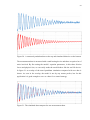
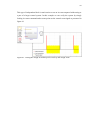
first requirement is that when the base is moved, the pendulum should be damped under
5 swings and secondly, the damped system should eventually end up at the set position.
6.2 Modeling the target system
The next step is to translate the requirements into executable form, in other words we
make a model that captures the system behavior. As mentioned in the earlier chapters the
model does not have to be a comprehensive description of the real life physical system.
The only thing we need is an accurate enough model, which captures the specifications,
so we can test that our design meets the requirements. For example in this case the model
should include things like weight, rod length and friction, which effect on pendulum
behavior i.e. under 10 swing requirement. But we do not need information like rod color
or communication cable length, because they do not have any effect on the requirements.
6.2.1 Mathematical model
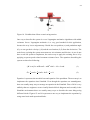
Mathematically this anti-swing pendulum is a very simple system. It is a linear process
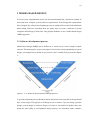
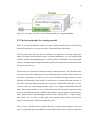
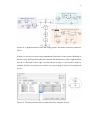
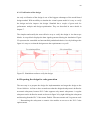
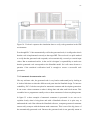
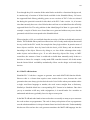
with only few variables. In figure 14 the basic physical schematic of the system is shown.
In the figure, F is the force moving the cart (in this example an electric motor), b is the
friction force resisting the cart movement, M is the mass of the cart, θ is the angle of the
pendulum, m is mass of the weight, b2 is the sum of the air resistance and the joint friction
forces and Fd is the swinging force resulting from the pendulum angle and gravity.