1
3.3
Transparent Byte Protocol
Transparent Byte Protocol (TBP) is a message protocol for point-to-point
communications using 8-bit characters transmitted serially. Compared to
NITP, TBP improves the efficiency of the information exchange between a
controller and an operator interface device.
UART Initialization
Requirements
Message Format
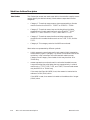
In order to support TBP information exchange, the communications
controlling device, Universal Asynchronous Receiver-Transmitter (UART),
is initialized to the following conditions:
•
8 data bits per character
•
no parity
•
1 start bit
•
1 stop bit
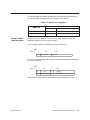
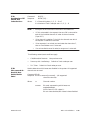
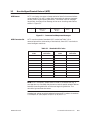
The TBP message format is implemented as:
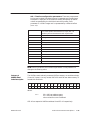
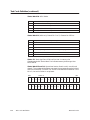
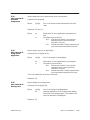
3F RL LL TC dd dd ... dd CK SM
The 3F or ASCII question mark is the first character of all TBP messages.
The first byte serves as the protocol identifier that allows the NITP
messages to be distinguished from the TBP messages. Therefore, any device
supporting TBP initializes the UART (described above). If the protocol is
NITP, the first byte received is hexadecimal BA or the ASCII colon sent with
odd parity. If the protocol is TBP, the first byte is hexadecimal 3F or the
ASCII question mark. Any other first character causes the message to be
discarded.
Initiator
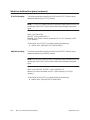
The initiator of a request message may choose to use either protocol (NITP
or TBP). The responder must respond to the initiator in like protocol. In the
case that the request was made using TBP and the responder does not
support TBP, no response to the request is made.
Responder
For the responder that supports TBP, a request made using NITP is
acknowledged using NITP. Since the NITP character set is limited to 20
characters, the responder makes provisions to check parity even though the
UART is set up as defined above.
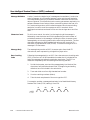
RL Byte
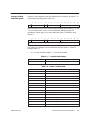
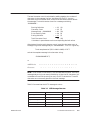
The RL byte defines the request/response maximum length in bytes. In a
message that is a task code request, the RL byte specifies the maximum
length of the task code response. In the task code request, the RL byte is a
binary number ranging from 6 (hexadecimal 06) to 256 (hexadecimal 00)
with 255 being represented by hexadecimal FF. In the task code response,
the RL byte defines the maximum length of response that the device
supports. Only two values are allowed for the RL byte in the response. The
values are 73 (hexadecimal 49) or 256 (hexadecimal 00).
3-6
Communication Protocols
TI575 Task Code