1
Objects, their modes and attributes
11
3 Objects, their modes and attributes
3.1 Intrinsic attributes: mode and length
The entities S-PLUS operates on are technically known as objects. Examples are vectors
of numeric (real) or complex values, vectors of logical values and vectors of character
strings. These are known as `atomic' structures since their components are all of the
same type, or mode, namely numeric 3, complex, logical and character respectively.
Vectors must have their values all of the same mode. Thus any given vector must be
unambiguously either logical, numeric, complex or character. The only mild exception
to this rule is the special \value" listed as NA for quantities not available. Note that
a vector can be empty and still have a mode. For example the empty character string
vector is listed as character(0) and the empty numeric vector as numeric(0).
S-PLUS also operates on objects called lists, which are of mode list. These are ordered
sequences of objects which individually can be of any mode. lists are known as `recursive'
rather than atomic structures since their components can themselves be lists in their own
right.
The other recursive structures are those of mode function and expression. Functions
are the functions that form part of the S-PLUS system along with similar user written
functions, which we discuss in some detail later in these notes. Expressions as objects
form an advanced part of S-PLUS which will not be discussed in these notes, except
indirectly when we discuss formul with we discuss modelling in S-PLUS.
By the mode of an object we mean the basic type of its fundamental constituents. This
is a special case of an attribute of an object. The attributes of an object provide specic
information about the object itself. Another attribute of every object is its length. The
functions mode(object) and length(object) can be used to nd out the mode and length
of any dened structure.
For example, if z is complex vector of length 100, then in an expression mode(z) is the
character string "complex" and length(z) is 100.
S-PLUS caters for changes of mode almost anywhere it could be considered sensible to
do so, (and a few where it might not be). For example with
> z <- 0:9
we could put
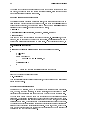
> digits <- as.character(z)
after which digits is the character vector ("0", "1", "2", : : : , "9"). A further
coercion, or change of mode, reconstructs the numerical vector again:
> d <- as.numeric(digits)
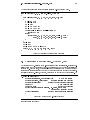
Now
and
are the same.4 There is a large collection of functions of the form
for either coercion from one mode to another, or for investing an object
with some other attribute it may not already posses. The reader should consult the help
le to become familiar with them.
d
z
as.something()
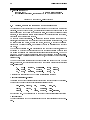
3 numeric mode is actually an amalgam of three distinct modes, namely integer, single precision and
double precision, as explained in the manual.
4 In general coercion from numeric to character and back again will not be exactly reversible, because
of roundo errors in the character representation.