1
Categories and factors
13
4 Categories and factors
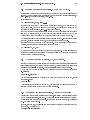
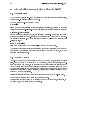
A category is a vector object used to specify a discrete classication of the components
of other vectors of the same length. A factor is similar, but has the class factor, which
means that it is adapted to the generic function mechanism. Whereas a category can
also be used as a plain numeric vector, for example, a factor generally cannot.
4.1 A specic example
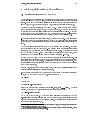
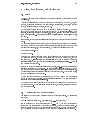
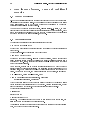
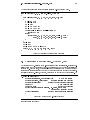
Suppose, for example, we have a sample of 30 tax accountants from the all states and
territories5 and their individual state of origin is specied by a character vector of state
mnemonics as
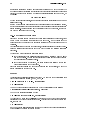
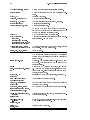
> state <- c("tas",
"qld",
"sa",
"sa",
"sa",
"vic",
"nt",
"act",
"qld",
"nsw",
"wa",
"nsw",
"nsw",
"vic",
"vic",
"vic",
"nsw",
"qld",
"qld",
"vic",
"nt", "wa", "wa",
"qld", "sa", "tas",
"nsw", "nsw", "wa",
"act")
For some purposes it is convenient to represent such information by a numeric vector
with the distinct values in the original (in this case the state labels) represented by a
small integer. Such a numeric vector is called a category. However at the same time it is
important to preserve the correspondence of these new integer labels with the originals.
This is done via the levels attribute of the category.
More formally, when a category is formed from such a vector the sorted unique values in
the vector form the levels attribute of the category, and the values in the category are
in the set 1, 2, : : : , k where k is the number of unique values. The value at position
j in the factor is i if the ith sorted unique value occurred at position j of the original
vector.
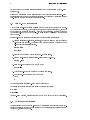
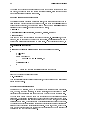
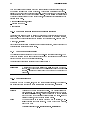
Hence the assignment
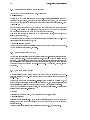
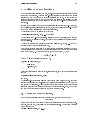
> stcode <- category(state)
creates a category with values and attributes as follows
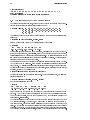
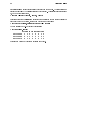
> stcode
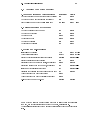
[1] 6 5 4 2 2 3 8 8 4 7 2 7 4 4 5 6 5 3 8 7 4 2 2 8 5 1 2 7 7 1
attr(, "levels"):
[1] "act" "nsw" "nt" "qld" "sa" "tas" "vic" "wa"
Notice that in the case of a character vector, \sorted" means sorted in alphabetical order.
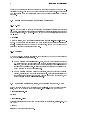
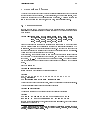
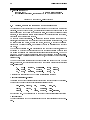
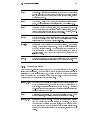
A factor is similarly created using the factor() function:
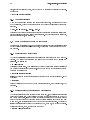
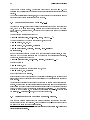
> statef <- factor(state)
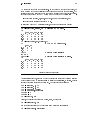
The print() function now handles the factor object slightly dierently:
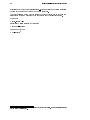
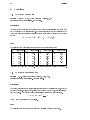
> statef
[1] tas sa
[16] tas sa
qld nsw nsw nt wa wa qld vic nsw vic qld qld sa
nt wa vic qld nsw nsw wa sa act nsw vic vic act
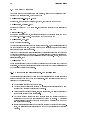
If we remove the factor class, however, using the function unclass(), it becomes virtually
identical to the category:
5 Foreign readers should note that there are eight states and territories in Australia, namely the
Australian Capital Territory, New South Wales, the Northern Territory, Queensland, South Australia,
Tasmania, Victoria and Western Australia.