1
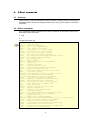
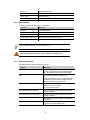
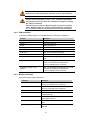
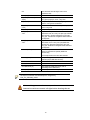
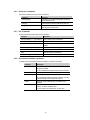
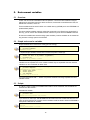
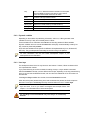
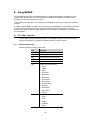
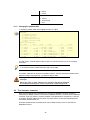
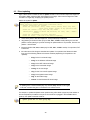
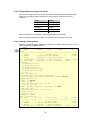
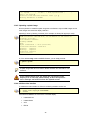
8. Using NVRAM An embedded OS requires some persistent settings; for example, MAC address, IP address, Internet gateway, flash partition table, and U-Boot environment variables. You change some of these only in production and others only during custom setup. These settings must be stored in non-volatile memory (NVRAM) so they are not lost when you power the target off. A partition called NVRAM on the flash memory is used to store these settings. The contents are protected by a CRC32 checksum and they are also mirrored to a different location in the partition. This way, if anything goes wrong reading these data or data becomes corrupted, the information can be restored from the mirrored data. 8.1 The 'flpart' command To print, modify, or restore the partitions table, use the flpart command. This U-Boot command requires no arguments; you create the partitions table using a menu of options. 8.1.1 A partition table entry A partition table entry contains these fields: Field Description Number Index of partition in the table Name Name of the partition Chip Index of flash chip (normally, only one) Start Physical start address of the partition (in hex) Size Size of the partition (in hex) Type Partition type (what it will contain) U-Boot NVRAM FPGA Linux-Kernel WinCE-EBoot WinCE-Kernel Net+OS-Kernel Net+OS-Loader Net+OS-NVRAM File system WinCE-Registry Splash-Screen Unknown FS File system that the partition contains: YAFFS JFFS2 CRAMFS SQUASHFS INITRD 25