1
Diffcalc Documentation, Release 8.4
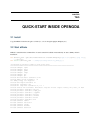
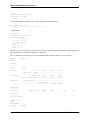
Energy and wavelength scannables:
energy
wl:
12.3984
1.0000
Diffractometer scannables, as a group and in component axes (in the real GDA these have limits):
sixc:
alpha:
chi:
delta:
gamma:
omega:
phi:
alpha: 0.0000 delta: 0.0000 gamma: 0.0000 omega: 0.0000 chi: 0.0000 phi: 0.0000
0.0000
0.0000
0.0000
0.0000
0.0000
0.0000
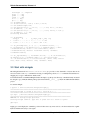
Dummy counter, which in this example simply counts at 1hit/s:
cnt:
0.0000
Hkl scannable, as a group and in component:
hkl:
h:
k:
l:
Error:
Error:
Error:
Error:
No
No
No
No
UB
UB
UB
UB
matrix
matrix
matrix
matrix
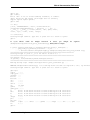
Parameter scannables, used in some modes, these provide a scannable alternative to the series of fix commands
described in Moving in hkl space.:
alpha_par:0.00000
azimuth: --betain:
--betaout: --gamma_par:0.00000
phi_par: --Note that where a parameter corresponds with a physical
diffractometer axis, it can also be set to track that axis
directly. See ‘Tracking axis‘_ below.
4.5 Crystal orientation
Before moving in hkl space you must calculate a UB matrix by specifying the crystal’s lattice parameters (which
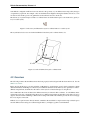
define the B matrix) and finding two reflections (from which the U matrix can be inferred); and, optionally for surfacediffraction experiments, determine how the surface of the crystal is oriented with respect to the phi axis (see Overview).
4.5.1 Starting a UB calculation
A UB-calculation contains the description of the crystal-under-test, any saved reflections, sigma & tau (both default to
0), and a B & UB matrix pair if they have been calculated or manually specified. Starting a new UB calculation will
clear all of these.
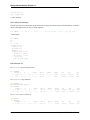
Before starting a UB-calculation, the ub command used to summarise the state of the current UB-calculation, will
reflect that no UB-calculation has been started:
4.5. Crystal orientation
17