1
NIST Special Publication 800-42
Guideline on Network Security
Testing
Recommendations of the National Institute
of Standards and Technology
John Wack, Miles Tracy, Murugiah Souppaya
C O M P U T E R
S E C U R I T Y
Computer Security Division
Information Technology Laboratory
National Institute of Standards and Technology
Gaithersburg, MD 20899-8930
October 2003
U.S. Department of Commerce
Donald L. Evans, Secretary
Technology Administration
Phillip J. Bond, Under Secretary for Technology
National Institute of Standards and Technology
Arden L. Bement, Jr., Director
SP 800-42 GUIDELINE ON NETWORK SECURITY TESTING
Reports on Computer Systems Technology
The Information Technology Laboratory (ITL) at the National Institute of Standards and Technology
(NIST) promotes the U.S. economy and public welfare by providing technical leadership for the Nation’s
measurement and standards infrastructure. ITL develops tests, test methods, reference data, proof of
concept implementations, and technical analysis to advance the development and productive use of
information technology. ITL’s responsibilities include the development of technical, physical,
administrative, and management standards and guidelines for the cost-effective security and privacy of
sensitive unclassified information in Federal computer systems. This Special Publication 800-series
reports on ITL’s research, guidance, and outreach efforts in computer security, and its collaborative
activities with industry, government, and academic organizations.
National Institute of Standards and Technology Special Publication 800-42
Natl. Inst. Stand. Technol. Spec. Publ. 800-42,
XX pages (October, 2003)
CODEN: XXXXX
Certain commercial entities, equipment, or materials may be identified in this
document in order to describe an experimental
procedure or concept adequately. Such
identification is not intended to imply recommendation or endorsement by the
National Institute of Standards and Technology, nor is it intended to imply that the
entities, materials, or equipment are necessarily the best available for the purpose.
U.S. GOVERNMENT PRINTING OFFICE
WASHINGTON: 2001
For sale by the Superintendent of Documents, U.S. Government Printing Office
Internet: bookstore.gpo.gov — Phone: (202) 512-1800 — Fax: (202) 512-2250
Mail: Stop SSOP, Washington, DC 20402-0001
ii
SP 800-42 GUIDELINE ON NETWORK SECURITY TESTING
Authority
The National Institute of Standards and Technology (NIST) have developed this document in furtherance
of its statutory responsibilities under the Federal Information Security Management Act (FISMA) of
2002, Public Law 107-347.
NIST is responsible for developing standards and guidelines, including minimum requirements, for
providing adequate information security for all agency operations and assets, but such standards and
guidelines shall not apply to national security systems. This guideline is consistent with the requirements
of the Office of Management and Budget (OMB) Circular A-130, Section 8b(3), Securing Agency
Information Systems, as analyzed in A-130, Appendix IV: Analysis of Key Sections. Supplemental
information is provided A-130, Appendix III.
This guideline has been prepared for use by federal agencies. It may be used by nongovernmental
organizations on a voluntary basis and is not subject to copyright though attribution is desired by NIST.
Nothing in this document should be taken to contradict standards and guidelines made mandatory and
binding on federal agencies by the Secretary of Commerce under statutory authority. Nor should these
guidelines be interpreted as altering or superseding the existing authorities of the Secretary of Commerce,
Director of the OMB, or any other federal official.
Acknowledgements
The authors, John Wack and Murugiah Souppaya of NIST and Miles Tracy of Booz Allen Hamilton
(BAH), wish to acknowledge staff at NIST and BAH who reviewed drafts of this publication and made
substantial improvements to its quality, including Timothy Grance, Wayne Jansen, Tom Karygiannis,
Peter Mell, Robert Sorensen, and Marianne Swanson.
iii
SP 800-42 GUIDELINE ON NETWORK SECURITY TESTING
iv
SP 800-42 GUIDELINE ON NETWORK SECURITY TESTING
Table Of Contents
1.
Introduction ......................................................................................................................1-1
1.1
Purpose and Scope........................................................................................................1-1
1.2
Definitions ......................................................................................................................1-2
1.3
Audience ........................................................................................................................1-3
1.4
Document Organization .................................................................................................1-3
2.
Security Testing and the System Development Life Cycle ..........................................2-1
2.1
System Development Life Cycle ....................................................................................2-1
2.1.1
Implementation Stage ....................................................................................................2-2
2.1.2
Operational Stage ..........................................................................................................2-3
2.2
Documenting Security Testing Results ..........................................................................2-3
2.3
Roles and Responsibilities .............................................................................................2-4
2.3.1
Senior IT Management/Chief Information Officer (CIO) .................................................2-4
2.3.2
Information Systems Security Program Managers (ISSM).............................................2-4
2.3.3
Information Systems Security Officers (ISSO) ...............................................................2-5
2.3.4
System and Network Administrators ..............................................................................2-5
2.3.5
Managers and Owners ...................................................................................................2-5
3.
Security Testing Techniques ..........................................................................................3-1
3.1
Roles and Responsibilities for Testing ...........................................................................3-1
3.2
Network Scanning ..........................................................................................................3-2
3.3
Vulnerability Scanning....................................................................................................3-3
3.4
Password Cracking ........................................................................................................3-6
3.5
Log Reviews...................................................................................................................3-7
3.6
File Integrity Checkers ...................................................................................................3-8
3.7
Virus Detectors...............................................................................................................3-9
3.8
War Dialing...................................................................................................................3-10
3.9
Wireless LAN Testing (“War Driving”) ..........................................................................3-10
3.10
Penetration Testing ......................................................................................................3-11
3.11
Post-Testing Actions ....................................................................................................3-16
3.12
General Information Security Principles .......................................................................3-17
3.13
Summary Comparisons of Network testing Techniques ..............................................3-19
4.
Deployment Strategies for Security Testing .................................................................4-1
v
SP 800-42 GUIDELINE ON NETWORK SECURITY TESTING
4.1
Determine the Security Category of the Information System .........................................4-1
4.2
Determine Cost of Performing Each Test Type per System ..........................................4-2
4.3
Identify Benefits of Each Test Type per System ............................................................4-2
4.4
Prioritize Systems for Testing ........................................................................................4-2
Appendix A.
Terminology ................................................................................................... A-1
Appendix B.
References ..................................................................................................... B-1
Appendix C.
Common Testing Tools ................................................................................. C-1
C.1 File Integrity Checkers........................................................................................................ C-1
C.2 Network Sniffers ................................................................................................................. C-2
C.3 Password Crackers ............................................................................................................ C-3
C.4 Scanning and Enumeration Tools ...................................................................................... C-4
C.5 Vulnerability Assessment Tools ......................................................................................... C-6
C.6 War Dialing Tools ............................................................................................................... C-7
C.7 Wireless Networking Tools................................................................................................. C-8
C.8 Host Based Firewalls.......................................................................................................... C-9
Appendix D.
Example Usage Of Common Testing Tools ................................................ D-1
D.1 Nmap.................................................................................................................................. D-1
D.2 L0pht Crack ........................................................................................................................ D-8
D.3 LANguard ........................................................................................................................... D-9
D.4 Tripwire............................................................................................................................. D-11
D.5 Snort................................................................................................................................. D-16
D.6 Nessus ............................................................................................................................. D-21
Appendix E.
Index ............................................................................................................... E-1
vi
SP 800-42 GUIDELINE ON NETWORK SECURITY TESTING
List Of Tables
Table 3.1: Comparison of Testing Procedures ........................................................................3-20
Table 3.2: Summarized Evaluation and Frequency Factors ....................................................3-21
Table C.1: File Integrity Checker Tools..................................................................................... C-1
Table C.2: Network Sniffer Tools .............................................................................................. C-2
Table C.3: Password Cracking Tools........................................................................................ C-3
Table C.4: Scanning and Enumberation Tools ......................................................................... C-5
Table C.5: Vulnerability Assessment Tools .............................................................................. C-6
Table C.6: War Dialing Tools .................................................................................................... C-7
Table C.7: Wireless Networking Testing Tools ......................................................................... C-8
Table C.8: Host-Based Firewall Tools ...................................................................................... C-9
List Of Figures
Figure 3.1: Four-Stage Penetration Testing Methodology .......................................................3-13
Figure 3.2: Attack Phase Steps with Loopback to Discovery Phase .......................................3-14
vii
SP 800-42 GUIDELINE ON NETWORK SECURITY TESTING
viii
SP 800-42 GUIDELINE ON NETWORK SECURITY TESTING
Executive Summary
Securing and operating today’s complex systems is challenging and demanding. Mission and operational
requirements to deliver services and applications swiftly and securely have never been greater.
Organizations, having invested precious resources and scarce skills in various necessary security efforts
such as risk analysis, certification, accreditation, security architectures, policy development, and other
security efforts, can be tempted to neglect or insufficiently develop a cohesive, well-though out
operational security testing program.
This guide stresses the need for an effective security testing program within federal agencies. Testing
serves several purposes. One, no matter how well a given system may have been developed, the nature of
today’s complex systems with large volumes of code, complex internal interactions, interoperability with
uncertain external components, unknown interdependencies coupled with vendor cost and schedule
pressures, means that exploitable flaws will always be present or surface over time. Accordingly, security
testing must fill the gap between the state of the art in system development and actual operation of these
systems. Two, security testing is important for understanding, calibrating, and documenting the
operational security posture of an organization. Aside from development of these systems, the operational
and security demands must be met in a fast changing threat and vulnerability environment. Attempting to
learn and repair the state of your security during a major attack is very expensive in cost and reputation,
and is largely ineffective. Three, security testing is an essential component of improving the security
posture of your organization. Organizations that have an organized, systematic, comprehensive, ongoing, and priority driven security testing regimen are in a much better position to make prudent
investments to enhance the security posture of their systems.
NIST recommends the following:
Make network security testing a routine and integral part of the system and network operations
and administration. Organizations should conduct routine tests of systems and verify that systems have
been configured correctly with the appropriate security mechanisms and policy. Routine testing prevents
many types of incidents from occurring in the first place. The additional costs for performing this testing
will be offset by the reduced costs in incident response.
Test the most important systems first. In general, systems that should be tested first include those
systems that are publicly accessible, that is, routers, firewalls, web servers, e-mail servers, and certain
other systems that are open to the public, are not protected behind firewalls, or are mission critical
systems. Organizations can then use various metrics to determine the importance or criticality of other
systems in the organization and proceed to test those systems as well.
Use caution when testing. Certain types of testing, including network scanning, vulnerability testing,
and penetration testing, can mimic the signs of attack. It is imperative that testing be done in a
coordinated manner, with the knowledge and consent of appropriate officials.
Ensure that security policy accurately reflects the organization’s needs. The policy must be used as a
baseline for comparison with testing results. Without appropriate policy, the usefulness of testing is
drastically limited. For example, discovering that a firewall permits the flow of certain types of traffic
may be irrelevant if there is no policy that states what type of traffic or what type of network activity is
permitted. When there is a policy, testing results can be used to improve the policy.
Integrate security testing into the risk management process. Testing can uncover unknown
vulnerabilities and misconfigurations. As a result, testing frequencies may need to be adjusted to meet the
ES-1
SP 800-42 GUIDELINE ON NETWORK SECURITY TESTING
prevailing circumstances, for example, as new controls are added to vulnerable systems or other
configuration changes are made because of a new threat environment. Security testing reveals crucial
information about an organizations security posture and their ability to surmount attack externally or to
avoid significant financial or reputational cost from internal malfeasance. In some cases, the results of the
testing may indicate that policy and the security architecture should be updated. Hence, this insight into
the security posture of an organization is highly relevant to a well-functioning risk management program.
Ensure that system and network administrators are trained and capable. Security testing must be
performed by capable and trained staff. Often, individuals recruited for this task are already involved in
system administration. While system administration is an increasingly complex task, the numbers of
trained system administrators generally has not kept pace with the increase in computing systems.
Competent system administration may be the most important security measure an organization can
employ, and organizations should ensure they possess a sufficient number with the required skill level to
perform system administration and security testing correctly.
Ensure that systems are kept up-to-date with patches. As a result of security testing, it may become
necessary to patch many systems. Applying patches in a timely manner can sharply reduce the
vulnerability exposure of an organization. Organizations should centralize their patching efforts so as to
ensure that more systems are patched as quickly as possible and immediately tested.
Look at the big picture. The results of routine testing may indicate that an organization should
readdress its systems security architecture. Some organizations may need to step back and undergo a
formal process of identifying the security requirements for many of its systems, and then begin a process
of reworking its security architecture accordingly. This process will result in increased security
inefficiency of operations with fewer costs incurred from incident response operations.
Understand the capabilities and limitations of vulnerability testing. Vulnerability testing may result
in many false positive scores, or it may not detect certain types of problems that are beyond the detection
capabilities of the tools. Penetration testing is an effective complement to vulnerability testing, aimed at
uncovering hidden vulnerabilities. However, it is resource intensive, requires much expertise, and can be
expensive. Organizations should still assume they are vulnerable to attack regardless of how well their
testing scores indicate.
ES-2
SP 800-42 GUIDELINE ON NETWORK SECURITY TESTING
1.
Introduction
The Internet has brought about many changes in the way organizations and individuals conduct business,
and it would be difficult to operate effectively without the added efficiency and communications brought
about by the Internet. At the same time, the Internet has brought about problems as the result of intruder
attacks, both manual and automated, which can cost many organizations excessive amounts of money in
damages and lost efficiency. Thus, organizations need to find methods for achieving their mission goals
in using the Internet and at the same time keeping their Internet sites secure from attack.
Computer systems today are more powerful and more reliable than in the past; however they are also
more difficult to manage. System administration is a complex task, and increasingly it requires that
system administration personnel receive specialized training. In addition, the number of trained system
administrators has not kept pace with the increased numbers of networked systems. One result of this is
that organizations need to take extra steps to ensure that their systems are configured correctly and
securely. And, they must do so in a cost-effective manner.
This document deals with the subject of testing Internet connected systems and networks when they are in
operation. Security testing is perhaps the most conclusive determinant of whether a system is configured
and continues to be configured to the correct security controls and policy. The types of testing described
in this document are meant to assist network and system administrators and related security staff in
keeping their systems operationally secure and resistant as much as possible to attack. These testing
activities, if made part of standard system and network administration, can be highly cost-effective in
preventing incidents and uncovering unknown vulnerabilities.
1.1
Purpose and Scope
The purpose of this document is to provide guidance on network security testing. This document
identifies network testing requirements and how to prioritize testing activities with limited resources. It
describes network security testing techniques and tools.1 This document provides guidance to assist
organizations in avoiding duplication of effort by providing a consistent approach to network security
testing throughout the organization’s networks. Furthermore, this document provides a feasible approach
for organizations by offering varying levels of network security testing as appropriate to the
organization’s mission and security objectives.
The main focus of this document is the basic information about techniques and tools for individuals to
begin a network security testing program. This document is by no means all-inclusive. Individuals and
organizations should consult the references provided in this document as well as vendor product
descriptions and other sources of information.
While this document describes generalized network security testing that is applicable to all networked
systems, it is aimed more towards the following types of systems:
+
1
Firewalls, both internal and external
There are many excellent freeware (no fee required for license) and shareware (requires nominal fee for license) security
tools. However, great care should be used in selecting freely available tools. Generally, freeware/shareware tools should not
be used unless an expert has reviewed the source code or they are widely used and are downloaded from a known safe
repository. Appendix C provides a list of well-known tools for downloading. The costs of supporting “freeware”
applications can be significant, as in-house experts may have to be developed to support any widely used application. The
cost of this support should be compared to the cost of a commercial product to determine which is the most cost effective.
1-1
SP 800-42 GUIDELINE ON NETWORK SECURITY TESTING
+
Routers and switches
+
Related network-perimeter security systems such as intrusion detection systems
+
Web servers, email servers, and other application servers
+
Other servers such as for Domain Name Service (DNS) or directory servers or file servers
(CIFS/SMB, NFS, FTP, etc.)
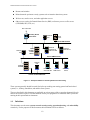
ISP Connection
Boundary Router
Packet Filter
Network
IDS
Dial-in
Server
External DMZ Network
Network
IDS
External
Web Server
with Host IDS
Main
Firewall
& VPN
Server
External
DNS Server
Internal DMZ Network
Network
IDS
Internal
Firewall
Email Server
with Host IDS
Internal
DNS Server
Web Proxy
Server
Interior Protected Network
Figure 1.1: Examples of Mission Critical Systems for Initial Testing
These systems generally should be tested first before proceeding onto testing general staff and related
systems, i.e., desktop, standalone, and mobile client systems.
The tests described in this document are applicable to various stages of the system development lifecycle,
and are most useful as part of a routine network security test program to be conducted while systems are
running in their operational environments.
1.2
Definitions
This document uses the terms system, network security testing, operational testing, and vulnerability
extensively. For the purposes of this document, their definitions will be as follows:
1-2
SP 800-42 GUIDELINE ON NETWORK SECURITY TESTING
System – A system is any of the following:
+
Computer system (e.g., mainframe, minicomputer)
+
Network system (e.g., local area network [LAN])
+
Network domain
+
Host (e.g., a computer system)
+
Network nodes, routers, switches and firewalls
+
Network and/or computer application on each computer system.
Network Security Testing – Activities that provide information about the integrity of an organization's
networks and associated systems through testing and verification of network-related security controls on a
regular basis. “Security Testing” or “Testing” is used throughout this document to refer to Network
Security Testing. The testing activities can include any of the types of tests described in Chapter 3,
including network mapping, vulnerability scanning, password cracking, penentration testing, war dialing,
war driving, file integrity checking, and virus scanning.
Operational Security Testing – Network security testing conducted during the operational stage of a
system’s life, that is, while the system is operating in its operational environment.
Vulnerability – A bug or misconfigurations or special sets of circumstances that could result in an
exploitation of that vulnerability. For the purposes of this document, a vulnerability could be exploited
directly by an attacker, or indirectly through automated attacks such as Distributed Denial of Service
(DDOS) attacks or by computer viruses.
1.3
Audience
This document should be useful for security program managers, technical and functional managers,
network and system administrators, and other information technology (IT) staff members. It provides
them with a structured approach to network security testing. Management personnel who are responsible
for systems can apply the testing procedures and tools discussed in this document to become informed
about the status of the assets under their stewardship. This document can also assist in evaluating
compliance with their organization’s security standards and requirements. Managers can also use this
information to evaluate the technical basis and support for the decision-making processes. This document
can be used to formulate a test plan to verify and assess the implemented security controls.
1.4
Document Organization
This document is organized as follows:
+
Chapter 1 provides an introduction and overview
+
Chapter 2 describes the rationale for testing and the overall relationship of security testing to the
system’s life cycle
1-3
SP 800-42 GUIDELINE ON NETWORK SECURITY TESTING
+
Chapter 3 defines network security testing goals and objectives, identifies critical areas of testing,
prioritizes testing requirements, and describes active and passive types of testing
+
Chapter 4 describes how to prioritize security testing, with possibly limited resources
+
Appendix A lists acronyms used in this document
+
Appendix B lists the references used in this document
+
Appendix C provides a list of testing tools
+
Appendix D provides examples of tool usage.
Several sections of the document assume some advanced knowledge of Linux/Unix, Windows
NT/2000/XP, and TCP/IP networking.
1-4
SP 800-42 GUIDELINE ON NETWORK SECURITY TESTING
2.
Security Testing and the System Development Life Cycle
The primary reason for testing the security of an operational system is to identify potential vulnerabilities
and subsequently repair them. The number of reported vulnerabilities is growing daily; for example, the
number of new information system vulnerabilities reported to the Bugtraq2 database has more that
quintupled since the start of 1998, from an average of 20 to over 100 per month. The number of
computers per person in many organizations continues to rise, increasing the demands on competent and
experienced system administrators. Consequently, it is imperative that organizations routinely test
systems for vulnerabilities and misconfigurations to reduce the likelihood of system compromise.
Typically, vulnerabilities are exploited repeatedly by attackers to attack weaknesses that organizations
have not patched or corrected. A report in a SANS Security Alert, dated May 2000, provides a discussion
of this issue: “A small number of flaws in software programs are responsible for the vast majority of
successful Internet attacks…. A few software vulnerabilities account for the majority of successful attacks
because attackers don't like to do extra work. They exploit the best-known flaws with the most effective
and widely available attack tools. And they count on organizations not fixing the problems.”3
In a study involving federal agencies, security software vendors, security consulting firms, and incident
response teams, a consensus was reached on a top 20 list of critical Internet security vulnerabilities.4
SANS Security Alert lists these vulnerabilities and outlines recommendations and suggestions for
overcoming these weaknesses. In this environment, security testing becomes critical to all organizations
interested in protecting their networks.
2.1
System Development Life Cycle
Evaluation of system security can and should be conducted at different stages of system development.
Security evaluation activities include, but are not limited to, risk assessment, certification and
accreditation (C&A), system audits, and security testing at appropriate periods during a system’s life
cycle. These activities are geared toward ensuring that the system is being developed and operated in
accordance with an organization’s security policy. This section discusses how network security testing, as
a security evaluation activity, fits into the system development life cycle.
A typical systems lifecycle5 would include the following activities:
1. Initiation – the system is described in terms of its purpose, mission, and configuration.
2. Development and Acquisition – the system is possibly contracted and constructed according to
documented procedures and requirements.
3. Implementation and Installation – the system is installed and integrated with other applications,
usually on a network.
4. Operational and Maintenance – the system is operated and maintained according to its mission
requirements.
5. Disposal – the system’s lifecycle is complete and it is deactivated and removed from the network
and active use.
2
3
4
5
See http://www.securityfocus.com/.
SANS Institute. SANS Security Alert, May 2000. P 1., http://www.sans.org/newsletters/sac/
Ibid, P 1.
There are numerous systems lifecycle models; this model is simplified so as to illustrate those general stages in which
security testing can be conducted.
2-1
SP 800-42 GUIDELINE ON NETWORK SECURITY TESTING
Typically, network security testing is conducted after the system has been developed, installed, and
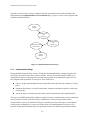
integrated during the Implementation and Operational stages. Figure 2.1 shows a flow diagram of the
system development lifecycle.
System
Initiation
Development
and
Acquisition
Implementation
and
Installation
Operational and
Maintenance
System
Disposal
Figure 2.1 System Development Life Cycle
2.1.1
Implementation Stage
During the Implementation Stage, Security Testing and Evaluation should be conducted on particular
parts of the system and on the entire system as a whole. Security Test and Evaluation (ST&E) is an
examination or analysis of the protective measures that are placed on an information system once it is
fully integrated and operational. The objectives of the ST&E are to:
+
Uncover design, implementation and operational flaws that could allow the violation of security
policy
+
Determine the adequacy of security mechanisms, assurances and other properties to enforce the
security policy
+
Assess the degree of consistency between the system documentation and its implementation.
The scope of an ST&E plan typically addresses computer security, communications security, emanations
security, physical security, personnel security, administrative security, and operations security.
All operational security tests described in Chapter 3 should also be used at this stage to ensure that the
existing system configuration is as secure as possible prior to full implementation on an active, live
network. During the Operational Stage, the operational security tests should be repeated periodically.
2-2
SP 800-42 GUIDELINE ON NETWORK SECURITY TESTING
NIST Special Publication 800-26, Security Self-Assessment Guide for IT Systems,6 goes into more detail
on conducting ST&E testing; readers are encouraged to read this document.
2.1.2
Operational Stage
Once a system is operational, it is important to ascertain its operational status, that is, “…whether a
system is operated according to its current security requirements. This includes both the actions of people
who operate or use the system and the functioning of technical controls.”7 The tests described in Chapter
3 can be conducted to assess the operational status of the system. The types of tests selected and the
frequency in which they are conducted depend on the importance of the system and the resources
available for testing. These tests, however, should be repeated periodically and whenever a major change
is made to the system. For systems that are exposed to constant threat (e.g., web servers) or that protect
critical information (e.g., firewalls), testing should be conducted more frequently.
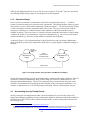
As shown in Figure 2.2, the Operational Stage is subdivided into two stages to include a Maintenance
Stage in which the system may be temporarily off-line due to a system upgrade, configuration change, or
an attack.
Periodic
Operational
Testing
Operational
Stage
ST&E
Attack,
System Update,
Scheduled ST&E
Maintenance
Stage
ST&E Passes
Figure 2.2 Testing Activities at the Operations and Maintenance Stages
During the Operational Stage, periodic operational testing is conducted (the testing schedules in Table 3.2
can be used). During the Maintenance Stage, ST&E testing may need to be conducted just as it was
during the Implementation Stage. This level of testing may also be required before the system can be
returned to its operational state, depending upon the criticality of the system and its applications. For
example, an important server or firewall may require full testing, whereas a desktop system may not.
2.2
Documenting Security Testing Results
Security testing provides insight into the other system development life cycle activities such as risk
analysis and contingency planning. Security testing results should be documented and made available for
staff involved in other IT and security related areas. Specifically, security testing results can be used in
the following ways:
6
7
See http://csrc.nist.gov/publications/nistpubs/800-26/sp800-26.pdf.
National Institute of Standards and Technology, Generally Accepted Principles and Practices for Securing Information
Technology systems. September 1996. P 24, see http://csrc.nist.gov/publications/nistpubs/800-14/800-14.pdf
2-3
SP 800-42 GUIDELINE ON NETWORK SECURITY TESTING
+
As a reference point for corrective action,
+
In defining mitigation activities to address identified vulnerabilities,
+
As a benchmark for tracing an organization’s progress in meeting security requirements,
+
To assess the implementation status of system security requirements,
+
To conduct cost/benefit analysis for improvements to system security, and
+
To enhance other life-cycle activities, such as risk assessments, Certification and Authorization
(C&A), and performance improvement efforts.
2.3
Roles and Responsibilities
Because security testing provides input into and can be a part of multiple system development life cycle
phases, a number of IT and system security staff may be interested in its execution and result. This section
provides a list of those roles and identifies their responsibilities related to security testing. These roles
may vary with the organization, however, and not all organizations will have the identical roles described
here.
2.3.1
Senior IT Management/Chief Information Officer (CIO)
The Senior IT Management/CIO ensures that the organization’s security posture is adequate. The Senior
IT Management provides direction and advisory services for the protection of information systems for the
entire organization. The Senior IT Management/CIO is responsible for the following activities that are
associated with security testing:
+
Coordinating the development and maintenance of the organization's information security
policies, standards, and procedures,
+
Ensuring the establishment of, and compliance with, consistent security evaluation processes
throughout the organization, and
+
Participating in developing processes for decision-making and prioritization of systems for
security testing.
2.3.2
Information Systems Security Program Managers (ISSM)
The Information Systems Security Program Managers (ISSMs) oversee the implementation of, and
compliance with the standards, rules, and regulations specified in the organization's security policy. The
ISSMs are responsible for the following activities associated with security testing:
+
Developing and implementing standard operating procedures (security policy),
+
Complying with security policies, standards and requirements, and
2-4
SP 800-42 GUIDELINE ON NETWORK SECURITY TESTING
+
2.3.3
Ensuring that critical systems are identified and scheduled for periodic testing according to the
security policy requirements of each respective system.
Information Systems Security Officers (ISSO)
Information Systems Security Officers (ISSOs) are responsible for overseeing all aspects of information
security within a specific organizational entity. They ensure that the organization's information security
practices comply with organizational and departmental policies, standards, and procedures. ISSOs are
responsible for the following activities associated with security testing:
+
Developing security standards and procedures for their area of responsibility,
+
Cooperating in the development and implementation of security tools and mechanisms,
+
Maintaining configuration profiles of all systems controlled by the organization, including but not
limited to, mainframes, distributed systems, microcomputers, and dial access ports, and
+
Maintaining operational integrity of systems by conducting tests and ensuring that designated IT
professionals are conducting scheduled testing on critical systems.
2.3.4
System and Network Administrators
System and network administrators must address the security requirements of the specific system(s) for
which they are responsible on a daily basis. Security issues and solutions can originate from either outside
(e.g., security patches and fixes from the vendor or computer security incident response teams) or within
the organization (e.g., the Security Office). The administrators are responsible for the following activities
associated with security testing:
+
Monitoring system integrity, protection levels, and security related events,
+
Resolving detected security anomalies associated with their information system resources,
+
Conducting security tests as required, and
+
Assessing and verifying the implemented security measures.
2.3.5
Managers and Owners
Managers and owners of a system oversee the overall compliance of their assets with their
defined/identified security requirements. They are also responsible for ensuring that test results and
recommendations are adopted as appropriate.
2-5
SP 800-42 GUIDELINE ON NETWORK SECURITY TESTING
2-6
SP 800-42 GUIDELINE ON NETWORK SECURITY TESTING
3.
Security Testing Techniques
There are several different types of security testing. The following section describes each testing
technique, and provides additional information on the strengths and weakness of each. This information
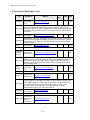
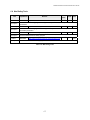
is also summarized in Table 3.1 and Table 3.2. Some testing techniques are predominantly manual,
requiring an individual to initiate and conduct the test. Other tests are highly automated and require less
human involvement. Regardless of the type of testing, staff that setup and conduct security testing should
have significant security and networking knowledge, including significant expertise in the following
areas: network security, firewalls, intrusion detection systems, operating systems, programming and
networking protocols (such as TCP/IP).
The following types of testing are described in this section:
+
Network Scanning
+
Vulnerability Scanning
+
Password Cracking
+
Log Review
+
Integrity Checkers
+
Virus Detection
+
War Dialing
+
War Driving (802.11 or wireless LAN testing)
+
Penetration Testing
Often, several of these testing techniques are used together to gain more comprehensive assessment of the
overall network security posture. For example, penetration testing usually includes network scanning and
vulnerability scanning to identify vulnerable hosts and services that may be targeted for later penetration.
Some vulnerability scanners incorporate password cracking. None of these tests by themselves will
provide a complete picture of the network or its security posture. Table 3.1 at the end of this section
summarizes the strengths and weaknesses of each test.
After running any tests, certain procedures should be followed, including documenting the test results,
informing system owners of the results, and ensuring that vulnerabilities are patched or mitigated.
Section 3.11 discusses post-testing actions that should be followed as a matter of course.
3.1
Roles and Responsibilities for Testing
Only designated individuals, including network administrators or individuals contracted to perform the
network scanning as part of a larger series of tests, should conduct the tests described in this section. The
approval for the tests may need to come from as high as the CIO depending on the extent of the testing. It
would be customary for the testing organization to alert other security officers, management, and users
that network mapping is taking place. Since a number of these test mimic some of the signs of attack, the
appropriate manages must be notified to avoid confusion and unnecessary expense. In some cases, it may
3-1
SP 800-42 GUIDELINE ON NETWORK SECURITY TESTING
be wise to alert local law enforcement officials if, for example, the security policy included notifying law
enforcement.
3.2
Network Scanning
Network scanning involves using a port scanner to identify all hosts potentially connected to an
organization's network, the network services operating on those hosts, such as the file transfer protocol
(FTP) and hypertext transfer protocol (HTTP), and the specific application running the identified service,
such as WU-FTPD, Internet Information Server (IIS) and Apache for the HTTP service. The result of the
scan is a comprehensive list of all active hosts and services, printers, switches, and routers operating in
the address space scanned by the port-scanning tool, i.e., any device that has a network address or is
accessible to any other device.
Port scanners, such as nmap8 (see Appendix B for more information), first identify active hosts in the
address range specified by the user using Transport Control Protocol/Internet Protocol (TCP/IP) Internet
Control Message Protocol (ICMP) ECHO and ICMP ECHO_REPLY packets. Once active hosts have
been identified, they are scanned for open TCP and User Datagram Protocol (UDP) ports9 that will then
identify the network services operating on that host. A number of scanners support different scanning
methods that have different strengths and weaknesses that are usually explained in the scanner
documentation (see Appendix D for more information). For example, certain scans are better suited for
scans through firewalls and others are better suited for scans that are internal to the firewall. Individuals
not familiar with the details of TCP/IP protocols should review the references listed in Appendix B.
All basic scanners will identify active hosts and open ports, but some scanners provide additional
information on the scanned hosts. The information gathered during this open port scan will often identify
the target operating system. This process is called operating system fingerprinting. For example, if a
host has TCP port 135 and 139 open, it is most likely a Windows NT or 2000 host. Other items such as
the TCP packet sequence number generation and responses to ICMP packets, e.g., the TTL (Time To
Live) field, also provide a clue to identifying the operating system. Operating system fingerprinting is not
foolproof. Firewalls filter (block) certain ports and types of traffic, and system administrators can
configure their systems to respond in nonstandard ways to camouflage the true operating system.
In addition, some scanners will assist in identifying the application running on a particular port. For
example, if a scanner identifies that TCP port 80 is open on a host, it often means that the host is running
a web server. However, identifying which web server product is installed can be critical for identifying
vulnerabilities. For example, the vulnerabilities for Microsoft’s IIS server are very different from those
associated with Apache web server. The application can be identified by “listening” on the remote port to
capture the “banner” information transmitted by the remote host when a client (web browser in this
example) connects. Banner information is generally not visible to the end-user (for web
servers/browsers); however when it is transmitted, it can provide a wealth of information, including the
application type, application version and even operating system type and version. Again this is not
foolproof since a security conscious administrator can alter the transmitted banners. The process of
capturing banner information is sometimes called banner grabbing.
While port scanners identify active hosts, services, applications and operating systems, they do NOT
identify vulnerabilities (beyond some common Trojan ports). Vulnerabilities can only be identified by a
8
9
See http://www.insecure.org for more information and free download.
In TCP/IP terminology, a port is where an application receives information from the transport (TCP/UDP) layers. For
example, all data received on TCP port 80 is forwarded to the Web server application. If an IP address identifies a particular
host, the port is used to identify a particular service (HTTP, FTP, SMTP, etc.) running on that host.
3-2
SP 800-42 GUIDELINE ON NETWORK SECURITY TESTING
human who interprets the mapping and scanning results. From these results, a qualified individual can
ascertain what services are vulnerable and the presence of Trojans. Although the scanning process itself
is highly automated, the interpretation of scanned data is not.
Organizations should conduct network scanning to:
+
Check for unauthorized hosts connected to the organization’s network,
+
Identify vulnerable services,
+
Identify deviations from the allowed services defined in the organization’s security policy,
+
Prepare for penetration testing,
+
Assist in the configuration of the intrusion detection system (IDS), and
+
Collect forensics evidence.
A relatively high level of human expertise is required to interpret the results. The scanning can also
disrupt network operations by consuming bandwidth and slowing network response times. However,
network scanning does enable an organization to maintain control of its IP address space and ensure that
its hosts are configured to run only approved network services. To minimize disruptions to operations,
scanning software should be carefully selected (see Appendix C). Network scanning can also be
conducted after hours to ensure minimal impact to operations, with the caveat that some systems may not
be turned on.
Network scanning results should be documented and identified deficiencies corrected. The following
corrective actions may be necessary as a result of network scanning:
3.3
+
Investigate and disconnect unauthorized hosts,
+
Disable or remove unnecessary and vulnerable services,
+
Modify vulnerable hosts to restrict access to vulnerable services to a limited number of required
hosts (e.g., host level firewall or TCP wrappers), and
+
Modify enterprise firewalls to restrict outside access to known vulnerable services.
Vulnerability Scanning
Vulnerability scanners take the concept of a port scanner to the next level. Like a port scanner, a
vulnerability scanner identifies hosts and open ports, but it also provides information on the associated
vulnerabilities (as opposed to relying on human interpretation of the results). Most vulnerability scanners
also attempt to provide information on mitigating discovered vulnerabilities.
Vulnerability scanners provide system and network administrators with proactive tools that can be used to
identify vulnerabilities before an adversary can find them. A vulnerability scanner is a relatively fast and
easy way to quantify an organization's exposure to surface vulnerabilities.10
10
A surface vulnerability is a weakness, as it exists in isolation, independent from other vulnerabilities. The difficultly in
identifying the risk level of vulnerabilities is that they rarely exist in isolation. For example there could be several “low
risk” vulnerabilities that exist on a particular network that, when combined, present a high risk. A vulnerability scanner
3-3
SP 800-42 GUIDELINE ON NETWORK SECURITY TESTING
Vulnerability scanners attempt to identify vulnerabilities in the hosts scanned. Vulnerability scanners can
also help identify out-of-date software versions, applicable patches or system upgrades, and validate
compliance with, or deviations from, the organization's security policy. To accomplish this, vulnerability
scanners identify operating systems and major software applications running on hosts and match them
with known exposures. Scanners employ large databases of vulnerabilities to identify flaws associated
with commonly used operating systems and applications. 11
The scanner will often provide significant information and guidance on mitigating discovered
vulnerabilities. In addition vulnerability scanners can automatically make corrections and fix certain
discovered vulnerabilities. This assumes that the operator of the vulnerability scanners has “root” or
administrator access to the vulnerable host.
However, vulnerability scanners have some significant weaknesses. Generally, they only identify surface
vulnerabilities and are unable to address the overall risk level of a scanned network. Although the scan
process itself is highly automated, vulnerability scanners can have a high false positive error rate
(reporting vulnerabilities when none exist). This means an individual with expertise in networking and
operating system security and in administration must interpret the results.
Since vulnerability scanners require more information than port scanners to reliably identify the
vulnerabilities on a host, vulnerability scanners tend to generate significantly more network traffic than
port scanners. This may have a negative impact on the hosts or network being scanned or network
segments through which scanning traffic is traversing. Many vulnerability scanners also include tests for
denial of service (DoS) attacks that, in the hands of an inexperienced tester, can have a considerable
negative impact on scanned hosts.
Another significant limitation of vulnerability scanners is that they rely on constant updating of the
vulnerability database in order to recognize the latest vulnerabilities. Before running any scanner,
organizations should install the latest updates to its vulnerability database. Some vulnerability scanner
databases are updated more regularly than others. The frequency of updates should be a major
consideration when choosing a vulnerability scanner.
Vulnerability scanners are better at detecting well-known vulnerabilities than the more esoteric ones,
primarily because it is difficult to incorporate all known vulnerabilities in a timely manner. Also,
manufacturers of these products keep the speed of their scanners high (more vulnerabilities detected
requires more tests which slows the overall scanning process).
Vulnerability scanners provide the following capabilities:
11
+
Identifying active hosts on network
+
Identifying active and vulnerable services (ports) on hosts.
+
Identifying applications and banner grabbing.
+
Identifying operating systems.
would generally not recognize the danger of the combined vulnerabilities and thus would assign a low risk to them leaving
the network administrator with a false sense of confidence in his or her security measures. The reliable way to identify the
risk of vulnerabilities in aggregate is through penetration testing.
NIST maintains a database of vulnerability and related patch information at http://icat.nist.gov. This database uses the
Common Vulnerabilities and Exposures (CVE) vulnerability identification scheme in use by other databases and vendors.
3-4
SP 800-42 GUIDELINE ON NETWORK SECURITY TESTING
+
Identifying vulnerabilities associated with discovered operating systems and applications.
+
Identifying misconfigured settings.
+
Testing compliance with host application usage/security policies.
+
Establishing a foundation for penetration testing.
Vulnerability scanners can be of two types: network-based scanners and host-based scanners. Networkbased scanners are used primarily for mapping an organization's network and identifying open ports and
related vulnerabilities. In most cases, these scanners are not limited by the operating system of targeted
systems. The scanners can be installed on a single system on the network and can quickly locate and test
numerous hosts. Host-based scanners have to be installed on each host to be tested and are used primarily
to identify specific host operating system and application misconfigurations and vulnerabilities. Because
host-based scanners are able to detect vulnerabilities at a higher degree of detail than network-based
scanners, they usually require not only host (local) access but also a “root” or administrative account.
Some host-based scanners offer the capability of repairing misconfigurations.
Organizations should conduct vulnerability scanning to validate that operating systems and major
applications are up to date on security patches and software version. Vulnerability scanning is a
somewhat labor-intensive activity that requires a high degree of human involvement in interpreting the
results. It may also disrupt network operations by taking up bandwidth and slowing response times.
However, vulnerability scanning is extremely important for ensuring that vulnerabilities are mitigated
before they are discovered and exploited by adversaries. Vulnerability scanning should be conducted at
least quarterly to semi-annually. Highly critical systems such as firewalls, public web servers, and other
perimeter points of entry should be scanned nearly continuously. It is also recommended that since no
vulnerability scanner can detect all vulnerabilities, more than one should be used. A common practice is
to use a commercially available scanner and a freeware scanner12.
Vulnerability scanning results should be documented and discovered deficiencies corrected. The
following corrective actions may be necessary as a result of vulnerability scanning:
+
Upgrade or patch vulnerable systems to mitigate identified vulnerabilities as appropriate.
+
Deploy mitigating measures (technical or procedural) if the system cannot be immediately
patched (e.g., operating system upgrade will make the application running on top of the operating
system inoperable), in order to minimize the probability of this system being compromised.
+
Improve configuration management program and procedures to ensure that systems are upgraded
routinely.
+
Assign a staff member to monitor vulnerability alerts and mailing lists, examine their
applicability to the organization's environment and initiate appropriate system changes.
+
Modify the organization's security policies, architecture, or other documentation to ensure that
security practices include timely system updates and upgrades.
Network and host-based vulnerability scanners are available for free or for a fee. Appendix C contains a
list of readily available vulnerability scanning tools.
12
This mirrors common anti-virus practices, which are to use different products on the desktop versus the email server so that
the deficiencies of one may be compensated for by the other.
3-5
SP 800-42 GUIDELINE ON NETWORK SECURITY TESTING
3.4
Password Cracking
Password cracking programs can be used to identify weak passwords. Password cracking verifies that
users are employing sufficiently strong passwords. Passwords are generally stored and transmitted in an
encrypted form called a hash. When a user logs on to a computer/system and enters a password, a hash is
generated and compared to a stored hash. If the entered and the stored hashes match, the user is
authenticated.
During a penetration test or a real attack, password cracking employs captured password hashes.
Passwords hashes can be intercepted when they are transmitted across the network (using a network
sniffer) or they can be retrieved from the targeted system. The latter generally requires administrative or
“root” access on the target system.
Once the hashes are obtained, an automated password cracker rapidly generates hashes until a match is
found. The fastest method for generating hashes is a dictionary attack that uses all words in a dictionary
or text file. There are many dictionaries available on the Internet that cover most major and minor
languages, names, popular television shows, etc. So any “dictionary” word no matter how obscure is
weak.
Another method of cracking is called a hybrid attack, which builds on the dictionary method by adding
numeric and symbolic characters to dictionary words. Depending on the password cracker being used,
this type of attack will try a number of variations. The attack tries common substitutes of characters and
numbers for letters (e.g., p@ssword and h4ckme). Some will also try adding characters and numbers to
the beginning and end of dictionary words (e.g., password99, password$%, etc.).
The most powerful password-cracking method is called the brute force method. Although brute force can
take a long time, it usually takes far less time than most password policies specify for password changing.
Consequently, passwords found during brute force attacks are still too weak. Brute force randomly
generates passwords and their associated hashes. However since there are so many possibilities it can
take months to crack a password. Theoretically all passwords are “crackable” from a brute force attack
given enough time and processing power. Penetration testers and attackers often have multiple machines
to which they can spread the task of cracking password. Multiple processors greatly shorten the length of
time required to crack strong passwords.
A strong Linux/Unix password is one that is long (greater than 10 characters at least) and complex
(contains both upper and lower case letters, special characters and numbers). Creating a strong Windows
password is somewhat more complicated. Versions of Windows prior to Windows 2000 use LanMan
password hashes, which have several associated weaknesses. First, LanMan is not case sensitive, all
alphabetic characters are converted to uppercase. This effectively reduces the number of different
combinations a password cracker has to try. Second, all LanMan passwords are stored as two 7 character
hashes. Passwords that are exactly 14 characters long will be split into two 7 character hashes. Password
less than 14 characters will be padded up to 14 characters. The splitting of the hash into two causes
LanMan passwords to be less resistant to password cracking.13 See Appendix D for an example of how to
use the Windows password cracker, L0pht Crack.
13
Due to the mathematics of password cracking, two 7 character hashes are significantly easier to crack than one 14 character
hash. To ensure the appropriate strength, passwords for versions prior to Windows 2000 should be either 7 or 14 characters
long, include upper and lowercase, and include numbers and characters. For particularly sensitive accounts, use extended
characters ASCII characters (these are NOT represented on a standard keyboard). These characters are entered by hitting
the Alt key and a sequence of numbers on the numeric keypad (e.g. Alt + 0174 = ®). These characters and their associated
keyboard sequences can be identified using the Windows Character Map application.
3-6
SP 800-42 GUIDELINE ON NETWORK SECURITY TESTING
Password crackers should be run on the system on a monthly basis or even continuously to ensure correct
password composition throughout an organization. The following actions can be taken if an unacceptably
high number of passwords can be cracked:14
+
If the cracked passwords were selected according to policy, the policy should be modified to
reduce the percentage of crackable passwords. If such policy modification would lead to users
writing down their passwords because they are difficult to memorize, an organization should
consider replacing password authentication with another form of authentication.
+
If cracked passwords were not selected according to policy, the users should be educated on
possible impacts of weak password selections. If such violations by the same users are persistent,
management should consider additional steps (additional training, password management
software to enforce better choices, deny access, etc.) to gain user compliance. Many server
platforms also allow the system administrator to set minimum password length and complexity.
On systems that support password filters, the filters should be set so as to force the use of strong
passwords, and this may reduce or even the need to perform password cracking. Passwords, no matter
how strong, often are sent in the clear over networks; thus organizations should be moving towards the
use of stronger forms of authentication.
3.5
Log Reviews
Various system logs can be used to identify deviations from the organization's security policy, including
firewall logs, IDS logs, server logs, and any other logs that are collecting audit data on systems and
networks. While not traditionally considered a testing activity, log review and analysis can provide a
dynamic picture of ongoing system activities that can be compared with the intent and content of the
security policy. Essentially, audit logs can be used to validate that the system is operating according to
policies.
For example, if an IDS sensor is placed behind the firewall (within the enclave), its logs can be used to
examine the service requests and communications that are allowed into the network by the firewall. If
this sensor registers unauthorized activities beyond the firewall, it indicates that the firewall is no longer
configured securely and a backdoor exists on the network.
Snort is a free IDS sensor with ample support. It is a network intrusion detection system, capable of
performing real-time traffic analysis and packet logging on IP networks. Snort can perform protocol
analysis, content searching/matching and can be used to detect a variety of attacks and probes, such as
buffer overflows, stealth port scans, CGI (Common Gateway Interface) attacks, SMB (System Message
Block) probes, and OS fingerprinting attempts. Snort uses a flexible rules language to describe traffic that
it should collect or pass, as well as a detection engine that uses a modular plugin architecture. Snort has a
real-time alerting capability as well, incorporating alerting mechanisms for syslog, a user specified file, a
Unix socket, or WinPopup messages to Windows clients using Samba’s smbclient. Snort has three
primary uses. It can be used as a straight packet sniffer like tcpdump, a packet logger (useful for network
traffic debugging, etc), or as a complete network intrusion detection system.
Manual audit log review is extremely cumbersome and time consuming. Automated audit tools provide a
14
On many systems, especially those exposed to the Internet, even one cracked password should be considered unacceptable.
Attackers are extremely proficient at escalating privilege once they have an access to a system, therefore in many instances a
single cracked password for a (or, even worse, an unpassworded) guest account can be enough to compromise the entire
system. In addition it should be considered unacceptable if any administrator or root level password is compromised.
3-7
SP 800-42 GUIDELINE ON NETWORK SECURITY TESTING
means to significantly reduce the required review time and to generate reports (predefined and
customized) that summarize the log contents to a set of specific activities. It is critical that any filters
applied to the logs filter out what is unwanted and pass everything else.
Log reviews should be conducted very frequently, if not daily, on major servers and firewalls. Again,
using log-reduction tools will assist system administrators greatly in identifying problems and suspicious
activity. For the specific purpose of testing implementation of required security configurations, once a
month may be sufficient with the exception of on demand reviews resulting from major system upgrades
that require validation. The following actions can be taken if a system is not configured according to
policies:
3.6
+
Remove vulnerable services if they are not needed.
+
Reconfigure the system as required to reduce the chance of compromise.
+
Change firewall policy to limit access to the vulnerable system or service.
+
Change firewall policy to limit accesses from the IP subnet that is the source of compromise.
File Integrity Checkers
A file integrity checker computes and stores a checksum for every guarded file and establishes a database
of file checksums. It provides a tool for the system administrator to recognize changes to files,
particularly unauthorized changes. Stored checksums should be recomputed regularly to test the current
value against the stored value to identify any file modifications. A file integrity checker capability is
usually included with any commercial host-based intrusion detection system.
An integrity checker is a useful tool that does not require a high degree of human interaction, but it needs
to be used carefully to ensure that it is effective. A file integrity checker requires a system that is known
to be secure to create the initial reference database. Otherwise, cryptographic hashes of a compromised
system may be created, an event that can create a false sense of security for the tester. The reference
database should be stored off-line so that attacks cannot compromise the system and hide their tracks by
modifying the database. A file integrity checker can also generate false positive alarms. Each file update
and system patch implementation changes the file and will, therefore, require an update of the checksum
database. As a result, keeping the database up-to-date may be difficult. However, even if the integrity
checker is run only once (when the system is first installed), it can still be a useful activity for determining
which files have been modified in case of a suspected compromise. Finally, attackers have demonstrated
the ability to modify a file in ways the commonly used 32-bit Cyclic Redundancy Check (CRC)
checksum could not detect. Therefore, stronger checksums such as the SHA-1 are recommended to
ensure the integrity of data that is stored in the checksum database.
Integrity checkers should be run daily on a selection of system files that would be affected by a
compromise. Integrity checkers should also be used when a compromise is suspected for determining the
extent of possible damage. If an integrity checker detects unauthorized system file modifications, the
possibility of a security incident should be considered and investigated according to the organization's
incident response and reporting policy, and its procedures. See Appendix C for an example in using the
LANguard freeware file integrity checkers.
3-8
SP 800-42 GUIDELINE ON NETWORK SECURITY TESTING
3.7
Virus Detectors
All organizations are at risk of “contracting” computer viruses, Trojans and worms15 if they are connected
to the Internet, or use removable media (e.g., floppy disks and CD-ROMs), or use shareware/freeware
software. The impact of a virus, Trojan, or worm can be as harmless as a pop-up message on a computer
screen, or as destructive as deleting all the files on a hard drive. With any malicious code, there is also
the risk of exposing or destroying sensitive or confidential information.
There are two primary types of anti-virus programs available: those that are installed on the network
infrastructure and those that are installed on end-user machines. Each has advantages and disadvantages,
but the use of both types of programs is generally required for the highest level of security.
The virus detector installed on the network infrastructure is usually installed on mail servers or in
conjunction with firewalls at the network border of an organization. Server based virus detection
programs can detect viruses before they enter the network or before users download their e-mail. Another
advantage of server based virus detection is that all virus detectors require frequent updating to remain
effective. This is much easier to accomplish on the server-based programs due to their limited number
relative to client hosts.
The other type of virus detection software is installed on end-user machines. This software detects
malicious code in e-mails, floppies, hard disks, documents and the like but only for the local host. The
software also sometimes detects malicious code from web sites. This type of virus detection program has
less impact on network performance but generally relies on end-users to update their signatures, a practice
that is not always reliable. Most anti-virus software is now able to automatically update the list of virus
signatures.
No matter what type of virus detection program is being used, it cannot offer its full protection unless it
has an up-to-date virus identification database (sometimes called virus signatures) that allow it to
recognize all viruses. If the virus signature database is not up-to-date, it usually will not detect a new
virus. To detect viruses, anti-virus software compares file contents with the known computer virus
signatures, identifies infected files, quarantines and repairs them if possible, or deletes them if not. More
sophisticated programs also look for virus-like activity in an attempt to identify new or mutated viruses
that would not be recognized by the current virus detection database. While not perfect, this system can
provide an additional layer of protection with the cost of some false positives.
Viruses and other malicious code, such as worms and Trojans, can be enormously destructive to a
computer system. The most important aspect of virus detection software is frequent regular updates of
virus definition files and on-demand updates when a major virus is known to be spreading throughout the
Internet. When the database is updated frequently, more viruses will be detected by the anti-virus
software. If these preliminary steps are taken, the chances of a major virus infection are minimized. The
following steps are recommended:
15
+
Virus definition files should be updated at least weekly and whenever a major outbreak of a new
virus occurs.
+
The anti-virus software should be configured to run continuously in the background and use
heuristics, if available to look for viruses.
+
After the virus definition files are updated, a full system scan should be performed.
These are all examples of malicious computer code that are sometimes collectively referred to as viruses even though they
infect and propagate quite differently.
3-9
SP 800-42 GUIDELINE ON NETWORK SECURITY TESTING
3.8
War Dialing
In a well-configured network, unauthorized modems are often an overlooked vulnerability. These
unauthorized modems provide a means to bypass most or all of the security measures in place. There are
several software packages available (see Appendix C) that allow attackers and network administrators to
dial large blocks of phone numbers in search of available modems. This process is called war dialing. A
computer with four modems can dial 10,000 numbers in a matter of days. Certain war dialers will even
attempt some limited automatic hacking when a modem is discovered. All will provide a report on the
“discovered” numbers with modems.
War dialing should be conducted at least annually and performed after-hours to limit potential disruption
to employees and the organization’s phone system (this has to be balanced with the possibility that
modems may be turned off after hours and, therefore, will not be detected). The check should include all
numbers that belong to an organization, except those that could be impacted negatively by receiving a
large number of calls (e.g., 24-hour operation centers, emergency numbers, etc.). Most war dialing
software allows the tester to exempt particular numbers from the calling list.
If any unauthorized modems are identified, they should be investigated and removed, if appropriate.
Generally the Private Branch Exchange (PBX) administrator should be able to identify the user to whom
the number was assigned. If removal is not possible, the PBX should be configured to block inbound
calls to the modem. If inbound calls are required, ensure that a strong authentication method is in-place.
Although attacks via the Internet get much publicity, many successful attacks are launched through
unauthorized modems. The increase in laptops has exacerbated this problem since most laptops have a
modem. A single compromise via an authorized modem could allow an attacker direct and undetected
access to a network, avoiding perimeter security.
3.9
Wireless LAN Testing (“War Driving”)
Wireless technology is a rapidly growing area of networking. The most popular Wireless LAN protocol
is 802.11b, which has serious flaws in its current implementation of WEP, the Wireless Equivalent
Privacy protocol. There is further risk because that most 802.11b equipment is configured insecurely in
its default configuration (i.e., out of the box). Wireless LANs, which may provide attackers the means to
bypass Firewalls and IDS, are rapidly replacing unauthorized modems as the most popular back door into
networks16 (if not placed outside the firewall).
Attackers and other malicious parties now regularly drive around office parks and neighborhoods with
laptops equipped with wireless network cards attempting to connect to open access points (this practice is
called war driving). There are now web sites that publish the locations of discovered wireless networks
(e.g., http://www.netstumbler.com). The range for many wireless devices is currently 300-600 feet but
this range is increasing as manufacturers introduce new products. Attackers often add larger antennas to
their wireless network cards to increase the reception range of their cards.
Unfortunately, a number of security vulnerabilities are associated with the 802.11b networking protocol,
making it vulnerable to:
+
16
Insertion attacks,
NIST Special Publication 800-48, Wireless Network Security: 802.11, Bluetooth, and Handheld Devices provides additional
information about wireless security. See http://csrc.nist.gov/publications/nistpubs/800-48/NIST_SP_800-48.pdf
3-10
SP 800-42 GUIDELINE ON NETWORK SECURITY TESTING
+
Interception and monitoring of wireless traffic,
+
Denial of service, and
+
Client to client attacks.
Additional security risks in wireless networks result when access points are configured in the least secure
mode out of the box. This makes installation easier, but puts the responsibility for security on the
network administrator or user installing the wireless network.
For many organizations, the benefits of wireless networks may outweigh the risks. To operate a relatively
secure wireless network, an organization needs to create a wireless policy and broadly disseminate that
policy to all employees and contractors. Given the low cost and ease of use, an organization will need to
periodically test its networks for unauthorized and/or misconfigured wireless LANs, as well as
periodically scan their sites for incoming signals from neighboring wireless LANs. Creating one or more
portable computers with wireless network cards and testing tools (see Appendix C) for detecting wireless
LANs will assist in this effort. The frequency for testing wireless networks will depend on several
factors:
+
Physical factors of the location to be tested (e.g., a building located on a secure installation
thousands of feet from any public access area will need testing less often than an office located in
a busy downtown office district).
+
The threat level faced by the organization.
+
Organizational control over network resources (e.g., an organization with tight central control
over the network may need to test less often than with a very decentralized network support
structure).
+
The use of more robust security techniques in the network, such as the WPA (Wi-Fi Protected
Access) or RSN (Robust Security Network).
+
Sensitivity of the data on the organizations network.
As a general guideline, organizations with high risks and threats should test for unauthorized and/or
misconfigured wireless LANs on a monthly level or more often. Random audits are also recommended.
3.10 Penetration Testing
Penetration testing is security testing in which evaluators attempt to circumvent the security features of a
system based on their understanding of the system design and implementation. The purpose of
penetration testing is to identify methods of gaining access to a system by using common tools and
techniques used by attackers. Penetration testing should be performed after careful consideration,
notification, and planning.
Penetration testing can be an invaluable technique to any organization's information security program.
However, it is a very labor-intensive activity and requires great expertise to minimize the risk to targeted
systems. At a minimum, it may slow the organization's networks response time due to network scanning
and vulnerability scanning. Furthermore, the possibility exists that systems may be damaged in the
course of penetration testing and may be rendered inoperable, even though the organization benefits in
3-11
SP 800-42 GUIDELINE ON NETWORK SECURITY TESTING
knowing that the system could have been rendered inoperable by an intruder. Although this risk is
mitigated by the use of experienced penetration testers, it can never be fully eliminated.
Since penetration testing is designed to simulate an attack and use tools and techniques that may be
restricted by law, federal regulations, and organizational policy, it is imperative to get formal permission
for conducting penetration testing prior to starting. This permission, often called the rules of engagement,
should include:
+
Specific IP addresses/ranges to be tested
+
Any restricted hosts (i.e., hosts, systems, subnets, not to be tested)
+
A list of acceptable testing techniques (e.g. social engineering, DoS, etc.) and tools (password
crackers, network sniffers, etc.)
+
Times when testing is to be conducted (e.g., during business hours, after business hours, etc.)
+
Identification of a finite period for testing
+
IP addresses of the machines from which penetration testing will be conducted so that
administrators can differentiate the legitimate penetration testing attacks from actual malicious
attacks
+
Points of contact for the penetration testing team, the targeted systems, and the networks
+
Measures to prevent law enforcement being called with false alarms (created by the testing)
+
Handling of information collected by penetration testing team.
Penetration testing can be overt or covert. These two types of penetration testing are commonly referred
to as Blue Teaming and Red Teaming. Blue Teaming involves performing a penetration test with the
knowledge and consent of the organization's IT staff. Red Teaming involves performing a penetration
test without the knowledge of the organization's IT staff but with full knowledge and permission of the
upper management. Some organizations designate a trusted third party for the Red Teaming exercises to
ensure that an organization does not take measures associated with the real attack without verifying that
an attack is indeed under way (i.e., the activity they are seeing does not originate from an exercise). The
trusted third party provides an agent for the testers, the management, and the IT and security staff that
mediates the activities and facilitates communications. This type of test is useful for testing not only
network security, but also the IT staff's response to perceived security incidents and their knowledge and
implementation of the organization's security policy. The Red Teaming may be conducted with or
without warning.
Of the two types of penetration tests, Blue Teaming is the least expensive and most frequently used. Red
Teaming, because of the stealth requirements, requires more time and expense. To operate in a stealth
environment, a Red Team will have to slow its scans and other actions to move below the ability of the
target organization’s Intrusion Detection System) and firewall to detect their actions. However, Red
Teaming provides a better indication of everyday security of the target organization since system
administrators will not be on heightened awareness.
A penetration test can be designed to simulate an inside and/or an outside attack. If both internal and
external testing are to be performed, the external testing usually occurs first. With external penetration
testing, firewalls usually limit the amount and types of traffic that are allowed into the internal network
3-12
SP 800-42 GUIDELINE ON NETWORK SECURITY TESTING
from external sources. Depending on what protocols are allowed through, initial attacks are generally
focused on commonly used and allowed application protocols such as FTP, HTTP, or SMTP and POP.
To simulate an actual external attack, the testers are not provided with any real information about the
target environment other than targeted IP address/ranges and they must covertly collect information
before the attack. They collect information on the target from public web pages, newsgroups and similar
sites. They then use port scanners and vulnerability scanners to identify target hosts. Since they are, most
likely, going through a firewall, the amount of information is far less than they would get if operating
internally. After identifying hosts on the network that can be reached from the outside, they attempt to
compromise one of the hosts. If successful, they then leverage this access to compromise others hosts not
generally accessible from outside. This is why penetration testing is an iterative process that leverages
minimal access to gain greater access.
An internal penetration test is similar to an external except that the testers are now on the internal network
(i.e., behind the firewall) and are granted some level of access to the network (generally as a user but
sometimes at a higher level). The penetration testers will then try to gain a greater level of access to the
network through privilege escalation. The testers are provided with the information about a network that
somebody with their provided privileges would normally have. This is generally as a standard employee
although it can also be anything up to and including a system or network administrator depending on the
goals of the test.
Penetration testing consists of four phases (see Figure 3.1):
Additional discovery
Planning
Discovery
Attack
Reporting
Figure 3.1: Four-Stage Penetration Testing Methodology
In the planning phase, rules are identified, management approval is finalized, and the testing goals are set.
The planning phase sets the groundwork for a successful penetration test. No actual testing occurs in the
planning phase.
The discovery phase starts the actual testing. Network scanning (port scanning), as described in Section
3.2 is used to identify potential targets. In addition to port scanning, other techniques are commonly used
to gather information on the targeted network:
+
Domain Name System (DNS) interrogation
+
InterNIC (whois) queries
+
Search of the target organization’s web server(s) for information
3-13
SP 800-42 GUIDELINE ON NETWORK SECURITY TESTING
+
Search of the organization’s Lightweight Directory Access Protocol server(s) (LDAP) for
information
+
Packet capture (generally only during internal tests)
+
NetBIOS enumeration (generally only during internal tests)
+
Network Information System ([NIS] generally only during internal tests)
+
Banner grabbing
The second part of the discovery phase is vulnerability analysis. During this phase, services,
applications, and operating systems of scanned hosts are compared against vulnerability databases (for
vulnerability scanners this process is automatic). Generally human testers use their own database or
public databases to identify vulnerabilities manually.17 This manual process is better for identifying new
or obscure vulnerabilities, but is much slower than an automated scanner.
Executing an attack is at the heart of any penetration test. This is where previously identified potential
vulnerabilities are verified by attempting to exploit them. If an attack is successful, the vulnerability is
verified and safeguards are identified to mitigate the associated security exposure. Frequently, exploits18
that are executed during attack execution do not grant the maximum level of access that can be gained by
an attacker. Instead they may result in the testing team learning more about the targeted network and its
potential vulnerabilities, or they may induce a change in the state of the security of the targeted network.
In either case, additional analysis and testing is required to determine the true level of risk for the
network. This is represented in the feedback loop in Figure 3.2 between the Attack and Discovery phase
of a penetration test.
Discovery
Phase
Gaining
Access
Enough data has
been gathered in
the discovery
phase to make an
informed attempt to
access the target
Escalating
Privilege
If only user-level
access was
obtained in the last
step, the tester will
now seek to gain
complete control of
the system (usually
defined as root
level access on
Unix hosts and
administrative
access on
Windows NT/2k
hosts).
System
Browsing
The informationgathering process
begins again to
identify
mechanisms to
gain access to
trusted systems
Install
Add. Test
Software
Additional
penetration testing
software is installed
to gain additional
information and/or
access
Figure 3.2: Attack Phase Steps with Loopback to Discovery Phase
17
18
Some popular vulnerability databases include: http://icat.nist.gov/icat.cfm, http://cve.mitre.org/ http://www.securityfocus.com/
Exploits are documented methods or programs/scripts that take advantage of vulnerabilities. The same cautions that apply
to freeware tools apply to exploit programs/scripts. Many vulnerability databases including www.securityfocus.com provide
exploit instructions or code for most identified vulnerabilities. Exploit programs or scripts are actually just specialized tools
for exploiting a specific vulnerability.
3-14
SP 800-42 GUIDELINE ON NETWORK SECURITY TESTING
While vulnerability scanners only check that a vulnerability may exist, the attack phase of a penetration
test exploits the vulnerability, confirming its existence. Most vulnerabilities exploited by penetration
testing and malicious attackers fall into the following categories:
+
Kernel Flaws—Kernel code is the core of an operating system. The kernel code enforces the
overall security model for the system. Any security flaw that occurs in the kernel puts the entire
system in danger.
+
Buffer Overflows—A buffer overflow occurs when programs do not adequately check input for
appropriate length, which is usually a result of poor programming practice. When this occurs,
arbitrary code can be introduced into the system and executed with the privileges of the running
program. This code often can be run as root on Unix systems and SYSTEM (administrator
equivalent) on Windows systems.
+
Symbolic Links—A symbolic link or symlink is a file that points to another file. Often there are
programs that will change the permissions granted to a file. If these programs run with privileged
permissions, a user could strategically create symlinks to trick these programs into modifying or
listing critical system files.
+
File Descriptor Attacks—File descriptors are nonnegative integers that the system uses to keep
track of files rather than using specific filenames. Certain file descriptors have implied uses.
When a privileged program assigns an inappropriate file descriptor, it exposes that file to
compromise.
+
Race Conditions—Race conditions can occur when a program or process has entered into a
privileged mode but before the program or process has given up its privileged mode. A user can
time an attack to take advantage of this program or process while it is still in the privileged mode.
If an attacker successfully manages to compromise the program or process during its privileged
state, then the attacker has won the “race.” Common race conditions include signal handling and
core-file manipulation.
+
File and Directory Permissions—File and directory permissions control the access users and
processes have to files and directories. Appropriate permissions are critical to the security of any
system. Poor permissions could allow any number of attacks, including the reading or writing of
password files or the addition of hosts to the list of trusted remote hosts
+
Trojans—Trojan programs can be custom built or could include programs such as BackOrifice,
NetBus, and SubSeven. Kernel root kits could also be employed once access is obtained to allow
a backdoor into the system at anytime.
+
Social Engineering—Social engineering is the technique of using persuasion and/or deception to
gain access to, or information about, information systems. It is typically implemented through
human conversation or other interaction. The usual medium of choice is telephone but can also
be e-mail or even face-to-face interaction. Social engineering generally follows two standard
approaches. In the first approach the penetration tester poses as a user experiencing difficultly
and calls the organization’s help desk in order to gain information on the target network or host,
obtain a login ID and credentials, or get a password reset. The second approach is to pose as the
help desk and call a user in order to get the user to provide his/her user id(s) and password(s).
This technique can be extremely effective.
The reporting phase occurs simultaneously with the other three phases of the penetration test (see Figure
3.1). In the planning phase, rules of engagement, test plans and written permission are developed. In the
discovery and attack phase, written logs are usually kept and periodic reports are made to system
3-15
SP 800-42 GUIDELINE ON NETWORK SECURITY TESTING
administrators and/or management, as appropriate. Generally, at the end of the test an overall testing
report is developed to describe the identified vulnerabilities, provide a risk rating, and to give guidance on
the mitigation of the discovered weaknesses.
Penetration testing is important for determining how vulnerable an organization's network is and the level
of damage that can occur if the network is compromised. Because of the high cost and potential impact,
annual penetration testing may be sufficient. The results of penetration testing should be taken very
seriously and discovered vulnerabilities should be mitigated. As soon as they are available, the results
should be presented to the organization’s managers.
Corrective measures can include closing discovered and exploited vulnerabilities, modifying an
organization's security policies, creating procedures to improve security practices, and conducting
security awareness training for personnel to ensure that they understand the implications of poor system
configurations and poor security practices. Organizations should consider conducting less labor-intensive
testing activities on a regular basis to ensure that they are in compliance with their security policies and
are maintaining the required security posture. If an organization performs other tests (e.g., network
scanning and vulnerability scanning) regularly between the penetration testing exercises and corrects
discovered deficiencies, it will be well prepared for the next penetration testing exercise and for a real
attack.
3.11 Post-Testing Actions
For most organizations, testing likely will reveal issues that need to be addressed quickly. How these
issues are addressed and mitigated is the most important step in the testing process. The most common
root causes and methods for addressing them are provided below.
Lack of (or Poorly Enforced) Organizational Security Policy: Perhaps the single largest contributor to
poorly secured systems is the lack of an organizational security policy. A security policy is important as
it ensures consistency. Consistency is a critical component of a successful security posture because it
leads to predictable behavior. This will make it easier for an organization to maintain secure
configurations and will assist in identifying security problems (which often manifest themselves as
deviations from predictable, expected behavior). Each organization needs to have a security policy and to
communicate that policy to users and administrators. A security policy should generally include:
+
Organizational Standards (these usually specify uniform use of specific technologies, parameters
and/or procedures)
+
Privacy (e.g., whether there is monitoring of email and web use)
+
Acceptable use guidelines (e.g., what is acceptable use of organization computing and network
resources)
+
Roles and responsibilities (for users, administrators, management)
+
Accountability (auditing, incident handling)
+
Authentication (e.g., passwords, biometrics)
+
Availability of resources (redundancy, recovery, backups)
+
Compliance (infractions, consequences and penalties).
3-16
SP 800-42 GUIDELINE ON NETWORK SECURITY TESTING
Misconfiguration: This occurs when a system is not configured in a secure or recommended fashion.
There are various actions that can be taken to remedy or minimize the chances of misconfiguration:
+
Create a configuration management process (often called a configuration control board) for
critical systems and networks. A configuration management process controls the changes made
to a system or network and ensures compliance with the organization’s policies. The
configuration management process should not hinder the timely application of updates and
security patches19.
+
Create (or use readily available) configuration checklists. These checklist provide a list of
configuration settings that if implemented will provide a more secure system or network. These
checklists are available from numerous sources including Federal agencies, vendors and
individuals.
Software (Un)Reliability: Many successful attacks exploit errors (“bugs”) in the software code used on
computers and networks. Organizations can minimize the problems caused by software errors in several
ways. For code developed in-house, the proper procedures for code development and testing should
implemented to ensure the appropriate level of quality control. The organization will have less control
over the quality of the code that is purchased from outside vendors. To mitigate this risk, organizations
should regularly check for updates and patches from vendors and apply them in a timely manner. When
organizations are considering the purchase of commercially produced software, they should check
vulnerability databases (e.g., http://icat.nist.gov) and examine the past performance of the vendor’s
software (however, past performance may not always be an accurate indicator of future performance).
Failure to Apply Patches: Software has become so complicated that software errors (“bugs”) are
inevitable. When an error is discovered, the software publisher generally issues a patch to correct or
mitigate the error so it cannot be exploited by malicious entities. Unfortunately many administrators do
not have the time, resources, or the knowledge to apply patches in a timely manner. This is reflected in
estimates that many network intrusions could be avoided by keeping systems up to date with appropriate
patches
The results of testing could also show the need to make large-scale changes in the network and security
architecture of an organization. For example, the results of penetration testing may show the need for a
more layered defense strategy with increased numbers of firewalls. Or, the demands of keeping large
numbers of systems up to date with patches may cause an organization to adopt a centralized management
scheme, or even a centralized computer purchasing and configuration scheme. Accordingly, an
organization can benefit greatly by using the testing results to arrive at a bigger picture of their operating
environment, and how that environment could change to make testing easier and to reduce exposures to
vulnerabilities.
3.12 General Information Security Principles
When addressing security issues, some general information security principles should be kept in mind, as
follows20,21:
19
20
21
See NIST Special Publication 800-40, Procedures for Handling Security Patches,
http://csrc.nist.gov/publications/nistpubs/800-40/sp800-40.pdf.
See Curtin, Matt, Developing Trust: Online Privacy and Security, November 2001, and Saltzer and Schroeder, The
Protection of Information in Computer Systems, Volume 63, pages 1278-1308.
For more general information, also see NIST Special Publication 800-14, Generally Accepted Principles and Practices for
Securing Information Technology Systems, http://csrc.nist.gov/publications/nistpubs/800-14/800-14.pdf, and NIST Special
3-17
SP 800-42 GUIDELINE ON NETWORK SECURITY TESTING
+
Simplicity—Security mechanisms (and information systems in general) should be as simple as
possible. Complexity is at the root of many security issues.
+
Fail-Safe—If a failure occurs, the system should fail in a secure manner. That is, if a failure
occurs, security should still be enforced. It is better to lose functionality than lose security.
+
Complete Mediation—Rather than providing direct access to information, mediators that
enforce access policy should be employed. Common examples include files system permissions,
web proxies and mail gateways.
+
Open Design—System security should not depend on the secrecy of the implementation or it
components. “Security through obscurity” does not work.
+
Separation of Privilege—Functions, to the degree possible, should be separate and provide as
much granularity as possible. The concept can apply to both systems and operators/users. In the
case of system operators and users, roles should be as separate as possible. For example if
resources allow, the role of system administrator should be separate from that of the security
administrator.
+
Psychological Acceptability—Users should understand the necessity of security. This can be
provided through training and education. In addition, the security mechanisms in place should
present users with sensible options that will give them the usability they require on a daily basis.
If users find the security mechanisms too cumbersome, they find ways to work around or
compromise them. An example of this is using random passwords that are very strong but
difficult to remember; users may write them down or looks for methods to circumvent the policy.
+
Layered Defense—Organizations should understand that any single security mechanism is
generally insufficient. Security mechanisms (defenses) need to be layered so that compromise of
a single security mechanism is insufficient to compromise a host or network. There is no “magic
bullet” for information system security.
+
Compromise Recording—When systems and networks are compromised, records or logs of that
compromise should be created. This information can assist in securing the network and host after
the compromise and assist in identifying the methods and exploits used by the attacker. This
information can be used to better secure the host or network in the future. In addition, this can
assist organizations in identifying and prosecuting attackers.
A number of NIST documents can be helpful in reconfiguring systems. The following documents may be
particularly useful:
+
SP 800-48, Wireless Network Security: 802.11, Bluetooth, and Handheld Devices,
http://csrc.nist.gov/publications/nistpubs/800-48/NIST_SP_800-48.pdf
+
SP 800-46, Security for Telecommuting and Broadband Communications,
http://csrc.nist.gov/publications/nistpubs/800-48/NIST_SP_800-46.pdf
+
SP 800-45, Guidelines on Electronic Mail Security,
http://csrc.nist.gov/publications/nistpubs/800-45/sp800-45.pdf
Publication 800-27, Engineering Principles for Information Technology Security (A Baseline for Achieving Security),
http://csrc.nist.gov/publications/nistpubs/800-27/sp800-27.pdf.
3-18
SP 800-42 GUIDELINE ON NETWORK SECURITY TESTING
+
SP 800-44, Guidelines on Securing Public Web Servers,
http://csrc.nist.gov/publications/nistpubs/800-44/sp800-44.pdf
+
SP 800-43, Systems Administration Guidance for Windows 2000 Professional,
http://csrc.nist.gov/itsec/guidance_W2Kpro.html
+
SP 800-41, Guidelines on Firewalls and Firewall Policy,
http://csrc.nist.gov/publications/nistpubs/800-41/sp800-41.pdf
+
SP 800-40, Procedures for Handling Security Patches,
http://csrc.nist.gov/publications/nistpubs/800-40/sp800-40.pdf.
3.13 Summary Comparisons of Network testing Techniques
Table 3.1 and Table 3.2 provide a comparison of the testing techniques discussed above.
Type of Test
Strengths
•
•
Network
Scanning
•
•
•
•
Vulnerability
Scanning
•
•
•
•
•
•
•
•
•
Penetration
Testing
•
•
•
Weaknesses
Fast (as compared to vulnerability
scanners or penetration testing)
Efficiently scans hosts, depending on
number of hosts in network
Many excellent freeware tools
available
Highly automated (for scanning
component)
Low cost
Can be fairly fast depending on
number of hosts scanned
Some freeware tools available
Highly automated (for scanning)
Identifies known vulnerabilities
Often provides advice on mitigating
discovered vulnerabilities
High cost (commercial scanners) to
low (freeware scanners)
Easy to run on a regular basis
Tests network using the
methodologies and tools that
attackers employ
Verifies vulnerabilities
Goes beyond surface vulnerabilities
and demonstrates how these
vulnerabilities can be exploited
iteratively to gain greater access
Demonstrates that vulnerabilities are
not purely theoretical
Can provide the realism and evidence
needed to address security issues
Social engineering allows for testing
of procedures and the human element
network security
3-19
•
•
•
•
•
•
•
•
•
•
•
•
•
•
•
•
•
Does not directly identify known
vulnerabilities (although will identify
commonly use Trojan ports [e.g., 31337,
12345, etc])
Generally used as a prelude to
penetration testing not as final test
Requires significant expertise to interpret
results
Has high false positive rate
Generates large amount of traffic aimed
at a specific host (which can cause the
host to crash or lead to a temporary
denial of service)
Not stealthy (e.g., easily detected by IDS,
firewall and even end-users [although
this may be useful in testing the response
of staff and altering mechanisms])
Can be dangerous in the hands of a
novice (particularly DoS attacks)
Often misses latest vulnerabilities
Identifies only surface vulnerabilities
Requires great expertise
Very labor intensive
Slow, target hosts may take hours/days
to “crack”
Due to time required not all hosts on
medium or large sized networks will be
tested individually
Dangerous when conducted by
inexperienced testers
Certain tools and techniques may be
banned or controlled by agency
regulations (e.g., network sniffers,
password crackers, etc.)
Expensive
Can be organizationally disruptive
SP 800-42 GUIDELINE ON NETWORK SECURITY TESTING
Type of Test
Password
Cracking
Log Reviews
Strengths
•
•
•
•
•
•
Weaknesses
Quickly identifies weak passwords
Provides clear demonstration of
password strength or weakness
Easily implemented
Low cost
Provides excellent information
Only data source that provides
historical information
•
•
Potential for abuse
Certain organizations restrict use
•
•
Cumbersome to manually review
Automated tools not perfect can filter out
important information
Does not detect any compromise prior to
installation
Checksums need to be updated when
system is updated
Checksums need to be protected (e.g.,
read only CD-Rom) because they provide
no protection if they can be modified by
an attacker
Require constant updates to be effective
Some false positive issues
Ability to react to new, fast replicating
viruses is often limited
Legal and regulatory issues especially if
using public switched network
Slow
Possible legal issues if other
organization’s signals are intercepted
Requires some expertise in computing,
wireless networking and radio
engineering
•
•
File Integrity
Checkers
Virus
Detectors
War Dialing
War Driving
•
•
•
•
•
•
Reliable method of determining
whether a host has been
compromised
Highly automated
Low cost
Excellent at preventing and removing
viruses
Low/Medium cost
Effective way to identify unauthorized
modems
Effective way to identify unauthorized
wireless access points
•
•
•
•
•
•
•
•
•
Table 3.1: Comparison of Testing Procedures
Table 3.2 describes a general schedule and list of evaluation factors for testing categories. Category 1
systems are those sensitive systems that provide security for the organization or that provide other critical
functions. These systems often include
+
Firewalls, routers, and perimeter defense systems such as for intrusion detection,
+
Public access systems such as web and email servers,
+
DNS and directory servers, and other internal systems that would likely be intruder targets.
3-20
SP 800-42 GUIDELINE ON NETWORK SECURITY TESTING
Category 2 systems are generally all other systems, i.e., those systems that are protected by firewalls, etc.,
but that still must be tested periodically.
Test Type
Category 1
Frequency
Category 2
Frequency
Benefit
•
Network
Scanning
Continuously
to Quarterly
Vulnerability
Scanning
Quarterly or bimonthly (more
often for
certain high
risk systems),
when the
vulnerability
database is
updated
SemiAnnually
•
•
•
•
SemiAnnually
•
•
•
•
Enumerates the network structure and determines the set of active
hosts, and associated software
Identifies unauthorized hosts connected to a network
Identifies open ports
Identifies unauthorized services
Enumerates the network structure and determines the set of active
hosts, and associated software
Identifies a target set of computers to focus vulnerability analysis
Identifies potential vulnerabilities on the target set
Validates that operating systems and major applications are up to
date with security patches and software versions
Determines how vulnerable an organization's network is to penetration
and the level of damage that can be incurred
Tests IT staff's response to perceived security incidents and their
knowledge of and implementation of the organization's security policy
and system’s security requirements
Penetration
Testing
Annually
Annually
•
Same
frequency as
expiration
policy
•
Password
Cracking
Continuously
to same
frequency as
expiration
policy
Log Reviews
Daily for critical
systems, e.g.,
firewalls
Weekly
•
Validates that the system is operating according to policies
Integrity
Checkers
Monthly and in
case of
suspected
incident
Monthly
•
Detects unauthorized file modifications
Virus
Detectors
Weekly or as
required
Weekly or as
required
•
War Dialing
Annually
Annually
War Driving
Continuously
to weekly
Semiannually
Detects and deletes viruses before successful installation on the
system
Detects unauthorized modems and prevents unauthorized access to a
protected network
Detects unauthorized wireless access points and prevents
unauthorized access to a protected network
•
•
•
Verifies that the policy is effective in producing passwords that are
more or less difficult to break
Verifies that users select passwords that are compliant with the
organization's security policy
Table 3.2: Summarized Evaluation and Frequency Factors
3-21
SP 800-42 GUIDELINE ON NETWORK SECURITY TESTING
3-22
SP 800-42 GUIDELINE ON NETWORK SECURITY TESTING
4.
Deployment Strategies for Security Testing
The goal of security testing is to maximize the benefit to the organization as a whole. Deciding on the
types and frequency of testing during the operational and maintenance phase (both for minimum and
comprehensive testing) involves a prioritization process based on the security category, cost of
conducting tests, and benefit to the overall organization's systems. While deciding what to test for during
the implementation phase involves a single system, the same decision during the operational and
maintenance phase is more complicated. To maximize the value of testing, the prioritization process
should consider the interconnectivity of systems. The CIO or a senior IT manager should be involved in
the prioritization process to ensure that the organizational perspective is considered. This section
describes the prioritization process that can be used.
4.1
Determine the Security Category of the Information System
FIPS Publication 199, Standards for Security Categorization of Federal Information and Information
Systems (Pre-publication final), December 2003, provides standards for determining the security category
of an organization’s information systems which can be helpful in developing a priority ranking of those
systems for testing purposes. FIPS Publication 199 security categories are based on the potential impact
on an organization should certain events occur which jeopardize the information systems needed by the
organization to accomplish its assigned mission, protect its assets, fulfill its legal responsibilities,
maintain its day-to-day functions, and protect individuals. Security categories are to be used in
conjunction with vulnerability and threat information in assessing the risk to an organization by operating
an information system.22 FIPS Publication 199 defines three levels of potential impact on organizations
or individuals should there be a breach of security (i.e., a loss of confidentiality, integrity, or availability).
The potential impact is LOW if—
−
The loss of confidentiality, integrity, or availability could be expected to have a limited adverse effect
on organizational operations, organizational assets, or individuals.23 A limited adverse effect means
that, for example, the loss of confidentiality, integrity, or availability might: (i) cause a degradation in
mission capability to an extent and duration that the organization is able to perform its primary functions, but the effectiveness of the functions is noticeably reduced; (ii) result in minor damage to organizational assets; (iii) result in minor financial loss; or (iv) result in minor harm to individuals.
The potential impact is MODERATE if—
−
The loss of confidentiality, integrity, or availability could be expected to have a serious adverse effect
on organizational operations, organizational assets, or individuals. A serious adverse effect means
that, for example, the loss of confidentiality, integrity, or availability might: (i) cause a significant
degradation in mission capability to an extent and duration that the organization is able to perform its
primary functions, but the effectiveness of the functions is significantly reduced; (ii) result in significant damage to organizational assets; (iii) result in significant financial loss; or (iv) result in significant harm to individuals that does not involve loss of life or serious life threatening injuries.
The potential impact is HIGH if—
22
NIST Special Publication 800-30, Risk Management Guide, provides guidance on conducting a risk assessment See
http://csrc.nist.gov/publications/nistpubs/800-30/sp800-30.pdf.
23
Adverse effects on individuals may include, but are not limited to, loss of the privacy to which individuals are entitled under
law.
4-1
SP 800-42 GUIDELINE ON NETWORK SECURITY TESTING
−
The loss of confidentiality, integrity, or availability could be expected to have a severe or catastrophic adverse effect on organizational operations, organizational assets, or individuals. A severe or
catastrophic adverse effect means that, for example, the loss of confidentiality, integrity, or availability might: (i) cause a severe degradation in or loss of mission capability to an extent and duration that
the organization is not able to perform one or more of its primary functions; (ii) result in major damage to organizational assets; (iii) result in major financial loss; or (iv) result in severe or catastrophic
harm to individuals involving loss of life or serious life threatening injuries.
4.2
Determine Cost of Performing Each Test Type per System
When system security categories are determined, the cost of conducting each test should be ascertained.
The cost depends on a number of factors:
+
Size of the system to be tested—Local Area Network (LAN), Wide Area Network (WAN), single
database, or major application.
+
Complexity of the system to be tested—testing a network of a large organization with a
heterogeneous operating system environment will be more costly.
+
Level of human interaction required for each test.
+
The feasibility of selecting a sample for conducting the tests and the size of the sample—while it
may not make sense to conduct network scanning on a sample of network hosts, selecting sample
hosts for penetration testing is entirely possible.
For each system, the costs of conducting each type of test should be quantified.
4.3
Identify Benefits of Each Test Type per System
To ensure that the cost of testing does not exceed its value to the organization, the benefits of conducting
the tests should be identified and qualified or quantified as much as possible. While the overall benefit of
testing is in identifying vulnerabilities before an attacker exploits them, but there are other benefits as
well. The following are examples of factors that should be considered in identifying the benefits of
testing:
4.4
+
Value of gained knowledge about systems and networks that was absent prior to testing—
improved knowledge facilitates better organizational control of its assets
+
Significantly decreased probability of successful intrusion or business disruption—by testing and
correcting discovered deficiencies, an organization reduces the number of vulnerabilities that can
be exploited.
Prioritize Systems for Testing
The results of Steps 1-3 should be evaluated and ranked to prioritize the identified systems for security
testing. This analysis should yield a list of systems ranked by security category, cost of testing, and
benefit. The list will include required resources (costs) for conducting each type of test for each system
under consideration. The starting point for determining minimum required resources should be minimum
4-2
SP 800-42 GUIDELINE ON NETWORK SECURITY TESTING
testing for those systems with the highest level of impact. The resources available for security testing
should then be identified and compared with required resources. If the gap between “required” and
“available” resources does not cover minimum testing for highest impact systems, as defined in the list of
prioritized systems, additional resources should be sought to conduct minimum security testing. Cost of
testing as calculated, will provide quantitative evidence of why more resources are required. After the
funding is identified for the most critical systems, the lower priority items may be tested with less
frequency and in descending order. The result of this final step is a prioritized list of highest impact
systems that will be tested with associated testing techniques and frequency.
4-3
SP 800-42 GUIDELINE ON NETWORK SECURITY TESTING
4-4
SP 800-42 GUIDELINE ON NETWORK SECURITY TESTING
Appendix A. Terminology
CGI
Common Gateway Interface
CIO
Chief Information Officer
CRC
Cyclic Redundancy Check
DNS
Domain Name System
DoS
Denial of Service
GUI
Graphical User Interface
HTTP
Hypertext Transfer Protocol
ICMP
Internet Control Message Protocol
IDS
Intrusion Detection System
IIS
Microsoft’s Internet Information (Web) Server
InterNIC
Internet Network Information Center
ISSM
Information Systems Security Manager
ISSO
Information Systems Security Officer
IT
Information Technology
LAN
Local Area Network
LDAP
Lightweight Directory Access Protocol
NETBIOS
Network Basic Input/Output System
NIS
Network Information System
OS
Operating System
PBX
Private Branch Exchange
POP
Post Office Protocol
POTS
Plain Old Telephone System
RFC
Request For Comments
SANS
System Administration, Networking, and Security
SMB
Simple Message Block
SMTP
Simple Mail Transfer Protocol
SNMP
Simple Network Management Protocol
ST&E
Security Testing and Evaluation
TCP/IP
Transmission Control Protocol/Internet Protocol
UDP
User Datagram Protocol
WAN
Wide Area Network
WU-FTPD
Washington University FTP server
A-1
SP 800-42 GUIDELINE ON NETWORK SECURITY TESTING
A-2
SP 800-42 GUIDELINE ON NETWORK SECURITY TESTING
Appendix B. References
D. Brent Chapman and Elizabeth D. Zwicky, Building Internet Firewalls, 1995.
Federal CIO Council, How To Eliminate The Ten Most Critical Internet Security Threats, November
2000.
Hatch, Brian, et al., Hacking Exposed: Linux, 2001.
Information Security Institute (ISI) Swiss Army Knife Reference, Resource for Security & Audit
Professionals, Michael Ira Sobol (MIS) Training Institute.
MIS Training Institute, TCP/IP Network Security and Vulnerability Testing.
NIST, ITL Bulletin, Advising Users On Information Technology, May 1999.
NIST, ITL Bulletin, Computer Attacks: What They Are and How to Defend Against Them, May 1999.
NIST, FIPS Pub 199 (Draft), Standards for Security Categorization of Federal Information and
Information Systems, September, 2003.
NIST, SP 800-14, Generally Accepted Principles and Practices for Securing Information Technology
Systems, September 1996
NIST, SP 800-41, Guideline on Firewalls and Firewall Policy, January 2002.
NIST, SP 800-61 (Draft), Computer Security Incident Handling Guide, September, 2003.
National Information System Security Glossary, NSTISSI No. 4009, January 1999.
Office of Management and Budget, Circular A-130, February 1996.
Scambray, Joel, et al., Hacking Exposed: Second Edition, 2001.
System Administration, Networking, and Security (SANS) Institute, SANS Security Alert, May 2000.
SANS Institute, SANS Snap: Computer and Hacker Exploits – Step by Step.
SANS Institute, SANS Snap: Intrusion Detection – The Big Picture.
MIS Training Institute, Staying Ahead of the Hackers: Network Vulnerability Testing.
Stevens, W. Richard, TCP/IP Illustrated, Volume 1:The Protocols, 1994.
B-1
SP 800-42 GUIDELINE ON NETWORK SECURITY TESTING
B-2
SP 800-42 GUIDELINE ON NETWORK SECURITY TESTING
Appendix C. Common Testing Tools
C.1 File Integrity Checkers
Tool
Capabilities
Website
Linux/
Unix
Win32
Cost
Aide
Unix and
Linux
Description
AIDE (Advanced Intrusion Detection Environment) is a free replacement for
Tripwire. It does file integrity checking and supports a number a large number of
Unix and Linux platforms.
LANGuard
Windows
2000/NT
Description
LANguard File Integrity Checker is a utility that provides intrusion detection by
checking whether files have been changed, added or deleted on a Windows
2000/NT system.
Tripwire
Windows,
Unix, Linux,
and Routers
Description
Tripwire monitors file changes, verifies integrity, and notifies the administrator of
any violations of data on network hosts.
http://www.cs.tut.fi/~rammer/aide.html
9
9
http://www.gfi.com/languard/
http://www.tripwiresecurity.com/
Table C.1: File Integrity Checker Tools
C-1
Free
9
9
Free
Free
for
Unix
SP 800-42 GUIDELINE ON NETWORK SECURITY TESTING
C.2 Network Sniffers
Tool
Capabilities
Website
http://www.monkey.org/~dugsong/dsniff/
Linux/
Unix
Win32
9
Cost
Dsniff
Unix sniffer
Description
Dsniff is a collection of tools for network auditing and penetration testing. Dsniff, filesnarf,
mailsnarf, msgsnarf, urlsnarf, and webspy passively monitor a network for interesting
data (passwords, e-mail, files, etc.). Arpspoof, dnsspoof, and macof facilitate the
interception of network traffic normally unavailable to an attacker (e.g, due to layer-2
switching). Sshmitm and webmitm implement active monkey-in-the-middle attacks
against redirected SSH and HTTPS sessions by exploiting weak bindings in ad-hoc PKIs.
Ethereal
Unix/Windows
sniffer with
GUI
Description
Ethereal is a free network protocol analyzer for Unix and Windows. It allows users to
examine data from a live network or from a capture file on disk. It can interactively browse
the capture data, viewing summary and detail information for each packet. Ethereal has
several powerful features, including a rich display filter language and the ability to view
the reconstructed stream of a TCP session and parse an 802.11 packet.
Sniffit
Unix sniffer
Description
A freeware general-purpose sniffer for various versions of Linux, Unix, and Windows.
Snort
Unix
sniffer/IDS
Description
A freeware lightweight IDS and general-purpose sniffer for various versions of Linux, Unix
and Windows.
TCPDump
Unix sniffer
Description
A freeware general-purpose sniffer for various versions of Linux and Unix.
WinDump
Windows
sniffer
Description
A freeware Windows general-purpose sniffer based on TCPDump.
http://www.ethereal.com/
9
Free
9
Free
http://reptile.rug.ac.be/~coder/sniffit/sniffit.html
http://www.symbolic.it/Prodotti/sniffit.html
(Windows)
http://www.snort.org
http://www-nrg.ee.lbl.gov/
9
9
C-2
9
9
http://netgroup-serv.polito.it/windump/
Table C.2: Network Sniffer Tools
9
Free
Free
Free
9
Free
SP 800-42 GUIDELINE ON NETWORK SECURITY TESTING
C.3 Password Crackers
Tool
Capabilities
Website
Linux/
Unix
Win32
Cost
Crack 5
Unix
password
cracker
Description
Crack is a password guessing program that is designed to quickly locate insecurities
in Unix (or other) password files by scanning the contents of a password file, looking
for users who have misguidedly chosen a weak login password.
IMP 2.0
Novell
Netware
password
cracker
Description
Imp is a NetWare password cracking utility with a GUI (Win95/NT). It loads account
information directly from NDS or Bindery files and allows the user to attempt to
compromise the account passwords with various attack methods.
John the
Ripper
Windows
and Unix
password
cracker
Description
John the Ripper is a fast password cracker, currently available for many flavors of
Unix, DOS, Win32, and BeOS. Its primary purpose is to detect weak Unix
passwords, but a number of other hash types are supported as well.
L0pht
Crack
Windows
password
cracker
Description
A password cracking utility for Windows NT, 2000 and XP.
Nwpcrack
Novell
Netware
password
cracker
Description
A password cracking utility for Novell Netware.
http://www.crypticide.org/users/alecm/
9
9
http://www.wastelands.gen.nz
http://www.openwall.com/john/
http://www.securityfocus.com/tools/1005
http://ftp.cerias.purdue.edu/pub/tools/novell/
Table C.3: Password Cracking Tools
C-3
Free
9
9
Free
Free
9
$
9
Free
SP 800-42 GUIDELINE ON NETWORK SECURITY TESTING
C.4 Scanning and Enumeration Tools
Tool
Capabilities
Website
Linux/
Unix
Win32
Cost
9
Free
DUMPSec
Windows
enumeration
tool
Description
DumpSec is a security auditing program for Microsoft Windows. It dumps the
permissions (DACLs) and audit settings (SACLs) for the file system, registry,
printers and shares in a concise, readable listbox format, so that holes in system
security are readily apparent. DumpSec also dumps user, group, and replication
information.
Firewalk
Firewall filter
rule mapper
Description
Firewalking is a technique that employs traceroute-like techniques to analyze IP
packet responses to determine gateway ACL filters and map networks. Firewalk
the tool employs the technique to determine the filter rules in place on a packet
forwarding device.
Fscan
Port scanner
Description
FScan is a command-line port scanner. It will scan for both TCP and UDP ports.
LANguard
Network
Scanner
Port scanner,
OS detection
Description
LANguard Network Scanner is a freeware security and port scanner to audit your
network security. It scans entire networks and provides NetBIOS information for
each computer such as hostname, shares, logged on user name. It does OS
detection, password strength testing, detects registry issues and more. Reports
are outputted in HTML.
NDS
Snoop
Novell
Enumeration
Tool
Description
Provides the ability to enumerate a variety of NDS objects and values.
Nmap
Port scanner,
OS detection
Description
Nmap ("Network Mapper") is an open source utility for network exploration or
security auditing. It was designed to rapidly scan large networks, although it also
works against single hosts. Nmap uses raw IP packets to determine what hosts
are available on the network, what services (ports) they are offering, what
operating system (and version) they are running, what type of packet
filters/firewalls are in use, and other characteristics.
Solarwinds
Network
enumeration
Description
A collection of network and management and discovery tools.
SuperScan
Port scanner,
OS detection,
Banner
enumeration
http://www.systemtools.com
http://www.packetfactory.net/firewalk/
9
9
http://www.foundstone.com/
9
http://www.gfi.com/languard/lanscan.htm
9
http://www.novell.com/coolsolutions/
http://www.insecure.org/nmap/
9
http://www.solarwinds.net/
http://www.foundstone.com/
C-4
Free
9
Free
Free
Free
Free
9
$
9
Free
SP 800-42 GUIDELINE ON NETWORK SECURITY TESTING
Tool
Description
Capabilities
Website
Linux/
Unix
Win32
Cost
A GUI port mapper. It will rapidly scan large networks to determine what hosts
are available on the network, was services they are offering, the version of these
services and the type and version of the operating system. Will also perform
reverse DNS lookup.
Table C.4: Scanning and Enumberation Tools
C-5
SP 800-42 GUIDELINE ON NETWORK SECURITY TESTING
C.5 Vulnerability Assessment Tools
Website
Linux/
Tool
Capabilities
CyberCop
Scanner
Vulnerability
scanner
Description
CyberCop Scanner is a network-based vulnerability-scanning tool that
identifies security holes on network hosts.
ISS Internet
Scanner
Vulnerability
scanner
Description
ISS Internet Scanner is a network-based vulnerability-scanning tool that
identifies security holes on network hosts.
Nessus
Vulnerability
scanner
Description
A freeware network-based vulnerability-scanning tool that identifies security
holes on network hosts.
SecureScanNX
Vulnerability
scanner
Description
SecureScan NX is a corporate network security assessment tool that
proactively probes your organization's network and firewalls to assess
vulnerabilities and suggest corrective action.
SAINT
Vulnerability
scanner
Description
SAINT is an updated and enhanced version of SATAN, is designed to assess
the security of computer networks.
SARA
Vulnerability
scanner
Description
Sara is a freeware network-based vulnerability-scanning tool that identifies
security holes on network hosts.
SATAN
Vulnerability
scanner
Description
SATAN is a tool to help system administrators. It recognizes several common
networking-related security problems, and reports the problems without
actually exploiting them.
http://www.pgp.com/products/
Unix
9
9
http://www.vigilante.com/securescan/
http://www.wwdsi.com/saint/
http://www-arc.com/sara/
http://www.fish.com/satan/
Table C.5: Vulnerability Assessment Tools
C-6
Cost
9
$
9
http://www.iss.net/
http://www.nessus.org/
Win32
9
(client
only)
9
9
9
9
$
Free
$
$
Free
Free
SP 800-42 GUIDELINE ON NETWORK SECURITY TESTING
C.6 War Dialing Tools
Tool
Capabilities
Website
http://www.sandstorm.net/
Linux/
Unix
Win32
Cost
9
$
PhoneSweep
War Dialer
Description
A commercial war-dialing program that supports multiple modems and attempts automated
penetration.
Telesweep
War Dialer
Description
A commercial war dialing application that supports multiple modems and attempts to
automated penetration.
THC
War Dialer
Description
Freeware DOS based war dialing program.
ToneLoc
War Dialer
Description
Freeware DOS based war dialing program.
http://www.securelogix.com/telesweepsecure/
http://www.thc.org/releases.php
http://www.securityfocusonline.com/tools/category/26
Table C.6: War Dialing Tools
C-7
9
$
9
Free
9
Free
SP 800-42 GUIDELINE ON NETWORK SECURITY TESTING
C.7 Wireless Networking Tools
Tool
Capabilities
Website
Linux/
Unix
Win32
Cost
9
Free
Aerosol
Wireless
Sniffer
Description
Aerosol is a freeware wireless LAN sniffer tool, which can also crack WEP
encryption keys. Aerosol operates by passively monitoring transmissions,
computing the encryption key when enough packets have been gathered.
AirSnort
Wireless
Sniffer
Description
AirSnort is a freeware wireless LAN sniffer tool, which recovers encryption
keys. AirSnort operates by passively monitoring transmissions, computing the
encryption key when enough packets have been gathered.
Kismet
Wireless
Sniffer
Description
Kismet is an 802.11b wireless network sniffer. It is capable of sniffing using
almost any wireless card supported in Linux.
Netstumbler
Wireless
Sniffer
Description
Netstumbler is a 802.11b tool that listens for available networks and records
data about that access point. A version is available for the Pocket PC.
Sniffer
Wireless
Wireless
Sniffer
Description
A Sniffer Wireless is a commercial wireless LAN sniffer that provides network
monitoring, capturing, decoding, and filtering capabilities.
WEPCrack
WEP
encryption
cracker
Description
WEPCrack is a tool that cracks 802.11 WEP encryption keys using the latest
discovered weakness of RC4 key scheduling.
WaveStumbler
Wireless
Network
Mapper
Description
WaveStumbler is a freeware console based 802.11 network mapper for Linux.
It reports the basic wireless network characteristics including channel, WEP,
ESSID, MAC etc.
http://www.sec33.com/sniph/aerosol.php
http://airsnort.shmoo.com/
http://www.kismetwireless.net/
9
9
9
http://www.sniffer.com/
http://www.cqure.net/tools08.html
9
9
Table C.7: Wireless Networking Testing Tools
C-8
Free
9
http://www.netstumbler.com
http://sourceforge.net/projects/wepcrack/
Free
Free
$
Free
Free
SP 800-42 GUIDELINE ON NETWORK SECURITY TESTING
C.8 Host Based Firewalls
Tool
Linux/
Unix
Web Site
Win32
MacO
S
Cost
BlackIce
http://www.networkice.com/
9
$
McAfee
Personal
Firewall
http://www.mcafee.com/
9
$
NeoWatch
Personal
Firewall
http://www.neoworx.com/
9
$
Net Barrier
http://www.intego.com/netbarrier/
Norton Personal
Firewall
http://www.symantec.com/
9
$
PC Viper
http://www.pcviper.com/
9
$
Securepoint
http://www.securepoint.cc/
9
Free
SINUS
http://www.ifi.unizh.ch/ikm/SINUS/
9
Free
SmoothWall
http://www.smoothwall.org/
9
Free
Sygate Personal
Firewall
http://www.sygate.com/
T.Rex
http://www.opensourcefirewall.com/
Tiny Firewall
http://www.tinysoftware.com/
9
Free 25
Winproxy
http://www.winproxy.com/
9
$
ZoneAlarm
http://www.zonelabs.com/
9
$ or
Free
9
9
9
$
Free24
Free
Table C.8: Host-Based Firewall Tools
Note: Windows XP contains a host-based firewall that can be enabled to provide port blocking.
24
25
Free for personal use only.
Free for personal use only prior to Version 3. Cost for commercial use.
C-9
SP 800-42 GUIDELINE ON NETWORK SECURITY TESTING
C-10
SP 800-42 GUIDELINE ON NETWORK SECURITY TESTING
Appendix D. Example Usage Of Common Testing Tools
D.1 Nmap
A commonly used port scanner for identifying active hosts and associated services (i.e., open ports) is
nmap (see Appendix C for website). Nmap allows for a variety of different types of port scans to be used
in order to determine whether a port is open or closed. Nmap uses raw IP packets to identify the available
hosts on a network, the services or ports that are open, type of operating system and version that hosts are
running, type of packet filters and firewalls in use, and other characteristics.
The most basic form of port scanning supported by nmap is the TCP connect() scan, using the -sT option
flag (nmap is case sensitive). The connect() system call provided by the host operating system is used to
attempt to open a connection to any or all ports (user selects) on a remote host. If the port is listening or
open, then the connect() will succeed, otherwise the port is not listening or is in a closed state. No special
privileges are needed in order to employ this kind of scan.
A more common scan that is not as easily detected as the TCP connect() scan is the TCP SYN scan, also
known as a SYN Stealth scan or “half-open” scan, since nmap does not open a full TCP connection (see
Figure D.1). This scan is implemented using the -sS flag. On a Unix/Linux host running nmap, root
privileges are needed in order to create the custom SYN packets that are needed for this type of scan.
First a SYN packet is sent as though the machine running nmap is initiating a “genuine” TCP connection.
The host running nmap then waits for a response. A SYN|ACK response is indicative of a listening or
open port. A response of RST is indicative of a non-listening or closed port. If a SYN|ACK is received, a
RST is immediately sent to “cancel” the connection. This final action is required to remove the
possibility of causing a SYN flood DoS attack. This can occur because all pending connections are stored
in a buffer. If a RST is not sent, the target host’s buffer may reach capacity. When this occurs, legitimate
requests will not be processed resulting in a DoS until either a RST is received or timeout occurs on the
pending requests.
D-1
SP 800-42 GUIDELINE ON NETWORK SECURITY TESTING
SYN SCAN
Port Closed
Port Open
SYN
SYN
RST
SYN|ACK
RST
Scanner
Scanner
Target
Target
Figure D.1: SYN Stealth Scan
When SYN scanning is not clandestine enough, Stealth FIN, XMAS Tree, or Null scan modes can be
used. These scans are implemented using the -sF, -sX, and -sN flags respectively. The FIN scan uses a
bare FIN scan as the probe (see Figure D.2). The XMAS Tree scan turns on the FIN, URG, and PUSH
flags (see Figure D.3). The Null scan turns off all flags (see Figure D.4). With all of these, a response of
RST is indicative of a non-listening or closed port while no response is indicative of a listening or open
port. This response is based on the Request for Comments (RFC) 793. Microsoft does not implement
these features therefore these scans will not work properly when scanning a Windows host. Root
privileges are required to create custom packets needed for these scans.
D-2
SP 800-42 GUIDELINE ON NETWORK SECURITY TESTING
FIN SCAN
Port Closed
Port Open
FIN
FIN
RST
Scanner
Scanner
Target
Target
Figure D.2: FIN Scan
XMAS SCAN
Port Closed
Port Open
FIN,URG,PUSH
FIN,URG,PUSH
RST
Scanner
Scanner
Target
Figure D.3: XMAS Scan
D-3
Target
SP 800-42 GUIDELINE ON NETWORK SECURITY TESTING
NULL SCAN
Port Closed
Port Open
NO FLAGS
NO FLAGS
RST
Scanner
Scanner
Target
Target
Figure D.4: Null Scan
Normally, a ping is used to determine if a host is up on a network before scanning. In a network
environment that does not allow ICMP echo requests or responses, the -P0 flag can be used to prevent
pinging hosts before scanning them. This is generally useful for scanning through firewalls.
Nmap allows other types of ping requests to be used also. These types include a “TCP” ping, connection
request ping, and true ICMP ping or ICMP echo request. A “TCP” ping, flag of -PT, sends out TCP
ACK packets throughout the target network and waits for responses. Hosts that are up on the network
should respond with a RST. A connection request ping, flag of -PS, sends out connection request or SYN
packets onto the target network. Hosts that are on the network should respond with a RST. A true ICMP
ping, flag of -PI, sends an ICMP echo request packet on to the network and waits for an ICMP echo
response to validate hosts that are on the network. The default ping type, flag of -PB, uses a combination
of the “TCP” ping and the ICMP ping in parallel. This allows one to find hosts that are operating behind
firewalls that filter one but not both types of pings.
Another feature of nmap is the ability to remotely fingerprint the operating system and version that the
scanned hosts are running. Nmap uses queries of the host’s TCP/IP stack and the knowledge that
different operating systems and their respective versions have different responses. This feature can be
implemented with the -O flag.
D-4
SP 800-42 GUIDELINE ON NETWORK SECURITY TESTING
The command line format for running nmap is as follows:
nmap [Scan Type(s)] [Options] <host or net #1 ... [#N]>
An example SYN scan of a class C network is shown in Figure D.5:
SY N Scan
v erbose
mode
192.168.3.0
subnet
ports
1 to 12000
nmap -sS -P0 -v -O -p 1-12000 -oN scan.txt 192.168.3.0/24
Do NOT Fingerprint
Ping
OS
Human Readable
to scan.txt
Figure D.5: Example Nmap Configuration
This scan would perform a SYN stealth scan without first pinging the hosts on the class C subnet
192.168.3.0. In addition, the scan will check ports 1 through 12,000 inclusive for open services. After
mapping the ports, nmap will attempt to fingerprint the operating system and version. All output from
this scan will be in verbose mode (which provides more details on the scanned hosts) and this output will
also be saved in human readable (plain text as opposed to binary) output to the file scan.txt. The output of
nmap on one of the scanned hosts is provided in Figure D.6 (the text file would list similar results for
each active host found).
Figure D.6: Example Nmap Output
D-5
SP 800-42 GUIDELINE ON NETWORK SECURITY TESTING
D.1.1
Nmap Command Summary
Usage:
nmap [Scan Type(s)] [Options] <host or net list>
Scan Types:
-sT TCP connect() scan: Most common form of TCP scanning. Because it completes the full
TCP handshake it is the most detectable.
-sS TCP SYN scan: Often referred to as "half-open" scanning, because this scan does not open a
full TCP connection. Because this scan does not complete the TCP handshake, it is somewhat
less detectable and is often referred to as a “stealth” scan. The user will need root privileges to
conduct this type of scan.
-sP Ping scanning: Uses ICMP ping to detect active hosts. It does not conduct a port scan.
-sF Stealth FIN scan: Uses a bare FIN packet as the probe.
-sU UDP scan: This scan is used to determine which UDP ports are open on a host. UDP
scanning can be slow due to the fact that some hosts limit the ICMP error message rate.
Options:
-P0 With this option enabled, nmap will not attempt to ping the host prior to starting a scan. This
is useful for scanning through firewalls that block ICMP echo requests.
-PT This option enables the use of TCP "ping" to determine active hosts. To set the destination
port of the probe packets use –PT <port number>. This option is similar to the –sP option in
determining active hosts except that it does not rely on ICMP which makes it useful for scanning
through firewalls that block ICMP echo requests.
-F This option enables fast scan mode. With fast scan enabled, nmap will scan only for ports
listed in the services file included with nmap.
-O This option activates remote host identification via TCP/IP fingerprinting.
-h This option displays a quick reference screen of nmap usage options.
-n/-R The option tells namp to never (-n) or always (-R) perform DNS resolution.
-v This option enables verbose mode. This mode provides additional information and can be used
twice for greater effect (-v -v)
-oN <logfilename> Logs results of the scan in a “normal” (plain text) format to the file
specified.
-oM <logfilename> Logs results of scan in a machine parsable form into the file specified.
--resume <logfilename> Resumes cancelled network scans. The log filename must be either a
normal or machine parsable log from the aborted scan. Nmap will start on the machine after the
last one successfully scanned in the log file.
Nmap Usage Examples:
D-6
SP 800-42 GUIDELINE ON NETWORK SECURITY TESTING
nmap -v target.example.com
This example scans all reserved TCP ports (1-1024) on the machine target.example.com. The -v
option activates verbose mode.
nmap -sS -O 192.168.10.1/24
This example launches a stealth SYN scan on all active hosts on the 192.168.10.x class 'C'
network. This example will attempt to determine the operating system the scanned hosts are
running. This scan will require root privileges due to the use of the SYN scan and the OS
detection options.
nmap –n –v –sS –O –oN nmap-sS-O_172.30.100.20-31_230.N –oM nmap sSO_172.30.100.20-31_230.M 172.30.100.20-31,230
A stealth SYN scan of addresses 172.30.100.20 through 172.30.100.31 plus 172.30.11.230.
Verbose mode, -v and TCP/IP -O fingerprinting modes are enabled. The -n option configures
nmap not to attempt any DNS resolution. Output will be in both human readable format (-oN)
with filename nmap-sS-O_172.30.100.20-31_230.N and machine readable format (-oM) with the
filename nmap-sS-O_172.30.100.20-31_230.M.
D-7
SP 800-42 GUIDELINE ON NETWORK SECURITY TESTING
D.2 L0pht Crack
One of the most popular password crackers is L0pht Crack for Windows NT and 2000. Password
crackers for other platforms are included in Appendix C. For obtaining hashes, L0pht crack contains
features that can be enabled to capture passwords as they traverse the network, copy them out of the
Windows registry and retrieve them from Windows emergency repair disks.
When hashes are obtained, L0phtCrack first performs a dictionary attack. The dictionary used by
L0phtCrack is selected by the user, or the included dictionary may be used (although more comprehensive
dictionaries are available on the Internet). L0phtCrack hashes each word in the list and compares that
hash to the hashes to be cracked. If the compared hashes match, L0phtCrack has found the password.
After L0phtCrack completes the dictionary attack, it iterates through the word list again using a hybrid
attack. Finally L0phtcrack resorts to a brute force attack to crack any remaining hashes, trying every
possible combination of characters in a set. The set of character’s used by L0phtCrack in a brute force
attack can be controlled by the user. The larger the set selected the longer the crack will take. Figure D.7
shows a screen capture of L0pht Crack.
Figure D.7: L0phtCrack Brute Force Attack
D-8
SP 800-42 GUIDELINE ON NETWORK SECURITY TESTING
D.3 LANguard
There are numerous freeware, shareware and commercial file integrity checkers available. A popular
freeware checker is LANguard File Integrity Checker for Windows NT/2000. It can be configured from
either the command line or a GUI. It can also be configured to send e-mail alerts when files are altered.
To configure LANguard from the start menu select “LANguard File Integrity Checker configuration” (see
Figure D.8).
Figure D.8: Launching LANGuard File Integrity Checker Configuration
This will open the LANguard configuration window. This window allows the user to select what files,
folder (directories) and/or drives to have LANguard monitor. This should include operating system root
directory and subdirectories (i.e., winnt), anti-virus program directory, critical boot files, etc. It is
important that the checksum be updated whenever files are updated. For example, when new anti-virus
signatures are downloaded. In addition, for e-mail updates, the SMTP server IP address and recipient email address need to be configured. See Figure D.9 for more information.
Figure D.9: LANGuard File Integrity Checker Configuration
When configured, an e-mail will be sent to the address specified whenever a comparison is run and
changes or additions are detected. This check can be run manually or scheduled to run automatically on a
periodic basis. Figure D.10 shows an example LANGuard e-mail.
D-9
SP 800-42 GUIDELINE ON NETWORK SECURITY TESTING
Figure D.10: LANGuard File Integrity Checker Notification E-Mail
D-10
SP 800-42 GUIDELINE ON NETWORK SECURITY TESTING
D.4 Tripwire
Tripwire is a file system integrity-checking program for UNIX and Windows operating systems. Before
using Tripwire a configuration file needs to be created that designates the directories and files that are to
be verified as well as the attributes verified for each. Tripwire is then run (with the initialize option) to
create a database of cryptographic checksums that correspond to the files and directories specified in the
configuration file.
To protect the Tripwire program, configuration file, and initialized database against corruption, they
should be transferred to a medium that can be designated as physically write-protected, such as a disk or
CD-ROM. This read-only version then becomes the authoritative reference program, configuration, and
data, which can reliably be used to test the integrity of directories and files on the system.
In addition to one or more cryptographic checksums representing the contents of each directory and file,
the Tripwire database also contains information that allows verification of:
+
Access permissions and file mode settings, including effective execution settings
+
Inode number in the file system
+
Number of links
+
User ID of the owner
+
Group ID of the group of users to which access may be granted
+
Size of the item
+
Date and time the item was last accessed, the last modification made to the item, and the creation
date and time associated with the item's inode.
For most systems the administrator should configure Tripwire to verify the integrity of all critical
operating system directories and files, plus any other directories and files that the administrator considers
sensitive. Administrators should pay particular attention to executable programs, daemons, scripts, and
the libraries and configuration files associated with them.
The default Tripwire configuration file for most operating systems is adequate, but administrators should
carefully review and edit this file to reflect their particular requirements. When choosing which attributes
of files and directories to verify, administrators should consider how files and directories are configured
on their system. For example log files change as events cause records to be written, so verifying the
constancy of the file size for these files is not generally useful. However, monitoring changes to the size
of system binaries or to access permissions for log files is usually warranted.
The install process will itemize the steps required to install Tripwire on Unix and Linux systems. It will
not cover Windows based systems although the install is relatively easy under Windows when using
Tripwire’s install program. Before downloading and installing Tripwire, administrators should confirm
that the host(s) they are installing Tripwire on include the following software applications:
+
An MD5 cryptographic checksum program
+
GZIP to uncompress the downloaded file
+
PGP to verify the authenticity of the software distribution
+
A C compiler.
D-11
SP 800-42 GUIDELINE ON NETWORK SECURITY TESTING
Download or purchase (as appropriate) Tripwire from http://www.tripwiresecurity.com/. Once Tripwire
is downloaded verify the MD5 Checksum.
D.4.1
Installing Tripwire on UNIX
Choose a storage location with sufficient space for the Tripwire distribution. Consult the Tripwire user
manual before attempting installation. It contains trouble-shooting suggestions and additional details that
are beyond the scope of this implementation.
After downloading Tripwire it will be necessary to unzip it:
$ gunzip Tripwire-1_3_1-1_tar.gz
To unpack the Tripwire distribution, use the system tar command:
$ tar xvf Tripwire-1.3.1-1_tar
This command creates a subdirectory named tw_ASR_1.3.1_src. Perform all operations within this
subdirectory.
Several files exist in the created directory. One of these files is the Tripwire README file. It outlines
the various strategies and settings for configuring and operating. Another file, Ported, lists the platforms
and operating systems that Tripwire has been ported to. Find the appropriate operating system in the list
and note the system settings. These will be required to build Tripwire successfully. After reviewing both
the README and Ported files, an administrator should have a better understanding of how to configure
Tripwire for his or her specific system.
Based on the appropriate system settings from the Ported file the administrator will have to change the
Makefile to ensure that Tripwire will be correctly tuned for the specific operating system. Administrators
will also have to edit the ./include/config.h file to tailor it for their specific system. Paths and names for
Tripwire configuration files are specified in ./include/config.h. Administrators will need to decide where
they are going to configure Tripwire to store its files. This should be read-only or removable media in
order to adequately protect the data from unauthorized changes.
Next administrators will need to create an initial version of the Tripwire configuration files. Various
templates for several operating systems are located in the ./config directory as part of the distribution.
Administrators will need to copy the appropriate default file for their OS to the directory specified for the
Tripwire configuration file location.
# cp config/<appropriate OS config>/etc/tw.config
Next, Administrators will need to edit the /etc/tw.config file (consult the manual page) to include any
local system binaries, other critical files, and any additional files that they wish to monitor. After the
configuration is finished, the administrator should compile the Tripwire executable using the make
command:
$ make
Starts the installation using the command make install to place the Tripwire binary and man pages into
the correct system directories. This action will have to be performed using the root account. The
administrator can also place all necessary files into the desired directory manually as follows:
# cp man/siggen.8 /usr/local/man/man8/
# cp man/tripwire.8 /usr/local/man/man8/
# cp man/tw.config.5 /usr/local/man/man5/
D-12
SP 800-42 GUIDELINE ON NETWORK SECURITY TESTING
# cp src/tripwire /usr/local/bin/
# cp src/siggen /usr/local/bin/
The Tripwire distribution includes a script-driven testing suite that checks the build process. To run the
testing suite, type the following command:
$ make test
This starts a script that tests the build of Tripwire against a copy of the Tripwire database in the ./test
directory. If all goes well, the output of the test matches the expected values that the script provides. For
more information on the testing suite, consult the Tripwire User Manual.
For additional details on installation and configuration, consult the Tripwire User Manual, the README
file, or the man pages.
D-13
SP 800-42 GUIDELINE ON NETWORK SECURITY TESTING
D.4.2
Preparing to Use Tripwire
Once Tripwire has been compiled and tested, several additional topics need to be addressed. Not all files
need the same level of protection. Tripwire comes with multiple cryptographic signature algorithms.
Some execute more quickly than others and some are more secure than others. (See the Tripwire User
Manual for a discussion of the individual algorithms.) Administrator will need to tailor their
configuration files to reflect this tradeoff between security and performance. Tripwire's default setting is
to use two algorithms to calculate cryptographic checksums; MD5 and Snefru. MD5 alone should be
sufficient for most files and directories.
Tripwire can be run in one of four modes:
1. Database generation
2. Integrity checking
3. Interactive update mode
4. Database Update
Database generation and Integrity Checking are discussed in the following sections.
(1) Generating the Tripwire Database
Integrity checking requires that a previously generated database exist against which to compare. Such a
database is created by the tw.config file. Once tw.config file is configured as desired, insert the prepared
floppy disk (or other media as appropriate) and type the following commands:
# mount -n /dev/disk /floppy
# tripwire -initialize
The first command mounts the floppy. The second command creates a file named tw.db_<the local
system's host name> within the directory /floppy/databases/. This file is the authoritative copy to which
the Tripwire program refers when checking the file system's integrity for this host. Administrators can
choose either the automatic or interactive update modes to maintain this database whenever changes are
made to the system that need to be reflected in the Tripwire database.
After completing database generation, place a copy of the Tripwire program and its configuration file on
the same disk as the database to protect the Tripwire software and critical files. Restrict access via the
ownership and permissions settings on the files written to the disk so that only the root user can read
them. Having all files on a write-protected floppy disk allows you to easily identify any changes by
comparing versions on the disk to an authoritative reference copy. Once this step is complete, unmount
and eject the floppy disk. The commands to execute this step are as follows:
# cp /etc/tw.config /floppy
# cp /usr/local/bin/tripwire /floppy
# umount /floppy
Shift the write-protect tab on the disk to disable writing to it. This write-protected disk now represents the
authoritative reference. Store this floppy in a physically secure location. Create an exact copy of the disk
to work with so that original is not used on a daily basis.
D-14
SP 800-42 GUIDELINE ON NETWORK SECURITY TESTING
(2) Integrity Checking
Obtain the read-only medium containing the authoritative reference from its physically secured storage.
Make sure that write protection is enabled and mount the floppy disk as shown below:
# mount -n /dev/disk /floppy
# echo 'test' > /floppy/test
/floppy/test: cannot create
If the file test exists after the last command, the floppy is not write-protected.
Compare each directory and file with its authoritative reference data. Identify any files whose contents or
other attributes have changed. Execute Tripwire directly from the write-protected floppy, specifying
which configuration (-c option) and database (-d option) files to use as follows:
# cd /floppy
# ./tripwire -c ./tw.config -d ./databases/tw.db_<the local system's host name>
Investigate any unexpected changes among those identified. Tripwire will identify the following:
+
Files or directories that have changed
+
Missing files or directories
+
New files or directories.
If any changes cannot be attributed to authorized activities, initiate incident response procedures
immediately. Report the incident to the appropriate internal security point of contact. Provide the
Tripwire report as additional data if applicable.
Return the authoritative reference data to its physically secured storage. If all changes reported by
Tripwire are as expected, follow the organization's procedures for securely updating the authoritative
reference copy of the Tripwire database.
When the Tripwire scan and update process are complete unmount the authoritative reference medium
and return it to secure storage.
# umount /floppy
D-15
SP 800-42 GUIDELINE ON NETWORK SECURITY TESTING
D.5 Snort
Snort, called a lightweight network intrusion detection tool by creator Martin Roesch, is a network
intrusion detection system (NIDS) that can be deployed to monitor small TCP/IP networks. Snort will
detect a wide variety of suspicious traffic and attack attempts. Snort is publicly available under the GNU
General Public License and is free for use in all types of environments. Rule based logging is used to
perform content pattern matching and to detect a variety of attacks and probes. A simple language for the
rule sets is used to expedite new rules as new attacks and exploits appear.
D.5.1
Snort Plug-ins
To allow for easy reporting, notification, and monitoring of log files and alerts generated by Snort, there
are many additional programs that have been designed to work in conjunction with Snort. A partial
listing of programs designed for use as analysis front ends would include:
+
ACID, the Analysis Console for Intrusion Databases, is a PHP-based analysis engine that can
search and process a database of incidents generated by Snort. Features for ACID include a
query-builder and search interface, a packet view to display packet information for layers 3 and 4,
an alert management system, and a charting and statistics generator.
+
ARIS Extractor is used to parse the Snort logs before sending the output to SecurityFocus’s ARIS
database for analysis. The ARIS database is a service that allows network administrators to
submit suspicious network traffic and intrusion attempts anonymously so that a detailed analysis
and tracking can occur using the data from all contributors.
+
Snort Report is a PHP-based front end for Snort that generates easy to read real-time reports from
your MySQL or PostgreSQL database.
+
SnortSnarf is a Perl program that converts files of alerts from Snort into HTML output. This
program can be run on a schedule to generate HTML reports for use in diagnostic inspection and
tracking down problems.
D.5.2
Snort Installation
Snort has been released or compiled successfully in multiple packages for different platforms, including:
+
Linux
+
OpenBSD
+
FreeBSD
+
NetBSD
+
Solaris
+
SunOS 4.1.X
+
HP-UX
+
AIX
D-16
SP 800-42 GUIDELINE ON NETWORK SECURITY TESTING
+
IRIX
+
Tru64
+
MacOS X Server
+
Win9x/NT/2000
The first step to installing Snort on a machine is to download all the appropriate files that will be needed.
Depending on what plug-ins or add-on programs are intended to be used, the list of downloads could
vary. The main files that are necessary are:
1. Snort
2. Snort Rules
3. WinPcap (for Windows)
Snort and the Snort rules can be found from the official Snort web page, http://www.snort.org.
WinPcap is a free packet capture architecture for Windows (http://netgroupserv.polito.it/winpcap/install/default.htm). The packet filter is a device driver that adds the ability to
capture and send raw data from a network card. With WinPcap, there is also the ability to filter and store
the captured packets in a buffer. This ability to filter and store raw data packets from a network card is
what makes WinPcap such a critical component of the Snort NIDS on the Windows Platform.
D.5.3
Snort Rules
Snort comes with a default rule set, snort.conf. While this file is a good start, many administrators will
probably wish to modify it for their particular needs and requirements. Snort rules are simple, yet
effective in terms of detection capabilities. As shown in Table D.1, Snort rule sets can include the
following rule types:
Rule Types
Function
Protocol
Protocols Snort analyzes for suspicious behavior:
TCP/UDP/ICMP/IP
IP Address
Source and/or Destination IP address for matching
Direction
Direction of traffic
Port of Interest
Port traffic should be on to match
Option Fields
Additional options for use in matching rules to packets
Table D.1: Snort Rule Types
The option fields within the Snort rules allow for additional options to be included in the rules. The
options for a rule are processed using a logical AND between them. This means that all options for a rule
must be true for Snort to perform the rules action. A partial listing of these options is included in Table
D.2.
D-17
SP 800-42 GUIDELINE ON NETWORK SECURITY TESTING
Option Field
Function
content
Search payload for specified pattern
flags
Test TCP flags for specified setting
ttl
Check IP header TTL field
itype
Match on ICMP type field
icode
Match on ICMP code field
minfrag
Set threshold value for IP fragment size
id
Test the IP header for specified value
ack
Look for specific TCP header acknowledgement number
seq
Look for specific TCP header sequence number
logto
Log packets matching the rule to the specified filename
dsize
offset
depth
msg
Match on the size of the packet payload
Sets the offset into the packet payload to begin a content search
Sets the number of bytes from the start position to search through
Sets the message to be sent when a packet generates an event
Table D.2: Snort Rule Options
There are five base action directives that Snort can use when a packet matches a specified rule pattern
(see Table D.3).
Rule Action
Function
Pass
Ignore the packet and let it pass
Log
Write the full packet to the logging routine specified at run time
Alert
Generate an event notification using the selected alert method, then
log the packet
Activate
Alert, and then turn on another dynamic rule
Dynamic
Remain idle until activated by an Activate rule, then act as a log rule
Table D.3: Snort Rule Actions
Some example Snort rules, as found from http://www.snort.org/docs/lisapaper.txt, are included below.
log tcp any any -> 10.1.1.0/24 79
The above rule would record all traffic inbound for port 79 (finger) going to the 10.1.1 class C network
address space.
An example using an option field is as follows:
alert tcp any any -> 10.1.1.0/24 80 (content: "/cgi-bin/phf"; msg: "PHF probe!";)
The rule above would detect attempts to access the PHF service on any of the local network’s web
servers. When such a packet is detected on the network, an event notification alert is generated and the
entire packet is logged using the logging mechanism selected at run time.
D-18
SP 800-42 GUIDELINE ON NETWORK SECURITY TESTING
Additional Snort rules examples can be found within the document mentioned above or within the
snort.conf file that is the default rule set included with Snort.
D.5.4
Snort Usage
There are three main modes for Snort:
1. Sniffer Mode
2. Packet Logger Mode
3. Network Intrusion Detection Mode
The Snort sniffer mode is a basic way to write some or all of the intercepted TCP/UDP/ICMP/IP headers
and/or packets to the screen. This is very similar in output to that of the tcpdump.
Table D.4 shows some simple flags to use in sniffer mode:
Flag
Function
-v
Outputs the IP, TCP, UDP, and ICMP headers
-d
Outputs the packet data for IP, TCP, UDP, and ICMP traffic
-e
Outputs the data link layer headers for IP, TCP, UDP, and ICMP
traffic
Table D.4: Snort Sniffer Mode Flags
Flags can be combined for cumulative results. To record the packets to disk, the packet logger mode
should be used. Table D-5 shows some simple flags to use in packet logger mode.
Flag
Function
-l <log dir>
Packets specified by sniffer mode are placed into <log dir>
-h <home network>
To log relative to home network, specify which network is
home
-b
Logs in binary mode, or tcpdump format
-r <log file>
Read mode, plays back logfile to perform additional screening
Table D.5: Snort Logger Mode Flags
Network intrusion detection mode can be configured in many ways. There are several alert output modes
in addition to logging methods. The default alert method is to use “full” alerts and to log in decoded
ASCII format.
The alert output modes are described in Table D.6.
D-19
SP 800-42 GUIDELINE ON NETWORK SECURITY TESTING
Alert
Description
-A fast
Simple format with timestamp, alert message, source and destination IPs
and ports
-A full
Default mode, print alert message and full packet headers
-A unsock
Send alerts to a UNIX socket so another program can listen on
-A none
Turn off alerting
Table D.6: Snort IDS Mode Flags
Packets can be logged using their default decoded ASCII format, to a binary file, or not at all. To disable
packet logging, the –N command line switch should be used.
Additional command line flags and configurations can be found within Snort documentation. Table D.7
contains some links to sites with information and tools for use with Snort.
Site/Tool/Info
Website
ACID
http://www.cert.org/kb/acid/
ARIS
http://aris.securityfocus.com
Incident.org Plugin
http://www.incident.org/snortdb/
Snort
http://www.snort.org
Snort Documentation
http://www.snort.org/documentation.html
Snort User Manual
http://www.snort.org/docs/writing_rules
Snort Downloads
http://www.snort.org/downloads.html
Snort Report
http://www.circuitsmaximus.com
Snorticus Shell
Scripts
http://snorticus.baysoft.net/
SnortSnarf
http://www.silicondefense.com/software/snortsnarf/
Whitehats.com
http://www.whitehats.com
WinPcap
http://netgroup-serv.polito.it/winpcap
Table D.7: Snort Web Resources
D-20
SP 800-42 GUIDELINE ON NETWORK SECURITY TESTING
D.6 Nessus
Nessus is a fast and modular vulnerability scanner released by Renaud Deraison. The freeware
client/server tool audits a network remotely to enumerate and test the known vulnerabilities against a
database that is updated daily by the Internet security community in the form of plug-ins. Some common
plug-ins or security tests are for backdoors, denial of services, firewalls, Windows, etc. The user can
extend the test suite by using the Nessus Attack Scripting Language (NASL) to write a new security test.
Nessus is composed of a server component installed on a host where all the tests are launched and client
software deployed on another system to control the scan. The scan outputs are in the form of complete
exportable reports reflecting the detected vulnerabilities, the risk level, and a remedy to the exploit.
D.6.1
Nessus Plug-ins
By default, Nessus can perform various security tests classified in the following plug-ins families:
+
Backdoors
+
CGI abuses
+
CISCO
+
Default Unix Accounts
+
Denial of Service
+
Finger abuses
+
Firewalls
+
FTP
+
Gain a shell remotely
+
Gain root remotely
+
General
+
Misc.
+
Netware
+
Port scanners
+
Remote file access
+
RPC
+
Settings
+
SMTP problems
+
SNMP
+
Untested
+
Useless services
+
Windows
+
Windows: User management
Refer to the following web page for a complete list of security checks:
http://cgi.nessus.org/plugins/dump.php3.
D.6.2
Nessus Installation and Usage
The Nessus server component runs on POSIX systems, i.e. Solaris, FreeBSD, GNU/Linux and others.
The Nessus client software works with GTK, which is a set of Widgets used by many open-sourced
programs. There is also a client program, which is designed specially for the Windows platform. The
installation packages can be downloaded from the official Nessus web page,
http://www.nessus.org/download.html.
D-21
SP 800-42 GUIDELINE ON NETWORK SECURITY TESTING
1. Download the script nessus-installer.sh and execute the sh nessus-installer.sh command to
install the standalone package.
2. After answering a few questions, Nessus is compiled and installed on the system. The following
figure shows that the program has been installed successfully and the various Nessus commands.
3. Run the /usr/local/sbin/nessus-mkcert command to create a nessusd certificate. The
following figure shows that the certificate has been successfully created.
D-22
SP 800-42 GUIDELINE ON NETWORK SECURITY TESTING
4. Execute the /usr/local/sbin/nessus-adduser command to create a Nessus user account that is
userd to perform a scan.
5. To update the script automatically, use /usr/local/sbin/nessus-update-plugins command.
This will download the current security checks from the Nessus site.
6. Start the Nessus daemon (nessusd) by executing the /usr/local/sbin/nessusd –D command.
7. Run the /usr/local/bin/nessus command to start the Nessus client (nessus) that can be used to
configure and perform the vulnerability audits.
8. Enter the user name and password in order to operate the program.
D-23
SP 800-42 GUIDELINE ON NETWORK SECURITY TESTING
9. Select the different plug-ins containing the security checks that will be used to scan a host. Note:
Nessus includes various Denial of Service tests that may crash a vulnerable target system.
D-24
SP 800-42 GUIDELINE ON NETWORK SECURITY TESTING
10. Choose the target host or system and initiate the scan.
D-25
SP 800-42 GUIDELINE ON NETWORK SECURITY TESTING
11. At the completion of the scan, a report reflects the open ports, detected services, security impact
and severity, and recommended solution. The report can be saved in various formats, i.e. HTML,
XML, others.
D-26
SP 800-42 GUIDELINE ON NETWORK SECURITY TESTING
For a detailed demonstration, refer the following web page.
D-27
SP 800-42 GUIDELINE ON NETWORK SECURITY TESTING
D-28
SP 800-42 GUIDELINE ON NETWORK SECURITY TESTING
Appendix E. Index
A
dictionary attack, 3-6, D-8
DNS, 1-2, 3-13, 3-20, A-1, C-5, D-6, D-7
Domain Name System. See DNS
DoS, 3-4, 3-12, 3-19, A-1, D-1
Dsniff, C-2
DUMPSec, C-4
Accountability, 3-16
acronyms, 1-4
administrative security, 2-2
Aerosol, C-8
AirSnort, C-8
Audience, 1-3
Authentication, 3-16
automated audit tools, 3-7
Availability, 3-16
E
emanations security, 2-2
Ethereal, C-2
F
B
fail-safe, 3-18
false positive errors, 3-4
file and directory permissions, 3-15
file descriptor attacks, 3-15
file integrity checker, 3-8
Firewalk, C-4
Firewalls, 1-1, 3-2, 3-10, 3-20, B-1
freeware, 1-1, 3-8, 3-14, 3-19, C-2, C-4, C-6, C8, D-9
Fscan, C-4
banner grabbing, 3-2, 3-4
BlackIce, C-9
Blue Teaming, 3-12
brute force, 3-6, D-8
buffer overflow, 3-15
buffer overflows, 3-7
Bugtraq, 2-1
C
C&A, 2-1, 2-4
certification and accreditation. See C&A
CGI attacks, 3-7
checksum, 3-8, D-9, D-11
Chief Information Officer. See CIO
CIO, 2-4, 4-1, A-1, B-1
communication security, 2-2
complete mediation, 3-18
Compliance, 3-16
compromise recording, 3-18
computer security, ii, 2-2, 2-5
configuration checklists, 3-17
configuration control board, 3-17
configuration management, 3-5, 3-17
consistency, 3-16
cost of testing, 4-2
cost/benefit analysis, 2-4
Crack 5, C-3
CRC, 3-8, A-1
CyberCop Scanner, C-6
Cyclic Redundancy Check. See CRC
G
Graphical User Interface. See GUI
GUI, A-1, C-2, C-3, C-5, D-9
H
Host Based Firewalls, C-9
host-based scanners, 3-5
hybrid attack, 3-6, D-8
I
ICMP, 3-2, A-1, D-4, D-6, D-17, D-18, D-19
identify benefits of testing, 4-2
IDS, 3-3, 3-7, 3-19, A-1, C-2, D-20
IMP 2.0, C-3
impact analysis, 4-1
Information Systems Security Manager. See
ISSM
Information Systems Security Officer. See ISSO
Information Systems Security Officers. See
ISSO
Information Systems Security Program
Managers. See ISSM, See ISSM
D
defense in depth, 3-18
denial of service. See DoS
E-1
SP 800-42 GUIDELINE ON NETWORK SECURITY TESTING
information technology, ii, 1-3
Information Technology Laboratory, ii
Integrity Checkers, 3-1, 3-8, 3-20, 3-21, C-1
Internet, ii, 2-1, 3-2, 3-6, 3-7, 3-9, 3-10, A-1, B1, C-6, D-8
InterNIC, 3-13
intrusion detection system. See IDS
IP, 3-2, 3-3, 3-7, 3-8, 3-12, 3-13, C-4, D-1, D-9,
D-17, D-18, D-19
ISS Internet Scanner, C-6
ISSM, 2-4, A-1
ISSO, 2-5, A-1
ITL, ii, B-1
Network Administrators, 2-5
Network Scanning, 3-1, 3-2, 3-3, 3-13, 3-19, 321
network sniffers, 3-6, 3-12, 3-19, C-2, C-8
network testing, 1-1
network traffic, 3-4, 3-7, C-2, D-16
network-based scanners, 3-5
NIS, 3-14, A-1
NIST, ii, iii, 2-3, 4-1
Nmap, C-4, D-1, D-4, D-5, D-6
Norton Personal Firewall, C-9
Null scan, D-2
Nwpcrack, C-3
O
J
open design, 3-18
Operating System. See OS
operations security, 2-2
organizational security policy, 3-16
Organizational Standards, 3-16
OS, 3-7, A-1, C-4, D-7, D-12
OS fingerprinting, 3-7
John the Ripper, C-3
K
kernel flaws, 3-15
Kismet, C-8
L
L0pht Crack, 3-6, C-3, D-8
LAN, 1-3, 3-10, 4-2, A-1, C-8
LANguard Network Scanner, C-4
LanMan password hashes, 3-6
LDAP, 3-14, A-1
Life Cycle, 2-1
Lightweight Directory Access Protocol. See
LDAP
Linux, 1-4, 3-6, B-1, C-1, C-2, C-3, C-4, C-6, C7, C-8, D-1, D-11, D-16
Local Area Network. See LAN
Log Review, 3-1
Log Reviews, 3-7, 3-20, 3-21
M
McAfee Personal Firewall, C-9
MD5 cryptographic checksum, D-11
misconfiguration, 3-17
P
packet sniffer, 3-7
password crackers, C-3
Password Cracking, 3-1, 3-6, 3-20, 3-21
PBX, 3-10, A-1
PC Viper, C-9
Penetration Testing, 3-1, 3-11, 3-12, 3-13, 3-19,
3-21
perimeter defense systems, 3-20
personnel security, 2-2
PhoneSweep, C-7
physical security, 2-2
Plain Old Telephone System. See POTS
port scanner, 3-2, 3-3, C-4, D-1
POTS, A-1
prioritize systems for testing, 4-2
Privacy, 3-16
Private Branch Exchange. See PBX
psychological acceptability, 3-18
N
National Institute of Standards and Technology,
ii, 2-3, B-1
NDS Snoop, C-4
NeoWatch Personal Firewall, C-9
Nessus, C-6
Net Barrier, C-9
NetBIOS, 3-1, 3-14, C-4
E-2
R
race conditions, 3-15
Red Teaming, 3-12
references, 1-1, 1-4, 3-2
Request For Comments. See RFC
RFC, A-1, D-2
SP 800-42 GUIDELINE ON NETWORK SECURITY TESTING
TCP, 3-1, 3-2, 3-3, A-1, B-1, C-2, C-4, D-1, D4, D-6, D-7, D-16, D-17, D-18, D-19
TCP connect scan, D-1
TCP SYN scan, D-1
TCP/IP, 3-1, 3-2, A-1, B-1, D-4, D-6, D-7, D-16
tcpdump, 3-7, D-19
TCPDump, C-2
Telesweep, C-7
THC, C-7
ToneLoc, C-7
Transmission Control Protocol/Internet Protocol.
See TCP/IP
Tripwire, C-1, D-11, D-12, D-13, D-14, D-15
Trojan. See Trojans, See Trojans, See Trojans
Trojans, 3-3, 3-9, 3-15
risk assessment, 2-1
routers, 1-3, 3-2, 3-20
rules of engagement, 3-12, 3-15
S
SAINT, C-6
SANS, 2-1, A-1, B-1
SARA, C-6
SATAN, C-6
scanning and enumeration tools, C-4
Securepoint, C-9
SecureScanNX, C-6
Security evaluation, 2-1
security policy, 2-1, 2-2, 2-4, 2-5, 3-3, 3-4, 3-7,
3-12, 3-16, 3-21
security principals, 3-17
security program, 1-3, 3-11
security requirements, 2-3, 2-4, 2-5, 3-21
security testing and evaluation, 2-2
Senior IT Management, 2-4
separation of privilege, 3-18
shareware, 1-1, 3-9, D-9
Simple Network Management Protocol. See
SNMP
simplicity, 3-18
SINUS, C-9
SMB probes, 3-7
SmoothWall, C-9
Sniffer Wireless, C-8
SNMP, A-1
Snort, 3-7, C-2, D-16, D-17, D-18, D-19, D-20
snort.conf, D-17
social engineering, 3-15, 3-19
Solarwinds, C-4
source code, 1-1
ST&E, 2-2, 2-3, A-1
Stealth FIN, D-2, D-6
stealth port scans, 3-7
SuperScan, C-4
surface vulnerability, 3-3
Sygate Personal Firewall, C-9
symbolic links, 3-15
SYN Stealth scan. See TCP SYN scan
System Administration, Networking, and
Security. See SANS
system development, 2-1, 2-3, 2-4
system sensitivity and criticality, 4-1
U
UDP, 3-2, A-1, C-4, D-6, D-17, D-19
Unix, 1-4, 3-6, 3-15, C-1, C-2, C-3, C-4, C-6, C7, C-8, D-1, D-11
User Datagram Protocol. See UDP
V
Virus Detection, 3-1
Virus Detectors, 3-9, 3-20, 3-21
viruses, 3-9, 3-20, 3-21
vulnerability scanner, 3-3, 3-4
Vulnerability Scanning, 3-1, 3-3, 3-19, 3-21
vulnerability scanning tools, C-6
W
WAN, 4-2, A-1
War Dialing, 3-1, 3-10, 3-20, 3-21
war dialing tools, C-7
War Driving, 3-10, 3-20, 3-21
WaveStumbler, C-8
WEPCrack, C-8
whois, 3-13
Wide Area Network. See Wide Area Network
Windows, 1-4, 3-2, 3-6, 3-7, 3-15, C-1, C-2, C3, C-4, D-2, D-8, D-9, D-11, D-17
Windows 2000, 1-4, 2-1, 3-2, B-1, C-1, C-3, D8, D-9, D-17
Windows NT, 1-4, 3-2, C-1, C-3, D-8, D-9, D17
Windows passwords, 3-6
WinDump, C-2
Winproxy, C-9
Wireless LANs, 3-10, 3-11
T
T.Rex, C-9
E-3
SP 800-42 GUIDELINE ON NETWORK SECURITY TESTING
wireless networking, 3-20
wireless networking tools, C-8
worm. See worms
worms, 3-9
X
XMAS Tree, D-2
Z
ZoneAlarm, C-9
E-4