1
A Framework for Constraint Programming
Based Column Generation?
Ulrich Junker1 , Stefan E. Karisch2 , Niklas Kohl2 , Bo Vaaben3 , Torsten Fahle4 ,
and Meinolf Sellmann4
1
ILOG S.A., 1681, route des Dolines, F-06560 Valbonne, France,
3
4
[email protected]
Carmen Systems AB, Odinsgatan 9, S-41103 Gothenburg, Sweden,
[email protected] and [email protected]
Technical University of Denmark, Department of Mathematical Modelling,
Building 321, DK-2800 Lyngby, Denmark,
2
[email protected]
University of Paderborn, Department of Mathematics and Computer Science,
Furstenallee 11, D-33102 Paderborn, Germany,
[email protected] and [email protected]
Abstract. Column generation is a state-of-the-art method for optimally
solving dicult large-scale optimization problems such as airline crew assignment. We show how to apply column generation even if those problems have complex constraints that are beyond the scope of pure OR
methods. We achieve this by formulating the subproblem as a constraint
satisfaction problem (CSP). We also show how to eciently treat the
special case of shortest path problems by introducing an ecient path
constraint that exploits dual values from the master problem to exclude
nodes that will not lead to paths with negative reduced costs. We demonstrate that this propagation signicantly reduces the time needed to solve
crew assignment problems.
Keywords: constraint satisfaction, column generation, path constraint, airline crew assignment, hybrid OR/CP methods
1 Introduction
The column generation method, also known as Dantzig-Wolfe decomposition,
is a powerful method for solving large-scale linear and integer programming
problems. Its origins date back to the works of Dantzig and Wolfe 6] and Gilmore
and Gomory 9].
?
The production of this paper was supported by the Parrot project, partially funded
by the ESPRIT programme of the Commission of the European Union as project
number 24 960. The partners in the project are ILOG (F), Lufthansa Systems (D),
Carmen Systems (S), Olympic Airways (GR), University of Paderborn (D), University of Athens (GR). This paper reects the opinions of the authors and not
necessarily those of the consortium.
Column generation is a method to avoid considering all variables of a problem
explicitly. Take as an example a linear program with an extremely large number
of variables. We could solve this problem by only considering a small subset X
of the set of variables X . The resulting problem is usually denoted the master
problem. Once it is solved, we pose the question: \Are there any variables in
X nX which can be used to improve the solution?". Duality theory provides a
necessary condition that a variable with negative reduced cost is the right choice
and the simplex algorithm tries to nd such a variable by explicitly calculating
the reduced cost of all variables. The column generation idea is to nd the variables with negative reduced costs without explicitly enumerating all variables.
In the case of a general linear program this is not possible, but for many kinds
of problems it is possible, as we shall see. The search for variables with negative
reduced costs is performed in the so called subproblem. Theoretically, this may
still require the generation of all variables. However, in practice such behavior
is rare.
In the discussion above the master problem was assumed to be a linear program. In many applications, including the one described in this work, the master
problem is a mixed integer linear program (MIP). This is a complication because
the linear programming duality theory is not valid for MIPs, and there is no easy
way to characterize a variable which may improve the current solution. In practice one solves the continuous relaxation of the problem rst, and then applies
branch-and-bound to obtain an integer solution. We will not discuss this issue
further and refer to 7] for a more detailed discussion. The subproblem consists of
nding the variables which will have negative reduced costs in the current master
problem. Usually the subproblem is not a linear program, but rather a specially
structured integer program. However, this does not constitute a problem as it
can be solved reasonably fast.
Column generation has been applied to a large number of problems. The rst
application consisted of specially structured linear programs. An other classical
application is the so called \cutting stock problem" 9] where the subproblem is
a knapsack problem. More recent applications include specially structured integer programs such as the generalized assignment problem and time constrained
vehicle routing, crew pairing, crew assignment and related problems 7].
In this work we consider the integration of column generation and constraint
programming (CP). The problem may be formulated as a linear integer program
with an extremely large number of variables. Again, since one cannot consider
all these explicitly, one wants to generate the variables as needed. Often, the
subproblem contains a large number of non-linear constraints and it is therefore
not so well suited for the traditional operations research (OR) algorithms. Instead, we propose to apply a CP approach to solve the subproblem. The column
generation theory tells us, that a useful variable must have a negative reduced
cost in the current master problem. This can obviously be used to introduce a
negative reduced costs constraint in the CP model.
The main contribution of our work is the bridging of CP and OR by introducing a general framework for column generation based on CP. Moreover, we
0
0
show how to eciently implement an important special case of this framework,
i.e. we establish the valid propagation rules and show how the propagation can
be performed eciently. The special case of the framework is then applied successfully to the airline crew assignment problem, a dicult large scale resource
allocation problem with a huge number of complex constraints. The integration
of OR and CP techniques applied to airline crew assignment is investigated in
the ESPRIT project Parrot (Parallel Crew Rostering) 14] where also this work
has been carried out.
The usefulness of column generation compared to a direct CP/LP approach
has, for example, been demonstrated in the ESPRIT project Chic II for a largescale resource allocation problem with maintenance scheduling 12]. We go a
step further and address problems where traditional column generation cannot
be applied.
The organization of this paper is as follows. Section 2 presents the case study
of airline crew assignment. The framework for CP based column generation is
introduced in Sect. 3 and ecient propagation methods for an important special
case of the framework are described in Sect. 4. In Sect. 5 the new generation
approach is applied to the airline crew assignment problem and numerical results
based on real data are presented which indicate the eectiveness of our approach.
2 Case study: airline crew assignment
Crew scheduling at airlines is usually divided into a crew pairing and a crew
assignment (or rostering) phase. Firstly, anonymous pairings (or crew rotations)
are formed out of the ight legs (ights without stopover) such that the crew
needs on each ight are covered. Then in crew assignment, the pairings together with other activities such as ground duties, reserve duties and o-duty
blocks are sequenced to rosters and assigned to individual crew members. In both
problems, complex rules and regulations coming from legislation and contractual
agreements have to be met by the solutions and some objective function has to
be optimized. The airline crew assignment problem can be viewed as resource
allocation problem where the activities to be assigned are xed in time. In practice, around 100 complex rules and regulations have to be met by the created
rosters, and additional constraints between rosters and/or crew members have
to be taken into account. The problem is considered to be large scale, and in
concrete applications, several thousand activities have to be assigned to up to
1000 crew members. In this paper, we apply our approach to real data of a major
European airline.
The standard methods for solving crew assignment problems are based on
the generate and optimize principle, i.e. on column generation. In the master
problem, a set partitioning type problem is solved to select exactly one roster
for each crew member such that the capacities of the activities are met, the
solution satises constraints between several crew members, and the objective
is optimized. Since it is not possible to have an explicit representation of all
possible rosters, the master problem is always dened on a subset of all possible
rosters.
In the subproblem, a large number of legal rosters is generated. This is either done by partial enumeration based on propagation and pruning techniques
13], or by solving a constrained shortest path problem where the constraints
ensure that only legal rosters are generated, and where the objective function
is equivalent to the reduced costs of the roster with respect to the solution of
the continuous relaxation of the master problem dened on the previously generated rosters 8]. The latter approach is known as constrained shortest path
column generation. In that approach the subproblem is solved optimally and
one can prove that it is possible to obtain the optimal solution to the entire
problem without explicit enumeration of all possible rosters. In either case one
can iterate between the subproblem and the master problem.
Constrained shortest path column generation is a very powerful technique
in terms of optimization potential, but ecient algorithms for the constrained
shortest path problem do not permit arbitrary constraints. Therefore this approach is not compatible with all real-world rules and regulations. Using the
framework presented below, we show how to overcome these limitations for the
dicult problem of crew assignment. As a result, we maintain full expressiveness
with respect to rules and regulations, and obtain the optimization benets of the
column generation approach.
3 A framework for CP based column generation
3.1 The general framework
In this section, we introduce a general framework for constraint programming
based column generation where the master problem is a MIP. The novelty is
that the subproblem can be an arbitrary CSP which has two major advantages.
Firstly, it generalizes the class of subproblems and thus allows to use column
generation even if the subproblem does not reduce to a MIP-problem. Secondly,
it allows to exploit constraint satisfaction techniques to solve the subproblem.
Constraint-based column generation is particularly well-suited for subproblems
that can partially, but not entirely be solved by polynomial OR methods. In
this case, some constraints do not t and have to be treated separately. In
the constraint satisfaction approach, the optimization algorithm, as well as the
algorithms of the other constraints will be used in a uniform way, namely to
reduce the domains of variables. We can also say that the CSP-approach allows
dierent algorithms to communicate and to co-operate.
The basic idea of constraint programming based column generation is very
simple. The master problem is a mixed integer problem which has a set of linear
constraints and a linear cost function and the columns (or variables) of the
master problem are not given explicitly. Without loss of generality, we assume
that the objective is to be minimized. The subproblem is an arbitrary CSP. For
each solution of the subproblem there exists a variable in the master problem. Of
course, we have to know the coecients of the variable in all linear constraints of
the master problem and in its linear cost function. For each of these coecients
aij , we introduce a corresponding variable yi in the subproblem. Furthermore,
we introduce a variable z for the coecient cj in the cost function. Given a
solution vj of the subproblem, the coecient aij of the variable xj in the i-th
linear constraint is then obtained as the value of the variable yi in the given
solution.
Representing coecients by variables of the subproblem also allows to ensure
that solutions of the subproblem have negative reduced costs. Given a solution
of a linear relaxation of the master problem, we consider the dual values i of
each constraint i. We then simply introduce a linear constraint in the subproblem which is formulated on z and the yi -s and which uses the dual values as
coecients.
We now introduce these ideas more formally. A constraint satisfaction problem is dened as follows:
Denition 1. Let P := (X D C ) be a constraint satisfaction problem (CSP)
where X is a set of variables, D is a set of values, and C is a set of constraints of
the form ((x1 : : : xn ) R) where xi 2 X and R Dn is a relation. A mapping
v : X ! D of the variables to the values of the domain satises a constraint
((x1 : : : xn ) R) of C i (v(x1 ) : : : v(xn )) is an element of the relation R. A
solution of P is a mapping v : X ! D that satises all constraints in C .
When dening a specic constraint with variables (x1 : : : xn ) then we dene
the relation of this constraint as the set of all tuples (x1 : : : xn ) satisfying a
given condition C (x1 : : : xn ). Thus, x is used to denote the value of x in the
considered tuple.
A subproblem can be represented by an arbitrary CSP. A constraint of the
master problem is represented by a variable of this subproblem, a sign, and a
right-hand-side.
Denition 2. Let SP := (X D C ) be a CSP. A master constraint for SP is a
triple (y s b) where y 2 X , s 2 f;1 0 +1g and b is arbitrary.
The master problem is then specied by a subproblem, a set of m master constraints, and a variable representing the cost coecient of a column.
Denition 3. A master problem MP is specied by a triple (SP M z) where
SP is a CSP (X D C ), M = fmc1 : : : mcm g is a set of master constraints for
SP and z 2 X is a variable of SP .
Given a master problem and a set S of solutions of the subproblem, we dene a
mixed integer problem MIP representing MP as follows:
Denition 4. Let MP be a master problem as in Def. 3 and S be a set of
solutions of the subproblem SP of MP . The MIP representing MP and S is
dened as follows:
1. For each solution v 2 S of SP there exists a variable xv .
2. For each master constraint mci = (yi si bi ) there exists a linear constraint
of the following form
P v(y ) x b P v(y ) x = b P v(y ) x b
i v
i
i v
i
i v
i
v S
v S
v S
(1)
for si = ;1
for si = 0
for si = 1
P
3. The objective is to minimize v(z ) xv .
2
2
2
v S
2
(Again, without loss of generality we consider a minimization problem only.)
An optimal solution of the linear relaxation of this MIP (plus optional branching
decisions) produces dual values for the master constraint (y s b). We can use
them to add a negative reduced cost constraint to the subproblem:
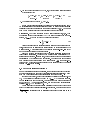
Denition 5. Let i be a dual value for the master constraint (yi si bi). Then
the negative reduced cost constraint (NRC) for these dual values has the variables (z y1 : : : yn ) and is dened by the following condition:
z;
n
X
i=1
i yi 0
(2)
Although it is sucient to generate arbitrary columns with negative reduced
costs, columns with smaller reduced costs will lead to better solutions of the
master problem. We therefore introduce a variable for the left-hand-side of (2)
and we use it as objective for the subproblem.
Hence, we obtain a simple framework that denes constraint programming
based column generations. A column of the master problem is represented by a
solution of a subproblem. Furthermore, the coecient of a column in a constraint
is represented by a variable of the subproblem. Our framework is compatible
with dierent methods for solving the master problem, e.g. the Branch-andPrice method where columns are generated in the search nodes of the master
problem (cf. e.g. 1] for details).
3.2 Path optimization subproblems
In many applications of column generation, the subproblem reduces to a problem
of nding a shortest path in a graph that satises additional constraints. We now
show how to express this important special case in our framework.
For the sake of brevity, we limit our discussion to directed acyclic graphs. Let
(V E ) be a directed acyclic graph where V := f0 : : : n + 1g is the set of nodes.
Let e := j E j be the number of edges. We suppose that s := 0 is a unique source
node, that t := n + 1 is a unique sink node, and that the graph is topologically
ordered1 (i.e. (i j ) 2 E implies i < j ).
We now suppose that the subproblem consists of nding a path through this
graph that respects additional constraints. Furthermore, we suppose that there
1
Each directed acyclic graph can be transformed into a graph of this form in time
O(n + e).
are master constraints that count how often a node occurs in a path. Given a
solution of the subproblem, the coecient of the corresponding column in such
a constraint has the value 1 i the considered node occurs in the selected path.
For each node i 2 N := f1 : : : ng, we therefore introduce a boolean variable yi
in the subproblem. This variable has the value 1 i node i is contained in the
selected path. Thus, the path is represented by an array of boolean variables. In
some cases, it is also of advantage to represent it by a constrained set variable2
Y . The value v(Y ) of this variable is a subset of N . Given this set variable, we
can dene the boolean variables by the following constraint:
(3)
yi = 1 i i 2 Y
The cost coecient of a variable in the master problem can often be expressed
as costs of the selected path. We therefore suppose that edge costs cij are given
for each edge (i j ) 2 E . In order to determine the path costs, we need the next
node of a given node i 2 N fsg. For direct acyclic graphs, this next node is
uniquely dened.3
next(i Y ) := min(fj 2 Y j j > ig ftg)
(4)
We now suppose that the cost variable z of the subproblem is the sum between
the path costs and a remainder z .
X
cinext(iY )
(5)
z=z +
0
0
i Y s
2
f g
We can also express the negative reduced cost constraint in this form. In addition
to the boolean variable yi , we can have n variables yi for other kinds of master
constraints. Let i be the dual values for yi and i be the dual values for yi . The
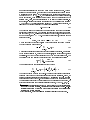
dual vales i can immediately be subtracted from the original edge costs:
i=s
cij := ccij ; ifotherwise
(6)
ij
i
The negative reduced cost constraint has then the form
0
0
0
0
0
X
i Y s
2
f g
1
0 n
X
cinext(iY ) + @z ; i y i A 0
0
0
0
0
i=1
0
(7)
The rst part is the modied path costs. The second part treats the remaining
costs and has the form of the usual negative reduced cost constraint. Below, we
introduce a single constraint that ensures that Y represents a path and that also
determines the cost of the path. It thus allows to encode the constraints above.
This constraint needs only the set variable and a description of the graph. It
avoids the introduction of additional variables for next(i Y ) and cinext(iY ) .
Constrained set variables are supported by 11] and allow a compact representation
of an array of boolean variables. Constraints on set variables such as sum-over-set
constraints often allow a better and more ecient propagation than corresponding
constraints on boolean variables.
3
For cyclic graphs, we have to introduce constraint variables for the next node.
2
4 An ecient path constraint on set variables
4.1 Semantics and propagation
In this section, we introduce an ecient path constraint for directed acyclic
graphs with edge costs (so-called networks). The constraint ensures that a given
set variable represents a path through this graph. Furthermore, the constraint
ensures that a given variable represents the cost of this path. We also show how
bound consistency can be achieved by determining shortest and longest paths.
The path constraint is dened for a directed acyclic graph (V E ) (of the
same form as introduced in Sect. 3.2), the edge costs cij , a set variable Y and
a variable z . The constraint has the variables Y and z and is dened by two
conditions:
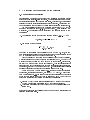
1. Y represents a path in the graph from source s to sink t, i.e. Y N and
f(i next(i Y )) j i 2 Y fsgg E
2. z is the sum of the edge costs
z=
X
i Y s
2
cinext(iY )
(8)
(9)
f g
Compared to the existing path constraint of Ilog Solver 4.3 11], the new
path constraint is formulated on a set variable and can thus add arbitrary nodes
of N to a partially known path or remove them from it.
Next we discuss how to achieve bound consistency for the path constraint.
We introduce lower and upper bounds for the variables z and Y . Let min(z ) be
a lower bound for the value of z and max(z ) be an upper bound. Furthermore,
let req(Y ) be a lower bound for the set variable Y . This set contains all the
elements that must be contained in the path and is therefore called required set.
Furthermore, let pos(Y ) be an upper bound for Y . This set is also called possible
set since it contains the nodes that can possibly belong to the path.
We say that a path P is admissible (w.r.t. the given bounds) if it starts in
the source s, terminates in the sink t, and req(Y ) P pos(Y ). We say that a
path P is consistent (w.r.t. the given bounds) if it is admissible and if the costs
of the path are greater than min(z ) and smaller than max(z ). We say that the
bounds are consistent if they satisfy the following conditions:
1. For each i 2 pos(Y ) there exists a consistent path P through i and for each
i 2= req(Y ) there exists a consistent path P that does not contain i.
2. There exist a consistent path with costs max(z ) and a consistent path with
costs min(z ).
If the given bounds are not consistent then we can make them tighter using the
following propagation rules.
1. If the bound min(z ) is smaller than the costs lb of the shortest admissible
path (or +1 if there is no admissible path) then we replace it by lb. If the
bound max(z ) is greater than the costs ub of the longest admissible path (or
;1 if there is no admissible path) then we replace it by ub.
2. If the costs of the shortest admissible path through i for i 2 pos(Y ) are
strictly greater than the upper bound max(z ) then we can remove i from
pos(Y ). If the costs of the longest admissible path through i for i 2 pos(Y )
are strictly smaller than the lower bound min(z ) then we can remove i from
pos(Y ).
3. If the costs of the shortest admissible path that does not contain i for i 2=
req(Y ) are strictly greater than the upper bound max(z ) then we have to add
i to req(Y ). If the costs of the longest admissible path that does not contain
i for i 2= req(Y ) are strictly smaller than the lower bound min(z) then we
have to add i to req(Y ).
Repeated application of these propagation rules will establish consistent bounds
(or lead to an empty domain, i.e. an inconsistency). The propagation rules themselves require the detection of shortest (and longest) admissible paths. Some of
them require that these paths contain a given node i, others require that the
paths do not contain a node i. In the next section, we show how shortest paths
satisfying these conditions can be computed eciently. Furthermore, we discuss
how to maintain these paths when incremental updates occur. Longest paths can
be determined similarly by applying the algorithms to the negated edge costs
;cij and to the negated cost variable ;y.
4.2 Initial and incremental propagation algorithms
In order to achieve bound consistency for the path constraint, we have to nd
shortest paths from the source to all the nodes. Since we deal with directed
acyclic graphs we can use a variant of Dijkstra's shortest path algorithm that
visits nodes in topological order and thus runs in linear time O(n + e). Furthermore, it does not require that edge costs are positive (cf. e.g. 5] for details).
However, we have to ensure that the algorithm determines only nodes which
are subsets of pos(Y ) and supersets of req(Y ). For this purpose, we consider only
nodes in pos(Y ) and we ignore all edges (i j ) that go around a node of req(Y ).
That means if there is a k 2 req(Y ) s.t. i < k < j then we do not consider (i j ).
This can be done eciently by determining the smallest element of req(Y ) that
is strictly greater than i.
For propagation rule 2 we must determine the cost of a shortest admissible
path going through node i 2 pos(Y ). This cost is simply the sum of the costs
yis of the shortest path from the sink to node i and the costs yit of the shortest
path from i to the sink. The latter can be computed with the same algorithm by
just inverting all the edges and by applying it to the sink. If yis + yit is strictly
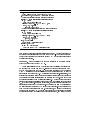
greater than max(z ) we remove i from the possible set. Algorithm 1 shows the
implementation of propagation rules 1 and 2.
For the sake of brevity, we omit the detailed algorithm for propagation rule
3 and outline only the idea. We remove all edges (i j ) if the costs of the shortest
Algorithm 1 Shortest Path with propagation rules 1 and 2
for tall i 2 V sdo
yi := 1 yi := 1 i := NIL i := NIL // Init
yss := 0 ytt := 0 ks := 0 kt := 0 // Init source and sink
// determining shortest path from source s to all nodes
for alls i 2 V taken in increasing topological order do
if ks i then
k := minfl 2 req(Y ) j l > ig
for alls j 2 spos(Y ) s.t. (i j ) 2 E and j ks do
if ysj > yis + cij then
yj := yi + cij j := i
// determining reverse shortest path from sink t to all nodes
for allt i 2 V taken in decreasing topological order do
if kt i then
k := maxfl 2 req(Y ) j l < ig
for allt j 2 tpos(Y ) s.t. (j i) 2 E and j kt do
if ytj > yit + cji then
yj := yi + cji j := i
if yts > min(z)s then
min(z) := yt // propagation rule 1
for alls i 2 tpos(Y ) do
if yi + yi > max(z) then
pos(Y ) := pos(Y ) n fig // propagation rule 2
path through this edge are strictly greater than max(z ). We then determine the
cut nodes of the resulting graph and add them to req(Y ). The edge removal and
the cut point detection can be achieved in time O(n + e) which allows us to state
the following theorem.
Theorem 1. Bound consistency for the path constraint on a directed acyclic
graph can be computed in time O(n + e).
We are also interested in how to maintain bound consistency eciently and
we suppose that we can use the AC5-algorithm 10] as implemented in Ilog
Solver as a framework for this. We thus obtain changes of the domains of
z and Y (increase of min(z) decrease of max(z) elements added to req(Y )
elements removed from pos(Y )). We detail only the last event. Interestingly, the
shortest path algorithm already provides a notion of current support that allows
to implement an incremental algorithm in the style of AC6 3]. Each node i has
a current predecessor i and a current successor i . We have to update the costs
yis if the the current predecessor i is removed from the possible set or the costs
ys have been changed. In order to achieve this, we introduce a list of nodes that
are currently supported by a given node. If k is removed from the possible set
we visit all nodes i supported by k and update their costs. If the costs change
then we apply propagation rule 2 to i. Furthermore, we repeat the procedure
for the nodes supported by i. Further work is needed to elaborate the details
of this procedure and to check whether propagation rule 3, as well as the other
i
events can be treated similarly. Moreover, we will analyze the precise complexity
of maintaining bound consistency.
5 Application to crew assignment
5.1 The subproblem of column generation
The constraints of the crew assignment problem are formulated in the Parrot
roster library which provides a modeling layer on top of Ilog Solver. This layer
facilitates the expression of complex crew regulations and translates them into
constraints on set variables describing the activities of a crew member and on
integer variables describing derived attributes of crew members and activities.
The roster library introduces new constraints on set variables such as a sumover-set-constraint, a next- and a previous-constraint, and a gliding-sum constraint. The previous constraint can, for example, be used to dene the rest time
before an activity as the dierence between its start time and the end time of the
previous activity. The gliding-sum constraint ensures that the amount of ight
time of a crew member in time windows of a given length does not exceed a
maximal ight time. Those constraints ensure bound consistency for the set and
integer variables.
When we generate rosters for a selected crew member we additionally set up
a legality graph between the possible activities of this crew member and post the
path constraint on his/her set variable. The graph describes the possible successions between activities as established by roster library propagation. An activity
j can be a direct successor of an activity i if we do not get an inconsistency when
assigning i and j to the crew member and when removing all activities between
i and j from her/him.
The generation process is usually iterative, i.e. after generating a certain
number of rosters, the master problem is solved. The duals are then used to
generate new rosters, and so on. We point out, that in the application to crew
assignment, we usually do not encounter a gap between the nal continuous linear programming relaxation of the master problem, thus we can prove optimality
in the present case. We also note that in most cases, the cost structure of crew
assignment problems meets the assumption of Sect. 3.2.
5.2 Numerical results
In this section, we present computational results on real test data of a major European airline. The considered test cases consist of typical selections of
the rules and regulations from the production system of the airline. These, together with crew information and the activities to be assigned, form the so called
Large-Size-Airline-Case in Parrot. In the present paper, we use a simplied but
representative objective function and we do not consider constraints concerning
more than one roster which means that the master problem is a set partitioning
problem. However, from our experience with the data we consider the obtained
results as representative.
In the following we highlight some of the ndings of the experiments. Thereby
we characterize an instance by the number of crew members, the number of
preassigned activities, and the number of activities to be assigned. For example,
an instance of type 10-16-40 consists of 10 crew members, 16 preassignments,
and 40 activities.
35000
30000
Choice points
25000
20000
15000
10000
5000
0
0
2
4
6
8
10
12
14
Master Iteration
SPC 574
NRC 574
609
1918
504
392 280
1197 2037 4599
931
5117
210 119
119 147
63
77
0
6118 12446 14077 13433 18340 21532 32095
Fig. 1. Number of choice points for NRC and SPC for an instance of type 7-0-30.
Firstly, we compare the number of choice points considered when using the
shortest path constraint (SPC) with the propagation as described in Sect. 4 and
with the use of the \pure" NRC as dened in Def. 5. The result for a small
instance of type 7-0-30, where one can still prove optimality using NRC only, is
shown in Fig. 1. The pruning eect of SPC allows to prove optimality in iteration
13 without considering any choice points, while it becomes very expensive to
prove optimality when using NRC only. Figure 2 presents the pruning behavior
of SPC for instances of type 40-100-199 and 65-165-250 which is of the same
type as for the smaller instance.
The reduction of choice points does not automatically yield a better computation time, as the time spent per choice point tends to be higher. However,
Fig. 3 shows that the latter is not the case. The left plot shows a comparison of
two program versions, one using SPC and one using NCR only, in a time versus
quality diagram. Although the SPC version needs more time in the beginning
(due to the more costly initial propagation), it catches up quickly and performs
much better than the version not using it. In Fig. 3 we also compare the behavior of IP-costs and LP-costs in the right diagram. As mentioned above, the
gap between IP and LP diminishes, i.e. it is possible to prove optimality. We
also performed experiments on how well SPC scales. The results showed that
the pruning eect of SPC gets better for growing input size.
prune 65-165-250
Choice points
prune 40-103-159
9000
8000
7000
6000
5000
4000
3000
2000
1000
0
8000
7000
6000
5000
4000
3000
2000
1000
0
1
2
3
4
5
Master Iteration
6
7
1
1.5
2
2.5
3
3.5
Master Iteration
4
4.5
5
cost
Fig. 2. Pruning for SPC for instances of type 40-100-199 and 65-165-250.
400000
400000
350000
350000
300000
300000
250000
250000
200000
200000
150000
150000
100000
100000
50000
50000
0
0
0
100
200
300 400
time [sec]
500
600
0
100
200
300 400
time [sec]
500
600
Fig. 3. The left picture shows time versus quality with and without SPC and the right
picture the development of LP- and IP-costs with SPC on an instance of type 10-16-40.
To give two concrete examples for running times for solving problems to
optimality using SPC: an instance of the type 40-103-199 took 1921 seconds and
an instance of the type 65-165-250 took 3162 seconds of CPU time on a Sun Ultra
Enterprise 450 with 300 MHz. These running times are encouraging, considering
the early stage of the development of the dierent software components used to
perform the computations.4
6 Conclusions
In this paper, we introduced and applied a framework for constraint programming based column generation, which is a new way for integrating constraint
programming and linear programming. This allows to tackle large-scale optimization problems of a certain structure. Compared to traditional methods of
column generation, we formulate the subproblem as a CSP and thus extend the
modeling facilities of column generation. Compared to co-operative solvers (cf.
4
In Parrot, these software components are currently further developed and signicant performance improvements can be expected.
e.g. 2, 4, 15]), the CP and LP solver do not communicate only by reducing domains, but mainly by exchanging solutions and dual values. The use of the duals
in the negative reduced cost constraint reduces the domains for the next solution. Optimization methods that are usually used for solving the subproblem can
be encapsulated in a global constraint. We demonstrated this for shortest path
problems and developed a path constraint on set variables for networks that
achieves bound consistency in linear time. This new path constraint has been a
key element for optimally solving dicult airline crew assignment problems. We
have thus demonstrated that constraint programming can indeed increase the
power of the column generation method.
References
1. C. Barnhart, E.L. Johnson, G.L. Nemhauser, M.W.P. Savelsbergh, and P.H. Vance.
Branch-and-Price: Column Generation for Huge Integer Programs. In Operations
Research, 46:316-329, 1998.
2. H. Beringer and B. De Backer. Combinatorial problem solving in constraint logic
programming with cooperative solvers. In C. Beierle and L. Plumer, editors, Logic
Programming: Formal Methods and Practical Applications, pages 245{272. Elsevier,
1995.
3. C. Bessiere. Arc-consistency and arc-consistency again. Articial Intelligence,
65:179{190, 1994.
4. A. Bockmayr and T. Kasper. Branch-and-Infer: A unifying framework for integer
and nite domain constraint programming. INFORMS Journal of Computing,
10(3):287{300, 1998.
5. T.H. Cormen, C.E. Leierson, R.L. Riverste. Introduction to Algorithms, McGrawHill, 1990.
6. G.B. Dantzig and P. Wolfe. The decomposition algorithm for linear programs.
Econometrica, 29(4):767{778, 1961.
7. J. Desrosiers, M.M. Solomon, and F. Soumis. Time constrained routing and
scheduling. In Handbooks of Operations Research and Management Science, 8:35{
139, 1993.
8. F. Gamache, F. Soumis, D. Villeneuve, J. Desrosiers, and E. Gelinas. The preferential bidding system at Air Canada. Transportation Science, 32(3):246{255,
1998.
9. P.C. Gilmore and R.E. Gomory. A linear programming approach to the cutting
stock problem. Operations Research, 9:849{859, 1961.
10. P. Van Hentenryck, Y. Deville, and C.M. Teng. A generic arc-consistency algorithm
and its specializations. Articial Intelligence, 57:291{321, 1992.
11. ILOG. Ilog Solver. Reference manual and user manual. V4.3, ILOG, 1998.
12. E. Jacquet-Lagreze and M. Lebbar. Column generation for a scheduling problem
with maintenance constraints. In CP'98 Workshop on Large-Scale Combinatorial
Optimization and Constraints, Pisa, Italy, 1998.
13. N. Kohl and S.E. Karisch. Airline crew assignment: modeling and optimization.
Carmen Report, 1999. In preparation.
14. Parrot. Executive Summary. ESPRIT 24 960, 1997.
15. R. Rodosek, M. Wallace, and M.T. Haijan. A new approach to integrating mixed
integer programming and constraint logic programming. Annals of Operations
Research, 86:63{87, 1999.