1
Interprogram Communication
12.8 Special Considerations for Interprogram Communication
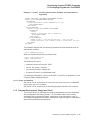
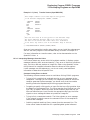
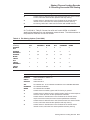
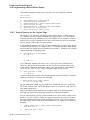
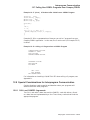
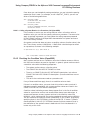
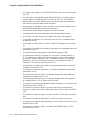
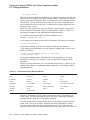
On Tru64 UNIX, these language features are implemented using nlist. Because
of this implementation, the following items will not work on stripped images (for
additional information on the strip command, refer to strip(1)):
•
CALL data item
•
CANCEL statement
•
cobcall routine
•
cobcancel routine
•
cobfunc routine ♦
On OpenVMS, these features are implemented by depositing information in
compiler generated psects. ♦
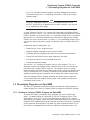
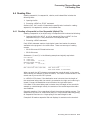
12.8.2 Calling OpenVMS Alpha Shareable Images (OpenVMS)
When calling a subprogram installed as a shareable image, the program name
specified in the CALL statement can be either a literal or a data-name. The same
is true for the CANCEL verb. For more information on shareable images refer to
Compaq COBOL online help file and the OpenVMS Linker Utility Manual. ♦
12.8.3 Calling Tru64 UNIX Shareable Objects (Tru64 UNIX)
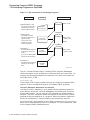
When you call a subprogram contained in a shared object, the program name
specified in the CALL statement must be a literal. The CANCEL verb cannot be
applied to programs in shared objects. For more information on shared objects,
refer to the Tru64 UNIX programming documentation.
12.8.4 Case Sensitivity on Tru64 UNIX
One difference between Tru64 UNIX and OpenVMS Alpha is case sensitivity.
From program code creation, to your application internal operations, you must
maintain an awareness of this issue when you consider porting COBOL source
code between the platforms.
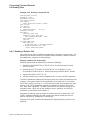
12.8.4.1 Linker Case Sensitivity
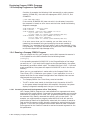
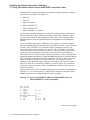
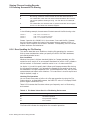
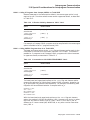
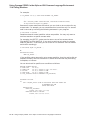
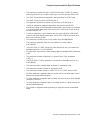
The linker on Tru64 UNIX is case sensitive. ‘‘JOB1’’ is not the same routine as
‘‘job1’’. However, COBOL is defined as a case insensitive language: CALL ‘‘job1’’
should invoke a routine whose PROGRAM-ID is JOB1. This is not true of case
sensitive languages, such as C. The names option flag increases the flexibility of
the Compaq COBOL compiler in communicating with case sensitive languages.
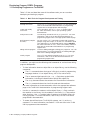
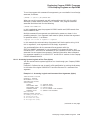
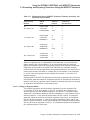
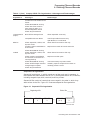
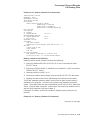
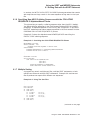
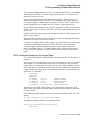
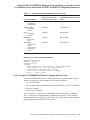
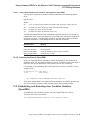
The names option has three values:
•
lower—Forces all external data names, PROGRAM-ID names, and CALL
literals to be lowercase. This is the default.
•
upper—Forces all external data names, PROGRAM-ID names, and CALL
literals to be uppercase.
•
as_is—The case of literals used in CALL literals is taken as is. This is
useful when you are calling subroutines with mixed case (for example,
GetStatusRoutine). Data items defined with EXTERNAL will be treated
as lowercase. PROGRAM-ID names will be treated as uppercase.
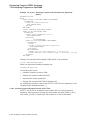
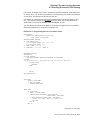
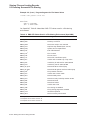
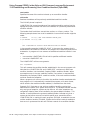
The names option flag does not apply to the CANCEL verb or to the CALL verb
used with a data item. These language features are meaningful only when both
the calling program and the called program are Compaq COBOL programs.
12–32 Interprogram Communication