1
D5.1: IS data quality control
30/11/2014
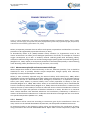
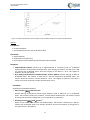
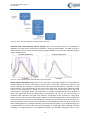
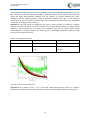
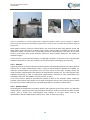
Figure 1. Primary productivity is the product of phytoplankton biomass (regulated by import, export, sinking,
mortality, nutrient supply, and growth rate) times phytoplankton growth rate (regulated by light, temperature,
and nutrient concentrations) (from Cloern et al., 2014)
Salinity is important parameter that can affect stock species in aquaculture and therefore is a routine
parameter to be registered by aquaculture farmers (cf. D2.1).
As described by Hamer et al. (2008) seawater salinity variation (i.e., hypoosmotic stress) in the
marine environment can affect various biological parameters of mussels, for example an increased
oxygen consumption up to 58%. A tendency towards reduced growth with decreasing salinity,
reflected as reduced shell growth rate and decreasing weight specific growth rate with falling salinity.
(Riisgård et al., 2012). Salinity is an important parameter to be measured especially in mussel farming
areas where big salinity fluctuations occur (e.g. estuaries, river runoff).
2.3.2 Measurement principle and measurement challenges
Water temperature should be measured directly at the site, whenever possible, if not it should be
measured as soon as possible, because sample temperature changes quickly after collection,
especially in warm/cold atmospheric conditions.
Salinity is most commonly reported using the Practical Salinity Scale 1978 (Lewis, 1980). Before
development of the Practical Salinity Scale (PSS), salinity was reported in parts per thousand. Salinity
expressed in the PSS is a dimensionless value, although by convention, it is reported as practical
salinity units (PSU). Salinity in practical salinity units is nearly equivalent to salinity in parts per
thousand (Wagner et al., 2006). More often, salinity is not measured directly, but is instead derived
from the conductivity measurement (Wagner et al., 2006). Electrical conductance is a measure of the
capacity of water (or other media) to conduct an electrical current. Electrical conductance of water is
a function of the types and quantities of dissolved substances in water, but there is no universal
linear relation between total dissolved substances and conductivity. Conductivity is defined as a
measure of the electrical conductance of a substance normalized to unit length and unit cross section
at a specified temperature (Radtke et al., 2005).
2.3.3 Protocol
Measurements will be carried out according to instructions given by the manufacturer. There are
many sensors on the marked like SeaBird CTD, SAIV STD, YSI multiprobes and WTW-instruments.
As mentioned earlier in the document, salinity values are derived from the conductivity of water,
using instruments like the CTD Seabird SBE SeaCat 19plus which include temperature, depth, PAR
12