1
Fluorescence Imaging
technical manual
Fluorescence Imaging
principles and methods
principles and methods
S 1´
Energy
S1
S0
tm
63-0035-28 Rev.A, 2000-12 US$105
#310-332
hνEX
hνEM
FLUORESCENCE IMAGING
Contents
Chapter 1: Introduction to fluorescence ...........................................................1
Advantages of fluorescent detection ..................................................................1
Fluorescence process..........................................................................................2
Properties of fluorochromes...............................................................................3
Excitation and emission spectra..................................................................3
Signal linearity ............................................................................................5
Brightness ...................................................................................................5
Susceptibility to environmental effects ........................................................6
Quantification of fluorescence ...........................................................................7
Chapter 2: Fluorescence imaging systems .....................................................9
Introduction.......................................................................................................9
Excitation sources and light delivery optics ..............................................10
Light collection optics...............................................................................10
Filtration of the emitted light....................................................................10
Detection, amplification, and digitization .................................................11
Scanner systems ...............................................................................................12
Excitation sources.....................................................................................12
Excitation light delivery ............................................................................13
Light collection .........................................................................................15
Signal detection and amplification ............................................................17
System performance..................................................................................18
CCD camera-based systems .............................................................................19
Excitation sources and light delivery.........................................................20
Light collection .........................................................................................20
Signal detection and amplification ............................................................20
System performance..................................................................................20
Amersham Pharmacia Biotech imaging systems...............................................21
Chapter 3: Fluorochrome and filter selection ...............................................25
Introduction.....................................................................................................25
Types of emission filters...................................................................................25
Using emission filters to improve sensitivity and linearity range......................26
General guidelines for selecting fluorochromes and filters ...............................27
Single-colour imaging ...............................................................................27
Multicolour imaging .................................................................................28
Chapter 4: Image analysis ..............................................................................31
Introduction.....................................................................................................31
Image display...................................................................................................31
Image documentation ......................................................................................32
● i
FLUORESCENCE IMAGING
Quantification .................................................................................................33
One-dimensional gel/blot analysis.............................................................33
Array and microplate analysis ..................................................................35
Two-dimensional protein gel analysis .......................................................36
Background correction ....................................................................................36
Image processing tools.....................................................................................40
Amersham Pharmacia Biotech image analysis software ...................................41
Chapter 5: Fluorescence applications using
Amersham Pharmacia Biotech imaging systems ...........................................45
Introduction.....................................................................................................45
Detection of nucleic acids in gel ......................................................................45
Nucleic acid gel stains...............................................................................45
Instrument compatibility...........................................................................47
Typical protocol........................................................................................47
Expected results ........................................................................................49
Detection of proteins in gel..............................................................................51
Protein gel stains.......................................................................................51
Instrument compatibility...........................................................................52
Typical protocols ......................................................................................53
Protein detection in one-dimensional gels ..........................................53
Protein detection in two-dimensional gels ..........................................55
Expected results ........................................................................................58
Quantification of nucleic acids in solution ......................................................59
Dyes for quantification of nucleic acids in solution .................................59
Instrument compatibility...........................................................................60
Typical protocol........................................................................................60
Expected results ........................................................................................62
Quantification of proteins in solution..............................................................63
Dyes for quantification of proteins in solution .........................................63
Instrument compatibility...........................................................................64
Typical protocol........................................................................................64
Expected results ........................................................................................66
Southern and Northern blotting ......................................................................67
Fluorogenic substrates for Southern and Northern detection....................67
Instrument compatibility...........................................................................69
Typical protocol........................................................................................69
Expected results ........................................................................................72
Western blotting ..............................................................................................73
Western detection strategies ......................................................................73
Enzyme-amplified detection (chemifluorescence)................................73
Direct fluorescent detection................................................................75
Total protein stains for Western blots ................................................75
Instrument compatibility...........................................................................76
Typical protocols ......................................................................................77
Western blotting using a fluorogenic substrate...................................77
Western blotting using a fluorochrome-conjugated antibody .............80
Expected results ........................................................................................82
tm
63-0035-28 ● ii
FLUORESCENCE IMAGING
Using covalent labels for nucleic acid and protein analysis..............................83
Nucleic acid labelling ...............................................................................84
Protein labelling .......................................................................................85
Instrument compatibility...........................................................................86
Applications and protocols .......................................................................86
Differential display analysis ...............................................................86
In-lane PCR product analysis.............................................................89
Bandshift assay ..................................................................................92
Using naturally occurring fluorescent proteins.................................................96
Green fluorescent protein and its variants ................................................96
Instrument compatibility....................................................................97
Examples of applications using GFP ..................................................98
Expected results .................................................................................98
Phycobiliproteins ......................................................................................99
Instrument compatibility..................................................................100
Chapter 6: Practical recommendations ........................................................101
Introduction...................................................................................................101
Sample preparation........................................................................................101
Sample placement ..........................................................................................103
Instrument operation .....................................................................................105
Data evaluation .............................................................................................107
Glossary ............................................................................................................109
Appendix 1: Frequently asked questions ......................................................115
Typhoon, Storm, and FluorImager Systems ...................................................115
VDS-CL System .............................................................................................118
Appendix 2: Spectral characteristics of commonly
used fluorophores and fluorescent proteins.................................................119
Appendix 3: Instrument compatibility and setup with
common fluorophores and fluorescent proteins ..........................................127
Appendix 4: Instrument performance with
common fluorophores......................................................................................131
References .......................................................................................................133
References cited in text ..................................................................................133
General references .........................................................................................135
Index ................................................................................................................137
● iii
CHAPTER 1 : INTRODUCTION TO FLUORESCENCE
Chapter 1
INTRODUCTION TO FLUORESCENCE
Advantages of fluorescent detection
Fluorescent labelling and staining, when combined with an appropriate
imaging instrument, is a sensitive and quantitative method that is widely
used in molecular biology and biochemistry laboratories for a variety of
experimental, analytical, and quality control applications. Commonly
used techniques, including total nucleic acid and protein quantification,
Western, Northern and Southern blotting, PCR✧ product analysis, and
DNA sequencing, can all benefit from the application of fluorescencebased methods for detection. Fluorescent detection offers a number of
important advantages over other methods, several of which are described
below.
Sensitivity
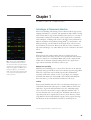
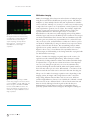
Fig 1. Fluorescently labelled DNA size
ladders and PCR products loaded in
the same lanes were electrophoretically
separated in a polyacrylamide gel and
imaged using Typhoon™ 8600 scanner.
Fluorescein (green), Cy™3 (yellow),
ROX™ (blue) and Cy5 (red) labels were
used in amounts varying from 0.25 to
5 fmol per band.
Fluorescent probes permit sensitive detection of many biological
molecules. Fluorescent stains and dyes are frequently the most sensitive
option for detection of total DNA, RNA, and protein compared with
traditional colourimetric methods. Many fluorescence applications
approach the sensitivity afforded by radioisotopes.
Multiple-label possibility
With fluorescent labelling, two or more fluorochromes can be detected
separately using optical filters and a fluorochrome separation algorithm.
Therefore components can be labelled specifically and identified
separately in the same sample or lane of a gel (Fig 1). For example,
standards and unknowns used in PCR can be labelled with different
fluorochromes to provide an internal standard for the assay.
Stability
Fluorescently labelled molecules offer several distinct advantages over
radiolabelled molecules with respect to stability. Whereas fluorescent
antibodies, oligonucleotide hybridization probes, and PCR primers
can be stored for six months or longer, antibodies labelled with 125I
become unusable in about a month, and 32P-labelled nucleotides and
oligonucleotides decay significantly in about a week. Because of their
long shelf-life, fluorescently labelled reagents can be prepared in large
batches that can be standardized and used for extended periods.
✧
See licensing information on inside back cover.
● 1
FLUORESCENCE IMAGING
This minimizes inter-assay reagent variability when used in applications
such as DNA and protein sizing and quantification, enzyme assays,
immunoassays, PCR-based genetic typing assays, and DNA sequencing.
Additionally, the need for frequent reagent preparation or purchase is
eliminated.
Low hazard
Most fluorochromes are easy to handle, and in the majority of cases, the
simple use of gloves affords adequate protection. With radioactive
materials, however, lead or acrylic shields may be required. In addition,
since fluorochromes can be broken down by incineration, storage or
disposal problems are minimal. Radioactive wastes, on the other hand,
require shielded storage, long-term decay, or regulated landfill disposal.
Commercial availability
A variety of biologically important molecules are available cross-linked
to fluorochromes, including monoclonal and polyclonal antibodies. Some
suppliers even offer a choice of a specific fluorochrome as label on a
given molecule. Other commercially available molecules include
nucleotides and enzyme substrates, such as fluorescent chloramphenicol
for chloramphenicol acetyl transferase (CAT) assays and fluorescein
digalactoside for β-galactosidase assays (lacZ gene).
Lower cost
Long shelf-life and lower costs for transportation and disposal of
fluorochromes make fluorescent labelling, in many cases, less expensive
than radiolabelling.
S1 ➁
Fluorescence process
Energy
S1
hνEX
①
hνEM
➂
S0
Fig 2. Jablonski diagram illustrating
the processes involved in creating an
excited electronic singlet state by
optical absorption and subsequent
emission of fluorescence. ➀ Excitation;
➁ Vibrational relaxation; ➂ Emission.
tm
63-0035-28 ● 2
Fluorescence results from a process that occurs when certain molecules
(generally polyaromatic hydrocarbons or heterocycles) called
fluorophores, fluorochromes, or fluorescent dyes absorb light. The
absorption of light by a population of these molecules raises their energy
level to a brief excited state. As they decay from this excited state, they
emit fluorescent light. The process responsible for fluorescence is
illustrated by a simple electronic state diagram (Fig 2).
Excitation
When a photon of energy, hνEX, supplied by an external source such as a
lamp or a laser, is absorbed by a fluorophore, it creates an excited,
unstable, electronic state (S1). This process distinguishes fluorescence
from chemiluminescence, in which the excited state is created by a
chemical reaction.
CHAPTER 1 : INTRODUCTION TO FLUORESCENCE
Excited state lifetime
The excited state of a fluorophore is characterized by a very short halflife, usually on the order of a few nanoseconds. During this brief period,
the excited molecules generally relax toward the lowest vibrational
energy level within the electronic excited state (Fig 2). The energy lost in
this relaxation is dissipated as heat. It is from the resulting relaxed
singlet excited state (S1) that fluorescence emission originates.
Emission
a)
When a fluorochrome molecule falls from the excited state to the
ground state, light is often emitted at a characteristic wavelength. The
energy of the emitted photon (hνEM) is the difference between the energy
levels of the two states (Fig 2), and that energy difference determines the
wavelength of the emitted light (λEM).
488
495
513 526
Excitation
•
•
•
400
450
λEM = hc/EEM
500
550
600
650
700
Wavelength (nm)
b)
520 532
where
E = the energy difference between the energy levels
of the two states during emission (EM) of light;
h = Planck’s constant;
c = the speed of light
605
Emission
A laser-scanning instrument or a CCD-camera can be used to measure
the intensity of the fluorescent light and subsequently create a digital
image of the sample. Image analysis makes it possible to view, measure,
render, and quantify the resulting image.
400
450
500
550
600
650
700
Wavelength (nm)
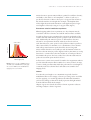
Fig 3. Excitation (a) and emission (b)
spectra of fluorescein (green), DNA-bound
TOTO (orange), and DNA-bound ethidium
bromide (red). Curves are normalized to
the same peak height. The wavelength at
which maximum excitation (a) or maximum
emission (b) occurs is shown above each
curve. The position at which 488 nm laser
light intersects with each of the three
excitation spectra is indicated.
The curves are approximations based on
data collected at Amersham Pharmacia
Biotech or presented in references
1 and 2.
Properties of fluorochromes
Excitation and emission spectra
A fluorescent molecule has two characteristic spectra—the excitation
spectrum and the emission spectrum.
Excitation spectrum
The relative probability that a fluorochrome will be excited by a given
wavelength of incident light is shown in its excitation spectrum. This
spectrum is a plot of total emitted fluorescence versus excitation
wavelength, and it is identical or very similar to the absorption spectrum
(Fig 3a) commonly provided by fluorochrome manufacturers.
● 3
FLUORESCENCE IMAGING
The photon energy at the apex of the excitation peak equals the energy
difference between the ground state of the fluorochrome (S0) and a
favored vibrational level of the first excited state (S1) of the molecule
(Fig 4a). In some cases, the excitation spectrum shows a second peak
at a shorter wavelength (higher energy) that indicates transition of the
molecule from the ground state to the second excited state (S2).
Vibrational relaxation
S2
The width of the excitation spectrum reflects the fact that the fluorochrome molecule can be in any of several vibrational and rotational energy
levels within the ground state and can end up in any of several vibrational
and rotational energy levels within the excited state. In practice, a fluorochrome is most effectively excited by wavelengths near the apex of its
excitation peak. For example, as shown in Figure 3a, the efficiencies with
which the three fluorochromes are excited by 488 nm laser light vary, as
indicated by the relative height of each excitation curve at 488 nm
compared with the height at maximum absorption.
S1
S0
8
7
a)
6
5
4
3
2
1
1 2 3 4
Excitation
Emission
Intensity
Stokes
shift
8
b)
7
6
5
4
3
2
1
1 2 3 4
Wavelength
Fig 4. Diagram of the energy levels
of a fluorochrome molecule, including
superimposed vibrational energy levels
(a) and an example of excitation and
fluorescent spectra (b).
Reproduced from reference 3.
Copyright © 1980, W. H. Freeman and
Company. Reprinted with permission.
Emission spectrum
The relative probability that the emitted photon will have a particular
wavelength is described in the fluorochrome’s emission spectrum (Fig 3b),
a plot of the relative intensity of emitted light as a function of the
emission wavelength. (In practice, the emission spectrum is generated by
exciting the fluorochrome at a constant intensity with a fixed wavelength
of light.) The apex of the emission peak occurs at the wavelength whose
energy equals the difference between the energy of the base level of the
excited state and that of a favored vibrational level in the ground state
(Fig 4a).
The shape of the emission band is approximately a mirror image of the
longest-wavelength absorption band (Fig 4b), providing that the vibronic
structures of the excited and ground states are similar. In theory, the
transition 1 in excitation and transition 1 in emission (Fig 4a) should
occur at the same wavelength. However, this is usually not the case in
solution, mainly due to solvent relaxation (3).
The emission spectrum is always shifted toward a longer wavelength
(lower energy) relative to the excitation spectrum, as shown for the
spectra of the three fluorochromes in Figure 3. The difference in
wavelength between the apex of the emission peak and the apex of the
excitation peak is known as the Stokes shift. This shift in wavelength
(energy) represents the energy dissipated as heat during the lifetime of the
tm
63-0035-28 ● 4
CHAPTER 1 : INTRODUCTION TO FLUORESCENCE
excited state before the fluorescent light is emitted. The Stokes shift is
fundamental to the sensitivity of fluorescent techniques because it allows
emission photons to be detected against a low background spectrally
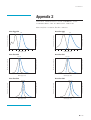
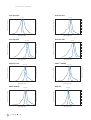
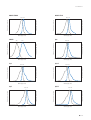
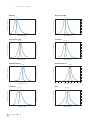
removed from excitation photons. See Appendix 2 for excitation and
emission spectra of many commonly used fluorophores.
600 000
Intensity
500 000
400 000
300 000
200 000
Signal linearity
100 000
0
0
4
8
12 16 20 24 28 32 36 40 44
DNA (fmol)
Fig 5. Fluorescence linearity. A 24-mer
DNA oligonucleotide, 5' end-labelled with
fluorescein (two-fold serial dilutions) was
detected in denaturing polyacrylamide gel
sandwich using Typhoon scanner with
532 nm excitation and 526SP emission
filter. The plot shows signal linearity over a
range of 100 amol to 44 fmol.
The intensity of the emitted fluorescent light is a linear function of the
amount of fluorochrome present when the wavelength and intensity of
the illuminating light are constant (e.g. when using a controlled laser
light source). Although the signal becomes non-linear at very high
fluorochrome concentrations, linearity is maintained over a very wide
range of concentrations. In fact, measurement down to 100 amol is not
unusual, with linearity extending over several orders of magnitude
(Fig 5).
Brightness
Fluorochromes differ in the level of intensity (brightness) they are
capable of producing. This is important because a dull fluorochrome is a
less sensitive probe than a bright fluorochrome. Brightness depends on
two properties of the fluorochrome:
■
its ability to absorb light (extinction coefficient)
■
the efficiency with which it converts absorbed light into emitted
fluorescent light (quantum efficiency)
The brightness of a fluorochrome is proportional to the product of its
extinction coefficient (ε) and its quantum efficiency (φ), as indicated in
the following relationship:
Brightness ~ εφ
The extinction coefficient of a fluorochrome is the amount of light that
a fluorochrome absorbs at a particular wavelength. The molar extinction
coefficient is defined as the optical density of a 1 M solution of the
fluorochrome measured through a 1 cm light path. For fluorochromes
that are useful molecular labels, the molar extinction coefficient at peak
absorption is in the tens of thousands.
● 5
FLUORESCENCE IMAGING
The probability that an excited fluorochrome will emit light is its
quantum efficiency and is given by the following equation:
φ = number of photons emitted / number of photons absorbed
Values for φ range from 0 (for nonfluorescent compounds) to 1 (for
100% efficiency). For example, fluorescein has a φ of 0.9 and Cy™5 has
a φ of 0.3. In practice, φ is usually listed as the quantum efficiency at the
wavelength of maximum absorption.
Both fluorescein (ε ≈ 70 000, φ ≈ 0.9) and Cy5 (ε ≈ 200 000, φ ≈ 0.3) are
very bright fluorochromes. Although their quantum efficiencies and
extinction coefficients are quite different, they are similar in brightness.
This illustrates the importance of considering both extinction coefficient
and quantum efficiency when evaluating new fluorochromes.
Fluorescence intensity is also affected by the intensity of incident
radiation. Although in theory, the more intense source will yield the
greater fluorescence, in actual practice, photodestruction of the sample
can occur when high intensity light is delivered over a prolonged period
of time.
Susceptibility to environmental effects
The quantum efficiency and excitation and emission spectra of a
fluorochrome can be affected by a number of environmental factors,
including temperature, ionic strength, pH, excitation light intensity and
duration, covalent coupling to another molecule, and noncovalent
interactions (e.g. insertion into double-stranded DNA). Many suppliers
provide information on the characteristics of their fluorescent reagents
under various conditions.
A significant effect, known as photodestruction or photobleaching,
results from the enhanced chemical reactivity of the fluorochrome when
excited. Since the excited state is generally much more chemically
reactive than the ground state, a small fraction of the excited fluorochrome molecules can participate in chemical reactions that alter the
molecular structure of the fluorochrome and create a molecule with
reduced fluorescence. The rate of these reactions depends on the
sensitivity of the particular fluorochrome to bleaching, the chemical
environment, the excitation light intensity, the dwell time of the
excitation beam, and the number of repeat scans.
tm
63-0035-28 ● 6
CHAPTER 1 : INTRODUCTION TO FLUORESCENCE
Quantification of fluorescence
As discussed previously, the energy (wavelength) of the emitted
fluorescent light is a statistical function of the available energy levels in
the fluorochrome, but it is independent of the intensity of the incident
light. In contrast, the intensity of the emitted fluorescent light varies with
the intensity and wavelength of incident light and the brightness and
concentration of the fluorochrome.
When more intense light is used to illuminate a sample, more of the
fluorochrome molecules are excited, and the number of photons emitted
(i.e. the number of electrons falling to the ground state) increases. If the
illumination is very intense, all the fluorochrome molecules are in the
excited state most of the time (saturation).
When the illumination wavelength and intensity are held constant, as
with the use of a controlled laser light source, the number of photons
emitted is a linear function of the number of fluorochrome molecules
present (Fig 5). At very high fluorochrome concentrations, the signal
becomes non-linear because the fluorochrome molecules are so dense
that excitation occurs only at or near the surface of the sample.
Additionally, some of the emitted light is reabsorbed by other
fluorochrome molecules (self-absorption).
The amount of light emitted by a given number of fluorochrome
molecules can be increased by repeated cycles of excitation. In practice,
however, if the excitation light intensity and fluorochrome concentration
are held constant, the total emitted light becomes a function of how long
the excitation beam continues to illuminate those fluorochrome
molecules (dwell time). If the dwell time is long relative to the lifetime of
the excited state, each fluorochrome molecule can undergo many
excitation and emission cycles.
Measuring fluorescent light intensity (emitted photons) can be
accomplished with any photosensitive device. For example, for detection
of low-intensity light, a photo multiplier tube or PMT can be used. This
is simply a photoelectric cell with a built-in amplifier. When light of
sufficient energy hits the photocathode in the PMT, electrons are emitted,
and the resulting current is amplified. The strength of the current is
proportional to the intensity of the incident light. The light intensity is
usually reported in arbitrary units, such as relative fluorescence units (rfu).
For additional information, please see the General References section of
this manual.
● 7
FLUORESCENCE IMAGING
tm
63-0035-28 ● 8
CHAPTER 2 : FLUORESCENCE IMAGING SYSTEMS
Chapter 2
FLUORESCENCE IMAGING SYSTEMS
Introduction
All fluorescence imaging systems require the following key elements:
■
Excitation source
■
Light delivery optics
■
Light collection optics
■
Filtration of the emitted light
■
Detection, amplification and digitization
The design and components of a typical fluorescence detection system are
illustrated in Figure 6. The following paragraphs provide additional
details concerning the elements that comprise the system.
Sample
Fig 6. Components of a general
fluorescence imaging system.
Light delivery optics
Light collection optics
Emission filter
Excitation source
Detection and
amplification
● 9
FLUORESCENCE IMAGING
Excitation sources and light delivery optics
Light energy is essential to fluorescence. Light sources fall into two broad
categories—wide-area, broad-wavelength sources, such as UV and xenon
arc lamps, and line sources with discrete wavelengths, such as lasers
(Fig 7). Broad-wavelength excitation sources are used in fluorescence
spectrometers and camera imaging systems. Although the spectral output
of a lamp is broad, it can be tuned to a narrow band of excitation light
with the use of gratings or filters. In contrast, lasers deliver a narrow
beam of collimated light that is predominantly monochromatic.
Relative output (a.u.)
532
300
500
700
900
1100
Wavelength (nm)
Fig 7. Spectral output of light from a xenon
lamp and Nd:YAG laser. The “relative output”
axis is scaled arbitrarily for the two light
sources. The 532-nm line of the Nd:YAG laser
is shown in green.
In most camera systems, excitation light is delivered to the sample by
direct illumination of the imaging field, with the excitation source
positioned either above, below, or to the side of the sample. Laser-based
imaging systems, on the other hand, use more sophisticated optical paths,
comprising mirrors and lenses, to direct the excitation beam to the
sample. Some filtering of the laser light may also be required before the
excitation beam is directed to the sample.
Light collection optics
High-quality optical elements, such as lenses, mirrors, and filters, are
integral components of any efficient imaging system. Optical filters,
generally referred to as interference filters, are typically made from
laminates of multiple glass elements. Filters can be coated to selectively
absorb or reflect different wavelengths of light, thus creating the best
combination of wavelength selection, linearity, and transmission
properties. (Refer to Chapter 3 for additional information concerning
optical filters.)
Filtration of the emitted light
Although emitted fluorescent light radiates from a fluorochrome in all
directions, it is typically collected from only a relatively small cone angle
on one side of the sample. For this reason, light collection optics must be
as efficient as possible. Any laser light that is reflected or scattered by the
sample must be rejected from the collection pathway by a series of
optical filters. Emitted light can also be filtered to select only the range or
band of wavelengths that is of interest to the user. Systems that employ
more than one detector require additional beamsplitter filters to separate
and direct the emitted light along separate paths to the individual
detectors.
tm
63-0035-28 ● 10
CHAPTER 2 : FLUORESCENCE IMAGING SYSTEMS
Detection, amplification and digitization
For detection and quantification of emitted light, either a photomultiplier
tube (PMT) or a charge-coupled device (CCD) can be used. In both cases,
photon energy from emitted fluorescent light is converted into electrical
energy, thereby producing a measurable signal that is proportional to the
number of photons detected.
After the emitted light is detected and amplified, the analogue signal
from a PMT or CCD detector is converted to a digital signal. The process
of digitization turns a measured continuous analogue signal into discrete
numbers by introducing intensity levels. The number of intensity levels is
based on the digital resolution of the instrument, which is usually given
as a number of bits, or exponents of 2. 8-bit, 12-bit, and 16-bit digital
files correspond to the number of intensity levels allocated within that
image file (256, 4096 and 65 536, respectively). Digital resolution
defines the ability to resolve two signals with similar intensities.
Since only a limited number of intensity levels are available, it is
unavoidable that this conversion process introduces a certain amount of
error. To allow ample discrimination between similar signals and to keep
the error as low as possible, the distribution of the available intensity
levels should correspond well to the linear dynamic range of a detector.
There are two methods of distributing intensity levels. A linear (even)
distribution has the same spacing for all the intensity levels, allowing
measurement across the dynamic range with the same absolute accuracy.
However, relative digitization error increases as signals become smaller.
A non-linear distribution (e.g. logarithmic or square root functions)
divides the lower end of the signal range into more levels while
combining the high end signals into fewer intensity levels. Thus, the
absolute accuracy decreases with higher signals, but the relative
digitization error remains more constant across the dynamic range.
● 11
FLUORESCENCE IMAGING
Scanner systems
Excitation sources
Most fluorescence scanner devices used in life science research employ
laser light for excitation. A laser source produces a narrow beam of
highly monochromatic, coherent, and collimated light. The combination
of focused energy and narrow beam-width contributes to the excellent
sensitivity and resolution possible with a laser scanner. The active
medium of a laser—the material that is made to emit light—is commonly
a solid state (glass, crystal), liquid, or gas (4). Gas lasers and solid-state
lasers both provide a wide range of specific wavelength choices for
different imaging needs. Other light sources used in imaging scanners
include light emitting diodes (LEDs), which are more compact and less
expensive than lasers, but produce a wide-band, low-power output.
Lasers
Argon ion lasers produce a variety of wavelengths including 488 nm and
514 nm that are useful for excitation of many common fluorochromes.
The 488 nm line is especially well-suited for fluorescein and other related
“blue-excited” dyes. Argon ion lasers are relatively large gas lasers and
require external cooling.
Helium neon or HeNe lasers, which generate a single wavelength of
light (e.g. 633 nm), are popular in many laser scanners, including
densitometers, storage phosphor devices, and fluorescence systems. In
fluorescence detection, the helium neon laser can be used to excite the
Cy5 fluorochrome. These lasers are smaller than argon ion lasers and
do not require independent cooling.
Neodymium: Yttrium Aluminium Garnet (Nd:YAG) solid-state lasers,
when frequency-doubled, generate a strong line at 532 nm that
is not readily available from other laser sources. This excitation source
is useful for imaging a wide range of different fluorochromes that excite
efficiently at wavelengths between 490 nm and 600 nm. Cooling is
required to stabilize the output.
Diode lasers (or semiconductor diode lasers) are compact lasers. Because
of their small size and light weight, these light sources can be integrated
directly into the scanning mechanism of a fluorescence imager. Diode
lasers are inexpensive and are generally limited to wavelengths above
635 nm.
tm
63-0035-28 ● 12
CHAPTER 2 : FLUORESCENCE IMAGING SYSTEMS
Light Emitting Diodes (LEDs)
As a laser alternative, the LED produces an output with a much wider
bandwidth (≥ 60 nm) and a wide range of power from low to moderate
output. Because LED light emissions are doughnut shaped, and not
collimated, the source must be mounted very close to the sample using
lenses to tightly focus the light. LEDs are considerably smaller, lighter,
and less expensive than lasers. They are available in the visible
wavelength range above 430 nm.
Excitation light delivery
Because light from a laser is well-collimated and of sufficient power,
delivery of excitation light to the sample is relatively straightforward,
with only negligible losses incurred during the process. For lasers that
produce multiple wavelengths of light, the desired line(s) can be selected
by using filters that exclude unwanted wavelengths, while allowing the
selected line to pass at a very high transmission percentage. Excitation
filters are also necessary with single-line lasers, as their output is not
100% pure.
Optical lenses are used to align the laser beam, and mirrors can be used
to redirect the beam within the instrument. One of the main considerations in delivering light using a laser scanning system is that the light
source is a point, while the sample typically occupies a relatively large
two-dimensional space. Effective sample coverage can be achieved by
rapidly moving the excitation beam across the sample in two dimensions.
There are two ways to move and spread the point source across the
sample, which are discussed below.
● 13
FLUORESCENCE IMAGING
Galvanometer-based systems
Galvanometer-based systems use a small, rapidly oscillating mirror to
deflect the laser beam, effectively creating a line source (Fig 8). By using
relatively simple optics, the beam can be deflected very quickly, resulting
in a short scan time. Compared to confocal systems, galvonometer-based
scanners are useful for imaging thick samples due to the ability to collect
more fluorescent signal in the vertical dimension. However, since the
excitation beam does not illuminate the sample from the same angle in
every position, a parallax effect can result. The term parallax here refers
to the shift in apparent position of targets, predominately at the outer
boundaries of the scan area. Additionally, the arc of excitation light
created by the galvanometer mirror produces some variations in the
effective excitation energy reaching the sample at different points across
the arc. These effects can be minimized with an f-theta lens (as illustrated
in Fig 8), but when the angle of incident excitation light varies over the
imaging field, some spatial distortion can still occur in the resulting
image.
Fig 8. Galvanometer-controlled scanning
mechanism. Light is emitted from the
laser in a single, straight line. The
galvanometer mirror moves rapidly back
and forth redirecting the laser beam and
illuminating the sample across its entire
width (X-axis). The f-theta lens reduces
the angle of the excitation beam delivered
to the sample. The entire sample is
illuminated either by the galvanometer
mechanism moving along the length of
the sample (Y-axis) or the sample moving
relative to the scanning mechanism.
Sample
Sample tray
f-theta lens
Galvo mirror
Laser
tm
63-0035-28 ● 14
CHAPTER 2 : FLUORESCENCE IMAGING SYSTEMS
Moving-head scanners
Moving-head scanners use an optical mechanism that is equidistant from
the sample. This means that the angle and path length of the excitation
beam is identical at any point on the sample (Fig 9). This eliminates
variations in power density and spatial distortion common with
galvanometer-based systems. Although scan times are longer with a
moving-head design, the benefits of uniformity in both light delivery and
collection of fluorescence are indispensible to accurate signal
quantification.
Fig 9. Moving-head scanning mechanism.
The light beam from the laser is folded by
a series of mirrors and ultimately reflected
onto the sample. The sample is illuminated
across its width as the scan head moves
along the scan head rail (X-axis). The
entire sample is illuminated by the scan
head, laser, and mirrors tracking along the
length of the sample (Y-axis).
Sample
Glass platen
Scan head rail
Lens
Mirror
Scan head
Mirror
Laser
Light collection
The light-collection optics in a scanner system must be designed to
efficiently collect as much of the emitted fluorescent light as possible.
Laser light that is reflected or scattered by the sample is generally
rejected from the collection pathway by a laser-blocking filter designed to
exclude the light produced by the laser source, while passing all other
emitted light.
Light collection schemes vary depending on the nature of the excitation
system. With galvanometer systems, the emitted fluorescence must be
gathered in a wide line across the sample. This is usually achieved with a
linear lens (fibre bundle or light bar), positioned beneath the sample, that
tracks with the excitation line, collecting fluorescence independently at
each pixel. Although this system is effective, it can produce image
artefacts. At the edges of the scan area where the angle of the excitation
beam, relative to the sample, is farthest from perpendicular, some
spatial distortion may occur. Where very high signal levels are present,
stimulation of fluorescence from sample areas that are adjacent to the
pixel under investigation can result in an inaccurate signal measurement
from that pixel, an artefact known as flaring or blooming.
● 15
FLUORESCENCE IMAGING
With moving-head systems, emitted light is collected directly below the
point of sample excitation. Again, it is important to collect as much of
the emitted light as possible to maintain high sensitivity. This can be
achieved by using large collection lenses, or lenses with large numerical
apertures (NA). Since the NA is directly related to the full angle of the
cone of light rays that a lens can collect, the higher the NA, the greater
the signal resolution and brightness (5). Moving-head designs can also
include confocal optical elements that detect light from only a narrow
vertical plane in the sample. This improves sensitivity by focusing and
collecting emission light from the point of interest while reducing the
background signal and noise from out-of-focus regions in the sample
(Fig 10). Additionally, the parallel motion of moving head designs
removes other artefacts associated with galvanometer-based systems,
such as spatial distortion and the flaring or blooming associated with
high activity samples.
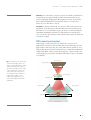
Fig 10. Illustration of confocal optics.
Fluorescence from the sample is collected
by an objective lens and directed toward
a pinhole aperture. The pinhole allows the
emitted light from a narrow focal plane
(red solid lines) to pass to the detector,
while blocking most of the out-of-focus
light (black dashed lines).
Sample
Glass platen
Objective lens
Pinhole
Detector
tm
63-0035-28 ● 16
CHAPTER 2 : FLUORESCENCE IMAGING SYSTEMS
Signal detection and amplification
The first stage in fluorescent signal detection is selection of only the
desired emission wavelengths from the label or dye. In single-channel or
single-label experiments, emission filters are designed to allow only a
well-defined spectrum of emitted light to reach the detector. Any
remaining stray excitation or scattered light is rejected. Because the
intensity of the laser light is many orders of magnitude greater than the
emitted light, even a small fraction of laser light reaching the detector
will significantly increase background. Filtration is also used to reduce
background fluorescence or inherent autofluorescence originating from
either the sample itself or the sample matrix (i.e. gel, membrane, or
microplate).
In multichannel or multi-label experiments using instrumentation with
dual detectors, additional filtering is required upstream of the previously
described emission filter. During the initial stage of collection in these
experiments, fluorescence from two different labels within the same
sample is collected simultaneously as a mixed signal. A dichroic
beamsplitter must be included to spectrally resolve (or split) the
contribution from each label and then direct the light to appropriate
emission filters (Fig 11). At a specified wavelength, the beamsplitter
partitions the incident fluorescent light beam into two beams, passing
one and reflecting the other. The reflected light creates a second channel
that is filtered independently and detected by a separate detector. In this
way, the fluorescent signal from each label is determined accurately in
both spatial and quantitative terms. (See Chapter 3 for additional
information on multichannel experiments.)
Emission filter
Fig 11. Use of a beamsplitter or dichroic
filter with two separate PMTs. Light from a
dual colour sample enters the emission
optics as a combination of wavelengths. A
dichroic beamsplitter distinguishes light on
the basis of wavelength. Wavelengths above
the beamsplitter range pass through, those
below are reflected. In this way two channels
are created. These two channels can then
be filtered and detected independently.
Mirror
PMT
Short wavelength
Emitted light
PMT
Beamsplitter
Long wavelength
Emission filter
● 17
FLUORESCENCE IMAGING
After the fluorescent emission has been filtered and only the desired
wavelengths remain, the light is detected and quantified. Because the
intensity of light at this stage is very small, a PMT must be used to
detect it. In the PMT, photons of light hit a photocathode and are
converted into electrons which are then accelerated in a voltage gradient
and multiplied between 106 to 107 times. This produces a measurable
electrical signal that is proportional to the number of photons detected.
The response of a PMT is typically useful over a wavelength range of
300–800 nm (Fig 12). High-performance PMTs extend this range to
200–900 nm.
Cathode radiant sensitivity (mA/W)
100
10
1
System performance
0.1
The performance of a laser scanner system is described in terms of system
resolution, linearity, uniformity, and sensitivity.
0.01
100
200
300
400
500
600
700
800
900 1000
Wavelength (nm)
Fig 12. An example of the response of a
PMT versus wavelength.
Copyright © 1994, Hamamatsu Photonics
K.K. Used with permission.
Resolution can be defined in terms of both spatial and amplitude
resolution. Spatial resolution refers to the number of data points sampled
per unit length or area. It is a function of the diameter of the light beam
when it reaches the sample and the distance between adjacent
measurements. Spatial resolution is dependent on, but not equivalent to,
the pixel size of the image. Spatial resolution improves as pixel size
reduces. Systems with higher spatial resolution can not only detect
smaller objects, but can also discriminate more accurately between
closely spaced targets. However, an image with a 100 µm pixel size will
not have a spatial resolution of 100 µm. The pixel size refers to the
collection sampling interval of the image. According to a fundamental
sampling principle, the Nyquist Criterion, the smallest resolvable object
in an image is no better than twice the sampling interva (6). Thus, to
resolve a 100 µm sample, the sampling interval must be at most 50 µm.
Amplitude resolution, or gray-level quantification, describes the
minimum difference that is distinguishable between levels of light
intensity (or fluorescence) detected from the sample (7). For example, an
imaging system with 16-bit digitization can resolve and accurately
quantify 65 536 different values of light intensity from a fluorescent
sample.
Linearity of a laser scanner is the signal range over which the instrument
yields a linear response to fluorochrome concentration and is therefore
useful for accurate quantification. A scanner with a wide dynamic range
can detect and accurately quantify signal from both very low- and very
high-intensity targets in the same scan. The linear dynamic range of most
laser scanner instruments is between 104 and 105.
tm
63-0035-28 ● 18
CHAPTER 2 : FLUORESCENCE IMAGING SYSTEMS
Uniformity across the entire scan area is critical for reliable quantification.
A given fluorescent signal should yield the same measurement at any
position within the imaging field. Moving-head scanners, in particular,
deliver flat-field illumination and uniform collection of fluorescent
emissions across the entire scan area.
Sensitivity, or detection threshold, is a measure of the lowest fluorescent
signal that can be detected by the instrument. Increased sensitivity aids
the detection of low abundance targets. From an economical standpoint,
instruments with high sensitivities for different fluoresecent labels are
very cost-effective because they enable analyses that require less label and
consume less sample.
CCD camera-based systems
CCD-(charge-coupled device) based cameras are composed of an
illumination system and a lens assembly that focuses the image onto the
light-sensitive CCD array (Fig 13). CCD camera-based systems are area
imagers that integrate fluorescent signal from a continuously illuminated
sample field. Most of these systems are designed to capture a single view
of the imaging area, using lens assemblies with either a fixed or selectable
focal distance.
Forced air cooler
Fig 13. Components of a typical CCD
camera-based imaging device. The
sample can be illuminated in a variety
of ways depending on the nature of
the labels to be analysed. The sample
is then viewed by the camera. The
camera includes focusing optics to
accommodate samples at different
heights. Emission filters can be
inserted in the light path to select
specific wavelengths and eliminate
background.
Multi-stage peltier
CCD
Fixed or zoom lens
Emission filter wheel
Upper excitation
Upper excitation
Sample
Sample tray
Lower excitation
● 19
FLUORESCENCE IMAGING
Excitation sources and light delivery
Illumination or excitation in CCD camera systems is provided by
ultraviolet (UV) or white light gas discharge tubes, broad-spectrum
xenon arc lamps, or high-power, narrow bandwidth diodes. Light is
delivered to the sample either from below (trans-illumination) or from
above (epi-illumination). Even with the broadband light sources used in
CCD camera systems, wavelength selection is possible through the use of
appropriate filters.
Light collection
Lenses are used to collect fluorescent emission from the illuminated
imaging field. A lens system typically has a zoom capacity, so that
different sample sizes can be captured in a single view. Some falloff in
light intensity detected at the corners and edges of the field can be
expected in large-field photographic imaging with a lens because light at
the corners of the imaging field is farther from the centre of the lens than
light on the axis (8). Such aberrations in field uniformity associated with
CCD systems can be improved using software flat-field corrections.
Signal detection and amplification
An image that is focused on a two-dimensional CCD array produces a
pattern of charge that is proportional to the total integrated energy flux
incident on each pixel. The CCD array can be programmed to collect
photonic charge over a designated period of time. The total charge
collected at a given pixel is equal to the product of the photonic charge
generation rate and the exposure time. Thermal cooling of the CCD can
improve detection sensitivity by reducing the level of electronic noise.
System performance
The performance of any CCD camera system is dependent on the system
resolution, sensitivity, linearity, and dynamic range.
Resolution
The resolution of a captured image is linked to the geometry of the CCD,
with the size of each pixel varying from 6–30 µm. Currently, CCDs with
formats from 512 × 512–4096 × 4096 elements are available. Image
resolution is reduced when charges from adjacent pixels are combined or
“binned” during image acquisition. However, it is possible to collect
multiple images by moving the lens assembly and CCD detector relative
to the sample, and then using software to “stitch” the images together to
form a complete view of the sample. In this way, each segment of the
image or “tile” can utilize the full resolution of the CCD.
tm
63-0035-28 ● 20
CHAPTER 2 : FLUORESCENCE IMAGING SYSTEMS
Sensitivity and linearity
CCD arrays are sensitive to light, temperature, and high-energy radiation.
Dark current from thermal energy, cosmic rays, and the preamplifier
causes system noise that can have a profound effect on instrument
performance. Cooling of the CCD significantly reduces noise levels and
improves both sensitivity and linearity of the system. For example,
active thermal cooling to -50 °C improves the linear response of a CCD
three- to five-fold. Combining charges from adjacent pixels during
acquisition can also enhance sensitivity, although image resolution may
suffer.
Dynamic range
The dynamic range of a CCD is defined as the ratio of the full saturation
charge to the noise level. CCD cameras typically have a dynamic range of
up to 105. An imaging system with a 15 × 15 µm pixel has a 225 µm2
area and a saturation level of about 180 000. If the system noise level is
10, then the dynamic range is the ratio of 180 000:10 or 18 000:1, thus
demonstrating how system noise can limit the dynamic range.
Amersham Pharmacia Biotech imaging systems
Amersham Pharmacia Biotech offers a variety of imaging instrumentation,
including laser scanning and CCD-based systems. A brief description of
each instrument is given in Table 1. For more information, please visit
www.apbiotech.com.
● 21
FLUORESCENCE IMAGING
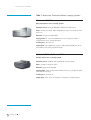
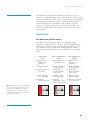
Table 1. Amersham Pharmacia Biotech imaging systems
TYPHOON 8600
High performance laser scanning system
Excitation sources : 532-nm Nd:YAG and 633-nm HeNe lasers
Filters : 6 emission filters and 2 beamsplitters (up to 13 emission filter
positions)
Detection : 2 high-sensitivity PMTs
Imaging modes : 4-colour automated fluorescence detection, direct
chemiluminescence, storage phosphor
Scanning area : 35 x 43 cm
Sample types : Gel sandwiches, agarose and polyacrylamide gels, blots,
microplates, TLC plates, and macroarrays
STORM™ 830, 840
OR
860
Variable mode laser scanning system
Excitation sources : 450-nm LED and/or 633-nm laser diode
Filters : 2 built-in emission filters
Detection : High-sensitivity PMT
Imaging modes : Blue- and/or red-excited fluorescence, storage phosphor,
and chemifluorescence
Scanning area : 35 x 43 cm
Sample types : Gels, blots, microplates, TLC plates, and macroarrays
tm
63-0035-28 ● 22
CHAPTER 2 : FLUORESCENCE IMAGING SYSTEMS
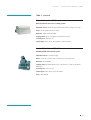
Table 1. (continued)
FLUORIMAGER™ 595
Dedicated fluorescence laser scanning system
Excitation sources : 488-nm and 514-nm laser lines of argon ion laser
Filters : 4 selectable emission filters
Detection : High-sensitivity PMT
Imaging modes : Blue- and green-excited fluorescence
Scanning area : 20 x 24 cm
Sample types : Gels, blots, microplates, and TLC plates
IMAGEMASTER™ VDS-CL
Automated CCD camera-based system
Excitation sources : UV, white light
Filters : 2 emission filters (up to 6 emission filter positions)
Detection : Cooled CCD
Imaging modes : Chemiluminescence, fluorescence, and colourimetric
detection
Scanning area : 21 x 25 cm
Sample types : Gels, blots, and TLC plates
Focus : Automated
● 23
FLUORESCENCE IMAGING
tm
63-0035-28 ● 24
C H A P T E R 3 : F L U O R O C H R O M E A N D F I LT E R S E L E C T I O N
Chapter 3
F L U O R O C H R O M E A N D F I LT E R S E L E C T I O N
Introduction
Transmission (%)
100
80
60
cutoff point
40
20
0
550
560
570
580
590
600
Wavelength (nm)
a)
Transmission (%)
100
80
60
cutoff point
40
20
0
500
b)
510
520
530
540
550
Wavelength (nm)
Fig 14. Transmission profiles for a 560 nm
long-pass (a) and a 526 nm short-pass (b)
filter. The cutoff points are noted.
To generate fluorescence, excitation light delivered to the sample must be
within the absorption spectrum of the fluorochrome. Generally, the
closer the excitation wavelength is to the peak absorption wavelength of
the fluorochrome, the greater the excitation efficiency. Appropriate
filters are usually built into scanner instruments for laser line selection
and elimination of unwanted background light. Fixed or interchangeable
optical filters that are suitable for the emission profile of the fluorochromes
are then used to refine the emitted fluorescence, such that only the
desired wavelengths are passed to the detector. Matching a fluorochrome
label with a suitable excitation source and emission filter is the key to
optimal detection efficiency. In this chapter, details about the classes and
use of emission filters are presented, along with general guidelines for
selecting fluorochromes and emission filters for both single-colour and
multicolour imaging.
Types of emission filters
The composition of emission filters used in fluorescence scanners and
cameras ranges from simple coloured glass to glass laminates coated with
thin interference films. Coated interference filters generally deliver
excellent performance through their selective reflection and transmission
effects. Three types of optical emission filters are in common use.
Long-pass (LP) filters pass light that is longer than a specified wavelength
and reject all shorter wavelengths. A good quality long-pass filter is
characterized by a steep transition between rejected and transmitted
wavelengths (Fig 14a). Long-pass filters are named for the wavelength at
the midpoint of the transition between the rejected and transmitted light
(cutoff point). For example, the cutoff point in the transmission spectrum
of a 560LP filter is 560 nm, where 50% of the maximum transmittance
is rejected.
The name of a long-pass filter may also include other designations, such
as OG (orange glass), RG (red glass), E (emission), LP (long-pass), or
EFLP (edge filter long-pass). OG and RG are coloured-glass absorption
filters, whereas E, LP, and EFLP filters are coated interference filters.
Coloured-glass filters are less expensive and have more gradual transition
slopes than coated interference filters.
● 25
FLUORESCENCE IMAGING
Short-pass (SP) filters reject wavelengths that are longer than a specified
value and pass shorter wavelengths. Like long-pass filters, short-pass
filters are named according to their cutoff point. For example, a 526SP
filter rejects 50% of the maximum transmittance at 526 nm (Fig 14b).
100
Transmission (%)
80
60
FWHM
40
20
0
650
660
670
680
690
700
Wavelength (nm)
Fig 15. Transmission profile for a band-pass
(670BP30) filter. The full-width at half
maximum (FWHM) transmission of 30 nm is
indicated by the arrows.
Band-pass (BP) filters allow a band of selected wavelengths to pass
through, while rejecting all shorter and longer wavelengths. A band-pass
filter provides very sharp cutoffs with very little transmission of the
rejected wavelengths. High-performance band-pass filters are also
referred to as Discriminating Filters (DF). The name of a band-pass filter
is typically made up of two parts:
• the wavelength of the band centre. For example, the 670BP30 filter
passes a band of light centred at 670 nm (Fig 15).
• the full-width at half-maximum transmission (FWHM). For example,
a 670BP30 filter passes light over a wavelength range of 30 nm
(655 nm–685 nm) with an efficiency equal to or greater than half the
maximum transmittance of the filter.
Band-pass filters with an FWHM of 20–30 nm are optimal for most
fluorescence applications, including multi-label experiments. Filters
with FWHMs greater than 30 nm allow collection of light at more
wavelengths and give a higher total signal; however, they are less able to
discriminate between closely spaced, overlapping emission spectra in
multichannel experiments. Filters with FWHMs narrower than 20 nm
transmit less signal and are most useful with fluorochromes with very
narrow emission spectra.
Using emission filters to improve sensitivity and
linearity range
When selectable emission filters are available in an imaging system, filter
choice will influence the sensitivity and dynamic range of an assay. In
general, if image background signal is high, adding an interchangeable
filter may improve the sensitivity and dynamic range of the assay. The
background signal from some matrices (gels and membranes) has a
broad, relatively flat spectrum. In such cases, a band-pass filter can
remove the portion of the background signal comprising wavelengths
that are longer or shorter than the fluorochrome emissions. By selecting a
filter that transmits a band at or near the emission peak of the
fluorochrome of interest, the background signal is typically reduced with
only slight attenuation of the signal from the fluorochrome. Therefore,
tm
63-0035-28 ● 26
C H A P T E R 3 : F L U O R O C H R O M E A N D F I LT E R S E L E C T I O N
the use of an appropriate band-pass filter should improve the overall
signal-to-noise ratio (S/N). To determine if a filter is needed, scans should
be performed with and without the filter while other conditions remain
constant. The resulting S/N values should then be compared to determine
the more efficient configuration.
Interchangeable filters can also be used in fluorescence scanners to
attenuate the sample signal itself so that it falls within the linear range of
the system. Although scanning the sample at a reduced PMT voltage can
attenuate the signal, the response of the PMT may not be linear if the
voltage is set below the instrument manufacturer’s recommendation. If
further attenuation is necessary to prevent saturation of the PMT, the
addition of an appropriate emission filter can decrease the signal
reaching the detector.
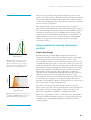
532
Excitation
495
300
350
400
450
500
550
•
General guidelines for selecting fluorochromes
and filters
•
Single-colour imaging
550
600
Wavelength (nm)
Fig 16. Excitation of fluorescein (green)
and Cy3 (orange) using 532 nm laser
light. The absorption spectra of Cy3 and
fluorescein are overlaid with the 532 nm
wavelength line of the Nd:YAG laser.
Emission
560LP
Excitation efficiency is usually highest when the fluorochrome’s
absorption maximum correlates closely with the excitation wavelength
of the imaging system. However, the absorption profiles of most
fluorochromes are rather broad, and some fluorochromes have a second
(or additional) absorption peak or a long “tail” in their spectra. It is not
mandatory that the fluorochrome’s major absorption peak exactly match
the available excitation wavelength for efficient excitation. For example,
the absorption maxima of the fluorescein and Cy3 fluorochromes are
490 nm and 552 nm respectively (Fig 16). Excitation of either dye
using the 532 nm wavelength line of the Nd:YAG laser may seem to be
inefficient, since the laser produces light that is 40 nm above the
absorption peak of fluorescein and 20 nm below that of Cy3. In practice,
however, delivery of a high level of excitation energy at 532 nm does
efficiently excite both fluorochromes. (See Appendix 1 for a discussion of
fluorescein excitation using 532 nm laser line.)
580BP30
500
550
600
650
700
Wavelength (nm)
Fig 17. Emission filtering of Cy3 fluorescence
using either a 580BP30 (dark gray area) or a
560LP filter (light and dark gray areas).
For emission, selecting a filter that transmits a band at or near the
emission peak of the fluorochrome generally improves the sensitivity and
linear range of the measurement. Figure 17 shows collection of Cy3
fluorescence using either a 580BP30 or a 560LP emission filter.
Please refer to Appendixes 2 and 3 for a list of fluorochromes and their
excitation and emission maxima and spectra, as well as the appropriate
instrument set-up with Amersham Pharmacia Biotech fluorescence
scanning systems.
● 27
FLUORESCENCE IMAGING
Multicolour imaging
Fig 18. Two-colour fluorescent Western
blot. β-galactosidase was detected using
a Cy5-labelled secondary antibody (red),
and tubulin was detected using an
enzyme-amplified chemistry with the
fluorogenic ECF™ substrate (green).
Storm 860 was used for image
acquisition.
Multicolour imaging allows detection and resolution of multiple targets
using fluorescent labels with different spectral properties. The ability to
multiplex or detect multiple labels in the same experiment is both timeand cost-effective and improves accuracy for some assays. Analyses using
a single label can require a set of experiments or many repetitions of the
same experiment to generate one set of data. For example, single-label
analysis of gene expression from two different tissues requires two
separate hybridizations to different gene arrays or consecutive
hybridizations to the same array with stripping and reprobing. With a
dual-label approach, however, the DNA probes from the two tissue types
are labelled with different fluorochromes and used simultaneously with
the same gene array. In this way, experimental error is reduced because
only one array is used, and hybridization conditions for the two probes
are identical. Additionally, by using a 2-channel scan, expression data is
rapidly collected from both tissues, thus streamlining analysis. Other
applications are equally amenable to dual-label analysis. For example,
Figure 18 shows a two-colour Western blot experiment where two
protein targets are differentially probed using antibodies conjugated with
two different fluorescent tags.
The use of multicolour imaging can greatly improve the accuracy for
applications such as DNA fragment sizing. This technique is usually
performed by loading a DNA size ladder and an unknown DNA sample
in adjacent lanes of a gel. Because variations in lane-to-lane migration
rate can occur during electrophoresis, errors in size estimation may
result. By labelling the standard and the unknown fragments with two
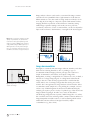
fluorochromes whose spectra can be differentiated, co-resolution of the
unknown and the size ladder can be achieved in the same lane (Fig 19).
Fig 19. Three-colour gel image of a DNA
in-lane sizing experiment. The fluorochromes
used were TAMRA™ (yellow), ROX (red), and
fluorescein (green). The ROX and TAMRA
bands are labelled DNA size ladders. The
fluorescein fragments are PCR products of
unknown size. Typhoon 8600 was used for
image acquisition.
tm
63-0035-28 ● 28
The process for multicolour image acquisition varies depending on the
imaging system. An imager with a single detector takes consecutive
images using different emission filters and, in some cases, different
excitation light. When two detectors are available, the combined or mixed
fluorescence from two different labels is collected at the same time and
then resolved by filtering before the signal reaches the detectors.
Implementation of dual detection requires a beamsplitter filter to
spectrally split the mixed fluorescent signal, directing the resulting two
C H A P T E R 3 : F L U O R O C H R O M E A N D F I LT E R S E L E C T I O N
emission beams to separate emission filters (optimal for each fluorochrome),
and finally to the detectors. A beamsplitter, or dichroic reflector, is
specified to function as either a short-pass or long-pass filter relative to
the desired transition wavelength. For example, a beamsplitter that
reflects light shorter than the transition wavelength and passes longer
wavelengths is effectively acting as a long-pass filter (Fig 11).
Fluorochrome selection in multicolour experiments
When designing multicolour experiments, two key elements must be
considered—the fluorochromes used and the emission filters available.
Emission
580BP30 610BP30
500
550
600
650
700
Wavelength (nm)
Fig 20. Emission spectra of TAMRA (orange)
and ROX (red). A 580BP30 filter (dark gray)
was used for TAMRA, and a 610BP30 filter
(light gray) was used for ROX.
As with any fluorescence experiment, the excitation wavelength of the
scanner must fall within the absorption spectrum of the fluorochromes
used. Additionally, the emission spectra of different fluorochromes
selected for an experiment should be relatively well resolved from
each other. However, some spectral overlap between emission profiles is
almost unavoidable. To minimize cross-contamination, fluorochromes
with well-separated emission peaks should be chosen along with
emission filters that allow reasonable spectral discrimination between
the fluorochrome emission profiles. Figure 20 shows the emission overlap
between two common fluorochromes and the use of band-pass filters to
discriminate the spectra. For best results, fluorochromes with emission
peaks at least 30 nm apart should be chosen.
A fluorescence scanner is most useful for multicolour experiments when it
provides selectable emission filters suitable for a variety of labels. A range
of narrow band-pass filters that match the peak emission wavelengths of
commonly used fluorochrome labels will address most multicolour
imaging needs.
Software
To reduce the wavelength cross-contamination typically found in
multichannel fluorescence images, software processing can be used. This
involves applying a cross-talk algorithm to the individual channels to
yield a revised image set that more ideally represents the light emitted
from the different labels in the sample.
Chapter 4 gives more details about fluorochrome separation software
and image analysis software in general.
● 29
FLUORESCENCE IMAGING
tm
63-0035-28 ● 30
C H A P T E R 4 : I M A G E A N A LY S I S
Chapter 4
I M A G E A N A LY S I S
Introduction
Image acquisition using a fluorescence imaging device creates one or
more data files for each sample analysed. The size of these files will vary
depending on sample size and the digital resolution used for acquisition.
Software is used to display the image, adjust the contrast, annotate, and
print the image. Image analysis tools allow fragment sizing, quantification,
matching, pattern analysis, and generation of analysis reports. Some
software packages also provide access to libraries or a database for
sample matching and querying. Image utility functions address correction
of spectral overlap in multicolour images, image filtering, rotation,
pixel inversion, and image cropping. The purpose of this chapter is to
provide an overview of features common to image analysis software
packages and to illustrate how the software is applied to different image
analysis needs.
Image display
One of the basic functions of an image analysis software package
is to enable viewing, adjustment, and assessment of the acquired image.
Currently, image files usually have at least a 12-bit or 16-bit data structure,
which means as many as 65 356 gray levels are possible. Computer
displays, printers, and humans are only capable of distinguishing
approximately 256 gray levels. It is necessary for the software to adjust
the gray scale so that the objects of interest in the image can be seen.
Software features allow the user to fine-tune the display range without
affecting the original image data or the results of quantification. Contrast
and brightness settings of the display can be adjusted to optimize the
image view. The ability to change both the high- and low-display value
settings is important for viewing the range of gray (or colour) values of
interest. For example, by increasing the low values, image noise or
background can be reduced. Reducing the high-value setting of the
display increases image contrast, such that weak signals can be
visualized. These adjustments are made separately to each channel in a
multichannel image. Multicolour software will also allow either side-byside display of the individual channels or a multicolour overlay of all
channels together.
● 31
FLUORESCENCE IMAGING
Image analysis software can be used to ascertain if the image contains
areas that are non-quantifiable due to light saturation of the detector.
When saturation occurs, the results of image analysis are likely to be in
error (Fig 21). If an image is composed of pixels with saturated values,
imaging should be repeated at a reduced detector sensitivity setting.
Other image acquisition settings, such as the scan area, pixel size
(resolution), and choice of laser or emission filter, can also be adjusted to
improve the resolution, discrimination, or strength of the desired signal.
Fig 21. Effect of detector saturation on data
quality. A Cy5-labelled size standard was
resolved in a 10% polyacrylamide gel and
imaged on Typhoon 8600. Image acquired
using a PMT setting of 1000 V (panel a) or
500 V (panel b). The line profiles through
lane 1 of each image show the response of
the PMT to the fluorescent signal collected.
a)
b)
Signal
Lane 1 profile
100%
Signal
Lane 1 profile
100%
Image documentation
Fig 22. Magnification or zooming to view
details of an image.
tm
63-0035-28 ● 32
Investigators commonly annotate images with text, numbers, and other
labels before archiving their files to disc or printing a copy for
documentation. Most imaging software packages offer solutions to
simple documentation, annotation, and output of image files.
Enlargement, zooming, or magnification is often used to view, in detail, a
subsection of a larger image (Fig 22). A scaling function that fits the
image to the size of the current program window is useful when the
actual (100%) size of an image is larger than the viewing area of the
monitor. For some applications, image analysis software must be able to
accommodate actual sample size or 1:1 printing. For example, excision
and recovery of DNA fragments from fluorescent differential display
analysis gels require a precise overlay of a printed copy of the fluorescent
image with the original gel. In other cases, it may be desirable to
subdivide large image files into separate, smaller image files or to reduce
the overall file size before archiving. Other common software utilities for
image manipulation include rotation, as well as filtering which reduces
undesirable extraneous fluorescent signal caused by sample
contamination (e.g. dust or lint).
C H A P T E R 4 : I M A G E A N A LY S I S
Documentation of image files is facilitated by the use of "region-ofinterest" tools that allow images to be copied directly to a clipboard and
pasted into another type of file, such as a word processing or spreadsheet
document. Images can thus be readily combined with the contents of a
relevant analysis sheet or experiment report. An image copy/paste
function is useful in the preparation of presentations, as well as the
production of publication-quality figures and illustrations for papers or
journal articles.
Quantification
One-dimensional gel/blot analysis
One-dimensional (1-D) gel/blot analysis is performed by signal
integration of either the lane as a whole or of the individual elements
within a lane (i.e. bands) as separate items (Fig 23). Three approaches
are commonly used for quantification. Although they all calculate
integrated fluorescent signal, they do so in different ways as outlined
below:
Lane profile
– Area –
Fig 23. Three methods for signal quantification.
Line profile and integration of area under the
curve (panel a); integration of signal from
manually created closed objects (panel b);
software-assisted detection and quantification
of lane and bands (panel c).
Object quantification
– Volume –
Lane quantification
– Volume –
■
Wide line across
sample track
(gel lane)
■
Bands identified
manually by user
■
Wide line across
sample track
(gel lane)
■
Peaks identified
■
Bands bounded by
separate objects
■
Bands identified as
separate objects
■
Signal integrated
across line
■
Total signal
inside each band
object used
■
Total signal
inside each band
object used
■
Area under the
curve calculated
■
Volume = total
integrated signal
■
Volume = total
integrated signal
■
Benefits:
objectivity, speed
■
Benefits:
flexibility, accuracy,
user-created objects
■
Benefits: objectivity,
speed, accuracy
1
a)
b)
c)
● 33
FLUORESCENCE IMAGING
The lane profile quantification method uses a wide line spanning the
width of a gel lane to generate a profile from the average signal at each
row of pixels perpendicular to the line (Fig 24a). The accuracy of this
approach is greatest when the wide line includes most of the target signal
across the width of the lane. Each peak is identified, the area under each
peak or curve is integrated, and the resulting peak area is then reported.
In the object and lane quantification methods, analysis targets (i.e.
bands, spots, slots) are enclosed using objects such as bands, boxes,
rectangles, polygons, or ellipses. Both manual (Fig 24b) and automated
(Fig 24c) tools for lane and band identification are available.
Quantification in this manner is inherently more flexible than a lane
profile method since the user has more control in defining the area to be
analysed and in choosing a method for background correction prior to
quantification (see section 4.4). All the image pixels bounded by each
object are used for quantification. While the absolute data differs
between the methods, the trends or relative differences between the
measurements from each method are similar (Fig 24a, b, c).
3
2
5
1
Counts x 10 3
2
Rfu
3
4
5
0
20
40
60
80
Background
100
4
1
8.5
8.0
7.5
7.0
6.5
6.0
5.5
5.0
4.5
4.0
3.5
3.0
0
5
20
40
60
80
100
Rf
Pixel
Peak #
Area
Percent
Name
1
2
3
4
5
35611.55
48933.02
64490.90
39506.01
31835.27
16.159
22.204
29.264
17.927
14.446
Rectangle
Rectangle
Rectangle
Rectangle
Rectangle
a)
3
2
4
1
b)
1
2
3
4
5
Volume
Percent
Band
Volume
Band %
914863.7
1212416
1485657
1000343
830632.5
16.81
22.27
27.29
18.38
15.26
1
2
3
4
5
750.235,49
1.018.636,94
1.326.294,64
852.357,26
733.996,99
16,03
21,76
28,33
18,21
15,68
c)
Fig 24. Comparison of results from "area" versus "volume" analysis methods. In panel a, area
refers to integration of signal from each peak identified in a trace through the gel lane, with
background taken as the lowest value in the wide-line profile. Volume analysis (panel b)
produces a value of integrated signal from within a box surrounding each separate band in
the gel lane. A background value, selected from a different region of the gel, has been
applied to all calculations. Volume analysis from automated lane and band finding (panel c),
with a specific background is calculated around each individual band using the lowest value.
tm
63-0035-28 ● 34
C H A P T E R 4 : I M A G E A N A LY S I S
Array and microplate analysis
Arrays range from simple dot blots with a few spots to high-density gene
expression arrays with thousands of closely spaced elements. Arrays are
typically configured in regular and predictable patterns of rows and
columns. Simple arrays and microplates can be analysed manually using
grid tools or a series of ellipse objects to identify each element of the
array (Fig 25a). Automated, high-throughput analysis of high-density
arrays requires sophisticated software packages, complete with
algorithms for automated spot-finding (Fig 25b), data normalization,
comparisons between different arrays, and database input of analysis
results. Array software frequently employs a quality metrics system to
assist in the identification of poorly arrayed, contaminated, or
improperly detected spots. Tools for elemental display and graphical
analysis provide easy visualization and interpretation of results (Fig 26).
Fig 25. Approaches to software analysis of
arrays. In panel a, simple arrays (low-density
dot blots, microplates) are analysed using a
grid or series of rectangles to surround each
array element. In panel b, dedicated array
software packages employ spot-finding and/or
flexible array templates that find best-fits to
enclosing spot elements.
a)
a)
b)
b)
c)
Fig 26. Display and analysis of array experiments. In panel a, images from a
two-channel gene expression array using Cy3 (green) and Cy5 (red) labels are
overlaid or merged. Levels of gene over- or under-expression are indicated by
the relative strength of the green and red colours, respectively. Software displays
yellow when signal from both fluorochromes is equal. In panel b, only the array
elements exhibiting expression above (green) or below (red) a defined threshold
are shown. In panel c, a scatter plot presents the normalized signal ratios of
each array element.
● 35
FLUORESCENCE IMAGING
Two-dimensional protein gel analysis
Software packages for two-dimensional (2-D) protein gel analysis feature
specialized algorithms for spot-finding and analysis routines for gel-togel comparisons (Fig 27). Other important tools in these software packages
include data normalization; background correction; gel matching and
grouping; and database input of analysis results.
Fig 27. 2-D gel analysis software. Spot
borders are identified using spot-finding
algorithms. Background must be removed
using a global or a local background
correction method.
Peak #
Volume
Area (Pixels)
Circularity
317
318
319
320
321
322
323
324
325
326
328
329
330
97.786,000 (0%)
36.343,500 (3%)
9.945,500 (1%)
137.940,500 (4%)
29.196,500 (15%)
7.966,000 (6%)
1.495,500 (50%)
28.517,500 (3%)
11.426,500 (8%)
18.356,000 (4%)
666,500 (32%)
5,664,000 (19%)
5.642,500 (3%)
545 (1%)
237 (4%)
79 (4%)
792 (3%)
259 (11%)
102 (3%)
58 (25%)
212 (2%)
136 (1%)
153 (6%)
41 (5%)
92 (8%)
119 (1%)
0,75 (14%)
0,83 (4%)
0,74 (8%)
0,67 (4%)
0,71 (17%)
0,85 (2%)
0,82 (4%)
0,87 (2%)
0,84 (1%)
0,90 (3%)
0,82 (3%)
0,82 (4%)
0,87 (1%)
Background correction
Most image analysis software offers multiple choices for applying
background correction to fluorescence measurements. The nature of
image background can vary significantly depending on a number of
factors, such as the fluorescent detection chemistry used, the sample
matrix (i.e. gel, membrane, microplate), and the integrity or quality of
the sample itself. Because fluorescent detection is extremely sensitive,
high background levels in the scanned image can be a common problem,
especially in the early stages of protocol development. Fluorescence
protocols require careful attention to cleanliness and sample handling to
minimize background problems (see Chapter 6 for tips).
The nature of the background signal should be assessed before proceeding
with image analysis (Fig 28). Background commonly appears as:
tm
63-0035-28 ● 36
■
uniform signal across the image
■
non-uniform, uneven or patchy regions
■
noise spikes, or small groups of pixels with high counts
■
high signal within lanes
C H A P T E R 4 : I M A G E A N A LY S I S
Fig 27. Examples of different types of
fluorescent image background.
b) Non-uniform
a) Uniform
c) Noise spikes
d) Lane-specific
● 37
FLUORESCENCE IMAGING
A full range of background correction choices includes both local and
global methods. Local methods account for the local environment at each
region of interest—that is, in the immediate neighbourhood of a band,
spot, or slot target to be quantified. Depending on the quantification
method used, a local method can define background threshold by
connecting the low points (or valleys) in a lane profile, or it may use the
signal defined by the boundary of each closed object to determine a
different background value for each object (Fig 29a).
In global methods, a single global background value is applied equally to
a group of analysis targets in the same image. These correction methods
include using a straight baseline below a lane profile (i.e. determined
from the minimum signal in the profile) or choosing one or more
representative site(s) in the image to generate a background value that is
applied to multiple objects (Fig 29b).
3
2
4
1
5
900
800
Rfu
Fig 29. Comparison of local and global
background correction methods applied to the
same image. The local method (panel a) uses
different background values at each band in
the gel lane, with background based on the
average signal from the boundary of each
band. In panel b, a single global background
value of 500 counts is applied to each band in
the analysis.
710
650
600
0
20
40
60
80
100
Pixel
a)
3
2
4
1
5
900
Rfu
800
710
650
600
0
b)
tm
63-0035-28 ● 38
20
40
60
Pixel
80
100
500
C H A P T E R 4 : I M A G E A N A LY S I S
The type of background pattern apparent in an image will suggest the
method of background correction to apply. For example, if background
signal is variable across the image, then a local method of correction may
be appropriate because it can account for different background counts at
each site where quantification is applied. Alternatively, one global
background value for the whole image may be the best choice when
background signal is uniform.
It is also important to select the most appropriate method for calculating
the background value(s). The choice between an average and a median
value for background calculation can significantly affect the results of
quantification. For example, if high signal spikes are contributing to the
background noise in an area of interest, calculation of an average
background will be skewed on the high side. In this case, aberrant noise
from the background calculation can be disregarded by using a median
value.
The region of the image selected to represent the background signal is
important for accurate quantification. In the same way, the boundaries
used to define analysis targets—bands, spots, or slots—will also impact
the results of quantification. If boundaries are too close to a particular
band, the signal from that target will be under-represented. In contrast, a
boundary that is set too far away from the target can overlap with other
analyses, bringing unexpected and undesired signal into the analysis.
● 39
FLUORESCENCE IMAGING
Image processing tools
Software utilities for image processing functions improve the accuracy of
quantification for both single-colour and multicolour images.
Resolution of fluorescent signal overlap in multicolour images
Overlap between the emission spectra of fluorochromes is a common and
almost unavoidable aspect of multicolour imaging. Even the best band
pass filters cannot completely reject the emission from one fluorochrome
when its emission spectrum overlaps that of other fluorochromes (Fig 20).
When emissions from one fluorochrome contaminate the light collection
for other fluorochromes in the sample, a process is needed to remove or
reduce this cross-contamination for accurate quantification of each
separated channel. Fluorochrome separation uses a mathematical
transformation of the original images to create new images that more
closely represent light emitted from the different fluorochromes used in
the sample (Fig 30).
Because the original image files are left unchanged, the separation
process can be undone and repeated using different settings to optimize
the results. To enhance the quality of the image, software filters can also
be used to eliminate variation in background without affecting target
signal.
Fig 30. Multicolour image processing using
a fluorochrome separation routine. Spectral
contamination in this four-colour image,
particularly evident in the blue and yellow
channels (a), is reduced to give a better
representation of the signal from each of
the four fluorochrome labels (b).
a)
tm
63-0035-28 ● 40
b)
C H A P T E R 4 : I M A G E A N A LY S I S
Image filtering
Image artefacts caused by dust or bubbles complicate fluorescence analysis
of gels and membranes. Removing these artefacts can improve the quality
and accuracy of image analysis by reducing background noise without
affecting the integrity of the overall image.
A digital filter can reduce unusually intense or bright single pixel values,
blending them more evenly into the surrounding image. For example, the
single highest pixel value (noise spike) in a small group of contiguous
pixels can be replaced with a lower value based on an assessment of the
neighbouring pixel values. Because filtering alters the original data file,
results from filtered images must be interpreted appropriately. On the
other hand, intense fluorescent signal from dust and other contaminants
can severely complicate analysis. For these reasons, the decision to filter,
and therefore alter, an image prior to analysis must be carefully
considered.
Amersham Pharmacia Biotech image analysis
software
Image analysis is an integral part of today’s life science applications.
Amersham Pharmacia Biotech provides a comprehensive range of
software products to address image analysis needs, from basic
documentation and routine purity screens to the querying of entire gene
expression or 2-D gel datasets (Table 2). Our image analysis software,
combined with our wide range of fluorescence imaging instrumentation,
deliver a complete system and a total solution to address a wide range of
application needs.
● 41
FLUORESCENCE IMAGING
Table 2. Amersham Pharmcia Biotech image analysis
software
IMAGEQUANT™ SOLUTIONS
Powerful portfolio of software modules for 1-D gel and blot analysis
ImageQuant
■
■
■
User-defined signal integration of regions (volume) or lane profiles
and peak analysis (area)
Support for up to four-channel images
Text annotation of images and region-of-interest tool
Fragment analysis
■
■
■
Molecular weight, fragment size, and isoelectric point determination
Analysis of two-channel images (with in-lane size standard)
Assisted lane-finding and automated band-finding
FluorSep™
■
■
Reduction of cross-contamination from multiple fluorochromes
typically found in multichannel fluorescence images
Support for two- to four-channel images
ImageQuant tools
■
■
■
■
Image processing options for single and multichannel image files
Signal inversion
Noise filtration
Image rotation
I M A G E M A S T E R T O TA L L A B
Easy-to-use software for analysis of 1-D gels, dot and slot blots,
and microplates
■
■
■
■
■
tm
63-0035-28 ● 42
Automatic lane identification and easy-to-use functions for background
subtraction, band detection, and molecular weight determination
Designed for quantitative needs in basic array analysis
Automatic colony-counting facility
Spot-detection algorithm
Volume and area measurements
C H A P T E R 4 : I M A G E A N A LY S I S
Table 2. (continued)
IMAGEMASTER 1D
Comprehensive software for 1-D gel image analysis
■
■
■
■
Option of two modules: Prime (entry level) and Elite (power user level)
Automated lane and band detection
Account for distortion within and among gels
Band-matching and lane-relationship studies (Elite module only)
Additional capabilities with database module
■ Sample matching to user-built libraries
■ A variety of clustering methods for dendrogram construction
IMAGEMASTER 2D
Premier tool for automated analysis of 2-D gels in proteomics
■
■
■
■
■
■
■
Automated spot detection and measurement
Batch processing of unlimited number of gels
Grouping of multiple gel images into one experiment
Gel averaging
Multiple statistical tools
Web site query
Multiple reporting capabilities including Web page building
Additional capability with database module
■
■
■
Data extraction queries
Similar-spot queries and ratio queries to examine expression changes
Statistical tests to help identify significant results and patterns
● 43
FLUORESCENCE IMAGING
Table 2. (continued)
I M A G E M A S T E R A R R AY 2
Powerful facility for array analysis
■
■
■
■
Automated grid production and alignment
“Flagging” of spots
Analysis templates
Sample nomenclature import and automatic identification of
replicate sets
Additional capabilities with database module
■
■
■
■
■
Multiple array and/or ratio experiments
Querying on experiments, arrays, and spots
Combining a series of queries
Identification of similar expression patterns
Organization of data subsets into results sets
A R R AY V I S I O N ™
Premier analysis tool for array applications in medium- to
high-throughput environments
■
■
■
■
■
■
■
tm
63-0035-28 ● 44
Automated template alignment and analysis
Quality metrics and error "flagging"
Up to three levels of template organization (spots, spot groups,
and sub-arrays)
Pre-configured and user-defined protocols
Direct comparisons between images and Elemental Display to
highlight key targets
Batch-processing
Wizard guides
C H A P T E R 5 : F L U O R E S C E N C E A P P L I C AT I O N S
Chapter 5
F L U O R E S C E N C E A P P L I C AT I O N S U S I N G A M E R S H A M
PHARMACIA BIOTECH IMAGING SYSTEMS
Introduction
This chapter provides the basic information necessary for maximizing the
fluorescence imaging capabilities of your system. The application of
fluorescence in standard molecular biology methods, such as gel
electrophoresis, blotting, and solution analysis of nucleic acids and
proteins, is discussed, and typical protocols for each application area are
included, together with materials, suggestions, and tips for successful
implementation of fluorescent detection. Available fluorescent stains,
substrates, and covalent labels are described along with Amersham
Pharmacia Biotech instrument compatibility and recommendations for
imaging setup and analysis.
Detection of nucleic acids in gels
Nucleic acid gel stains
Fluorescent detection of nucleic acids in gels is used to visualize the
results of DNA preparations, restriction digests, and PCR analyses, as
well as other more specialized applications. Ethidium bromide is a
popular fluorescent stain that is used for the routine detection of nucleic
acids in gels. The dye binds by intercalating between the bases of nucleic
acid molecules, and its fluorescence is detected by imaging the stained gel
using UV or laser illumination.
More sensitive fluorescent stains, such as Vistra Green™ and SYBR™ Green,
are available for nucleic acid applications requiring lower limits of
detection in both agarose and polyacrylamide gel formats. These stains
have a high affinity for their target nucleic acid and upon binding, their
fluorescence and quantum yield are significantly enhanced. Because their
background fluorescence is negligible in the absence of nucleic acids, gels
● 45
FLUORESCENCE IMAGING
Table 3. Nucleic acid gel stains
Excitation
max (nm)
Emission
max (nm)
Fluorescence
emission colour
Ethidium
bromide
526
605
Red
Classic general purpose nucleic
acid stain
SYBR Gold
495
537
Orange-green
Ultrasensitive gel stain for ss- or
dsDNA or RNA
SYBR Green I
497
520
Green
Ultrasensitive gel stain for dsDNA
and oligonucleotides
SYBR Green II
497
520
Green
Ultrasensitive gel stain for RNA
and ssDNA
Vistra Green
495
520
Green
Ultrasensitive gel stain for dsDNA
and oligonucleotides
Stain
Application
Table 4. Instrument settings for use with nucleic acid gel stains.
Typhoon
Stain
FluorImager
Storm
VDS-CL
Excitation
(nm)
Emission
filter
Excitation
(nm)
Emission
filter
Fluorescence
mode
Excitation
Emission
Ethidium bromide
532
610BP30
514
610RG
NA*
Transmission
UV high†
SYBR Gold
532
526SP
488
530DF30
Blue
Transmission
UV low†
SYBR Green I
532
526SP
488
530DF30
Blue
Transmission
UV low
SYBR Green II
532
526SP
488
530DF30
Blue
Transmission
UV low
Vistra Green
532
526SP
488
530DF30
Blue
Transmission
UV low
*
NA = Not applicable.
†
UV high = 580BP30 filter; UV low = 520BP30 filter.
tm
63-0035-28 ● 46
C H A P T E R 5 : F L U O R E S C E N C E A P P L I C AT I O N S
stained with these dyes require no destaining before imaging. Post-stain
processing of nucleic acids, such as restriction digests and blot transfers,
is possible as these stains do not interfere with these techniques. These
stains also pose less of a health risk than ethidium bromide because they
are less mutagenic. Table 3 lists different nucleic acid gel stains and the
nucleic acids with which each is compatible.
Instrument compatibility
Fluorescence imaging systems from Amersham Pharmacia Biotech
combine powerful excitation sources with efficient optics for sensitive
fluorescence imaging of the common DNA gel stains, including ethidium
bromide, Vistra Green, SYBR Green, and SYBR Gold (9, 10). Setup for
the various instruments is given in Table 4.
Typical protocol
Amersham Pharmacia Biotech products available for this application
Product
Product number
■
Hoefer™ EPS 301 Power Supply
18-1130-01
■
Nucleic acid gel stains
Ethidium bromide solution, 10 mg/ml
Vistra Green nucleic acid gel stain
17-1328-01
RPN5786
Electrophoresis units
Ready-To-Run™ Separation Unit
Hoefer HE 99X Max Submarine Unit
Hoefer miniVE Vertical Electrophoresis System
80-6460-95
80-6061-57
80-6418-77
Imaging systems
Typhoon 8600
Storm 840/860
FluorImager 595
ImageMaster VDS-CL
see catalogue
see catalogue
see catalogue
see catalogue
■
■
● 47
FLUORESCENCE IMAGING
❶
Sample preparation
Prepare agarose gels that are no thicker than 3 mm, if possible.
Mix the DNA samples with loading buffer.
Note: When imaging small size nucleic acids or proteins, avoid using
bromophenol blue, xylene cyanol, and other electrophoresis tracking
dyes because these dyes fluoresce and might mask the fluorescence of
bands of interest on the gel. To avoid this problem, use a nonmigrating dye, such as dextran blue, in the sample loading buffer. If it
is necessary to monitor migration during electrophoresis, reduce the
concentration of tracking dye to a minimum or load the tracking dye
into a separate lane of the gel.
❷
Gel electrophoresis
Load the prepared samples into the wells.
Perform electrophoresis at 5 V/cm using the EPS 301 power supply.
❸
Gel staining
For Vistra Green or the SYBR stains, dilute the stains 1:10 000 in 1× TE
(pH 7.5). For ethidium bromide, use a concentration of 0.25 µg/ml in
1× TE (pH 7.5).
Stain the gel in a polypropylene container for 30 min with gentle
agitation (longer staining times may be needed for gels with high agarose
content). Cover the staining container with aluminium foil to prevent
photobleaching of the stains.
Gels attached to one of the electrophoresis plates: For Vistra and
SYBR stains, pour enough staining solution on the gel to cover, and
use a large pipette to distribute liquid.
If ethidium bromide was used, destain the gel for 30 min in water.
❹
Imaging
Wet gels: Place the wet gel directly onto the platen (Typhoon and
Storm), glass tray (FluorImager), or platform (VDS-CL) of the imager
in a small (just enough to create a film) amount of water. Avoid
trapping air bubbles between the gel and the glass. For Typhoon
imaging, choose “platen” for the focal depth setting. For thick agarose
gels, it may be necessary to use the +3 mm focal depth setting. Acquire
the image according to the recommended instrument set-up.
tm
63-0035-28 ● 48
C H A P T E R 5 : F L U O R E S C E N C E A P P L I C AT I O N S
Gels attached to one of the electrophoresis plates: Place the glass plate
directly onto the platen (Typhoon), in the extended universal holder
tray (FluorImager), or platform (VDS-CL) of the imager. For optimal
image quality on Typhoon, place Kapton™ tape (supplied with the
Typhoon accessory kit) over each spacer on the outside of the long
plate. Place water between the glass plate and Typhoon platen to
minimize the appearance of interference patterns. Choose +3 mm for
the focal height setting. For Storm, place the gel directly in contact
with the platen.
In the Scanner Control Setup window, choose the appropriate laser and
emission filter combinations (Table 4).
❺
Analysis
See Chapter 4 for information concerning image analysis.
Expected results
Typical results for the fluorescent detection of nucleic acids in agarose
gels are given in Tables 5 and 6. Figure 31 shows the detection of DNA
in an agarose gel stained with Vistra Green and imaged using Typhoon
8600.
Fig 31. Detection of DNA in an agarose
gel using Vistra Green and Typhoon 8600.
Following electrophoresis, the gel was
stained for 30 min. Amount of DNA
ladder loaded per lane ranged from
120 000 pg–4 pg in two-fold serial
dilutions.
● 49
FLUORESCENCE IMAGING
Table 5. Fluorescent gel detection of double-stranded DNA*
Typhoon
Stain
LOD
(pg/band)
Ethidium
bromide
100/ND
†
FluorImager
Storm
VDS-CL
LDR
(~ fold)
LOD
(pg/band)
LDR
(~ fold)
LOD
(pg/band)
LDR
(~ fold)
LOD
(pg/band)
LDR
(~ fold)
500/ND
200/100
500/1000
NA†
NA
100/ND
300/ND
SYBR Gold
25/10
500/1000
40/10
500/1000
500/40
100/500
ND/20
ND/100
SYBR Green I
25/10
500/1000
40/10
500/1000
500/40
100/500
ND/20
ND/100
Vistra Green
25/10
500/1000
40/10
500/1000
500/40
100/500
ND/20
ND/100
*
A dilution series of a DNA ladder was loaded onto a 1% agarose gel (3 mm) or a 10% polyacrylamide gel (1 mm). Results are
expressed as limit of detection (LOD) and linear detection range (LDR) for agarose/polyacrylamide.
†
ND = Not determined; NA = Not applicable.
Table 6. Fluorescent gel detection of single-stranded DNA and RNA*
Typhoon
Stain
FluorImager
Storm
VDS-CL
LOD
(pg/band)
LDR
(~ fold)
LOD
(pg/band)
LDR
(~ fold)
LOD
(pg/band)
LDR
(~ fold)
LOD
(pg/band)
LDR
(~ fold)
5000/ND†
50/ND
10 000/ND
30/ND
NA†
NA
5000/ND
50/ND
SYBR Gold
ND/250
ND/200
ND/300
ND/150
ND/1000
ND
ND
ND
SYBR Green I
ND/250
ND/200
ND/300
ND/150
ND/1000
ND
ND
ND
SYBR Green II
10 000/ND
100/ND
10 000/ND
100/ND
100 000/ND
20/ND
ND
ND
ND/250
ND/200
ND/300
ND/100
ND/1000
ND/50
ND
ND
Ethidium
bromide
Vistra Green
*
A dilution series of a DNA oligonucleotide or RNA ladder was separated on a formaldehyde-agarose gel or a denaturing
polyacrylamide gel. Results are expressed as limit of detection (LOD) and linear detection range (LDR) for agarose/polyacrylamide.
†
ND = Not determined; NA = Not applicable.
tm
63-0035-28 ● 50
C H A P T E R 5 : F L U O R E S C E N C E A P P L I C AT I O N S
Detection of proteins in gels
Protein gel stains
Conventional colourimetric methods for visualizing proteins in gels
include staining with Coomassie™ Brilliant Blue (CBB) or silver. CBB
staining is commonly used even though it has low sensitivity and requires
a long processing time and large volumes of organic solvents. Though
more sensitive than CBB, staining with silver is expensive, labourintensive, and exhibits protein-to-protein variation.
SYPRO™ protein gel stains (Table 7) are easy-to-use fluorescent stains
with sensitivities equivalent to those of silver staining (11). After
electrophoresis, the gel is simply stained, destained (optional), and then
imaged. Because these stains bind to SDS-coated proteins in gels, they
give more consistent staining between different types of proteins. In
addition, their ability to detect proteins is not affected by the presence of
contaminating nucleic acids or lipopolysaccharides. SYPRO protein gel
stains can be used with both denaturing and native gels and do not
interfere with upstream applications such as Western detection or
microsequencing.
SYPRO Orange and Red stains are optimal for rapid and efficient
fluorescent staining of one-dimensional protein gels. However, they
require acetic acid fixation, which interferes with protein transfer to a
membrane. For blotting techniques, SYPRO Tangerine is recommended
because no acetic acid fixation is necessary. SYPRO Ruby protein gel
stain provides sensitive fluorescent detection for both one- and twodimensional protein gels and is compatible with subsequent mass
spectrometry and Edman-based sequencing.
Table 7. Fluorescent protein gel stains
Stain
Excitation
max (nm)
Emission
max (nm)
Fluorescence
emission colour
SYPRO Orange
300, 470
570
Orange
Routine SDS-PAGE
SYPRO Red
300, 550
630
Red
Routine SDS-PAGE
SYPRO Ruby
280, 450
610
Red
2-D gels, SDS-PAGE critical
sensitivity
SYPRO Ruby IEF
280, 450
610
Red
Isoelectric focusing (IEF) gels
SYPRO Tangerine
300, 490
640
Red
SDS-PAGE followed by
immunodetection or zymography
Application
● 51
FLUORESCENCE IMAGING
Instrument compatibility
Table 8. Instrument settings for use with protein gel stains
Typhoon
Stain
FluorImager
Storm
VDS-CL
Excitation
(nm)
Emission
filter
Excitation
(nm)
Emission
filter
Fluorescence
mode
Excitation
Emission
SYPRO Orange
532
580BP30
488
570DF30
Blue
Transmission
UV high
SYPRO Red
532
610BP30
514
610RG
Red
Transmission
UV high
SYPRO Ruby
532
610BP30
488
610RG
Blue
Transmission
UV high
SYPRO Ruby IEF
532
610BP30
488
610RG
Blue
Transmission
UV high
SYPRO Tangerine
532
610BP30
488
610RG
Blue
Transmission
UV high
tm
63-0035-28 ● 52
C H A P T E R 5 : F L U O R E S C E N C E A P P L I C AT I O N S
Typical protocols
Protein detection in one-dimensional gels
One-dimensional gel electrophoresis is routinely used to study the size or
molecular weight, amount, and purity of proteins. SDS polyacrylamide
gel electrophoresis (SDS-PAGE), which separates proteins by molecular
weight, is an established tool for protein analysis. Its resolving power is
useful for the routine sizing and quantification of proteins from both
complex mixtures and purified fractions. The denaturing conditions used
in SDS-PAGE cause the proteins to unfold, thus minimizing differences in
their molecular shape and providing for more accurate molecular weight
determination (12). Using appropriate gel systems, proteins can also be
studied under non-denaturing or native conditions that preserve the
higher order structure and even the biological function of some proteins.
For example, native gel electrophoresis is required to preserve the
structure, and therefore the intrinsic fluorescence, of green fluorescent
protein (GFP).
Amersham Pharmacia Biotech products available for this application
Product
Product number
■
Hoefer EPS 301 Power Supply
18-1130-01
■
Hoefer miniVE Vertical Electrophoresis System
80-6418-77
■
Bovine serum albumin (BSA) protein standard
27-8915-01
■
Protein gel stains
SYPRO Orange protein gel stain
SYPRO Red protein gel stain
SYPRO Tangerine protein gel stain
RPN5801
RPN5803
RPN5805
Imaging systems
Typhoon 8600
Storm 840/860
FluorImager 595
ImageMaster VDS-CL
see catalogue
see catalogue
see catalogue
see catalogue
■
Other materials required
Product
■
Protein samples prepared in appropriate
loading buffer
■
SYPRO Ruby protein gel stain
Vendor
Molecular
Probes, Inc.
● 53
FLUORESCENCE IMAGING
❶
Sample preparation
For information on sample preparation, refer to Amersham Pharmacia
Biotech Technical Manual Protein Electrophoresis (12).
❷
Gel electrophoresis
Load the prepared samples onto the gel. For denaturing conditions, use a
gel and/or running buffer that contains 1% SDS. Refer to Amersham
Pharmacia Biotech Technical Manual Protein Electrophoresis for further
details (12).
❸
Staining the gel
For SYPRO Red or Orange, prepare a working stain solution by diluting
the stain stock solution, as supplied, 1:5000 in a 7.5% acetic acid
solution. Prepare enough stain solution to cover the gel (5–10 times the
gel volume).
For SYPRO Tangerine, prepare a working stain solution by diluting
the stain stock solution, as supplied, 1:5000 in 50 mM phosphate,
150 mM NaCl, pH 7.0.
For SYPRO Ruby, use the stain stock solution, as supplied, directly
without dilution.
Note: For larger gels, prepare approximately 10 times the gel volume
for staining, in order to avoid a loss of sensitivity.
Stain the gel in a polypropylene container with gentle agitation for 30 min
(longer staining times may be needed for high percentage acrylamide
gels). SYPRO stains are not compatible with glass or metal staining
trays. Cover the staining container with aluminium foil to prevent
photobleaching of the stains.
For SYPRO Red or Orange, destain the gel in a 7.5% acetic acid
solution for 5–15 min. Longer destaining may result in a loss of
sensitivity. For SYPRO Ruby, destain the gel for 30 min in deionized
water.
❹
Imaging
Place the wet gel directly onto the platen (Typhoon and Storm), glass
tray (FluorImager), or platform (VDS-CL) of the imager in a small
amount of water. Avoid trapping air bubbles between the gel and the
glass.
tm
63-0035-28 ● 54
C H A P T E R 5 : F L U O R E S C E N C E A P P L I C AT I O N S
In the Scanner Control Setup window, choose the appropriate laser and
emission filter combinations (Table 8). For Typhoon imaging, choose
“platen” for the focal depth setting. Acquire the image according to the
recommended instrument set-up.
❺
Analysis
See Chapter 4 for information concerning image analysis.
Protein detection in two-dimensional gels
Two-dimensional gel electrophoresis is used to analyse complex mixtures
of proteins through the combined resolving power of two electrophoretic
methods (13). In the first dimension, proteins are resolved according to
their isoelectric points by isoelectric focusing (IEF). The isoelectric point
of each protein relates to the pH at which the net charge of the molecule
is zero. Following IEF of the proteins, SDS-PAGE is used as the second
dimension to further resolve the proteins according to their molecular
weights. The result is a complex pattern of spots corresponding to the
many different protein molecules present in the original sample.
Fluorescent gel stains have been developed and optimized for sensitive
detection of proteins resolved in this format.
Amersham Pharmacia Biotech products available for this application
Product
Product number
■
Immobiline™
■
IPG Buffer pH 4–7
17-6000-86
■
IPGphor™ IEF System
80-6414-02
■
Ettan™
see catalogue
■
Imaging systems
Typhoon 8600
Storm 840/860
FluorImager 595
ImageMaster VDS-CL
DryStrip pH 4–7, 18 cm
DALT II Large Vertical System
17-1233-01
see catalogue
see catalogue
see catalogue
see catalogue
Other materials required
Product
■
Protein samples prepared in appropriate
loading buffer
■
SYPRO Ruby protein gel stain
Vendor
Molecular
Probes, Inc.
● 55
FLUORESCENCE IMAGING
❶
Sample preparation
Note: The following is a general procedure for analysis of E. coli
proteins. For additional information refer to Amersham Pharmacia
Biotech Technical Manual 2-D Electrophoresis using Immobilized pH
Gradients (13).
Suspend 400 mg of lyophilized E. coli in 10 ml of 8 M urea, 4% (w/v)
CHAPS, 20 mM triethanolamine-Cl (pH 8.0), 20 mM dithiothreitol
(DTT), 1 mM PMSF. Sonicate the suspension for a few seconds per burst,
chill on ice between bursts. Repeat until maximum clarification is
observed.
Precipitate the sonicate overnight at –40 °C with 80 ml acetone, 10 ml
100% (w/v) trichloroacetic acid, 1 ml 2-mercaptoethanol.
Collect the precipitate by centrifugation at 105 000 × g for 20 min. Wash the
pellet with the same volume of 80% (v/v) acetone, 1% (v/v) 2-mercaptoethanol and leave in the freezer for a few hours.
Collect the precipitate as before and discard the supernatant. Air-dry the
pellet and resuspend in 10 ml of 8 M urea, 2% (w/v) CHAPS with
sonication to aid solubilization.
Clarify the extract by centrifugation at 105 000 × g for 30 min.
❷
Gel electrophoresis
Prepare Immobiline Drystrip gels, 18 cm, pH 4–7 and IPGphor system
according to manufacturer’s instructions.
Dilute protein extract (100 µg of total protein in 350 µl) with rehydration
solution (8 M urea, 2% (w/v) CHAPS, 20 mM DTT, 2% (v/v) pH 4-7
IPG buffer, trace of bromophenol blue).
Load proteins using rehydration loading for 12 h at 20 °C. Separate
samples using the following running conditions: 500 V for 500 Vhr,
1000 V for 1000 Vhr, 8000 V for 60 000 Vhr.
After the first-dimension separation is complete, equilibrate each strip,
first with SDS equilibration solution containing 1 % (w/v) DTT for
15 min, then with 2.5% (w/v) iodoacetamide for 15 min.
Load the equilibrated strips onto a 1 mm, 12.5% Laemmli gel cast for
the Ettan DALT II system (13).
Run the two-dimensional gel at 5 W/gel for 45 min and then at 26.67
W/gel until the bromophenol blue dye front runs off the gel.
tm
63-0035-28 ● 56
C H A P T E R 5 : F L U O R E S C E N C E A P P L I C AT I O N S
❸
Gel staining
Incubate the gel in 40% ethanol, 10% acetic acid for 30–60 min, then
incubate overnight at room temperature with gentle agitation in 5–10
volumes (250–500 ml per Ettan DALT II gel) of SYPRO Ruby staining
solution.
Wash the gel with 2–4 changes of deionized water for approximately 2 h,
and then with 10% methanol and 7% acetic acid for at least 15 min. The
gel may be stored in the latter solution.
❹
Imaging
Place the wet gel directly onto the platen (Typhoon and Storm), glass tray
(FluorImager), or platform (VDS-CL) of the imager in a small amount of
water. Avoid trapping air bubbles between the gel and the glass.
In the Scanner Control Setup window, choose the appropriate laser and
emission filter combinations (Table 8). For Typhoon imaging, choose
“platen” for the focal depth setting. Acquire the image according to the
recommended instrument set-up.
❺
Analysis
Analyse the image using ImageMaster 2-D software.
● 57
FLUORESCENCE IMAGING
Expected results
The expected limits of detection (LOD) and linear detection ranges
(LDR) for protein quantification in gels are given in Table 9. Images
from a one-dimensional SDS-PAGE and a two-dimensional protein
separation are shown in Figure 32 and Figure 33, respectively.
Fig 32. Proteins in an SDS-PAGE gel were
stained with SYPRO Orange and imaged using
Typhoon 8600. Amount of BSA per lane ranged
from 1630 ng to 0.8 ng, prepared in two-fold
serial dilutions.
Fig 33. E. coli proteins in a 2-D SDS-PAGE gel
were stained with SYPRO Ruby and imaged
using Typhoon 8600.
Table 9. Fluorescent gel detection of protein*
Typhoon
Stain
SYPRO Orange
FluorImager
Storm
VDS-CL
LOD
(ng/band)
LDR
(~ fold)
LOD
(ng/band)
LDR
(~ fold)
LOD
(ng/band)
LDR
(~ fold)
LOD
(ng/band)
2
1000
3
500
6
250
5
200
ND
200
SYPRO Red
2
1000
2
500
3
250
ND†
SYPRO Ruby
3
500
5
ND
7
ND
3
*
A dilution series of BSA was loaded onto a one-dimensional polyacrylamide gel (1 mm thick with 4% stacking gel and
10% resolving gel) and electrophoresed using Hoefer miniVE System. Results are expressed as limit of detection (LOD)
and linear detection range (LDR).
†
ND = Not determined.
tm
63-0035-28 ● 58
LDR
(~ fold)
C H A P T E R 5 : F L U O R E S C E N C E A P P L I C AT I O N S
Quantification of nucleic acids in solution
Dyes for quantification of nucleic acids in solution
The concentration of DNA or RNA in solution is conventionally
determined by measuring the absorbance of the solution at 260 nm and
280 nm. The accuracy of this method, however, is significantly affected
by the presence of free nucleotides, DNA or RNA, and contaminants
from the nucleic acid preparations. Nucleic acids are more accurately
quantified in solution using fluorescent dyes that bind with very high
specificity and sensitivity (Table 10). When bound to their target
molecules (DNA or RNA), the fluorescence of these dyes is greatly
enhanced.
Whereas the sensitivity of non-fluorescence microplate-based methods is
typically in the µg/ml range, fluorescence-based methods can detect
nucleic acids at concentrations in the ng/ml range. In assays using the
fluorescent dye, PicoGreen™, double-stranded DNA can be measured in
solution at concentrations as low as 2.5 ng/ml. The linear detection range
of this assay is typically 70–1400-fold, depending on which imaging
instrument is used. (See Table 12.)
The fluorescent detection of nucleic acids in solution can be achieved
using PicoGreen for double-stranded DNA, OliGreen™ for singlestranded DNA and oligonucleotides, and RiboGreen™ and SYBR
Green II for RNA. However, it is recommended that RNA samples be
treated with DNase to remove any DNA contamination, as no dye is yet
available that exhibits fluorescence enhancement specifically by binding
to RNA.
Table 10. Fluorescent dyes for the quantification of nucleic acids in solution
Excitation
max (nm)
Emission
max (nm)
Fluorescence
emission colour
OliGreen
500
523
Green
Quantification of ssDNA and
oligonucleotides
PicoGreen
502
523
Green
Quantification of dsDNA
RiboGreen
500
525
Green
Quantification of RNA
Dye
Application
● 59
FLUORESCENCE IMAGING
Instrument compatibility
Table 11. Instrument settings for use with nucleic acid dyes
Typhoon*
Dye
FluorImager
Storm
Excitation
(nm)
Emission
filter
Excitation
(nm)
Emission
filter
Fluorescence
mode
OliGreen
532
526SP
488
530DF30
Blue
PicoGreen
532
526SP
488
530DF30
Blue
RiboGreen
532
526SP
488
530DF30
Blue
*
A +3-mm focal depth setting should be used on Typhoon when imaging microplates.
Typical protocol
Amersham Pharmacia Biotech products available for this application
■
Product
Product number
Imaging systems
Typhoon 8600
Storm 840/860
FluorImager 595
see catalogue
see catalogue
see catalogue
Other materials required
■
■
*
tm
63-0035-28 ● 60
Product
Vendor
PicoGreen nucleic acid stain
Clear (polystyrene) 96 well microplate *
Molecular Probes, Inc.
Corning Costar Corp.
Suitable clear, flat-bottomed, low-fluorescence microplates should be used.
Image quality and quantification for Storm and Typhoon are improved when using
Nalge-Nunc PolySorp™ 96-well plates with removable strips so that the wells
sit flat directly on the platen.
C H A P T E R 5 : F L U O R E S C E N C E A P P L I C AT I O N S
❶
Sample preparation
Using TE buffer, dilute the DNA sample solution to a final volume of at
least 50 µl for FluorImager and Storm or 80 µl for Typhoon.
Note: Using a higher dilution of the experimental sample ensures that
any contaminants are maximally diluted. Each microplate well
requires a minimum total volume of 100 µl for FluorImager and
Storm or 160 µl for Typhoon.
Note: The performance of PicoGreen is minimally affected by the
presence of contaminants such as salts, urea, ethanol, chloroform,
detergents, proteins, and agarose. For additional information, see the
manufacturer’s literature.
❷
Staining the samples
Prepare sufficient working solution of the PicoGreen reagent by diluting
the stock solution, as supplied, 1:200 using TE buffer.
Note: The PicoGreen working solution should be prepared in a plastic
container on the day of the experiment. Glass should not be used
because PicoGreen may adsorb to glass surfaces.
Pipette the PicoGreen working solution into each well of the microplate,
using at least 50 µl for FluorImager and Storm or 80 µl for Typhoon.
Add an equal volume of the experimental DNA solution from step 1.1 to
each well and mix thoroughly by pipetting.
Incubate 2–5 min at room temperature.
❸
Imaging
Place the microplate into the microplate tray (FluorImager) or directly
onto the platen (Storm and Typhoon).
Acquire the image according to the recommended instrument setup for
the fluorochrome used. Select 200 micron pixel size setting. The PMT
voltage setting should be adjusted to prevent signal saturation. For
Typhoon, the +3-mm focal plane setting should always be selected for
imaging microplates.
● 61
FLUORESCENCE IMAGING
❹
Analysis
Display the image using ImageQuant. If saturated pixels are present, the
microplate should be rescanned at a lower PMT voltage setting. Use the
Gray/Color Adjust function to adjust the image contrast. Ellipse objects
can be used to quantify integrated signal from the microplate wells.
Draw an ellipse object within the inner walls of one well and copy it to
the other wells.
Report the median values with background correction set to "None".
In Microsoft Excel™, subtract the median value of the negative control
well from each of the other wells. This is important for good low-end
linearity.
Generate a standard curve from the DNA standards used.
Note: For the greatest accuracy, the DNA standards should be similar
to the unknown DNA (i.e. similar size and source).
Determine the unknown DNA concentration by extrapolating from the
standard curve.
Expected results
The limits of detection and linear detection ranges for quantification of
DNA in solution are given in Table 12. Figure 34 is an image from a
PicoGreen microplate assay detected using Typhoon 8600.
Fig 34. Detection of DNA in solution using
PicoGreen and Typhoon 8600. Lambda DNA
was used at concentrations of 3,500 ng/ml,
429 ng/ml, 150 ng/ml, 52.5 ng/ml, 18.4 ng/ml,
6.4 ng/ml, 2.25 ng/ml, and 0.79 ng/ml.
Table 12. Fluorescence-based quantification of DNA in
solution*
Typhoon
Dye
tm
63-0035-28 ● 62
FluorImager
LDR
(~ fold)
Storm
LOD
(ng/ml)
LDR
(~ fold)
LOD
(ng/ml)
LOD
(ng/ml)
LDR
(~ fold)
PicoGreen
10/
2.5†
350/
1400
5
700
50
70
RiboGreen
ND‡
ND
1
1000
10
100
*
A dilution series of lambda phage DNA prepared in 1× TE was used for the analysis.
Results are expressed as limit of detection (LOD) and linear detection range (LDR).
†
First number from assay performed using Costar flat-bottomed plate/Second
number from assay performed using Nunc Separable Strips.
‡
ND = Not determined.
C H A P T E R 5 : F L U O R E S C E N C E A P P L I C AT I O N S
Quantification of proteins in solution
Dyes for quantification of proteins in solution
Protein concentration in solution can be determined directly by
measuring the absorbance of the solution at 280 nm, or indirectly by
using colourimetric assays. Both methods, however, have some
limitations. For example, the sensitivity of the absorbance method is
limited because detection depends on the number of aromatic amino acid
residues present. Colourimetric methods, such as the Bradford and
Lowry assays, do not work well in the presence of contaminants and
must be read within a very limited period of time (14). High protein-toprotein signal variability is also common with colourimetric detection.
Proteins can be more accurately detected in solution using fluorescent
dyes (Table 13). As free molecules, the dyes are not very fluorescent, but
when they bind to proteins, they exhibit enhanced fluorescence. Because
they are typically quite specific for their target molecules, these fluorochromes work well even in the presence of various contaminants. For
example, the dye NanoOrange™ binds specifically to the detergent
coating on proteins and to hydrophobic regions of proteins and is not
affected by the presence of contaminating nucleic acids or reducing
agents.
Protein detection is much more sensitive using fluorescence. Whereas the
sensitivity of non-fluorescence microplate-based detection methods is
typically in the µg/ml range, fluorescence-based detection is generally in
the ng/ml range. For example, with NanoOrange, protein can be
measured in solution at concentrations as low as 300 ng/ml. The linear
detection range of this assay is typically 10–30-fold.
Table 13. Fluorescent dyes for the quantification of proteins in solution
Excitation
max (nm)
Emission
max (nm)
Fluorescence
emission colour
CBQCA
465
550
Orange
Protein quantification based
on the number of primary amines
NanoOrange
470
570
Orange
Total protein quantification
Dye
Application
● 63
FLUORESCENCE IMAGING
Instrument compatibility
Table 14. Instrument settings for use with protein solution
dyes
Typhoon*
Dye
FluorImager
Storm
Excitation
(nm)
Emission
filter
Excitation
(nm)
Emission
filter
Fluorescence
mode
CBQCA
532
580BP30
488
570DF30
Blue
NanoOrange
532
580BP30
488
570DF30
Blue
*
A +3-mm focal depth setting should be used on Typhoon when imaging microplates.
Typical protocol
Amersham Pharmacia Biotech products available for this application
■
Product
Product number
Imaging systems
Typhoon 8600
Storm 840/860
FluorImager 595
see catalogue
see catalogue
see catalogue
Other materials required
■
■
■
*
Product
Vendor
NanoOrange protein quantification kit
Clear (polystyrene) 96-well microplate*
Protein standards
Molecular Probes, Inc.
Corning Costar Corp.
Suitable clear, flat-bottomed, low-fluorescence microplates should be used. The
recommended microplate is manufactured by Corning Costar. Image quality and
quantification for Storm and Typhoon are improved when using Nalge-Nunc 96-well
plates with removable strips so that the wells sit flat directly on the platen.
❶
Working stain preparation
Prepare sufficient working solution of the NanoOrange reagent by
diluting the stock solution 1:500 using the 1× diluent prepared
according to manufacturer’s instructions.
Note: the NanoOrange working solution should be protected from
light to prevent photodegradation and should be used within a few
hours of its preparation.
tm
63-0035-28 ● 64
C H A P T E R 5 : F L U O R E S C E N C E A P P L I C AT I O N S
❷
Sample staining
Using the NanoOrange working solution from the previous step, dilute
the protein sample solution in microcentrifuge tubes to a final volume of
at least 100 µl for FluorImager and Storm or 160 µl for Typhoon.
Note: Using a higher dilution of the experimental sample ensures that
any contaminants are maximally diluted.
Note: NanoOrange is minimally affected by the presence of salts,
urea, detergents, DNA, and amino acids (see manufacturer’s
literature).
Heat the sample at 90–96 °C for 10 min. Cool to room temperature.
Pipette the samples into the microplate wells.
❸
Imaging
Place the microplate in the microplate tray (FluorImager) or directly onto
the platen (Storm and Typhoon).
Acquire the image according to the recommended instrument set-up for
the fluorochrome used. The choice of pixel size will depend on the
individual experiment. The PMT voltage setting should be adjusted to
prevent signal saturation. For Typhoon, the +3-mm focal plane setting
should always be selected for imaging microplates.
❹
Analysis
Display the image using ImageQuant. If saturated pixels are present, the
microplate should be rescanned at a lower PMT voltage setting. Use the
Gray/Color Adjust function to adjust image contrast. Ellipse objects can
be used to quantify integrated signal from the microplate wells.
Draw an ellipse object within the inner walls of one well and copy it to
the other wells.
Report the median values with background correction set to “None”.
In Microsoft Excel, subtract the median value of the negative control
well from each of the other wells. This is important for good low-end
linearity.
Generate a standard curve from the protein standards used.
Note: For the greatest accuracy, the protein standards should be
similar to the unknown protein (i.e. similar size and source).
Determine the unknown protein concentration by extrapolating from the
standard curve.
● 65
FLUORESCENCE IMAGING
Expected results
The expected limits of detection and linear ranges for protein
quantification in solution are given in Table 15. Quantification of a BSA
solution using NanoOrange and Typhoon 8600 is shown in Figure 35.
Table 15. Fluorescence-based quantification of protein in
solution using NanoOrange*
Typhoon
Dye
Fig 35. Detection of protein in solution using
NanoOrange and Typhoon 8600 with Nunc
microplate strips. BSA was used at
concentrations of (starting at the top left well)
10, 6, 3, 1, 0.6, 0.3, 0.1, 0.06, 0.03, and
0.01 g/ml. The last two wells in the bottom
row contained negative controls, which was
NanoOrange working solution only.
tm
63-0035-28 ● 66
FluorImager
Storm
LOD
(µg/ml)
LDR
(~ fold)
LOD
(µg/ml)
LDR
(~ fold)
LOD
(µg/ml)
LDR
(~ fold)
NanoOrange 1/0.3†
10/30
0.5
20
1
10
* BSA diluted in 1× TE was used used for analysis. Results are expressed as limit of
detection (LOD) and linear detection range (LDR).
†
First number from assay performed using Costar flat-bottomed plate/Second
number from assay performed using Nunc Separable Strips.
C H A P T E R 5 : F L U O R E S C E N C E A P P L I C AT I O N S
Southern and Northern blotting
The transfer of DNA from an electrophoresis gel to a membrane is
termed a Southern transfer or blot. In this technique, a complex
mixture—usually genomic DNA—is probed to detect individual target
DNA molecules. Similarly, in a Northern blot, RNA—either mRNA or
total cellular RNA—is transferred from a gel to a membrane and probed
for the presence of specific mRNA transcripts. Both methods permit the
sensitive measurement of nucleic acid size and quantity. In traditional
Southern and Northern procedures, probes are labelled with radioactive
isotopes (e.g. 32P) for detection. With radioactivity, however, safety issues
must be considered. In contrast, non-radioactive detection methods, such
as fluorescence, provide a safe alternative and deliver comparable
sensitivity. Additionally, unlike radioactively labelled probes, fluorescent
probes are stable for long periods.
Fluorogenic substrates for Southern and Northern detection
Fluorescent Southern and Northern detection chemistries employ
enzyme-amplified detection schemes using alkaline phosphatase (AP)
enzyme (15). Enzymatic turnover of a fluorogenic substrate gives the
highest sensitivity because each enzyme molecule produces multiple
fluorescent products. ECF reagent and DDAO phosphate are fluorogenic
substrates commonly used with the AP enzyme and suitable for Southern
and Northern detection. Their spectral characteristics are shown in
Table 16.
Table 16. Fluorogenic substrates for Southern and Northern blots
Excitation
max (nm)
Emission
max (nm)
Fluorescence
emission colour
DDAO phosphate
646
660
Red
Alkaline phosphatase
ECF
440
560
Green
Alkaline phosphatase
Substrate
Enzyme
● 67
FLUORESCENCE IMAGING
The direct detection of a fluorescently labelled nucleic acid probe on a
membrane usually does not provide adequate sensitivity for Southern or
Northern analysis. Consequently, most non-radioactive Southern and
Northern detection schemes use a hapten to label the nucleic acid probe.
The hapten (i.e. fluorescein, digoxigenin, or biotin) provides a target
recognized by an antibody or other binding molecule that is conjugated
to an enzyme. Signal amplification results from the conversion of
multiple substrate molecules to fluorescent products by each enzyme.
An indirect detection scheme in which fluorescein is used as a hapten is
illustrated in Figure 36. With some kits, the probe can be directly
labelled with a thermostable enzyme (e.g. AlkPhos Direct™ systems).
Because this system bypasses the hapten detection step, the signal
development process is much faster.
Fig 36. Schematic showing the indirect
detection of a fluorescein-labelled DNA
probe in a Southern blot. The ECF Signal
Amplification Module boosts sensitivity by
coupling alkaline phosphatase to the
fluorescein-labelled DNA probe. Alkaline
phosphatase catalyses the formation of
stable fluorophores that remain near the
probe and emit light when detected using
fluorescence imaging systems.
tm
63-0035-28 ● 68
C H A P T E R 5 : F L U O R E S C E N C E A P P L I C AT I O N S
Instrument compatibility
Table 17. Compatibility of selected fluorogenic substrates with fluorescence imaging systems
Typhoon
Substrate
FluorImager
Storm
VDS-CL
Excitation
(nm)
Emission
filter
Excitation
(nm)
Emission
filter
Fluorescence
mode
Excitation
Emission
DDAO
phosphate
633
670BP30
NA*
NA
Red
NA
NA
ECF
532
526SP
488
570DF30
Blue
Reflection
UV high
*
NA = Not applicable
Typical protocol
Amersham Pharmacia Biotech products available for this application
Product
Product number
■
Hoefer HE 99X Max Submarine Unit
80-6061-57
■
Hoefer EPS 301 Power Supply
18-1130-01
■
Nucleic acid gel stains
Ethidium bromide solution, 10 mg/ml
Vistra Green nucleic acid gel stain
17-1328-01
RPN5786
■
Hybond™-N+ membranes
see catalogue
■
ECF Random-Prime Labelling and
Detection System
RPN5752
Imaging systems
Typhoon 8600
Storm 840/860
FluorImager 595
ImageMaster VDS-CL
see catalogue
see catalogue
see catalogue
see catalogue
■
Other materials required
Product
DDAO phosphate
Vendor
Molecular Probes, Inc.
● 69
FLUORESCENCE IMAGING
❶
Preliminary preparations and general handling instructions
■
Prepare the probe according to the instructions or directions provided
with the labelling kit.
■
Successful fluorescent detection protocols require that background be
carefully controlled. Special attention to cleanliness is required with
alkaline phosphatase-based detection.
■
Block the membrane thoroughly by incubating in blocking buffer with
agitation on an orbital shaker. Use at least the minimum suggested
volume of buffer for washing steps.
■
Always wear powder-free gloves when handling membranes,
solutions, and dishes used for washing.
■
Adjust the hybridization or stringency wash temperature, or add more
washes if necessary. For other factors that may affect the quality of
detection, refer to the troubleshooting guide included with the
labelling and detection kit.
❷
Preparation of blot
Southern blots
Separate the DNA samples in a neutral agarose gel, then depurinate,
denature, and neutralize the gel according to standard procedures (14).
Transfer the samples to a Hybond-N+ nylon transfer membrane.
Process the Southern blot through hybridization, stringency washes, and
detection of the fluorescein hapten.
Northern blots
Separate denatured RNA (prepared in a glyoxal buffer) in an agarose gel
prepared in 1× MOPS buffer (14).
Transfer the samples to a Hybond-N+ nylon transfer membrane.
Process the Northern blot through hybridization, stringency washes, and
detection of the fluorescein hapten.
tm
63-0035-28 ● 70
C H A P T E R 5 : F L U O R E S C E N C E A P P L I C AT I O N S
❸
Application of substrate
ECF substrate
Prepare ECF substrate as directed.
After the final washing step, position the wet blot (sample-side up) in an
open low-fluorescence bag or page protector.
Add the prepared substrate to the blot so that it is coated completely and
evenly.
Cover the blot with the top sheet of the bag or page protector, squeeze
out excess substrate, and incubate for up to 24 h. Make sure the blot is
kept wet during the development process.
Note: Signal development can be monitored by periodic imaging.
DDAO phosphate substrate
To prepare the stock solution, dissolve the DDAO phosphate in water at
a concentration of 1.25 mg/ml.
Dilute the DDAO phosphate stock 1:1000 in 10 mM Tris-Cl (pH 9.5),
1 mM MgCl2.
Add 5 ml of substrate per cm 2 of membrane, covering it evenly, and
incubate for 4 h.
❹
Imaging
Place the covered developed blot face down onto the glass platen (Storm,
Typhoon) or glass tray (FluorImager), or face up on the platform of
VDS-CL.
Note: Water can be used between the plastic bag and the platform to
minimize the occurrence of interference patterns in the image.
Use a glass plate to hold the blot flat during imaging (optional).
Acquire the image according to the recommended instrument setup. The
choice of pixel size and PMT voltage settings will depend on the
individual experiment. Reduce the PMT voltage setting or signal
integration time (for VDS-CL) to prevent signal saturation.
❺
Analysis
See Chapter 4 for information concerning image analysis.
● 71
FLUORESCENCE IMAGING
Expected results
Typical results from a fluorescent Southern blot of a single-copy human
gene acquired using the Typhoon 8600 scanner are shown in Figure 37.
Results that can be expected for other systems and substrates are given in
Table 18.
Fig 37. Southern blot of EcoR I digested
human genomic DNA. β-actin cDNA was
labelled and detected with ECF RandomPrime Labelling and Detection System and
imaged on Typhoon 8600. Amount of DNA
per lane ranged from 10.4 µg to 0.32 µg,
prepared in two-fold serial dilutions.
Table 18. Fluorescence-based quantification of DNA in genomic Southern blots*
Typhoon
Substrate
DDAO
phosphate
ECF
FluorImager
Storm
VDS-CL
LOD
(pg/band)
LDR
(~ fold)
LOD
(pg/band)
LDR
(~ fold)
LOD
(pg/band)
LDR
(~ fold)
LOD
(pg/band)
LDR
(~ fold)
0.25
50
NA
NA
0.25
50
NA
NA
0.5
25
0.25
50
0.25
50
0.25
ND
* Results are expressed as limit of detection (LOD) and linear detection range (LDR). LOD values are given as amount of target detected.
†
tm
NA = Not applicable.
63-0035-28 ● 72
C H A P T E R 5 : F L U O R E S C E N C E A P P L I C AT I O N S
Western blotting
Immunodetection of proteins that have been electrophoretically separated
and then immobilized on a membrane is traditionally accomplished using
isotope-labelled antibodies (e.g. 125I). However, non-radioactive alternatives,
including chemiluminescent and fluorescent detection chemistries, are
now widely accepted and much preferred as the result of their safety,
sensitivity, and convenience.
Fluorescent Western detection employs either a direct or enzymeamplified format. The greatest sensitivity is achieved using fluorogenic
substrates in an enzyme-amplified format with horseradish peroxidase or
alkaline phosphatase (16, 17). However, direct fluorescent detection,
using labels such as fluorescein, Cy3, and Cy5 conjugated to antibodies,
is simpler and provides more accurate quantification (16). Fluorescent
stains optimized for protein blot detection can be used for the rapid and
sensitive assessment of Western transfer efficiency.
Western detection strategies
Fig 38. Schematic of the ECF Western Blotting
Kit. Proteins are detected by chemifluorescence
using alkaline phosphatase-labelled anti-species
secondary antibody. Signal is developed with
the ECF substrate.
Enzyme-amplified detection (chemifluorescence)
The most common Western detection chemistries employ enzymeamplified detection schemes using either horseradish peroxidase (HRP)
or alkaline phosphatase (AP) (Fig 38). Fluorogenic substrates that are
available for use with these enzymes are listed in Table 19. While the
sensitivity of chemifluorescence-based Westerns is comparable to that of
chemiluminescence, quantification is improved when compared with film
detection (Fig 39).
Table 19. Fluorogenic substrates for Western blots
Excitation
max (nm)
Emission
max (nm)
DDAO phosphate
646
660
Red
Alkaline phosphatase
ECF
440
560
Green
Alkaline phosphatase
430
503
Blue
Horseradish peroxidase
Substrate
ECL
Plus™
Fluorescence
emission colour
Enzyme
● 73
FLUORESCENCE IMAGING
b)
30 000
1.2
15 000
1.0
20 000
0.8
OD
Intensity
Rfu
Intensity
a)
15 000
10 000
5 000
0
c)
0.6
0.4
0.2
0
10 20 30 40
0
50 60 70 80 90 100
Tublin (ng)
Tubulin
(ng)
d)
0
10 20 30 40
50 60 70 80 90 100
Tublin (ng)
(ng)
Tubulin
Fig 39. Limits of detection for chemifluorescence (a) and chemiluminescence (b).
A dilution series of purified tubulin was prepared in duplicate, separated by SDS-PAGE,
and transferred to two PVDF membranes. Blots were incubated with mouse-anti-tubulin
monoclonal primary antibody, followed by incubation with secondary antibody. For
chemifluorescent detection, one blot (a) was incubated with goat-anti-mouse-IgG-alkaline
phosphatase, followed by ECF substrate. The blot was imaged using FluorImager with a
PMT setting of 500 V. For chemiluminescent detection, the other blot (b) was incubated
with sheep-anti-mouse-IgG-horseradish peroxidase and then developed using ECL Western
Blotting Kit. The blot was exposed to Hyperfilm ECL for 5 min. The developed film was
scanned using Personal Densitometer™ SI. For both blots the dilution series, from left to
right, was 1.6, 3.12, 6.25, 12.5, 25, 50, 100, 200, 300, and 400 ng of tubulin.
The signals for 1.6–100 ng were quantified using ImageQuant Software. The average
signals in relative fluorescence units (rfu) for chemifluorescence (c) and optical density
(OD) for chemiluminescence (d) were plotted against the amount of tubulin loaded.
Fig 40. Example of a direct fluorescent Western
blot developed using secondary antibody
conjugated to Cy5. A purified recombinant
protein was resolved at 120 ng, 60 ng, 30 ng,
and 15 ng. The blot was imaged using Storm
860. The far left lane contains Full-Range
Rainbow™ Molecular Weight Markers.
tm
63-0035-28 ● 74
C H A P T E R 5 : F L U O R E S C E N C E A P P L I C AT I O N S
Direct fluorescent detection
Fig 41. A dual-target Western blot showing
detection of actin and tubulin. Proteins were
serially diluted two-fold and resolved by gel
electrophoresis. Tubulin (red) was detected
using anti-β-tubulin monoclonal antibody and
Cy5 linked anti-mouse IgG.
Amounts of tubulin from left to right were 31
ng, 62 ng, 125 ng, 250 ng, 500 ng and 1000
ng. Actin (green) was detected with rabbit antiactin antibody and Cy3 linked anti-rabbit IgG.
Amounts of actin from left to right were 640 ng,
320 ng, 160 ng, 80 ng, 40 ng, and 20 ng.
Direct fluorescent detection of Westerns (Fig 40) is an alternative to
enzyme-amplified fluorescence. Because the secondary antibody is
conjugated directly with a fluorochrome, there is no need for substrate
development steps. Though simpler than the enzyme method, direct
fluorescent detection is less sensitive because there is no signal amplification. However, it is easier to quantify, and by using combinations of
fluorochromes and/or fluorogenic substrates, it is possible to detect more
than one target on the same Western blot (Fig 41). The development of
direct fluorescent detection schemes is also facilitated by the wide
availability of secondary (anti-species) antibodies conjugated to a variety
of different fluorochromes, such as fluorescein and the CyDye™ and
Alexa Fluor™ series (see Appendix 3 for a list of multipurpose labels).
Total protein stains for Western blots
Blot stains facilitate the direct comparison of total and target protein
from the same blot, thus eliminating uncertainty associated with the
transfer efficiency. Fluorescent blot stains are more sensitive than
common colourimetric stains, such as Ponceau S, amido black, or
Coomassie Brilliant Blue. Properties of commonly used fluorescent blot
stains are summarized in Table 20.
Table 20. Properties of fluorescent blot stains
Excitation
max (nm)
Emission
max (nm)
Fluorescence
emission colour
SYPRO Rose Plus
~ 350
610
Red
Blot stain (PVDF or nitrocellulose)
SYPRO Ruby blot
280, 450
618
Red
Blot stain (PVDF or nitrocellulose)
Stains
Application
● 75
FLUORESCENCE IMAGING
Instrument compatibility
Table 21. Instrument settings for fluorescent detection of Western blots
Substrates
Typhoon
Substrate
FluorImager
Storm
VDS-CL
Excitation
(nm)
Emission
filter
Excitation
(nm)
Emission
filter
Fluorescence
mode
Excitation
Emission
DDAO
phosphate
633
670BP30
NA*
NA
Red
NA
NA
ECF
532
526SP
488
570DF30
Blue
Reflection
UV high
ECL Plus
CL†
CL
488
530DF30
Blue
CL
CL
Excitation
(nm)
Emission
filter
Excitation
(nm)
Emission
filter
Flourescence
mode
Excitation
Emission
Fluorescein
532
526SP
488
530DF30
Blue
Reflection
UV low
Cy3
532
580BP30
514
570BP30
NA
NA
NA
Cy5
633
670BP30
NA
NA
Red
NA
NA
Labels
Typhoon
Substrate
FluorImager
Storm
VDS-CL
Stains
Typhoon
Substrate
FluorImager
Storm
VDS-CL
Excitation
(nm)
Emission
filter
Excitation
(nm)
Emission
filter
Flourescence
mode
Excitation
Emission
SYPRO Rose
Plus
NA
NA
NA
NA
NA
Reflection
UV high
SYPRO Ruby
blot
532
610BP30
488
610RG
Blue
Reflection
UV high
*
NA = Not applicable.
†
CL = Chemiluminescence only. Not applicable for fluorescence.
tm
63-0035-28 ● 76
C H A P T E R 5 : F L U O R E S C E N C E A P P L I C AT I O N S
Typical protocols
Western blotting using a fluorogenic substrate
Amersham Pharmacia Biotech products available for this application
Product
Product number
■
Hoefer miniVE Vertical Electrophoresis System
80-6418-77
■
Hoefer EPS 301 Power Supply
18-1130-01
■
Hybond-P PVDF membranes
RPN2020F
■
ECL Plus Western Blotting Detection System
RPN2132
■
ECF Western Blotting Kit
RPN5780
■
Imaging systems
Typhoon 8600
Storm 840/860
FluorImager 595
ImageMaster VDS-CL
see catalogue
see catalogue
see catalogue
see catalogue
Other materials required
Product
DDAO phosphate
Vendor
Molecular
Probes, Inc.
● 77
FLUORESCENCE IMAGING
❶
Preliminary preparations and general handling instructions
■
For superior results with low-fluorescence background, the optimal
antibody dilution for detection of the target protein must be
determined (18). Although blocking and washing are important, they
are only temporary measures until the optimal antibody dilutions are
determined. For a primary antibody or antiserum of unknown activity,
use a dot or slot blot to quickly determine optimal antibody dilutions.
■
An excess of buffer should be used for washing steps following
blocking and antibody incubations. The blot should be agitated during
washing, and the recommended time interval per wash should be
adhered to strictly.
■
PVDF membranes should be kept wet at all times.
■
Successful fluorescent detection protocols require careful control of
background by thoroughly blocking and washing the blot. A
minimum of 2.5 ml of wash solution should be used for every cm2 of
membrane. The blot should be incubated in a dish that is sufficiently
large for the blot to circulate freely with orbital shaking. Alkaline
phosphatase-based chemistries require particular attention to
cleanliness—transfer pads and all dishes and containers that come into
contact with the blot should be cleaned using a combination of boiling
water and ethanol (when appropriate).
❷
Preparation of blot
Transfer the separated proteins from the gel to the PVDF membrane.
Block the membrane for at least 1 h at room temperature.
Incubate the blot with primary antibody against the target protein for
1 h, then wash the membrane thoroughly.
Incubate the blot with enzyme-conjugated secondary antibody for 1 h,
then wash the membrane thoroughly.
After the final washing step, position the blot in an open
low-fluorescence bag or page protector.
tm
63-0035-28 ● 78
C H A P T E R 5 : F L U O R E S C E N C E A P P L I C AT I O N S
❸
Application of substrate
Add 50-100 µl of substrate per cm 2 of membrane. Incubate for 5 min.
Note: The blot can be air-dried to slow or stop signal development.
After developing, seal the blot in a low-fluorescence bag or page
protector.
❹
Imaging
Place the sealed, developed wet blot (or dry blot) sample-side down on
the glass platen (Storm, Typhoon), glass tray (FluorImager), or platform
(VDS-CL) of the imager.
Note: Water can be used between the plastic bag and the platform to
minimize the occurrence of interference patterns in the image.
Use a glass plate to hold the blot flat during imaging.
Acquire the image according to the recommended instrument setup. The
choice of pixel size and PMT voltage settings will depend on the
individual experiment. Adjust the PMT voltage setting to prevent signal
saturation.
❺
Analysis
See Chapter 4 for information concerning image analysis.
● 79
FLUORESCENCE IMAGING
Western blotting using a fluorochrome-conjugated
antibody
Amersham Pharmacia Biotech products available for this application
Product
Product number
■
Hoefer miniVE Vertical Electrophoresis System
80-6418-77
■
Hoefer EPS 301 Power Supply
18-1130-01
■
Hybond-P PVDF membranes
RPN2020F
FluoroLink™
■
CyDye
Antibody Labelling Kits
see catalogue
■
Fluor-Linked secondary antibodies
see catalogue
■
Imaging systems
Typhoon 8600
Storm 840/860
FluorImager 595
ImageMaster VDS-CL
see catalogue
see catalogue
see catalogue
see catalogue
❶
Preliminary preparations and general handling instructions
tm
63-0035-28 ● 80
■
An excess of buffer should be used for washing steps following
blocking and antibody incubations. The blot should be agitated during
washing, and the recommended time interval per wash should be
adhered to strictly.
■
PVDF membranes should be kept wet at all times.
■
Successful fluorescent detection protocols require careful control of
background by thoroughly blocking and washing the blot. A
minimum of 2.5 ml of wash solution should be used for every cm2 of
membrane. The blot should be incubated in a dish that is sufficiently
large for the blot to circulate freely with orbital shaking.
■
Depending on the fluorochrome, air-drying a direct fluorescent
Western blot may be possible and may even improve the signal-tonoise ratio of the acquired image. The suitability of drying the blot
should be determined with each fluorochrome.
C H A P T E R 5 : F L U O R E S C E N C E A P P L I C AT I O N S
❷
Preparation
Transfer the separated proteins from the gel to the PVDF membrane.
Block the membrane for at least 1 h at room temperature.
Incubate the blot for 1 h with primary antibody against the target
protein. Wash the membrane.
Note: If the primary antibody is fluorochrome-labelled, skip the next
step.
Incubate the blot with fluorochrome-linked secondary antibody for 1 h
and wash.
After the final washing step, either seal the blot in a low-fluorescence bag
or page protector or air dry (if appropriate).
❸
Imaging
Place the sealed wet blot (or dry blot) sample-side down on the glass
platen (Storm, Typhoon), glass tray (FluorImager), or platform
(VDS-CL) of the imager.
Note: Water can be used between the plastic bag and the platform to
minimize the occurrence of interference patterns in the image.
Use a glass plate to hold the blot flat during imaging.
Acquire the image according to the recommended instrument setup. The
choice of pixel size and PMT voltage settings will depend on the
individual experiment. Adjust the PMT voltage setting to prevent signal
saturation.
❹
Analysis
See Chapter 4 for information concerning image analysis.
● 81
FLUORESCENCE IMAGING
Expected results
Typical results for fluorescent Western detection are given in Table 22. A
Western blot developed with ECL Plus substrate and imaged using Storm
is shown in Figure 42.
Table 22. Expected results for fluorescent Western detection of tubulin*
Typhoon
Substrate/Label
FluorImager
Storm
VDS-CL
LOD
(ng/band)
LDR
(~ fold)
LOD
(ng/band)
LDR
(~ fold)
LOD
(ng/band)
LDR
(~ fold)
DDAO phosphate
4
10
NA†
NA
4
10
NA
NA
ECF
8
10
4
10
4
10
4
10
CL‡
CL
5
30
1–2
30
CL
CL
15–30
20
15–30
20
NA
NA
ND†
ND
Cy3
30
20
30
20
NA
NA
ND
ND
Cy5
15–30
20
NA
NA
15–30
20
NA
NA
ECL Plus
Fluorescein
LOD
(ng/band)
LDR
(~ fold)
* Results are expressed as limit of detection (LOD) and linear detection range (LDR). LOD values are given as ng of tubulin protein.
Detection limits, or sensitivities, for Western blots depend on multiple experimental factors, including the type and concentrations of
protein target and antibodies used. Each new Western detection protocol should be optimized for concentrations of both primary and
secondary antibodies.
†
NA = Not applicable; ND = Not determined.
‡
CL - Chemiluminescence only. Not applicable for fluorescence.
Fig 42. Detection of tubulin using ECL Plus
fluorescent signal. The blot was imaged
using Storm 860. Beta-tubulin was detected
in a serial two-fold dilution of rat brain
homogenate that was purified by SDS-PAGE
and blotted to Hybond-P PVDF membrane.
tm
63-0035-28 ● 82
C H A P T E R 5 : F L U O R E S C E N C E A P P L I C AT I O N S
Using covalent labels for nucleic acid and protein
analysis
Because of their characteristic spectral properties, fluorochromes that are
covalently attached to nucleic acids, proteins, and antibodies permit the
identification and measurement of specific target molecules, even against
the background of a complex mixture. Unlike general gel stains, covalent
labels can be used to specifically tag a molecule or class of molecules, as
with the generation of fluorescently labelled PCR primers, fluorochromeconjugated antibodies, and recombinant proteins fused with a naturally
fluorescent protein marker. These tagged molecules are widely used in a
variety of applications, including PCR-based DNA assays (e.g. DNA
typing, differential display, and RT-PCR), Western blotting, and cellular
localization of fluorescent fusion proteins.
Fluorochrome labels are available in a reactive form that is suitable for
attachment to the primary amines and thiol groups of biomolecules.
Although both groups occur naturally in protein molecules, as for
example at lysine and cysteine side chains, nucleic acids must be
chemically modified to produce a site that will bind with a reactive dye.
Additionally, one or more fluorochromes can be incorporated during
synthesis of DNA oligonucleotides, and nucleic acids can be labelled
internally by the enzymatic incorporation of fluorochrome-linked
nucleotides. For example, fluorescein-linked UTP can be added to RNA
during in vitro transcription reactions, or Cy3-labelled dCTP can be
incorporated into newly synthesized DNA fragments during PCR. The
choices for covalently attaching fluorophores to nucleic acids and
proteins present numerous options for matching labels with the
capabilities of a fluorescence imaging instrument. The broad selection of
available fluorophores also facilitates the design of multi-label or
multicolour experiments (Table 23). See Appendix 3 for an extended list
of multipurpose labels.
● 83
FLUORESCENCE IMAGING
Table 23. Properties of common fluorescent labels
Fluorophore
Colour of
fluorescence
Excitation
max (nm)
Emission
max (nm)
Extinction
coefficient
(M-1cm-1)
Quantum yield
for protein
conjugates
Formula weight (g/mol)
Monoreactive
Bisreactive
FluorX
Green
494
520
68 000
0.30
586.60
-
Cy2
Green
489
506
~ 150 000
> 0.12
713.78
896.95
Cy3
Orange
550
570
150 000
> 0.15
765.95
949.11
Cy3.5
Scarlet
581
596
150 000
> 0.15
1102.37
1285.54
Cy5
Far-Red
649
670
250 000
> 0.28
791.99
975.15
Cy5.5
Near IR
675
694
250 000
> 0.28
1128.41
1311.58
Cy7
Near IR
743
767
~ 250 000
~ 0.28
818.02
1001.19
Nucleic acid labelling
The fluorescent labelling of DNA and RNA molecules can be achieved in a
number of ways. The automated chemistry of oligonucleotide synthesis
permits the covalent attachment of fluorophores at virtually any position
in the single-stranded DNA. Oligonucleotides can also be designed to
exhibit fluorescence resonance energy transfer (ET) properties (19). In this
case, the oligonucleotide is modified to contain a pair of fluorochromes
(donor and acceptor) spaced at a defined distance from each other in the
DNA molecule.
Alternatively, oligonucleotides can be synthesized with an amino linker
that can subsequently be labelled by reaction with an amine-reactive
form of the fluorochrome. Kits are also available for modifying the 5'ends of pre-existing oligonucleotides to generate reactive forms.
If DNA polymerization reactions are carried out in the presence of
fluorochrome-linked deoxynucleotide triphosphates (dNTPs), using
enzymes such as the Klenow fragment or Taq DNA polymerase, then
DNA with multiple internal fluorescent labels can be generated. Endlabelled DNA fragments can also be produced by PCR amplification
using end-labelled primers (20, 21).
tm
63-0035-28 ● 84
C H A P T E R 5 : F L U O R E S C E N C E A P P L I C AT I O N S
Protein labelling
Most proteins, peptides, and antibodies can be directly labelled with
fluorochromes via their available amine or thiol groups. While virtually
all proteins and antibodies have primary amine groups in their lysine side
chains and at their N-termini, thiol groups are available only in cysteine
side chains. A wide variety of anti-species antibodies are commercially
available already conjugated to different fluorochromes.
Under ideal conditions, a fluorescent conjugate retains the key function
of the unlabelled biomolecule, such as selective binding to a protein or
nucleic acid target, or modulation of a particular enzyme activity. While
conjugation of fluorochromes to biomolecules is usually a relatively
straightforward reaction, preparation of the optimal conjugate may
require considerable experimental manipulation. Although conjugates
can be prepared with very high degrees of substitution or labelling, they
frequently precipitate or bind non-specifically. Therefore, to preserve
function or binding specificity, it is usually necessary to use labelling
conditions that result in a submaximal fluorescence yield. After the
labelling reaction, it is important to remove as much unconjugated dye as
possible because the presence of free reactive dye can complicate
subsequent experiments.
Several forms of reactive fluorochromes are commonly used.
Isothiocyanates, such as fluorescein isothiocyanate (FITC) and
tetramethylrhodamine isothiocyanate (TRITC), are amine-reactive and
widely used for preparing fluorescent antibody conjugates. Succinimidyl
esters are excellent reagents for amine modification and form extremely
stable amide bonds. The succinimidyl esters will also react with thiol
groups. Some fluorochrome derivatives of sulfonyl chlorides are also
highly reactive with amines, and react more mildly with thiol groups.
● 85
FLUORESCENCE IMAGING
Instrument compatibility
Table 24. Instrument settings for use with common fluorescent labels
Typhoon
Fluorophore
FluorImager
Storm
VDS-CL
Excitation
(nm)
Emission
filter
Excitation
(nm)
Emission
filter
Fluorescence
mode
Excitation
Emission
FluorX
532
526SP
450
530DF30
Blue
Transmission
UV low
Cy2
532
526SP
488
530DF30
Blue
Transmission
UV low
Cy3
532
580BP30
514
570DF30
NA*
NA
NA
Cy3.5
532
610BP30
514
610RG
NA
NA
NA
Cy5
633
670BP30
NA
NA
Red
NA
NA
Cy5.5
633
670BP30
NA
NA
Red
NA
NA
*
NA = Not applicable.
Applications and protocols
Differential display analysis
Differential display is a PCR-based technique for studying broad-scale
gene expression (22). It enables direct side-by-side comparisons of
complex expression patterns from multiple samples in a one-dimensional
gel format. Using reverse transcription, the technique resolves the 3'termini of messenger RNA (mRNA) molecules. This step is followed by
PCR amplification using additional upstream arbitrary primers. PCR
products are then separated on high-resolution denaturing polyacrylamide gels, from which bands of interest can be isolated and further
analysed. By using multiple primer combinations, the differential display
method can potentially screen all the expressed genes (up to 15 000
different mRNAs) in a mammalian cell. More importantly, the desired
PCR product bands can be recovered from the gel and used as probes to
isolate cDNA and genomic DNA for further molecular characterizations.
Fluorescent differential display offers fast results and easy quantification
due to the proportional relationship between signal and quantity of
message (23). Additionally, fluorescently labelled PCR primers are stable
for relatively long periods. Fluorescence digital imaging of differential
display gels provides a wide linear dynamic range and high sensitivity.
With its high resolution and magnification capabilities, tightly spaced
bands can be resolved and accurately excised, and gel data can
immediately be archived in a digitized format for future analysis.
tm
63-0035-28 ● 86
C H A P T E R 5 : F L U O R E S C E N C E A P P L I C AT I O N S
Protocol
Amersham Pharmacia Biotech products available for this application
Product
Product number
■
Hoefer SQ3 Sequencer
80-6301-16
■
Low-fluorescence glass plate set
see catalogue
■
Hoefer EPS 3501 Power Supply
18-1130-04
■
Imaging systems
Typhoon 8600
Storm 840/860
FluorImager 595
see catalogue
see catalogue
see catalogue
Other materials required
Product
■
Fluorochrome-labelled oligonucleotide
primers for differential display amplification
■
Total RNA
❶
Preparation of sample
Follow the recommended protocol for PCR amplification from total
RNA (14).
Prepare the amplified products for electrophoresis using denaturing
formamide sample buffer with 5 mg/ml of Dextran Blue 2000.
Heat the samples at 85 °C for 5 min, and then place the tubes directly
on ice.
❷
Gel electrophoresis
Before casting the gel, treat one glass plate with silane (14).
Prerun a 6% denaturing polyacrylamide gel at 35 W for 45 min using
0.6× TBE as the electrophoresis running buffer.
Load the samples onto the gel and run at 35 W for 1.5–2 h.
❸
Scanning the differential display gel
Typhoon 8600
Affix two Kapton tape strips over each spacer on the outside of the long
glass plate.
● 87
FLUORESCENCE IMAGING
Place water between the glass plate and the glass platen to minimize the
appearance of interference patterns. Avoid trapping air bubbles between
the glass plate and the platen.
Select the appropriate settings for laser excitation and emission filter (see
Table 24 or Appendix 3). Select a focal plane of +3 mm.
Storm 830/860
Be sure to use Cy5-labelled primers.
Remove the glass plate that has been treated with silane. Cover the gel
with plastic wrap, being careful not to trap air bubbles or create
wrinkles. Place the gel face down on the glass platen.
(Other options: transfer the gel to Whatman™ 3MM filter paper and
dry it. Use Bind Silane to fix the gel to one glass electrophoresis plate
and dry the gel directly on the glass plate.)
Select the appropriate instrument settings for the fluorochrome label used
(see Table 24 or Appendix 3).
FluorImager 595
Position the gel sandwich in the universal tray.
Select the instrument settings appropriate for the fluorochrome label used
(see Table 24 or Appendix 3).
❹
Recovering the gene fragments
Using image analysis software, print a 1:1 representation of the gel image
on a transparency sheet.
Use the transparency sheet to locate the region of the gel containing the
fragments and excise the fragments.
Expected results
A differential display analysis using a Cy5 label and imaged using
Typhoon 8600 is shown in Figure 43.
Fig 43. Differential display analysis. cDNA
from rat liver and lung tissue was labelled with
Cy5 and electrophoresed on a 6% denaturing
polyacrylamide gel. The red box surrounds
one species of cDNA that is differentially
expressed in both tissue types. The image
was acquired using Typhoon 8600.
tm
63-0035-28 ● 88
Lung
Liver
Lung
Liver
C H A P T E R 5 : F L U O R E S C E N C E A P P L I C AT I O N S
In-lane PCR product analysis
Fluorescently labelled DNA fragments can be generated by PCR using
modified oligonucleotide primers or deoxynucleotide triphosphates
(dNTPs) (20, 21). A wide selection of fluorochrome tags is available for
oligonucleotide end-labelling. For PCR products that are generated using
an end-labelled PCR primer, an equimolar relationship exists between the
label and the DNA molecule. In contrast, PCR products that are
produced using fluorescently modified dNTPs are internally labelled at
multiple sites per molecule and consequently deliver the greatest
sensitivity.
Fluorescent detection offers the advantages of sensitivity, a wide linear
dynamic range for quantification, and the option for using multiple tags
in analysis. The CyDye series of fluorochromes are bright, photostable
molecules that are highly water-soluble and insensitive to pH changes.
The labels are available in a range of intense colours with narrow
emission bands, making them ideal for multicolour detection. Two of
these, Cy3 and Cy5, are popular labels for two-channel fluorescence
experiments, such as gene expression arrays. Fluorescence imaging
instrumentation with 532 nm and 633 nm laser excitation sources are
ideally suited for CyDye imaging.
Protocol
Amersham Pharmacia Biotech products available for this application
Product
Product number
■
Hoefer SE 400 Sturdier Vertical Unit
80-6154-86
■
Low-fluorescence glass plate set
80-6442-14
■
Hoefer EPS 301 Power Supply
18-1130-01
■
Cy3 mono-Reactive Dye Pack
PA23001
■
Cy5 mono-Reactive Dye Pack
PA25001
■
Cy3-dCTP
PA53021
■
Cy5-dCTP
PA55021
■
PCR Nucleotide Mix
US77212
■
dNTP Set, 100 mM solutions
27-2035-01
■
Taq DNA Polymerase (cloned)
T0303Y
■
Imaging systems
Typhoon 8600
FluorImager 595
Storm 830/860
see catalogue
see catalogue
see catalogue
● 89
FLUORESCENCE IMAGING
❶
Preparation of sample
Prepare the reactions in one of the following ways:
A. PCR with CyDye-5' end-labelled oligonucleotide primer
Stock
Volume
Final
PCR Buffer*
5 µl
1×
25 mM MgCl2
3 µl
1.5 mM
10 mM dATP, dGTP, dTTP, dCTP
1 µl
200 µM each
Forward primer (CyDye labelled)
0.5 µM
Reverse primer
0.5 µM
DNA template
70 ng
Taq DNA polymerase (5 units/µl)
0.2 µl
Sterile ddH2O to a final reaction volume of
50 µl
*
1 unit
PCR Buffer: 500 mM KCl, 100 mM Tris-Cl (pH 9.0)
B. PCR with CyDye labelled dCTP
Stock
Volume
Final
PCR Buffer*
5 µl
25 mM MgCl2
5 µl
2.5 mM
1.25 µl
50 µM each
2.5 µl
50 µM dCTP
2 mM dGTP, dATP, dTTP
1 mM dCTP (CyDye-dCTP:dCTP, 1:10)
Forward primer
0.5 µM
Reverse primer
0.5 µM
DNA template
70 ng
Taq DNA polymerase (5 units/µl)
0.2 µl
Sterile ddH2O to a final reaction volume of
50 µl
*
1 unit
PCR buffer: 500 mM KCl, 100 mM Tris-Cl (pH 9.0)
❷
PCR
Place the samples into the thermal cycler and heat for 1 min at 95 °C to
denature them.
Run the following program for 30 cycles: 95 °C for 15 s, 57 °C for 15 s,
and 72 °C for 30 s. Complete the program by incubating the samples for
2 min at 72 °C.
tm
63-0035-28 ● 90
C H A P T E R 5 : F L U O R E S C E N C E A P P L I C AT I O N S
❸
Gel electrophoresis
Prepare a 10% polyacrylamide gel in Tris-borate-EDTA (TBE) buffer (14).
Mix 1–5 µl of the amplified product with TE buffer and 6× sample buffer
for a final volume of 6 µl.
Load the samples onto the gel and run for 1.5 h at 100 V.
❹
Imaging
Typhoon 8600
Affix two Kapton tape strips over each spacer on the outside of the long
glass plate.
Place water between the glass plate and the Typhoon glass platen to
minimize the appearance of interference patterns. Avoid trapping air
bubbles between the glass plate and the Typhoon platen.
Select the appropriate settings for laser excitation and emission filter (see
Table 24 or Appendix 3). Select a focal plane of +3 mm.
Storm 830/860
Be sure to use Cy5-labelled primers.
Remove the glass plate that was treated with silane. Cover the gel with
plastic wrap being careful not to trap air bubbles or create wrinkles.
Place the gel face down on the glass platen.
(Other options: transfer the gel to Whatman 3MM filter paper and
dry it. Use Bind Silane to fix the gel to one glass electrophoresis plate
and dry the gel directly on the glass plate.)
Select the appropriate instrument settings for the fluorochrome label used
(see Table 24 or Appendix 3).
FluorImager 595
Position the gel sandwich in the universal tray.
Select the instrument settings appropriate for the fluorochrome label used
(see Table 22 or Appendix 3).
❺
Analysis
Display and analyse the gel image(s) using ImageQuant software,
● 91
FLUORESCENCE IMAGING
FluorSep software, or Fragment Analysis software, as appropriate (refer
to user documentation for details).
Expected results
In-lane size analysis of CyDye labelled PCR products imaged using
Typhoon 8600 is illustrated in Figure 44.
1
2
3
4
Fig 44. Cy3- and Cy5-labelled DNA
fragments. Cy3-labelled fragments are in
green, and Cy5-labelled fragments are in red.
Lane 1, Cy3-labelled fragments (500 bp,
365 bp, 230 bp, 150 bp, 88 bp); lane 2,
Cy5 size ladder (500 bp, 450 bp, 400 bp,
350 bp, 300 bp, 250 bp, 200 bp, 150 bp,
100 bp) with Cy3-labelled fragments (365 bp,
268 bp, 150 bp); lane 3, Cy3-labelled
fragments (same as in lane 1) with Cy5 size
ladder; lane 4, Cy5 size ladder. The presence
of both Cy3 and Cy5 signal in the same region
of the gel is displayed as yellow by the
ImageQuant software (lanes 2 and 3).
Bandshift assay
The gel mobility shift assay (also called the bandshift assay, gel shift
assay, or gel retardation assay) is a useful tool for identifying
protein–DNA interactions that can mediate gene expression, DNA repair,
or DNA packaging (24). It can also be used to determine the affinity,
abundance, binding constants, and binding specificity of DNA-binding
proteins. The assay is performed by incubating a labelled DNA fragment,
containing the test binding sequence, with an extract containing one or
more binding protein(s). The mixture is then separated on a nondenaturing polyacrylamide gel. DNA fragments that are bound by
protein migrate more slowly than free fragments and appear as bands
that are shifted relative to the bands from the unbound duplexes.
Traditionally, the DNA fragments or oligonucleotides are end-labelled with
32P. However, fluorescent end-labelled oligonucleotides are now commonly
used, and kits such as the 5'-Oligolabelling Kit can be used for their rapid
preparation. The availability of sensitive fluorescence imaging systems
makes it practical to perform bandshift assays without radioactivity (25,
26). Gels containing bandshift products can also be stained after
electrophoresis with Vistra Green or other sensitive DNA-intercalating
dyes. In either case, with fluorescent labelling, gels can be scanned shortly
after electrophoresis, with no film exposure step needed. Fluorescence
imaging thus provides a rapid, convenient, safe, sensitive, and quantitative
alternative to radioactivity for performing this important procedure.
tm
63-0035-28 ● 92
C H A P T E R 5 : F L U O R E S C E N C E A P P L I C AT I O N S
Protocol
Amersham Pharmacia Biotech products available for this application
Product
Product number
■
Hoefer SE 400 Sturdier Vertical Unit
80-6154-86
■
Low-fluorescence glass plate set
80-6442-14
■
Hoefer EPS 301 Power Supply
18-1130-01
■
5'-Oligolabelling Kit for Fluorescence
RPN5755
■
Cy3 mono-Reactive Dye Pack
PA23001
■
Cy5 mono-Reactive Dye Pack
PA25001
■
Imaging systems
Typhoon 8600
Storm 830/860
FluorImager 595
see catalogue
see catalogue
see catalogue
❶
Preparation of labelled DNA
Label the oligonucleotides at their 5'-ends with fluorescein according to
the instructions provided with the 5'-Oligolabelling Kit, or using another
label, such as a CyDye, and a comparable approach.
❷
Preparation of DNA for annealing
Note: Repeat the steps below for all duplexes to be tested.
Prepare the following mix:
Labelled oligonucleotide #1
Labelled oligonucleotide #2
10× annealing buffer*
H2O to a total volume of
14 pmol
14 pmol
5 µl
50 µl
* 10x annealing buffer: 200 mM Tris-HCl, pH 7.6, 50 mM MgCl2, 1 mM
DTT, 0.1 mM EDTA
Heat the reactions for 10 min at 70 °C.
Incubate for 30 min at room temperature.
Place the reactions on ice until ready to use.
● 93
FLUORESCENCE IMAGING
❸
Preparation of binding reaction
Note: Repeat the steps below for all protein-DNA combinations to be
tested, including a negative control containing no protein.
Prepare the following mix:
Fluorescent oligonucleotide duplex
Binding protein
H2O to a total volume of 10 µl
1.4 pmol
1.0 pmol (or as required)
Incubate the reactions on ice for 30 min.
❹
Gel electrophoresis
To 3 µl of the protein–DNA mixture from each binding reaction, add
1 µl of a 50% (w/v) sucrose solution and mix gently.
Note: Do not mix tracking dye with the sample. Place tracking dye in
a separate lane, if needed (see next step).
Load 2 µl of the protein–DNA/sucrose mixture onto a 6% nondenaturing polyacrylamide gel. Load tracking dye in a separate lane.
Fill the reservoirs with TAE buffer containing 1 mM MgCl2 and run the
gel at 10 V/cm at 4 °C until the tracking dye has migrated approximately
halfway down the gel.
❺
Imaging
Typhoon 8600
Affix two Kapton tape strips over each spacer on the outside of the long
glass plate.
Place water between the glass plate and the Typhoon glass platen to
minimize the appearance of interference patterns. Avoid trapping air
bubbles between the glass plate and the Typhoon platen.
Select the appropriate settings for laser excitation and emission filter (see
Appendix 3 for appropriate settings). Select a focal plane of +3 mm.
tm
63-0035-28 ● 94
C H A P T E R 5 : F L U O R E S C E N C E A P P L I C AT I O N S
Storm 830/860
Be sure to use Cy5-labelled primers.
Remove the glass plate that has been treated with silane. Cover the gel
with plastic wrap being careful not to trap air bubbles or create wrinkles.
Place the gel face down on the glass platen.
(Other options: transfer the gel to Whatman 3MM filter paper and
dry it. Use Bind Silane to fix the gel to one glass electrophoresis plate
and dry the gel directly on the glass plate.)
Select the appropriate instrument settings for the fluorochrome label used
(see Table 24 or Appendix 3).
FluorImager 595
Position the gel sandwich in the universal tray.
Select the instrument settings appropriate for the fluorochrome label
used.
❻
Analysis
Using image analysis software, determine the signal from each shifted
band and divide by the total signal in the lane to calculate the percent of
the signal in the shifted bands.
Alternative protocol
Fig 45. Multi-label gel shift experiment. First
two lanes contain 0.4 pmol of two different
180-bp DNA fragments labelled with either
HEX (green) or TAMRA (red). The third and
fourth lanes contain the same two labelled
DNA fragments after incubation with Mnt
protein. The fifth lane contains mixtures of the
bound labelled fragments to demonstrate
multiplexing in the same gel lane (yellow
colour indicates overlay between green and
red signal). A 532-nm excitation was used
with 555BP30 and 580BP30 emission filters.
Eliminate Step 1 (labelling), and proceed with Steps 2–4. After
electrophoresis, separate the gel sandwich and stain the gel for 20 min
with a 1:10 000 dilution of Vistra Green in TAE buffer. Rinse the gel and
wipe the excess liquid off the bottom of the glass plate. Image the gel
using Typhoon or FluorImager system.
Expected results
The results of a multicolour bandshift analysis using two different DNA
targets (labelled with HEX and TAMRA) and bacterial Mnt protein are
shown in Figure 45. The gel was imaged using Typhoon 8600.
Samples courtesy of Chris Man, Washington
University School of Medicine, Department of
Genetics, St. Louis, MO, USA.
● 95
FLUORESCENCE IMAGING
Using naturally occurring fluorescent proteins
Green fluorescent protein and its variants
Green fluorescent protein (GFP) is widely used as a reporter molecule for
the study of protein localization, protein binding events, and gene
expression (27). Using recombinant DNA technology, the coding
sequence for GFP can be spliced with that of other proteins to create
fluorescent fusion proteins. GFP fusion proteins can then be used in vivo
to localize proteins of interest to specific cell types and subcellular sites
and in vitro to study protein–protein interactions. In gene-expression
studies, when GFP expression is placed under the control of a specific
promoter or DNA regulatory sequence, GFPs serve as reporters of
transcriptional activity. GFP is uniquely suited as a reporter molecule in
these applications because it can be expressed in many different cell types
and organisms with no need for additional substrates or cofactors.
Fluorescence from GFP is direct, stable, and readily observed using
common modes of fluorescence detection (28).
Wild-type GFPs are not optimal for some reporter-gene applications. For
example, when excited by the 488-nm argon-ion laser blue light
commonly used in fluorescence microscopy and fluorescence-activated
cell sorter (FACS), the fluorescence intensity from wild-type GFPs is
relatively low. In addition, a significant lag in the development of
fluorescence after protein synthesis can occur and complex
photoisomerization of the GFP chromophore may result in the loss of
fluorescence. Furthermore, wild-type GFPs are expressed at low levels in
many higher eukaryotes. Numerous GFP variants have therefore been
engineered to overcome these limitations (29). For example, several GFP
variants are available with a significantly larger extinction coefficient for
excitation at 488 nm and a modified gene sequence with codon usage
that is preferentially found in highly expressed eukaryotic proteins. The
spectral properties of green fluorescent protein and its variants are given
in Table 25.
tm
63-0035-28 ● 96
C H A P T E R 5 : F L U O R E S C E N C E A P P L I C AT I O N S
Table 25. Spectral properties of GFP and its variants
Protein
Excitation
max (nm)
Emission
max (nm)
Fluorescence
emission
colour
Extinction
coefficient
(M-1cm-1)
Quantum
yield
Approximate
relative
brightness
EBFP
380
440
Blue
31 000
0.18
1×
ECFP
434
477
Blue
26 000
0.40
-
395, 470
508
Green
-
-
1×
GFP-S65T
488
511
Green
-
-
4–6×
EGFP
489
508
Green
55 000
0.60
35×
EYFP
514
527
Yellow-green
84 000
0.61
35×
DsRed
558
583
Red
22 500
0.23
6×
GFP (wt)
Instrument compatibility
Table 26. Instrument settings for use with GFP and its variants
Typhoon
Protein
FluorImager
Storm
VDS-CL
Excitation
(nm)
Emission
filter
Excitation
(nm)
Emission
filter
Fluorescence
mode
Excitation
Emission
EBFP
NA*
NA
NA
NA
NA
NA
NA
ECFP
NA
NA
NA
NA
Blue
NA
NA
UV low
GFP (wt)
532
526SP
488
530DF30
Blue
R/T †
GFP-S65T
532
526SP
488
530DF30
Blue
R/T
UV low
EGFP
532
526SP
488
530DF30
Blue
NA
NA
EYFP
532
555BP20
488
530DF30
NA
NA
NA
DsRed
532
580BP30
514
570BP30
NA
NA
NA
*
NA = Not applicable.
†
R/T = Reflection (opaque samples); Transmission (clear samples).
● 97
FLUORESCENCE IMAGING
Examples of applications using GFP
Monitoring gene expression in yeast
In this application, FluorImager was used to analyse transient gene
expression in transformed yeast cells expressing GFP as a reporter.
GFP-transformed colonies were spotted and grown on agar plates.
Expression of GFP was observed by scanning the agar plate using
488-nm excitation (Fig 46).
Study of protein–protein interactions
Fig 46. Varying expression levels from
GFP-reporter constructs in yeast colonies.
Colonies were spotted on agar plates and
incubated at 37 °C. The agar plate was
placed in a microplate tray and scanned
using FluorImager at a resolution of
100 µm.
Image kindly provided by
Drs. John Phillips and Matt Ashby,
Acacia Biosciences, Richmond, CA.
When used as a probe in a fusion protein, GFP functions as an
independent domain without altering the properties of the protein of
interest. As such, GFP and its variants are effective tools for in vivo and
in vitro functional analyses of protein–protein interactions. For example,
GFP has been used to demonstrate the interaction between the S-peptide
and S-protein fragments of ribonuclease A (30). In this study, varying
amounts of S-protein were incubated with purified S15 peptide~GFPS65T~His6, and the complexes were then separated from free
components in a native polyacrylamide gel (Fig 47). The image of the gel
retardation assay was acquired using the 488-nm excitation source of
FluorImager SI system.
In another study using Storm system for imaging, fusion proteins created
between calmodulin (CaM) or calmodulin-like protein (CLM) and the
GFP-S65T variant were used in a “gel overlay” assay to rapidly screen
for interacting proteins (31).
Expected results
Fig 47. GFP gel shift assay showing
quantification of the interaction between
S-protein and S15~GFP-S65T~His6
using FluorImager. A constant amount
of S15~GFP-S65T~His6 (1 mM) was
incubated with varying amounts
(0-0.95 mM, left to right) of S-protein
for 20 min at 20 °C. Samples were
resolved by electrophoresis on a native
6% polyacrylamide gel.
Image kindly provided by Sang-Hyun
Park and Ronald Raines, University of
Wisconsin, Madison, WI.
tm
63-0035-28 ● 98
The detection limits for purified wild-type GFP, EGFP, and GFP-S65T
(Table 27) were determined by gel electrophoresis using Typhoon, Storm,
and FluorImager systems. The greatest sensitivity for detection of
GFP-S65T and EGFP was achieved using FluorImager system (488-nm
excitation). The same two GFPs were also detected at the lowest
concentrations when imaged using Storm in the blue-fluorescence mode,
followed by the wild-type protein. Wild-type GFP was less compatible
than the other variants when imaged using FluorImager system. The
linear range of detection for each GFP was between 1.5 and 3 orders of
magnitude.
C H A P T E R 5 : F L U O R E S C E N C E A P P L I C AT I O N S
Table 27. Detection limits of GFP and variants
Protein
Typhoon
Limit of detection (ng)
FluorImager
Storm
GFP (wt)
13
2
13
GFP-S65T
ND*
0.3
8
EGFP
ND
0.3
8
*
ND = Not determined.
Phycobiliproteins
Phycobiliproteins are stable, highly soluble fluorescent proteins derived
from cyanobacteria and eukaryotic algae (Table 28). These proteins
contain covalently linked tetrapyrrole groups that play a biological role
in collecting light and, through fluorescence resonance energy transfer,
conveying it to a special pair of chlorophyll molecules located in the
photosynthetic reaction centre. Because of their role in light collection,
phycobiliproteins possess exceptional spectral properties—quantum
yields up to 0.98 and molar extinction coefficients of up to 2.4 ×
106 cm -1 M-1. Phycobiliproteins have been covalently conjugated to
antibodies and other proteins to generate probes that are readily
detectable and which may be useful for Western blotting applications.
Table 28. Properties of phycobiliproteins
Excitation
max (nm)
Emission
max (nm)
Fluorescence
emission
colour
Allophycocyanin
650
660
Red
B-phycoerythrin
546
575
R-phycoerythrin
565
578
Protein
Extinction
coefficient
(M-1cm-1)
Quantum
yield
700 000
0.68
Orange-red
2 410 000
0.98
Orange-red
1 960 000
0.82
● 99
FLUORESCENCE IMAGING
Instrument compatibility
The broad excitation spectra, particularly of the R-phycoerythrin
conjugates, allow phycobiliproteins to be efficiently excited using
different types of imaging instrumentation with different excitation
sources (Table 29). Allophycocyanin conjugates are ideal for use with
helium-neon (HeNe) laser excitation (633 nm).
Table 29. Instrument settings for use with phycobiliproteins
Typhoon
Protein
FluorImager
Storm
Excitation
(nm)
Emission
filter
Excitation
(nm)
Emission
filter
Fluorescence
mode
Allophycocyanin
633
670BP30
NA*
NA
Red
B-phycoerythrin
532
580BP30
514
570BP30
Blue
R-phycoerythrin
532
580BP30
514
570BP30
Blue
*
tm
NA = Not applicable.
63-0035-28 ● 100
C H A P T E R 6 : P R A C T I C A L R E C O M M E N D AT I O N S
Chapter 6
P R A C T I C A L R E C O M M E N D AT I O N S
Introduction
There are a number of ways to improve the results of fluorescence
imaging. This chapter will describe useful recommendations for the
various stages of a fluorescence imaging experiment—from sample
preparation to instrument operation and data analysis.
Sample preparation
Careful sample preparation can minimize sample background
fluorescence and non-uniformity, resulting in improved image quality and
detection sensitivity.
Avoid using fluorescent indicator dyes.
Bromophenol blue, xylene cyanol, and other electrophoresis tracking
dyes can fluoresce, potentially masking the fluorescence of the bands of
interest in the gel. To avoid this problem, use a non-migrating sample
loading buffer, such as dextran blue. If it is necessary to monitor
migration during electrophoresis, reduce the concentration of tracking
dye to a minimum or load the tracking dye into a separate lane of the gel.
Avoid excessive exposure of fluorochromes to direct light.
To prevent photobleaching, fluorochromes and fluorescently labelled
samples should be protected from light. Wrap aluminium foil around
individual storage tubes, plates, or racks to reduce sample exposure to
light during handling and storage.
Use chemicals of highest purity.
To minimize autofluorescence from contaminants, use sequencing grade
acrylamide or urea. Use powder-free gloves to eliminate fluorescent
talcum particles.
Purify stock buffer solutions if necessary.
Dust in buffer solutions and gels can cause minor spikes in the background,
thus affecting image quality and quantification. Filter solutions to remove
dust and store the solutions in clean, rinsed containers. Spectroscopic-grade
solvents should be used in the preparation of buffers because of their low
autofluorescence. When appropriate, autoclave or filter-sterilize solutions
and buffer stocks to eliminate the possibility of microbial contamination.
Use filter-filled pipette tips.
● 101
FLUORESCENCE IMAGING
Use appropriate staining containers for post staining.
For post-staining procedures, utilize containers that will not interfere
with your stain. It is known that SYPRO and SYBR stains are adsorbed
by glass surfaces, while propylene containers are better suited for these
stains. Refer to the dye manufacturer’s product information for details on
handling specific dyes.
Use sample support materials with low-fluorescence properties.
Gels, membranes, glass plates, and microplates all autofluoresce to some
extent. Using materials with low-fluorescence properties improves the
limit of detection and linear range. New materials should always be
tested to determine their fluorescence properties before they are used in
experiments. See Table 30 for materials recommended for use in
fluorescence imaging.
Table 30. Recommended materials
Material
Membranes
Type
Vendor
Hybond N+ membrane (nucleic acids)
Hybond-P membrane (proteins)
■
■
■
Amersham Pharmacia Biotech
Amersham Pharmacia Biotech
Membrane protection
■
Detection bags*
■
Amersham Pharmacia Biotech
Glass electrophoresis plates
■
Low-fluorescence glass plates
■
Amersham Pharmacia Biotech
Microplates
■
Clear, flat-bottom polystyrene microplates
Polysorp 96-well plates, with removable
strips
■
Corning Costar
Nalge-Nunc
■
■
*
■
Detection bags are a component of the ECF kits.
Avoid generating air bubbles when casting gels.
Air bubbles affect light scatter and can cause artefacts that interfere with
quantification. Background fluorescence contributed by the gel matrix
increases with gel thickness. Therefore, use the thinnest gel practical for
your experiment. When preparing agarose gels, make sure the agarose is
completely dissolved and well mixed before casting the gel. Uneven
agarose concentration will cause non-uniform backgrounds that will
affect quantification. If a plastic gel tray is used, be sure to remove the
gel from the tray prior to scanning.
tm
63-0035-28 ● 102
C H A P T E R 6 : P R A C T I C A L R E C O M M E N D AT I O N S
Place membranes between low-fluorescence transparent plastic bags.
To prevent contamination of the sample and glass tray or imaging
platform, use low-fluorescence hybridization bags to sandwich the
membrane.
Use low-fluorescence glass plates of optimal thickness.
When imaging sandwich gels, the position of the sample should be within
the focal depth of the imaging instrument. Make sure that the thickness
of the glass electrophoresis plates is optimal for the imaging system by
consulting the instrument user’s guide. Clean the glass with distilled
water and a clean, lint-free cloth or Kimwipe™ tissue. If visible spots
remain, clean the glass first with 75% ethanol and then with distilled
water. Household glass cleaners should not be used because they contain
ingredients that fluoresce.
Use flat-bottom microplates.
For microplates, the shape of the well is critical for proper excitation and
collection of fluorescent light. Flat-bottom wells provide the largest
imaging area with uniform surface characteristics. Microplates with clear
bottoms and clear, black, or opaque walls should be used. Image quality
and quantification are improved when using Nalge-Nunc PolySorp
96-well plates with removable strips.
Sample placement
The placement of the sample onto the imager is important to prevent the
introduction of fluorescent artefacts, such as air bubbles, dust, or
interference patterns.
Clean the glass platen/glass tray before and after imaging.
Dust, dried buffer and/or fluorescent stains, and skin oils from
fingerprints increase background fluorescence which, in turn, can
interfere with image quality and quantification. Clean the glass with
distilled water and a clean, lint-free cloth or Kimwipe. If visible spots
remain, clean the glass first with 75% ethanol and then with distilled
water. Household glass cleaners should not be used for cleaning because
they contain ingredients that fluoresce. Volatile organic solvents, such as
acetone, and the excessive use of ethanol should be avoided since they
can damage the glass surface.
● 103
FLUORESCENCE IMAGING
Protect glass from scratches.
Scratches in the glass platen or tray will scatter laser light and collect
dirt/solutions that will interfere with data collection and quantification.
Gently place samples on the glass to prevent scratches. When handling
glass electrophoresis plates on a glass tray or platen, take care not to
scratch the platen.
Handle the sample with powder-free gloves.
Dust and powder fluoresce and scatter light, which cause image artefacts.
To avoid this, wear powder-free gloves and rinse gloves with distilled
water before handling samples and preparing reagents. Change gloves
often to prevent contamination of samples and reagents.
Use a low-fluorescence bag/sheet protector for placing membranes on the
glass platen.
A bag/sheet protector is used to cover membranes to avoid
contaminating the glass platen or tray and to prevent contamination of
the membrane. Lay one edge of the membrane down inside an open
bag/sheet protector, then slowly lower the entire membrane while
working any bubbles out to the edges of the membrane. Close the
bag/sheet protector. A low-fluorescence glass plate can be placed on top
of the sample to keep it flat.
Use thin (0.2–0.4 mm) spacers when scanning through another glass plate on
a glass platen.
Sequencing gel spacers, Kapton tape (supplied with Typhoon), or a thin
layer of water can be inserted between the glass plate and the glass platen
to minimize optical refraction artefacts and interference patterns, and to
protect the platen from scratching.
Place one-sided, opaque samples (such as membranes or thin-layer
chromatographs) face down.
If the sample is physically uneven on one side (such as an agarose gel),
place the smooth side down on the glass surface. For opaque samples,
such as membranes, place the side with the nucleic acid or protein face
down. The sample should be positioned to create a smooth and even
surface. Avoid trapping air bubbles as they can appear on the scanned
image and interfere with quantification.
tm
63-0035-28 ● 104
C H A P T E R 6 : P R A C T I C A L R E C O M M E N D AT I O N S
Instrument operation
The detection and measurement of the emitted fluorescent signal can be
enhanced in a number of ways:
Add optical filters to reduce background fluorescence from the sample matrix.
When the background signal from the sample matrix (e.g. some gels,
TLC plates, and membranes) has a broad, flat spectrum, a band-pass
optical filter can be used to remove background signal comprising
wavelengths longer or shorter than the fluorochrome emissions. This
type of filter rejects wavelengths that are shorter and longer than the
selected band, while allowing wavelengths in the selected range (centred
around the fluorescent emissions of the sample) to pass through to the
collection pathway.
Increase the dwell time or accumulate multiple scans for mathematical
processing.
Detection of weak fluorescent signals can be improved by increasing the
dwell time because the instrument can excite and collect more emitted
fluorescent light from the sample. Multiple scans of the sample can also
be accumulated and subjected to mathematical processing (e.g. averaging,
summing, or other accumulation methods). This increases fluorescence
sensitivity by reducing the amount of background fluorescence. Averaged
results, for example, represent the average of the constant signal and a
reduction of random background effects (averaged noise).
Methods for removing background signals—whether due to residual
laser light or sample matrix fluorescence—enhance the dynamic range
of an assay. For example, if the collection instrument has a dynamic
range of 105 arbitrary fluorescence units (such as rfu), but the support
material has a background of 100 rfu, the effective dynamic range of
the assay is only 103 rfu. By selecting low-fluorescence sample support
material and using the various methods described above to lower the
background to 10 rfu or less, the effective dynamic range can be
increased to 104 or greater.
● 105
FLUORESCENCE IMAGING
Add optical filters to eliminate excitation light in laser-based scanners.
Stray laser light that is reflected or scattered by the sample can be
rejected from the collection pathway by adding an optical filter that
rejects the laser light, while allowing fluorescent emission light to pass
through.
Change the PMT (photomultiplier tube) voltage to improve signal collection in
laser-based scanners.
For accurate quantification, the sample signal should fall within the
linear range of the system. For intensely fluorescent samples that saturate
the system, decrease the PMT voltage to bring high-intensity signals into
the linear range of the scanner. For weak samples, increase the PMT
voltage to increase the signal. Otherwise, you may lose sensitivity and
accuracy of quantification at the lower end of the signal range. Refer to
the instrument user’s manual for additional information.
Change the lens aperture to improve signal collection for CCD cameras.
For intense signals that saturate the system, reduce or close the lens
aperture to reduce the amount of light entering the camera. For weak
signals, open the lens aperture to collect more light.
Adjust the focal plane to optimize fluorescent detection when using Typhoon
scanner.
Different matrices (e.g. thick agarose gels, sandwich gels, and microplates)
can change the spatial location, and thus the focal plane of the
fluorescently labelled target. To achieve optimal results, adjust the focal
point of the optics.
Maintain the instrument under proper environmental conditions.
Keep the instrument in a clean, relatively dust-free environment and
away from direct sunlight, heat, and air-conditioning ducts. Maintain the
instrument’s proper temperature and humidity requirements. To avoid
electrical noise, connect the instrument to a dedicated, properly
grounded AC circuit. An uninterruptible power supply is recommended
to prevent malfunction and loss of data caused by unexpected power
failures, power surges, or AC line fluctuations. Refer to the instrument
user’s manual for additional information.
tm
63-0035-28 ● 106
C H A P T E R 6 : P R A C T I C A L R E C O M M E N D AT I O N S
Data evaluation
The digital image acquired from a fluorescent sample should be
evaluated for pixel saturation before proceeding to analysis. It is also
important to apply an appropriate background correction method to the
quantification process.
Check the image for signal saturation.
If the instrument’s control software displays a preview image of the
sample, monitor the preview and check for saturated data. In Scanner
Control software, saturated data appear as red areas in the image. If key
areas of the image are saturated and you want to perform quantification
on the image, you must rescan the fluorescent sample using a lower PMT
voltage setting.
Once the image is captured or acquired, it can be displayed using image
analysis software. Adjust the image contrast settings and assess pixel
values by using a pixel measurement tool. Alternatively, data from a line
profile across the image will display signal intensity versus pixel coordinate (or distance). Use these tools to determine if any signal has
saturated the detector at the high end of the intensity scale.
Use background correction and analysis tools that are appropriate for the
image.
(For discussion and suggestions, see Chapter 4.)
● 107
FLUORESCENCE IMAGING
tm
63-0035-28 ● 108
GLOSSARY
Glossary
TERMS DEFINED
absorption
absorption spectrum
algorithm
amplitude resolution
aperture
autofluorescence
background
band-pass filter
beamsplitter
brightness
CCD
chemifluorescence
chemiluminescence
coherent
the transfer of energy from a photon of light to a fluorochrome
molecule.
a plot of the absorption light wavelength versus the amount of light
absorbed by a fluorochrome.
a mathematical or computational procedure for solving a recurrent
problem.
or gray-level quantification
describes the minimum difference that is distinguishable between levels
of light intensity (fluorescence) detected from a sample.
an optical opening that admits light.
an inherent or intrinsic property of a material to fluoresce.
undesired signal often resulting from autofluorescence or light-scatter
from a matrix or sample support.
an optical filter that transmits a band of light between two specified
wavelength cutoffs. The filter rejects light with wavelengths shorter
than the first cutoff and longer than the second cutoff.
a dichroic optical filter used to separate the fluorescent signal of two
distinct fluorochromes from a mixed-emission beam.
the level of fluorescence intensity of a fluorochrome. Brightness
depends on the extinction coefficient and the quantum efficiency.
(charge-coupled device)
a two-dimensional photosensitive array that produces a pattern of
charge that is proportional to the total integrated energy flux incident
on each array element (pixel).
the chemical and/or enzymatic production of fluorescence.
the emission of light from a molecule as a result of a chemical reaction.
a property of light where all the waves are at the same frequency and
phase. Only light that is monochromatic can be completely coherent.
● 109
FLUORESCENCE IMAGING
collimated light
cone angle
the detection of fluorescent light only from those points on a sample
that are within the desired focal plane. Confocality is controlled by an
aperture (pinhole) placed in front of the detector that greatly reduces
the passage of out-of-focus information, both above and below the
desired focal plane.
cutoff point
the wavelength of light at which transmission through an optical filter
is 50% of the maximum transmission.
dichroic filter
the files and folder that make up a multichannel image.
a coated glass filter used to split light by reflecting one wavelength
range and transmitting another range.
diode laser
a semiconductor device that produces coherent radiation in the visible
or infrared transmission spectrum when current passes through it.
dwell time
the amount of time the excitation light illuminates a spot (pixel) in a
sample.
dynamic range
emission
63-0035-28 ● 110
the full angle between the extreme off-axis rays in a converging or
diverging beam of light.
confocal imaging
dataset
tm
light that is radiated in only one direction.
the range over which a detected signal can be quantified.
GLOSSARY
extinction coefficient
fluorescence
fluorochrome
FWHM
(ε)
the amount of light absorbed. The molar extinction coefficient is the
optical density of a one-molar solution of a compound through a
one-cm light path. The value usually quoted is the molar extinction
coefficient at the wavelength of maximum absorption.
the emission of light (or other electromagnetic radiation of longer
wavelength) by a substance as a result of absorption of other radiation.
Emission continues only as long as the stimulus producing it continues
and persists with a half-life of less than ~ 10-8 second.
or fluorophore
a fluorescent dye.
(full-width at half-maximum transmission)
defines the width of the pass-band of a band-pass filter. It is referenced
to the points on the cutoff edge where the transmission is one-half of
the maximum transmission.
galvanometer
a device used to determine the presence, direction, and strength of
electric current in a conductor.
gel sandwich
a vertical gel (typically polyacrylamide) cast between two supporting
glass electrophoresis plates.
glass platen
a horizontal glass stage or platform used to support samples (i.e. gels,
membranes, microplates) for imaging; typically used in imagers with
moving-head mechanisms.
intensity of light
the flow of energy per unit area. Intensity is a function of the number
of photons per unit area and their energy.
Kapton tape
thin adhesive tape that is used to raise a gel sandwich a defined
distance above a glass platen.
laser
an acronym for light amplified stimulated emission of radiation. A
laser produces highly monochromatic, coherent, and collimated light.
LED
(light-emitting diode)
a semiconductor device that emits visible light when an electric current
passes through it.
linearity
limit of detection
the signal range over which a laser scanner yields a linear response to
fluorochrome concentration.
the smallest amount of a sample that can be reliably detected.
● 111
FLUORESCENCE IMAGING
long-pass filter
monochromatic
multichannel image
noise
numerical aperature
optical filter
parallax
photobleaching
PMT
a set of images that can be viewed as a composite when overlaid or
viewed as individual images. Each separate image of the set represents
a single channel.
the statistical uncertainty inherent in a measurement, such as the
standard deviation associated with measured background counts.
(NA)
a number that expresses the ability of a lens to resolve fine detail in an
object being observed. The NA is related to the angular aperture of the
lens and the index of refraction of the medium found between the lens
and the specimen.
a glass designed to specifically attenuate, reflect, and transmit only
selected wavelengths of light.
a shift in the apparent position of an object that occurs when it is
viewed from different vantage points.
or photodestruction
the irreversible destruction of an excited fluorophore upon exposure to
an intense light source, resulting in loss of the emission-light intensity
(brightness).
(photomultiplier tube)
a photoelectric device that converts light into electric current and
amplifies the current.
a quantum of light. This concept is based on Planck’s quantum theory
of light, which states that the energy of an oscillating system can have
only discrete (quantized) values.
pixel
the basic unit of programmable gray or colour in a digital image. The
physical size of a pixel depends on the resolution of the image.
quantum efficiency
63-0035-28 ● 112
light of a single frequency, single wavelength, or single colour.
photon of light
quantification
tm
an optical filter that transmits light of wavelengths longer than a
specified cutoff. The filter rejects light with wavelengths that are
shorter than the cutoff.
a process in which the signal intensity of a sample is calculated.
(quantum yield, φ)
the efficiency with which a fluorochrome converts absorbed light to
emitted light; the ratio of the number of photons emitted to the
number of photons absorbed.
GLOSSARY
rfu
(relative fluorescence units)
the arbitrary units in which fluorescence intensity is reported by the
fluorescence imaging systems.
resolution
see amplitude resolution or spatial resolution.
saturation
the reception of excess light by a photosensitive detector, resulting in
loss of signal discrimination.
sensitivity threshold
short-pass filter
spectral cross-contamination
signal-to-noise ratio
spatial resolution
Stokes shift
trans-illumination
transmission
uniformity
wavelength of light
or detection threshold
a measure of the lowest signal that can be accurately detected by an
instrument.
an optical filter that transmits light of wavelengths that are shorter
than a specified cutoff value while rejecting light of wavelengths that
are longer than the cutoff.
the presence of fluorescent signal from more than one fluorochrome in
a single optical channel; spectral contamination in a single optical
channel that cannot be separated by optical filtering.
(S/N)
a measure of the brightness of a desired fluorescent signal relative to
the brightness of the background.
the number of data points sampled per unit length or area. Spatial
resolution is a function of the distance between adjacent
measurements.
the difference in wavelength between the apex of the excitation
spectrum (shorter wavelength, higher energy) and the apex of the
emission spectrum (longer wavelength, lower energy).
delivery of light through a sample with detection of the resulting signal
from the opposite side.
the passage of light through a filter element.
describes the evenness of illumination or collection of light from an
imaging area.
(λ)
the distance in nanometers between nodes in a wave of light.
Wavelength is inversely proportional to the energy of the light
(λ ∝ 1/E).
● 113
FLUORESCENCE IMAGING
tm
63-0035-28 ● 114
APPENDIX 1
Appendix 1
F R E Q U E N T LY A S K E D Q U E S T I O N S
Typhoon, Storm, and FluorImager Systems
How do I clean the glass sample tray, glass platen, or sample lid?
To clean the platen and sample lid (Storm, Typhoon) or glass tray
(FluorImager), dampen a lint-free cloth with distilled water and wipe
the surfaces. Alternatively, you can use a lint-free cloth dampened with
75% ethanol to wipe the surfaces, and then wipe the surface again
using distilled water.
Because laboratory alcohol formulations may contain residue that is
highly fluorescent, make sure that surfaces cleaned with alcohol are
always wiped with distilled water afterwards.
How is it possible to use 532-nm laser light to excite fluorescein and
similar dyes?
Fluorochrome molecules have different rotational and vibrational
energies associated with them; these are represented in the excitation
spectrum or the probability that the fluorochrome will be excited by a
particular wavelength of light. (Refer to Chapter 1.) Excitation of a
fluorochrome at the peak of its excitation spectrum is most efficient,
since the majority of fluorochrome molecules are able to absorb this
energy. However, a small population of fluorochrome molecules can also
be excited at other regions of the excitation spectrum. The emission
profile for a fluorochrome is always independent of the wavelength used
for excitation.
A small population of fluorescein molecules accepts 532 nm excitation
energy, even though the excitation maximum for the fluorochrome is 488
nm. Fluorescein, in turn, is characterized by a fluorescence emission
spectrum with a peak wavelength of 520 nm. Efficient collection of
fluorescein emissions on the short side of the spectrum (below 532 nm)
is accomplished using a short-pass filter (526SP), high quality confocal
optics, and a highly sensitive PMT detector.
● 115
FLUORESCENCE IMAGING
Why does my image contain a double or ghost image?
The sample may have moved after its initial placement on the glass plate
or platen of the instrument. If fluorescent material from the sample has
contaminated the glass, carefully remove the sample and clean the glass.
Place the sample on the glass plate or platen again and do not readjust
the placement.
How do I keep the sample from moving during the scan?
Remove any excess liquid from below the gel so that it does not move on
the glass tray or glass platen.
Place a clean electrophoresis glass plate on top of a membrane or a blot
that has been sealed between plastic sheets or page protectors.
Why is the sensitivity of my image unexpectedly poor?
The choices of excitation and emission filters may not have been optimal.
Make sure that the correct excitation light and the proper emission filters
have been selected for the dyes used in the sample. Check that the
combination of excitation light and emission filter are compatible. (Refer
to Appendix 3 and Chapter 3 for more details.)
Why do I have high image background or inaccurate readings?
The instrument may not have been warmed up before the sample was
scanned. Allow at least a 30-minute warm-up time.
The instrument may be damaged and is no longer light-tight. If this has
occurred, do not continue to use the instrument. Contact Technical
Support to arrange for repair.
Dust, fingerprints, or other dirt may have contaminated the screen,
sample, or glass platen. Clean the glass platen. If necessary, for
fluorescence scans, filter the liquid samples, reagents, and components
used to prepare the gels.
The sample support may be highly autofluorescent. Use a lowfluorescence material.
If using FluorImager, the filter door may have been open during the scan.
Close the filter door and repeat the scan. Make sure there are no
obstructions that prevent the door from closing completely.
The wrong light source or emission filters may have been used for the
fluorescent sample.
tm
63-0035-28 ● 116
APPENDIX 1
Why are there streaks or other artefacts in my image?
The instrument may not have been warmed up before the sample was
scanned. Allow at least a 30-minute warm-up time.
Diagonal streaks may indicate a light leak during scanning. Check for
damaged panels on the instrument. Contact Technical Support.
The glass sample tray or glass platen may be scratched. If possible, scan
the sample on another area of the glass. Contact Technical Support to
order replacement glass and arrange for a service call.
Fingerprints appear in the scan. Clean the glass sample tray or glass
platen. If the fingerprints are on the gel, rinse the gel briefly in 0.1%
Tween™ or SDS. Rinse the gel again in distilled water and then rescan it.
If the fingerprints persist, you may need to prepare a new gel and handle
it more carefully.
Dust specks appear in the scan. Rinse wet gels in filtered distilled water
to remove surface dust prior to scanning. Filter liquid reagents that are
used in gel and buffer preparation. Make sure to dissolve agarose
completely before pouring the gel. Clean the glass sample tray or glass
platen of the instrument with a damp, lint-free cloth.
The tracking dye is fluorescing. Place the tracking dye in a single well, or
dilute the tracking dye with sample buffer.
The sample may have stained unevenly. Make sure you mix staining
solutions thoroughly, use a large excess of staining solution, and rock or
shake the gels during staining, if possible.
How do I reduce the appearance of diffraction patterns in the image from a
glass plate placed on a platen?
Diffraction patterns are caused by the interface between two different
pieces of glass. To reduce their appearance, use two Kapton strips
(supplied in the Typhoon accessory kit) positioned over the spacers on
the outside edges of the 3-mm thick plate to raise the sandwich gel
slightly above the glass platen Fill the gap between the platen and the
bottom of the 3-mm electrophoresis glass plate with distilled water.
If water is used, be sure to avoid trapping air bubbles between the
sandwich gel and the glass platen. Rest one side of the sandwich gel on
the glass platen and slowly lower it. When you can no longer lower the
sandwich gel using your fingers, insert the Wonder Wedge tool (supplied
in the Typhoon accessory kit) between the glass platen and the 3-mm
electrophoresis glass plate, then slowly remove the wedge. After
scanning, use the Wonder Wedge to help remove the sandwich gel.
● 117
FLUORESCENCE IMAGING
Is my image suitable for quantification?
Display the scanned image in ImageQuant and use the Gray/Color
Adjust, Pixel Locator, or Create Graph features to assess the signal values
across the image. If saturated values are present in the image, consider
rescanning the sample using a lower PMT voltage setting.
VDS-CL System
Why can’t I focus on my image?
The sample may not be centred on the tray. Centre the sample on the tray
in the middle of the imaging area.
The autofocus algorithm requires a sharp edge as a reference for focusing.
If the lens is zoomed in and the edge of the sample is not visible,
autofocus will not function properly. To avoid this situation, place a
piece of white paper (e.g. a business card) adjacent to the area of interest
on the sample.
The object or sample may be too thick. Make sure the object or sample is
no thicker than 3 mm for an iris below 1.8. For thicker samples, use a
higher iris value and increase acquisition time accordingly.
Why does my image appear dirty, fuzzy, or uneven?
The sample tray or the optical surfaces may need cleaning.
The signal acquisition time may have been too short and should be
increased.
The sample is too thick or is not flat on the surface of the tray. Place a
glass plate over dry samples to flatten them. Remove any bubbles from
below a wet gel.
Can sensitivity be improved by extending the exposure time?
The signal from a sample is integrated over time. The sensitivity
improves with exposure time, but only up to a point. The instrument
noise dramatically affects the linearity of the CCD at low light intensity
and long exposure. The VDS-CL has a cooled CCD that significantly
reduces the noise, however exposures longer than 30 minutes do not
improve the sensitivity.
tm
63-0035-28 ● 118
APPENDIX 2
Appendix 2
S P E C T R A L C H A R A C T E R I S T I C S O F C O M M O N LY U S E D
FLUOROPHORES AND FLUORESCENT PROTEINS
Note: Gray line = excitation; blue line = emission.
Alexa Fluor 350
Alexa Fluor 430
442
300
350
400
450
500
550
600
650
Fluorescence emission
Fluorescence emission
250
300
350
400
Wavelength (nm)
450
550
600
650
700
750
400
450
500
650
700
750
650
700
750
600
650
700
750
Fluorescence emission
Fluorescence emission
550
Wavelength (nm)
Fluorescence excitation
578 603
Fluorescence excitation
500
600
Alexa Fluor 568
556 573
450
550
Wavelength (nm)
Alexa Fluor 546
400
700
Fluorescence emission
350
Wavelength (nm)
350
650
Fluorescence excitation
Fluorescence emission
500
600
532 554
Fluorescence excitation
450
550
Alexa Fluor 532
495 519
400
500
Wavelength (nm)
Alexa Fluor 488
350
539
Fluorescence excitation
433
Fluorescence excitation
346
350
400
450
500
550
600
Wavelength (nm)
● 119
FLUORESCENCE IMAGING
Alexa Fluor 594
Alexa Fluor 633
450
500
550
600
650
700
750
800
Fluorescence emission
Fluorescence emission
400
Fluorescence excitation
632 647
Fluorescence excitation
590 617
400
450
500
Wavelength (nm)
550
600
650
Alexa Fluor 660
550
600
650
700
750
800
450
500
550
650
700
750
450
500
550
23-4567-01 ● 120
800
600
650
700
650
700
750
800
Fluorescence emission
Fluorescence excitation
505 513
Fluorescence emission
600
Wavelength (nm)
tm
650
BODIPY FL
Fluorescence excitation
550
600
Wavelength (nm)
651 660
500
750
Fluorescence emission
400
800
BODIPY 650/665
450
700
Fluorescence excitation
Fluorescence emission
600
Wavelength (nm)
400
800
632 640
Fluorescence excitation
550
650
BODIPY ™ 630/650
650 660
500
600
Wavelength (nm)
Allophycocyanin
450
750
Fluorescence emission
400
Wavelength (nm)
400
700
Fluorescence excitation
Fluorescence emission
500
800
679 702
Fluorescence excitation
450
750
Alexa Fluor 680
663 690
400
700
Wavelength (nm)
300
350
400
450
500
550
Wavelength (nm)
APPENDIX 2
BODIPY TMR-X
BODIPY TR-X
400
450
500
550
600
650
700
750
Fluorescence emission
Fluorescence emission
350
Fluorescence excitation
588 617
Fluorescence excitation
535 574
400
450
500
Wavelength (nm)
CBQCA
750
800
500
550
600
650
700
750
600
650
700
700
750
800
750
800
850
Fluorescence emission
Fluorescence emission
450
300
350
400
450
500
550
Wavelength (nm)
Cy3
Cy3.5
450
500
550
600
650
700
750
Fluorescence emission
Fluorescence emission
400
Fluorescence excitation
581 596
Fluorescence excitation
550 570
400
450
500
Wavelength (nm)
550
600
650
Wavelength (nm)
Cy5
Cy5.5
500
550
600
650
Wavelength (nm)
700
750
800
Fluorescence emission
Fluorescence emission
450
Fluorescence excitation
675 694
Fluorescence excitation
649 670
400
700
489 506
Wavelength (nm)
350
650
Fluorescence excitation
550
Fluorescence excitation
400
600
Cy2
465
350
550
Wavelength (nm)
450
500
550
600
650
700
Wavelength (nm)
● 121
FLUORESCENCE IMAGING
Cy7
DDAO phosphate*
550
600
650
700
750
800
850
900
Fluorescence emission
Fluorescence emission
500
Fluorescence excitation
646 660
Fluorescence excitation
743 767
500
550
600
Wavelength (nm)
DsRed
380
400
450
500
550
600
650
700
350
400
560
400
450
500
550
600
650
700
550
600
650
700
600
650
700
350
400
450
500
550
600
650
700
Wavelength (nm)
EGFP
503
500
550
23-4567-01 ● 122
600
650
700
Fluorescence emission
Fluorescence emission
450
Wavelength (nm)
Fluorescence excitation
489 508
Fluorescence excitation
430
400
477
Fluorescence emission
300
ECL Plus*
tm
500
Fluorescence excitation
Fluorescence emission
Fluorescence excitation
434
Wavelength (nm)
350
450
ECFP
440
300
440
Wavelength (nm)
ECF*
350
800
Fluorescence emission
300
Wavelength (nm)
300
750
Fluorescence excitation
Fluorescence emission
Fluorescence excitation
350
700
EBFP
558 583
300
650
Wavelength (nm)
300
350
400
450
500
550
Wavelength (nm)
APPENDIX 2
Ethidium bromide†
EYFP
605
450
500
550
600
650
700
750
800
Fluorescence emission
Fluorescence emission
400
Fluorescence excitation
514 527
Fluorescence excitation
526
300
350
400
450
Wavelength (nm)
FAM™
500
550
600
650
700
750
400
450
500
650
700
750
600
650
700
650
700
750
550
600
650
700
750
Fluorescence emission
Fluorescence emission
500
Fluorescence excitation
494 520
300
350
400
450
Wavelength (nm)
500
550
Wavelength (nm)
JOE™
NanoOrange‡
500
550
600
Wavelength (nm)
650
700
750
Fluorescence emission
Fluorescence emission
450
570
Fluorescence excitation
470
Fluorescence excitation
525 557
400
600
FluorX
Fluorescence excitation
450
550
Wavelength (nm)
495 520
350
700
Fluorescence emission
350
Fluorescein
400
650
Fluorescence excitation
Fluorescence emission
450
Wavelength (nm)
350
600
495 535
Fluorescence excitation
400
550
FITC
495 535
350
500
Wavelength (nm)
350
400
450
500
550
600
Wavelength (nm)
● 123
FLUORESCENCE IMAGING
OliGreen†
Oregon Green 488
450
500
550
600
650
700
750
800
Fluorescence emission
Fluorescence emission
400
Fluorescence excitation
496 524
Fluorescence excitation
500 523
350
400
450
Wavelength (nm)
500
550
600
650
700
400
450
500
550
600
650
700
400
450
500
550
600
650
700
750
700
750
800
ROX
500
550
600
23-4567-01 ● 124
650
700
750
Fluorescence emission
Fluorescence excitation
Fluorescence emission
Fluorescence excitation
578 604
Wavelength (nm)
tm
750
Wavelength (nm)
500 525
450
700
Fluorescence emission
350
RiboGreen†
400
650
Fluorescence excitation
Fluorescence emission
500
Wavelength (nm)
350
600
570 590
Fluorescence excitation
450
550
Rhodamine Red™-X
505 527
400
750
Wavelength (nm)
Rhodamine Green™
350
700
Fluorescence emission
350
750
Wavelength (nm)
300
650
Fluorescence excitation
Fluorescence emission
Fluorescence excitation
450
600
502 523
511 530
400
550
PicoGreen†
Oregon Green™ 514
350
500
Wavelength (nm)
400
450
500
550
600
650
Wavelength (nm)
APPENDIX 2
R-Phycoerythrin
SYBR Gold†
400
450
500
550
600
650
700
750
Fluorescence emission
Fluorescence emission
350
Fluorescence excitation
495 537
Fluorescence excitation
565 578
250
300
350
Wavelength (nm)
400
450
SYBR Green I†
400
450
500
550
600
650
300
350
550
500
550
600
650
700
750
250
650
630
300
350
400
450
500
550
600
650
700
750
650
700
750
Wavelength (nm)
SYPRO Rose Plus
SYPRO Ruby
Fluorescence emission
500
Wavelength (nm)
600
700
610
Fluorescence excitation
280
Fluorescence excitation
610
Fluorescence emission
~ 350
400
600
Fluorescence emission
Fluorescence emission
450
Wavelength (nm)
300
500
Fluorescence excitation
570
Fluorescence excitation
400
450
SYPRO Red
470
350
400
Wavelength (nm)
SYPRO Orange
300
550
Fluorescence emission
250
Wavelength (nm)
250
650
Fluorescence excitation
Fluorescence emission
350
600
497 520
Fluorescence excitation
300
550
SYBR Green II†
497 520
250
500
Wavelength (nm)
450
250
300
350
400
450
500
550
600
Wavelength (nm)
● 125
FLUORESCENCE IMAGING
SYPRO Ruby blot
SYPRO Ruby IEF
250
300
350
400
450
500
550
600
650
700
750
450
250
300
350
400
Wavelength (nm)
400
450
500
550
600
650
700
700
750
450
500
650
700
750
800
700
750
800
650
700
750
800
Fluorescence emission
Fluorescence excitation
595 615
Fluorescence emission
600
600
Texas Red™-X
Fluorescence excitation
550
550
Wavelength (nm)
555 580
500
650
Fluorescence emission
400
Tetramethylrhodamine
450
600
Fluorescence excitation
750
Wavelength (nm)
400
550
555 580
Fluorescence emission
Fluorescence excitation
640
300
350
500
TAMRA
490
300
450
Wavelength (nm)
SYPRO Tangerine
250
Fluorescence emission
450
610
Fluorescence excitation
280
Fluorescence emission
618
Fluorescence excitation
280
400
Wavelength (nm)
450
500
550
600
650
Wavelength (nm)
Vistra Green
490 520
Fluorescence emission
Fluorescence excitation
* Spectra were obtained for the product of the
enzymatic reaction on PVDF membrane.
300
400
500
Wavelength (nm)
tm
23-4567-01 ● 126
600
700
†
Spectra were obtained in the presence of
nucleic acids.
‡ Spectra were obtained in the presence of
protein.
Spectra of Cy2, Cy3, Cy3.5, Cy5, Cy5.5, Cy7,
DDAO phosphate, ECF, ECL Plus, and FluorX were
obtained at Amersham Pharmacia Biotech.
DsRed, EBFP, ECFP, EGFP and EYFP spectra are
courtesy of Clontech. All other spectra are
courtesy of Molecular Probes, Inc.
APPENDIX 3
Appendix 3
I N S T R U M E N T C O M P AT I B I L I T Y A N D S E T U P W I T H C O M M O N
FLUOROPHORES AND FLUORESCENT PROTEINS
Typhoon
FluorImager
Storm
VDS-CL
Excitation
Emission
max
max
Excitation
Emission
Excitation
Emission
Fluorescence
(nm)
(nm)
(nm)
filter
(nm)
filter
mode
Ethidium bromide
526
605
532
610BP30
514
610RG
NA*
Transmission
UV high‡
SYBR Gold
495
537
532
526SP
488
530DF30
Blue
Transmission
UV low‡
SYBR Green I
497
520
532
526SP
488
530DF30
Blue
Transmission
UV low
SYBR Green II
497
520
532
526SP
488
530DF30
Blue
Transmission
UV low
Vistra Green
490
520
532
526SP
488
530DF30
Blue
Transmission
UV low
SYPRO Orange
300, 470
570
532
580BP30
488
570DF30
Blue
Transmission
UV high
SYPRO Red
300, 550
630
532
610BP30
514
610RG
Red
Transmission
UV high
SYPRO Ruby
280, 450
610
532
610BP30
488
610RG
Blue
Transmission
UV high
SYPRO Ruby IEF
280, 450
610
532
610BP30
488
610RG
Blue
Transmission
UV high
SYPRO
Tangerine
300, 490
640
532
610BP30
488
610RG
Blue
Transmission
UV high
Fluorophore
Excitation
Emission
Nucleic acid gel stains
Protein gel stains
Nucleic acids solution stains
OliGreen
500
523
532
526SP
488
530DF30
Blue
NA
NA
PicoGreen
502
523
532
526SP
488
530DF30
Blue
NA
NA
RiboGreen
500
525
532
526SP
488
530DF30
Blue
NA
NA
CBQCA
465
550
532
555BP20
488
570DF30
Blue
NA
NA
NanoOrange
470
570
532
580BP30
488
570DF30
Blue
NA
NA
Protein solution stains
Substrates for Northern and Southern detection
DDAO phosphate
646
660
633
670BP30
NA
NA
Red
NA
NA
ECF
440
560
532
526SP
488
570DF30
Blue
Reflection
UV high
● 127
FLUORESCENCE IMAGING
Typhoon
FluorImager
Storm
Excitation
Emission
max
max
Excitation
Emission
Excitation
Emission
Fluorescence
(nm)
(nm)
(nm)
filter
(nm)
filter
mode
Fluorophore
VDS-CL
Excitation
Emission
Substrates and stains for Western blotting
DDAO phosphate
646
660
633
670BP30
NA
NA
Red
NA
NA
ECF
440
560
532
526SP
488
570DF30
Blue
Reflection
UV high
430
503
CL†
CL
488
530DF 30
Blue
CL
CL
SYPRO Rose Plus
~ 350
610
NA
NA
NA
NA
NA
Reflection
UV high
SYPRO Ruby blot
280, 450
618
532
610BP30
488
610RG
Blue
Reflection
UV high
ECL Plus
Multipurpose labels
Alexa Fluor 350
346
442
NA
NA
NA
NA
NA
R/T§
UV low
Alexa Fluor 430
433
539
NA
NA
NA
NA
Blue
R/T
UV low
Alexa Fluor 488
495
520
532
526SP
488
530DF30
Blue
R/T
UV low
Alexa Fluor 532
532
554
532
555BP20
514
570DF30
NA
R/T
UV high
Alexa Fluor 546
556
573
532
580BP30
514
570DF30
NA
NA
NA
Alexa Fluor 568
578
603
532
610BP30
514
610RG
NA
NA
NA
Alexa Fluor 594
590
617
532
610BP30
NA
NA
NA
NA
NA
Alexa Fluor 633
632
647
633
670BP30
NA
NA
Red
NA
NA
Alexa Fluor 660
663
690
633
670BP30
NA
NA
Red
NA
NA
Alexa Fluor 680
679
702
633
670BP30
NA
NA
Red
NA
NA
BODIPY 630/650
632
640
633
670BP30
NA
NA
Red
NA
NA
BODIPY 650/665
651
660
633
670BP30
NA
NA
NA
NA
NA
BODIPY FL
505
513
532
526SP
488
530DF30
Blue
R/T
UV low
BODIPY TMR-X
535
574
532
580BP30
514
570DF30
NA
R/T
UV high
BODIPY TR-X
588
617
532
610BP30
NA
NA
NA
NA
NA
Cy2
489
506
532
526SP
488
530DF30
Blue
R/T
UV low
Cy3
550
570
532
580BP30
514
570DF30
NA
NA
NA
Cy3.5
581
596
532
610BP30
514
610RG
NA
NA
NA
Cy5
649
670
633
670BP30
NA
NA
Red
NA
NA
Cy5.5
675
694
633
670BP30
NA
NA
Red
NA
NA
Cy7
743
767
NA
NA
NA
NA
NA
NA
NA
tm
63-0035-28 ● 128
APPENDIX 3
Fluorophore
Typhoon
FluorImager
Storm
Excitation
Emission
max
max
Excitation
Emission
Excitation
Emission
Fluorescence
(nm)
(nm)
(nm)
filter
(nm)
filter
mode
VDS-CL
Excitation
Emission
Multipurpose labels (continued)
FAM
495
535
532
526SP
488
530DF30
Blue
R/T
UV low
FITC
495
535
532
526SP
488
530DF30
Blue
R/T
UV low
Fluorescein
495
520
532
526SP
488
530DF30
Blue
R/T
UV low
FluorX
494
520
532
526SP
488
530DF30
Blue
R/T
UV low
HEX™
529
560
532
555BP20
514
570DF30
NA
R/T
UV high
JOE
525
557
532
555BP20
514
570DF30
NA
R/T
UV high
Oregon Green 488
496
524
532
526SP
488
530DF30
Blue
R/T
UV low
Oregon Green 514
511
530
532
555BP20
488
530DF30
NA
R/T
UV low
Rhodamine Green
505
527
532
526SP
488
530DF30
Blue
R/T
UV low
Rhodamine Red-X
570
590
532
580BP30
514
570DF30
NA
NA
NA
ROX
578
604
532
610BP30
514
610RG
NA
NA
NA
TAMRA
555
580
532
580BP30
514
570DF30
NA
NA
NA
TET™
519
545
532
555BP20
514
530DF30
NA
R/T
UV high
Tetramethylrhodamine
555
580
532
580BP30
514
570DF30
NA
NA
NA
Texas Red-X
595
615
532
610BP30
NA
NA
NA
NA
NA
Allophycocyanin
650
660
633
670BP30
NA
NA
Red
NA
NA
B-phycoerythrin
546
575
532
580BP30
514
570BP30
Blue
NA
NA
R-phycoerythrin
565
578
532
580BP30
514
570BP30
Blue
NA
NA
395, 470
508
532
526SP
488
530DF30
Blue
Reflection
UV low
GFP-S65T
488
511
532
526SP
488
530DF30
Blue
Reflection
UV low
EGFP
489
508
532
526SP
488
530DF30
Blue
Reflection
UV low
EYFP
514
527
532
555BP20
488
530DF30
NA
Reflection
UV low
DsRed
558
583
532
580BP30
514
570BP30
NA
NA
NA
Fluorescent proteins
GFP (wt)
* NA = Not applicable.
†
CL = Chemiluminescence only. Not applicable for fluorescence.
‡
UV high = 580BP30 filter; UV low = 520BP30 filter.
§
R/T = Reflection (membranes); Transmission (gels).
● 129
FLUORESCENCE IMAGING
tm
63-0035-28 ● 130
APPENDIX 4
Appendix 4
INSTRUMENT PERFORMANCE WITH COMMON
FLUOROPHORES AND FLUORESCENT PROTEINS
Fluorophore
Typhoon
Nucleic acid gel stains (ds DNA)
Ethidium Bromide
FluorImager
Storm
VDS-CL
Limit of detection (pg/band) in agarose/polyacrylamide gel
100/ND*
200/100
NA*
100/ND
SYBR Gold
25/10
40/10
500/40
ND/20
SYBR Green I
25/10
40/10
500/40
ND/20
Vistra Green
25/10
40/10
500/40
ND/20
Nucleic acid gel stains (ss DNA)
Ethidium Bromide
Limit of detection (pg/band) in agarose/polyacrylamide gel
5000/ND
10 000/ND
NA
5000/ND
SYBR Gold
ND/250
ND/300
ND/1000
ND
SYBR Green I
ND/250
ND/300
ND/1000
ND
10 000/ND
10 000/ND
100 000/ND
ND
ND/250
ND/300
ND/1000
ND
SYBR Green II (RNA)
Vistra Green
Protein gel stains
Limit of detection (ng/band)
SYPRO Orange
2
3
6
5
SYPRO Red
2
2
3
ND
SYPRO Ruby
3
5
7
3
Nucelic acids solution stains
Limit of detection (ng/ml)
PicoGreen
10/2.5†
5
50
ND
RiboGreen
ND
1
10
ND
Protein solution stains
NanoOrange
Limit of detection (µg/ml)
1/0.3†
0.5
1
ND
● 131
FLUORESCENCE IMAGING
Fluorophore
Typhoon
Substrates for Northern and Southern detection
DDAO phosphate
ECF
FluorImager
Storm
VDS-CL
Limit of detection (pg target)
0.25
NA
0.25
NA
0.5
0.25
0.25
0.25
Substrates for Western blotting‡
Limit of detection (ng target)
DDAO phosphate
4
NA
4
NA
ECF
8
4
4
4
CL§
5
1–2
CL
ECL Plus
Multipurpose labels
Limit of detection (fmol DNA/band) in polyacrylamide gel
Alexa Fluor 430
NA
200
100
ND
Cy2
7.5
7.5
30
ND
Cy3
0.2
4
NA
ND
Cy3.5
0.2
ND
NA
ND
Cy5
0.2
ND
1
ND
FAM
0.4
0.4
50
ND
Fluorescein
0.4
0.4
50
ND
HEX
0.2
2
NA
ND
ROX
0.2
12
NA
ND
TAMRA
0.2
4
NA
ND
TET
ND
1
NA
ND
Fluorescent proteins
Limit of detection (ng protein/band) in SDS-polyacrylamide gel
GFP (wt)
13
2
13
ND
GFP-S65T
ND
0.3
8
ND
EGFP
ND
0.3
8
ND
*
ND = Not determined; NA = Not applicable.
†
First number from assay performed using Costar flat-bottomed plate/Second number from assay performed using Nunc Separable Strips.
‡
Detection limits, or sensitivities, for Western blots depend on multiple experimental factors, including the types and concentrations
of protein target and antibodies used. Each new detection protocol should be optimised for concentrations of both primary and
secondary antibodies.
§
CL = Chemiluminescence only. Not applicable for fluorescence.
tm
63-0035-28 ● 132
REFERENCES
References
References cited in text
1.
Haugland, R. P., Introduction to Fluorescence Techniques, in
Handbook of Fluorescent Probes and Research Chemicals,
Molecular Probes, Inc., Eugene, OR, pp. 1–4 (1996).
2.
Rye, H. S. et al., Nucl. Acids Res. 20, 2803–2812 (1992).
3.
Cantor, C. R. and Schimmel, P. R., Biophysical Chemistry Part 2,
W. H. Freeman, pp. 433–465 (1980).
4.
O’Shea, D., Callen, R. W., and Rhodes, W. T., in Introduction to
Lasers and Their Applications, Addison-Wesley, Reading, MA, pp.
51–78 (1978).
5.
Smith, W. J., in Modern Optical Engineering, McGraw Hill, Boston,
MA, pp. 142–145 (1990).
6.
Skoog, D. A. et al., in Principles of Instrumental Analysis, Harcourt
Brace, Philadelphia, p. 108 (1998).
7.
Gonzalez, R. C. and Woods, R. E., in Digital Image Processing,
Addison-Wesley, Reading, MA, pp. 31–37 (1978).
8.
Smith, W. J., in Modern Optical Engineering, McGraw Hill, Boston,
MA, pp. 135–139 (1993).
9.
Application Note 64: Fluorescent DNA Gel Stain Detection,
Amersham Pharmacia Biotech, code number 63-0031-02 (2000).
10. Application Note 56: Oncogene mRNA Profiling Using Fluorescent
Quantitative PCR, Amersham Pharmacia Biotech, code number
63-0028-68 (1999).
11. Application Note 66: Fluorescent Protein Gel Stains, Amersham
Pharmacia Biotech, code number 63-0031-04, (2000).
12. Protein Electrophoresis, Amersham Pharmacia Biotech, code number
80-6013-88, pp. 13-36 (1999).
13. 2-D Electrophoresis Using Immobilized pH Gradients: Principles
and Methods, Amersham Pharmacia Biotech, code number 80-642960 (1998).
14. Mansfield, E. S. et al., Molecular and Cellular Probes 9, 145–156
(1995).
15. Ausubel, F. M. et al., (eds.), Current Protocols in Molecular Biology,
John Wiley and Sons, New York (1998).
● 133
FLUORESCENCE IMAGING
16. Pickett, S. and McNamara, P., Amerhsam Life Sciences Editorial
Comments 23(2), 20–21 (1997).
17. Application Note 60: Storm Image Analysis of Horseradish
Peroxidase (HRP)-Based Western Blots Using Amersham Pharmacia
Biotech ECL Plus Substrate, Amersham Pharmacia Biotech, code
number 63-0028-71 (1999).
18. Technical Note 59: Optimization of Amersham Pharmacia Biotech
ECL Plus Detection of Western Blots for Storm Image Analysis,
Amersham Pharmacia Biotech, code number 63-0028-81 (1999).
19. Ota, N. et al., Nucl. Acids Res. 26, 735–743 (1998).
20. Application Note 62: Fluorescent DNA Labelling by PCR,
Amersham Pharmacia Biotech, code number 63-0028-73 (1999).
21. Application Note 67: Fluorescent Multiplex PCR and In-lane
Fragment Analysis, Amersham Pharmacia Biotech, code number 630031-84 (2000).
22. Liang, P. and Pardee, A. B., Science 257, 967–971 (1992).
23. Application Note 65: Fluorescent Differential Display Analysis,
Amersham Pharmacia Biotech, code number 63-0031-03 (2000).
24. Fried, M. and Crothers, D. M., Nucl. Acids Res. 9, 6505–6525
(1981).
25. Application Note 103: Fluorescent Gel Mobility Shift Assay,
Amersham Pharmacia Biotech, code number 63-0028-75 (1995).
26. Application Note 59: Red Fluorescence Electromobility Shift Assay
with Extracts from Cell Lines and Lymph Nodes, Amersham
Pharmacia Biotech, code number 63-0028-70 (1999).
27. Chalfie, M. et al., Science 263, 802–805 (1994).
28. Application Note 61: Green Fluorescent Protein Applications,
Amersham Pharmacia Biotech, code number 63-0028-72 (1999).
29. Heim, R. et al., Proc. Natl. Acad. Sci. USA 91, 12501–12504
(1994).
30. Park, S-H. and Raines, R. T., Prot. Sci. 6, 2344–2349 (1997).
31. Garamszegi, N. et al., BioTechniques 23, 864–872 (1997).
tm
63-0035-28 ● 134
REFERENCES
General References
Fluorescence principles and methods
Guilbault, G. G. (ed.), Practical Fluorescence, Second Edition, Marcel
Dekker, New York (1990).
Hemmilä, I. A., Applications of Fluorescence in Immunoassays, John
Wiley and Sons, Inc. New York (1991).
Lakowicz, J. R. (ed.), Topics in Fluorescence Spectroscopy Vols. 1–5,
Plenum Publishing, New York (1991–1997).
Lakowicz, J. R., Principles of Fluorescence Spectroscopy, Second Edition,
Plenum Publishing, New York (1999).
Mathies, R. A. et al., Optimization of High-Sensitivity Fluorescence
Detection, Anal. Chem. 62, 1786-1791 (1990).
Rost, R. D. W., Chapter 2, Fluorescence: Physics and Chemistry, in:
Fluorescent Microscopy Vol. 1. Cambridge University Press, New York
(1992).
Royer, C. A., Approaches to Teaching Fluorescence Spectroscopy,
Biophys. J. 68, 1191–1195 (1995).
Sharma, A. and Schulman, S. G., Introduction to Fluorescence
Spectroscopy, John Wiley and Sons, Inc. New York (1999).
Taylor, D. L. et al. (eds.), Applications of Fluorescence in the Biomedical
Sciences, A. R. Liss, New York (1986).
Fluorescence imaging instrumentation
Bass, M. (ed.), Handbook of Optics, McGraw-Hill (1994).
Saleh, B. E. A. and Teich, M. C. (eds.) Fundamentals of Photonics, John
Wiley and Sons, New York (1991).
Skoog, D. A. et al., in Prinicples of Instrumental Analysis, Harcourt
Brace, Philadelphia, pp. 307–312 (1998).
● 135
FLUORESCENCE IMAGING
Fluorophores and fluorescent probes
Berlman, I. B., Handbook of Fluorescence Spectra of Aromatic
Molecules, Second Edition, Academic Press, San Diego (1971).
Drexhage, K. H., Structure and Properties of Laser Dyes in Dye Lasers,
Third Edition (Schäfer, F. P., ed.) Springer-Verlag, Heidelberg, pp.
155–200 (1990).
Green, F. J., The Sigma-Aldrich Handbook of Stains, Dyes and
Indicators, Aldrich Chemical Company, Milwaukee, WI (1990).
Haugland, R. P., Coupling of Monoclonal Antibodies with Fluorophores,
Meth. Molec. Biol. 45, 205–221 (1995).
Hermanson, G. T., Bioconjugate Techniques, Academic Press, San Diego
(1996).
Johnson, I. D. et al., Comparing Fluorescent Organic Dyes for
Biomolecular Labeling in Methods in Nonradioactive Detection
(Howard, G. C., ed.), Appleton and Lange Publishing, Norwalk, CT,
pp. 47–68 (1993).
Kasten, F. H., Introduction to Fluorescent Probes: Properties, History
and Applications in Fluorescent and Luminescent Probes for Biological
Activity (Mason, W. T., ed.), Academic Press San Diego, pp. 12–33
(1993).
Krasovitskii, B. M. and Bolotin, B. M., Organic Luminescent Materials,
VCH Publishers, New York (1988).
Lakowicz, J. R. (ed.), Topics in Fluorescence Spectroscopy: Probe Design
and Chemical Sensing Vol. 4, Plenum Publishing, New York (1994).
Mason, W. T. (ed.), Fluorescent and Luminescent Probes for Biological
Activity, Second Edition, Academic Press, San Diego (1999).
Marriott, G., Meth. Enzymol. 291, 1–529 (1998).
Tsien, R. Y., The Green Fluorescent Protein, Ann. Rev. Biochem. 67,
509–544 (1998).
Wells, S. and Johnson, I., Fluorescent Labels for Confocal Microscopy in
Three-Dimensional Confocal Microscopy: Volume Investigation of
Biological Systems (Stevens, J. K. et al., eds.), Academic Press, San Diego,
pp. 101–129 (1994).
tm
63-0035-28 ● 136
INDEX
Index
A
Cy7, 122, 128
absorption, 2, 109
CyDye™, 75
absorption spectrum, 3, 109
Alexa Fluor, 75
D
allophycocyanin, 99
DDAO phosphates, 67, 73
argon ion laser, 12
differential display analysis, 86
array and microplate analysis, 35
diode laser, 12, 110
Array Vision software, 44
direct fluorescence detection, 75
dwell time, 6, 7, 105, 110
B
dynamic range, 21, 110
B-phycoerythrin, 99
background, 36, 109, 116
E
background correction, 36
ECF, 67, 73, 122, 127, 128, 132
band-pass (BP) filter, 26, 109
ECL Plus™, 73, 122, 128, 132
bandshift assay, 92
emission, 3, 110
beamsplitter, 10, 17, 109
emission filters, 25, 110
brightness, 5, 109
emission spectrum, 4, 110
energy of the emitted photon, 3, 110
C
energy transfer, 84
CBQCA, 63
enzyme-amplified detection
(chemifluorescence), 73, 109
CCD camera-based system, 19
charge-coupled device (CCD),
11, 109
epi-illumination, 20, 110
chemifluoresence (enzyme amplified
detection), 73, 109
excitation, 2, 110
chemiluminescence, 2, 109
excited state lifeline, 3
collimated, 10, 110
extinction coefficient, 5, 111
ethidium bromide, 46, 123, 127, 131
excitation spectrum, 3, 110
cone angle, 10, 110
confocal optics, 16, 110
F
cutoff point, 25, 110
f-theta lens, 14
Cy2, 86, 121, 128, 132
filters, 10, 25, 105
Cy3, 86, 121, 128, 132
filtration, 10
Cy3.5, 86, 121, 128, 132
fluorescein, 75, 82, 115, 123, 129, 132
Cy5, 86, 121, 128, 132
fluorescein isothiocyanate (FITC),
85, 123, 129
Cy5.5, 86, 121, 128
● 137
FLUORESCENCE IMAGING
fluorescence, 2, 112
L
fluorescent dyes, 2
label, covalent, 83
fluorescent indicator dyes, 101
label, multipurpose, 128
FluorImager 595, 23
lane quantification method, 34
fluorochromes, 2, 111
laser, 12, 111
fluorochrome separation, 40
light collection, 15
fluorophores, 2, 111
light emitting diodes (LEDs), 12,
13, 111
focal plane, 106
full-width at half-maximum
transmission, 26, 111
linearity, 18, 21, 112
G
M
galvanometer-based system, 14
ghost image, 116
materials with low-fluorescence
properties, 102
glass electrophoresis plates, 102
membranes, 102
glass plates, 103
membrane protection, 102
green fluorescent protein, 96,
129, 132
microplates, 102, 103
long-pass (LP) filter, 25, 112
monochromatic, 10, 112
moving-head scanners, 15
H
multichannel experiment, 17
helium neon (HeNe laser), 12
multicolour imaging, 28
HeNe laser (helium neon), 12
N
I
NanoOrange, 63, 123, 127, 131
image analysis software, 41
image documentation, 32
Neodymium: Yttrium Aluminium
Garnet (Nd:YAG) laser, 12
image filtering, 41
Northern blotting, 67
ImageMaster software, 42-44
nucleic acid gel stains, 45, 127, 131
ImageMaster VDS-CL, 23
nucleic acid labelling, 84
ImageQuant software, 42
numerical aperture (NA), 16, 112
intensity, 5, 111
interference patterns, 117
O
object quantification method, 34
K
OliGreen, 59, 124, 127
Kapton tape, 104, 111
one-dimensional gel/blot
analysis, 33
optical filters, 10, 25, 105, 112
tm
63-0035-28 ● 138
FLUORESCENCE IMAGING
P
Stokes shift, 4, 113
parallax effect, 14, 112
Storm, 22
PCR product analysis, 89
SYBR Gold, 46, 125, 127, 131
photobleaching, 6, 112
SYBR Green I, 46, 125, 127, 131
photodestruction, 6
SYBR Green II, 46, 59, 125, 127,
131
photomultiplier tube (PMT), 7,
11, 18, 112
SYPRO Orange, 51, 125, 127, 131
photomultiplier tube voltage, 106
SYPRO Red, 51, 125, 127, 131
phycobiliproteins, 99
SYPRO Rose Plus, 75, 125, 128
PicoGreen, 59, 124, 127, 131
SYPRO Ruby, 51, 125, 127, 131
protein gel stains, 51, 127, 131
SYPRO Ruby blot, 75, 126, 128
protein labelling, 85
SYPRO Tangerine, 51, 126, 127
protein stains for Western blots, 75,
128, 132
T
tetramethylrhodamine, 85, 126, 129
Q
trans-illumination, 20, 113
quantum efficiency, 6, 113
two-dimensional protein gel
analysis, 36
R
Typhoon 8600, 22
R-phycoerythrin, 99
relative fluorescence units (rfu), 7,
113
U
resolution, 18, 20, 113
V
RiboGreen, 59, 124, 127, 131
Vista Green, 45, 126, 127, 131
S
W
sensitivity, 19, 21, 116, 118
wavelength (λ), 3, 113
short-pass (SP) filter, 26, 113
Western blotting, 73
uniformity, 19, 113
signal saturation, 107, 113
signal-to-signal ratio (S/N), 27, 113
X
Southern blotting, 67
xenon arc lamp, 10
● 139
Trademarks and legal information
AlkPhos Direct, Cy, CyDye, ECF, ECL Plus, Ettan, FluorImager,
FluoroLink, FluorSep, Hoefer, Hybond, Hyperfilm, ImageMaster,
ImageQuant, Immobiline, IPGphor, Molecular Dynamics, Personal
Densitometer, Rainbow, Ready-To-Run, Storm, Typhoon, and
Vistra Green are trademarks of Amersham Pharmacia Biotech
Limited or its subsidiaries.
Amersham is a trademark of Nycomed Amersham plc.
Pharmacia and Drop Design are trademarks of Pharmacia
Corporation.
ArrayVision is a trademark of Imaging Research Inc.
Alexa Fluor, BODIPY, NanoOrange, OliGreen, Oregon Green,
PicoGreen, Rhodamine Green, Rhodamine Red, RiboGreen,
SYBR, SYPRO, Texas Red, and TOTO are trademarks of
Molecular Probes Inc.
Coomassie is a trademark of Imperial Chemical Industries, Ltd.
FAM, HEX, ROX, TAMRA, and TET are trademarks of Perkin
Elmer Corp.
Kapton is a trademark of DuPont Corporation.
Kimwipe is a trademark of Kimberly Clark.
PolySorp is a trademark of Nalge-Nunc International.
Tween is a trademark of ICI Americas Inc.
Asia Pacific
Tel: +852 2811 8693
Fax: +852 2811 5251
Latin America
Tel: +55 11 3667 5700
Fax: +55 11 3667 87 99
Australasia
Tel: +61 2 9894 5152
Fax: +61 2 9899 7511
Middle East and Africa
Tel: +30 (1) 96 00 687
Fax: +30 (1) 96 00 693
Austria
Tel: 01 576 0616 25
Fax: 01 576 0616 27
Netherlands
Tel: 0165 580 410
Fax: 0165 580 401
Belgium
Tel: 0800 73 888
Fax: 03 272 1637
Norway
Tel: 23 18 58 00
Fax: 23 18 68 00
Canada
Tel: +1 800 463 5800
Fax: +1 800 567 1008
Portugal
Tel: 021 417 70 35
Fax: 021 417 31 84
Central, East, and Southeast Europe
Tel: +43 1 982 3826
Fax: +43 1 985 8327
Russian Federation
Tel: +7 (095) 232 0250, 956 1137
Fax: +7 (095) 230 6377
Denmark
Tel: 45 16 2400
Fax: 45 16 2424
Southeast Asia
Tel: +60 3 724 2080
Fax: +60 3 724 2090
Finland
Tel: +358 (0) 9512 39 40
Fax: +358 (0) 9512 17 10
Spain
Tel: 935 944 950
Fax: 935 944 955
France
Tel: 01 69 35 67 00
Fax: 01 69 41 96 77
Sweden
Tel: 018 612 1900
Fax: 018 612 1910
Germany
Tel: 0761 4903 106
Fax: 0761 4903 405
Switzerland
Tel: 01 802 81 50
Fax: 01 802 81 51
Italy
Tel: 02 27322 1
Fax: 02 27302 212
UK
Tel: 0800 616928
Fax: 0800 616927
Japan
Tel: +81 3 5331 9336
Fax: +81 3 5331 9370
USA
Tel: +1 800 526 3593
Fax: +1 877 295 8102
Microsoft and Excel are trademarks of Microsoft Corporation.
Whatman is a trademark of Whatman International Ltd.
The Polymerase Chain Reaction (PCR) is covered by patents
owned by Roche Molecular Systems and F Hoffmann-La Roche
Ltd. A license to use the PCR process for certain research and
development activities accompanies the purchase of certain
reagents from licensed suppliers such as the purchase of certain
reagents from licensed suppliers such as Amersham Pharmacia
Biotech Limited and affiliates when used in conjunction with an
authorized thermal cycler.
Amersham Pharmacia Biotech UK Limited
Amersham Place, Little Chalfont
Buckinghamshire, England HP7 9NA
Amersham Pharmacia Biotech AB
SE-751, 84
Uppsala, Sweden
Amersham Pharmacia Biotech Europe GmbH
Munzinger Strasse 9, D-79111
Freiburg, Germany
Amersham Pharmacia Biotech Inc
800 Centennial Avenue, PO Box 1327
Piscataway, NJ 08855 USA
Molecular Dynamics Inc.
928 East Arques Avenue
Sunnyvale CA 94086 USA
© Amersham Pharmacia Biotech Inc. 2000—All rights reserved
All goods and services are sold subject to the terms and conditions of sale of the company within the Amersham
Pharmacia Biotech group which supplies them. A copy of these terms and conditions is available on request.
www.apbiotech.com