1
FMB80, user manual– 07/2010
2.
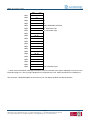
The PTY, or Program Type, code. This is a numerical code that labels your format, the type of
programming carried on your station. Be it Top 40, Rock, Classical, Religious or Talk, there is a
code for you (or at least something close). The transmission of this code will allow the listener to
search the FM band for a particular format, instead of by frequency. The codes have been defined
and are listed in the ‘PTY’ section of Appendix A.
BEWARE - the PTY codes for the European (CENELEC) standard are different from those defined
by the United States standard (NRSC), so be certain you’re looking at the right part of the table to
broadcast the correct code.
3.
The PTYN, or Program Type Name. Just 8 characters.
4.
The M/S flag. A simple ‘yes’ or ‘no’ type flag to indicate whether a stations’ programming is primarily
Music or Speech.
5.
The TP, or Traffic Program, flag. This is an indication of whether your station carries traffic
information on a regular basis.
6.
The TA, or Traffic Announcement, flag. This is a more critical indicator that says to the receiver
“We are broadcasting a traffic report right now!” WARNING! There are strict regulations on the use
of this flag! If a receiver is set to respond to this flag, it can actually force the tuner to a new station
or interrupt a CD or cassette to hear the traffic information! It is illegal to have this flag set to ‘on’ if
your station is not currently broadcasting traffic information!
7.
Clock Time. Allows a receiver to display a time generated by an Audemat encoder. For more on the
use of this feature, see the ‘Broadcasting Accurate Time’ section under ‘Advanced Functions’.
8.
ODA, or Open Data Applications. Just what it says, use of part of the RDS/RBDS data stream to
send any type of data you like, for whatever purpose you desire. Many stations are finding this
application has the potential to generate additional revenue.
NOTE: Use of ODA applications requires obtaining an Application Identification Code (AID). This
code will be broadcast in the 3A groups and identifies the type of application used to transmit data
in the ODA groups.
9.
PS, or Program Service, code. This (along with Radio text) is the part of the RDS data that actually
displays alphanumeric information on the listeners’ radio.
10.
RT, or Radio Text, code. Another alphanumeric type display. Maximum 64 characters.
11.
PIN, Program Identification Number.
12.
DI, Decoder Identification. Rarely used, but tells the receiver to decode the broadcast as a stereo
or mono signal. Also can alert the receiver that the PTY codes are dynamic and may change
throughout the day.
13.
AF - The Alternate Frequency function is one of the most important. This is a broadcast of a list of
other frequencies that are carrying the same program using the same PI code. A receiver, acting on
the information in the AF list, will continuously sample the other optional frequencies available, and
when it discovers one that is better than the frequency currently tuned, it automatically tunes the
new frequency. Then, from the AF list being broadcast on the new frequency, it starts sampling
others, and so on. Thus, a listener can hear the same program over a very wide geographic area,
with the AF lists and the receiver determining what frequencies can be used for any given point in
that area.
14.
EON, or Extended Other Networks. A method of encoding and transmitting AF, PI, and PTY
codes for other networks and programs, usually co-owned with the primary program. This is a way
for Networks that are providing several programs over a geographic area to pre-load the receivers
with information that will allow tuning to any of their alternate programs should the primary program
signal become weak.
15.
LINK - A way to link multiple encoders on a network.
16.
SLC, or Slow Labeling Codes. Allows programming receivers to accept widely diverse types of RDS
application. Broadcast in RDS Group 1.
17.
TDC - Transparent Data Channel, for transmitting diverse RDS data. Group 5.
18.
TMC – The Traffic Message Channel is used for sending real time information on traffic conditions
and road hazards to cars equipped with the appropriate receivers. Widely used in Europe, it is
beginning to catch on in the US, as more service areas and receivers become available.
Page 7
Head Office : Parc d’activites Kennedy - 20, avenue Neil Armstrong – F-33700 Bordeaux-Merignac (France)
Tel +33 (0)5 57 928 928 – Fax +33 (0)5 57 928 929 – [email protected] – www.audemat.com