1
THE FATAL CURRENT
Reprinted through the courtesy of
Fluid Controls Company,
University of California,
Safer Oregon
1.0
Strange as it may seem, most fatal electric shocks happen
to people who should know better. Here are some electromedical facts that should make you think twice before
taking that last chance.
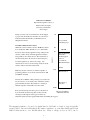
Severe Burns
Breathing Stops
IT'S THE CURRENT THAT KILLS
Offhand it would seem that a shock of 10,000 V would be
0.2
DEATH
more deadly than 100 V. But this is not so! Individuals
have been electrocuted by appliances using ordinary house
0.1
Extreme Breathing
Difficulties
currents of 110 V and by electrical apparatus in industry
using as little as 42 V direct current. The real measure of
electrical device used on a house wiring circuit can, under
certain conditions, transmit a fatal current.
Breathing Upset
Labored
SevereShock
Muscular Paralysis
Amperes
shock's intensity lies in the amount of current (amperes)
forced through the body, and not the voltage. Any
Painful
While any amount of current over 10 mA is capable of
0.01
Mild Sensation
producing painful to severe shock, currents between 100
and 200 mA are lethal.
Currents above 200 mA, while producing severe burns and
unconsciousness, do not usually cause death if the victim is
given immediate attention. Resuscitation, consisting of
Threshold of
Sensation
artificial respiration, will usually revive the victim.
0.001
From a practical viewpoint, after a person is knocked out
by an electrical shock it is impossible to tell how much
Physiological Effects
of Electrical Currents
current passed through the vital organs of their body.
Artificial respiration must be applied immediately if breathing has stopped.
The internal resistance of your body (right hand to left hand or, hand to leg) is typically
around 500 Ω. In series with this is the surface resistance of your skin which varies from
1000 Ω when moist to over 100 kΩ when dry. Thus a voltage as low as 50 V can be
v