1
5.9.3
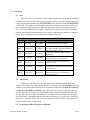
Perform steps 1 and 2 three times, noting both readings. Record the mean of the
three readings.
5.9.3.1 NOTE: If the range of measurements for the three sets of readings is
greater than 0.5 m, the entire process should be performed again. Raise
and lower several times around "disappearing" point.
5.9.3.2 NOTE: No sunglasses or any other devices should be used to shade the
eyes while this procedure is being performed.
5.9.3.3 NOTE: The Secchi depth should be determined from the shady side of
the boat during daylight hours.
5.9.3.4 NOTE: The Secchi depths should ideally be determined by the same
person during each sampling session for consistency.
5.10 Turbidity Laboratory Analysis
5.10.1 Remove the Turbidimeter from its case and turn it on.
5.10.2 Calibrate Turbidity Meter (Turbidimeter) according to user manual on seasonal
basis.
5.10.3 Select Measure from the Main Menu of the turbidimeter
5.10.4 Clean off the outside of the turbidity blank bottle using a Kimwipe, insert it in the
turbidimeter, close the lid, and press OK to scan blank as prompted by the
display. Make sure to line up small tab/indent located on the vial and machine.
5.10.5 Shake top or bottom turbidity sample bottle to redistribute solids.
5.10.6
Wash out the glass turbidity sample bottle three times with sample site water and
fill glass sample vial to the indicator line with a well mixed top or bottom
turbidity sample.
5.10.7 Wipe glass sample vial with a Kimwipe, insert the vial in the turbidimeter
(aligning tab/indent), close the lid, and press OK to scan sample. The
turbidimeter will average several readings before recording the final turbidity
reading on the weekly data collection sheet.
5.10.8 Empty glass turbidimeter sample vial and repeat step 5.10.4 through 5.10.7 for
each sample.
5.10.9 Empty all sample bottles and turbidimeter sample vial of site water, rinse with
tap water and allow to air dry.
5.11 Chlorophyll-a Laboratory Processing
SRA Tidal Monitoring SOPs
Page 8