1
5,963,142
13
14
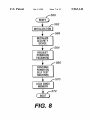
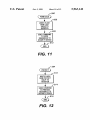
step 606, the computer system S Writes the ?ash ROM lock
value to the Write protect register. The computer system S
then sends the Permanent Lock command to the security
device in step 608 before exiting in step 610.
Word to the security device, and the security device alloWs
access to the secured features. Security is enhanced in the
preferred embodiment in that the passWord cannot be
obtained from the security device: the passWord is initially
Written to it, and the security device can verify a passWord,
but the security device cannot divulge the passWord.
Additionally, the security device controls the access. If code
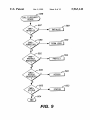
FIG. 12 is a ?oW chart of the BIOS softWare routine for
the Protect Resources command, Which begins at step 594.
In step 612, the computer system S Writes the ?ash ROM
protect value to Write protect register. The computer system
S then sends the Protect Resources command to the security
device in step 614 before exiting in step 616.
running on the processor could control the access, then an
attacker Would only need to ?nd out Which bits to tWiddle to
10
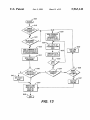
FIG. 13 is a ?oW chart of the BIOS softWare routine for
the Access Resources command, Which begins at step 598.
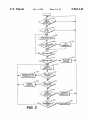
The computer system S initially checks to see if the CMOS
memory is locked in step 618. If not, the validity of the
administrator passWord is tested in step 620. If the passWord
computer system S has left secure code. Therefore an
attacker cannot utiliZe softWare to access the protected
15 device.
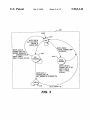
As shoWn in FIG. 15, after entry in step 676, the softWare
is not valid, the computer system S uses the Default Pass
Word. In this process, the computer system S then sends the
Access Resources command to the security device in step
622 and then sends the Default PassWord to the security
device in step 624.
In the event that the CMOS memory is locked in step 618,
issues an Access Resources command to the BIOS handler
at step 678. The BIOS handler then executes as described
or that the CMOS memory is not locked, but a valid
administrator passWord exists in step 620, the computer
system S sends an Access Resources command to the
security device in step 626. It then gets a byte of passWord
25
from the user in step 628 and Writes the byte to the
data/status register of the security device at step 630. Then
in step 632 the computer system S determines if the last byte
enables the security checking by the security device and the
sequence starts all over again.
The passWord is changed in the preferred embodiment by
changing the administrator passWord using existing con?gu
35
Resource request. If successful, the program Would then call
the BIOS handler With a Store PassWord request. In the Store
PassWord request the BIOS handler Would obtain the neW
not, the softWare delays one second in step 638 by Waiting
passWord, preferably con?rm it, and then Would issue the
STOREiPASSWORD command to the security device and
then provide the neW passWord to the security device. The
45
program Would then issue a Protect Resources request to the
BIOS handler.
Thus, a security device is disclosed for securing the
computer having the system ROM provide a passWord at
poWer-on to a security device Which controls access to the
secured features. Since the security device can only verify
the passWord and not divulge it, security of the system is
enhanced.
The foregoing disclosure and description of the invention
are illustrative and explanatory thereof, and various changes
register in step 644 before exiting in step 646.
Turning to FIG. 14, a ?oW chart of the BIOS softWare
routine for the Read Status command is disclosed. The
routine is entered in step 602. The softWare then sends the
Read Status command to the security device in step 650. The
ration operations. If desired, a separate program could be
provided, particularly if a passWord other than the admin
istrator passWord is utiliZed in the security device. The
program Would call the BIOS handler With an Access
indicated by the D bit being set, the softWare checks to see
if less than three passWords Were attempted in step 636. If
for the D bit to clear before restarting the sequence once
more by branching to step 626. If more than three passWords
have been attempted in step 636, failure is indicated to the
user in step 642 and the sequence is exited in step 646.
If the passWord Was correct in step 634, or if the default
passWord Was sent in step 624, the softWare branches to step
640, Where the computer system S checks on the unlocked
status of the security device. If the device is still locked, a
failure ?ag is set in step 641 to indicate failure in accessing
the security device. If the security device is unlocked in step
640 or after setting the failure ?ag in step 641, the softWare
Writes the ?ash ROM unlock value to the Write protect
above. The softWare in step 680 then checks to determine if
the failure ?ag is set or a failure to provide the proper
passWord occurred. If the access Was not successful, control
proceeds to step 682 Where the failure is indicated to the user
and then to step 690 Where the sequence ends.
If the access Was successful, the resource is unlocked and
in step 684 the desired access is made to the resource, such
as Writing a neW BIOS to the ?ash ROM 164. After the
access is completed, successfully or unsuccessfully, a Pro
tect Resources command is issued to the security device at
step 688 before exiting at step 690. This action once again
has been received. If not, control returns to step 628. Thus,
the next eight Writes to the data/status register cause each
byte Written to the data/status register to be compared
against a byte of the passWord stored in the security device.
If the last byte is encountered in step 632, the softWare then
veri?es that the passWord Was correct and accepted by
examining the D or delay bit from the security device in step
634. If the passWord is rejected by the security device as
unlock it. As the security device cannot provide the pass
Word and the CMOS memory is locked before the computer
system S is booted so that the administrator passWord also
cannot be read, the passWord is not available once the
in the siZe, shape, materials, components, circuit elements,
55
Wiring connections and contacts, as Well as in the details of
the illustrated circuitry and construction and method of
operation may be made Without departing from the spirit of
computer system S then reads the data port of the security
device to get the status in step 652 before exiting in step 654.
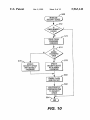
Turning to FIG. 15, an illustrative sequence for accessing
the invention.
We claim:
1. Asecurity device for protecting at least one resource of
a computer system, the resource having a protected state and
secured resources is shoWn. This sequence Would be
folloWed, for example, When a program Which controls
an unprotected state, access to the resource being controlled
doWnloading a neW BIOS into the ?ash ROM 164 is
by a passWord code, comprising:
executing. After a passWord has been doWnloaded to the
security device at boot-up as described above, a PROTECT
RESOURCES command can be issued to the security
device. To gain access, the user provides the correct pass
65
a memory device, comprising:
at least one memory slot for securely storing the
passWord code, the memory slot having a locked
state and an unlocked state;