1
Digital vs. Analog Equalization
of Disc Record Playback
245
to test the VPP with a flat input and an RIAA output. User setup is simple. In addition
to radio-buttons for in and out selection it has check boxes for Tone Controls enabled or
disabled and a 30 Hz Rumble Filter that can be turned on or off. And there are sliders
for Left-Right Balance and Volume.
I recorded the same tracks used in the DOD EQ tests with the model 4010 preamp set to L+R, flat turnover and flat rolloff, 20 Hz Rumble Filter and HF Filter set to
24 kHz. I used the resulting files as the input to the VPP and recorded the output files
which I sent to listeners for comments. While waiting for comments, I made amplitude
and time delay measurements on the VPP.
I created an input file of 36 frequency bands from 20 Hz to 20 kHz (the same
frequencies produced by the Tenma audio generator) for compatibility with previous
measurements. Each band is 20 seconds in length and separated by 4 seconds of silence
from the next band and all bands have the same amplitude so it’s a “flat” recording.
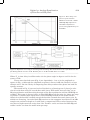
With the VPP set to RIAA output I recorded the equalized file. Playing the output file
into an RMS voltmeter produced the values used in the Fig. 14 comparison graph. The
maximum deviation is -0.33 dB at 28 Hz. The negative sign indicates the measured VPP
values were lower than the calculated RIAA values.
The procedure for running this test is as follows:
Launch VPP in DC8 and setup the user parameters as mentioned above (Tone
Controls disabled, Rumble Filter on, Left-Right Balance centered and Volume to
maximum),
Open the source file, in this case tones.wav,
In DC8 click Record and setup the sample rate and bit resolution,
In the VPP window click Run Filter,
When the filter has finished running, click Files in DC8, click Save Destination As
and give the output file a name.
I then made a composite stereo file with the left track the 36 equal amplitude frequency bands and the right track the VPP output. Using this file as the reference
and signal inputs to the phase meter I recorded and graphed Fig. 15 comparing the
measured time delay to the RIAA delay.
Although not identical, the curves are very close. (Even with a 96 kHz sampling
rate there are some issues in making accurate time delay measurements at the
higher audio frequencies: only 4.8 samples per cycle at 20 kHz.)
My primary reviewer commented as follows on the VPP equalizations:
“I didn’t have a clear preference with the Pachelbel but I did with the Atkins. To my
ears the VPP version had better instrument definition with clearer sound at all frequencies. The guitar sounded more like a real guitar while the 4010 version sounded slightly