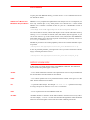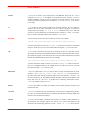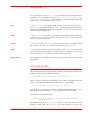
1
January 29, 1998
DIGITAL CIRCUIT
SIMULATION USING
HSPICE
Charles R. Kime
Dept. of Electrical and Computer Engineering
University of Wisconsin – Madison
TABLE OF CONTENTS
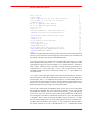
GETTING STARTED WITH HSPICE............................................................................2
The HSPICE Netlist File..........................................................................................2
An Example HSPICE File........................................................................................3
Executing HSPICE...................................................................................................4
Displaying HSPICE Output .....................................................................................6
Output Printing.........................................................................................................6
HSPICE User’s Manual and MetaWaves Help and Manual ....................................7
HSPICE COMMANDS ...................................................................................................7
INPUT WAVEFORMS ....................................................................................................9
OUTPUT VARIABLES .................................................................................................10
EXPRESSIONS .............................................................................................................10
SPECIFIC ANALYSES AND OUTPUT.......................................................................12
I-V Curves ..............................................................................................................12
Family of I-V Curves .............................................................................................14
I-V Curve for Parameter Extraction .......................................................................15
Voltage Transfer Characteristic (VTC) ..................................................................17
Transient (Delay) Analysis.....................................................................................17
CONVERGENCE PROBLEMS ....................................................................................19
DC Analysis ...........................................................................................................19
Transient Analysis..................................................................................................19
Diode Convergence ................................................................................................19
EXECUTING HSPICE FROM THE COMMAND LINE.............................................19
1
GETTING STARTED WITH HSPICE
REFERENCES...............................................................................................................19
FEEDBACK ...................................................................................................................20
GETTING STARTED WITH HSPICE
Avant!’s HSPICE (more recently Star-HSPICE) is available on the HP Unix workstations at CAE. HSPICE executes in batch mode using the Unix command line or a graphical user interface called MetaWaves (more recently AvanWaves). Here we will
emphasize the use of MetaWaves on HP Unix workstations, with a brief section at the
end on use of command line execution of HSPICE.
HSPICE uses a netlist file design.sp, where design is the name of your circuit, as
a source file. This text file contains the circuit netlist, element models, analysis commands and output commands. Execution of HSPICE produces a number of files depending on user-specified options. By use of the appropriate options, files are produced
which act as the input files for MetaWaves for displaying, analyzing, and printing results
from HSPICE.
In addition, text files for reading and printing and graphic files for direct printing from
HSPICE can be produced.
The HSPICE Netlist File
Although some versions of SPICE required the use of upper case letters, you may also
use lower case letters with this version. Further, this version is not case sensitive, so Vin
and vin are recognized as the same variable! Lines containing comments begin with *.
Comments within other lines begin with one or more spaces followed by $. To continue
a statement on multiple lines, each line after the first must have a + in the first column,
or each line of the statement except for the last line must end with \ or \\. \\ removes all
spaces. For example,
ABC \
DEF
gives ABC DEF. But,
ABC \\
DEF
gives ABCDEF.
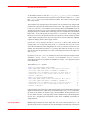
An Example HSPICE File
An NMOS depletion-mode load inverter illustrates the components of a typical digital
circuit HSPICE file. The numbers appearing on the right of the file are not part of the
file but appear only for reference.
NMOS Depletion-Mode Inverter (file: nmos_inv.sp)
*Last revised 1/11/97
*Power Supplies
Vdd 1 0 DC +5V
2
DIGITAL CIRCUIT SIMULATION USING HSPICE
1
2
3
4
GETTING STARTED WITH HSPICE
Vbb 2 0 DC -2V
*Input Signal
*Vin 3 0 PWL 0ns 0V 0.4ns 5V 14.6ns 5V 0.4ns 0V
Vin 3 0 PULSE (0 5 0n 0.4n 0.4n 14.6n 30n)
*Inverter Circuit
M1 4 3 0 2 NENH L=2u W=4u AD=32p
M2 1 4 4 2 NDEP L=4u W=2u AS=32p
Cout 4 0 0.1pf
*Vout 4 0
*Include statement to obtain MOS model file
.INCLUDE "full_path_to_spice_model/nmos.3"
*
*For Voltage Transfer Characteristic (VTC)
.DC Vin 0 5 0.1
.PROBE DC V(4)
*For propagation delay and power
.TRAN 0.1ns 60ns
*For propagation delay
.PROBE TRAN V(3) V(4)
*For average power over one full Vin cycle
.MEAS TRAN avgpow AVG POWER FROM=30n TO=60n
.OPTIONS PROBE POST MEASOUT
.END
5
6
7
8
9
10
11
12
13
14
15
16
17
18
19
20
21
22
23
24
25
26
27
The first line of the SPICE file contains the name of the circuit. This line must always be
present. As in the second line, all lines beginning with an asterisk (*) are comments and
are optional. This file is more heavily commented than usual.
Lines 4 and 5 specify power supplies which are independent voltage sources. A voltage
source identifier always begins with V or v. In order to interconnect components, nodes
represented by integers are used. For example, Vdd is connected with its + terminal on
node 1 and its – terminal on node 0. Note that 0 is always used as the ground node. Vdd
is identified as a DC source with value +5V. The + and V are optional. This circuit is
somewhat unusual in that it has a substrate bias voltage Vbb ≠ 0 to give different circuit characteristics.
Vin in lines 7 and 8 is the input voltage to the circuit for transient analyses. Two alternative specifications, PWL (Piece-Wise Linear) and PULSE are given. The PWL specification begins with *; it is commented out and thus is not used although these two
specifications are identical for the first 30 ns. PULSE is useful for simple periodic waveforms such as clocks and PWL is useful for non-periodic waveforms. See the on-line
SPICE manual for the format of these waveform specifications.
Lines 10 and 11 describe the two MOSFETs in the inverter. The use of M# as the identifier designates a MOSFET. The order of the nodes is drain(D), gate(G), source(S) and
substrate(B). For example, node 4 is connected to the drain of M1 and to the gate and
source of M2. Next, NENH and NDEP give the name of the model for each of the transistors. The length L and width W of the channel of each device is given. The abbreviation
u designates “micro” which, for length in the MKS system, gives microns, µ. In addition, for transient analysis, the areas of the drain of M1 and the source of M2 are given.
The abbreviation p designates "pico" which is µ2. Line 12 specifies a capacitive load on
the inverter output of 0.1 pf. Line 15 includes the file nmos.3 containing the models
DIGITAL CIRCUIT SIMULATION USING HSPICE
3
GETTING STARTED WITH HSPICE
for the MOS transistors in this file. "full_path_to_spice_model" is the absolute Unix path to the location where you place a copy of the spice model nmos.3. Note
that ~your_name as a part of this path will not work. The contents of this file appear
later in this section.
The remaining lines specify analyses and outputs. Line 18 performs a DC analysis that
produces the voltage transfer characteristic for the circuit. The voltage Vin sweeps from
0 volts to 5 volts in 0.1 volt increments. Line 19 along with the word PROBE on line 26
specifies the output to be V(4). Line 21 performs a transient analysis that will permit the
propagate delays, rise and fall times, and average power to be measured. This command
begins with .TRAN and specifies an output every 0.1 ns for 60 ns. Line 23 along with
the word PROBE in line 26 specifies that the only outputs are to be the voltages on nodes
3 and 4 which correspond to the input and output of the inverter. Otherwise, HSPICE
outputs all voltages plus the power supply currents.
Line 25 uses .MEAS (which is the same as .MEASURE) to find a scalar value for the
average power over a single full period of the Vin waveform. The key word POWER
causes the instantaneous power dissipated by the circuit as a function of time to be calculated. The measurement function AVG (average) then takes the average of POWER
over the time interval specified by FROM and TO and assigns the value to the output variable avgpow.
In general, PROBE in a .OPTIONS statement as on line 26 restricts the outputs to those
specified in .PROBE, .PRINT, .PLOT and .GRAPH statements. POST in .OPTIONS
causes the output files to be prepared for MetaWaves. Finally, .END designates the end
of the SPICE file.
The model file nmos.3 follows.
*Model for Enhancement-Mode MOSFET
.MODEL NENH NMOS LEVEL=3 RSH=0 TOX=300E-10 LD=0.21E-6
+ XJ=0.3E-6 VMAX=15E4 ETA=0.18 GAMMA=0.4 KAPPA=0.5
+ NSUB=35E14 UO=700 THETA=0.095 VTO=0.781 CGSO=2.8E-10
+ CGDO=2.8E-10 CJ=5.75E-5 CJSW=2.48E-10 PB=0.7 MJ=0.5
+ MJSW=0.3 NFS=1E10
*Model for Depletion-Mode MOSFET
.MODEL NDEP NMOS LEVEL=3 RSH=0 TOX=300E-10 LD=0.21E-6
+ XJ=0.3E-6 VMAX=15E4 ETA=0.18 GAMMA=0.4 KAPPA=0.5
+ NSUB=35E14 UO=700 THETA=0.035 VTO=-2.231 CGSO=2.8E-10
+ CGDO=2.8E-10 CJ=5.75E-5 CJSW=2.48E-10 PB=0.7 MJ=0.5
+ MJSW=0.3 NFS=1E10
1
2
3
4
5
6
7
8
9
10
11
12
Lines 2 through 6 and 8 through 12 describe the models for the enhancement-mode and
depletion-mode transistors, respectively. Each model begins with .MODEL followed by
the name of the model, the transistor type, and the HSPICE model parameters for a
Level 3 model. Note the + at the beginning of each subsequent line of the model parameter list. The + designates the continuation of a line. Thus, in HSPICE, each model is a
single statement.
Executing HSPICE
HPSPICE places almost all of the output files from a run in the run directory, i.e., the
directory from which it is executed. So you should change to the directory in which you
4
DIGITAL CIRCUIT SIMULATION USING HSPICE
GETTING STARTED WITH HSPICE
would like the result files to appear before executing Metawaves or HSPICE. If you are
analyzing a new circuit design, use your favorite editor to enter the initial version of
design.sp. Then start MetaWaves by entering:
mwaves
To open a design, click Design:Open. In the Open text area, enter the design file path
name if necessary. Then select design.sp and click OK. If you have not run HSPICE
on design.sp, you will get a message indicating that you should use Run HSPICE.
Next, click Tools:Run HSPICE. The first time you use the Run Manager, click on
Preferences and select the editor you wish to use. Depending on the editor you use, you
may also need to specify xterm in the Xterm command. Ordinarily, Machine and
Version will be left blank. Click on OK to return to the Run Manager.
Select the source file you wish to run on the Design list and click on Run. If you wish to
interrupt the run, click on Stop. To restart the run, click on Run. The Status area will
give the status of the run. Warning:: If design.lis already exists, then the run will end
with an Error in the Status area and will not write any output files. You must remove the
design.lis file after each run. In a separate Xterm window, enter rm
design.lis and then, before each run on design.sp, enter !r to remove the
design.lis file. When the run completes, you can examine design.lis by clicking on Listing. This file provides a lot of useful information about the parameter values
for the run and also indicates errors. Finally, to modify the source file design.sp with
your editor, click on Source.
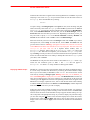
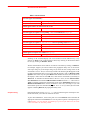
The HSPICE run will place the various results in files named design.* where * represents the file extensions given in Table 1. The *.lis file will appear in
design.ext. # in Table 1 is a sweep number or hardcopy file number.
Displaying HSPICE Output
MetaWaves is used to provide a high-resolution interactive display of HSPICE outputs.
It is most easily executed from the directory containing the relevant HSPICE output
files. If you are not already in MetaWaves, enter mwaves. You can access the various
result files by clicking on Design: Open. Warning: Each time you run HSPICE, you
must click Panel:Update to display the new results! The Results Browser window contains various output files for your circuit. Clicking on a particular file in the listing and
variable type in the Types area causes the corresponding variable names to appear in the
Curves area. To display a particular curve, select it with the left mouse button and drag
it with the middle mouse button to the Panel in the Results Display window. Repeat the
select and drag for each curve you wish to display.
If there are curves from a number of sweeps for a given result variable, it is possible to
highlight specific sweeps by double clicking on the waveform name in the Wave List.
This will cause the names of the individual sweeps to appear. Double clicking on a specific sweep name will highlight that sweep. If you want to display only selected sweeps,
you can click using the right button in the waveform display area to obtain the contextsensitive menu. Click on Sweep Filter and click or drag on those sweeps you want to
display. Then click on OK or Apply. These features are illustrated in the MetaWaves
tutorial.
DIGITAL CIRCUIT SIMULATION USING HSPICE
5
GETTING STARTED WITH HSPICE
TABLE 1.
File Extensions
These files appear unconditionally:
.lis or user-specified .ext
Output listing including print and ASCII plot outputs
.st#
Output status
This file appears if there are subcircuits in the circuit:
.pa#
Subcircuit cross-listing (if there are subcircuits)
These files appear in response to corresponding .MEASURE statements in design.sp:
.mt#
Transient analysis measurement results
.ms#
DC analysis measurement results
.ma#
AC analysis measurement results
These files appear in response to .OPTIONS POST and corresponding analyses in design.sp:
.tr#
Transient analysis results for MetaWaves
.sw#
DC analysis results for MetaWaves
.ac#
AC analysis results for MetaWaves
This file appears in response to a .SAVE in design.sp:
.ic
Operating point node voltages (initial conditions)
Zooming on the waveform display area can be achieved in three different ways: 1) by
clicking on Zoom in the context-sensitive menu, 2)by clicking on the shortcuts menu
bar or 3) by clicking on Window: Zoom.
Various measurements can be made on or between waveforms by clicking on Measure.
For example, suppose you want to measure the propagation delay tPHL for an inverter
with input voltage V(3) and output voltage V(4) where the 50% voltage value on the
waveforms is at 2.5 V. First, it is necessary to make sure that the right data appears in the
resulting measurement label. To set up the data that appears, click on Measure:Label
Options. Then select only the option Delta X and deselect all others since the X axis of
the display is Time. Then click on OK. Next, select the two waveforms V(3) and V(4) in
Wave List. To automate the measurement at the 2.5 V level, click on Measure:Measure Preferences and select Lock Horizontal at Y Value and enter 2.5. Then click on
Apply. To actually perform the measurement, click on the PointtoPoint shortcut or on
Measure:PointtoPoint. Then use the left button to select V(3) and drag to V(4). The
measurement points will automatically appear at 2.5 V on V(3) and V(4) and a label
appears containing Delta X, the propagation delay value.
Output Printing
Plain ASCII outputs such as design.lis can be printed using the normal print commands. We advise you to edit out irrelevant text first.
To print from MetaWaves, click on the print icon in the Shortcut menu and make the
appropriate selections in the Print menus. You can print to a printer or send postscript to
a file. Warning: Use only Portrait, not Landscape, to print to a file. Otherwise, the result
will be too wide to be viewed or printed.
6
DIGITAL CIRCUIT SIMULATION USING HSPICE
HSPICE COMMANDS
To print plots from HSPICE directly, you must use the .GRAPH command. See the online manual for details.
HSPICE User’s Manual and
MetaWaves Help and Manual
HSPICE is a very complex and sophisticated circuit analysis tool. As a consequence, we
have only touched upon a very small portion of its features here. A three-volume
HSPICE User’s Manual is available on-line for your use. A Framemaker version is
available in:
/afs/engr.wisc.edu/apps/hspice/97/docs/hspice/Publish
The various table of contents, indexes and chapters can be viewed with Frameviewer by
entering viewer. The table of contents (TOC) and indexes (IX) are hypertext, so you
can click on entries to go to the content location. Also, Frameviewer has a Find command which allows you to search for keywords. Alternatively, a postscript version is in
Postscript instead of Publish.
MetaWaves provides an on-line help capability. There is also a manual available in postscript form:
/afs/engr.wisc.edu/apps/hspice/97/docs/rel_notes/AvanWavesUG.97.2.ps
In case of persistent problems, you might want to see if you have encountered a known
bug by consulting the release notes in:
/afs/engr.wisc.edu/apps/hspice/97/docs/rel_notes/1997.2.Hspice_rn.ps
HSPICE COMMANDS
In this section, we briefly describe some of the HSPICE commands. The commands
may be written using either upper or lower case.
.ALTER
.ALTER allows statements in the file to be replaced and a new run to be performed with
the new statements. See the manual for more details.
.DATA
.DATA allows repeated runs to be performed with the variable values given in a data
table. See the manual for more details.
.DC
.DC performs a DC analysis. For example .DC Vin 0 5 0.1 performs a DC analysis using a sweep of Vin from 0 V to 5 V in 0.1 V increments.
.END
.END is required at the end of an HSPICE netlist file.
.GLOBAL
.GLOBAL declares a variable to be the same whether in the main circuit or any subcircuit. For example, .GLOBAL Vdd will cause all nodes throughout the netlist file labeled
Vdd to be connected together. This avoids extra nodes in defining subcircuits.
DIGITAL CIRCUIT SIMULATION USING HSPICE
7
HSPICE COMMANDS
.GRAPH
.GRAPH can be used to plot output directly from HSPICE. Plots from all .GRAPH
statements in a design.sp file appear in a single postscript file. Note that .GRAPH is
capable of handling a sweep of only one variable. If a second variable is swept, each of
its values produces a separate plot. The outputs of .GRAPH are design.gr#, where #
is an integer.
.IC
.IC is useful for setting initial conditions for transient solutions. This is essential in
whenever the circuit stores information, such as in latches, flip-flops or on dynamic
storage nodes. For example, .IC V(1)=5 V(2)=0 initializes node 1 to 5 V and node
2 to 0V. To use for initialization of a transient solution, include UIC in the .TRAN statement. A similar command useful for DC solutions is .NODESET.
.INCLUDE
Used to include text from one file in another at run time. For example,
.INCLUDE ’/pong/usr5/k/kime/public_html/555/spice_models/scn06hp.L3’
is used to include the text in the file scn06hp.L3 for the level 3 models for the CMOS
devices in an HP 0.6 µ process. Note that the abbreviated path ~kime will not work.
.LIB
.LIB is used to include text from one file in another at run time. It is typically used for
the models for elements such as MOS and BJT transistors and transmission lines. Multiple models may appear in the same library file. Thus, the model name must be specified
after the file path/filename for the library. For example,
.LIB ’/pong/usr5/k/kime/public_html/555/spice_models/scn06hp.L13’ NOM
is used to include the models in library NOM in file scn06hp.L13 which are the nominal, level 13 (BSIM) models for the CMOS devices in an HP 0.6 µ process. Note that
the abbreviated path ~kime will not work.
.MEASURE
.MEASURE (abbreviated .MEAS) is used to make a variety of measurements on result
variables. .MEAS TRAN avg_id AVG I1(M2) FROM=30n TO=60n assigns the average value of the drain current of transistor M2 over the interval from t = 30 ns to t = 60
ns to the variable avg_id. The HSPICE manual should be consulted for the details of the
many other uses of .MEASURE. To produce files containing measurement results,
.OPTIONS should include MEASOUT.
.MODEL
.MODEL files define the models for elements such as MOS and BJT transistors and
transmission lines.
.OPTIONS
.OPTIONS is followed by a list of parameters, in some cases, accompanied by parameter values. It is the main mechanism for controlling the simulation including outputs and
tolerances. See the manual for details.
.PARAM
.PARAM is used to define a parameter that is used as a variable in other statements in
the netlist file. For example, suppose you want to run a circuit with different sized
devices that are scaled using parameter λ. Then .PARAM lw = 0.3u can be used for
8
DIGITAL CIRCUIT SIMULATION USING HSPICE
INPUT WAVEFORMS
a 0.6 µ process and .PARAM lw = 0.2u can be used for a 0.4 µ process. The device
dimensions can be specified in terms of lw: L=’2*lw’ W=’3*lw’ AD=
’18*lw*lw’ AS=’18*lw*lw’ For continuation to the next line within the single
quotes ’, use \\ and outside of the quotes ’, use \.
.PLOT
.PLOT V(2) V(3) plots selected output variables, in this case V(2) and V(3), to
design.lis using ASCII characters. .PLOT is useful for looking at plotted results
without access to MetaWaves. It can also be used with .OPTIONS PROBE to select the
values to be placed in output files.
.PRINT
.PRINT V(2) V(3) produces a printed table of node voltage values for nodes 2 and
3 in the design.lis file. It can also be used with .OPTIONS PROBE to select the
values to be placed in output files.
.PROBE
.PROBE is used with .OPTIONS PROBE to select the values to be placed in output
files. Unlike .PLOT and .PRINT, it does not place results in design.lis.
.TRAN
.TRAN performs a transient analysis. For example, .TRAN 0.1ns 50ns provides 501
points of transient analysis output at 0.1 ns intervals from t = 0 through t = 50 ns. To produce useful output, .TRAN requires a waveform on at least one input.
.WIDTH OUT=80
This command sets the number of columns to 80 for use with a terminal or 80-column
output device.
INPUT WAVEFORMS
PWL and PULSE are two input waveforms frequently used in transient analyses. The
format for a piece-wise linear (PWL) waveform is:
PWL time0 value0 time1 value1 time2 value2 ...
where, at timei, the value of the waveform is set to valuei and remains there until
value(i+1). The value set at the last time remains until t = ∞. For example,
Vin 3 0 PWL 0ns 0V 0.4ns 5V 14.6ns 5V 0.4ns 0V
starts Vin at 0 at t = 0, ramps it to 5 volts by t = 0.4 ns, and holds it there until t = 15ns. It
then ramps Vin down to 0 volts by t = 15.4 ns, and holds it as 0 volts, thereafter.
The format for a PULSE waveform is:
PULSE (intial_value pulse_value delay risetime falltime
duration period)
The waveform begin at the intial_value. The delay is the time from t = 0 to the
beginning of the pulse. The risetime is the time required to go from the
DIGITAL CIRCUIT SIMULATION USING HSPICE
9
OUTPUT VARIABLES
intial_value to the pulse_value. The falltime is the time to go from the
pulse_value to the intial_value. The duration is the time that the pulse
remains at the pulse_value. The period is the length of time from the end of
delay to the rising edge of the next pulse. For example,
Vin 3 0 PULSE (0 5 4.9n 0.2n 0.2n 4.8n 10n)
represents a pulse waveform that begins at 0, has a pulse beginning at t = 5 ns measured at the
50% point with rise and fall times of 0.2 ns and a duration measured at the 50% value of 5 ns. It
repeats with a period of 10 ns.
OUTPUT VARIABLES
In .PROBE, .PRINT, .PLOT and .MEASURE statements, voltages, currents, power
and user-defined variables appear. The general form for voltages is V(n1<,n2>)
where < > indicates optional. If ,n2 is missing then V(n1) is simply the voltage on
node n1 referenced to GND. If ,n2 is present, then V(n1,n2) is the voltage on node
n1 with reference to node n2, V(n1) – V(n2).
For a current through a voltage source, the simplest form is I(Vxxx) where Vxxx is
the voltage source name. For example, the current from the power supply Vdd is the
negative of I(Vdd). To measure specific currents, it is sometimes useful to add a 0-volt
source Vx to generate a new node. You can then output current I(Vx). For example,
this is useful for obtaining the current for calculating the power dissipation for a CMOS
NAND gate. In this case, Vx has its positive terminal attached to Vdd and negative terminal attached to the sources of the PFETs in the NAND.
For the current through a branch of an element, the simplest form is: In(Wwww) where
n is the node position number of the branch on the element and Wwww is the element
name. For example, the current into the drain of n-channel MOSFET M1 is I1(M1)
and the current out of its source is I3(M1) since the terminals on a MOSFET are in
order: 1) drain, 2) gate, 3) source, and 4) substrate.
The instantaneous power dissipated in an element is specified as P(Wwww) where
Wwww is the element name. For example, the power dissipated in an MOSFET M1 is
P(M1). The instantaneous power dissipated in the entire circuit is denoted by key word
POWER.
Since average power in MOS circuits has a strong transient component, determination
of average power requires a clear picture of current flow in the circuit in order to select a
correct time interval for the measurement. Also, to conveniently measure the power for
a portion of the circuit, a separate power supply source or a 0V voltage source attached
to the main power supply source may be needed to supply power to the portion of the
circuit.
10
DIGITAL CIRCUIT SIMULATION USING HSPICE
EXPRESSIONS
EXPRESSIONS
Algebraic expressions are of use in obtaining a number of results frequently used in
device and circuit analysis. In Table 2, we will summarize selected operators and functions useful in analyzing devices and digital electronic circuits. We will particularly
focus on the use of expressions in analyzing and making measurements on outputs.
TABLE 2. Frequently-used
Operators and
Functions in MetaWaves and HSPICE
Operation/Function
Notation
Add
+
Subtract
–
Multiply
*
Divide
/
x to the power y
pow(x,y)
Square root of x
sqrt(x)
Absolute value of x
abs(x)
Derivative of x
derivative(x)
Integral of curve
integral(curve)*
* Available in MetaWaves and .MEASURE only in HSPICE.
MetaWaves also has comparison, Boolean and conditional operators. .MEASURE in
HSPICE has functions such as average, peak-to-peak, and RMS.
Example: Find the power consumption during a period of an applied input pulse wave
of an NMOS inverter with power supply voltage Vdd and depletion mode transistor M2.
The duration of the transient analysis and the pulse period is 30 ns. In MetaWaves, we
can use the Expression Builder to construct an expression power equal to:
integral(I1(M2))*5.0/60n
In terms of the processing of outputs, expressions such as that above can be used within
HSPICE in .PLOT, .PRINT, .PROBE and .MEASURE statements as well as being constructed in Expression Builder.
Expression Builder can be opened by clicking the Expression Builder icon on the
shortcut menu or by clicking Tools:Expressions. To build the equation above, double
click on integral in the Functions area to add integral to the Expression field.
Change the Result Browser type to Current1 and drag the current I1(M1) using the
middle mouse button into the parentheses for integral. Next drag * and / from the
Operators area and enter 5.0. Finally, drag / from the Operators area to the Expression and enter 60n. In the Result field, enter power and then select Apply to cause
power to appear in the Expressions area. Finally, select power and, with the middle
mouse button, drag it to a panel. Note that power, by definition, is a horizontal line.
Note that the various functions can be applied only to single variables, not to expressions. If you wish to apply a function to an expression, define the expression and give it
a name and click Apply so that it appears in the Expressions area.
DIGITAL CIRCUIT SIMULATION USING HSPICE
11
SPECIFIC ANALYSES AND OUTPUT
In order to form power within HSPICE, we use .MEASURE since there is no average
or integral function for use outside of .MEASURE. Using the AVG function,
.MEASURE power AVG POWER FROM=30n TO=60n
To avoid effects of the initial conditions on the power calculation, a full cycle of the
input Vin precedes the beginning of the measurement.
SPECIFIC ANALYSES AND OUTPUT
Examples are given for performing specific frequently-used analyses. The HSPICE files
and results are available in www.cae.wisc.edu/~kime/555/tool_docs/
spice_examples. To go directly to these files on CAE Unix workstations, replace
www.cae.wisc.edu/~kime with ~kime/public_html. The HSPICE circuit
for the I-V Curve examples is:
NMOS I-V Curve Circuit (file: nmos_iv.sp)
*Last revised 1/11/97
*The voltage values given are nominal values to be used
*if not over-ridden by dc or transient commands
*affecting the source value.
Vgs 1 0 2V
Vds 2 0 2V
Vbs 3 0 0V
*NFET
M1 2 1 0 3 NENH L=3u W=3u
*NFET Model
.MODEL NENH NMOS LEVEL=3 RSH=0 TOX=300E-10 LD=0.21E-6
+ XJ=0.3E-6 VMAX=15E4 ETA=0.18 GAMMA=0.4 KAPPA=0.5
+ NSUB=35E14 UO=700 THETA=0.095 VTO=0.781 CGSO=2.8E-10
+ CGDO=2.8E-10 CJ=5.75E-5 CJSW=2.48E-10 PB=0.7 MJ=0.5
+ MJSW=0.3 NFS=1E10
*
.options post probe
*For I-V Curve Id vs Vgs
.dc Vgs 0 5 0.1
.probe I1(M1)
*For I-V Curve Id vs Vds with Vgs = 2V
.dc vds 0 5 0.1
.probe I1(M1)
*For family of I-V Curves
.dc Vds 0 5 0.1 Vgs 0 5 1
.probe I1(M1)
.end
I-V Curves
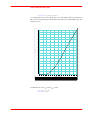
For the above circuit, to obtain the data to plot an I-V curve using MetaWaves: I D versus
VGS, we use:
.dc Vgs 0 5 0.1
12
DIGITAL CIRCUIT SIMULATION USING HSPICE
SPECIFIC ANALYSES AND OUTPUT
.probe I1(.probe I1(M1)
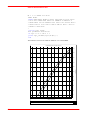
Vgs sweeps from 0 to 5 volts in steps of 0.1 volt. The output current into the drain of
M1 is I D. VDS for this analysis is the nominal value of 2V given in the HSPICE file. The
resulting curve is:
nmos depletion-mode inverter (file: nmos_inv.sp)
320u
300u
280u
260u
240u
220u
Current 1 (lin)
200u
180u
160u
140u
120u
100u
80u
60u
40u
20u
0
500m
1
1.5
Design
D0: /point/usr5/k/kime/spices/hspice/examples/nmos_iv
2
2.5
3
Voltage X (lin) (VOLTS)
3.5
Type
Wave
DC
i1(m1
4
4.5
5
Symbol
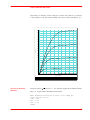
To obtain the I-V curve: ID versus VDS, we use:
.dc vds 0 5 0.1
.probe I1(M1)
DIGITAL CIRCUIT SIMULATION USING HSPICE
13
SPECIFIC ANALYSES AND OUTPUT
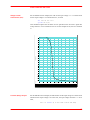
Vds sweeps from 0 to 5 volts in steps of 0.1 volt. The output will be V(2) which is VDS
and the output current into the drain of M1which is ID. VGS for this plot is the nominal
value of 2V given in the SPICE file. The resulting curve is:
nmos depletion-mode inverter (file: nmos_inv.sp)
55u
50u
45u
40u
Current 1 (lin)
35u
30u
25u
20u
15u
10u
5u
0
0
500m
1
1.5
Design
D0: /point/usr5/k/kime/spices/hspice/examples/nmos_iv
2
2.5
3
Voltage X (lin) (VOLTS)
3.5
Type
Wave
DC
i1(m1
4
4.5
5
Symbol
In general, for both dc and transient analyses, one most be careful not to request too
many or too few result points. In this case, there are about (5 – 0) / 0.1 = 50 result points,
which is reasonable. To specify tran 0.1ns 100ms, which requests
100ms/0.1ns or about 1 billion result points, clearly is not! If a resolution of 0.1ns
is required, then the simulation time should be restricted to no more than 100 ns even for
simple circuits.
Family of I-V Curves
To obtain the family of I-V curves ID versus VDS with each curve for a value of VGS, we
use:
.dc Vds 0 5 0.1 Vgs 0 5 1
.probe I1(M1)
14
DIGITAL CIRCUIT SIMULATION USING HSPICE
SPECIFIC ANALYSES AND OUTPUT
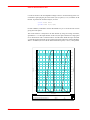
This sweeps Vds from 0 to 5 volts in steps of 0.1 volt for every value of Vgs from 0 to
5 volts in steps of 1 volt. The result is a family of six curves, one for each value of vgs:
nmos depletion-mode inverter (file: nmos_inv.sp)
380u
360u
340u
320u
300u
280u
260u
240u
Current 1 (lin)
220u
200u
180u
160u
140u
120u
100u
80u
60u
40u
20u
0
0
500m
1
1.5
Design
D0: /point/usr5/k/kime/spices/hspice/examples/nmos_iv
I-V Curve for Parameter
Extraction
This gives a plot of
2
2.5
3
Voltage X (lin) (VOLTS)
3.5
Type
Wave
DC
i1(m1
4
4.5
5
Symbol
I D versus V DS = V GS as shown on pages 69-70 of Kang and Leb-
lebici. I D is again I1(M1). The SPICE circuit used is:
NMOS Parameter Extraction Circuit (file: NMOS_PX)
*Last revised 1/11/97
*Vds = Vgs
Vgs 1 0 0V
Vsb 0 2 0V
*NFET
DIGITAL CIRCUIT SIMULATION USING HSPICE
15
SPECIFIC ANALYSES AND OUTPUT
M1 1 1 0 2 NENH L=3u W=3u
*NFET Model
.MODEL NENH NMOS LEVEL=3 RSH=0 TOX=300E-10 LD=0.21E-6
+ XJ=0.3E-6 VMAX=15E4 ETA=0.18 GAMMA=0.4 KAPPA=0.5
+ NSUB=35E14 UO=700 THETA=0.095 VTO=0.781 CGSO=2.8E-10
+ CGDO=2.8E-10 CJ=5.75E-5 CJSW=2.48E-10 PB=0.7 MJ=0.5
+ MJSW=0.3 NFS=1E10
*
.options post probe
*For parameter extraction
.dc Vgs 0 5 0.1 vsb 0 3 3
.probe sqrt_id=PAR('sqrt(I1(M1))')
.end
The resulting I-V curves are useful for finding kn, VTO, and GAMMA.
nmos parameter extraction circuit (file: nmos_px.sp)
20m
18m
16m
14m
10m
Params (lin)
12m
8m
6m
4m
2m
0
0
500m
1000m
1.5
2
2.5
3
Voltage X (lin) (VOLTS)
Design
D0: /pong/usr5/k/kime/spices/hspice/examples/sp/nmos_px
16
3.5
4
4.5
Type
Wave
DC
D0:A0:par(sqrt_id)
DIGITAL CIRCUIT SIMULATION USING HSPICE
5
Symbol
SPECIFIC ANALYSES AND OUTPUT
Voltage Transfer
Characteristic (VTC)
For the NMOS inverter example, the node for the input voltage Vin is 3 and the node
for the output voltage is 4. To obtain the VTC, we used:
.dc vin 0V 5V 0.1V
.probe dc V(4)
This command replaces the waveform for Vin specified in the file with a signal that
sweeps from 0 to 5V in increments of 0.1V. For the example circuit, the VTC obtained
is:
nmos depletion-mode inverter (file: nmos_inv.sp)
4.8
4.6
4.4
4.2
4
3.8
3.6
3.4
3.2
Voltages (lin)
3
2.8
2.6
2.4
2.2
2
1.8
1.6
1.4
1.2
1
800m
600m
400m
200m
0
500m
1
1.5
Design
D0: /point/usr5/k/kime/spices/hspice/examples/nmos_inv
Transient (Delay) Analysis
2
2.5
3
Voltage X (lin) (VOLTS)
3.5
4
Type
Wave
DC
v(4
4.5
5
Symbol
For the NMOS inverter example, the node number for the input voltage is 3 and the node
number for the output voltage is 4. In this case, the input voltage waveform Vin to be
used,
Vin 3 0 PULSE (0 5 0N 0.4N 0.4N 9.6N 20N)
DIGITAL CIRCUIT SIMULATION USING HSPICE
17
SPECIFIC ANALYSES AND OUTPUT
is in the circuit file. Look at independent voltage sources to see the meaning of the various numbers specifying the piece-wise linear (PWL)or pulse (PULSE) waveform in the
manual. To perform the transient analysis, we used:
.tran 0.1ns 20ns
.probe tran V(3) V(4)
For this command, a simulation value is determined every 0.1 ns for an interval of 20 ns
giving 201 result points.
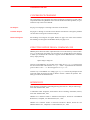
The circuit behavior is analyzed in the time domain by using the voltage waveform,
specified for Vin as the input stimulus. In this case, the input waveform is a single pulse
of 10 nanoseconds with 0.4 nanosecond rise and fall times. Both the input waveform
v(3) and the output waveform v(4) are plotted versus time and can be viewed with MetaWaves. In addition, the curve for the total instantaneous power, POWER, is also plotted.
nmos depletion-mode inverter (file: nmos_inv.sp)
5
3m
2.8m
4.5
2.6m
4
2.4m
2.2m
3.5
2m
1.8m
1.6m
2.5
1.4m
2
TPOWRD (lin)
Voltages (lin)
3
1.2m
1m
1.5
800u
1
600u
400u
500m
200u
0
0
5n
10n
15n
20n
Design
18
25n
30n
35n
Time (lin) (TIME)
40n
45n
50n
Type
Wave
D0: /point/usr5/k/kime/spices/hspice/examples/nmos_inv
Transient
v(3
D0: /point/usr5/k/kime/spices/hspice/examples/nmos_inv
Transient
v(4
D0: /point/usr5/k/kime/spices/hspice/examples/nmos_inv
Transient
power
DIGITAL CIRCUIT SIMULATION USING HSPICE
55n
Symbol
CONVERGENCE PROBLEMS
CONVERGENCE PROBLEMS
Very infrequently, one encounters some form of numerical convergence or other numerical problem when using HSPICE. Due to the low likelihood of these problems, we give
references only to the on-line manual.
DC Analysis
See page 5-5 and pages 5-8 through 5-26 of the on-line manual.
Transient Analysis
See pages 6-6 through 6-19 of the on-line manual. Note that DC convergence problems
can also affect convergence in transient analysis.
Diode Convergence
For handling of convergence for regular diodes, see page 12-2 of the on-line manual.
For handling of convergence for MOSFET diodes, see page 15-19.
EXECUTING HSPICE FROM A COMMAND LINE
HSPICE places almost all of the output files from a run in the directory in the run directory, i.e., the directory from which it is executed. So you should change to the directory
in which you would like the result files to appear. Execute HSPICE from a command
line by simply entering:
hspice design> design.ext
This will cause HSPICE to be executed on the netlist file design.sp and will place
the various result files in files named design.* where * represents the file extensions
given in Table 1. The *.lis file will appear in design.ext.
Another way to run HSPICE is to simply type hspice. You will be prompted for the
input and output file names and will be asked to answer a number of questions. Normally you will use the default answers.
REFERENCES
S-M. Kang and Y. Leblebici, CMOS Digital Integrated Circuits: Analysis and Design,
New York: McGraw-Hill, 1996.
G. Massobrio and P. Antognetti, Semiconductor Device Modeling with SPICE, 2nd ed.,
New York: McGraw-Hill, 1993.
HSPICE User’s Manual: Volume 1: Simulation and Analysis, Version 96.1 for HSPICE
Release 96.1, Campbell, CA: Meta-Software, Inc., 1996.
HSPICE User’s Manual: Volume 1I: Elements and Device Models, Version 96.1 for
HSPICE Release 96.1, Campbell, CA: Meta-Software, Inc., 1996.
DIGITAL CIRCUIT SIMULATION USING HSPICE
19
FEEDBACK
HSPICE User’s Manual: Volume 1II: Applications and Examples, Version 96.1 for
HSPICE Release 96.1, Campbell, CA: Meta-Software, Inc., 1996.
MetaWaves User Guide, Version 96.3 for use with MetaWaves Release 96.3, Meta-Software, Inc., 1996.
FEEDBACK
Please e-mail information on errors, suggested additions or other comments on these
notes to C. R. Kime, at [email protected].
20
DIGITAL CIRCUIT SIMULATION USING HSPICE