1
MATERIALS AND METHODS
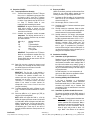
5’-GCG-TAATACGACTCACTATAGGGAGA--Target DNA--3’
3’ --Target DNA--AGAGGGATATCACTCAGCATAAT-GCG-5’
1. Generating Double-Stranded RNA (dsRNA)
Template
1.1. Preparation of Template DNA for Transcription
1.1.1. Determining a target region
The region selected for gene silencing does not
seem to matter. You may follow a method suggested
by Tuschl et al. (13) and pick a region of about 100150 nucleotides downstream from the start codon,
which would prevent the dicedsiRNAs (dsiRNAs)
from potentially competing with proteins involved in
translation initiation.
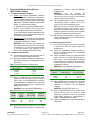
PCR
5’-GCGTAATACGACTCACTATAGGGAGA-Target-CTCCCTATAGTGAGTCGTATTACGC-3’
3’-CGCATTATGCTGAGTGATATCCCTCT- DNA -AGAGGGATATCACTCAGCATAATGCG-5’
1.1.2. The size of the target template
The Recombinant Dicer Enzyme performs best with
double-stranded RNA (dsRNA) between 500-1000
bp in length. Dicer also works with longer dsRNAs,
even full-length cDNAs. However, for silencing a
single gene, using a 500 bp dsRNA is sufficient. We
recommend that you use templates that are 500 –
1000 bp in length.
IMPORTANT 1) The yield of dsRNA might be low if the
DNA template is smaller than 300 bp or the gene is GC
rich and longer than 2 kb; 2) The dicer enzyme might not
digest well if the dsRNA is smaller than 300 bp.
1.1.3. Adding T7 Promoters to the DNA template using
PCR
The DNA template must contain the T7 RNA
polymerase promoter site at both ends so that it can
be used as a template for in vitro transcription with
the TurboScript™ T7 Transcription Kit.
T7 promoter sequence:
+1
TAATACGACTCACTATAGGGAGA
NOTE The underlined sequence shown above is the
minimum promoter sequence needed for efficient
transcription. The + 1 base (in bold) is the first base
incorporated into RNA during transcription. The 20-base
T7 promoter region includes 2 bases which will form the
first 2 bases of the transcribed RNA. Yields of transcription
product are greatly reduced if the +1 or +2 G residues are
changed.
1.1.3.1. Design gene-specific PCR primers by using the
diagram below. We recommend using 20 bases
that are gene specific in each primer.
5’ Primer:
5’-GCG-TAATACGACTCACTATAGGGAGA-NNNNNNNNNN-3’
leader
T7 promoter sequence
Target DNA (~20 bases)
3’ Primer:
5’-GCG-TAATACGACTCACTATAGGGAGA-NNNNNNNNNN-3’
leader
T7 promoter sequence
Genlantis
10190 Telesis Court. San Diego, CA 92121
Target DNA (~20 bases)
VKM070419
In vitro transcription
sense
dsRNA
antisense
1.1.3.2. PCR Protocol
We recommend that you use the PCR
Control Plasmid, which contains a 700 bp
GFP gene as positive control template.
Prepare a 100 µl reaction mix as follows:
10 µl
1 µl
1 µl
1 µl
1 µl
x µl
86-x µl
10 x PCR buffer
10 mM each dNTP
DNA template (50 ng)
5’ primer (1µg/µl)
3’ primer (1µg/µl)
DNA polymerase (Amount varies
depending on the supplier)
ddH2O
PCR program:
94oC for 3 minutes
94oC for 30 seconds
58oC for 30 seconds
68oC for 1 minute/1kb
35 cycles
68oC for 5 minutes
4oC storage
1.1.4. Purification of PCR Product. It is important to use a
clean PCR product to ensure high dsRNA yield. Purify
PCR product as follows:
1.1.4.1. Add 1/10 volume of 3 M sodium acetate pH 5.3.
1.1.4.2. Add 2 volumes of ethanol.
1.1.4.3. Mix well and chill at –20°C for 30 min.
1.1.4.4. Pellet the DNA for 15-30 min in a
microcentrifuge at top speed.
1.1.4.5. Remove the supernatant carefully. Resuspend
the DNA pellet with 100 µl cold 70% ethanol.
1.1.4.6. Spin at top speed for 15 min.
1.1.4.7. Remove the supernatant carefully, and air-dry
DNA pellet.
1.1.4.8. Resuspend the DNA in 20 µl of Nuclease-free
Water and quantitate by spectrophotometry.
Store at -20°C until later use.
Page 3 of 8
Toll Free: (888) 428-0558 « (858) 457-1919 « Web: http://www.genlantis.com