1
User's manual
K&F SEQUENZA 5 incl. accessories
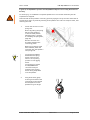
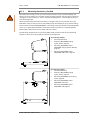
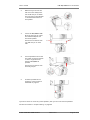
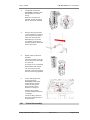
Every chain and every motor must be capable of carrying the total load of the array on its
own, even with two-strand rigging. Check to make sure that the chains of the hoist motors
are hanging straight down and are not twisted and that the hoist motors are in the intended
positions.
When operating with chain hoists that do not comply with the BGV C1 or the D8+, no one
may be present in the danger zone underneath or near the speaker array.
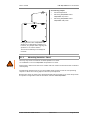
If a BGV (government safety organisation) C1 or a D8+ motor is used, the SEQUENZA 5 system
is intrinsically safe and does not require any secondary securing. If the SEQUENZA 5 system
is, however, to be hung on another motor, then secondary securing is necessary. This can be
attached to the 3.5t shackles and must be implemented with zero drop height. Instructions
for the correct use of secondary securing with zero drop height are in the standard VPLT
(Assoc. of Media and Event Technology) SR 2.0 "Preparation & use of electric chain hoists".
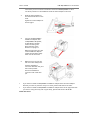
Never use signal cables or power cords for suspending, aligning or securing the systems.
When laying out the connecting cables, make sure that nobody can trip.
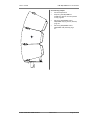
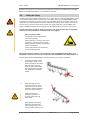
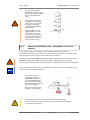
Make sure you have enough free working space on site to assemble and suspend the array.
The array can swing out while being lifted!
Only personnel directly involved with assembly or disassembly may be in the working area.
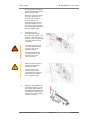
Every time before the responsible technician raises or lowers the flying frame, he must
unmistakably signal this to all people. All persons must then move outside of the pivoting
and lifting range.
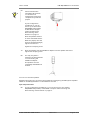
The flying frame may not be used to lift and secure people or objects other than the abovementioned speaker systems.
The array may not be used as a climbing aid.
The safe use of the flying frame and the speakers also depends on the various factors present
at the area of use. Weather conditions such as wind or rain, for example, can compromise
the safety of the flying frame and speakers. Always consider and evaluate these factors. (See
chapter 'Wind Loading' on page 17.)
5.2
Safety Instructions for Stacked Setups
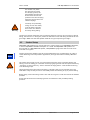
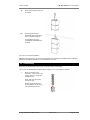
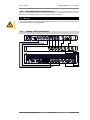
Falling speakers pose the threat of injuries to people near them!
Be sure to follow the relevant national specifications, norms, and safety regulations.
Warning
Always make sure that a sufficient safety level is still given, even when outside forces have
an additional impact on the stacked speakers. Before setup, carefully ascertain if there are
any possible outside forces that could result in the array falling over. (Slant of the ground /
the bearing capacity of the ground / wind / person or vehicle impact, etc.). A technical expert
who is responsible for the setup must evaluate and determine necessary measures (including
calculating the statics). If necessary, obtain expert proof of stability.
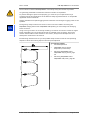
For the stability inspection, you must always factor in an imperfection (tilt) of +/-15° and
destabilising loads. A planned tilt of the flying frame ist not permissible. In calculations, the
tilted setup serves the purpose of levelling out unevenness.
With the set-up systems for which you cannot verify the structural safety without safeguards,
you must secure them to prevent sliding or tipping in order to provide proof of this safety. To
secure the system from tipping over, use water tanks or floor bolts. Other possible measures
include strapping it to a suitable substructure or tying it using safety straps. The simulation in
the CON:SEQUENZA+ software is not valid as a verification of structural safety. This software
always states that you must secure stacked speakers to prevent their falling over.
For outdoor and trade fair venues in which wind loads must be considered, additional proof
of stability is necessary.
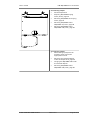
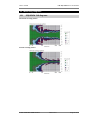
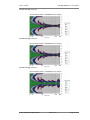
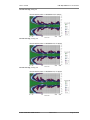
Maximum number of stacked speakers
KLING & FREITAG GMBH © 2014
Version 4.0
Page 16 of 87