1
CONTENTS
CPCS renewal test
factsheet
To access specific factsheets click on
in the navigation pane or click on the name in the list below, alternatively
access the factsheets by using web based utility Module Matcher by going to cpcsrt.citb.co.uk
Module
Code
RT02
RT04
RT05
RT06
RT09
RT12
RT14
RT17
RT19
RT20
RT21
RT22
RT23
RT24
RT25
RT26
RT27
RT30
RT31
RT32
RT33
RT34
RT35
RT36
RT37
RT39
RT40
RT41
RT42
RT43
RT44
RT45
RT49
RT50
RT56
RT59
RT60
RT61
RT62
RT63
RT65
RT66
Module Description
Crawler crane
Tower crane
Dragline
Truck mounted boom concrete pump
Forward tipping dumper
Excavator 180
Masted forklift truck
Telescopic handler
Grader
Hoist
Wheeled loading shovel
Tracked loading shovel
Skid steer loader
Motorised scraper
MEWP – scissor
MEWP – boom
MEWP – mast climber
Piling rig - tripod
Ride on roller
Soil/landfill compactor
Agricultural tractor
Crawler – tractor/dozer
Crawler – tractor/side boom
Lorry loader
Trencher
Skip handler
Slinger/signaller
Loader compressor
Crusher
Screener
Trailer mounted concrete pump
Piling rig
Loader/securer – non STGO
Loader/securer – STGO
Dump Truck
Excavator 360
Mobile crane
Appointed person
Crane/lifting operations supervisor
Pedestrian operated tower crane
Demolition plant
Compact crane
Page 1
Version 1 – 02/04/2013
Page
Numbers
02 - 06
07 - 11
12 - 15
16 - 20
21 - 25
26 - 30
31 - 35
36 - 40
41 - 45
46 - 49
50 - 54
55 - 59
60 - 63
64 - 68
69 - 73
74 - 78
79 - 82
83 - 86
87 - 90
91 - 95
96 - 100
101 - 105
106 - 109
110 - 114
115 - 118
119 - 123
124 - 128
129 - 132
133 - 136
137 - 140
141 - 144
145 - 149
150 - 154
155 - 159
160 - 164
165 - 169
170 - 174
175 - 179
180 - 184
185 - 189
190 - 194
195 - 200
CRAWLER CRANE
CPCS renewal test
factsheet
Introduction to the CPCS renewal test
The industry-led CPCS Management Committee has determined that key safety-related knowledge must be
checked on each category prior to the renewal of a CPCS Competent Operator (blue) card. The CPCS renewal
test is the means by which blue cardholders will be tested on topics that reflect safety issues identified through
consultation, that occur regularly on site.
For each topic identified there is a set of questions, from which a number will be included in the test and for
which supporting information is provided in this factsheet. Each test will ask a total of 15 questions selected
randomly to ensure all topics are covered.
The test will cover all categories within the scheme through modules. Some modules have been devised to cover
a range of similar CPCS categories.
The CPCS renewal test is available on the CITB-ConstructionSkills Testing Services platform alongside the
Health, safety and environment test.
The questions and answers will not be published but factsheets are available for each module to cover the
topics.
How to use this factsheet
Prior to taking the test, cardholders are advised to carefully study the factsheet, which will prepare them in
deciding the correct answer or answers to each given question. Correct answers are based on legislation or
good practice adopted, in the majority of cases, by the construction and allied sectors.
It is acknowledged that variations may occur depending on the nature of the operation or on how the machine is
used. However the correct answer to each question is based on common practices or manufacturers’
requirements for the majority of machine types within each module, and applies to this test irrespective of how a
machine may be used within a particular activity or sector. It is important, therefore, that this factsheet is studied
carefully.
The questions are selected randomly and will not appear in the order that topics appear in this factsheet.
If the card holder does not answer all the questions correctly, the score report issued after completing the test will
indicate the topic areas in which the questions were answered incorrectly. The cardholder should, prior to
retaking the test, re-study all topic areas.
Scoring the test
To be successful in this module, cardholders need to correctly answer a minimum of 12 out of the 15 questions
presented. However, because many of the questions are safety-related, in the majority of cases, a minimum
number of questions per topic need to be answered correctly. Failure to do so, even if the overall minimum
number of correct answers has been reached, may mean that the cardholder is unsuccessful on the test.
The top of each topic states the number of questions that will be presented for each topic and the minimum
number of questions that must be answered correctly in order to pass the test.
Page 1
Version 1 – 02/04/2013
CRAWLER CRANE
Concessions
To avoid duplication of questions where similar categories are held, booking concessions are provided. This
means that, if several similar categories are held, only one module needs to be booked. The following chart
indicates if there is a booking concession for this category.
Concessions are provided to holders of the category of Crawler crane.
Other categories held:
Needs only to book:
Compact crane
Crawler crane
Singer/Signaller
Crawler crane
Mobile crane
Mobile crane
Note: The above concessions are an outline of what tests you may have to book; please refer to Module matcher for details
of full concessions where more than one category is held.
This factsheet has been designed to highlight only topics that have been identified through industry consultation
area with safety issues or where good practice is often not complied with. The questions within the CPCS
renewal test for this category also reflect this.
It is not intended as a training tool and cannot list all essential knowledge and understanding for this category.
Operators must always follow manufacturers’ requirements, industry good practice and be aware of their own
limitations with the machine, and seek further guidance and help where needed.
Further information about the CPCS renewal test can be found at www.cskills.org/cpcs
Page 2
Version 1 – 02/04/2013
CRAWLER CRANE
Preparation and completing work (Preparation)
Topic scoring information: 3 correct answers required out of 5 questions presented to pass
• Crawler cranes are travelling cranes mounted on a tracked chassis fitted with a lattice-type jib (although
telescopic boom units do exist). They are capable of both slewing through 360 degrees and varying their
working radius. They are also capable, in most cases, of travelling with a load and, although they tend to be
operated by dedicated operators, accidents and incidents do occur, often because of the loss of stability. This
factsheet aims to highlight some of the factors that cause instability and other issues that can, and do, cause
incidents. The operator must undertake proper pre-use checks at required intervals for the safe operation of
any type of plant, including crawler cranes. As with all plant and machinery, failure to properly check relevant
crane components before work could mean that incidents or injuries occur because faults can affect both
performance and safety.
• Checks and inspections that need to be made are indicated in the operator’s or user’s manuals for the crane.
Although the frequency of checks will be determined by the manufacturer, extreme or unusual operating
conditions may require more frequent checks, such as when continually lifting using long lengths of hoist
ropes e.g. working at minimum radius and placing loads at or below ground level. As with lifting equipment, all
cranes including crawlers must undergo a thorough examination during which all components are thoroughly
examined by a competent person who will determine when these examinations should take place. Although
operators do usually undertake the daily checks, weekly-type checks that normally require more in-depth
checks and adjustments should only be undertaken by the operator if they have had the additional training on
the checks required for the particular model of crane.
• A requirement under legislation is the devising of a lift plan for the particular lifting operation that is to be
carried out, as constructed by the lift planner/appointed person. Amongst many factors, the lift plan needs to
identify all risks, the measures to be taken to mitigate these risks, the sequence of work and the number of
personnel involved in the lifting operation. It is also important that all those involved in the lifting operation
have been informed of the contents of the plan and what is required of each of them. If they notice an error or
something that is not correct, they should immediately relay any concerns they have with the lift plan to the lift
supervisor or appointed person/lift planner. Only the lift planner/appointed person is allowed to alter the lift
plan if it needs amending before or during the lifting operation.
• The lift plan should identify additional external operations that may affect the lifting operation, such as nearby
tower cranes, with the sequence of operations determined before lifting operations begin. If the crawler crane
is working close to a tower crane, the sequence should be determined before work starts and, on larger sites
where there may be various crane operations, a crane-co-ordinator may be present who will determine the
order of operations between each crane. When work has been completed at the end of the shift or for a break,
the jib of the crawler crane must be lowered sufficiently so that there is no risk of the jib or boom striking the jib
or boom of any nearby cranes. This is particularly important at the end of the shift as the jib of a tower crane
must be placed into free slew, and will weather vane (be moved by the wind direction).
• In the majority of cases when crawler cranes are used for lifting operations within the construction sector, they
are transported to site as separate loads and rigged or re-constructed at the site. This is usually undertaken at
a different location from where the lifting operation is to take place. Once the crane has been rigged and
before it goes to the place of lift, or even from one lifting place to another, the travel route must be clear of all
hazards, other vehicles and personnel. The operator and members of the lifting team need to identify any
hazards or obstructions and inform the site manager who is responsible for ensuring that there is clear and
unrestricted access to the place of lift.
Lifting practices and working with others (Working tasks)
Topic scoring information: 1 correct answer required out of 3 questions presented to pass
• Lifts should not only be planned but the crane must also be kept within the rated lifting capacity for the
relevant configuration e.g. radius, height and boom/jib length. The crane’s rated capacity indicator (RCI)
provides warnings to the operator and others nearby when the crane both approaches and exceeds maximum
Page 3
Version 1 – 02/04/2013
CRAWLER CRANE
rated capacity for the configuration. Some RCIs can be overridden but this is purely for diagnostic and testing
purposes during the maintenance programme and RCIs must never be overridden during lifting operations,
otherwise the crane may over-lift and risk overturning.
• All cranes, including crawlers, are designed to lift a load vertically. This means that the hook of the crane must
be placed above the centre of gravity for the load. If the hook is offset to the load, the load can drag along the
ground when it is at the point of lift, and an overload situation can occur if the load snags whilst being
dragged. The rated capacity of a crane only applies to a freely suspended load and where the load is attached
to a structure or embedded in the ground, the increased resistance when being lifted can again overload the
crane.
• Personnel can be lifted in a specially designed personnel carrier providing a method statement is undertaken
relating to the lifting of persons. This would include additional considerations such as six-monthly checks and
a plan for evacuation at height in case of emergencies or crane malfunction.
• Lifting operations occur in a variety of places, including near or next to areas with public access. The area of
lift and the area of placing the load must be segregated from nearby pedestrians. This also applies to a site
where non-lifting personnel such as other workers must be kept clear of the lifting and landing areas.
Wherever possible, the moving of a suspended load above other workers or pedestrians should be avoided.
Where this is not possible, other measures such as netting around a load or additional securing or protection
features should be considered.
Working safely and at height (Working at height)
Topic scoring information: 2 correct answers required out of 4 questions presented to pass
• Conditions on site need to be taken into account before, during and following work. The jib or boom must be
kept well clear of any overhead power lines. Guidance from the Health and Safety Executive advises that at
least 15 metres plus the maximum reach of the jib or boom is kept from power lines mounted on metal pylons.
Wind speeds should be regularly monitored so that work is only undertaken when they are below the
maximum authorised speed stipulated by the crane manufacturer. Gusts of wind may also need to be taken
into account, even if overall wind speeds are below the set limit. Loads with a large surface area can, in high
winds, move and/or swing, making the hoist rope to go out of line vertically and could cause the crane to go
out of radius.
• Crawler cranes can generally only lift loads when the crane is level both longitudinally (forward/backward) and
laterally (sideways). If a heavy load is lifted and the crane is not level laterally, the load will be hanging offset
and this places a side loading on the boom or jib. Excessive lateral leaning could cause the crane to become
unstable and overturn. Slewing with a load, especially one that is near to the rated capacity for the
configuration, needs to be undertaken with caution as slewing too fast can subject the jib or boom to
additional side stress, and could also cause the load to overshoot the landing place and strike a structure or
object.
• Rigging, pre-use checks or reconfiguring requires, in most cases, access to many parts of the crane which
involve both access to and working at height. Where a portable ladder is being used to reach part of the
crane, it should be secured and there should be at least three rungs or at least one metre beyond the landing
level. Where temporary or inbuilt access ladders are being used, there should be sufficient foot penetration on
each rung (the centre of the foot can reach the rung) and the rung must provide sufficient foot grip to minimise
slipping.
Stability
Topic scoring information: 1 correct answer required out of 3 questions presented to pass
• Due to the various factors mentioned, crawler cranes have become unstable and overturned, with the usual
costly consequences. Effective planning of the ground, working area and other environmental factors must be
taken into account before setting up begins. Ground conditions naturally play an important part in stability and
Page 4
Version 1 – 02/04/2013
CRAWLER CRANE
should be checked by a suitable and competent person to ensure the ground can support the bearing
pressure applied through each track.
• The bearing pressure applied through each part of each track varies depending on the configuration, the
position of the jib or boom and the weight of the load being lifted. For example, where the jib or boom is in line
with the crane’s tracks, no load is on the hook block and the jib or boom is near to or fully raised, ground
bearing pressure is concentrated equally across the rear of the tracks because the counterweight biases
weight towards the rear. As a load is lifted and boom lowered, the bearing pressure shifts towards the front of
the tracks.
• Ground conditions are crucial for maintaining stability of a crawler crane during operations, and the lifting
team, including the operator, need to take into account changes to the ground, such as after heavy rain, which
can weaken the ground and cause instability. Ground conditions must be checked (by a competent person)
not only before carrying out static lifting duties but also when a load needs to be travelled (for pick and carry
duties) as the sinking of one of both tracks has caused a crane to exceed maximum radius and an overturn
can or has occurred.
• Travelling with a load is requires further considerations. For example, travelling on uneven ground can cause
load swing, whilst travelling along a slope means that the crane’s centre of gravity moves to the downside of
the slope. The centre of gravity can fall outside the width of the tracks and, in principle, could cause an
overturn.
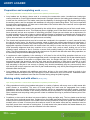
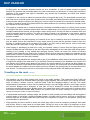
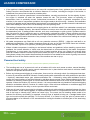
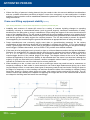
• Working near to the edge of a bank or trench has caused accidents. A minimum distance must be kept from
the edge as ground is liable to give way and collapse. Guidance indicates that the horizontal distance that a
crane must be kept from the edge of an unsupported vertical-walled trench must be twice the height of the
trench. If the trench has a sloped edge, the horizontal distance from the foot to the top of the slope is added to
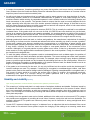
the horizontal distance from the top edge of the trench to the crane. The diagram below indicates the
minimum distance required.
Page 5
Version 1 – 02/04/2013
TOWER CRANE
CPCS renewal test
factsheet
Introduction to the CPCS renewal test
The industry-led CPCS Management Committee has determined that key safety-related knowledge must be
checked on each category prior to the renewal of a CPCS Competent Operator (blue) card. The CPCS renewal
test is the means by which blue cardholders will be tested on topics that reflect safety issues identified through
consultation, that occur regularly on site.
For each topic identified there is a set of questions, from which a number will be included in the test and for
which supporting information is provided in this factsheet. Each test will ask a total of 15 questions selected
randomly to ensure all topics are covered.
The test will cover all categories within the scheme through modules. Some modules have been devised to cover
a range of similar CPCS categories.
The CPCS renewal test is available on the CITB-ConstructionSkills Testing Services platform alongside the
Health, safety and environment test.
The questions and answers will not be published but factsheets are available for each module to cover the
topics.
How to use this factsheet
Prior to taking the test, cardholders are advised to carefully study the factsheet, which will prepare them in
deciding the correct answer or answers to each given question. Correct answers are based on legislation or
good practice adopted, in the majority of cases, by the construction and allied sectors.
It is acknowledged that variations may occur depending on the nature of the operation or on how the machine is
used. However the correct answer to each question is based on common practices or manufacturers’
requirements for the majority of machine types within each module, and applies to this test irrespective of how a
machine may be used within a particular activity or sector. It is important, therefore, that this factsheet is studied
carefully.
The questions are selected randomly and will not appear in the order that topics appear in this factsheet.
If the card holder does not answer all the questions correctly, the score report issued after completing the test will
indicate the topic areas in which the questions were answered incorrectly. The cardholder should, prior to
retaking the test, re-study all topic areas.
Scoring the test
To be successful in this module, cardholders need to correctly answer a minimum of 12 out of the 15 questions
presented. However, because many of the questions are safety-related, in the majority of cases, a minimum
number of questions per topic need to be answered correctly. Failure to do so, even if the overall minimum
number of correct answers has been reached, may mean that the cardholder is unsuccessful on the test.
The top of each topic states the number of questions that will be presented for each topic and the minimum
number of questions that must be answered correctly in order to pass the test.
Page 1
Version 1 – 02/04/2013
TOWER CRANE
Concessions
To avoid duplication of questions where similar categories are held, booking concessions are provided. This
means that, if several similar categories are held, only one module needs to be booked. The following chart
indicates if there is a booking concession for this category.
Concessions are provided to holders of the category of Tower crane.
Other categories held:
Needs only to book:
Pedestrian operated tower crane
Tower crane
Note: The above concessions are an outline of what tests you may have to book; please refer to Module matcher for details
of full concessions where more than one category is held.
This factsheet has been designed to highlight only topics that have been identified through industry consultation
area with safety issues or where good practice is often not complied with. The questions within the CPCS
renewal test for this category also reflect this.
It is not intended as a training tool and cannot list all essential knowledge and understanding for this category.
Operators must always follow manufacturers’ requirements, industry good practice and be aware of their own
limitations with the machine, and seek further guidance and help where needed.
Further information about the CPCS renewal test can be found at www.cskills.org/cpcs
Page 2
Version 1 – 02/04/2013
TOWER CRANE
Preparation and completing work (Preparation)
Topic scoring information: 2 correct answers required out of 4 questions presented to pass
• Tower cranes are commonly used within the construction sector on a wide variety of projects and are usually
in place for most of the project. Two main types of tower crane are the horizontal trolley jibs and the luffing jib.
Proper pre-use checks are a requirement for safe operation for any type of plant, including tower cranes for
which the operator would undertake at the required intervals although some check may be made by the
maintenance team at the required intervals. If the operator or maintenance staff fail to properly check all
relevant parts and components of the crane, incidents or injuries could occur because faults have affected
both performance and safety.
• Checks and inspections that need to be made are indicated in the operator’s manuals or other official
documentation for the crane. Although the frequency of checks will be determined by the manufacturer,
extreme or unusual operating conditions may require more frequent checks. As with lifting equipment, all
cranes including towers must be thoroughly examined by a competent person, who will determine when these
examinations should take place.
• A requirement under legislation is the devising of a lift plan for the particular lifting operation that is to be
carried out, constructed by a lift planner/appointed person. Amongst many factors, the lift plan would have
identified all risks, the measures to be taken to mitigate those risks, the sequence of work, the number of
personnel involved in the lifting operation and the weight of any loads that are to be lifted. It is also important
that all those involved in the lifting operation have been informed of the lift plan’s contents and actions
required of them. All personnel, including the operator, must take note of the lift plan contents and what is
required of each individual as they may notice an error or that something is not correct, and in which an
incident could occur. The crane operator should immediately relay any concerns they have with the lift plan to
the lift supervisor or appointed person/lift planner. If the lift plan needs amending before or during the lifting
operation, only the lift planner/appointed person is allowed to alter the lift plan.
• The lift plan should identify additional external operations that may affect the lifting operation, such as nearby
tower and mobile cranes, with the sequence of operations determined before lifting operations begin. If the
tower crane is working close to other cranes, the order of work should be determined before work starts and
on larger sites, where there may be various crane operations, a crane co-ordinator may be required to
determine the sequence of operations.
• As the cranes can stay on a site throughout a project, access to the base of the tower and the conditions for
an access route can change frequently. The site manager remains responsible for ensuring clear and
unrestricted access to the tower base, although the operator and or members of the lifting team should
identify any hazards or obstructions they see and inform the manager immediately. The access ladders in the
mast should be kept clean and free of all obstructions to allow the operator (or others such as maintenance
staff) to climb the ladder without hindrance. If tools or small items of equipment need to be taken by the
operator (or others) up to the cab or jib area, guidance suggests that a suitable method of carrying equipment
is the use of a small rucksack that is worn on the chest of the individual.
• On completing work, typical practice for trolley jib types in normal conditions is to place the hook block at
minimum radius, with luffing jibs left at the radius prescribed by the manufacturer’s or the company’s
procedures. The jib must also be placed into the out of service condition and able to free slew to minimise the
area presented to the prevailing wind and that a check must be made to ensure that, when weather vaning
(changing direction in the wind), the jib will not collide with nearby cranes, plant or structures. Post work
checks should be undertaken following company procedures so that, if an issue is identified, the maintenance
team can carry out early repairs.
Working safely and with others (Working safely)
Topic scoring information: 4 correct answers required out of 7 questions presented to pass
• Lifting operations occur in a variety of places within the radius of the crane, including near or next to areas
with public access. The area of lift and the area of placing the load must be segregated from nearby
Page 3
Version 1 – 02/04/2013
TOWER CRANE
pedestrians and should be planned before work starts by the appointed person. Wherever possible, the
moving of a suspended load above other workers or pedestrians should be avoided. Where this is not
possible, other measures such as netting around a load or additional securing or protection features should
be considered.
• On a site with a multitude of tower cranes, nearby cranes, structures and other plant such a boom-equipped
concrete pumps, there is a risk of collision. Anti-collision systems are fitted to minimise contact but operators
need to be aware that these systems in general only work with other tower cranes, and not with other types of
crane or plant. Radio communication is now the commonest form of contact between the ground-based team
and the operator, but the operator needs to ensure that they are receiving the correct instructions intended for
them and not for operators of nearby tower cranes.
• It is recognised that, when with working with a number of various contractors and teams on site, that the crane
operator can be under pressure as everyone seeks to meet schedules and deadlines. The result has been
friction and arguments over contentious issues between the lifting team and other workers. Guidance
provided by tower crane employer groups advises that the operator, at the earliest opportunity that issues or
concerns become apparent, contacts their supervisor immediately for further advice and direction.
• Conditions on site need to be taken into account before, during and following work. The crane’s position
should be planned so that is kept well clear of any overhead power lines Guidance from the Health and Safety
Executive advises that at least 15 metres plus the length of the jib is kept from power lines mounted on metal
pylons. Slewing with a load, especially one that is near to the rated capacity for the configuration, needs to be
undertaken with caution as slewing too fast can subject the jib or boom to additional side stress, which could
also cause the load to overshoot the landing place and strike a structure or object.
•
Wind speeds should be regularly monitored so that work is only undertaken when they are below the
maximum authorised speed as stipulated by the crane manufacturer. Gusts of wind may also need to be
taken into account, even if overall wind speeds are below the set limit. Wind speeds should be regularly given
to the crane supervisor because the work schedules may need to alter if rising wind speeds force a crane to
stop work. Loads with a large surface area, such as shuttering, can in high winds, move and/or swing and
could cause the crane to go out of radius. Operating luffing jib cranes near to minimum radius needs particular
care in high winds has caused jibs to be blown backwards.
• Poor housekeeping (areas of untidiness) is an area of concern to employers. Materials, tools and components
on the crane’s walkways are both a trip hazard to the operator or maintenance team, and can also cause
objects to be knocked over the edge which become falling objects that are a hazard to those below. During a
changeover between operators in the cab during, for example, a shift break, the operating controls should be
isolated from the time the first operator leaves their seat until the replacement operator is properly seated.
• Although now not very common, operators of tower cranes may still need to access the jib, for which a risk
assessment and method statement need to be devised. Not only should fall arrest equipment be specified but
that a rescue plan must be in place in case the operator (or other person) falls from the jib.
Lifting practices (Working tasks)
Topic scoring information: 2 correct answers required out of 4 questions presented to pass
• All lifts should not only be planned but the tower crane must also be kept within the rated lifting capacity for
the relevant configuration e.g. radius, number of falls etc. The operator should only lift loads that have been
detailed in the lifting plan.
• The crane’s rated capacity indicator (RCI) provides warnings to the operator when the crane both approaches
and exceeds maximum rated capacity for the configuration. Some RCIs can be overridden but this is purely
for diagnostic and testing purposes during the maintenance programme and the RCI must never be
overridden during lifting operations, otherwise the crane may over-lift.
• All cranes, including towers, are designed to lift a load vertically, which means that the hook of the crane must
be placed above the centre of gravity for the load. If the hook is offset to the load, the load can drag along the
ground when it is at the point of lift, and an overload situation can occur if the load snags whilst being
Page 4
Version 1 – 02/04/2013
TOWER CRANE
dragged. The rated capacity of a crane only applies to a freely suspended load, and where the load is
attached to a structure or embedded in the ground, the increased resistance when being lifted can again
overload the crane.
• The lifting of personnel in a specifically-designed personnel carrier can take place providing a specific method
statement is undertaken for the lifting of persons. This would include additional considerations such as
additional thorough examinations and a plan for evacuation at height in case of emergencies or crane
malfunction.
Page 5
Version 1 – 02/04/2013
DRAGLINE
CPCS renewal test
factsheet
Introduction to the CPCS renewal test
The industry-led CPCS Management Committee has determined that key safety-related knowledge must be
checked on each category prior to the renewal of a CPCS Competent Operator (blue) card. The CPCS renewal
test is the means by which blue cardholders will be tested on topics that reflect safety issues identified through
consultation, that occur regularly on site.
For each topic identified there is a set of questions, from which a number will be included in the test and for
which supporting information is provided in this factsheet. Each test will ask a total of 15 questions selected
randomly to ensure all topics are covered.
The test will cover all categories within the scheme through modules. Some modules have been devised to cover
a range of similar CPCS categories.
The CPCS renewal test is available on the CITB-ConstructionSkills Testing Services platform alongside the
Health, safety and environment test.
The questions and answers will not be published but factsheets are available for each module to cover the
topics.
How to use this factsheet
Prior to taking the test, cardholders are advised to carefully study the factsheet, which will prepare them in
deciding the correct answer or answers to each given question. Correct answers are based on legislation or
good practice adopted, in the majority of cases, by the construction and allied sectors.
It is acknowledged that variations may occur depending on the nature of the operation or on how the machine is
used. However the correct answer to each question is based on common practices or manufacturers’
requirements for the majority of machine types within each module, and applies to this test irrespective of how a
machine may be used within a particular activity or sector. It is important, therefore, that this factsheet is studied
carefully.
The questions are selected randomly and will not appear in the order that topics appear in this factsheet.
If the card holder does not answer all the questions correctly, the score report issued after completing the test will
indicate the topic areas in which the questions were answered incorrectly. The cardholder should, prior to
retaking the test, re-study all topic areas.
Scoring the test
To be successful in this module, cardholders need to correctly answer a minimum of 12 out of the 15 questions
presented. However, because many of the questions are safety-related, in the majority of cases, a minimum
number of questions per topic need to be answered correctly. Failure to do so, even if the overall minimum
number of correct answers has been reached, may mean that the cardholder is unsuccessful on the test.
The top of each topic states the number of questions that will be presented for each topic and the minimum
number of questions that must be answered correctly in order to pass the test.
Page 1
Version 1 – 02/04/2013
DRAGLINE
Concessions
To avoid duplication of questions where similar categories are held, booking concessions are provided. This
means that, if several similar categories are held, only one module needs to be booked. The following chart
indicates if there is a booking concession for this category.
Concessions are provided to holders of the category of Dragline.
Other categories held:
Needs only to book:
No concessions available
No concessions available
Note: The above concessions are an outline of what tests you may have to book; please refer to Module matcher for details
of full concessions where more than one category is held.
This factsheet has been designed to highlight only topics that have been identified through industry consultation
area with safety issues or where good practice is often not complied with. The questions within the CPCS
renewal test for this category also reflect this.
It is not intended as a training tool and cannot list all essential knowledge and understanding for this category.
Operators must always follow manufacturers’ requirements, industry good practice and be aware of their own
limitations with the machine, and seek further guidance and help where needed.
Further information about the CPCS renewal test can be found at www.cskills.org/cpcs
Page 2
Version 1 – 02/04/2013
DRAGLINE
Preparation and completing work (Preparation)
Topic scoring information: 0 correct answers required out of 2 questions presented to pass
• Draglines are one of the earliest forms of mechanical excavating with many sizes and weights of machines
used over the years. Nowadays (predominately for UK-based operations) they are based on a crawler-crane
using a lattice-type jib or boom and fitted with both a hoisting winch and drag winch. Draglines are mainly
used outside of direct construction activities and are predominately for extracting materials (such as
aggregates) or for dredging/desilting-type work. Draglines are operated by dedicated and experienced
operators, but accidents and incidents do occur, particularly because of instability. This factsheet aims to
highlight some of the factors that can cause issues which, in some instances, have occurred with fatal
consequences.
• Proper pre-use checks are a requirement for the safe operation of any type of plant, including draglines, and
the operator is expected to undertake them at the required intervals. Failure to properly check all relevant
components of a dragline could mean that, as with all plant and machinery, incidents or injuries occur
because faults or defects can affect both performance and safety. For example, wire ropes are subject to
stresses and strains which limit the working life of a hoist or drag rope. Wire rope fatigue is usually most
evident near to a socket for which regular checks should be made in this area.
• Checks and inspections that need to be made are indicated in the operator’s or user’s manuals for the
dragline. Although the frequency of checks will be determined by the manufacturer, extreme or
environmentally harsh operating conditions may mean that more frequent checks are required. Draglines
should undergo a thorough examination and all components be thoroughly examined and undertaken by a
competent person, who will also determine when these examinations should take place. Although operators
do tend to undertake the daily checks, they can also undertake more in-depth weekly checks and adjustments
if they have had additional training for the checks required for that model of dragline.
Working safely
Topic scoring information: 4 correct answers required out of 8 questions presented to pass
• Conditions within the working area need to be taken into account before, during and after work. The jib must
be kept well clear of any overhead power lines. Guidance from the Health and Safety Executive advises that
at least 15 metres plus the maximum reach of the boom is kept from power lines mounted on metal pylons,
whilst 9 metres is kept from power lines mounted on wooden poles. Wind speeds should be regularly
monitored so that work only proceeds when they are below the maximum authorised speed stipulated by the
dragline manufacturer, as wind loadings of the boom and/or dragline bucket can cause handling difficulties.
Gusts of wind may also need to be taken into account, even if overall wind speeds are below the machine’s
stated limit.
• Draglines in general have a further reach than that of similarly sized conventional excavators used for
excavating or dredging work. However dredging in water requires particular consideration because of such
factors as the lack of visibility and weight of excess water. For example, contact with underwater debris or
boulders can cause an overload or create instability, or when the bucket is drawn above the water line,
excessive water in the bucket may not be able to drain sufficiently which again could increase instability.
However, a large amount of fast draining water can result in sediment or material loss from the bucket.
• Dredging operations mean that the work is could be carried out where the machine follows the edge of bank
meaning that dredging is undertaken side on to the tracks. In this position however, there can be minimal
resistance to movement as the track grousers are ineffective, with a result that a dragline could be pulled
towards the bucket and over the edge should the bucket meet a high resistance when dredging.
• Draglines should only operate when they are level both longitudinally (forward/backward) and laterally
(sideways). Excavating or dredging when the dragline is not level laterally can place a side loading on the
boom or jib. Excessive lateral leaning could cause the dragline to become unstable and overturn as the centre
of gravity can exceed safe margins. Effective and efficient operations means that cycle times should be
Page 3
Version 1 – 02/04/2013
DRAGLINE
optimised; however, slewing the upper structure too fast with a loaded bucket can cause higher levels of side
stress on the boom.
• Efficient excavating means using the required amount of radius on either side of the hoist rope’s vertical
position. In general (although this is a topic of debate), too much throw beyond the vertical means that
working angles are not conducive to effective bucket loading. The most effective working area is considered
to be approximately 15 degrees each side of the vertical position of the hoist rope. Extra stress is also placed
on the hoist rope when it is thrown beyond the vertical and this increases proportionally to the throw of the
bucket. When excavating in hard ground, the operator needs to be aware that the bucket can move sideways.
• Rigging, pre-use checks or reconfiguring usually requires working at height in order to access the necessary
areas of the dragline. Where a portable ladder is being used to reach part of the dragline, it should be secured
with at least 3 rungs or at least 1 metre beyond the landing level. Where temporary or inbuilt access ladders
are being used, there should be sufficient foot penetration on each rung i.e. the centre of the foot should reach
the rung, to provide sufficient foot grip and minimise slips, particularly where access steps have become filled
in with mud or other materials.
Stability
Topic scoring information: 3 correct answers required out of 5 questions presented to pass
• Due to the various factors mentioned, draglines have become unstable and overturned, with the usual costly
consequences. Effective planning of the ground, working area and other environmental factors must be taken
into account before setting up begins. Ground conditions play an important part in stability and should be
checked by a suitable and competent person to ensure that the ground can support the bearing pressure
applied through each track.
• The bearing pressure applied through each part of each track varies depending on the configuration, the
position of the jib or boom and the weight in the bucket being lifted. For example, if the jib or boom is in line
with the tracks of the dragline, the bucket is empty and the jib or boom is near to or fully raised, ground
bearing pressure is concentrated equally across the rear of the tracks because the counterweight biases
weight towards the rear. As the boom is lowered, the bearing pressure shifts towards the front of the tracks. In
some cases, when working on soft ground, supporting matting or timber is used as a platform to spread the
bearing pressure and create a stable platform, although the dragline can be susceptible to movement as there
is minimal grip between the tracks and supporting timber.
• Ground conditions are crucial for maintaining stability of a dragline during operations and the operator needs
to take into account changes to the ground. Heavy rain, for example, can weaken the ground and cause
instability. Ground conditions must be checked (by a competent person) not only for dragline duties but also
when the machine is travelling as the sinking of one of both tracks can cause a dragline to exceed maximum
radius or exceed the track width, and an overturn could occur. Working near to or alongside a water course
can be hazardous as ground pressure applied through the tracks can cause the side of the bank to collapse
Where the machine is being operated with the front of its tracks facing the bank, a forward tilt increases the
operating radius, which can cause further instability.
• Travelling a dragline across a slope means that the centre of gravity moves towards the downhill side of the
slope, which can cause instability. Travelling with a load in the bucket can increase the risk of instability even
if the incline is the same.
Page 4
Version 1 – 02/04/2013
TRUCK MOUNTED BOOM CONCRETE PUMP
CPCS renewal test
factsheet
Introduction to the CPCS renewal test
The industry-led CPCS Management Committee has determined that key safety-related knowledge must be
checked on each category prior to the renewal of a CPCS Competent Operator (blue) card. The CPCS renewal
test is the means by which blue cardholders will be tested on topics that reflect safety issues identified through
consultation, that occur regularly on site.
For each topic identified there is a set of questions, from which a number will be included in the test and for
which supporting information is provided in this factsheet. Each test will ask a total of 15 questions selected
randomly to ensure all topics are covered.
The test will cover all categories within the scheme through modules. Some modules have been devised to cover
a range of similar CPCS categories.
The CPCS renewal test is available on the CITB-ConstructionSkills Testing Services platform alongside the
Health, safety and environment test.
The questions and answers will not be published but factsheets are available for each module to cover the
topics.
How to use this factsheet
Prior to taking the test, cardholders are advised to carefully study the factsheet, which will prepare them in
deciding the correct answer or answers to each given question. Correct answers are based on legislation or
good practice adopted, in the majority of cases, by the construction and allied sectors.
It is acknowledged that variations may occur depending on the nature of the operation or on how the machine is
used. However the correct answer to each question is based on common practices or manufacturers’
requirements for the majority of machine types within each module, and applies to this test irrespective of how a
machine may be used within a particular activity or sector. It is important, therefore, that this factsheet is studied
carefully.
The questions are selected randomly and will not appear in the order that topics appear in this factsheet.
If the card holder does not answer all the questions correctly, the score report issued after completing the test will
indicate the topic areas in which the questions were answered incorrectly. The cardholder should, prior to
retaking the test, re-study all topic areas.
Scoring the test
To be successful in this module, cardholders need to correctly answer a minimum of 12 out of the 15 questions
presented. However, because many of the questions are safety-related, in the majority of cases, a minimum
number of questions per topic need to be answered correctly. Failure to do so, even if the overall minimum
number of correct answers has been reached, may mean that the cardholder is unsuccessful on the test.
The top of each topic states the number of questions that will be presented for each topic and the minimum
number of questions that must be answered correctly in order to pass the test.
Page 1
Version 1 – 02/04/2013
TRUCK MOUNTED BOOM CONCRETE PUMP
Concessions
To avoid duplication of questions where similar categories are held, booking concessions are provided. This
means that, if several similar categories are held, only one module needs to be booked. The following chart
indicates if there is a booking concession for this category.
Concessions are provided to holders of the category of Truck mounted boom concrete pump.
Other categories held:
Needs only to book:
Trailer mounted concrete pump
Truck mounted boom concrete pump
Note: The above concessions are an outline of what tests you may have to book; please refer to Module matcher for details
of full concessions where more than one category is held.
This factsheet has been designed to highlight only topics that have been identified through industry consultation
area with safety issues or where good practice is often not complied with. The questions within the CPCS
renewal test for this category also reflect this.
It is not intended as a training tool and cannot list all essential knowledge and understanding for this category.
Operators must always follow manufacturers’ requirements, industry good practice and be aware of their own
limitations with the machine, and seek further guidance and help where needed.
Further information about the CPCS renewal test can be found at www.cskills.org/cpcs
Page 2
Version 1 – 02/04/2013
TRUCK MOUNTED BOOM CONCRETE PUMP
Preparation for work (Preparation)
Topic scoring information: 0 correct answers required out of 1 question presented to pass
• Truck mounted boom concrete pumps, as the name suggests, are designed to pump concrete to a given
location. They use a pipework system that is secured to a placing boom that can, in most cases, slew up to
360 degrees and have reaches of up to 60 metres. Additional ground-laid pipework can allow concrete to be
pumped over great distances. Although mainly operated by dedicated specialist operators, accidents and
incidents do happen and proper pre-use checks are required for safe operation. Failure to properly check the
vehicle or pump components before work could mean that, as with all plant and machinery, incident or injuries
occur because faults can affect both performance and safety.
• The necessary checks and inspections are indicated in the operator’s or user’s manuals for both the host
vehicle and the pump. Although the frequency of checks will be determined by the manufacturer, extreme or
unusual operating conditions, such as continually undertaking high pumping pressures, may require more
frequent checks.
• Virtually all truck mounted pumps are equipped with stabilisers/outriggers which, prior to road travel, need to
be both in the transport position and locked, with any locking pins in place and secured. Although it has arisen
with other vehicles, pedestrians have been killed when a vehicle’s stabiliser/outrigger has slid out whilst it was
driving along a public road.
• When on site, it is important that a method statement should have been devised which has amongst many
factors, identified the risks, the measures to be taken, the sequence of work and the number of personnel
involved in the pumping operation. It is also important that all those involved in the operation are informed of
the method statement’s contents and required actions. The method statement should also identify additional
external operations that may affect the pumping operation, such as nearby tower cranes for which the
sequence of operations determined by the relevant site or team supervisors before work starts.
Travelling to and from sites (Travelling)
Topic scoring information: 1 correct answer required out of 3 questions presented to pass
• Truck mounted pumps spend a reasonable proportion of their working time travelling to and from a site for
which road traffic act requirements need to be followed. Before joining the public highway, the overall height of
the vehicle when it is in road transport configuration needs to be measured. The height of the truck when
above 3 metres must be, under the Road Traffic Act, displayed clearly in the cab and the overall height
checked to see that is displayed correctly in the cab as bridge strikes by over-height vehicles are common.
Bridges having a clearance of less than 16 foot - 6 inches/5.03 metres are marked with maximum permitted
truck height and bridges with a full or partial arch tend to have goal posts or markers which the vehicle must
be kept between. Note: Network rail guidance states that bridge markings are applied where the clearance is less
than16 foot -3 inches/4.95 metres.
• A practice which has taken place by the pumping sector is the coating of various surfaces of the pump and
vehicle with diesel fuel in order to minimise concrete splashes from sticking to various components. Dripping
diesel has contaminated the road surface and can cause incidents and accidents on the public highway.
• When travelling to a site or whilst on a site, the vehicle may need to travel on temporary roadways, haul roads
and inclines which in most cases are not equipped with kerbs. Driving to close to the edge of a temporary or
minor roadway can cause the sides to collapse and vehicles have been known to overturn when driving too
close.
Working with and near to others (Working safely)
Topic scoring information: 0 correct answers required out of 2 questions presented to pass
• The pumping operation requires the co-ordination of various personnel within and external to the pour team.
Effective and constructive dialogue between the site and pumping personnel means that any safety issues
Page 3
Version 1 – 02/04/2013
TRUCK MOUNTED BOOM CONCRETE PUMP
can be quickly identified and actions taken. This solves problems more effectively, with the result that an
effective and safe pumping team can gain repeat business with clients and contractors.
• During pumping operations, constant checks need to be made to ensure efficiency and safety during the pour.
For example, the hopper should be kept topped up, as letting the hopper become empty can cause concrete
blowback, which spreads concrete over a wide area. The mixer driver is highly vulnerable to blowback. When
pumping operations are taking place on or near to the public highway, pedestrians, who may be oblivious to
the dangers of concrete pumping, can also be affected and therefore must be kept well clear by segregating
them from the loading and pumping areas. When pumping is taking place on or next to the public highway,
the splashing of concrete onto nearby structures, buildings and cars also needs to be controlled.
• Reversing vehicles are a major hazard on any construction or related site. When a mixer vehicle is being
reversed towards the pump, its path must be clear of all personnel, including the pump operator or marshaller.
Pumping safely and dealing with concrete (Working tasks)
Topic scoring information: 2 correct answers required out of 4 questions presented to pass
• Conditions and hazards on site need to be taken into account before, during and after work, with risks
identified and control measures applied. The boom must be kept well clear of any overhead power lines and
guidance from the Health and Safety Executive advise that at least 15 metres plus the length of the boom is
kept from power lines mounted on metal pylons. Wind speeds should also be regularly monitored so that they
are below the maximum authorised by the pump manufacturer. Gusts of wind should be constantly monitored,
even though overall wind speeds are below the set limit, as gusts of wind can cause overloading of the boom.
• Hose whip has caused severe injuries and deaths. The recommended danger zone of a placing hose – the
flexible hose at the end of the boom – is twice the radius of the hose. During the setting up phase and
particularly when grouting the line, the pour team need to be made aware of the dangers of any hose whip
and kept clear of the hose whip area when grouting is going to take place. When the boom is repositioned
during a pour, the operator must take into account the speed of the slew as slewing too fast can cause a
greater side stress on the boom, and possibly overshoot the intended location and striking a structure or
object.
• The operator needs to know the required type of mix as pumping pressures can vary due to different mixes.
Mixtures with a high cement content normally require additional pumping pressure. High pumping pressures
can also cause accelerated wear on the pump and pipeline which, as stated earlier, may require more
frequent checks and inspections. Concrete delivery schedules form part of the planning process. If the
delivery of concrete is delayed, the operator needs to take into account that any residual concrete within the
pipeline can begin to set, which may cause a blockage and, if left too late, may require a change of the
pipework.
• Wet concrete is a known alkaline which is corrosive to human tissue and can cause third degree burns if it is
not removed in time. No skin should be exposed whilst handling wet concrete during any preparation,
pumping and cleaning work. During setting up and whilst pumping, the operator may need to access parts of
the pump, truck or boom. This means that work at height requirements come into effect. Where a ladder is
required to reach, for example, the pumping area of the truck, then amongst many requirements, it must be at
least three rungs or at least 1 metre beyond the landing level. This requirement aids egress from the ladder
onto the landing area by providing additional hand-hold support.
Grouting and cleaning out procedures (Maintenance)
Topic scoring information: 1 correct answer required out of 3 questions presented to pass
• During preparation work, if a pipeline has been insufficiently grouted, then a blockage within the pump or
pipeline could occur. When the grout is being mixed in the pump’s hopper, water must be added with care as
excessive water pressure from a hose can cause an ejection of the cement powder, leading to possible health
and respiration issues. During the pumping operation, it has been known for mixer drivers to wash their
Page 4
Version 1 – 02/04/2013
TRUCK MOUNTED BOOM CONCRETE PUMP
delivery shutes and direct the water run-off into the hopper. This affects the mix and can cause segregation,
possibly leading to a blockage.
• Cleaning out can be the most hazardous part of concrete pumping operations so additional care must be
taken and the correct cleaning procedures followed. Before the hopper is cleaned, the engine must be
switched off and then any hydraulic pressure within the system should be vented to eliminate any remaining
pressure.
• Using compressed air to clean the pipeline has caused injury and death so must only be undertaken when all
other options are not feasible, and only if it follows a planned safe system of work. As hose whip of the
placement hose can occur during cleaning out procedures, it must be suitably restrained to prevent movement
and cleaning must only be undertaken in a segregated area. If a sponge ball is used during the cleaning, the
ball catcher must be in place before cleaning begins. Sponge balls ejected at high speed have struck nearby
personnel with fatal consequences.
• As the cleaning out process removes remaining concrete which requires partial or full flushing with water, the
procedure and the containment of the contaminated water needs to be planned and controlled before
cleaning commences. This is a major consideration when working on the public highway, as collecting and
containing waste materials can present difficulties.
Stability
Topic scoring information: 1 correct answer required out of 2 questions presented to pass
• Various factors have caused truck mounted pumps to become unstable and overturn, with the usual and
costly consequences. Effective planning of the ground, working area and other environmental factors must be
carried out before setting up begins. Ground conditions naturally play an important part in stability and should
be checked by a suitable person to ensure the ground can support the bearing pressure applied through each
stabiliser/outrigger. As the boom of the concrete pump rotates through 360 degrees, the weight on each
stabiliser/outrigger increases dramatically when a fully extended boom that is pumping concrete is positioned
directly over each leg.
• Ground bearing pressure can be reduced through each stabiliser/outrigger by using sole plates, which
spreads the applied pressure. The larger the sole plate, then (in principle) there should be a reduction in
applied pressure. The minimum size of a sole plate should be determined by an appropriate expert. Even if
the supported ground has been approved for the size of the pump, regular checks should take place and if
there has been a period of heavy rain, the ground should be thoroughly rechecked before work starts as the
ground may have softened.
• A minimum distance must be kept from a bank or sloped edge, as the ground is liable to give way and
collapse. The recommended distance that the vehicle should be kept from a sloped edge is that, in principle,
the horizontal distance from the nearest stabiliser/outrigger to the top edge of the slope is two times greater
than the vertical height of the slope.
• In certain pumping locations, the size of the given area means that the stabilisers/outriggers cannot be fully
extended. Operators therefore have only partially extended them with the result that the vehicle becomes less
stable and investigations have shown that this is a common cause of vehicle overturns. Manufacturers’
guidance on when partial or short rigging can take place must be followed at all times. It cannot take place
under any other circumstances unless it has been approved by a suitably qualified and authorised person.
Page 5
Version 1 – 02/04/2013
FORWARD TIPPING DUMPER
CPCS renewal test
factsheet
Introduction to the CPCS renewal test
The industry-led CPCS Management Committee has determined that key safety-related knowledge must be
checked on each category prior to the renewal of a CPCS Competent Operator (blue) card. The CPCS renewal
test is the means by which blue cardholders will be tested on topics that reflect safety issues identified through
consultation, that occur regularly on site.
For each topic identified there is a set of questions, from which a number will be included in the test and for
which supporting information is provided in this factsheet. Each test will ask a total of 15 questions selected
randomly to ensure all topics are covered.
The test will cover all categories within the scheme through modules. Some modules have been devised to cover
a range of similar CPCS categories.
The CPCS renewal test is available on the CITB-ConstructionSkills Testing Services platform alongside the
Health, safety and environment test.
The questions and answers will not be published but factsheets are available for each module to cover the
topics.
How to use this factsheet
Prior to taking the test, cardholders are advised to carefully study the factsheet, which will prepare them in
deciding the correct answer or answers to each given question. Correct answers are based on legislation or
good practice adopted, in the majority of cases, by the construction and allied sectors.
It is acknowledged that variations may occur depending on the nature of the operation or on how the machine is
used. However the correct answer to each question is based on common practices or manufacturers’
requirements for the majority of machine types within each module, and applies to this test irrespective of how a
machine may be used within a particular activity or sector. It is important, therefore, that this factsheet is studied
carefully.
The questions are selected randomly and will not appear in the order that topics appear in this factsheet.
If the card holder does not answer all the questions correctly, the score report issued after completing the test will
indicate the topic areas in which the questions were answered incorrectly. The cardholder should, prior to
retaking the test, re-study all topic areas.
Scoring the test
To be successful in this module, cardholders need to correctly answer a minimum of 12 out of the 15 questions
presented. However, because many of the questions are safety-related, in the majority of cases, a minimum
number of questions per topic need to be answered correctly. Failure to do so, even if the overall minimum
number of correct answers has been reached, may mean that the cardholder is unsuccessful on the test.
The top of each topic states the number of questions that will be presented for each topic and the minimum
number of questions that must be answered correctly in order to pass the test.
Page 1
Version 1 – 02/04/2013
FORWARD TIPPING DUMPER
Concessions
To avoid duplication of questions where similar categories are held, booking concessions are provided. This
means that, if several similar categories are held, only one module needs to be booked. The following chart
indicates if there is a booking concession for this category.
Concessions are provided to holders of the category of Forward tipping dumper.
Other categories held:
Needs only to book:
Articulated dump truck
Dump truck
Rigid dump truck
Note: The above concessions are an outline of what tests you may have to book; please refer to Module matcher for details
of full concessions where more than one category is held.
This factsheet has been designed to highlight only topics that have been identified through industry consultation
area with safety issues or where good practice is often not complied with. The questions within the CPCS
renewal test for this category also reflect this.
It is not intended as a training tool and cannot list all essential knowledge and understanding for this category.
Operators must always follow manufacturers’ requirements, industry good practice and be aware of their own
limitations with the machine, and seek further guidance and help where needed.
Further information about the CPCS renewal test can be found at www.cskills.org/cpcs
Page 2
Version 1 – 02/04/2013
FORWARD TIPPING DUMPER
Preparation and completing work (Preparation)
Topic scoring information: 0 correct answers required out of 1 question presented to pass
• Forward tipping dumpers are commonly used on many construction and related sites and are responsible for
transporting materials safely and efficiently. The large number of forward tipping dumpers and operators
means that incorrect operation often occurs and is responsible for many accidents and incidents. Operating a
fully loaded dumper can be hazardous without proper training or planning, and without taking proper care and
attention.
• Correct and thorough preparation is essential to all plant, including forward tipping dumpers, to ensure that the
dumper is able to work safely and efficiently. Failure to properly check the dumper before work could result in
injuries because faults can affect both the performance and safety of the dumper.
• Defects noted by the operator, even if they consider them to be insignificant, must be reported, otherwise the
fault could get rapidly worse during the working day. For example, if the operator notices an oil leak from
underneath the dumper, they must report it immediately as they may not be sufficiently qualified or
experienced to decide whether it is safe to use.
• On many dumpers, access to the engine compartment is gained by opening the top canopy on which the seat
is situated. On completing the checks, the operator must ensure the canopy is properly closed and locked,
otherwise the seating position is unsecure and can move when the dumper is being operated.
Working safely and with others (Working safely)
Topic scoring information: 4 correct answers required out of 8 questions presented to pass
• Dumpers are available in many sizes and the planning of work needs to take into account the optimum size of
dumper required. Using the wrong size dumper can cause problems. For example, sometimes a smaller
dumper is specified in order to reduce hire costs, but can often be overloaded, which may cause an incident
as overloading a dumper affects its stability. Where a dumper is considered too big for the work or is working
in a restricted area, particularly on smaller sites, the operator may need to undertake additional manoeuvring,
which is inefficient, can damage the ground and may cause the dumper to strike other machines or structures.
• Dumpers are required to transport materials over a wide variety of terrain, including soft ground, inclines and
rough terrain which can present hazards for the dumper operator. Therefore the work site should be planned
so that travel routes from the loading point to the tipping point minimise, as far as is reasonably practical, the
need to travel on poor terrain or inclines.
• The planning of travel routes also needs to take into account other factors, such as pedestrians, who if using
the same route, need to be segregated from the dumper’s travel route to avoid a collision. Planning should
also take into account changes to the ground, particularly in wet weather, as the travel routes can become
slippery and firm ground can turn into soft ground.
• Where the travel route passes close to the edge of an embankment, a suitable barrier should be provided to
prevent a dumper from travelling over the edge. Tipping loads into a trench or over an edge is a particular
hazard for dumper operators, and machines have fallen into open trenches when a suitable barrier system,
such as stop blocks, has not been used.
• Dumpers are usually loaded by another machine and therefore the dumper operator needs to work with other
plant operators as well as general site operatives when travelling with and unloading materials. The dumper
operator needs to ensure that the skip is not overloaded by the loading machine, otherwise safety issues can
occur such as the operator having restricted visibility in front of the machine.
• When the operator needs to leave the seat of the dumper, even when it is being loaded, they must ensure the
parking brake is applied, the transmission is in neutral and the engine is switched off. This ensures that the
machine cannot move unintentionally, as accidents have occurred where the operator has unintentionally
moved a transmission or gear lever into drive, and machine movement has occurred. If the engine is left
running near to an open trench, the exhaust fumes, which can be toxic, may enter the trench. This can be a
safety hazard for anyone working, or going to work, in the trench.
Page 3
Version 1 – 02/04/2013
FORWARD TIPPING DUMPER
• In nearly all cases, forward tipping dumpers are not equipped with a cab. When the dumper is being loaded
by another machine, such as an excavator or even a conveyer, it is essential that the operator leaves the
driving seat and stands in a safe place where they cannot be struck either by any part of, or from any overspill
from, the loading machine.
• Tipping loads requires care on the part of dumper operators. When loads are being discharged from the skip it
is important, and recommended by nearly all manufacturers, that the dumper is parked on firm, flat and level
ground and that the handbrake is applied. If the dumper is either tilted forward or to one side, instability can
occur as the centre of gravity is raised when a loaded skip is raised. It has been known for dumper drivers,
when travelling to and approaching the tipping area, to apply the handbrake instead of the footbrakes to stop
the machine. This can lead to excessive wear of the handbrake system meaning it may become ineffective
when it is required to hold the dumper, for example, when on an incline.
Operating requirements (Working tasks)
Topic scoring information: 0 correct answers required out of 1 question presented to pass
• Dumpers sometimes tow equipment such as compressors and small bowsers. Where this is undertaken, the
operator must check the operator’s manual first to check the criteria for towing. They must also ensure that
the correct towing pin for the towing bracket is used and that the safety pin is located correctly in the towing
pin, as this prevents the towing pin from jumping out of the towing bracket. Using the wrong size pin for the
bracket has meant the pin has fallen out of the bracket, which can cause the trailer to become detached.
• Nearly all dumpers are now equipped with a hydraulically (clutch-less) operated transmission and it is
possible to pull away in any gear. Operators need to select the correct ratio for the type of manoeuvring or
driving being undertaken, as driving using too high a gear can cause overheating and damage to the
transmission, particularly when manoeuvring in tight or restricted areas.
• Some dumpers are fitted with a rotating skip where loads can be discharged side-on to the dumper. Although
tipping loads with any dumper requires care, tipping side-on is more hazardous as the dumper is less stable in
this position. Therefore the operator needs to ensure that the load is tipped both slowly and under control, to
prevent a side overturn.
Stability issues (Stability)
Topic scoring information: 3 correct answers required out of 5 questions presented to pass
• All dumpers come equipped, unless under exceptional circumstances, with a roll over protective structure,
also known as a ROPS frame or bar. If the machine rolls over, the ROPS frame can minimise, but not
eliminate, injuries to an operator, providing the seatbelt is being worn. In some circumstances, the ROPS
frame can be lowered when the machine needs to work in areas where there is restricted headroom.
However, this must be properly planned so that the work area is level and has firm ground, and so that the
ROPS frame is repositioned when away from the area of restricted headroom.
• Dumpers can be unstable during operation and requires planning and care by the operator both before and
during work. In principle the machine’s weight, particularly to the rear, counteracts or is heavier than the load
in the skip. As a skip is raised to discharge a load, the balance shifts towards the front of the machine, making
it less stable. This means that the operator must take care when discharging loads and needs to operate all
controls smoothly and whilst on firm, level ground.
• Gradients and inclines are a particular hazard, and manufacturers issue guidance on the maximum gradient
that the dumper can travel on - both up and down as well as along the slope - and on how the dumper should
be travelled up and down the slope. In principle, a loaded dumper must drive forward up a steep slope but
reverse down a steep slope. The opposite generally applies when the dumper is unladen – the machine
should be reversed up the slope and driven down the slope. It is important, however, that the operator, for
each type of dumper, consults the operator’s manual before starting work.
• When travelling on haul roads between the loading and tipping points, care must be taken to avoid potholes
and raised bumps because even small ones, particularly when travelling at speed, can cause the dumper to
Page 4
Version 1 – 02/04/2013
FORWARD TIPPING DUMPER
become unstable as well as being uncomfortable for the operator. A loaded dumper will generally be less
stable than an unladen one because of the higher centre of gravity. This means that steering and braking
actions need to be smooth, particularly when on inclines and turning sharply around tight corners.
• High tip dumpers, as the name suggests, allow material to be tipped at height, but extreme care must be
taken because travelling, even slowly, with a raised skip can make the dumper unstable. Dumpers with a
narrow track (less width between each set of wheels) have a higher centre of gravity relative to the machine’s
size. Travelling these types of dumpers on soft or uneven ground should be avoided as the high centre of
gravity means that leaning to one side whilst travelling can cause them to tip over sideways.
Page 5
Version 1 – 02/04/2013
EXCAVATOR 180
CPCS renewal test
factsheet
Introduction to the CPCS renewal test
The industry-led CPCS Management Committee has determined that key safety-related knowledge must be
checked on each category prior to the renewal of a CPCS Competent Operator (blue) card. The CPCS renewal
test is the means by which blue cardholders will be tested on topics that reflect safety issues identified through
consultation, that occur regularly on site.
For each topic identified there is a set of questions, from which a number will be included in the test and for
which supporting information is provided in this factsheet. Each test will ask a total of 15 questions selected
randomly to ensure all topics are covered.
The test will cover all categories within the scheme through modules. Some modules have been devised to cover
a range of similar CPCS categories.
The CPCS renewal test is available on the CITB-ConstructionSkills Testing Services platform alongside the
Health, safety and environment test.
The questions and answers will not be published but factsheets are available for each module to cover the
topics.
How to use this factsheet
Prior to taking the test, cardholders are advised to carefully study the factsheet, which will prepare them in
deciding the correct answer or answers to each given question. Correct answers are based on legislation or
good practice adopted, in the majority of cases, by the construction and allied sectors.
It is acknowledged that variations may occur depending on the nature of the operation or on how the machine is
used. However the correct answer to each question is based on common practices or manufacturers’
requirements for the majority of machine types within each module, and applies to this test irrespective of how a
machine may be used within a particular activity or sector. It is important, therefore, that this factsheet is studied
carefully.
The questions are selected randomly and will not appear in the order that topics appear in this factsheet.
If the card holder does not answer all the questions correctly, the score report issued after completing the test will
indicate the topic areas in which the questions were answered incorrectly. The cardholder should, prior to
retaking the test, re-study all topic areas.
Scoring the test
To be successful in this module, cardholders need to correctly answer a minimum of 12 out of the 15 questions
presented. However, because many of the questions are safety-related, in the majority of cases, a minimum
number of questions per topic need to be answered correctly. Failure to do so, even if the overall minimum
number of correct answers has been reached, may mean that the cardholder is unsuccessful on the test.
The top of each topic states the number of questions that will be presented for each topic and the minimum
number of questions that must be answered correctly in order to pass the test.
Page 1
Version 1 – 02/04/2013
EXCAVATOR 180
Concessions
To avoid duplication of questions where similar categories are held, booking concessions are provided. This
means that, if several similar categories are held, only one module needs to be booked. The following chart
indicates if there is a booking concession for this category.
Concessions are provided to holders of the category of Excavator 180.
Other categories held:
Needs only to book:
Excavator 360
Excavator 360
Note: The above concessions are an outline of what tests you may have to book; please refer to Module matcher for details
of full concessions where more than one category is held.
This factsheet has been designed to highlight only topics that have been identified through industry consultation
area with safety issues or where good practice is often not complied with. The questions within the CPCS
renewal test for this category also reflect this.
It is not intended as a training tool and cannot list all essential knowledge and understanding for this category.
Operators must always follow manufacturers’ requirements, industry good practice and be aware of their own
limitations with the machine, and seek further guidance and help where needed.
Further information about the CPCS renewal test can be found at www.cskills.org/cpcs
Page 2
Version 1 – 02/04/2013
EXCAVATOR 180
Preparation and fitting attachments (Preparation)
Topic scoring information: 2 correct answers required out of 4 questions presented to pass
• Although once a common machine on many sites, 180 excavators are now less frequently used but, being
versatile machines, are still found on some construction sites as well as smaller, short duration and utility
contracts. Daily and periodic checks form part of the operator’s duties, for which they need to follow
manufacturers’ instructions. If defects are noticed by the operator, they need to report immediately and before
the machine is used, and seek appropriate expertise to decide whether the machine can be put to work. An
operator could incorrectly diagnose what they consider to be a minor fault, such chafing of a hydraulic hose,
where in fact the fault could be severe, and possibly lead to injury if the machine’s performance significantly
deteriorates or a component fails.
• 180 excavators use a wide variety of tools and attachments. It is now common through ease of use to use a
quick hitch coupler to connect an attachment to the machine’s dipper arm. However, buckets and other
attachments have been known to detach unintentionally during work, causing injuries and death. On semiautomatic types, the locking pin needs to be inserted, and checked that it is in the correct hole, as
investigations of attachments that have become detached have shown that the locking pin was missing or
inserted into the wrong hole.
• On fully automatic types, it is vital that the operator, immediately after fitting the attachment, ensures that full
hydraulic pressure is applied to the coupler’s latch. For all types, the operator must exit the cab and ensure
both visually and physically that all locking pins are inserted correctly and are retained and secure, or that
latches are fully engaged and locked.
• If a tool has been used which requires pressurised oil for operation, care must be taken when removing the
tool, particularly when disconnecting the oil feed and return lines. The pressure within the hydraulic lines must
be exhausted or relieved, and the engine must be stopped before the lines are disconnected. Protective
gloves should be worn as the oil and couplers could be very hot and could burn unprotected skin.
• Many 180 excavators are equipped with a multipurpose front bucket which, in some cases, comes with a set
of forks. In preparing to use the forks normally means that each fork needs to be swung over the top of the
bucket and this, due to their size and weight, involves manual handling. Assistance should be sought when
swinging each fork into position and also when returning them to the stored position when they are no longer
needed.
• One advantage of a 180 excavator is its ability to travel to and from the workplace without needing a
transporter. As the machine is travelling on the public highway, it must comply with the Road Traffic Act which
requires the machine to be registered, and displaying the appropriate Vehicle Excise Duty disc (tax disc). It is
the operator’s responsibility to ensure that the machine complies with the requirements for travelling on the
road and the operator must hold the correct class on their driving licence. Operators need only to hold class B
but they must be least 18 years of age if the machine is less than 7.5 tonnes and at least 21 years of age if
the machine exceeds 7.5 tonnes.
• Being slow moving vehicles, 180 excavators must be fitted with a flashing amber beacon that is switched on
when the machine travels on unrestricted dual carriageways. The operator needs to ensure that the beacon is
visible from the rear of the machine, as it can be obscured by a folded backhoe.
Working efficiently
Topic scoring information: 1 correct answer required out of 1 questions presented to pass
• 180 excavators are used by a wide number of plant hire companies as well as by owner-drivers, and fuel
costs now form a major part of any production overheads. The operator can minimise the fuel used by
working the machine efficiently without the need to use maximum engine speed. In nearly all cases,
manufacturers indicate in both the operator’s manual and on the machine’s rev counter the optimum engine
speed or range that should be maintained to ensure the engine, transmission and hydraulic systems run
efficiently.
Page 3
Version 1 – 02/04/2013
EXCAVATOR 180
• Due to the reliability of modern machines, the engine on the excavator should be switched off when the
operator leaves the cab, even for a short break, as this can further reduce fuel consumption.
Lifting and using attachments (Working tasks)
Topic scoring information: 1 correct answer required out of 3 questions presented to pass
• 180 excavators are commonly used to lift suspended or slung loads for which certain precautions need to be
taken. Before a load is to be lifted, the lifting operation needs to be properly planned, and the operator or other
relevant person needs to ensure that the machine is approved and equipped to lift a suspended load. The
manufacturer’s lifting capacities chart or data must be read in order to determine the maximum load that can
be lifted at a particular reach and height. The reach is usually the horizontal distance from the boom’s pivot
point on the carriage to the vertical centre line of the lifting hook. A boom lowering control device, commonly
known as check valves, prevents the boom from lowering in case of hydraulic failure, such as a burst hose.
Check valves need to be fitted along with an overload warning device on excavators where the maximum
rated lifting capacity exceeds 1 tonne.
•
All lifts have to, according to regulations, be properly planned by a trained and experienced person and
should take into account all factors in order to minimise a risk of overturn or failure. When a lift is being
planned, the weight of the lifting accessory (gear), such as the lifting chains, need to be added to the weight of
the load. If the bucket is to remain attached to the machine, the lifting capacity of the machine needs to be
reduced to take into account the weight of the bucket and any quick-hitch coupler.
• When a lifting accessory, such as a two-legged chain, is attached to the hook mounted on a quick-hitch
coupler, the operator needs to tilt the coupler (by extending the bucket ram) sufficiently to ensure that the
chain hangs freely and does not foul any part of the coupler.
• When working tools are used, the operator needs to be able to use each type safely and efficiently. A
common tool used on 180 excavators is the hydraulic breaker and, to work this tool efficiently, operators
should avoid operating it for long periods in the same place and regularly put the tip at different parts of the
structure or component that is being demolished.
Working safety and with others (Working safely)
Topic scoring information: 1 correct answer required out of 3 questions presented to pass
• It is best practice to switch off the engine and lower all equipment when the operator needs to leave the cab,
even if it just to check something externally. It has been known for operators when leaving the cab to
accidentally move the transmission lever, or front loader levers if they are exiting on the right, and cause
unintentional machine movement. Another common occurrence which has resulted in accidents is where the
operator has, whilst operating the backhoe, leant out of the back window to, for example, engage a boom lock
or talk with co-workers, resulting in unintended movement of the backhoe and for which the trapping has
occurred.
• The excavator operator should never load a dump truck or forward tipping dumper unless the driver is in a
safe place. The driver can normally stay inside a protective cab of a dump truck but the operator must leave
the driving seat of a forward tipping dumper and stand in a safe place so that they cannot be struck by the
excavator’s bucket or by any overspill from the bucket.
• If the excavator is working within a restricted or enclosed area, the operator must take into account both the
working radius (reach and slew) and height of the backhoe, particularly where operations are close to
pedestrians or moving vehicles, for which appropriate methods to prevent contact must be taken. If a
signaller/banksman or any other person encroaches the backhoe’s working area, the operator must
immediately stop all hydraulic movements until the area is clear. Where this has not happened, workers and
others have been trapped between the backhoe and a structure.
• Although all-round visibility is reasonable with most 180 excavators, blind spots do exist, particularly when the
backhoe is folded and side-on to the machine, for example if the carriage is off-set to one side, which can
Page 4
Version 1 – 02/04/2013
EXCAVATOR 180
significantly reduce visibility when reversing. Therefore extra care and vigilance is required before and during
reversing.
Stability
Topic scoring information: 2 correct answers required out of 4 questions presented to pass
• The stabilisers support the main proportion of the machine’s weight over the rear, provide stability when
lowered and allow the machine to be levelled accordingly. If excavating or lifting loads on soft ground whilst
the backhoe is being used, the constant movement, shock loading and extra weight on one side – particularly
where the carriage is offset – can cause one or both of the stabilisers to sink into the ground, and naturally
affecting stability. Although operators often tend to extend the leg further, the machine should be repositioned
and, if needed, additional spreader plates should be placed under the pads.
• Care must be taken when lifting either a suspended load or a full bucket load, particularly where a large-sized
bucket is being used. Although the machine may appear to be stable when it is lifting in line with the chassis, if
the load is slewed through 90 degrees to one side, the machine can become unstable as the counterweight
effect of the machine is reduced. The machine can also become unstable if it is lifting a load where the
machine is positioned on a slope and lifting downhill, as this increases the radius, so it should not be
attempted.
Page 5
Version 1 – 02/04/2013
MASTED FORKLIFT TRUCK
CPCS renewal test
factsheet
Introduction to the CPCS renewal test
The industry-led CPCS Management Committee has determined that key safety-related knowledge must be
checked on each category prior to the renewal of a CPCS Competent Operator (blue) card. The CPCS renewal
test is the means by which blue cardholders will be tested on topics that reflect safety issues identified through
consultation, that occur regularly on site.
For each topic identified there is a set of questions, from which a number will be included in the test and for
which supporting information is provided in this factsheet. Each test will ask a total of 15 questions selected
randomly to ensure all topics are covered.
The test will cover all categories within the scheme through modules. Some modules have been devised to cover
a range of similar CPCS categories.
The CPCS renewal test is available on the CITB-ConstructionSkills Testing Services platform alongside the
Health, safety and environment test.
The questions and answers will not be published but factsheets are available for each module to cover the
topics.
How to use this factsheet
Prior to taking the test, cardholders are advised to carefully study the factsheet, which will prepare them in
deciding the correct answer or answers to each given question. Correct answers are based on legislation or
good practice adopted, in the majority of cases, by the construction and allied sectors.
It is acknowledged that variations may occur depending on the nature of the operation or on how the machine is
used. However the correct answer to each question is based on common practices or manufacturers’
requirements for the majority of machine types within each module, and applies to this test irrespective of how a
machine may be used within a particular activity or sector. It is important, therefore, that this factsheet is studied
carefully.
The questions are selected randomly and will not appear in the order that topics appear in this factsheet.
If the card holder does not answer all the questions correctly, the score report issued after completing the test will
indicate the topic areas in which the questions were answered incorrectly. The cardholder should, prior to
retaking the test, re-study all topic areas.
Scoring the test
To be successful in this module, cardholders need to correctly answer a minimum of 12 out of the 15 questions
presented. However, because many of the questions are safety-related, in the majority of cases, a minimum
number of questions per topic need to be answered correctly. Failure to do so, even if the overall minimum
number of correct answers has been reached, may mean that the cardholder is unsuccessful on the test.
The top of each topic states the number of questions that will be presented for each topic and the minimum
number of questions that must be answered correctly in order to pass the test.
Page 1
Version 1 – 02/04/2013
MASTED FORKLIFT TRUCK
Concessions
To avoid duplication of questions where similar categories are held, booking concessions are provided. This
means that, if several similar categories are held, only one module needs to be booked. The following chart
indicates if there is a booking concession for this category.
Concessions are provided to holders of the category of Masted forklift truck.
Other categories held:
Needs only to book:
Telescopic handler
Telescopic handler
Note: The above concessions are an outline of what tests you may have to book; please refer to Module matcher for details
of full concessions where more than one category is held.
This factsheet has been designed to highlight only topics that have been identified through industry consultation
area with safety issues or where good practice is often not complied with. The questions within the CPCS
renewal test for this category also reflect this.
It is not intended as a training tool and cannot list all essential knowledge and understanding for this category.
Operators must always follow manufacturers’ requirements, industry good practice and be aware of their own
limitations with the machine, and seek further guidance and help where needed.
Further information about the CPCS renewal test can be found at www.cskills.org/cpcs
Page 2
Version 1 – 02/04/2013
MASTED FORKLIFT TRUCK
Preparation and fitting attachments (Preparation)
Topic scoring information: 1 correct answer required out of 3 questions presented to pass
• Masted forklifts (excluding telescopic handlers) come in a variety of types including industrial
counterbalanced, side loader, reach truck and rough terrain. All are equipped with a hydraulically operated
and tilting mast that allows loads to be lifted, carried and placed at height. This factsheet covers all these
types, although the rough terrain version is the most commonly used within the construction and allied
sectors.
• As with all plant and equipment, thorough pre-use checks must be undertaken which follow manufacturer’s
requirements. This information is usually found within the operator’s manual, which should be with the
machine, or on decals placed around the machine. Checks on the mast and forks are one of the many checks
that should be taken before work starts. The forks are prone to wear, particularly through misuse, with wear
mainly occurring at the heel, or back end, of the forks. This is a potential weak area and as one or both forks
may bend or break, the wear must be measured against manufacturer’s specifications. Checks also need to
be made to the lift chains in the mast and must be of equal length, as unequal length chains could result in a
load being lifted that is not level laterally.
• Where the operator notices a fault or is unsure whether the machine is safe to use, they must report any fault
or defects immediately and place the forklift out of service. Using a machine with a defect, such as a leaking
tilt hydraulic ram, could become rapidly worse during use and, although an operator may decide that the fault
is minor and the forklift can be used, they may not be sufficiently qualified or experienced to make that
judgement.
• Incidents have occurred with forklifts where the tyres, particularly the front set, are of different sizes or of
different load-bearing capacities. This is usually because the tyres have been changed due to wear or
damage, but they have not been replaced with the correct types. Different sized front tyres mean that the
forklift may not be level when picking and placing loads, especially at height, so it may become unstable.
• Some masted forklifts use attachments such as buckets and clamps. The operator must have had relevant
training on both how to safely and correctly fit the attachment, and how the attachment must be used.
Working safely and with others (Working safely)
Topic scoring information: 2 correct answers required out of 4 questions presented to pass
• The majority of forklift operations occur within congested and confined areas where there are movements of
other machines, vehicles and people for which the operator must be aware of these movements when
operating the machine. Statistics show that collisions with pedestrians form a large part of forklift-related
incidents. Where pedestrians need to share the same route as forklifts, or any plant or vehicle, then a
segregated walkway needs to be provided.
• Reversing any forklift is hazardous. The operator must ensure that the route they intend to take is clear of
people and vehicles before they move. Operators should check all mirrors, then look over both shoulders
before moving, and maintain all-round vision, looking particularly in the direction of travel. When travelling in
the workplace, an appropriate speed must be kept for the conditions and environment, in order to allow the
operator time to react to situations, such as slowing down if a pedestrian crosses the path of the forklift. If the
operator brakes sharply, there is the additional danger, apart from possible collision, in that any load could
slide from the forks.
• Masted forklifts operate in a variety of places which can contain overhead hazards such as power lines.
Guidance from the Health and Safety Executive indicate that the machine must be a minimum distance of 9
metres, plus the full operating height of the mast, from any power lines mounted on wooden poles.
• Operators regularly need to leave the operating seat to, for example, make adjustments to the forks for
different types of loads. In all cases, the forklift’s handbrake must be applied, transmission put in neutral and
the engine switched off before the operator leaves their seat. It has been known for a transmission lever to be
inadvertently knocked into drive when the operator exits the seat, causing unintended machine movement.
Page 3
Version 1 – 02/04/2013
MASTED FORKLIFT TRUCK
Lifting loads and using attachments (Working tasks)
Topic scoring information: 1 correct answer required out of 3 questions presented to pass
• Before any load is lifted, the operator needs to know the weight of the load, and to what height it can be safely
lifted which is provided by the machines rated or lift capacity chart or decal. Using a forklift where the
maximum lifting capacity is regularly reached for the desired height increases the risk of overloading the
machine and can become unstable. The weight of any load is determined by its size and density – for
example, a pack of house bricks will be heavier than a same-sized pack of aerated breeze-type blocks –
meaning that operators can’t establish the weight of a load by size, height, width and length alone.
• The operator must also be able to determine the load centre (the point that the load is in balance), and
compare it with the forklift’s load centre as indicated in the rated or lift capacity chart. In most cases, the load
centre of a forklift is usually 500mm from the face of the forks, although some are rated at 600mm. If the
centre of gravity of the load is more than the machine’s load centre, the carrying capacity must be reduced for
the reach and height.
• Before a load is lifted, both the forklift and load need to be on level ground to prevent damage to the load or
supporting pallet where the forks are not level. Forks should be spaced so that they are equidistant, or of
equal width, from the forklift’s centre line, and spaced so that a load is fully supported, particularly if it is on a
wooden pallet. Fork spacings that are too wide or too narrow can lead to an unsupported or unstable load.
• During all lifting and placing operations, the handbrake must be applied each time the machine is stopped and
hydraulic functions used. Where operators have relied on holding the machine using the footbrake, especially
when raising or lowering the mast, machine movement has occurred when their foot has slipped off the
footbrake.
Stability
Topic scoring information: 3 correct answers required out of 5 questions presented to pass
• Masted forklifts overturn when they become unstable for a wide range of reasons, and operators need to
understand the conditions that can cause instability, both longitudinally (front and rear) and laterally
(sideways). Before any load is carried, the operator must check the manufacturer’s maximum rated capacity
for the machine, the load centre that applies and where any de-rating must be undertaken. Where a large load
is to be carried and the centre of gravity of that load exceeds the machine’s load centre, then the carrying
capacity must be reduced.
• Longitudinal stability of a forklift is maintained by the counterbalance effect, which is when the weight towards
the rear of the machine overcomes the weight of the load on the forks. Increasing the load on the forks
reduces the counterbalance effect, making the machine less stable. If a load is placed where the forklift is
facing downhill on a slope, the counterbalance effect is also reduced due to a movement of the forklift’s centre
of gravity and this could cause longitudinal instability.
• Raising a load can further affect stability. If a load is raised to full height with full back tilt of the mast applied,
the machine’s centre of gravity moves both upwards and rearwards. If a load is lifted and the forklift is leaning
sideways, the machine is less stable. The higher the load is lifted, the greater the risk of the forklift turning
over sideways. No loads should be lifted unless the forklift is level and the ground firm and stable enough to
support the weight of the forklift and load.
• Carrying a load suspended from the forks can be hazardous and the effect of any load swing can cause the
forklift to exceed safe limits which can be caused by travelling and turning too quickly, or external factors such
as the effects of the wind on loads having a large surface area. Travelling with suspended loads can restrict
forward vision, for which measures must be taken such as travelling in reverse and with suitable assistance.
• Even if travelling unladen or with lights loads, forklifts have rolled over when the operator has turned too
sharply, with instability increasing as speeds increase. Travelling with a raised load greatly increases
instability, particularly on uneven ground and also when turning, even if a turn is undertaken gently and on
Page 4
Version 1 – 02/04/2013
MASTED FORKLIFT TRUCK
level ground. Where a load needs to be placed at height, the forklift must be on firm level ground and facing
the placing point prior to raising the load.
• Travelling up and down slopes requires care and for which certain requirements need to be followed. In the
first instance, the operator needs to know the maximum gradient of the slope the forklift can be travelled on,
and the direction of travel, which can differ depending on whether it is carrying a load or is unladen. In
principle, if the forklift is carrying a load up an incline then it would normally be driven forwards up the slope
and reversed down the slope. If unladen, the opposite applies – the forklift is reversed up the slope and driven
down the slope. When driving up a slope with a load, the mast needs to be slightly tilted back and the forks
and load kept just clear of the ground but as low as possible.
Page 5
Version 1 – 02/04/2013
TELESCOPIC HANDLER
CPCS renewal test
factsheet
Introduction to the CPCS renewal test
The industry-led CPCS Management Committee has determined that key safety-related knowledge must be
checked on each category prior to the renewal of a CPCS Competent Operator (blue) card. The CPCS renewal
test is the means by which blue cardholders will be tested on topics that reflect safety issues identified through
consultation, that occur regularly on site.
For each topic identified there is a set of questions, from which a number will be included in the test and for
which supporting information is provided in this factsheet. Each test will ask a total of 15 questions selected
randomly to ensure all topics are covered.
The test will cover all categories within the scheme through modules. Some modules have been devised to cover
a range of similar CPCS categories.
The CPCS renewal test is available on the CITB-ConstructionSkills Testing Services platform alongside the
Health, safety and environment test.
The questions and answers will not be published but factsheets are available for each module to cover the
topics.
How to use this factsheet
Prior to taking the test, cardholders are advised to carefully study the factsheet, which will prepare them in
deciding the correct answer or answers to each given question. Correct answers are based on legislation or
good practice adopted, in the majority of cases, by the construction and allied sectors.
It is acknowledged that variations may occur depending on the nature of the operation or on how the machine is
used. However the correct answer to each question is based on common practices or manufacturers’
requirements for the majority of machine types within each module, and applies to this test irrespective of how a
machine may be used within a particular activity or sector. It is important, therefore, that this factsheet is studied
carefully.
The questions are selected randomly and will not appear in the order that topics appear in this factsheet.
If the card holder does not answer all the questions correctly, the score report issued after completing the test will
indicate the topic areas in which the questions were answered incorrectly. The cardholder should, prior to
retaking the test, re-study all topic areas.
Scoring the test
To be successful in this module, cardholders need to correctly answer a minimum of 12 out of the 15 questions
presented. However, because many of the questions are safety-related, in the majority of cases, a minimum
number of questions per topic need to be answered correctly. Failure to do so, even if the overall minimum
number of correct answers has been reached, may mean that the cardholder is unsuccessful on the test.
The top of each topic states the number of questions that will be presented for each topic and the minimum
number of questions that must be answered correctly in order to pass the test.
Page 1
Version 1 – 02/04/2013
TELESCOPIC HANDLER
Concessions
To avoid duplication of questions where similar categories are held, booking concessions are provided. This
means that, if several similar categories are held, only one module needs to be booked. The following chart
indicates if there is a booking concession for this category.
Concessions are provided to holders of the category of Telescopic handler.
Other categories held:
Needs only to book:
Masted forklift truck
Telescopic handler
Forklift side-loader
Industrial forklift truck
Reach truck
Note: The above concessions are an outline of what tests you may have to book; please refer to Module matcher for details
of full concessions where more than one category is held.
This factsheet has been designed to highlight only topics that have been identified through industry consultation
area with safety issues or where good practice is often not complied with. The questions within the CPCS
renewal test for this category also reflect this.
It is not intended as a training tool and cannot list all essential knowledge and understanding for this category.
Operators must always follow manufacturers’ requirements, industry good practice and be aware of their own
limitations with the machine, and seek further guidance and help where needed.
Further information about the CPCS renewal test can be found at www.cskills.org/cpcs
Page 2
Version 1 – 02/04/2013
TELESCOPIC HANDLER
Preparation and fitting attachments (Preparation)
Topic scoring information: 1 correct answer required out of 3 questions presented to pass
• Telescopic handlers (known as telehandlers) are one of the commonest machines to be used within the
construction and allied sectors, as well as within other sectors such as agriculture. All come equipped with an
extended telescopic boom that allows loads to be lifted, carried and placed at height and reach. As with all
plant and equipment, thorough pre-use checks must be undertaken, following manufacturers’ requirements.
This information is usually found within the operator’s manual, which should be kept with the machine.
• Checks on the forks are one of the many checks that should be undertaken. The forks are prone to wear,
particularly through misuse. Wear mainly occurs at the heel or back end of the forks. This is a potential weak
area and one or both forks may eventually bend or break, so wear must be measured against manufacturer’s
specifications.
• Where the operator notices a fault or is unsure whether the machine is safe to use, any fault or defect must be
reported immediately with the telehandler placed out of service in the meantime. Using a machine with a
defect, such as a leaking hydraulic ram on the carriage tilt mechanism, could become rapidly worse during
use and, although an operator may decide that the fault is minor and the telehandler can be used, they may
not be sufficiently qualified or experienced to make that judgement.
• Incidents have occurred with telehandlers where the tyres, particularly the front set, are of different sizes or of
different load-bearing capacities. This is usually because the tyres have been changed due to wear or
damage, but they have not been replaced with the correct types. Different sized front tyres mean the
telehandler may not be level when picking and placing loads and at height, the risk of instability can increase.
• Telehandlers can use a wide variety of attachments, including lifting hooks, sweeper brushes and buckets.
Before any attachment is fitted, especially where the load centre of the machine is increased such as the
fitting of a lifting jib, the load chart that is relevant to the attachment must be available for the operator to use.
Where a specific load chart does not exist, such as the fitting of a bucket, then the weight of the attachment
must be known and deducted from the lifting capacity for the working reach and height.
• The majority of telehandlers come equipped with a quick release-type carriage which allows attachments to
be easily attached and removed. The operator must have been trained on both fitting and using the
attachment type, as well as on the particular coupler type. After the attachment is fitted and before it is used,
the operator must exit the cab to visually and physically check that all the locking pins are correctly fitted and
secure.
Working safely and with others (Working safely)
Topic scoring information: 1 correct answer required out of 3 questions presented to pass
• Telehandler operations do occur within congested and confined areas where other machines, vehicles and
people are moving. The operator must be aware of their movements when operating the machine. Statistics
show that collisions with pedestrians form a large part of forklift-related incidents. Where pedestrians need to
share the same route as telehandlers, or any plant or vehicle, then a segregated walkway for pedestrians
needs to be provided.
• Reversing a telehandler is hazardous, particularly as the cab is offset, and a partially raised boom can hinder
side and rear vision. The operator must ensure that the route they intend to take is clear of people and
vehicles before they move. Operators should check all mirrors, and then look over both shoulders before
moving and maintain all-round vision, looking particularly in the direction of travel. Good vision is essential
when placing loads at height but rain or even very bright, sunny conditions can greatly reduce visibility for
which assistance should be used as necessary.
• When a telescopic handler is travelling in the workplace, it must go at an appropriate speed for the conditions
and environment, to allow the operator time to react to situations, such as slowing down if a pedestrian
crosses the path of the telehandler. If the operator brakes sharply, there is the additional danger apart, from
possible collision, in that any load could slide from the forks.
Page 3
Version 1 – 02/04/2013
TELESCOPIC HANDLER
• Telehandlers operate in a variety of places which can contain overhead hazards such as power lines.
Guidance from the Health and Safety Executive indicates that the machine must be a minimum distance of 9
metres, plus the full operating height of the boom, from any power lines mounted on wooden poles.
• Operators do regularly need to leave the operating seat to, for example, make adjustments to the forks for
different types of loads. In all cases, the telehandler’s handbrake must be applied and the engine switched off
before the operator leaves their seat. It has been known for a transmission lever to be inadvertently knocked
into drive when the operator exits their seat, causing unintended machine movement.
Stability
Topic scoring information: 3 correct answers required out of 5 questions presented to pass
• The overturning of telehandlers is a regular occurrence and is a result of the machine becoming unstable due
to a wide range of reasons. Operators need to understand the conditions that can cause instability, both
longitudinally (front and rear) and laterally (sideways). Before any load is carried, the operator must check the
manufacturer’s maximum rated capacity, the lifting capacity relative to height and reach, the load centre that
applies and where any de-rating must be undertaken. Where a large load is to be carried and the centre of
gravity of that load exceeds the machine’s load centre, then the carrying capacity must be reduced.
• Longitudinal stability of a telehandler is maintained by the counterbalance effect of the weight of the machine
towards the rear overcoming the weight of the load on the forks. Increasing the weight on the forks or
extending the boom reduces the counterbalance effect, making the machine less stable. If a load is placed
where the telehandler is facing downhill on a slope, the counterbalance effect is also reduced due to a forward
movement of the telehandler’s centre of gravity and this could cause longitudinal instability.
• Raising a load can further affect stability. If a load is raised to full height, the machine’s centre of gravity
moves both rearwards and upwards. If a load is lifted when the telehandler is leaning sideways, the machine
is less stable and the higher the load is lifted, the greater the risk of the telehandler turning over sideways. No
loads should be lifted unless the telehandler is level and the ground firm, able to support the weight of the
telehandler and load. When stabilisers are fitted and used, they can sink into soft ground, further causing
instability.
• Carrying a suspended load can be hazardous and the effect of any load swing can cause the telehandler to
exceed safe limits which can be caused by travelling and turning too quickly. External factors such as the
effects of the wind on loads having a large surface area can also cause load swing and instability. Travelling
with suspended loads can further restrict forward vision, for which measures must be taken such as travelling
in reverse and with suitable assistance.
• Even if the telescopic handler is unladen or travelling with light loads, it can roll over if the operator turns too
sharply, with instability increasing as speeds increase. Travelling with a raised load greatly increases
instability, particularly on uneven ground but also when turning, even if a turn is undertaken gently and on
level ground. Where a load needs to be placed at height, the telehandler must be on firm, level ground and
facing the placing point prior to raising the load.
• Travelling up and down slopes requires care and certain requirements need to be followed. In the first
instance, the operator needs to know the maximum gradient of the slope the telehandler can be travelled on
and the direction of travel, which can differ depending on whether it is carrying a load or is unladen. In
principle, if the telehandler is carrying a load up an incline then it would normally be driven forward up the
slope and reversed down the slope. If it is unladen, the opposite applies – the telehandler is reversed up the
slope and driven down the slope. When driving up a slope with a load, the carriage needs to be slightly tilted
back and the forks and load kept just clear of the ground but as low as possible.
Page 4
Version 1 – 02/04/2013
TELESCOPIC HANDLER
Lifting loads and using attachments (Working tasks)
Topic scoring information: 2 correct answers required out of 4 questions presented to pass
• Before any load is lifted, the operators need to know the weight of the load and to what height and reach the
load can be safely lifted, which is provided by the load capacity chart. Regularly reaching the telehandler’s
maximum lifting capacity for the desired reach and height increases the risk of overloading and making it
unstable. The weight of any load is determined by its size and density – for example, a pack of house bricks
will be heavier than a same-sized pack of aerated breeze type blocks – meaning that operators can’t estimate
the weight of a load by size, height, width and length alone.
• The operator must also be able to judge the load centre (the point where the load is in balance), and compare
to the telehandler’s load centre as indicated in the load charts. In most cases, the load centre of a telehandler
is usually 500mm from the face of the forks, although some are rated at 600mm. If the centre of gravity of the
load is more than the machine’s load centre, the carrying capacity must be reduced for the reach and height.
• Telehandlers with a higher lifting capacity and/or operating reach come equipped with a set of front-mounted
stabilisers. These provide additional stability by increasing the effect of the counterbalance by moving the
point of balance towards the front of the machine. Load charts indicating the maximum load that can be lifted
to a given height and reach differ for stabiliser use and non-stabiliser use, and operators need to ensure the
correct chart is used and read. When the stabilisers are used, the ground must be firm enough to support the
weight of the machine and load as one or both stabilisers sinking can cause instability.
• All telehandlers are fitted, as a minimum, with a load moment indicator which indicates the machine’s stability,
and informs the operator when the machine is becoming longitudinally unstable by providing a visual and
audible warning when the machine is both approaching and exceeds safe pre-set limits. The majority of load
moment indicators do not indicate that it is safe to pick up and place any load or how much a load weighs.
• Before a load is lifted, the telehandler and load need to be level to prevent damage to the load or supporting
pallet where the forks are not level. Forks should be spaced so that they are equidistant, or of equal width,
from the telehandler’s centre line and spaced so that a load is fully supported, particularly if it is on a wooden
pallet. Fork spacings that are too wide or narrow can mean an unsupported or unstable load.
• When placing loads at height, loading out towers should be used instead of placing loads directly onto a
scaffold. This is in order to minimise any shock loading, which can overload the scaffold structure. During all
lifting and placing operations, the handbrake must be applied each time the machine is stopped and when the
hydraulic functions are used. Where operators have relied on holding the machine using the footbrake,
especially when raising or lowering the boom, machine movement has occurred when their foot has slipped
off the footbrake.
Page 5
Version 1 – 02/04/2013
GRADER
CPCS renewal test
factsheet
Introduction to the CPCS renewal test
The industry-led CPCS Management Committee has determined that key safety-related knowledge must be
checked on each category prior to the renewal of a CPCS Competent Operator (blue) card. The CPCS renewal
test is the means by which blue cardholders will be tested on topics that reflect safety issues identified through
consultation, that occur regularly on site.
For each topic identified there is a set of questions, from which a number will be included in the test and for
which supporting information is provided in this factsheet. Each test will ask a total of 15 questions selected
randomly to ensure all topics are covered.
The test will cover all categories within the scheme through modules. Some modules have been devised to cover
a range of similar CPCS categories.
The CPCS renewal test is available on the CITB-ConstructionSkills Testing Services platform alongside the
Health, safety and environment test.
The questions and answers will not be published but factsheets are available for each module to cover the
topics.
How to use this factsheet
Prior to taking the test, cardholders are advised to carefully study the factsheet, which will prepare them in
deciding the correct answer or answers to each given question. Correct answers are based on legislation or
good practice adopted, in the majority of cases, by the construction and allied sectors.
It is acknowledged that variations may occur depending on the nature of the operation or on how the machine is
used. However the correct answer to each question is based on common practices or manufacturers’
requirements for the majority of machine types within each module, and applies to this test irrespective of how a
machine may be used within a particular activity or sector. It is important, therefore, that this factsheet is studied
carefully.
The questions are selected randomly and will not appear in the order that topics appear in this factsheet.
If the card holder does not answer all the questions correctly, the score report issued after completing the test will
indicate the topic areas in which the questions were answered incorrectly. The cardholder should, prior to
retaking the test, re-study all topic areas.
Scoring the test
To be successful in this module, cardholders need to correctly answer a minimum of 12 out of the 15 questions
presented. However, because many of the questions are safety-related, in the majority of cases, a minimum
number of questions per topic need to be answered correctly. Failure to do so, even if the overall minimum
number of correct answers has been reached, may mean that the cardholder is unsuccessful on the test.
The top of each topic states the number of questions that will be presented for each topic and the minimum
number of questions that must be answered correctly in order to pass the test.
Page 1
Version 1 – 02/04/2013
GRADER
Concessions
To avoid duplication of questions where similar categories are held, booking concessions are provided. This
means that, if several similar categories are held, only one module needs to be booked. The following chart
indicates if there is a booking concession for this category.
Concessions are provided to holders of the category of Grader.
Other categories held:
Needs only to book:
No concessions available
No concessions available
Note: The above concessions are an outline of what tests you may have to book; please refer to Module matcher for details
of full concessions where more than one category is held.
This factsheet has been designed to highlight only topics that have been identified through industry consultation
area with safety issues or where good practice is often not complied with. The questions within the CPCS
renewal test for this category also reflect this.
It is not intended as a training tool and cannot list all essential knowledge and understanding for this category.
Operators must always follow manufacturers’ requirements, industry good practice and be aware of their own
limitations with the machine, and seek further guidance and help where needed.
Further information about the CPCS renewal test can be found at www.cskills.org/cpcs
Page 2
Version 1 – 02/04/2013
GRADER
Preparation for work (Preparation)
Topic scoring information: 1 correct answer required out of 3 questions presented to pass
• Graders are part of a group of specialist machines that are used both within construction activities and in other
sectors such as quarrying. As their name suggests, they are used predominately for grading, levelling,
formation and trimming work and are used to support other operations such as the maintaining of haul roads.
The uniqueness of graders means that issues are generally, compared with other plant, infrequent. However,
operators need to be aware of certain factors, such as limited visibility, instability, inefficient working and
working with others, which on other similar types of plant have caused incidents and injuries. This factsheet
aims to remind operators of these factors.
• As with all plant and equipment, pre-use checks that conform to the grader manufacturer’s requirements need
to be carried out. Where this is not undertaken or are undertaken insufficiently, the performance may
deteriorate or a component may fail, causing near-misses or injuries. As an example, if the operator notices
an oil leak from one of the rear axles, they must report it immediately and not use the machine until authorised
to do so. Although the majority of grader operators are experienced, they should still seek expert advice even
for what they consider to be a minor fault, as it could be significant but not visible, or it could be a minor fault
that gets worse during the working day.
• Visibility is a factor where lack of good visibility has caused injuries and deaths, meaning that regular cleaning
of the cab glass should be undertaken before work starts. Some of the cab glass, particularly the rear screen,
is difficult to reach so the task needs to be planned beforehand so that the risk of falling from height can be
avoided or minimised, such as by using proper guardrail-equipped access steps. This also applies when
carrying out the pre-use or daily checks as checks may require the operator to climb onto parts of the
machine such as the chassis, bodywork or wheels which, particularly if wet or covered with a layer of dust,
can be very slippery.
• Graders can be fitted with some types of additional attachments such as a front dozing blade or scarifier.
Fitting and removing attachments requires care as heavy components are involved. Before an attachment
such as a dozer blade is removed, it should be ensured that the attachment is adequately supported (for
example, by timber chocks) before removing the final pins in order to prevent movement when the pins are
removed.
• The use and setting up of an attachment for the required work means that consideration needs to be given to
selecting the most appropriate attachment for the task and knowing the limitations of that attachment. For
example, if using a scarifier in hard ground, some of the tines may need to be removed, for which should be
taken out equally across the block. A dozer blade would be fitted for a variety of light-operation dozing
activities such as spreading large windrows, spreading small spoil aggregate piles and moving small or single
rocks, for example where dropped from a dump truck. A dozer blade would not be used for dozing heavy
material or at deep depths for which a tracked dozer would be utilised.
• Like most plant, the use of a transporter/low loader is required to move the machine from site to site. In most
cases, the designated grader operator would assist in preparing the machine for transport with a requirement
for many articulated chassis-types of plant to have the relevant parts of the frame or chassis locked to prevent
movement during transport. In the case of rear wheel steer graders, it is normal to have the rear wheel
steering system locked in the neutral position.
Working safely and efficiently (Working safely)
Topic scoring information: 4 correct answers required out of 8 questions presented to pass
• As graders could travel to a work area where other vehicles and pedestrians are moving, planning of travel
routes needs to take into account pedestrian movement, as they need to be segregated via walkway to avoid
any contact with moving plant. Planning should also take into account changes to the ground surface,
particularly in wet weather, as the travel routes and work area can become slippery and firm ground turn into
soft ground.
Page 3
Version 1 – 02/04/2013
GRADER
• In certain circumstances, formation operations may mean that a grader could come close to overhead power
lines. Guidance from the Health and Safety Executive indicates that a minimum distance of 9 metres must be
kept from power lines mounted on wooden poles.
• As with much plant and equipment that is continually used by same operator over long stretches of the day,
whole body vibration needs to be considered. Manufacturers of graders in most cases design the cab to
minimise vibration whilst working. A suspended operator’s seat is another method of minimising vibration and
harsh movements to the operator. The operator needs to ensure that the seat is correctly adjusted for their
weight, especially after they take over from another operator following a shift change. A seat that is set too
soft can cause the seat to bottom-out whilst a seat set too hard will not suspend, which in both cases allows
harsh jolts to be transmitted directly to the operator.
• Graders are fitted with a roll over protective structure (ROPS). This is normally the cab itself or an additional
overhead frame. If the grader does roll over onto its side, the ROPS frame can minimise, but not eliminate,
injuries to an operator as long as they are wearing a seatbelt. It is now best practice to switch off the engine of
any plant when the operator leaves the cab. This can eliminate the possibility of an operating or transmission
lever being accidently moved, which would cause unintentional movement if the engine was left running.
• Although graders both travel and work on inclines and gradients, the manufacturer’s stipulations for travelling
and working on inclines must be checked and adhered with before travelling up, down or across a gradient.
During work, graders have become unstable and overturned due to a combination of steep inclines, poor
ground and poor operating techniques such as turning downhill whilst on a steep slope. When travelling down
a long incline, travelling too fast can cause the engine to over-speed because of the momentum of the
machine. Although it is not good practice to park a grader on an incline, if there is no alternative, the parking
brake needs to be fully applied and the transmission placed in the neutral position. Finally, the wheels should
be chocked on the downhill side
• To work the grader efficiently, the operator needs to understand factors such as blade angles, the position of
the circle, blade off-set, frame articulation and axle articulation. The correct settings can make each operation
efficient in terms of time and of savings in fuel costs. For example, when moving a heavy windrow, additional
power or push through the blade can be increased by articulating the frame to the offset position. Where the
grader is removing corrugations or washboarding on a granular surfaced road, the blade should be set to an
angle of 45 degrees, considered as the optimum angle.
• If the grader is set incorrectly for the work, it is not only inefficient but the machine could also be damaged if
incorrect settings are used. For example, if scarifiying a corrugated or washboard-type surface, crab steer
should not be used as the scarifier linkage could be damaged. If grading a washboarded or corrugated road, a
first course of action would be to loosen the surface with a ripper or scarifier. As mentioned previously,
maintaining haul roads is a common activity for grader operations and a key requirement of good
maintenance is that good drainage of the road is preserved.
Stability and visibility (Stability)
Topic scoring information: 2 correct answers required out of 4 questions presented to pass
• The reversing of vehicles and plant is a major cause of workplace incidents and deaths. Guidance issued by
the Health and Safety Executive recommends that reversing is eliminated as a first course of action. Where
this is not reasonably practicable, as with some aspects of grader operation, then other measures must be
taken. The next step is to minimise any reversing and which should be kept within a segregated area clear of
other plant and people.
• As visibility from the operator’s seat can be limited, additional vision aids such as mirrors and CCTV systems
can provide some assistance in providing all round vision. However, each vision aid can have limitations. For
example, although CCTV systems are commonly used, they can be ineffective in strong sunlight and when
covered in dust.
• Certain CCTV systems indicate the range of, or distance from, an object but this can be distorted if the correct
vision mode is not selected. Some systems require the changing of the settings to a reversing mode when
Page 4
Version 1 – 02/04/2013
GRADER
reversing is to take place. Irrespective, operators must use all aids available at all times and not rely on one
single system.
• Different operating techniques may be required when working a grader across a slope. For example,
excessive down pressure of a blade could cause, as a minimum, a loss of traction and, in some cases
instability. The weight of the circle and blade when side shifted to the maximum offset can cause instability
and the same effect can occur when manoeuvring the grader which is set in the high banking position, as the
weight of raised circle and mouldboard moves the centre of gravity higher and offset to one side. Working too
close to an edge when, for example, working on a formation trim can also cause the grader to become
unstable.
Page 5
Version 1 – 02/04/2013
HOIST
CPCS renewal test
factsheet
Introduction to the CPCS renewal test
The industry-led CPCS Management Committee has determined that key safety-related knowledge must be
checked on each category prior to the renewal of a CPCS Competent Operator (blue) card. The CPCS renewal
test is the means by which blue cardholders will be tested on topics that reflect safety issues identified through
consultation, that occur regularly on site.
For each topic identified there is a set of questions, from which a number will be included in the test and for
which supporting information is provided in this factsheet. Each test will ask a total of 15 questions selected
randomly to ensure all topics are covered.
The test will cover all categories within the scheme through modules. Some modules have been devised to cover
a range of similar CPCS categories.
The CPCS renewal test is available on the CITB-ConstructionSkills Testing Services platform alongside the
Health, safety and environment test.
The questions and answers will not be published but factsheets are available for each module to cover the
topics.
How to use this factsheet
Prior to taking the test, cardholders are advised to carefully study the factsheet, which will prepare them in
deciding the correct answer or answers to each given question. Correct answers are based on legislation or
good practice adopted, in the majority of cases, by the construction and allied sectors.
It is acknowledged that variations may occur depending on the nature of the operation or on how the machine is
used. However the correct answer to each question is based on common practices or manufacturers’
requirements for the majority of machine types within each module, and applies to this test irrespective of how a
machine may be used within a particular activity or sector. It is important, therefore, that this factsheet is studied
carefully.
The questions are selected randomly and will not appear in the order that topics appear in this factsheet.
If the card holder does not answer all the questions correctly, the score report issued after completing the test will
indicate the topic areas in which the questions were answered incorrectly. The cardholder should, prior to
retaking the test, re-study all topic areas.
Scoring the test
To be successful in this module, cardholders need to correctly answer a minimum of 12 out of the 15 questions
presented. However, because many of the questions are safety-related, in the majority of cases, a minimum
number of questions per topic need to be answered correctly. Failure to do so, even if the overall minimum
number of correct answers has been reached, may mean that the cardholder is unsuccessful on the test.
The top of each topic states the number of questions that will be presented for each topic and the minimum
number of questions that must be answered correctly in order to pass the test.
Page 1
Version 1 – 02/04/2013
HOIST
Concessions
To avoid duplication of questions where similar categories are held, booking concessions are provided. This
means that, if several similar categories are held, only one module needs to be booked. The following chart
indicates if there is a booking concession for this category.
Concessions are provided to holders of the category of Hoist.
Other categories held:
Needs only to book:
MEWP – mast climber
Hoist
Note: The above concessions are an outline of what tests you may have to book; please refer to Module matcher for details
of full concessions where more than one category is held.
This factsheet has been designed to highlight only topics that have been identified through industry consultation
area with safety issues or where good practice is often not complied with. The questions within the CPCS
renewal test for this category also reflect this.
It is not intended as a training tool and cannot list all essential knowledge and understanding for this category.
Operators must always follow manufacturers’ requirements, industry good practice and be aware of their own
limitations with the machine, and seek further guidance and help where needed.
Further information about the CPCS renewal test can be found at www.cskills.org/cpcs
Page 2
Version 1 – 02/04/2013
HOIST
Preparation for work (Preparation)
Topic scoring information: 1 correct answer required out of 3 questions presented to pass
• Hoists are in effect a platform or cage used to transport goods, people or a combination of both to different
levels or landings of a structure. The platform (mainly used to transport goods) or cage (mainly used to
transport people) is attached to a vertical mast which itself is fixed, usually by ties, to a structure, although
free-standing units are available where heights are limited. Several methods can be used to elevate the cage
or platform, for example, a winch and rope pulley system, which uses an externally static mounted motor,
mainly on goods-only types or a rack and pinion system where the motor is situated normally within the cage
structure.
• As with all plant and equipment, thorough pre-use checks must be undertaken that follow manufacturer’s
requirements. This information will be found within the operator’s manual as well as on warning or information
decals around the hoist and cage/platform. The operator’s manual, which contains vital information, must be
kept with the hoist. The hoist should not be used unless the manual for that model and type is available to the
operator.
• As there is a variety of hoist types and models, the operator (anyone who is required to operate the hoist)
must have undertaken familiarisation training in addition to basic training. This is to ensure that each operator
understands the specific requirements for that particular type or model, which may differ from previous models
they have operated.
• One of the key checks that must be undertaken on rack and pinion types is on the emergency lowering
system. If the cage cannot be lowered from the internal controls, for example because of an electrical or
mechanical failure, emergency lowering can be undertaken from within most cages and it is imperative that
this function is checked according to manufacturer’s recommendations.
• Another of the many checks that should be carried out before work starts is on the function of the landing
gates’ electric interlock system, which prevents the cage from moving unless the access/egress gates and
doors are properly shut. Each gate should be checked individually in a designated sequence. A check should
also be made to ensure that the area beneath the platform or cage is sealed off to prevent unauthorised entry
whilst the hoist is in use.
• All types of hoist should be fitted with one or more safety or emergency-stop buttons and these should also be
checked before work starts. Depressing an emergency stop button cuts working power, which subsequently
isolates or cuts off lifting and lowering functions. Hoists are fitted with a variety of safety systems, such as limit
switches which prevent the cage or platform from exceeding safe limits. Those that are adjustable can only be
adjusted by trained and qualified installation and maintenance staff and not by the operator.
Transporting loads (Working tasks)
Topic scoring information: 3 correct answers required out of 6 questions presented to pass
• All platforms and cages have a maximum weight limit which is determined by the hoist manufacturer and
should be clearly marked on platform or cage. When calculating the load to be taken by the platform, the
operator must consider the weight of any materials that may be loaded at different landings, so as to not
overload the platform. The operator should also take into account any unprotected materials that have been
left outside in wet weather, as they may become waterlogged, making them heavier than indicated on any
labelling, tare sheet or other documentation.
• Where a combination of materials and personnel is being transported to another landing, the materials must
be loaded in such a way so that they are not a trip hazard to personnel entering and leaving the cage, and
that the load does not move during transit as this can cause injuries. Loads should, wherever possible, be
placed equally and centrally in the centre of the platform or cage. If a load is to be carried that is close to the
maximum carrying weight of the platform, and where the centre of gravity of the load is not central, the hoist
installation company must be contacted, as the platform could be out of balance.
Page 3
Version 1 – 02/04/2013
HOIST
• Hoists are used by scaffolding teams or contractors to transport scaffolding materials to the required landings.
In some cases, special platforms or cages are used that are specific to scaffold erection and allow scaffold
tubing to be carried safely. If scaffold tubing is being carried in an adapted platform, no other materials can be
transported at the same time. In all cases, the hoist can only be used by those within the scaffolding team and
by those who have been trained to operate that particular type.
• Where scaffold tubing is being carried but cannot be evenly distributed, de-rating must take place. This means
that the maximum load able to be carried must be reduced and the more uneven the load, the further
reduction that needs to be made to the carrying capacity. If in doubt, the hoist installation company should be
contacted at all times for further guidance. When transporting scaffold tubing, no part of any tubing can extend
beyond the area or confines of the platform. Protruding scaffold tubing, has become jammed within the mast,
damaging both the platform and mast, or in some cases has ejected the scaffold tubing, which has fallen
down to ground level.
Working safely
Topic scoring information: 2 correct answers required out of 4 questions presented to pass
• As hoists are used to access different levels of a multi-storey structure, they are exposed to weather
conditions that may not be apparent at ground level, such as high wind speeds and changes to wind direction.
The operator must know the maximum wind speed that the hoist can be operated in and shut down
operations when the wind speed exceeds the manufacturer’s criteria. The operator must also take into
account gusts of wind or wind funnelling which can exceed safe the safe maximum caused by, for example,
being between two buildings.
• During operation, the operator must ensure that the landing gates and platform doors are properly shut,
locked and secured before the platform is operated. While lowering the hoist, the operator must ensure that
the area below the platform or cage, particularly when the platform is approaching ground level, is clear of
hazards and people.
• Goods only hoists are not designed or approved to carry persons. The only people that may travel in or on the
platform of a goods only hoist are members of the erection team during erection, maintenance and
dismantling activities. Many passenger-carrying hoists have an upper platform on the cage which houses the
drive motor. The only time that an operator can be on the upper platform is when undertaking emergency
lowering when access to the braking system is required. Where ground-based controls are fitted, they can
again only be used in an emergency when people are being transported.
Emergency procedures
Topic scoring information: 0 correct answers required out of 2 questions presented to pass
• Prior to using a hoist in new location which will be transporting people, a rescue plan needs to be devised in
case of a mechanical or electrical malfunction that could trap people at height. The rescue plan and
procedures should be communicated to all those who need to operate the hoist. Communication procedures
should be agreed between those at ground level and those in the platform or cage if a malfunction occurs at
height.
• On single-masted hoists, the emergency lowering process should be devised so that the platform or cage can
be safely lowered by a single person within the cage. When any emergency lowering needs to take place, the
platform should only be lowered to the next available landing.
Page 4
Version 1 – 02/04/2013
WHEELED LOADING SHOVEL
CPCS renewal test
factsheet
Introduction to the CPCS renewal test
The industry-led CPCS Management Committee has determined that key safety-related knowledge must be
checked on each category prior to the renewal of a CPCS Competent Operator (blue) card. The CPCS renewal
test is the means by which blue cardholders will be tested on topics that reflect safety issues identified through
consultation, that occur regularly on site.
For each topic identified there is a set of questions, from which a number will be included in the test and for
which supporting information is provided in this factsheet. Each test will ask a total of 15 questions selected
randomly to ensure all topics are covered.
The test will cover all categories within the scheme through modules. Some modules have been devised to cover
a range of similar CPCS categories.
The CPCS renewal test is available on the CITB-ConstructionSkills Testing Services platform alongside the
Health, safety and environment test.
The questions and answers will not be published but factsheets are available for each module to cover the
topics.
How to use this factsheet
Prior to taking the test, cardholders are advised to carefully study the factsheet, which will prepare them in
deciding the correct answer or answers to each given question. Correct answers are based on legislation or
good practice adopted, in the majority of cases, by the construction and allied sectors.
It is acknowledged that variations may occur depending on the nature of the operation or on how the machine is
used. However the correct answer to each question is based on common practices or manufacturers’
requirements for the majority of machine types within each module, and applies to this test irrespective of how a
machine may be used within a particular activity or sector. It is important, therefore, that this factsheet is studied
carefully.
The questions are selected randomly and will not appear in the order that topics appear in this factsheet.
If the card holder does not answer all the questions correctly, the score report issued after completing the test will
indicate the topic areas in which the questions were answered incorrectly. The cardholder should, prior to
retaking the test, re-study all topic areas.
Scoring the test
To be successful in this module, cardholders need to correctly answer a minimum of 12 out of the 15 questions
presented. However, because many of the questions are safety-related, in the majority of cases, a minimum
number of questions per topic need to be answered correctly. Failure to do so, even if the overall minimum
number of correct answers has been reached, may mean that the cardholder is unsuccessful on the test.
The top of each topic states the number of questions that will be presented for each topic and the minimum
number of questions that must be answered correctly in order to pass the test.
Page 1
Version 1 – 02/04/2013
WHEELED LOADING SHOVEL
Concessions
To avoid duplication of questions where similar categories are held, booking concessions are provided. This
means that, if several similar categories are held, only one module needs to be booked. The following chart
indicates if there is a booking concession for this category.
Concessions are provided to holders of the category of Wheeled loading shovel.
Other categories held:
Needs only to book:
Skid steer loader
Wheeled loading shovel
Tracked loading shovel
Tracked loading shovel
Note: The above concessions are an outline of what tests you may have to book; please refer to Module matcher for details
of full concessions where more than one category is held.
This factsheet has been designed to highlight only topics that have been identified through industry consultation
area with safety issues or where good practice is often not complied with. The questions within the CPCS
renewal test for this category also reflect this.
It is not intended as a training tool and cannot list all essential knowledge and understanding for this category.
Operators must always follow manufacturers’ requirements, industry good practice and be aware of their own
limitations with the machine, and seek further guidance and help where needed.
Further information about the CPCS renewal test can be found at www.cskills.org/cpcs
Page 2
Version 1 – 02/04/2013
WHEELED LOADING SHOVEL
Preparation for work (Preparation)
Topic scoring information: 0 correct answers required out of 2 questions presented to pass
• Wheeled loading shovels are mostly used to both extract materials from a stockpile or bank, and to load
vehicles in a safe and efficient manner. As with all plant, correct and proper preparation is essential to ensure
that the loading shovel will work safely and efficiently. Manufacturers provide guidance within the operator’s
manual or in other ways, such as decals on the machine that show what regular checks need to be carried
out. These need to be complied with, otherwise the loading shovel could be unsafe to work. Failure to
properly check the loading shovel before work could lead to injuries because faults can affect the performance
and safety of the machine.
• Defects noted by a loading shovel operator, even if they consider them insignificant, must be reported
immediately, otherwise the fault could get worse during the working day. An operator could incorrectly
diagnose what they consider to be a minor fault, such chafing of a hydraulic hose, when in fact it could be
severe, and possibly lead to injury, as the machine’s performance may significantly deteriorate or a
component may fail.
• Good visibility is naturally a key area for safe operations and regular cleaning of the cab glass should be
undertaken before work starts. On some loading shovels, some of the cab glass is difficult to reach,
particularly the rear screen. Before attempting to clean any glass, the task needs to be planned so that any
potential fall from height can be avoided or minimised by using, for example, proper guardrail-equipped
access steps. This also applies when checking the machine for work, as some checks may require the
operator to climb onto parts of the machine, such as the loader arms or wheels, and again they could slip or
fall.
• Occasionally, there is a need to change a bucket or fit another attachment and quick-hitch type couplers are
fitted on some loading shovels. Buckets and other attachments have been known to detach unintentionally
during work, causing injury and death. Therefore it is essential that the operator, immediately after fitting the
attachment, ensures both visually and physically that the latches are fully engaged and locked. The operator
must exit the cab to undertake a close and thorough examination.
Working efficiently
Topic scoring information: 0 corrects answer required out of 1 question presented to pass
• Wheeled loading shovels are in many cases high production machines and reducing production costs and
increasing efficiency are important to extracting and loading operations. Fuel costs form a big part of the
production overheads and operators can minimise fuel consumption by working the loading shovel efficiently
without the need to use maximum engine speed. In nearly all cases, manufacturers indicate in both the
operator’s manual and on the machine’s rev counter the optimum engine speed or range that should be
maintained to ensure the engine, transmission and hydraulic systems run efficiently.
• With the reliability of modern equipment, the engine on a loading shovel should be switched off when the
operator leaves the cab, even for a short break, as this can further reduce the consumption of fuel.
Reversing and visibility (Travelling)
Topic scoring information: 2 correct answers required out of 4 questions presented to pass
• Reversing vehicles are still a significant factor in accidents, injuries and fatalities in the workplace. Guidance
recommends that the reversing of vehicles is, as the first course of action, eliminated. Where this is not
reasonably practicable, such as in the case of loading shovel operations, then other measures must be taken
with the next step being the restriction of operations to within a segregated, controlled area.
Page 3
Version 1 – 02/04/2013
WHEELED LOADING SHOVEL
• Loading shovels, by the nature of their work, undertake a significant amount of reversing, often within tight,
confined areas where the movement of other plant and people can occur. Because of the design of a loading
shovel, there is limited vision from the operator’s seat and additional vision aids such as mirrors and CCTV
systems can provide some assistance in providing all- round vision. However, each vision aid can have
limitations and although CCTV systems are commonly used, they can be ineffective in strong sunlight. Mirrors
for reversing have traditionally had a limited field of vision but convex types are now being fitted as they
provide a wider field of vision compared with conventional mirrors.
• Certain CCTV systems indicate the range of, or distance from, an object but the image can be distorted if the
correct vision mode is not selected, as some systems require settings to be changed to a reversing mode
when reversing is to take place. Irrespective, operators must use all aids available at all times and not rely on
one single system.
• Radar systems that detect the movement of other plant, vehicles or persons are becoming more common.
Most systems allow the sensitivity to be adjusted, but in confined or congested areas often operators
excessively reduce the sensitivity in order to avoid false readings from objects outside the working area so
they have not picked up objects or structures directly behind the machine. Operators need to follow the radar
systems manufacturer’s recommendations for adjusting radar sensitivity and again not rely on one type of
visual or electronic aid.
• Fitting of oversized bucket has caused accidents, because it not only affects stability when the loading shovel
is loaded, but has severely restricted the vision of the operator, causing them to strike other machines or
structures.
Stability and working safely (Stability)
Topic scoring information: 4 correct answers required out of 8 questions presented to pass
• As loading shovels can travel and work in congested areas where other vehicles and pedestrians are moving,
the planning of any travel routes needs to take into account pedestrian movement, and who needs to be
segregated from the loading shovel’s travel route. Planning should also take into account changes to the
ground surface, particularly in wet weather, as both the travel routes and work area can become slippery and
firm ground turn into soft ground.
• High production rates means that operators may, after discharging a load into a vehicle body, reverse and
turn at the same time whilst lowering the bucket. Overturns of loading shovels have occurred because the
centre of gravity has exceeded safe margins due to the raised bucket and turning action. The machine’s
centre of gravity may exceed the wheel track (the distance between each set of wheels) beyond safe margins
when it travels with a raised front bucket on uneven ground. As raising a loaded bucket can make the
machine less stable, the loading of vehicles, particularly high-sided types, should only be undertaken on firm
and level ground.
• If a loading shovel is within a work area near to the edge of an embankment, a suitable barrier or earth bund
should be provided that is capable of minimising the risk of the machine from going over the edge. The same
requirement applies when a loading shovel needs to tip a load over an edge or into a trench. If a loading
shovel is working near to an area with overhead power lines, guidance from the Health and Safety Executive
recommends that a minimum distance of 9 metres, including the operating height of any bucket, is maintained
from power lines mounted on wooden poles, whilst a minimum of 15 metres is kept from power lines mounted
on steel pylons.
• In order to communicate with other workers or vehicle drivers, loading shovel operators have, although stayed
within the cab, leant out of the cab’s side windows and inadvertently moved one of the operating levers
normally situated on the right hand side. This has activated a hydraulic service, leading to unintentional
machine movement. It is now good practice to switch off the engine when exiting the cab. This can also
eliminate the possibility of an operating or transmission lever being accidently moved causing again
unintentional movement if the engine was left running.
• Loading transporting vehicles such as tipping lorries is a skill from which if not undertaken correctly and the
vehicle body is loaded unevenly, has caused vehicles to overturn onto their side when tipping their load at the
Page 4
Version 1 – 02/04/2013
WHEELED LOADING SHOVEL
destination point. When loading smaller vehicles, operators need to take into account that it relatively easy to
unintentionally overload the vehicle. Where vehicles are being loaded in a congested area with some
pedestrian movement, particularly by the drivers of vehicles being loaded, operators need to be aware of any
overspill on the far side of the vehicle when loading, as overspill can contact those in the area.
• All loading shovels are fitted with a roll over protective structure (ROPS) – either the cab itself or an additional
overhead bar. If the loading shovel does roll over onto its side, the ROPS frame can minimise, but not
eliminate, injuries to an operator providing the seatbelt is being worn.
• Where a loading shovel is working on and around inclines and gradients, the correct direction of travel must
be determined, as recommended by the loading shovel manufacturer, before travelling up or down a gradient.
In most cases, the principle is that a loaded machine drives up a slope but reverses down whilst an unladen
machine reverses up a slope but drives down. If the operator decides to tip a load whilst the machine is facing
downhill on a slope, they need to be aware that the machine is less stable, as the centre of gravity has moved
towards the front of the machine.
Page 5
Version 1 – 02/04/2013
TRACKED LOADING SHOVEL
CPCS renewal test
factsheet
Introduction to the CPCS renewal test
The industry-led CPCS Management Committee has determined that key safety-related knowledge must be
checked on each category prior to the renewal of a CPCS Competent Operator (blue) card. The CPCS renewal
test is the means by which blue cardholders will be tested on topics that reflect safety issues identified through
consultation, that occur regularly on site.
For each topic identified there is a set of questions, from which a number will be included in the test and for
which supporting information is provided in this factsheet. Each test will ask a total of 15 questions selected
randomly to ensure all topics are covered.
The test will cover all categories within the scheme through modules. Some modules have been devised to cover
a range of similar CPCS categories.
The CPCS renewal test is available on the CITB-ConstructionSkills Testing Services platform alongside the
Health, safety and environment test.
The questions and answers will not be published but factsheets are available for each module to cover the
topics.
How to use this factsheet
Prior to taking the test, cardholders are advised to carefully study the factsheet, which will prepare them in
deciding the correct answer or answers to each given question. Correct answers are based on legislation or
good practice adopted, in the majority of cases, by the construction and allied sectors.
It is acknowledged that variations may occur depending on the nature of the operation or on how the machine is
used. However the correct answer to each question is based on common practices or manufacturers’
requirements for the majority of machine types within each module, and applies to this test irrespective of how a
machine may be used within a particular activity or sector. It is important, therefore, that this factsheet is studied
carefully.
The questions are selected randomly and will not appear in the order that topics appear in this factsheet.
If the card holder does not answer all the questions correctly, the score report issued after completing the test will
indicate the topic areas in which the questions were answered incorrectly. The cardholder should, prior to
retaking the test, re-study all topic areas.
Scoring the test
To be successful in this module, cardholders need to correctly answer a minimum of 12 out of the 15 questions
presented. However, because many of the questions are safety-related, in the majority of cases, a minimum
number of questions per topic need to be answered correctly. Failure to do so, even if the overall minimum
number of correct answers has been reached, may mean that the cardholder is unsuccessful on the test.
The top of each topic states the number of questions that will be presented for each topic and the minimum
number of questions that must be answered correctly in order to pass the test.
Page 1
Version 1 – 02/04/2013
TRACKED LOADING SHOVEL
Concessions
To avoid duplication of questions where similar categories are held, booking concessions are provided. This
means that, if several similar categories are held, only one module needs to be booked. The following chart
indicates if there is a booking concession for this category.
Concessions are provided to holders of the category of Tracked loading shovel.
Other categories held:
Needs only to book:
Skid steer loader
Tracked loading shovel
Wheeled loading shovel
Tracked loading shovel
Crawler – tractor/dozer
Crawler – tractor/dozer
Note: The above concessions are an outline of what tests you may have to book; please refer to Module matcher for details
of full concessions where more than one category is held.
This factsheet has been designed to highlight only topics that have been identified through industry consultation
area with safety issues or where good practice is often not complied with. The questions within the CPCS
renewal test for this category also reflect this.
It is not intended as a training tool and cannot list all essential knowledge and understanding for this category.
Operators must always follow manufacturers’ requirements, industry good practice and be aware of their own
limitations with the machine, and seek further guidance and help where needed.
Further information about the CPCS renewal test can be found at www.cskills.org/cpcs
Page 2
Version 1 – 02/04/2013
TRACKED LOADING SHOVEL
Preparation for work (Preparation)
Topic scoring information: 1 correct answer required out of 3 questions presented to pass
• Tracked loading shovels are used to both extract materials from a stockpile or face and usually within areas of
poor ground, load vehicles in a safe and efficient manner and undertake initial site clearance operations. Like
all plant, correct and proper preparation is essential to ensure that the loading shovel will work safely and
efficiently. Manufacturers provide guidance within the operator’s manual or in other ways, such as decals on
the machine that show what regular checks need to be carried out. These need to be complied with,
otherwise the loading shovel could be unsafe to work. Failure to properly check the loading shovel before
work could lead to injuries because faults can affect the performance and safety of the machine. Many loading
shovels are equipped with a reversing alarm, which is an essential safety item, and, before starting work, both
the function and effectiveness should be checked.
• Defects noted by a loading shovel operator, even if they consider them to be insignificant, must be reported
immediately otherwise the fault could get worse during the working day. An operator could incorrectly
diagnose what they consider to be a minor fault, such a small leak from the transmission system, when in fact
it could be severe and possibly lead to injury, as the machine’s performance may significantly deteriorate or a
component may fail. The tension of the tracks is usually one of the areas that need regular checks for which
the procedure is detailed within the operator’s manual. Although most machines are equipped with track
guards, loose track tension can still cause a track to be thrown from the undercarriage.
• Good visibility is naturally a key area for safe operations and regular cleaning of the cab glass and mirrors
should be undertaken before work starts. On some loading shovels, some of the cab glass is difficult to reach,
particularly the rear screen. Before attempting to clean any glass, the task needs to be planned so that any
potential fall from height can be avoided or minimised, for example by using proper guardrail-equipped access
steps. This also applies to checking the machine for work, as some checks may mean climbing onto parts of
the machine, such as the loader arms or tracks, and again a slip or fall could occur.
• Occasionally, there is a need to change and fit a different type of bucket, such as a clamshell (4 in 1) type
bucket. The extra weight of the bucket should be taken into account by the operator both when fitting and
when using.
Working efficiently
Topic scoring information: 0 correct answers required out of 1 question presented to pass
• Tracked loading shovels are sometimes used on high production tasks with reduced production costs and
increased efficiency important to extracting and loading operations. Fuel costs form a big part of the
production overheads and operators can minimise the fuel used by their machine by working the loading
shovel efficiently without the need to use maximum engine speed. In nearly all cases, manufacturers indicate
in both the operator’s manual and on the machine’s rev counter the optimum engine speed or range that
should be maintained to ensure the engine, transmission and hydraulic systems run efficiently.
• With the reliability of modern equipment, the engine on a loading shovel should be switched off when the
operator leaves the cab, even for a short break, as this can further reduce the consumption of fuel.
Reversing and visibility (Travelling)
Topic scoring information: 1 correct answer required out of 3 questions presented to pass
• Reversing vehicles are still a significant factor in accidents, injuries and fatalities in the workplace. Guidance
recommends that the reversing of vehicles is, as the first course of action, eliminated. Where this is not
reasonably practicable such as in the case of loading shovel operations, then other measures must be taken,
with the next step being the restriction of operations to within a segregated, controlled area.
• Loading shovels, by the nature of their work, undertake a high proportion of reversing, sometimes within tight,
confined areas where other plant and people can also be moving. Because of the design of a loading shovel,
Page 3
Version 1 – 02/04/2013
TRACKED LOADING SHOVEL
there can be limited vision from the operator’s seat and additional vision aids such as mirrors and CCTV
systems can provide some assistance in providing all-round vision. However, each vision aid can have
limitations and although CCTV systems are commonly used, can be ineffective in strong sunlight. Mirrors for
reversing have traditionally had a limited field of vision but convex types are now being fitted as they provide a
wider field of vision compared with conventional mirrors.
• Certain CCTV systems indicate the range of, or distance from, an object but the image can be distorted if the
correct vision mode is not selected, as some systems require the changing of the settings to the reversing
mode when reversing is to take place. Irrespective, operators must use all aids available at all times and not
rely on one single system.
• Radar systems that detect the movement of other plant, vehicles or persons are becoming more common.
Most systems allow the sensitivity to be adjusted but in confined or congested areas operators sometimes
excessively reduce the sensitivity in order to avoid false reading from objects outside of the working area, so
they may not pick up objects or structures directly behind the machine. Operators need to follow the radar
systems manufacturer’s recommendations for adjusting radar sensitivity and again not rely on one type of
visual or electronic aid.
• Although tracked loading shovels are in general stable machines, accidents can occur when an oversized
bucket is fitted, as this not only affects the loading shovel’s stability when loaded, but can severely restrict the
vision of the operator, causing them to strike other machines or structures.
Stability and working safely (Stability)
Topic scoring information: 4 correct answers required out of 8 questions presented to pass
• As loading shovels can travel and work in areas where other vehicles and pedestrians are moving, the
planning of any travel routes needs to take pedestrian movement into account, and who needs to be
segregated from the loading shovel’s travel route. Planning should also take into account changes to the
ground surface, particularly in wet weather as both the travel routes and work area can become slippery and
firm ground turn into soft ground.
• Overturns of loading shovels have occurred because the centre of gravity of the machine has exceeded safe
margins. This happens when the machine’s vertical centre of gravity has exceeded the track base (the
distance between each set of tracks) when travelling with a raised front bucket on uneven ground or slopes.
As raising a loaded bucket can make the machine less stable, the loading of vehicles, particularly high-sided
types, should only be undertaken on reasonably firm and level ground.
• If a loading shovel is within a work area near to the edge of an embankment, a suitable barrier or earth bund
should be provided that minimises the risk of machine going over the edge. The same requirement applies
when a loading shovel needs to tip a load over an edge or into a trench. If it is working near to an area with
overhead power lines, guidance from the Health and Safety Executive recommends that a minimum distance
of 9 metres, including the operating height of any bucket, is maintained from power lines mounted on wooden
poles, whilst a minimum of 15 metres is kept from power lines mounted on steel pylons.
• In order to communicate with other workers or vehicle drivers, loading shovel operators have, although stayed
within the cab, leant leaned out of the cab’s side windows and inadvertently moved one of the operating
levers. This has activated a hydraulic service, leading to unintentional machine movement. It is now best
practice to switch off the engine of the loading shovel and to lower the bucket to the ground when exiting the
cab. This can also prevent an operating or transmission lever being accidently moved and causing
unintentional movement if the engine is left running.
• The loading of transporting vehicles such as tipping lorries is a skill from which if not undertaken correctly and
the vehicle body loaded unevenly, has caused vehicles to overturn on their side when tipping their load at the
destination point. When loading smaller vehicles, operators need to take into account that it is relatively easy
to unintentionally overload the vehicle. Where vehicles are being loaded in a congested area with some
pedestrian movement, particularly by the drivers of the vehicles being loaded, operators need to be aware of
any overspill on the far side of the vehicle when loading so that it doesn’t hit those in the area. Overloading
Page 4
Version 1 – 02/04/2013
TRACKED LOADING SHOVEL
can occur when, in effect, the size of the loading shovel, or bucket, is too big for the tipping machine, such as
a forward tipping dumper.
• All loading shovels are fitted with a roll over protective structure (ROPS) being the cab itself or an additional
overhead bar. If the loading shovel does roll over onto its side, the ROPS frame can minimise, but not
eliminate, injuries to an operator, providing the seatbelt is being worn.
• Where a loading shovel is working on and around inclines and gradients, the correct direction of travel must
be determined as recommended by the loading shovel manufacturer before travelling up or down a gradient.
In most cases, the principle is that a loaded machine drives up a slope but reverses down whilst an unladen
machine reverses up a slope but drives down. If the operator decides to tip a load whilst the machine is facing
downhill on a slope, they need to be aware that the machine is less stable, as the centre of gravity has moved
towards the front of the machine.
• If a rear mounted ripper or scarifier is to be used, the ground must be clear of all hazards and a permit to work
obtained before work starts. When undertaking vegetation clearing duties, the operator needs to ensure that
debris such as tree branches is not caught or trapped within the loader arms or bucket linkage, otherwise
damage to the machine could occur.
Page 5
Version 1 – 02/04/2013
SKID STEER LOADER
CPCS renewal test
factsheet
Introduction to the CPCS renewal test
The industry-led CPCS Management Committee has determined that key safety-related knowledge must be
checked on each category prior to the renewal of a CPCS Competent Operator (blue) card. The CPCS renewal
test is the means by which blue cardholders will be tested on topics that reflect safety issues identified through
consultation, that occur regularly on site.
For each topic identified there is a set of questions, from which a number will be included in the test and for
which supporting information is provided in this factsheet. Each test will ask a total of 15 questions selected
randomly to ensure all topics are covered.
The test will cover all categories within the scheme through modules. Some modules have been devised to cover
a range of similar CPCS categories.
The CPCS renewal test is available on the CITB-ConstructionSkills Testing Services platform alongside the
Health, safety and environment test.
The questions and answers will not be published but factsheets are available for each module to cover the
topics.
How to use this factsheet
Prior to taking the test, cardholders are advised to carefully study the factsheet, which will prepare them in
deciding the correct answer or answers to each given question. Correct answers are based on legislation or
good practice adopted, in the majority of cases, by the construction and allied sectors.
It is acknowledged that variations may occur depending on the nature of the operation or on how the machine is
used. However the correct answer to each question is based on common practices or manufacturers’
requirements for the majority of machine types within each module, and applies to this test irrespective of how a
machine may be used within a particular activity or sector. It is important, therefore, that this factsheet is studied
carefully.
The questions are selected randomly and will not appear in the order that topics appear in this factsheet.
If the card holder does not answer all the questions correctly, the score report issued after completing the test will
indicate the topic areas in which the questions were answered incorrectly. The cardholder should, prior to
retaking the test, re-study all topic areas.
Scoring the test
To be successful in this module, cardholders need to correctly answer a minimum of 12 out of the 15 questions
presented. However, because many of the questions are safety-related, in the majority of cases, a minimum
number of questions per topic need to be answered correctly. Failure to do so, even if the overall minimum
number of correct answers has been reached, may mean that the cardholder is unsuccessful on the test.
The top of each topic states the number of questions that will be presented for each topic and the minimum
number of questions that must be answered correctly in order to pass the test.
Page 1
Version 1 – 02/04/2013
SKID STEER LOADER
Concessions
To avoid duplication of questions where similar categories are held, booking concessions are provided. This
means that, if several similar categories are held, only one module needs to be booked. The following chart
indicates if there is a booking concession for this category.
Concessions are provided to holders of the category of Skid steer loader.
Other categories held:
Needs only to book:
Wheeled loading shovel
Wheeled loading shovel
Tracked loading shovel
Tracked loading shovel
Note: The above concessions are an outline of what tests you may have to book; please refer to Module matcher for details
of full concessions where more than one category is held.
This factsheet has been designed to highlight only topics that have been identified through industry consultation
area with safety issues or where good practice is often not complied with. The questions within the CPCS
renewal test for this category also reflect this.
It is not intended as a training tool and cannot list all essential knowledge and understanding for this category.
Operators must always follow manufacturers’ requirements, industry good practice and be aware of their own
limitations with the machine, and seek further guidance and help where needed.
Further information about the CPCS renewal test can be found at www.cskills.org/cpcs
Page 2
Version 1 – 02/04/2013
SKID STEER LOADER
Preparation
Topic scoring information: 0 correct answers required out of 1 question presented to pass
• Skid steer loaders are used in a variety of sectors, particularly where their compact size allows them to be
used within restricted and confined areas. They are predominately used to extract materials from a stockpile
or similar area and to load small receptacles such as skips, in a safe and efficient manner. As with all plant,
correct and proper preparation is essential to ensure that the skid steer will work safely and efficiently.
Manufacturers provide guidance within the operator’s manual or in other ways, such as decals on the
machine, showing what regular checks need to be carried out. These need to be complied with otherwise the
skid steer could be unsafe to work. Failure to properly check the skid steer before work could lead to injuries
or a near miss, because faults can affect the performance and safety of the machine.
• Defects noted by a skid steer operator, even if they consider them to be insignificant, must be reported
immediately, otherwise the fault could get worse during the working day. An operator could incorrectly
diagnose what they consider to be a minor fault, such a chafing of a hydraulic hose, when in fact it could be
severe, and possibly lead to injury, as the machine’s performance may significantly deteriorate or a
component may fail.
• Skid steers can use a wide variety of attachments, such as a bucket, with quick-hitch type couplers commonly
used to connect an attachment to the machine. Buckets and other attachments have been known to detach
unintentionally during work, causing injuries and death. Therefore it is essential that the operator, immediately
after fitting the attachment, ensures both visually and physically that the latches are fully engaged and locked.
The operator must exit the cab to undertake a close and thorough examination.
• In many cases, changing an attachment or tool requires the removal of the existing attachment and
repositioning the machine to couple up the new attachment. Without any attachment or tool on the skid steer,
the weight is biased towards the rear, which means care must be taken when driving and repositioning to
prevent the machine from tipping up backwards.
Working safely
Topic scoring information: 4 correct answers required out of 9 questions presented to pass
• In all but a few cases, the entry to the operating seat is through the front of the cab, so the operator has to
climb over the bucket and/or loader arms. Care must be taken so that any trip hazards are minimised. Before
leaving the cab, even if it has side-entry doors, the loader’s arms or arm must be lowered and the safety bar
disengaged. The only time that an operator can exit the cab with raised loader arms is when the boom
cylinder safety struts have been applied by an assistant, mainly for maintenance reasons.
• The engine of the skid steer must always be switched off before the operator exits the cab, even if it is only for
a short period. This can also minimise the possibility of an operating or transmission lever or pedal being
accidently moved or trod on, which would cause unintentional movement if the engine was left running. This
has occurred even with the safety bar disengaged. On some types of skid steer, the foot pedal operates the
loader arms, which can cause them to suddenly lower, even with the engine switched off. Due to the
transmission type and poor maintenance, some skid steers have crept forward when the engine has been left
running and when the operator is not in the seat.
• In order to communicate with other workers or vehicle drivers, skid steer operators have, although stayed
within the cab, leant out of the machine’s cab and have inadvertently moved one or more of the operating
levers. This has had, again, activated a hydraulic service or transmission drive, leading to unintentional
machine movement.
• As skid steers travel and work in congested areas, where other vehicles and pedestrians are also moving, the
planning of any travel routes needs to take pedestrians into account and should be segregated from the skid
steer’s travel route to avoid any contact. Planning should also consider changes in the road surface,
particularly in wet weather, as the travel routes and work area can become slippery and firm ground turn into
soft ground.
Page 3
Version 1 – 02/04/2013
SKID STEER LOADER
• If a skid steer is working near to the edge of an embankment, a suitable barrier or earth bund should be
provided that is capable of preventing the machine from going over the edge. Operators must remember that
any protection measure can only minimise, not prevent, the machine going over an edge. This also applies
when a skid steer needs to tip a load over an edge or into a trench. If a skid steer is working near to an area
with overhead power lines, guidance from the Health and Safety Executive recommends that a minimum
distance of 9 metres, including the operating height of any bucket, is maintained from the lines.
• All skid steers are fitted with a roll over protective structure (ROPS), which is usually the cab itself, or an
additional overhead bar. If the skid steer does roll over onto its side, the ROPS frame can minimise, but not
eliminate, injuries to an operator, providing the seatbelt is being worn. To minimise any risk of instability, all
steering and operating movements should controlled through the gentle use of all controls, especially when
turning, as sharp cornering can cause the machine to overturn. Some types of skid steer are equipped with a
safety stop button which, if the machine is getting into difficulty, can be pressed or activated which
immediately stops down the engine, which also shuts down the hydraulic system and transmission drive.
• Some of the smaller types of skid steer do not have a self-levelling system on the loader arms. This means
that if a full bucket is raised to full height and the operator makes no manual adjustment to the tilt of the
bucket, material can fall and spill onto the cab area.
Reversing and visibility (Travelling)
Topic scoring information: 0 correct answers required out of 2 questions presented to pass
• Reversing vehicles are still a significant factor in accidents, injuries and fatalities in the workplace. Guidance
recommends that the reversing of vehicles is, as the first course of action, eliminated. Where this is not
reasonably practicable, such as in the case of skid steer operations, then other measures must be taken, with
the next step being to restrict operations to within a segregated, controlled area.
• Skid steers, by the nature of their work, undertake a significant amount of reversing within tight, confined
areas where the movement of other plant and people can occur. Because of the design of a skid steer, there
is limited vision from the operator’s seat, particularly to the rear and to sides when the loader arm or arms are
semi-raised. Additional vision aids, such as mirrors systems, can provide some assistance in providing allround vision but operators must be particularly observant when operating and reversing the machine.
• Accidents have occurred where an oversized bucket or other attachment has been fitted. This not only affects
stability when it is loaded, but can severely restrict the vision of the operator causing them to strike other
machines or structures.
Stability
Topic scoring information: 1 correct answer required out of 3 questions presented to pass
• The compact design of a skid steer means that they are less stable in certain conditions for which operators
need to be aware. Travelling and working on slopes needs particular care and the operator’s handbook, which
should be with the machine, should be checked to determine the maximum gradient that the machine can
travel and work on. In principle, the skid steer with a full bucket load must be driven forward up a slope but it
must reverse down the slope. The opposite applies, in most cases, when the bucket is empty. However, if the
machine is driven up the slope with the bucket in the raised position, the machine’s centre of gravity is biased
both higher and towards the rear, so the machine can tip backwards. Due to the weight transfer, tipping a full
bucket of material whilst the skid steer is on a slope and facing downhill can also cause the machine to tip
forward.
• High production rates means that operators, after discharging a load into a skip, will reverse and turn at the
same time whilst lowering the bucket. Skid steers have overturned because the centre of gravity has
exceeded safe margins due to the raised bucket and turning action. The machine’s centre of gravity can
exceed the wheel track (distance between each set of wheels) beyond safe margins when it is travelling with
a raised front bucket on uneven ground. As raising a loaded bucket can make a skid steer less stable, the
loading of skips or vehicles, particularly high-sided types, should only be undertaken on firm and level ground.
Page 4
Version 1 – 02/04/2013
MOTORISED SCRAPER
CPCS renewal test
factsheet
Introduction to the CPCS renewal test
The industry-led CPCS Management Committee has determined that key safety-related knowledge must be
checked on each category prior to the renewal of a CPCS Competent Operator (blue) card. The CPCS renewal
test is the means by which blue cardholders will be tested on topics that reflect safety issues identified through
consultation, that occur regularly on site.
For each topic identified there is a set of questions, from which a number will be included in the test and for
which supporting information is provided in this factsheet. Each test will ask a total of 15 questions selected
randomly to ensure all topics are covered.
The test will cover all categories within the scheme through modules. Some modules have been devised to cover
a range of similar CPCS categories.
The CPCS renewal test is available on the CITB-ConstructionSkills Testing Services platform alongside the
Health, safety and environment test.
The questions and answers will not be published but factsheets are available for each module to cover the
topics.
How to use this factsheet
Prior to taking the test, cardholders are advised to carefully study the factsheet, which will prepare them in
deciding the correct answer or answers to each given question. Correct answers are based on legislation or
good practice adopted, in the majority of cases, by the construction and allied sectors.
It is acknowledged that variations may occur depending on the nature of the operation or on how the machine is
used. However the correct answer to each question is based on common practices or manufacturers’
requirements for the majority of machine types within each module, and applies to this test irrespective of how a
machine may be used within a particular activity or sector. It is important, therefore, that this factsheet is studied
carefully.
The questions are selected randomly and will not appear in the order that topics appear in this factsheet.
If the card holder does not answer all the questions correctly, the score report issued after completing the test will
indicate the topic areas in which the questions were answered incorrectly. The cardholder should, prior to
retaking the test, re-study all topic areas.
Scoring the test
To be successful in this module, cardholders need to correctly answer a minimum of 12 out of the 15 questions
presented. However, because many of the questions are safety-related, in the majority of cases, a minimum
number of questions per topic need to be answered correctly. Failure to do so, even if the overall minimum
number of correct answers has been reached, may mean that the cardholder is unsuccessful on the test.
The top of each topic states the number of questions that will be presented for each topic and the minimum
number of questions that must be answered correctly in order to pass the test.
Page 1
Version 1 – 02/04/2013
MOTORISED SCRAPER
Concessions
To avoid duplication of questions where similar categories are held, booking concessions are provided. This
means that, if several similar categories are held, only one module needs to be booked. The following chart
indicates if there is a booking concession for this category.
Concessions are provided to holders of the category of Motorised scraper
Other categories held:
Needs only to book:
No concessions available
No concessions available
Note: The above concessions are an outline of what tests you may have to book; please refer to Module matcher for details
of full concessions where more than one category is held.
This factsheet has been designed to highlight only topics that have been identified through industry consultation
area with safety issues or where good practice is often not complied with. The questions within the CPCS
renewal test for this category also reflect this.
It is not intended as a training tool and cannot list all essential knowledge and understanding for this category.
Operators must always follow manufacturers’ requirements, industry good practice and be aware of their own
limitations with the machine, and seek further guidance and help where needed.
Further information about the CPCS renewal test can be found at www.cskills.org/cpcs
Page 2
Version 1 – 02/04/2013
MOTORISED SCRAPER
Preparation
Topic scoring information: 1 correct answer required out of 3 questions presented to pass
• Motorised scrapers were once common on many large civil engineering projects for bulk earthmoving.
Although they have now been replaced in the main by large excavator/dump truck combinations, they are still
used on various cut and fill operations. The uniqueness of scrapers means that issues are infrequent
compared with other plant, although their size and weight means that operators need to be aware of certain
issues, such as limitations to visibility, stability, efficient working and working with others. This factsheet aims
to remind operators of these aspects.
• As with all plant and equipment, pre-use checks that conform to manufacturers’ requirements need to be
carried out. Failure to do so has caused many near-misses or injuries when a machine’s performance has
deteriorated or a component has failed. For example, if a fault or defect is noticed, such as a leak in one of the
transmission drives or axles of the scraper, the operator must report it immediately and not use the machine
until they are authorised to do so. Although the majority of scraper operators are experienced and may
consider the fault minor, they should still seek expert advice, as it could be a significant but not visible fault, or
be minor but get worse during the working day.
• The reversing of vehicles and machinery is still a significant factor in accidents, injuries and fatalities in the
workplace. Scrapers can be fitted with a reversing warning system, and one of the essential checks that
should be taken by the operator is ensuring that the alarm is functioning correctly and that is sufficiently
audible or loud enough for those who may be behind the machine.
• Being both large machines with an offset cab, and tending to work in muddy or dusty conditions, visibility can
be limited. This means that the cab glass should be cleaned regularly before work starts. Some of the cab
glass is at difficult to reach areas and before attempting to clean any glass, the task needs to be planned so
that any potential fall from height can be avoided or minimised, such as using proper guardrail-equipped
access steps. This also applies to carrying out the pre-use or daily checks, as some checks make it
necessary to climb onto parts of the machine such as the chassis, bodywork or wheels. These can be very
slippery, particularly if they are wet or covered with a layer of dust, and a slip or fall could occur.
• The use and type of scraper can be specified as they have an advantage when, compared to other forms of
plant, forming embankments because they can spread large volumes of materials at given thicknesses.
However, in certain situations scrapers do require assistance from a pusher tractor when loading, although
elevating types can be specified for certain operations as they the advantage of being able to self-load
compared to the conventional types.
Working with others (Procedures)
Topic scoring information: 0 correct answer required out of 2 questions presented to pass
• The loading of scrapers needs to be undertaken as quickly and efficiently as possible and, as stated, scrapers
either require the assistance of a pusher tractor, work with another scraper in tandem or come equipped with
front and rear engines. Each method requires a level of understanding from the scraper operator and pusher
tractor operator and communication between each must be maintained at all times.
• For efficient working during loading operations, and where a pusher tractor is being used, operators of single
engine units should keep the engine speed to a minimum which minimises tyre spin. On twin-engine units that
are being push loaded, the rear engine should be set to idle speed whilst the front is set at normal working
speed. Prior to being loaded, the pusher tractor will indicate the required position of the scraper.
• Where two scrapers are being used in tandem for self-loading, the normal procedure, once the first scraper is
loaded and the second machine is being loading, is for the first machine to revert to using both engines whilst
the second uses only the front engine.
Page 3
Version 1 – 02/04/2013
MOTORISED SCRAPER
Working safely and efficiently (Working safely)
Topic scoring information: 4 correct answers required out of 7 questions presented to pass
• As with many types of equipment, whole body vibration needs to be considered when the same operator uses
scrapers over long stretches of the day. In many cases cabs are designed to minimise vibration during work.
A suspended operator’s seat is another method of minimising vibration and harsh movements experienced by
the operator. The operator needs to ensure that the seat is correctly adjusted for their weight, especially when
operators have changed from one shift to another. Scrapers can be equipped with a cushion hitch which
minimises shock loading during travelling but this should be deactivated when making a cut, otherwise the cut
can be imprecise.
• As scrapers need to travel to the work area where other vehicles and pedestrians are likely to be moving,
planning any travel routes needs to take into account pedestrian movement, and who needs to be segregated
from the travel route to avoid contact with moving plant. Planning should also take into account changes in the
ground surface, particularly in wet weather as both the travel routes and work area can become slippery and
firm ground turn into soft ground. If a scraper is working near to the edge of an embankment or forming a
stockpile, a suitable barrier or earth bund should be provided to reduce the risk of the machine going over the
edge.
• Scrapers should be fitted with a roll over protective structure. This is normally either the cab itself or an
additional overhead frame. If the scraper does roll over onto its side, the ROPS frame can minimise, but not
eliminate, injuries to an operator providing they are wearing the seatbelt. It is now best practice to switch off
the engine of any plant when exiting the cab. This prevents an operating or transmission lever from being
accidently moved causing unintentional movement if the engine was left running.
• Although scrapers both travel and work on inclines and gradients, before travelling up, down or across a
gradient, the manufacturer’s stipulations for travelling and working on inclines must be checked and adhered
to. Scrapers have become unstable and overturned due to a combination of steep inclines, poor ground and
poor operating techniques, such as turning downhill whilst on a slope. Excessive steering and turning sharply
when loaded can also cause instability. On a twin-engine unit, operators need to set the rear engine to idle
and provide drive with the front engine to avoid instability.
• Forming embankments and working on stockpiles means that a scraper could come close to overhead power
lines. Guidance from the Health and Safety Executive indicates that a minimum distance of 9 metres must be
kept from power lines mounted on wooden poles.
• A scraper is working at its hardest when it is being loaded. Because it is under great strain, it needs to operate
efficiently and effectively to minimise wear and maintain efficient loading. For example, excess wheel spin
produces a high rate of tyre wear and uses additional fuel for a given load. In general, when constructing
embankments, operators should move the scraper evenly over the entire surface of the embankment as this
minimises any rutting and damage which can occur if loading is concentrated in certain areas.
• Under normal circumstances, most plant, including scrapers should not be parked (during breaks or at the
end of a shift) on sloping ground. Where this cannot be avoided, the minimum measures that must be taken is
that the parking brake is applied or engaged, the transmission system is in neutral and the wheels are
chocked on the downhill side of the slope.
Stability and visibility (Stability)
Topic scoring information: 1 correct answer required out of 3 questions presented to pass
• As reversing vehicles and machinery are still a significant factor in workplace accidents, guidance
recommends that the reversing of vehicles is, as the first course of action, eliminated. Where this is not
reasonably practicable then other measures must be taken, with the next step being to limit operations to
within a segregated, controlled area, clear of other plant and people.
• As visibility is limited from the operator’s seat, additional vision aids such as mirrors and CCTV systems can
provide some assistance in providing all round vision. However, each vision aid can have limitations. For
Page 4
Version 1 – 02/04/2013
MOTORISED SCRAPER
example, although CCTV systems are commonly used, they can be ineffective in strong sunlight and when
covered in dust.
• Certain CCTV systems indicate the range of, or distance from, an object but this can be distorted if the correct
vision mode is not selected. Some systems require settings to be changed to a reversing mode when
reversing is going to take place. In any case, operators must use all aids available at all times and not rely on
one single system.
• In principle, the higher that any weight is carried, the less stable the scraper. This is compounded when, as
stated previously, it is working on inclines and gradients and travelling loaded. Travelling with the bowl too
high can cause instability as a rolling from side to side motion can occur. If, whilst forming a stockpile, the rear
of the scraper starts to slide over the edge, the operator should stop the scraper immediately, lower the bowl
and seek assistance. Continuing to drive would probably cause the scraper to overturn. A consequence of a
single-engine loaded scraper that is travelling along an incline attempting to turn uphill is that an inside wheel
can lift, which renders the machine unstable.
Page 5
Version 1 – 02/04/2013
MEWP - SCISSOR
CPCS renewal test
factsheet
Introduction to the CPCS renewal test
The industry-led CPCS Management Committee has determined that key safety-related knowledge must be
checked on each category prior to the renewal of a CPCS Competent Operator (blue) card. The CPCS renewal
test is the means by which blue cardholders will be tested on topics that reflect safety issues identified through
consultation, that occur regularly on site.
For each topic identified there is a set of questions, from which a number will be included in the test and for
which supporting information is provided in this factsheet. Each test will ask a total of 15 questions selected
randomly to ensure all topics are covered.
The test will cover all categories within the scheme through modules. Some modules have been devised to cover
a range of similar CPCS categories.
The CPCS renewal test is available on the CITB-ConstructionSkills Testing Services platform alongside the
Health, safety and environment test.
The questions and answers will not be published but factsheets are available for each module to cover the
topics.
How to use this factsheet
Prior to taking the test, cardholders are advised to carefully study the factsheet, which will prepare them in
deciding the correct answer or answers to each given question. Correct answers are based on legislation or
good practice adopted, in the majority of cases, by the construction and allied sectors.
It is acknowledged that variations may occur depending on the nature of the operation or on how the machine is
used. However the correct answer to each question is based on common practices or manufacturers’
requirements for the majority of machine types within each module, and applies to this test irrespective of how a
machine may be used within a particular activity or sector. It is important, therefore, that this factsheet is studied
carefully.
The questions are selected randomly and will not appear in the order that topics appear in this factsheet.
If the card holder does not answer all the questions correctly, the score report issued after completing the test will
indicate the topic areas in which the questions were answered incorrectly. The cardholder should, prior to
retaking the test, re-study all topic areas.
Scoring the test
To be successful in this module, cardholders need to correctly answer a minimum of 12 out of the 15 questions
presented. However, because many of the questions are safety-related, in the majority of cases, a minimum
number of questions per topic need to be answered correctly. Failure to do so, even if the overall minimum
number of correct answers has been reached, may mean that the cardholder is unsuccessful on the test.
The top of each topic states the number of questions that will be presented for each topic and the minimum
number of questions that must be answered correctly in order to pass the test.
Page 1
Version 1 – 02/04/2013
MEWP - SCISSOR
Concessions
To avoid duplication of questions where similar categories are held, booking concessions are provided. This
means that, if several similar categories are held, only one module needs to be booked. The following chart
indicates if there is a booking concession for this category.
Concessions are provided to holders of the category of MEWP - scissor.
Other categories held:
Needs only to book:
MEWP - boom
MEWP - boom
Note: The above concessions are an outline of what tests you may have to book; please refer to Module matcher for details
of full concessions where more than one category is held.
This factsheet has been designed to highlight only topics that have been identified through industry consultation
area with safety issues or where good practice is often not complied with. The questions within the CPCS
renewal test for this category also reflect this.
It is not intended as a training tool and cannot list all essential knowledge and understanding for this category.
Operators must always follow manufacturers’ requirements, industry good practice and be aware of their own
limitations with the machine, and seek further guidance and help where needed.
Further information about the CPCS renewal test can be found at www.cskills.org/cpcs
Page 2
Version 1 – 02/04/2013
MEWP - SCISSOR
Preparation for work (Preparation)
Topic scoring information: 0 correct answers required out of 2 questions presented to pass
• Scissor-type mobile elevated work platforms, commonly known as MEWPs, have a vertically rising or
elevating platform that allows persons to access areas at height. Some have an extending deck to provide
further reach. MEWP scissors are commonly used in construction as well in maintenance activities,
engineering etc. Most MEWP scissors are self-propelled and are predominately operated by workers of other
trades, such as glaziers and painters, who may infrequently operate a variety of models. Incidents regularly
occur with MEWP scissors and this factsheet aims to highlight some of those areas where good practice often
has not been followed.
• As with all plant and equipment, thorough pre-use checks must be undertaken that follow manufacturers’
requirements. This information will be found in the operator’s manual as well as on warning or information
decals around the machine. The operator’s manual, which contains vital information, must be kept with the
machine, which should not be used unless the manual for that machine is available to the operator.
• As a variety of manufacturers make a range of model types, the operator (that is, anyone who is going to
operate the MEWP) must first have undertaken familiarisation training. This is in addition to basic training, so
that each operator understands the particular requirements for that particular model, which may differ from
previous versions they have operated.
• One of the key checks that must be undertaken before the machine is used is to the emergency lowering
system. If the platform cannot be lowered from the platform’s controls, for example because of an engine,
hydraulic or electrical failure, lowering can be undertaken from ground level. It is vital that this function is
checked according to the manufacturer’s recommendations.
• All types of MEWP scissor should be fitted with one or more safety or emergency stop buttons. These should
also be checked before work starts. The emergency stop button (or buttons) cuts working power, and this
isolates or cuts off operating power to all hydraulics and travel functions. MEWPS are fitted with several safety
systems, such as limit switches, which prevent the platform from exceeding safe limits. Although some of
these safety systems are adjustable, they can only be adjusted by trained and qualified maintenance staff and
not by the operator.
Stability
Topic scoring information: 1 correct answer required out of 2 questions presented to pass
• MEWP scissors have a weighted chassis and are stable providing they are used within the safe parameters
identified by the manufacturer. However, this does not prevent a MEWP from overturning when those safe
parameters are exceeded. MEWP scissors are designed to be stable only on firm and level ground with, in
most cases, the platform prevented from being raised if the chassis is not level. However, travelling on
uneven ground with a raised platform causes the chassis to be unlevel which can cause an overturn and the
higher the platform, the greater the instability on uneven ground. If a MEWP scissor is travelled on uneven
ground and between two buildings with the platform at height, the tilt of the platform means it can strike a
structure.
• When a MEWP scissor is working on soil-type ground, conditions such as heavy rain can turn what was firm
ground into soft ground. Checks must be made before work starts after heavy rain to ensure that the ground
can safely support the MEWP at all operating heights. Some models are equipped with stabilisers that widen
the footprint and provide some additional stability, and these tend to be used on less solid ground. However,
the ground must still be checked by a suitable person to ensure it can support the bearing load through each
stabiliser, with additional support pads used as required.
• Where a MEWP scissor needs to work near to the edge of a slope or trench, guidance indicates that, in
principle, to prevent slope or trench collapsing, at least twice the depth of the slope should be maintained from
the edge. The minimum distance that needs to be kept should be properly and effectively planned before work
starts.
Page 3
Version 1 – 02/04/2013
MEWP - SCISSOR
Working safely and with others (Working safely)
Topic scoring information: 3 correct answers required out of 6 questions presented to pass
• The majority of MEWPs scissors used in construction or allied sectors allow the chassis to be travelled and
manoeuvred whilst the platform is at height. Following pre-use checks but before travelling the MEWP to the
work area, the machine must be configured for travel and the travel route checked for hazards, such as soft
ground. As driving and steering is controlled from the platform, the operator needs to be aware of the direction
of travel when the rear of the chassis is leading as the controls can be, in effect, reversed e.g. steering left
means the machine turns to the right. This is particularly important if the platform is at height and the operator
in many cases needs to look down from the platform. Incidents have occurred where operators have leant
over the control panel, particularly where the controls on the control panel are exposed, and in doing so
inadvertently activated other controls.
• All MEWP scissors are restricted in the weight that can be taken by the working platform and this weight limit
should be clearly marked within or on the platform. The weight limit includes people, tools and any other
equipment, such as components that need replacing at height. Where the platform is being used to remove a
component at height, such as a lighting lamp, the weight must be taken into account before the platform is
raised, to avoid overloading at height. Although components that need fitting or replacing can be carried within
the platform, MEWPs are not lifting machines and loads that need to be suspended externally should not be
lifted. Care must also be taken when working at height so that any tools are not placed on or near to the
operating controls as tools, placed on the control panel, have been known to prevent a control operating when
needed.
• As MEWP scissors can reach heights of 20 metres or more, so are exposed to weather conditions that may
not be apparent at ground level, such as high wind speeds and changes to wind direction. The operator must
know the maximum wind speed that the MEWP can be operated in and shut down operations when the wind
speed exceeds the manufacturer’s criteria. The operator must also take into account gusts of wind or wind
funnelling caused, for example, by the MEWP being between two buildings.
• Where MEWP scissors are being used near or next to areas where vehicles are moving, the MEWP’s working
area be should be segregated from any moving vehicles and be of sufficient area to include any extending
part, such as an extending deck. No part of the platform must extend into the path of a moving vehicle,
particularly when working on or alongside the public highway where collisions between moving vehicles and
the platform could occur.
• Before the MEWP is used, all hazards that may be encountered must be identified and control measures
applied. For example, minimum distances must be kept between the MEWP and overhead power lines.
Guidance from the Health and Safety Executive indicates that a distance of at least 9 metres, plus the
maximum height of the platform, must be kept from power lines mounted on wooden poles, whilst a distance
of 15 metres plus the maximum height of the platform must be kept from power lines mounted on metal
pylons.
• MEWPs are designed to allow people to access a structure or machine at height or reach. They are not
designed to allow people to leave the platform at height and this should not be attempted except in
emergency situations. Likewise, they should not be used to pick up people at height unless, again, there is an
emergency, for which procedures should be properly planned. If the platform has to be lowered to ground
level in an emergency using the ground-based controls, all obstructions need to be taken into account before
the platform is lowered.
Working at height and in restricted areas (Working at height)
Topic scoring information: 3 correct answers required out of 5 questions presented to pass
• Before any type of MEWP is specified during the planning of the work, consideration should be given as to
whether the work can be carried out at ground level, so that work at height is not necessary. If work is to be
undertaken at height, a procedure needs to be put into place so that the operator of the MEWP can summon
assistance in the case of an emergency, particularly if they are working in a segregated area away from other
Page 4
Version 1 – 02/04/2013
MEWP - SCISSOR
work. Furthermore, the operating key needs to be located in the ground level control panel, so that the ground
controls can be operated in an emergency.
• In general, although MEWP scissors are used for working at height, the need to use fall arrest equipment is
usually not required as the momentum of a falling body that is attached to the platform can cause instability
and possibly overturn certain types. In all cases, the requirement for working at height and safety measures to
be applied must be established before work starts. If the use of fall arrest equipment is specified, the
operating height of the platform needs to be taken into account, as fall arrest equipment needs a minimum
height to work effectively. Fall arrest equipment must only be secured to the approved securing points in the
platform, and not to any other part of the platform or machine, as the momentum of a fall could cause
component failure. Fall arrest equipment must also not be secured to a structure external to the platform. If fall
arrest equipment is used, a retrieval procedure must also be planned before work starts that determines the
recovery time needed if there is a fall from the platform.
• The trapping of operators between the platform and parts of a structure has occurred and caused both injury
and death. In some cases, the operator has become trapped and crushed between the control panel and the
structure, causing other controls to be inadvertently operated, and the operator or other passengers have
been unable to return the control to neutral. Amongst the various requirements for minimising these incidents
is that the platform’s vertical path is established before work starts so that sufficient clearance between a
structure and the platform is maintained. Good lighting up to and within the working area can further reduce
trapping incidents. If the platform needs to work in a restricted or tight area, machines equipped with a
shielded control panel should be specified at the planning stage.
Page 5
Version 1 – 02/04/2013
MEWP - BOOM
CPCS renewal test
factsheet
Introduction to the CPCS renewal test
The industry-led CPCS Management Committee has determined that key safety-related knowledge must be
checked on each category prior to the renewal of a CPCS Competent Operator (blue) card. The CPCS renewal
test is the means by which blue cardholders will be tested on topics that reflect safety issues identified through
consultation, that occur regularly on site.
For each topic identified there is a set of questions, from which a number will be included in the test and for
which supporting information is provided in this factsheet. Each test will ask a total of 15 questions selected
randomly to ensure all topics are covered.
The test will cover all categories within the scheme through modules. Some modules have been devised to cover
a range of similar CPCS categories.
The CPCS renewal test is available on the CITB-ConstructionSkills Testing Services platform alongside the
Health, safety and environment test.
The questions and answers will not be published but factsheets are available for each module to cover the
topics.
How to use this factsheet
Prior to taking the test, cardholders are advised to carefully study the factsheet, which will prepare them in
deciding the correct answer or answers to each given question. Correct answers are based on legislation or
good practice adopted, in the majority of cases, by the construction and allied sectors.
It is acknowledged that variations may occur depending on the nature of the operation or on how the machine is
used. However the correct answer to each question is based on common practices or manufacturers’
requirements for the majority of machine types within each module, and applies to this test irrespective of how a
machine may be used within a particular activity or sector. It is important, therefore, that this factsheet is studied
carefully.
The questions are selected randomly and will not appear in the order that topics appear in this factsheet.
If the card holder does not answer all the questions correctly, the score report issued after completing the test will
indicate the topic areas in which the questions were answered incorrectly. The cardholder should, prior to
retaking the test, re-study all topic areas.
Scoring the test
To be successful in this module, cardholders need to correctly answer a minimum of 12 out of the 15 questions
presented. However, because many of the questions are safety-related, in the majority of cases, a minimum
number of questions per topic need to be answered correctly. Failure to do so, even if the overall minimum
number of correct answers has been reached, may mean that the cardholder is unsuccessful on the test.
The top of each topic states the number of questions that will be presented for each topic and the minimum
number of questions that must be answered correctly in order to pass the test.
Page 1
Version 1 – 02/04/2013
MEWP - BOOM
Concessions
To avoid duplication of questions where similar categories are held, booking concessions are provided. This
means that, if several similar categories are held, only one module needs to be booked. The following chart
indicates if there is a booking concession for this category.
Concessions are provided to holders of the category of MEWP – boom.
Other categories held:
Needs only to book:
MEWP - scissor
MEWP - boom
Note: The above concessions are an outline of what tests you may have to book; please refer to Module matcher for details
of full concessions where more than one category is held.
This factsheet has been designed to highlight only topics that have been identified through industry consultation
area with safety issues or where good practice is often not complied with. The questions within the CPCS
renewal test for this category also reflect this.
It is not intended as a training tool and cannot list all essential knowledge and understanding for this category.
Operators must always follow manufacturers’ requirements, industry good practice and be aware of their own
limitations with the machine, and seek further guidance and help where needed.
Further information about the CPCS renewal test can be found at www.cskills.org/cpcs
Page 2
Version 1 – 02/04/2013
MEWP - BOOM
Preparation for work (Preparation)
Topic scoring information: 0 correct answers required out of 2 questions presented to pass
• Boom-type mobile elevated work platforms, commonly known as MEWPs or cherry pickers, are elevating
platforms that allow persons to access areas both at height and reach and, in some cases, below the level of
the MEWP chassis. MEWP booms are commonly used in construction as well in areas such as maintenance
activities, engineering etc. The rotating upper structure and boom can be mounted on a trailer or vehicle
chassis, such as a large van or truck, or on its own self-propelled chassis which is driven from the work
platform. Self-propelled types are predominately operated by workers such as electricians or steel erectors,
who may infrequently operate a variety of models. Incidents regularly occur with MEWP booms and this
factsheet aims to highlight some of those areas where good practice has not been followed.
• As with all plant and equipment, thorough pre-use checks must be undertaken that follow the manufacturer’s
requirements. This information will be found in the operator’s manual as well as on warning or information
decals around the machine. The operator’s manual, which contains vital information, must be kept with the
machine, which should not be used unless the manual for that machine is available to the operator.
• As there are a variety of manufacturers with a range of model types, the operator (that is, anyone who is
going to operate the MEWP) must first have undertaken familiarisation training. This is in addition to basic
training, so that each operator understands the particular requirements for that model, which may differ from
previous models they have operated.
• One of the key checks that must be undertaken before the machine is used is the function of the emergency
lowering system. If the boom cannot be lowered from the platform’s controls, perhaps because of an engine,
hydraulic or electrical failure, the boom can be lowered from ground level. It is vital that this function is
checked according to the manufacturer’s recommendations.
• All types of MEWP boom should be fitted with one or more safety or emergency stop buttons, which should
also be checked before work starts. The emergency stop button (or buttons) cuts working power, which in turn
isolates or cuts off the operating power to all boom functions and, where applicable, travel functions. MEWPS
are fitted with a variety of safety systems, such as limit switches, which prevent the boom from exceeding safe
limits. Although some of these safety systems are adjustable, they can only be adjusted by trained and
qualified maintenance staff and not by the operator.
Stability
Topic scoring information: 1 correct answer required out of 2 questions presented to pass
• MEWP booms work on the counterbalanced principle in that the weight of the chassis and upper structure
overcomes the weight exerted by the boom and the platform plus any contents up to full extension. On many
self-propelled types, the upper structure has a counterweight on the opposite side of the platform and is
sufficiently weighted to prevent instability in normal and specified operating conditions. On vehicle-mounted
types, the vehicle’s chassis provides the effective counterweight and stabilisers are further added to the
chassis to aid stability. However, this does not prevent MEWPs from overturning, and exceeding safe
parameters, such as overloading the platform, increases the risk of instability.
• The MEWP can be unstable in a number of directions, for example, as a forward or rear tip in line with the
boom, or as an overturn which is sideways to the boom. MEWP booms are designed to be stable only on firm
and level ground and, in most cases, the boom prevented from being raised if the chassis is not level.
However, travelling on uneven ground with a raised boom means that an unlevel chassis can cause a tip or
overturn and the higher the platform, the greater the instability on uneven ground. Where a MEWP boom has
been travelled on uneven ground and between two buildings with the boom raised, the platform has been
known to strike one of the structures.
• Where a MEWP boom is working on soil-type ground, conditions such as heavy rain can turn what was firm
ground into soft ground. Checks must be made before work starts after heavy rain to ensure that the ground
can safely support the MEWP at all operating heights and reaches.
Page 3
Version 1 – 02/04/2013
MEWP - BOOM
• Where a MEWP boom needs to work near to the edge of a slope or trench, guidance indicates that, in
principle, to prevent the slope or trench collapsing, at least twice the depth of the slope should be maintained
from the edge of the slope. The minimum distance that needs to be kept should be properly and effectively
planned before work starts.
Working safely and with others (Working safely)
Topic scoring information: 3 correct answers required out of 6 questions presented to pass
• The majority of MEWPs used in construction or allied sectors are the self-propelled type in which the driving
and steering is controlled from the platform. In many cases, the chassis can be travelled and manoeuvred
whilst the platform is at height so the operator needs to be aware of the direction of travel because, for
example, when the rear of the chassis is leading the travel controls can be reversed. This is particularly
important if the platform is at height as the operator often needs to look down from the platform to check the
path of the machine. Incidents have shown that operators have leant over the control panel, particularly where
the controls on the control panel are exposed, and in doing so inadvertently activated other controls. Before
the machine is moved, the turntable or upper structure should be positioned and, where relevant, locked in
the correct travel position.
• As previously described, MEWP booms become less stable as the platform reach increases. Therefore, there
is a restriction on the weight that can be taken by the working platform and this should be clearly marked
within or on the platform. The weight limit includes people, tools and any other equipment such as
components that need replacing.
• Where the platform is being used to remove a component at height, such as a lighting lamp, the weight must
be taken into account before the platform is raised, otherwise overloading can occur at height. Although
components that need fitting or replacing can be carried within the platform, MEWPs are not lifting machines
and loads that need to be suspended externally should not be lifted. Care must also be taken when working at
height so that tools being used should not be placed on or near to the operating controls as tools, placed on
the control panel, have been known to prevent controls operating when needed.
• As MEWP booms can reach height of 40 metres or more, they are exposed to weather conditions that may
not be apparent at ground level, such as high wind speeds and changes to wind direction. The operator must
know the maximum wind speed that the MEWP can be operated in and shut down operations when the wind
speed exceeds the manufacturer’s criteria. The operator must also take into account gusts of wind or wind
funnelling caused, for example, by the MEWP being between two buildings.
• Before the MEWP is used, all hazards that may be encountered must be identified and control measures
applied. Working near to overhead power lines means that minimum distances must be kept from the MEWP.
Guidance from the Health and Safety Executive indicates that a distance of at least 9 metres plus the length
of the boom must be kept from power lines mounted on wooden poles, whilst a distance of 15 metres plus the
length of the boom must be kept from power lines mounted on metal pylons.
• Where MEWP booms are being used near or next to areas involving vehicle movements, the MEWP’s
working area should be should be segregated from any moving vehicles and be of sufficient area to include
the radius of the boom. Any part of the boom or platform must not extend into the path of a moving vehicle,
particularly when working on or alongside the public highway. Collisions between moving vehicles and the
boom of a MEWP have occurred with serious consequences.
• MEWPs are designed to allow people to access a structure or machine at height or reach. They are not
designed to allow people to leave the platform at height and this should not be attempted except in
emergency situations. Likewise, they should not be used to pick up people at height unless again there is an
emergency, for which procedures should be properly planned. As MEWPs are used to access intricate areas
within a structure, if ground-based controls are used to lower the platform to ground level in an emergency, all
obstructions need to be taken into account before the platform is lowered.
Page 4
Version 1 – 02/04/2013
MEWP - BOOM
Working at height and in restricted areas (Working at height)
Topic scoring information: 3 correct answers required out of 5 questions presented to pass
• Before any type of MEWP is specified during the planning of the work, consideration should be given as to
whether the work can be carried out at ground level, so that work at height is not necessary. If any work is to
be undertaken at height, a procedure needs to be put into place so that the operator of the MEWP can
summon assistance in an emergency, particularly if they are working in a segregated area away from other
work. Furthermore, the operating key needs to be located in the ground level control panel, so that the ground
controls can be operated in an emergency.
• In the majority of cases of where people in the platform are working at height, the use of fall arrest or fall
restraint equipment will be required by all those in the platform and a suitable type should be established
during the work planning stage. The MEWP manufacturer’s data must be checked first to determine whether
fall arrest equipment can be used with that particular type of machine. When the fall arrest equipment is
specified, the operating height of the platform needs to be taken into account, as fall arrest equipment needs
a minimum height to work effectively. For MEWP boom operations, a short-restraint type of fall arrest harness
is usually specified, which minimises the shock loading to the machine from the momentum of a fall. A
retrieval procedure must also be planned before work starts, determining the recovery time needed if there is
a fall from the platform.
• Fall arrest equipment must only be secured to the approved securing points in the platform, and not on any
other part of the platform or machine as the momentum of a fall could cause component failure. Fall arrest
equipment must not be secured to a structure external to the platform.
• The trapping of operators between the platform and parts of a structure has occurred causing both injury and
death. In some cases, the operator has become trapped and crushed between the control panel and the
structure, causing other controls to be inadvertently operated and the operator or other passengers have been
unable to return the control to the neutral position. Amongst the various requirements for minimising these
incidents is that the path which the platform needs to take is established before work starts so that sufficient
clearance between a structure and the platform is maintained. Good lighting up to and within the working area
can further reduce trapping incidents. If the platform needs to work in a restricted or tight area, machines
equipped with a shielded control panel should be specified at the planning stage.
• To maintain sufficient stability, the normal sequence of positioning a platform at height, particularly in a
restricted area, is that the platform must be elevated first, then slewed into position and finally telescoping the
boom to the desired point using fine control.
Page 5
Version 1 – 02/04/2013
MEWP – MAST CLIMBER
CPCS renewal test
factsheet
Introduction to the CPCS renewal test
The industry-led CPCS Management Committee has determined that key safety-related knowledge must be
checked on each category prior to the renewal of a CPCS Competent Operator (blue) card. The CPCS renewal
test is the means by which blue cardholders will be tested on topics that reflect safety issues identified through
consultation, that occur regularly on site.
For each topic identified there is a set of questions, from which a number will be included in the test and for
which supporting information is provided in this factsheet. Each test will ask a total of 15 questions selected
randomly to ensure all topics are covered.
The test will cover all categories within the scheme through modules. Some modules have been devised to cover
a range of similar CPCS categories.
The CPCS renewal test is available on the CITB-ConstructionSkills Testing Services platform alongside the
Health, safety and environment test.
The questions and answers will not be published but factsheets are available for each module to cover the
topics.
How to use this factsheet
Prior to taking the test, cardholders are advised to carefully study the factsheet, which will prepare them in
deciding the correct answer or answers to each given question. Correct answers are based on legislation or
good practice adopted, in the majority of cases, by the construction and allied sectors.
It is acknowledged that variations may occur depending on the nature of the operation or on how the machine is
used. However the correct answer to each question is based on common practices or manufacturers’
requirements for the majority of machine types within each module, and applies to this test irrespective of how a
machine may be used within a particular activity or sector. It is important, therefore, that this factsheet is studied
carefully.
The questions are selected randomly and will not appear in the order that topics appear in this factsheet.
If the card holder does not answer all the questions correctly, the score report issued after completing the test will
indicate the topic areas in which the questions were answered incorrectly. The cardholder should, prior to
retaking the test, re-study all topic areas.
Scoring the test
To be successful in this module, cardholders need to correctly answer a minimum of 12 out of the 15 questions
presented. However, because many of the questions are safety-related, in the majority of cases, a minimum
number of questions per topic need to be answered correctly. Failure to do so, even if the overall minimum
number of correct answers has been reached, may mean that the cardholder is unsuccessful on the test.
The top of each topic states the number of questions that will be presented for each topic and the minimum
number of questions that must be answered correctly in order to pass the test.
Page 1
Version 1 – 02/04/2013
MEWP – MAST CLIMBER
Concessions
To avoid duplication of questions where similar categories are held, booking concessions are provided. This
means that, if several similar categories are held, only one module needs to be booked. The following chart
indicates if there is a booking concession for this category.
Concessions are provided to holders of the category of MEWP – mast climber.
Other categories held:
Needs only to book:
Hoist
Hoist
Note: The above concessions are an outline of what tests you may have to book; please refer to Module matcher for details
of full concessions where more than one category is held.
This factsheet has been designed to highlight only topics that have been identified through industry consultation
area with safety issues or where good practice is often not complied with. The questions within the CPCS
renewal test for this category also reflect this.
It is not intended as a training tool and cannot list all essential knowledge and understanding for this category.
Operators must always follow manufacturers’ requirements, industry good practice and be aware of their own
limitations with the machine, and seek further guidance and help where needed.
Further information about the CPCS renewal test can be found at www.cskills.org/cpcs
Page 2
Version 1 – 02/04/2013
MEWP – MAST CLIMBER
Preparation for work (Preparation)
Topic scoring information: 1 correct answer required out of 3 questions presented to pass
• A Mobile Elevating Work Platform (MEWP) mast climber is a working platform consisting of deck sections that
are bolted together to form a platform of a predetermined length, located on a vertical mast or masts. The
platform is used to give workers and materials access at height so that work can be carried out on different
levels of a structure. The platform is attached to a vertical mast or masts which is itself fixed, usually by ties, to
a structure, although free-standing mobile units are available where heights are limited. The most common
method of driving the platform is via a rack and pinion system where the motor is situated within the platform
structure.
• As with all plant and equipment, thorough pre-use checks must be undertaken, following the manufacturer’s
requirements. This information will be found within the operator’s manual as well as on warning or information
decals around the mast climber and platform. The operator’s manual, which contains vital information, must
be with the mast climber which should not be used unless the manual for that model and type is available to
the operator.
• As there is a variety of mast climber types and models, the operator (that is, anyone who is going to operate
the mast climber) must have undertaken familiarisation training. This is in addition to basic training, meaning
that each operator understands the specific requirements for that particular type or model, which may differ
from previous versions they have operated.
• One of the key checks that must be undertaken is on the emergency lowering system. If the platform cannot
be lowered from the operating controls, for example because of an electrical or mechanical failure, it can be
lowered from ground level and it is imperative that this function is checked according to manufacturer’s
recommendations. A check should also be made on the lowering warning alarm to ensure that it functions
correctly and is audible to those who may be below a lowering platform.
• Another check to be taken prior to work is to ensure that the chassis, and stabilisers where fitted, on freestanding units are still firmly located and on level ground. A thorough check should be made followed a spell
of very wet weather, as this can soften the ground. If any issue is noted, the mast climber installer should be
contacted.
• All types of mast climber should be fitted with one or more safety or emergency-stop buttons that should also
be checked before work starts. Pressing an emergency stop button cuts working power, which isolates or cuts
off lifting and lowering functions. Mast climbers are fitted with a variety of safety systems, such as limit
switches, which, for example, prevent the platform from exceeding safe limits. Although some systems are
adjustable, they can only be adjusted by trained and qualified installation and maintenance staff and not by
the operator.
Working safely
Topic scoring information: 3 correct answers required out of 5 questions presented to pass
• All mast climbers have a maximum weight limit which is determined by the manufacturer and should be
clearly marked on platform. When calculating the load to be taken by the platform, the operator must avoid
overloading by taking into account the combined or total weight of any tools, materials and people. They must
further consider that materials that are removed at height and loaded into the platform can overload a
platform. Unprotected materials that have been left outside in wet weather may be heavier than indicated on
any labelling, tare sheet or other documentation due to waterlogging, for which the operator needs to take into
account.
• As mast climbers are used to access different levels of a multi-storey structure, they are exposed to weather
conditions that may not be apparent at ground level, such as high wind speeds and sudden changes of
direction. The operator must know the maximum wind speed that the mast climber can be operated in and
shut down operations if the wind speed exceeds manufacturer’s criteria during the working day. The operator
Page 3
Version 1 – 02/04/2013
MEWP – MAST CLIMBER
must also take into account gusts of wind or wind funnelling caused, for example, by being between two
buildings, which can exceed safe maximum.
• When a platform is to be raised the operator must ensure that the limbs of any passengers are within the area
of the platform as injuries could be caused by striking parts of the mast or the structure. Where a mast climber
is being used, for example when undertaking renovation work on an occupied residential or office building,
they also need to take into account that windows may be opened when the platform is being raised or
lowered. Before lowering the platform, the operator needs to visibly check that there are no hazards or people
below and then maintain visibility during lowering in case any hazards appear.
• On single-masted units, when taking materials up to the required level for work, the operator needs to ensure
that the load is spread evenly prior to raising the platform to take materials up to the required level for work,
and then maintain load balance if materials are used, or removed, from the platform.
Emergency procedures
Topic scoring information: 2 correct answers required out of 4 questions presented to pass
• Before using a mast climber, a rescue plan needs to be devised in case of a mechanical or electrical
malfunction that causes people to be trapped at height if the platform can’t be lowered manually. The rescue
plan and procedures should be communicated to all those in the platform before work starts, along with the
communication procedures between those at ground level and those in the platform if a malfunction occurs at
height.
• On single masted mast climbers, the emergency lowering process should be devised so that the platform can
be safely lowered by a single person from within the platform. On twin mast units, two operators are
sometimes needed to simultaneously operate the emergency lowering system at each mast. The emergency
procedure for twin mast platforms should be checked before a lone operator/person uses the mast climber.
• A mast climber is designed as a working platform to allow work to be undertaken on a structure. It is not
designed for the access and egress of people to and from the platform. Operatives can only leave the
platform at height in emergency situations.
Working at height and overhead working (Working at height)
Topic scoring information: 1 correct answer required out of 3 questions presented to pass
• Fall arrest equipment may be required under certain circumstances when working at height, for example,
where a platform is not equipped with full guard-railing and toe boards. All measures must be established
before work starts, along with the type of harness required. If the use of fall arrest equipment is specified, the
operating height of the platform needs to be taken into account as fall arrest equipment needs a minimum
height to work effectively.
• The use of fall arrest equipment must be checked for each type of platform and, where permitted, must only
be secured to the approved securing points in the platform, and not on any other part of the platform or
machine as the momentum of a fall could cause component failure. Fall arrest equipment must also not be
secured to a structure external to the platform. If it is used, a retrieval procedure must be planned before work
starts to determine the recovery time needed if there is a fall from the platform.
• An exclusion zone should be set up below the platform’s working area. This must be checked regularly to
ensure it is effectively separating people from the danger zone below the platform where they can either be
struck by objects falling from the platform or by the lowering platform itself. Additional measures such as
putting netting around the platform should be considered where it is being used in an area with a lot of
pedestrians. When working from a platform in high winds, materials, waste or debris could be blown over the
side.
Page 4
Version 1 – 02/04/2013
PILING RIG - TRIPOD
CPCS renewal test
factsheet
Introduction to the CPCS renewal test
The industry-led CPCS Management Committee has determined that key safety-related knowledge must be
checked on each category prior to the renewal of a CPCS Competent Operator (blue) card. The CPCS renewal
test is the means by which blue cardholders will be tested on topics that reflect safety issues identified through
consultation, that occur regularly on site.
For each topic identified there is a set of questions, from which a number will be included in the test and for
which supporting information is provided in this factsheet. Each test will ask a total of 15 questions selected
randomly to ensure all topics are covered.
The test will cover all categories within the scheme through modules. Some modules have been devised to cover
a range of similar CPCS categories.
The CPCS renewal test is available on the CITB-ConstructionSkills Testing Services platform alongside the
Health, safety and environment test.
The questions and answers will not be published but factsheets are available for each module to cover the
topics.
How to use this factsheet
Prior to taking the test, cardholders are advised to carefully study the factsheet, which will prepare them in
deciding the correct answer or answers to each given question. Correct answers are based on legislation or
good practice adopted, in the majority of cases, by the construction and allied sectors.
It is acknowledged that variations may occur depending on the nature of the operation or on how the machine is
used. However the correct answer to each question is based on common practices or manufacturers’
requirements for the majority of machine types within each module, and applies to this test irrespective of how a
machine may be used within a particular activity or sector. It is important, therefore, that this factsheet is studied
carefully.
The questions are selected randomly and will not appear in the order that topics appear in this factsheet.
If the card holder does not answer all the questions correctly, the score report issued after completing the test will
indicate the topic areas in which the questions were answered incorrectly. The cardholder should, prior to
retaking the test, re-study all topic areas.
Scoring the test
To be successful in this module, cardholders need to correctly answer a minimum of 12 out of the 15 questions
presented. However, because many of the questions are safety-related, in the majority of cases, a minimum
number of questions per topic need to be answered correctly. Failure to do so, even if the overall minimum
number of correct answers has been reached, may mean that the cardholder is unsuccessful on the test.
The top of each topic states the number of questions that will be presented for each topic and the minimum
number of questions that must be answered correctly in order to pass the test.
Page 1
Version 1 – 02/04/2013
PILING RIG - TRIPOD
Concessions
To avoid duplication of questions where similar categories are held, booking concessions are provided. This
means that, if several similar categories are held, only one module needs to be booked. The following chart
indicates if there is a booking concession for this category.
Concessions are provided to holders of the category of Piling rig - tripod.
Other categories held:
Needs only to book:
No concessions available
No concessions available
Note: The above concessions are an outline of what tests you may have to book; please refer to Module matcher for details
of full concessions where more than one category is held.
This factsheet has been designed to highlight only topics that have been identified through industry consultation
area with safety issues or where good practice is often not complied with. The questions within the CPCS
renewal test for this category also reflect this.
It is not intended as a training tool and cannot list all essential knowledge and understanding for this category.
Operators must always follow manufacturers’ requirements, industry good practice and be aware of their own
limitations with the machine, and seek further guidance and help where needed.
Further information about the CPCS renewal test can be found at www.cskills.org/cpcs
Page 2
Version 1 – 02/04/2013
PILING RIG - TRIPOD
Preparation for work (Preparation)
Topic scoring information: 2 correct answers required out of 4 questions presented to pass
• Tripod piling is, in essence, percussive piling using a tripod frame and a power-driven winch (electric or diesel)
which raises and lowers a piling cutter via a wire rope and pulley system to form a borehole. Tripod piling is
mainly used in smaller support-type work in confined or areas having limited space. Checks and inspections
are a requirement following the assembly of all components before work takes place. For example, the
winch/hoist rope needs to be checked for serviceability and ensured that the rope diameter is consistent
throughout its length, not be kinked or have broken wires and should be sufficiently lubricated at the required
places. Unequal rope diameter along a rope indicates damage and could mean a failure at that point.
• As piling involves ground penetration, checks for underground services need to be made before work takes
place. A series of procedures should be followed, with the normal first course of action being consultation with
utility and service providers – electricity, water/waste water, gas, telecommunications etc. – followed by the
use of cable avoidance tools to confirm the exact locations of services. Some cable avoidance tools have
limitations in detecting certain types of services, such as plastic piping, and these limitations need to be
known by the avoidance tool operator. Minimum distances or conditions apply when piling near to
underground services and these should be checked with the utility or service provider before work starts. A
permit to pile needs to be provided before work can take place at a new site or new location on a site. This is
only issued once the absence of underground services in the piling area is confirmed.
• Where the winch is to be lifted into the required position by a crane, a lift plan needs to be developed by the
lift planner/appointed person – someone trained and experienced, and appointed by the employer. Amongst
many factors, the lift plan needs to identify all risks, the mitigating measures to be taken, the sequence of
work and who will be acting in a slinger/signaller role. If one of the piling operatives is appointed to act as load
handler/slinger, they need to have been trained in the required slinging techniques. It is also important that all
those involved in the lifting operation have been informed of the contents of the lift plan and what is required
of them. If a problem occurs with the lift and the plan needs to be amended, such as when additional crane
reach is required, only the lift planner/appointed person can amend the plan and approve the changes.
• Where piling is to take place in a busy site or area, the route the piling area may be restricted by structures or
other machinery. The piling team needs to inform site management, who remain responsible for the required
route being clear of hazards that might affect the equipment and team.
Assembly and dismantling (Procedures)
Topic scoring information: 1 correct answer required out of 3 questions presented to pass
• When preparing and maintaining the rig for operation, there may be a need to work at height, for example
when assembling the tripod. To minimise a risk of falling, work at height regulations should be taken into
account and safe access for the relevant task considered. Where the rig is to be worked near to people such
as other site workers then the landing area for materials or components being lifted into position should be
segregated from other people, who may be oblivious to the dangers.
• If materials and rig components are being physically handled and carried by members of the piling team,
manual handling requirements mean that the weight and size of each load needs to be considered to ensure
that it can be safely carried without inducing short or long-term injury. One of the first considerations that the
risk assessment should determine is that a mechanical method be used wherever possible, such as a crane
or trolley etc. Physical handling should be a last resort. Once the rig is assembled, it needs to be checked by
a competent person to ensure that the rig, supporting equipment and components are safe to use and the risk
of injuries and ill health is minimised accordingly.
Page 3
Version 1 – 02/04/2013
PILING RIG - TRIPOD
Working safely and efficiently (Working safely)
Topic scoring information: 3 correct answers required out of 6 questions presented to pass
• Material or components connected with the piling operation may be delivered by a transport vehicle on which
loads would have been restrained or secured at the point of transit. Loads can move during transit and place
a strain on the securing gear. Before any load restraining or securing gear is released, the load must be
checked to ensure it will not shift or move and that all persons are out of the path of any possible load
movement. Severe injuries have occurred with after unexpected load shifts when securing gear has been
released.
• Conditions on site need to be taken into account before, during and after work. The rig must be kept well clear
of any overhead power lines. Guidance from the Health and Safety Executive advises that at least 9 metres
plus the height of the frame is kept from power lines mounted on wooden poles.
• Once the rig is assembled and erected ready for work, an exclusion zone needs to be placed around the
piling area in case components fall from the rig or materials are ejected from the piling area. The winch
operator needs to ensure that all operatives are clear of the pile drop area before starting the winching
operation, and they should repeat this check each time the winch is stopped and restarted. The winch
operator or other member of the team should regularly check the integrity of moving parts such as the
winching/hoist rope during the operation. The rope can deteriorate during work and break prematurely.
• Tripod piling is a common operation in confined or enclosed areas. An emergency evacuation plan needs to
be established before work starts to identify safe egress routes for all the piling team. These must be regularly
checked to ensure that planned evacuation routes remain clear of hazards. Diesel-operated winches should
not be used within enclosed areas as exhaust fumes are a health hazard to all those in the area. Electricdriven winches should be specified in these instances.
• Tripod piling is generally suitable for working near to utility services as the operation usually produces minimal
soil disturbance. As previously mentioned, the type and location of the services must be known and a permit
to pile must be issued before work starts.
• The efficiency of the piling operation depends on the cutting or boring action in the soil. Where boring is taking
place in stiff clays, the act of adding water in the borehole can improve the cutting or boring action. When the
depth of the bore increases, the winch can have difficulty in effectively raising the cutter when using a single
line pull. The raising of a cutter can be improved by utilising a pulley system that increases the number of lines
between the winch and tripod. When boring takes place and is below the water line, a shell would be used
that prevents excessive water entering the bore.
Safety with concrete (Working tasks)
Topic scoring information: 0 correct answers required out of 2 questions presented to pass
• Wet concrete is a known alkaline which is corrosive to human tissue and can cause third degree burns if it is
not removed from skin quickly enough. No skin should be exposed whilst handling wet concrete during
preparation, pumping and cleaning work.
• The mix of concrete being used will vary depending on the type of piles being constructed. Concrete with a
high cement content does set quicker and should be known by the team where delays in deliveries are
encountered or when placing reinforcing into the pile.
• Where a concrete pump is supplying the concrete, a system of rigid and flexible pipes would have been
formed to deliver the concrete to the piling area. Each pipe is connected via a coupler which has a safety pin
to prevent the coupler from opening unintentionally. As the pipeline is under high pressure when concrete is
being pumped, ongoing checks should be made to ensure that the safety pins are located and secure on the
couplers. Missing or defective safety pins could make the pipeline burst open at the relevant coupler. If a
pipeline coupler needs to be opened, it is important to eliminate pipeline pressure first.
Page 4
Version 1 – 02/04/2013
RIDE ON ROLLER
CPCS renewal test
factsheet
Introduction to the CPCS renewal test
The industry-led CPCS Management Committee has determined that key safety-related knowledge must be
checked on each category prior to the renewal of a CPCS Competent Operator (blue) card. The CPCS renewal
test is the means by which blue cardholders will be tested on topics that reflect safety issues identified through
consultation, that occur regularly on site.
For each topic identified there is a set of questions, from which a number will be included in the test and for
which supporting information is provided in this factsheet. Each test will ask a total of 15 questions selected
randomly to ensure all topics are covered.
The test will cover all categories within the scheme through modules. Some modules have been devised to cover
a range of similar CPCS categories.
The CPCS renewal test is available on the CITB-ConstructionSkills Testing Services platform alongside the
Health, safety and environment test.
The questions and answers will not be published but factsheets are available for each module to cover the
topics.
How to use this factsheet
Prior to taking the test, cardholders are advised to carefully study the factsheet, which will prepare them in
deciding the correct answer or answers to each given question. Correct answers are based on legislation or
good practice adopted, in the majority of cases, by the construction and allied sectors.
It is acknowledged that variations may occur depending on the nature of the operation or on how the machine is
used. However the correct answer to each question is based on common practices or manufacturers’
requirements for the majority of machine types within each module, and applies to this test irrespective of how a
machine may be used within a particular activity or sector. It is important, therefore, that this factsheet is studied
carefully.
The questions are selected randomly and will not appear in the order that topics appear in this factsheet.
If the card holder does not answer all the questions correctly, the score report issued after completing the test will
indicate the topic areas in which the questions were answered incorrectly. The cardholder should, prior to
retaking the test, re-study all topic areas.
Scoring the test
To be successful in this module, cardholders need to correctly answer a minimum of 12 out of the 15 questions
presented. However, because many of the questions are safety-related, in the majority of cases, a minimum
number of questions per topic need to be answered correctly. Failure to do so, even if the overall minimum
number of correct answers has been reached, may mean that the cardholder is unsuccessful on the test.
The top of each topic states the number of questions that will be presented for each topic and the minimum
number of questions that must be answered correctly in order to pass the test.
Page 1
Version 1 – 02/04/2013
RIDE ON ROLLER
Concessions
To avoid duplication of questions where similar categories are held, booking concessions are provided. This
means that, if several similar categories are held, only one module needs to be booked. The following chart
indicates if there is a booking concession for this category.
Concessions are provided to holders of the category of Ride on roller.
Other categories held:
Needs only to book:
No concessions available
No concessions available
This factsheet has been designed to highlight only topics that have been identified through industry consultation
area with safety issues or where good practice is often not complied with. The questions within the CPCS
renewal test for this category also reflect this.
It is not intended as a training tool and cannot list all essential knowledge and understanding for this category.
Operators must always follow manufacturers’ requirements, industry good practice and be aware of their own
limitations with the machine, and seek further guidance and help where needed.
Further information about the CPCS renewal test can be found at www.cskills.org/cpcs
Page 2
Version 1 – 02/04/2013
RIDE ON ROLLER
Preparation and completing work (Preparation)
Topic scoring information: 0 correct answers required out of 2 questions presented to pass
• Ride on rollers fall into the category of compaction equipment and, in the construction sector, usually consist
of a ride-on machine fitted with an articulated chassis equipped with smooth drum rollers. Types used for
earthworks activities can consist of a forward-mounted drum and pneumatic tyres to the rear which have the
ability to work on inclines and rough terrain and can be fitted with a sheepsfoot drum. Three-drum’ rollers can
still be found within the road building and highway maintenance sectors. Incidents are common with ride-on
rollers, with the commonest causes being instability and overturning, and striking others. The aim of this
factsheet to make operator aware of issues that have occurred and what should be taken into account when
travelling and operating a roller.
• As with all plant and equipment, pre-use checks that conform to manufacturers’ requirements need to be
carried out. Failure to do so has caused a near-miss or injuries when a roller’s performance has deteriorated
or a component has failed. If a fault or defect is noticed, the operator must report it immediately and not use
the roller until they are authorised to do so. Even if they consider the fault to be minor, the operator should still
seek expert advice as it could be a significant but not visible fault, or a minor fault that could get worse during
the working day.
• The reversing of vehicles is still a significant factor in accidents, injuries and fatalities in the workplace. Rollers
are fitted with a reversing warning system and one of the essential checks that should be taken by the
operator is both the correct function of the alarm and that is sufficiently audible or loud enough for, those
behind the roller. A safety stop button is a common feature on rollers and depressing the button immediately
cuts the engine, which further stops transmission drive. This should be checked for correct operation as part
of the pre-use checks.
• When they are being transported to a site, the majority of rollers – being articulated – should have had the
articulation bar connected. This locks the chassis in a straight line during transport and should be removed
before the roller is driven off the transporting vehicle.
• One method of compaction is via the weight of the roller acting through the drum onto the ground. If a roller is
parked and left on soft ground, the machine can sink. This can both damage the ground and leave the roller
unable to move unless it is towed by another machine.
Working safely and with others (Working safely)
Topic scoring information: 3 correct answers required out of 6 questions presented to pass
• The reversing of vehicles is still a significant factor in accidents, injuries and fatalities in the workplace, so
reversing warning systems need to be fully functioning. Guidance recommends that the reversing of vehicles
is, as the first course of action, eliminated. Where this is not reasonably practicable, and rollers need to
reverse as part of their compacting duties, then other measures must be taken with the next step being to
minimise any reversing to within a segregated, controlled area where pedestrians or other worker movements
are kept to a minimum.
• At the end of a run and before reversing, the roller driver must ensure that no vehicles or personnel are going
to be in the path of the reversing roller. When reversing, all-round vision must be maintained at all times. If a
co-worker or supervisor has stopped and approached the roller to speak to the operator, the operator should
ensure that the co-worker is well clear of the roller’s operating area before moving off again.
• If the travel route for the roller takes place on a site where there is pedestrian movement, the planning of any
travel routes should be planned to ensure that pedestrians are segregated from the roller to avoid any
contact. Planning should also take into account changes in the road or work surface, particularly in wet
weather, as both off-road travel routes and work areas can become slippery and firm ground turn into soft
ground. For example, even if a roller is travelling along an incline within the limits set by the manufacturer, it
could slide if the ground is wet.
Page 3
Version 1 – 02/04/2013
RIDE ON ROLLER
• Good practice, as well as manufacturers’ recommendations, normally specifies that the engine of most plant
is switched off when the operator exits the cab or seating area. This prevents an operating or transmission
lever being accidently moved, which would cause unintentional movement of the roller if the engine was left
running. If a roller was parked near to an occupied trench with the engine running, not only could exhaust
fumes enter the trench but also the static weight of the roller could place additional side stress on the trench
edge and cause it to collapse.
• The majority of ride on rollers have a hydraulically operated transmission. If transmission components are
incorrectly adjusted, a running engine can cause the roller to creep forward even if its transmission lever or
pedal is in the neutral position. The hydraulic transmission also means that if the operator selects reverse
whilst the roller is still moving forward, the roller can very suddenly decelerate and stop, which can cause an
injury to the operator.
• A rolling specification would normally be devised and for which the operator would need to follow. The rolling
specification would determine the amount of amplitude required, with low amplitude settings normally
specified when a heavier material is being compacted on thin ground layers. The operator needs to select the
appropriate settings and follow the stipulated number of passes.
• Before any material is to be compacted, the area should be checked to ensure there are no voids or soft,
weak areas as these have caused smaller rollers to overturn. When using vibration during the compacting
process, operators need to be aware that the use of vibration close to an unsupported edge has caused
rollers to, in effect, vibrate towards the edge and slide off it, causing it to overturn.
Stability and overturning (Stability)
Topic scoring information: 4 correct answers required out of 7 questions presented to pass
• Ride on rollers are fitted with a roll over protective structure (ROPS), which is either the cab itself or an
overhead frame. If the roller does roll over onto its side, the ROPS frame can minimise, but not eliminate,
injuries to an operator providing they are wearing a seatbelt and they keep their limbs (arms, legs) within the
confines of the operating station, particularly if the roller does not have an enclosed cab.
• Manufacturers normally indicate the maximum gradient allowed when travelling up, down and across inclines.
One cause of instability is where the roller is being driven along a slope for which if too steep, the roller’s
centre of gravity exceeds the width of the drum and can cause an overturn. Narrow drum rollers are
particularly susceptible to sideways overturns even on gentle inclines and they can also become unstable on
rough surfaces and soft ground. Another cause of many overturns is that an operator has travelled too fast for
the site conditions. Manufacturers’ requirements for inclines must be followed at all times.
• Travelling around a site presents a variety of hazards both for the operator and others. For example, travelling
near to a trench can cause its sides to collapse. This may only overturn the roller and could also damage
services in the trench and even bury persons working within the trench.
• Manoeuvring a roller up a small ramp, for example onto a raised kerb to compact a pathway, has caused
injuries when the roller has rolled over either because an unsuitable ramp was being used, or because the
roller travelled up the ramp too fast, overshot the pathway and fallen down an embankment. A safe access
area should be sought and, if required, ramps must be constructed of suitable materials that have sufficient
strength to take the roller’s weight – timber ramps can break due to the weight of the roller. The roller should
be driven forward and slowly up the ramp but if there is a drop on the other side, a safer access area should
be sought and used.
Page 4
Version 1 – 02/04/2013
SOIL/LANDFILL COMPACTOR
CPCS renewal test
factsheet
Introduction to the CPCS renewal test
The industry-led CPCS Management Committee has determined that key safety-related knowledge must be
checked on each category prior to the renewal of a CPCS Competent Operator (blue) card. The CPCS renewal
test is the means by which blue cardholders will be tested on topics that reflect safety issues identified through
consultation, that occur regularly on site.
For each topic identified there is a set of questions, from which a number will be included in the test and for
which supporting information is provided in this factsheet. Each test will ask a total of 15 questions selected
randomly to ensure all topics are covered.
The test will cover all categories within the scheme through modules. Some modules have been devised to cover
a range of similar CPCS categories.
The CPCS renewal test is available on the CITB-ConstructionSkills Testing Services platform alongside the
Health, safety and environment test.
The questions and answers will not be published but factsheets are available for each module to cover the
topics.
How to use this factsheet
Prior to taking the test, cardholders are advised to carefully study the factsheet, which will prepare them in
deciding the correct answer or answers to each given question. Correct answers are based on legislation or
good practice adopted, in the majority of cases, by the construction and allied sectors.
It is acknowledged that variations may occur depending on the nature of the operation or on how the machine is
used. However the correct answer to each question is based on common practices or manufacturers’
requirements for the majority of machine types within each module, and applies to this test irrespective of how a
machine may be used within a particular activity or sector. It is important, therefore, that this factsheet is studied
carefully.
The questions are selected randomly and will not appear in the order that topics appear in this factsheet.
If the card holder does not answer all the questions correctly, the score report issued after completing the test will
indicate the topic areas in which the questions were answered incorrectly. The cardholder should, prior to
retaking the test, re-study all topic areas.
Scoring the test
To be successful in this module, cardholders need to correctly answer a minimum of 12 out of the 15 questions
presented. However, because many of the questions are safety-related, in the majority of cases, a minimum
number of questions per topic need to be answered correctly. Failure to do so, even if the overall minimum
number of correct answers has been reached, may mean that the cardholder is unsuccessful on the test.
The top of each topic states the number of questions that will be presented for each topic and the minimum
number of questions that must be answered correctly in order to pass the test.
Page 1
Version 1 – 02/04/2013
SOIL/LANDFILL COMPACTOR
Concessions
To avoid duplication of questions where similar categories are held, booking concessions are provided. This
means that, if several similar categories are held, only one module needs to be booked. The following chart
indicates if there is a booking concession for this category.
Concessions are provided to holders of the category of Soil/landfill compactor.
Other categories held:
Needs only to book:
No concessions available
No concessions available
Note: The above concessions are an outline of what tests you may have to book; please refer to Module matcher for details
of full concessions where more than one category is held.
This factsheet has been designed to highlight only topics that have been identified through industry consultation
area with safety issues or where good practice is often not complied with. The questions within the CPCS
renewal test for this category also reflect this.
It is not intended as a training tool and cannot list all essential knowledge and understanding for this category.
Operators must always follow manufacturers’ requirements, industry good practice and be aware of their own
limitations with the machine, and seek further guidance and help where needed.
Further information about the CPCS renewal test can be found at www.cskills.org/cpcs
Page 2
Version 1 – 02/04/2013
SOIL/LANDFILL COMPACTOR
Preparation and completing work (Preparation)
Topic scoring information: 0 correct answers required out of 2 questions presented to pass
• Soil and landfill compactors, as the names suggest, compact either earth or waste-type materials. They differ
from conventional compaction equipment, such as ride-on rollers, because they are fitted with a frontmounted blade which the machine uses to both spread and level materials during the compaction process.
The aim of this factsheet is to make operator aware of the issues that have occurred with these types of
compactor but, due to the hazardous nature of the environment in which they work, the factsheet focusses on
landfill operations.
• As with all plant and equipment, pre-use checks that conform to manufacturers’ requirements need to be
carried out. Failure to do so has caused near-misses and injuries where a compactor’s performance has
deteriorated or a component has failed. For example, if the operator notices a fault or defect such as a leak in
one of the transmission drives, they must report it immediately and not use the compactor until authorised to
do so. Even if they consider the fault to be minor, they should still seek expert advice as they may not have
the experience or appropriate knowledge to recognise a significant but invisible fault, or a minor fault that
could get worse during the working day.
• The reversing of vehicles and machinery is still a significant factor in accidents, injuries and fatalities in the
workplace and these have occurred within the landfill sector. Compactors are fitted with a reversing warning
system and one of the essential checks is for the operator to ensure that the alarm is functioning correctly and
that it is sufficiently audible to or loud enough for those who may be behind the compactor.
• As compactors work in harsh conditions and are subject to extreme amounts of dust, visibility is naturally a
key area for safe operations. Regular cleaning of the cab glass should be undertaken before work starts. On
compactors, some of the cab glass is at difficult to reach areas and before attempting to clean any glass, the
task needs to be planned so that any potential fall from height can be avoided or minimised, such as using
proper guardrail-equipped access steps. This also applies to carrying out the pre-use checks, as some items
may require operators to climb onto parts of the machine which, when covered with a layer of dust, can be
very slippery and again they could fall.
• The build-up of dusts and waste materials can further affect the compactor by partially or totally blocking
cooling intakes for transmission and engine radiators. Although measures are taken by manufacturers to
minimise such events, such as the reversing of cooling air through a radiator, blockages can still occur so the
compactor’s radiator grills must be regularly cleaned.
Working safely and with others (Working safely)
Topic scoring information: 1 correct answer required out of 3 questions presented to pass
• Before any material is to be compacted, the area should be checked to ensure that there are no voids, or soft,
weak areas, that can cause the compactor to get stuck or, in some cases, become unstable.
• Compactors are sometimes used to extract stuck vehicles, or are retrieved by other plant such as a dozer if
they get stuck themselves. Injuries and deaths have occurred when the recovery procedure was not properly
planned and co-ordinated. Before any stuck vehicle or machine is recovered, a specific risk assessment and
safe system of work must be devised so that all risks are taken into account, control methods applied and
relevant points communicated to all those involved in the recovery operation.
• All personnel must be clear of the path of a dozer or compactor being reversed up to a stuck machine,
particularly when a towing chain or wire rope is going to be attached. Before the towing chain or rope is
attached to both machines, the compactor’s (or dozer’s) transmission must be in the neutral position and the
parking brake fully applied or engaged.
• While a stuck tipping vehicle is being extracted, there must be good communication between all those
involved in the recovery process, including the vehicle driver. When the stuck vehicle is being pulled, and
before any strain is taken by the dozer or compactor, the operator must ensure that all personnel are well
clear of the potential chain or rope strike area in the case of a failure.
Page 3
Version 1 – 02/04/2013
SOIL/LANDFILL COMPACTOR
• Compactors are fitted with a roll over protective structure (ROPS) – either the cab itself or an overhead-type
frame. If the compactor does roll over onto its side, the ROPS frame can minimise, but not eliminate, injuries
to an operator providing the seatbelt is being worn.
• Good practice and manufacturers’ recommendations normally specify that the engine of the majority of plant
is switched off when the operator exits the cab or seating area. This eliminates the possibility of an operating
or transmission lever from being accidently moved, which would cause unintentional movement of the
compactor if the engine was left running. As the majority of soil/landfill compactors have a hydraulically
operated transmission, if transmission components are incorrectly adjusted, a running engine can further
cause the compactor to creep forward, even if its transmission lever or pedal is in the neutral position.
Working efficiently
Topic scoring information: 0 correct answers required out of 2 questions presented to pass
• Compactors are high production machines and production costs and efficiency are an important consideration
for landfill operations. Fuel costs form a big part of the overheads so operators can minimise the fuel used by
their machine by working the compactor efficiently and not at maximum engine speed. In nearly all cases,
manufacturers indicate in both the operator’s manual and on the machine’s rev counter the optimum engine
speed or range that should be maintained to ensure efficient running of the engine, transmission and
hydraulic systems.
• The engine on the compactor should be switched off when the operator leaves the cab, not just for safety
reasons but also because fuel consumption is further reduced as it is not wasted on non-productive work.
• Efficiency and fuel use is further determined by compacting to the required specification without undertaking
additional passes. The level and extent of compaction also determines the effectiveness of the landfill
operation. In general, the maximum number of passes that should be taken by the compactor is normally six,
with the highest rate of compaction achieved when compacting thin layers. In terms of efficient working, a
distance of 20 metres is considered to be the maximum length of a compaction pass.
Reversing and visibility (Travelling)
Topic scoring information: 1 correct answer required out of 3 questions presented to pass
• As reversing of vehicles and machinery is still a significant factor in workplace incidents, guidance
recommends that reversing is, as a first course of action, eliminated. Where this is not reasonably practicable,
such as in the case of compactor operations where reversing is an essential part of the operation, then other
measures must be taken with the next step to restrict operations to within a segregated, controlled area where
delivery and tipping vehicles are kept clear of a compactor’s working zone. Visiting delivery drivers are
probably most at risk within the tipping area of a site as they may underestimate or be oblivious to the dangers
of reversing compactors and the limited visibility from the operator’s station.
• The design of a compactor and the working environment limits effective vision from the operator’s seat
although additional vision aids such as mirrors and CCTV systems can provide some assistance in providing
all round vision. However, each vision aid has its limitations; for example, although CCTV systems are
commonly used, they can be ineffective in strong sunlight and when covered in dust.
• Certain CCTV systems indicate the range of, or distance from, an object but this can be distorted if the correct
vision mode is not selected, as some systems require settings to be changed to a reversing mode when
reversing is going to take place. Irrespective, operators must use all aids available at all times and not rely on
one single system.
• After pushing a batch of material and before reversing, the compactor operator must ensure by various
methods that the required reversing path is clear of both pedestrians and other vehicles or plant.
Page 4
Version 1 – 02/04/2013
SOIL/LANDFILL COMPACTOR
Compacting techniques (Working tasks)
Topic scoring information: 3 correct answers required out of 5 questions presented to pass
• The main function of a landfill compactor, as stated, is to provide maximum compaction with the minimum
number of passes. The ground pressure of the machine coupled with the type of wheel has the biggest impact
on the amount of compaction made by the machine. Although track-type dozers can be used for compaction
operations, the track design is meant to minimise ground pressure, whereas a compactor’s steel wheels are
designed to apply a greater ground pressure for the same machine weight. Factors that can affect the
compaction rate include when the steel wheels become clogged with material as this means they cannot
penetrate effectively and apply the same down force, as the clogging spreads the load of each wheel.
• In order to achieve total compaction of a given area, the operator needs to take into account the gap between
the steel wheels and vary the position of the machine on each pass so that total compaction is achieved.
Working on a slope is considered to be a more efficient way of working with the best angle for working a
compactor being a 45 degree angle to the slope. If the compactor works nearer to 90 degrees or along the
slope, its weight may be biased towards the downside of the slope, with a higher compaction rate on the
downhill side of the machine and a reduced compaction rate on uphill side. This will produce inconsistent
compaction. The angle or steepness of a slope can also affect the rate of compaction – a steeper slope
means a reduction in compaction. The recommended maximum incline for efficient working is a 1 in 3
gradient.
• Compactors, like many plant and equipment that are continually used by same operator over long stretches of
the day, whole body vibration needs to be considered. Most manufacturers design the cab to minimise
vibration whilst working, with a suspended operator’s seat being another method of minimising vibration and
harsh movements to the operator. They need to ensure that the seat is correctly adjusted for their weight,
especially following a change of operator from one shift to another.
Page 5
Version 1 – 02/04/2013
AGRICULTURAL TRACTOR
CPCS renewal test
factsheet
Introduction to the CPCS renewal test
The industry-led CPCS Management Committee has determined that key safety-related knowledge must be
checked on each category prior to the renewal of a CPCS Competent Operator (blue) card. The CPCS renewal
test is the means by which blue cardholders will be tested on topics that reflect safety issues identified through
consultation, that occur regularly on site.
For each topic identified there is a set of questions, from which a number will be included in the test and for
which supporting information is provided in this factsheet. Each test will ask a total of 15 questions selected
randomly to ensure all topics are covered.
The test will cover all categories within the scheme through modules. Some modules have been devised to cover
a range of similar CPCS categories.
The CPCS renewal test is available on the CITB-ConstructionSkills Testing Services platform alongside the
Health, safety and environment test.
The questions and answers will not be published but factsheets are available for each module to cover the
topics.
How to use this factsheet
Prior to taking the test, cardholders are advised to carefully study the factsheet, which will prepare them in
deciding the correct answer or answers to each given question. Correct answers are based on legislation or
good practice adopted, in the majority of cases, by the construction and allied sectors.
It is acknowledged that variations may occur depending on the nature of the operation or on how the machine is
used. However the correct answer to each question is based on common practices or manufacturers’
requirements for the majority of machine types within each module, and applies to this test irrespective of how a
machine may be used within a particular activity or sector. It is important, therefore, that this factsheet is studied
carefully.
The questions are selected randomly and will not appear in the order that topics appear in this factsheet.
If the card holder does not answer all the questions correctly, the score report issued after completing the test will
indicate the topic areas in which the questions were answered incorrectly. The cardholder should, prior to
retaking the test, re-study all topic areas.
Scoring the test
To be successful in this module, cardholders need to correctly answer a minimum of 12 out of the 15 questions
presented. However, because many of the questions are safety-related, in the majority of cases, a minimum
number of questions per topic need to be answered correctly. Failure to do so, even if the overall minimum
number of correct answers has been reached, may mean that the cardholder is unsuccessful on the test.
The top of each topic states the number of questions that will be presented for each topic and the minimum
number of questions that must be answered correctly in order to pass the test.
Page 1
Version 1 – 04/03/2013
AGRICULTURAL TRACTOR
Concessions
To avoid duplication of questions where similar categories are held, booking concessions are provided. This
means that, if several similar categories are held, only one module needs to be booked. The following chart
indicates if there is a booking concession for this category.
Concessions are provided to holders of the category of Agricultural tractor.
Other categories held:
Needs only to book:
No concessions available
No concessions available
Note: The above concessions are an outline of what tests you may have to book; please refer to Module matcher for details
of full concessions where more than one category is held.
This factsheet has been designed to highlight only topics that have been identified through industry consultation
area with safety issues or where good practice is often not complied with. The questions within the CPCS
renewal test for this category also reflect this.
It is not intended as a training tool and cannot list all essential knowledge and understanding for this category.
Operators must always follow manufacturers’ requirements, industry good practice and be aware of their own
limitations with the machine, and seek further guidance and help where needed.
Further information about the CPCS renewal test can be found at www.cskills.org/cpcs
Page 2
Version 1 – 04/03/2013
AGRICULTURAL TRACTOR
Preparation
Topic scoring information: 0 correct answers required out of 2 questions presented to pass
• Agricultural tractors, as the name suggests, are machines originally designed for the agricultural sector but
adopted by the construction sector to support of construction-related activities such as trailer and bowser
towing and using implements such as sweeper brushes. Accidents and incidents do occur and proper pre-use
checks are required for safe operation. Failure to properly check the tractor or implement before work could
mean that, as with all plant and machinery, injuries are caused because faults can affect both performance
and safety.
• The tractor and any implement must be checked according to manufacturer’s requirements before work starts
by following the information contained in the operator’s or user’s manual. If the tractor and implement are not
checked, or not checked thoroughly, a defect could exist which can cause a near miss or even an injury. For
example, one vital check is the operation of the hand or parking brake as a tractor, unlike most plant, may
need to be left with its engine running without the operator in the seat when the Power Take Off (PTO) is
being used to drive implements. A defective handbrake in an unattended machine can have serious
consequences.
• Another check that would be made on an agricultural tractor is the correct operation of the PTO drive. This
should be checked before the machine is put to work, otherwise a defective PTO drive may only be noticed
after an implement is coupled up ready for use. Any defects, no matter how minor, must be reported
immediately as what the operator may consider to be a minor fault, such as outer damage the hydraulic hoses
on for example, a front loader attachment, could be a significant but not a visible fault.
• The cab glass and mirrors should be regularly cleaned which aids effective vision. Access to clean the cab
glass or mirrors should be planned so that a fall from height can be avoided or minimised. An operator
climbing onto parts of the tractor, such as the wheels or rear link arms, could slip or trip and possibly fall. This
also applies when checking the tractor for work, as some checks may cause the operator to climb onto parts
of the machine or bodywork, such as the mudguards, and again they could slip or fall..
Working safely and with others (Working safely)
Topic scoring information: 3 correct answers required out of 5 questions presented to pass
• As tractors are used to drive a static implement using the PTO system, such as a water pump, the engine
needs to be left running whilst the operator is out of the cab. When they leave the seat of the tractor, they
must ensure the parking brake is fully applied and that all transmission levers are in neutral. This ensures that
the tractor cannot move unintentionally as accidents have occurred on other plant after the operator has
accidently moved a gear lever into drive when exiting the cab, and the machine has moved unintentionally.
• Operators sometimes communicate with other workers whilst remaining in the seat of the tractor. In these
situations, the handbrake must be applied and the engine stopped. Severe injuries have occurred after a
tractor was left in gear with the engine running and, during a conversation with a worker standing by the cab,
the operator’s foot had slipped off the clutch pedal with the result that the tractor moved. Talking to others at
ground level whilst leaning out of the back window is also hazardous and operators have leant on hydraulic
operating levers, unintentionally moving an attachment.
• Tractors are used to haul trailers which are loaded by other plant such as excavators. Once positioned but
before the trailer is loaded, the tractor operator should exit the cab and stand in a safe place clear of the
excavator’s working zone. This is because the majority of tractor cabs are not always effective falling object
protective structures (FOPS). When tipping a load, a distance of at least 9 metres plus the height of the
tipping trailer must be kept from overhead power line mounted on wooden poles. Fatalities have occurred
when a tipping trailer has contacted a power line.
• A fully loaded trailer or water bowser places weight onto the rear of the tractor so that less weight is applied
through the front wheels. This can have an effect on both the steering and braking meaning that operators
need to drive at a speed which allows them to maintain control. The majority of agricultural based tractors are
Page 3
Version 1 – 04/03/2013
AGRICULTURAL TRACTOR
equipped with independent brakes that allow, in certain situations, either the left or right hand side brake to be
applied. Under normal operating conditions, and particularly when towing, the operator must ensure that both
brake pedals are locked together – otherwise on braking a roll over could occur.
• The majority of tractor cabs are approved roll over protective structures (ROPS) which, if the machine
rolls over, the ROPS cab can minimise, but not eliminate, injuries to an operator providing the seatbelt is
being worn.
Fitting and using attachments (Working tasks)
Topic scoring information: 1 correct answer required out of 3 questions presented to pass
• Attaching implements to the tractor is hazardous and the results of many injuries, for which extreme care
needs to be taken. Before any implement is to be fitted, its compatibility with the tractor needs to be
checked. For example, if a trailer or bowser is to be connected, the weight of a fully loaded bowser (which
is considerable) or trailer must be taken into account and it must be determined whether the tractor is
designed to pull such a load. After connecting a bowser or trailer, the brake system of the trailer must be
checked for correct function. If the brakes on a trailer are not working properly, a tractor can overturn
when the operator brakes sharply. After connecting a drawbar or trailer implement, the tractor’s rear link
arms need to be raised or kept clear of the implement’s drawbar otherwise, during turning, a link arm can
foul the drawbar.
• When mounting an implement onto the tractor’s rear (three-point) linkage arms, the area directly behind
the tractor and implement should be kept clear of personnel. When minor adjustments need to be made
when connecting the implement, the operator or others should not operate the hydraulic lever by leaning
into the cab from the rear, as operators have been trapped and crushed between the cab and a raised
implement when the hydraulics have overreacted.
• Many tractors are now fitted with external controls that operate the link arms, with the controls normally
fitted on one or both sides of the rear mudguards. Again, to avoid any trapping, the lift zone or area must
be kept clear of all personnel when the controls are activated. After an implement is connected, the link
arm check chains must be adjusted so that any sideways swing of a fully mounted implement is
minimised. A swinging implement could, when turning sharply, make the tractor unstable and cause it to
overturn.
• Removing implements also requires care. Before any implement or trailer is disconnected, the operator
needs to ensure that the implement is left in a safe place and is chocked, braked and/or supported so that
that it is stable when it is disconnected from the tractor.
Power take off systems (PTO)
Topic scoring information: 3 correct answers required out of 5 questions presented to pass
• Within the construction and allied sectors, tractors are increasingly used to drive powered implements such as
brushes, water pumps, and bowser pumps that require the connection and disconnection of the power takeoff shaft. This requires extreme care as many fatalities have occurred as a result of PTO shaft operation.
• Before the PTO shaft is connected to the tractor, the engine must be switched off and the tractor’s handbrake
applied. Implements have different operating speeds, usually 540 r/m and 1000 r/m, so the speed of the
implement must be checked against the speed setting or configuration of the tractor. An implement driven at
too high a speed could have serious consequences.
• When a PTO shaft is connected, the operator must ensure that the spring-loaded locking pin on the shaft’s
universal joint is fully engaged when sliding it onto the tractor’s splined shaft, so that the PTO shaft cannot
slide off. The outer guards of the PTO shaft should have securing or restraining chains at either end of the
shaft. One chain should be secured to the tractor and one chain should be secured to the implement,
preventing the outer guard from rotating when the PTO drive is rotating. If the guards do not fully cover the
Page 4
Version 1 – 04/03/2013
AGRICULTURAL TRACTOR
rotating universal joints then the PTO shaft cannot be used until this has been corrected. Operators have
been killed after becoming tangled in exposed parts of a rotating shaft.
• Prior to use, the operator should check that the PTO shaft does not foul any part of the tractor or implement,
such as such as the drawbar or drawbar pin of a bowser fitted with a pump. The function of the drive must be
checked, particularly that the PTO drive disengages when the PTO operating lever or switch is placed into
neutral. All personnel must be kept well clear of any rotating parts of the implement as material may fly out
from a previously used implement when the operator is carrying out checks or when the tractor is working.
• On certain implements such as flails, blockages can occur and stall the implement. Before any clearing work
takes place, the PTO lever or switch must be placed into neutral and the tractor’s engine switched off. The
same situation applies to hydraulically-driven implements. Operator clearing blockages have been killed when
the implement has restarted unintentionally.
Page 5
Version 1 – 04/03/2013
CRAWLER – TRACTOR/DOZER
CPCS renewal test
factsheet
Introduction to the CPCS renewal test
The industry-led CPCS Management Committee has determined that key safety-related knowledge must be
checked on each category prior to the renewal of a CPCS Competent Operator (blue) card. The CPCS renewal
test is the means by which blue cardholders will be tested on topics that reflect safety issues identified through
consultation, that occur regularly on site.
For each topic identified there is a set of questions, from which a number will be included in the test and for
which supporting information is provided in this factsheet. Each test will ask a total of 15 questions selected
randomly to ensure all topics are covered.
The test will cover all categories within the scheme through modules. Some modules have been devised to cover
a range of similar CPCS categories.
The CPCS renewal test is available on the CITB-ConstructionSkills Testing Services platform alongside the
Health, safety and environment test.
The questions and answers will not be published but factsheets are available for each module to cover the
topics.
How to use this factsheet
Prior to taking the test, cardholders are advised to carefully study the factsheet, which will prepare them in
deciding the correct answer or answers to each given question. Correct answers are based on legislation or
good practice adopted, in the majority of cases, by the construction and allied sectors.
It is acknowledged that variations may occur depending on the nature of the operation or on how the machine is
used. However the correct answer to each question is based on common practices or manufacturers’
requirements for the majority of machine types within each module, and applies to this test irrespective of how a
machine may be used within a particular activity or sector. It is important, therefore, that this factsheet is studied
carefully.
The questions are selected randomly and will not appear in the order that topics appear in this factsheet.
If the card holder does not answer all the questions correctly, the score report issued after completing the test will
indicate the topic areas in which the questions were answered incorrectly. The cardholder should, prior to
retaking the test, re-study all topic areas.
Scoring the test
To be successful in this module, cardholders need to correctly answer a minimum of 12 out of the 15 questions
presented. However, because many of the questions are safety-related, in the majority of cases, a minimum
number of questions per topic need to be answered correctly. Failure to do so, even if the overall minimum
number of correct answers has been reached, may mean that the cardholder is unsuccessful on the test.
The top of each topic states the number of questions that will be presented for each topic and the minimum
number of questions that must be answered correctly in order to pass the test.
Page 1
Version 1 – 02/04/2013
CRAWLER – TRACTOR/DOZER
Concessions
To avoid duplication of questions where similar categories are held, booking concessions are provided. This
means that, if several similar categories are held, only one module needs to be booked. The following chart
indicates if there is a booking concession for this category.
Concessions are provided to holders of the category of Crawler – tractor/dozer.
Other categories held:
Needs only to book:
Tracked loading shovel
Crawler – tractor/dozer
Note: The above concessions are an outline of what tests you may have to book; please refer to Module matcher for details
of full concessions where more than one category is held.
This factsheet has been designed to highlight only topics that have been identified through industry consultation
area with safety issues or where good practice is often not complied with. The questions within the CPCS
renewal test for this category also reflect this.
It is not intended as a training tool and cannot list all essential knowledge and understanding for this category.
Operators must always follow manufacturers’ requirements, industry good practice and be aware of their own
limitations with the machine, and seek further guidance and help where needed.
Further information about the CPCS renewal test can be found at www.cskills.org/cpcs
Page 2
Version 1 – 02/04/2013
CRAWLER – TRACTOR/DOZER
Preparation and completing work (Preparation)
Topic scoring information: 1 correct answer required out of 3 questions presented to pass
• Tracked dozers undertake a variety of tasks associated with earthworks operations but are also used, in other
sectors, for levelling and compacting, clearance or ground-breaking work, which naturally needs to be
undertaken safely and efficiently. As with all plant, correct and proper checks and preparation are essential.
Manufacturers provide guidance in the operator’s manual or in other ways, such as in decals on the machine
that show the regular checks that need to be carried out. These need to be complied with, otherwise the dozer
could be unsafe to work. Failure to properly check the dozer before work could cause injuries because faults
can affect the performance and safety of the machine.
• Any defects noted by a dozer operator, even if they consider them to be insignificant, must be reported
immediately, otherwise the fault could get worse during the working day. The operator could incorrectly
diagnose what they consider to be a minor fault, such a small leak from one of the drive motors, when in fact it
could become severe and possibly cause a near miss or injury as the machine’s performance may
significantly deteriorate or a component may fail. Many dozers are equipped with a reversing alarm. This is an
essential safety item and, before starting work, both its function and effectiveness should be checked,
particularly the volume of the alarm. Incidents have occurred when the volume was insufficient to warn those
in the path of a reversing dozer.
• Good visibility is naturally a key area for safe operations and regular cleaning of the cab glass should be
undertaken before work starts. On some dozers, some of the cab glass is at difficult to reach areas,
particularly the rear screen. Before attempting to clean any glass, the task needs to be planned as this can be
considered working at height and to minimise a fall, access to hard to reach areas, such as using proper
guardrail-equipped access steps should be considered. This also applies when checking the machine for
work, as some checks may require the operator to climb onto parts of the machine, such as the rear ripper or
blade, and again a slip or fall could occur.
• Dozers occasionally use equipment such as a towed roller. To avoid past issues where the roller has moved
after becoming detached from the dozer following work, it should be parked on firm, level ground and chocked
to prevent unplanned movement before the towing pin is removed. The roller manufacturer’s
recommendations should be followed accordingly. This also applies when a front blade is removed – the
blade should be resting on the ground before the linkage pins are removed and chocked, again, to prevent
any movement.
• As with any tracked machine, working in cold and wintry weather requires further consideration. At the end of
the working day, the machine should be parked in a dry area and the tracks cleared of any mud. Frozen
tracks can prevent the machine moving the following day.
Working safely and with others (Working safely)
Topic scoring information: 4 correct answers required out of 8 questions presented to pass
• To access the cab access of most dozers, the operator needs to climb up and onto a track then walk up the
track to the cab door. Care must be taken by the operator as slips and trips, and resulting injury have
occurred. Manufacturers are required to ensure that noise levels are below a set threshold to minimise
operators having any long-term hearing issues but these noise levels only apply when the cab is sealed, that
is, when the doors and windows are shut. As it is common practice for dozer operators to work with the cab
doors or windows open, they should wear ear defenders if they choose to leave a door or window open.
• As dozers travel and work in areas where other vehicles and pedestrians are moving about, the planning of
any travel routes needs to take into account pedestrian movement, and who needs to be segregated from the
dozer’s travel route to avoid any contact. Planning should also take into account changes in the type of
ground being travelled and worked on, particularly in wet weather as firm ground can turn very quickly into soft
ground.
• Dozers commonly and are capable of working on steep inclines and gradients. However, the limitations and
maximum angle the dozer can work on, both sideways as well and up and down, must be checked in the
Page 3
Version 1 – 02/04/2013
CRAWLER – TRACTOR/DOZER
operator’s manual, or in other official sources. Where work may take place near to overhead power lines,
guidance from the Health and Safety Executive recommends that a minimum distance of 9 metres is
maintained from power lines mounted on wooden poles.
• Attachments such as rippers are used to break up ground with the tines penetrating below ground level.
Before any below ground work can take place, a permit to work must have been issued following a check of
the working area for underground services and hazards.
• Tracked dozers are sometimes used to extract stuck vehicles but which has resulted in injuries and deaths
when not properly planned and co-ordinated. Before any stuck vehicle is recovered, a specific risk
assessment and safe system of work must be devised so that all risks are taken into account, control methods
are applied and the plans communicated to all those involved in the recovery operation. When the dozer is
being reversed up to the stuck machine or vehicle, all personnel must be clear of the reversing path of the
dozer, particularly when the towing chain or wire rope is being attached to each machine. When the stuck
vehicle is being pulled, before any strain is taken by the dozer, the operator must ensure that all personnel are
well clear of the potential chain or rope strike area in case of a failure.
• If a dozer is within a work area near to the edge of an embankment, a suitable barrier or earth bund should be
provided that is sufficiently capable of preventing the machine from going over the edge. To prevent the dozer
overturning when a load needs to be pushed over an edge, a wall of material should be formed and pushed
over the edge, eliminating the need for the dozer to travel to the very edge of the trench or slope.
Reversing and visibility (Travelling)
Topic scoring information: 0 correct answers required out of 1 question presented to pass
• The reversing of vehicles is still a significant factor in accidents, injuries and fatalities in the workplace.
Guidance recommends that the reversing of vehicles is, as the first course of action, eliminated. Where this is
not reasonably practicable such as in the case of dozer operations, then other measures must be taken with
the next step being the restriction of dozer operations to within a segregated, controlled area.
• Dozers, by the nature of their work, spend a high proportion of time reversing, sometimes within tight,
confined areas where the movement of other plant and people can occur. Because of the design of a dozer,
there can be limited vision from the operator’s seat. Additional vision aids, such as mirrors and CCTV
systems, can provide some assistance in providing all-round vision. However, each vision aid can have
limitations and although CCTV systems are commonly used, can be ineffective in strong sunlight.
• Certain CCTV systems indicate the range of distance from an object, but this can be distorted if the correct
vision mode is not selected. Some systems require settings to be changed to the reversing mode when
reversing is to take place. Irrespective, operators must use all aids that are available at all times and not rely
on a single system. Operators must also ensure before reversing after each pass that the path to be taken is
clear of other vehicles, plant and personnel.
Working practices and attachments (Working tasks)
Topic scoring information: 1 correct answer required out of 3 questions presented to pass
• Dozers are, in many cases, high production machines and running costs form a major part of operating
overheads. The operator can minimise the fuel used by working the machine efficiently without using
maximum engine speed. In nearly all cases, manufacturers indicate in both the operator’s manual and on the
machine’s rev counter the optimum engine speed or range that should be maintained to ensure efficient
running of the engine, transmission and hydraulic systems. When the operator leaves the cab of the dozer,
they must switch off the engine (unless there are specific operational reasons not to do so) which makes the
machine safe, and prevents fuel from being wasted.
• Where a towed roller is being used, when approaching the end of the run, the operator needs to check that
any umbilical cord between the dozer and roller will not be trapped when making a turn at the end of the pass.
Page 4
Version 1 – 02/04/2013
CRAWLER – TRACTOR/DOZER
• For efficient working, it is normal when working on a diagonal side hill cut to angle and tilt the blade so that the
leading edge is facing towards the hill, allowing the material to be cast downhill. The use of slot dozing can aid
working efficiency during earthmoving operations by minimising material from being spilled over each side of
the blade, so that more material to be pushed on each pass. Back blading, or dragging material when
reversing, should be limited to light levelling or cleaning type operations as excessive use can cause wear on
the non-wearing parts of the blade and/or frame.
• Winches are occasionally used on dozers. As with towing, the task should be properly planned before
winching work begins, with reference made to the winch manufacturers’ manual. The wire rope and winch,
plus any accessories, need to be certificated and in date. The safe working load of the winch and rope must
be established so that, when any load is winched, loads will not snag or be higher than expected, which may
overload the rope and winch.
Page 5
Version 1 – 02/04/2013
CRAWLER – TRACTOR/SIDE BOOM
CPCS renewal test
factsheet
Introduction to the CPCS renewal test
The industry-led CPCS Management Committee has determined that key safety-related knowledge must be
checked on each category prior to the renewal of a CPCS Competent Operator (blue) card. The CPCS renewal
test is the means by which blue cardholders will be tested on topics that reflect safety issues identified through
consultation, that occur regularly on site.
For each topic identified there is a set of questions, from which a number will be included in the test and for
which supporting information is provided in this factsheet. Each test will ask a total of 15 questions selected
randomly to ensure all topics are covered.
The test will cover all categories within the scheme through modules. Some modules have been devised to cover
a range of similar CPCS categories.
The CPCS renewal test is available on the CITB-ConstructionSkills Testing Services platform alongside the
Health, safety and environment test.
The questions and answers will not be published but factsheets are available for each module to cover the
topics.
How to use this factsheet
Prior to taking the test, cardholders are advised to carefully study the factsheet, which will prepare them in
deciding the correct answer or answers to each given question. Correct answers are based on legislation or
good practice adopted, in the majority of cases, by the construction and allied sectors.
It is acknowledged that variations may occur depending on the nature of the operation or on how the machine is
used. However the correct answer to each question is based on common practices or manufacturers’
requirements for the majority of machine types within each module, and applies to this test irrespective of how a
machine may be used within a particular activity or sector. It is important, therefore, that this factsheet is studied
carefully.
The questions are selected randomly and will not appear in the order that topics appear in this factsheet.
If the card holder does not answer all the questions correctly, the score report issued after completing the test will
indicate the topic areas in which the questions were answered incorrectly. The cardholder should, prior to
retaking the test, re-study all topic areas.
Scoring the test
To be successful in this module, cardholders need to correctly answer a minimum of 12 out of the 15 questions
presented. However, because many of the questions are safety-related, in the majority of cases, a minimum
number of questions per topic need to be answered correctly. Failure to do so, even if the overall minimum
number of correct answers has been reached, may mean that the cardholder is unsuccessful on the test.
The top of each topic states the number of questions that will be presented for each topic and the minimum
number of questions that must be answered correctly in order to pass the test.
Page 1
Version 1 – 02/04/2013
CRAWLER – TRACTOR/SIDE BOOM
Concessions
To avoid duplication of questions where similar categories are held, booking concessions are provided. This
means that, if several similar categories are held, only one module needs to be booked. The following chart
indicates if there is a booking concession for this category.
Concessions are provided to holders of the category of Crawler – tractor/side boom.
Other categories held:
Needs only to book:
No concessions available
No concessions available
Note: The above concessions are an outline of what tests you may have to book; please refer to Module matcher for details
of full concessions where more than one category is held.
This factsheet has been designed to highlight only topics that have been identified through industry consultation
area with safety issues or where good practice is often not complied with. The questions within the CPCS
renewal test for this category also reflect this.
It is not intended as a training tool and cannot list all essential knowledge and understanding for this category.
Operators must always follow manufacturers’ requirements, industry good practice and be aware of their own
limitations with the machine, and seek further guidance and help where needed.
Further information about the CPCS renewal test can be found at www.cskills.org/cpcs
Page 2
Version 1 – 02/04/2013
CRAWLER – TRACTOR/SIDE BOOM
Preparation
Topic scoring information: 1 correct answer required out of 3 questions presented to pass
• A crawler tractor side boom is used predominately for the specialist operation of pipe laying. They are based
on a crawler tractor chassis fitted with, as the name suggests, a side-mounted boom and winching system
which is nowadays powered by hydraulically operated winches. The boom is fitted with a hoist rope and the
boom itself can be raised or lowered to alter the operating radius. In nearly all cases, a counterweight system
fitted on the opposite side can be extended to compensate for the increase in radius and weight of load. Side
booms also have the capability, in most cases, of travelling with a load. As loads are being both lifted and
travelled, side booms are classed as lifting equipment, for which certain requirements must be followed.
Although tending to be operated by dedicated operators, accidents and incidents do occur, particularly
because of instability on inclines. This factsheet aims to highlight some of those factors that cause instability
and other issues where incidents can and have occurred.
• Proper pre-use checks are a requirement for the safe operation of any type of plant, including side booms,
and the operator is expected to undertake these at the required intervals. If checks are not undertaken, or are
undertaken insufficiently, near-misses or injuries can occur because performance has deteriorated or a
component has failed. As an example, if the operator notices an oil leak from the transmission, they must
report it immediately and not use the machine until authorised to do so. Although the majority of side boom
operators are experienced, they may have insufficient experience or knowledge to determine the seriousness
of a defect. Replacement of the hoist or boom-raising wire ropes is sometimes required but it must be
ensured that the rope is of the correct tensile strength for the loads, as too low a strength of wire will be
overloaded and can fail.
• Checks and inspections that need to be made are indicated in the operator’s or user’s manuals for the side
boom. Checks can be divided into pre-start checks, which are undertaken before the engine is started,
followed by running checks, where the function of components is checked, such as the braking system of the
winching drums. Checks extend to the lifting components and include the load or hook blocks, where a visual
check is made to ensure that the rope wedges are secure and in good condition.
• Where the boom is being detached for transportation, the boom must be properly supported to prevent the
boom moving when the securing pins are removed. On similar types of lifting plant, booms or jibs that have
moved unintentionally whilst being removed have caused injuries and deaths.
Working safely and with others (Working safely)
Topic scoring information: 4 correct answers required out of 8 questions presented to pass
• On the majority of plant, the engine should be stopped if the operator leaves the driving or operating seat.
Where on certain machines the engine needs to be kept running, care must be taken when leaving the seat
and operating area so that no transmission or operating lever is unintentionally moved, otherwise a hydraulic
service or machine movement could occur.
• To maintain maximum stability, side booms should only lift and travel with loads on level surfaces. Although
side booms need to work on inclines, stability can be considerably reduced in some circumstances as radius
and centre of gravity changes can occur. Where a load is being lifted and travelled, the load should be kept as
low as possible. Sudden movements such as changes in speed or direction can cause a loaded side boom to
become unstable. Working next to a trench is a high risk activity for which the operator needs to understand
the factors that could cause incidents. For example, if the side boom is working on a slope that is angled
towards the trench, in certain circumstances the machine could slide towards the trench as the track and
grousers provide minimal grip to side-on forces.
• Side booms should be fitted with a roll over protective structure (ROPS). This is normally the cab itself or an
additional overhead frame. If the side boom does roll over onto its side, the ROPS frame can minimise, but
not eliminate, injuries to an operator providing the seatbelt is being worn. Only in certain controlled
circumstances can a side boom work without a ROPS frame.
Page 3
Version 1 – 02/04/2013
CRAWLER – TRACTOR/SIDE BOOM
• Conditions on site need to be taken into account before, during and after work. The boom must be kept well
clear of any overhead power lines. Guidance from the Health and Safety Executive advises that at least 15
metres plus the maximum reach of the boom is kept from power lines mounted on metal pylons whilst 9
metres is kept from pylons mounted on wooden poles.
• Before any load is lifted, the weight needs to be known from which the side boom can be configured
accordingly in order to keep within the rated lifting capacity. The rated capacity is usually indicated by a lifting
chart for the actual type of side boom and stipulates the amount of extension of the counterweight and
maximum radius of the boom.
• As previously mentioned, the counterweight provides an opposite load on the machine to provide stability.
The extension or overhang of the counterweight increases when a heavier load is lifted or if the working
radius is increased. However, instability can occur on the counterweight side of the machine if there is little or
no load on the boom or the boom is at minimum radius with a load being carried high, and the counterweight
is at or near to maximum overhang – in other words, too much weight biased towards the counterweight side.
When travelling with little or no load, the counterweight must always be kept in the retracted position.
• Contact with moving plant is one of the main causes of workplace injuries and deaths. Moving plant when
other workers are nearby is a high risk activity for which control measures must be implemented. Although the
restriction of any plant movement should be a first priority, where impracticable, other measures should be
implemented such as requiring all movements to be under the control of a trained traffic marshaller or
banksman and non-essential workers segregated from the working area.
• A check should be made, whilst working, on the winching drums to ensure that a wire rope does not crossspool on a winch when raising the load or boom. Cross-spooling can cause a flattening of the wire rope which
can weaken the rope, for which should be replaced immediately.
Stability and working with slopes (Stability)
Topic scoring information: 2 correct answers required out of 4 questions presented to pass
• Due to the various factors mentioned, side booms have become unstable and overturned, particularly on
slopes. Effective planning of the ground, the working area and other environmental factors such as soft
ground conditions must be taken into account before lifting begins. Ground conditions naturally play an
important part in stability. A suitable and competent person should ensure that the ground can support the
bearing pressure applied through the tracks. If soft ground is encountered, one of the tracks could sink,
causing the machine to tilt which would increase the radius or overhang of the load and may lead to instability.
• Lifting and supporting a pipeline on slopes is, as mentioned, a common activity but the operator needs to be
aware that it can increase the likelihood of instability. Lifting with the side boom on a slope when the boom is
facing downhill increases the working radius or load angle and can cause instability, as can lifting a load with
the machine facing up the slope, as weight is transferred to the rear and the load angle of the boom
increases. Encountering a raised mound or boulder can further increase the radius or load angle.
• Where a pipeline is being laid over a steep slope, planning should consider the fitting of a shorter boom for the
required load overhang or radius, again to minimise the load angle to the front or rear. When working uphill or
downhill on a slope, the machine should be positioned so that the boom is kept as low as possible to maintain
a low centre of gravity for the whole machine.
• In certain situations, the boom has been lowered to lay the pipeline but the rated capacity has been
exceeded, even with the counterweight fully extended. Temporary methods such as using an excavator to
place additional pressure on the counterweight have been used. In effect, no other measures can be
undertaken to maintain machine stability. Where the machine’s reach cannot be extended, the side boom
needs to be repositioned and work re-planned. When working in a line with other side booms supporting a
section of pipeline, the weight should be taken equally by all machines. If one side boom does not support the
same weight as the others, then the remaining side booms are supporting additional weight, which could
cause them to become overloaded.
Page 4
Version 1 – 02/04/2013
LORRY LOADER
CPCS renewal test
factsheet
Introduction to the CPCS renewal test
The industry-led CPCS Management Committee has determined that key safety-related knowledge must be
checked on each category prior to the renewal of a CPCS Competent Operator (blue) card. The CPCS renewal
test is the means by which blue cardholders will be tested on topics that reflect safety issues identified through
consultation, that occur regularly on site.
For each topic identified there is a set of questions, from which a number will be included in the test and for
which supporting information is provided in this factsheet. Each test will ask a total of 15 questions selected
randomly to ensure all topics are covered.
The test will cover all categories within the scheme through modules. Some modules have been devised to cover
a range of similar CPCS categories.
The CPCS renewal test is available on the CITB-ConstructionSkills Testing Services platform alongside the
Health, safety and environment test.
The questions and answers will not be published but factsheets are available for each module to cover the
topics.
How to use this factsheet
Prior to taking the test, cardholders are advised to carefully study the factsheet, which will prepare them in
deciding the correct answer or answers to each given question. Correct answers are based on legislation or
good practice adopted, in the majority of cases, by the construction and allied sectors.
It is acknowledged that variations may occur depending on the nature of the operation or on how the machine is
used. However the correct answer to each question is based on common practices or manufacturers’
requirements for the majority of machine types within each module, and applies to this test irrespective of how a
machine may be used within a particular activity or sector. It is important, therefore, that this factsheet is studied
carefully.
The questions are selected randomly and will not appear in the order that topics appear in this factsheet.
If the card holder does not answer all the questions correctly, the score report issued after completing the test will
indicate the topic areas in which the questions were answered incorrectly. The cardholder should, prior to
retaking the test, re-study all topic areas.
Scoring the test
To be successful in this module, cardholders need to correctly answer a minimum of 12 out of the 15 questions
presented. However, because many of the questions are safety-related, in the majority of cases, a minimum
number of questions per topic need to be answered correctly. Failure to do so, even if the overall minimum
number of correct answers has been reached, may mean that the cardholder is unsuccessful on the test.
The top of each topic states the number of questions that will be presented for each topic and the minimum
number of questions that must be answered correctly in order to pass the test.
Page 1
Version 1 – 02/04/2013
LORRY LOADER
Concessions
To avoid duplication of questions where similar categories are held, booking concessions are provided. This
means that, if several similar categories are held, only one module needs to be booked. The following chart
indicates if there is a booking concession for this category.
Concessions are provided to holders of the category of Lorry loader.
Other categories held:
Needs only to book:
Slinger/signaller
Lorry loader
Compact crane
Note: The above concessions are an outline of what tests you may have to book; please refer to Module matcher for details
of full concessions where more than one category is held.
This factsheet has been designed to highlight only topics that have been identified through industry consultation
area with safety issues or where good practice is often not complied with. The questions within the CPCS
renewal test for this category also reflect this.
It is not intended as a training tool and cannot list all essential knowledge and understanding for this category.
Operators must always follow manufacturers’ requirements, industry good practice and be aware of their own
limitations with the machine, and seek further guidance and help where needed.
Further information about the CPCS renewal test can be found at www.cskills.org/cpcs
Page 2
Version 1 – 02/04/2013
LORRY LOADER
Preparation and completing work (Preparation)
Topic scoring information: 2 correct answers required out of 4 questions presented to pass
• Lorry loaders are by design, where used in or serving the construction sector, knuckle-boom loader-type
cranes mounted on a road vehicle-based chassis and in principle limited to the loading and unloading of loads
to and from the vehicle bed. The loader crane has the capability of slewing through 360 degrees and varying
the working radius, and it is equipped with stabilisers for carrying out static lifting duties. They can be operated
through various workstations, on either one or both sides of the vehicle while some versions can be operated
remotely via a radio-operated unit.
• Although the loader crane tends to be operated by the vehicle driver (operator) as part of their overall duties,
accidents and incidents do occur. This factsheet aims to highlight some of the factors where incidents can and
have occurred, and act as a reminder of safe lifting principles. Proper pre-use checks are a requirement for
the safe operation of any type of plant or vehicle and the operator is expected to undertake such checks at the
required intervals. Failure to properly check all relevant components before work could lead to incidents or
injuries because faults can affect both performance and safety.
• The checks and inspections that need to be made are contained in the operator’s or user’s manual for both
the vehicle and the crane, for which the operator needs to follow the relevant manufacturer’s instructions. If
the operator notices any defect, they need to report it immediately before the vehicle or crane is used, with the
appropriate expertise contacted who can decide when the vehicle or crane can be put to work. An operator
could incorrectly diagnose what they consider to be a minor fault, such as some chafing on one of the
hydraulic hoses, whereas in fact it could be a severe fault possibly leading to the failure of the hose and
crane. The lifting accessories (gear) should be checked not only before but also after each lifting operation, as
the accessory may have been damaged during use.
• A requirement under legislation is the devising of a lift plan for the all the lifting operations that are to be
carried out, as devised by the lift planner/appointed person. Amongst many factors, the lift plan should identify
all risks, the measures to be taken to mitigate these risks, the weight and type of load, the type of lifting
accessories (gear) that should be used for each load and the sequence of work that is required. It is also
important that the operator is informed of the plan’s contents and the actions required of them. If they notice
that something in the plan is not correct or missing, they should immediately relay any concerns they have
with the lift plan to their supervisor and if the lift plan needs amending, only the lift planner/appointed person is
allowed to alter the lift plan.
• Lorry loaders are equipped with stabilisers and before driving on the road, these need to be both in the
transport position and locked, with any locking pins in place and secure prior to movement. Pedestrians have
died when vehicle’s stabilisers have has slid out whilst driving along the public highway.
Working safely and with others (Working safely)
Topic scoring information: 1 correct answer required out of 3 questions presented to pass
• Lifting operations involving lorry loaders take place in a variety of places, with many near or within areas with
public access or movement. The area of lift and placing the load must be segregated from nearby
pedestrians, who are normally oblivious to the dangers. Moving a suspended load above people, including
pedestrians, should be avoided. In the unlikely event that this is not possible, a competent person should plan
other measures such as putting netting around a load or additional securing or protection features prior to the
lift taking place.
• Conditions on site need to be taken into account before, during and after work. The lorry loader must be kept
well clear of any overhead power lines. Guidance from the Health and Safety Executive advises that at least 9
metres plus the maximum reach of the loader crane and any extension is kept from power lines mounted on
wooden poles. At least 15 metres plus the maximum reach of the loader crane and any extension must be
kept from power lines mounted on metal pylons. If a load needs to be placed within the stated distances, the
electricity distribution company must be consulted in the first instance.
Page 3
Version 1 – 02/04/2013
LORRY LOADER
• Because lorry loaders spend a significant amount of their working time travelling on the public highway, Road
Traffic Act requirements need to be followed. Before joining the public highway, the overall height of the
vehicle when it is in road transport configuration needs to be checked and noted. Under the Road Traffic Act,
the height of the vehicle when it is above 3 metres must be displayed clearly in the cab. Lorry loaders are
further required to be fitted with a visual warning system to indicate to the driver if the loader crane is above a
pre-set travelling height. However, bridge strikes by a range of over-height vehicles are common. Traffic
warning or prohibition signs on or near bridges show the maximum permitted vehicle height when the bridge
is less than 16 foot 6 inches/5.03 metres high. Bridges with a full or partial arch tend to have goal posts or
markers that the vehicle must be kept between.
Lifting and using attachments (Working tasks)
Topic scoring information: 2 correct answers required out of 4 questions presented to pass
• The loader crane should be equipped with some form of rated capacity indicator (RCI) which provides
warnings to the operator when the loader crane both approaches and exceeds maximum rated capacity for
the configuration. Some RCIs can be overridden or adjusted but this is purely for diagnostic and testing
purposes during the maintenance programme and they must never be overridden by anyone during lifting
operations; otherwise over-lifting could risk the crane overturning.
• The weight of a load needs to be established before it is lifted, and checked that it is within the lorry loader’s
maximum rated lifting capacity. This is predetermined by the loader crane manufacturer and is dependent on
a set configuration, including the operating radius. The operating radius is defined as the measured horizontal
distance from the crane’s slew centre to the centre of the hook. The rated capacity is the total weight that can
be lifted and operators need to be aware that the total weight being lifted will include the weight of the load,
any packing or packaging, the weight of the lifting accessory or accessories and any attachments still fitted
e.g. a bucket. The rated capacity of nearly all cranes only applies to a freely suspended load. When the load
is attached to a structure or embedded in the ground, the increased resistance during a lift can overload the
crane.
• The weight of any load is, in principle, determined by its size and density – for example, a pack of house
bricks will be heavier than a same-sized pack of aerated breeze-type blocks – meaning that operators can’t
estimate the weight by shape, height, width and length alone. If the weight is not known, it should be
established before it is lifted. Operators need to be aware that loads can be heavier than the weight indicated
on the load or associated tare sheet. If, for example, they are of a porous material such as sand, or covered in
packaging that has soaked up water, the load can be heavier than marked. The handling of loads requires
care particularly where varying loads are lifted and placed; for example, to prevent loads with sharp edges
damaging lifting accessories such as fibre slings, the operator should apply a packing material between the
accessories and the load.
• Where a load is being attached using a two-legged chain sling, the operator need to understand the safe
working load of each lifting accessory and what might happen if an accessory is used beyond prescribed
limits. For example, if a two-legged chain sling is lifting a load of 4 tonnes with each leg vertical, the load in
each leg is half of the total and in this case, 2 tonnes. If the (included) leg angles are increased beyond 90
degrees, the load in each leg is increased to 4 tonnes. Therefore multi-legged chain slings should not be used
beyond an (included) angle of 90 degrees as they could be overloaded.
• All cranes, including loader cranes, are designed to lift a load vertically. This means that the hook of the crane
must be placed above the centre of gravity for the load. If the hook is offset to the load, when the load is at the
point of lift it can drag along the ground – if the load snags whilst being dragged, an overload situation can
occur. The operator also needs to consider the effect of a load if slewed too fast or lifting loads with a large
surface area in high winds as both can cause the crane to go out of radius and become unstable.
• Lifting regulations indicate that where the operator cannot see the full path of the load (if, for example, it is
being placed behind a wall), then a signaller is required to assist the lifting operation. Before the lift is
undertaken, the operator and signaller need to ensure that a code of signals is understood and agreed.
Page 4
Version 1 – 02/04/2013
LORRY LOADER
Stability
Topic scoring information: 2 correct answers required out of 4 questions presented to pass
• Due to the various factors mentioned, lorry loaders have become unstable and overturned, with the usual
costly consequences. Effective planning of the ground, working area and other environmental factors must be
taken into account before setting up begins. Ground conditions naturally play an important part in stability and
these should be established by a suitable and competent person to ensure that the ground can support the
bearing pressure applied through each stabiliser for all expected loads and configurations.
• Ground conditions are crucial for maintaining stable operations. The operator needs to take into account
changes to the ground, such as after heavy rain which can weaken the ground and cause one or more of the
stabilisers to sink. The weight applied by the pad of a stabiliser is at its greatest when the boom of the loader
crane is directly over the leg and the heavier the load at the maximum permissible radius means additional
loading through the leg. Ground-bearing pressure can be reduced through each outrigger by using spreader
or support mats which spreads the applied pressure. The larger the mat, then in principle the greater the
reduction in applied pressure. The minimum size of a mat should be determined by an appropriate expert.
•
Lorry loaders generally can only lift loads when the vehicle is level both longitudinally (forward/backward) and
laterally (sideways). Where the loader crane is not level, the radius of the load may exceed the safe
maximum, especially where it is close to the rated capacity, and this may make it unstable. As some of the
stability is dependent on the weight of the host vehicle, the least stable state, or the point which instability is
more likely to occur, is when the vehicle has no loads on its carrying platform or bed.
• In certain locations, the limited size of the loading and unloading area may mean that the stabilisers cannot be
fully extended. Operators therefore have not or only partially extended them with the result that the vehicle
becomes less stable. Investigations have shown that a common cause of vehicle overturns is when operators
have not, or only partially, extended stabilisers. Loader crane manufacturers provide guidance on when partial
extensions of the stabilisers can take place. This guidance must be followed at all times and partial extension
must not occur unless approved by a suitably qualified and authorised person.
Page 5
Version 1 – 02/04/2013
TRENCHER
CPCS renewal test
factsheet
Introduction to the CPCS renewal test
The industry-led CPCS Management Committee has determined that key safety-related knowledge must be
checked on each category prior to the renewal of a CPCS Competent Operator (blue) card. The CPCS renewal
test is the means by which blue cardholders will be tested on topics that reflect safety issues identified through
consultation, that occur regularly on site.
For each topic identified there is a set of questions, from which a number will be included in the test and for
which supporting information is provided in this factsheet. Each test will ask a total of 15 questions selected
randomly to ensure all topics are covered.
The test will cover all categories within the scheme through modules. Some modules have been devised to cover
a range of similar CPCS categories.
The CPCS renewal test is available on the CITB-ConstructionSkills Testing Services platform alongside the
Health, safety and environment test.
The questions and answers will not be published but factsheets are available for each module to cover the
topics.
How to use this factsheet
Prior to taking the test, cardholders are advised to carefully study the factsheet, which will prepare them in
deciding the correct answer or answers to each given question. Correct answers are based on legislation or
good practice adopted, in the majority of cases, by the construction and allied sectors.
It is acknowledged that variations may occur depending on the nature of the operation or on how the machine is
used. However the correct answer to each question is based on common practices or manufacturers’
requirements for the majority of machine types within each module, and applies to this test irrespective of how a
machine may be used within a particular activity or sector. It is important, therefore, that this factsheet is studied
carefully.
The questions are selected randomly and will not appear in the order that topics appear in this factsheet.
If the card holder does not answer all the questions correctly, the score report issued after completing the test will
indicate the topic areas in which the questions were answered incorrectly. The cardholder should, prior to
retaking the test, re-study all topic areas.
Scoring the test
To be successful in this module, cardholders need to correctly answer a minimum of 12 out of the 15 questions
presented. However, because many of the questions are safety-related, in the majority of cases, a minimum
number of questions per topic need to be answered correctly. Failure to do so, even if the overall minimum
number of correct answers has been reached, may mean that the cardholder is unsuccessful on the test.
The top of each topic states the number of questions that will be presented for each topic and the minimum
number of questions that must be answered correctly in order to pass the test.
Page 1
Version 1 – 02/04/2013
TRENCHER
Concessions
To avoid duplication of questions where similar categories are held, booking concessions are provided. This
means that, if several similar categories are held, only one module needs to be booked. The following chart
indicates if there is a booking concession for this category.
Concessions are provided to holders of the category of Trencher.
Other categories held:
Needs only to book:
No concessions available
No concessions available
Note: The above concessions are an outline of what tests you may have to book; please refer to Module matcher for details
of full concessions where more than one category is held.
This factsheet has been designed to highlight only topics that have been identified through industry consultation
area with safety issues or where good practice is often not complied with. The questions within the CPCS
renewal test for this category also reflect this.
It is not intended as a training tool and cannot list all essential knowledge and understanding for this category.
Operators must always follow manufacturers’ requirements, industry good practice and be aware of their own
limitations with the machine, and seek further guidance and help where needed.
Further information about the CPCS renewal test can be found at www.cskills.org/cpcs
Page 2
Version 1 – 02/04/2013
TRENCHER
Preparation for work (Preparation)
Topic scoring information: 1 correct answer required out of 3 questions presented to pass
• Trenchers are special-purpose machines designed to carry out a particular function of forming a cut or trench
below a surface, normally with a cutting wheel or a cutting chain. Although operators tend to be dedicated to
this task, incidents and injuries have occurred where care during use has not taken place. This factsheet aims
to remind all those who use trenchers of the issues that can arise if good practice techniques not are followed.
• Regular checks and adjustments are a normal part of the operator’s duties. When and what is to be checked
and/or adjusted is indicated by the manufacturer within the operator’s or user’s manual. If the operator notices
any defect, they need to report it immediately and before the machine is used, seeking the appropriate
expertise who can decide whether the trencher can be put to work. An operator could incorrectly diagnose
what they consider to be a minor fault when in fact it could be severe and/or hidden, or become rapidly worse
throughout the working day. Incidents and injuries have occurred after a machine’s performance has
deteriorated or where a component has failed. For example, the boom on the rear of the trencher is lifted and
lowered using a hydraulic ram. Even a small leak from any part of the hydraulic components could cause the
boom to lower unintentionally.
• The trencher’s rotating components, such as the wheel or chain, need to be sufficiently guarded in order to
minimise contact between people and any rotating parts. Guarding can only be removed for maintenance
purposes and when the engine is stopped and isolated. The wheel or chain must never be driven when any
part of the guarding is removed or missing. Operators have been severely injured or killed when attempting to
clean the teeth of a wheel whilst it was rotating.
• On cutting chain types, one of the adjustments that may need to be made is to the tension of the chain.
Manufacturers’ instructions indicate both the procedure and the tension that is required. Correct tension is
important as chains that are too loose can run or come off a sprocket, whilst a chain that is too tight can
overload the bearings, use more fuel as the engine may need to work harder, and also possibly cause the
chain to break or snap.
• Cutting teeth on a chain or wheel are responsible, as the name suggests, for providing the cutting or gouging
action on the material being excavated. Naturally, the cutting edges will suffer from wear, with the rate of wear
dependent on the type of material being cut. The correct type of teeth needs to be selected for the material
and task to be undertaken and the teeth must be replaced when the wear rate exceeds manufacturers’
guidance. Excessively worn teeth reduce the cutting rate and this, amongst many factors, is both inefficient
and places additional strain on the trencher.
Working safely and with others (Working safely)
Topic scoring information: 4 correct answers required out of 7 questions presented to pass
• Although the area around any working machine is a hazard, the working area around the cutting wheel or
chain is the most hazardous to others who may not be aware of the risks involving rotating parts. As the
operator needs to work close to the machine, the area alongside a rotating cutting wheel or chain carries the
highest risk for them when cutting a trench, as this is when contact with the rotating parts is most likely. If an
assistant is providing help, the operator must ensure that, prior to and during the cutting work, the assistant is
in a safe place away from the danger areas.
• When manually clearing spoil directly behind the trencher as it excavates, spades used to clear spoil have
struck rotating wheels and chains, causing injuries. When the chain or wheel is raised from the trench, the
drive to the chain or wheel must be immediately disengaged before the machine is driven away from the
cutting area or when being repositioned. When the trencher is cutting the trench, the operator needs to take
into account the risk of trench collapse in certain soils if they are standing directly behind the cutter or chain.
Open trenches also needs to be segregated from others as it could be a trip hazard or the sides could
collapse.
Page 3
Version 1 – 02/04/2013
TRENCHER
• When a trench that runs parallel to a slope is being cut, a minimum distance must be kept from the edge and
where a trench is being cut near to another open trench, the distance that must be kept is at least the depth of
the adjacent trench; otherwise a trench or edge could collapse. For example, if the nearby trench was 1 metre
deep, than the trencher must be at least 1 metre away from that trench. The minimum distance that must be
kept can depend on the type of ground and should be checked by a competent person before work starts.
Poor or wet weather can further affect ground and trench stability.
• As with many machines, trenchers can overturn if they are travelling across a steep slope, as the machine’s
centre of gravity can exceed the wheel track, or distance between each set of wheels, on the downside and
cause instability. Driving too fast or where the ground is uneven on a slope can also cause an overturn.
Manufacturers’ criteria need to be checked and followed before driving up, down and across slopes.
• The majority of trenchers should be equipped with a roll over protective structure, also known as a ROPS
frame or bar although in some cases the cab itself is the approved ROPS. However, operators should be
aware that a ROPS frame or cab can only minimise, and not prevent possible injuries to an operator during an
overturn providing the seat belt is being worn.
• The nature of the cutting task means that vibration is produced which can have both short and long-term
health effects on the operator. Regulations now require the controlling of whole body vibration (WBV) to be
controlled, with one consideration being the length of time that the trencher is operated. Most machines are
equipped with a suspension-type seat which minimises a certain level of vibration experienced by the
operator. However, this is only effective if they adjust the seat according to their weight. Incorrect adjustment
can cause a jolting action as the seat ‘bottoms out’ if the setting is too soft for the operator’s weight whilst the
seat suspension will not function if the setting is too hard. Excessive vibration of the trencher is a sign that the
cutting action is inefficient, for example, that forward speed is too fast or that cutting teeth are becoming
excessively worn. In general, minimal vibration is produced when the cutting rate is at its most efficient.
Underground hazards
Topic scoring information: 3 correct answers required out of 5 questions presented to pass
• Before undertaking any below ground excavating or cutting, a thorough check for underground services must
take place. A series of procedures should be followed, with the first course of action normally being
consultation with utility and service providers – electricity, water/waste water, gas, telecommunications etc. –
followed by the use of cable avoidance tools to confirm the exact locations of services. The avoidance tool
operator needs to be aware that some cable avoidance tools are limited in detecting certain types of services,
such as plastic piping. Where the location of a service is known, it is recommended that only manual or nonmechanical digging should be undertaken within 0.5 metres of a cable or pipe. Other minimum distances or
conditions apply and these should be checked with the utility or service provider before work starts. Before
work can take place at a new site or new location on a site, a permit to work needs to be provided and which.
This is only issued when underground hazards, including voids and buried boulders, have been taken into
account.
• During cutting operations, a usual first indication of contact with a buried solid object is a sudden increase in
the level of vibration from the trencher. Operators need to stay alert and notice changes in the cutting rate or
noises which may indicate contact with unknown objects. Operators should also be aware that injuries have
occurred when a cutting chain had caught an unknown underground cable, so that it was pulled out and
struck those in the immediate area.
Page 4
Version 1 – 02/04/2013
SKIP HANDLER
CPCS renewal test
factsheet
Introduction to the CPCS renewal test
The industry-led CPCS Management Committee has determined that key safety-related knowledge must be
checked on each category prior to the renewal of a CPCS Competent Operator (blue) card. The CPCS renewal
test is the means by which blue cardholders will be tested on topics that reflect safety issues identified through
consultation, that occur regularly on site.
For each topic identified there is a set of questions, from which a number will be included in the test and for
which supporting information is provided in this factsheet. Each test will ask a total of 15 questions selected
randomly to ensure all topics are covered.
The test will cover all categories within the scheme through modules. Some modules have been devised to cover
a range of similar CPCS categories.
The CPCS renewal test is available on the CITB-ConstructionSkills Testing Services platform alongside the
Health, safety and environment test.
The questions and answers will not be published but factsheets are available for each module to cover the
topics.
How to use this factsheet
Prior to taking the test, cardholders are advised to carefully study the factsheet, which will prepare them in
deciding the correct answer or answers to each given question. Correct answers are based on legislation or
good practice adopted, in the majority of cases, by the construction and allied sectors.
It is acknowledged that variations may occur depending on the nature of the operation or on how the machine is
used. However the correct answer to each question is based on common practices or manufacturers’
requirements for the majority of machine types within each module, and applies to this test irrespective of how a
machine may be used within a particular activity or sector. It is important, therefore, that this factsheet is studied
carefully.
The questions are selected randomly and will not appear in the order that topics appear in this factsheet.
If the card holder does not answer all the questions correctly, the score report issued after completing the test will
indicate the topic areas in which the questions were answered incorrectly. The cardholder should, prior to
retaking the test, re-study all topic areas.
Scoring the test
To be successful in this module, cardholders need to correctly answer a minimum of 12 out of the 15 questions
presented. However, because many of the questions are safety-related, in the majority of cases, a minimum
number of questions per topic need to be answered correctly. Failure to do so, even if the overall minimum
number of correct answers has been reached, may mean that the cardholder is unsuccessful on the test.
The top of each topic states the number of questions that will be presented for each topic and the minimum
number of questions that must be answered correctly in order to pass the test.
Page 1
Version 1 – 02/04/2013
SKIP HANDLER
Concessions
To avoid duplication of questions where similar categories are held, booking concessions are provided. This
means that, if several similar categories are held, only one module needs to be booked. The following chart
indicates if there is a booking concession for this category.
Concessions are provided to holders of the category of Skip handler.
Other categories held:
Needs only to book:
No concessions available
No concessions available
Note: The above concessions are an outline of what tests you may have to book; please refer to Module matcher for details
of full concessions where more than one category is held.
This factsheet has been designed to highlight only topics that have been identified through industry consultation
area with safety issues or where good practice is often not complied with. The questions within the CPCS
renewal test for this category also reflect this.
It is not intended as a training tool and cannot list all essential knowledge and understanding for this category.
Operators must always follow manufacturers’ requirements, industry good practice and be aware of their own
limitations with the machine, and seek further guidance and help where needed.
Further information about the CPCS renewal test can be found at www.cskills.org/cpcs
Page 2
Version 1 – 02/04/2013
SKIP HANDLER
Preparation and completing work (Preparation)
Topic scoring information: 1 correct answer required out of 3 questions presented to pass
• Skip handlers are by definition road-going commercial –type vehicles, the majority of which transport industrial
waste-type materials to a transfer station for segregation and/or re-use, or for depositing at landfill sites. They
drop off empty skips or containers and collect loaded skips or containers for transport. Two methods of skip
handers are incorporated within CPCS – units that attach to a skip using lifting chains which are connected to
a pair of lifting arms and place it on the vehicle bed, or an extended single arm that hooks onto a container
which is drawn on rollers onto the vehicle bed. Each method has correct lifting and loading procedures that
need to be followed by the operator/driver along with requirements for transporting loads on the public
highway. This factsheet aims to make operators aware of their responsibilities and good practice that needs to
be followed, with many of the highlighted issues being a result of past incidents and accidents.
• Proper pre-use checks are a requirement for the safe operation of any type of plant or vehicle. The checks
and inspections that need to be made and their frequency are indicated in the operator’s or user’s manual for
both the vehicle and skip/container handling components. The operator needs to follow the relevant
manufacturer’s instructions and if the operator notices any defect, for example if a lift ram is creeping or
moving when the hydraulic controls are in the neutral position, they must report it immediately and take the
vehicle out of service until the appropriate expertise decides what action needs to be taken. Failure to properly
check all relevant components before work could cause incidents or injuries because faults can affect both
performance and safety.
• Daily checks should be made to the vehicle’s lifting components. The manufacturer of the lifting components
will indicate what should be checked. Checks should also be undertaken at the end of the working day, as
lifting components such as the chains may have been damaged during use. For example, if one of the lifting
chains had become trapped between the hook and a loaded skip during a lift, the chain could become
deformed or damaged, which can weaken one or more chain links and possibly causing it to fail. As well as
the components, a full function check of all the lifting hydraulic controls should be undertaken before work
commences. Early recognition of a defect means that repairs can be made before the start of a new working
shift or day.
• A requirement under the Lifting Equipment and Lifting Operations Regulations (LOLER) 1998 is for a lift
planner/appointed person to devise a lift plan for all the lifting operations that are to be carried out. Amongst
many factors, the lift plan would have identified all the risks and measures to be taken, the expected weight
and types of loads, and locations which may contain proximity hazards, such as poor ground. It is also
important that the operator has been informed of the contents, the actions required of them and who must
take note of the plan.
Working safely and at height (Working at height)
Topic scoring information: 4 correct answers required out of 7 questions presented to pass
• The reversing of vehicles is still a significant factor in accidents, injuries and fatalities in the workplace, and
skip handlers can spend a fair proportion of their working time where there is both people and vehicle
movement. Guidance recommends that reversing is, as the first course of action, eliminated. Where this is not
reasonably practicable, such as when skip handlers need to reverse up to the placing or retrieval area, then
other measures must be taken. The next step is to minimise any reversing to a minimum and to keep it within
a segregated, controlled area where pedestrians or other movements are restricted during the operation.
• Additional vision aids such as mirrors and CCTV systems are fitted to provide some assistance for additional
vision. However, the operator needs to be aware that each vision aid can have limitations. For example,
CCTV systems are commonly used but they can be ineffective in strong sunlight. Mirrors for reversing are
now mainly of the convex type as they provide a wider field of vision compared with conventional mirrors.
• Where there is unavoidable public access or movement in an area where a skip or container needs to be
placed, the actual landing area must be segregated from pedestrians, who are normally oblivious to the
associated dangers. If a container is being placed or retrieved where the operator cannot fully see the landing
Page 3
Version 1 – 02/04/2013
SKIP HANDLER
or lifting point, an authorised assistant should act as a marshaller. A code of signals should be agreed
between the operator and marshaller before the work commences and should be in a safe place during the
operation. If the operator loses sight of marshaller, they should stop immediately and check their location
before continuing work.
• Conditions on site need to be taken into account before, during and after work. The skip handler must be kept
well clear of any overhead power lines. Guidance from the Health and Safety Executive advises that at least 9
metres plus the maximum height of the lifting arm or arms is kept from power lines mounted on wooden poles.
If a skip or container needs to be placed within the stated distances, the electricity distribution company must
be consulted in the first instance.
• The weight of a loaded skip or container should be calculated or established before it is lifted, to and includes
the weight of the skip or container and the load. Where a loaded skip is to be retrieved, if the lift chains are not
centrally located above the skip, as the weight is taken during the lift, the skip will start to centralise itself and
could be dragged along the surface. The skip could snag or catch on an indentation in the surface, causing
excessive swing when it comes free, which can overload the lifting components or cause the vehicle to
become unstable.
• Prior to travelling on the public highway, the contents of the skip or container need to be checked to ensure
they are stable, secure and restrained. In some cases, this may mean that the operator needs to climb into
the skip or container and onto the surface of the load. If so, they need to take care as voids or soft areas
within the load can cause slips, or trips, falls and possible injury.
• When tipping or discharging a load from a skip, the operator needs to ensure that the tipping hooks are
correctly located with the catch bars on the skip. Skips have dislodged from the catch bars when being tipped,
resulting in the partially or fully loaded skip swinging violently, which can cause the vehicle to become
unstable. When depositing the load from a container, before the rear doors are released, the operator should
check that the load is not placing excessive pressure on the doors and that they stand well clear of the load
discharge path when the doors are released.
• The majority of skip handlers are equipped with a pair of rear stabilisers which need to be lowered sufficiently
to support the weight of the load when it is to be lifted. Excessive lowering of the stabilisers can result in the
rear wheels of the vehicle being raised off the ground. In several instances, the vehicle has been parked on
an incline and when the rear wheels have been clear of the ground, the vehicle has moved unintentionally as
the raised wheels are unable to prevent vehicle movement because the parking brake is only activated on the
rear wheels,. To prevent this occurrence, all wheels must be chocked before the stabilisers are lowered.
Travelling on the road (Travelling)
Topic scoring information: 1 correct answer required out of 2 questions presented to pass
• Skip handlers, as part of their working time, travel on the public highway. This means that Road Traffic Act
requirements need to be followed. Before joining the public highway, the total height of the vehicle and load,
when it is above 3 metres, must be, under the Road Traffic Act, displayed clearly in the cab. The overall
height should be checked to ensure that it is stated correctly in the cab. Bridge strikes by over-height vehicles
are common. Bridges with a clearance of less than 16 feet 6 inches/5.03 metres are marked with the
maximum permitted vehicle height. Bridges with a full or partial arch tend to have goal posts or markers which
the vehicle must keep between. Note: Network Rail guidance states that bridge markings are applied where the
clearance is less than 16 feet 3 inches/4.95 metres.
• If a skip handler does strike a railway bridge, the operator or other people must immediately call the telephone
number shown on the bridge, quoting the bridge number. All loads must be secure, as loose or insufficiently
secured loads are an offence under the Road Traffic Act. Irrespective of cause, it is the operator (driver) who
would be liable for prosecution.
• When travelling to a site or whilst on a site, the vehicle may need to travel on temporary roadways, haul roads
and inclines, which in most cases do not have kerbs. Driving too close to the edge of a temporary or minor
roadway can cause its sides to collapse and vehicles have been known to overturn when coming too close.
Page 4
Version 1 – 02/04/2013
SKIP HANDLER
Cornering at too high a speed has also caused vehicle instability. A loaded skip raises the vehicle’s centre of
gravity, making it more likely to overturn than an unloaded vehicle.
Stability and load security (Stability)
Topic scoring information: 1 correct answer required out of 3 questions presented to pass
• Skip handlers generally can only lift skips or containers when the vehicle is level both longitudinally
(forward/backward) and laterally (sideways). Where the skip handler is lifting a loaded skip crossways on an
incline, the skip will swing towards the downhill side of the slope, which can cause the vehicle to overturn. If a
loaded skip is being retrieved and the vehicle is facing uphill (the skip being on the downward side of the
slope), the increase in radius means that the weight is concentrated to the rear, which can cause the vehicle
to rear up.
• When lifting a loaded skip or container, even on level ground, the least stable state of the vehicle is when the
lift arm or arms have taken the full weight of the skip or container e.g. it is just clear of the ground. Stability
improves as the load is lifted and placed onto the vehicle bed. It is at the point of lift that the stabilisers apply
maximum bearing pressure to the ground. Where the ground is unable to effectively support the weight, then
instability can occur as one or both stabilisers can sink into the soft ground. A competent person should check
the ground to ensure that that it can support the weight of the vehicle and load, and that there are no
underground services, such as ducting, or voids before lifting work begins. Spreader plates may be specified,
which can reduce some of the ground-bearing pressure applied by the stabilisers.
• Retrieving partially loaded containers has caused issues when the load has been concentrated at the front of
the container which, while at the maximum angle when being drawn onto the vehicle, has resulted in the load
in moving rearwards and causing the vehicle to become unstable.
Page 5
Version 1 – 02/04/2013
SLINGER/SIGNALLER
CPCS renewal test
factsheet
Introduction to the CPCS renewal test
The industry-led CPCS Management Committee has determined that key safety-related knowledge must be
checked on each category prior to the renewal of a CPCS Competent Operator (blue) card. The CPCS renewal
test is the means by which blue cardholders will be tested on topics that reflect safety issues identified through
consultation, that occur regularly on site.
For each topic identified there is a set of questions, from which a number will be included in the test and for
which supporting information is provided in this factsheet. Each test will ask a total of 15 questions selected
randomly to ensure all topics are covered.
The test will cover all categories within the scheme through modules. Some modules have been devised to cover
a range of similar CPCS categories.
The CPCS renewal test is available on the CITB-ConstructionSkills Testing Services platform alongside the
Health, safety and environment test.
The questions and answers will not be published but factsheets are available for each module to cover the
topics.
How to use this factsheet
Prior to taking the test, cardholders are advised to carefully study the factsheet, which will prepare them in
deciding the correct answer or answers to each given question. Correct answers are based on legislation or
good practice adopted, in the majority of cases, by the construction and allied sectors.
It is acknowledged that variations may occur depending on the nature of the operation or on how the machine is
used. However the correct answer to each question is based on common practices or manufacturers’
requirements for the majority of machine types within each module, and applies to this test irrespective of how a
machine may be used within a particular activity or sector. It is important, therefore, that this factsheet is studied
carefully.
The questions are selected randomly and will not appear in the order that topics appear in this factsheet.
If the card holder does not answer all the questions correctly, the score report issued after completing the test will
indicate the topic areas in which the questions were answered incorrectly. The cardholder should, prior to
retaking the test, re-study all topic areas.
Scoring the test
To be successful in this module, cardholders need to correctly answer a minimum of 12 out of the 15 questions
presented. However, because many of the questions are safety-related, in the majority of cases, a minimum
number of questions per topic need to be answered correctly. Failure to do so, even if the overall minimum
number of correct answers has been reached, may mean that the cardholder is unsuccessful on the test.
The top of each topic states the number of questions that will be presented for each topic and the minimum
number of questions that must be answered correctly in order to pass the test.
Page 1
Version 1 – 02/04/2013
SLINGER/SIGNALLER
Concessions
To avoid duplication of questions where similar categories are held, booking concessions are provided. This
means that, if several similar categories are held, only one module needs to be booked. The following chart
indicates if there is a booking concession for this category.
Concessions are provided to holders of the category of Slinger/signaller.
Other categories held:
Needs only to book:
Crawler crane
Crawler crane
Lorry loader
Lorry loader
Mobile crane
Mobile crane
Appointed person
Appointed person
Crane/lifting operations supervisor
Crane/lifting operations supervisor
Pedestrian operated tower crane
Pedestrian operated tower crane
Compact crane
Compact crane
Note: The above concessions are an outline of what tests you may have to book; please refer to Module matcher for details
of full concessions where more than one category is held.
This factsheet has been designed to highlight only topics that have been identified through industry consultation
area with safety issues or where good practice is often not complied with. The questions within the CPCS
renewal test for this category also reflect this.
It is not intended as a training tool and cannot list all essential knowledge and understanding for this category.
Operators must always follow manufacturers’ requirements, industry good practice and be aware of their own
limitations with the machine, and seek further guidance and help where needed.
Further information about the CPCS renewal test can be found at www.cskills.org/cpcs
Page 2
Version 1 – 02/04/2013
SLINGER/SIGNALLER
Preparation and completing work (Preparation)
Topic scoring information: 0 correct answers required out of 2 questions presented to pass
• The role of the slinger/signaller is to connect lifting accessories (gear) to the hook of lifting equipment (crane)
and to provide instructions in the form of signals or verbal communication to the crane operator while guiding
a travelling load from the lifting point to the landing point, or a part of the total distance required.
Slinger/signallers may work with a variety of lifting equipment but, within the construction sector, mainly with
tower or mobile-type cranes (including crawlers) which are equipped with a hook block suspended from hoist
ropes and can slew through 360 degrees. The slinger/signaller is an integral and important part of any lifting
team and should have the necessary authority to carry out their role. Therefore this factsheet aims to make
slinger/signallers aware of issues that have arisen with cranes, such as the causes of instability and factors
that normally come under the control of the crane operator.
• A lift plan for the particular lifting operation that is to be carried out needs to be, through legislation, devised by
a lift planner/appointed person. Amongst the many factors that the lift plan needs to identify include all risks,
the mitigating measures to be taken, the sequence of work, the number of personnel involved in the lifting
operation and the weight of all loads to be lifted. It is also important for all those involved in the lifting
operation, including the slinger/signaller, to be informed of the contents and required actions. They must take
note of the contents of the lift plan during the briefing and what is required of them, as they may notice an
error or that something is not correct or missing. The slinger/signaller should immediately relay any concerns
about the lift plan to the lift supervisor or appointed person/lift planner if they are present. If the lift plan needs
amending before or during the lifting operation, only the lift planner/appointed person is allowed to alter the lift
plan.
• Proper pre-use checks are a requirement for the safe operation of any type of plant and equipment, which
includes all lifting accessories that are to be used for each load. The slinger/signaller is expected to check all
relevant accessories for damage before work begins. Failure to properly check accessories could mean that
an incident or injuries occur because a faulty accessory can make each lift unsafe. The lift plan should specify
the type and size of the lifting accessory to be used including the safe working load (SWL) of each accessory.
• As a member of a lifting team, the slinger/signaller sometimes assist the crane operator in setting up and
operating their machine, and can act as an additional pair of eyes to ensure safe margins are not exceeded.
For example, where numerous cranes are working close to each other, the slinger/signaller may assist a
crane operator in ensuring that the jib or boom of their crane does not collide with other cranes both before
and during work.
Types of lifting accessories (Equipment and accessories)
Topic scoring information: 0 correct answers required out of 1 question presented to pass
• Lifting accessories (gear) come in a variety of types including chain slings, wire rope slings and fibre-type
webbing slings. There is also specialist equipment such as lifting beams. The type of load to be lifted
determines the type of accessory used, but each type of accessory has limitations and the selection of the
incorrect type has caused loads to detach or fall from the accessory when being lifted. For example, although
very versatile, the links of a chain sling can be easily damaged if they are used to lift steel beams that have
protruding edges. Another example is that a wire rope sling cannot be effectively bent around tight corners
and may not grip loads sufficiently. As stated before, the lift plan should specify the type of accessory that
needs to be used for each load.
• Where a load is not uniform or oddly shaped, to keep the load level could mean that one or more legs of a
multi-legged chain sling may need to be shorter than the others. A proper shortening clutch must be used and
the slinger/signaller needs to ensure that, for most types, the loaded end of the leg exits at the bottom of the
clutch.
• Lifting accessories are marked with the safe working load (SWL) but are also rated by the working load limit
(WLL). The WLL is the maximum load that the accessory can lift and never changes, whilst the SWL may vary
Page 3
Version 1 – 02/04/2013
SLINGER/SIGNALLER
depending on how it is used. For example, the SWL of a pair of slings normally only applies (in general) up to
an (included) angle of 90 degrees – if this angle is exceeded, the SWL is greatly reduced.
Working safely and with others (Working safely)
Topic scoring information: 1 correct answer required out of 3 questions presented to pass
• As part of their role, the slinger/signaller may provide assistance with or lift materials directly from a delivery
vehicle. Due to possible movement in transit, they must check that the load will not shift or move before any
load-restraining or securing gear is released. Severe injuries have occurred when loads have shifted
unexpectedly after securing gear is released.
• Lifting operations take place in a variety of places within the radius of a crane, including near or next to areas
with public access. The area of lift and the area of load-placing must be segregated from pedestrians who are
normally oblivious to the dangers, and should be planned as such before work starts by the appointed person.
Wherever possible, moving a suspended load above other workers or pedestrians should be avoided. Where
this is not possible, other measures such as putting netting around a load or additional securing or protection
features should be considered.
• Before, during and after work, the slinger/signaller will need to both take into account site conditions and
identify hazards accordingly as part of the lifting team. For example, as they may provide assistance to a
crane operator is setting up, they should know that a crane’s position should be planned to be clear of any
overhead power lines. Guidance from the Health and Safety Executive advises that at least 15 metres plus
the length of the jib or boom is kept from power lines mounted on metal pylons.
•
Nearly all cranes have a limit on the maximum authorised wind speed they can work in, stipulated by the
crane manufacturer, so the wind speed should be regularly monitored. Even though the wind speeds are
below the limit set, loads with a large surface area, such as shuttering, can move or swing in high winds,
causing the crane to go out of radius. The lifting team may also need to take into account gusts of wind, even
if overall wind speeds are below the set limit.
• Instability of a crane can occur with any swing of a load that is not controlled and the slewing of a load that is
too fast can cause a crane to go out of radius Slewing with a load, especially one that is near to the rated
capacity for the crane’s configuration needs to be undertaken with caution as slewing too fast can cause the
jib or boom to be subjected to additional side stress and could further cause the load to overshoot the landing
place, possibly striking a structure or object. To minimise the chance of an overshoot, slinger/signallers should
not delay in providing the correct signals or instructions, particularly where the crane operator cannot see the
load or landing point.
• Naturally, the delivering of timely and correct signals and instructions is crucial to any safe lifting operation.
Where radios are being used, radio protocol indicates that a slinger/signaller should repeat all instructions to a
crane operator. This is to guard against the possibility of any radio interference that may have occurred during
transmission of the first message.
• Although specified in the lifting plan, slinger/signallers need to have an understanding of the safe working load
of each lifting accessory and know the effects of an accessory used beyond prescribed limits. For example, if
a two-legged chain sling is lifting a load of 10 tonnes with each leg vertical, the load in each leg is half of the
total – in this case, 5 tonnes. If the (included) leg angles are increased beyond 90 degrees, the load in each
leg is increased to 10 tonnes. If the accessory was previously working near to its SWL, it would be
overloaded.
Attaching and lifting loads (Working tasks)
Topic scoring information: 4 correct answers required out of 9 questions presented to pass
• As previously described, the SWL of a pair of slings is reduced considerably if it is used beyond 90 degrees
as the load in each leg increases. Where the (included) angle increases beyond 120 degrees, then in general,
the accessory cannot be used and must be substituted for the correct type, such as a lifting beam, with any
Page 4
Version 1 – 02/04/2013
SLINGER/SIGNALLER
substitution approved only by the appointed person. Slinger/signallers should also be aware of the constitution
of each load (its type or content) and how particular types of load should be slung. For example, where fabric
bags (known as FIBCs) are being lifted, the lifting loops should be kept near to vertical by using a four-legged
chain sling.
• When a multi-legged chain sling is attached to a load, the open end of each hook should be facing out or
away from the load, which reduces the chance of a hook slipping out of the load’s lifting eye. When attaching
the master link of a multi-legged chain sling to the hook of a crane, the master link must be large enough to
articulate freely when on the hook. If more than one set of slings are being connected to the hook of a crane,
a shackle of sufficient size and load capacity should be used to prevent damage to the hook and each set of
slings.
• Lifting gear can be damaged if it is used incorrectly or is not the correct type. If the eye of a webbing sling, for
example, was too small for the hook of the crane, the stitching of the eye can be compromised, which would
render the sling defective. A choke hitch is a common method of securing a load with a chain sling but the
slinger/signaller needs to be aware that if a choke hitch is used, the SWL of the sling may need to be reduced
by up to 20%.
• All cranes are designed to lift a load vertically. This means that the slinger/signaller needs to guide the hook of
the crane so that it is directly above the centre of gravity for the load. If the hook is offset to the load, when the
load is at the point of lift, it can drag along the ground – if the load snags whilst being dragged, an overload
situation can occur. The rated capacity of nearly all cranes only applies to a freely suspended load and where
the load is attached to a structure or embedded in the ground, the increased resistance when being lifted can
again cause an overload of a crane.
• The rated lifting capacity of a crane defines the total weight that can be lifted for the relevant configuration
(e.g. the required radius), and is determined by the crane manufacturer. Slinger/signallers need to be aware
that the total weight being lifted includes the load and any packing or packaging, as well as the weight of the
lifting accessory or accessories, for example a lifting beam and connecting slings.
• One of the key responsibilities of the slinger/signaller is control of the load whilst it is being moved. If a hand or
tag line is used, guidance suggests that the line is only connected to the load, and not the hook or accessory,
and that it is of sufficient length so that the slinger/signaller is not directly beneath the load.
Page 5
Version 1 – 02/04/2013
LOADER COMPRESSOR
CPCS renewal test
factsheet
Introduction to the CPCS renewal test
The industry-led CPCS Management Committee has determined that key safety-related knowledge must be
checked on each category prior to the renewal of a CPCS Competent Operator (blue) card. The CPCS renewal
test is the means by which blue cardholders will be tested on topics that reflect safety issues identified through
consultation, that occur regularly on site.
For each topic identified there is a set of questions, from which a number will be included in the test and for
which supporting information is provided in this factsheet. Each test will ask a total of 15 questions selected
randomly to ensure all topics are covered.
The test will cover all categories within the scheme through modules. Some modules have been devised to cover
a range of similar CPCS categories.
The CPCS renewal test is available on the CITB-ConstructionSkills Testing Services platform alongside the
Health, safety and environment test.
The questions and answers will not be published but factsheets are available for each module to cover the
topics.
How to use this factsheet
Prior to taking the test, cardholders are advised to carefully study the factsheet, which will prepare them in
deciding the correct answer or answers to each given question. Correct answers are based on legislation or
good practice adopted, in the majority of cases, by the construction and allied sectors.
It is acknowledged that variations may occur depending on the nature of the operation or on how the machine is
used. However the correct answer to each question is based on common practices or manufacturers’
requirements for the majority of machine types within each module, and applies to this test irrespective of how a
machine may be used within a particular activity or sector. It is important, therefore, that this factsheet is studied
carefully.
The questions are selected randomly and will not appear in the order that topics appear in this factsheet.
If the card holder does not answer all the questions correctly, the score report issued after completing the test will
indicate the topic areas in which the questions were answered incorrectly. The cardholder should, prior to
retaking the test, re-study all topic areas.
Scoring the test
To be successful in this module, cardholders need to correctly answer a minimum of 12 out of the 15 questions
presented. However, because many of the questions are safety-related, in the majority of cases, a minimum
number of questions per topic need to be answered correctly. Failure to do so, even if the overall minimum
number of correct answers has been reached, may mean that the cardholder is unsuccessful on the test.
The top of each topic states the number of questions that will be presented for each topic and the minimum
number of questions that must be answered correctly in order to pass the test.
Page 1
Version 1 – 02/04/2013
LOADER COMPRESSOR
Concessions
To avoid duplication of questions where similar categories are held, booking concessions are provided. This
means that, if several similar categories are held, only one module needs to be booked. The following chart
indicates if there is a booking concession for this category.
Concessions are provided to holders of the category of Loader compressor.
Other categories held:
Needs only to book:
No concessions available
No concessions available
Note: The above concessions are an outline of what tests you may have to book; please refer to Module matcher for details
of full concessions where more than one category is held.
This factsheet has been designed to highlight only topics that have been identified through industry consultation
area with safety issues or where good practice is often not complied with. The questions within the CPCS
renewal test for this category also reflect this.
It is not intended as a training tool and cannot list all essential knowledge and understanding for this category.
Operators must always follow manufacturers’ requirements, industry good practice and be aware of their own
limitations with the machine, and seek further guidance and help where needed.
Further information about the CPCS renewal test can be found at www.cskills.org/cpcs
Page 2
Version 1 – 02/04/2013
LOADER COMPRESSOR
Preparation for work (Preparation)
Topic scoring information: 0 correct answers required out of 2 questions presented to pass
• Loader compressors are used mainly within the road building and utility sectors and are used to undertake
loading duties, using a front-mounted bucket, and breaking duties, using compressed air-powered tools such
as a hand-held (pneumatically operated) breaker. Loader compressors were traditionally based on agricultural
tractors but most now are purpose-built units based on an excavator 180 or loading shovel chassis. The
handling and use of compressed air tools requires care, and this factsheet aims to outline some of the issues
relating to both loader and compressed air use.
• As with all plant and equipment, it is necessary to carry out pre-use checks that conform to manufacturer’s
requirements. Failure to do so has caused near-misses or injuries because the machine’s performance has
deteriorated or a component has failed. If an operator notices a fault or defect, they must report it immediately
and not use the machine until they are authorised to do so. What they may consider to be a minor fault, even
if they are experienced, could actually be a significant but not visible fault, such as chafing on a hydraulic
hose.
• Some checks may either need to be made, or made easier, by raising the front loader arms. As soon as the
loader arms have been raised, the safety strut must be fitted before work commences, preventing any
unintentional lowering of the arms.
• Clear vision is a requirement for safe operation and cleaning the windows should be undertaken on a daily or
regular basis. On many loader compressors, cleaning the glass from the outside means that work is being
carried out at height. Safe access to the cab glass should be considered before work starts such as by using
proper guard rail-equipped steps. Operators who have climbed onto the loader arms or the compressor have
tripped or slipped, and a fall has occurred.
• Travelling and working on the public highway is a common activity for loader compressors and in many cases,
the use of a flashing or rotating amber beacon is required. The operator needs to check that it is visible from
all angles, particularly if placed low and/or onto one side of the machine or cab, but particularly from the rear
of the machine when travelling on the public highway.
Stability and working safely (Working tasks)
Topic scoring information: 4 correct answers required out of 8 questions presented to pass
• The reversing of vehicles is still a significant factor in accidents, injuries and fatalities in the workplace.
Guidance recommends that the reversing of vehicles is, as the first course of action, eliminated. Where this is
not reasonably practicable, such as when using the front loader for loading duties, then other measures must
be taken. The next step is to minimise any reversing to within a segregated, controlled area where the
movements of pedestrians or other workers are kept to a minimum.
• As loader compressors travel on site where pedestrian movement takes place on site, the planning of any
travel routes should segregated pedestrians from the loader compressors travel route to avoid any contact.
Planning should also take into account changes in the road or work surface, particularly in wet weather as
both the off-road travel routes and work areas can become both slippery and firm ground can turn into soft
ground.
• After discharging a load into a vehicle body, many operators tend to reverse and turn at the same time whilst
lowering the bucket. This can, and has, caused the machine to overturn because the centre of gravity has
exceeded safe margins, due to the raised bucket and turning action. A sideways overturn can occur when the
machine’s centre of gravity has exceeded the wheel track (the distance between each set of wheels) and
travelling with a raised front bucket on uneven ground also makes the machine less stable and prone to
overturn because of the raised centre of gravity. Care must be taken when loading vehicles which should
only be undertaken on firm and level ground.
Page 3
Version 1 – 02/04/2013
LOADER COMPRESSOR
• If the machine is loading material near to an area with overhead power lines, guidance from the Health and
Safety Executive recommends that a minimum distance of 9 metres, including the height of the bucket, is
maintained from power lines mounted on wooden poles.
• Good practice, as well as manufacturer’s recommendations, normally requires that, for the majority of plant,
the engine is switched off when the operator leaves the cab. This prevents, where an operating or
transmission lever is accidently moved, unintentional movement of either a hydraulic component or the
machine. In the case of compressor operations, the engine needs to be left running – however, the handbrake
must be fully applied and all transmission levers placed in neutral before the operator leaves the cab and care
taken when exiting the cab so as to not accidently move an operating lever.
• The loading of transporting vehicles such as tipping lorries is a skill from which if not undertaken correctly and
the vehicle body loaded unevenly, has caused vehicles to overturn onto their side when tipping their load at
the destination point. If loading smaller vehicles, such as a small dumper or pick-up truck, operators need to
take into account that it is relatively easy to unintentionally overload the vehicle. Where vehicles are being
loaded within a congested area and where there is some pedestrian movement, for example on street works
operations, operators need to be aware of any overspill on the far side of the vehicle when loading as overspill
can contact those in the area.
• All loader compressors are fitted with a roll over protective structure (ROPS) – either the cab itself or an
additional overhead bar. If the loader compressor does roll over on its side, the ROPS frame can minimise,
but not eliminate, injuries to an operator, providing the seatbelt is being worn.
• Where a loader compressor is working on and around inclines and gradients, before travelling up and down
gradients, the correct direction of travel must be determined as recommended by the loader compressor
manufacturer. In most cases, the principle is that a loaded machine drives up a slope but reverses down
whilst an unladen machine reverses up but drives down the slope. If the operator decides to tip a load whilst
facing down a slope, they need to be aware that the machine is less stable as the centre of gravity has moved
towards the front of the machine and the rear of the machine can rear or tip up.
Powered tool safety
Topic scoring information: 3 correct answers required out of 5 questions presented to pass
• The handling and use of a power tool such as a breaker will involve such areas as noise, manual handling,
dusts and vibration, all which require control measures to be in place before work starts to minimise health
issues for the operator and those nearby.
• Before any below-ground digging is to take place, there must be a thorough check for underground services.
A series of procedures should be followed, normally starting with consultation with utility and service providers
– electricity, water/waste water, gas, telecommunications etc. – followed by using cable avoidance tools to
confirm the exact locations of services followed by trial digs where required. Some cable avoidance tools have
limitations in detecting certain types of services and these limitations need to be known by the avoidance tool
operator. Where the location of a service is known, it is recommended that only hand/non-mechanical digging
should be undertaken within 0.5 metres of a cable or pipe. Other minimum distances or conditions apply and
should be checked with the utility or service provider before work starts.
• When an air hose is being connected to a breaker, a whip-check cable should be attached between the hose
and the breaker. As the name suggests, an unplanned disconnection of a compressed air hose can cause the
end of the hose to violently whip, which can cause injury. The correct tool for breaking duties needs to be
selected for efficiency and safety; for example, where a layer of asphalt is being cut, a straight blade chisel
type tool would normally be specified. To be most efficient, it is normal to vary the point of contact with a
recommendation of a maximum of 25 seconds before moving the breaker to another part of the area being
broken or cut.
Page 4
Version 1 – 02/04/2013
CRUSHER
CPCS renewal test
factsheet
Introduction to the CPCS renewal test
The industry-led CPCS Management Committee has determined that key safety-related knowledge must be
checked on each category prior to the renewal of a CPCS Competent Operator (blue) card. The CPCS renewal
test is the means by which blue cardholders will be tested on topics that reflect safety issues identified through
consultation, that occur regularly on site.
For each topic identified there is a set of questions, from which a number will be included in the test and for
which supporting information is provided in this factsheet. Each test will ask a total of 15 questions selected
randomly to ensure all topics are covered.
The test will cover all categories within the scheme through modules. Some modules have been devised to cover
a range of similar CPCS categories.
The CPCS renewal test is available on the CITB-ConstructionSkills Testing Services platform alongside the
Health, safety and environment test.
The questions and answers will not be published but factsheets are available for each module to cover the
topics.
How to use this factsheet
Prior to taking the test, cardholders are advised to carefully study the factsheet, which will prepare them in
deciding the correct answer or answers to each given question. Correct answers are based on legislation or
good practice adopted, in the majority of cases, by the construction and allied sectors.
It is acknowledged that variations may occur depending on the nature of the operation or on how the machine is
used. However the correct answer to each question is based on common practices or manufacturers’
requirements for the majority of machine types within each module, and applies to this test irrespective of how a
machine may be used within a particular activity or sector. It is important, therefore, that this factsheet is studied
carefully.
The questions are selected randomly and will not appear in the order that topics appear in this factsheet.
If the card holder does not answer all the questions correctly, the score report issued after completing the test will
indicate the topic areas in which the questions were answered incorrectly. The cardholder should, prior to
retaking the test, re-study all topic areas.
Scoring the test
To be successful in this module, cardholders need to correctly answer a minimum of 12 out of the 15 questions
presented. However, because many of the questions are safety-related, in the majority of cases, a minimum
number of questions per topic need to be answered correctly. Failure to do so, even if the overall minimum
number of correct answers has been reached, may mean that the cardholder is unsuccessful on the test.
The top of each topic states the number of questions that will be presented for each topic and the minimum
number of questions that must be answered correctly in order to pass the test.
Page 1
Version 1 – 02/04/2013
CRUSHER
Concessions
To avoid duplication of questions where similar categories are held, booking concessions are provided. This
means that, if several similar categories are held, only one module needs to be booked. The following chart
indicates if there is a booking concession for this category.
Concessions are provided to holders of the category of Crusher.
Other categories held:
Needs only to book:
Screener
Crusher
Note: The above concessions are an outline of what tests you may have to book; please refer to Module matcher for details
of full concessions where more than one category is held.
This factsheet has been designed to highlight only topics that have been identified through industry consultation
area with safety issues or where good practice is often not complied with. The questions within the CPCS
renewal test for this category also reflect this.
It is not intended as a training tool and cannot list all essential knowledge and understanding for this category.
Operators must always follow manufacturers’ requirements, industry good practice and be aware of their own
limitations with the machine, and seek further guidance and help where needed.
Further information about the CPCS renewal test can be found at www.cskills.org/cpcs
Page 2
Version 1 – 02/04/2013
CRUSHER
Preparation and completing work (Preparation)
Topic scoring information: 1 correct answer required out of 3 questions presented to pass
• Crushers are used to support construction-related activities such as demolition and clearance work, with the
output of a crusher used to recycle materials or to allow easier disposal. They are also a staple machine
within the aggregate processing and production sector. The majority of crushers used for construction
activities are mobile units, being either mounted on a road-going chassis or, more commonly, as selfpropelled units that can be moved around a site whereas aggregate-type units tend to be both larger and
static. Although there are several methods of crushing materials, jaw or cone crushers are the commonest
types used for construction-related activities. There may be a team of operatives involved with the crushing
operation including one or more designated crusher operators and loading personnel. The number of people
involved depends on aspects such as crusher size, production rate, and the type and volume of material
being processed. Incidents and accidents do occur with crushers and crushing operations and the aim of this
factsheet is to outline issues that have occurred and remind those involved in crushing operations of the good
working practices that should be followed.
• Proper pre-use checks are a requirement for the safe operation of any type of plant, including crushers. The
operator (that is, anyone who is authorised to operate the crusher) is expected to undertake checks at the
required intervals. As with all plant and machinery, failure to properly check all relevant components before
work could lead to incidents, near misses and injuries because faults can cause a malfunction or a component
to fail, which affects both performance and safety.
• Checks and inspections that need to be made are indicated in the operator’s manual for the crusher. Although
the frequency of checks will be determined by the manufacturer, extreme or unusual operating conditions may
require more frequent checks. Operators tend to undertake the daily checks, but they can also carry out more
in-depth weekly-type checks and adjustments if they have had additional training on how to do the checks
required for the model of crusher, and are competent to do so. They must immediately report any defect they
find, even if they think it is minor, such as a small tear in a discharge belt, as they may not be qualified to
make a suitable judgement.
• A method statement should be devised that, amongst many factors, identifies all risks and measures to be
taken such as dust control, relevant PPE, the sequence of work, the number of personnel involved in the
crushing operation and particularly the procedures for clearing any blockages. It is also important that all
those involved in the crushing operation have been informed of its contents and the actions required of them.
If conditions change during operations such as encountering a new material type, the method statement
needs to be amended by an authorised person before work restarts.
• Planning of any crushing operation should take into account the type or types of materials that will be
processed and for which the correct type of crusher should be selected as, for example, jaw-type crushers are
unsuitable for processing timber.
• The operator or anyone undertaking maintenance of crushers with a remote-controlled pendant needs to
ensure that both the power supply and the remote pendant are isolated and inactive before any pre-start
checks, inspections and maintenance work are carried out. Many versions used in construction-related
activities are self-propelled and can be travelled to various parts of a site. Before the crusher is moved, all
components such as discharge conveyers need to be raised, folded or secured and the travel route must be
checked for hazards such as poor or soft ground, overhead hazards and movement of other plant and people.
Working safely, at height and with others (Working safely and Working at height)
Topic scoring information (Working at height): 0 correct answers required out of 1 question presented to pass
Topic scoring information (Working safely): 3 correct answers required out of 5 questions presented to pass
• The area around any crushing operation is a danger zone, and operators and supporting personnel have
been struck by objects being ejected from the crusher or by the bucket of a loading machine, when standing
on the platform. Guidance from the Health and Safety Executive states that no one should be on the access
platform once the feed rate or speed have been set and checked.
Page 3
Version 1 – 02/04/2013
CRUSHER
• Many crushers are fitted with a magnetic separator which, as the name suggests, separates magnetic
materials such as irons and steels, including reinforcing steel found in concrete structures. The magnetic
separators are usually located over the discharge conveyer from which collected steel can be regularly
removed.
• Where a crusher is being fed by a loading shovel, the loading ramp should be at no more than a 1 in 10
incline and designed so that the loading shovel discharges the load from the bucket whilst the machine is
level, and is not discharging uphill. Discharging uphill may mean the loading shovel operator has limited vision
and finds it harder to control the machine when discharging.
• Both processed materials and overspill from the crushing operation will accumulate around the machine so
operators and supporting personnel need to take into account slips and trips, particularly on areas such as the
platform where a layer of dust can pose a particular slip hazard. Personnel need to ensure when accessing
the platform that there is sufficient foot grip to minimise slips and trips. When workers need to access any part
of the crusher during pre-start checks, when setting up the machine or dealing with blockages, working at
height requirements need to be considered and, in many cases, restraint harnessing may need to be worn.
• Crushing operations near to public areas can affect those nearby as they could be subjected to excessive
noise and dust. Some form of shielding can be specified to prevent this. One method of limiting airborne dusts
is minimising the drop height from a discharge conveyer, as too high a drop height to the stockpile can
produce excessive dusts.
Maintenance and clearing blockages (Maintenance)
Topic scoring information: 3 correct answers required out of 6 questions presented to pass
• The clearing of blocked, bridged or stalled crushers is a known cause of many injuries and deaths for which
correct procedures must be followed. There are various causes for a stalled crusher with one factor being
material jammed in the crushing chamber. Before any stalled or blocked crusher is cleared, a permit to work
procedure must be devised and followed. The first action to be taken is the shutting down of the engine/power
supply followed by a check to ensure that all rotating components are fully stopped, and the feed and main
conveyers are isolated before attempting to clear and enter any stalled crusher.
• Some parts of a crusher, such as the jaws on a jaw-type, can still move even with the power supply
disconnected or stopped due to stored energy, caused by the effect of gravity or weight on particular moving
components. Relevant components must be isolated, clamped or locked to prevent unwanted movement.
• Where bridging of a crusher has occurred, one recommended procedure to clear bridged material is the use
of a hydraulically-operated breaker. Wedges were once commonly used to clear bridged crushers, but the
wedges have been ejected at high speed, striking operators or other personnel. Bridging of a crusher can
occur when too much oversize material is fed into the crushing chamber – reducing the feed rate to the
chamber can reduce the chances of bridging. An excess of scrap steel and iron can further damage
components of a crusher and so should be minimised accordingly.
• All rotating and moving parts should be sufficiently guarded to prevent any contact with the operating
personnel. Guarding cannot be removed during operation and should only be removed during maintenance
activities by personnel who have had the appropriate training and when the crusher’s power supply is
isolated.
Page 4
Version 1 – 02/04/2013
SCREENER
CPCS renewal test
factsheet
Introduction to the CPCS renewal test
The industry-led CPCS Management Committee has determined that key safety-related knowledge must be
checked on each category prior to the renewal of a CPCS Competent Operator (blue) card. The CPCS renewal
test is the means by which blue cardholders will be tested on topics that reflect safety issues identified through
consultation, that occur regularly on site.
For each topic identified there is a set of questions, from which a number will be included in the test and for
which supporting information is provided in this factsheet. Each test will ask a total of 15 questions selected
randomly to ensure all topics are covered.
The test will cover all categories within the scheme through modules. Some modules have been devised to cover
a range of similar CPCS categories.
The CPCS renewal test is available on the CITB-ConstructionSkills Testing Services platform alongside the
Health, safety and environment test.
The questions and answers will not be published but factsheets are available for each module to cover the
topics.
How to use this factsheet
Prior to taking the test, cardholders are advised to carefully study the factsheet, which will prepare them in
deciding the correct answer or answers to each given question. Correct answers are based on legislation or
good practice adopted, in the majority of cases, by the construction and allied sectors.
It is acknowledged that variations may occur depending on the nature of the operation or on how the machine is
used. However the correct answer to each question is based on common practices or manufacturers’
requirements for the majority of machine types within each module, and applies to this test irrespective of how a
machine may be used within a particular activity or sector. It is important, therefore, that this factsheet is studied
carefully.
The questions are selected randomly and will not appear in the order that topics appear in this factsheet.
If the card holder does not answer all the questions correctly, the score report issued after completing the test will
indicate the topic areas in which the questions were answered incorrectly. The cardholder should, prior to
retaking the test, re-study all topic areas.
Scoring the test
To be successful in this module, cardholders need to correctly answer a minimum of 12 out of the 15 questions
presented. However, because many of the questions are safety-related, in the majority of cases, a minimum
number of questions per topic need to be answered correctly. Failure to do so, even if the overall minimum
number of correct answers has been reached, may mean that the cardholder is unsuccessful on the test.
The top of each topic states the number of questions that will be presented for each topic and the minimum
number of questions that must be answered correctly in order to pass the test.
Page 1
Version 1 – 02/04/2013
SCREENER
Concessions
To avoid duplication of questions where similar categories are held, booking concessions are provided. This
means that, if several similar categories are held, only one module needs to be booked. The following chart
indicates if there is a booking concession for this category.
Concessions are provided to holders of the category of Screener.
Other categories held:
Needs only to book:
Crusher
Crusher
Note: The above concessions are an outline of what tests you may have to book; please refer to Module matcher for details
of full concessions where more than one category is held.
This factsheet has been designed to highlight only topics that have been identified through industry consultation
area with safety issues or where good practice is often not complied with. The questions within the CPCS
renewal test for this category also reflect this.
It is not intended as a training tool and cannot list all essential knowledge and understanding for this category.
Operators must always follow manufacturers’ requirements, industry good practice and be aware of their own
limitations with the machine, and seek further guidance and help where needed.
Further information about the CPCS renewal test can be found at www.cskills.org/cpcs
Page 2
Version 1 – 02/04/2013
SCREENER
Preparation and completing work (Preparation)
Topic scoring information: 2 correct answers required out of 4 questions presented to pass
• Screeners are used to support crushing operations in construction-related activities such as demolition and
clearance work. They can be fed directly by a crusher or independently using other plant such as a loading
shovel. As with crushers, screeners are a staple machine within the aggregate processing and production
sector and are traditionally integrated with a crusher within the processing operation. The majority of types
used for construction activities are mobile units, either mounted on a road-going chassis or, more commonly,
as self-propelled units that can be travelled around a site. There may a team of operatives involved with the
screening operation, including one or more designated screener operators and loading personnel, who may
also be involved with the crushing process. As with crushers, incidents and accidents do occur with screeners
and screening operations and the aim of this factsheet to outline issues that have occurred and remind those
involved in screening operations of the good working practices that should be followed.
• Proper pre-use checks are a requirement for the safe operation of any type of plant, including screeners. The
operator (that is, anyone who is authorised to operate the screener) is expected to undertake these checks at
the required intervals. As with all plant and machinery, failure to properly check all relevant components
before work could lead to incidents, near misses and injuries because faults can cause a malfunction or a
component to fail, which affects both performance and safety.
• Checks and inspections that need to be made are indicated in the operator’s manual for the screener.
Although the frequency of checks will be determined by the manufacturer, extreme or unusual operating
conditions may require more frequent checks. One typical daily running check that should be undertaken
before work starts would be the function of the emergency shut-down or stop buttons. The operator must
immediately report any defect they find, even if they think it is minor, such as a small tear in a discharge belt,
as they may not be qualified to make a suitable judgement.
• A method statement would or should have been devised that, amongst many factors, identifies all risks and
measures to be taken, such as dust control, relevant PPE, the sequence of work, the number of personnel
involved in the screening operation and particularly the procedures for clearing any blockages. It is also
important that all those involved in the screening operation have been informed of the contents and the
actions required of them. If conditions change during operations, such as encountering a new material type,
the method statement needs to be amended by an authorised person before work restarts.
• The operator or anyone undertaking maintenance of screeners with a remote-controlled pendant needs to
ensure that both the power supply and the remote pendant have been isolated and inactive before any prestart checks, inspections and maintenance work is carried out. Many types used in construction-related
activities are self-propelled and can be travelled to various parts of a site. Before any movement of the
screener takes place, all components such as discharge conveyers need to be raised, folded or secured and
that the travel route is checked for hazards such as poor or soft ground, overhead hazards and movement of
other plant and people. Whilst travelling a tracked screener to a new location, the operator (if on foot) should
ensure that they do not stand between the moving screener and a structure or object, as they could be
trapped and crushed.
Working safely and with others (Working safely)
Topic scoring information: 4 correct answers required out of 7 questions presented to pass
• The area around any screening operation is a danger zone and operators and supporting personnel have
been struck by the bucket of a loading machine, when standing on an access platform. Guidance from the
Health and Safety Executive states that no one should be on a working platform once the feed or discharge
rates have been set and checked.
• Where a screener is being fed by a loading shovel, the loading ramp should be at no more than a 1 in 10
incline and designed so that the loading shovel discharges the load from the bucket whilst the machine is
level, and not discharging uphill. Discharging uphill may limit the loading shovel operator’s vision and they
Page 3
Version 1 – 02/04/2013
SCREENER
may find it harder to control the machine when discharging. A method of communication and agreed signals
or instructions should be established with the loading plant operator before work starts.
• Both processed materials and overspill from the screening operation will accumulate around the machine and
operators, so supporting personnel need to take into account slips and trips, particularly on areas such as a
platform where a layer of dust can pose a particular slip hazard. Personnel need to ensure when accessing a
platform that there is sufficient foot grip to minimise slips and trips. When workers need to access any part of
the screener during pre-start checks, when setting up the machine or dealing with blockages, working at
height requirements need to be considered and, in many cases, restraint harnessing may need to be worn.
• Screening operations near to public areas can affect those nearby as they may be subjected to excessive
noise and dusts, for which some form of shielding can be specified to prevent this. One method of limiting
airborne dusts is to minimise the drop height from a discharge conveyer and to fit a hood to the end of the
discharge conveyers, as too high a drop height to a stockpile can produce excessive dust.
Maintenance and clearing blockages (Maintenance)
Topic scoring information: 2 correct answers required out of 4 questions presented to pass
• Clearing blocked or stalled screeners is a known cause of many injuries and deaths, so correct procedures
must be followed. There are various reasons for a stalled screener with one factor being the jamming of
material in the screening chamber. Before any stalled or blocked screener is cleared, a permit to work
procedure must be devised and followed. The first action to be taken is the shutting down of the engine/power
supply followed by a check to ensure that all rotating components have fully stopped, and the feed and main
conveyers are isolated before attempting to clear and enter any stalled screener.
• All rotating and moving parts should be sufficiently guarded to prevent any contact with operating personnel.
Guarding cannot be removed during operation and can only be removed during maintenance activities by
personnel who have had the appropriate training and when the power supply of the screener is isolated.
• Screeners are designed to work on a level surface. A screener located and working on sloping ground may
not be screening material according to the desired settings or grades.
Page 4
Version 1 – 02/04/2013
TRAILER MOUNTED CONCRETE PUMP
CPCS renewal test
factsheet
Introduction to the CPCS renewal test
The industry-led CPCS Management Committee has determined that key safety-related knowledge must be
checked on each category prior to the renewal of a CPCS Competent Operator (blue) card. The CPCS renewal
test is the means by which blue cardholders will be tested on topics that reflect safety issues identified through
consultation, that occur regularly on site.
For each topic identified there is a set of questions, from which a number will be included in the test and for
which supporting information is provided in this factsheet. Each test will ask a total of 15 questions selected
randomly to ensure all topics are covered.
The test will cover all categories within the scheme through modules. Some modules have been devised to cover
a range of similar CPCS categories.
The CPCS renewal test is available on the CITB-ConstructionSkills Testing Services platform alongside the
Health, safety and environment test.
The questions and answers will not be published but factsheets are available for each module to cover the
topics.
How to use this factsheet
Prior to taking the test, cardholders are advised to carefully study the factsheet, which will prepare them in
deciding the correct answer or answers to each given question. Correct answers are based on legislation or
good practice adopted, in the majority of cases, by the construction and allied sectors.
It is acknowledged that variations may occur depending on the nature of the operation or on how the machine is
used. However the correct answer to each question is based on common practices or manufacturers’
requirements for the majority of machine types within each module, and applies to this test irrespective of how a
machine may be used within a particular activity or sector. It is important, therefore, that this factsheet is studied
carefully.
The questions are selected randomly and will not appear in the order that topics appear in this factsheet.
If the card holder does not answer all the questions correctly, the score report issued after completing the test will
indicate the topic areas in which the questions were answered incorrectly. The cardholder should, prior to
retaking the test, re-study all topic areas.
Scoring the test
To be successful in this module, cardholders need to correctly answer a minimum of 12 out of the 15 questions
presented. However, because many of the questions are safety-related, in the majority of cases, a minimum
number of questions per topic need to be answered correctly. Failure to do so, even if the overall minimum
number of correct answers has been reached, may mean that the cardholder is unsuccessful on the test.
The top of each topic states the number of questions that will be presented for each topic and the minimum
number of questions that must be answered correctly in order to pass the test.
Page 1
Version 1 – 02/04/2013
TRAILER MOUNTED CONCRETE PUMP
Concessions
To avoid duplication of questions where similar categories are held, booking concessions are provided. This
means that, if several similar categories are held, only one module needs to be booked. The following chart
indicates if there is a booking concession for this category.
Concessions are provided to holders of the category of Trailer mounted concrete pump.
Other categories held:
Needs only to book:
Truck mounted boom concrete pump
Truck mounted boom concrete pump
Note: The above concessions are an outline of what tests you may have to book; please refer to Module matcher for details
of full concessions where more than one category is held.
This factsheet has been designed to highlight only topics that have been identified through industry consultation
area with safety issues or where good practice is often not complied with. The questions within the CPCS
renewal test for this category also reflect this.
It is not intended as a training tool and cannot list all essential knowledge and understanding for this category.
Operators must always follow manufacturers’ requirements, industry good practice and be aware of their own
limitations with the machine, and seek further guidance and help where needed.
Further information about the CPCS renewal test can be found at www.cskills.org/cpcs
Page 2
Version 1 – 02/04/2013
TRAILER MOUNTED CONCRETE PUMP
Preparation for work (Preparation)
Topic scoring information: 0 correct answers required out of 2 questions presented to pass
• Trailer mounted concrete pumps, as the name suggests, are pumps mounted onto a trailer chassis and towed
and/or lifted into the required position. They are designed to pump concrete to given locations via ground-laid
pipework that allows concrete to be pumped over great distances and, in some cases, the pipework is also
tied to a structure. Trailer mounted pumps can work in tandem with placing booms and concrete-spraying
operations, and feed concrete to other plant such as piling rigs. There may be one or several designated
operators for a trailer mounted concrete pump. Accidents and incidents do happen when pumping so this
factsheet aims to outline some of the issues that operators need to take into account, such as the undertaking
of proper pre-use checks which are required for safe operation. Failure to properly check the trailer or pump
components before work could mean that, as with all plant and machinery, incidents or injuries occur because
faults can affect both performance and safety.
• The necessary checks and inspections are indicated in the operator’s or user’s manuals for both the host
trailer and the pump. Although the frequency of checks will be determined by the manufacturer, extreme or
unusual operating conditions, such as continuously using high pumping pressures, may require more frequent
checks.
• When a trailer mounted pump is to be positioned for a pumping operation, among the many considerations is
suitable access for the mixer vehicle to feed the pump, particularly where a pump is lifted into position.
Although the designated operator may not be responsible for selecting the pump position, they still need to
make their employer or site management aware of possible access issues for the mixer.
• Most trailer mounted pumps are equipped with stabilisers which both provide the stabilisation required and
level the trailer on uneven ground. The stabilisers need to be located on firm ground and checked regularly for
sinking, particularly following a spell of wet weather where the supporting ground could have become softer.
• When on site, it is important that a method statement should have been devised which has amongst many
factors identifies the risks, the measures to be taken, the sequence of work and the number of personnel
involved in the pumping operation. It is also important that all those involved in the pumping operation are
informed of the method statement’s contents and required actions, particularly those points that involve
emergency procedures such as when a blockage occurs.
Working safely and near to others (Working safely)
Topic scoring information: 1 correct answer required out of 3 questions presented to pass
• The pumping operation requires the co-ordination of various personnel within and external to the pour team.
Where the pump is being used to supply concrete via a placing boom, the operators of both the pump and
boom need to maintain radio contact so that pumping can be stopped immediately if necessary. The pump
operator also needs to ensure that the pour team is clear of the whip area of the placing hose (the area it can
strike out) before pumping grout through the pipeline.
• During pumping operations, constant checks need to be made to ensure efficiency and safety during the pour.
For example, the hopper should be kept reasonably full, as letting it become empty can cause concrete
blowback, which spreads concrete over a wide area. The mixer driver is highly vulnerable to blowback. When
pumping operations are taking place near to a footpath, pedestrians, who may be oblivious to the dangers of
concrete pumping, can also be affected and therefore must be kept well clear by segregating them from the
hopper loading and pumping areas. When pumping is taking place on or next to the public highway, the
splashing of concrete onto nearby structures, buildings, people and cars needs to be avoided.
•
Reversing vehicles are a major hazard on any construction or related site. When a mixer vehicle is being
reversed towards the pump, its path must be clear of all personnel, including the pump operator or marshaller.
Page 3
Version 1 – 02/04/2013
TRAILER MOUNTED CONCRETE PUMP
Pumping safely and dealing with concrete (Working tasks)
Topic scoring information: 3 correct answers required out of 5 questions presented to pass
• Hose whip has caused severe injuries and deaths. The danger zone of a placing hose is the area where hose
whip can occur and the pour team need to be made aware of the dangers and kept clear of the hose whip
area when grouting is going to take place.
• The operator needs to know the required type of mix as pumping pressures can vary due to different mixes.
Mixtures with a high cement content normally require additional pumping pressure and can also set quicker.
High pumping pressures can also cause accelerated wear on the pump and pipeline, which may require more
frequent checks and inspections. Concrete delivery schedules form part of the planning process. If the
delivery of concrete is delayed, the operator needs to take into account that any residual concrete within the
pipeline can begin to set, which may cause a blockage and, if left too late, may require the pipework to be
changed.
• Wet concrete is a known alkaline which is corrosive to human tissue and can cause third degree burns if it is
not removed from the skin in time. No skin should be exposed whilst handling wet concrete during any
preparation, pumping and cleaning work.
• The pipeline is under high pressure when concrete is being pumped and part of the pre-use and ongoing
checks that should be made are is to ensure that the safety pins are located and secure on the pipeline
couplers. Missing or defective safety pins mean that the pipeline could burst open at the relevant coupler. If a
pipeline coupler needs to be opened, it is important that pipeline pressure is eliminated first.
Grouting and cleaning out procedures (Maintenance)
Topic scoring information: 3 correct answers required out of 5 questions presented to pass
• During preparation work, if the grout is being mixed in the pump’s hopper, water must be added with care as
excessive water pressure from a hose can cause an ejection of the cement powder, leading to possible health
and respiration issues. If a pipeline has been insufficiently grouted, then a blockage within the pump or
pipeline could occur. During the pumping operation, it has been known for mixer drivers to wash their delivery
shutes and direct the water run-off into the hopper. This affects the mix and can cause segregation, possibly
leading again to a blockage.
• Cleaning out can be the most hazardous part of concrete pumping operations so additional care must be
taken and the correct cleaning procedures followed. Before the hopper is cleaned, the engine must be
switched off and then any hydraulic pressure within the system should be vented to eliminate any remaining
pressure.
• Using compressed air to clean the pipeline has caused injury and death so must only be undertaken when all
other options are not feasible, and only if it follows a planned safe system of work. As hose whip of the
placement hose can occur during cleaning out procedures, it must be suitably restrained to prevent movement
and cleaning must only be undertaken in a segregated area. An emergency pressure relief valve needs to be
fitted which can dump or release the air pressure if needed. If a sponge ball is used during the cleaning, the
ball catcher must be in place before cleaning begins, as sponge balls ejected at high speed have struck
nearby personnel with fatal consequences.
• The cleaning out process removes remaining concrete which requires partial or full flushing with water so the
procedure and the containment of the contaminated water needs to be planned and controlled before
cleaning commences. This is a major consideration when working on the public highway, as collecting and
containing waste materials can present difficulties. Where a designated soak-away is being constructed, its
needs to be sufficiently sized to accommodate the cleaning waste otherwise, if it is too small, the run-off from
the soak-away can contaminate nearby ground.
Page 4
Version 1 – 02/04/2013
PILING RIG
CPCS renewal test
factsheet
Introduction to the CPCS renewal test
The industry-led CPCS Management Committee has determined that key safety-related knowledge must be
checked on each category prior to the renewal of a CPCS Competent Operator (blue) card. The CPCS renewal
test is the means by which blue cardholders will be tested on topics that reflect safety issues identified through
consultation, that occur regularly on site.
For each topic identified there is a set of questions, from which a number will be included in the test and for
which supporting information is provided in this factsheet. Each test will ask a total of 15 questions selected
randomly to ensure all topics are covered.
The test will cover all categories within the scheme through modules. Some modules have been devised to cover
a range of similar CPCS categories.
The CPCS renewal test is available on the CITB-ConstructionSkills Testing Services platform alongside the
Health, safety and environment test.
The questions and answers will not be published but factsheets are available for each module to cover the
topics.
How to use this factsheet
Prior to taking the test, cardholders are advised to carefully study the factsheet, which will prepare them in
deciding the correct answer or answers to each given question. Correct answers are based on legislation or
good practice adopted, in the majority of cases, by the construction and allied sectors.
It is acknowledged that variations may occur depending on the nature of the operation or on how the machine is
used. However the correct answer to each question is based on common practices or manufacturers’
requirements for the majority of machine types within each module, and applies to this test irrespective of how a
machine may be used within a particular activity or sector. It is important, therefore, that this factsheet is studied
carefully.
The questions are selected randomly and will not appear in the order that topics appear in this factsheet.
If the card holder does not answer all the questions correctly, the score report issued after completing the test will
indicate the topic areas in which the questions were answered incorrectly. The cardholder should, prior to
retaking the test, re-study all topic areas.
Scoring the test
To be successful in this module, cardholders need to correctly answer a minimum of 12 out of the 15 questions
presented. However, because many of the questions are safety-related, in the majority of cases, a minimum
number of questions per topic need to be answered correctly. Failure to do so, even if the overall minimum
number of correct answers has been reached, may mean that the cardholder is unsuccessful on the test.
The top of each topic states the number of questions that will be presented for each topic and the minimum
number of questions that must be answered correctly in order to pass the test.
Page 1
Version 1 – 02/04/2013
PILING RIG
Concessions
To avoid duplication of questions where similar categories are held, booking concessions are provided. This
means that, if several similar categories are held, only one module needs to be booked. The following chart
indicates if there is a booking concession for this category.
Concessions are provided to holders of the category of Piling rig.
Other categories held:
Needs only to book:
No concessions available
No concessions available
Note: The above concessions are an outline of what tests you may have to book; please refer to Module matcher for details
of full concessions where more than one category is held.
This factsheet has been designed to highlight only topics that have been identified through industry consultation
area with safety issues or where good practice is often not complied with. The questions within the CPCS
renewal test for this category also reflect this.
It is not intended as a training tool and cannot list all essential knowledge and understanding for this category.
Operators must always follow manufacturers’ requirements, industry good practice and be aware of their own
limitations with the machine, and seek further guidance and help where needed.
Further information about the CPCS renewal test can be found at www.cskills.org/cpcs
Page 2
Version 1 – 02/04/2013
PILING RIG
Preparation for work (Preparation)
Topic scoring information: 0 correct answers required out of 2 questions presented to pass
• Piling has long roots as a construction method and is a specialist sector which is traditionally mechanised and
heavily dependent on machinery and equipment. Although piling activities using crawler-crane based units still
occur, the majority of piling work is now undertaken, in essence, with dedicated piling rigs adapted from a 360
degree excavator chassis and upper structure. Although in the main operated by dedicated and specialist
operators, accidents and incidents do occur. This factsheet aims to remind piling operators of factors that can
cause incidents, based on issues that have occurred, and make them aware of particular contributory factors.
This factsheet covers all types of mechanised piling, except tripod-type works.
• Proper pre-use checks are a requirement for safe operation and failure to properly check the rig or
components before work could mean that, as with all plant and machinery, incident or injuries occur because
faults can affect both performance and safety. For example, an auxiliary hoist rope needs to be checked for
serviceability and ensured that the rope diameter is consistent throughout its length and that the rope is not
kinked, has no broken wires and is sufficiently lubricated at the required places. Unequal diameter of a rope
indicates damage and could mean a failure at that point.
• Where the operator notices a fault or is unsure whether the rig is safe to use, they must report any fault or
defect immediately and place the machine out of service in the meantime. If a piling rig with a defect, such as
a leaking track motor, is used, it could become rapidly worse during use. Although an operator may decide
that the fault is minor and the rig can be used, they may not be sufficiently qualified or experienced to make
that judgement.
• Undertaking checks on the rig may require being at height, for which control measures need to be undertaken
to prevent falls. As a first course of action, the need to work at height should be prevented. If this is not
possible then safe means of access to the various parts of the rig need to be implemented.
• As piling involves ground penetration, checks need to be made before work takes place, including a thorough
check for underground services. A series of procedures should be followed, with the first course of action
being consultation with utility and service providers – electricity, water/waste water, gas, telecommunications
etc. – followed by the use of cable avoidance tools to confirm the exact locations of services. Some cable
avoidance tools have limitations in detecting certain types of services, such as plastic piping, and the
avoidance tool operator needs to know about these limitations. Minimum distances or conditions apply when
piling near to underground services and these should be checked with the utility or service provider before
work starts. Before work can take place at a new site or new location on a site, a permit to pile needs to be
provided which is only issued once the absence of underground services in the piling area is confirmed.
Stability and working platforms (Stability)
Topic scoring information: 3 correct answers required out of 5 questions presented to pass
• The majority of piing rigs, by the nature of their design, have a higher centre of gravity than other plant and
are more at risk of becoming unstable. Piling rigs have overturned both when travelling and whilst working, for
which both effective planning for travel routes and of working platforms is required, and that care must be
taken by the rig operator. Travelling on inclines with rigs equipped with high or tall masts or leaders makes the
rig inherently unstable due to a higher centre of gravity. The manufacturer’s criteria must be checked before
travel but, in general, when travelling up an incline, the weight or centre of gravity should be biased towards
the uphill side which entails travelling up forwards with the mast tilted forward. On a steep incline, travelling
with the mast to the rear, or keeping the mast tilted back can bias the centre of gravity towards the rear of the
rig, which can cause a rearwards tip.
• An effective support platform is required to ensure the rig remains stable during work and this must be of
sufficient size for the type of rig and operation. A working platform certificate must be issued before work
starts to confirm that the platform has been checked by a competent person and is suitable for the rig type.
The design of a platform should ensure that it is at least 2 metres longer than the working area of the rig and
Page 3
Version 1 – 02/04/2013
PILING RIG
that the edges of the platform should be clearly identifiable to the rig operator so that they would not
inadvertently exceed the safe zone.
• The platform should contain water run-off channels. Regular checks should be made during operations to
ensure that the channels are clear and can effectively drain water from the platform. Water ingress through
the platform could affect ground support and this could possibly place the rig in an unstable situation. If piling
is taking place in an area with a high water table, the rig operator needs to be aware that groundwater could
be drawn or forced up into the platform both by the rig’s weight and the piling activity, which can affect the
integrity of the platform.
• Ineffective platforms or changes to an existing platform during the piling operation have caused rig overturns.
For example, if a trench has been cut across the platform during the operation and even it has been
backfilled, voids or uncompacted areas may be present and could cause the rig to become unstable. The
platform, following any alteration, must be checked for integrity by a competent person before piling
recommences.
• Piling operations with a rig require supporting personnel who, being around the rig, are at risk of being struck
by debris from the piling operation. For example, where an auger is being drawn up and there is a large
amount of material which has not been sufficiently cleaned, debris could fall on the nearby support operatives.
The term ‘overflighting’ is used to describe the excessive amount of spoil that is drawn when an auger is
raised.
Working safely and with others (Working safely)
Topic scoring information: 3 correct answers required out of 5 questions presented to pass
• Conditions on site need to be taken into account before, during and after work. The rig must be kept well clear
of any overhead power lines. Guidance from the Health and Safety Executive advises that at least 9 metres
plus the height of the mast or leader is kept from power lines mounted on wooden poles, whilst 15 metres is
kept from power lines mounted on metal pylons.
• It is good practice and important that the engine is switched off when the operator needs to leave the cab at
any time and that they lower all equipment to ground level, even to check something externally. It has been
known for operators of similar plant, when leaving cab, to keep the safety bar in the down or active position
lever, and have inadvertently moved a lever and caused unintentional machine movement. After entering the
cab but before starting the engine, the operator must check that their clothing is not caught on the operating
levers, as assistants or those within the working area could be injured if the machine moves unintentionally
when the engine is started.
• Once the rig is assembled and erected ready for work, an exclusion zone needs to be placed around the
piling area in case components fall from the rig or materials are ejected from the piling area. The operator
needs to be aware at all times of supporting personnel and, for example, not lower a pile or auger until the
team members are clear of the drop area or danger zone. During operations, the operator needs to ensure
when slewing the upper structure that the lower part of the mast is clear of the tracks.
• The pumping of concrete is a common activity with bored piling operations and the delivery schedules of the
concrete should form part of the piling planning process. If a delivery of concrete is delayed, the piling team,
including the rig operator, needs to take into account that any residual concrete within a pipeline can begin to
set, causing a potential blockage that may, if left too late, require a change of the pipework.
• Part of the consideration when planning the location of the platform is the required distances to the edge of a
nearby slope or trench. A minimum distance needs to be kept with, in general, the distance from the edge
being twice the depth of the slope or trench. A competent person should determine the required distance.
•
The reversing of vehicles and plant is a major contributor to plant-related injuries and deaths. In terms of
vehicle movements, the first course of action is to prevent plant or vehicles from reversing. Where this is not
reasonably practical, such as when it is not possible to slew the upper structure to face the opposite direction,
then reversing should be kept to a minimum and in a segregated area. Although rigs are now being fitted with
CCTV systems, the operator needs to be aware that the perception of distance can be limited because
Page 4
Version 1 – 02/04/2013
PILING RIG
objects or structures look further way in the screen than they actually are, meaning that operators should not
rely on one method of observation.
• Other hazards that a rig operator needs to be aware of relate to extracting temporary casings or piles. Ground
adhesion can make a pile or casing difficult to extract, which could cause overloading of components or
instability of the rig.
Piling operations (Working tasks)
Topic scoring information: 1 correct answer required out of 3 questions presented to pass
• Some types of rigs are equipped with a second line or auxiliary winch. The main function of the line or winch is
only to lift materials that are directly connected with the work. Lifting of general loads means that in effect, the
rig becomes a crane for which lifting requirements need to be implemented. Hoist ropes are subjected to the
stresses and strains of both piling and the lifting of piling materials and, as mentioned previously, need regular
checks and inspections. Hoist ropes that have seriously deteriorated have eventually broken.
• As previously mentioned, travelling and working on an ineffective platform can cause instability. The operator
needs to be aware of the forces that are exerted upon the rig and the pressure applied by the rig. When a rig
is being travelled across the site, the total weight of the rig can be considerable and produce high groundbearing pressures which are exerted through the tracks. The components that constitute the total weight of a
CFA rig in addition to the base machine include the counterweight, mast, the rotary table, and any auger
fitted. In addition to the total weight, ground-bearing pressure could increase significantly because of, for
example, the pull-down force of a rotating auger. The bearing pressure through the tracks may not be spread
evenly and in the instance of auger pull-down force, is applied primarily through the front of the tracks.
• Weather conditions can affect the nature of piling. For example, during periods of cold weather, pre-cast piles
may be specified instead of pouring concrete into a pile, as the water within the concrete may freeze before
setting, which can affect the integrity of that pile.
Page 5
Version 1 – 02/04/2013
LOADER/SECURER - NON STGO
CPCS renewal test
factsheet
Introduction to the CPCS renewal test
The industry-led CPCS Management Committee has determined that key safety-related knowledge must be
checked on each category prior to the renewal of a CPCS Competent Operator (blue) card. The CPCS renewal
test is the means by which blue cardholders will be tested on topics that reflect safety issues identified through
consultation, that occur regularly on site.
For each topic identified there is a set of questions, from which a number will be included in the test and for
which supporting information is provided in this factsheet. Each test will ask a total of 15 questions selected
randomly to ensure all topics are covered.
The test will cover all categories within the scheme through modules. Some modules have been devised to cover
a range of similar CPCS categories.
The CPCS renewal test is available on the CITB-ConstructionSkills Testing Services platform alongside the
Health, safety and environment test.
The questions and answers will not be published but factsheets are available for each module to cover the
topics.
How to use this factsheet
Prior to taking the test, cardholders are advised to carefully study the factsheet, which will prepare them in
deciding the correct answer or answers to each given question. Correct answers are based on legislation or
good practice adopted, in the majority of cases, by the construction and allied sectors.
It is acknowledged that variations may occur depending on the nature of the operation or on how the machine is
used. However the correct answer to each question is based on common practices or manufacturers’
requirements for the majority of machine types within each module, and applies to this test irrespective of how a
machine may be used within a particular activity or sector. It is important, therefore, that this factsheet is studied
carefully.
The questions are selected randomly and will not appear in the order that topics appear in this factsheet.
If the card holder does not answer all the questions correctly, the score report issued after completing the test will
indicate the topic areas in which the questions were answered incorrectly. The cardholder should, prior to
retaking the test, re-study all topic areas.
Scoring the test
To be successful in this module, cardholders need to correctly answer a minimum of 12 out of the 15 questions
presented. However, because many of the questions are safety-related, in the majority of cases, a minimum
number of questions per topic need to be answered correctly. Failure to do so, even if the overall minimum
number of correct answers has been reached, may mean that the cardholder is unsuccessful on the test.
The top of each topic states the number of questions that will be presented for each topic and the minimum
number of questions that must be answered correctly in order to pass the test.
Page 1
Version 1 – 02/04/2013
LOADER/SECURER - NON STGO
Concessions
To avoid duplication of questions where similar categories are held, booking concessions are provided. This
means that, if several similar categories are held, only one module needs to be booked. The following chart
indicates if there is a booking concession for this category.
Concessions are provided to holders of the category of Loader/securer - non STGO.
Other categories held:
Needs only to book:
Loader/securer - STGO
Loader/securer - STGO
Note: The above concessions are an outline of what tests you may have to book; please refer to Module matcher for details
of full concessions where more than one category is held.
This factsheet has been designed to highlight only topics that have been identified through industry consultation
area with safety issues or where good practice is often not complied with. The questions within the CPCS
renewal test for this category also reflect this.
It is not intended as a training tool and cannot list all essential knowledge and understanding for this category.
Operators must always follow manufacturers’ requirements, industry good practice and be aware of their own
limitations with the machine, and seek further guidance and help where needed.
Further information about the CPCS renewal test can be found at www.cskills.org/cpcs
Page 2
Version 1 – 02/04/2013
LOADER/SECURER - NON STGO
Preparation for loading and unloading (Preparation)
Topic scoring information: 0 correct answers required out of 2 questions presented to pass
• The CPCS loader/securer category relates to the individual who, either as their occupation or as part of
another role, places items of plant onto and from a trailer or transporter, secures the item of plant and
prepares the transporter for road transport. This will be in many cases the driver of the transporter and/or a
designated assistant, to be called ‘the operator’ for the purposes of this factsheet. Accidents and incidents
occur with loading /unloading operations and this factsheet aims to make loader/securers aware of their
responsibilities and the good practice that needs to be followed, with many issues that are highlighted in this
factsheet a result of past incidents and accidents. Road transport requirements that are relevant to the
movement of plant-type loads are also covered within this factsheet.
• A risk assessment and method statement should be devised for all loading and unloading operations. This is
unique to each type of plant or load, and should be developed by a competent person. Amongst many factors,
the risk assessment and method statement would normally identify all risks and measures to be taken, the
weight, size and types of loads, loading method, types of load restraints to be used, proximity hazards that
may be at the loading and unloading location and other factors such as soft ground. It is also important that
the operator has been informed of the contents and the actions required of them and who else must take note
of the contents.
• When the operator and supporting personnel arrive at a construction site to deliver or collect an item of plant,
they must first report to the site manager and confirm the unloading or loading arrangements and location. As
it is virtually mandatory to wear personal protective equipment (PPE) on most sites, the operator needs to put
on relevant items such as a hard hat and high visibility items of clothing as soon as they exit the cab.
• Secured loads, including plant, are subject to movement during transport which, when the restraining or
securing gear is released, can unintentionally move. Injuries and deaths have occurred after loads have
moved or become unstable when securing or restraining gear has been released. Checks must be made
before all loads are released and all personnel should be kept clear of the path of a potential moving load.
Working safety and at height (Working at height)
Topic scoring information: 2 correct answers required out of 4 questions presented to pass
• When arriving at a loading or unloading location, conditions need to be taken into account before, during and
after work. This includes nearby overhead power lines. Guidance from the Health and Safety Executive
advises that any part of the transporter and its load plus the maximum height of a fitted boom, jib or extension
on the load, is kept at least 9 metres from power lines mounted on wooden poles. A distance of 15 metres
must be kept from power lines mounted on metal pylons. If a load needs to be placed within the stated
distances, the electricity distribution company must be consulted in the first instance.
• Before an item of plant is placed onto the bed of a vehicle or trailer, consideration needs to be given to how
the operator can safely exit the cab or operating station to get down to ground level as this will involve being
at height. Work at height requirements apply at all times for which control methods such as the use of mobile
steps or suitable temporary ladders and harnessing may need to be specified. Slips, trips and falls can occur
especially where there are insufficient hand grip locations when climbing down to ground level. Furthermore,
placing a large item of plant onto a vehicle bed can mean that the machine’s access ladder/steps overhangs
the width of the trailer, preventing the operator from safely stepping onto the vehicle bed or down to ground
level.
• The same consideration for working at height also needs to be given when accessing the transporter bed to
locate and secure any restraining/securing gear. Where temporary ladders are being used, amongst many
factors, there should be at least 3 rungs or 1 metre of ladder beyond the landing level, such as the bed of the
transporter and that there is sufficient foot penetration on each rung. This also applies to inbuilt steps or
ladders on an item of plant, where the build-up of mud or damaged steps can reduce foot penetration which
might lead to a slip and fall. Although commonly used, the side impact bars on a transporter or trailer are not
considered suitable for climbing onto or off the bed as the surfaces of the bars are not slip-resistant. Where
Page 3
Version 1 – 02/04/2013
LOADER/SECURER - NON STGO
the operator or another person accesses the transporter bed by walking up one of the ramps, the gap
between the ramps should be in-filled or covered to prevent a fall between them.
Loading and unloading (Working tasks)
Topic scoring information: 1 correct answer required out of 3 questions presented to pass
• Loading and unloading items of plant on the public highway sometimes needs to be undertaken but one which
requires additional care and planning before the loading or unloading operations begin. Other road users have
been injured or killed following collisions with transporters that were loading and unloading on the public
highway. The location of the loading and unloading operation needs to be taken into account and (aside from
legal aspects), should be considered from other road users’ perspective, for example, by not parking the
transporter on the brow of a hill or on bends with limited visibility. There should be sufficient signage and
unloading and loading at dusk or in dark conditions is another particular hazard. In several instances,
although flashing amber warning lights have been activated on the transporter, the item of plant on the
transporter bed or the raised ramps themselves have masked the warning beacons, rendering them
ineffective for others from which collisions have occurred. Operators also need to take into account that
warning lamps situated on the rear of the ramps or the standard rear lights are ineffective when the ramps are
lowered.
• Loading and unloading plant on the public highway in urban and built up areas means that the loading or
unloading make need to take place in areas where there is pedestrian movement. The loading/unloading area
should be within an exclusion zone that is physically segregated from pedestrians and cyclists, who are
normally oblivious to the dangers of moving plant. The same criteria should apply to unloading and loading
operations on a busy site as site workers can also be oblivious to the dangers of moving plant. After falls from
height, contact with moving plant is the second biggest cause of fatalities on site. This further means that the
need to reverse of a transporter should be considered. Good practice recommends that reversing is
eliminated as a first course of action. If this is not practically feasible, then reversing should be minimised and
only take place
• If an item of plant is to be loaded onto a transporter or trailer that is parked on the side of a road that has a
steep camber, the bed of the trailer or transporter may be leaning to one side. The operator should be aware
that, when the item of plant is loaded onto the bed, the resultant suspension movement of the transporter or
trailer could cause the transporter or trailer bed to lean excessively and make the item of plant unstable and
prone to overturning or sliding off.
• The securing methods vary with different types of plant and the operator needs to determine the required and
correct method for each. Most manufacturers will stipulate how their machine should be secured, with the
relevant information usually located within the machine’s operator’s manual and on decals placed around the
machine. One principle that should be followed is that the machine’s hydraulic system and/or the weight of a
component cannot be relied on to prevent movement of the machine or its parts, such as the upper structure
of a 360 degree excavator. In this instance, the boom and/or bucket need to be anchored to the trailer and not
left resting on the transporter bed. When securing plant using a ratchet strap (which is commonly used for
securing purposes) additional leverage should not be applied as the securing gear can be over-tightened and
stressed.
Travelling to and from sites (Travelling)
Topic scoring information: 1 correct answer required out of 3 questions presented to pass
• When travelling to a site, or whilst on a site, the transporter may need to travel on temporary roadways, haul
roads and inclines which in most cases are not equipped with kerbs. Driving too close to the edge of a
temporary or minor roadway can cause the sides to collapse and vehicles have been known to overturn when
they come too close. On a construction site, it remains the responsibility of the site manager or owner to
ensure clear and unrestricted access to any loading or unloading area.
• When travelling to or parking at the loading/unloading location, a minimum distance should be kept from an
open trench to minimise the possibility of a trench collapse. The same applies when loading and unloading
Page 4
Version 1 – 02/04/2013
LOADER/SECURER - NON STGO
close to a slope or bank, with guidance indicating that, in principle, that the minimum distance that should be
kept is twice the depth of the slope.
• Any oil leaks that are present before an item of plant is transported should be fixed or contained prior to
transportation on the public highway. Road users have been fatally injured after leaking oil from an item of
plant contaminated the road surface. Dirt and debris left on the transporter bed can also be blown back onto
the road surface during road travelling.
Road regulatory requirements (Regulatory requirments)
Topic scoring information: 1 correct answer required out of 3 questions presented to pass
• Transporters naturally spend most of their working time travelling on the public highway for which Road Traffic
Transporters naturally spend most of their working time travelling on the public highway for which Road Traffic
Act requirements need to be followed. Before joining the public highway, the total height of the transporter and
load when above 3 metres, must be, under the Road Traffic Act, displayed clearly in the cab and the overall
height of the transporter/load checked to ensure that is displayed accurately in the cab.
• Bridge strikes by over-height vehicles are common. Bridges with a clearance of less than 16 feet 6
inches/5.03 metres are marked with the maximum permitted vehicle height and bridges with a full or partial
arch tend to have goal posts or markers which the vehicle must keep between. Notification requirements
apply where the height of a vehicle and its load exceeds 16 feet 3 inches/4.95 metres. Note: Network Rail
guidance states that bridge markings are applied where the clearance is less than16 feet 3 inches/4.95 metres. If the
load of a transporter does strike a railway bridge, the operator must immediately, as a first course of action,
call the telephone number as shown on the bridge quoting the bridge number.
• The Road Traffic Act stipulates the categories of vehicle that must be held on the DVLA-issued driving licence
that is required when driving large vehicles and/or trailers. The driver of the vehicle is responsible for ensuring
they hold the correct category. The variations can be complex because they vary depending on vehicle size,
date when the licence was first obtained and the current age of the driver. Towing a trailer in some cases
requires the awarding of an additional category on the licence. For example, where a trailer weighing over 750
kilogrammes (kg) is being towed and the total weight of the towing vehicle and trailer do not exceed 12 tonnes
MAM (maximum authorised mass), then category C1 + E needs to be held on the licence.
Page 5
Version 1 – 02/04/2013
LOADER/SECURER - STGO
CPCS renewal test
factsheet
Introduction to the CPCS renewal test
The industry-led CPCS Management Committee has determined that key safety-related knowledge must be
checked on each category prior to the renewal of a CPCS Competent Operator (blue) card. The CPCS renewal
test is the means by which blue cardholders will be tested on topics that reflect safety issues identified through
consultation, that occur regularly on site.
For each topic identified there is a set of questions, from which a number will be included in the test and for
which supporting information is provided in this factsheet. Each test will ask a total of 15 questions selected
randomly to ensure all topics are covered.
The test will cover all categories within the scheme through modules. Some modules have been devised to cover
a range of similar CPCS categories.
The CPCS renewal test is available on the CITB-ConstructionSkills Testing Services platform alongside the
Health, safety and environment test.
The questions and answers will not be published but factsheets are available for each module to cover the
topics.
How to use this factsheet
Prior to taking the test, cardholders are advised to carefully study the factsheet, which will prepare them in
deciding the correct answer or answers to each given question. Correct answers are based on legislation or
good practice adopted, in the majority of cases, by the construction and allied sectors.
It is acknowledged that variations may occur depending on the nature of the operation or on how the machine is
used. However the correct answer to each question is based on common practices or manufacturers’
requirements for the majority of machine types within each module, and applies to this test irrespective of how a
machine may be used within a particular activity or sector. It is important, therefore, that this factsheet is studied
carefully.
The questions are selected randomly and will not appear in the order that topics appear in this factsheet.
If the card holder does not answer all the questions correctly, the score report issued after completing the test will
indicate the topic areas in which the questions were answered incorrectly. The cardholder should, prior to
retaking the test, re-study all topic areas.
Scoring the test
To be successful in this module, cardholders need to correctly answer a minimum of 12 out of the 15 questions
presented. However, because many of the questions are safety-related, in the majority of cases, a minimum
number of questions per topic need to be answered correctly. Failure to do so, even if the overall minimum
number of correct answers has been reached, may mean that the cardholder is unsuccessful on the test.
The top of each topic states the number of questions that will be presented for each topic and the minimum
number of questions that must be answered correctly in order to pass the test.
Page 1
Version 1 – 02/04/2013
LOADER/SECURER - STGO
Concessions
To avoid duplication of questions where similar categories are held, booking concessions are provided. This
means that, if several similar categories are held, only one module needs to be booked. The following chart
indicates if there is a booking concession for this category.
Concessions are provided to holders of the category of Loader/securer - STGO.
Other categories held:
Needs only to book:
Loader/securer – non STGO
Loader/securer - STGO
Note: The above concessions are an outline of what tests you may have to book; please refer to Module matcher for details
of full concessions where more than one category is held.
This factsheet has been designed to highlight only topics that have been identified through industry consultation
area with safety issues or where good practice is often not complied with. The questions within the CPCS
renewal test for this category also reflect this.
It is not intended as a training tool and cannot list all essential knowledge and understanding for this category.
Operators must always follow manufacturers’ requirements, industry good practice and be aware of their own
limitations with the machine, and seek further guidance and help where needed.
Further information about the CPCS renewal test can be found at www.cskills.org/cpcs
Page 2
Version 1 – 02/04/2013
LOADER/SECURER - STGO
Preparation for loading and unloading (Preparation)
Topic scoring information: 0 correct answers required out of 2 questions presented to pass
• The CPCS loader/securer category relates to an individual who, either as their occupation or as part of
another role undertakes the task of placing items of plant onto and from a trailer or transporter, secures the
item of plant and prepares the transporter for road transport. This will be in many cases the driver of the
transporter and/or a designated assistant, to be called ‘the operator’ for the purposes of this factsheet.
Accidents and incidents occur with loading /unloading operations and this factsheet aims to make
loader/securers aware of their responsibilities and the good practice that needs to be followed, with many
issues that are highlighted in this factsheet a result of past incidents and accidents. Road transport
requirements covered within this factsheet are relevant to the movement of plant-type loads. Movements
under a Special Types Goods Order (STGO) have additional requirements and, again, those that are relevant
to transporting plant are incorporated.
• A risk assessment and method statement should be devised for all loading and unloading operations. This is
unique to each type of plant or load, and should be constructed by a competent person. Amongst many
factors, the risk assessment and method statement would normally identify all risks and measures to be
taken, the weight, size and types of loads, loading method, types of load restraints to be used, proximity
hazards that may be at the loading and unloading location and other factors such as soft ground. It is also
important that the operator has been informed of the contents and the actions required of them and who else
must take note of the contents.
• When the operator and supporting personnel arrive at a construction site to deliver or collect an item of plant,
they must first report to the site manager and confirm the unloading or loading arrangements and location. As
it is virtually mandatory to wear of personal protective equipment (PPE) on most sites, the operator needs to
put on relevant items such as hard hat and high visibility items of clothing as soon as they exit the cab.
• Secured loads, including plant, are subject to movement during transport which, when the restraining or
securing gear is released, can unintentionally move. Injuries and deaths have occurred after loads have
moved or become unstable when securing or restraining gear has been released. Checks must be made
before all loads are released and all personnel should be kept clear of the path of a potential moving load.
Working safety and at height (Working at height)
Topic scoring information: 2 correct answers required out of 4 questions presented to pass
• When arriving at a loading or unloading location, conditions need to be taken into account before, during and
after work. This includes nearby overhead power lines. Guidance from the Health and Safety Executive
advises that any part of the transporter and its load plus the maximum height of a fitted boom, jib or extension
on the load, is kept at least 9 metres from power lines mounted on wooden poles. A distance of 15 metres
must be kept from power lines mounted on metal pylons. If a load needs to be placed within the stated
distances, the electricity distribution company must be consulted in the first instance.
• Before an item of plant is placed onto the bed of a vehicle or trailer, consideration needs to be given to how
the operator can safely exit the cab or operating station to get down to ground level as this will involve being
at height. Work at height requirements apply at all times for which control methods such as the use of mobile
steps or suitable temporary ladders and harnessing may need to be specified. Slips, trips and falls can occur
especially where there are insufficient hand grip locations when climbing down to ground level. Furthermore,
placing a large item of plant onto a vehicle bed can mean that the machine’s access ladder/steps overhangs
the width of the trailer, preventing the operator from safely stepping onto the vehicle bed or down to ground
level.
• The same consideration for working at height also needs to be given when accessing the transporter bed to
locate and secure any restraining/securing gear. Where temporary ladders are being used, amongst many
factors, there should be at least 3 rungs or 1 metre of ladder beyond the landing level, such as the bed of the
transporter and that there is sufficient foot penetration on each rung. This also applies to inbuilt steps or
ladders on an item of plant where the build-up of mud or damaged steps can reduce foot penetration which
Page 3
Version 1 – 02/04/2013
LOADER/SECURER - STGO
might lead to a slip and fall. Although commonly used, the side impact bars on a transporter or trailer are not
considered suitable for climbing onto or off the bed as the surfaces of the bars are not slip resistant. Where
the operator or another person accesses the transporter bed by walking up one of the ramps, the gap
between the ramps should be in-filled or covered to prevent a fall between them.
Loading and unloading (Working tasks)
Topic scoring information: 1 correct answer required out of 3 questions presented to pass
• Loading and unloading items of plant on the public highway is a common and sometimes necessary activity
but one which requires additional care and planning before the loading or unloading operations begin. Other
road users have been injured or killed following collisions with transporters that were loading and unloading on
the public highway. The location of the loading and unloading operation needs to be taken into account and
(aside from legal aspects), should be considered from other road users’ perspective, for example by not
parking the transporter on the brow of a hill or on bends with limited visibility. There should be sufficient
signage and unloading and loading at dusk or in dark conditions is another particular hazard. In several
instances, although flashing amber warning lights have been activated on the transporter, the plant on the
transporter bed or the raised ramps themselves have masked the warning beacons, rendering them
ineffective for others from which collisions have occurred. Operators also need to take into account that
warning lamps situated on the rear of the ramps or the standard rear lights are ineffective when the ramps are
lowered.
• Loading and unloading plant on the public highway in urban and built up areas means that the loading or
unloading make need to take place in areas where there is pedestrian movement. The loading/unloading area
should be within an exclusion zone that is physically segregated from pedestrians and cyclists, who are
normally oblivious to the dangers of moving plant. The same criteria should apply to unloading and loading
operations on a busy site as site workers can also be oblivious to the dangers of moving plant. After falls from
height, contact with moving plant is the second biggest cause of fatalities on site. This further means that the
need to reverse of a transporter should be considered. Good practice recommends that reversing is
eliminated as a first course of action. If this is not practically feasible, then reversing should be minimised and
only take place within a controlled area separate from moving vehicles and people.
• The securing methods vary with different types of plant so the operator needs to determine the required and
correct method for each. Most manufacturers will stipulate how their machine should be secured, with the
relevant information usually located within the machine’s operator’s manual and on decals placed around the
machine. One principle that should be followed is that the machine’s hydraulic system and/or the weight of a
component cannot be relied on to prevent movement of the machine or its parts, such as the upper structure
of a 360 degree excavator. In this instance, the boom and/or bucket need to be anchored to the trailer and not
left resting on the transporter bed. When securing plant using a ratchet chain binder (which is commonly used
for securing purposes), additional leverage should not be applied as the securing gear can be over-tightened.
Travelling to and from sites (Travelling)
Topic scoring information: 1 correct answer required out of 3 questions presented to pass
• When travelling to a site or whilst on a site, the transporter may need to travel on temporary roadways, haul
roads and inclines which in most cases are not equipped with kerbs. Driving too close to the edge of a
temporary or minor roadway can cause the sides to collapse and vehicles have been known to overturn when
driving too close. On a construction site, it remains the responsibility of the site manager or owner to ensure
clear and unrestricted access to any loading or unloading area.
• When travelling to or parking at the loading/unloading location, a minimum distance should be kept from an
open trench to minimise the possibility of a trench collapse. The same applies when loading and unloading
close to a slope or bank with guidance indicating that, in principle, that the minimum distance that should be
kept is twice the depth of the slope.
• Any oil leaks that are present before an item of plant is transported should be fixed or contained prior to
travelling on the public highway. Road users have been fatally injured after leaking oil from an item of plant
Page 4
Version 1 – 02/04/2013
LOADER/SECURER - STGO
contaminated the road surface. Dirt and debris left on the transporter bed can also be blown back onto the
road surface during road travelling.
Road regulatory requirements (Regulatory requirments)
Topic scoring information: 1 correct answer required out of 3 questions presented to pass
• Transporters naturally spend most of their working time travelling on the public highway for which Road Traffic
Act requirements need to be followed. Before joining the public highway, the total height of the transporter and
load when above 3 metres, must be, under the Road Traffic Act, displayed clearly in the cab and the overall
height of the transporter/load checked to ensure that is displayed accurately in the cab.
• Bridge strikes by over-height vehicles are common. Bridges with a clearance of less than 16 feet 6
inches/5.03 metres are marked with the maximum permitted vehicle height and bridges with a full or partial
arch tend to have goal posts or markers which the vehicle must keep between. Notification requirements
apply where the height of a vehicle and its load exceed 16 feet 3 inches/4.95 metres. Note: Network Rail
guidance states that bridge markings are applied where the clearance is less than16 feet 3 inches/4.95 metres. If the
load of a transporter does strike a railway bridge, the operator must immediately, as a first course of action,
contact the telephone number as shown on the bridge quoting the bridge number.
• STGO movements require that an escort vehicle should be provided when the maximum authorised mass
(MAM) exceeds 100 tonnes, and that there is a communication link between the STGO transporter and the
escort vehicle when transporting abnormal loads. If a transporter can only be parked on the pavement to allow
unloading to take place, it is legally allowed to do so, providing it can support the weight and not cause any
damage, and as long as the driver remains with the transporter.
Page 5
Version 1 – 02/04/2013
DUMP TRUCK
CPCS renewal test
factsheet
Introduction to the CPCS renewal test
The industry-led CPCS Management Committee has determined that key safety-related knowledge must be
checked on each category prior to the renewal of a CPCS Competent Operator (blue) card. The CPCS renewal
test is the means by which blue cardholders will be tested on topics that reflect safety issues identified through
consultation, that occur regularly on site.
For each topic identified there is a set of questions, from which a number will be included in the test and for
which supporting information is provided in this factsheet. Each test will ask a total of 15 questions selected
randomly to ensure all topics are covered.
The test will cover all categories within the scheme through modules. Some modules have been devised to cover
a range of similar CPCS categories.
The CPCS renewal test is available on the CITB-ConstructionSkills Testing Services platform alongside the
Health, safety and environment test.
The questions and answers will not be published but factsheets are available for each module to cover the
topics.
How to use this factsheet
Prior to taking the test, cardholders are advised to carefully study the factsheet, which will prepare them in
deciding the correct answer or answers to each given question. Correct answers are based on legislation or
good practice adopted, in the majority of cases, by the construction and allied sectors.
It is acknowledged that variations may occur depending on the nature of the operation or on how the machine is
used. However the correct answer to each question is based on common practices or manufacturers’
requirements for the majority of machine types within each module, and applies to this test irrespective of how a
machine may be used within a particular activity or sector. It is important, therefore, that this factsheet is studied
carefully.
The questions are selected randomly and will not appear in the order that topics appear in this factsheet.
If the card holder does not answer all the questions correctly, the score report issued after completing the test will
indicate the topic areas in which the questions were answered incorrectly. The cardholder should, prior to
retaking the test, re-study all topic areas.
Scoring the test
To be successful in this module, cardholders need to correctly answer a minimum of 12 out of the 15 questions
presented. However, because many of the questions are safety-related, in the majority of cases, a minimum
number of questions per topic need to be answered correctly. Failure to do so, even if the overall minimum
number of correct answers has been reached, may mean that the cardholder is unsuccessful on the test.
The top of each topic states the number of questions that will be presented for each topic and the minimum
number of questions that must be answered correctly in order to pass the test.
Page 1
Version 1 – 02/04/2013
DUMP TRUCK
Concessions
To avoid duplication of questions where similar categories are held, booking concessions are provided. This
means that, if several similar categories are held, only one module needs to be booked. The following chart
indicates if there is a booking concession for this category.
Concessions are provided to holders of the category of Dump truck.
Other categories held:
Needs only to book:
Forward tipping dumper
Dump truck
Note: The above concessions are an outline of what tests you may have to book; please refer to Module matcher for details
of full concessions where more than one category is held.
This factsheet has been designed to highlight only topics that have been identified through industry consultation
area with safety issues or where good practice is often not complied with. The questions within the CPCS
renewal test for this category also reflect this.
It is not intended as a training tool and cannot list all essential knowledge and understanding for this category.
Operators must always follow manufacturers’ requirements, industry good practice and be aware of their own
limitations with the machine, and seek further guidance and help where needed.
Further information about the CPCS renewal test can be found at www.cskills.org/cpcs
Page 2
Version 1 – 02/04/2013
DUMP TRUCK
Preparation for work (Preparation)
Topic scoring information: 0 correct answer required out of 1 question presented to pass
• Rear tipping dump trucks are a common feature on most construction and related sites. They transport large
volumes of materials safely and efficiently from a loading area to a tipping area. Rear tipping articulated dump
trucks in general have carrying capacities from around 14 tonnes up to around 50 tonnes, although rigid
chassis types have carrying capacities well in excess of that. Driving a fully loaded dump truck can be
hazardous for which correct and thorough preparation is essential for all plant, including rear tipping dump
trucks, to ensure they are able to work safely and efficiently. Failure to properly check the dump truck before
work could lead to injuries because faults can affect both the performance and safety of the dump truck.
• Defects noted by the operator, even if they consider them to be insignificant, must be reported otherwise the
fault could get rapidly worse during the working day. For example, if the operator notices an oil leak from
underneath the dump truck, they must report it immediately as they may not be sufficiently qualified or
experienced to decide whether it is safe to use.
• Regular cleaning of the cab glass and mirrors should be undertaken before work starts as clear vision is an
essential part of safe operations. Some of the cab glass on certain types of dump trucks can be difficult to
reach, such as the front screen, which means the operator needs to plan the task, for example by using
proper guardrail-equipped access steps, so that a fall from height can be avoided or minimised. This also
applies when checking the dump truck for work as some checks may mean that the operator has to climb
onto parts of the machine, such as the wheels or mudguards, and again they could slip or fall.
Working safely and with others (Working safely)
Topic scoring information: 3 correct answers required out of 6 questions presented to pass
• Planning of work should take into account the optimum size of dump truck required. Where a loading machine
such as an excavator is too large for the specified dump truck, the risk of overloading is high, which could
cause an incident such as overturning, particularly when it is travelling and turning. Where a dump truck is
considered to be too large for the work or is working in a restricted area – particularly on smaller sites –
loading can take longer and the operator may need to undertake additional manoeuvring. This is inefficient,
can damage the working surface and can cause the dump truck to strike other machines or structures.
• Due to their large size, dump trucks have a number of blind spots when the operator is in the driving seat.
Accident statistics indicate that one of the highest risks of a person on foot being struck by a truck is when the
machine is pulling away. Operators need to make proper checks to ensure that no one is in the vicinity of the
machine before they move.
• Dump trucks are required to transport materials over a wide variety of terrain and over long distances,
including soft ground, inclines and rough terrain which can present particular hazards for the dump truck
operator. The work site should be planned so that travel routes from the loading point to the tipping point
minimise, as far as is reasonably practical, the need to travel on poor terrain or steep inclines.
• The planning of haul routes needs to take into account other factors, such as pedestrians, who need to be
segregated from the dump truck’s travel route to avoid a collision. Planning should also take into account
changes in the ground surface, particularly in wet weather, as the haul routes can become slippery and firm
ground turn into soft ground.
• Where the haul route passes close to the edge of an embankment, a suitable barrier should be provided to
prevent or minimise the truck from going over the edge. Tipping loads into a trench or over an edge is a
particular hazard for dump truck operators as machines have fallen over slope edges or into pits because a
prevention system, such as stop blocks or earth berms, has not been used.
• The operator needs to be in a safe place during the loading operation. In most dump trucks, the cab itself is
usually approved as a falling objects protective structure (FOPS) or part of its tipping body may be the means
of protection. This enables the operator to remain in the cab during loading and to move the machine
immediately once loading has finished. If the operator chooses not to stay in the cab, they must be well clear
Page 3
Version 1 – 02/04/2013
DUMP TRUCK
of the loading operation so not to be struck by the loading machine and any overspill, or by other nearby
moving vehicles.
• When the dump truck operator leaves the seat of the dump truck, they must ensure that the parking brake is
applied, the transmission is in neutral and the engine is switched off. This ensures that the truck cannot move
unintentionally, as accidents have occurred when the operator has accidently moved a transmission or gear
lever into drive, causing the machine to move unintentionally.
• Tipping loads requires care on the part of dump truck operators. When loads are being discharged from the
body it is important, and recommended by nearly all manufacturers, that the dump truck is parked on firm, flat
and level ground and that the hand/parking brake is applied.
Reversing issues (Travelling)
Topic scoring information: 1 correct answer required out of 2 questions presented to pass
• Reversing vehicles are still a significant factor in accidents, injuries and fatalities in the workplace. Guidance
recommends that the reversing of vehicles is, as the first course of action, eliminated. Where this is not
reasonably practicable, such as in dump truck operations where reversing up to a tipping point is required,
then other measures must be taken. The next step is to keep any reversing to a minimum and within a
segregated, controlled area where pedestrian movement is restricted.
• One instance where the operator, even with reversing aids, would have a blind spot is when they are
reversing the truck and turning on full lock, as the outer radius or opposite side of the turn would be out of
vision. Operators need to ensure the area is clear before reversing and seek assistance if required.
• As dump trucks by their design have limited vision from the operator’s seat, additional vision aids such as
mirrors and CCTV systems are fitted to assist in providing all-round vision. However each vision aid can have
limitations which operators need to be aware of. For example, CCTV systems are commonly used but can be
ineffective in strong sunlight. Mirrors for reversing are now mainly the convex type, as they provide a wider
field of vision compared with conventional mirrors.
• Radar systems that detect the movement of other plant, vehicles or persons are becoming common on dump
trucks. However, they can be triggered by objects outside the danger or working area, with the result that
some operators may ignore warning signals. Furthermore, most systems allow the sensitivity to be adjusted
and in confined or congested areas, the operator may have excessively reduced the sensitivity in order to
avoid false readings from objects outside the working area. This means it may not pick up objects or
structures directly behind the machine. Operators need to follow the radar systems manufacturer’s
recommendations for adjusting radar sensitivity and not rely on just one type of visual or electronic aid.
Stability issues (Stability)
Topic scoring information: 3 correct answers required out of 6 questions presented to pass
• The majority of dump truck cabs are approved roll over protective structures (ROPS) so that, in the event of
the machine rolling over, the ROPS cab can minimise, but not eliminate, injuries to an operator, providing the
seatbelt is being worn.
• Dump trucks can be unstable during operation so they require planning and care by the operator both before
and during work. In principle, the machine’s weight is biased towards its front, counteracting the load in the
body. As a body is raised to discharge a load, particularly where it is overloaded, weight transfers to the rear
of the machine, making it less stable. This means that the operator must take care when discharging loads
and needs to operate all controls smoothly and only whilst on firm, level ground. If the dump truck is leaning to
one side when it is discharging a load, the truck can tip over sideways as the centre of gravity is raised when
a loaded body is raised and exceeds the wheel track (the distance between each set of wheels). Tipping
downhill on a slope also can cause the dump truck to tip up rearwards as the load can exceed the
counterbalanced effect of the truck.
Page 4
Version 1 – 02/04/2013
DUMP TRUCK
• Manufacturers issue guidance on the maximum gradient that the dump truck can travel on –up and down as
well as along the slope – and on how the dump truck should be travelled up and down the slope. The direction
of travel can vary depending on the severity of the slope but, in principle on steep slopes, a loaded dump truck
must reverse up a steep slope and drive down it, keeping the body facing the hill. The opposite generally
applies when the dump truck is unladen – the machine is driven up a slope and reversed down it. It is
important, however, for the operator of each type of dump truck to consult the operator’s manual before
starting work.
• When travelling on haul roads between the loading and tipping points, care must be taken to avoid potholes
and raised bumps because even small ones, particularly when the dump truck is travelling at speed, can
cause it to become unstable or lose its direction of travel. A loaded dump truck will generally be less stable
than an unladen one because of the higher centre of gravity. This means that steering and braking actions
need to be smooth, particularly when the dump truck is on inclines and turning sharply around tight corners.
When travelling on temporary haul roads, operators need to maintain a reasonable distance from the edge of
the road, as the sides have been known to collapse when the truck passes near the edge, causing it to
overturn.
Page 5
Version 1 – 02/04/2013
Excavator 360
CPCS renewal test
factsheet
Introduction to the CPCS renewal test
The industry-led CPCS Management Committee has determined that key safety-related knowledge must be
checked on each category prior to the renewal of a CPCS Competent Operator (blue) card. The CPCS renewal
test is the means by which blue cardholders will be tested on topics that reflect safety issues identified through
consultation, that occur regularly on site.
For each topic identified there is a set of questions, from which a number will be included in the test and for
which supporting information is provided in this factsheet. Each test will ask a total of 15 questions selected
randomly to ensure all topics are covered.
The test will cover all categories within the scheme through modules. Some modules have been devised to cover
a range of similar CPCS categories.
The CPCS renewal test is available on the CITB-ConstructionSkills Testing Services platform alongside the
Health, safety and environment test.
The questions and answers will not be published but factsheets are available for each module to cover the
topics.
How to use this factsheet
Prior to taking the test, cardholders are advised to carefully study the factsheet, which will prepare them in
deciding the correct answer or answers to each given question. Correct answers are based on legislation or
good practice adopted, in the majority of cases, by the construction and allied sectors.
It is acknowledged that variations may occur depending on the nature of the operation or on how the machine is
used. However the correct answer to each question is based on common practices or manufacturers’
requirements for the majority of machine types within each module, and applies to this test irrespective of how a
machine may be used within a particular activity or sector. It is important, therefore, that this factsheet is studied
carefully.
The questions are selected randomly and will not appear in the order that topics appear in this factsheet.
If the card holder does not answer all the questions correctly, the score report issued after completing the test will
indicate the topic areas in which the questions were answered incorrectly. The cardholder should, prior to
retaking the test, re-study all topic areas.
Scoring the test
To be successful in this module, cardholders need to correctly answer a minimum of 12 out of the 15 questions
presented. However, because many of the questions are safety-related, in the majority of cases, a minimum
number of questions per topic need to be answered correctly. Failure to do so, even if the overall minimum
number of correct answers has been reached, may mean that the cardholder is unsuccessful on the test.
The top of each topic states the number of questions that will be presented for each topic and the minimum
number of questions that must be answered correctly in order to pass the test.
Page 1
Version 1 – 02/04/2013
Excavator 360
Concessions
To avoid duplication of questions where similar categories are held, booking concessions are provided. This
means that, if several similar categories are held, only one module needs to be booked. The following chart
indicates if there is a booking concession for this category.
Concessions are provided to holders of the category of Excavator 360.
Other categories held:
Needs only to book:
Excavator 180
Excavator 360
Demolition plant
Demolition plant
Note: The above concessions are an outline of what tests you may have to book; please refer to Module matcher for details
of full concessions where more than one category is held.
This factsheet has been designed to highlight only topics that have been identified through industry consultation
area with safety issues or where good practice is often not complied with. The questions within the CPCS
renewal test for this category also reflect this.
It is not intended as a training tool and cannot list all essential knowledge and understanding for this category.
Operators must always follow manufacturers’ requirements, industry good practice and be aware of their own
limitations with the machine, and seek further guidance and help where needed.
Further information about the CPCS renewal test can be found at www.cskills.org/cpcs
Page 2
Version 1 – 02/04/2013
Excavator 360
Preparation for work (Preparation)
Topic scoring information: 3 correct answers required out of 5 questions presented to pass
• The excavator 360 is commonly used across a variety of sectors, including construction, demolition, piling and
extractives and is available in a wide variety of sizes. The majority of excavators carry out work using a
bucket, but numerous attachments are available that widen the scope of this machine, such as grabs,
breakers and shears. 360 excavators are either tracked or wheeled and this factsheet covers both types.
• Daily and periodic checks form part of the operator’s duties, for which they need to follow manufacturer’s
instructions. Where any defect in noticed by the operator, they need to report it immediately and before the
machine is used, and seek the appropriate expertise who can decide whether the machine can be put to
work. An operator could incorrectly diagnose what they consider to be a minor fault, such as a small leak from
the latch cylinder in a quick-hitch coupler, where in fact it could be severe possibly leading to the injury as the
machine’s performance may significantly deteriorate or a component fail. For example, an oil leak in the
quick-hitch coupler could cause a loss of pressure and release the attachment.
• As 360 excavators use a wide variety of tools and attachments, it is now common through ease-of-use to use
a quick hitch coupler to connect an attachment to the machine’s dipper arm. However, buckets and other
attachments have been known to detach unintentionally during work, causing injuries and death. On semiautomatic types, a locking pin is used to prevent the latch or lock from opening and this needs to be inserted
into the correct hole. Investigations into attachments that have become detached have shown that the locking
pin was missing or inserted into the incorrect hole.
• The suitability of a working tool must be checked before it is attached to the machine using a quick-hitch
coupler. Some tools, such as hydraulic breakers, - may not be recommended by some quick-hitch
manufacturers, as vibration can cause rapid wear on the coupler’s components, increasing the risk of failure.
On fully automatic types, it is vital that the operator, immediately after coupling the attachment, ensures that
full hydraulic pressure is applied to the coupler’s latch. For all types, the operator must further exit the cab and
check both visually and physically to ensure that all locking pins are inserted correctly and are retained and
secure, or that latches are fully engaged and locked.
• If a tool that requires pressurised oil has been used, care must be taken when removing the tool, particularly
when disconnecting the oil feed and return lines. High pressure oil may be within the hydraulic lines and must
be exhausted or relieved and the engine stopped before the lines are disconnected. Manufacturers guidance
as to depressurising the relevant part of the hydraulic system must be followed as unscrewing a coupler to
release any oil pressure must not be undertaken as an injury can occur through the ejection of high pressure
oil. Protective gloves should be worn as the oil and couplers could be very hot, and burn unprotected skin.
• On machines where a bucket or attachment is directly coupled to the machine’s dipper arm, changing an
attachment means that the holes of both the attachment and the dipper need to be aligned to allow the pins to
be inserted, requiring a level of skill from the operator. It is common to use an assistant to guide the operator
in aligning the holes. The operator remains responsible for the operation and must not allow the assistant, as
has occurred, to insert their fingers into the pin holes to check alignment. Any small movement of the dipper or
attachment can cause an injury.
Working efficiently
Topic scoring information: 0 correct answers required out of 1 question presented to pass
• 360 excavators are used by a wide number of plant hire companies and contractors, with fuel costs now
forming a major part of production overheads. The operator can minimise the fuel they used by working the
machine efficiently without the need to use maximum engine speed. In nearly all cases, manufacturers
indicate in both the operator’s manual and on the machine’s rev counter the optimum engine speed or range
that will ensure the engine, transmission and hydraulic systems to run efficiently.
• The majority of 360 excavators are now fitted with selectable working modes that optimise the engine speed
and hydraulic settings for different types of work, such as grading or heavy excavation. Operators should
familiarise themselves with each setting and select the one that ensures the machine is working most
Page 3
Version 1 – 02/04/2013
Excavator 360
efficiently for that operation. This reduces the fuel used, aids production and makes the machine easier to
operate as there is generally better control of the hydraulics.
• Due to the reliability of modern machines, the operator should switch off the excavator’s engine when they
leave the cab, even for a short break, to further reduce the consumption of fuel.
Lifting and using attachments (Working tasks)
Topic scoring information: 3 correct answers required out of 5 questions presented to pass
• 360 excavators are commonly used to lift a suspended or slung load, for which certain precautions need to be
taken. Before a load is to be lifted, the lifting operation needs to be properly planned and the operator or other
relevant person needs to ensure that the machine is approved and equipped to lift a suspended load. The
manufacturer’s lifting capacities chart or data must be read in order to determine the maximum load that can
be lifted at a particular reach and height. The reach is usually the horizontal distance from the centre of the
slew ring to the vertical centre line of the lifting hook. The majority of lifting charts for 360 excavators also
show the weight that can be lifted, both over the front and rear of the machine, and over the side. Due to the
narrower chassis (tracked or wheeled) the lifting capacity is, in most situations, reduced. On wheeled
machines, the lifting charts indicate lifting capacities in variety of situations when stabilisers are fitted. If the
manufacturer’s data is not known, guidance states that the excavator should not be used for lifting duties.
• Boom lowering control devices, commonly known as check valves, prevent the boom from lowering in case of
hydraulic failure, such as a burst hose, and these need to be fitted along with an overload warning device on
excavators where the maximum lifting capacity exceeds 1 tonne.
• According to regulations, all lifts have to be properly planned by a trained and experienced person and should
take into account all factors in order to minimise a risk of an overturn or failure. When a lift is being planned,
the weight of the lifting accessory (gear), such as the lifting chains, needs to be added to the weight of the
load and including any packing. If the bucket is to remain attached to the machine, the lifting capacity needs to
be reduced to take into account the weight of the bucket and the quick-hitch coupler, if fitted.
• When a lifting accessory, such as a two-legged chain, is attached to the hook mounted on a quick-hitch
coupler, the operator needs to tilt the coupler (by extending the bucket ram) sufficiently to ensure that the
chains hangs freely and does not foul any part of the coupler.
• Before any attachments are fitted or used, their intended use, their weight and the required working radius
needs to be known. Although the machine may be able to use an attachment at minimum radius, its weight
may mean it can become unstable if it is used beyond the intended working reach. The operator must have
had sufficient training on the attachment and be aware of any issues that can cause stability or damage to the
machine, such as a swinging clamshell bucket.
Working safety and with others (Working safely)
Topic scoring information: 1 correct answer required out of 2 questions presented to pass
• When the operator needs to leave the cab, even if it just to check something externally, it is good practice and
important that they switch off the engine and lower all equipment to ground level, even if it just to check
something externally. It has been known for operators when leaving cab to keep the safety bar in the down or
active position lever, and have inadvertently moved a lever and caused unintentional machine movement.
Accidents have also happened when the operator has chosen to operate a lever from outside the cab, for
example to change a bucket, leading to unintentional movement and injury.
• After entering the cab but before starting the engine, the operator must check that any clothing is not caught
on the operating levers, as assistants or those within the operating radius have been injured as the machine
starts to slew unintentionally when the engine was started.
• Assistants or banksman are commonly used to assist in excavating and lifting operations. The hazardous
area for any 360 excavator whilst working is within the operating radius over 360 degrees. All assistants and
others must be clear of the working area and be in a safe place when work is being carried out.
Page 4
Version 1 – 02/04/2013
Excavator 360
• When loading a machine such as dump truck or forward tipping dumper, the excavator operator should never
load the machine unless the driver is in a safe place. In the case of a dump truck, the driver can stay inside a
protective cab, but in the case of a forward tipping dumper, the operator must leave the driving seat and stand
in a safe place so that they cannot be struck by the excavator’s bucket or by any overspill from the bucket.
• If the excavator is working within a restricted or enclosed area, the operator must take into account both the
working radius (reach and slew) and height of the boom, particularly where operations are close to
pedestrians or moving vehicles, when appropriate methods to prevent contact must be taken. If a
signaller/banksman or any other person enters the boom’s working area, the operator must immediately stop
all hydraulic movements until the area is clear. Workers and others have been trapped between the boom
components and a structure.
Stability
Topic scoring information: 1 correct answer required out of 2 questions presented to pass
• Although 360 excavators are designed to be stable, operators need to be aware of the safe parameters as the
machine can become unstable if they are exceeded. Although the majority of machines can travel with a
suspended or slung load providing certain requirements are followed, uneven ground can cause the load to
swing, making the machine less stable. If slewing a suspended load too fast, particularly if operating near to
maximum radius, the momentum of the load can cause the load to overshoot its intended placing point, and
has been known to strike structures or other machines.
• When travelling the machine up and down slopes, in principle the majority of the excavator’s weight should be
kept up hill. Travelling up an incline normally means extending the dipper and keeping the bucket close to the
ground. If the boom and dipper are fully crowded back, the weight bias is towards the rear of the machine,
and this has caused excavators to roll backwards. If the excavator is lifting a load whilst on a slope, or is
travelling down a steep slope with a suspended load, the increase in radius means the machine is less stable
and could overturn.
Page 5
Version 1 – 02/04/2013
MOBILE CRANE
CPCS renewal test
factsheet
Introduction to the CPCS renewal test
The industry-led CPCS Management Committee has determined that key safety-related knowledge must be
checked on each category prior to the renewal of a CPCS Competent Operator (blue) card. The CPCS renewal
test is the means by which blue cardholders will be tested on topics that reflect safety issues identified through
consultation, that occur regularly on site.
For each topic identified there is a set of questions, from which a number will be included in the test and for
which supporting information is provided in this factsheet. Each test will ask a total of 15 questions selected
randomly to ensure all topics are covered.
The test will cover all categories within the scheme through modules. Some modules have been devised to cover
a range of similar CPCS categories.
The CPCS renewal test is available on the CITB-ConstructionSkills Testing Services platform alongside the
Health, safety and environment test.
The questions and answers will not be published but factsheets are available for each module to cover the
topics.
How to use this factsheet
Prior to taking the test, cardholders are advised to carefully study the factsheet, which will prepare them in
deciding the correct answer or answers to each given question. Correct answers are based on legislation or
good practice adopted, in the majority of cases, by the construction and allied sectors.
It is acknowledged that variations may occur depending on the nature of the operation or on how the machine is
used. However the correct answer to each question is based on common practices or manufacturers’
requirements for the majority of machine types within each module, and applies to this test irrespective of how a
machine may be used within a particular activity or sector. It is important, therefore, that this factsheet is studied
carefully.
The questions are selected randomly and will not appear in the order that topics appear in this factsheet.
If the card holder does not answer all the questions correctly, the score report issued after completing the test will
indicate the topic areas in which the questions were answered incorrectly. The cardholder should, prior to
retaking the test, re-study all topic areas.
Scoring the test
To be successful in this module, cardholders need to correctly answer a minimum of 12 out of the 15 questions
presented. However, because many of the questions are safety-related, in the majority of cases, a minimum
number of questions per topic need to be answered correctly. Failure to do so, even if the overall minimum
number of correct answers has been reached, may mean that the cardholder is unsuccessful on the test.
The top of each topic states the number of questions that will be presented for each topic and the minimum
number of questions that must be answered correctly in order to pass the test.
Page 1
Version 1 – 02/04/2013
MOBILE CRANE
Concessions
To avoid duplication of questions where similar categories are held, booking concessions are provided. This
means that, if several similar categories are held, only one module needs to be booked. The following chart
indicates if there is a booking concession for this category.
Concessions are provided to holders of the category of Mobile crane.
Other categories held:
Needs only to book:
Compact crane
Mobile crane
Singer/Signaller
Crawler Crane
Note: The above concessions are an outline of what tests you may have to book; please refer to Module matcher for details
of full concessions where more than one category is held.
This factsheet has been designed to highlight only topics that have been identified through industry consultation
area with safety issues or where good practice is often not complied with. The questions within the CPCS
renewal test for this category also reflect this.
It is not intended as a training tool and cannot list all essential knowledge and understanding for this category.
Operators must always follow manufacturers’ requirements, industry good practice and be aware of their own
limitations with the machine, and seek further guidance and help where needed.
Further information about the CPCS renewal test can be found at www.cskills.org/cpcs
Page 2
Version 1 – 02/04/2013
MOBILE CRANE
Preparation and completing work (Preparation)
Topic scoring information: 2 correct answers required out of 4 questions presented to pass
• Mobile cranes are cranes mounted on a wheeled or road vehicle-based chassis. They have a rotating upper
structure fitted with telescopic boom, and the capability both to slew through 360 degrees and vary the
working radius. Although equipped with stabilisers for static duties, they also have the capability, in some
cases, of travelling with a load. The majority of mobile cranes travel on the public highway to their place of
work, which can involve large distances. Although mobile cranes tend to be operated by dedicated operators,
accidents and incidents do occur, particularly because of instability, and this factsheet aims to highlight some
of the factors involved incidents that can and have occurred. Proper pre-use checks are a requirement for the
safe operation for any type of plant, including mobile cranes, and the operator is expected to undertake these
at the required intervals. As with all plant and machinery, failure to properly check all relevant crane
components before work could mean that incidents or injuries occur because faults can affect both
performance and safety.
• Checks and inspections that need to be made are indicated in the operator’s or user’s manual for the crane.
Although the frequency of checks will be determined by the manufacturers, unusual operating conditions may
require more frequent checks, such as when lifting in extreme conditions such as cold, heat or inclement
weather. As with all lifting equipment, mobile cranes must undergo a thorough examination where all
components must be thoroughly examined by a competent person who will also determine when
examinations should take place. Although operators tend to undertake the daily checks, they should only
undertake in-depth weekly checks and adjustments if they have had the additional training for the checks
required on that model of crane.
• A requirement under legislation is the devising of a lift plan for the particular lifting operation that is to be
carried out, as constructed by the lift planner/appointed person. Amongst many factors, the lift plan would
have identified all risks, the measures to be taken, the sequence of work and the number of personnel
involved in the lifting operation. It is also important for all those involved in the lifting operation to be informed
of the contents and required actions. All personnel, including the operator, must take note of the lift plan
contents and what is required of each individual as they may notice an error or that something is not correct or
missing. The operator should immediately relay any concerns about the lift plan to the lift supervisor or
appointed person/lift planner if they are present. If the lift plan needs amending before or during the lifting
operation, only the lift planner/appointed person is allowed to alter the lift plan.
• The method statement should further identify additional external operations that may affect the lifting
operation, such as nearby tower cranes. If the mobile crane is working close to a tower crane, the sequence
of operations should be determined before work starts and on larger sites, where there may be various crane
operations happening at the same time, a crane-co-ordinator may be present who will determine the
sequence of work between each crane. When work has been completed at the end of the shift or before a
break, the boom of the mobile crane must be lowered sufficiently so that there is no risk of striking the jib of
the tower crane. This is particularly important at the end of the shift, as the jib of the tower crane must be
placed into free slew, and will weather vane or be moved by the wind direction.
• When it arrives on site, the crane may need to travel to the place of lift, which can involve manoeuvring within
busy or restricted areas. The travel route must be clear of all hazards, other vehicles and personnel. The
operator and members of the lifting team need to identify any hazards or obstructions and inform the site
manager, who is responsible for ensuring clear and unrestricted access to the place of lift.
Lifting practices and working with others (Working tasks)
Topic scoring information: 1 correct answer required out of 3 questions presented to pass
• All lifts should not only be planned but the crane must also be kept within the rated lifting capacity for the
relevant configuration e.g. radius, height and boom length. Many types are also equipped with an extension or
jib, which is usually stowed on the boom and swung-around when required to increase the height and reach.
The crane’s rated capacity indicator (RCI) provides warnings to the operator and others nearby when the
crane both approaches and exceeds maximum rated capacity for the configuration. Some RCIs can be
Page 3
Version 1 – 02/04/2013
MOBILE CRANE
overridden but this is purely for diagnostic and testing purposes during the maintenance programme. They
must never be overridden by anyone during lifting operations, otherwise over-lifting could put the crane at risk
of overturning.
• All cranes, including mobiles, are designed to lift a load vertically, which means that the hook of the crane
must be placed above the centre of gravity for the load. If the hook is offset to the load, when the load is at the
point of lift, it can drag along the ground – if the load snags whilst being dragged, an overload can occur. The
rated capacity of a mobile crane only applies to a freely suspended load so where the load is attached to a
structure or embedded in the ground, the increased resistance during a lift can again overload the crane.
• The lifting of personnel in a specifically-designed personnel carrier can take place providing a specific method
statement is undertaken for the lifting of persons. This would include additional considerations such as an
additional number of thorough examinations (6 monthly) and plans for evacuation at height in case of
emergencies or crane malfunction.
• Lifting operations take place in a variety of places, including near or next to areas with public access. The
area of lift and the area of placing the load must be segregated from pedestrians. This also applies to a site
where non-lifting personnel, such as other workers, must be kept clear of the lifting and landing areas.
Wherever possible, moving a suspended load above other workers or pedestrians should be avoided. Where
this is not possible, other measures such as putting netting around a load or additional securing or protection
features should be considered.
Working safely and at height (Working at height)
Topic scoring information: 1 correct answer required out of 3 questions presented to pass
• Conditions on site need to be taken into account before, during and after work. The boom must be kept well
clear of any overhead power lines. Guidance from the Health and Safety Executive advises that at least 15
metres plus the maximum reach of the boom and any extension is kept from power lines mounted on metal
pylons. Wind speeds should be regularly monitored so that they are below the maximum authorised speed as
stipulated by the crane manufacturer. Gusts of wind may also need to be taken into account, even if overall
wind speeds are below the set limit. Loads with a large surface area can, in high winds, move and/or swing,
making the hoist rope go out of line vertically, which could cause the crane to go out of radius.
• Mobile cranes can generally only lift loads when the crane is level both longitudinally (forward/backward) and
laterally (sideways). The stabilisers provide some levelling effect on shallow slopes. If a heavy load is lifted
and the crane is not level laterally, the load will be hanging offset, placing a side loading on the boom or jib.
Excessive lateral leaning could cause the crane to become unstable and overturn, particularly as the load is
raised higher. Slewing with a load, especially one that is near to the rated capacity for the configuration, needs
to be undertaken with caution as slewing too fast can cause the jib or boom, again, to be subjected to
additional side stress. This could also cause the load to overshoot the landing place and strike a structure or
object.
• Pre-use checks or reconfiguring requires, in most cases, access to many parts of the crane that in some
cases requires working at height. Where a portable ladder is being used to access part of the crane, amongst
other requirements, it should be secured and there should be at least three rungs or a minimum of 1 metre
beyond the landing level. Where temporary or inbuilt access ladders are being used, there should be sufficient
foot penetration on each rung – that is, the centre of the foot can reach the rung, providing sufficient foot grip
and minimising any slipping.
Stability
Topic scoring information: 1 correct answer required out of 2 questions presented to pass
• Due to the various factors mentioned, mobile cranes have become unstable and overturned, with the usual
costly consequences. Effective planning of the ground conditions, working area and other environmental
factors must be taken into account before setting up. Ground conditions naturally play an important part for
stability and a suitable and competent person should ensure the ground can support the bearing pressure
applied through each outrigger for all expected loads and configurations.
Page 4
Version 1 – 02/04/2013
MOBILE CRANE
• Ground conditions are crucial for maintaining stability of a mobile crane during operations. The lifting team,
including the operator, need to take into account changes to the ground, such as heavy rain which can
weaken the ground and cause instability. Ground conditions must be checked by a competent person not only
for static lifting duties but also when a load needs to be travelled (pick and carry duties). The sinking of one or
more of the outriggers has caused cranes to exceed maximum radius and an overturn can or has occurred.
• When a crane is being moved from one lifting location to another within the same site, it is normal to only
partially de-rig the crane. This has meant that, in certain instances, the upper structure has rotated during
travel as it was not correctly locked or braked to the chassis, with the result that the crane has tipped up or
tipped onto its side.
• Working near to the edge of a bank or trench has caused accidents. A minimum distance needs to be kept
from the edge as the ground is liable to give way and collapse. Guidance indicates that the horizontal distance
that an outrigger of a crane must be kept from the edge of an unsupported vertically walled trench is twice the
height of the trench. If the trench has a sloped edge, the horizontal distance from the foot to the top of the
slope is added to the horizontal distance from the top edge of the trench to the crane. The diagram below
indicates the minimum distance required.
Travelling to and from sites (Travelling)
Topic scoring information: 1 correct answer required out of 3 questions presented to pass
• Mobile cranes, in most cases, spend a reasonable proportion of their working time travelling to and from a site
for which Road Traffic Act requirements need to be followed. Before joining the public highway, the overall
height of the vehicle when it is in road transport configuration needs to be checked and noted. Under the
Road Traffic Act, the height of the vehicle when it is above 3 metres must be displayed in the cab. Bridge
strikes by over-height vehicles are common. Traffic warning or prohibition signs on or at bridges show the
maximum permitted vehicle height when the bridge height is less than 16 foot 6 inches/5.03 metres. Bridges
that have an arch tend to have goal posts which the crane must be kept between.
• If a crane does strike a railway bridge, the first course of action by the driver or other person is to immediately
call the telephone number shown on the bridge, quoting the bridge number. When a large crane having an
authorised mass in excess of 100 tonnes is travelling on the public highway, an escort vehicle is required,
which must have constant contact with the crane driver. Oil leaks that are present prior to the crane driving on
the public highway must be addressed before the crane can travel. Road users have been fatally injured after
oil leaking from a mobile crane contaminated the road surface.
• When travelling to a site or even on a site, the crane may need to travel or manoeuvre or temporary roadways
or haul roads. In some cases this can involve large distances and driving up or down long inclines. In most
cases, these types of temporary roads do not have kerbs. Driving too close to the edge of a temporary or
minor roadway can (and has) caused the sides of the roadway to collapse and cranes have been known to
overturn when driving to close, severely injuring the driver.
Page 5
Version 1 – 02/04/2013
APPOINTED PERSON
CPCS renewal test
factsheet
Introduction to the CPCS renewal test
The industry-led CPCS Management Committee has determined that key safety-related knowledge must be
checked on each category prior to the renewal of a CPCS Competent Operator (blue) card. The CPCS renewal
test is the means by which blue cardholders will be tested on topics that reflect safety issues identified through
consultation, that occur regularly on site.
For each topic identified there is a set of questions, from which a number will be included in the test and for
which supporting information is provided in this factsheet. Each test will ask a total of 15 questions selected
randomly to ensure all topics are covered.
The test will cover all categories within the scheme through modules. Some modules have been devised to cover
a range of similar CPCS categories.
The CPCS renewal test is available on the CITB-ConstructionSkills Testing Services platform alongside the
Health, safety and environment test.
The questions and answers will not be published but factsheets are available for each module to cover the
topics.
How to use this factsheet
Prior to taking the test, cardholders are advised to carefully study the factsheet, which will prepare them in
deciding the correct answer or answers to each given question. Correct answers are based on legislation or
good practice adopted, in the majority of cases, by the construction and allied sectors.
It is acknowledged that variations may occur depending on the nature of the operation or on how the machine is
used. However the correct answer to each question is based on common practices or manufacturers’
requirements for the majority of machine types within each module, and applies to this test irrespective of how a
machine may be used within a particular activity or sector. It is important, therefore, that this factsheet is studied
carefully.
The questions are selected randomly and will not appear in the order that topics appear in this factsheet.
If the card holder does not answer all the questions correctly, the score report issued after completing the test will
indicate the topic areas in which the questions were answered incorrectly. The cardholder should, prior to
retaking the test, re-study all topic areas.
Scoring the test
To be successful in this module, cardholders need to correctly answer a minimum of 12 out of the 15 questions
presented. However, because many of the questions are safety-related, in the majority of cases, a minimum
number of questions per topic need to be answered correctly. Failure to do so, even if the overall minimum
number of correct answers has been reached, may mean that the cardholder is unsuccessful on the test.
The top of each topic states the number of questions that will be presented for each topic and the minimum
number of questions that must be answered correctly in order to pass the test.
Page 1
Version 1 – 02/04/2013
APPOINTED PERSON
Concessions
To avoid duplication of questions where similar categories are held, booking concessions are provided. This
means that, if several similar categories are held, only one module needs to be booked. The following chart
indicates if there is a booking concession for this category.
Concessions are provided to holders of the category of Appointed person.
Other categories held:
Needs only to book:
Crane/lifting operations supervisor
Appointed person
Singer/Signaller
Note: The above concessions are an outline of what tests you may have to book; please refer to Module matcher for details
of full concessions where more than one category is held.
This factsheet has been designed to highlight only topics that have been identified through industry consultation
area with safety issues or where good practice is often not complied with. The questions within the CPCS
renewal test for this category also reflect this.
It is not intended as a training tool and cannot list all essential knowledge and understanding for this category.
Operators must always follow manufacturers’ requirements, industry good practice and be aware of their own
limitations with the machine, and seek further guidance and help where needed.
Further information about the CPCS renewal test can be found at www.cskills.org/cpcs
Page 2
Version 1 – 02/04/2013
APPOINTED PERSON
Planning and regulatory requirements (Regulatory requirements)
Topic scoring information: 3 correct answers required out of 5 questions presented to pass
• The role or duties of the appointed person (AP) or lift planner are described within codes of practice such as
LOLER 1998. Other guidance such as BS 7121 identifies the responsibilities, attributes and requirements of
the role, and what should be taken into account when the planning of lifting operations is undertaken. The AP
remains responsible for the execution and safety of the lifting operation although may delegate other duties,
although not the responsibility, to other persons such as the crane or lifting operations supervisor.
• For a lifting operation to be carried out efficiently and without incident, the AP needs to seek, analyse,
calculate and specify a procedure and detail the method of executing a lifting operation or operations whilst
conforming to both good practice and regulatory requirements. They are further expected to relay the
information in a clear and coherent manner to the members of the lifting team, via relevant documentation and
other forms of instruction. Investigations of lifting operations incidents have shown that a lack of effective
planning is a main cause. The aim of this factsheet is to highlight issues that have occurred with lifting
operations within the construction and allied sectors, of which the AP should be aware. It further aims to
reiterate some of the areas of responsibility for an AP and what they may need to take into account when
planning lifting operations.
• A lift plan is normally constructed that, in principle, includes the risk assessment for the operation, a method
statement outlining how the risks should be controlled, identification of personnel required, the technical data
relating to the crane, loads, accessories and working area, the sequence of operations and actions to be
taken in an emergency or where alternative arrangements need to be made.
• The AP needs to consider and stipulate the competencies and skills required based on the required role, and
the number and type of personnel needed for each part of a lifting operation. For example, the AP needs to
consider and specify that the chosen slinger/signaller has sufficient knowledge of the attaching procedures
where specialist lifting accessories are being used. The AP also needs to ensure that the chosen crane
supervisor is able to give clear instruction to other members of the lifting team, especially if the AP is not
present at the lift. Although the lift plan specifies skills and competencies, it would not normally need to define
the fitness levels of an individual – this would be an employer issue.
• In certain circumstances, the slinger/signaller role may be divided amongst various members of the lifting
team, each having a defined task. For example, a slinger may connect the load but several signallers may
guide it along a travel route if the load is complex, or where specialist lifting equipment is being used. To
minimise any incidents such as trapped limbs, the lift plan needs to ensure that the slinger directs initial
movements to the crane operator whilst the load is being slung, before handing control over to the designated
signaller. The AP must further consider environmental aspects, such as a change in the weather, which can
affect the lifting operation in terms of load control, visibility and ground support. Exposure of the lifting team to
poor or extreme weather is another factor to consider.
• When specifying the positioning of a crane, other nearby cranes need to be taken into account. On sites
where there are several tower cranes working in near proximity to each other, the AP needs to ensure that the
paths of each crane’s radius do not overlap. If this is not possible, other considerations such as different jib
heights or motion limiters need to be considered. Cranes sometimes need to be positioned within confined
areas where there is restricted room, particularly when they are smaller cranes or lifting-type plant such as
360 excavators. Where space around the machine is limited, the AP needs to consider trapping points around
the slew or travelling area of the machine and specify an exclusion zone to minimise these trapping points if
the gap is less than 600 mm.
• The planning of a complex lift where two cranes are lifting a single load needs further considerations with one
of the many being that the proportion of the total load being lifted by each crane needs to be accurately
identified and a suitable factor of safety specified. A procedure that ensures good co-ordination between each
crane operator during the lift should be determined within the lift plan.
• Regulations and guidance relating to lifting operations require that the planner of lifting operations is both
experienced and has appropriate knowledge and expertise. As the factors within a lifting operation can vary
considerably depending on sector, location and crane type, APs need to know their limitations. If they are
Page 3
Version 1 – 02/04/2013
APPOINTED PERSON
inexperienced in certain aspects, they should seek appropriate guidance accordingly. Because of the varying
nature of lifting operations, regulations also require that lifting operations are appropriately supervised, with
the definition that the required supervision is proportionate to the risk of the operation.
Lifting equipment and accessories (Equipment and accessories)
Topic scoring information: 1 correct answer required out of 3 questions presented to pass
• Lifting accessories (gear) come in a variety of types including chain slings, wire rope slings and fibre-type
webbing slings. There is also specialist equipment such as lifting beams. The type of load to be lifted
determines the type of accessory used, but each accessory has its limitations and the selection of the
incorrect type has caused loads to detach or fall from the accessory when being lifted. For example, although
very versatile, the links of a chain sling can be easily damaged if they are used to lift steel beams that have
protruding edges. Another example is that a wire rope sling cannot be effectively bent around tight corners
and may not grip loads sufficiently.
• Lifting accessories should be marked with the safe working load (SWL) but are also rated by the working load
limit (WLL). In terms of definition, the WLL is the maximum load that the accessory can, by design, lift and this
never changes whilst the SWL is the maximum load that the accessory can lift under particular service
conditions, and this can vary depending on application. The SWL of a pair of slings normally only applies (in
general) up to an included angle of 90 degrees and, if this angle is exceeded, the SWL can be greatly
reduced. For example, if a two-legged chain sling is lifting a load of 10 tonnes with each leg vertical, the load
in each leg is half of the total – in this case, 5 tonnes. If the (included) leg angle is increased beyond 90
degrees, the load in each leg is increased to 10 tonnes. If the accessory was working near to its SWL, it would
be overloaded. Where the included angle increases beyond 120 degrees, then in general, the accessory
cannot be used and must be substituted for the correct type such as a lifting beam.
• When a multi-legged chain sling is attached to a load, it needs to be specified that the open end of each hook
should be facing out or away from the load, which minimises the chance of a hook slipping out of the load’s
lifting eye. When attaching the master link of a multi-legged chain sling to the hook of a crane, the plan needs
to ensure that the master link is large enough and can articulate freely when on the hook. If more than one set
of slings is being connected to the hook of a crane, a shackle of sufficient size and load capacity should be
specified to prevent damage to the hook and each set of slings.
Lifting and controlling loads (Working tasks)
Topic scoring information: 2 correct answers required out of 4 questions presented to pass
• To effectively plan a lifting operation, the maximum rated lift capacity of the crane must be known and any
derating, or increases in a factor of safety, considered if particular operating requirements will be encountered.
APs need to be aware that the rated capacity of most cranes only applies to freely suspended loads and when
the crane is level in all planes. Objects that are embedded in the ground or being removed from a structure
can resist planned movement and possibly cause an overload of the crane.
• The AP, as stated earlier, will need to specify the number and type of personnel for each lift. According to
regulations, a signaller is required when the lifting equipment/crane operator cannot see the full path of the
load, and several signallers should be specified when signaller cannot see the full path of the load.
• When lifting operations occur near other workers or pedestrians, the safe system of work should, wherever
possible, stipulate that moving a suspended load above other workers or pedestrians is avoided. Where this is
not possible, other measures such as putting netting around a load or additional securing or protection
features must be considered.
• All proximity hazards and conditions on site need to be taken into account and a crane’s position planned so
that is kept well clear of any overhead power lines. Regulatory lifting operations guidance advise that at least
9 metres plus the length of the jib or boom is kept from power lines mounted on wooden pylons and that at
least 15 metres plus the length of the jib or boom is kept from power lines mounted on metal pylons.
Page 4
Version 1 – 02/04/2013
APPOINTED PERSON
•
• Where the lifting of persons is being planned, the plan needs to take into account additional considerations
such as a reliable evacuation procedure at height in case of an emergency or crane malfunction. A reliable
method of communication must be established between the personnel in the cage and the lifting team before
lifting commences.
Crane and lifting equipment stability (Stability)
Topic scoring information: 1 correct answer required out of 3 questions presented to pass
• Instability and overturns of cranes still occurs for a variety of reasons including changes to operating
conditions, unknown or unconsidered factors (such as ground support), insufficient consideration of safety,
deviation from the lifting plan or errors in calculations. Proper siting and support of the crane should minimise
many of the instability issues. The AP needs to determine the ground loading pressure to be exerted by the
crane in all configurations and loads, that the weight of all known loads is determined and calculated correctly,
and that the ground can safely support the required pressure. The AP also needs to account for dynamic
forces applied by the crane through the ground and determine an appropriate factor of safety accordingly.
• Crane manufacturers now commonly supply exact data on ground-bearing pressures for the various
configurations of their cranes but where this is not available, in principle, the formula: (0.75 x gross weight of
crane) + gross weight of the load, can be used to calculate the expected weight acting on the ground through
each outrigger. Guidance documents, such as CIRIA C703, provide more detailed methods.
• If the crane is to be positioned near to a trench or slope, a minimum distance needs to be kept and stipulated.
Guidance (for example BS7121) specifies that the formula used to calculate the minimum distance required is
D + d > 2 x H, with D & d combined being the horizontal distance from the foot of the slope to the
crane/outrigger and the H the vertical height of the slope. The diagram shown at the end of the factsheet
outlines the application of the formula. Stability is also affected when the crane is not level and, although the
majority of types are fitted with level indicators, another acceptable method noted in guidance where a level
indicator is not fitted is the use of the hoist rope to act as a plumb line
• When travelling to a site, or when even on a site, a mobile-type crane may need to travel or manoeuvre on
temporary roadways or haul roads. In some cases this can involve large distances and driving up or down
long and steep inclines. In most cases, these types of temporary roads do not have kerbs. Driving too close to
the edge of a temporary or minor roadway can and has caused the sides of the roadway to collapse Cranes
have been known to overturn when driving too close, with severe injuries received by the driver. The AP
needs to ensure that roadways are capable of supporting the weight and size of the crane and that all issues
are relayed to the lifting team and crane hirer accordingly.
Page 5
Version 1 – 02/04/2013
CRANE/LIFTING OPERATIONS SUPERVISOR
CPCS renewal test
factsheet
Introduction to the CPCS renewal test
The industry-led CPCS Management Committee has determined that key safety-related knowledge must be
checked on each category prior to the renewal of a CPCS Competent Operator (blue) card. The CPCS renewal
test is the means by which blue cardholders will be tested on topics that reflect safety issues identified through
consultation, that occur regularly on site.
For each topic identified there is a set of questions, from which a number will be included in the test and for
which supporting information is provided in this factsheet. Each test will ask a total of 15 questions selected
randomly to ensure all topics are covered.
The test will cover all categories within the scheme through modules. Some modules have been devised to cover
a range of similar CPCS categories.
The CPCS renewal test is available on the CITB-ConstructionSkills Testing Services platform alongside the
Health, safety and environment test.
The questions and answers will not be published but factsheets are available for each module to cover the
topics.
How to use this factsheet
Prior to taking the test, cardholders are advised to carefully study the factsheet, which will prepare them in
deciding the correct answer or answers to each given question. Correct answers are based on legislation or
good practice adopted, in the majority of cases, by the construction and allied sectors.
It is acknowledged that variations may occur depending on the nature of the operation or on how the machine is
used. However the correct answer to each question is based on common practices or manufacturers’
requirements for the majority of machine types within each module, and applies to this test irrespective of how a
machine may be used within a particular activity or sector. It is important, therefore, that this factsheet is studied
carefully.
The questions are selected randomly and will not appear in the order that topics appear in this factsheet.
If the card holder does not answer all the questions correctly, the score report issued after completing the test will
indicate the topic areas in which the questions were answered incorrectly. The cardholder should, prior to
retaking the test, re-study all topic areas.
Scoring the test
To be successful in this module, cardholders need to correctly answer a minimum of 12 out of the 15 questions
presented. However, because many of the questions are safety-related, in the majority of cases, a minimum
number of questions per topic need to be answered correctly. Failure to do so, even if the overall minimum
number of correct answers has been reached, may mean that the cardholder is unsuccessful on the test.
The top of each topic states the number of questions that will be presented for each topic and the minimum
number of questions that must be answered correctly in order to pass the test.
Page 1
Version 1 – 02/04/2013
CRANE/LIFTING OPERATIONS SUPERVISOR
Concessions
To avoid duplication of questions where similar categories are held, booking concessions are provided. This
means that, if several similar categories are held, only one module needs to be booked. The following chart
indicates if there is a booking concession for this category.
Concessions are provided to holders of the category of Crane/lifting operations supervisor.
Other categories held:
Needs only to book:
Appointed person
Appointed person
Singer/Signaller
Crane/lifting operations supervisor
Note: The above concessions are an outline of what tests you may have to book; please refer to Module matcher for details
of full concessions where more than one category is held.
This factsheet has been designed to highlight only topics that have been identified through industry consultation
area with safety issues or where good practice is often not complied with. The questions within the CPCS
renewal test for this category also reflect this.
It is not intended as a training tool and cannot list all essential knowledge and understanding for this category.
Operators must always follow manufacturers’ requirements, industry good practice and be aware of their own
limitations with the machine, and seek further guidance and help where needed.
Further information about the CPCS renewal test can be found at www.cskills.org/cpcs
Page 2
Version 1 – 02/04/2013
CRANE/LIFTING OPERATIONS SUPERVISOR
Planning and regulatory requirements (Regulatory requirements)
Topic scoring information: 2 correct answers required out of 4 questions presented to pass
• The requirement for a lifting operation to be appropriately supervised is prescribed within codes of practice
such as LOLER 1998, with the role and duties of a crane/lifting operations supervisor (CS) indicated within
other guidance such as BS 7121 which identifies the responsibilities, attributes and requirements. The given
definition of ‘appropriate’ supervision is that it is proportionate to the risk of the operation. The appointed
person (AP) or lift planner remains responsible for the execution and safety of the lifting operation but may
delegate the supervision, although not the responsibility, to other persons who in effect become the CS.
• Where the duty is being delegated, the CS should be able to give clear instructions to the lifting team and
direct and supervise the lifting operation, ensuring it is carried out according the lift plan or method statement.
If the lift plan requires amendments either before or during a lifting operation, the CS must consult with the
AP, who is the only person who can authorise changes to the plan. Although in general not a ‘hands-on’ role,
the CS needs to have sufficient experience and the appropriate expertise and knowledge. As the factors
within a lifting operation can vary considerably depending on sector, location and crane type, the CS needs to
know their limitations. If they are inexperienced in certain aspects, they should seek appropriate guidance
accordingly.
• Lifting operations regulations require that a signaller is needed if the lifting equipment operator cannot see the
full path of the load. This is an additional role to that of a load handler or slinger. To minimise any incidents
such as trapped limbs, the lift plan should indicate, and the CS ensure, that the slinger directs initial
movements to the crane operator whilst the load is being slung, before handing control over to the designated
signaller. In certain circumstances, several signallers may be required to guide the load along the travel route
if it is out of sight for one signaller.
• The majority of cranes are fitted with a rated capacity indicator (RCI) which normally provides warnings to the
operator and others nearby when the crane both approaches and exceeds maximum rated capacity for the
configuration. Some RCIs can be overridden but this is purely for diagnostic and testing purposes during the
maintenance programme. The CS must ensure that RCIs are not overridden by anyone during lifting
operations, otherwise over-lifting could occur, with the crane at risk of overturning.
Lifting equipment and accessories (Equipment and accessories)
Topic scoring information: 1 correct answer required out of 3 questions presented to pass
• Lifting accessories (gear) come in a variety of types in including chain slings, wire rope slings and fibre-type
webbing slings. There is also specialist equipment such as lifting beams. The type of load to be lifted will
determine the type of accessory used, but each type of accessory has its limitations and the selection of the
incorrect type has caused loads to detach or fall from the accessory when being lifted. For example, although
very versatile, the links of a chain sling can be easily damaged if they are used to lift steel beams that have
protruding edges. Another example is that a rope sling cannot be effectively bent around tight corners and
may not grip loads sufficiently.
• Lifting accessories should be marked with the safe working load (SWL) but are also rated by the working load
limit (WLL). In terms of definition, the WLL is the maximum load that the accessory can, by design, lift and this
never changes whilst the SWL is the maximum load that the accessory can lift under particular service
conditions, which can vary depending on application. The SWL of a pair of slings normally only applies (in
general) up to an included angle of 90 degrees – if this angle is exceeded, the SWL can be greatly reduced.
For example, if a two-legged chain sling is lifting a load of 10 tonnes with each leg vertical, the load in each
leg is half of the total and, in this case, 5 tonnes. If the included leg angle is increased beyond 90 degrees, the
load in each leg is increased to 10 tonnes. If the accessory was working near to its SWL, it would be
overloaded. Where the included angle increases beyond 120 degrees then, in general, the accessory cannot
be used and must be substituted for the correct type, such as a lifting beam.
• When a multi-legged chain sling is attached to a load, it needs to be ensured that the open end of each hook
should be facing out or away from the load, which reduces the chance of a hook slipping out of the load’s
Page 3
Version 1 – 02/04/2013
CRANE/LIFTING OPERATIONS SUPERVISOR
lifting eye. When attaching the master link of a multi-legged chain sling to the hook of a crane, the CS needs
to ensure that the master link is large enough to articulate freely when on the hook. If more than one set of
slings are being connected to the hook of a crane, a shackle of sufficient size and load capacity should be
used to prevent damage to the hook and each set of slings.
Lifting and controlling loads (Working tasks)
Topic scoring information: 3 correct answers required out of 6 questions presented to pass
• Where the AP has delegated the supervision task to the CS, one key role is to effectively brief all members of
the lifting team prior to the lifting operation taking place. Both during, but particularly at the end of, the briefing,
the CS should check that each member has understood what is required and provide ample opportunity for
each member of the lifting team to ask questions. In some instances, team members may have noticed that
something is incorrect or not taken into account.
• When lifting operations take place in areas where other workers or pedestrians are in the vicinity, the safe
system of work should, wherever possible, stipulate that moving a suspended load above other workers or
pedestrians must be avoided. Where this is not possible, other measures such as putting netting around a
load or additional securing or protection features must be considered. If a load has to be left suspended for a
short period, the CS needs to ensure that the operator stays with the crane.
• All proximity hazards and conditions on site need to be taken into account and cranes must be positioned
clear of any overhead power lines. Regulatory lifting operations guidance advise that at least 9 metres plus
the length of the jib or boom is kept from power lines mounted on wooden pylons and that at least 15 metres
plus the length of the jib or boom is kept from power lines mounted on metal pylons.
• Where specialist lifting accessories are being used, the plan should specify, and that the CS ensures that, the
slingers have sufficient knowledge of the relevant attaching procedures. Cranes sometimes need to be
positioned within confined areas where there may be restricted room, particularly with smaller cranes or liftingtype plant such as 360 excavators. Where space around the machine is limited, the CS needs to check for
any trapping points around the slew or travelling area of the machine and facilitate an exclusion zone to
minimise these trapping points if the gap is less than 600mm.
• The plan should specify actions to be taken if there are changes to environmental aspects, such as extreme
weather which can affect the lifting operation in terms of load control, visibility and ground support. Exposure
of the lifting team to poor or extreme weather being another issue to be addressed. If a complex lift is taking
place where two cranes are lifting a single load, a procedure that ensures good co-ordination between each
crane operator during the lift should be determined within the lift plan and executed by the CS.
• As part of their work role, members of the lifting team such as the slinger/signaller may provide assistance
with, or lift materials directly from a delivery vehicle. Before any load restraining or securing gear is released,
the CS must check that the load will not shift or move before any load-restraining or securing gear is released.
Severe injuries have occurred when loads have shifted unexpectedly after securing gear is released.
Crane and lifting equipment stability (Stability)
Topic scoring information: 1 correct answer required out of 2 questions presented to pass
• Instability and overturns of cranes still occur for a variety of reasons, including changes in operating
conditions, unknown or unconsidered factors (such as ground support), insufficient factors of safety, deviation
from the lifting plan or errors in calculations. Proper siting and support of the crane should minimise many of
the instability issues. The lift plan should determine the ground-loading pressure to be exerted by the crane in
all configurations and loads, that the weight of all known loads determined and calculated correctly, and that
the ground can safely support the required pressure. The plan should further account for dynamic forces
applied by the crane through the ground and an appropriate factor of safety determined accordingly.
• All cranes are designed to lift a load vertically, which means that the hook of the crane must be placed above
the centre of gravity for the load. If the hook is offset to the load, when the load is at the point of lift, it can drag
Page 4
Version 1 – 02/04/2013
CRANE/LIFTING OPERATIONS SUPERVISOR
along the ground – if the load snags whilst being dragged, an overload can occur. The rated capacity of most
cranes only applies to a freely suspended load so if the load is attached to a structure or embedded in the
ground, the increased resistance when it is being lifted can again overload the crane.
• Wind speeds should be regularly monitored so that cranes are only in use when winds are below the
maximum authorised speed stipulated by the crane manufacturer. Gusts of wind may also need to be taken
into account, even if overall wind speeds are below the set limit. Loads with a large surface area can, in high
winds, move and/or swing, making the hoist rope go out of line vertically, which could cause the crane to go
out of radius.
• When travelling on a site, a mobile-type crane may need to travel or manoeuvre on temporary roadways or
haul roads. In some cases, this can involve large distances and driving up or down long and steep inclines. In
most cases, these types of temporary roads do not have kerbs. Driving too close to the edge of a temporary
or minor roadway can and has caused the sides of the roadway to collapse and cranes have been known to
overturn when driving to close, with severe injuries received by the driver. The CS, where relevant, needs to
ensure that the driver of the crane is aware of any potential issue and must seek further guidance if necessary
on alternative routes or methods.
Page 5
Version 1 – 02/04/2013
PEDESTRIAN OPERATED TOWER CRANE
CPCS renewal test
factsheet
Introduction to the CPCS renewal test
The industry-led CPCS Management Committee has determined that key safety-related knowledge must be
checked on each category prior to the renewal of a CPCS Competent Operator (blue) card. The CPCS renewal
test is the means by which blue cardholders will be tested on topics that reflect safety issues identified through
consultation, that occur regularly on site.
For each topic identified there is a set of questions, from which a number will be included in the test and for
which supporting information is provided in this factsheet. Each test will ask a total of 15 questions selected
randomly to ensure all topics are covered.
The test will cover all categories within the scheme through modules. Some modules have been devised to cover
a range of similar CPCS categories.
The CPCS renewal test is available on the CITB-ConstructionSkills Testing Services platform alongside the
Health, safety and environment test.
The questions and answers will not be published but factsheets are available for each module to cover the
topics.
How to use this factsheet
Prior to taking the test, cardholders are advised to carefully study the factsheet, which will prepare them in
deciding the correct answer or answers to each given question. Correct answers are based on legislation or
good practice adopted, in the majority of cases, by the construction and allied sectors.
It is acknowledged that variations may occur depending on the nature of the operation or on how the machine is
used. However the correct answer to each question is based on common practices or manufacturers’
requirements for the majority of machine types within each module, and applies to this test irrespective of how a
machine may be used within a particular activity or sector. It is important, therefore, that this factsheet is studied
carefully.
The questions are selected randomly and will not appear in the order that topics appear in this factsheet.
If the card holder does not answer all the questions correctly, the score report issued after completing the test will
indicate the topic areas in which the questions were answered incorrectly. The cardholder should, prior to
retaking the test, re-study all topic areas.
Scoring the test
To be successful in this module, cardholders need to correctly answer a minimum of 12 out of the 15 questions
presented. However, because many of the questions are safety-related, in the majority of cases, a minimum
number of questions per topic need to be answered correctly. Failure to do so, even if the overall minimum
number of correct answers has been reached, may mean that the cardholder is unsuccessful on the test.
The top of each topic states the number of questions that will be presented for each topic and the minimum
number of questions that must be answered correctly in order to pass the test.
Page 1
Version 1 – 02/04/2013
PEDESTRIAN OPERATED TOWER CRANE
Concessions
To avoid duplication of questions where similar categories are held, booking concessions are provided. This
means that, if several similar categories are held, only one module needs to be booked. The following chart
indicates if there is a booking concession for this category.
Concessions are provided to holders of the category of Pedestrian operated tower crane.
Other categories held:
Needs only to book:
Tower crane
Tower crane
Slinger/Signaller
Pedestrian operated tower crane
Note: The above concessions are an outline of what tests you may have to book; please refer to Module matcher for details
of full concessions where more than one category is held.
This factsheet has been designed to highlight only topics that have been identified through industry consultation
area with safety issues or where good practice is often not complied with. The questions within the CPCS
renewal test for this category also reflect this.
It is not intended as a training tool and cannot list all essential knowledge and understanding for this category.
Operators must always follow manufacturers’ requirements, industry good practice and be aware of their own
limitations with the machine, and seek further guidance and help where needed.
Further information about the CPCS renewal test can be found at www.cskills.org/cpcs
Page 2
Version 1 – 02/04/2013
PEDESTRIAN OPERATED TOWER CRANE
Preparation and completing work (Preparation)
Topic scoring information: 3 correct answers required out of 5 questions presented to pass
• Pedestrian operated tower cranes (POTC), commonly known as self-erectors, consist of a mast and jib
section and are usually mounted on a trailer-type chassis which transports the crane to the place of work. It is
then unfolded and erected (usually by an erecting team) without the assistance of another crane, before being
handed over to the user, who becomes responsible for safe and correct use of the crane. Being pedestrian
operated means that the controls are operated from ground level and mainly through a unit worn by the
operator with the control signals sent to the crane via an umbilical cord or radio signals.
• Proper pre-use checks are a requirement for the safe operation of any type of plant, including POTCs. The
operator must undertake these at the required intervals, although some checks may need to be made by the
hirer’s maintenance team. Failure to properly check all relevant parts and components of the crane, whether
undertaken by the operator or maintenance staff, could mean that incident or injuries occur because faults
have affected both performance and safety. One typical check that should be made to POTCs fitted with
outrigger legs is that they have not sunk into the ground, as a crane that is not level can easily go out of radius
and become unstable.
• A requirement under legislation is the devising of a lift plan for the particular lifting operations that are to be
carried out, constructed by a lift planner/appointed person. Amongst many factors, the lift plan identifies all
risks, the mitigating measures to be taken and the weight of any loads that are to be lifted. It is also important
for all those involved in the lifting operation to be informed of its contents and required actions. All personnel,
including the operator, must take note of the lift plan contents and what is required of each individual as they
may notice an error or that something is not correct, and in which an incident could occur. The operator
should immediately relay any concerns about the lift plan to the lift supervisor or appointed person/lift planner.
If the lift plan needs to be amended before or during the lifting operation, only the lift planner/appointed person
is allowed to alter the lift plan.
• The lift plan should further identify external operations that may affect any lifting work, such as nearby cranes
or plant such as MEWPs, with the sequence of operations determined before work begins. If the POTC is
working close to other cranes or plant, a sequence of operations should be determined before work starts. On
larger sites where there may be various crane operations, a crane-co-ordinator may be present who will
determine the sequence of operations.
• As POTCs may stay on site throughout the project, the area around the crane can become more restricted or
parts of the structure may impede the chassis area. As the crane can rotate through 360 degrees, part of the
rotating structure could come close to a structure or object. If the remaining gap is less than 600mm, then it
must be fenced off to prevent others from walking through the gap and being crushed.
• On completing the work, the jib may need to be partially folded. This operation should be only be undertaken
by someone who has been trained. Before the folding sequence begins, wind speeds must be checked to
ensure they are within the limits set by the manufacturer. The whole of the folding sequence should be
constantly observed by the operator and others, as incidents have occurred during folding operations. The jib
must further be placed into free slew which minimises the area presented to the prevailing wind. A check must
also be made, when weather vaneing, to see if the jib oversails, or is above, other property for which approval
may need to be sought.
Working safely and with others (Working safely)
Topic scoring information: 2 correct answers required out of 4 questions presented to pass
• Lifting operations occur in a variety of places within the radius of the crane, including near or next to areas
with public access. The area of lift and the area of load placing must be segregated from pedestrians and
should be planned before work starts by the appointed person. Wherever possible, moving a suspended load
above workers or pedestrians should be avoided. Where this is not possible, other measures such as putting
netting around a load or additional securing or protection features should be considered.
Page 3
Version 1 – 02/04/2013
PEDESTRIAN OPERATED TOWER CRANE
• Conditions on site need to be taken into account before, during and after work. The crane’s position should be
planned so that is kept well clear of any overhead power lines. Guidance from the Health and Safety
Executive advises that at least 15 metres plus the maximum reach of the jib is kept from power lines mounted
on metal pylons. Slewing with a load, especially one that is near to the rated capacity for the configuration,
needs to be undertaken with caution as slewing too fast can cause the jib or boom to be subjected to
additional side stress could also cause the load to overshoot the landing place and strike a structure or object.
•
Wind speeds should be regularly monitored so that the crane only operates when winds are below the
maximum authorised speed as stipulated by the crane manufacturer. Operators and users need to note that
wind speeds at height can be greater and the direction different to ground level in open areas. Gusts of wind
may also need to be taken into account, even if overall wind speeds are below the set limit. Wind speeds
should be regularly checked and given to the crane supervisor, as the work schedules may need to alter if
rising wind speeds force a crane to stop work. Loads with a large surface area, such as shuttering, can, in
high winds, move and/or swing and cause the crane to go out of radius.
• Some types of POTC are operated, as mentioned earlier, using a remote control unit. Although it is possible, it
is generally recommended that the operator does not sling the loads as they need to use both hands to
operate the controls in order to maintain safety. Care must be taken when following the path of a load on foot
whilst the crane is slewing or changing radius as trips and injuries have occurred where the operator was
concentrating on controlling the load and not looking where they were going.
• Where long periods of heavy rain have occurred, the ground beneath the crane could become soft. Before
any work starts, the ground conditions must be checked by a suitable competent person to ensure that ground
conditions can still safely support the crane.
Attaching and lifting loads (Working tasks)
Topic scoring information: 2 correct answers required out of 4 questions presented to pass
• All lifts should not only be planned but the POTC must also be kept within the rated lifting capacity for the
relevant configuration e.g. radius, number of falls etc. The operator should only lift loads that have been
detailed in the lifting plan. The crane’s rated capacity indicator (RCI) provides warnings to the operator when
the crane both approaches and exceeds maximum rated capacity for the configuration. Some RCIs can be
overridden but this is purely for diagnostic and testing purposes during the maintenance programme and must
never be overridden during lifting operations, otherwise over-lifting could occur with the crane.
• All cranes, including POTCs, are designed to lift a load vertically, which means that the hook of the crane
must be placed above the centre of gravity for the load. If the hook is offset to the load when the load is at the
point of lift, it can drag along the ground – if the load snags whilst being dragged, an overload can occur. The
rated capacity of a crane only applies to a freely suspended load. If the load is attached to a structure or
embedded in the ground, the increased resistance when it is being lifted can again overload the crane.
• The operator should be aware of the constitution of each load (its type or content) and how particular types of
load should be slung before they are lifted. The correct lifting accessory (gear) must be used and correctly
fitted. For example, where fabric bags (known as FIBCs) are being lifted, the lifting loops should be kept near
to vertical by using a four-legged chain sling.
• One factor that operators need to take into account is that, being remotely operated, they do not receive direct
feedback of the crane’s motions through the controls or by being on the crane. This means that when slewing
and working near to full radius, crane movements could be erratic, causing jolting and even overloading.
Stability
Topic scoring information: 1 correct answer required out of 2 questions presented to pass
• POTCs have become unstable and overturned, with the usual costly consequences. Effective planning must
take into account the ground, working area and other environmental factors must be taken into account before
setting up begins. The weight of a load must be identified or calculated before it is lifted as incorrectly
Page 4
Version 1 – 02/04/2013
PEDESTRIAN OPERATED TOWER CRANE
guessing the weight and finding that the load is too heavy for the configuration (radius and height) is likely to
result in instability. Uncontrolled swinging of a load, particularly heavy loads, can cause the crane to go out of
radius and become unstable. This can happen when the operator slews the jib too fast.
• Ground conditions or the support base strength play an important part in stability and these should be
checked by a suitable and competent person to ensure the ground or base can support the weight of the
crane as well as any bearing pressure applied through an outrigger or stabiliser for all expected loads and
configurations. Ground-bearing pressure can be reduced through each outrigger by using spreader or support
mats, such as timber sleepers, to spread the applied pressure. The larger the mat, then in principle the
reduction of applied ground bearing pressure. The minimum size of any mat should be determined by an
appropriate expert.
Page 5
Version 1 – 02/04/2013
DEMOLITION PLANT
CPCS renewal test
factsheet
Introduction to the CPCS renewal test
The industry-led CPCS Management Committee has determined that key safety-related knowledge must be
checked on each category prior to the renewal of a CPCS Competent Operator (blue) card. The CPCS renewal
test is the means by which blue cardholders will be tested on topics that reflect safety issues identified through
consultation, that occur regularly on site.
For each topic identified there is a set of questions, from which a number will be included in the test and for
which supporting information is provided in this factsheet. Each test will ask a total of 15 questions selected
randomly to ensure all topics are covered.
The test will cover all categories within the scheme through modules. Some modules have been devised to cover
a range of similar CPCS categories.
The CPCS renewal test is available on the CITB-ConstructionSkills Testing Services platform alongside the
Health, safety and environment test.
The questions and answers will not be published but factsheets are available for each module to cover the
topics.
How to use this factsheet
Prior to taking the test, cardholders are advised to carefully study the factsheet, which will prepare them in
deciding the correct answer or answers to each given question. Correct answers are based on legislation or
good practice adopted, in the majority of cases, by the construction and allied sectors.
It is acknowledged that variations may occur depending on the nature of the operation or on how the machine is
used. However the correct answer to each question is based on common practices or manufacturers’
requirements for the majority of machine types within each module, and applies to this test irrespective of how a
machine may be used within a particular activity or sector. It is important, therefore, that this factsheet is studied
carefully.
The questions are selected randomly and will not appear in the order that topics appear in this factsheet.
If the card holder does not answer all the questions correctly, the score report issued after completing the test will
indicate the topic areas in which the questions were answered incorrectly. The cardholder should, prior to
retaking the test, re-study all topic areas.
Scoring the test
To be successful in this module, cardholders need to correctly answer a minimum of 12 out of the 15 questions
presented. However, because many of the questions are safety-related, in the majority of cases, a minimum
number of questions per topic need to be answered correctly. Failure to do so, even if the overall minimum
number of correct answers has been reached, may mean that the cardholder is unsuccessful on the test.
The top of each topic states the number of questions that will be presented for each topic and the minimum
number of questions that must be answered correctly in order to pass the test.
Page 1
Version 1 – 02/04/2013
DEMOLITION PLANT
Concessions
To avoid duplication of questions where similar categories are held, booking concessions are provided. This
means that, if several similar categories are held, only one module needs to be booked. The following chart
indicates if there is a booking concession for this category.
Concessions are provided to holders of the category of Demolition plant.
Other categories held:
Needs only to book:
Excavator 360
Demolition plant
Note: The above concessions are an outline of what tests you may have to book; please refer to Module matcher for details
of full concessions where more than one category is held.
This factsheet has been designed to highlight only topics that have been identified through industry consultation
area with safety issues or where good practice is often not complied with. The questions within the CPCS
renewal test for this category also reflect this.
It is not intended as a training tool and cannot list all essential knowledge and understanding for this category.
Operators must always follow manufacturers’ requirements, industry good practice and be aware of their own
limitations with the machine, and seek further guidance and help where needed.
Further information about the CPCS renewal test can be found at www.cskills.org/cpcs
Page 2
Version 1 – 02/04/2013
DEMOLITION PLANT
Preparation for work (Preparation)
Topic scoring information: 1 correct answer required out of 3 questions presented to pass
• Demolition plant are 360 excavator based machines adapted for demolition activities and, in nearly all cases,
mounted on a tracked chassis. Boom length options and configurations means that heights in excess of 40
metres can now be reached. Demolition plant uses a variety of attachments to demolish or deconstruct a
structure, which requires both high skill levels and a high degree of care when working. Although demolition
activities tend to be well planned, issues and incidents do occur. The aim of this factsheet is to outline some of
these issues and remind operators of the good practice set by the sector.
• Correct and proper preparation is essential to ensure that the demolition machine will work safely and
efficiently. Failure to properly check the machine before work could lead to an incident or near miss because a
component may fail, which can affect the performance and safety of the machine and those nearby. The
operator should report any defects they notice, even if they consider them to be minor or insignificant;
otherwise the fault could get worse during the working day. An unqualified or inexperienced operator could
incorrectly diagnose what they consider to be a minor fault where in fact it could be severe, which may lead to
injuries as the machine’s performance may significantly deteriorate or even fail.
• It is common for many demolition machines to use a variety of attachments for different types of work. Due to
their size and the fitting methods of each attachment, assistance from others is often used, particularly on
non-quick hitch units. However, the operator needs to make the assistant aware that an attachment can
suddenly move when the linkage pins are removed or uncoupled, and the dipper/boom could move due to the
sudden release of the attachment’s weight. If an attachment is being changed during work, the working
temperature of hydraulic oil will be high and this should be taken into account when disconnecting any oil lines
to avoid scalding. Where oil lines need to be removed, for example when disconnecting an attachment, care
must be taken to ensure that any residual or remaining hydraulic pressure is removed by following the
manufacturer’s procedures. The practice of slightly unscrewing (cracking) or uncoupling an oil line containing
high pressure can cause injury or ill-health as oil could be ejected at high pressure.
• On non-quick hitch attachments, an assistant may help to align the pin holes between the attachment and the
machine’s dipper arm. This should only be done visually and operators need to ensure that assistants keep
their limbs away from the pin holes because, again, dipper movement can cause injury. In all cases, where an
assistant is used, the operator maintains responsibility for how an attachment is removed and refitted.
• Quick hitch couplers are commonplace on demolition plant and attachments have been known to detach
unintentionally during work when the latches or locks have not been fully engaged or safety pins were
incorrectly fitted or not fitted at all. Once an attachment is located on the quick-hitch coupler, the operator
must immediately ensure and visually check that any locking latches, including the hydraulically-operated
types, are fully engaged and safety pins (where used) are fitted in the correct holes and secured using the
correct equipment.
• The demolition machine needs to be configured and prepared to carry out the work as detailed in the method
statement. Information contained within the method statement should be relayed to the machine operator and
others at the start of the work. If anyone notices any discrepancies, they should inform their supervisor
immediately as to why they think it is incorrect, otherwise serious issues could occur, such as an unplanned
collapse of part or all of the structure being demolished.
Demolishing safely and working with others (Working tasks)
Topic scoring information: 5 correct answers required out of 9 questions presented to pass
• Safety is at the forefront of the demolition industry’s priorities, with proper and effective planning playing a
major part in preventing incidents and accidents. When demolition plant needs to access a working area with
a slope that needs to be travelled on, care must be taken as certain conditions can mean a loss of traction
resulting in the machine sliding down the slope. When the work area is reached and the machine is lining up
for work, the front of the tracks should be facing the work. Positioning the boom over the front of the tracks is
generally the most stable position for the machine because that is usually the longest part of the track frame.
Page 3
Version 1 – 02/04/2013
DEMOLITION PLANT
• Prior to using a demolition machine, ground investigations must take place to ensure that the ground can
support the weight of the machine plus the weight of materials or arisings resulting from the demolition
process. This is particularly important on high-reach types due to their weight and high centres of gravity.
Within the working areas, arisings should be removed on a regular basis to maintain efficient working and
prevent ground, slab or floor overload.
• Ongoing checks should also be made during work, particularly on environmental factors such as increasing
wind speeds. High winds could cause material to be blown outside the drop zone, which would mean that
additional clearing up time may be needed and, at worst, injuries would occur where debris has breached the
work area.
• During the planning stage and when setting up the work areas, control measures need to be taken to ensure
that no other plant and personnel can enter the drop zone during demolition work and only authorised plant
and personnel can enter the zone between work activities. If a section or part of a structure is being retained,
it needs to be clearly separated from the part being demolished prior to starting work, to prevent it from being
damaged or weakened.
• Pre-demolition inspections should have identified materials, components, fixtures and fittings of a structure,
many of which will be removed prior to the demolition plant starting work. However some unknown fixtures
have been uncovered during demolition operations. Caution should be taken with unknown tanks and vessels
as polluting liquids could be contained within them.
• During work, hydraulic oil lines have been known to catch or snag on parts of a structure and hoses
subsequently became damaged. If this occurs, the first action is to ground the attachment in a safe place and
stop the engine. A common consequence is a large release of oil, so action to prevent further oil loss is
normally the next step. This can be done by either isolating or capping the oil line before taking necessary
steps to clean up the oil.
• After the most suitable type of attachment for the work has been decided, the actual make and model of the
attachment needs to be known so that its size and weight can be taken into account. The working radius that
will be required for a particular task also needs to be known, otherwise the weight of the attachment, such as
a grapple, and the required operating radius could mean that the capacity of the machine is exceeded and
become unstable. In addition, ground pressure, which is normally equal across the whole of each track, can
become concentrated at the front, causing an overload of the working platform or slab.
• Demolishing structures that are above the height of the cab means that falling debris could strike the cab. The
machine should be fitted with a falling object guard system (FOGS), which is a frame that provides some
protection to the front and top screens of the cab.
• Demolition operations within structures adjacent or next to adjoining structures mean that the transfer of
vibration needs to be minimised. This requires the correct attachment to be selected, such as using highfrequency units, in order to minimise vibration travelling through to other structures. Hydraulically operated
breakers are commonly used but, as with all attachments, they need to be worked properly and efficiently. An
efficient method of working with hydraulic breakers is to vary the point of impact within a given area and not
concentrate the point at the same place.
• Effective planning and efficient working means that projects can be completed safely and on time or even
ahead of schedule. Costs are a major factor in a demolition company’s profits, with fuel costs having a
particularly big impact on profitability. Fuel is therefore a major factor when costing new projects. The fuel
consumption of a machine can be noticeably reduced by an operator both understanding and using the
various electronic working modes now fitted to many demolition machines. Switching off the engine during
breaks can also help reduce fuel use.
Working at height and in restricted areas (Working at height)
Topic scoring information: 1 correct answer required out of 3 questions presented to pass
• Smaller variants of demolition plant (such as mini excavators) work in both restricted, confined areas and at
height on top-down demolition. These can present a range of hazards to the operator and others both when
Page 4
Version 1 – 02/04/2013
DEMOLITION PLANT
accessing the working areas and when carrying out operations within these areas. When working at height
with smaller types, proper edge protection that can prevent a machine from falling over an edge must be in
place before work starts. Operator vigilance is required at all times, but particularly within confined or
restricted areas where they must ensure that safe systems of work are followed.
• Raised working platforms designed for demolition plant are recommended to be at least 2 metres wider and 3
metres longer than the machine’s track frame. Where water is being used to dampen down dust, ongoing
checks should be made to ensure that a demolition machine’s temporary platform is not being eroded by
running water. Where demolition is being undertaken deep inside structures, a lack of ventilation can be a
problem. The machine can overheat, due to a lack of cool air, and there might also be a build-up of exhaust
gases.
• Falls from height are recognised as the main cause of fatal accidents within the construction and related
areas but the second biggest cause is colliding with, or being struck by, plant. Operators need to ensure that
the area around the machine is clear of personnel before any travel movement of the machine is made and, in
many cases, a marshaller should be assigned to the machine.
Page 5
Version 1 – 02/04/2013
COMPACT CRANE
CPCS renewal test
factsheet
Introduction to the CPCS renewal test
The industry-led CPCS Management Committee has determined that key safety-related knowledge must be
checked on each category prior to the renewal of a CPCS Competent Operator (blue) card. The CPCS renewal
test is the means by which blue cardholders will be tested on topics that reflect safety issues identified through
consultation, that occur regularly on site.
For each topic identified there is a set of questions, from which a number will be included in the test and for
which supporting information is provided in this factsheet. Each test will ask a total of 15 questions selected
randomly to ensure all topics are covered.
The test will cover all categories within the scheme through modules. Some modules have been devised to cover
a range of similar CPCS categories.
The CPCS renewal test is available on the CITB-ConstructionSkills Testing Services platform alongside the
Health, safety and environment test.
The questions and answers will not be published but factsheets are available for each module to cover the
topics.
How to use this factsheet
Prior to taking the test, cardholders are advised to carefully study the factsheet, which will prepare them in
deciding the correct answer or answers to each given question. Correct answers are based on legislation or
good practice adopted, in the majority of cases, by the construction and allied sectors.
It is acknowledged that variations may occur depending on the nature of the operation or on how the machine is
used. However the correct answer to each question is based on common practices or manufacturers’
requirements for the majority of machine types within each module, and applies to this test irrespective of how a
machine may be used within a particular activity or sector. It is important, therefore, that this factsheet is studied
carefully.
The questions are selected randomly and will not appear in the order that topics appear in this factsheet.
If the card holder does not answer all the questions correctly, the score report issued after completing the test will
indicate the topic areas in which the questions were answered incorrectly. The cardholder should, prior to
retaking the test, re-study all topic areas.
Scoring the test
To be successful in this module, cardholders need to correctly answer a minimum of 12 out of the 15 questions
presented. However, because many of the questions are safety-related, in the majority of cases, a minimum
number of questions per topic need to be answered correctly. Failure to do so, even if the overall minimum
number of correct answers has been reached, may mean that the cardholder is unsuccessful on the test.
The top of each topic states the number of questions that will be presented for each topic and the minimum
number of questions that must be answered correctly in order to pass the test.
Page 1
Version 1 – 02/04/2013
COMPACT CRANE
Concessions
To avoid duplication of questions where similar categories are held, booking concessions are provided. This
means that, if several similar categories are held, only one module needs to be booked. The following chart
indicates if there is a booking concession for this category.
Concessions are provided to holders of the category of Compact crane.
Other categories held:
Needs only to book:
Crawler crane
Crawler crane
Lorry loader
Lorry loader
Mobile crane
Mobile crane
Slinger/signaler
Compact crane
Note: The above concessions are an outline of what tests you may have to book; please refer to Module matcher for details
of full concessions where more than one category is held.
This factsheet has been designed to highlight only topics that have been identified through industry consultation
area with safety issues or where good practice is often not complied with. The questions within the CPCS
renewal test for this category also reflect this.
It is not intended as a training tool and cannot list all essential knowledge and understanding for this category.
Operators must always follow manufacturers’ requirements, industry good practice and be aware of their own
limitations with the machine, and seek further guidance and help where needed.
Further information about the CPCS renewal test can be found at www.cskills.org/cpcs
Page 2
Version 1 – 02/04/2013
COMPACT CRANE
Preparation and completing work (Preparation)
Topic scoring information: 2 correct answers required out of 4 questions presented to pass
• The term ‘compact crane’ covers the range of cranes with a lift capacity of up to10 tonnes. There are many
variants, such as those mounted on a tracked chassis with a self-propelled capability, a rotating upper
structure fitted with telescopic boom and the ability to slew through 360 degrees. Many come equipped with
stabilisers (commonly known as spider cranes) to undertake static duties. Other variants have a wheeled
chassis and can travel with a load, or are trailer-mounted and host a 360 slewing luffing jib. Compact cranes
can be operated by dedicated operators or non-dedicated operators who have other roles or trades, but all of
whom should be trained and certificated for the particular type of crane. Incidents do occur, particularly
because of instability, and this factsheet aims to highlight some of the factors that cause instability as well as
other issues where incidents can and have occurred. Proper pre-use checks are required for the safe
operation for any type of plant, including compact cranes. The operator (anyone who is authorised to operate
the crane) is expected to undertake these checks at the required intervals. Failure to properly check all
relevant crane components before work could mean that, faults affect performance and safety, potentially
causing incidents or injuries.
• The checks and inspections that need to be made are indicated in the operator’s manual for the crane.
Although the frequency of checks will be determined by the manufacturer, extreme or unusual operating
conditions may require more frequent checks. Operators generally tend to undertake the daily checks, but
they can also undertake more in-depth weekly-type checks and adjustments providing they have had
additional training on the checks required for the model of crane, and are competent to do so.
• A requirement under legislation is the devising of a lift plan for the particular lifting operation that is to be
carried out, as constructed by the lift planner/appointed person. Amongst many factors, the lift plan needs to
identify all risks, the mitigating measures to be taken, the sequence of work and the number of personnel
involved in the lifting operation. It is also important that all of those involved in the lifting operation are
informed of the plan’s contents and required actions. The operator must take note of the lift plan contents and
what is required as they may notice an error or that something is not correct or missing. The operator should
immediately relay any concerns with the lift plan to the lift supervisor or appointed person/lift planner if they
are present. If the lift plan needs amending before or during the lifting operation, only the lift planner/appointed
person is allowed to alter the lift plan.
• When it arrives at a site or place of work, the crane needs to get to the lifting area which, in many cases,
means manoeuvring within busy areas with restricted room and possibly negotiating steep inclines. The route
to the lifting area must be clear of all hazards, other plant and equipment, and personnel. The operator needs
to identify any hazards or obstructions and inform the site manager, who is responsible for ensuring clear and
unrestricted access to the place of lift. Smaller variants of compact crane, when carrying out lifting operations
inside a building, may need to climb internal stairways. The operator must check that the stairway is both
sufficiently wide and can safely support the weight of the crane, and that the incline of the stairs is within the
manufacturer’s recommendations.
• As compact cranes work in busy, confined areas, the method statement should also identify additional
external operations that may affect the lifting operation, such as nearby MEWP operations. Where there is a
risk of contact with other plant, a sequence of operations needs to be planned before lifting operations begin.
When work has been completed at the end of the shift, or if the operator takes a break, the boom or jib of the
compact crane must be lowered sufficiently so that there is no risk of other plant or equipment striking the
crane’s boom or jib.
• Certain types of compact cranes are fitted with outriggers or stabilisers (depending on type) which provide
stability when employed. In most cases, maximum stability is only achieved when they are fully extended. It
may not be possible to fully extend outriggers if space is limited but a crane can only be operated with partially
extended outriggers if it is authorised to do so by the crane manufacturer. In many cases, the lifting capacity is
reduced, and this must be noted by the operator.
Page 3
Version 1 – 02/04/2013
COMPACT CRANE
• Some compact cranes work at height to lift materials or components up from ground level, or to place loads
below ground level, both of which require long lengths of hoist rope. Before work starts, the length of hoist
rope needed for the operation should be checked (which should be identified within the lift plan) and also
checked that there is sufficient hoist rope left on the winching drum when the hook block is at its lowest
position.
Lifting practices and working with others (Working tasks)
Topic scoring information: 2 correct answers required out of 4 questions presented to pass
• All lifts should not only be planned but the crane should also be kept within the rated lifting capacity for the
relevant configuration e.g. radius, height and boom or jib length. The crane’s rated capacity indicator (RCI)
provides warnings to the operator and others nearby when the crane both approaches and exceeds maximum
rated capacity for the configuration. Some RCIs can be overridden but this is purely for diagnostic and testing
purposes during the maintenance programme and must never be overridden by anyone during lifting
operations, otherwise over-lifting could occur with the crane at risk of overturning.
• All cranes, including compacts, are designed to lift a load vertically, which means that the hook of the crane
must be placed above the centre of gravity for the load. If the hook is offset to the load when the load is at the
point of lift, it can drag along the ground – if the load snags whilst being dragged, an overload situation can
occur. The rated capacity of a compact crane only applies to a freely suspended load so where the load is
attached to a structure or embedded in the ground, the increased resistance when being lifted can again
overload the crane.
• When the operator needs to calculate the overall weight being lifted by the crane, they also need to add the
weight of any lifting accessories or gear and any additional packing. When the weight of a load is being
determined, where a porous type load (such as aerated breeze-type blocks) has been left outside for some
time in wet weather, the overall weight may be more than that listed or marked.
• Lifting operations take place in a variety of places, including near or next to areas with public access. The
area of lift and the area for placing the load must be segregated from pedestrians. This also applies to a site
where non-lifting personnel such as other workers must be kept clear of the lifting and landing areas.
Wherever possible, moving a suspended load above workers or pedestrians should be avoided. Where this is
not possible, other measures such as putting netting around a load or additional securing or protection
features should be considered. Some types of compact crane are operated using a remote control unit which
may be radio-operated or connected to the crane by an umbilical cord. Although it is possible, it is generally
recommended that the operator does not sling the loads as they need to use both hands to operate the
controls in order to maintain safety.
Working safely and at height (Working at height)
Topic scoring information: 1 correct answer required out of 3 questions presented to pass
• Conditions on site need to be taken into account before, during and after work. The boom or jib must be kept
well clear of any overhead power lines. Guidance from the Health and Safety Executive advises that at least 9
metres plus the maximum reach of the boom or jib and any extension is kept from power lines mounted on
wooden poles, whilst 15 metres plus the length of the boom or jib must be kept from power lines mounted on
metal pylons. Wind speeds should be regularly monitored so that the crane only operates when winds are
below the maximum authorised speed stipulated by the crane manufacturer. If the crane is situated between
two buildings, wind speeds may be higher than indicated because of the funnelling effect. Gusts of wind may
also need to be taken into account, even if overall wind speeds are below the set limit. Loads with a large
surface area can, in high winds, move and/or swing, making the hoist rope to go out of line vertically, which
could cause the crane to go out of radius.
• Compact cranes can generally only lift loads when the crane is level both longitudinally (forward/backward)
and laterally (sideways), with the outriggers providing some levelling effect on shallow slopes. If a heavy load
Page 4
Version 1 – 02/04/2013
COMPACT CRANE
is lifted and the crane is not level laterally, the load will be hanging offset, which places a side loading on the
boom or jib. Excessive lateral leaning could cause the crane to become unstable and overturn, particularly as
the load is raised higher. Slewing of a load, especially one that is near to the rated capacity for the
configuration, needs to be undertaken with caution as slewing too fast can cause the boom or jib, again, to be
subjected to additional side stress. It could also cause the load to overshoot the landing place and strike a
structure or object.
• In many cases of compact crane operations, various numbers of additional personnel people are used within
some lifting operations. Where a signaller is required to assist in placing a load out of direct or sufficient sight
of the operator, an agreed code of signals must be agreed between the operator and each signaller before
work starts. The signals given must be clear for what is required for each movement and should follow the
recommended signals code.
• Due to their size and usefulness, compact cranes are used to lift building materials from ground level and into
position, such as wall cladding and glazing. This means that the crane is working near to the edge of a
building and at height. A full working at height risk assessment should have taken place and edge protection
and other measures should be in place to minimise the risk of the machine from tipping over the edge.
Operators may need to, wear fall restraint or fall arrest equipment to minimise or reduce the risk of falling over
an edge.
Stability
Topic scoring information: 2 correct answers required out of 4 questions presented to pass
• Compact cranes have become unstable and overturned, with the usual costly consequences. Effective
planning must take into account the ground, working area and other environmental factors before setting up
begins. The weight of a load must be identified or calculated before it is lifted, as instability of the crane is a
likely outcome of incorrect guesses of the weight or when the load is too heavy for the configuration (radius
and height).
• Ground conditions or support base strength play an important part in stability and they should be checked by
a suitable and competent person to ensure the ground or base can support the weight of the crane and any
bearing pressure applied through an outrigger or stabiliser for all expected loads and configurations. When
working inside a building, particularly near to the edge of the building, a competent person needs to establish
the ability of the floor to support the weight of the crane and any load.
• The operator should take into account changes to the ground. For example, heavy rain can weaken the
ground, as can changes made to the structure of a building. Ground or support conditions must be checked
(by a competent person) not only for static lifting duties but also when a load needs to be travelled (pick and
carry duties) as sinking in soft ground has caused cranes to exceed their maximum radius and overturn.
• On units fitted with outriggers or stabilisers, as the boom or jib rotates through 360 degrees, the weight is at its
maximum when a fully extended boom or jib lifting a heavy load is directly over each leg. Ground-bearing
pressure can be reduced through each outrigger by using spreader or support mats to spread the applied
pressure. The larger the mat, then in principle there is a reduction in applied pressure. The minimum size of
any mat should be determined by an appropriate expert.
• Working near to the edge of a bank or trench has caused accidents and requires a minimum distance to be
kept from the edge as ground is liable to give way and collapse. Guidance indicates that the horizontal
distance from the outrigger or edge of the crane to the foot of the slope should, in principle, be twice the
vertical height of the slope. The diagram below indicates the minimum distance required.
Page 5
Version 1 – 02/04/2013
COMPACT CRANE
Page 6
Version 1 – 02/04/2013