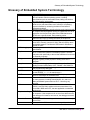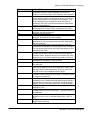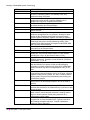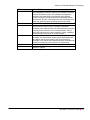
1
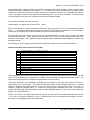
Appendix 1. ARM Toolsuite
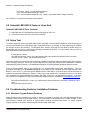
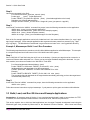
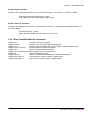
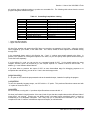
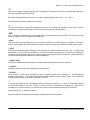
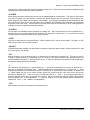
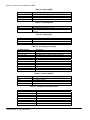
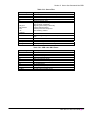
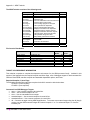
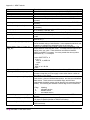
Options
-marmv6 | -marmv6j
Description
-mthumb
-mall
Thumb mode
Assemble All ARM/Thumb instructions
No float load/store multiples
Disable all floating point
FPA10 and 11 co-processor
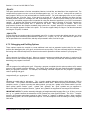
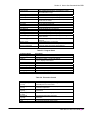
Select which procedure calling convention is in use:
32-bit APCS
16-bit APCS
Code supports Arm/Thumb Interworking
Select either big-endian (-EB) or little-endian (-EL) output.
-mfpe-old
-mno-fpu
-mfpa10 | -mfpa11
-mapcs-32
-mapcs-26
-mthumb-interwork
-EB | -EL
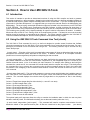
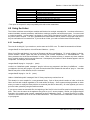
GNU ARM Assembler Quick Reference
A summary of useful commands and expressions for the ARM architecture using the GNU assembler is presented
briefly in the concluding portion of this Appendix. Each assembly line has the following format:
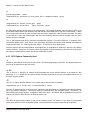
[<label>:]
[<instruction or directive>}
@ comment
Unlike the ARM assembler, using the GNU assembler does not require you to indent instructions and directives.
Labels are recognized by the following colon instead of their position at the start of a line. An example follows
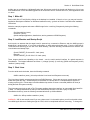
showing a simple assembly program defining a function ‘add’ that returns the sum of two input arguments:
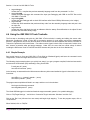
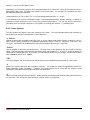
.section .text, “x”
.global add
@ give the symbol add external linkage
add:
ADD
MOV
r0, r0, r1
pc, lr
@ add input arguments
@ return from subroutine
@ end of program
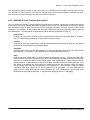
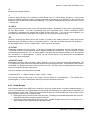
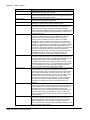
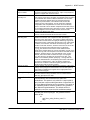
GNU Assembler Directives for ARM
The follow is an alphabetical listing of the more command GNU assembler directives.
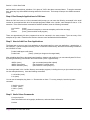
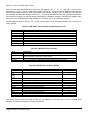
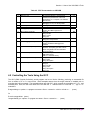
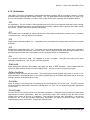
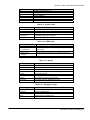
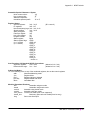
GNU Assembler Directive
.ascii “<string>”
.asciz “<string>”
.balign <power_of_2> {,<fill_value>
{,<max_padding>} }
.byte <byte1> {,<byte2>} …
.code <number_of_bits>
.else
.end
.endif
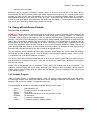
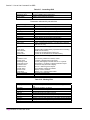
Description
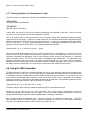
Inserts the string as data into the assembly (like DCB in armasm).
Like .ascii, but follows the string with a zero byte.
Aligns the address to <power_of_2> bytes. The assembler aligns by
adding bytes of value <fill_value> or a suitable default. The alignment
will not occur if more than <max_padding> fill bytes are required (similar
to ALIGN in armasm).
Inserts a list of byte values as data into the assembly (like DCB in
armasm).
Sets the instruction width in bits. Use 16 for Thumb and 32 for ARM
assembly (similar to CODE16 and CODE32 in armasm).
Use with .if and .endif (similar to ELSE in armasm).
Marks the end of the assembly file (usually omitted).
Ends a conditional compilation code block – see .if, .ifdef, .ifndef (similar
to ENDIF in armasm).
i.MX GNU X-Tools User Guide ■ 121