1
Tool 4: Match standards and target patterns
Description.
A target substance can be linked to an internal standard with known
concentration so as to quantify target concentrations via ratios of the peak
intensities of both compounds. Often, these internal standards are isotopically
labeled isotopologues of the target substance to be quantified. As a
consequence, certain peaks in the calculated isotopic patterns of both
substances may be identical, leading to an increased intensity of the resulting
net peak. If this net peak is used for quantification or screening, outcomes may
be erroneous. Therefore, Tool 4 matches the isotopic pattern peaks of the
target with those of the internal standard to which it is linked via an ID. If an
overlap between both peak patterns is detected, the concerned peaks are
marked so as to be omitted from screening and quantification.
Apart from such overlaps in peak patterns, the tool also checks the consistency
of (a) the isotopic patterns and (b) the ID-linking of a target compound to an
internal standard.
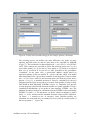
Spreadsheet inputs.
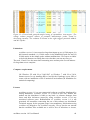
(1) Isotopic masses from column N (‘Isotopic m/z’) of the ‘target’ spreadsheet
and column L (‘Isotopic m/z’) of the ‘internal_standards’ spreadsheet.
(2) The column I (‘ID internal standard’) in the ‘targets’ spreadsheet specifies
the ID of the column A ‘ID’ in spreadsheet ‘internal_standards’ to link a target
compound to a specific internal standard for (a) quantification purposes (Tool
10) or (b) if an isotopically labeled compound of a target is listed in the
‘internal_standards’ spreadsheet making a match of isotope patterns necessary.
(3) Retention times from columns E of both spreadsheets are utilized.
Spreadsheet outputs.
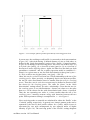
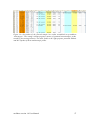
(1) If an identicalness between isotopic peaks of a target compound and its
internal standard is detected, the indices of the concerned peaks are each
written to the ‘omit peak #’ columns P and N for the target and the internal
standard, respectively. For the internal standard, the string of indices is
preceded by the row number (e.g. #21:) of the target compound entry in the
spreadsheet ‘targets’ (in turn, the relation target to internal standard is
manifested by the ID value). As a consequence, the concerned peaks are
omitted at the downstream screening steps.
(2) Moreover, modifications in the column ‘peak # for quantif.’ are made to
the default value = 1 (columns Q and O for the target and the internal standard
spreadsheets, respectively).
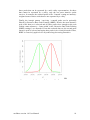
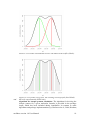
For example, consider a target compound and an internal standard, the latter
being represented by an isotopically labeled molecule identical to that of the
target. The default peak to be used for quantification for both the target and its
internal standard is the most abundant (mostly monoisotopic) one listed in the
cells of columns N and O (targets) and columns L and M (internal standards),
i.e. peak index = 1. From labeling with heavier isotopes, the internal standard
isotopic peaks are shifted towards higher masses relative to those of the target.
Thus, there is no overlap for the target monoisotopic peak with any of those
isotopic peaks of the internal standard pattern. For the internal standard
however, the most intensive peak may indeed overlap with the target pattern.
enviMass version 1.0 User Manual
21