1
C H A P
T E R
3
Using ExamBuilder
ExamBuilder Structure
The ExamBuilder Module is a specialized data base designed to store and to
retrieve examination questions and to facilitate their selection and placement
to form actual examinations. MathWriter hosts the data base by providing an
editing, formatting and printing environment for examinations produced by EB.
This chapter provides step-by-step instructions for performing the various
exam-building tasks, including the creation and use of files of questions.
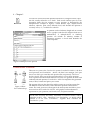
Books and banks
ExamBuilder stores data in files called “books” because a collection of questions
and answers often, but not necessarily, coincides with the contents of a specific
textbook. A book usually includes chapters or sections of more limited scope. In
EB this subgrouping is treated as a question bank, or more simply as a bank and
is a group of questions with a common focus. A book usually contains multiple
banks. Note: With this same structure you can create an alternative organization—a file for each chapter and a bank for sections or topics.
Using this nomenclature you can instruct EB to randomly select questions from a
specific bank or from all banks in the book when creating multiple forms of an
examination. This makes it easy for you to create examinations that have
variants of a question. For example, you can ask each student to compute the
mean and standard deviation for different sets of numbers. Access to the answers
of old exams will not allow the student to fake comprehension of an underlying
concept. EB can be instructed to select randomly a specified number of equivalent
questions from within a bank and to produce as many different examination
versions as desired. Of course EB can also automatically produce the corresponding answer sheets, as well as study versions of the examinations (with
answers) for distribution to the students, if desired.
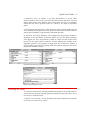
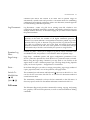
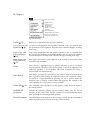
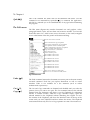
Questions
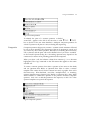
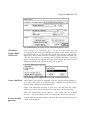
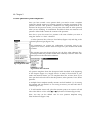
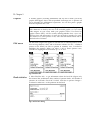
A question is the smallest logical unit within a bank. In traditional nomenclature, a question constitutes a record. Figure 3.1 displays the format of a freeform question—one of seven classes of questions. Five of these classes (free-